
From a Ford Bronco Sport with class-leading cargo to a Hyundai Ioniq 9 that powers your campsite through its battery
Credit: Ford
A good camping trip does not require a particular vehicle. It requires the right people, the right gear, and a way to get there without leaving half the kit behind. But the vehicle matters more than most campers admit, especially once the group grows, the destination moves off the paved road, or someone wants to haul a trailer rather than cram everything into the cargo hold. A truck bed that fits all the gear eliminates arguments at the trailhead. A minivan with a 3,500-pound tow rating opens up a weekend’s worth of equipment that simply doesn’t fit inside any SUV. And an EV with vehicle-to-load capability turns a campsite into a powered work area without the noise and fumes of a generator.
The best camping vehicles share a few measurable qualities: passenger space that doesn’t require leaving someone behind, cargo capacity that handles the gear for the conditions, tow ratings that match the trailer or equipment the trip demands, and features that make the drive more manageable. Fuel economy also factors in when the campsite is far from civilization, and the nearest gas station is two hours back. Ground clearance matters when the forest road turns rough. Onboard power systems matter when the campsite is off the grid.
These 10 picks come from U.S. News and World Report’s Best Vehicles for Camping awards, which evaluated 124 models across 14 categories and sorted them by passenger and cargo capacity, features useful on the journey and at the campsite, and towing ability. The list spans subcompact SUVs, hybrid and plug-in hybrid compact SUVs, a minivan, midsize SUVs, a midsize plug-in hybrid SUV, and an electric SUV, with U.S. News ratings ranging from 8.3 to 9.4 out of 10 and tow ratings from 1,500 to 5,000 pounds.
Credit: Ford
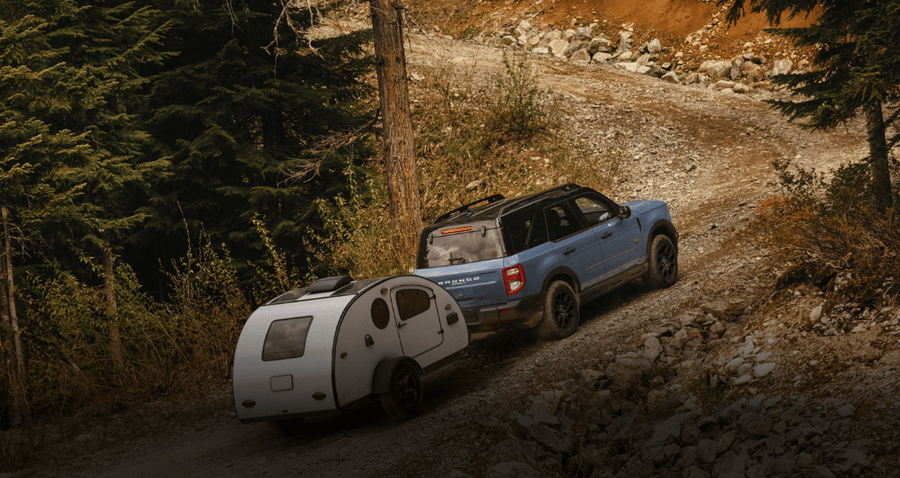
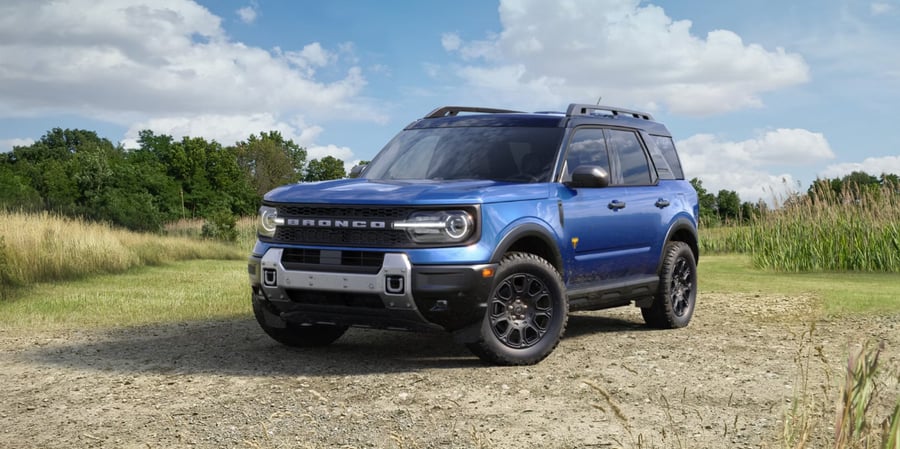
The Ford $F Bronco Sport earns a U.S. News rating of 8.8 out of 10 and wins the best subcompact SUV for camping category. With all seats upright, it carries 32.5 cubic feet of cargo, the most available space for gear in the subcompact SUV class with passengers aboard. Fold the seats down, and that figure expands to 65.2 cubic feet, a volume large enough for tents, sleeping bags, layering systems, and a full cooking setup.
Passenger space is also a class leader. The Bronco Sport offers more total rear seat room than any other subcompact SUV, so riders in the back have space to actually stretch out on the drive to the trailhead. The tow rating reaches 1,500 pounds in standard form, and 2,700 pounds in Badlands trim when properly equipped, which puts a pop-up trailer within reach.
The Bronco Sport makes a case for smaller vehicles in a category that instinctively defaults to larger ones. A subcompact SUV with class-leading cargo space, class-leading rear passenger room, and a tow rating that accommodates a pop-up trailer covers most camping use cases without the fuel economy and maneuverability penalties that come with a full-size truck or large SUV. For solo campers, couples, or small groups whose gear fits in the cargo bay, the Bronco Sport is the most capable small option on this list. Its class-leading position in both cargo volume and rear passenger space means a buyer does not have to trade one for the other, which is the compromise that forces many compact campers into larger vehicles unnecessarily. For buyers who have not considered a subcompact SUV for camping, the Bronco Sport’s class-leading figures reframe what that category can deliver. The Badlands trim’s 2,700-pound tow rating is also notable: most subcompact SUVs cap towing at 1,500 pounds, and the Badlands brings pop-up trailer capability that expands a weekend trip’s gear options.
Credit: Subaru
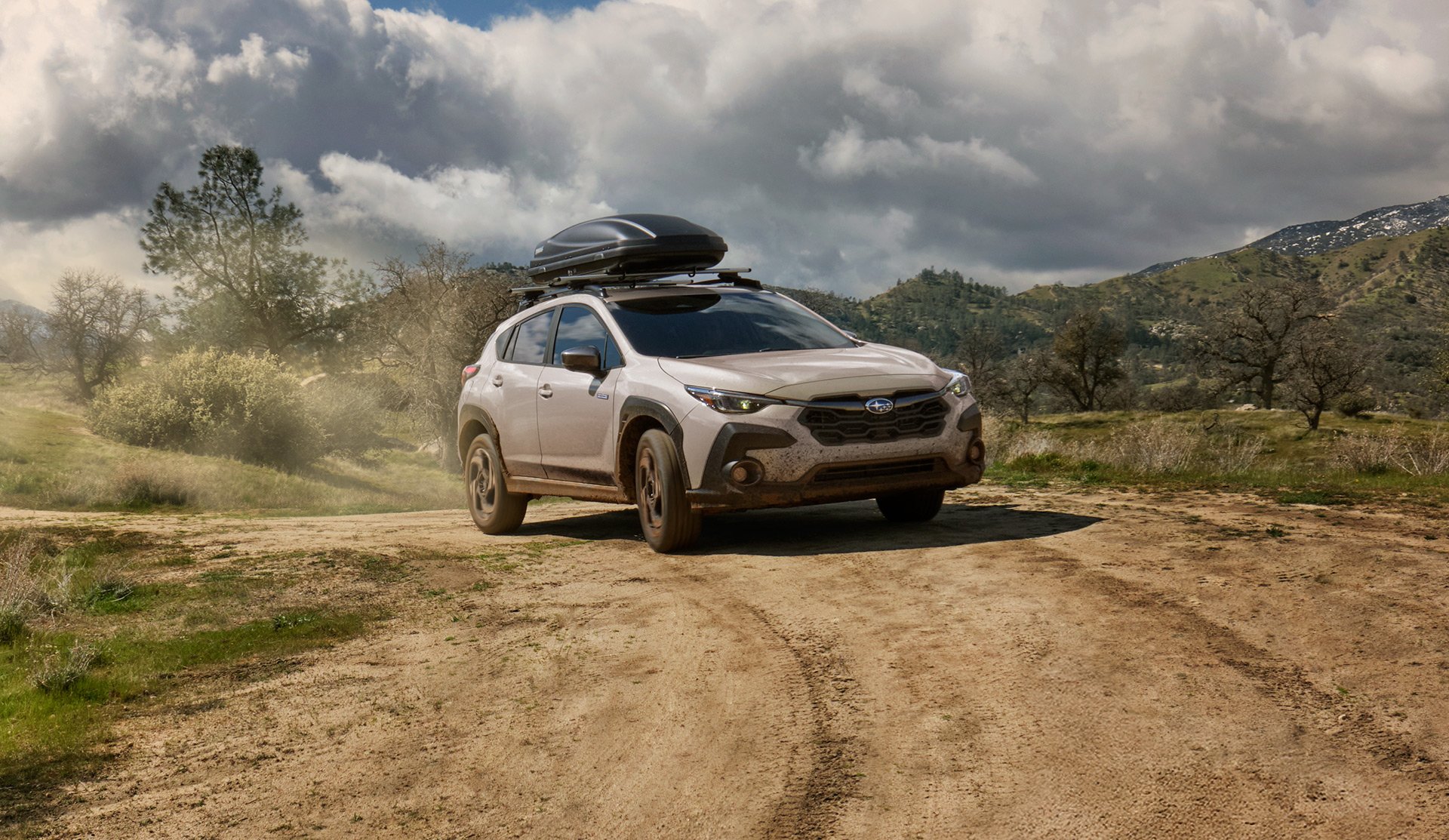
The Subaru Crosstrek Hybrid earns a U.S. News rating of 8.3 out of 10 and wins the best subcompact hybrid SUV for camping. Its EPA rating of 36 mpg combined, paired with a 16.6-gallon fuel tank, gives it a practical range of more than 500 miles before needing a refuel, a genuine advantage for campers whose destination is deep in a national forest, far from the nearest gas station.
The Crosstrek Hybrid also offers 8.7 inches of ground clearance and standard all-wheel drive, which means it handles rough forest access roads better than most vehicles its size. The tow rating is 1,500 pounds, enough for a small trailer. Passenger space and cargo room are reasonable for a vehicle of this class, and the solid interior makes the long drive to camp comfortable.
The fuel range is the Crosstrek Hybrid’s clearest competitive advantage in this category. Subcompact hybrid SUVs rarely combine the fuel economy and tank size needed to cover 500 miles on a single fill, and campers who plan their trips to minimize stops appreciate the math. A vehicle that starts the trip with a full tank and arrives at a remote campsite without requiring a detour to a gas station removes a logistical variable that affects itinerary planning more than most buyers realize until they need it. The Crosstrek Hybrid’s 8.7 inches of ground clearance is also worth noting: most subcompact hybrids sit lower than standard SUVs, which limits access to rough forest roads, but the Crosstrek Hybrid maintains the clearance needed to reach campsites that a lower-profile vehicle cannot. The 1,500-pound tow rating, while modest, covers a small trailer and gives the Crosstrek Hybrid a towing capability that pure fuel-economy competitors in the subcompact hybrid class often omit entirely. The all-wheel drive also means wet or muddy access roads do not present the same obstacle they would to a front-wheel-drive subcompact.
Credit: Hyundai
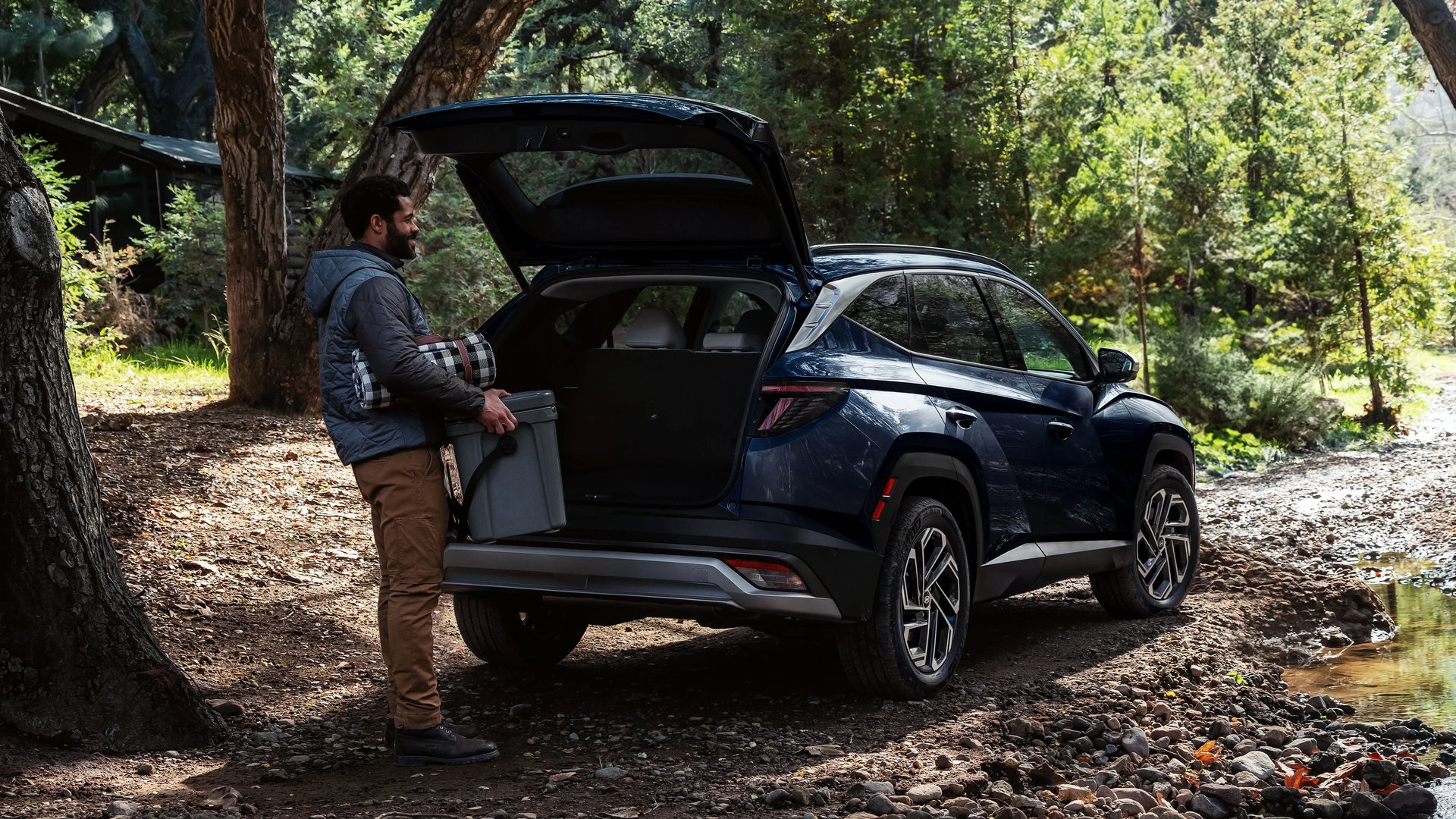
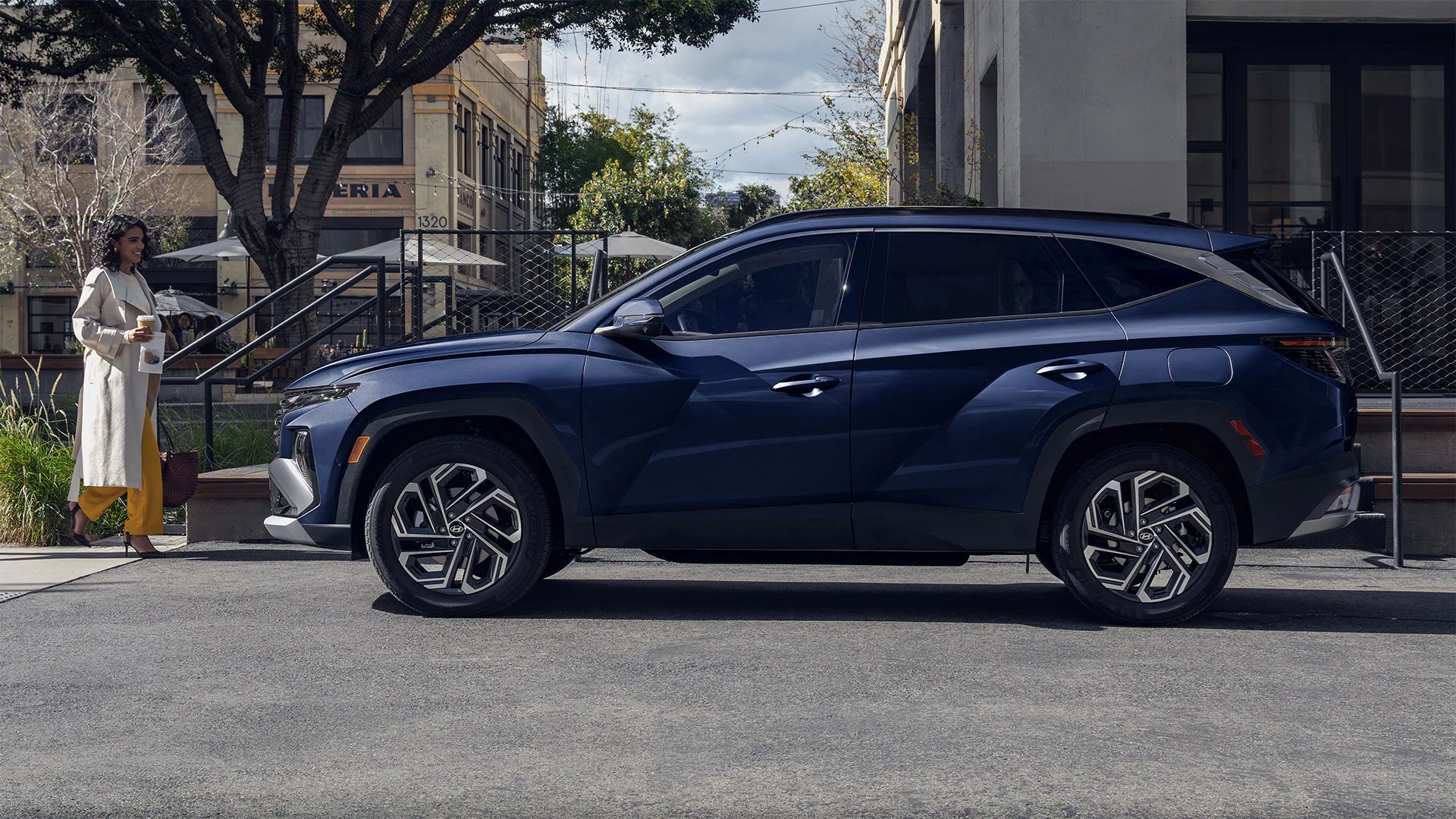
The Hyundai Tucson earns a U.S. News rating of 9.3 out of 10 and wins the best compact SUV for camping category. Its passenger space is class-leading and on par with vehicles from larger segments, which means a full complement of adults arrives at the campsite with enough room to have actually rested on the drive. Cargo capacity is highly competitive for the class, giving the Tucson the practical interior volume to handle the gear load of a weekend trip.
On the towing side, the Tucson is not the strongest among compact SUVs, but its 2,750-pound rating covers the use cases that matter most: dirt bikes, a small two-person camper, or a gear trailer for a group that has outgrown what fits inside. The Tucson’s 9.3 out of 10 overall rating reflects consistent performance across multiple categories, and U.S. News identifies it as a perennial award winner whose practicality drives its results.
For buyers who want a compact SUV with SUV-category utility but interior space that rivals the next segment up, the Tucson delivers that without requiring a move to a larger, heavier vehicle. Class-leading passenger space, competitive cargo capacity, and a tow rating sufficient for a small camper make it one of the more complete compact SUV packages for camping. Buyers who need to haul a group comfortably and arrive with gear intact will find the Tucson handles both without compromise. U.S. News identifies Tucson as a perennial award winner, and the camping category is one where its core strengths, specifically the interior space and the balanced tow rating, express themselves most directly. The 2,750-pound tow rating is particularly useful for group camping where a small shared-gear trailer reduces the number of vehicles needed to reach the site. The 9.3 out of 10 rating also puts the Tucson among the strongest vehicles in the compact SUV class overall, and the camping use case draws on its highest-scoring attributes.
Credit: Hyundai
The Hyundai Tucson Hybrid earns a U.S. News rating of 9.4 out of 10 and wins the best compact hybrid SUV for camping. Its interior exceeds that of some midsize SUVs in total space, putting it in an unusual position for a compact vehicle: more room than buyers expect and better fuel efficiency than the segment typically delivers. The highway fuel economy rating of 38 mpg means long drives to remote campsites require fewer fuel stops and less time lost to refueling.
The Tucson Hybrid carries a tow rating of 2,000 pounds, and the standard adaptive cruise control is a practical feature for the extended highway segments that precede most backcountry camping destinations. Fuel economy takes a hit when towing a trailer, which applies to all vehicles in the class and should be accounted for in trip planning.
The 9.4 out of 10 overall rating makes the Tucson Hybrid the highest-rated vehicle on this list, and the interior space advantage over most midsize competitors gives it an unusual claim for a compact vehicle. Buyers who expected to step up to a midsize SUV for interior space and cargo capacity may find the Tucson Hybrid covers the same ground with better fuel economy and at a lower price point. For frequent campers who drive long distances to reach their preferred sites, the fuel-economy advantage compounds into real savings over a season’s worth of trips. The Tucson Hybrid’s interior space advantage over most midsize competitors also means buyers who step up to a midsize SUV primarily for space reasons may find the Tucson Hybrid already covers their needs at a lower weight and better fuel economy. The 38 mpg highway rating also gives the Tucson Hybrid a range advantage over standard compact SUVs on the long highway segments that most camping trips require before reaching the trailhead or campsite entrance at the end of the drive.
Credit: Toyota
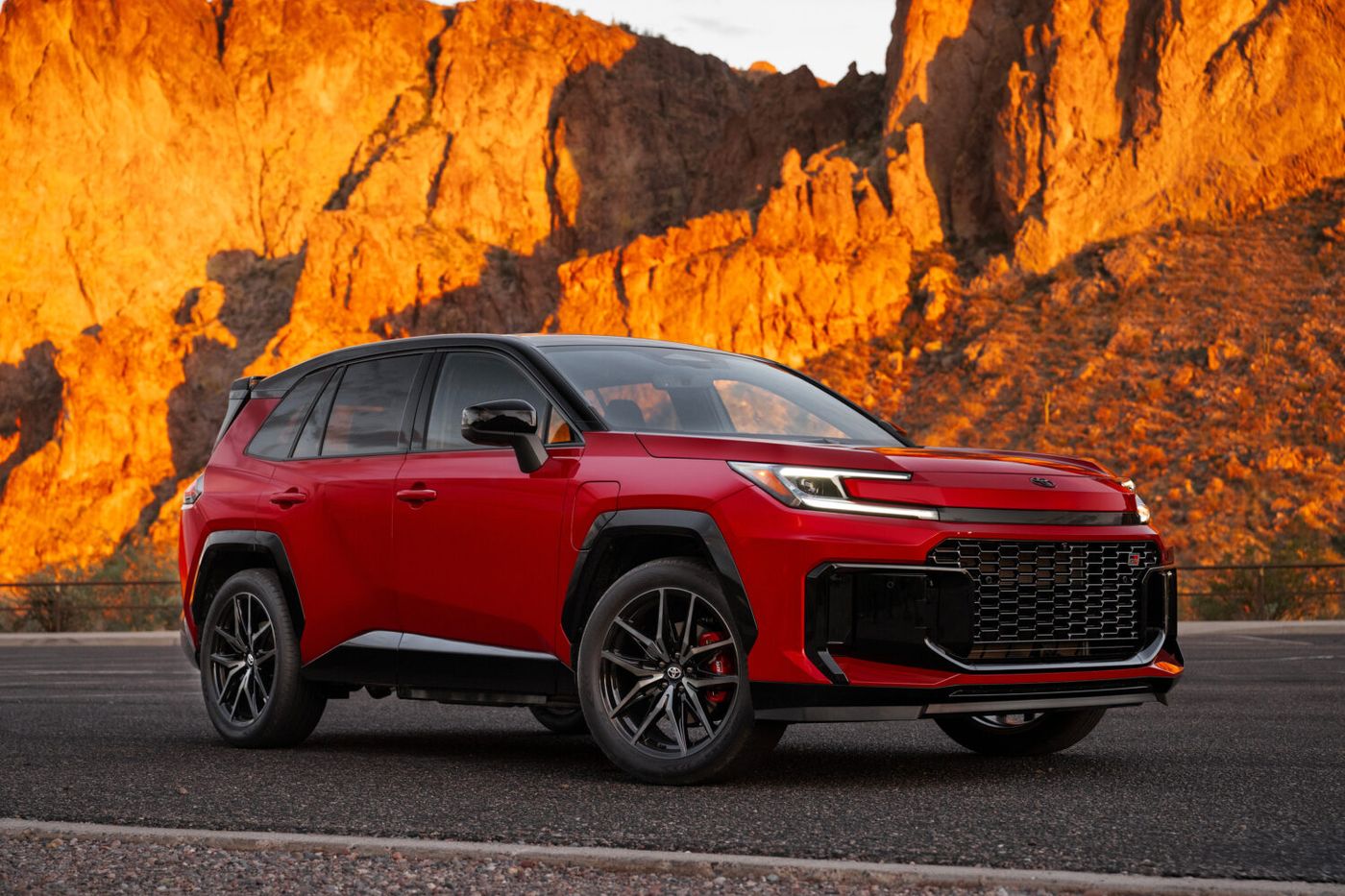
The Toyota $TM RAV4 Plug-In Hybrid earns a U.S. News rating of 8.9 out of 10 and wins the best compact plug-in hybrid SUV for camping. Redesigned for 2026, it retains its all-around appeal for campers: good interior space, a strong feature set for the drive, and a tow rating of 3,500 pounds. That tow capacity is considerably higher than most other plug-in hybrids of similar size and exceeds the ratings of most standard compact SUVs.
The electric-only range of 52 miles is particularly useful for campers who want to enter or exit a campsite quietly. Wildlife-sensitive areas, early-morning arrivals, and late-night returns all benefit from a vehicle that can creep in and out on silent electric power without disturbing neighboring campers or animals. The 52-mile electric range also handles the kind of camp-adjacent driving — moving between sites, accessing trailheads — that keeps a powered campsite functional without burning fuel.
The 3,500-pound tow rating stands out as the RAV4 PHEV’s primary advantage over other compact plug-in hybrid SUVs. A small camper or a loaded gear trailer that sits beyond the capability of most compact plug-ins falls well within the RAV4 PHEV’s range, and the redesigned 2026 version delivers that towing capacity alongside a refreshed interior and updated feature content. Buyers who need plug-in efficiency and genuine towing capability in a compact package will not find a more capable option in this class. The redesigned 2026 version also brings updated interior content and features, meaning the towing advantage comes with a refreshed cabin that meets the quality and technology expectations of current compact SUV buyers, and the 52-mile electric range reduces the frequency of gas station stops for buyers who charge regularly. The electric-only range of 52 miles also gives the RAV4 PHEV a practical daily driving advantage for buyers who charge at home and can cover most short trips without burning fuel.
Credit: Kia
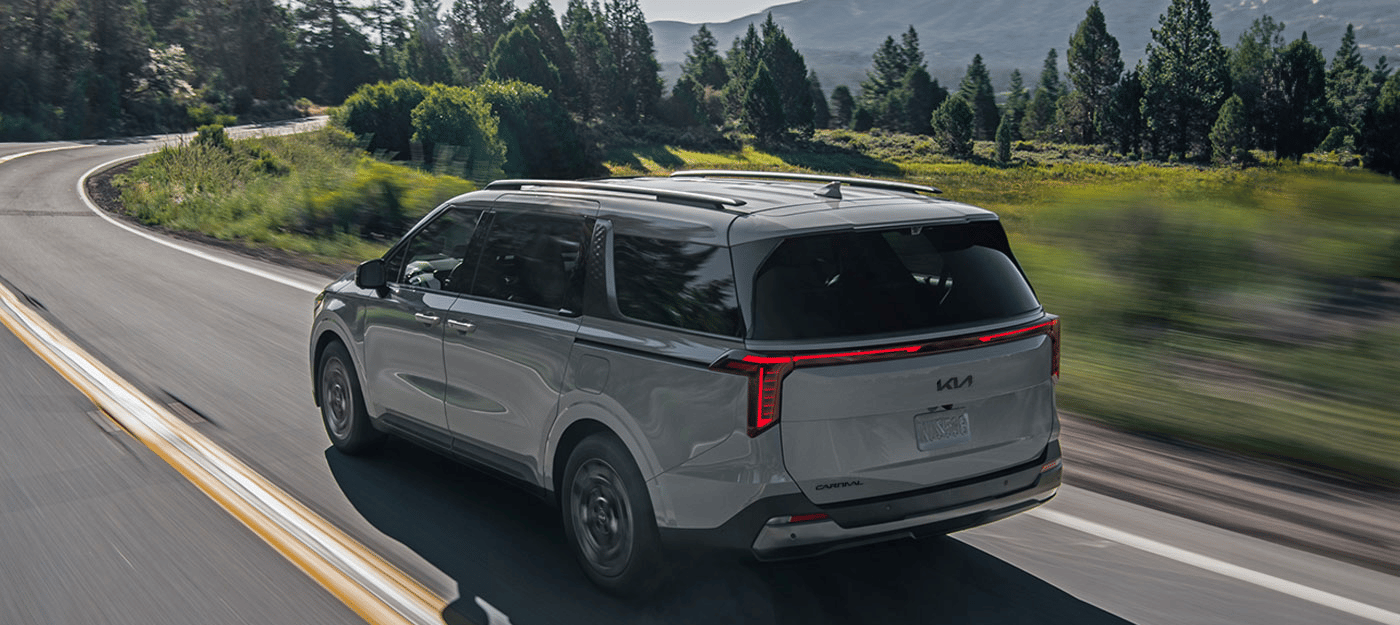
The Kia Carnival earns a U.S. News rating of 8.8 out of 10 and wins the best minivan for camping category. Minivans carry an unfair reputation for being the antithesis of adventure, but the Carnival demonstrates that passenger and cargo capacity are exactly what a serious camping trip needs. With all seats in place, the Carnival still holds 40.2 cubic feet of camping gear, enough for a family’s full kit without requiring a roof box or a trailer for every trip.
When the inside isn’t enough, the Carnival pulls up to 3,500 pounds when properly equipped. A small camp trailer, a gear hauler, or a modest boat all fall within that range, meaning the Carnival covers both the people-moving and equipment-hauling requirements of a group campsite without requiring a second vehicle.
The minivan format’s practical strengths — sliding doors that open in tight parking areas, low floor for easy loading, and maximum interior volume per exterior footprint — make the Carnival a more logical camping vehicle than its reputation suggests. For families who camp with children, the easy entry and exit of sliding doors at a trailhead parking lot is a daily-use advantage that no SUV’s hinged rear door can replicate. The Carnival’s case for camping rests on doing the two things that matter most — carrying people and gear — better than almost any other vehicle at its size. The Carnival’s 8.8 out of 10 U.S. News rating confirms that its camping credentials come alongside a competitive overall assessment, not as a specialized niche that trades away everyday usability for cargo volume. For group camping trips where the Carnival fills every seat, the remaining 40.2 cubic feet accommodates the essential gear without forcing anyone to leave anything behind. A vehicle that earns a high overall rating while also winning a category-specific camping award addresses more of a buyer’s total requirements than a single-purpose choice.
Credit: GMC
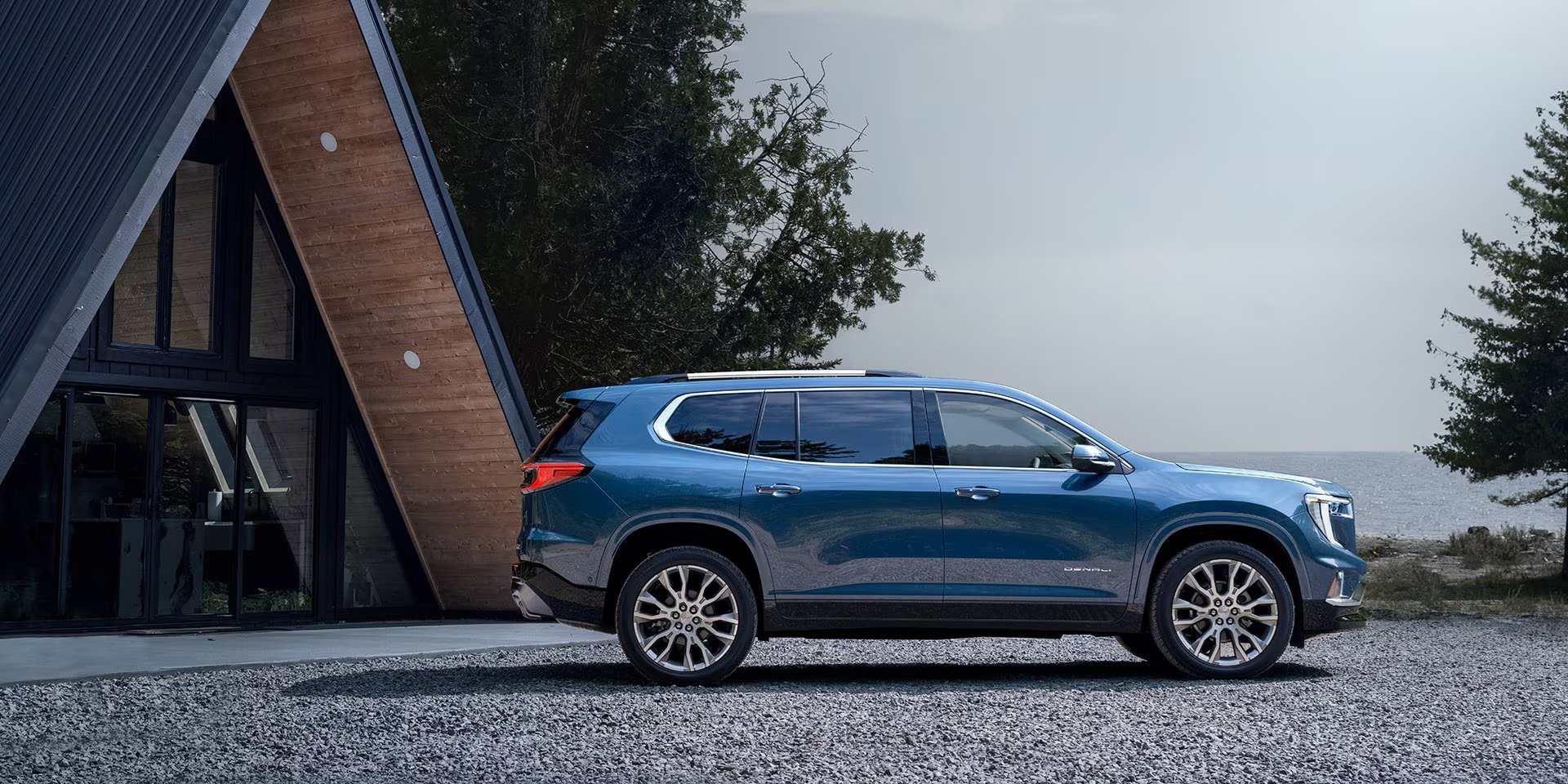
The GMC Acadia earns a U.S. News rating of 8.7 out of 10 and wins the best midsize SUV for camping. It seats eight passengers and delivers among the best second- and third-row seating capacity available in the midsize SUV class. With all eight seats occupied, the Acadia still carries 23 cubic feet of cargo behind the third row, more than any other midsize SUV. The 5,000-pound tow rating handles a fully loaded gear trailer for a large group.
Standard features include tri-zone climate control and household-style power outlets, both of which address specific camping use cases: independent temperature control for front and rear passengers on a long drive, and in-vehicle power for devices that need to arrive at camp fully charged. A midsize SUV hauling eight people to a group site requires a trailer for all the equipment, and the Acadia’s 5,000-pound rating provides the margin to pull a substantial one.
The cargo behind the third row warrants close examination. Most midsize SUVs sacrifice meaningful cargo space with all three rows in use. Those 23 cubic feet keep grocery runs, overnight bags, and basic gear accessible without requiring passengers to consolidate or leave items at home. For group camping where every seat and every cubic foot matters, maximum seating, 23 cubic feet behind the third row, and a class-appropriate tow rating make the Acadia the strongest all-purpose midsize SUV for the task. The household-style power outlets are a notable feature: they allow devices to charge at full speed during the drive, so phones, cameras, and lighting equipment arrive at the campsite fully charged. For a group camping trip where eight people with eight devices make that an actual challenge, standard outlet availability turns a potential irritant into a non-issue. The tri-zone climate control similarly serves the long camping drive: it allows the driver, front passenger, and rear passengers to set independent temperatures, reducing the negotiation required by shared climate control.
Credit: Toyota
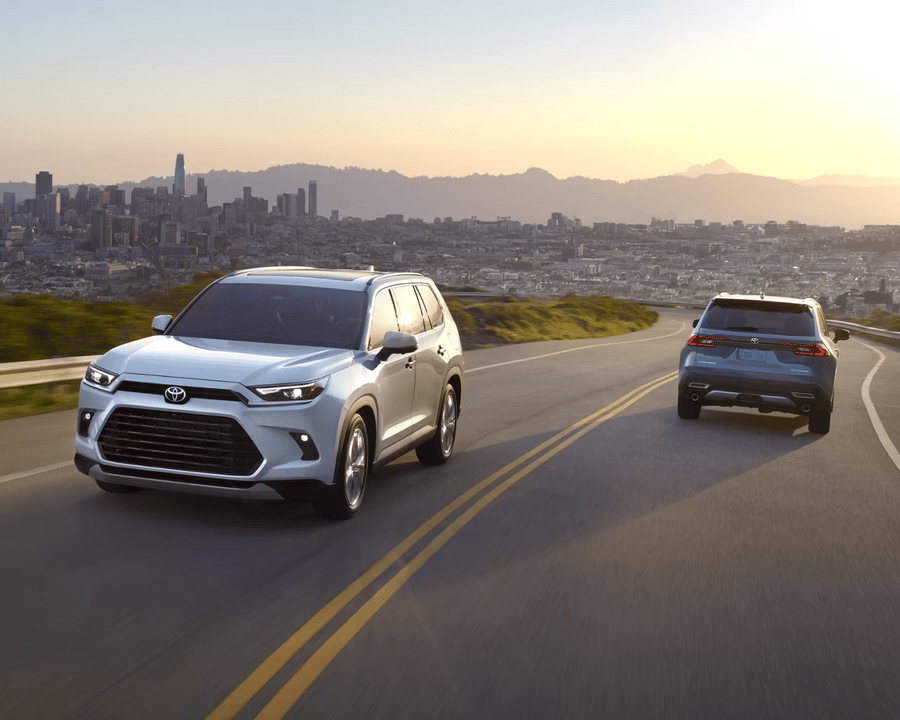
The Toyota $TM Grand Highlander Hybrid earns a U.S. News rating of 8.7 out of 10 and wins the best hybrid midsize SUV for camping. Its 36 mpg combined fuel economy rating places it near the top of its class for efficiency, and the 5,000-pound tow rating outperforms those of competing hybrid midsize SUVs, including the Kia Telluride Hybrid and the Hyundai Palisade Hybrid. The 20.6 cubic feet of cargo space behind the third row expands to 57.9 cubic feet with the row folded.
The two advantages are the Grand Highlander Hybrid’s clearest competitive edge among hybrid midsize SUVs. Pulling a camp trailer, a pair of kayaks on a purpose-built hauler, or a small motorized toy to a lakeside site all require a vehicle that can sustain that load efficiently over a long highway drive. At 36 mpg with a 5,000-pound rating, the Grand Highlander Hybrid handles that task with a fuel economy margin that gas-only competitors in the class cannot deliver.
The cargo flexibility — 20.6 cubic feet with all rows in use or 57.9 cubic feet with the third row folded — gives the Grand Highlander Hybrid genuine adaptability for various trip types. A family trip with all rows occupied leaves enough gear space. A smaller group that folds the third row gains cargo volume on par with dedicated cargo-focused vehicles. For campers who drive frequently, the fuel economy advantage over a gas-only midsize SUV translates into significant per-trip savings, particularly on the long drives that precede remote backcountry destinations. The Grand Highlander Hybrid’s 8.7 out of 10 rating also matches the GMC Acadia's, despite offering significantly better fuel economy, making it a value for buyers who frequently drive to distant camping destinations. The 57.9 cubic feet of cargo space with the third row folded is also among the most generous in the hybrid midsize SUV class.
Credit: Mazda
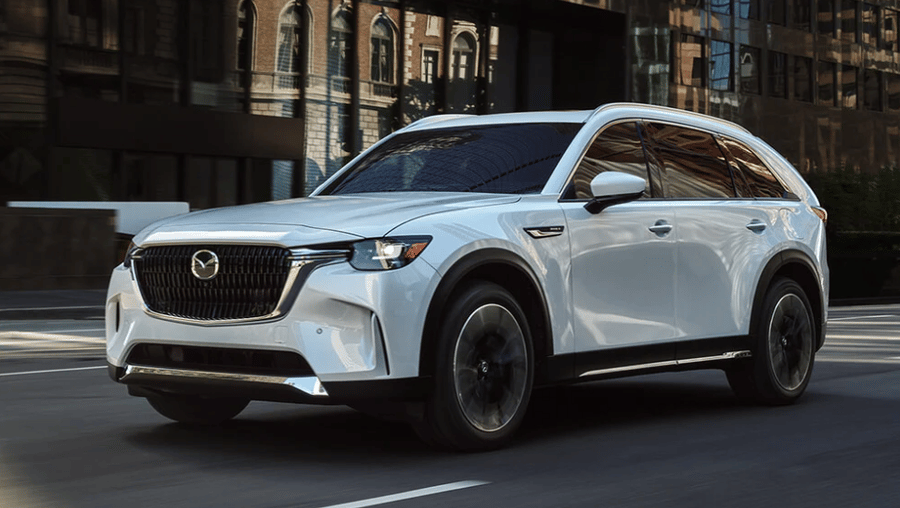
The Mazda CX-90 PHEV earns a U.S. News rating of 9.1 out of 10 and wins the best midsize plug-in hybrid SUV for camping. It is among U.S. News’s most-awarded vehicles, having won Best Cars for the Money, Best Cars for Families, and Best Plug-In Hybrid in the same year. The spacious interior and strong feature set that earned those awards also support its camping credentials: the vehicle handles the drive comfortably and brings enough interior volume for a well-equipped group.
The standout camping-specific feature is the optional 1,500-watt charging outlet, which converts the CX-90 PHEV into a mobile power source at the campsite. String lights, a coffee maker, a portable blender, or other small appliances can run directly from the vehicle without requiring a separate generator. For campers who prefer a powered site without the noise, fuel, and maintenance of a traditional generator, the 1,500-watt outlet changes the equation.
The tow rating of 3,500 pounds adds equipment-hauling capability to the power and space credentials. A small camper or a loaded gear trailer is within the CX-90 PHEV’s range, which means it covers passenger comfort, cargo volume, campsite power, and towing in a single vehicle. U.S. News notes the CX-90 PHEV’s award portfolio is among the largest it has seen in a single model year, and the camping use case draws on all the same fundamentals that earned those honors in other categories. A vehicle that won three separate U.S. News awards in one year carries a cross-category endorsement that confirms its quality across the full range of criteria a buyer might prioritize. The 1,500-watt outlet option turns a standard camping trip into a powered one without adding the weight, noise, or fuel requirements of a separate generator. The 1,500-watt outlet option specifically reflects the CX-90 PHEV’s positioning as a vehicle that delivers active utility at the campsite, not just on the road.
Credit: Hyundai
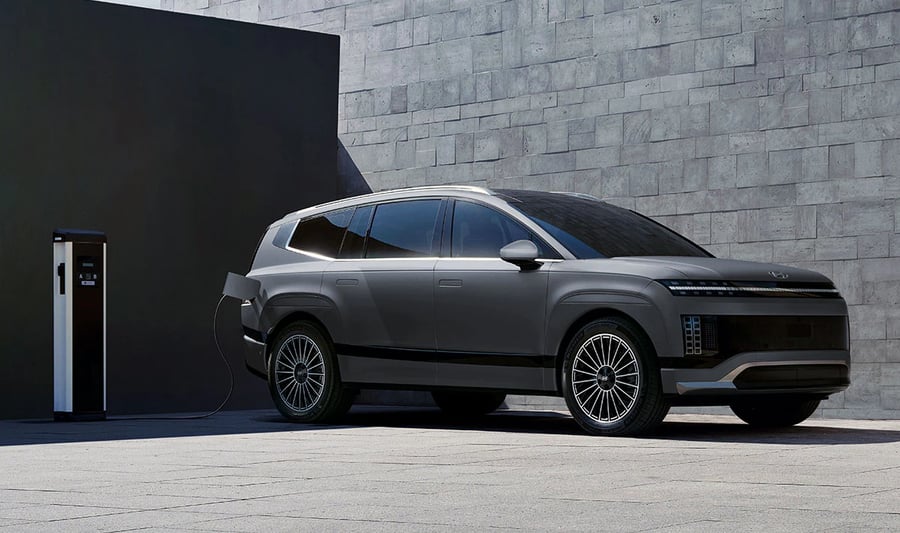
The Hyundai Ioniq 9 earns a U.S. News rating of 9.2 out of 10 and wins the best electric SUV for camping. Its vehicle-to-load feature enables the SUV to power household appliances and other equipment directly, giving campers on-site electrical power without a portable generator. The Ioniq 9 offers some of the best interior capacity of any electric SUV on the market, with passenger comfort on the drive to and from the campsite a consistent strength.
The tow rating reaches 5,000 pounds, which ties it for best-in-class among electric SUVs alongside the Kia EV9. That capacity handles a small camper, a loaded gear trailer, or a boat with room to spare. Towing reduces range, which is a practical consideration for EV camping trips that require planning around charging access, but the Ioniq 9’s base range gives it a workable buffer before the tow penalty becomes a logistical problem.
The vehicle-to-load capability addresses one of the practical objections to EV camping: that the vehicle’s power supply is unavailable for campsite use. The Ioniq 9 inverts that assumption, turning its battery into a campsite power source that eliminates the noise, fumes, and fuel logistics of a conventional generator. Combined with the class-leading tow rating and the strong interior capacity, the Ioniq 9 makes a complete case for electric camping that extends well beyond the straightforward advantage of avoiding gas station stops on the drive. The Ioniq 9’s 9.2 out of 10 overall rating also reflects its quality as a general-purpose vehicle, not just as an EV optimized for a single use case. Buyers who transition from a gasoline SUV will find the Ioniq 9 covers the same camping use cases with the added benefit of campsite power through the vehicle-to-load system. The vehicle-to-load capability, the 5,000-pound tow rating, and the strong interior capacity together give the Ioniq 9 a camping résumé that rivals gasoline SUVs of the same size on every metric except refueling convenience.