
The best vintage hotels to visit on Route 66's 100th anniversary
From the Blue Swallow's unbroken neon since 1939 to Arizona's oldest hotel at the gateway to the Grand Canyon
Credit: Americana Motor Hotel
Route 66 turns 100 in 2026. The highway that connected Chicago to Santa Monica, when it officially opened in 1926, did something more than link two cities across 2,400 miles of American landscape: it created the template for road trip culture, fueled a generation of car sales, and transformed towns that would otherwise have remained invisible into thriving roadside destinations built specifically to serve the American traveler passing through. The neon signs, the motor courts, the diners, and the communal firepits of Route 66’s mid-century peak represent a specific and unrepeatable moment in American life, when the car was new enough to be genuinely thrilling, and the open highway was still an adventure rather than a commute.
The centennial gives travelers a specific reason to make the journey in 2026, and enough of the original infrastructure survives to make the trip historically coherent rather than nostalgic in a manufactured way. Original neon signs from the 1930s still illuminate at night in towns along the route. Auto courts and motor lodges that closed in the 1960s and 1970s when the interstate system bypassed Route 66 have been restored and reopened with the kind of careful attention that distinguishes genuine preservation from theme-park recreation. Some properties carry National Register of Historic Places designations that reflect the degree to which the structures have been recognized as cultural artifacts worth protecting in their own right.
The nine hotels below appear in Travel + Leisure, covering the length of the Mother Road from Missouri to Arizona. Each has been restored or reimagined to preserve the original character of Route 66’s roadside hospitality while offering the comforts contemporary travelers expect when they book a night away from home. Each has become a destination in its own right, celebrated as much for its historical standing as for what it offers guests today.
1. Blue Swallow Motel in Tucumcari has been continuously operated since 1939
Credit: Blue Swallow Motel
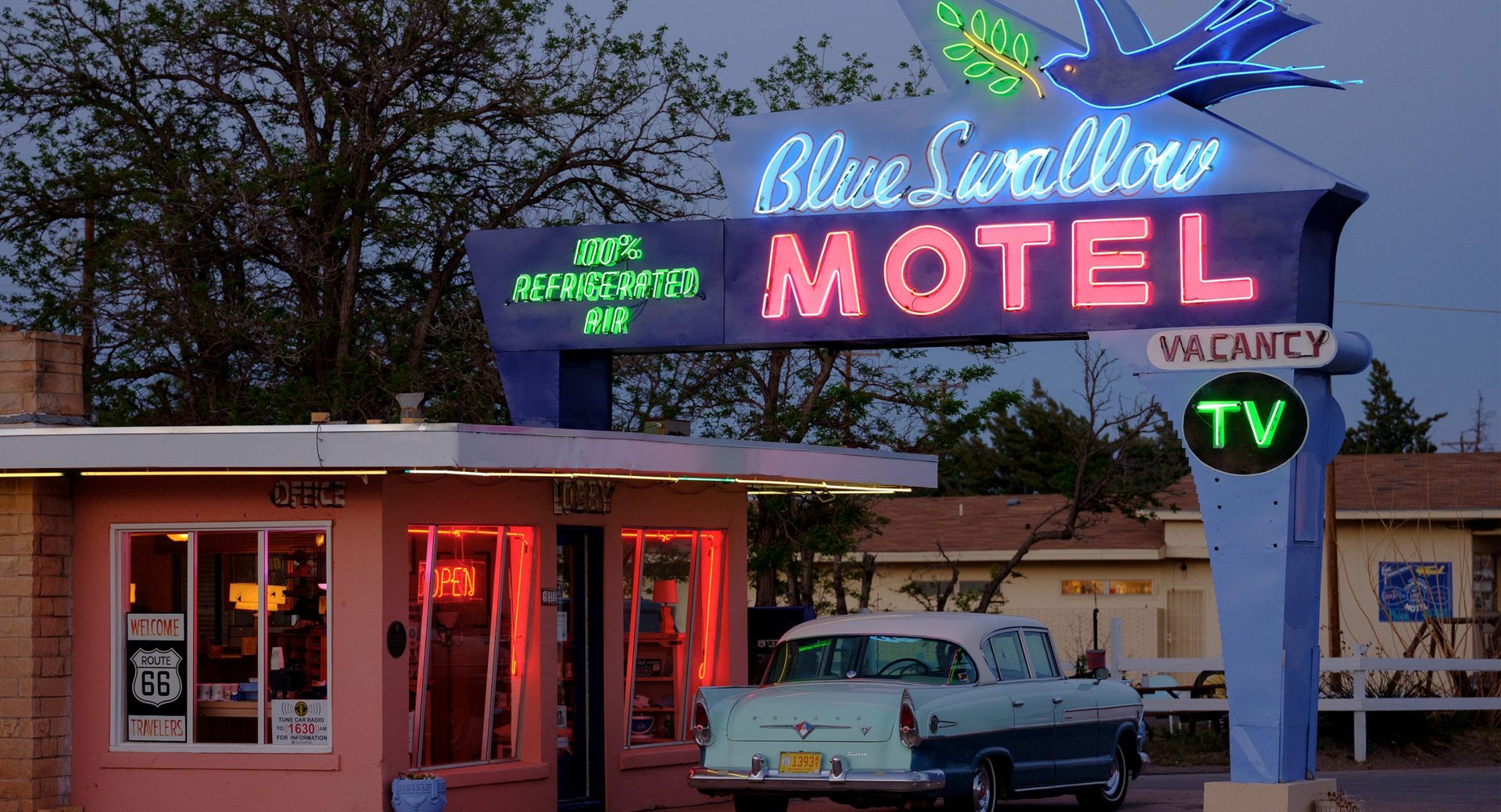
The Blue Swallow Motel in Tucumcari, New Mexico, has operated continuously since 1939, making it one of the longest-running original Route 66 properties along the entire highway. Its neon sign, depicting a blue swallow above the tagline “100% refrigerated air,” has become one of the most recognized images in Route 66 photography, appearing in countless books, documentaries, and travel articles as shorthand for everything the highway’s roadside aesthetic represented at its peak. The sign’s survival and the motel’s unbroken operation give the Blue Swallow an authenticity that restored properties, however well-executed, cannot claim in the same terms: this building has been sheltering Route 66 travelers since the Roosevelt administration, and it continues to do so today.
The restoration that brought the motel to its current condition preserved the pink stucco walls, the vintage neon across multiple signs on the property, the individual garages attached to each room, and the charming interior design that established the original roadside motel’s character for American travelers. The garages are a specific and meaningful architectural detail: the original motor court concept was built around the idea that the car and the traveler shared an intimate relationship with the same space overnight, which the attached garage enacts in a way that parking structures and lots at modern hotels do not. The property’s family ownership through much of its history has given the Blue Swallow a continuity of care and character that institutional management rarely produces.
The National Register of Historic Places listing gives the Blue Swallow formal recognition of its cultural significance, validating what dedicated Route 66 travelers already understand: this is not merely an old motel preserved as a curiosity, but a specific and irreplaceable document of mid-century American roadside culture whose value increases as comparable properties disappear. Tucumcari’s position along the New Mexico section of Route 66 makes it a natural stopping point for travelers making the full journey, and the town’s collection of surviving neon signs and Route 66 vernacular architecture adds genuine historical depth to the overnight stay beyond the motel itself.
2. La Posada Hotel in Winslow operates as a living museum of the Harvey Company luxury
Credit: La Posada
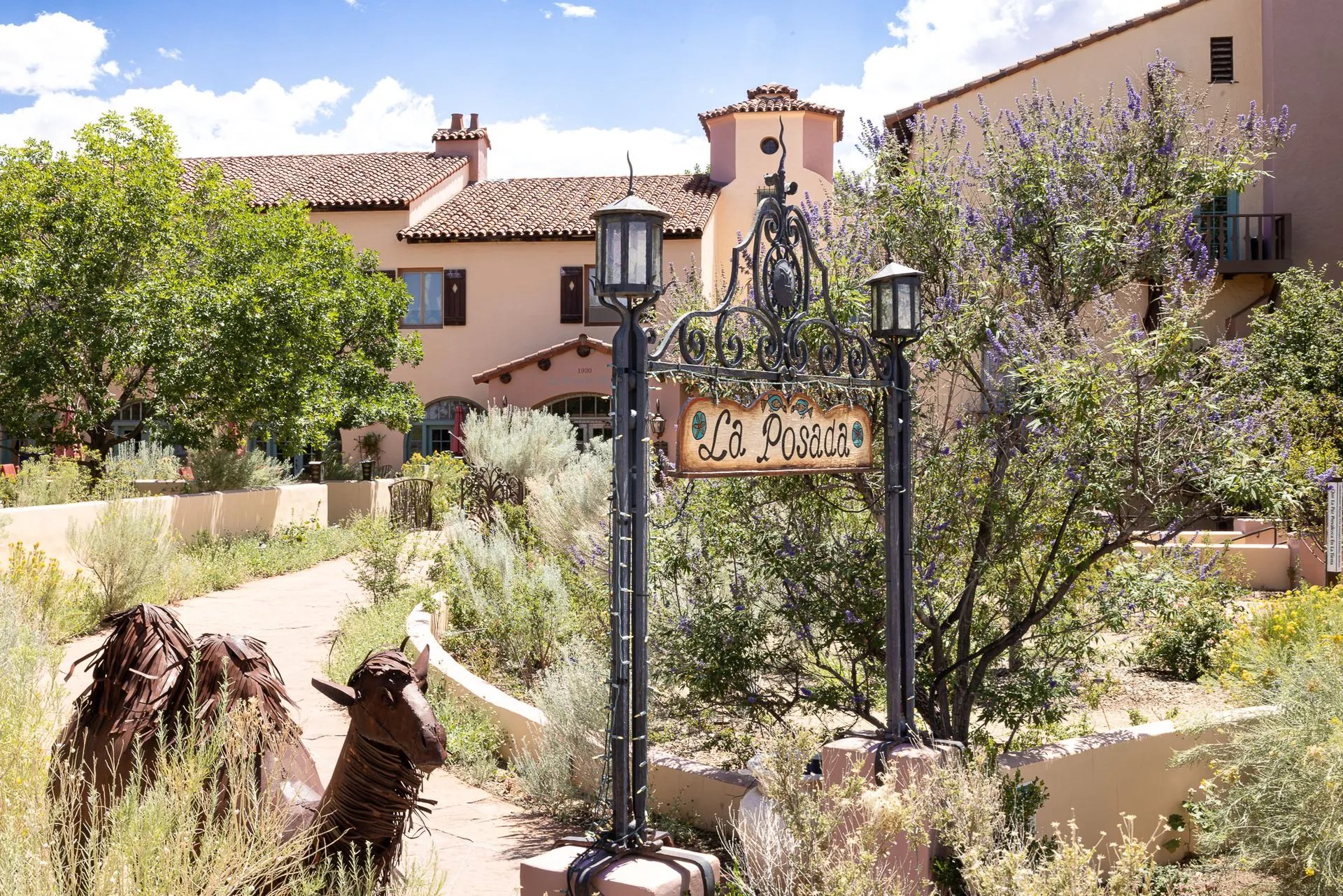
La Posada Hotel in Winslow, Arizona, opened in 1930 as one of Fred Harvey’s luxury railroad hotels, a chain whose properties set the standard for hospitality in the American Southwest during the rail travel era. The hotel benefited from its dual position along both the Santa Fe Railway and Route 66, drawing travelers from both transportation systems during the years when both were at their height. Its rise and fall happened with brutal speed within a single generation: the hotel closed in the late 1950s as declining railroad traffic removed the passenger base that had sustained it, and the building deteriorated through the following decades before a revival approximately 40 years later gave it its current identity as a “living museum” just off the Mother Road.
The Spanish colonial architecture that defines La Posada’s exterior and communal spaces reflects the Harvey Company’s deliberate effort to express the Southwest’s cultural complexity in built form, creating properties that acknowledged Spanish, Indigenous, and American architectural traditions simultaneously rather than defaulting to a generic accommodation style. The guest rooms are adorned with vibrant Southwest decor that continues this regional design philosophy, using color, textile, and objects in ways that give the interior a specificity to this corner of the American Southwest that generic hotel design cannot replicate. The grounds showcase both contemporary and historic works of art, giving the property a curatorial dimension that positions it closer to a cultural institution than a purely commercial hospitality operation.
The Turquoise Room restaurant within La Posada has developed a reputation as one of the finest dining experiences in northern Arizona, which gives the hotel a culinary reason to visit that extends its appeal well beyond travelers making the Route 66 journey specifically. Winslow’s own cultural moment, captured in the Eagles song “Take It Easy,” gives the surrounding town recognition among travelers who may not be dedicated Route 66 pilgrims but who have a specific geographic curiosity about the place the song describes.
3. The El Rancho Hotel in Gallup hosted Hollywood royalty during the film industry’s golden era
Credit: U.S. National Park Service
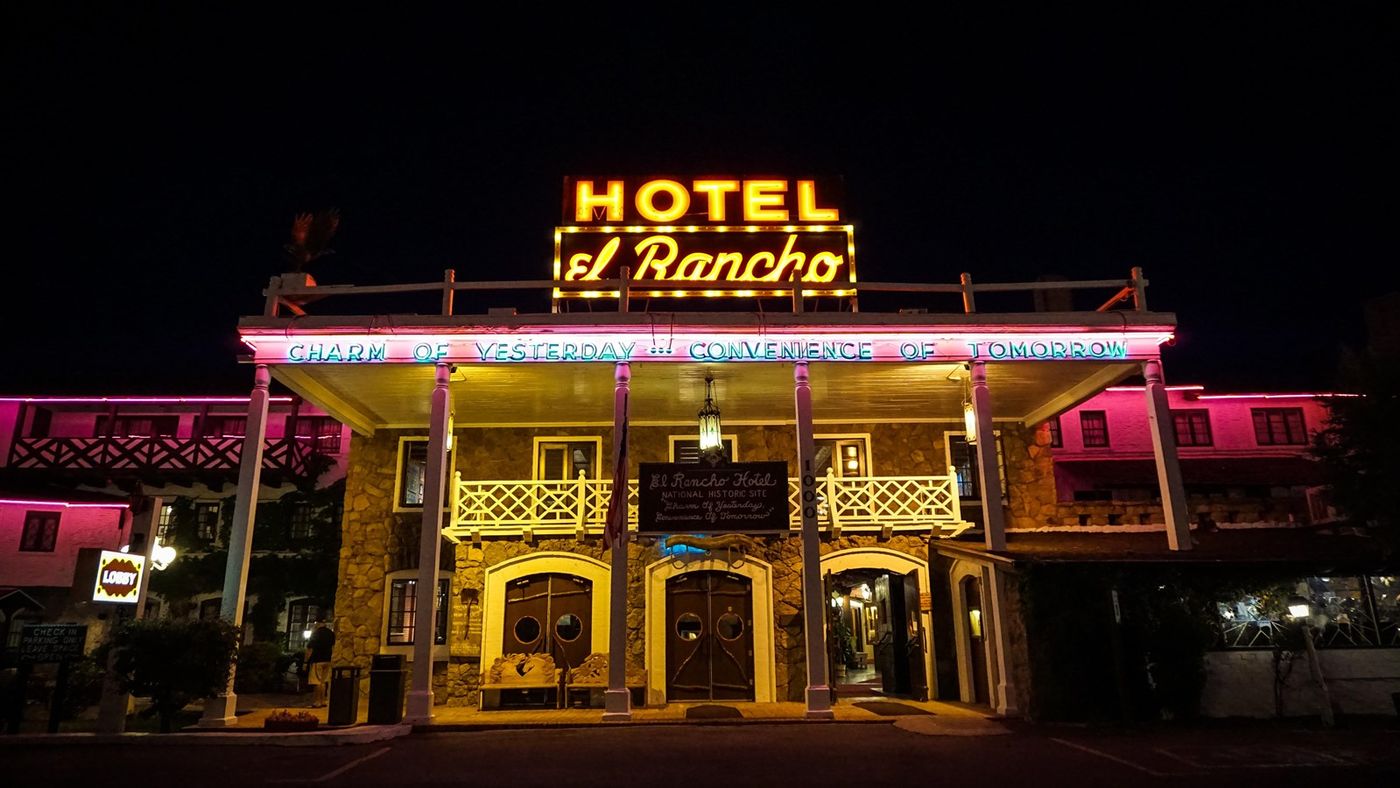
El Rancho Hotel in Gallup, New Mexico, sits just off historic Route 66 in the northwest corner of the state, where the red rock formations that define the region’s geology give the hotel’s surroundings a dramatic visual context that flat-terrain properties along the highway cannot match. The hotel’s primary historical identity is its role as a base for Hollywood productions that used the surrounding landscape as a backdrop during the studio era, hosting performers including John Wayne, Rita Hayworth, and Kirk Douglas during the decades when the sandstone formations of northwest New Mexico routinely stood in for the American West on screen. The signed photographs and celebrity memorabilia from these stays give El Rancho’s interior a historical texture accumulated over real events rather than manufactured through retrospective theming.
The renovations that have brought El Rancho to its current state have modernized the property enough to meet contemporary traveler expectations without erasing the historic character that gives the hotel its identity. An outdoor pool provides the swimming amenity that the desert climate makes genuinely necessary during the summer months, and a retail store stocked with local Native American jewelry, pottery, and weavings gives guests access to the regional arts and craft tradition that Gallup has served as a trading center for across generations of Indigenous production. The store’s focus on work from the Navajo Nation and the surrounding Pueblo communities reflects the cultural geography of northwest New Mexico in a way that generic souvenir shops along the route do not.
The red rock landscape surrounding El Rancho extends the destination well beyond the hotel’s grounds into a natural environment whose light and scale the Southwest produces, forming visible from the property itself. The combination of celebrity history, Indigenous arts access, spectacular desert landscape, and Route 66 location gives El Rancho a breadth of appeal that few single properties along the entire highway can match. Travelers $TRV who stay for two nights rather than one will find that the surrounding terrain rewards a second day of exploration in directions that a single overnight visit leaves unexplored.
4. The Campbell Hotel in Tulsa retains its 1927 mission roots with a dedicated Route 66 Suite
Credit: The Campbell
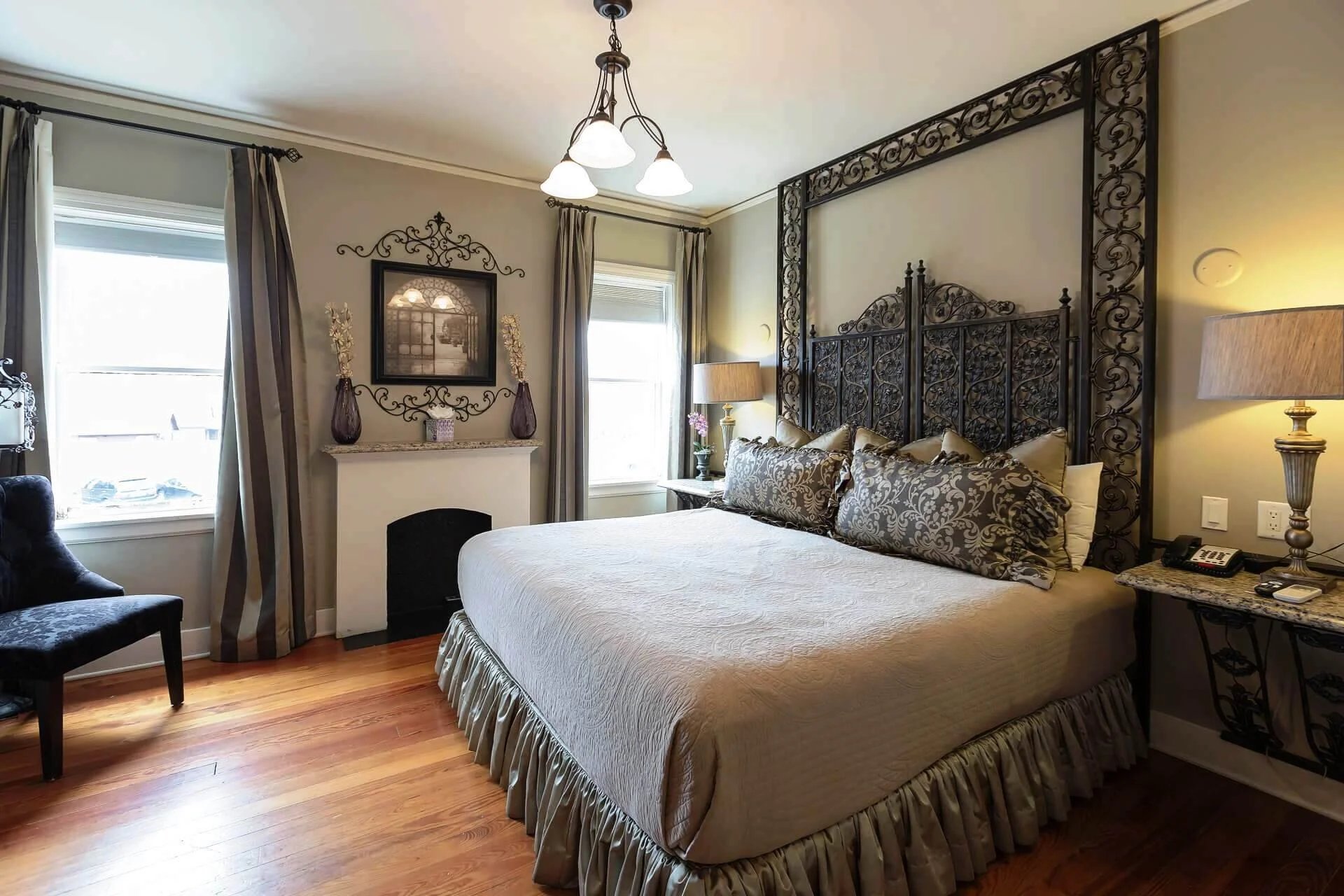
The Campbell Hotel in Tulsa, Oklahoma, began its life in 1927 under the name Casa Loma, built at the terminus of a trolley line that extended from Tulsa’s pricier downtown addresses into a more affordable residential neighborhood on the city’s edge. The Spanish mission-style facade and the unusually large closets in the original guest rooms gave the hotel a design character appropriate to its moment, when Spanish Colonial Revival architecture was spreading through American commercial construction, and the motor hotel was still new enough to carry genuine aspirational appeal for American travelers who associated automobile touring with freedom and modernity.
The property today operates as an elegant boutique hotel under its current name, retaining its Route 66 roots most explicitly through the coveted Route 66 Suite, a room decorated with memorabilia from the highway’s history that gives travelers who specifically seek the Route 66 experience a concentrated and immersive version of it within the hotel’s own walls. The suite serves as the property’s clearest statement of historical identity, offering guests who book it a room whose design reflects the highway’s cultural significance rather than requiring them to find it in external attractions. The rest of the property maintains a balance between contemporary hospitality standards and the architectural character of the 1927 construction, evident in its facade and original spatial arrangements.
Tulsa’s own cultural investments make the surrounding city worth spending additional time in for travelers staying at the Campbell Hotel. The Philbrook Museum of Art, housed in a 1920s Italian Renaissance villa, and the Woody Guthrie Center, dedicated to the folk musician who memorialized the Dust Bowl migration along Route 66, give the city a cultural depth that positions a Tulsa stop as more than a logistical overnight. The Campbell’s location near Tulsa’s historic Route 66 corridor, where original commercial buildings from the highway’s glory years still stand, makes the surrounding neighborhood itself worth exploring on foot. The combination of a historically grounded hotel, a dedicated Route 66 Suite for the most enthusiastic highway travelers, and a culturally rich surrounding city gives the Campbell Hotel a case for a two-night stop that purely utilitarian highway accommodations along the same stretch of Oklahoma do not provide.
5. Boots Court in Carthage reopened in 2023 with radios still replacing televisions
Credit: Boots Court
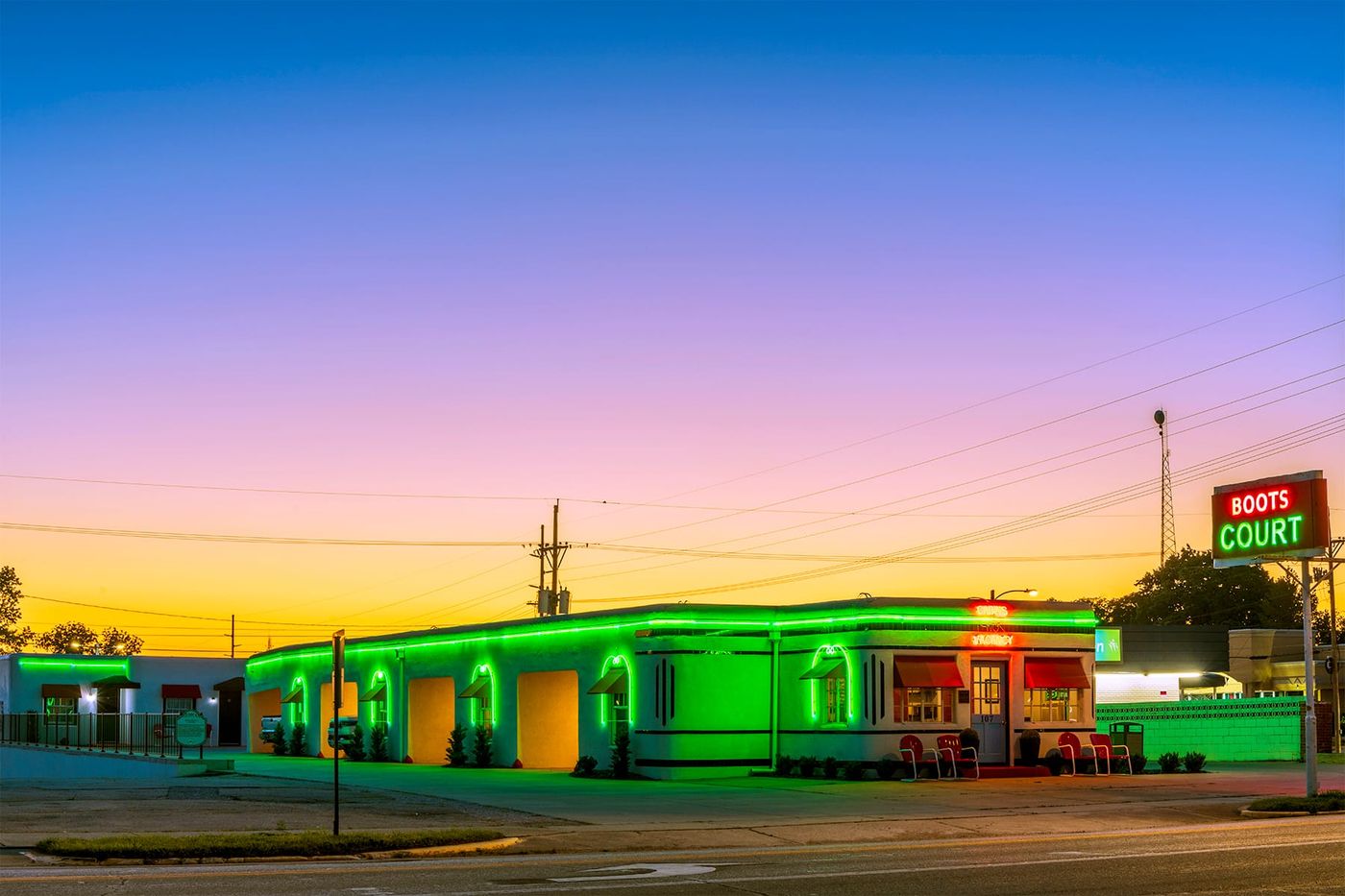
Boots Court in Carthage, Missouri, occupies the geographic and cultural crossroads where the Jefferson Highway meets Route 66 in the Ozarks, giving it a dual highway identity that connects two of the country’s great early road travel corridors at a single address. The motel was built in 1939 in the streamline moderne style, a pared-down version of art deco that emphasized horizontal lines, rounded corners, and smooth surfaces in commercial architecture, evoking speed and modernity. Opening rates of just a few dollars per night and a radio in every room placed it at the practical and technological edge of what the roadside motel category was delivering when the highway was young.
Clark Gable stayed at Boots Court twice during the 1940s, a detail that connects the property to the same Hollywood circuit that gave El Rancho Hotel its celebrity associations and that reflects the degree to which Route 66’s heyday overlapped with the film industry’s own golden era. After changing ownership repeatedly and eventually deteriorating to a state requiring extensive restoration, the motel was revived and reopened in 2023 as a 13-room property with neon lighting and nostalgic interior touches that honor the streamline moderne character of the original building. The decision to maintain the no-television policy in favor of radios is a specific and meaningful curatorial choice that distinguishes Boots Court from other restored properties: the radio-only rooms give guests an acoustic and experiential environment specific to the 1930s and 1940s roadside motel, one that streaming services and flat-screen televisions would immediately dissolve.
Cuba, Missouri, the town that hosts Boots Court, adds context to the stay through its own cultural identity as “Route 66 Mural City,” a designation reflecting the 14 large-scale outdoor murals depicting local history that give travelers who arrive at the motel a reason to walk the town’s streets and engage with the community’s own telling of its place in the region’s story.
6. El Rey Court in Santa Fe combines 1936 adobe origins with a mezcal bar and kiva fireplaces
Credit: El Ray Court Hotel
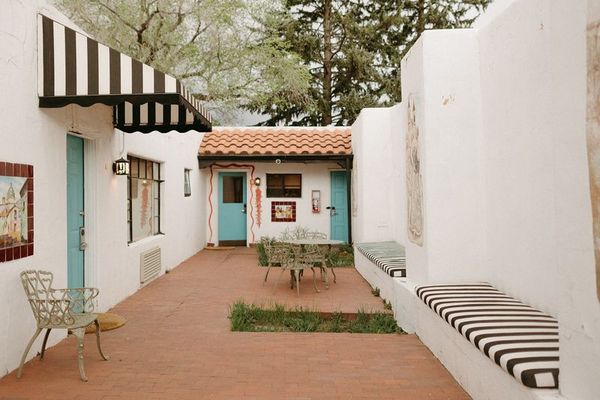
El Rey Court in Santa Fe, New Mexico, achieves the most successful synthesis on this list between historic Route 66 character and contemporary Southwestern design. The Adobe $ADBE Motor Hotel was built in 1936, making it among the older properties on the list, and its transformation through renovation into a contemporary Southwestern property has added amenities — a tequila and mezcal bar, a heated outdoor pool, kiva fireplaces in select rooms — that the original motor court did not attempt to provide. The design principle that no two guest rooms are identical gives the property an intimacy and individuality that large-format hotels with standardized rooms cannot replicate, regardless of the quality of those rooms.
The old-growth gardens and trees that surround El Rey Court represent a specific type of asset that cannot be accelerated or purchased outright: the plantings that were young when the hotel opened in 1936 have matured across nine decades into a canopy and garden environment that gives the property’s outdoor spaces a coolness, shade, and quiet that newly constructed hotels in the same location could not achieve for generations. The gardens function simultaneously as aesthetic amenity and acoustic buffer between the hotel and the Route 66 corridor that runs alongside it, providing the quiet respite that the property specifically identifies as one of its defining qualities. The combination of historic adobe construction, mature landscaping, and thoughtful contemporary additions gives El Rey Court a layered identity that rewards time spent on the property rather than simply a night’s sleep.
Santa Fe’s position as one of the American Southwest’s most significant cultural destinations gives travelers who base themselves at El Rey Court a surrounding city whose museums, galleries, restaurants, and historic architecture extend the stay well beyond what the Route 66 journey alone would provide. The Canyon Road gallery district, the Palace of the Governors, and the Georgia O’Keeffe Museum each add a distinct cultural draw to the city, complementing rather than competing with the highway’s historical significance.
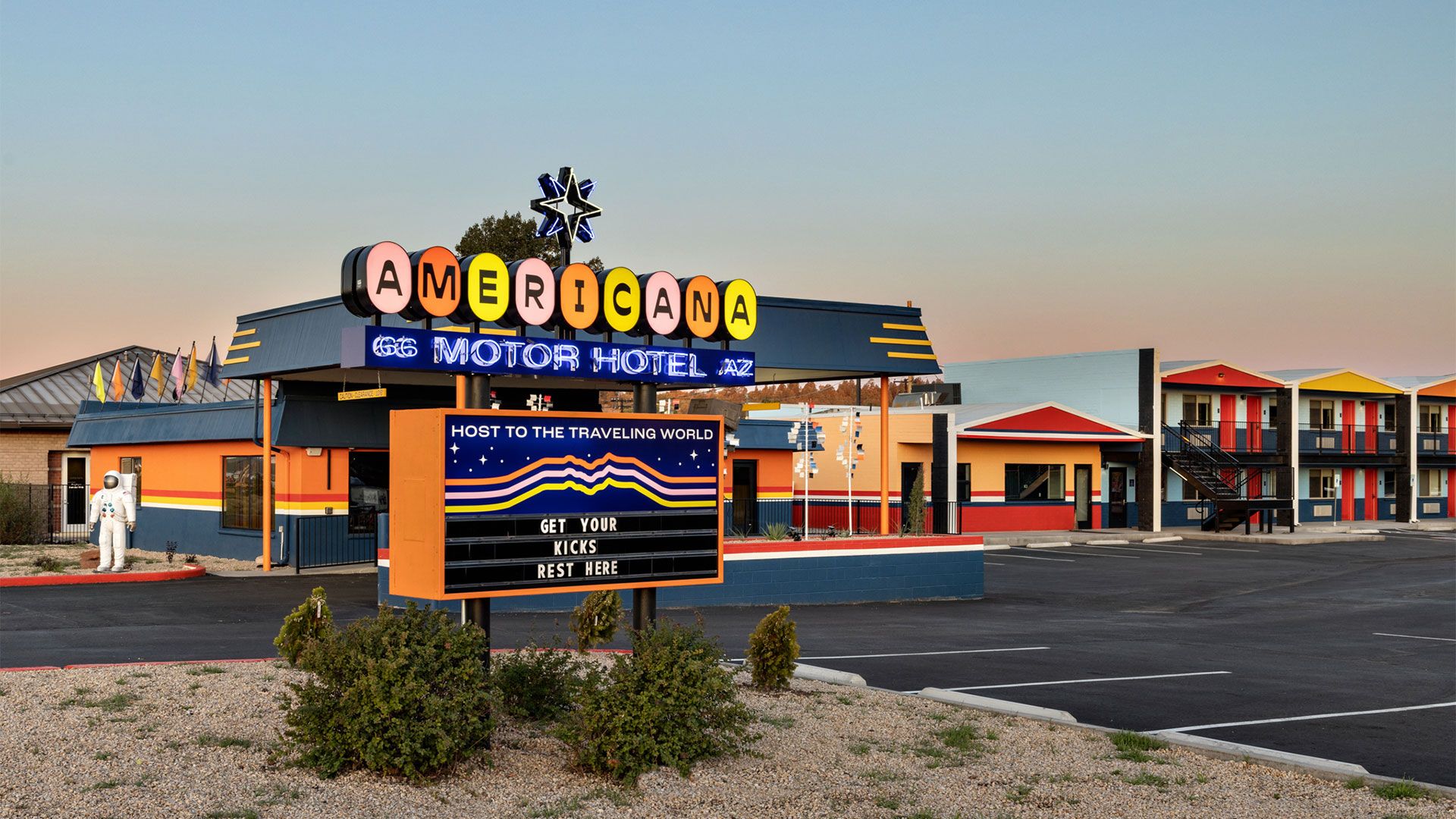
7. Americana Motor Hotel in Flagstaff leans into 1970s design in the first International Dark Sky City
Credit: Americana Motor Hotel
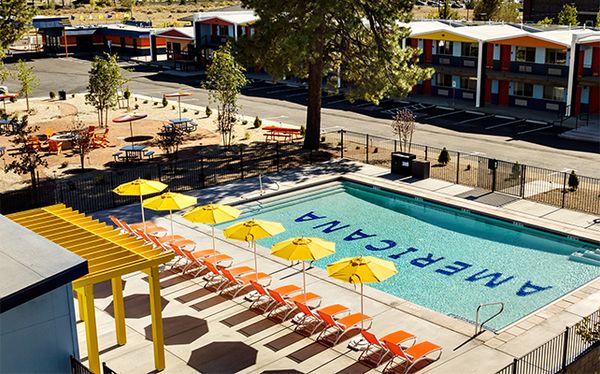
The Americana Motor Hotel in Flagstaff, Arizona, occupies a different historical register from the other properties on this list. Built in 1962 and relaunched in 2023, it leans into a 1970s aesthetic rather than the 1930s and 1940s character that most Route 66 revival properties emphasize. Designer Andrew Alford’s concept of “rustic futurism” produces an interior environment whose disco balls, swirling stripe rugs, bold colors, and geometric graphics give the Americana Motor Hotel a visual identity entirely distinct from every other property on this list, which is a defensible design choice in a segment where historic preservation and mid-century character can sometimes blur into a generic Route 66 nostalgia aesthetic.
Flagstaff’s designation as the world’s first International Dark Sky City gives the Americana Motor Hotel an outdoor amenity that the property addresses directly by providing telescopes for stargazing. The high elevation of the Colorado Plateau on which Flagstaff sits, combined with the dry air and the city’s active effort to limit light pollution, produces night sky visibility that lower-elevation cities with higher humidity and denser development cannot match. The year-round heated pool and bike rental program provide the property with active outdoor amenities during daylight hours, extending the stay’s physical engagement beyond the rooms and into the evening stargazing.
The Grand Canyon sits less than an hour’s drive north of Flagstaff, giving the Americana Motor Hotel proximity to one of the country’s most visited natural landscapes, reinforcing its Route 66 location with a complementary attraction. Travelers $TRV who want to combine the highway’s historical character with a Grand Canyon visit will find Flagstaff the most practical base for both, and the combination of the Americana’s retro-futurist design, dark sky access, and canyon proximity gives the property a range of reasons to choose it that its 1962 construction date does not diminish. The decision to lean into the 1970s aesthetic rather than the more expected 1940s roadside character also distinguishes the Americana as a property that has thought specifically about what it wants to be rather than defaulting to the genre’s conventions.
8. Wagon Wheel Motel in Cuba holds the title of Route 66’s oldest continuously operating motel
Credit: U.S. National Park Service
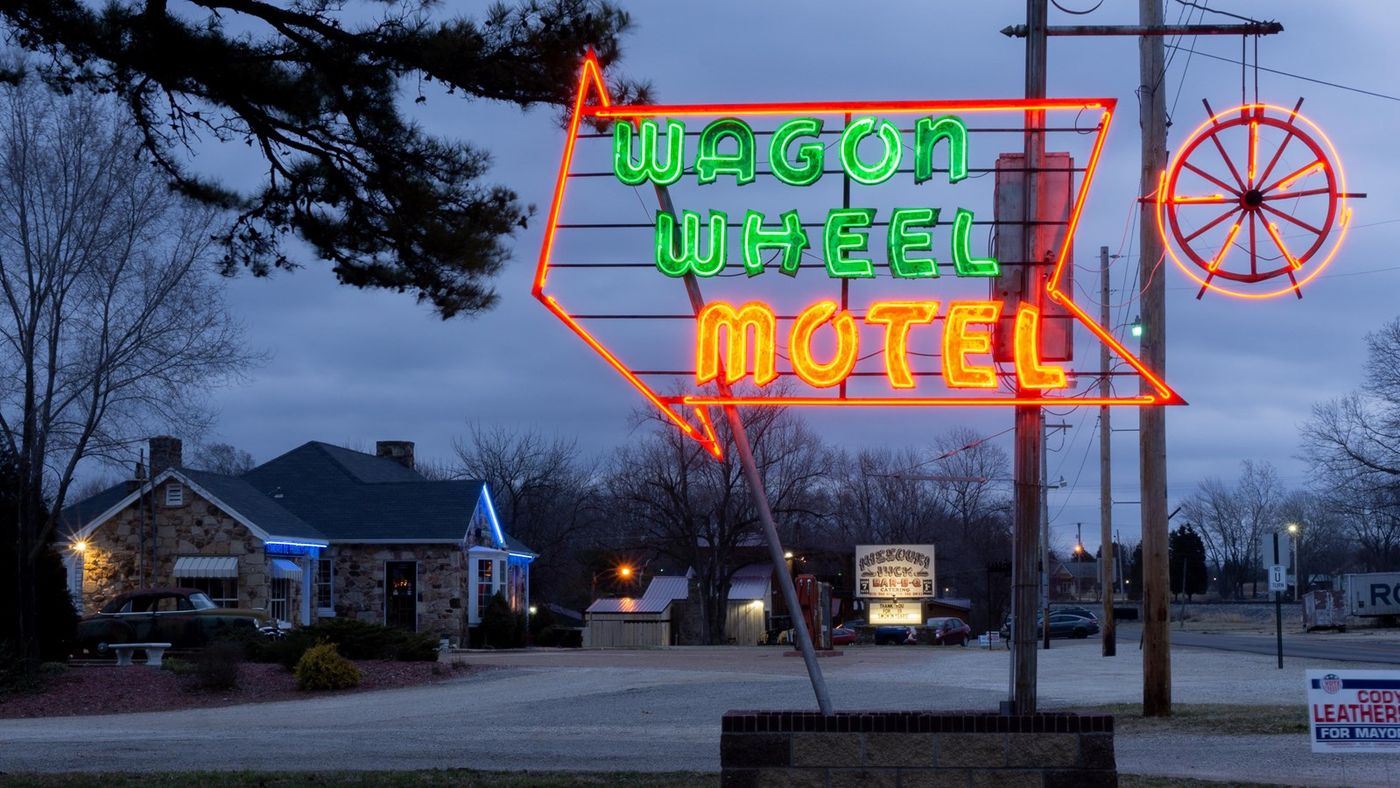
The Wagon Wheel Motel in Cuba, Missouri, holds the distinction of being the oldest continuously operated motel on Route 66, having opened in 1935 and maintained operations through the highway’s glory years, its decline, and its current revival as a heritage travel destination. The Tudor revival-style buildings that make up the property are architecturally unusual for a roadside motel, whose typical vernacular ran toward Spanish Colonial, streamline moderne, or the generic rectangular forms that the postwar construction boom standardized across the American landscape. The Tudor style gives the Wagon Wheel a visual distinctiveness that the classic neon sign marking the property’s presence on the highway reinforces rather than contradicts.
Connie’s Shoppe within the motel complex gives travelers a Route 66 souvenir and memorabilia shopping option that the property’s historical status makes contextually appropriate: as the oldest continuously operating motel on the highway, the Wagon Wheel carries the kind of historical weight that makes the souvenir trade feel like participation in a tradition rather than a commercial transaction. The town of Cuba itself adds an additional dimension through its outdoor mural program, which has earned the community the designation of “Route 66 Mural City” for 14 large-scale murals depicting local and regional history, distributed across the town’s building facades and offering pedestrian exploration a specific visual reward.
The Missouri section of Route 66 is among the least-traveled portions of the highway by international visitors, who tend to focus on the visually spectacular New Mexico and Arizona sections. The relative unfamiliarity of the Missouri corridor gives properties like the Wagon Wheel a quality of discovery that the more heavily documented southwestern segments have largely lost to familiarity. Travelers $TRV who approach Route 66 as a comprehensive historical journey rather than a highlights tour will find Cuba and the Wagon Wheel representative of the highway’s Midwestern character in ways the desert Southwest does not. The motel’s claim to be the oldest continuously operated property on the route gives it historical authority that no other property on this list can match in the same terms, making it an essential stop for travelers whose primary interest is the highway’s documented history rather than its visual drama.
9. The Historic Grand Canyon Hotel in Williams is Arizona’s oldest continuously operating hotel
Simon Schoeters / Wikimedia Commons (CC BY 2.0)
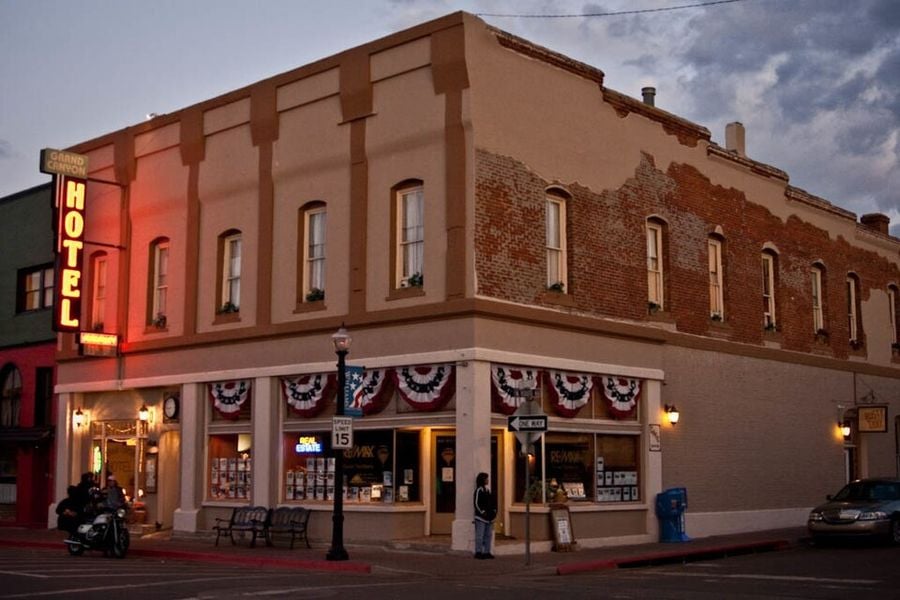
The Historic Grand Canyon Hotel in Williams, Arizona, holds two distinctions simultaneously: it is the first hotel built in Arizona and the longest continuously operating hotel in the state, giving it historical standing that predates the Route 66 designation by several decades and extends its significance beyond the highway’s centennial. Williams sits approximately one hour south of Grand Canyon National Park, which gives the hotel a dual identity as both a Route 66 property and a Grand Canyon gateway, positioning it at the intersection of two of America’s most historically significant travel corridors.
The guest rooms retain the high ceilings established by the original construction, giving the interior a spaciousness that the Victorian-era building scale produced naturally rather than through the calculation of optimal room dimensions. The Victorian-inspired library in the hotel’s common spaces gives the property an architectural character that the motor court format typically did not, reflecting a hotel tradition that predates the roadside accommodation culture Route 66 would later generate. The remodeled bathrooms provide the rooms with contemporary plumbing and fixtures without altering the ceiling heights, window proportions, and room dimensions that give the property its historical spatial character. A grand ballroom extends the hotel’s capacity into event and gathering space, providing Williams with a venue for local celebrations and travelers’ larger group occasions.
The Grand Canyon Railway, which departs from downtown Williams and carries passengers to the South Rim on a scenic journey across the Colorado Plateau, offers travelers staying at the Historic Grand Canyon Hotel a specific and practical alternative to driving the canyon approach road, with its traffic and parking challenges. The historic downtown commercial strip of Williams, where Route 66 businesses have survived the interstate era in a concentration unusual along the highway’s length, gives the surrounding area a walkable character that isolated highway properties outside town centers cannot provide. The combination of Arizona’s oldest hotel, Grand Canyon access, and a genuinely intact Route 66 downtown makes Williams one of the most complete destinations on this list.