Not all entry-level jobs are created equal. WalletHub ranked 108 careers to find the best and worst for new grads

gorodenkoff / Getty Images
A new graduate faces a tighter job market than the one that greeted the Class of 2025. Employers project only a 1.6% increase in hiring for the Class of 2026, a pace that leaves little margin for error when choosing a career path. A first job shapes professional habits, peer networks, and salary trajectories for years. But financial outcomes are only part of what is at stake. Pick the wrong one, and a worker may spend a decade undoing the damage. Pick well, and the compounding advantages of strong starting pay, rapid skill development, and a growing field can set a career on a trajectory that no amount of lateral movement can replicate later.
The gap between a strong entry-level position and a weak one is wider than most candidates realize. Across the full landscape of entry-level careers, the top-ranked occupation offers a starting salary more than six times higher than the lowest-paid position in the study. Income growth potential between the most and least promising paths differs by a factor of two. At the top of the market, new hires step into roles with robust starting pay, abundant openings, and strong automation protection. At the bottom, workers accept low wages, shrinking demand, and physical conditions that drive many out of the field entirely. First careers rarely reverse cleanly, and poor early decisions hit hardest those who lack the savings or network to pivot quickly. A specific, data-grounded look at which occupations reward new entrants and which ones tax them is the best tool graduates can use to make the right call.
WalletHub evaluated 108 entry-level occupations across three dimensions — immediate opportunity, growth potential, and job hazards — using 12 weighted metrics, including average starting salary, projected job growth through 2034, unemployment rate, automation vulnerability, income growth potential, and median tenure with one employer. The analysis identifies the careers that give new workers the best possible launch and flags the ones most likely to stall them.

Hinterhaus Productions / Getty Images
Hardware engineers scored 69.23 out of 100, the highest total among all 108 occupations evaluated. They earn the second-largest starting salary in the study, and similarly, their median annual earnings of nearly $157,000 is the second-highest in the entire dataset. Few entry-level fields pay graduates so well before they have spent a single day on the job.
Employers who hire hardware engineers post the 17th-most job openings of any occupation in the study, indicating a market with genuine demand and exceptional pay. When employers compete for new talent in a field with few candidates, they push back less on salary and move faster on offers. That benefits graduates who arrive with a degree and no prior professional history. Candidates can secure a position without prior work experience, removing a barrier that traps many new graduates in a frustrating cycle.
Most professionals in this field do not exceed 40 hours per week, which sets hardware engineering apart from many high-earning alternatives where extended hours are a structural expectation. Many other well-paying technical disciplines require 50- or 60-hour workweeks as the norm, and workers in those fields sacrifice personal time as a condition of high pay. Hardware engineers avoid that tradeoff entirely.
Engineers who enter early also build durable careers in a sector with structural staying power. The computing infrastructure, consumer electronics, and enterprise hardware markets have sustained demand across multiple economic cycles and show no signs of contraction. Engineers who build experience in hardware design develop technical depth that opens clear paths into systems architecture, product engineering leadership, and senior design roles, all of which pay substantially more than entry level.
Monty Rakusen / Getty Images
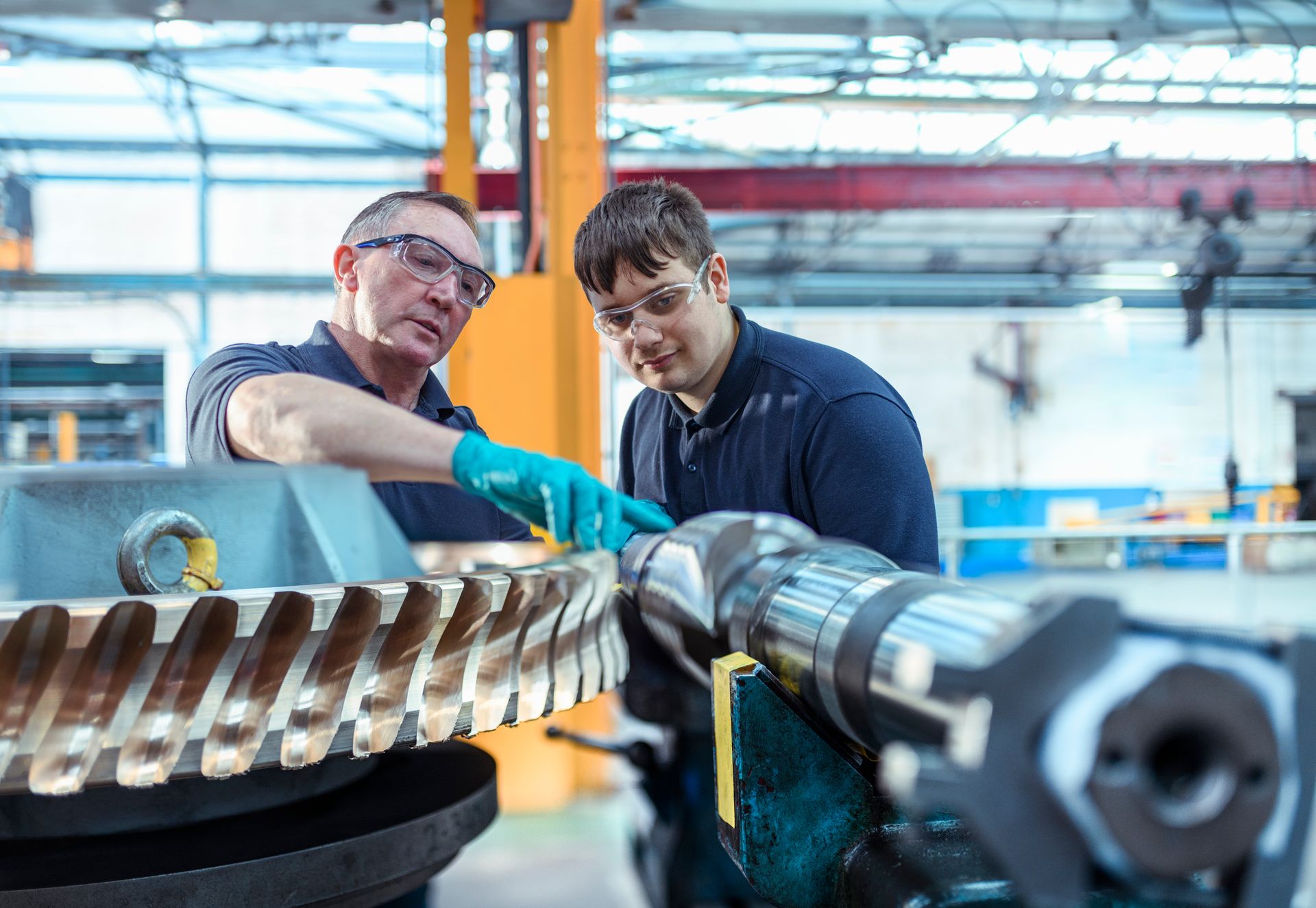
Generalist engineers tied for the most job openings among all 108 occupations, making this one of the most accessible entry points in the entire dataset. Engineers in this category and safety-related roles share the top spot for opening volume. Employers across regions and sectors hire early-career engineers at high volume, meaning graduates who have not yet chosen a sub-discipline can find work without committing to a narrow domain. Graduates benefit from that breadth in ways that peers with narrower specializations cannot match at the entry level.
A graduate entering as an Engineer I earns a median annual salary of nearly $117,000 — the 13th-highest in the study — with starting pay of nearly $80,000. Engineering credentials carry market value independent of whether a graduate has specialized in civil, mechanical, industrial, or any other domain. Entering this category preserves the full financial upside of the degree without forcing an immediate commitment.
Many of these engineers keep manageable hours, preserving the personal time that many other well-compensated fields erode as a default. WalletHub scored this category at 68.09 overall, placing it second in the study, just behind hardware engineers. No significant tradeoff separates the two top positions. Both deliver strong pay, accessible entry, and reasonable hours.
A generalist engineering role offers stability to graduates who are unsure of their direction and helps them develop a clearer professional identity. They can find more open positions here than in any other field in the study and earn above-average earnings from Day 1.

Maskot / Getty Images
Certified nursing assistants employed in nursing homes earned a total score of 67.57, placing them third overall and within two points of the top occupation in the study. CNAs in nursing homes hold some of the lowest odds of displacement by machines among all the roles evaluated, because feeding, repositioning, bathing, and emotionally supporting elderly residents requires human judgment and physical presence that automation has not replicated and is unlikely to replicate at scale in the near term.
CNAs in nursing homes also work in a field with an unemployment rate of just 2.9%, the second-lowest among all careers in the analysis, further strengthening the stability case. Employers in this field hire through economic fluctuations because patient care demand does not contract with GDP. Graduates who enter this occupation face a much shorter and less competitive search than peers in fields with higher unemployment rates. CNAs in nursing homes rank fifth in the study for sheer volume of available positions, meaning graduates can typically find openings near where they want to live without uprooting themselves for a handful of opportunities in a concentrated market.
Entry requirements give recent graduates a direct advantage. Candidates can secure a CNA position in a nursing home without prior work experience, which suits those who have clinical training from a nursing assistant program and want to move directly from coursework to employment. CNAs in this setting also do not typically exceed 40 hours per week, allowing practitioners to sustain the physically and emotionally demanding nature of patient care over a long career.
Nursing home CNAs earn less at entry than engineers, a real tradeoff that graduates should assess before committing. But engineers cannot promise what CNAs can. Employers hire CNAs because the U.S. population aged 65 and older keeps expanding, and nursing homes serve the highest-acuity end of that demand. Graduates who prioritize employment security, automation resistance, and reliable openings will find this occupation one of the most defensible starting points in the entire 2026 dataset.

Reza Estakhrian / Getty Images
Welders scored 32.07, the lowest total score in the entire study by nearly seven full points, a substantial distance in a dataset where most adjacent scores sit close together. No dimension of the WalletHub framework produced a favorable result for this occupation. Welders ranked 64th in immediate opportunity, 97th in growth potential, and 91st in job hazards.
Automation poses the most severe threat. Welders ranked 97th in growth potential, gaining income slowly over a career, facing limited job expansion through 2034, and carrying the highest automation exposure of the three failing occupations in this analysis. Welding robots have extended their capabilities across manufacturing environments over the past decade, handling repetitive seam and spot welds with increasing precision and speed at a cost that continues to fall. WalletHub's occupation viability score placed welders among the most automation-exposed occupations in the entire analysis. Graduates entering this field at 22 or 23 may find that employers need fewer welders by the time those graduates reach their mid-career years, limiting both earnings and mobility.
Workers in this occupation also contend with hazardous conditions that compound the automation problem. They sustain exposure to ultraviolet and infrared radiation, toxic metal fumes, extreme heat, and postures that produce musculoskeletal strain over years of repetition. Welders accumulate those harms in ways that distinguish the field from others that score low overall without carrying the same occupational health risk.
Graduates in the skilled trades can find fields that score far better. Engineers without a specific specialization and CNAs in nursing homes both preserve practical, applied work while offering automation resistance and lower hazard exposure than welding necessitates. Skilled welders retain value in specialized, high-precision applications such as aerospace and underwater construction, where automation cannot easily substitute for human skill, but those niches are narrow. Graduates entering the broad welding field in 2026 start from the weakest position of any occupation in the study.

PhotoAlto / James Hardy / Getty Images
Emergency dispatchers earned a total score of 38.86, ranking 107th out of 108. Dispatchers placed 95th in immediate opportunity and 91st in job hazards, two of the most consequential dimensions in the WalletHub analysis. Dispatchers also ranked 54th in growth potential, which means no dimension of the study offered meaningful relief from the job’s overall weakness.
Each shift adds to that hazard toll. Professionals in this occupation manage life-threatening calls, coordinate first responders across simultaneous crises, and absorb the emotional weight of emergencies they hear but cannot physically address. Dispatchers who work an eight- or 10-hour shift sustain a category of occupational strain that differs from physical injury but accumulates in the same way. Burnout, secondary trauma, and chronic stress are structural features of their work. Dispatchers score near the bottom of the study in both overwork and injury rate measures.
Starting pay does not compensate for those conditions. Dispatchers earn salaries that rank 35th in the study, above the floor but not strong enough to justify the hazard exposure they absorb. Dispatch organizations typically push professionals who want to advance into supervisory or administrative roles. Workers who want to deepen their technical skills rather than manage others hit a ceiling early. Dispatchers in that position see their long-term earnings stall.
Dispatchers are indispensable to public safety, and skilled professionals in this field earn genuine respect within emergency response systems. Communities depend on experienced dispatchers who can manage the cognitive and emotional demands of the role without error. Nevertheless, new graduates evaluating their first step will find that WalletHub's 2026 findings draw a clear contrast between the conditions dispatchers face and those available in fields that score far higher across every dimension.

Photo_Concepts / Getty Images
Automotive mechanics scored 39.78 out of 100, placing 106th among 108 occupations. They face pressure from multiple directions simultaneously. WalletHub's hazard ratings pushed automotive mechanics to 86th place among all roles, immediate opportunity ranked 66th, and growth potential placed 28th. No individual result was strong enough to shift the overall picture above the study midpoint on any dimension.
Physical hazard is the sharpest liability. Every shift, professionals in this field face physical risks — including heavy lifting, heat exposure, compressed systems, caustic fluids, and sharp metal edges — that push injury rates well above those in desk-based and clinical careers. Workers in this field wear down over time in ways that do not reverse, and a single early injury can end a mechanic's career more decisively than any economic downturn. Mechanics who work in this field long enough contract chronic musculoskeletal conditions. That’s an occupational norm, not an outlier.
Electric vehicles are reorganizing the technical demands of automotive service as well. Some legacy mechanical competencies are losing relevance faster than incumbent workers can retrain. Shops are investing in diagnostic software expertise and high-voltage electrical systems knowledge, which rewards practitioners who adapt but creates genuine uncertainty for those trained in conventional internal combustion systems. Mechanics in this field have a growth potential ranking of 28th in the study, reflecting limited income-building opportunities and moderate job expansion projections through 2034.
Many graduates choose automotive work because they enjoy hands-on problem-solving. They should weigh whether the field's hazard exposure and limited earnings will hold up against the appeal over a 40-year career. Mechanics at the start of their career will find little shelter from the hazards, transitional technical demands, and middling compensation growth that define the field.
