
These are the artists who never won a Grammy yet built some of music's biggest and most enduring global followings, from BTS to Elvis Presley
Amy Sussman/Getty Images
BTS said this week that it will not submit its music for consideration at the 2027 Grammy Awards, a little over a month after the Recording Academy introduced a new Best Asian Pop Music Performance category. Fans and the band itself worried the new genre lane would quietly steer BTS away from the top races, including album of the year, where the group's comeback record had been considered a serious contender. It is the latest twist in a story that predates BTS by decades: some of the most commercially dominant acts in music history have built careers, catalogs and business empires that dwarf almost everything the Grammys have ever recognized, all without a single Grammy win to show for it.
That is the real story behind the list of artists who never won a Grammy. The award has always been an imperfect measure of impact. It rewards what a relatively small pool of recording-industry voters responds to in any given year, not what fills stadiums, sells out world tours or gets sampled, covered and streamed for half a century afterward. BTS now joins a group that includes Elvis Presley, Queen, ABBA, Bob Marley, Diana Ross and Tupac Shakur, artists whose commercial reach was, and in several cases still is, larger than most Grammy winners will ever achieve.
This list runs through 15 artists and bands that built lasting, in some cases genuinely global, businesses and fan empires with little or no help from the Recording Academy. A few won a small number of Grammys relative to the size of their catalogs; most never won a competitive one at all. None of that stopped stadium tours from selling out, greatest-hits compilations from going multi-platinum or jukebox musicals from running for decades. The pattern says less about the artists than it does about how the industry's biggest award show has, again and again, been slow to recognize the acts that ended up mattering most. Read on for how each of these 15 careers turned a Grammy shutout into a footnote rather than a setback.
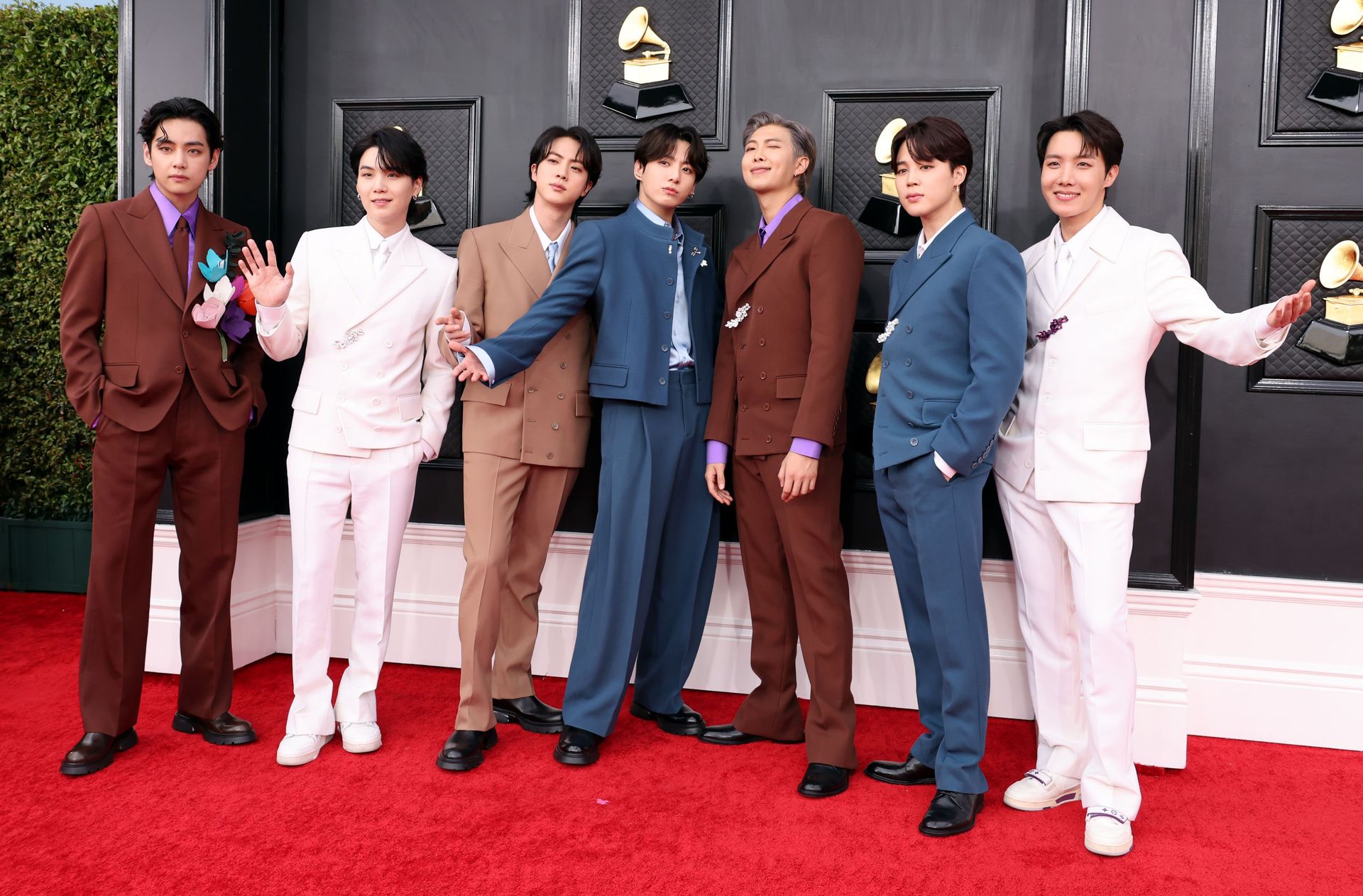
BTS announced on July 29, 2026, that it will not submit music for consideration at the 69th Grammy Awards, skipping the ceremony entirely rather than risk being funneled into a new genre category the group worried would sideline it from the top awards. All seven members, RM, Jin, Suga, J-Hope, Jimin, V and Jungkook, posted the same statement on their individual social media accounts, saying they hoped their music could be heard on its own terms rather than divided by region or language.
The decision followed the Recording Academy's announcement a month earlier of five new award categories for the 2027 show, including Best Asian Pop Music Performance. Recording Academy chief executive Harvey Mason Jr. said he respected the group's choice, while stressing that artists who enter a genre category are not barred from also competing in the marquee general-field awards, among them album of the year, record of the year and song of the year.
The timing stung because BTS looked closer than ever to a first Grammy win. The band returned from a lengthy hiatus in March 2026 with a new album that became one of the year's best-selling records, and industry watchers expected a serious run at album of the year at the next ceremony. Instead, BTS heads into 2027 with the same tally it has carried since its Grammy debut: five nominations, zero wins.
None of that has slowed the group down. BTS became the most awarded act in Billboard Music Award history in 2022, and this July it headlined the FIFA World Cup final halftime show alongside Shakira and Madonna. South Korea's Hyundai Research Institute has repeatedly estimated that BTS activity adds somewhere between 3.6 billion dollars and 5 billion dollars a year to the national economy, a figure that rivals the contribution of some of the country's largest exporters. A band that has never held a Grammy has, by that measure, built an economic footprint most Grammy winners will never approach.
Diana Ross has never won a competitive Grammy despite 12 nominations spread across more than 50 years of recording, a gap the Recording Academy has tried to paper over with two separate honorary prizes rather than a real trophy. Ross received a Grammy Lifetime Achievement Award in 2012, and the Supremes, the Motown group she fronted before going solo in 1970, received their own Lifetime Achievement Award in 2023. Neither is a competitive award, and neither changes her actual Grammy record: zero wins.
Her most recent nomination came in 2024, for the album Thank You in the best pop vocal album category, where she lost to Michael Bublé. It marked her first nomination in that specific category in about 40 years and underscored just how long the gap has run. From the Supremes' string of number-one singles in the 1960s through her solo run of hits like Upside Down, Ain't No Mountain High Enough and Endless Love, the Recording Academy has never once handed her a competitive award.
The commercial record tells a different story. Ross charted more entries on the Billboard Hot 100 than almost any other female artist across the rock era, first with the Supremes and then as a solo act, spanning the 1960s through the 2020s. Her catalog has outlived the Grammy shutout by becoming foundational source material for later generations: The Notorious B.I.G. built Mo Money Mo Problems around a sample of I'm Coming Out, and her Motown-era hits remain a fixture of film and television soundtracks decades after their original release. She has continued to headline arenas and festivals into her 80s, a touring longevity that few Grammy winners, competitive or otherwise, can claim, including a widely covered performance in the legends slot at Glastonbury in 2022. The absence of a trophy has become, if anything, a footnote to a catalog the industry keeps returning to.
Elvis Presley won only three competitive Grammy Awards in his lifetime, and all three went to his gospel recordings rather than any of the rock-and-roll hits that made him a global phenomenon. His first win came in 1967 for the album How Great Thou Art, in the best sacred performance category, arriving after nine consecutive years of Grammy nominations that had produced no wins at all. He won twice more in similar categories, for the album He Touched Me in 1972 and a live recording of How Great Thou Art in 1974. Those three trophies make up his entire competitive Grammy record, out of 14 career nominations.
None of Presley's signature singles, among them Hound Dog, Jailhouse Rock, Suspicious Minds and Are You Lonesome Tonight, ever won a Grammy, and he was never nominated for, let alone won, record of the year or album of the year. The Recording Academy did recognize him with a Lifetime Achievement Award in 1971, when he was just 36, making him one of the youngest recipients the honor has ever had. But a lifetime award, by definition, is not a competitive win, and it arrived while Presley still had years of touring and recording ahead of him.
The commercial machine built around Presley's name has continued largely undisturbed by his thin trophy case. His estate has repeatedly claimed worldwide sales north of 500 million records, a figure that would place him among the best-selling solo recording artists in history regardless of how conservatively it's counted. Graceland, his Memphis estate turned museum, still draws hundreds of thousands of paying visitors every year, decades after his 1977 death, and Elvis Presley Enterprises continues to license his name and image across music, film and merchandise. In 2018, more than 40 years after he died with three gospel Grammys to his name, Presley received the Presidential Medal of Freedom, a recognition his rock-and-roll catalog never received from the Recording Academy while he was alive.
The Beach Boys collected four Grammy nominations across their career and won none of them, a shutout that includes three separate nods in 1967 for Good Vibrations and one more in 1988 for Kokomo. All four losses. The Recording Academy eventually handed the group a Lifetime Achievement Award in 2001, decades after the songs that earned those original nominations had already become fixtures of American pop culture, but that honor sits outside the competitive categories and does nothing to change the band's actual record: zero wins.
The nominations the band lost only look worse with time. Good Vibrations, built around a groundbreaking use of the theremin and a famously expensive, modular recording process for its era, is now routinely ranked among the greatest singles ever made, and its parent sessions fed directly into Pet Sounds, an album Paul McCartney has said pushed the Beatles toward Sgt. Pepper's Lonely Hearts Club Band. The band that arguably reshaped the ambitions of its biggest Grammy-winning rivals has no competitive Grammy of its own to show for it.
Brian Wilson's songwriting and studio innovations turned California surf culture into one of the most exported lifestyle brands in American music, powering decades of licensing deals, tourism marketing and film soundtracks built around the "endless summer" image the band helped invent. The group continued touring arenas and amphitheaters well into the 2010s, and Wilson's own solo career eventually picked up two competitive Grammys of his own, meaning the songwriter has more Grammys individually than the band that made him famous ever collected together. The band was also inducted into the Rock and Roll Hall of Fame in 1988, a recognition that arrived more than a decade before its first and only Grammy Lifetime Achievement Award. Four nominations, four losses, and a catalog that keeps generating royalties regardless of what the Recording Academy ever decided.
Queen collected four Grammy nominations while Freddie Mercury was alive, spread across two ceremonies in the late 1970s and early 1980s, and won none of them. The Recording Academy waited until 2018 to give the band any Grammy recognition at all, handing Queen a Lifetime Achievement Award the same year its classic album A Night at the Opera entered the Grammy Hall of Fame, decades after both were released. Neither honor is a competitive award, and to this day no individual Queen song or album has won a competitive Grammy.
That 2018 recognition arrived alongside the release of Bohemian Rhapsody, the band's biopic, which went on to gross more than 900 million dollars worldwide and become the highest-grossing music biopic ever made. The film's success reintroduced Queen's catalog to a generation of streaming-era listeners who had never seen the band perform live, and it pushed the title track past two billion streams on Spotify $SPOT, a milestone very few pre-streaming-era singles ever reach.
The band's commercial footprint extends well beyond the film. Queen's Greatest Hits compilation is the best-selling album in the history of the UK's Official Charts, having sold more than six million copies domestically since its 1981 release, ahead of albums by ABBA, Adele and every other act on that list. We Will Rock You, the jukebox musical built around Queen's catalog, ran in London's West End for 12 years starting in 2002, one of the longest runs any music-based stage show has managed. Brian May and Roger Taylor have continued to tour arenas and stadiums well into their seventies, backed by a catalog that keeps generating royalties, sync licensing deals and merchandise revenue with no Grammy trophy anywhere in the mix. Bohemian Rhapsody the song has also become one of the most licensed pieces of music in advertising and film, turning up in commercials and movie trailers on nearly every continent decades after it first topped the U.K. singles chart.
ABBA went 47 years without a single Grammy nomination, a run that started with the release of Waterloo in 1974 and didn't end until November 2021, when the reunited group's comeback single I Still Have Faith in You picked up a nod for record of the year. It was the first Grammy nomination of ABBA's career. The following year brought four more nominations, for the album Voyage and the singles Don't Shut Me Down and I Still Have Faith in You, spanning record of the year, album of the year, best pop duo/group performance and best pop vocal album. ABBA won none of them, closing out its Grammy ledger at zero wins from five total nominations.
The gap is one of the more striking omissions in Grammy history given how thoroughly ABBA's music has powered other people's businesses. Mamma Mia!, the jukebox musical built entirely around ABBA's songbook, opened in London in 1999 and has since been staged in dozens of countries, becoming one of the longest-running and most widely translated musicals ever produced. Its 2008 film adaptation grossed more than 600 million dollars worldwide and was, for a time, the highest-grossing film in UK box office history. A sequel followed a decade later.
More recently, ABBA Voyage, a concert residency built around digital avatars of the four band members performing alongside a live band, opened in a purpose-built London arena in 2022 and has drawn well over a million ticket buyers, reportedly making it one of the highest-grossing concert residencies ever staged, all without any of the four original members setting foot on stage. Estimates of ABBA's total record sales run into the hundreds of millions worldwide. The group's global profile traces back to a single night in Brighton, England, where Waterloo won the 1974 Eurovision Song Contest and introduced the group to an international audience decades before American Grammy voters paid it any attention. None of that required a Grammy to happen, and most of it happened decades before the Recording Academy first took notice.
Bob Marley was never nominated for a Grammy while he was alive, and structurally, he never had a real chance to be. The Grammys did not introduce a best reggae album category until 1985, four years after Marley died of cancer at age 36, which meant the genre he did more than anyone to popularize worldwide had no dedicated Grammy lane during his active career. The Recording Academy eventually gave Marley a posthumous Lifetime Achievement Award in 2001, marking 20 years since his death, but that remains a non-competitive honor. He has never won, and can never now win, a competitive Grammy.
His absence from the awards has had essentially no effect on the size of the business built around his catalog. Legend, the 1984 compilation released three years after his death, is widely considered the best-selling reggae album ever made, certified multi-platinum many times over in the U.S. alone, with global sales estimates well above 20 million copies. It remains a fixture on Billboard's catalog albums chart more than 40 years after its release, a run few albums by any living or Grammy-winning artist can match.
The Marley name has also become one of music's most durable licensing brands. House of Marley sells headphones and audio equipment built around sustainability messaging tied to the singer's legacy. Marley Natural and related ventures extended the brand into cannabis products following legalization in parts of the U.S. Tuff Gong International, the label and studio complex Marley founded in Kingston, continues to operate as a working part of Jamaica's music industry. Forbes has repeatedly listed Marley among its top-earning deceased celebrities, citing licensing income that runs into eight figures most years. A Grammy nomination has never been part of that equation, since the category that might have recognized him didn't exist until after he was gone.
Led Zeppelin has won exactly one competitive Grammy in its entire history, and it didn't arrive until 2014, more than three decades after the band broke up. The group's only trophy went to Celebration Day, a live album documenting a 2007 reunion concert at London's O2 Arena, in the best rock album category. None of Led Zeppelin's four numbered studio albums, and none of the era-defining tracks on them, including Stairway to Heaven, Whole Lotta Love and Kashmir, ever won a Grammy. The band has been nominated only three times total: for best new artist in 1970, which it lost, and twice more connected to Celebration Day, once for the album itself and once for the track Kashmir in the best rock performance category, which also lost.
The band picked up a Grammy Lifetime Achievement Award in 2005, a full 25 years after John Bonham's death ended the group, but that recognition sits outside the competitive categories entirely. Its most recent shot at a second competitive Grammy came and went in November 2025, when Becoming Led Zeppelin, the band's officially sanctioned documentary, was passed over for a best music film nomination despite a public campaign for its inclusion and a warmly reviewed theatrical release. Robert Plant, notably, has gone on to win eight Grammys as a solo artist, mostly for collaborations with Alison Krauss, meaning the singer now has more Grammys to his own name than the band that made him famous.
None of this has dented Led Zeppelin's commercial standing. The band is among the best-selling music acts in U.S. history, with more than 111 million certified album units according to the Recording Industry Association of America, placing it in the same tier as artists with dramatically larger trophy cases. Physical Graffiti, Led Zeppelin IV and Houses of the Holy remain fixtures of classic rock radio and streaming playlists worldwide, more than 50 years after their release, powered by a catalog the Grammys spent the band's entire active career mostly ignoring.
Radiohead has won three Grammys, and all three came in exactly one category: best alternative music album, for OK Computer in 1998, Kid A in 2001 and In Rainbows in 2009. That ties Radiohead with the White Stripes for the most wins any act has recorded in that category. What the band has never won is anything in the Grammys' top tier. OK Computer, Kid A and In Rainbows were all nominated for album of the year and lost each time, and Radiohead has never been nominated for record of the year or song of the year across a three-decade career built largely on albums now considered among the most influential rock records ever made.
The band's commercial instincts have often outpaced the industry the Grammys represent. When Radiohead released In Rainbows in 2007, it let fans name their own price for a digital download, including zero, at a moment when the music industry was still treating file-sharing as an existential threat. Reports at the time suggested the average UK buyer paid around six dollars, and the band later said the release outperformed the sales of its previous major-label album despite bypassing a label entirely. The move reshaped how the industry thought about direct-to-fan digital releases years before streaming settled the format question for good.
Radiohead has continued to headline festivals and stadiums across the U.S., the U.K. and mainland Europe for decades, commanding ticket prices and production budgets on par with the biggest acts of any era, competitive or otherwise. Thom Yorke has also periodically clashed publicly with the streaming economy that eventually replaced the download model Radiohead helped pioneer, pulling music from platforms he considered underpaying artists. None of that history required a Grammy in the general field. Three trophies from one genre category is, for a band this influential, a strikingly narrow Grammy footprint.
Snoop Dogg has been nominated for a Grammy at least 16 times since his 1993 debut without ever winning one, a run frequently cited as among the longest active nomination streaks without a win in the award's history. His nominated work spans three decades, from Gin and Juice in the mid-1990s through collaborations well into the 2010s and 2020s, and he has picked up trophies from the Billboard Music Awards, the BET Awards and the MTV Video Music Awards along the way. The Grammy has simply never been one of them.
What sets Snoop apart from many other artists on this list is how deliberately he has built a business empire around the gap. In February 2022, he purchased Death Row Records, the label that signed him as a young rapper in the early 1990s and helped define West Coast hip-hop, making him the owner of his own creative origin story three decades later. He co-founded Leafs by Snoop in 2015, one of the first celebrity-branded legal cannabis product lines in the U.S., positioning him early in an industry that has since become worth billions. His own spirits label, gin brand Indoggo, along with years of merchandising and licensing deals with companies from Skechers to Corona, have turned his image into one of hip-hop's most recognizable commercial brands, independent of any single album or single.
He has also expanded well outside music entirely. Snoop Dogg served as a correspondent and color commentator for NBC's coverage of the 2024 Paris Olympics, appearing across prime-time broadcasts to an audience many times larger than any Grammy telecast draws, and he has hosted or co-hosted television format shows including a long-running cooking series with Martha Stewart. None of that required a Grammy trophy to build. If anything, Snoop Dogg's career has become something of a case study in how a nomination streak without a single win can coexist with one of hip-hop's most diversified commercial portfolios.
Tupac Shakur has been nominated for a Grammy seven times since 1996 and has never won, a streak that has continued for nearly three decades after his death that year. His first two nominations came in 1996, for Dear Mama in the best rap solo performance category and for the album Me Against the World, and further posthumous nods followed for All Eyez on Me and the single Changes. His most recent nomination came in 2024, when the FX documentary series Dear Mama: The Saga of Afeni and Tupac Shakur was nominated for best music film, nearly 30 years after his death. It lost, extending a Grammy record that has stood at zero wins since his career began.
The commercial and cultural weight behind his name has only grown in the years since. All Eyez on Me, the 1996 double album released just weeks before his death, has been certified diamond by the Recording Industry Association of America, placing it among the best-selling hip-hop albums ever released in the U.S. His estate and Amaru Entertainment have continued releasing posthumous albums, compilations and archival material for nearly three decades, keeping his catalog commercially active long after most artists' careers would have quietly ended.
Perhaps no single moment captures the size of the Tupac business better than April 2012, when a photorealistic hologram of the rapper performed alongside Snoop Dogg and Dr. Dre at Coachella, one of the most talked-about live performance moments in festival history and a piece of technology that generated its own wave of licensing and imitation across the touring industry. Shakur was inducted into the Rock and Roll Hall of Fame in 2017, in his first year of eligibility. None of that has come with a Grammy attached, but very little about Tupac Shakur's posthumous career has depended on one.
Nicki Minaj has been nominated for a Grammy 10 times since 2012 and has never won one. Her first nomination came in the best new artist category, where she lost to Bon Iver in a result still debated by hip-hop fans more than a decade later. Her closest brush with a win came in 2015, when she was up for three separate awards in one night and lost every one of them to Kendrick Lamar. Additional nominations across best rap album, best rap song and various collaboration categories followed through the 2010s and 2020s, none of them converting into a win.
Her chart record tells a very different story about her standing in the industry. In 2021, Minaj passed Aretha Franklin to become the woman with the most total entries in the history of the Billboard Hot 100 chart, a record built across more than a decade of guest verses, singles and album tracks. Few artists, male or female, have matched the sheer volume of chart activity she has sustained since her 2010 debut album, Pink Friday.
Minaj has also built a commercial footprint well beyond music sales. Her Pink Friday-branded lipstick collaboration with MAC Cosmetics sold out within hours of its 2012 release, an early example of a hip-hop artist translating chart success directly into beauty industry demand. She has since launched her own fragrance line and maintained one of hip-hop's most durable and imitated visual brands, from wigs and color to persona-driven alter egos that shaped a generation of pop and rap aesthetics. A Grammy nomination streak now in its second decade without a single win has done nothing to slow any of it, and Minaj remains one of the most commercially bankable and chart-dominant women in music history regardless of what the Recording Academy has decided in any given year.
Guns N' Roses has never won a Grammy, and its most notorious oversight came right at the start. Appetite for Destruction, the band's 1987 debut, was released comfortably within that year's Grammy eligibility window and still received zero nominations, an omission the Recording Academy quietly corrected 37 years later by inducting the album into the Grammy Hall of Fame in 2024. By the time the band did start collecting nominations, the original snub was already history. Guns N' Roses has been nominated four times since 1990, for GN'R Lies, Use Your Illusion I, a cover of Live and Let Die, and a deluxe box-set reissue of Appetite for Destruction in 2019, and has lost every single time.
The band's commercial standing has never needed the Recording Academy's validation. Appetite for Destruction remains one of the best-selling debut albums in U.S. chart history, certified multi-platinum many times over by the Recording Industry Association of America decades after its release, and it continues to sell and stream at a pace few 1980s rock records can match. Sweet Child O' Mine, Welcome to the Jungle and Paradise City remain fixtures of classic rock radio, none of them ever nominated for, let alone winning, a Grammy.
The band's reunion years turned that catalog into one of the biggest live draws in the touring industry. The Not in This Lifetime tour, which reunited Axl Rose, Slash and Duff McKagan starting in 2016, grossed more than 584 million dollars by the time it wrapped, ranking among the highest-grossing tours any act has ever mounted, ahead of tours by numerous multiple Grammy-winning artists. A band that Grammy voters passed over entirely in 1987 spent the following decades becoming one of arena rock's most reliable revenue engines, trophy or no trophy, with the reunited lineup continuing to headline stadiums and festival main stages well into its fourth decade as a band.
Björk has been nominated for a Grammy 16 times since the mid-1990s and has never won, giving her one of the longest nomination streaks without a win in the award's history. Nine of those nominations came in the best alternative music album category alone, more than any other artist has ever received in that category, solo or otherwise, and her most recent nod arrived in 2023 for the album Fossora. She has come away from all of them empty-handed.
The pattern extends beyond music. Björk was also nominated for an Academy Award for best original song in 2001, for I've Seen It All from the film Dancer in the Dark, and lost that too, making her one of the rare artists whose two biggest industry snubs sit on opposite sides of the entertainment business entirely.
None of it has slowed her standing as one of pop music's most consistently boundary-pushing figures. In 2011, she released Biophilia as a series of interactive apps built for tablets, one of the first attempts by a major artist to reimagine the album format itself for touchscreen devices, years before streaming fully reshaped how albums were consumed. In 2015, New York's Museum of Modern Art staged a full career retrospective devoted to her work, a rare honor for a still-active pop musician and one that placed her alongside visual artists rather than fellow chart acts. She has released and distributed much of her catalog through her own label rather than a major, giving her direct control over a body of work that has sold in the tens of millions worldwide. Sixteen nominations and zero wins have done nothing to dislodge Björk's reputation as one of the most structurally influential artists of the streaming era and the one before it, with a younger generation of experimental pop and electronic artists still regularly citing her production choices and visual style as a reference point.
Kiss has received exactly one Grammy nomination across a career now in its sixth decade, for the title track of 1998's Psycho Circus in the best hard rock performance category, and it lost. The band has never won a competitive Grammy and, unlike most other acts on this list, has come nowhere close to matching Snoop Dogg's or Björk's nomination totals. For Kiss, the entire Grammy relationship consists of that single loss at the 1999 ceremony.
What Kiss lacked in Grammy attention it made up for by turning its own brand into one of the most extensive merchandising operations in music history. Gene Simmons has said in interviews that Kiss has licensed thousands of products bearing the band's logo and makeup designs, spanning action figures, pinball machines, comic books, credit cards and, most famously, an officially licensed Kiss-branded casket sold through Batesville Casket Company starting in 2001. Few, if any, Grammy-winning acts have built a licensing operation anywhere near that scale, or that strange.
The band closed out its touring career with the End of the Road World Tour, running from 2019 through a final 2023 show at New York's Madison Square $SQ Garden, and used that farewell to open a new chapter rather than end one. In April 2024, Kiss sold its music catalog, brand and likeness rights, including its members' makeup designs, to Pophouse Entertainment, the Swedish company behind the ABBA Voyage concert residency, in a deal reported at more than 300 million dollars, with plans for the band to keep performing indefinitely through digital avatars of its classic lineup starting in 2027. A single Grammy nomination, one loss, and a licensing empire built almost entirely without the Recording Academy's help have left Kiss positioned to keep touring, in some form, long after every founding member has stopped performing in person.