
Michael D Beckwith / Pexels
Most books are read, considered, and set aside. A small number of books do something different: they introduce a framework so useful, or an argument so disturbing, or a way of seeing so fundamentally different from what came before, that the world after the book is not quite the same as the world before it. These books do not merely reflect existing ideas — they generate new ones, and those new ideas move outward from the book into science, politics, law, culture, and daily life, reshaping the available ways of understanding what it means to be human.
The selection here is not a list of the greatest books in the Western literary tradition. Several of the most celebrated works in that tradition are absent — the Bible, the Iliad, the complete works of Shakespeare — because their influence, while enormous, operates differently from the books on this list. The criterion for inclusion is a specific kind of causal influence: the book introduced an idea, an argument, or a framework that was not available before the book was written and that subsequently became part of the intellectual infrastructure of the world. The world thinks differently because of each of these books. Not because people read them — many people hold Darwin's ideas without having read Darwin, hold Freud's categories without having read Freud — but because the ideas in them entered the culture and changed the available ways of understanding reality.
Several of the books here were wrong in important ways, or have been substantially revised by subsequent research, or produced consequences their authors did not intend and would not have endorsed. This is not a disqualification. An idea can change the world and be partly wrong simultaneously — what matters for this list is not that the book was correct in every detail but that it altered the intellectual landscape in ways that could not be undone.
The 25 books span science, philosophy, economics, politics, psychology, literature, and cultural theory. They are arranged roughly chronologically, from the 16th century to the late 20th. Each slide covers what the book argued, why it was received as it was, and what specifically changed in the world because of it.
1 / 25
Charles Darwin / Wikimedia Commons
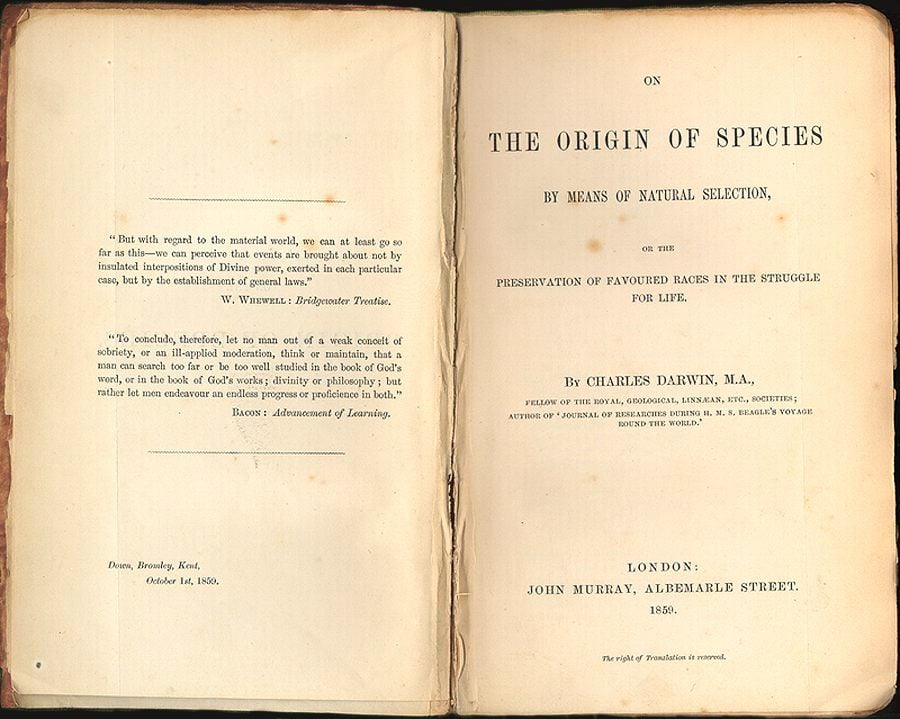
Charles Darwin's "On the Origin of Species" is the book that changed biology, but its influence extends far beyond biology into every domain that concerns itself with the origin, nature, and meaning of living things — which is to say, almost everything. The argument is specific: species are not fixed and separately created but change over time through the process of natural selection, by which individuals whose heritable traits make them better suited to their environment survive and reproduce more successfully than those whose traits make them less suited. The accumulation of these small advantages over many generations produces new species.
Darwin had been sitting on the theory for twenty years before publishing, aware of its implications for natural theology and for the dominant understanding of human uniqueness. The trigger for publication was the independent development of the same theory by Alfred Russel Wallace, whose letter to Darwin in 1858 forced the issue. The book was published on November 24, 1859, and sold out on its first day.
The specific change "On the Origin of Species" made was the removal of the need for a creator to explain the diversity of life. Before Darwin, the variety and apparent design of living things was the primary argument for the existence of God — the watchmaker argument, most fully stated by William Paley in 1802, held that the complexity of living organisms implied a designer as surely as a watch implies a watchmaker. Darwin's natural selection mechanism provided an alternative explanation for apparent design that required no designer. The theological implications were immediately recognized and immediately contested.
The subsequent development of evolutionary theory — the modern synthesis incorporating genetics, the discovery of DNA, the development of phylogenetics and molecular biology — has transformed and extended Darwin's original framework, but has not displaced its central argument. The descent of all life from common ancestors by the process of natural selection remains the foundational principle of biology.
2 / 25
-300x200.png)
Friedrich Engels, Karl Marx / Wikimedia Commons
"The Communist Manifesto" — published in February 1848, weeks before the revolutionary wave that swept Europe — is one of the most consequential political documents ever written, and the most consequential for a text of its length (fewer than 50 pages in most editions). Its central argument — that human history is the history of class struggle, that capitalism produces the conditions for its own overthrow by the proletariat it creates, and that the historical outcome is the abolition of private property and the establishment of a classless society — became the foundational text of communist and socialist movements globally.
Marx and Engels wrote the Manifesto as a programmatic statement for the Communist League, a workers' organization, and it was originally circulated among political organizers rather than as a general publication. Its specific historical influence came later: the Russian Revolution of 1917 was conducted explicitly in its name, and the Soviet Union, the People's Republic of China, Cuba, and the other states that subsequently organized themselves around Marxist-Leninist ideology governed approximately one-third of the world's population in the mid-20th century.
The Manifesto's intellectual contribution beyond its political program is the framework of historical materialism: the argument that the economic organization of society — the mode of production and the class relations it generates — is the primary determinant of political, cultural, and intellectual life. This framework, which subordinates ideas to material conditions, was a fundamental reorientation of how social and historical analysis was conducted, and its influence extends far beyond those who accepted Marx's political conclusions.
3 / 25
Adam Smith / Wikimedia Commons
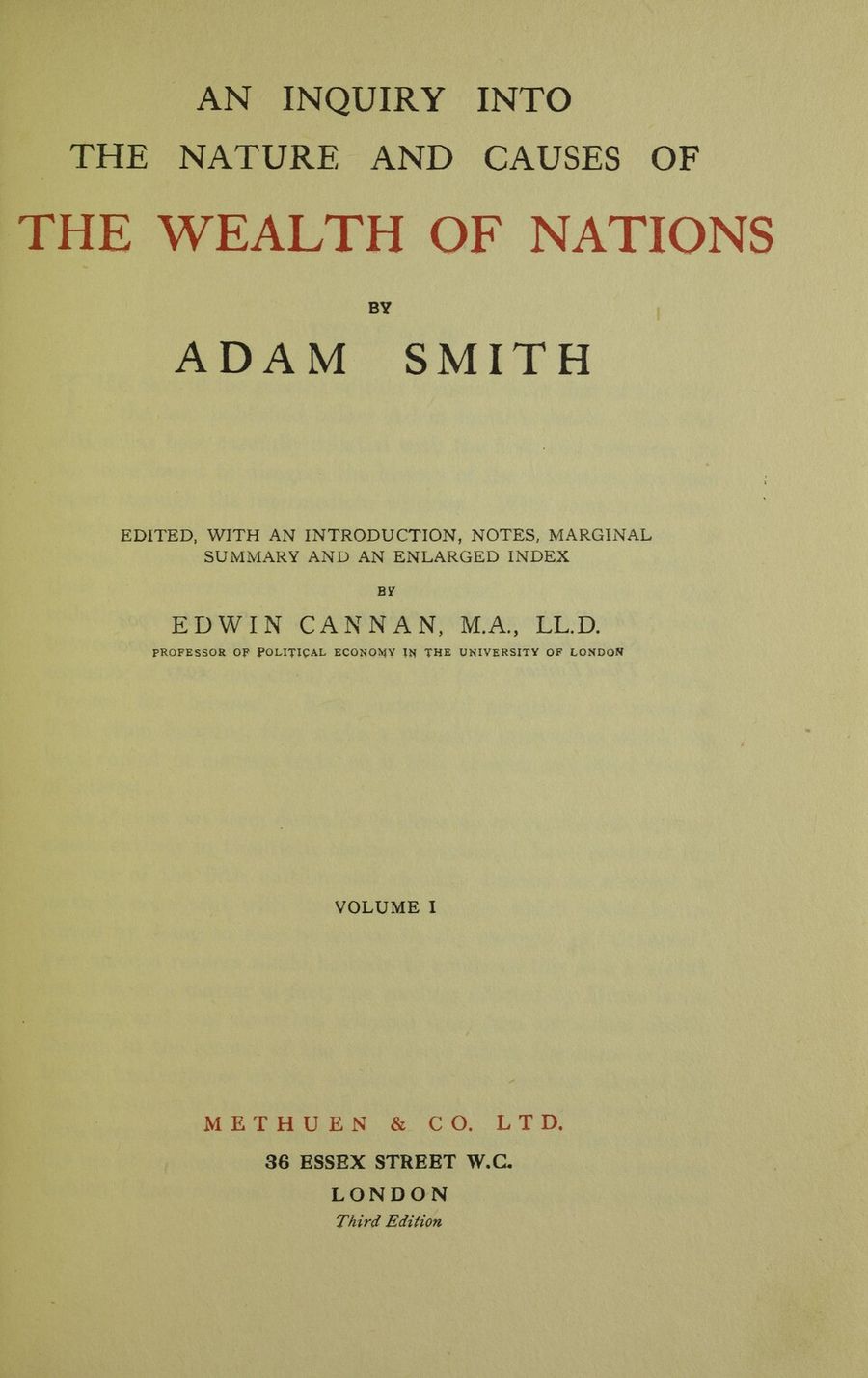
Adam Smith's "An Inquiry into the Nature and Causes of the Wealth of Nations," published on March 9, 1776 — the same year as the American Declaration of Independence — is the founding text of modern economics and the book that articulated the theoretical framework for market capitalism at the moment when the industrial revolution was beginning to make that framework practically relevant at scale.
Smith's central arguments — the division of labor as the primary source of economic productivity, the price mechanism as an information and coordination system (his "invisible hand"), the argument against mercantilism and for free trade, the labor theory of value — were not all original to Smith, and several have been superseded or substantially revised by subsequent economics. What "The Wealth of Nations" accomplished was the synthesis of existing economic thinking into a coherent framework and the application of that framework to the practical questions of economic policy that were becoming urgent in the late 18th century.
The specific influence of the book on policy was substantial and rapid. William Pitt the Younger, British Prime Minister from 1783, cited Smith directly in his budgets and trade policies. The free trade ideology that shaped British economic policy through the 19th century — the repeal of the Corn Laws in 1846, the negotiation of free trade agreements with France and others — was conducted in explicit reference to Smith's arguments. The framework of supply, demand, price, and market equilibrium that structures most economic thinking to this day is the conceptual inheritance of "The Wealth of Nations."
4 / 25
Credit: Wikimedia Commons
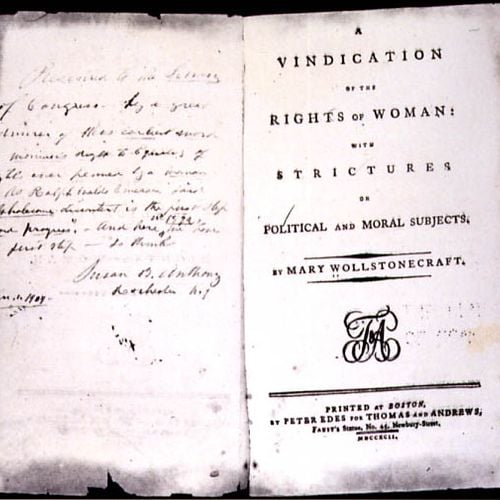
Mary Wollstonecraft's "A Vindication of the Rights of Woman," published in 1792, is the founding text of modern feminism and the first systematic argument that the subjugation of women was not a natural condition but a constructed one — the product of education, social convention, and the deliberate limitation of women's access to reason and knowledge. Wollstonecraft argued that women appeared to be inferior to men in reason and virtue not because they were naturally so but because they had been educated to be so.
The book was written in direct response to the French Revolution's exclusion of women from its egalitarian program: the Rights of Man were rights of men, and Wollstonecraft demanded that the revolutionary logic be extended to women. Her argument was that education — the same rational education available to men — would produce women who were genuinely equal partners in civic life rather than the ornamental, emotionally volatile creatures that aristocratic culture had produced by designing women's education around attractiveness and submission.
The immediate reception was mixed, and the posthumous revelation of Wollstonecraft's unconventional personal life (an illegitimate child, an attempted suicide) was used to discredit the book's arguments. Its recovery as a feminist foundational text occurred gradually through the 19th and 20th centuries. The argument that gender inequality is constructed rather than natural — the argument that made the women's suffrage movement, the feminist movement, and gender studies possible — is the specific intellectual inheritance of "A Vindication."
5 / 25
-600x957.jpg)
Credit: Wikimedia Commons
Freud's "The Interpretation of Dreams," published in November 1899 (though dated 1900 by its publisher), is the book that introduced the concept of the unconscious as a structured, interpretable system — not merely a reservoir of repressed material but a system with its own logic, its own language of symbolism and displacement and condensation, whose contents could be deciphered through the analysis of dreams. The book is also, through its extensive autobiographical dream analyses, a kind of self-portrait of Freud's own unconscious and the most intimate text he published.
The specific claim of "The Interpretation of Dreams" — that dreams are wish fulfillments, that their manifest content (what is literally dreamed) conceals a latent content (the underlying wish) that has been distorted by the "dream work" of condensation and displacement — has been substantially challenged by subsequent sleep research, which does not support the wish-fulfillment theory as a general principle. What has survived is the broader claim that mental life has significant non-conscious components that influence thought and behavior, a claim that has been confirmed by cognitive science, neuroscience, and experimental psychology.
Freud's influence on the 20th century extended far beyond clinical psychology. The Freudian vocabulary — the id, the ego, the superego, the Oedipus complex, repression, projection, sublimation, transference — entered the educated public's common language and changed how people described and understood their own mental life, their relationships, and their history. To have been raised in any Western country in the 20th century is to have been raised in Freudian conceptual water, whether or not one has read a word of Freud.
6 / 25
_El_ingenioso_cavallero_Don_Quixote_de_la_Mancha-900x1311.png)
Miguel de Cervantes / Wikimedia Commons
Miguel de Cervantes's "Don Quixote" — published in two parts in 1605 and 1615 — is the first modern novel and the book that established the novel's defining formal and philosophical preoccupations: the relationship between literature and reality, between idealism and the hard edges of the actual world, between the stories we tell ourselves and the experience that those stories cannot contain. Don Quixote, the aging gentleman who has read so many chivalric romances that he believes himself a knight errant, is the first literary character whose interiority — whose self-deception, whose desire, whose genuine nobility — is the subject of the book rather than a vehicle for its moral.
The claim that "Don Quixote" is the first novel is contested by scholars of earlier prose fiction — the Japanese "The Tale of Genji" (c. 1000 CE) has a prior claim in non-Western traditions — but its claim to be the foundational text of the European novel tradition, and of the novel as a global form, is not seriously disputed. Virtually every formal preoccupation of the European novel — the unreliable narrator, the ironic distance between author and character, the exploration of consciousness, the relationship between fiction and life — is present in "Don Quixote."
The book's specific philosophical contribution is the exploration of what it means to live by a story that doesn't match reality, and whether the story has value precisely because of its distance from reality. Don Quixote's delusion is simultaneously ridiculous and heroic, and the reader is kept in a continuous uncertainty about how to evaluate it. This uncertainty — the novel's refusal to deliver the moral verdict that earlier literary forms had delivered — is the specific formal innovation that made the novel a vehicle for the complexity of modern experience.
7 / 25

Niccolò Machiavelli /Wikimedia Commons
Niccolò Machiavelli's "The Prince," written in 1513 and published posthumously in 1532, introduced political realism — the analysis of political power in terms of how it is actually acquired, maintained, and lost, rather than in terms of how a virtuous ruler should behave — as a systematic discipline. The book's central argument, that effective rulership requires the willingness to act immorally when necessary, was so shocking to its contemporaries that "Machiavellian" became a term of abuse — and remains one — for cunning, amoral political manipulation.
Machiavelli's actual argument is more nuanced than the caricature. He was not arguing that rulers should be evil but that the political world operates by rules different from private morality, and that a ruler who acts as a private person in political life — who keeps every promise, who refuses to use force, who never deceives — will be destroyed by rulers who do not observe these constraints. The argument is descriptive before it is prescriptive: this is how politics works, and ignoring it in the name of virtue will not produce virtue but defeat.
The influence of "The Prince" on political thought is the specific introduction of the is/ought distinction into political analysis — the argument that understanding politics requires attending to what actually happens rather than what should happen, and that the two accounts can be radically different. This distinction, extended and systematized by subsequent political thinkers, is the foundational principle of realist international relations theory, of political science as an empirical discipline, and of any political analysis that takes power seriously.
8 / 25
Isaac Newton / Wikimedia Commons
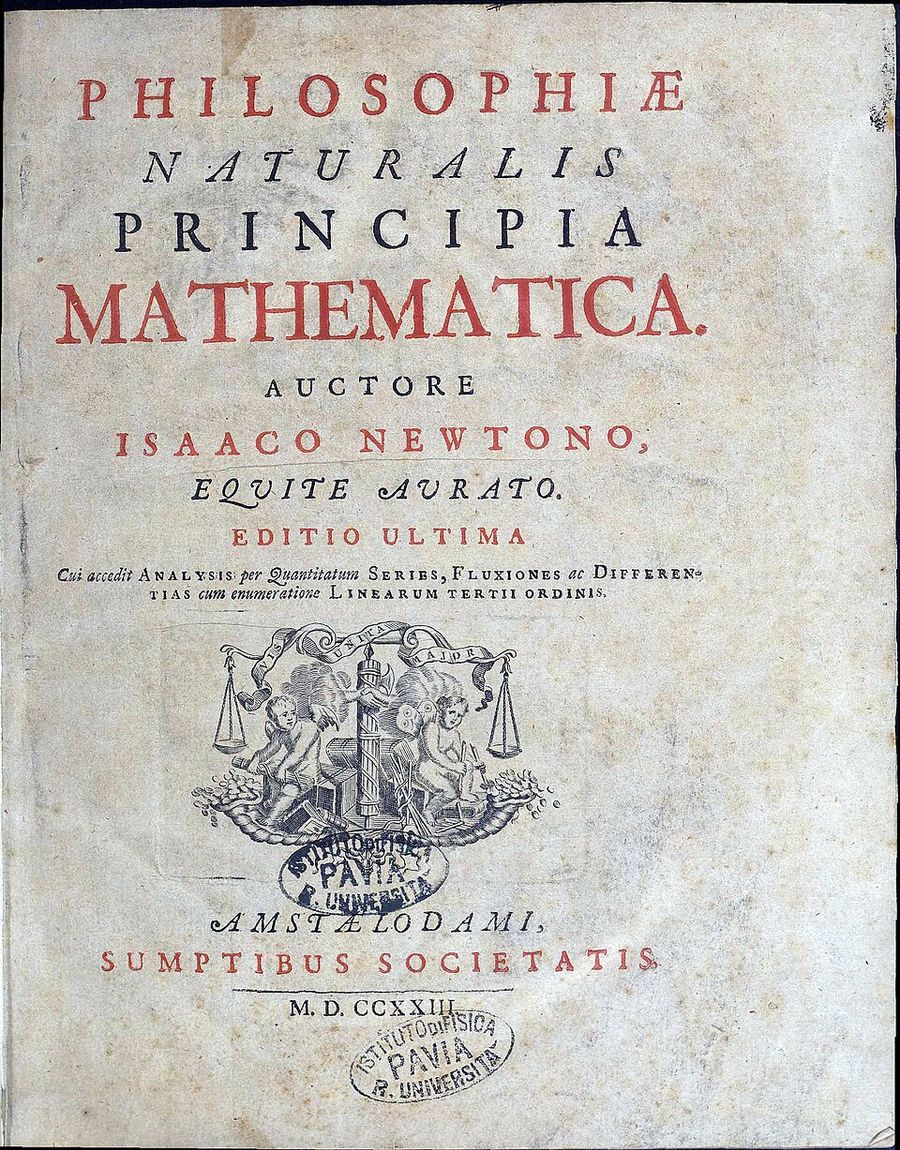
Isaac Newton's "Philosophiæ Naturalis Principia Mathematica," published in 1687, is the book that unified terrestrial and celestial mechanics — demonstrating that the same mathematical laws governed the fall of an apple and the orbit of a planet — and established the framework for classical physics that remained unchallenged for over two centuries. Its three laws of motion and the law of universal gravitation are the intellectual content that every physics student learns first and that structures the physical intuitions of anyone who has studied physics at any level.
The "Principia" accomplished several things simultaneously: it provided a mathematical framework capable of solving problems that had defeated every previous natural philosopher; it demonstrated that the universe operated according to consistent mathematical laws accessible to human reason; and it established the methodology of mathematical physics — the use of mathematics not merely to describe but to predict physical phenomena — as the standard of scientific achievement.
The philosophical consequences were as large as the scientific ones. A universe governed by mathematical laws that could be discovered by human reason was a universe that was, in principle, fully comprehensible — a mechanistic universe in which God's role was progressively circumscribed. The Enlightenment — the 18th-century philosophical movement that extended Newtonian confidence in reason to politics, economics, and human affairs — drew its fundamental confidence from the model of knowledge that Newton had provided.
9 / 25
Thomas Kuhn / Wikimedia Commons
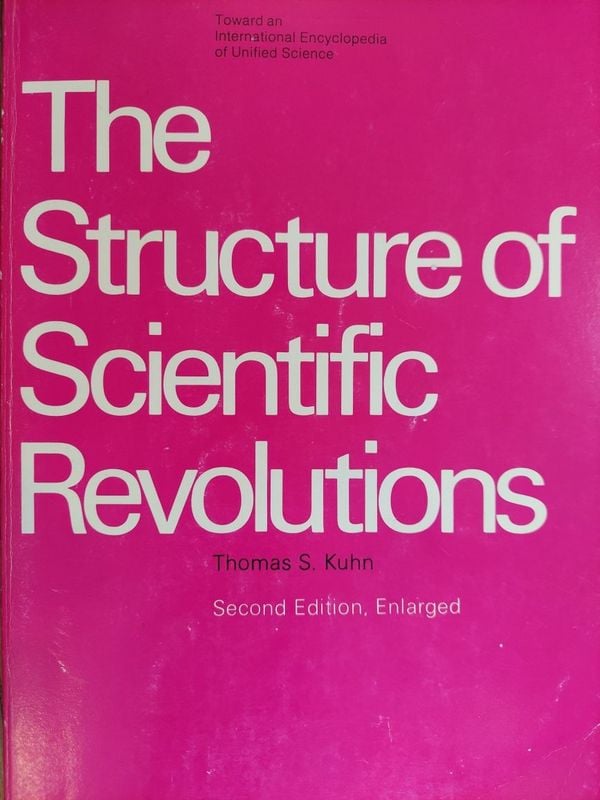
Thomas Kuhn's "The Structure of Scientific Revolutions," published in 1962, is the book that introduced the concept of the paradigm shift — the model of scientific change not as the gradual accumulation of facts but as the periodic revolutionary replacement of one framework (paradigm) by another that explains anomalies the old framework cannot. The concept of the paradigm shift escaped academic philosophy of science almost immediately and became one of the most widely used frameworks in popular intellectual discourse, applied to fields from business to art to personal transformation.
Kuhn's argument challenged the received view of science as a progressive, rational accumulation of knowledge in which each generation builds on the established findings of the previous one. Instead, he argued, science operates under paradigms — shared frameworks of assumptions, methods, and problems — that determine what counts as a legitimate scientific question and what counts as a valid answer. Normal science proceeds within the paradigm; when anomalies accumulate that the paradigm cannot explain, a crisis develops; the crisis is resolved by a revolutionary paradigm shift that reorganizes the field's entire framework.
The specific intellectual legacy is the concept of incommensurability — the claim that successive paradigms are not simply improvements on each other but are genuinely different ways of seeing, such that the questions, the answers, and even the observations made within one paradigm are not directly translatable into the terms of another. This claim — which implies that scientific progress is not simply the accumulation of truth — was deeply controversial and remains so, but the vocabulary Kuhn introduced has become permanent.
10 / 25

Credit: Wikimedia Commons
Simone de Beauvoir's "The Second Sex," published in French in 1949 and in English translation in 1953, is the foundational text of second-wave feminism and the philosophical analysis of women's situation that provided the intellectual framework for the feminist movements of the 1960s, 1970s, and beyond. Its central argument — "One is not born, but rather becomes, a woman" — is among the most quoted and most debated sentences in feminist theory.
De Beauvoir's argument draws on existentialist philosophy: the woman has been constructed as the "Other" — the object in relation to which the male subject defines himself — and this construction has been so thoroughgoing that women have largely internalized it, accepting the secondary status that the construction assigns. Liberation requires the recognition of this construction and the refusal to accept it — the insistence on subjectivity, on transcendence, on the authentic existence that Sartrean existentialism identified as the human task.
"The Second Sex" was received with hostility by the French Catholic establishment, which placed it on the Index of Forbidden Books, and with ambivalence by some male intellectuals including Camus, who accused de Beauvoir of making French males look ridiculous. Its influence on the subsequent feminist movement — on Betty Friedan's "The Feminine Mystique," on Kate Millett's "Sexual Politics," on the entire project of feminist theory — was direct and acknowledged. The claim that gender is constructed rather than natural, which is now a foundational premise of gender studies, is the specific intellectual inheritance of "The Second Sex."
11 / 25

Sally Wilson / Wikimedia Commons (CC BY-SA 2.0)
George Orwell's "Nineteen Eighty-Four," published in June 1949, is the most politically influential novel of the 20th century, and the book that provided the vocabulary — doublethink, newspeak, the memory hole, Big Brother, the thought police — for describing the specific mechanisms of totalitarian control. Orwell wrote it while dying of tuberculosis on the remote Scottish island of Jura, and the book's bleakness reflects both the post-war political landscape and the author's physical condition.
The novel's specific contribution is not merely the dystopian vision — Huxley's "Brave New World" (1932) and Zamyatin's "We" (1924) had preceded it — but the psychological analysis of how totalitarian power maintains itself through the systematic destruction of the capacity for independent thought. The specific mechanisms Orwell describes — the manipulation of language to make certain thoughts inexpressible, the continuous revision of the historical record to make the Party's current position always the one it has always held, the use of surveillance to produce self-surveillance — are recognizable to anyone who has studied or lived in authoritarian regimes.
Orwell's vocabulary entered general political discourse almost immediately and has proved impossible to dislodge. Every subsequent argument about government surveillance, political propaganda, and the manipulation of public discourse reaches for the terminology of "Nineteen Eighty-Four." The word "Orwellian" has become an adjective in common use, applicable to any situation involving the specific combination of political control and linguistic manipulation that the novel describes.
12 / 25

U.S. Fish and Wildlife Service / Wikimedia Commons
Rachel Carson's "Silent Spring," published in September 1962, is the book most directly responsible for the environmental movement as a political and cultural force. Its argument — that the indiscriminate use of synthetic pesticides, particularly DDT, was destroying bird populations, contaminating water supplies, and entering the human food chain with consequences that the chemical industry had concealed or ignored — was both a scientific argument and a moral one about the relationship between industrial modernity and the natural world.
Carson spent four years researching the book, working in extraordinary pain from cancer that she kept largely private. The chemical industry's response was immediate and vicious: she was characterized as a hysterical, unscientific spinster, her credentials were attacked, and the industry distributed a parody pamphlet mocking the book's concerns. The attacks failed. The book sold 600,000 copies in its first year, was serialized in the New Yorker, and prompted a Congressional inquiry.
The specific political consequences were substantial: DDT was banned in the United States in 1972; the Environmental Protection Agency was established in 1970 in direct response to the environmental awareness "Silent Spring" had catalyzed; the first Earth Day was held in April 1970. The broader consequence was the introduction of an environmental consciousness into mainstream political life — the recognition that industrial processes had consequences for the natural world that required political regulation.
13 / 25
Credit: Wikimedia Commons
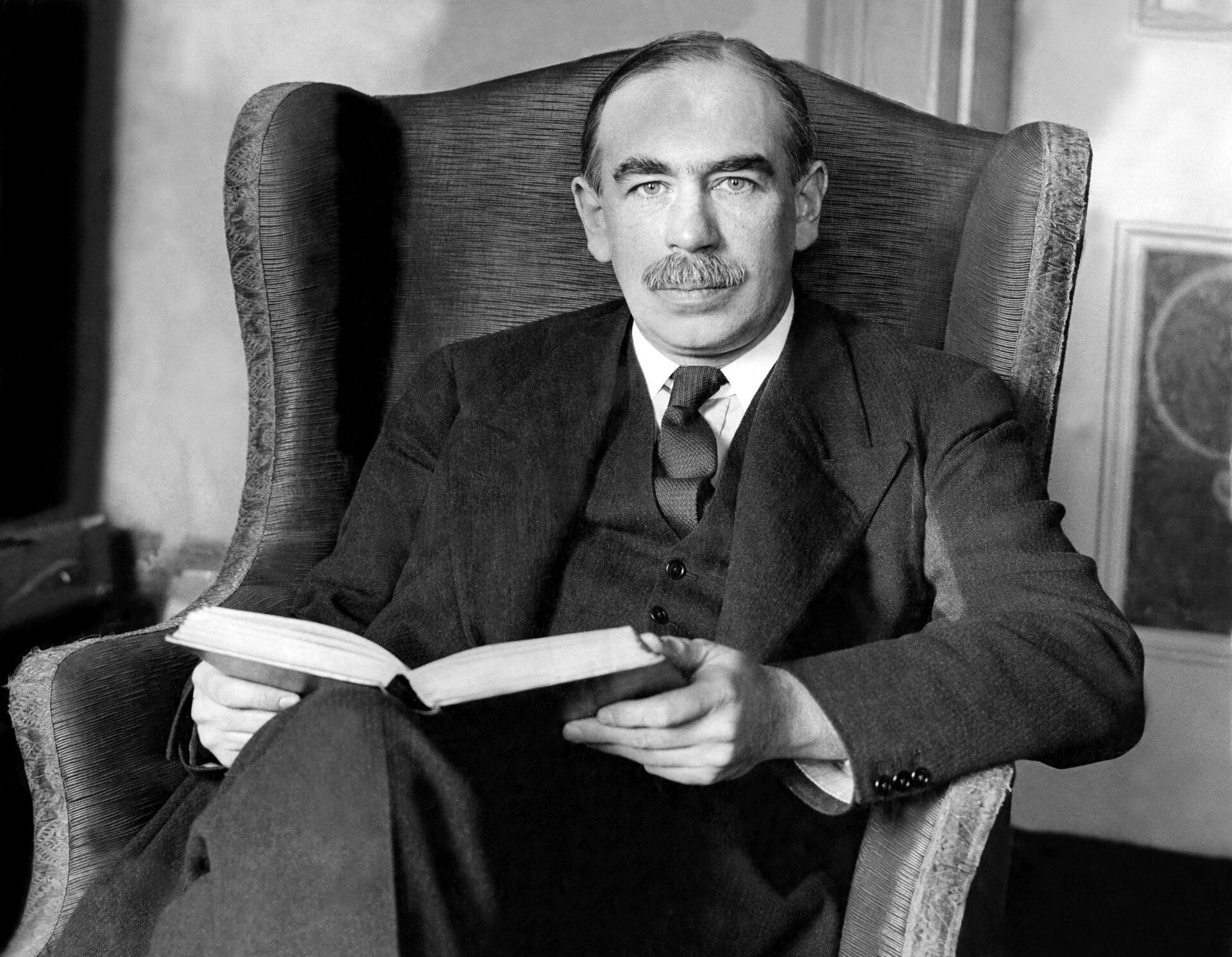
John Maynard Keynes's "The General Theory of Employment, Interest and Money," published in February 1936, is the book that provided the theoretical framework for government intervention in the economy — the argument that aggregate demand, rather than supply-side efficiency, was the primary determinant of economic output and employment, and that government spending could and should be used to counteract the demand shortfalls that produce recessions and depressions.
Keynes wrote the General Theory in direct response to the Great Depression, which classical economics — with its assumption that markets would self-correct and that unemployment was voluntary — could not adequately explain or address. His argument that "animal spirits" (investor confidence) drove investment decisions, that a liquidity trap could prevent interest rate cuts from stimulating the economy, and that the paradox of thrift meant that individually rational saving decisions could collectively produce a recession, were radical departures from the classical framework.
The practical influence was immediate: the New Deal economic policies of the Roosevelt administration were broadly Keynesian in approach, and after World War II, Keynesian economics became the dominant framework for economic policy in the Western democracies, providing the intellectual justification for the expansion of the welfare state, countercyclical fiscal policy, and the managed capitalism of the postwar decades. The monetarist counter-revolution of the 1970s, led by Milton Friedman, challenged Keynesian orthodoxy, but the framework of government responsibility for aggregate demand and employment remains influential.
14 / 25
Illustratedjc / Wikimedia Commons
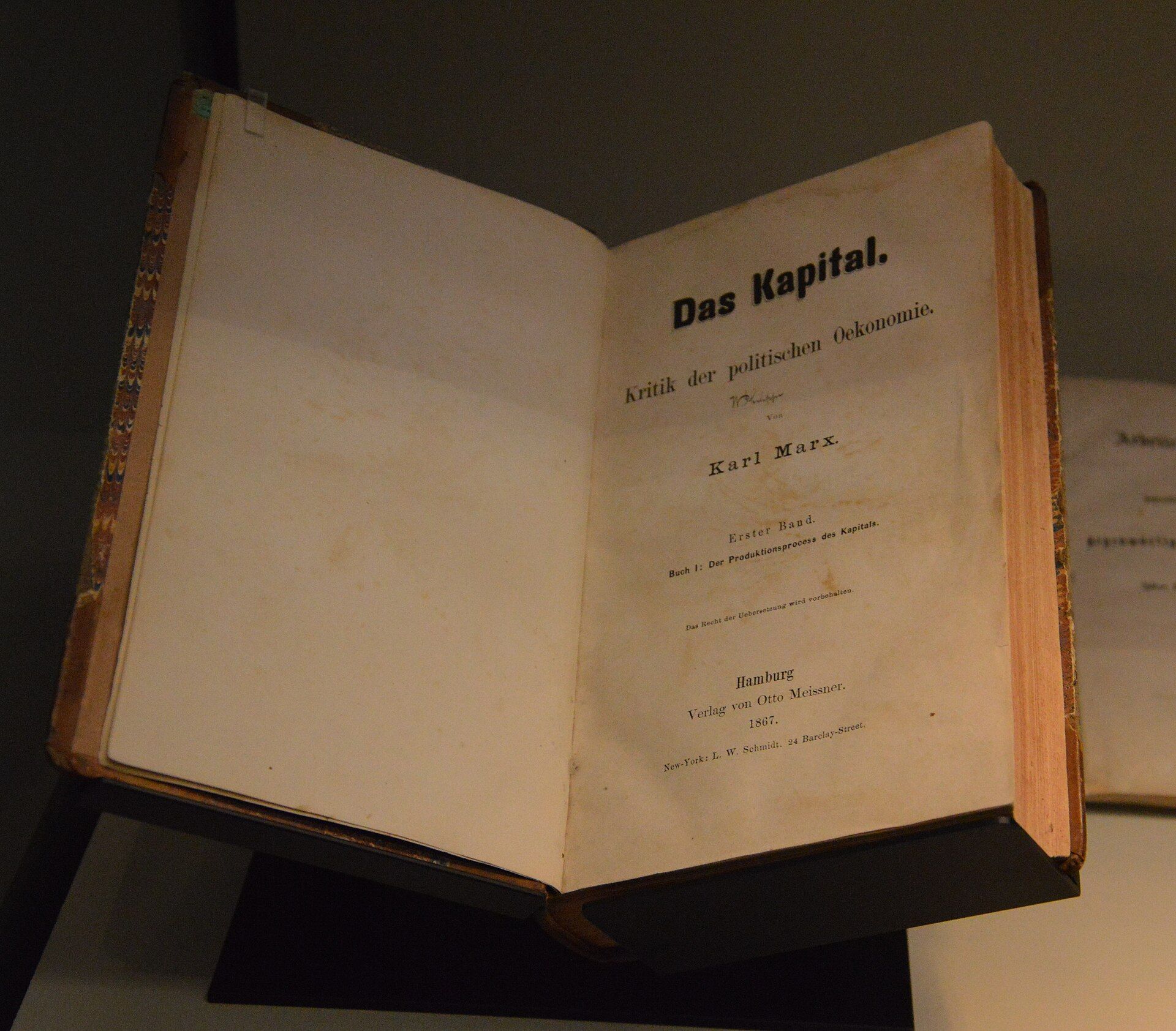
Karl Marx's "Das Kapital" — the first volume published in 1867, the second and third posthumously — is the systematic theoretical analysis of capitalism as an economic system: how it produces value, how it distributes that value, how it generates profit, and why, in Marx's analysis, it contains the contradictions that will lead to its eventual collapse. Where the Communist Manifesto was a political program, "Das Kapital" is an economic argument of enormous scale and technical ambition.
Marx's central concept — surplus value, the difference between the value a worker produces and the value they are paid, which is the source of capitalist profit — provided a systematic account of exploitation that didn't depend on individual greed or bad faith but was structural: capitalism as a system required the extraction of surplus value from labor, regardless of the intentions of the capitalists operating within it.
"Das Kapital" has never been as widely read as the Communist Manifesto — it is a long, technically demanding work in three volumes — but its influence on economic thought, social theory, and political analysis is enormous. The concept of alienated labor, the analysis of commodity fetishism (the way social relations between people are obscured by the apparent relations between commodities), and the framework of base (economic structure) and superstructure (political, legal, and cultural institutions) are analytical tools that have been used across disciplines by people who do not share Marx's political conclusions.
15 / 25
-900x1493.jpg)
John Stuart Mill / Wikimedia Commons
John Stuart Mill's "On Liberty," published in the same year as Darwin's "On the Origin of Species," is the philosophical foundation of liberal democracy — the systematic argument for the principle that the only legitimate basis for coercing an individual is the prevention of harm to others, and that in all other respects, the individual's freedom of thought, expression, and action should be inviolable.
Mill's harm principle — "the only purpose for which power can be rightfully exercised over any member of a civilised community, against his will, is to prevent harm to others" — is the specific philosophical argument that underlies the constitutional protections of free speech and individual liberty in liberal democracies. The argument was radical in its time: Mill extended the harm principle to argue for freedom of expression even for false and dangerous ideas, on the grounds that the suppression of ideas forecloses the discovery of truth and produces a "deep slumber of a decided opinion" more dangerous than the ideas being suppressed.
"On Liberty" also contains Mill's argument for the subjection of women — published separately in 1869 as "The Subjection of Women" — and his utilitarianism, developed most fully in "Utilitarianism" (1863). The combination of these arguments produced the intellectual framework of classical liberalism: individual rights, free expression, democratic governance, and the maximization of general welfare as the criteria for political and policy evaluation.
16 / 25

Credit: Wikimedia Commons
Plato's "The Republic" is the foundational text of Western political philosophy and one of the most influential books ever written, raising questions about justice, knowledge, education, and the good society that have structured philosophical and political argument for 2,400 years. Its specific contributions — the theory of Forms, the allegory of the cave, the philosopher-king, the tripartite soul, the critique of democracy as a precursor to tyranny — are individually among the most discussed ideas in Western philosophy.
The allegory of the cave — in which prisoners chained facing the wall of a cave mistake the shadows of objects for the objects themselves, and the philosopher is the one who breaks free, ascends to the surface, and sees the sunlit world of reality — is the specific image that has anchored discussions of appearance and reality, knowledge and ignorance, education and enlightenment in Western philosophy since Plato wrote it. Its influence extends from academic philosophy to cinema (the Matrix trilogy explicitly references it) to the common usage of "waking up" as a metaphor for intellectual enlightenment.
The Republic's political argument — that the just city is one ruled by philosopher-kings who possess genuine knowledge of the Good — is among the most criticized arguments in the book; Karl Popper's "The Open Society and Its Enemies" (1945) identified it as the philosophical origin of totalitarianism. The argument's enduring importance is not in its conclusion but in the questions it forces: what would a just society look like? what qualifies someone to govern? what is the relationship between knowledge and political authority? These questions have not been answered and will not be.
17 / 25
Meric Casaubon / Wikimedia Commons
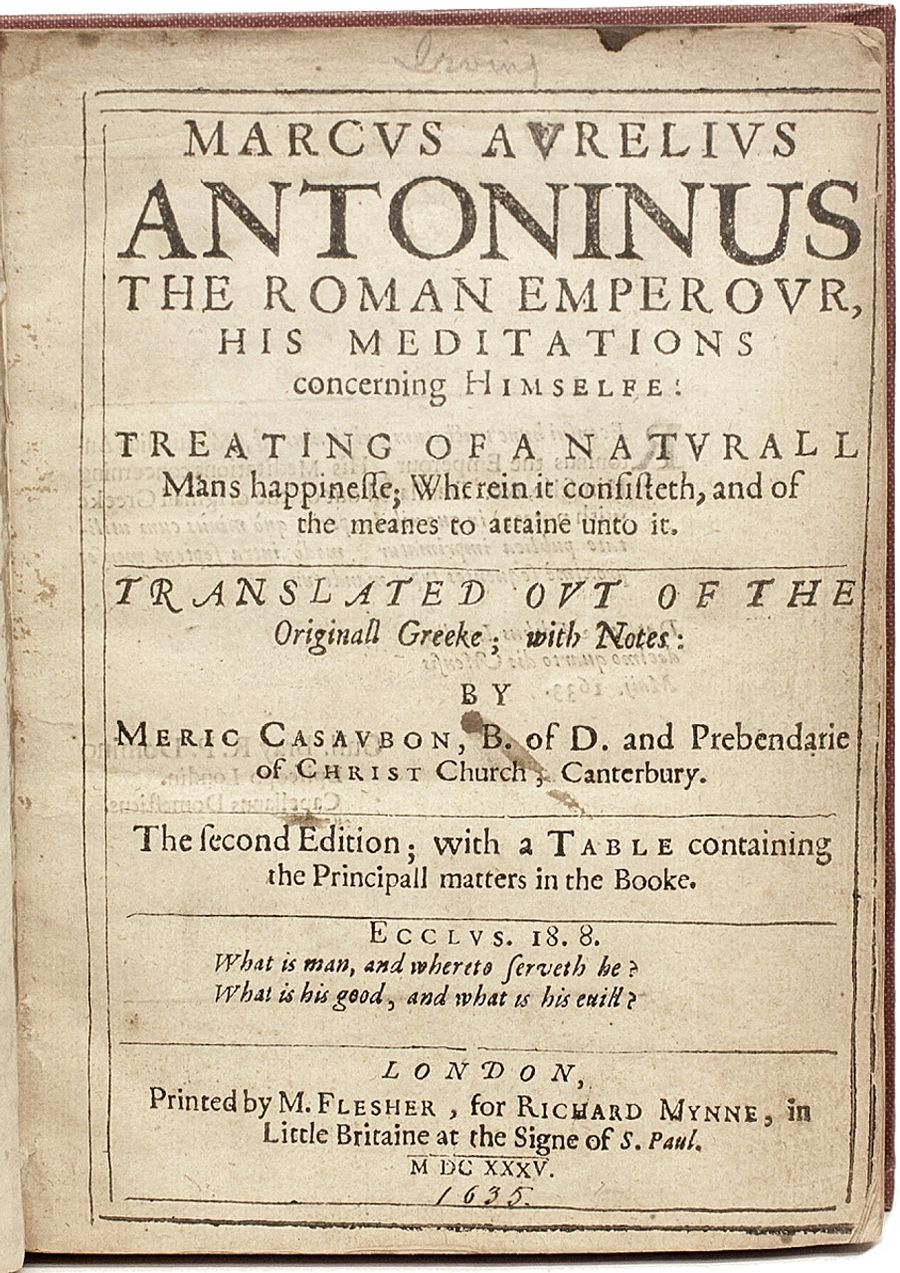
Marcus Aurelius's "Meditations" — the private philosophical journal of a Roman emperor, written in Greek and never intended for publication — is one of the most influential works of practical philosophy in Western tradition, and the primary text through which Stoic philosophy has reached modern readers. Its sustained argument — that the only thing within human control is one's own judgment and response, and that virtue, not external circumstances, is the source of the good life — has found new audiences in each century since it was first published.
Marcus Aurelius was the most powerful person in the world by formal political status, and he wrote his meditations as exercises in self-correction — reminders to himself to practice the Stoic virtues he found difficult to maintain under the pressures of empire. The combination of high achievement and genuine humility, of power and philosophical seriousness, gives the text a specific authority that purely academic philosophy lacks: this is someone who faced the actual challenges of leadership, illness, loss, and moral compromise, and who used philosophy to navigate them rather than to theorize about them from a safe distance.
The modern Stoicism movement — the application of Stoic principles to contemporary professional and personal life, represented in popular books by Ryan Holiday and others and in the practices of many contemporary athletes and business leaders — draws its primary intellectual content from "Meditations." The specific Stoic practices of distinguishing between what is and is not within one's control, of treating obstacles as opportunities, and of meditating on mortality to maintain proper perspective, are all derived directly from the text.
18 / 25

Fred Palumbo / Wikimedia Commons
Betty Friedan's "The Feminine Mystique," published in February 1963, is the book that launched the second-wave feminist movement in the United States by naming "the problem that has no name" — the specific unhappiness of educated, middle-class American women who had been told that domestic fulfillment was the complete expression of female achievement and who had discovered, from inside that life, that it was not.
Friedan conducted interviews with her Smith College classmates fifteen years after graduation and found a consistent pattern: women who had subordinated professional ambitions to domestic roles reported a persistent, unlocated sense of dissatisfaction that they could not adequately describe or account for. The book analyzed the cultural, educational, and media forces — what Friedan called the "feminine mystique" — that had produced this situation, arguing that American culture had systematically discouraged women from pursuing the professional and intellectual lives that would have provided genuine fulfillment.
The book sold three million copies in three years and generated a correspondence from women across America who recognized the problem it named. It was directly responsible for the founding of the National Organization for Women in 1966 (Friedan was a co-founder), and its framing of women's liberation as the fulfillment of human potential rather than the abandonment of femininity made it more accessible to mainstream American women than the more radical feminist texts that followed. Its specific contribution — naming an unacknowledged condition and making it politically visible — is the precise function of the books on this list that change the world most directly.
19 / 25
OscarDillion / Wikimedia Commons (CC BY-SA 4.0)
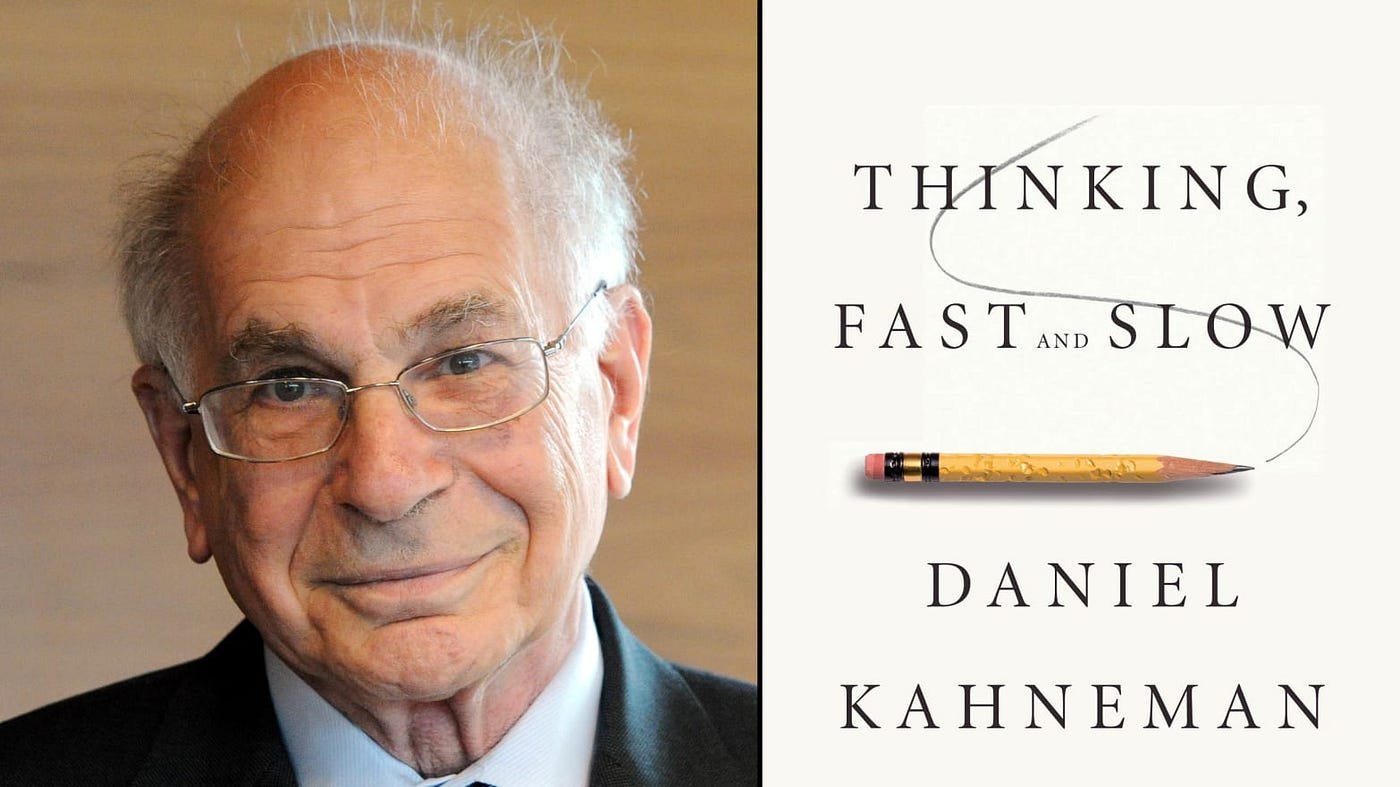
Daniel Kahneman's "Thinking, Fast and Slow," published in 2011, is the popular synthesis of decades of research in behavioral economics and cognitive psychology that introduced the two-system model of human thinking — System 1 (fast, automatic, intuitive) and System 2 (slow, deliberate, analytical) — to a mass audience and provided the framework that has transformed how economists, policy makers, and ordinary people understand human decision-making.
Kahneman, who received the Nobel Prize in Economics in 2002 (jointly with Vernon Smith) for research conducted with Amos Tversky on judgment and decision-making, had spent his career demonstrating that human beings are systematically irrational in predictable ways — that we use cognitive shortcuts (heuristics) that produce reliable biases, that we are loss-averse in ways that produce economically suboptimal decisions, that we are overconfident in our judgments, and that our intuitions about probability are consistently miscalibrated.
The specific change "Thinking, Fast and Slow" made was the democratization of this research — its translation from academic psychology papers into a framework usable by anyone seeking to understand why they make the decisions they make. The concepts of loss aversion, the availability heuristic, the planning fallacy, and the distinction between the experiencing self and the remembering self have entered the common discourse of business, policy, medicine, and personal decision-making in ways that have genuinely altered how people think about their own thinking.
20 / 25
Leilani Xicotencatl / Wikimedia Commons (CC BY 4.0)
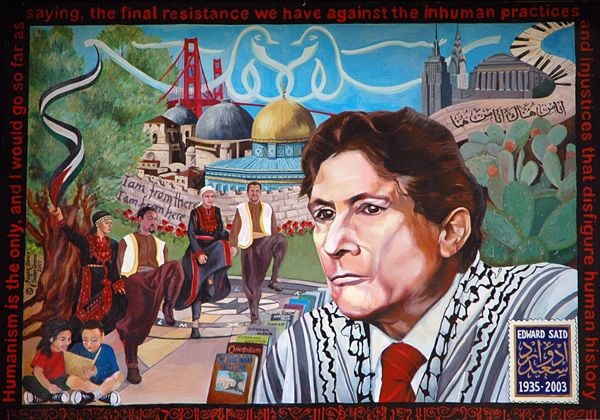
Edward Said's "Orientalism," published in 1978, is the founding text of postcolonial studies and the book that introduced the analysis of how Western knowledge about the non-Western world — particularly the Middle East — was not objective description but a system of representation that served the purposes of Western imperial domination. Said's argument — drawing on Foucault's concept of discourse — was that the Orient was not a geographical fact but a cultural construction, produced by Western scholars, writers, and administrators in ways that justified and enabled colonial control.
Said argued that Western representations of the "Orient" — as timeless, irrational, sensual, static, and fundamentally different from the rational, dynamic, progressive West — created a binary that positioned Western culture as the norm and Eastern cultures as deviations requiring understanding, management, and improvement. These representations were not merely academic errors but were connected to the actual power structures of colonialism: the Oriental studies scholar produced the knowledge that the colonial administrator used to govern.
"Orientalism" was immediately controversial: Said was accused of oversimplifying the diversity of Western scholarship about the Middle East, of ignoring non-Western contributions to the study of the East, and of producing a political polemic rather than a scholarly argument. The controversy has not diminished the book's influence, which is now foundational in literary studies, cultural studies, history, and the social sciences. Its specific legacy is the critical attention to the relationship between knowledge and power — the question of who produces knowledge about whom, in whose interest, and with what consequences — that has become a standard dimension of humanistic inquiry.
21 / 25

NASA / JPL via Wikimedia Commons
Carl Sagan's "Cosmos: A Personal Voyage" — the companion book to the 1980 PBS television series — is the work of popular science that has most durably communicated the scientific worldview to a general audience, reaching approximately 500 million people in the television version and millions more in the book. Its specific achievement is the synthesis of scientific content with a philosophical and humanistic sensibility that places human existence within the largest possible physical context.
Sagan's argument — that we are made of "star stuff," that the cosmos is vast and old beyond comfortable imagination, that science is a candle in the dark against the twin dangers of ignorance and credulity — is both a scientific account and a secular spirituality, a framework for finding wonder and meaning in the physical universe without recourse to supernatural explanation. The specific sentence "The cosmos is all that is or was or ever will be" opens the book and announces its scope.
"Cosmos" was produced during the height of the Cold War, and its political dimension — the argument that the same scientific rationality that produced nuclear weapons could produce the wisdom to avoid using them, that the "pale blue dot" perspective on Earth should produce humility about national and ideological conflicts — was explicit. The "pale blue dot" image of Earth from Voyager 1, taken at Sagan's request in 1990, and his meditation on it, is among the most widely shared pieces of scientific writing in the internet era.
22 / 25

NASA / Paul Alers via Wikimedia Commons
Stephen Hawking's "A Brief History of Time," published in April 1988, is the best-selling science book of all time — it spent 237 weeks on the Sunday Times bestseller list and has sold approximately 25 million copies globally — and the book that brought the concepts of modern cosmology and theoretical physics to a mass audience for the first time. Its specific achievement is the explanation, in accessible language, of the ideas that had transformed physicists' understanding of the universe: the big bang, black holes, the expansion of the universe, the arrow of time, and the possibility of a unified theory of physics.
Hawking's specific situation — a theoretical physicist confined to a wheelchair by motor neurone disease, communicating through a speech synthesizer — gave the book a human dimension that pure science writing rarely achieves. The contrast between the immobility of the body and the expansiveness of the mind exploring the largest questions of physics was the implicit argument of the book's existence: the human desire to understand is not constrained by physical limitation.
The book's influence was cultural as much as scientific: it made cosmological and theoretical physics part of educated public discourse in a way they had not been, normalized the consumption of serious science by non-specialists, and established the template for the popular science book as a vehicle for genuinely difficult ideas. Every subsequent popular science bestseller — from Dawkins to Pinker to Sapolsky — operates in the space that "A Brief History of Time" defined.
23 / 25
A.C. McClurg & Co. / Wikimedia Commons
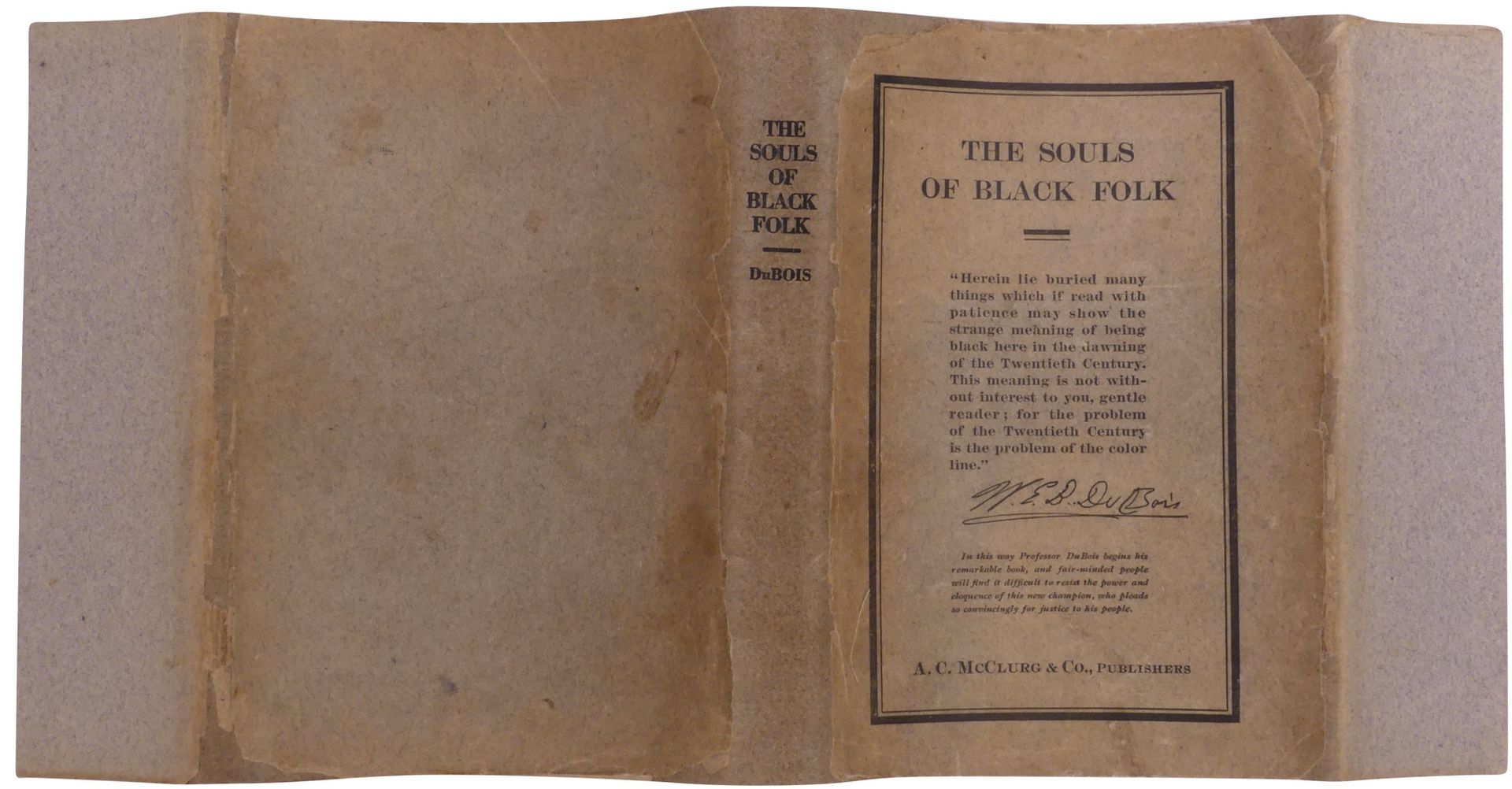
W.E.B. Du Bois's "The Souls of Black Folk," published in April 1903, is the book that introduced the concept of double consciousness — the specific psychological condition of African Americans who must see themselves both as they are and as they are seen by a white society that regards them as a problem — and that provided the intellectual framework for Black American identity, politics, and culture in the 20th century.
The double consciousness concept — "this sense of always looking at one's self through the eyes of others, of measuring one's soul by the tape of a world that looks on in amused contempt and pity" — is Du Bois's analysis of the specific psychological cost of living as a minority in a society organized around one's own subordination. It is simultaneously a description of a psychological condition, an analysis of a political situation, and an argument for the recognition of the full humanity of Black Americans.
"The Souls of Black Folk" was also a direct challenge to Booker T. Washington's philosophy of accommodation — the argument that Black Americans should accept political subordination in exchange for economic opportunity. Du Bois argued that the demand for civil rights, political equality, and the highest possible education could not be deferred without permanent damage to the soul of Black America. The debate between Washington and Du Bois — accommodation versus agitation — structured Black American political discourse for the first half of the 20th century, and Du Bois's position became the intellectual foundation of the NAACP, which he co-founded in 1909.
24 / 25

Kenneth Zirkel / Wikimedia Commons (CC BY-SA 4.0)
Jared Diamond's "Guns, Germs, and Steel: The Fates of Human Societies," published in 1997, provided a geographical and ecological explanation for the differential development of human civilizations — why some societies developed guns, steel, and epidemic diseases and were therefore able to dominate others — that explicitly rejected racial and cultural explanations in favor of environmental ones.
Diamond's argument: the differential domesticability of plants and animals in different parts of the world, combined with the orientation of the major continental axes (Eurasia's east-west orientation allows the spread of crops and animals across similar latitudes; the Americas' and Africa's north-south orientation impedes it), produced differential rates of agricultural development. Denser, more sedentary agricultural populations developed writing, metallurgy, political organization, and — crucially — crowd diseases from domestic animal exposure that decimated populations with no prior exposure.
The book won the Pulitzer Prize and became one of the best-selling works of popular social science of the late 20th century, and its core argument — that the proximate causes of European dominance were military and biological, but the ultimate causes were geographical — has been widely influential in framing discussions of historical inequality. It has also been extensively criticized by historians who argue that Diamond's environmental determinism underplays the role of culture, institutions, and human agency. The debate it generated is itself evidence of the book's significance.
25 / 25
Credit: Wikimedia Commons
Yuval Noah Harari's "Sapiens," published in Hebrew in 2011 and in English translation in 2014, is the most widely read work of popular history of the early 21st century — a sweeping account of human history from the cognitive revolution 70,000 years ago to the present, organized around the argument that what distinguishes Homo sapiens from other animals is the ability to believe in intersubjective realities — things that exist only because people collectively believe in them, including money, nations, human rights, and gods.
Harari's central argument — that the Agricultural Revolution was "history's biggest fraud," making most people worse off in terms of daily experience while enabling population growth that made the transition irreversible; that capitalism, liberalism, and human rights are fictions no more inherently true than the religions they replaced; and that the future of Homo sapiens will be shaped by biotechnology, artificial intelligence, and the potential creation of beings more intelligent and longer-lived than current humans — is deliberately provocative and deliberately large-scale.
The book's influence has been primarily cultural: it has changed the frame through which millions of readers understand human history, providing a perspective from which the certainties of any particular civilization or ideology appear as the contingent arrangements of a particular moment rather than as permanent truths. Its specific intellectual contribution — the concept of intersubjective reality as the foundation of human social organization — provides a useful analytical framework that has entered popular intellectual discourse.
