From ancient epics to contemporary autofiction, these are the titles that gave each major literary genre its shape, its rules, and its enduring identity

Credit: Peter Herrmann / Unsplash
Every reader has a genre they return to — the dog-eared shelf section, the instinctive shorthand when describing what they're in the mood for. But genres are not natural categories. They were made. Someone wrote the first detective novel, the first dystopia, the first epistolary romance. Someone else read it, imitated it, reacted against it, and eventually a tradition formed around a set of shared conventions so pervasive that readers barely notice them anymore. The thriller requires escalating tension. The Gothic depends on atmosphere and dread. The bildungsroman traces a protagonist's formation from innocence to experience. These conventions were not invented by critics sitting in committees. They emerged from individual books that did something new — and that did it so well, others had no choice but to follow.
The history of literary genre is also a history of cultural anxiety. Science fiction rose as industrialization remade the physical world. The spy novel peaked during the Cold War. Autofiction emerged as writers grew suspicious of the novel's claim to omniscient authority. Each genre carries the fingerprints of the moment that produced it, even when its stories are set in imaginary kingdoms or distant futures.
This list covers 20 of the most durable literary genres and identifies the book — or, in a few cases, the foundational text — that gave each its defining shape. Not always the first example, and not always the most famous. The defining book is the one that established the template others consciously copied, the one that practitioners of the genre still argue about, still teach, still reach for when they want to explain what the form is supposed to do. Some of these titles will be familiar to anyone who took a literature course; others are less read today than they deserve to be. A few will surprise readers who thought they knew the genre's origins.
Reading across genres this way reveals something that no single shelf can show: how much each tradition owes to every other one, how often the most genre-defining books arrived as conscious subversions of adjacent forms, and how the categories we use to organize fiction have always been more porous than the shelves in any bookshop suggest.
Credit: Kelly Brito / Unsplash
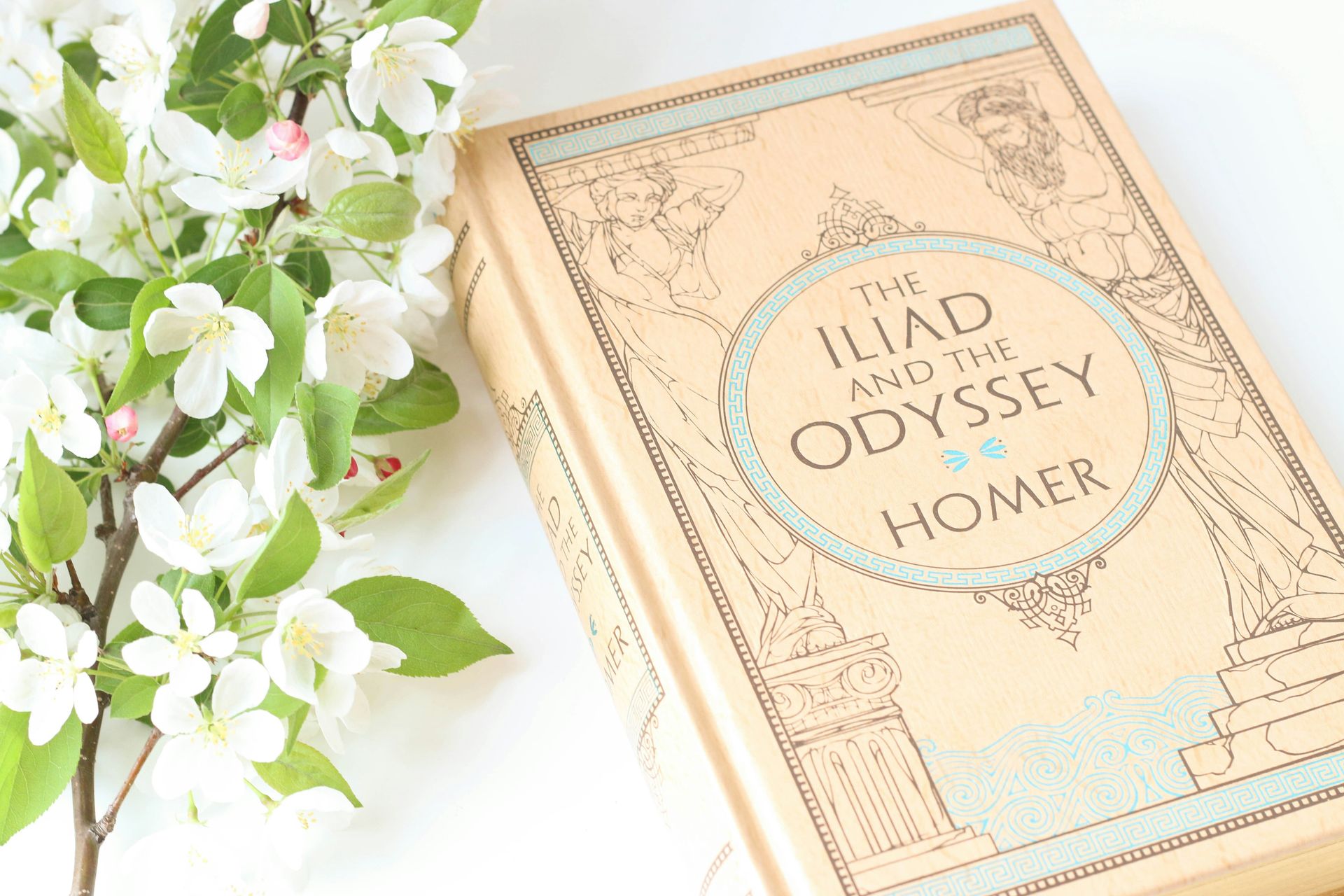
The oldest question in literary criticism is whether Homer existed. The poems attributed to him — the Iliad and the Odyssey — were composed orally, refined over centuries, and written down in something close to their present form around the eighth century B.C. What is beyond dispute is the influence of the Iliad. It set the terms for the epic as a genre: a sustained narrative in elevated verse, centered on a hero of exceptional ability, set against a backdrop of war or quest, and structured around a conflict between human will and divine intervention.
The Iliad does not tell the entire story of the Trojan War. It covers a few weeks in the tenth year of the siege, focusing on the wrath of Achilles and its consequences. This compression is part of what makes it a model for the genre. The epic does not need to tell everything; it needs to tell the essential thing, in a register that makes the events feel cosmically significant. The poem's opening line — "Sing, O goddess, the anger of Achilles" — immediately invokes the Muse, establishes the heroic subject, and signals that what follows will be sung, not merely recounted.
The conventions the Iliad established persisted through Virgil's Aeneid, Dante's Divine Comedy, Milton's Paradise Lost, and into modernity with works like Derek Walcott's Omeros and Anne Carson's translations. The invocation of the Muse, the in medias res opening, the catalog of warriors, the extended simile comparing battle action to natural phenomena — all of these were Homeric before they became generic.
What makes the Iliad the defining epic rather than merely the first is its complexity. Achilles is not a straightforwardly admirable hero. His rage is destructive; his choice to withdraw from battle costs Greek lives; his grief over Patroclus leads him to mutilate Hector's body in ways that disgust even the gods. The poem's final scene — Achilles and the Trojan king Priam weeping together over their losses — offers no triumph, only the ache of shared mortality. Every serious epic that followed has had to reckon with this: that the genre built for heroism contains, at its foundation, a sustained meditation on whether heroism is worth its cost.
The Iliad has been translated into English more times than almost any other text. Each generation produces new versions because each generation finds something new to argue about in it. The poem's staying power is not merely historical. It remains the clearest demonstration that scale and grandeur in narrative do not require the suppression of grief.
Credit: Şeyda Nur Yüce / Pexels
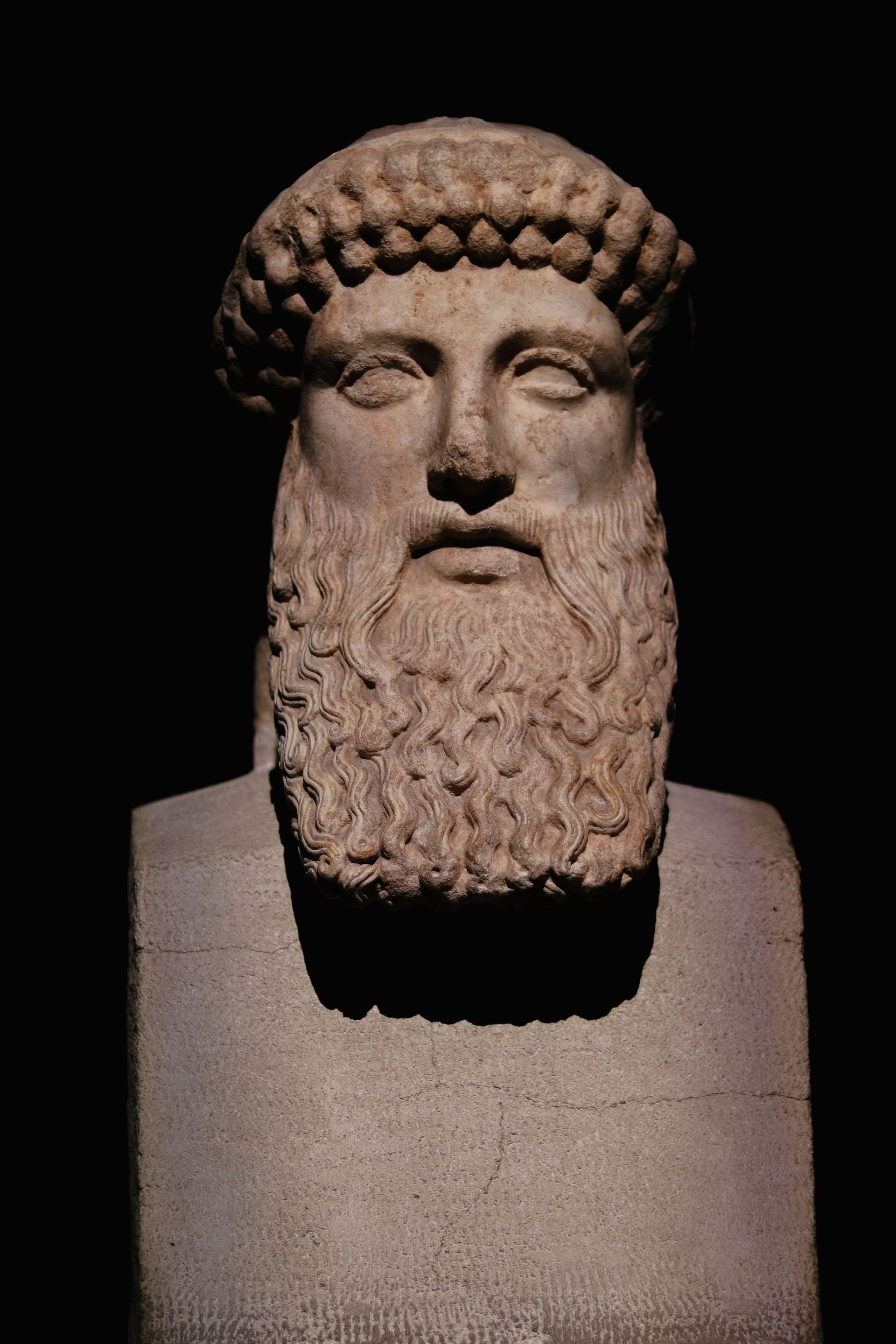
Aristotle used Oedipus Rex as the primary example in his Poetics when defining tragedy, and that choice has shaped Western literary theory ever since. Sophocles wrote the play around 429 B.C., and it remains the genre's most rigorous demonstration of what tragedy requires: a protagonist of high standing, a flaw or error of judgment (hamartia), a reversal of fortune (peripeteia), a moment of recognition (anagnorisis), and an emotional effect on the audience that Aristotle called catharsis — a purging of pity and fear.
Oedipus Rex is constructed around irony so total it operates like a machine. Oedipus, king of Thebes, investigates the murder of his predecessor Laius in order to lift a plague from his city. The investigation reveals that Oedipus himself killed Laius — who was his biological father — and that he has been living in incest with his mother Jocasta. Every step he takes toward truth is a step deeper into catastrophe. The audience knows the outcome; the horror lies in watching Oedipus move toward it with confidence.
What the play established for tragedy as a genre is the relationship between agency and fate. Oedipus is not a passive victim. He makes choices — he left his adoptive parents in Corinth to avoid the prophecy, he killed a stranger on the road in a dispute over right of way, he pursued the investigation despite warnings to stop. The tragedy lies precisely in the fact that his choices, each rational in isolation, collectively enact the prophecy he was trying to escape.
Playwrights from Euripides to Shakespeare to Arthur Miller have worked within this structure. The tragic protagonist must be capable enough that their fall is not merely bad luck, and flawed enough that the fall has a logic. Miller's Willy Loman in Death of a Salesman and Shakespeare's Macbeth and Othello are all legible through the Aristotelian framework Sophocles made concrete.
The play's influence also extends to psychoanalysis. Freud borrowed the Oedipal myth to describe a universal developmental complex, which means Sophocles has shaped not just how writers construct tragedy but how an entire clinical tradition understands human psychology. The reach of Oedipus Rex across disciplines makes it one of the most consequential single texts in any genre's history.
Credit: Library of Congress / PICRYL
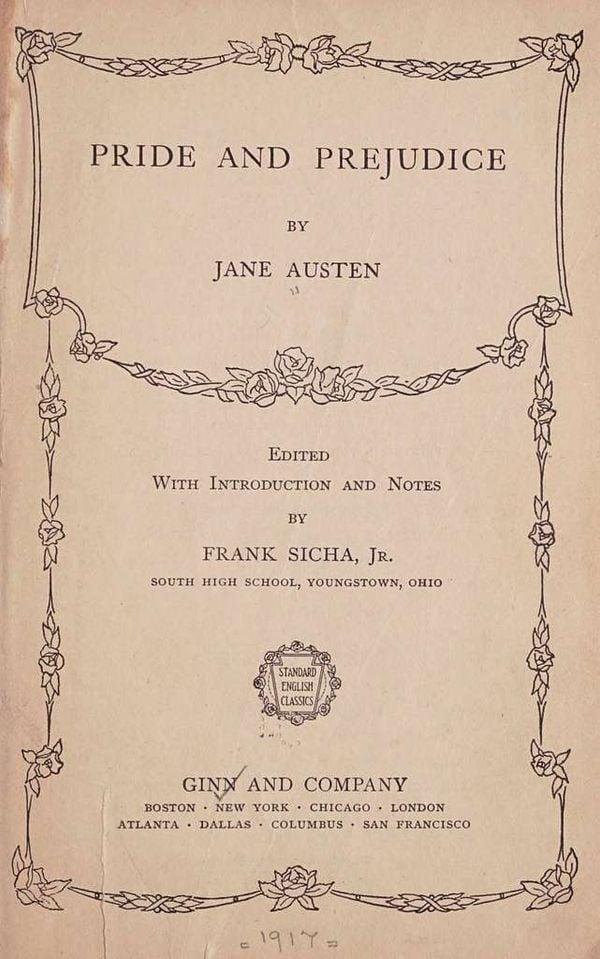
Jane Austen published Pride and Prejudice in 1813, and it remains the form's most precise definition of itself. The novel of manners is concerned with the codes of behavior governing a particular social class — how those codes are enforced, how they are violated, and what the consequences of violation are. Its subject is not action in the conventional sense but conduct: what people say, how they say it, what they decline to say, and what all of this reveals about desire, anxiety, and the negotiation of social position.
Austen's achievement was to make this material dramatic. Mrs. Bennet's desperation to marry off her daughters, Mr. Collins's obsequious self-presentation, Lady Catherine de Bourgh's casual assertion of aristocratic authority — these are comic figures, but they are also portraits of how class anxiety operates in individual psychology. Elizabeth Bennet's wit is not just attractive; it is the mechanism by which the novel argues that intelligence and integrity should outrank birth and wealth in the marriage market, even as the plot confirms that money remains necessary.
The tension between what characters say and what they mean is Austen's primary technical device, and it became the genre's signature tool. When Darcy tells Elizabeth he admires her "against my will, against my reason, and even against my character," he is performing exactly the kind of inadvertent self-revelation that the novel of manners specializes in. Social codes require performance; performance occasionally breaks down; those breakdowns are where truth lives.
Later writers working in the tradition — Henry James, Edith Wharton, E.M. Forster — all expanded the form's scope while preserving its essential interest in the pressure that social convention exerts on individual consciousness. Wharton's The House of Mirth and The Age of Innocence are unimaginable without Austen's precedent, though Wharton darkens the comedy considerably. Even contemporary writers like Kazuo Ishiguro (The Remains of the Day) and Curtis Sittenfeld (Eligible, her Austen retelling) demonstrate the genre's continued vitality.
What Pride and Prejudice gave the novel of manners was a method: use the surface performance of social life to excavate what lies beneath it. The form's apparent conservatism — its preoccupation with marriage, class, and propriety — is a vehicle for sustained critique of the same structures it depicts.
Credit: Ceren Büşra SEVTEKİN / Pexels
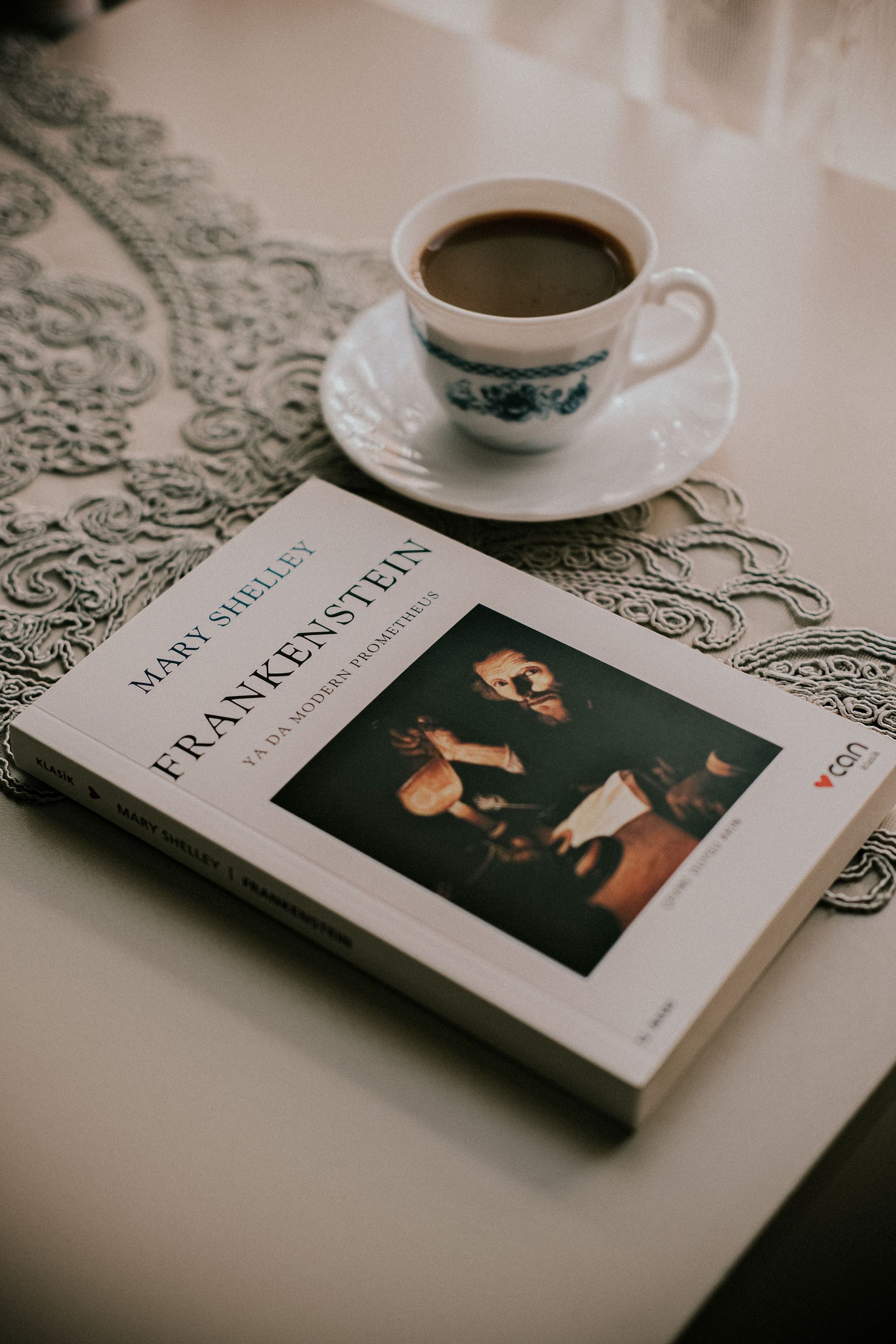
Mary Shelley published Frankenstein in 1818, when she was 20 years old, and it did something that earlier Gothic novels — Horace Walpole's The Castle of Otranto, Ann Radcliffe's The Mysteries of Udolpho — had not quite managed: it gave the Gothic a philosophical engine. The genre had already established its furniture (crumbling castles, spectral presences, beleaguered heroines, the sublime landscape as emotional correlative), but Shelley added a question that the form has been asking ever since: what is the cost of transgressing the boundary between what humans can do and what they should do?
Victor Frankenstein creates life and then abandons the creature he has made. The novel's horror does not come from the creature's violence — which arrives only after sustained rejection — but from Frankenstein's refusal of moral responsibility for his creation. The creature is eloquent, perceptive, capable of love, and progressively destroyed by isolation. Frankenstein is brilliant, cowardly, and self-deceiving. The novel's sympathy is distributed in ways that continue to discomfort readers who arrived expecting a simple monster story.
Shelley's Gothic is also a science fiction text, which is why both genres claim it. The monster is not supernatural; it is the product of galvanism and surgery. The horror is not metaphysical but technological and ethical. This dual inheritance shaped both traditions in lasting ways.
The Gothic elements Shelley formalized — the double (Frankenstein and the creature as two halves of a fractured self), the uncanny creation that reflects the creator's hidden nature, the landscape as psychic projection — became the genre's defining devices. Robert Louis Stevenson's Strange Case of Dr Jekyll and Mr Hyde, Bram Stoker's Dracula, and Edgar Allan Poe's tales all work within a framework Shelley established. So does contemporary Gothic fiction by writers like Shirley Jackson, whose The Haunting of Hill House extends Shelley's interest in psychological disintegration within an architectural space that seems to respond to its inhabitants.
The Gothic's power as a genre lies in its willingness to use extreme imagery for philosophical purposes. Frankenstein established that the form could carry serious intellectual weight — that the monster was never just the monster.
Credit: Europeana / Unsplash
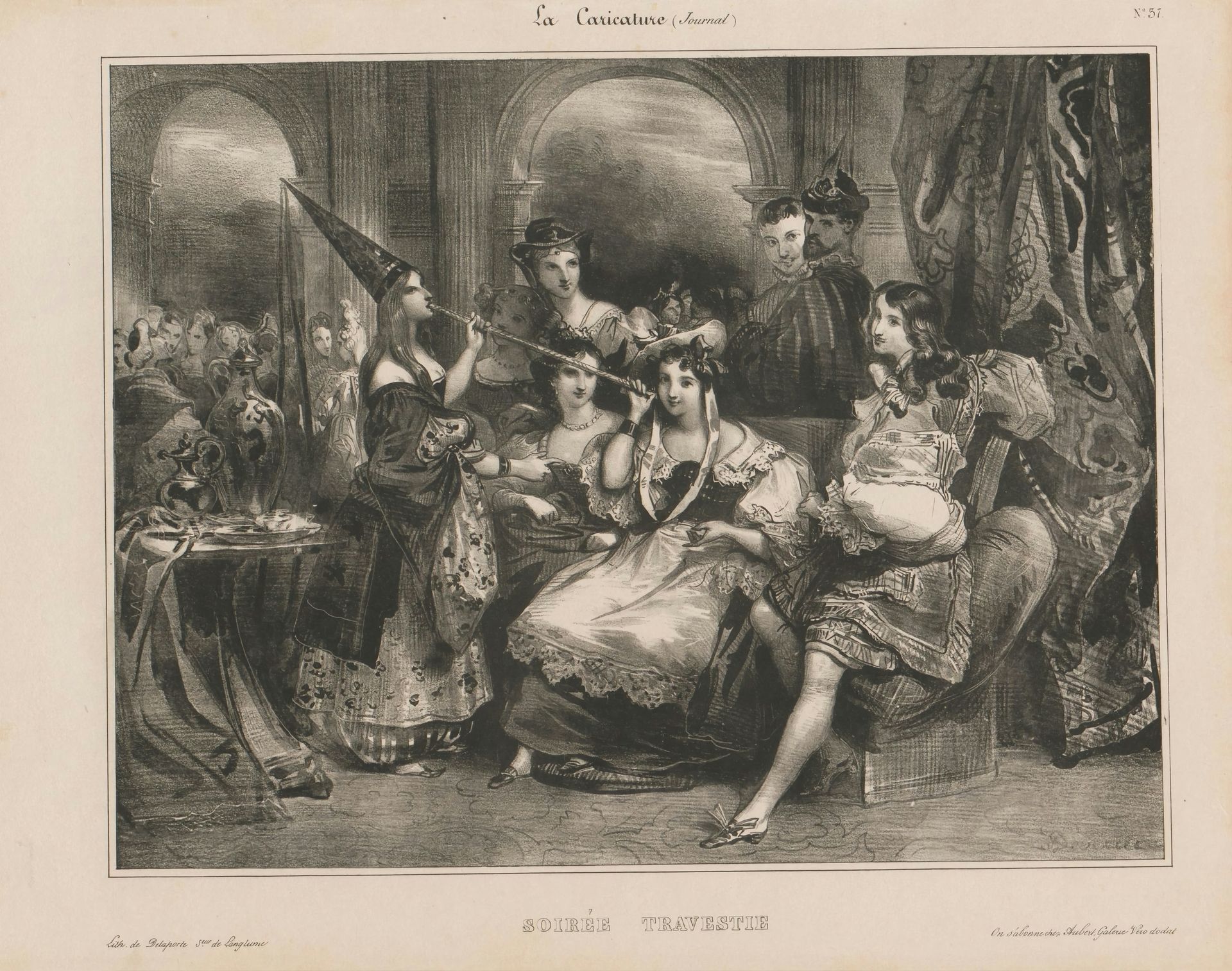
George Eliot's Middlemarch, published in installments between 1871 and 1872, is the novel that Virginia Woolf called "one of the few English novels written for grown-up people." What Woolf meant, in part, was that Eliot treated the lives of provincial English people — a doctor, an idealistic young woman, a clergyman, a banker — as worthy of the full resources of novelistic art. Realism as a literary mode insists that ordinary life, described with sufficient precision and moral intelligence, is adequate material for serious fiction.
Eliot's technique is omniscient narration deployed with unusual self-awareness. Her narrator frequently steps back from the action to comment on the difficulty of seeing into other minds, on the limits of sympathy, on the gap between how we understand our own motives and how others perceive us. The result is a fiction that simultaneously tells a story and meditates on the epistemological problems of telling stories about human interiority.
The novel's most famous passage — its "unhistoric acts" conclusion — argues that the world is made better by ordinary people whose goodness is never publicly recognized. This is realism's democratic proposition: that the unglamorous life is not less meaningful than the heroic one, that the scale on which most people live is worth the full attention of literature.
Eliot's realism differs from the French tradition established by Stendhal and Flaubert, which tends toward ironic detachment. She is warmer and more morally engaged, willing to make judgments while acknowledging their difficulty. Dorothea Brooke's idealism is both admirable and naive; her suffering is not punishment for naivety but an education in the gap between aspiration and circumstance. The novel holds these complexities without resolving them into simple lessons.
Later realist fiction — the works of Thomas Hardy, Henry James, Theodore Dreiser, and eventually the social novels of the 20th century — all engage with questions Eliot clarified: how much responsibility does an individual bear for their own fate, how much is determined by social structure, and how does the novel itself navigate between sympathy and judgment? Middlemarch remains the most complete answer the genre has produced.
Credit: Folktroubadour / Wikimedia Commons (CC BY 4.0)
Literary naturalism applies a near-scientific determinism to human behavior, depicting characters shaped overwhelmingly by environment, heredity, and economic circumstance. Where realism allows for moral agency, naturalism tends to constrict it. The characters in naturalist fiction are not fully free; they move within forces larger than individual will.
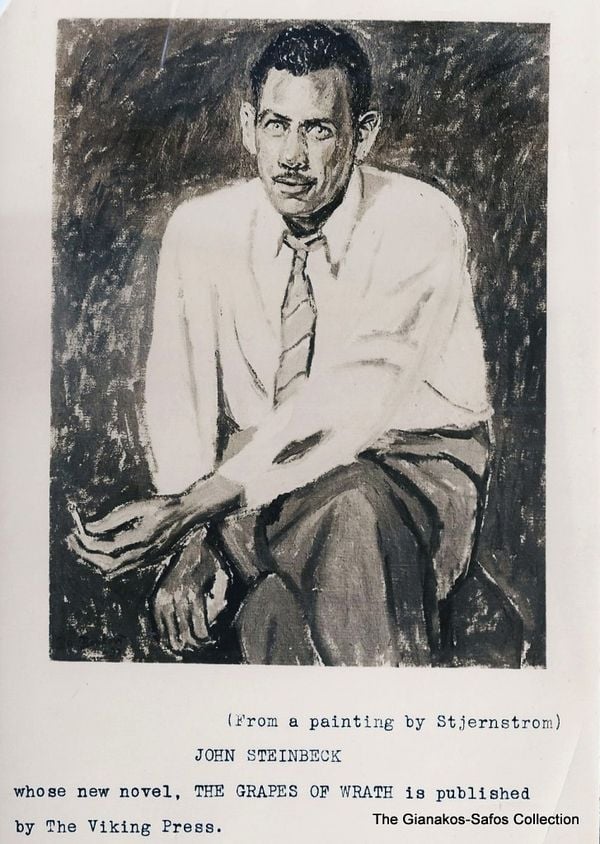
John Steinbeck's The Grapes of Wrath, published in 1939, is American naturalism at its most politically urgent and technically ambitious. The Joad family, driven off their Oklahoma farmland by drought and corporate consolidation, migrate to California in search of work and find exploitation instead. Steinbeck's narration alternates between the Joads' story and intercalary chapters — short, lyrical passages describing the land, the migration in aggregate, the machinery of dispossession — that give individual suffering its structural context.
What Steinbeck inherited from the naturalist tradition established by Émile Zola, Stephen Crane, and Frank Norris was the conviction that individual stories must be embedded in systems. Tom Joad's choices matter, but they are made within a labor market rigged against migrant workers, a banking system indifferent to human need, and a California that wanted cheap labor without the people attached to it. The novel's famous final scene — Rose of Sharon nursing a starving stranger with the milk meant for her stillborn child — offers grace without solution. The system that produced the suffering remains in place.
The Grapes of Wrath won the Pulitzer Prize in 1940 and contributed to Steinbeck's Nobel Prize in 1962. It was also banned in several California counties and burned by some of the landowners and officials it depicted. This reception confirmed the naturalist novel's capacity to function as social document as well as literary art.
Naturalism's influence persists in American fiction that insists on economic context — in Upton Sinclair, in later writers like Richard Wright and Toni Morrison, in contemporary novelists like Colson Whitehead and Barbara Kingsolver. The genre's essential claim — that individual character is insufficient to overcome structural disadvantage — remains as contested as it was in 1939.
_-_Restoration-1920x2285.jpg)
Credit: Marian Wood Kolisch / Wikimedia Commons (CC BY-SA 2.0)
Ursula K. Le Guin published The Left Hand of Darkness in 1969, and it changed what science fiction was understood to be capable of. The novel follows a human envoy named Genly Ai to the planet Gethen, whose inhabitants are ambisexual — neither male nor female, but capable of becoming either during periodic phases of fertility. Le Guin used this premise to examine how gender shapes thought, perception, social organization, and the possibility of solidarity.
This was science fiction as thought experiment in the strictest sense: take one variable, change it, and observe the consequences across every dimension of a society. The form had been doing this since H.G. Wells and Jules Verne, but Le Guin pushed it further into anthropology, philosophy, and politics. Her Gethen is not a utopia or a dystopia but a genuinely alien society with its own logic, its own blind spots, its own beauty and violence. Genly Ai spends most of the novel misunderstanding it, and his misunderstanding is the point.
What Le Guin gave science fiction was a model for using speculative premises not to predict the future but to defamiliarize the present. The novel's treatment of gender was received as radical in 1969 and has grown more rather than less relevant. Her Hainish Cycle, of which this is a part, is one of the most sustained and rigorous uses of science fiction's imaginative freedom in the genre's history.
Le Guin was also a meticulous prose stylist in a genre often indifferent to sentence-level craft. Her writing rewards close attention in ways that pure plot-driven science fiction does not. This combination — serious ideas, anthropological rigor, formal care — established a standard for literary science fiction that writers from Octavia Butler and Samuel R. Delany to Kim Stanley Robinson and N.K. Jemisin have explicitly acknowledged.
Earlier novels like Wells's The Time Machine and Isaac Asimov's Foundation established the genre's commercial and imaginative scope. Le Guin gave it a conscience and a method.

Credit: Ethan Rougon / Unsplash
George Orwell published Nineteen Eighty-Four in 1949, one year before his death, and it produced more vocabulary for political life than almost any other 20th-century novel. "Big Brother," "doublethink," "Newspeak," "thoughtcrime," "Room 101" — these entered the language so thoroughly that people use them without knowing their origin. The novel depicted a future Britain under a totalitarian government that controlled not just behavior but thought, not just the present but the past, through the systematic falsification of history.
Orwell drew on his experience in the Spanish Civil War, his observation of Stalinist communism, and his understanding of how propaganda functions — not by persuading people of false things but by making the category of true and false operationally meaningless. The Party in Oceania does not merely lie; it insists on the right to define reality, and it breaks anyone who resists.
The dystopian genre had precursors — Aldous Huxley's Brave New World (1932), Yevgeny Zamyatin's We (1924) — but Nineteen Eighty-Four defined its essential subject: the state's capacity to destroy the self. Winston Smith's story is not about political resistance in any conventional sense; it is about whether an individual consciousness can survive sustained assault by a power that controls language, memory, and relationship. The novel's answer — it cannot, not indefinitely — is the most pessimistic conclusion in the genre, and the one most writers have been responding to ever since.
Later dystopias — Margaret Atwood's The Handmaid's Tale, Anthony Burgess's A Clockwork Orange, Kazuo Ishiguro's Never Let Me Go — all work within a tradition Orwell defined. They share his interest in how systems of power operate at the level of the individual body and consciousness. They also share, to varying degrees, his political specificity: dystopian fiction at its strongest is not vague nightmare but a precise diagnosis of tendencies already present in real societies.
The novel's influence has arguably distorted its reception. Because it is taught as a political warning, readers sometimes miss its intimate dimension — the love story between Winston and Julia, the genuine grief of the ending. Orwell wrote it as a dying man, and that personal urgency is in every page.

Screenshot: Goodreads — The Maltese Falcon by Dashiell Hammett, goodreads.com
Dashiell Hammett published The Maltese Falcon in 1930, and it established hard-boiled crime fiction as a genre distinct from the genteel puzzle-solving tradition of Agatha Christie and Conan Doyle. Sam Spade is not a brilliant amateur deducing solutions in drawing rooms. He is a professional, operating in a city — San Francisco — that is corrupt at every level, and his investigation is not a logical exercise but a negotiation with competing dishonest parties in which he must figure out what actually happened while managing his own survival.
Hammett's prose style was the genre's other founding contribution. Stripped of adjectives, delivered in declarative sentences, focused on observable action rather than psychological analysis — it was the literary equivalent of a procedural stance. The narrator describes what Spade does and says; interior life is conveyed through behavior rather than reported thought. This technique created a new kind of fictional realism, one suited to a genre whose subject was deception. In a world where everyone is lying, what characters say cannot be trusted; what they do is the only evidence.
Raymond Chandler, who followed Hammett and extended the tradition with Philip Marlowe, identified the hard-boiled detective novel's moral structure: the detective moves through a corrupt society without being corrupted by it, not because he is innocent but because he has a private code. Hammett's Spade is actually more morally ambiguous than this description suggests — he sleeps with his partner's wife, he turns in a woman he may love to the police for the murder of his partner, and his motives throughout are less than pure. This ambiguity is part of why the novel feels more modern than Chandler's more romantically chivalric Marlowe.
The genre Hammett established has produced the most commercially successful fictional tradition in publishing history. Every crime novel that followed — the police procedural, the psychological thriller, the legal drama — owes something to the template The Maltese Falcon set: the city as arena of corruption, the investigator as moral outsider, the plot structured around the revelation of hidden motives.
Credit: The Royal Danish Library / Unsplash
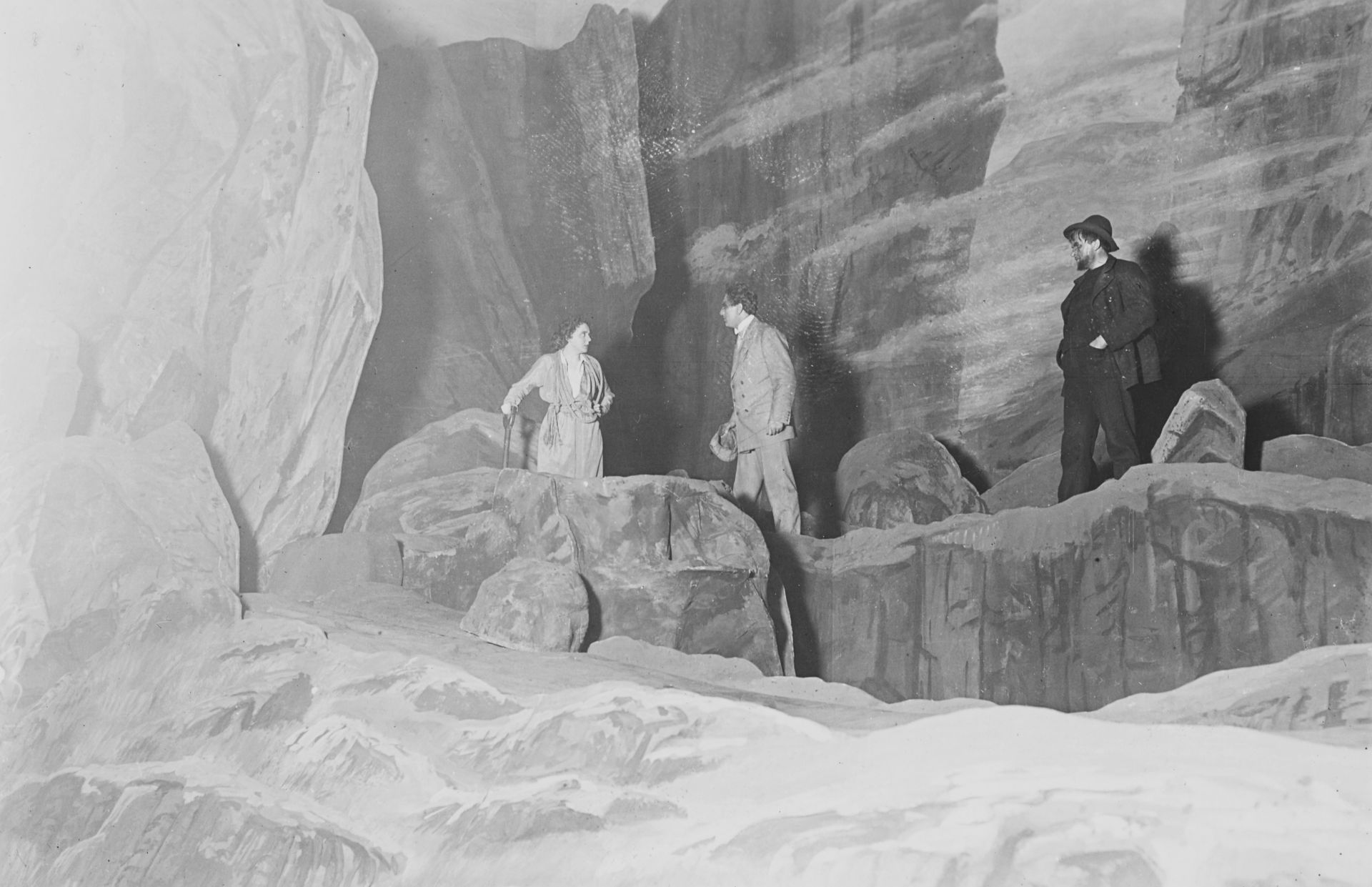
John le Carré published The Spy Who Came In from the Cold in 1963, and it demolished the adventure-story framework that Ian Fleming's James Bond novels had established as the genre's default. Le Carré's spies are not elegant, not particularly competent, and not engaged in a morally simple contest between freedom and tyranny. They are middle-aged bureaucrats serving an institution — the Circus, his name for British intelligence — that uses and discards them with the same instrumental indifference as the enemy it opposes.
The novel's protagonist, Alec Leamas, is sent on what appears to be a straightforward mission to discredit an East German intelligence officer named Mundt. The novel's final revelation — that Leamas has been manipulated into destroying Mundt's rival, Fiedler, in order to protect Mundt, who is a British agent — arrives with the force of a philosophical proposition: the West does not fight communism with virtue; it fights it with the same methods communism uses, and the difference between the two sides is largely a matter of self-congratulatory rhetoric.
This moral equivalence argument was more provocative in 1963 than it might seem now. The Cold War was at its hottest. The Cuban Missile Crisis had just ended. Le Carré's insistence that the spy services of liberal democracies operated through betrayal, manipulation, and the sacrifice of their own people was not a comfortable claim to make in public.
The genre le Carré established — the procedural espionage novel, focused on institutional politics and moral compromise rather than action sequences — became the dominant mode of serious spy fiction. His influence is visible in Alan Furst's historical espionage novels, in Charles McCarry, in contemporary practitioners like Mick Herron (Slow Horses). Fleming's Bond remained popular as entertainment; le Carré defined what the genre could accomplish as literature.
The Spy Who Came In from the Cold was le Carré's third novel and remained, by his own account, his most perfectly constructed. It is a model of how genre fiction can carry weight that exceeds its plot.

Screenshot: Goodreads — The Haunting of Hill House by Shirley Jackson, goodreads.com
Shirley Jackson published The Haunting of Hill House in 1959, and Stephen King has called it the finest supernatural horror novel of the 20th century. The claim is defensible. The novel does everything the genre requires — it genuinely frightens — while conducting a precise psychological study of a woman's dissolution under the combined pressure of an external malevolent force and her own interior life.
Eleanor Vance arrives at Hill House as one of four people invited by a parapsychologist to study the house's reported supernatural activity. She is 32, has spent her adult life caring for an invalid mother, and has no life outside this one strange summer. Hill House, which the novel's opening paragraph describes as having an architectural wrongness that communicates hostility to the senses, begins to act on Eleanor in ways that seem designed specifically for her.
Jackson's central ambiguity — whether Hill House is genuinely haunted or whether Eleanor's psychology is generating or distorting the phenomena — is what elevates the novel above straightforward supernatural horror. The first sentence ("No live organism can continue for long to exist sanely under conditions of absolute reality; even larks and katydids are supposed, by some, to dream") prepares the reader for a story about the mind's need for narrative and the danger of that need.
The horror genre that Jackson clarified is concerned less with external monsters than with psychological dissolution. The house is terrifying because it finds Eleanor's weakness — her loneliness, her tentative desire for belonging, her ambiguous history — and uses it against her. This is horror as intimacy, which is more disturbing than horror as spectacle.
Jackson's influence is visible in every subsequent literary horror writer who uses the genre's atmosphere for psychological examination. Mark Z. Danielewski's House of Leaves, Paul Tremblay's A Head Full of Ghosts, and much of Carmen Maria Machado's work are all working within a tradition Jackson made possible. The Haunting of Hill House demonstrated that horror's most powerful tool is not the monster but the suggestion that the monster is us.

Screenshot: Goodreads — One Hundred Years of Solitude by Gabriel García Márquez, goodreads.com
Gabriel García Márquez published Cien años de soledad in 1967 (translated into English by Gregory Rabassa in 1970), and it gave a name and a form to a mode of fiction that had been developing across Latin American literature: magical realism, in which impossible or supernatural events are presented within an otherwise realistic narrative without comment or explanation. The magic is not marked off as dream or hallucination; it is simply part of the way the world described in the novel works.
The Buendía family's hundred-year history in the fictional town of Macondo follows a trajectory from founding to extinction across seven generations. Ghosts appear and hold conversations. A woman ascends to heaven while folding laundry. A plague of insomnia causes the entire town to forget the names of things. Yellow butterflies accompany a character wherever he goes. None of this is explained; none of it is treated as remarkable by the narrator.
García Márquez drew on Caribbean oral storytelling traditions and on the work of Borges and Kafka, but what he created in this novel was formally distinct: an epic that used the grammar of myth and folktale to tell the history of a continent marked by colonialism, political violence, and the cyclical repetition of power. The magical elements are not decorative; they carry historical weight. The banana company massacre, based on the real 1928 Banana Massacre in Colombia, is rendered in the novel in terms that conflate historical amnesia with literal forgetting.
The novel won the Nobel Prize for Literature in 1982, and it catalyzed a wave of Latin American fiction that became known as the Boom. Its influence extended globally — Toni Morrison, Salman Rushdie, Günter Grass, and Angela Carter all work with versions of magical realism, though each inflects the technique differently. What García Márquez established is the idea that the impossible, deployed with narrative confidence, can be more historically truthful than strict documentary realism.

Credit: Stuart C. Shapiro / Wikimedia Commons (CC BY-SA 3.0)
Chinua Achebe published Things Fall Apart in 1958, one year before Nigerian independence, and it transformed the terms on which African literature was received and written. The novel follows Okonkwo, a respected warrior and farmer in the Igbo community of Umuofia, through his prime, his exile, and his destruction at the moment of British colonial contact. It was written explicitly as a response to European novels — particularly Joseph Conrad's Heart of Darkness — that depicted Africa as a backdrop for European self-discovery rather than as a place with its own complex civilization, history, and interior life.
Achebe's technical choices were themselves political. He wrote in English — the colonial language — but inflected it with Igbo proverbs, rhythms, and narrative structures. The novel is not translated from Igbo; it inhabits English in a way that bends the language toward a different cultural logic. This was a statement about ownership: the colonizer's language could be taken and used to tell the colonized's story on its own terms.
The novel's tragic structure mirrors Greek tragedy — Okonkwo's excessive masculinity, his refusal of compromise, his violence are precisely the qualities that make him unable to adapt to a world that is changing in ways beyond his control. But Achebe refuses to make this a simple story of individual hubris. The colonial system arrives with physical force, institutional power, and the capacity to reconfigure Igbo society at the level of its own internal divisions. Okonkwo's tragedy is personal and structural simultaneously.
Things Fall Apart has sold more than 20 million copies and is taught in schools across West Africa, the U.K., and the U.S. It established postcolonial fiction as a genre with its own aesthetic and political commitments: the recovery of pre-colonial life from European distortion, the critique of colonial structures, the examination of how colonialism reshapes identity from the inside. Writers from Ngugi wa Thiong'o to Chimamanda Ngozi Adichie to Arundhati Roy have worked in a tradition Achebe defined.
Credit: Woolf in the World: A Pen and a Press of Her Own: Marriage / PICRYL
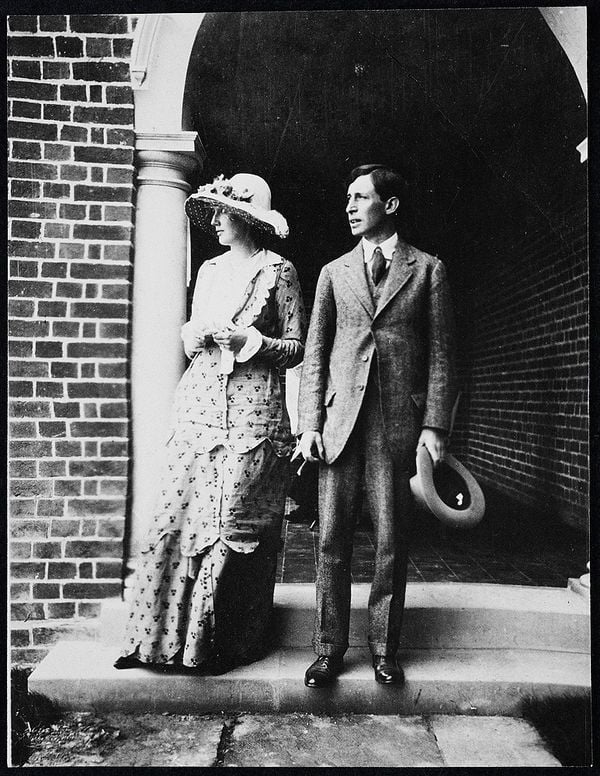
Virginia Woolf published Mrs. Dalloway in 1925, and it is the clearest demonstration in English of what modernist fiction set out to do: to move the novel's attention inward, away from external plot and toward the texture of consciousness as it actually moves through time. The novel covers a single day in London — June 1923 — as Clarissa Dalloway prepares for a party she is giving that evening. Almost nothing happens in the conventional sense. The drama is in the movement of minds.
Woolf developed what she called "tunnelling" — a technique by which the narrator moves fluidly from one character's consciousness to another's, and within each consciousness backward and forward in time. Clarissa's preparations trigger memories of her youth; the thoughts of Septimus Warren Smith, a shell-shocked veteran whom Clarissa never meets, are woven through her day as a kind of shadow narrative. The two characters' lives rhyme structurally: both are choosing, in different ways, between accommodation and resistance to social pressure.
What Woolf gave the modernist novel was a theory of how consciousness works. The mind does not move linearly; it associates, loops, drifts, is interrupted by sensation, and returns to obsessions unbidden. Her prose mimics this movement through syntax — long, clause-laden sentences that accumulate meaning the way thought accumulates, without the artificial tidiness of conventional narrative.
James Joyce was doing something related in Ulysses (1922), published three years earlier, and the two novels are often read together as the twin achievements of modernist fiction in English. Where Joyce is encyclopedic and exuberant, Woolf is more controlled and more focused on interiority as a specifically gendered experience. Clarissa's choices — whether to marry Richard Dalloway, whether to give parties, whether to endure — are made within constraints that Septimus's crisis illuminates from the outside.
The stream-of-consciousness technique Woolf refined influenced every subsequent writer interested in the phenomenology of consciousness — from William Faulkner to Michael Ondaatje to Rachel Cusk.
Credit: Library of Congress / PICRYL
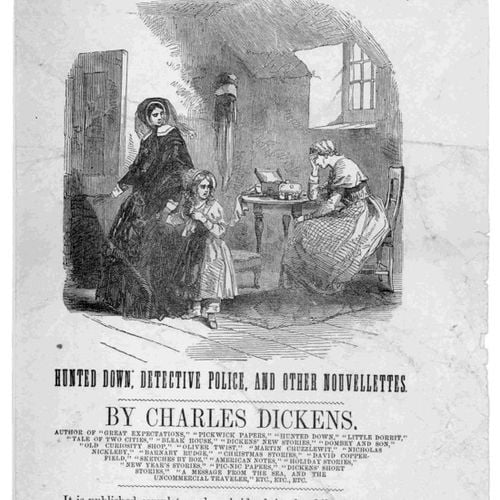
Charles Dickens published Great Expectations in 1860–61, and it is the genre's most formally perfect example: a retrospective first-person narrative in which the protagonist Pip traces his formation from a blacksmith's orphan apprentice to a young man who has acquired, lost, and reassessed a set of aspirations that were always founded on false premises.
The bildungsroman — the novel of formation, of education, of growing up — requires a protagonist who is transformed by experience. But Dickens complicates the standard structure, in which education leads to enlightenment, by making Pip's "great expectations" (the anonymous fortune that appears to elevate him) the vehicle of his corruption rather than his development. The money separates him from Joe, his surrogate father; inflames his snobbery; makes him treat Estella, whom he loves, as a social trophy rather than a person; and leaves him morally worse than he was as a poor child in the forge.
The novel's structure turns on the revelation that Pip's benefactor is not Miss Havisham — the genteel patroness he has assumed — but Magwitch, the convict he helped as a small boy on the marshes. This revelation collapses Pip's entire framework of aspiration. The gentleman's world he has been trying to enter was funded by criminal transportation labor. His sense of himself as a naturally deserving recipient of privilege is shown to be a narrative he told himself over the top of a more complicated reality.
Dickens gives the novel two endings — one unhappy, one ambiguous — after a friend suggested the original was too bleak. The published ending leaves Pip and Estella's future unresolved, which is both more honest and more thematically appropriate. Growth, in the world of Great Expectations, does not produce resolution; it produces a more accurate understanding of irresolution.
The bildungsroman tradition includes Goethe's Wilhelm Meister's Apprenticeship, Charlotte Brontë's Jane Eyre, James Joyce's A Portrait of the Artist as a Young Man, and Toni Morrison's The Bluest Eye — all novels about protagonists being shaped by a world they did not choose and must nevertheless navigate.
Credit: DutchTreat / Wikimedia Commons (CC BY-SA 3.0)
Jean-Jacques Rousseau published the first part of his Confessions in 1782 (the second part appeared posthumously in 1789), and it established a new form: the autobiographical text that seeks not to justify or instruct but to expose — to give a truthful account of the self, including its shameful, contradictory, and morally compromised elements.
The opening declaration — "I have resolved on an enterprise which has no precedent, and which, once complete, will have no imitator. My purpose is to display to my kind a portrait in every way true to nature, and the man I shall portray will be myself" — is both a claim and a provocation. Rousseau knew that his account would include things that a person seeking reputation would suppress: his abandonment of his five children to a foundling hospital, his masochism, his petty thefts, his cowardice and paranoia. He includes them anyway.
Whether Rousseau's Confessions is actually honest is a different question. Scholars have noted self-serving distortions, memory failures, and rationalizations throughout. But the gesture it established — the author as subject, full disclosure as method, the self as a legitimate and serious object of literary inquiry — shaped every subsequent memoir, confession, and autofiction.
The tradition that follows runs from Augustine's Confessions (which Rousseau's title deliberately echoes) through Thomas De Quincey's Confessions of an English Opium-Eater, through 20th-century autobiography, and into contemporary autofiction by writers like Karl Ove Knausgård, Maggie Nelson, and Sheila Heti. What Rousseau established is the premise that the writer's interior life is a subject of literary value independent of its relation to public events or moral instruction. The self is enough — or at least, the self honestly examined is.
The form's defining tension — between honesty and self-construction, between revelation and performance — was installed by Rousseau and has never been resolved. Every memoirist who claims to be telling the whole truth is also making choices about what to include, what to omit, and what lens to apply. Rousseau's Confessions is both the genre's origin and its first self-aware demonstration of its own impossibility.
Credit: Dubliners by James Joyce, 1914 / PICRYL
James Joyce published Dubliners in 1914 after years of rejections, revisions, and disputes with publishers nervous about its content and its unflattering portrait of Irish life. It is the 20th century's most influential short story collection, and its central concept — the epiphany — became the genre's dominant structural principle.
Joyce used the term "epiphany" for moments of sudden, often trivial-seeming revelation: a gesture, an overheard phrase, a visual detail that discloses something previously hidden about a character's situation or the nature of their life. In "Araby," a boy's romantic idealization of his neighbor collapses in the hollow commercialism of a bazaar, and the story ends in self-loathing: "Gazing up into the darkness I saw myself as a creature driven and derided by vanity; and my eyes burned with anguish and anger." The revelation is not redemptive; it is simply true.
The Dubliners stories are organized by a principle Joyce described as moving from childhood to adolescence to maturity to public life. The city of Dublin functions as a character — its particular atmosphere of paralysis, its combination of aspiration and stagnation, pervades every story. The word "paralysis" appears in the collection's first paragraph and names what the stories collectively diagnose: a city and a culture unable to move.
Chekhov had already established the modern short story's preference for inconclusion — his stories end not with resolution but with a shift in understanding, a moment after which nothing looks quite the same. Joyce sharpened this into a technique. His endings are famous for their closing-off of ordinary meaning: the snow falling over Ireland at the end of "The Dead" is one of the most celebrated endings in English prose.
The writers Joyce influenced directly and indirectly include virtually every serious short story writer of the 20th century — Flannery O'Connor, Raymond Carver, Alice Munro, Marilynne Robinson, Junot Díaz. The Joycean epiphany became the form's default engine, and the question of what to do with it — reinforce it, subvert it, replace it — has occupied short fiction for over a century.
Credit: Samuel Richardson by Francis Hayman, c. 1740–41 / PICRYL
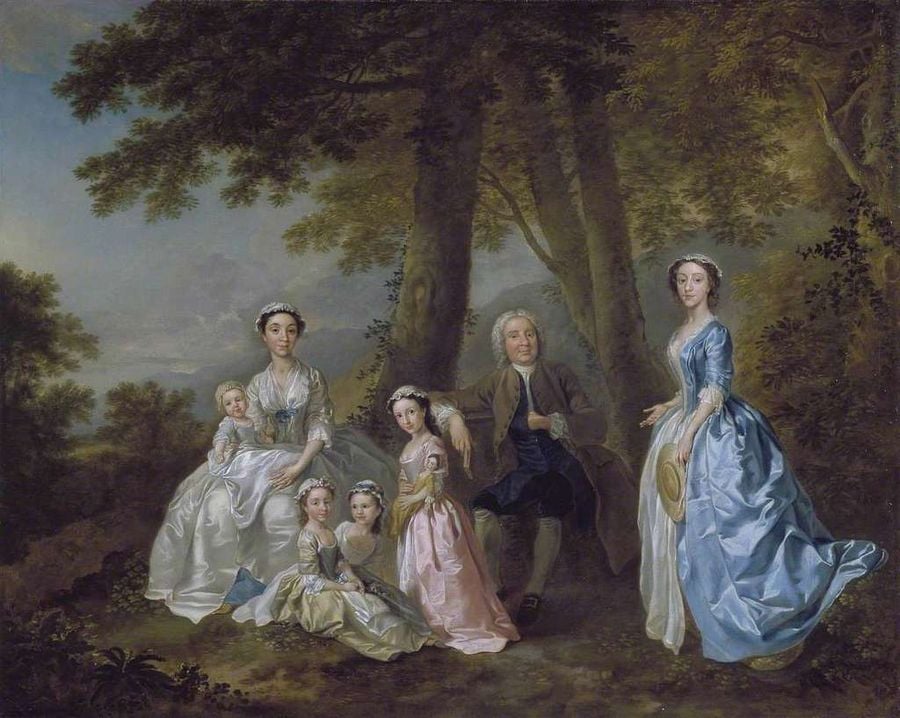
Samuel Richardson's Clarissa, published in its full form in 1748, is the longest novel in the English language — around one million words — and it is the epistolary genre's defining text. The novel is composed entirely of letters between its characters, primarily Clarissa Harlowe (imprisoned by her family, then by her captor Lovelace) and her friend Anna Howe. The letter format is not merely a device; it is the novel's subject. Every letter is a performance, an argument, an act of self-construction. Characters in Clarissa understand themselves and each other through the letters they write.
Richardson's genius was to recognize that the letter, as a form, is inherently dramatic. A letter is written in time, under pressure, with incomplete information. Clarissa does not know, when she writes to Anna, what Lovelace will do next; she does not always know whether her letters are being intercepted. Lovelace writes letters to his friend Belford that are among the most disturbing documents of self-revelation in the genre — he understands, in lucid detail, the monstrousness of what he is doing and does it anyway.
The novel's subject — a woman's resistance to rape and her refusal to survive it — was received in Richardson's time as a moral exemplar. It reads now as something more troubled: a story about a woman whose virtue gives her no protection against predatory male power, and whose death is simultaneously her only assertion of self-determination and a confirmation that the world offers her no room to live in. This ambiguity is what kept the novel alive long after its moral framework became unfashionable.
The epistolary form Richardson developed was used by Rousseau (La Nouvelle Héloïse), Laclos (Les Liaisons Dangereuses), and Goethe (The Sorrows of Young Werther) in the decades that followed. Contemporary versions — Bram Stoker's Dracula (letters and diaries), Alice Walker's The Color Purple (letters to God and to Nettie) — demonstrate that the form retains its power whenever a writer needs to convey consciousness under duress.
Credit: İrem Karakaş / Pexels
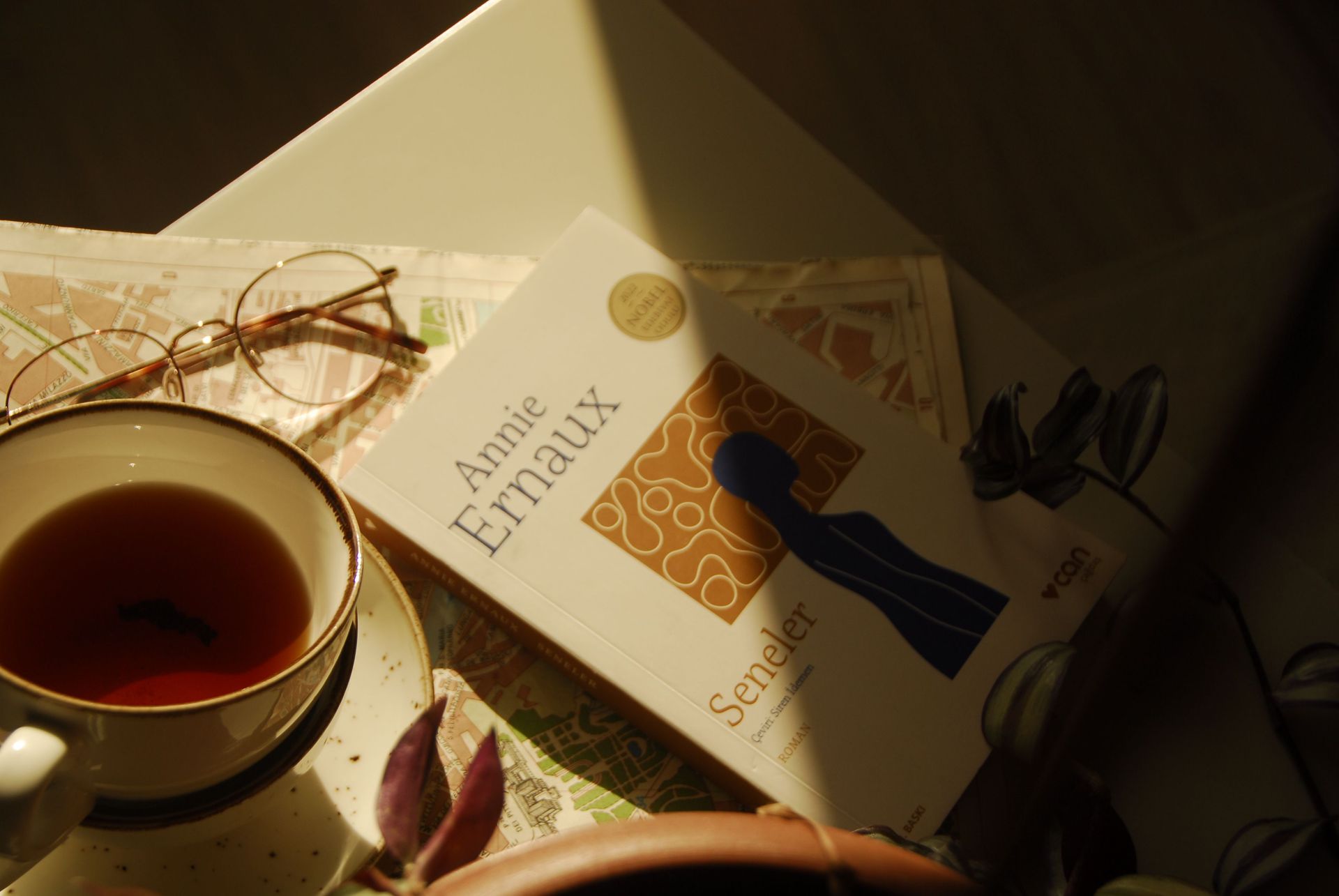
Annie Ernaux published Les Années in 2008 (translated into English by Alison L. Strayer as The Years in 2017), and it is the most formally original contribution to autofiction in recent decades — and the one most likely to be the genre's lasting definition. Autofiction occupies the space between memoir and novel: it uses the materials of an author's real life but with the freedom and devices of fiction, blurring the boundary between lived experience and literary construction.
What makes The Years distinctive, and what distinguishes it from conventional memoir, is its use of the collective pronoun. The narrator is not "I" but "we" — a generation, a French society, a shared historical experience from the Liberation to the present. Ernaux braids together personal memory, collective cultural history, and fragments of language from advertisements, political slogans, and domestic conversation into a form she described as a kind of "impersonal autobiography." The self, in this vision, is not unique but formed out of shared materials — language, images, historical events, consumer goods.
Ernaux won the Nobel Prize in Literature in 2022, and her citation referenced exactly this: her "courage and clinical acuity" in uncovering the roots of collective and individual memory. The Years is the most complete expression of her method.
Earlier autofiction — Serge Doubrovsky's Fils (1977), which coined the term; Karl Ove Knausgård's My Struggle; Ben Lerner's Leaving the Atocha Station — tends to focus on the individual self in high-definition. Ernaux's innovation was to dissolve the individual into the collective while keeping the precision of personal observation. The genre's central problem — how much of the self is individual and how much is historically determined — is answered, in The Years, with unusual intellectual rigor.
The form continues to generate the most formally experimental writing in literary fiction, as writers from Maggie Nelson (The Argonauts) to Rachel Cusk (the Outline trilogy) use their own lives as raw material for essays on subjectivity, memory, and the limits of selfhood.
Credit: Europeana / Unsplash
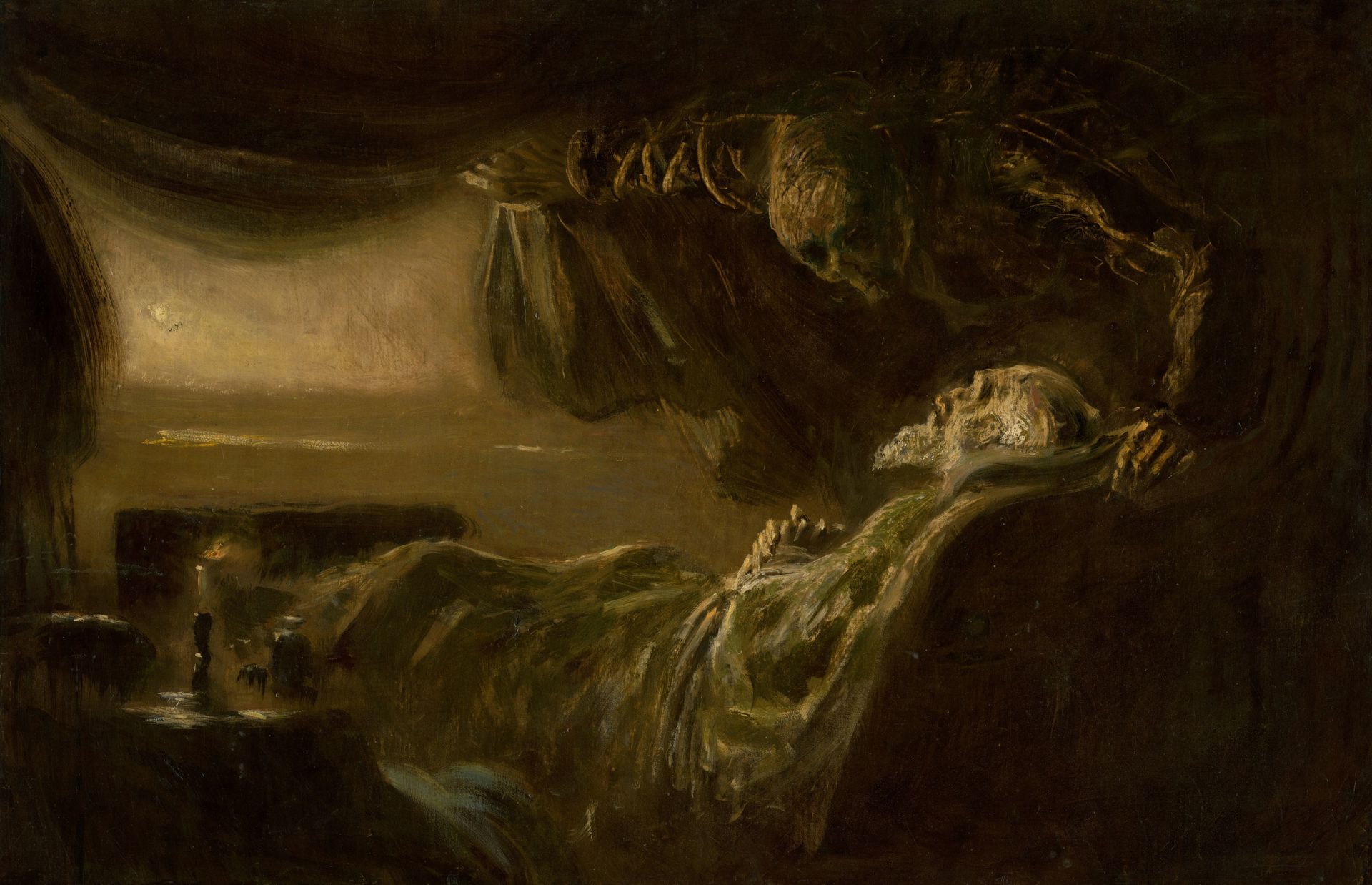
Leo Tolstoy published The Death of Ivan Ilyich in 1886, and it is the form's most concentrated demonstration of what the novella can do that neither the short story nor the novel can. Too long to sustain the short story's single-effect architecture, too short to bear the weight of a novel's social breadth, the novella occupies a formally distinct space: it can follow a single consciousness through a sustained experience without the obligations of subplots, secondary characters, or social panorama.
Ivan Ilyich is a high court judge in St. Petersburg — competent, conventional, unreflective, satisfied with a life organized around propriety and professional advancement. He injures himself hanging curtains, the injury becomes fatal, and the novella traces his dying over the course of months. As his physical condition worsens, the social performances that organized his life become intolerable. His colleagues at court are not grieved by his illness; they calculate its effect on their own promotions. His wife treats him as a burden. Only his peasant servant Gerasim cares for him with uncomplicated honesty.
Tolstoy's argument — that death strips away the falseness of social existence and confronts a person with the question of whether they have lived rightly — is stated with an explicitness unusual in literary fiction. Ivan's final hours, in which he experiences what Tolstoy describes as a moment of spiritual breakthrough and a release from fear, have been read as both a Christian allegory and a phenomenological account of the dissolution of ego.
The novella's formal economy is part of its argument. The form does not allow Ivan's life to be expanded into the kind of social and historical context that a Tolstoy novel would provide. His death is not a historical event; it is simply a man dying, which is what makes it universal. The novella as Tolstoy used it here is a form for isolating a single human experience at maximum intensity — a purpose that the novel, with its appetite for context, cannot serve as well.
