
Credit: jimylloyd laumain, Unsplash
Networking has a reputation problem. The word alone conjures images of awkward cocktail hours, rehearsed elevator pitches, and the sinking feeling of handing someone your business card while wondering if they'll toss it the moment you turn away. For many people, the discomfort isn't about being introverted or bad at small talk — it's about the underlying transaction. When every interaction is oriented around what someone can do for you, or what you can extract from a room, it stops feeling like human connection and starts feeling like a job.
The good news is that the most durable professional relationships are rarely built that way. The people with the strongest networks — those who can make a call and get a thoughtful response, who are remembered when opportunities arise, who have genuine advocates in their corners — typically didn't build those connections through aggressive outreach or calculated favor-trading. They built them by showing up consistently, contributing without keeping score, and treating people like people rather than rungs on a ladder.
This shift in approach matters more now than it did 20 years ago. Remote work has made casual, organic professional contact harder to come by. LinkedIn has made networking feel more performative than ever. And in a job market where referrals and informal recommendations carry enormous weight, the quality of your relationships matters far more than the quantity of your connections.
What follows is a set of concrete, specific strategies for building a professional network that doesn't feel hollow or extractive — to you or to the people you're connecting with. Some of these involve rethinking how you show up in rooms you're already in. Others involve identifying opportunities you might be overlooking. A few require changing habits that are easy to fall into when career pressure is high.
These aren't networking hacks. They're habits of engagement that, practiced over time, tend to produce the kind of professional relationships most people say they wish they had.
1 / 15

Credit: RDNE Stock project, Pexels
The easiest way to make a professional interaction feel less transactional is to stop thinking about what you need and start paying attention to what the other person actually does. This sounds obvious, but it's harder in practice than it sounds. Most people enter networking situations with some version of an agenda — a job they want, a contact they're hoping to be introduced to, a project they need help with. That agenda shapes how they listen, or whether they listen at all.
Genuine curiosity means asking questions that go beyond someone's job title or company. It means following up on what they say rather than waiting for a pause to redirect the conversation toward yourself. If someone mentions they're working on a restructuring project at their company, ask what that looks like from the inside. If they say they recently changed industries, ask what prompted it. These are the kinds of questions people rarely get asked in professional settings, and they tend to produce real conversations.
The information you get from genuinely curious listening is also more useful than whatever you'd extract from a transactional exchange. You learn what someone finds challenging, what they're energized by, what problems they're trying to solve. That knowledge is what makes it possible to be helpful to them later — or to recognize when they'd be a good person to introduce to someone else in your network.
There's a practical dimension to this as well. People remember conversations where they felt heard. If you meet someone at an industry event and spend 20 minutes asking thoughtful questions about their work, they are far more likely to remember you — and remember you positively — than if you spend the same 20 minutes delivering a polished summary of your own career.
Curiosity also signals confidence. People who are anxious about networking tend to over-explain themselves, over-pitch themselves, and talk too much. The willingness to ask a question and sit with the answer, without rushing to respond with something about yourself, reads as someone who is comfortable in their own skin. That quality is attractive in professional relationships as in personal ones.
The habit to build here is simple: before any professional interaction, leave your agenda at the door for at least the first few minutes. Ask one real question. Then listen to the whole answer before you decide what to say next.
2 / 15

Credit: LinkedIn Sales Solutions, Unsplash
There's a persistent myth in professional networking that the goal is to accumulate contacts — the more LinkedIn connections, the more business cards, the more names in your phone, the better. This framing treats a network like a numbers game, and it produces exactly the kind of shallow, hollow network that people find useless when they actually need something.
The alternative is to invest in a smaller number of relationships with genuine depth. Depth here means mutual familiarity: you know something real about each other's work, you've interacted more than once, and there's enough context between you that a message from either side wouldn't feel cold or out of place.
Depth also means continuity. A single coffee meeting doesn't build a relationship. Neither does a LinkedIn connection with no subsequent interaction. What builds a relationship is repeated contact over time — responding to someone's posts, following up on something they mentioned, sending a relevant article, checking in when you know they're going through a transition. These small, low-stakes touches are what turn an acquaintance into someone who would actually vouch for you.
The practical implication is that after you meet someone you want to stay in connection with, you need a system. Not something elaborate — just a way of remembering to follow up. Some people keep a simple spreadsheet. Others use a CRM. Others set a recurring reminder. The tool matters less than the habit of actually doing it.
There's also a quality-of-experience argument here. Maintaining a wide, shallow network is exhausting. You're constantly meeting new people, delivering the same introductory information about yourself, and never getting past surface-level conversation. Investing in a smaller number of real relationships is both more sustainable and more satisfying. It turns networking from an obligation into something that occasionally looks like a friendship.
The people most worth investing in aren't necessarily the most powerful or well-connected. They're the people whose work you find interesting, whose judgment you respect, and with whom there seems to be some genuine affinity. Those are the relationships that tend to last and to yield things you can't plan for.
3 / 15

Credit: Van Tay Media, Unsplash
One of the most reliable ways to make a networking interaction feel less transactional is to lead with giving rather than asking. This doesn't require grand gestures. It can be as small as sending someone an article that's genuinely relevant to a problem they mentioned, making an introduction you think would benefit them, or answering a question they posted without any expectation of reciprocation.
The logic here is straightforward. When you reach out to someone with a request — for advice, a referral, an introduction — you're placing a demand on their time and attention. When you reach out with something useful, you're demonstrating that you see them as a person with real concerns and interests, not just a node in a network you're trying to activate.
This approach is most powerful when it's specific. A generic "I thought of you when I read this" message is easy to ignore. A message that says "I remembered you were thinking about moving into product management, and I came across this piece by someone who made that transition from a similar background — thought it might be useful" is harder to dismiss. Specificity signals that you were actually paying attention.
The practice also builds a kind of social trust over time. If someone has received genuine, unprompted value from you on two or three occasions, they are far more likely to respond positively when you eventually do have a request. Not because they feel obligated, but because you've already established that your relationship with them isn't purely extractive.
It's worth noting that this principle applies to groups and communities, not just one-on-one relationships. Being the person who consistently shares useful resources in a Slack $WORK group, who answers questions in an online forum, or who volunteers context when someone in a community asks for it — these behaviors build a diffuse kind of professional reputation that can open doors in ways you can't predict in advance.
The key is consistency and the absence of scorekeeping. If you're giving with the conscious expectation of getting something back, people can usually sense that. The goal is to make it a genuine habit, not a strategy.
4 / 15

Credit: Kampus Production, Pexels
Most people's most valuable professional relationships aren't new ones — they're old ones that have gone dormant. A former colleague, a professor, a mentor from an early job, a peer from a graduate program: these are people who already know your work ethic, your character, and your capabilities. Rebuilding those connections typically requires less effort than establishing new ones from scratch, and the resulting relationships often have more substance.
The obstacle is usually psychological. Reaching out to someone you haven't spoken to in several years can feel awkward. You might worry they don't remember you, or that your outreach will seem opportunistic — especially if you've let the relationship lapse.
The solution is honesty. Acknowledging the gap directly, and doing so briefly and without excessive explanation, tends to dissolve the awkwardness quickly. Something like: "I realize it's been a while — I've been meaning to reach out for some time and kept putting it off. I'd genuinely enjoy hearing what you've been up to." That kind of message is disarming precisely because it doesn't pretend the gap didn't happen.
What you don't want to do is reach out after years of silence with a request. If the first message after a long gap is "Hey, I'm looking for a new job — would you be willing to put me in touch with your hiring manager?" the reconnection feels purely instrumental. Re-establish the relationship first, even if it just means one genuine, low-stakes exchange.
The best time to reconnect with dormant contacts is when you have no immediate need. If you reach out when things are going well — when you have news to share, or when you've come across something relevant to their work — the interaction feels natural. Then, if you do eventually need something from that relationship, there's enough warmth to make the request feel reasonable rather than opportunistic.
5 / 15

Credit: Edmond Dantès, Pexels
The sociologist Mark Granovetter identified decades ago that weak ties — acquaintances, people on the periphery of your social circle, contacts you don't know well — are often more useful for professional advancement than strong ties. The reason is that your close contacts tend to know the same things you do and move in the same circles. Your weak ties connect you to different information, different opportunities, and different worlds.
This doesn't mean neglecting your strong relationships. It means recognizing that the person you met once at a conference, the former client you exchange occasional emails with, and the LinkedIn connection you've never actually spoken to are all sources of potential opportunity — precisely because they're outside your immediate sphere.
The practical implication is that weak ties require deliberate maintenance. Strong ties sustain themselves through regular contact. Weak ties fade without attention. A brief message every six months or so — sharing something relevant, responding to a post, congratulating them on something — is often enough to keep a weak tie alive and warm enough to activate when you need to.
It also means being generous about accepting requests from people on the periphery of your network. If someone you met once at a conference reaches out to ask whether you'd be willing to grab a 20-minute call, say yes. If someone you know only through a professional association asks for your perspective on a career decision, offer it. You are someone else's weak tie, and being useful to them is both the right thing to do and the way those peripheral connections get maintained.
One thing to be careful of: don't treat weak ties as purely instrumental. The goal isn't to map your network for its utility value and periodically "activate" contacts when you need something. The goal is to stay genuinely connected to a broad range of people, so that when something useful does arise — for either of you — the relationship is warm enough to support it.
6 / 15

Credit: Pavel Danilyuk, Pexels
One of the most organic ways to build professional relationships is to work alongside people on something you both care about. Volunteering — whether for a professional association, an industry conference, a nonprofit board, or a community organization — creates the conditions for exactly that kind of contact.
The reason this works better than most networking events is the context. When you're on a committee with someone, or helping to organize an event, or collaborating on a project, you're not just exchanging information about yourselves — you're actually working together. People learn far more about each other through shared tasks than through conversation, and the relationships that form in those contexts tend to have more substance and durability.
This is also a way to meet people who are more senior than you, or who are in fields adjacent to yours, without the awkwardness of a cold approach. If you're both trying to figure out how to run a panel session or sort out a venue problem, your relative professional status becomes irrelevant for the duration of the task. You're just two people solving a problem together.
When choosing where to volunteer, be selective. The point is to work alongside people whose work you actually find interesting — not to accumulate committee memberships. One well-chosen volunteer role, maintained over time, will produce more genuine relationships than a rotating series of one-off involvements. The longer you stay involved with a community, the deeper the relationships you build within it.
There's also a secondary benefit: volunteering builds a public-facing reputation within a professional community. People know who shows up, who follows through, and who takes on the unglamorous tasks. That reputation is a form of professional capital that accrues gradually and can open doors that outreach alone wouldn't.
7 / 15

Credit: Pavel Danilyuk, Pexels
When you need something from a professional contact — perspective on a career decision, information about a company, guidance on navigating a situation — how you frame the request matters. Asking for advice is different from asking for a favor, and most people respond to it very differently.
A favor requires someone to do something for you. An introduction, a referral, a recommendation — these all ask someone to spend their own capital on your behalf. That's a significant ask, especially early in a relationship.
Asking for advice, by contrast, asks only for someone's perspective based on their experience. It's lower-stakes and, for most people, more enjoyable. People generally like sharing what they know, especially when they're being asked by someone who seems genuinely interested in their perspective.
The key is that the advice request has to be real. It can't be a thinly veiled request for an introduction dressed up in the language of curiosity. If you ask someone to tell you what it's like to work at a particular company and then immediately pivot to asking for a referral, you've eroded trust rather than built it. The advice has to be what you actually want.
Advice-seeking also tends to produce more useful information than you'd get through a formal request. When someone is in advice mode, they're more likely to share nuance — what a job is really like, what a company's culture is actually like, what the real obstacles are in a particular career path. That information is more valuable than whatever you'd get from a polished referral.
One useful structure: ask for 20 minutes of someone's time to hear their perspective on a specific question. Be precise about the question in advance. People are more likely to agree when they know exactly what you're asking, and the conversation tends to be more productive when both parties know what it's for.
8 / 15
Credit: RDNE Stock project, Pexels
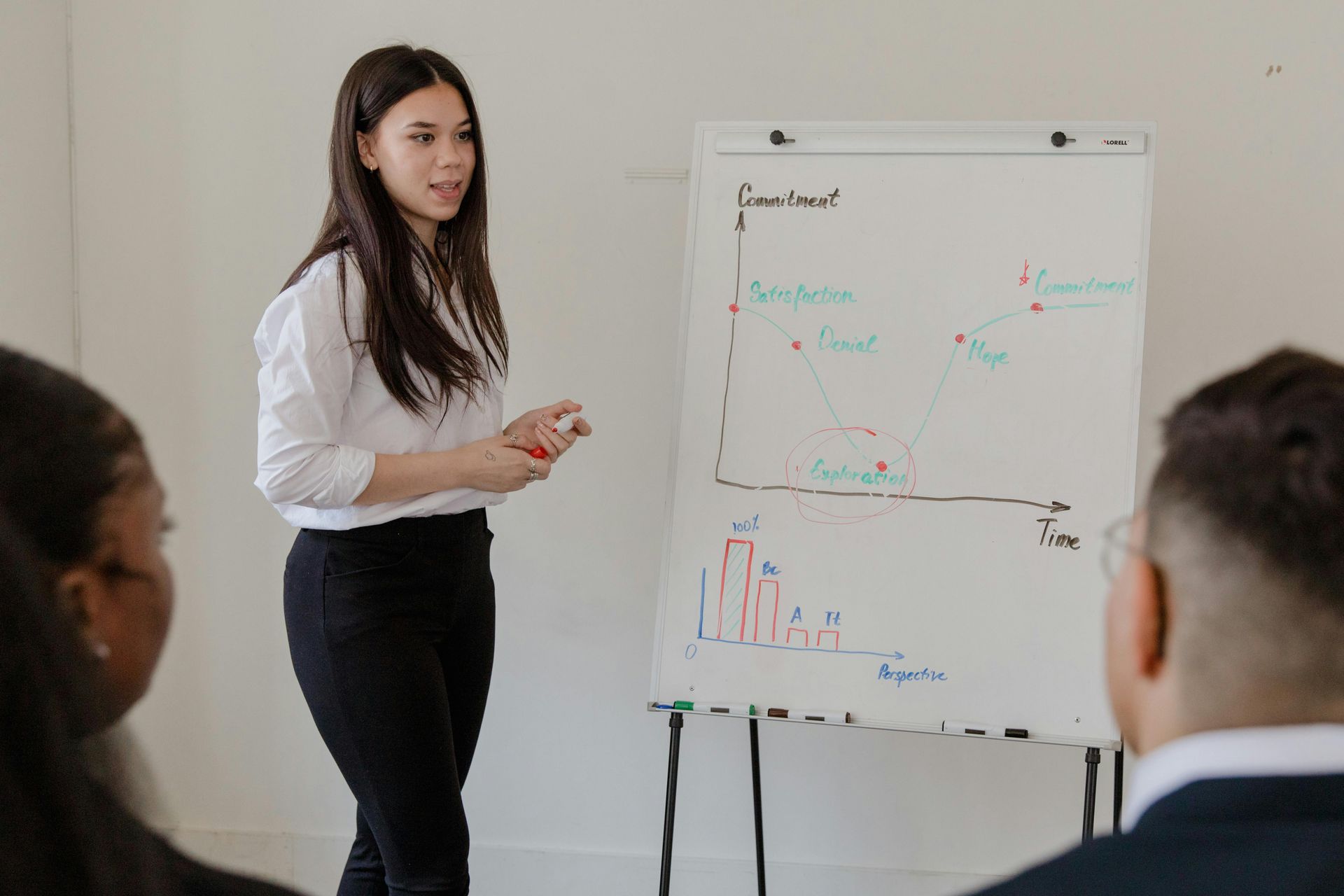
One of the most underused approaches to professional networking is simply creating things — writing, teaching, presenting, building — and sharing them publicly. This shifts the dynamic of networking entirely: instead of reaching out to people, you make it easy for the right people to find you.
A piece of writing that demonstrates how you think, a presentation you gave at an industry event, a tutorial you put together based on something you figured out — these assets do a particular kind of work. They give people a clear sense of your perspective and capabilities before they've ever interacted with you. When someone reaches out based on something you created, they already know something real about you, and the resulting conversation starts at a much higher level than a cold introduction would.
This doesn't require a large platform or a high-traffic blog. A single well-thought-out piece of writing shared on LinkedIn can reach exactly the right people if it's genuine and specific. Speaking at a small industry event — even an audience of 40 people — can introduce you to a handful of contacts who found your perspective worth following up on.
The type of content matters less than the authenticity. Something that reflects your actual thinking, your real questions, your specific experience is more likely to attract meaningful connections than polished, generic content. The goal is to be findable and recognizable to the people who would value your perspective — not to reach the largest possible audience.
Creating things publicly also creates natural follow-up opportunities. If you write something and a former colleague comments on it, that's an organic touchpoint for a conversation. If someone you've been wanting to connect with engages with your work, you have a context for reaching out that isn't cold and isn't presumptuous.
9 / 15
Credit: Henri Mathieu-Saint-Laurent, Pexels
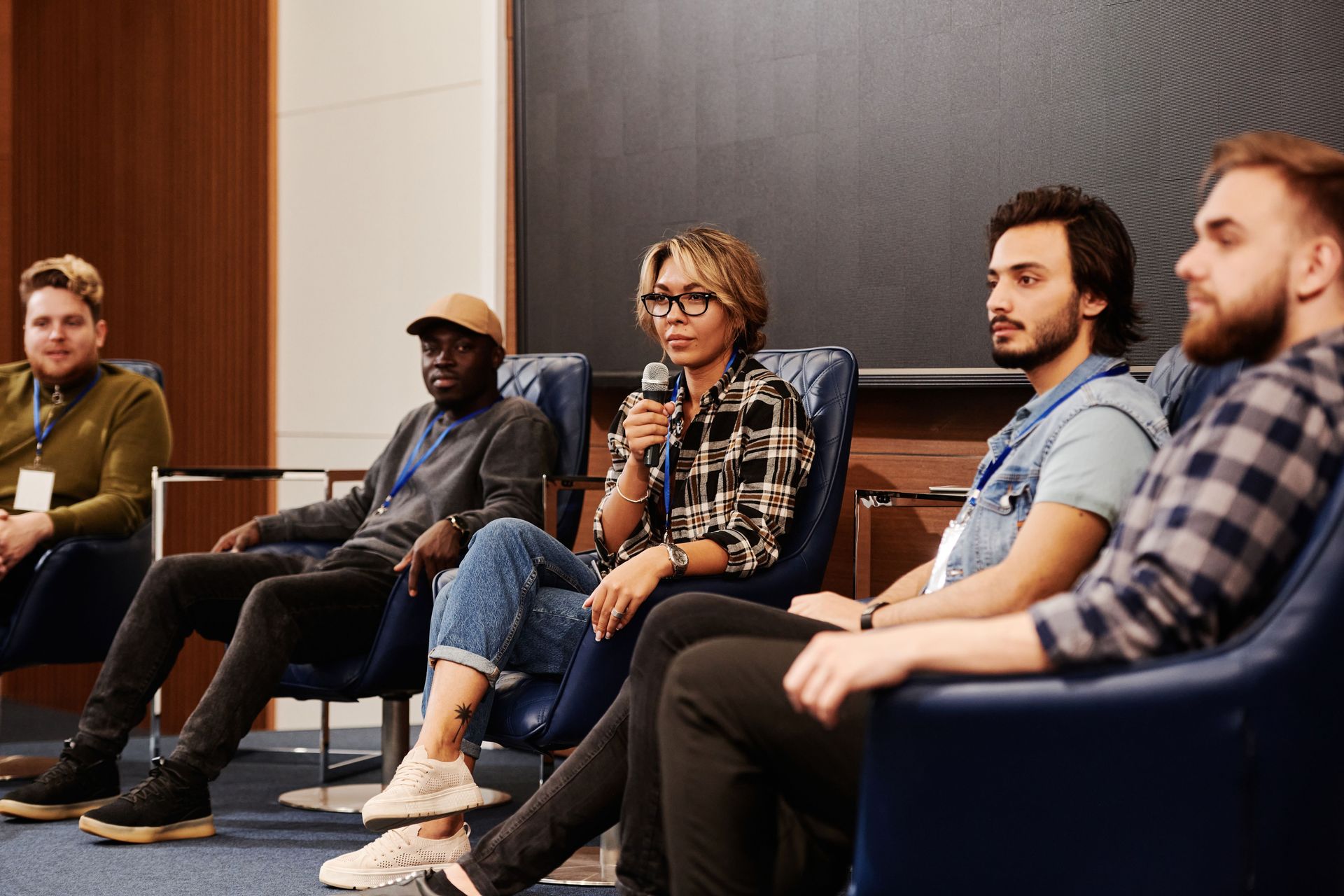
Professional networks aren't just collections of one-on-one relationships. They're embedded in communities — industries, disciplines, cities, interests — and the strength of a network depends in part on how actively you participate in those communities, not just in your individual relationships.
Investing in a community means contributing to the shared life of a group. Showing up at events. Sharing useful resources in group channels. Mentioning other people's work. Welcoming newcomers. Making introductions between people who should know each other. These behaviors build a kind of community standing that makes your one-on-one relationships more robust, because you're seen as a genuine participant rather than someone who only shows up when they need something.
It also expands your network in ways that direct outreach doesn't. When you're an active, contributing member of a professional community, people hear your name from others, encounter your contributions, and form an impression of you before you've ever interacted directly. When you do eventually connect one-on-one, there's already a layer of familiarity.
The communities worth investing in are usually the ones you already belong to naturally — your industry, your city, your discipline, a professional interest group. You don't need to manufacture community involvement. You need to deepen the engagement you already have.
What this looks like in practice varies. For some people it means being consistent on a platform where their professional community is active. For others it means attending the same regular events year after year until they become a familiar face. For others it means taking on a leadership role in a professional association. The common thread is consistency and genuine participation.
One thing to avoid: spreading your community involvement too thin. One well-chosen community, engaged with over years, is more valuable than 10 communities where you're a peripheral presence.
10 / 15

Credit: Thirdman, Pexels
The most common place where professional relationships die is the follow-up — or the failure to follow up. You meet someone promising at a conference, have a good conversation, exchange information, and then nothing happens. Six months later, reaching out feels awkward.
The fix is simple but requires a small habit change: follow up within 48 hours, and make the follow-up specific to what you actually talked about. Reference something concrete from the conversation — a book they mentioned, a challenge they described, a question you didn't get to finish. That specificity signals that you were genuinely paying attention and not just collecting contacts.
The tone matters as much as the timing. A good follow-up doesn't carry any expectation of reciprocation. It's not a request for a meeting or an ask for an introduction. It's a brief message that says, in effect: I valued that conversation and I'm thinking about it. If the person responds, great — the relationship continues. If they don't, that's fine too. The follow-up did its job simply by reinforcing that the interaction mattered to you.
For people you want to stay connected to over the longer term, the challenge is maintaining contact without it feeling like a chore or a campaign. One useful approach: give yourself permission to reach out infrequently but specifically. If you read something that reminds you of a conversation you had with someone eight months ago, send it to them. If you notice that someone made a career move, send a brief congratulatory note. These low-pressure touchpoints keep relationships warm without requiring significant time investment on either side.
What you want to avoid is the generic check-in. "Just wanted to stay in touch!" without any specific content puts the burden of sustaining the conversation entirely on the other person. Specific, substantive follow-ups are easier for the recipient to respond to and feel more like real communication than maintenance.
11 / 15

Credit: Christina @ wocintechchat.com M, Unsplash
Networking feels less transactional when both parties bring something to the relationship. That requires knowing, with some clarity, what you actually have to offer. Not a rehearsed elevator pitch, but a genuine sense of where your knowledge, experience, and connections are most useful.
This is worth thinking through explicitly. What do you know that most people in your immediate circle don't? What professional experiences have you had that give you a distinctive vantage point? Who do you know that others in your field might benefit from knowing? These aren't rhetorical questions — they're the basis for being a genuinely useful contact rather than just a name in someone's network.
The clearer your sense of what you offer, the easier it is to show up in conversations with something to give. If someone mentions a problem you've encountered before, you can offer specific, useful perspective rather than vague sympathy. If someone is trying to break into a field you know well, you can share what actually works rather than platitudes.
This self-awareness also makes it easier to form relationships with people who are more senior or better-connected than you. A common anxiety in professional networking is the sense of having nothing to offer someone who is further along. But seniority doesn't determine the entirety of what someone knows or who they know. You may have expertise in an adjacent area, connections in a different geography, or insight into a trend they haven't been tracking. The relationship doesn't need to be symmetric to be genuinely reciprocal.
The habit worth building: periodically take stock of what you've learned, what you've done, and who you know that might be useful to others. Not in a calculating way — but as a way of staying aware that you're not networking empty-handed.
12 / 15

Credit: Kampus Production, Pexels
There's a particular kind of networking performance where everyone pretends they're just there to connect, learn, and give back — while actually scanning the room for whoever might be able to help them find their next job. This performance is exhausting for everyone involved, and it usually fails at its own stated goal.
The alternative is a degree of honesty that most people find disarming. If you're at an event because you're exploring a career transition, you can say that. If you're looking to understand what a particular industry is really like before deciding whether to pursue it, say so. If you're actively job searching, most people are neither shocked nor put off by this — job searching is a normal part of professional life.
Honesty about your goals also makes it easier for people to help you. If someone knows you're looking for a role in product management at a mid-size company, they can connect you with relevant people or share relevant information. If you're vaguely "just interested in connecting," they have nothing to work with.
The caveat is that honesty about goals should come after you've demonstrated genuine interest in the other person. If the first thing you do in a conversation is announce what you're looking for, it signals that you're treating the interaction as transactional before you've established any basis for a relationship. Ask, listen, engage first — and then, if it's relevant, be clear about what you're working toward.
This applies to ongoing relationships as well. If you've been nurturing a professional relationship and you eventually need to make a request, be direct about it. Burying the ask in three paragraphs of context and qualifiers doesn't make it feel less transactional — it makes the whole exchange feel more calculated.
13 / 15

Credit: Anastasia Shuraeva, Pexels
A lot of professional interactions go wrong because one or both parties are treating the exchange as a means to an end — as a step toward a relationship that will eventually yield something useful. That orientation, even when it's not consciously felt, tends to produce conversations that feel hollow and forced.
The corrective is to approach each professional interaction as if it has value in itself, regardless of whether it leads anywhere. A 15-minute conversation with someone who will never be a client, employer, or collaborator is still a 15-minute window into how someone else sees the world. That has value, even if it doesn't have a practical application.
This shift in orientation changes how you show up. You're more present, more curious, less focused on figuring out whether this person is worth your time. And paradoxically, that quality of presence tends to make the interactions more likely to lead somewhere, because people can feel when they're being evaluated and when they're being genuinely met.
It also changes how you feel about networking overall. The reason networking feels draining for so many people is that it puts every interaction under the pressure of a potential transaction. When you remove that pressure — when you let a conversation be just a conversation — the activity becomes much less effortful.
This is easier to practice in settings where you have no obvious agenda. If you're at an event where you have no particular goal, you're free to simply talk to whoever seems interesting. The conversations that come from that kind of low-stakes engagement are often the ones that, years later, you're genuinely glad you had.
The habit is to periodically ask yourself, during a professional interaction: am I actually present here, or am I running a calculation? If the answer is the latter, see if you can let the calculation go for a few minutes and just talk to the person in front of you.
14 / 15

Credit: AI25.Studio Studio, Pexels
Mentorship is one of the most natural forms of professional relationship-building precisely because it's explicitly oriented around growth rather than transaction. Both parties bring something to it, and both gain something from it — but the gains are different in kind, which removes the zero-sum feeling that can creep into purely transactional networking.
Most people think of mentorship as something that happens in one direction: a more experienced person guiding someone earlier in their career. That model is real and valuable. But at every stage of a career, there are people who know things you don't and people who could benefit from what you know. Recognizing both sides of that equation — and acting on both — produces a much richer professional network.
Reverse mentorship, where someone more junior teaches someone more senior about a domain or technology they're less familiar with, has become more common as industries have become more complex and fast-moving. A recent graduate who is deeply fluent in a new platform has something genuine to offer someone who has 20 more years of career experience but is less familiar with that technology. When that exchange is framed as mutual learning rather than as a transaction, it can form the basis for a genuinely useful long-term relationship.
Peer mentorship — people at roughly the same stage in their careers learning from each other — is also undervalued. A small group of peers who meet regularly to discuss challenges, share what they've learned, and offer honest perspective to each other can provide a kind of ongoing professional support that formal mentorship programs rarely replicate.
The common thread across all these forms is mutual respect and genuine engagement. You don't have to be further along in your career than someone to learn from them, and you don't have to be an expert to be useful to someone else.
15 / 15

Credit: RDNE Stock project, Pexels
Professional relationships, like all relationships, have natural rhythms. Some people you meet will become close, recurring connections. Others will be warm but peripheral. Some relationships will be intensely useful for a period and then naturally quiet down. Trying to force every professional connection into the same template — regular coffees, frequent check-ins, sustained intensity — is both exhausting and counterproductive.
The healthiest professional networks are made up of relationships at different levels of closeness and different frequencies of contact. Some people you talk to every week. Others you check in with twice a year. Others you haven't spoken to in two years but would immediately reconnect with if either of you had a reason to. All of these are real relationships, and all of them have value.
What causes networking to feel hollow is the attempt to manufacture closeness before it exists — reaching out to maintain a relationship that isn't really there yet, on a schedule that the relationship hasn't earned. People can feel the difference between genuine contact and obligatory maintenance, and the latter tends to degrade the relationship rather than strengthen it.
The alternative is to follow the natural rhythm of each relationship. When there's something real to say, say it. When there's a genuine reason to connect, connect. When there isn't, let the relationship rest. A dormant relationship between two people who genuinely like and respect each other can be reactivated without awkwardness. A forced relationship that both parties feel obligated to maintain eventually collapses under its own weight.
This also means accepting that some professional relationships simply don't develop, and that's fine. Not every interesting person you meet is going to become a lasting contact. Releasing the expectation that every connection should become a relationship takes pressure off the whole enterprise and makes it easier to show up without an agenda.
