From subscriptions to franchises, here are the core ways companies make money — and what makes each model work

Credit: Yan Krukau / Pexels
Every company needs a way to make money. That sounds obvious, but the mechanism — who pays, when, how much, and why — shapes almost everything else about a business: its costs, its growth potential, its relationship with customers, its vulnerability to competition. Two companies can sell the same product and operate under radically different economic logic. A car you buy outright and a car you lease are the same object. The businesses built around them are not.
Business models have multiplied in complexity over the past two decades. The internet made it possible to reach global customers at near-zero marginal cost, which gave rise to platforms, marketplaces, and freemium products that would have been economically impossible in the pre-digital era. At the same time, classic models — the franchise, the subscription, the razor-and-blade — have endured precisely because their underlying logic is sound, regardless of the technology era.
Understanding business models matters well beyond the C-suite. Investors use them to gauge how a company creates and captures value. Employees benefit from knowing how their work connects to revenue. Entrepreneurs need to choose a model before they can price anything, hire anyone, or raise a dollar. Even consumers make better decisions — about loyalty programs, freemium apps, and subscription traps — when they understand the mechanics behind them.
The 15 models covered here are not exhaustive. There are dozens more, and many real companies blend several at once. But these represent the foundational structures that recur across industries and geographies. Some are centuries old. Others emerged in the last decade. All of them are worth understanding.
Each model is explained on its own terms: what it is, why it works, where it breaks down, and which well-known companies use it. The goal is not to rank them — no single model is universally superior — but to clarify the logic behind each so you can recognize it when you see it and think clearly about why it succeeds or fails in context.

Credit: Luca Sammarco / Pexels
In the subscription model, customers pay a recurring fee — weekly, monthly, or annually — to access a product or service continuously. The company does not charge per transaction. It charges for ongoing access, whether or not the customer uses the product heavily in any given period.
The economics of this model are distinct. Revenue becomes predictable because it recurs automatically. A business with 100,000 subscribers paying $10 a month knows it will collect at least $1 million in revenue next month, barring cancellations. This predictability reduces financial risk and makes long-term investment easier to justify. It also compresses the sales cycle: once a customer subscribes, they do not need to be re-sold each month. The relationship is assumed to continue unless the customer actively cancels.
Churn — the rate at which subscribers cancel — is the defining metric of a subscription business. A company losing 5% of its subscribers each month will lose more than half its customer base in a year if it does not replace them. This creates a constant pressure to retain customers, which pushes subscription businesses toward improving the product continuously and providing reliable customer support.
Pricing tiers are a common feature of the model. A software company might offer a basic tier at $10 a month, a professional tier at $30, and an enterprise tier negotiated individually. This lets the company capture value across a wide range of customers and encourages upgrades as users' needs grow.
The model works especially well for products with high ongoing value: streaming services, software tools, cloud storage, news publications, professional databases. It works less well for products that deliver a one-time benefit, where customers naturally resist the idea of paying indefinitely for something they already have.
Netflix $NFLX, Spotify $SPOT, Adobe $ADBE, Salesforce $CRM, and The New York Times all operate on subscription models. So does your gym, your electricity provider, and most SaaS companies. The model is not new — magazine subscriptions date back centuries — but the internet has made it far more common because software can be updated continuously, making the ongoing fee easier to justify.
The main risk is customer fatigue. Consumers now carry multiple subscriptions simultaneously — streaming, fitness, software, news — and periodically audit which ones they use enough to justify. For businesses, winning the subscription is only the first step. Keeping it is the ongoing challenge.
Credit: Canva Images
Freemium offers a product or service for free, then charges for premium features, expanded capacity, or an ad-free experience. The word combines "free" and "premium." The logic is that a large free user base generates awareness, word-of-mouth, and eventually a subset of paying customers who want more than the free tier provides.
The conversion rate — the percentage of free users who upgrade to paid — is the central number in a freemium business. In most freemium products, that rate is low: typically 2% to 5%. This means the business must attract large volumes of free users to generate meaningful revenue from its paying minority. The free tier is not a loss leader in the traditional sense. It is a permanent feature of the product, designed to keep the base large enough to make the paid tier viable.
Spotify $SPOT is the textbook freemium case. Listeners can use the platform for free with ads and limited features. Those who want offline listening, unlimited skips, and no ads pay a monthly fee. The free users serve multiple functions: they expose new people to the platform, generate data about listening behavior, and represent a pool of potential upgrades whenever their patience with ads runs out.
The free tier must be genuinely useful — useful enough that people adopt it and build habits around it — but not so complete that there is no reason to upgrade. Drawing that line correctly is difficult. Make the free tier too restrictive and adoption is slow. Make it too generous and nobody upgrades.
Dropbox, LinkedIn, Slack $WORK, and Zoom $ZM all use freemium models. In each case, the free product handles a meaningful portion of user needs, while the paid tier resolves the pain points that heavy users eventually encounter: storage limits, professional features, or team management tools.
The model has a structural cost problem. Free users still consume server capacity, bandwidth, and customer support resources. The paying minority must generate enough revenue to cover both their own costs and those of the free majority. This requires very careful unit economics and pricing. Companies that miscalibrate the ratio can find themselves with enormous user bases and thin — or negative — margins.
Freemium also creates a customer acquisition channel with zero friction. There is no sales call, no purchase decision, no credit card required to start. This makes growth faster but means the company must find a way to monetize at scale rather than at the point of entry.

Credit: saravut vanset / Pexels
A marketplace connects buyers and sellers without owning the inventory being exchanged. The platform charges a fee — usually a percentage of each transaction — for facilitating the connection. It makes money whether the buyer or the seller pays the fee, or both. Its costs are primarily technology and trust: building and maintaining the platform, and ensuring that participants on both sides behave honestly.
The power of the marketplace model comes from network effects. Each new seller makes the platform more useful to buyers because there is more to choose from. Each new buyer makes it more attractive for sellers because there is a larger audience for their goods. As the network grows, the marketplace becomes more valuable to everyone on it, which makes it harder for a competitor to displace.
Airbnb $ABNB, eBay, Etsy, Amazon $AMZN's third-party marketplace, Upwork, and Uber $UBER are all marketplaces. In each case, the company owns no inventory and employs none of the service providers. Airbnb does not own hotels. Uber does not own cars. Etsy does not make jewelry. The platform's role is to reduce the friction of finding, evaluating, and transacting with strangers.
Trust is the central challenge. When two parties who do not know each other conduct a transaction, each faces risk. The buyer cannot inspect the product before purchasing. The seller cannot verify the buyer's seriousness. Marketplaces invest heavily in systems — reviews, ratings, verification, dispute resolution, insurance — that substitute for the personal relationships or institutional guarantees that make trust possible in traditional commerce.
The marketplace model scales efficiently because the platform does not grow linearly with transaction volume. A marketplace can handle ten times the transaction volume without ten times the staff, because the transactions happen between participants, not between the platform and each individual. This creates strong margin improvement at scale.
The main risk is disintermediation — participants who meet on the platform and then conduct future business directly, bypassing the marketplace's fee. Platforms counter this through loyalty mechanisms, payment integration, and review systems that make the platform relationship valuable beyond the initial introduction.

Credit: Pixabay / Pexels
The platform model creates infrastructure that allows third parties to build products, services, or experiences on top of it. Unlike a marketplace, which primarily connects buyers and sellers of existing goods, a platform enables participants to create new value that could not exist without the platform itself.
Apple $AAPL's App Store is the clearest example. Apple built an operating system and the tools developers needed to build applications for it. Millions of developers then created apps, games, and services that Apple sells to its users. Apple takes a percentage of revenue — historically 30% — from most transactions on the platform. It earns money from the ecosystem it enabled, without building the products that populate it.
Google $GOOGL's Android, Salesforce $CRM's AppExchange, and Shopify $SHOP's app marketplace follow the same logic. The platform owner creates the rules, the tools, the distribution, and the customer relationship. Third parties create the content or services. Revenue is shared according to terms set by the platform.
The platform model generates enormous leverage because the platform owner earns from the creative and commercial activity of thousands or millions of third parties. As the platform grows in users, it becomes more attractive to developers because it represents a larger distribution channel. As more developers build on it, the platform becomes more valuable to users because there is more to do on it. The feedback loop compounds.
What distinguishes the platform from the marketplace is the creation of new economic activity rather than just the facilitation of existing exchange. Etsy enables handmade goods to find buyers; that is a marketplace. The App Store enables products that would not exist without the App Store; that is a platform.
Platforms face regulatory scrutiny because their market power can become self-reinforcing to the point where competition is structurally difficult. The 30% fee that Apple charges has been challenged by developers and regulators in multiple jurisdictions, on the grounds that the lack of alternative distribution channels gives Apple pricing power that is not subject to normal competitive pressure.

Credit: Canva Images
In the advertising model, the product is offered free to users while businesses pay to reach those users. The user is not the customer. The advertiser is. The user is the product — or more precisely, their attention and data are the resource being sold.
Google $GOOGL and Meta $META are the dominant examples. Both offer free services — search, email, social networking, mapping — that attract billions of users. They then sell access to those users' attention and behavioral data to advertisers who want to reach them with targeted messages. The more users there are, and the more precisely the platform can match users to advertisers' target profiles, the more it can charge for ad placements.
The model requires scale to work. A platform with a million users may generate modest advertising revenue. A platform with a billion daily active users generates leverage that few advertisers can afford to ignore. This makes the advertising model prone to concentration: once a platform achieves dominance in its category, it becomes very difficult to displace because the advertiser demand and the user supply reinforce each other.
Programmatic advertising has made this model more complex. Rather than a single negotiated price for a banner on a webpage, modern digital advertising involves real-time auctions where algorithms bid on individual impressions — the display of a single ad to a single user — in milliseconds. The price of each impression is determined by how valuable that particular user is to that particular advertiser at that particular moment.
The advertising model creates a structural tension: the better the product is for users, the more time they spend on it, the more data they generate, and the more valuable they are to advertisers. But users increasingly dislike the surveillance and manipulation that targeted advertising entails, and regulation in multiple jurisdictions has begun to restrict what data can be collected and how it can be used.
Publishers — newspapers, magazines, podcasters, YouTube creators — also use advertising models, though their revenue is typically smaller and their data is less granular. The underlying logic is the same: attention is the asset, and advertisers pay for access to it.

Credit: Robert Golebiewski / Pexels
The razor-and-blade model sells an initial product cheaply, or at a loss, in order to drive recurring revenue from consumable refills or accessories that only work with the original product. The customer is locked in to the ecosystem once they own the base product.
Gillette pioneered the model in the early 20th century, selling razor handles cheaply and making most of its profit on replacement blades. The model has since extended to inkjet printers and ink cartridges, Nespresso machines and coffee pods, gaming consoles and game sales, and electric toothbrushes with proprietary replacement heads.
The economics depend on controlling the aftermarket. If customers could buy generic blades that fit the Gillette handle, or third-party ink cartridges that worked in the HP $HPQ printer, the blade manufacturer would lose most of its margin. Companies using this model protect the aftermarket through physical design — making the fitting proprietary — through patents, or through software restrictions.
The consumer benefit is a lower upfront cost. A Nespresso machine is less expensive than a professional espresso setup. A gaming console is sold at or near cost. The catch is that the total cost of ownership, once consumables are factored in, is often considerably higher than alternatives.
The model works well in categories where: the base product requires regular consumable replenishment, the consumable can be made proprietary, and the cost of switching is high enough to retain customers once they have invested in the ecosystem. It works less well when customers resent the lock-in and actively seek alternatives, or when courts or regulators force open the aftermarket.
Ink cartridges have become particularly contested. Third-party manufacturers produce compatible cartridges, and printer companies have responded with firmware updates that block them. This ongoing tension illustrates the central fragility of the model: its profitability depends on a lock-in that customers and competitors are always trying to escape.

Credit: Samuel Figueroa / Pexels
In the franchise model, a parent company (the franchisor) licenses its brand, operating system, and products to independent business owners (franchisees), who pay ongoing fees for the right to use them. The franchisee invests their own capital, employs their own staff, and operates a business — but they operate under the franchisor's rules, standards, and identity.
McDonald's $MCD is the canonical franchise. The company owns relatively few of its restaurants directly. The majority are operated by franchisees who pay an initial fee, invest in the restaurant buildout, and then pay ongoing royalties — a percentage of revenue — to McDonald's. The franchisee takes on the financial and operational risk. McDonald's takes a cut of revenue and maintains the brand.
The model allows a company to expand rapidly without deploying capital at each location. Instead of raising hundreds of millions of dollars to build its own restaurants, McDonald's uses franchisees' capital. The franchisor grows its brand and royalty income; the franchisee takes on business risk in exchange for an established brand, proven systems, and national marketing support.
For franchisees, the appeal is that they are buying into a system that works — a tested product, a recognizable brand, supplier relationships, and operational manuals. The failure rate for franchised businesses is generally lower than for independent startups in the same category, though the tradeoff is constrained autonomy: franchisees must follow the franchisor's rules even when they disagree with them.
Hotels, fast food, real estate agencies, tax preparation firms, and fitness chains are all heavily franchised. The model works best in categories where standardization is a competitive advantage — where customers prefer a predictable experience across locations — and where the value of the brand travels across geographies.
The tension in the franchise model is between the franchisor's interest in maintaining brand standards and the franchisee's interest in controlling their own business. Disputes over marketing fees, pricing decisions, and required equipment upgrades are common and sometimes end in litigation.

Credit: RDNE Stock project / Pexels
Direct-to-consumer (DTC) businesses sell their products directly to end customers, bypassing traditional retail intermediaries like department stores, distributors, or wholesalers. By controlling the full channel from production to sale, DTC companies capture the margin that would otherwise go to the retailer and maintain a direct relationship with the customer.
The model is not new — mail-order catalogs operated on the same logic — but the internet made it dramatically cheaper and more accessible. A DTC brand can set up an online store, drive traffic through digital advertising, and ship directly to customers without ever appearing on a retail shelf. The result is higher margins per unit sold, ownership of customer data, and the ability to test and iterate on products based on direct feedback.
Warby Parker applied the DTC model to eyeglasses, selling frames at a fraction of traditional optical retail prices by bypassing the dominant distributor and selling directly online. Casper did the same with mattresses, shipping them vacuum-sealed in boxes to avoid retail markups. Dollar Shave Club sold razors by subscription, undercutting Gillette's prices significantly.
The main advantage of DTC is margin. When a product sells through a retailer, the brand typically receives 40% to 50% of the retail price. When it sells directly, it receives the full retail price minus fulfillment costs. This allows DTC brands to offer lower prices to consumers while maintaining or improving their own margins.
The main disadvantage is customer acquisition cost. Without the foot traffic that comes with shelf placement in a major retailer, DTC brands must spend heavily on digital advertising to find customers. As Facebook $META and Google $GOOGL advertising costs have risen over the past decade, many DTC companies have discovered that the margin advantage over traditional retail is largely consumed by marketing spend.
The response for many DTC brands has been to open physical retail locations — a notable reversal — using stores as a customer acquisition channel rather than just a sales channel. Warby Parker, Allbirds, and Glossier all opened physical stores after building their brands online.

Credit: Canva Images
Software-as-a-service is a delivery and pricing model in which software is accessed over the internet, typically through a web browser, and paid for as a subscription rather than as a one-time perpetual license. The software runs on the vendor's servers. The customer pays for access, not ownership.
Before SaaS became dominant in the early 2000s, enterprise software was sold as a one-time license that the customer installed on their own servers. This model had major disadvantages for customers: large upfront payments, ongoing maintenance costs, and software that became obsolete between major version releases. For vendors, it created lumpy revenue — a spike at the point of sale, then nothing until the next major version.
SaaS addressed both problems. Customers pay monthly or annually, making costs more predictable and eliminating the need to manage their own servers. Vendors receive recurring revenue and can update the software continuously without charging for upgrades. The vendor also gains visibility into how customers are using the software, which informs product development.
Salesforce $CRM was the pioneer of enterprise SaaS, launching in 1999 with the explicit positioning "No Software." It sold customer relationship management tools as a subscription accessed through a browser, directly challenging the model of companies like Siebel Systems that sold expensive on-premise installations.
The SaaS model has since become the default for business software. Accounting tools, HR platforms, project management software, design tools, and communication platforms are overwhelmingly delivered as SaaS. The model has also spread to consumer software: photo editing, video production, and word processing tools that were once sold as boxed software now operate as subscriptions.
The critical SaaS metric is net revenue retention — the percentage of revenue retained from existing customers, including upsells and accounting for cancellations. A SaaS business with net revenue retention above 100% is growing its revenue from existing customers even without adding new ones, because customers are upgrading to higher tiers faster than others are canceling.
Credit: www.kaboompics.com / Pexels
The asset-light model generates revenue by deploying capital in activities that do not require the company to own physical assets: property, equipment, inventory, or infrastructure. Instead, the company focuses on intellectual property, brand, relationships, or software — things that can generate revenue without the ongoing capital expenditure required to maintain physical assets.
Asset-light businesses can grow faster and generate higher returns on invested capital than their asset-heavy competitors, because each dollar of revenue does not require a corresponding dollar of physical investment. This makes them attractive to investors and allows them to compete through speed and flexibility rather than scale.
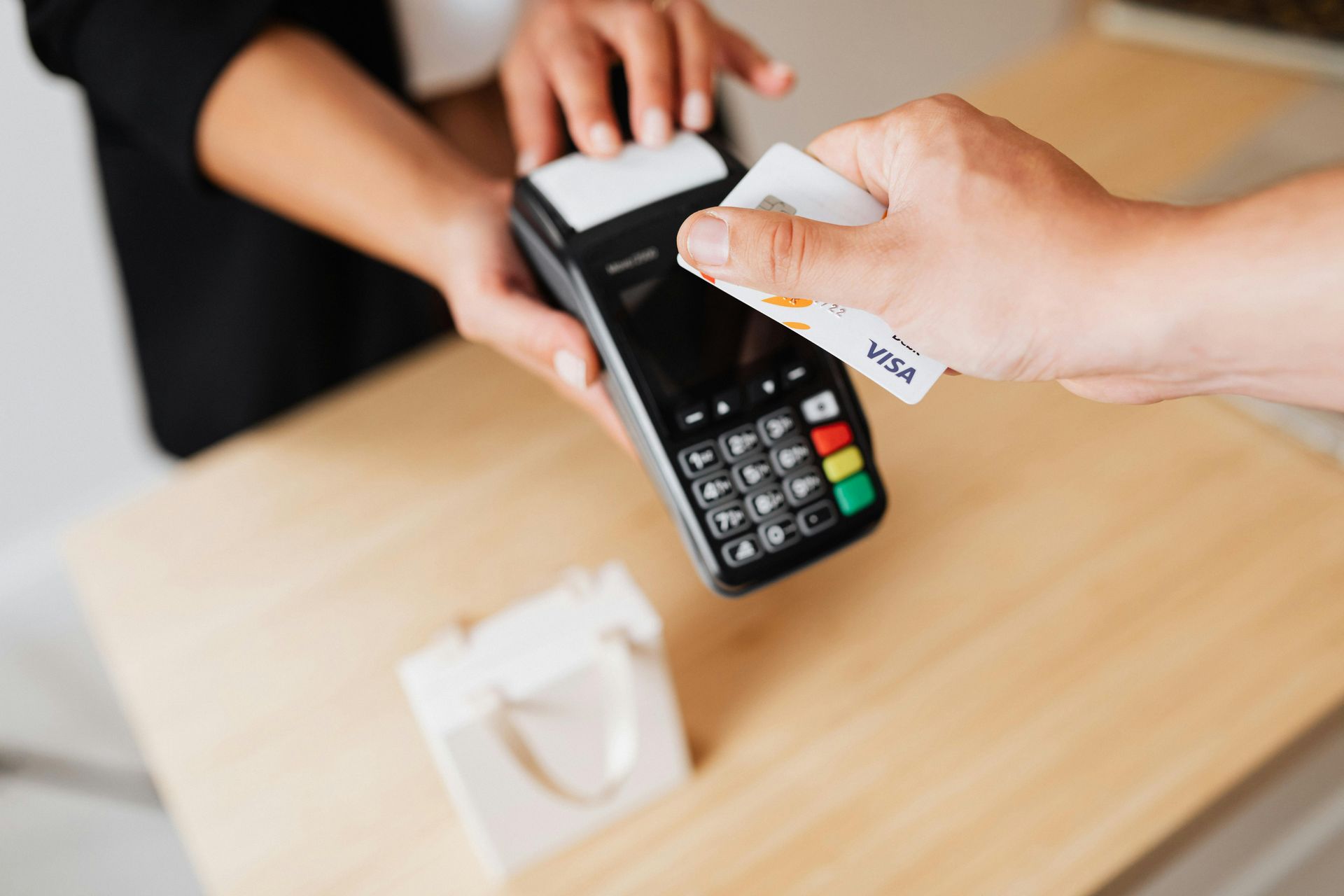
Visa $V and Mastercard $MA are among the most asset-light businesses in the world. They do not issue credit cards, extend credit, or manage banking relationships. They provide the network — the rules, the technology, the brand — that connects card-issuing banks with merchants. Every time a consumer uses a Visa card, Visa earns a small fee for processing the transaction. The company owns essentially no physical assets relative to the volume of transactions it handles.
Consulting firms, law firms, and accounting firms are asset-light in a different way: their primary asset is the expertise of their people, which is not capitalized on the balance sheet in the way that a factory or a fleet would be. They can scale revenue by adding more professionals rather than by building more factories.
The risk in asset-light models is that the intangible assets — the brand, the intellectual property, the network — are harder to protect than physical ones. A factory can be fenced. A brand can be diluted by a better-marketed competitor. A platform network can unravel if a rival offers better terms to participants on both sides.
Real estate investment trusts (REITs) offer a counterexample: some of the most capital-intensive businesses in the world have structured themselves to be asset-light from the operating company's perspective by separating ownership of physical assets from the management of them.

Credit: Pixabay / Pexels
In the licensing model, a company grants another party the right to use its intellectual property — a patent, a brand, a technology, a piece of content — in exchange for a fee. The licensor does not operate the business that uses the IP. It provides the legal right to use it.
Licensing separates the creation of value from the deployment of it. A pharmaceutical company that discovers a molecule can either manufacture the drug itself or license the formula to another company that has manufacturing and distribution capabilities. The licensor receives royalties — a percentage of sales or a fixed fee — without managing factories, supply chains, or sales forces.
ARM Holdings designs the processor architecture used in the majority of smartphones worldwide. ARM does not manufacture chips. It licenses its designs to companies like Apple $AAPL, Qualcomm $QCOM, and Samsung, which then manufacture chips based on those designs. Every iPhone processor is built on an ARM architecture for which Apple pays a licensing fee. ARM earns from the entire smartphone industry without assembling a single device.
Entertainment licensing follows the same logic. Disney $DIS licenses its characters to theme parks, toy manufacturers, clothing companies, and video game developers. The licensees take on the capital investment and operational risk. Disney earns royalties on the revenue. This extends the commercial reach of intellectual property far beyond what Disney could manage through direct ownership.
The model works when the IP is genuinely valuable — when it provides something that licensees cannot easily replicate on their own. A strong patent on a manufacturing process, a globally recognized brand, or a technical architecture with deep ecosystem adoption all create genuine licensing value. Generic IP, or IP that can be designed around with modest effort, generates limited licensing revenue.
Technology standards create particularly durable licensing opportunities. When an industry adopts a technical standard that incorporates patented technology — as has happened repeatedly in wireless communications — the patent holders gain the right to charge royalties to any company that wants to build products conforming to that standard.
Credit: Kampus Production / Pexels
Data monetization businesses collect information — about users, markets, behaviors, or transactions — and sell that information, or products derived from it, to customers who need it to make decisions. The underlying asset is data, and the business creates value by aggregating, processing, and packaging that data in forms that others find useful enough to pay for.
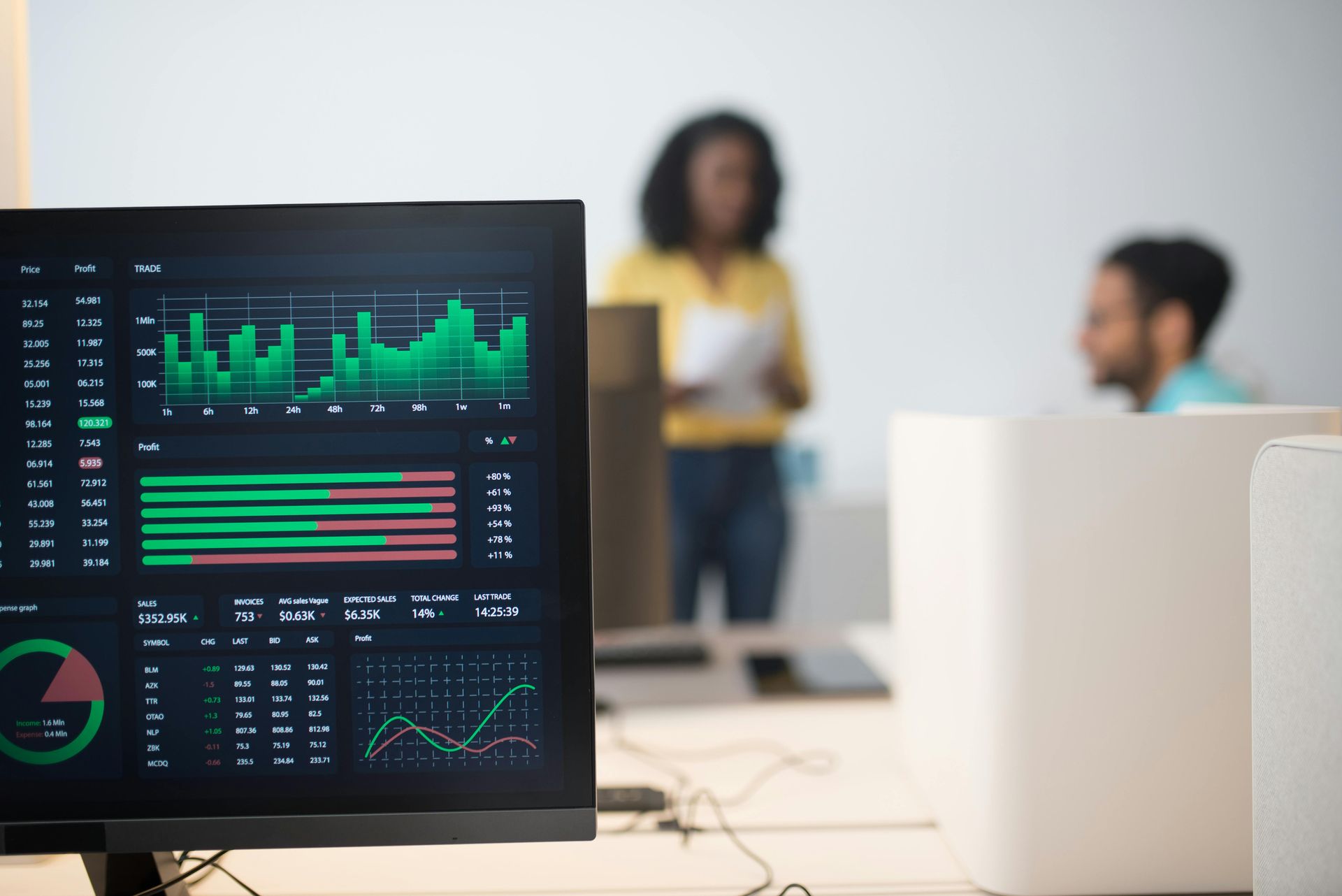
Bloomberg sells financial data — prices, news, analytics — to banks, investment firms, and corporations through its terminal service. The terminal subscription costs tens of thousands of dollars per year per user, and Bloomberg reportedly derives most of its revenue from terminals rather than media. The data is valuable because financial professionals cannot do their jobs without current, reliable market information, and Bloomberg has built the most comprehensive aggregation of that information over decades.
Credit bureaus — Equifax, Experian, TransUnion — collect information about individuals' borrowing and repayment histories and sell that information to lenders who need to assess credit risk. The data subjects (consumers) do not pay for this service and cannot easily opt out of it. The paying customers are the lenders. The underlying product — credit risk assessment — reduces lenders' losses by helping them distinguish reliable from unreliable borrowers.
Data monetization is also a secondary revenue stream for many businesses whose primary model is different. An e-commerce platform that collects purchase history data may sell anonymized and aggregated insights to consumer goods brands. A navigation app that collects location data may sell traffic pattern information to urban planners or retailers considering site locations.
Privacy regulation — including Europe's General Data Protection Regulation and various U.S. state laws — has constrained some forms of data monetization, particularly those involving personally identifiable information. This has pushed the industry toward aggregated and anonymized data products, though the line between individual and anonymous data is technically contested.
The central ethical and legal challenge of this model is that the value comes from information about people who may not know their data is being collected, may not have consented to its commercial use, and may have limited ability to understand or control what is happening. This tension is ongoing and far from resolved.

Credit: Canva Images
Pay-per-use charges customers only for what they actually consume. There is no subscription fee, no minimum commitment, and no charge when the product or service is not being used. The customer pays in direct proportion to their usage.
Amazon $AMZN Web Services popularized pay-per-use pricing for infrastructure. A company that runs a server on AWS pays for the hours the server is running, the data it transfers, and the storage it uses. A startup with variable traffic — busy in the holiday season, quiet in summer — pays more when demand is high and less when it is low. A traditional data center would require a long-term lease and fixed infrastructure costs regardless of utilization.
The model transfers financial risk from the customer to the vendor. Rather than committing to a fixed monthly cost, the customer commits to paying only for what they need. This lowers the barrier to entry — a startup can use enterprise-grade infrastructure from day one without large capital commitments — and allows customers to scale up or down without renegotiating contracts.
For the vendor, pay-per-use creates more variable revenue than subscriptions. The vendor cannot predict exactly how much any given customer will spend in a given month. This makes financial forecasting less precise and requires the vendor to maintain capacity for peak demand even when average demand is lower.
Cloud computing has made pay-per-use standard for infrastructure. Electric utilities have always operated this way. Telecommunications increasingly offers pay-per-use options alongside flat-rate plans. Rideshare services are pay-per-use by design: the customer pays for each trip, with no minimum.
The challenge for customers is cost unpredictability. A software engineer at a company using AWS can inadvertently trigger a large bill by misconfiguring a service that uses expensive compute resources continuously. Pay-per-use pricing, without careful monitoring, can produce surprising costs when usage spikes unexpectedly.
Credit: Erik Mclean / Pexels
Bundling combines multiple products or services into a single offering sold at a combined price, typically lower than the sum of the individual components. The bundle creates value for buyers who want several items from the seller and creates value for the seller by increasing average revenue per customer and reducing competitive vulnerability.
Cable television was built on bundling. Customers paid for packages of channels rather than individual channels, paying for dozens or hundreds of channels they might never watch in order to access the handful they wanted. Unbundling — the ability to buy individual channels or series — was the disruption that streaming services delivered, to the cable industry's significant financial cost.
Microsoft $MSFT Office is a software bundle. Word, Excel, PowerPoint, Outlook, and other applications were sold together as a suite, priced well below what each component would cost individually. The bundle increased Microsoft's revenue per customer, reduced the likelihood that customers would buy competing word processors or spreadsheet tools (since they already owned one), and made Office more deeply embedded in business workflows.
The economics of bundling work when the seller has complementary products that different customers value differently. A sports fan may pay $20 a month for access to a sports streaming service. A movie fan may pay the same for a film library. A bundle containing both costs $30 — less than the sum — and captures both customers, plus people who watch both. The bundle earns more revenue from the combined base than either service could earn separately.
Price discrimination is a related effect. A bundle obscures the individual price of each component, making it harder for customers to compare specific items against competitors and harder to perceive whether they are overpaying for components they don't use.
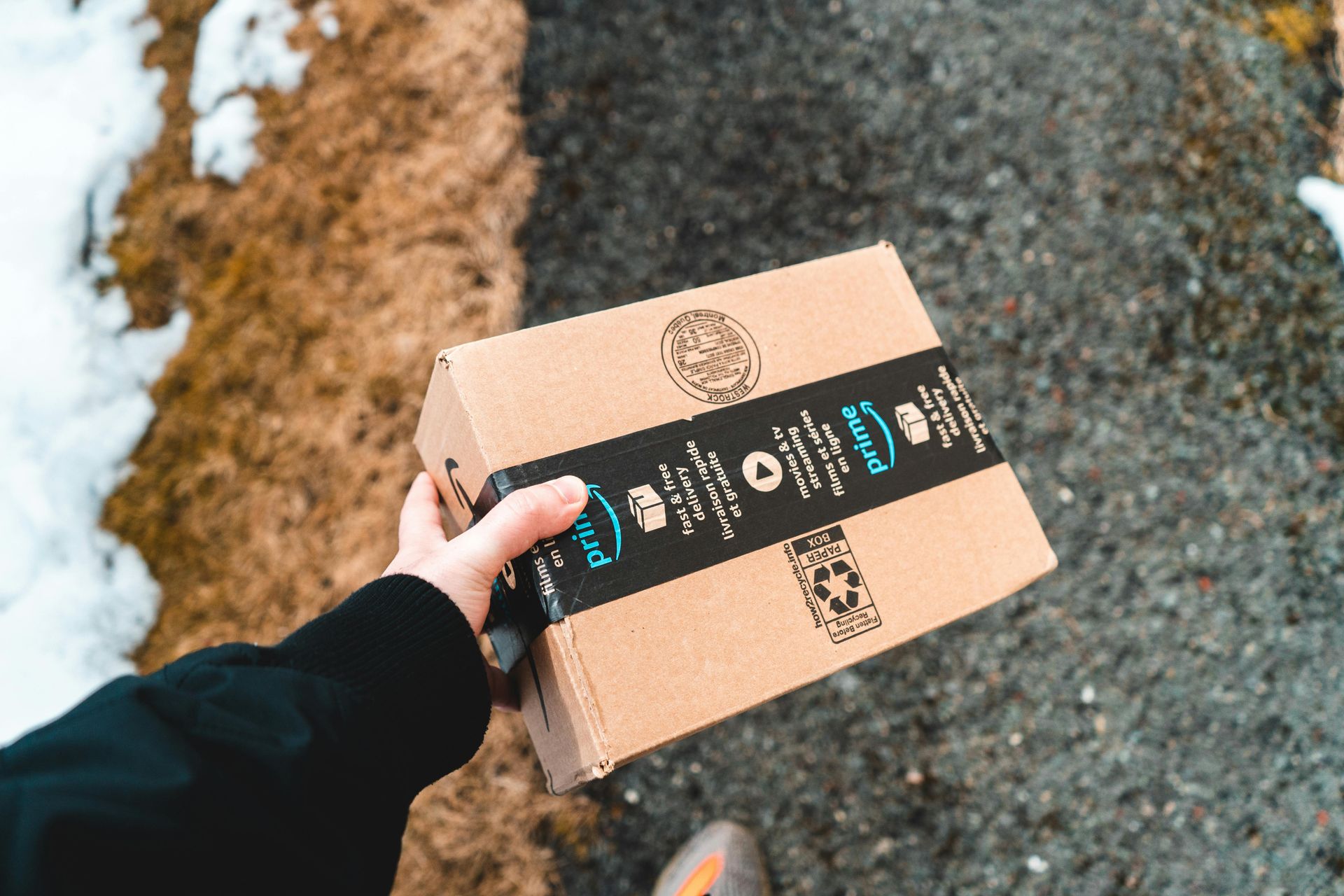
Amazon $AMZN Prime is a bundle: free shipping, streaming video, streaming music, cloud storage, and other services for a single annual fee. Each component might not justify the fee on its own. Together, they create a service that integrates into enough aspects of daily life that cancellation feels costly. This stickiness is precisely what bundles are designed to create.

Credit: Alina Grubnyak / Unsplash
Network effects occur when a product or service becomes more valuable as more people use it. The value for each user increases with the size of the user base, which means early adoption generates compounding returns as the network grows — and late movers face increasing disadvantage as the dominant network pulls ahead.
The telephone is the original network effects example. A single telephone has no value. Two telephones have value for two people. A million telephones connected to each other have enormous value for everyone on the network. Each new subscriber increases the value of every existing subscription. The network's total value grows faster than its size — this is Metcalfe's Law, which states that the value of a network is proportional to the square of the number of connected users.
Direct network effects, as in the telephone example, occur when users benefit directly from other users' presence. WhatsApp is more valuable the more people you know who use it; the network itself is the product. Indirect network effects occur when growth in one type of user makes the product more valuable for a different type. More iOS developers make iPhones more valuable to consumers. More riders on Uber $UBER make the platform more valuable to drivers, who face shorter wait times between fares.
Businesses with strong network effects can become nearly impervious to competition once they reach sufficient scale. The reason most people do not switch from WhatsApp to an alternative messaging app — even a superior one — is not that WhatsApp is technically irreplaceable. It is that everyone they know is on WhatsApp, and coordination costs make switching practically impossible unless the whole network moves at once.
This creates winner-take-most dynamics in many networked industries. Social networks, payment networks, operating systems, and messaging platforms tend toward concentration because the largest network is always the most valuable, which attracts more users, which makes it more valuable still. Competing against an entrenched network requires not just a better product but a reason for users to move — and to move together, which is structurally difficult.
The risk for businesses built on network effects is that the network can unravel as quickly as it built up if users find a reason to leave en masse. The dynamics work in reverse: if key users depart, the platform becomes less valuable for those who remain, which prompts more departures, which further reduces value. Twitter $TWTR's experience after its 2022 ownership change illustrated how quickly a network can begin to lose critical users — and how the perceived risk of decline can accelerate the actual decline.
