From a Dodge Durango with V8 access at the lowest price on the list to a Corvette that hits 60 mph in under three seconds
Credit: GMC
The V8 engine is losing ground. Turbocharging and supercharging allow automakers to extract comparable or greater power from smaller displacement engines with improved fuel economy, and the rapid expansion of hybrid and electric powertrains has given buyers efficiency options that the V8’s inherent thermodynamic limitations cannot match. The result is a V8 availability chart that shrinks with each model year: engines that were once standard across an entire model lineup are now confined to upper trims, specialty performance variants, or eliminated entirely. The vehicles that still offer V8 engines in 2026 are those whose character, buyer base, or engineering architecture make the V8 worth maintaining, despite the efficiency and regulatory pressures that smaller alternatives avoid.
The V8’s persistence reflects what it still does that alternatives do not. The specific sound of a V8 at full throttle is a mechanical experience that no turbo-four or electric motor replicates, regardless of their power output. The effortless low-end torque that large-displacement V8s produce, without the turbo lag that smaller forced-induction alternatives require the driver to wait for, gives the V8 a driving character that the specification sheet does not fully capture. For trucks towing heavy loads, the V8’s power delivery under sustained load at altitude or on grades has a reliability of character that smaller engines producing equivalent peak numbers do not always maintain under the same conditions.
The eight vehicles below appear in U.S. News & World Report, ranked by the starting price of the cheapest V8 configuration from lowest to highest.
Credit: Dodge
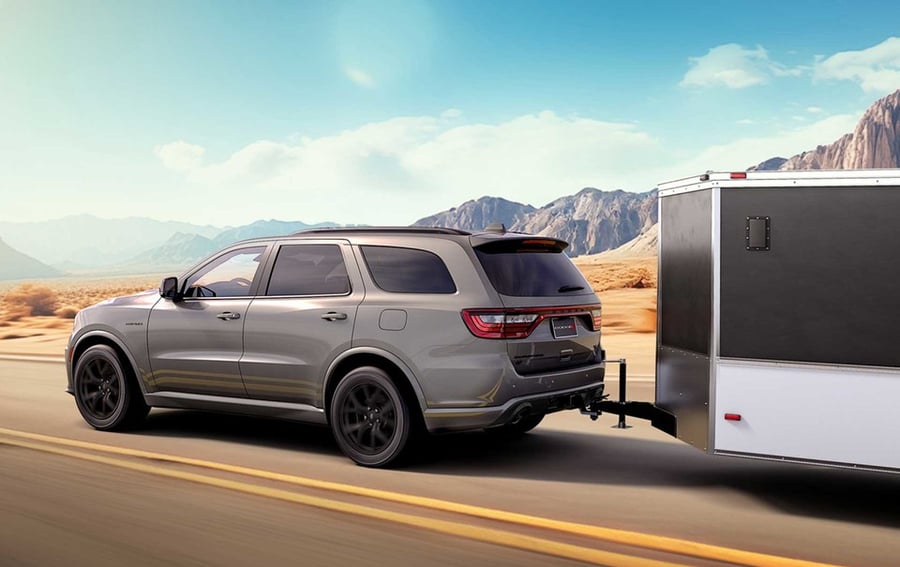
The Dodge Durango earns an 8.3 U.S. News overall rating and carries the lowest V8 starting point of any vehicle on this list. The base Durango comes with a V6, but stepping up to the GT trim unlocks a 360-horsepower 5.7-liter Hemi V8 that gives the three-row SUV a powertrain character the base engine lacks. The range extends to the Durango SRT Hellcat, which installs a supercharged 6.2-liter V8 producing 710 horsepower in a three-row family SUV body, one of the more improbable but genuinely real performance credentials in the current automotive market. Few vehicles at any price deliver this range of V8 options within a single model, from a workmanlike 5.7-liter to one of the most powerful engines available in any production SUV.
Every V8-powered Durango receives performance-tuned steering, a sport suspension, and upgraded Brembo brakes alongside the powertrain upgrade, which gives the V8 variants a chassis calibration that the V6 base trim does not share. The Durango's towing capacity of up to 8,700 pounds gives it utility alongside its performance credentials, distinguishing it from performance-first sports SUVs that sacrifice tow rating for dynamic character. The three-row seating gives the Durango a passenger capacity that the Dodge muscle car alternatives cannot match, making the V8 Durango the specific choice for buyers who need seating for seven alongside the V8’s character.
The honest limitations of the Durango are real and worth understanding: the platform is old, with the current generation’s bones dating back many years, and both the styling and the safety technology lag behind more recently developed competitors. The styling’s age is visible in the interior design and exterior proportions, and the safety tech’s relative gap compared to newer platforms is a specific consideration for buyers who prioritize the most current driver assistance features. For buyers who specifically want a V8 in a three-row SUV at the lowest possible entry point and are willing to accept the platform’s age in exchange, the Durango delivers the V8 option that the more modern three-row SUV alternatives on the market do not offer at any price.

Credit: Chevrolet
The Chevrolet Corvette earns a 9.7 U.S. News overall rating and a 9.6 performance score, the highest of any vehicle on this list on both measures, and every 2026 Corvette comes with a V8 as standard equipment regardless of trim level. The base Corvette’s 6.2-liter engine produces 490 horsepower and delivers a 0-60 mph time of 2.9 seconds, according to Chevrolet, giving the entry-level configuration a performance figure that exceeds most sports cars at significantly higher prices. The mid-engine layout introduced by the current-generation Corvette gives the base configuration sharp handling characteristics inherent to the platform, rather than requiring the performance upgrade packages that front-engine sports cars need to match the dynamics the Corvette’s architecture delivers as a starting point.
The Z06 and ZR1 configurations extend the performance envelope considerably beyond the base specification, with the ZR1 representing the most extreme version of what the Corvette platform can produce with a V8. The E-Ray and ZR1X variants add an electric motor to the front axle, giving those configurations additional performance alongside all-wheel drive, which extends the Corvette’s capability without replacing the V8 with an electric powertrain. The eight-speed dual-clutch automatic transmission that every Corvette uses delivers shift speed and efficiency that manual alternatives cannot match, and all configurations except the E-Ray and ZR1X use rear-wheel drive, rewarding the driver who engages with the handling rather than simply applying power.
The Corvette’s daily usability gives it a case alongside the performance credentials: the seats support longer drives without the discomfort that some performance cars impose, the interior is functional, and the combined front and rear trunk space of 12.6 cubic feet gives the two-seat sports car more practical cargo capacity than most buyers expect from a mid-engine Corvette. For buyers who want the best available V8 performance at the most accessible sports car price point, the Corvette’s 9.7 overall rating and 9.6 performance score give it an unambiguous position.
Credit: Ford
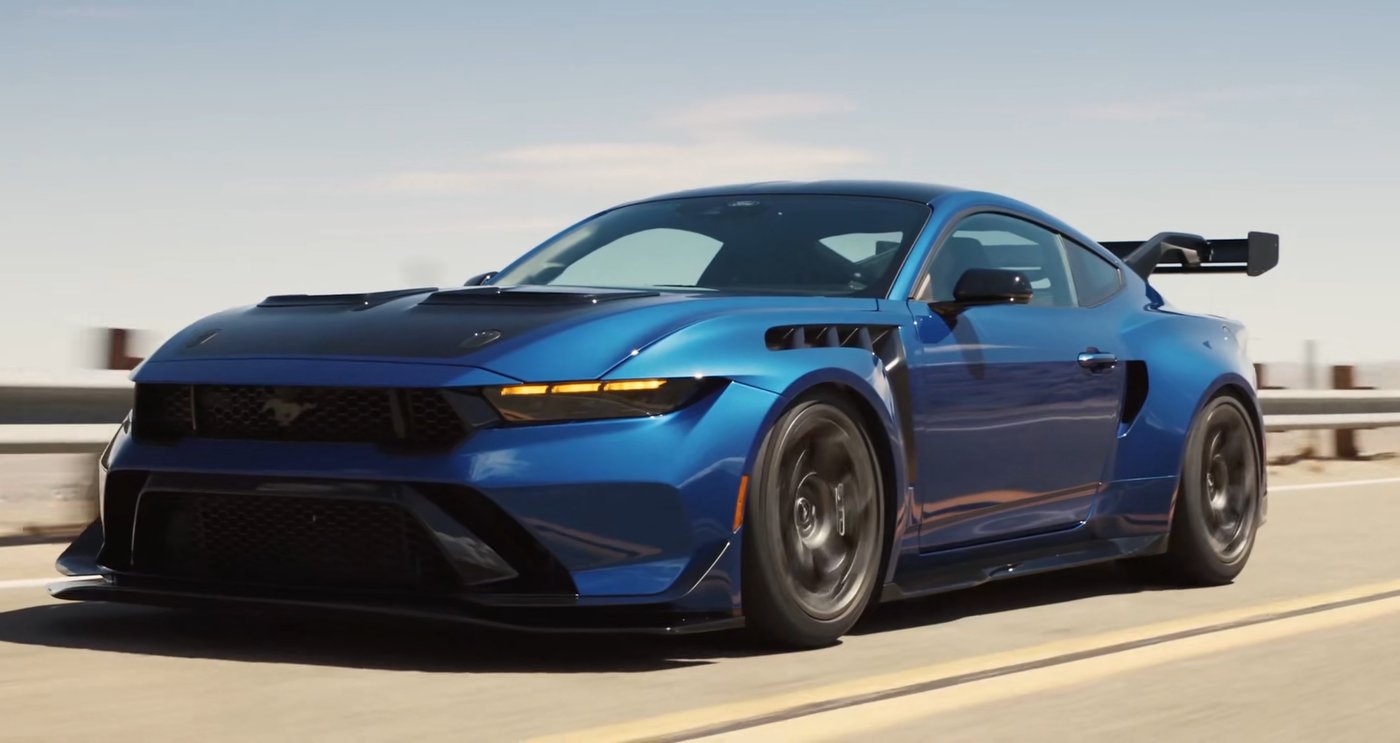
The Ford $F Mustang earns a 9.0 U.S. News overall rating and offers two 5.0-liter V8 options above the base four-cylinder: the GT’s 480-horsepower version and the Dark Horse’s 500-horsepower variant, both paired with either a six-speed manual transmission or a 10-speed automatic, rear-wheel drive, and a limited-slip differential. The six-speed manual gives the Mustang a specific driver engagement that the automatic’s shift speed cannot replicate in the same terms, and the V8 combined with the manual transmission gives the GT configuration a character that the broader performance car market, which has largely moved to dual-clutch automatics, makes increasingly rare as a new vehicle option.
The Dark Horse adds track-oriented equipment alongside the power increase: additional chassis stiffening, upgraded cooling, and Brembo brakes give the performance-oriented buyer a factory-built track day machine that the GT’s more street-focused calibration does not fully replicate. Braking is a consistent Mustang strength across both V8 configurations, while the steering’s communication could offer more feedback than the current calibration delivers, which is the primary dynamic limitation that buyers who have driven older Mustangs or comparable European sports cars will notice.
The interior offers modern technology alongside the traditional muscle-car character: Apple $AAPL CarPlay and Android Auto are standard, and the optional Bang & Olufsen 12-speaker audio system delivers an acoustic experience appropriate to a car whose V8 soundtrack is itself a selling point. Ford retains physical controls alongside the dual-screen layout, which gives the daily use experience a tactile interface that fully screen-dependent interiors sacrifice for visual simplicity. The combination of two V8 options, manual transmission availability, and strong braking performance gives the Mustang the most driver-focused offering on this list. For buyers who specifically want the experience of rowing through gears with a V8’s soundtrack at full throttle, the Mustang GT with the six-speed manual is one of the few remaining new vehicles that offers this combination at a price point accessible to buyers not shopping in the exotic sports car category. The Dark Horse’s additional track capability gives buyers who want a factory-ready performance car a path to that outcome without the aftermarket modifications the GT platform requires to achieve equivalent track-day credibility.
Credit: GMC
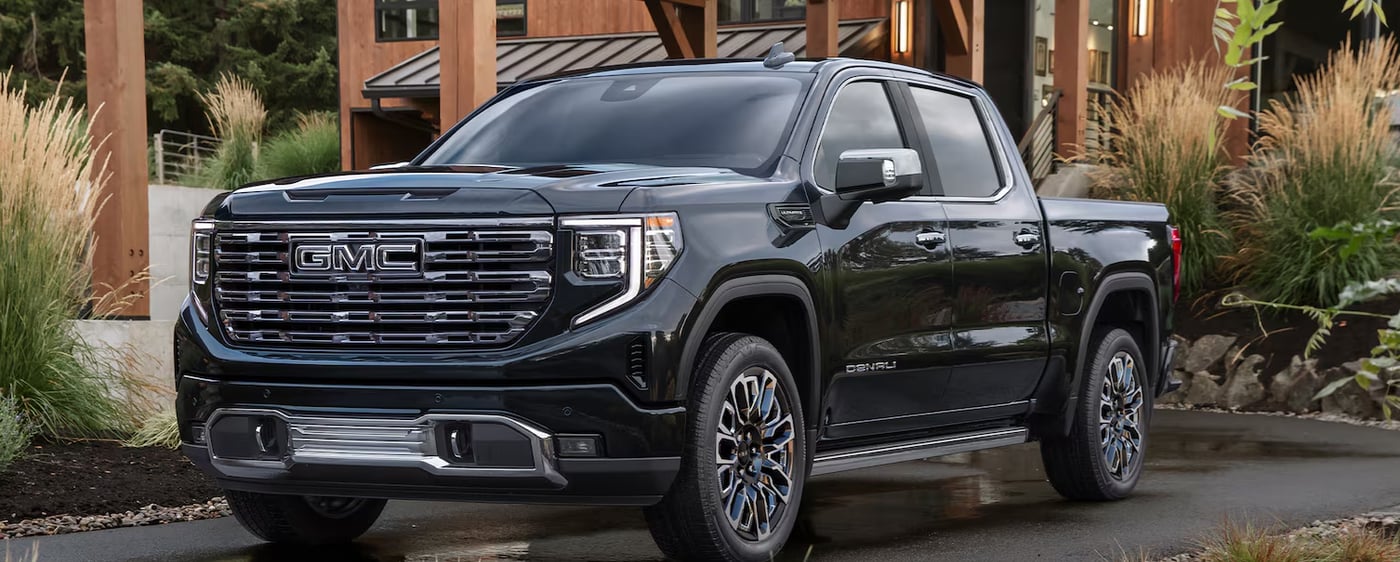
The GMC Sierra 1500 earns a 9.0 U.S. News overall rating and offers both a 5.3-liter V8 producing 355 horsepower and a 6.2-liter producing 420 horsepower, giving buyers a powertrain choice calibrated to their specific towing and hauling requirements. The reviewer specifically recommends the 6.2-liter for buyers who plan to tow significant weight regularly, citing the power and torque advantage that becomes meaningful under the sustained load conditions that light truck use places on the engine. Both V8 options pair with a 10-speed automatic transmission, and four-wheel drive is standard on select configurations, giving the Sierra the all-conditions capability that the full-size pickup truck category delivers across its range.
The higher trims of the Sierra 1500 offer a luxury interior that the full-size pickup category has developed into a genuine premium segment over the past decade. Wireless Apple $AAPL CarPlay and Android Auto are standard across the lineup, and the Denali trim adds GM’s Super Cruise driver assistance technology, which the source specifically identifies as the only hands-free system on the market that operates while towing. This is a meaningful distinction for buyers who use the truck for its towing purpose while also wanting the driver assistance technology that the luxury automotive market has broadly developed: most hands-free systems disable when a trailer is connected, and Super Cruise’s continued operation under towing conditions gives it a specific practical advantage for the Sierra’s actual use case.
The Sierra’s interior quality in upper trims gives the truck a character that the utilitarian full-size pickup image does not predict: materials, design execution, and comfort features that align with the luxury sedan category rather than the work vehicle tradition give Denali-trim Sierra buyers a daily environment whose quality the substantial price premium over base configurations specifically reflects and justifies. For buyers who want V8 power in a full-size pickup with the luxury interior quality and the unique Super Cruise hands-free towing capability, the Sierra Denali gives the most complete combination of those specific requirements available in the full-size truck market.
Credit: Chevrolet
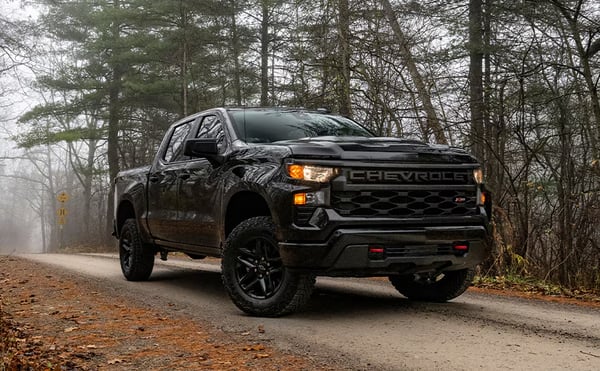
The Chevrolet Silverado 1500 earns an 8.8 U.S. News overall rating and shares its powertrain architecture with the GMC Sierra 1500, offering the same 5.3-liter and 6.2-liter V8 options, the same 10-speed automatic transmission, and the same four-wheel drive availability. The reviewer’s assessment of the two trucks mirrors: the 6.2-liter is the recommended choice for buyers who tow regularly, and the 5.3-liter is adequate for lighter-duty use. The practical performance difference between the two V8s at highway speeds for non-towing use is modest enough that the 5.3-liter serves as a reasonable starting point for buyers whose towing needs are occasional rather than routine.
The Silverado’s primary differentiation from the Sierra is the interior, which the reviewer describes as more basic in execution. Both trucks offer similar overall feature sets and comfort features, but the materials and layout reflect different design priorities: the Sierra’s higher-end trim treatment versus the Silverado’s somewhat more utilitarian approach gives buyers a clear choice within the GM full-size truck family based on how much interior quality they are willing to pay for. For buyers whose primary concern is the V8 powertrain at the lowest possible full-size truck entry point, the Silverado’s slightly lower starting price relative to the Sierra gives it the advantage.
The off-road variants, specifically the LT Trail Boss and ZR2 trims, give the Silverado genuine off-road capability beyond the standard truck’s pavement-focused calibration. The ZR2 specifically uses Multimatic DSSV dampers, which the reviewer tested as providing a well-controlled ride even under harsh off-road conditions, giving the performance-oriented V8 powertrain a chassis calibration that matches the engine’s capability in terrain the standard suspension does not address with the same precision. For buyers whose priority is a V8 pickup truck at the lowest possible full-size entry point, with off-road capability available as a factory option, the Silverado offers the most direct answer within the GM truck family, with the Sierra’s better interior quality available for buyers whose budget extends to the premium it commands.
Credit: Chevrolet
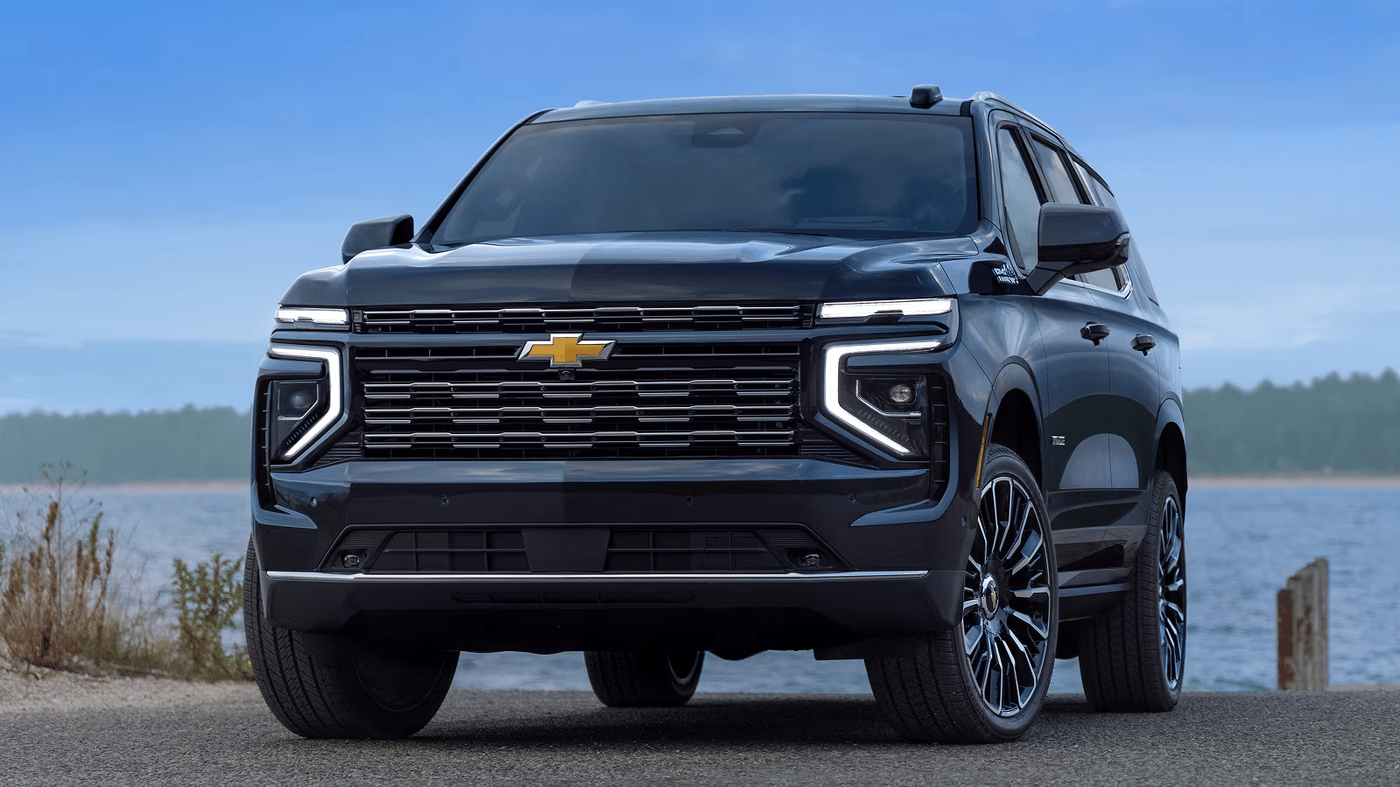
The Chevrolet Tahoe earns an 8.9 U.S. News overall rating and serves as the large body-on-frame SUV category's most popular representative, with V8 power. The standard 5.3-liter V8 and available 6.2-liter V8 give buyers the same powertrain choices as the Silverado and Sierra pickup trucks, paired with the same 10-speed automatic transmission and optional four-wheel drive. The reviewer’s preference for the 6.2-liter centers on its more competent towing and hauling behavior rather than outright performance, which gives the engine recommendation a practical rather than performance-enthusiast basis. Neither V8 delivers strong fuel-economy figures, which is the honest trade-off that the large SUV body and V8 powertrain combination always entails.
Chevrolet refreshed the Tahoe’s interior most recently, giving it an airier feel and updated technology that addresses the dated interior quality that previous generations of the full-size SUV segment have carried longer than the market’s rising interior standards have warranted. The optional adaptive suspension provides a significant improvement in ride quality over the standard setup, rewarding buyers who allocate budget to this option rather than decorative trim upgrades. The reviewer specifically cautions against the optional 24-inch wheels, which add harshness to the ride that the larger contact patch and reduced sidewall height impose in a way that the visual benefit of the larger wheel does not compensate for in daily use.
The High Country trim’s optional Super Cruise availability gives the Tahoe’s most expensive configuration the same hands-free towing capability as the Sierra Denali, giving buyers who want a large V8 SUV rather than a truck the driver assistance technology without needing to choose between the two body styles. For families who need the large SUV’s three-row passenger capacity alongside V8 power, the Tahoe gives the most established and most recognized option in the category, with the updated interior addressing the previous generation’s dated feel and the adaptive suspension option giving buyers who specify it a ride quality that justifies the upgrade over the standard setup.
Credit: Chevrolet
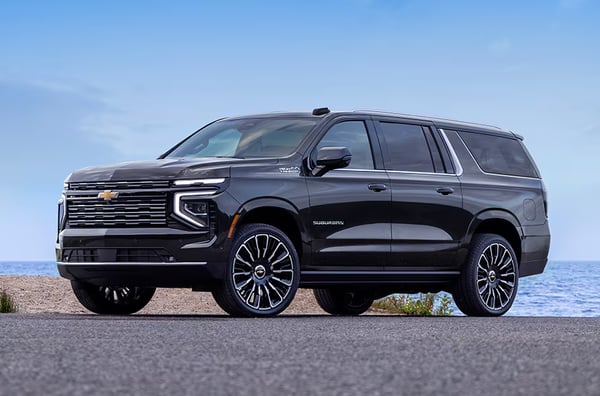
The Chevrolet Suburban earns a 9.1 U.S. News overall rating and gives buyers who want the Tahoe’s V8 powertrain and overall character in a larger body the specific upgrade that the extended wheelbase delivers: additional cargo space behind the third-row seat that the Tahoe’s shorter body does not provide. For families who regularly travel with all three rows occupied alongside luggage, sports equipment, or stroller-and-gear quantities of family cargo, the Suburban’s additional rear cargo length gives a practical answer to the constraint that the Tahoe’s third-row luggage situation creates on longer road trips.
The V8 options are identical to the Tahoe: the 5.3-liter standard and the 6.2-liter available, both with the 10-speed automatic and optional four-wheel drive, and the reviewer’s consistent preference for the 6.2-liter applies in the Suburban as well. The longer wheelbase also provides a towing stability advantage that the source specifically identifies: the additional distance between axles that the Suburban’s length creates gives the towed trailer less leverage on the tow vehicle’s rear axle, which produces more composed towing behavior under the same trailer weight compared to the shorter Tahoe.
The Suburban’s interior received the same recent update as the Tahoe, giving both vehicles the revised technology and airier feel that the refresh delivered. Wireless Apple $AAPL CarPlay and Android Auto are standard, and tri-zone climate control gives the extended passenger cabin the temperature management that the Suburban’s additional length and third-row separation from the front HVAC outlets make practically necessary for rear-passenger comfort on longer drives. For families whose cargo requirements consistently exceed what the Tahoe’s rear space provides with three rows occupied, the Suburban gives the specific additional volume that the extended body delivers without requiring a move to a different vehicle platform or a different brand, making it the most targeted upgrade within the GM large SUV family for buyers who have identified the Tahoe’s cargo limitation as the specific constraint they need to resolve.
Credit: GMC
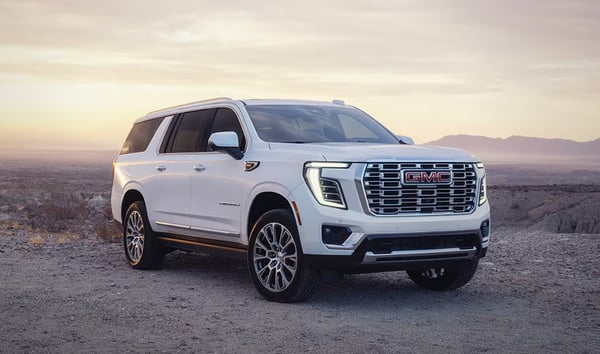
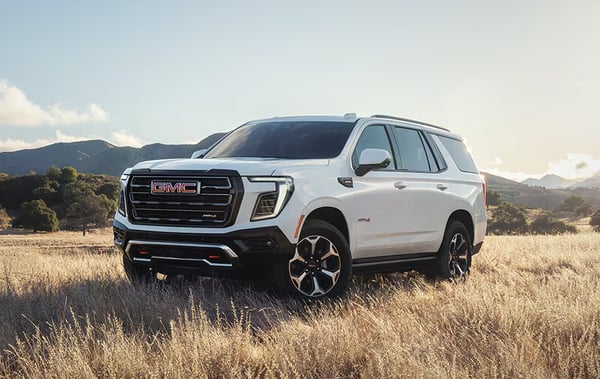
The GMC Yukon earns an 8.8 U.S. News overall rating and offers the same V8 powertrain options as the Chevrolet Tahoe and Suburban, while delivering a more premium interior treatment that the higher starting point reflects. The same 5.3-liter and 6.2-liter V8s, the same 10-speed automatic, and the same four-wheel-drive options give the Yukon mechanically identical capability to its Chevrolet siblings, with interior quality being the primary reason to choose between them rather than any powertrain or performance distinction. The reviewer’s consistent 6.2-liter preference applies equally to the Yukon as it does across the GM large truck and SUV lineup.
The Yukon XL, a Suburban-sized extended variant, gives buyers who want the Yukon’s interior quality in a larger body a direct equivalent to the Suburban’s cargo space advantage, meaning the GM large SUV family effectively offers four configurations across the two brands that span interior quality preferences and body size needs simultaneously. The infotainment system that GMC offers impresses with responsive performance and sharp graphics, and it supports wireless Apple $AAPL CarPlay and Android Auto. The multiple Bose audio systems available give the Yukon’s cabin a sound quality ceiling that the Chevrolet equivalents do not reach at the same trim levels.
The Denali trim’s optional Super Cruise capability gives the Yukon’s most premium configuration the hands-free driver assistance technology, including the towing-compatible operation that the source identifies as unique in the market. For buyers who want the best interior quality available in a V8-powered large body-on-frame SUV without moving to the full-luxury brand alternatives offered by BMW, Mercedes-Benz, and Land Rover at considerably higher starting prices, the Yukon Denali offers the most complete answer at a price that remains within the mainstream large SUV category. The Bose audio options and the snappy, sharp-graphics infotainment delivered by the GMC system give the Yukon’s cabin an execution quality that buyers who have cross-shopped the Tahoe and the Yukon at equivalent specifications consistently identify as worth the additional investment.
