
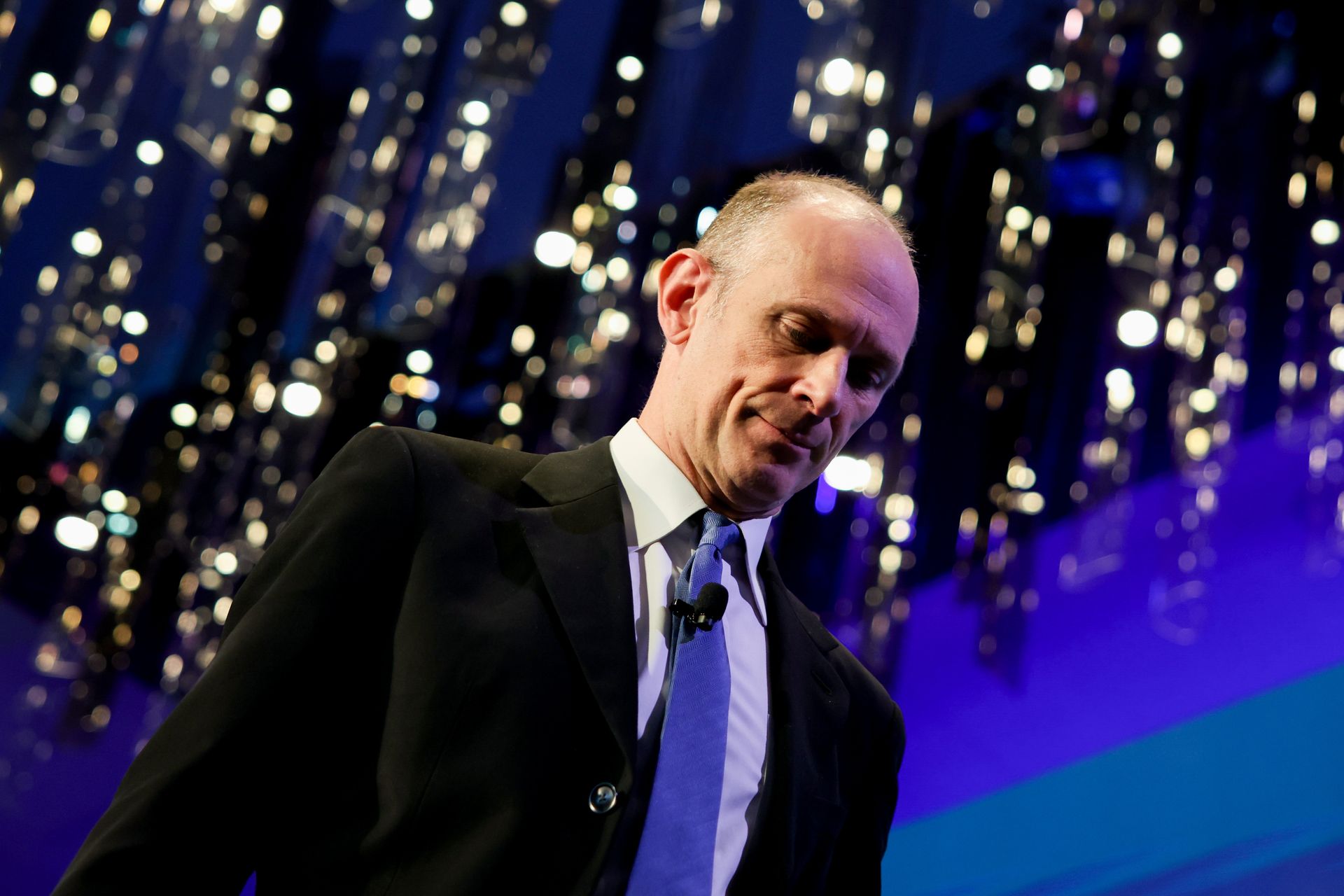
Chicago Federal Reserve President Austan Goolsbee warned Thursday that core inflation remains too high and is moving in the wrong direction, even as he acknowledged a few positive signs in the latest price data, according to CNBC.
"If we look at core inflation: still well too high and it's trending the wrong way, and we've got to see improvement on that," Goolsbee said, according to Bloomberg.
The backdrop to Goolsbee's comments was a fresh inflation report from the Bureau of Economic Analysis released earlier Thursday showing the PCE price index — the Fed's favored gauge of inflation — had climbed 4.1% on a year-over-year basis in May. The core version of that index, which excludes food and energy, came in at 3.4%, a level not seen since October 2023. The PCE price index rose 0.4% from the prior month, while the core measure increased 0.3%.
Despite the overall concern, Goolsbee said there were some encouraging signals. "You have seen now a little bit of improvement on this services inflation, and I've been identifying that as something that we would want to see," he said. He added, however, that inflation is the dominant concern facing the Fed relative to its employment mandate.
Goolsbee also offered support for changes to Fed communications introduced under new Chairman Kevin Warsh, whose first post-meeting statement was shorter than previous versions and removed any indication of the Fed's likely future rate moves. "Let's streamline, let's take some forward guidance out of there. Let's not speculate about the rate path," Goolsbee said. "I think it's healthy that we have those resets."
Pushing back against any suggestion of tension inside the Fed, Goolsbee said he and Warsh had been close allies during the global financial crisis — a period when Goolsbee served as a senior economic advisor to President Barack Obama while Warsh worked on rescue programs from inside the Fed.
Though Goolsbee sits on the FOMC without a vote this year, that status changes in 2027. The committee's next scheduled gathering is July 28-29. At last week's meeting, where officials held rates steady, the quarterly projections showed that 9 of 19 Fed policymakers anticipated raising rates at least once before year's end.