Comfort food is not a Western invention — it's a human one. These 20 global dishes are what people make when they need something warm, filling, and familiar
Beyza Emişen / Pexels
Comfort food is a category whose membership is determined not by ingredients or technique but by function. The dish that qualifies is the one a person reaches for when they are tired, or ill, or sad, or simply in need of the specific sensation of being taken care of — and the sensation it provides is the warmth, the fullness, and the familiar flavor that signals, at some level below conscious thought, that everything is going to be fine. Every culture has developed its own version of this category, and the versions are as different as the cultures themselves: a bowl of congee and a bowl of ramen and a bowl of matzo ball soup and a bowl of jollof rice are all doing the same emotional work through entirely different means.
The global comfort food canon is also a record of culinary ingenuity under constraint. Most of the world's greatest comfort dishes were developed by people cooking with limited ingredients — the preserved meats, the dried legumes, the starchy staples, the broth made from bones — and the techniques they developed to make those limited ingredients as satisfying as possible are, in many cases, the most instructive cooking lessons available. French onion soup is, at its core, onions and water made extraordinary through patience and technique. Khichdi is rice and lentils transformed into something deeply restorative through spice and fat. Ribollita is yesterday's bread and yesterday's bean soup combined into something better than either was on its own.
This list covers 20 comfort dishes from 20 different culinary traditions, selected for recognizability, cultural authenticity, and the specific quality of being genuinely comforting rather than merely good. Each slide covers the dish, its cultural context, and the specific techniques and ingredients that make it work — not a full recipe (the format does not allow it), but the information that makes the difference between a dish that fulfills its comfort function and one that merely resembles it.
Ingredient notes are provided where the dish requires something that may be unfamiliar or hard to find, along with practical substitutions where they exist.
Maria Isabelle Warren / Pexels
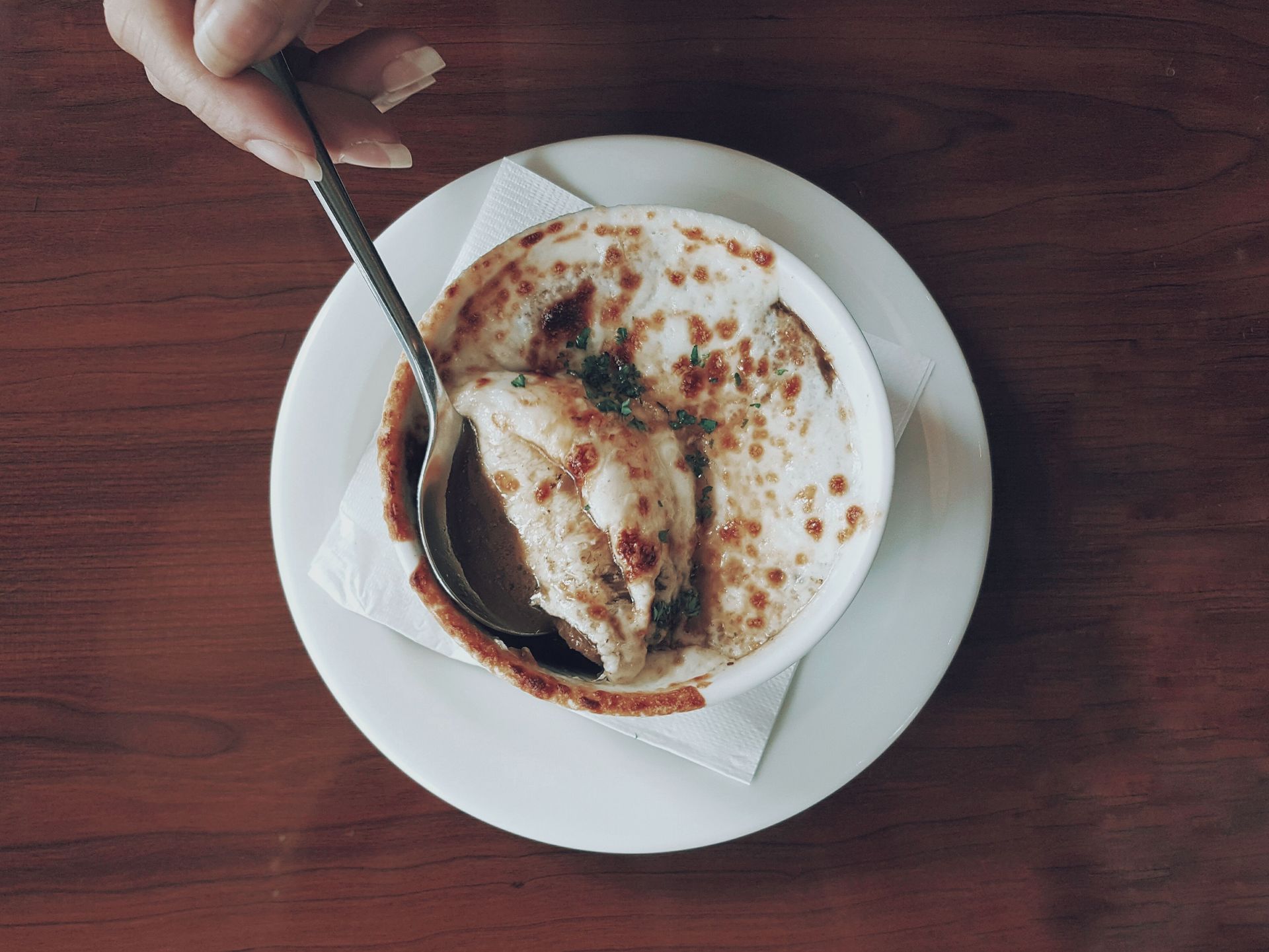
French onion soup — the Parisian bistro classic of deeply caramelized onions in a beef broth, topped with a crouton and a thick layer of melted Gruyère — is the dish that most directly demonstrates what patience produces in cooking. The onions must be cooked for a genuine 45 minutes to an hour over medium-low heat, stirring occasionally, until they are soft, deeply golden, and have released and reabsorbed their natural sugars. This process cannot be rushed without losing the sweetness and depth that make the soup what it is.
The cultural context: French onion soup originated as a peasant dish — onions were cheap, beef bones were available, and the combination of long-cooked aromatics and bone broth produced something deeply sustaining from very little. The Gruyère crouton on top is the restaurant refinement; the soup itself predates it.
What makes it work: the depth of the caramelization, not the sweetness — the onions should be golden-brown, not burned, and the color should come from the onion's own sugars rather than from added sugar. A splash of dry white wine or dry sherry deglazed into the onions after caramelization adds brightness that balances the sweetness. The broth must be good — a rich homemade or quality store-bought beef stock, not a pale commercial broth.
Key technique: use a heavy-bottomed pot (cast iron or stainless), medium-low heat, and the patience to stir every five minutes for the full cooking time. The finished onions should be reduced to approximately a quarter of their original volume.
Thomas Nahar / Pexels
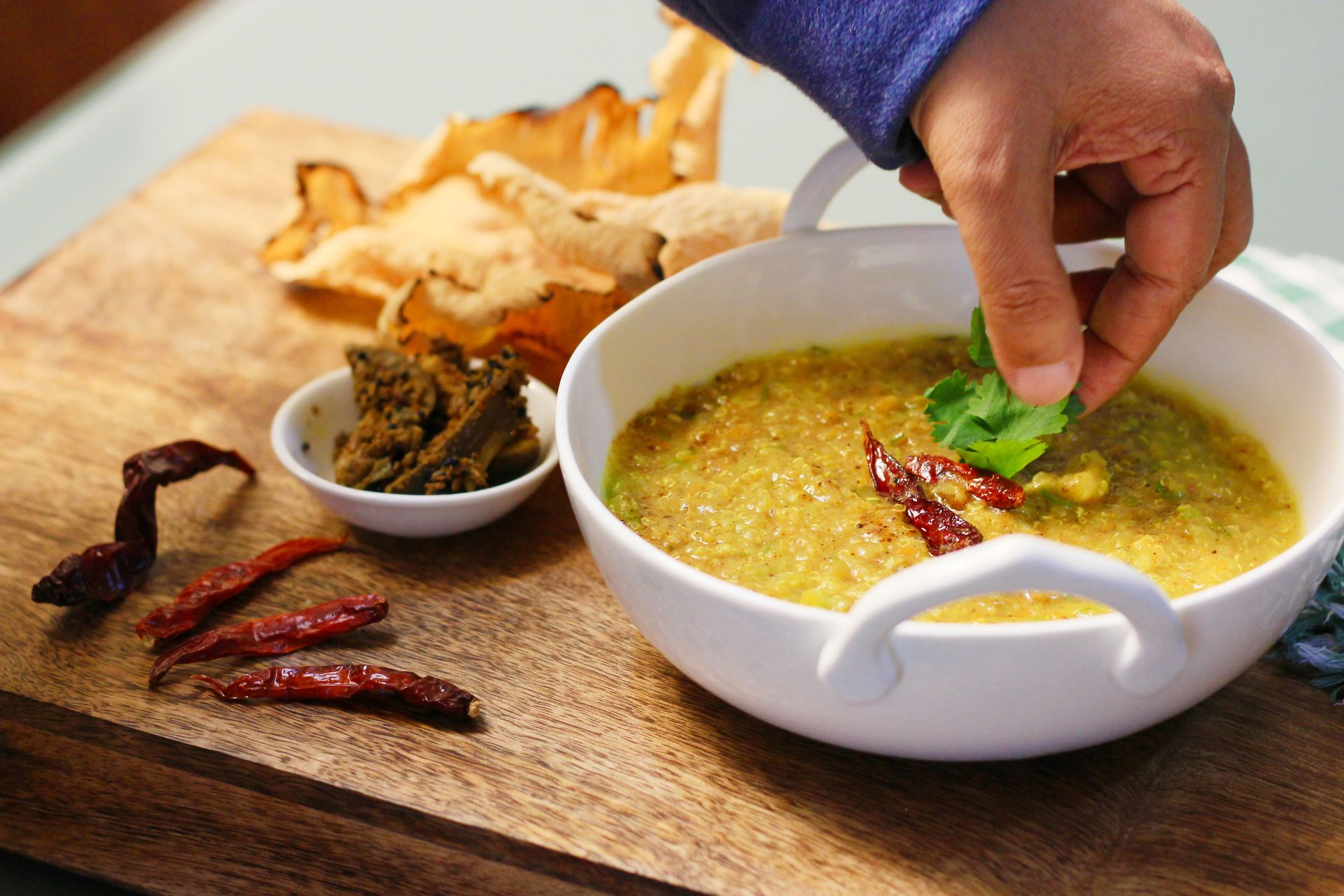
Khichdi — rice and split lentils cooked together until soft and porridge-like, seasoned with turmeric, cumin, and ghee — is the subcontinental equivalent of chicken soup: the dish that Indian mothers make for sick children, that ayurvedic medicine prescribes for digestive recovery, and that adults reach for when they need something nourishing and uncomplicated. It is, along with its South Indian cousin pongal, one of the oldest continuously cooked dishes in the world.
The specific comfort of khichdi is its softness and its warmth — both literal and metaphorical. The rice and lentils cook together until they are completely unified, with no distinct grain, no bite, no resistance — just a yielding, golden porridge that asks nothing of the person eating it. The ghee stirred in at the end adds a richness that elevates what is otherwise an extremely simple dish into something genuinely satisfying.
What makes it work: the ratio of rice to lentils (typically 1:1 for a porridge texture, 2:1 for a more textured result); the turmeric added to the cooking water rather than later (it should color the dish throughout); and the tadka — the ghee bloomed with cumin seeds, dried chilli, and ginger poured over the finished dish at serving.
Key technique: rinse both the rice and the lentils (moong dal or masoor dal) until the water runs clear. Cook with four times their combined volume of water, covered, on low heat until completely soft — approximately 20 to 25 minutes. Adjust water for desired consistency.
Miguel González / Pexels
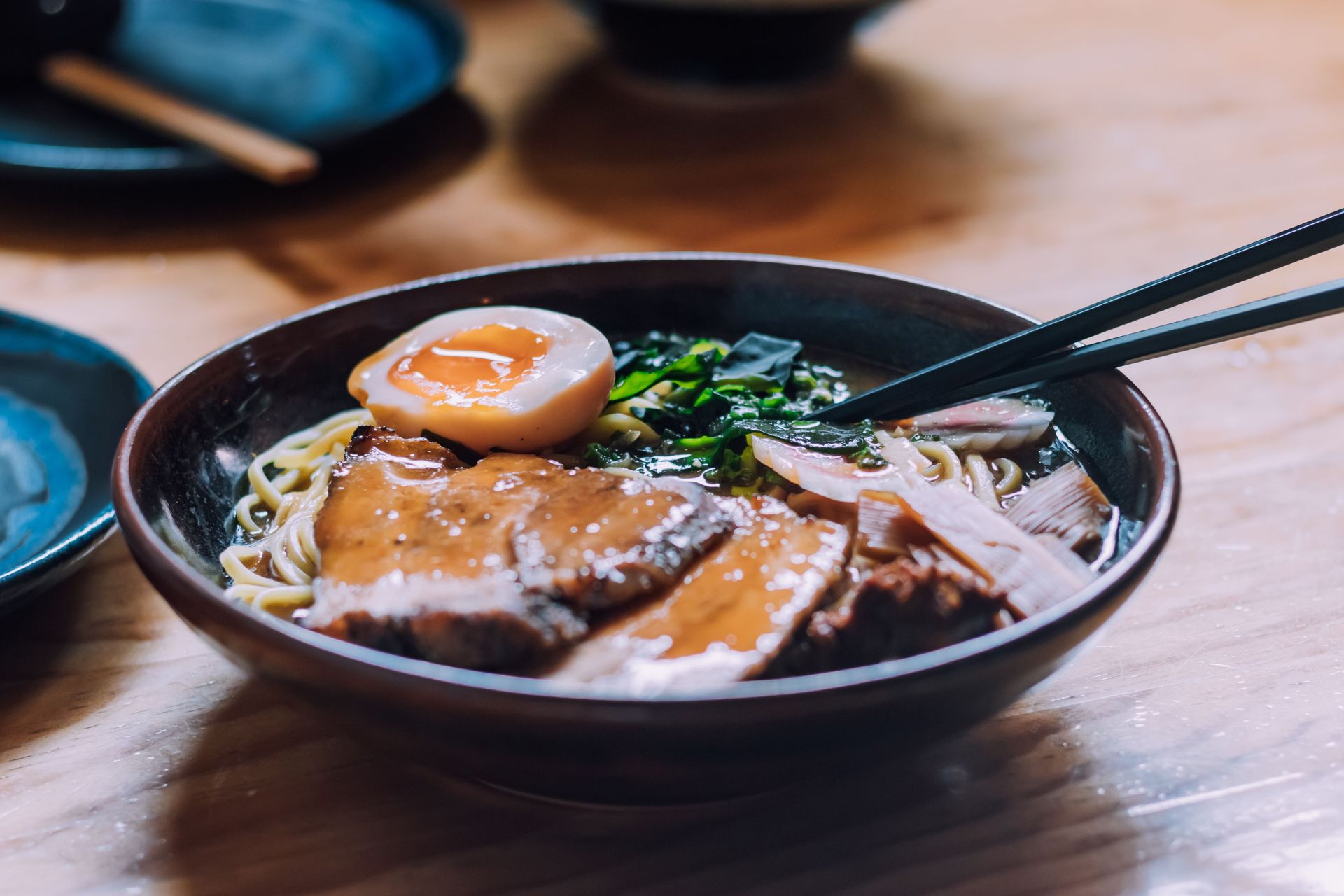
Japanese ramen — a wheat noodle soup whose broth can take 12 or more hours to develop and whose regional variations (tonkotsu, shoyu, miso, shio) each have devoted adherents — occupies a specific cultural position in Japan: it is simultaneously a humble workers' dish (developed in the early 20th century as an affordable, filling meal) and a subject of serious culinary craft whose best versions require extraordinary skill and commitment.
The comfort of ramen is the specific combination of deeply savory, umami-rich broth; springy, chewy noodles; and the toppings that provide contrast — the soft-boiled egg whose yolk is jammy and golden, the chashu pork belly that falls apart with gentle pressure, the sheet of nori, the scallions, the bamboo shoots. Each element is made separately and assembled to order, and the bowl that arrives is genuinely greater than the sum of its parts.
What makes it work: the broth. A tonkotsu broth requires pork bones boiled at a vigorous simmer (not a gentle one — the vigorous boil is what emulsifies the collagen and fat into the characteristic milky white broth) for 12 hours minimum. A shoyu broth begins with chicken and pork stock combined with a tare (concentrated seasoning sauce) of soy sauce, mirin, and sake. A home cook's first ramen will not match the best ramen shop version; it will still be extraordinary.
Key technique for home cooks: if making the full broth is not feasible, a good approximation uses store-bought chicken stock enriched with a tablespoon of white miso, a tablespoon of soy sauce, a teaspoon of sesame oil, and a splash of rice wine vinegar. It is not ramen; it is a very good noodle soup that scratches the same itch.
Sofia Avogadri / Pexels
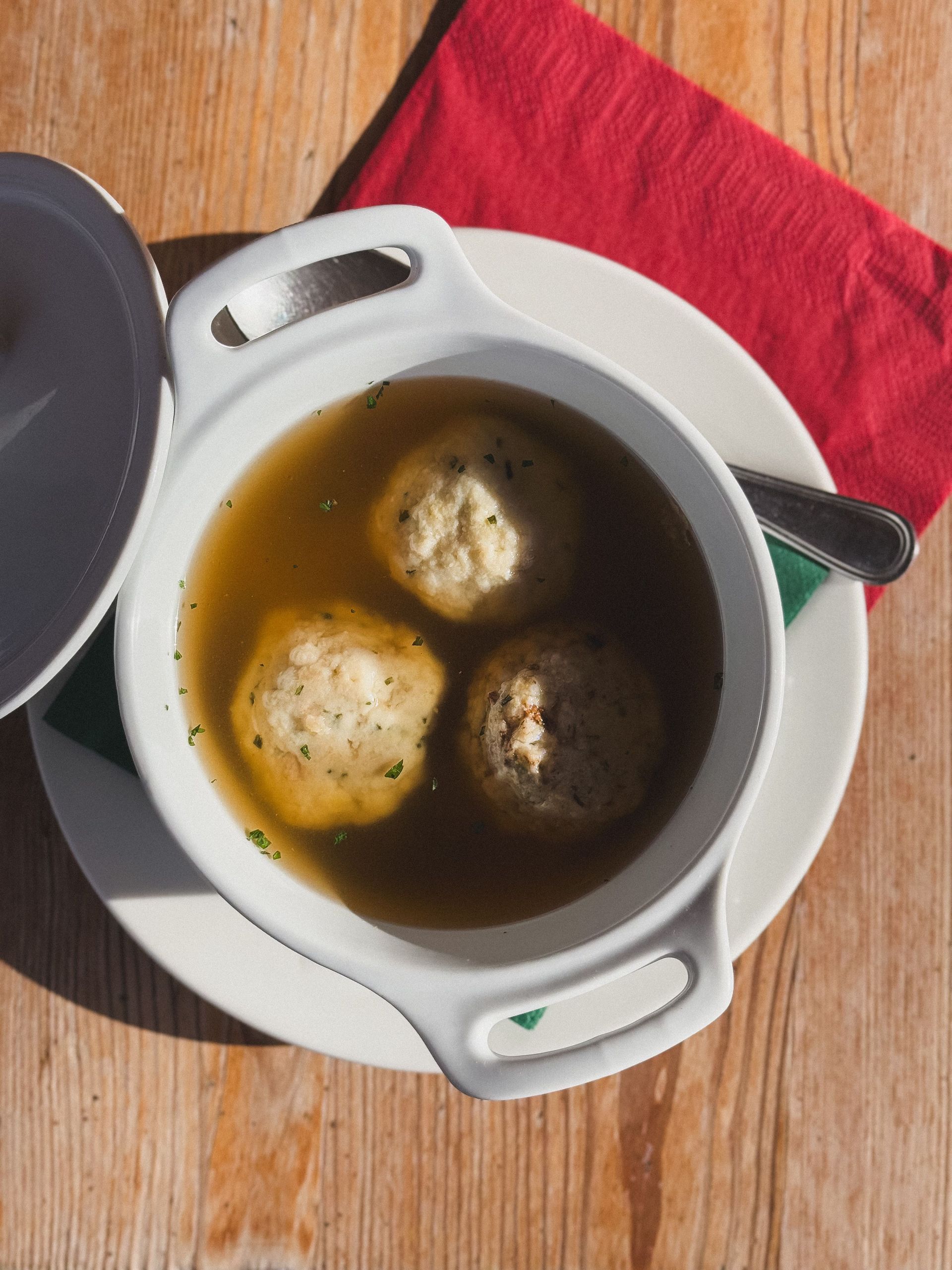
Matzo ball soup — chicken broth with dumplings made from matzo meal, eggs, schmaltz (rendered chicken fat), and salt — is the ultimate Jewish comfort food and the dish most associated with the specific Ashkenazi Jewish culinary tradition of Eastern Europe. It is made for Passover, for illness, for Friday night Shabbat dinner, and for any moment when what is needed is something that tastes like being taken care of by someone who has been cooking it for generations.
The matzo ball debate — floaters versus sinkers, which depends entirely on the proportion of fat to matzo meal and the technique of mixing — is one of the more earnest food arguments in Jewish cooking. Floaters (light and airy, achieved by separating the eggs and folding in beaten whites) are the contemporary preference; sinkers (denser, heavier, more substantial) are what many people grew up eating and what they consider the real thing.
What makes it work: the broth — a long-cooked chicken broth with whole onion, carrot, celery, parsnip, and dill, producing a clear golden liquid with genuine depth that commercial stock cannot replicate. The schmaltz, which provides the fat that makes the matzo ball rich rather than starchy. The resting time after mixing (the matzo ball mixture must rest in the refrigerator for at least 30 minutes before shaping, to allow the matzo meal to absorb the liquid).
Key technique: wet your hands before shaping to prevent sticking; do not compact the mixture — handle it gently to keep the balls light. Cook in a large pot of salted boiling water (not the broth — the balls release starch that would cloud it) until they have risen to the surface and continued cooking for a further 20 minutes.
Keesha's Kitchen / Pexels
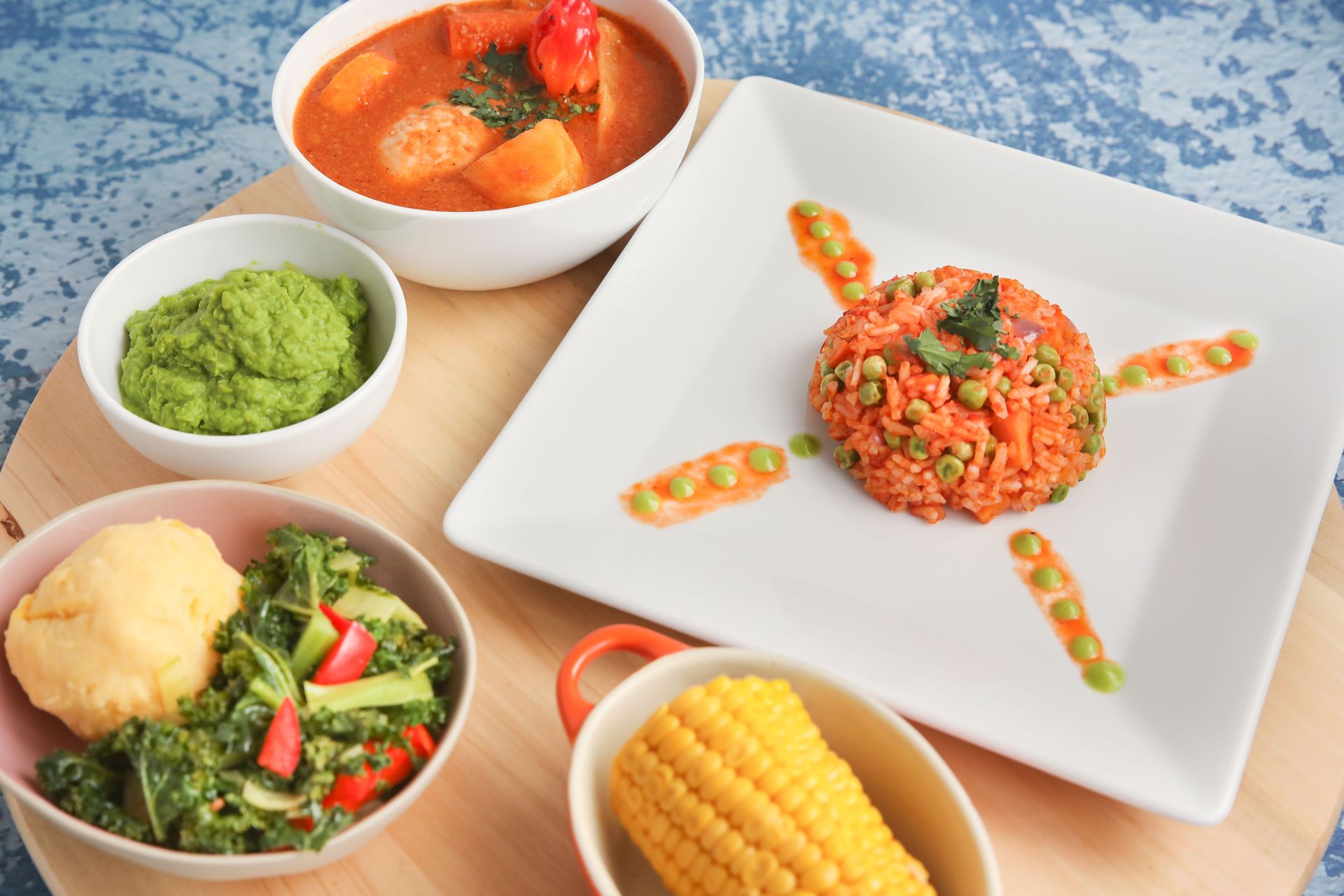
Jollof rice — rice cooked in a tomato, pepper, and onion sauce with spices and smoked paprika until each grain is deeply colored and flavored — is one of the most beloved and most argued-about dishes in West Africa, with Ghana, Nigeria, Senegal, and Sierra Leone each claiming the definitive version. The specific debate between Nigerian jollof and Ghanaian jollof — which has the better texture, the deeper flavor, the correct ratio of tomato to pepper — is one of the more culturally loaded food arguments in the African diaspora.
The comfort of jollof rice is its sociality as much as its flavor — it is party food, celebration food, the dish that is cooked in large quantities when people gather. But it is also everyday food, the dish that a Nigerian or Ghanaian home cook makes on a Tuesday because it is good and because the house will smell extraordinary while it is cooking.
What makes it work: the tomato base — blended fresh tomatoes, fresh peppers (both sweet and Scotch bonnet), and onion, cooked down with oil until the water has fully evaporated and the mixture is frying rather than stewing. This step (known as "frying the tomatoes") is the foundation of the dish and cannot be rushed. The smoked flavor comes from allowing the rice to catch slightly at the bottom in the final minutes — the coveted "party jollof" or "smoky jollof" character that is the hallmark of a properly made batch.
Key technique: use long-grain parboiled rice (not basmati or jasmine, which have the wrong starch profile); add only enough chicken or vegetable stock to cook the rice without excess moisture; cook on very low heat with a tight-fitting lid (or foil under the lid) for the last 10 minutes to allow the base to catch without burning.
Shameel Mukkath / Pexels
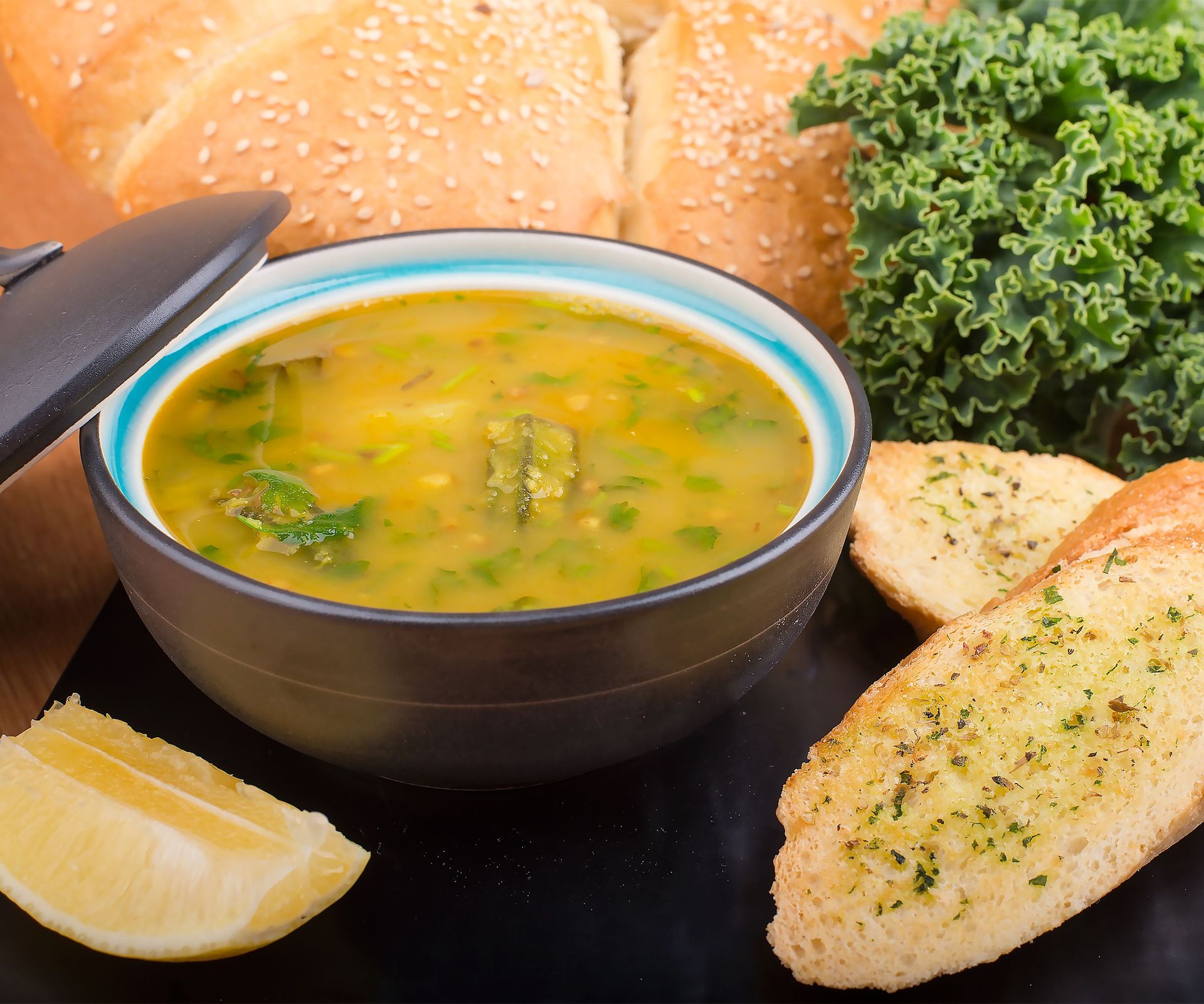
Caldo verde — kale and potato soup with chorizo — is the national comfort dish of Portugal: a soup of extreme simplicity (potatoes, kale, olive oil, and linguiça or chouriço) whose specific flavor and texture are achieved through technique rather than through any exotic ingredient. It is the soup that Portuguese emigrants made abroad using whatever kale and potatoes they could find, and it is the soup that Portuguese grandmothers made every winter for several hundred years before that.
The specific quality of caldo verde depends entirely on the cut of the kale: it is shredded into extremely fine ribbons (the traditional caldo verde cut requires rolling the kale leaves tightly and slicing as finely as possible, producing threads approximately 1 to 2 millimeters wide), which cook briefly in the finished soup and retain a bright green color and slight bite that distinguishes proper caldo verde from the tired version made with roughly chopped kale.
What makes it work: the potato base — waxy potatoes boiled in salted water until completely soft, then blended smooth in their cooking water with olive oil to create the soup base — which must be completely smooth before the kale is added; the kale added in the last three minutes of cooking only; the sliced chorizo added at the same time, its fat blooming briefly into the soup; and a final drizzle of good olive oil at serving.
Key technique: the kale cut is everything. Roll the leaves tightly and slice as finely as patience allows. The finer the shred, the more the soup resembles the original.
Nam Phong Bùi / Pexels
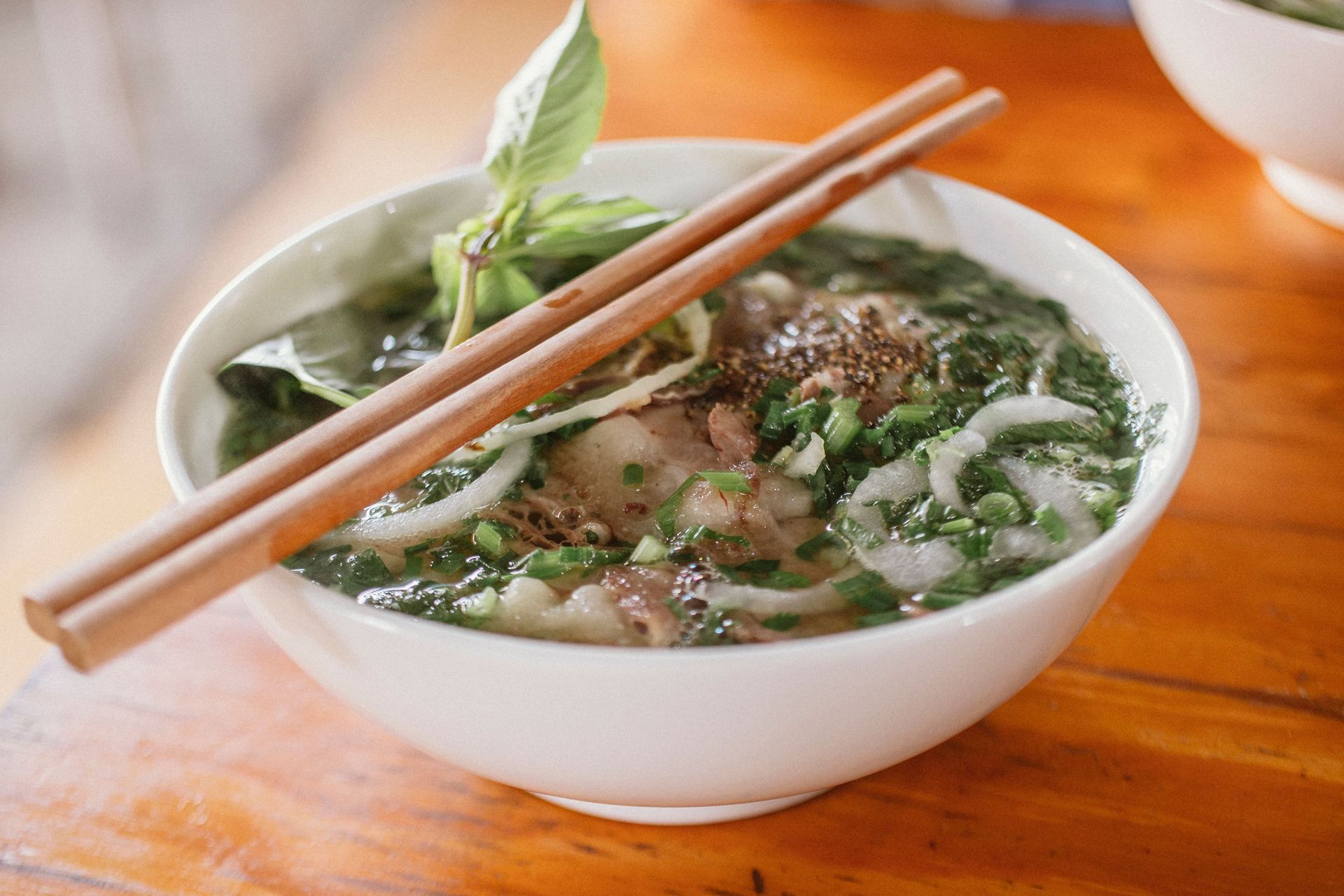
Pho — Vietnamese beef or chicken noodle soup, built on a bone broth spiced with star anise, cinnamon, cloves, cardamom, and charred ginger and onion — is one of the great soups of the world and the dish most associated with Vietnamese daily life, eaten for breakfast, lunch, and dinner, at street stalls and in dedicated pho restaurants, by people who have eaten it every day for their entire lives.
The comfort of pho is in the contrast between the deeply spiced, clear broth and the fresh, raw herbs added at the table — the bean sprouts, the fresh basil, the sliced chilli, the wedge of lime — that the diner customizes to their preference at the moment of eating. The interplay between the long-cooked broth and the immediately fresh herbs is what makes pho uniquely alive as a dish.
What makes it work: the broth, which requires the charring of halved onion and ginger over an open flame or under a broiler until blackened on the outside (this adds a specific smokiness and depth unavailable any other way), the toasting of whole spices in a dry pan before adding to the broth, and the long simmering (three hours minimum for beef, two for chicken) that extracts the gelatin and flavor from the bones.
Key technique for home cooks: a pressure cooker or Instant Pot reduces the broth time to approximately 45 minutes for chicken pho and 90 minutes for beef pho without significantly affecting the result. The spice bundle (star anise, cinnamon stick, cloves, cardamom pods, coriander seeds) should be tied in cheesecloth for easy removal.
Change C.C / Pexels
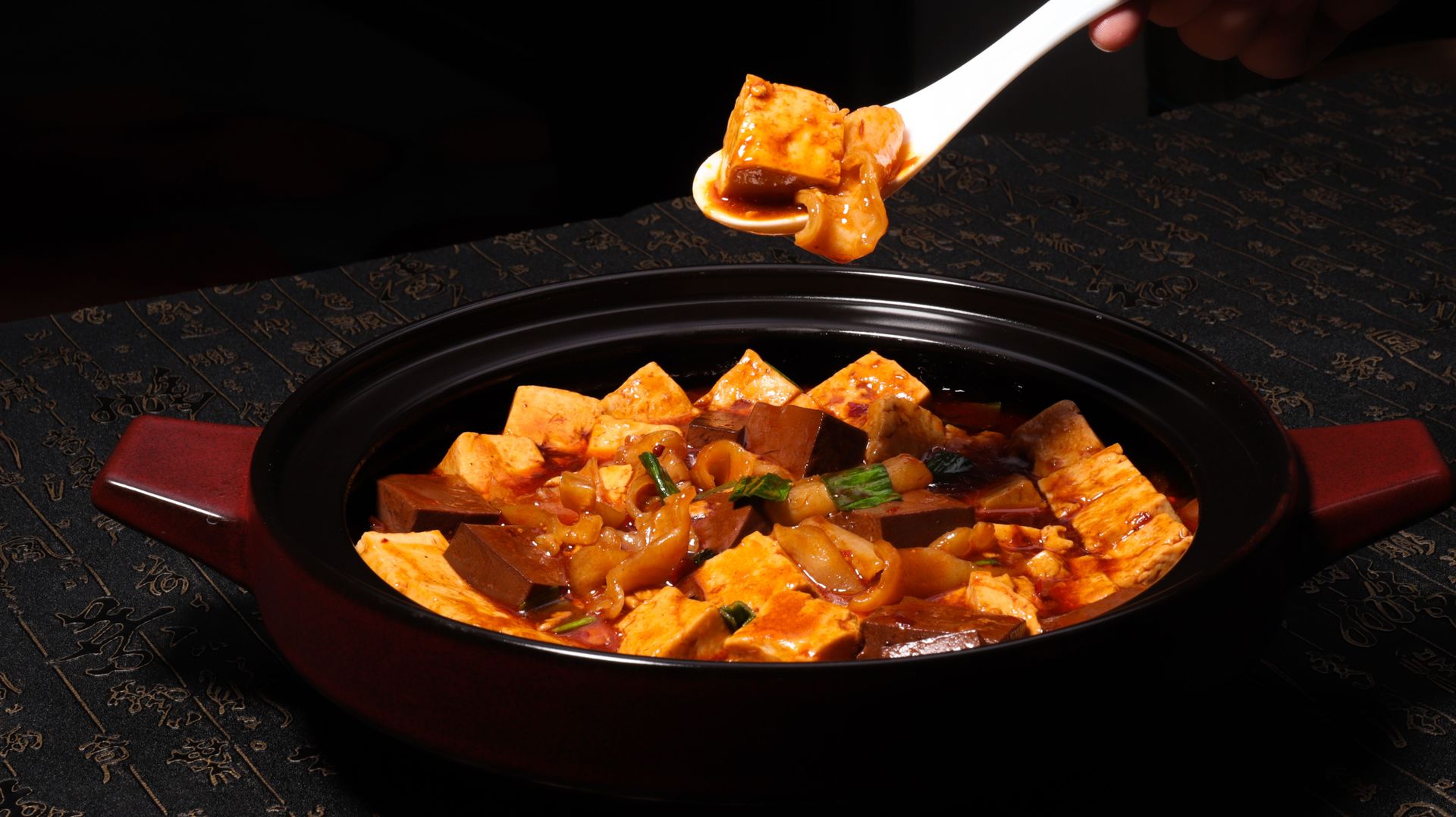
Mapo tofu — silken tofu in a deeply spiced sauce of ground pork, fermented black bean paste, doubanjiang (Sichuan chilli bean paste), and Sichuan peppercorns — is the Sichuan dish that most fully expresses the specific flavor principle of that cuisine: the combination of heat (from the chilli) and the numbing, tingly sensation (from the Sichuan peppercorns, called málà) that is the defining characteristic of Sichuan cooking and that produces an almost addictive quality in the dishes that balance it well.
The name translates as "pockmarked old woman's tofu" — named, according to legend, for the Chengdu woman who first made it in the 19th century. The texture contrast between the deeply flavored, oily sauce and the cold, delicate silken tofu that barely holds its shape is the specific pleasure the dish provides.
What makes it work: the doubanjiang — the Sichuan fermented chilli bean paste that is the foundational flavor of the dish and that has no adequate substitute (it can be ordered online if not available locally); the Sichuan peppercorns toasted and ground fresh (pre-ground Sichuan peppercorn loses its numbing quality within weeks); and the silken tofu, which must be very fresh and extremely delicate — it is not stirred aggressively but spooned gently into the sauce at the end and barely disturbed until serving.
Key technique: fry the doubanjiang in oil until the oil turns red (approximately two minutes), then add the ground pork, then the stock. Add the tofu last and keep the heat low to avoid breaking it.
Maggi Paraguay / Pexels
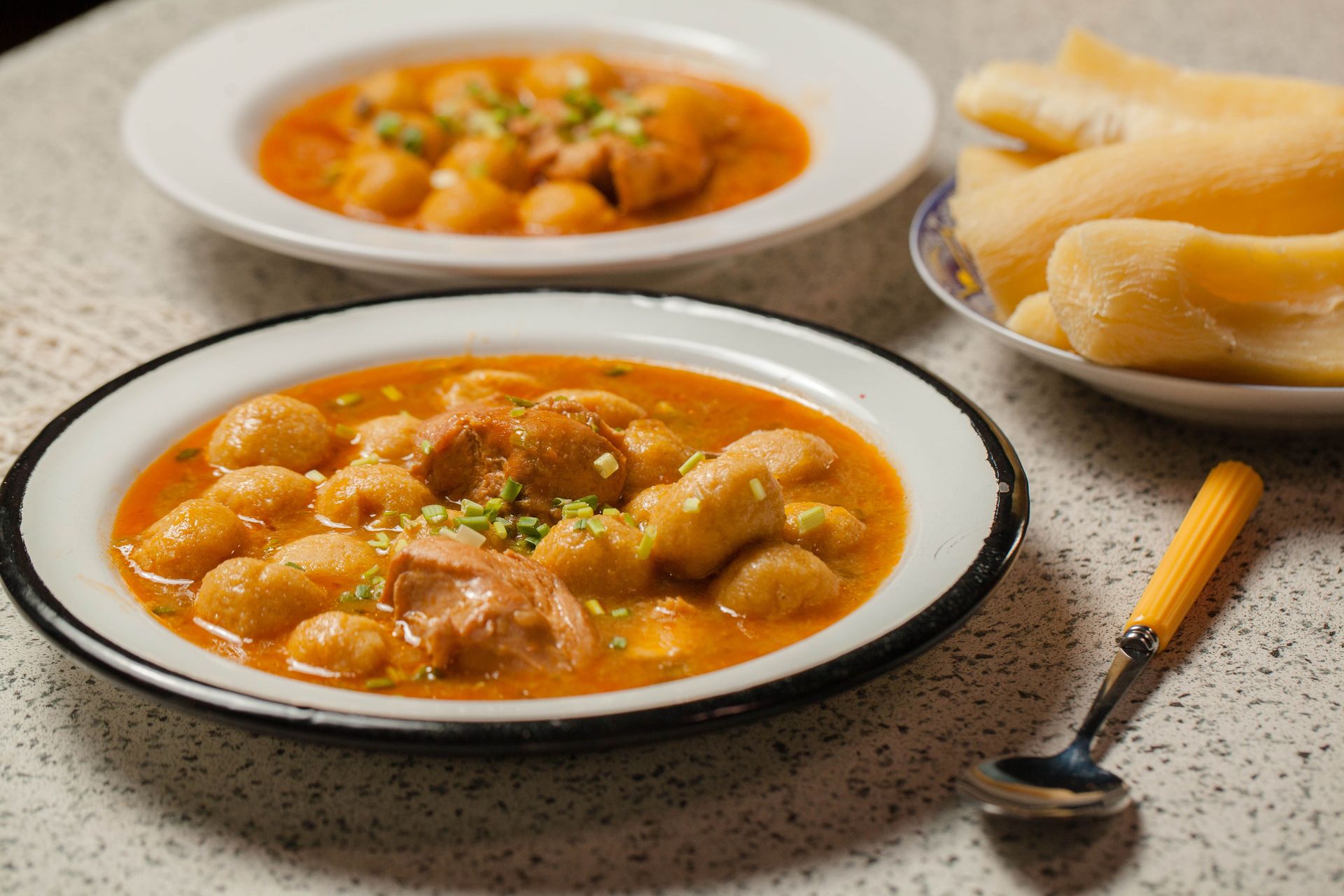
Chicken and dumplings — tender pulled chicken and fat, soft dumplings in a thick, creamy broth — is the most quintessential comfort food of the American South, made in cast iron pots and Dutch ovens in the kitchens of the Appalachian Mountains, the Mississippi Delta, and every Southern grandmother's house since before anyone can remember. It is the dish that appears at funerals and at recoveries from illness and at any gathering where feeding people with warmth and fullness is the primary objective.
The dumpling debate in American cooking mirrors the matzo ball debate: the flat, slippery, wide noodle-like dumplings of the Deep South versus the fluffy, biscuit-like drop dumplings of the Appalachian tradition. Both are correct within their traditions; both require different techniques and produce different results.
What makes it work: a properly rich chicken base — whole chicken pieces (thighs and legs, not breast, which dry out) cooked in a broth with onion, celery, carrot, and bay until completely falling off the bone, then shredded and returned to the broth. The broth should be thick from the collagen of the chicken — if it is not, a roux (butter and flour cooked together) can be whisked in before the dumplings are added.
Key technique for drop dumplings: the dough (flour, baking powder, salt, butter, and buttermilk) should be mixed until just combined — overmixing produces tough dumplings. Drop spoonfuls onto the barely simmering broth and cook covered (do not lift the lid) for 15 minutes to let the dumplings steam fully.
-300x398.jpg)
Abdullah Geelah / Wikipedia (CC BY-SA 3.0)
Ful medames — fava beans slow-cooked with garlic, lemon, and olive oil — is the national breakfast dish of Egypt and one of the oldest continuously cooked dishes in the world, with evidence of its preparation dating to pharaonic Egypt. It is eaten for breakfast (and lunch, and dinner) across the Arab world, from Egypt to Sudan to Lebanon to Yemen, with the specific regional variations reflecting each country's spice traditions.
The Egyptian version is the simplest and perhaps the most satisfying: dried fava beans soaked overnight and cooked for hours until completely soft, seasoned generously with garlic, lemon, cumin, and a great deal of good olive oil, served warm with torn flatbread and topped with a fried egg, fresh tomato, and more olive oil. It is a genuinely filling, genuinely nutritious dish that costs very little to make and produces a deep, earthy satisfaction that is unlike any other breakfast.
What makes it work: the cooking time — dried favas need at least two hours of gentle simmering to reach the collapsing softness that makes them genuinely good (canned favas are a legitimate shortcut but produce a slightly flatter result); the garlic, which should be generous and added early so it cooks into the beans; the lemon, which should be added at the end and be abundant; and the olive oil, which should be used lavishly at both the cooking and finishing stages.
Key technique: soak dried fava beans for 12 to 24 hours and remove the outer skin of each bean before cooking (the skin toughens during long cooking). Or use canned ful medames (available at Middle Eastern grocers), rinse, and simply warm with garlic, lemon, and oil.
makafood / Pexels
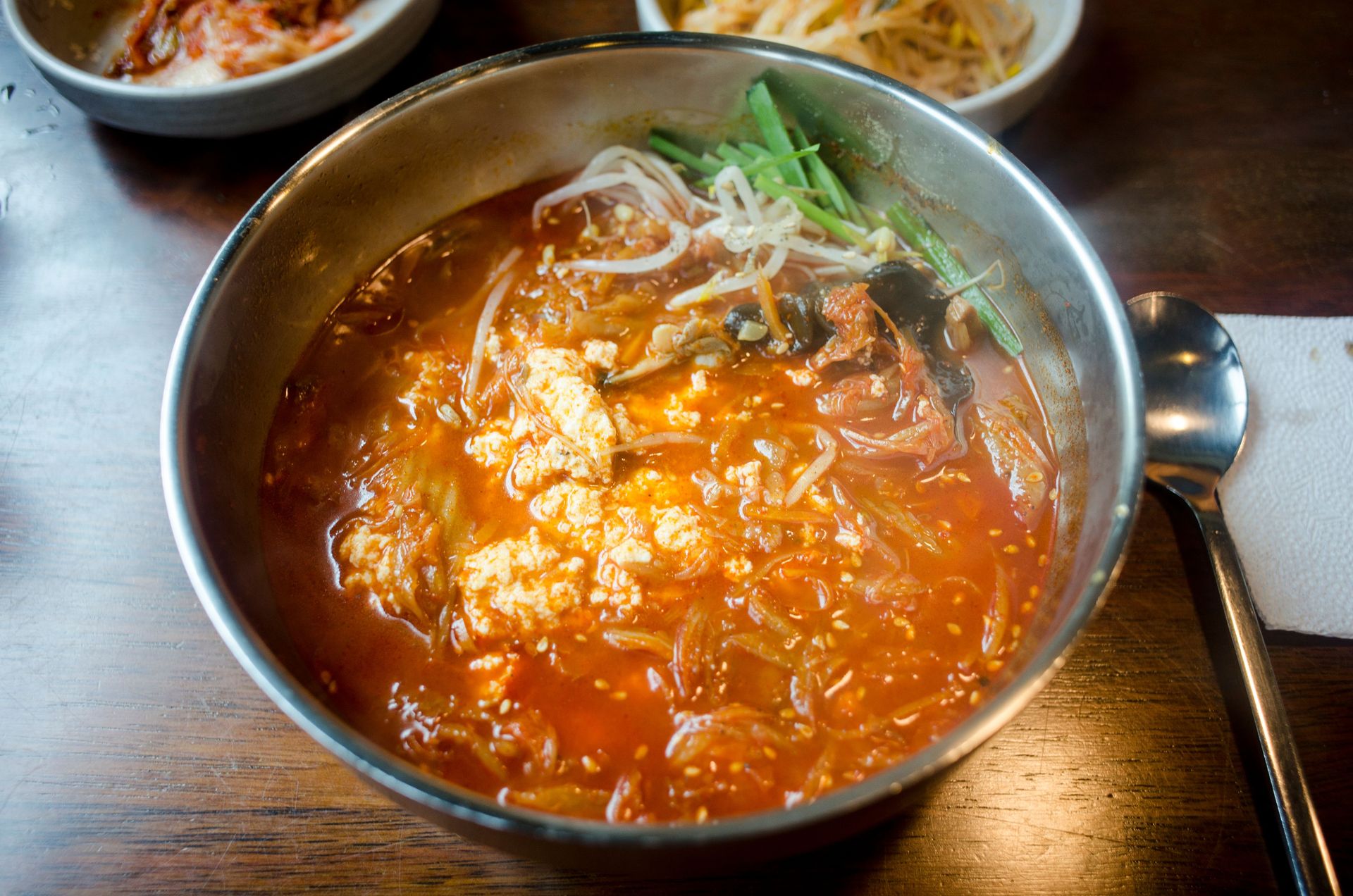
Kimchi jjigae — kimchi stew with tofu and pork belly — is the Korean dish that most people make when they have kimchi that has fermented past its peak eating stage and become too sour for the table. Well-fermented, deeply sour kimchi is not a problem to solve but an ingredient to use, and in kimchi jjigae it becomes the primary flavor: the sourness, the funk, the spice of old kimchi meld with the broth into something warming and deeply savory that makes the dish one of the most restorative in Korean cooking.
The specific comfort of kimchi jjigae is its pungency — it is not a subtle dish. The smell of it cooking fills the entire house with the specific fermented-chilli aroma that is immediately recognizable as Korean home cooking, and that smell is part of the comfort it provides.
What makes it work: well-fermented kimchi (the older and sourer, the better — three months or more fermented kimchi is ideal for this dish); pork belly for fat and richness (spam is the traditional substitute in Korean cooking, and genuinely good in this context); and gochugaru (Korean chilli flakes) added to taste for additional heat and color.
Key technique: fry the pork belly pieces first in a dry pan until the fat renders and the edges are lightly caramelized. Add the kimchi (with its brine) and stir-fry for two to three minutes before adding stock. Add the tofu gently at the end and simmer covered for five minutes. Serve directly from the pot with steamed rice.
Markus Winkler / Pexels
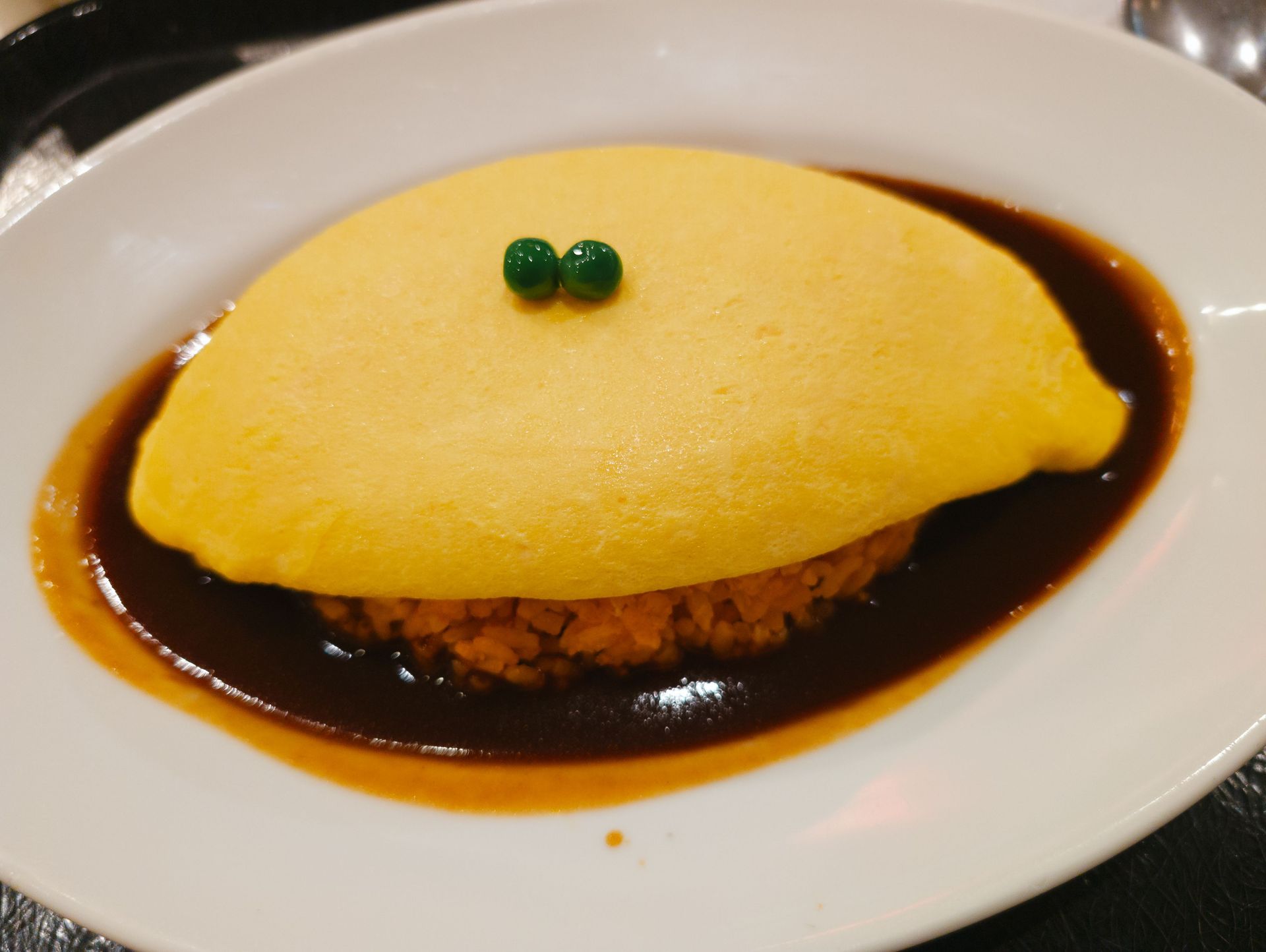
Omurice — fried rice wrapped in or topped with a thin egg omelette, typically drizzled with ketchup or demi-glace — is the Japanese yoshoku (Western-influenced Japanese) dish that is most associated with childhood and with the specific warmth of the home kitchen and the school cafeteria. It is resolutely unpretentious — it was developed in the early 20th century as an affordable, filling dish combining rice with the Western egg dishes that were fashionable in Meiji-era Japan — and resolutely delicious.
The contemporary "tornado omurice" style, popularized by restaurant Kichi Kichi in Kyoto, involves a very soft, barely set egg that is poured over the rice dome and opens with a single cut to release a flowing egg interior. This version requires practice; the classic version (a thin, fully set egg omelette wrapped around the rice) is accessible to any careful home cook.
What makes it work: the fried rice inside — chicken or ham fried rice seasoned with ketchup, soy sauce, and oyster sauce, cooked until each grain is separate and slightly caramelized; and the egg omelette, which for the classic version must be thin, fully set, and folded without breaking.
Key technique: season the rice with one tablespoon of ketchup, half a tablespoon of soy sauce, and half a tablespoon of oyster sauce per serving. For the omelette, use a non-stick pan, two eggs beaten with a pinch of salt, and medium-low heat until just set. Slide the rice onto a plate and fold the omelette over it.
Jessartcam / Wikipedia (CC BY-SA 4.0)
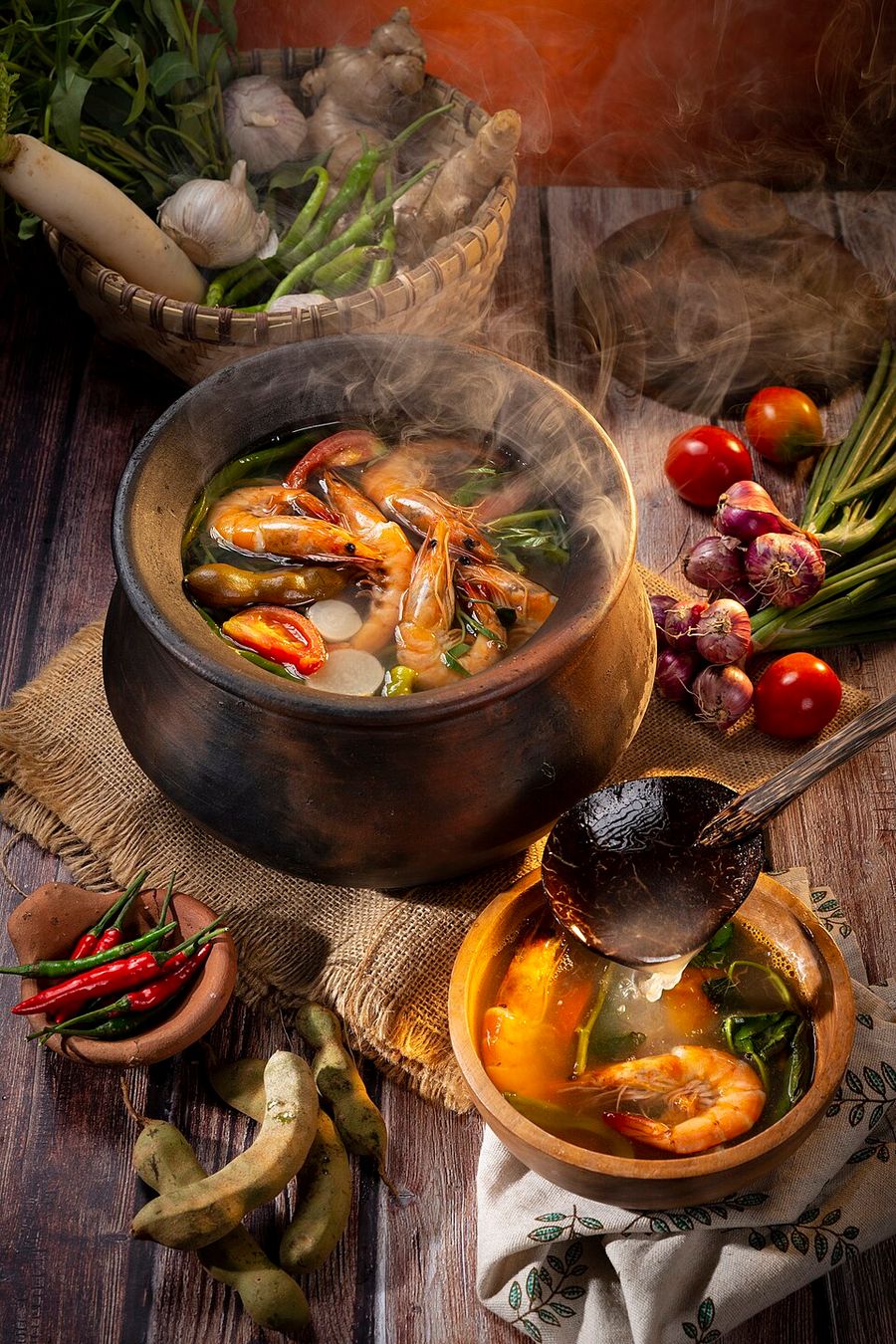
Sinigang — a Filipino sour soup of pork (or shrimp, or fish) with vegetables in a tamarind broth — is the definitive Filipino comfort food, the dish that Filipinos abroad miss most acutely and that Filipino home cooks make most frequently. The sourness of the tamarind broth is the dish's defining quality and its primary comfort mechanism — a tartness that cuts through richness and stimulates appetite in a way that is immediately refreshing.
The vegetables that go into sinigang are part of its identity: water spinach (kangkong), radish, eggplant, long beans, and okra are the classic combination, though the vegetables vary by region and availability. The combination of tender vegetables and sour, savory broth with rice is the specific experience that Filipinos describe as distinctly restorative.
What makes it work: the tamarind — either fresh tamarind pulp (soak the pod in hot water, push through a sieve) or the packets of sampaloc (tamarind) sinigang mix that are the standard shortcut in both Philippine and overseas Filipino cooking; the pork (pork ribs or pork belly with bone, for the collagen that enriches the broth); and the vegetables added in reverse order of cooking time, with the leafy greens last.
Key technique: the tamarind quantity determines the sourness — start with the recommended amount and add more to taste; Filipinos vary widely in their preferred sourness level. Serve with steamed white rice; the rice and soup eaten together is the complete experience.
MadeInEgypt.ca / Pexels
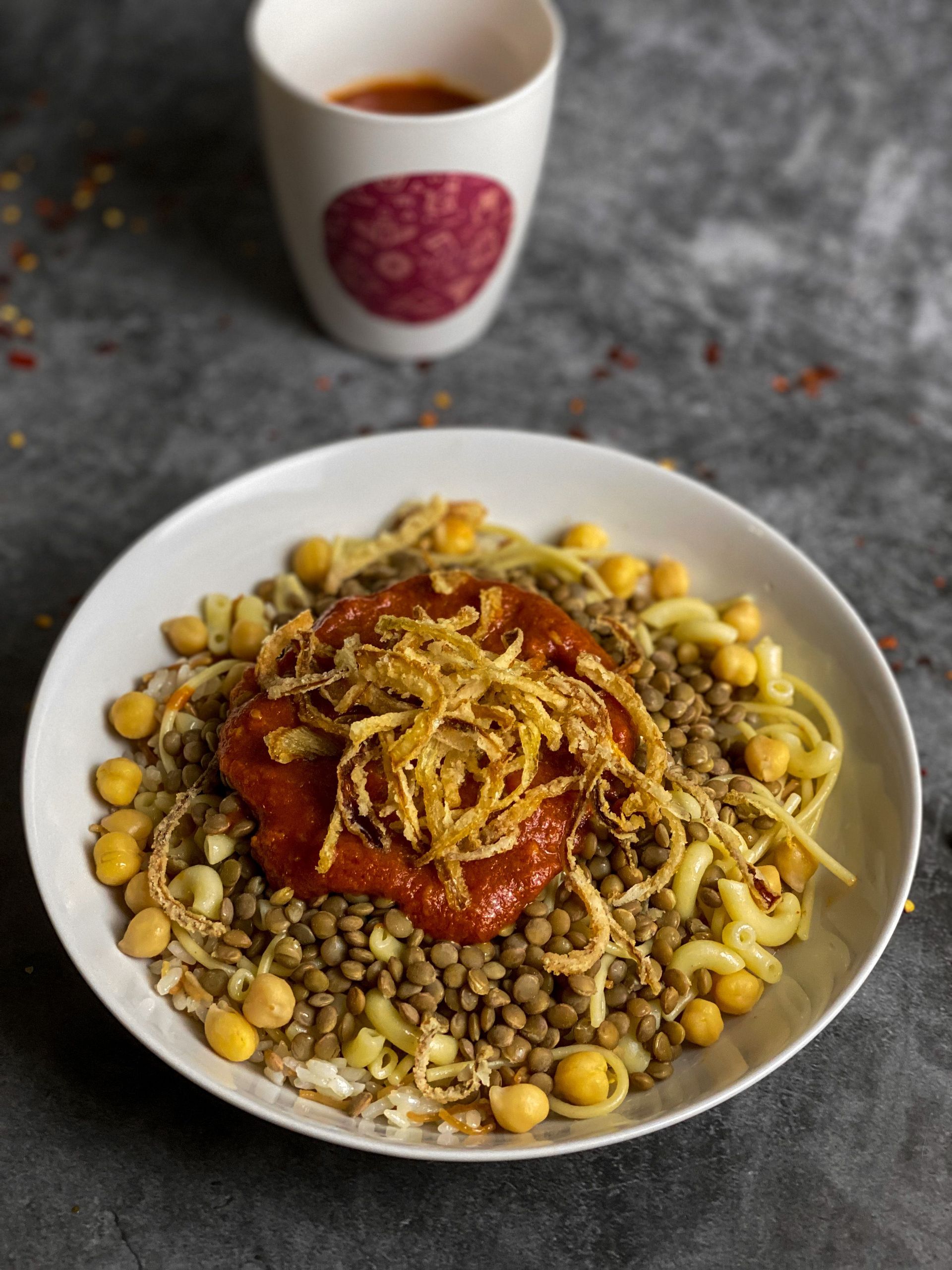
Koshari — the Egyptian street food of rice, lentils, pasta, chickpeas, crispy fried onions, spiced tomato sauce, and a vinegary garlic dressing — is one of the most unlikely and most satisfying dishes in the world. On paper, the combination of four carbohydrate sources in a single bowl sounds like a mistake; in practice, it is a dish of extraordinary textural and flavor complexity whose specific combination of textures (crispy onions, firm chickpeas, soft lentils, al dente pasta) and flavors (the acidity of the tomato sauce, the warmth of the cumin and coriander, the sharpness of the garlic vinegar) produces genuine satisfaction with every bite.
Koshari is the quintessential Cairo street food — served from dedicated koshari restaurants (koshariyat) that cook nothing else, ladled into bowls from large communal pots, and eaten standing up or at communal tables at any time of day. It is deeply working-class in its origins and deeply beloved across all social classes in Egypt.
What makes it work: the crispy onions — fried until deeply golden and slightly crunchy, they are the element that ties the dish together and must be made properly (not pale and soft, but dark and crisp); the tomato sauce — cooked down with garlic, cumin, coriander, and chilli until thick and concentrated; and the garlic vinegar dressing (white vinegar with crushed garlic, cumin, and salt) that is drizzled over everything.
Key technique: cook each component separately and assemble to order. The rice and lentils are cooked together (rice on top of the lentils, which begin cooking earlier). The pasta (macaroni or spaghetti broken into short lengths) is cooked separately. Assemble in layers: rice and lentil base, pasta, chickpeas, tomato sauce, crispy onions, garlic vinegar.
Patricio Ledeill / Pexels
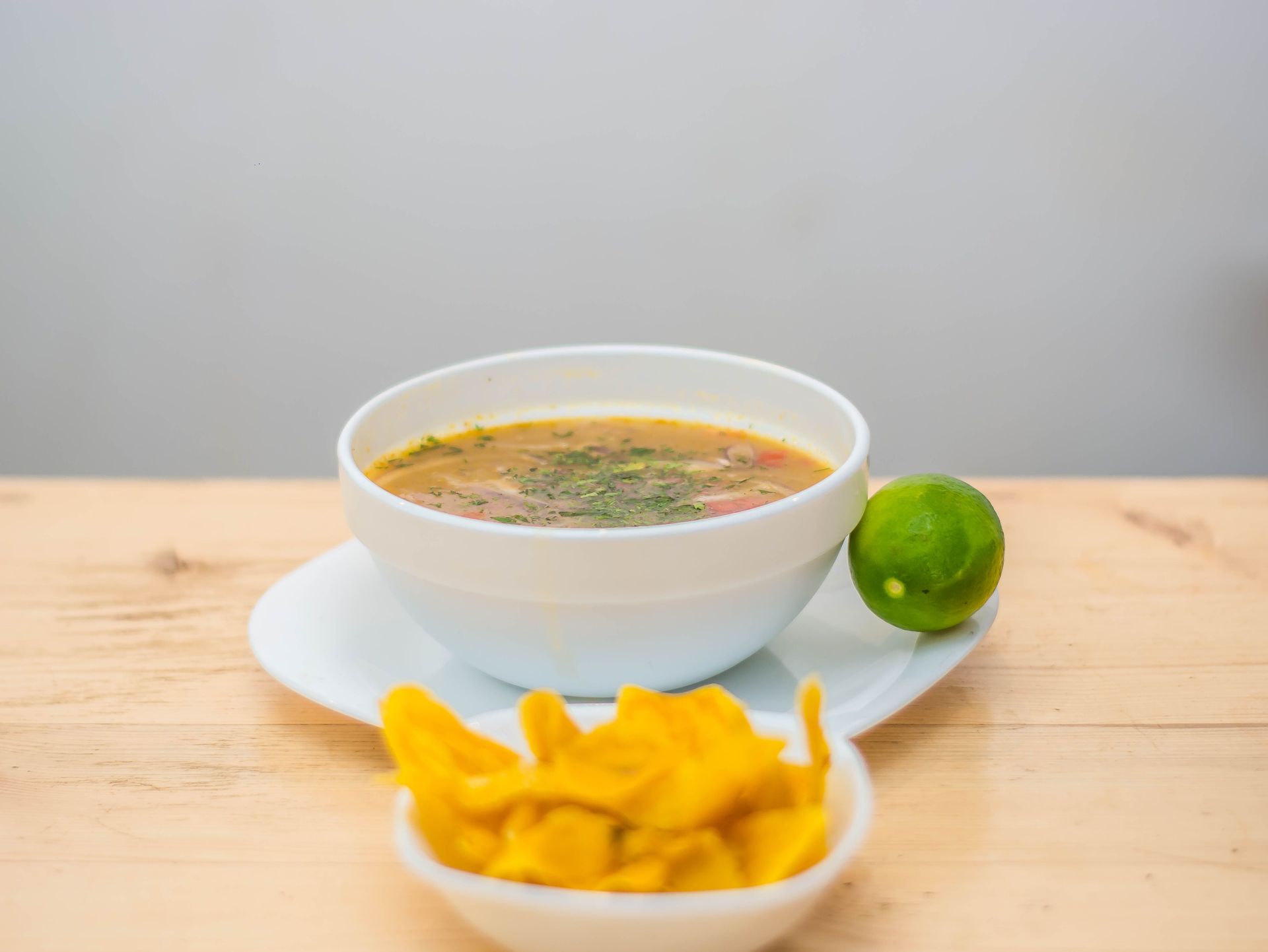
Sopa de lima — a chicken soup from the Yucatán Peninsula of Mexico, made with a distinctive bitter local lime (lima) and fried tortilla strips — is one of the most specifically regional and most specifically comforting dishes in Mexican cooking. The combination of the tart, slightly bitter lima juice, the clear chicken broth, the shredded chicken, the tomato and sweet pepper that form the soup's base, and the crispy tortilla strips that soften slightly as they sit in the hot broth produces a soup of extraordinary freshness and depth simultaneously.
The lima is the dish's defining ingredient — it is not a regular lime but a different, sweeter and slightly more floral variety. Outside the Yucatán, the closest substitute is a combination of regular lime juice and a small amount of orange juice, which approximates the sweet-tart-floral balance of the original.
What makes it work: the charred tomato and sweet pepper base (halved tomatoes and peppers charred directly over the gas flame or under a broiler until blackened, then added to the broth) that gives the soup its roasted depth; the quality of the chicken broth; and the tortilla strips fried in hot oil until genuinely crispy, not baked or air-fried (the fried version has a different flavor and a different degradation pattern in the soup).
Key technique: fry corn tortillas cut into strips in shallow oil at 180°C until golden and crispy. Add to the soup immediately before serving, not before, so they retain some texture.
Undo Kim / Pexels
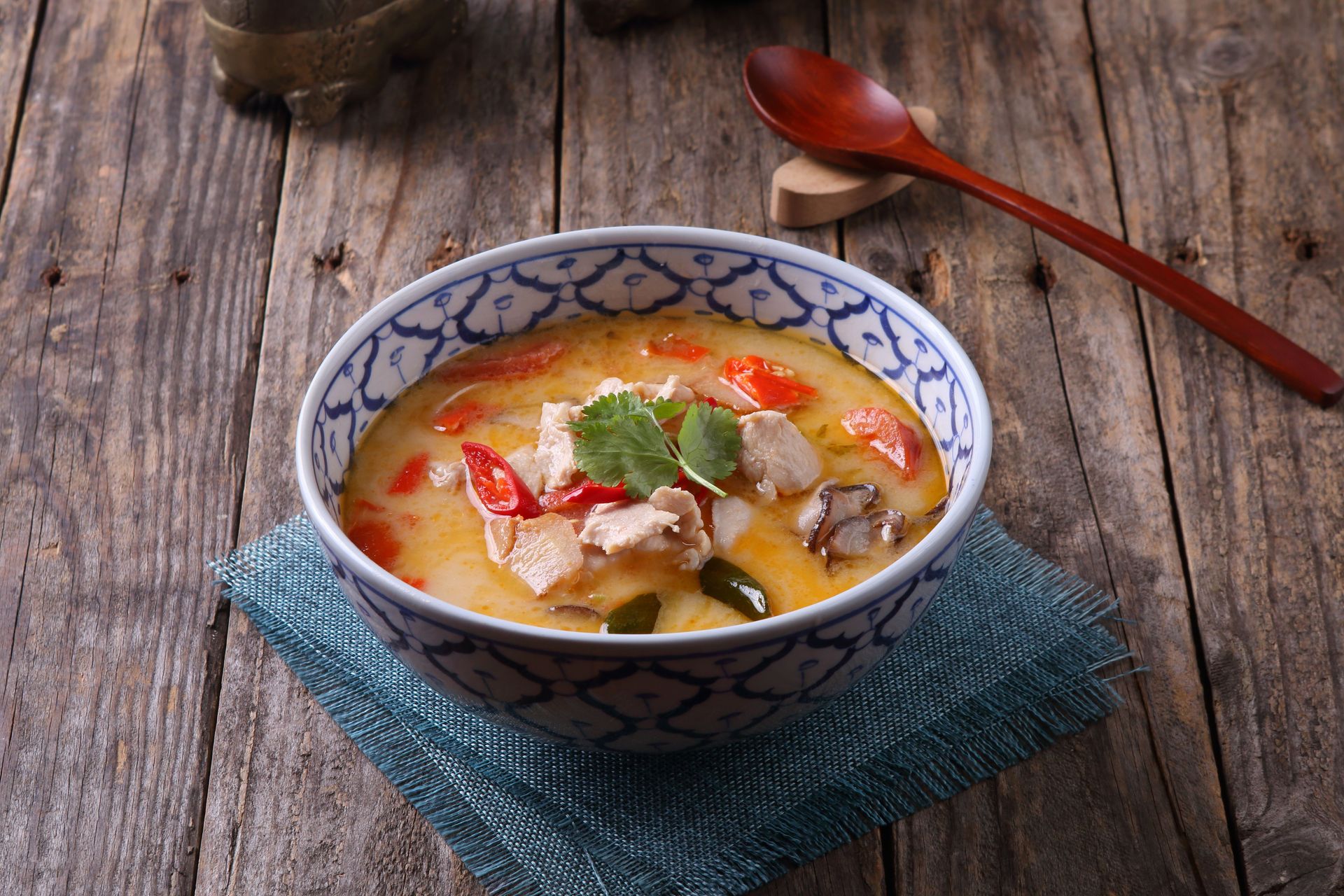
Tom kha gai — Thai coconut and galangal soup with chicken — is the Thai soup that most fully demonstrates what coconut milk does for a broth: it adds a richness, a roundness, and a sweetness that tempers the heat of the chilli and the sharpness of the lemongrass and lime, producing a soup that is simultaneously comforting and stimulating. It is simultaneously one of the most popular Thai dishes internationally and one of the most specific to Thai culinary tradition — the combination of galangal, lemongrass, kaffir lime leaves, fish sauce, and coconut milk is immediately and distinctly Thai.
The specific comfort of tom kha gai is its warmth without heaviness — the coconut milk adds richness but the soup remains light enough to be genuinely restorative, unlike cream-based soups that can feel heavy when you are ill or tired.
What makes it work: galangal, which is not the same as ginger (galangal has a citrusy, pine-like quality distinct from ginger's sharp heat — ginger can substitute but the result is different); kaffir lime leaves, which should be torn rather than cut; and lemongrass, which should be bruised with the back of a knife before being added to release its aromatic oils.
Key technique: simmer the aromatics (galangal, lemongrass, kaffir lime leaves) in the chicken stock for 10 minutes before adding the coconut milk and chicken. Do not boil the coconut milk after adding — a gentle simmer preserves its emulsification and prevents it from breaking. Finish with fish sauce, lime juice, and palm sugar to balance.
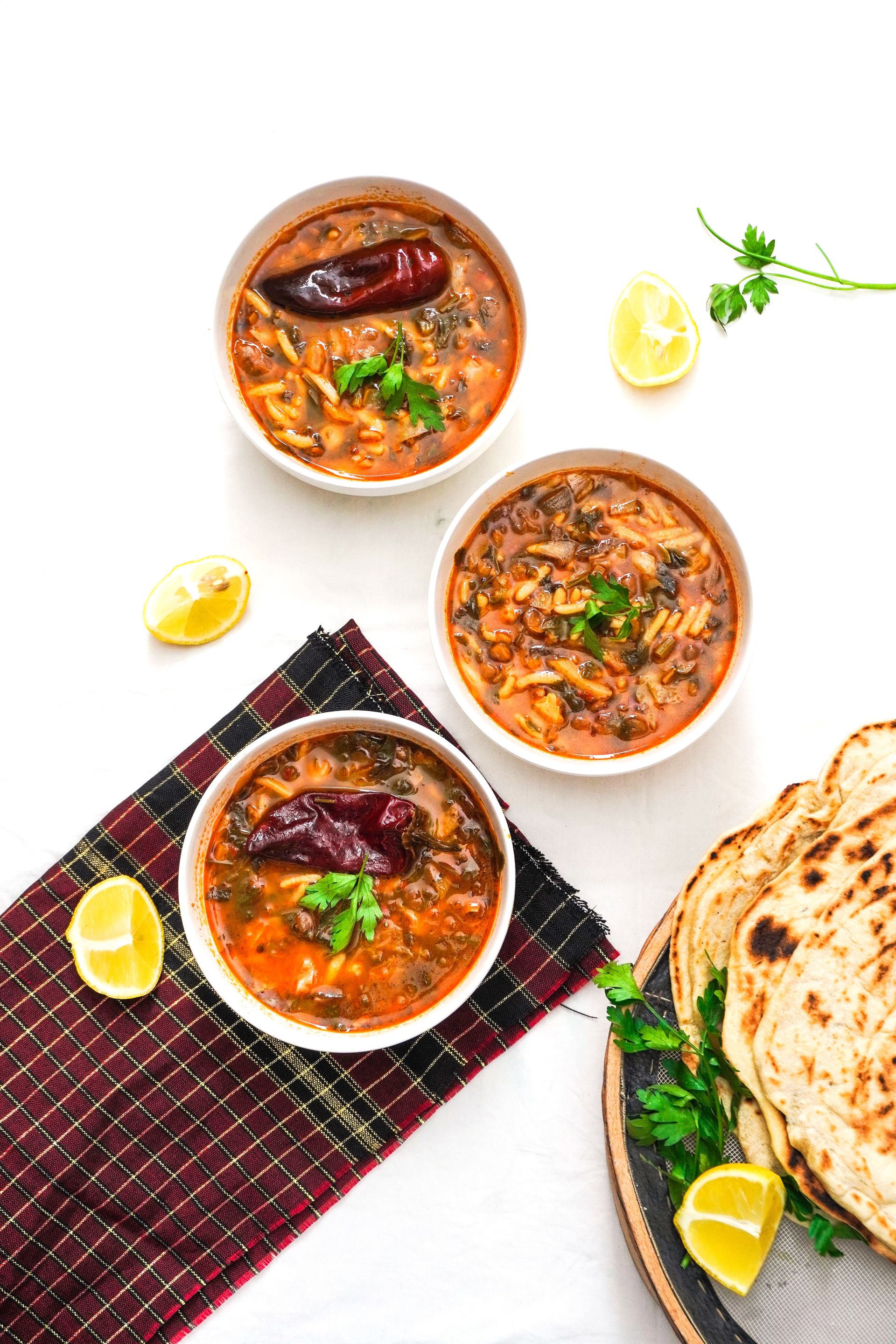
Hamzaoui Fatma / Pexels
Harira — the Moroccan spiced soup of lamb, chickpeas, lentils, tomatoes, and coriander — is the soup eaten to break the fast during Ramadan and the soup Moroccan families make on cold evenings when what is needed is something that feeds many people from simple ingredients at great depth. It is one of the most heavily spiced soups in the Arab world — the combination of turmeric, ginger, cinnamon, black pepper, and ras el hanout gives it a warmth and complexity that builds with each bowl — and one of the most filling.
The finishing element that distinguishes harira from other Moroccan soups is the tdouira — a flour-and-water slurry stirred into the soup in the last minutes of cooking to thicken it to a specific consistency between a broth and a stew. This thickening is traditional and intentional, and the soup served without it is correct but different.
What makes it work: the tomato base — fresh tomatoes peeled and puréed or canned tomatoes blended, cooked with the lamb and spices for the first part of cooking; the combination of chickpeas and lentils (both add body and protein); fresh coriander and flat-leaf parsley stirred in generously at the end; and the tdouira, which should be added gradually while stirring to avoid lumps.
Key technique: add the tdouira (two tablespoons of flour mixed with enough cold water to make a thin slurry) while the soup is simmering, pouring it in slowly while stirring constantly. Simmer for five more minutes after adding.
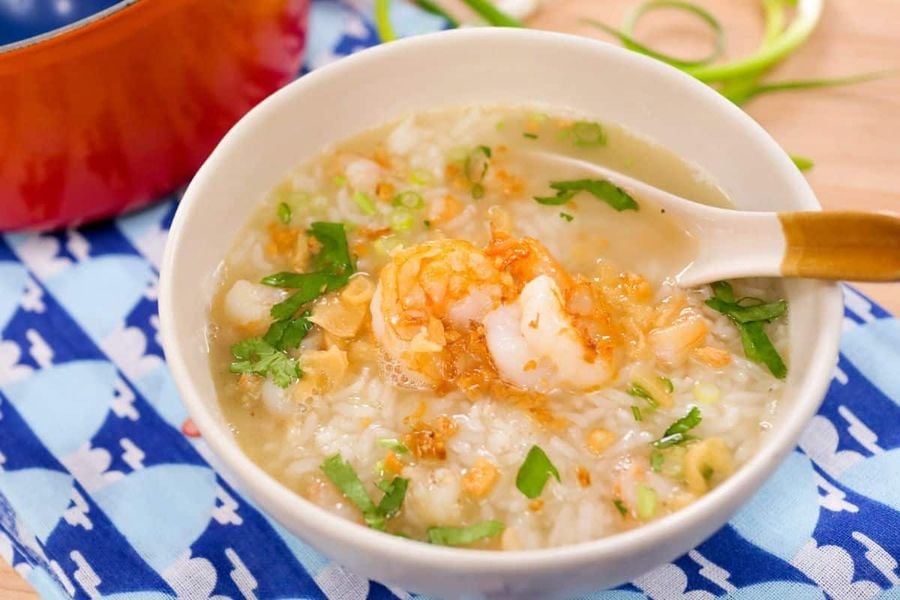
Credit: Hot Thai Kitchen
Khao tom — Thai rice porridge, a simpler cousin of Chinese congee — is the dish that Thais eat for breakfast, for illness, for late nights, and for any moment when what is needed is something light, warm, and deeply soothing. Unlike Chinese congee (jook), which is typically cooked until the rice completely breaks down into a smooth, thick porridge, khao tom uses already-cooked rice added to broth, which produces a lighter, more soupy result with distinct rice grains — a gentler, less substantial dish that is specifically what is wanted when the stomach is unsettled.
The standard accompaniment to khao tom is a table of small condiments — nam pla (fish sauce), sliced fresh chilli in vinegar, sugar, and dried chilli flakes — that the diner mixes to preference at the table, giving the mild, neutral soup whatever flavor profile is wanted.
What makes it work: the quality of the broth (any good chicken or pork stock works); the freshness of the garnishes — ginger julienned very finely, spring onions sliced, crispy garlic fried in neutral oil until pale golden and drained; and the simplicity of the seasoning, which should not overwhelm the gentleness of the dish.
Key technique: add already-cooked rice (cold, day-old rice works especially well) to simmering stock — approximately one cup of rice to three cups of stock per serving. Simmer for five minutes until the rice has absorbed some of the broth. Season lightly with fish sauce and white pepper. The dish should taste of broth, not of seasoning.
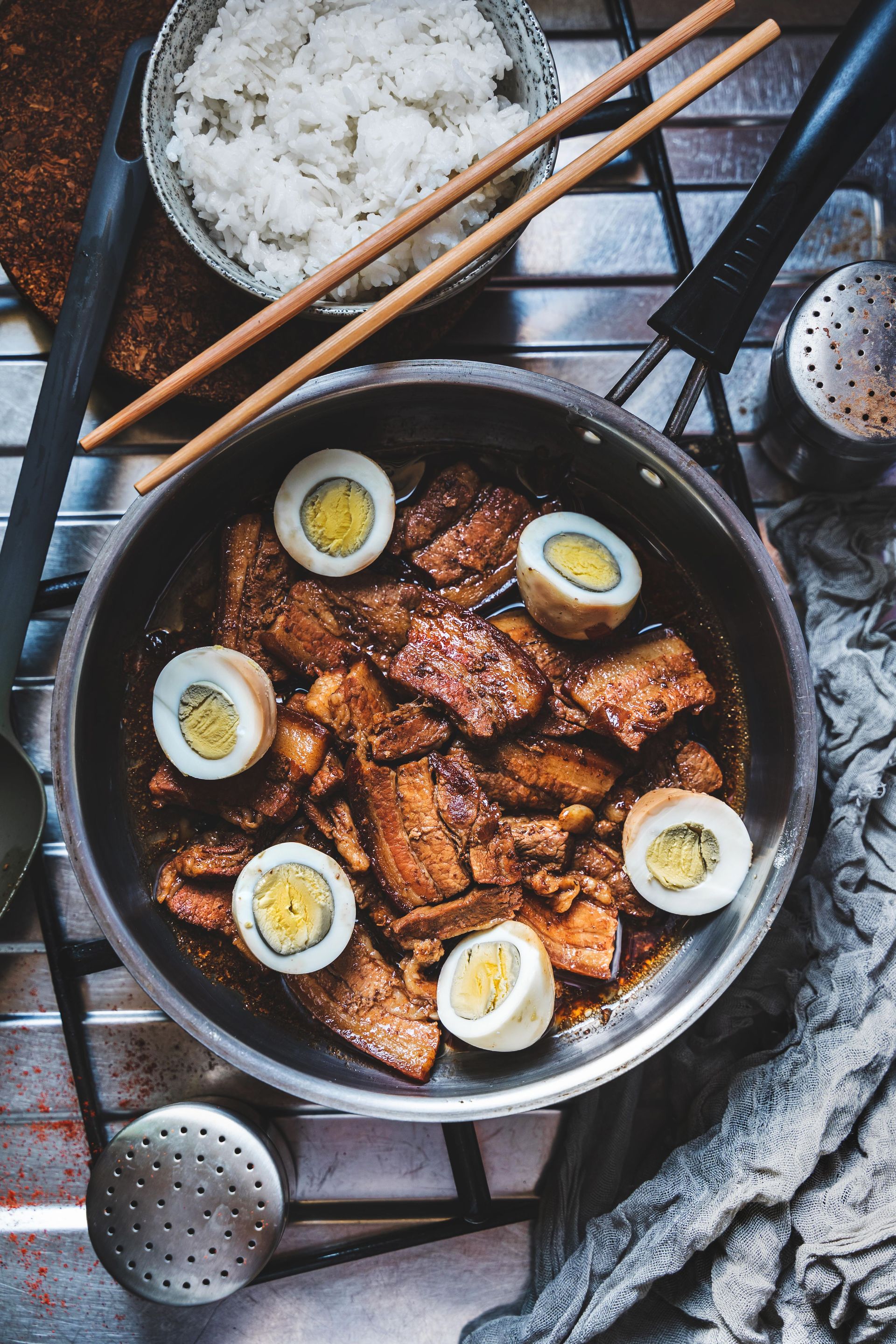
Eiliv Aceron / Pexels
Filipino adobo — chicken or pork braised in a sauce of vinegar, soy sauce, garlic, bay leaves, and black peppercorns — is arguably the national dish of the Philippines and the ultimate expression of the Filipino approach to flavoring: the combination of sour (vinegar), salty (soy sauce), aromatic (garlic and bay), and the specific mellow richness that comes from long, slow braising until the meat is falling off the bone and the sauce has reduced to a thick, glossy glaze.
The dish is one of the most practical comfort foods in any tradition: it improves significantly with reheating (the flavors deepen over 24 to 48 hours), it keeps well without refrigeration in its original pre-refrigeration function as a preserved meat dish, and it requires minimal active cooking time despite its extraordinary flavor depth.
What makes it work: the ratio of vinegar to soy sauce (typically 1:1 for a balanced adobo, more vinegar for a tangier version, more soy sauce for a richer one); the garlic, which should be generous — a minimum of a full head for a standard batch; and the bay leaves, which should be abundant and fresh if possible. The adobo should never be fully submerged during cooking — the liquid should barely cover the meat, reducing as it braises.
Key technique: do not stir during the first 10 minutes after the liquid is added (stirring at this point can toughen the meat). After 30 minutes of simmering, uncover and allow the sauce to reduce for a further 10 to 15 minutes until it thickens. At this point the meat can be browned in a separate pan in a small amount of oil for a caramelized exterior, or served directly from the braising liquid.
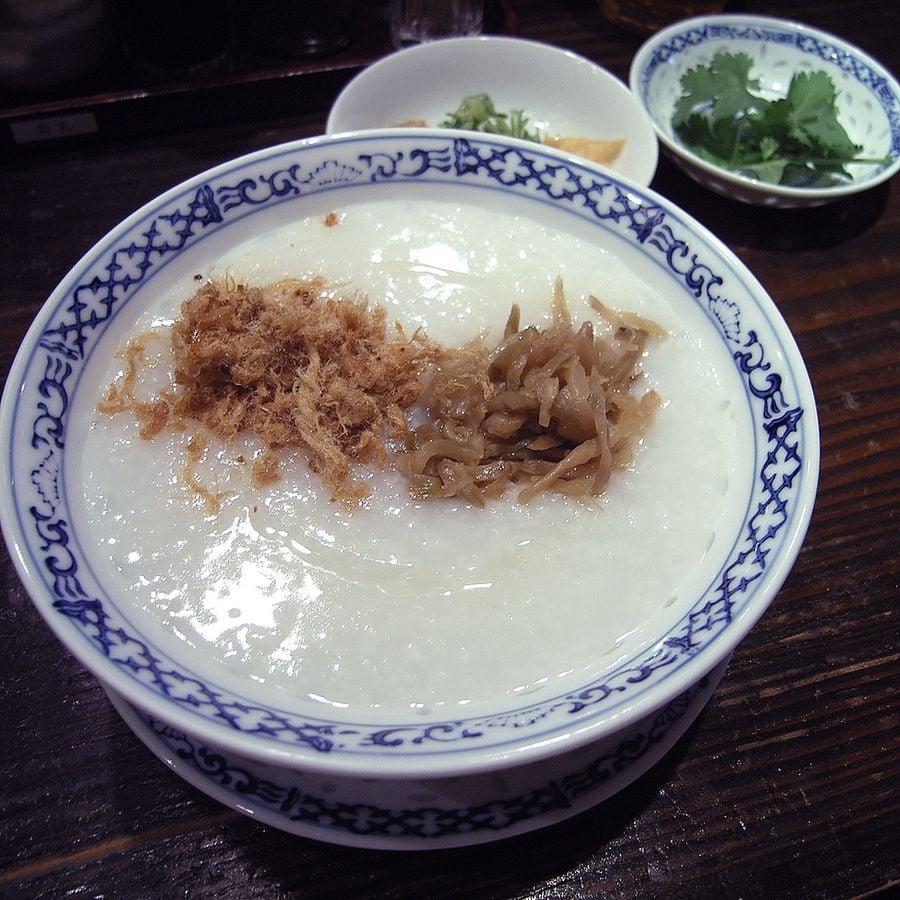
Daiju Azuma / Wikipedia (CC BY-SA 2.5)
Congee — Chinese rice porridge (also known as jook in Cantonese) — is one of the most universal comfort foods in East and Southeast Asia: eaten for breakfast, for illness, for recovery, and for any moment when something simple and restorative is needed. Unlike khao tom, congee is cooked from raw rice in a large quantity of water or stock (the ratio is typically 1:10 or 1:12 rice to liquid) for a long period until the rice completely breaks down into a smooth, creamy, thick porridge.
The beauty of congee is its neutrality — the porridge itself has a mild, slightly starchy flavor that supports any topping, from the simple (ginger, scallions, sesame oil, a fried egg) to the elaborate (preserved century egg, salted pork, youtiao fried dough sticks, crispy shallots). It is the canvas onto which Cantonese cooking projects its greatest flavors.
What makes it work: the cooking time — a minimum of 45 minutes on low heat, stirring occasionally to prevent sticking, produces a smooth porridge; two hours produces a silkier, more dissolved result. The stock used to cook the rice determines the base flavor: plain water produces a neutral porridge; chicken stock produces a savory one; a pork bone broth produces the richest version.
Key technique: add a small piece of ginger and a teaspoon of sesame oil to the cooking water. After 30 minutes, stir vigorously for one minute to help break down the rice. The congee is ready when no individual grains are visible and the porridge is uniformly smooth. Finish toppings at the bowl — not in the pot.
