
20 companies that invented the products we can't live without
From the assembly line to the smartphone, these are the companies whose inventions became so embedded in daily life that the world before them is almost impossible to picture
Julius Drost / Unsplash
Every product sitting in your kitchen, pocket, medicine cabinet, or garage began somewhere. Behind each one is a company — sometimes a scrappy startup, sometimes a century-old industrial giant — that solved a problem so thoroughly that the solution became invisible. We don't think about who made aspirin possible. We just take it. We don't think about the engineering behind blue jeans. We just wear them.
The story of modern daily life is, in large part, the story of invention. But invention is rarely a solitary act of genius happening in isolation. It is a process — messy, expensive, and often contested — that happens inside organizations: research labs, factory floors, and engineering departments where people are paid to solve problems at scale. The companies on this list didn't just invent a product. They built the infrastructure, the manufacturing processes, and the distribution networks that turned a prototype into something billions of people now use without a second thought.
Some of these companies are still household names. Apple $AAPL, Google $GOOGL, and Amazon $AMZN shape daily life in ways that would have been difficult to predict even 25 years ago. Others have faded from public prominence even as their inventions endure — Kodak, for instance, went through bankruptcy, but its core innovation, making photography accessible to ordinary people, never left us. It simply migrated to a device in your pocket.
What these 20 companies share is not just that they invented something useful. They invented something so useful that the world reorganized itself around it. The automobile didn't just replace the horse — it remade cities, suburbs, economies, and family life. The smartphone didn't just replace the telephone — it restructured how people communicate, shop, navigate, and entertain themselves.
This list covers a wide range of industries and eras, from the early industrial age to the digital one. Some entries will be obvious. Others may prompt a second look. In each case, the essential point is the same: behind every product you take for granted is a company that bet significant resources on the idea that the world needed it — and turned out to be right.
Ford Motor Company
Daily Herald Archive / Getty Images
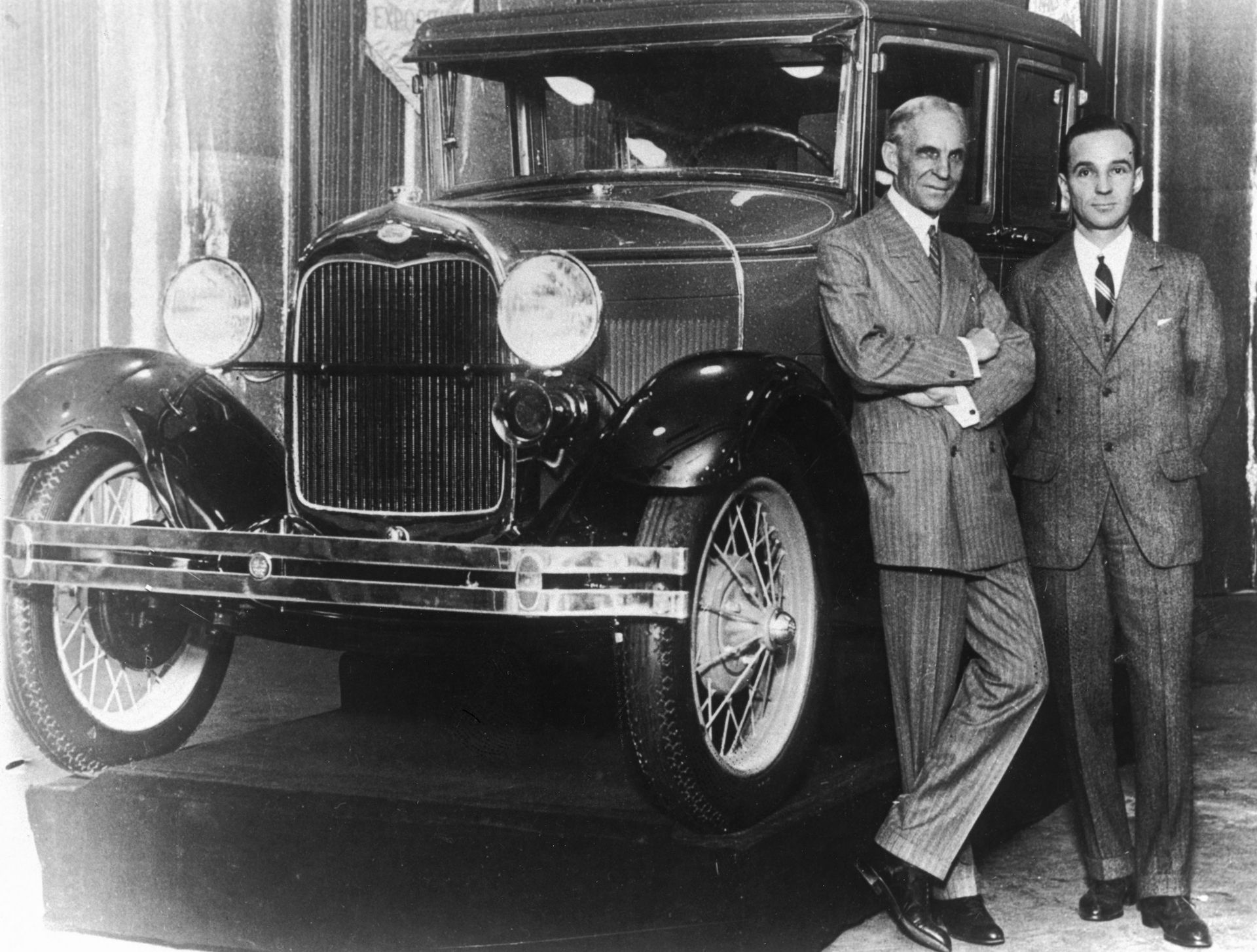
Henry Ford $F did not invent the automobile. Karl Benz built the first true gasoline-powered car in 1885, and by the turn of the 20th century, dozens of manufacturers were already producing them. What Ford invented was something arguably more consequential: the means to make a car affordable to the people who built it.
When Ford introduced the Model T in 1908, it cost $825 — a significant sum, but far below the price of most competing vehicles of the time. Then Ford did something no manufacturer had done at that scale: he applied the moving assembly line to automobile production. By 1913, the Highland Park plant in Michigan was using a continuously moving conveyor to build cars in a fraction of the time it previously required. The assembly line cut the time to build a Model T from more than 12 hours to roughly 93 minutes. By 1924, the Model T cost just $260.
The consequences extended well beyond the automobile itself. Car ownership, once the exclusive province of the wealthy, became attainable for a broad section of the American middle class. Workers at Ford's own plants were famously paid $5 a day — more than double the prevailing industrial wage at the time — partly on the theory that employees should be able to afford what they made. Whether that was coherent economic reasoning or a calculated bid for press attention has been debated ever since. What is not in dispute is the effect: turnover dropped, productivity rose, and Ford became a symbol of a new kind of industrial capitalism.
The assembly line logic Ford refined became the template for 20th-century manufacturing across virtually every consumer goods industry. Refrigerators, washing machines, radios, televisions — all of them were eventually produced using variations of the techniques Ford pioneered. The principles of standardized parts, continuous production, and cost reduction through volume defined manufacturing for a century.
Ford also changed the physical landscape of the United States more profoundly than almost any other company. The interstate highway system, the suburb, the drive-through restaurant, the shopping mall — all of these emerged from a world organized around the personal automobile. That world, for better and for worse, was largely Ford's creation.
The company itself has had a complicated history since its early triumphs. It has faced repeated financial pressures, intense competition from Japanese and European manufacturers, and the ongoing challenge of transitioning to electric vehicles. But its foundational contribution — making personal mobility a mass-market reality rather than a luxury — remains one of the most consequential industrial achievements of the modern era.
Bell Labs
H. Armstrong Roberts / ClassicStock / Getty Images
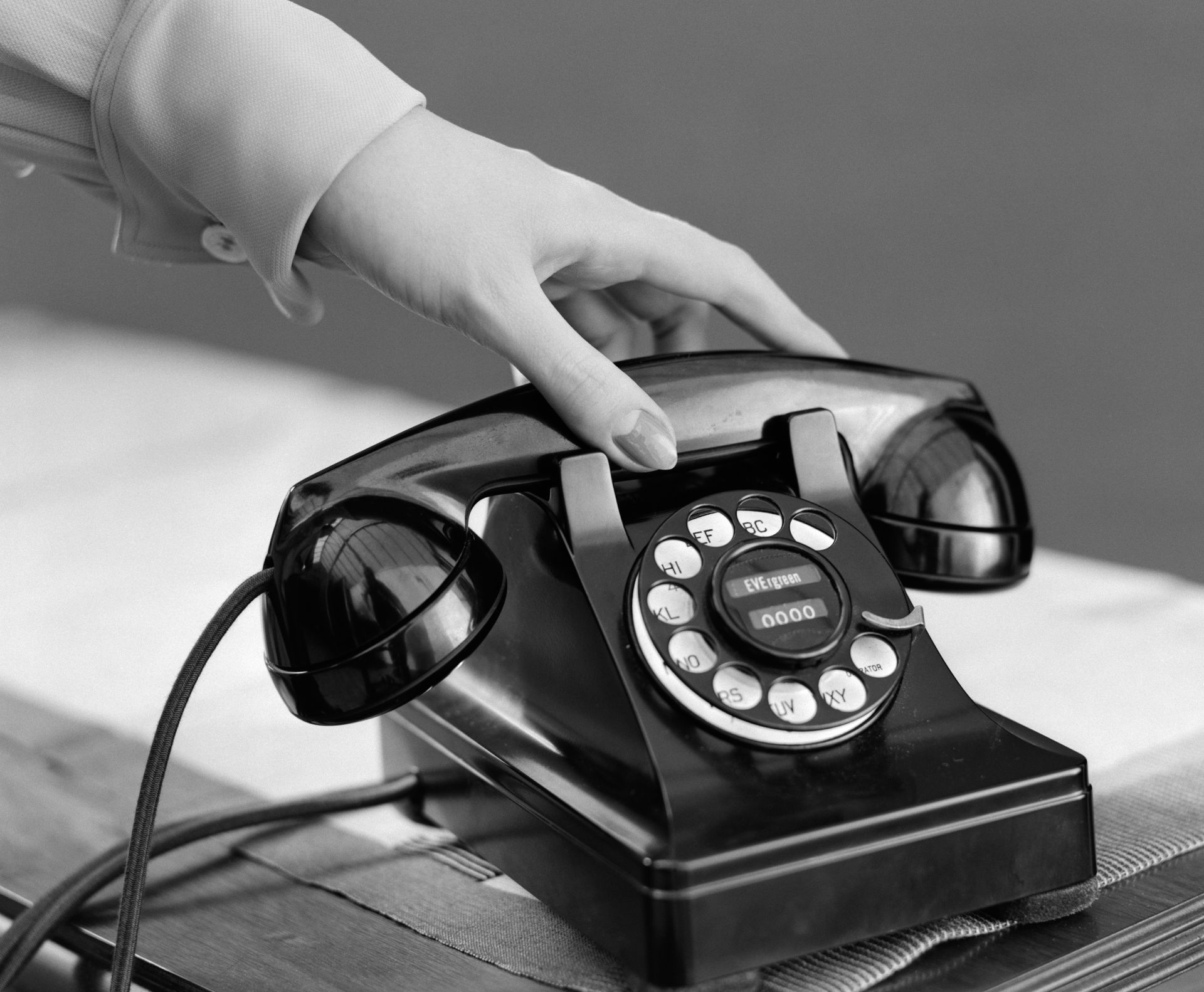
Alexander Graham Bell's patent for the telephone was granted on March 7, 1876, and within a year the Bell Telephone Company was formed to commercialize it. What followed was one of the most productive relationships between a corporation and fundamental research in history.
Bell Telephone became AT&T $T, and in 1925 AT&T formally established Bell Telephone Laboratories — Bell Labs — as a dedicated research organization. Over the next several decades, Bell Labs produced an extraordinary concentration of invention. The transistor, which forms the basis of virtually all modern electronics, was developed there in 1947 by William Shockley, John Bardeen, and Walter Brattain. The three men shared the Nobel Prize in Physics in 1956. The transistor made the miniaturization of electronics possible. Without it, the personal computer, the smartphone, and essentially the entire digital economy could not exist.
Bell Labs also developed information theory, the mathematical framework for how information is encoded and transmitted. Claude Shannon, who worked at Bell Labs, published "A Mathematical Theory of Communication" in 1948. That paper underlies the entire field of digital communications, from the internet to satellite transmission. Bell Labs invented the laser, the solar cell, the Unix operating system, and the C programming language. It was also responsible for the first communications satellite, Telstar, which launched in 1962.
The telephone itself, however, deserves separate attention. Before it existed, long-distance communication required physical travel or the telegraph — a system that required trained operators and worked only in text. The telephone allowed real-time voice communication across distance for the first time. Its social effects were vast. It changed how business was conducted, how families maintained contact, and how emergencies were managed. It also created an expectation — immediate, personal, two-way communication — that the internet and smartphone later amplified.
AT&T's long dominance of U.S. telecommunications ended with a federally mandated breakup in 1984. Bell Labs eventually became part of Nokia. But the body of invention that emerged from that research environment changed the physical and informational world more thoroughly than almost any other single institution.
Xerox
Heritage Images / Getty Images
Chester Carlson invented the process he called electrophotography — later trademarked as xerography — in 1938. He spent years trying to interest major companies in the technology, including IBM $IBM and General Electric $GE. Both passed. The Haloid Company, a small photographic paper business in Rochester, New York, eventually licensed the technology in 1947 and commercialized it. Haloid later renamed itself after the process it had bet its future on: Xerox.
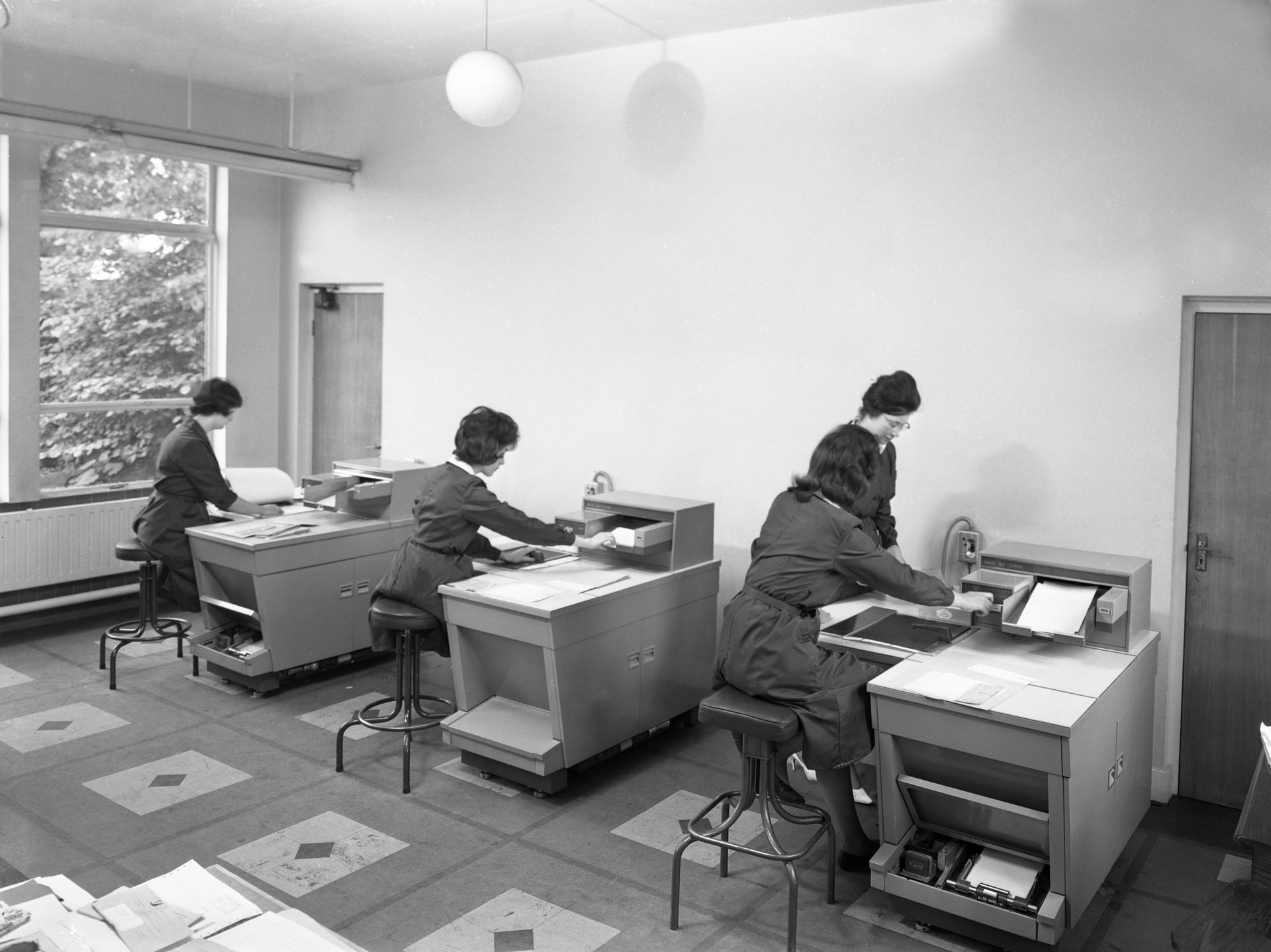
The Xerox 914, introduced in 1959, was the first automatic plain-paper photocopier. Before it existed, document reproduction required either carbon paper — inserted between sheets before typing — or wet chemical processes that were slow, expensive, and produced copies that smelled strongly of ammonia. The 914 changed document work permanently. Offices could now reproduce any document instantly, cleanly, and at scale. The machine was so successful that Xerox struggled to produce enough of them. Haloid/Xerox had been a marginal company with a few million dollars in revenue. Within a decade of the 914's launch, Xerox was generating hundreds of millions of dollars annually.
The photocopier changed not just office work but also the circulation of information more broadly. Documents that once existed in single originals could now be distributed freely. Academic papers, legal briefs, internal memos, union organizing materials, underground publications — all of them became easier to reproduce and share. Some scholars have argued the photocopier was as significant for the spread of information as the printing press, in its own more modest way.
Xerox also built one of the most consequential corporate research laboratories in the history of technology. The Xerox Palo Alto Research Center, commonly known as PARC, was founded in 1970. It developed the graphical user interface, the computer mouse, the ethernet networking protocol, and the laser printer. Steve Jobs famously visited PARC in 1979 and left having seen the future. Apple $AAPL subsequently incorporated the graphical interface into the Lisa and Macintosh computers.
Xerox was widely criticized for failing to commercialize what PARC invented. But the inventions spread anyway, largely through the people who had worked there and took the ideas elsewhere. The modern personal computing environment — the desktop metaphor, the point-and-click interface — descends directly from work done at Xerox's research center in Palo Alto.
IBM
Science & Society Picture Library / Getty Images
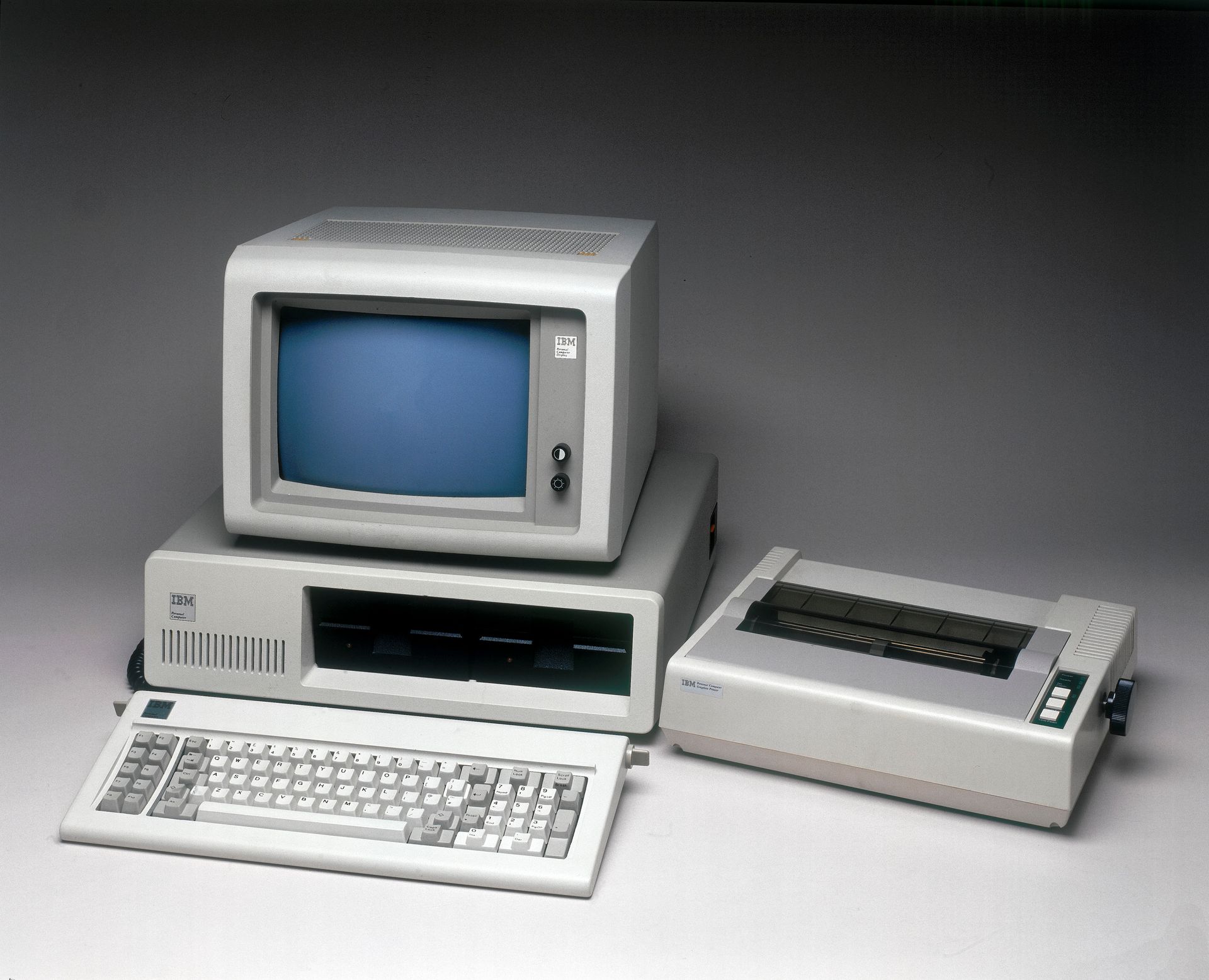
IBM $IBM did not invent the computer. The earliest electronic general-purpose computers were built in the 1940s at universities and government-funded research institutions. But IBM did something equally important: it created the template for the personal computer and, by making that template open, inadvertently standardized the entire industry.
In August 1981, IBM introduced the IBM Personal Computer — the IBM PC. It was not the first personal computer. Apple $AAPL had released the Apple II in 1977, and other machines had preceded it. But IBM's entry into the market carried a weight of institutional credibility that the industry lacked. When IBM said personal computing was legitimate, corporate America believed it. IBM PC sales exceeded the company's own projections within months.
What made the IBM PC historically decisive was a design choice. Rather than building the PC with proprietary components and a proprietary operating system — as Apple had done — IBM built it using off-the-shelf parts. The processor came from Intel $INTC. The operating system, MS-DOS, was licensed from Microsoft $MSFT. This open architecture meant that other manufacturers could legally build machines that ran the same software. IBM-compatible clones appeared quickly. Compaq introduced its first IBM-compatible portable computer in 1982. Dozens of other manufacturers followed.
The result was an explosion of compatible hardware driving down prices and expanding access. It also meant that Microsoft and Intel, rather than IBM, captured the long-term economic value of the PC revolution. IBM's willingness to use external suppliers — or its failure to anticipate how quickly clones would appear, depending on one's interpretation — made the PC a genuinely open platform in a way no previous computing paradigm had been.
By the early 1990s, "PC" had come to mean any IBM-compatible machine, regardless of manufacturer. The software ecosystem built around that standard — word processors, spreadsheets, databases, and eventually web browsers — defined white-collar work for the next 30 years. IBM itself pivoted repeatedly over the following decades, eventually selling its PC division to China's Lenovo in 2005. But the machine it introduced in 1981 defined the architecture that still underlies most of the world's computing.
Apple
MediaNews Group / Bay Area News / Getty Images
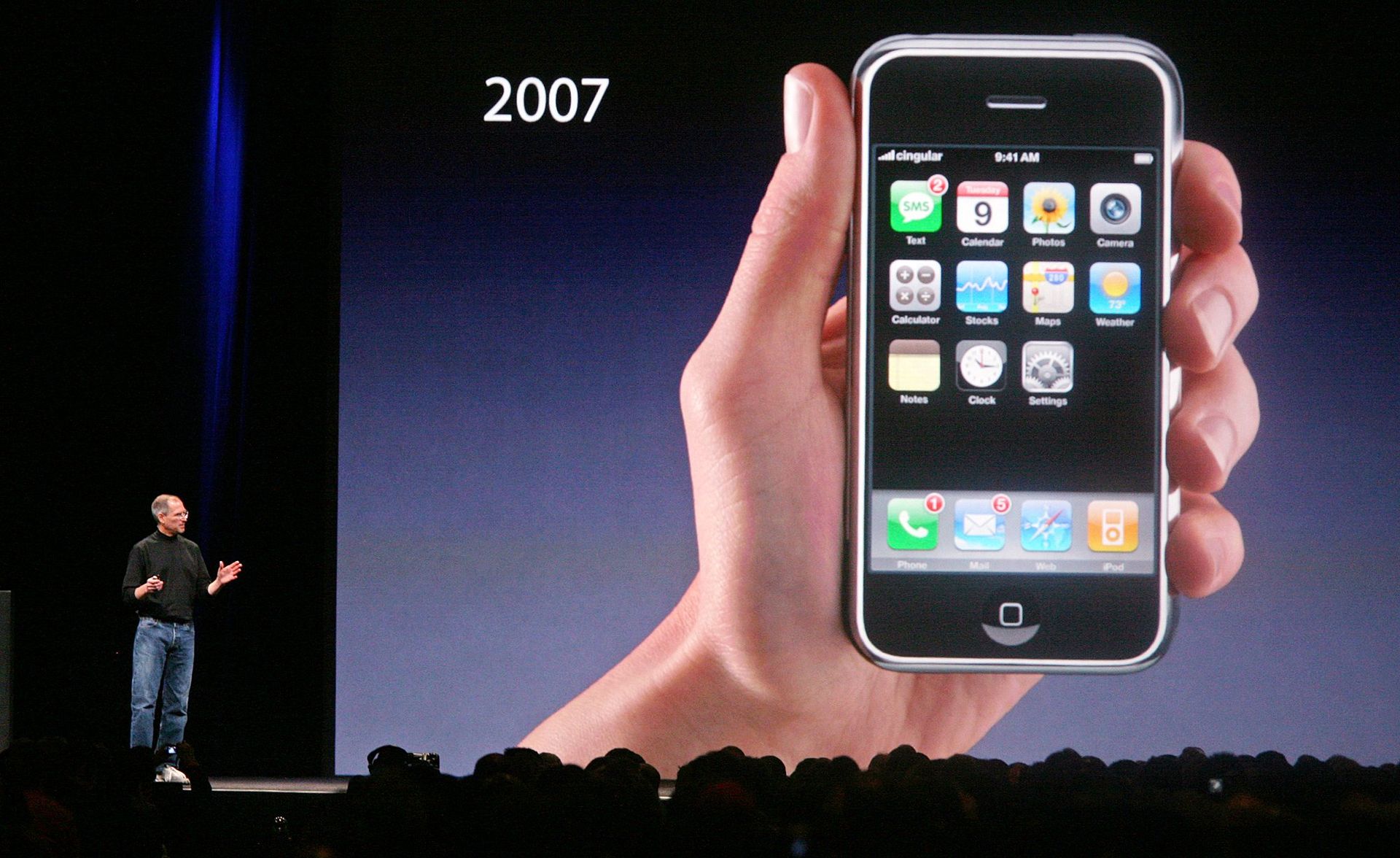
Steve Jobs announced the iPhone on January 9, 2007, describing it as three products: a widescreen iPod, a mobile phone, and a breakthrough internet communications device. The audience at the Macworld Conference laughed. He meant all three at once. The iPhone went on sale six months later.
What Apple $AAPL built was not simply a better phone. The mobile phone industry in 2007 was dominated by handsets — Nokia, Motorola, BlackBerry — that had evolved from voice communication devices. The iPhone was a pocket-sized computer that also happened to make calls. The distinction mattered. By putting a full web browser, a music player, a camera, and an accelerometer into a single touchscreen device, Apple defined a new product category and set the terms on which every competitor would have to operate.
The touchscreen interface was central to this. Previous smartphones and personal digital assistants used physical keyboards or styluses. The iPhone's capacitive multitouch screen allowed direct manipulation of on-screen elements with fingers. Apple didn't invent the touchscreen — the technology had existed for decades — but it integrated it with software and hardware in a way that felt natural to people who had never used such a device. Within days of its launch, observers were noting that ordinary people, including the elderly and young children, could use the iPhone without instruction.
The App Store, which launched in 2008, amplified the impact significantly. By creating a marketplace where third-party developers could sell software for the iPhone, Apple essentially turned the device into a platform. Apps for navigation, banking, social media, food delivery, healthcare, fitness, and thousands of other functions made the smartphone not just a communication device but an operating layer for daily life.
By 2023, there were more than 1.4 billion active iPhones in use globally. The devices that run Google $GOOGL's Android operating system — itself developed in response to the iPhone — added several billion more. The smartphone is now the primary computing device for a majority of the world's population. Apple's 2007 product launch is the point from which that transformation is usually dated.
Credit: telegraph.co.uk
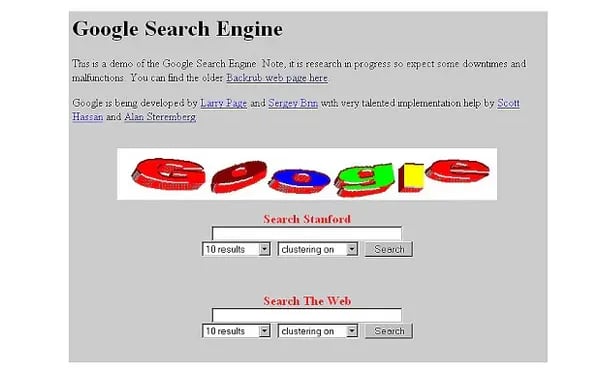
Google $GOOGL was founded in September 1998 by Larry Page and Sergey Brin, two PhD students at Stanford University who had been working on a research project about how to rank the relative importance of web pages. Their key insight was that a page's importance could be gauged in part by how many other pages linked to it, and how important those linking pages were. They called the algorithm PageRank.
Before Google, searching the web was an exercise in frustration. Earlier search engines — AltaVista, Excite, Yahoo — relied heavily on keyword matching and were easily manipulated by website owners who stuffed their pages with repeated terms. Search results were unreliable and cluttered with spam. The internet was large and growing but hard to navigate.
Google's algorithm produced markedly better results from the beginning, particularly for informational queries. Word spread quickly in academic and technology communities. Google moved from the Stanford servers to a proper data center in 1999. By the early 2000s it had become the dominant search engine globally, a position it has not relinquished.
The business model that sustained Google's growth — selling advertisements against search queries, with ads ranked by relevance and bid price rather than purely by payment — was not Google's original idea. It was adapted from a model pioneered by GoTo.com (later Overture), which Google licensed and then developed into AdWords. But Google's execution of search advertising, combined with its superior search quality, produced a business that could fund the infrastructure required to index the entire web.
The effects of reliable internet search on how humans acquire information are difficult to overstate. The ability to find the answer to almost any question within seconds changed how people learn, how they make decisions, and what they bother to memorize. Reference books, encyclopedias, and library visits declined. Questions that would once have required expert consultation — medical, legal, financial — could now be researched independently, for better and for worse.
Google subsequently expanded into web advertising broadly, video (YouTube, acquired in 2006), maps, email, mobile operating systems (Android), cloud computing, and dozens of other areas. But the search engine remains the foundation. It processes an estimated 8.5 billion queries per day.
Amazon
David Robbins / Getty Images
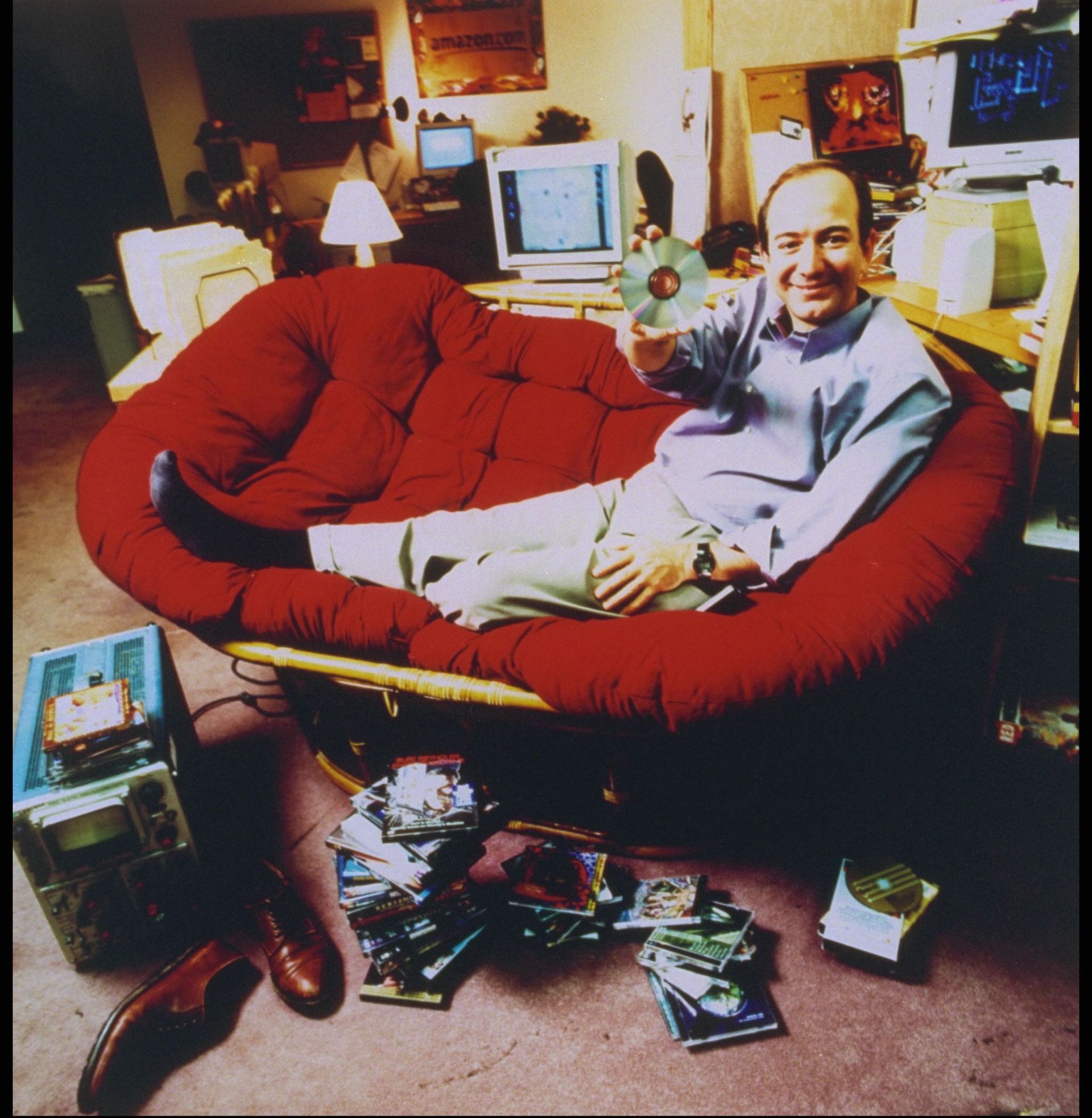
Jeff Bezos founded Amazon $AMZN in 1994, operating it initially out of a garage in Bellevue, Washington state. He chose books as the first product category not because he had a particular affinity for them but because books were a commodity with a clear and standardized title database, and there were more titles than any physical store could stock. The internet could offer selection that no brick-and-mortar retailer could match.
Amazon went live in July 1995. Within a month, it had sold books to customers in all 50 U.S. states and 45 countries. Within two years, it had gone public and was expanding aggressively. Bezos's stated ambition from early on was to build "an everything store," and Amazon moved progressively beyond books into music, electronics, toys, clothing, and eventually virtually every category of consumer goods.
The logistics infrastructure Amazon built to support this was as significant as the storefront itself. Fulfillment centers, last-mile delivery networks, and eventually the company's own fleet of aircraft transformed what consumers expected from shipping. Amazon Prime, introduced in 2005, offered free two-day shipping for an annual fee, shifting the baseline expectation for delivery speed across the industry. Competitors who had previously considered two-week shipping acceptable were forced to respond.
In 2006, Amazon made a decision that ultimately proved to be as important as anything in retail: it launched Amazon Web Services (AWS). AWS offered computing infrastructure — storage, processing power, databases — on a rental basis to businesses of any size. Companies could now run their technology operations without building and maintaining physical servers. Startups, in particular, could scale quickly without the capital expenditure that infrastructure once required.
AWS became the backbone of a significant portion of the internet. Netflix $NFLX, Airbnb $ABNB, Pinterest $PINS, LinkedIn, and thousands of other services run on AWS infrastructure. By the early 2020s, AWS was generating more operating profit than Amazon's retail business, despite being far younger. The cloud computing model it popularized — where computing is a utility purchased as needed rather than an asset owned — fundamentally changed how technology is built and deployed.
Sony
Credit: walkman-archive.com
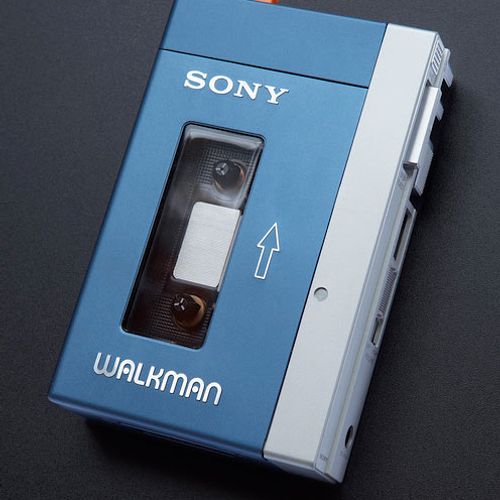
The Sony $SONY Walkman went on sale in Japan on July 1, 1979. It cost 33,000 yen — roughly equivalent to $150 at the time. Engineers at the company had told its co-founder Masaru Ibuka that a cassette player without a recording function would not sell. Ibuka, who wanted a portable device to listen to music during long flights, asked them to build one anyway. His colleague Akio Morita agreed the product had potential. They were right, though sales exceeded even their projections.
Before the Walkman, music was a communal or domestic experience. You listened to records at home, or on the radio in the car, or at concerts and clubs. Music did not travel with you as a private experience. The Walkman changed that. For the first time, an individual could choose their soundtrack and carry it anywhere — on the subway, while jogging, on a commute. The device came with two headphone jacks so two people could share the experience, though most people used it alone.
The cultural effects were immediate and documented. Sociologists noted that Walkman users were physically present in public spaces but acoustically insulated from them. The device created a new mode of urban experience: moving through a shared environment while inhabiting a private sonic one. It also changed how people exercised. Running with headphones became common, and the fitness industry took note.
Sony sold approximately 400 million Walkman devices in various formats between 1979 and the mid-2000s. The brand name became generic — many people called any portable cassette player a "Walkman" regardless of who made it. The format evolved from cassette to CD (the Discman, introduced in 1984) to eventually digital players, and the concept migrated further into the iPod and then the smartphone.
The Walkman also demonstrated something important about how products succeed. Technical specifications were not the reason people fell in love with it. Tape recorders with playback functions already existed. What Sony created was a form factor and a use case — personal, portable, private music listening — that fit into daily life in a new way. That insight, that a product's value comes as much from how it integrates into behavior as from what it technically does, informed consumer electronics design for decades afterward.
3M
Star Tribune / Getty Images
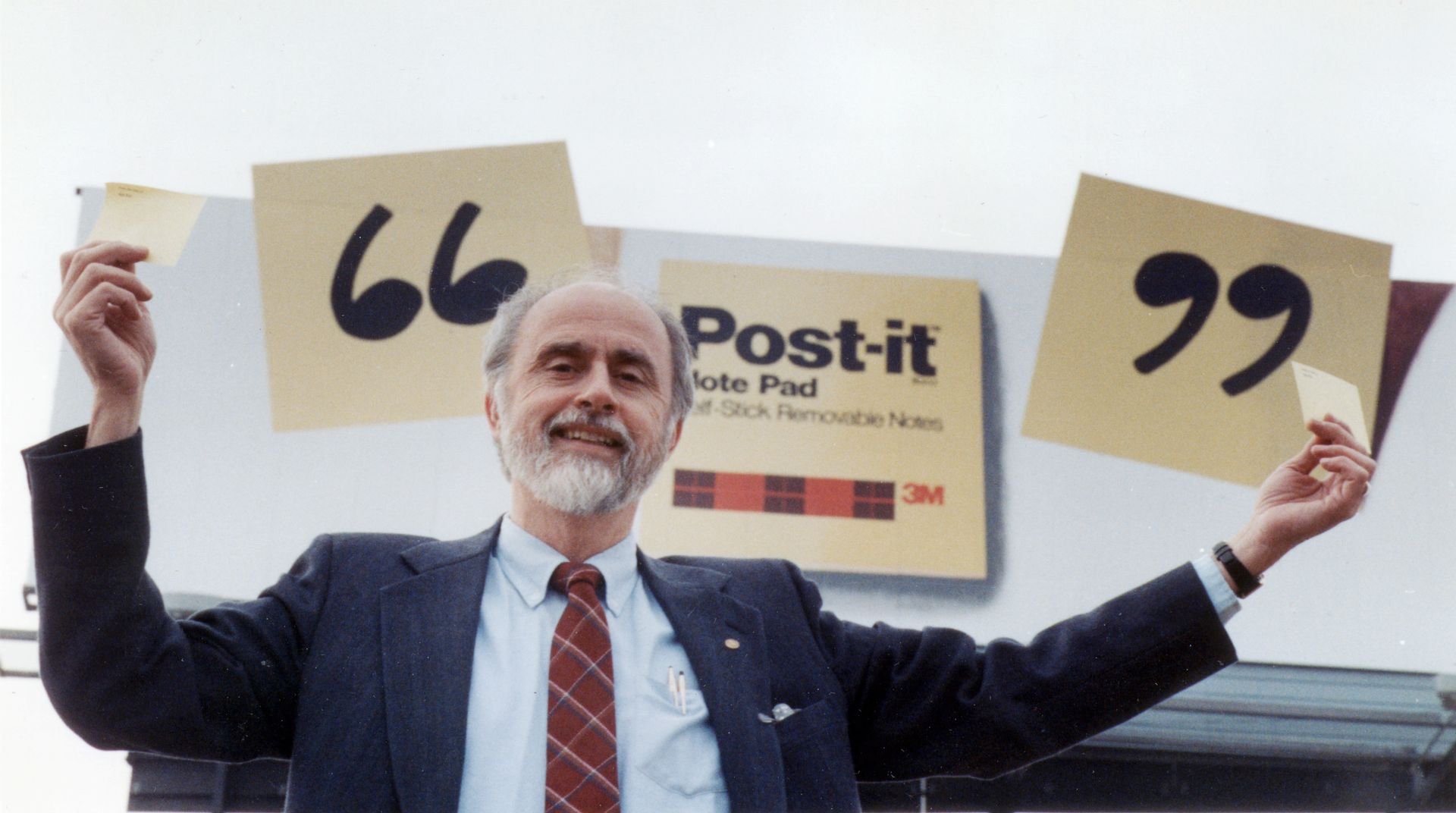
In 1968, Spencer Silver, a chemist at 3M $MMM, was trying to develop a stronger adhesive. He synthesized something he had not intended: an adhesive that bonded lightly and repeatedly but left no residue when removed. Silver spent years trying to convince colleagues that his accidental creation had commercial potential. He could not identify an application for it. Nobody at 3M could.
Art Fry was a 3M engineer who sang in a church choir. He was frustrated by the paper bookmarks that kept falling out of his hymnal. In 1974, he remembered Silver's adhesive from a seminar and applied it to small pieces of paper. The bookmarks stayed where he put them. They came off cleanly when he removed them. He showed the prototype to colleagues. 3M began developing the product in earnest.
Post-it Notes launched commercially in 1980. 3M had tested them first in several U.S. cities in 1977 under the name Press 'n Peel, and sales were disappointing. A second test, in Boise, Idaho in 1978, involved giving products away free so people could try them. Once consumers experienced what the notes could do, they wanted more. The Boise test generated high reorder rates, and 3M proceeded with a national launch.
The product became one of the best-selling office products in the world. Post-it Notes filled a need that users had not previously identified as a need — temporary annotation and reminder-leaving — because no product had existed to meet it. Once the product existed, the need seemed obvious.
But Post-it Notes are only a part of 3M's story. The company, founded in 1902 in Two Harbors, Minnesota, originally as Minnesota Mining and Manufacturing Company, built its entire culture around the management of accidental discovery. The Post-it story is often cited as a model for innovation inside large corporations: Silver's adhesive sat dormant for years before finding its application. 3M institutionalized tolerance for failure and cross-pollination of ideas in ways that repeatedly produced commercially valuable accidents.
Scotch tape, which 3M introduced in 1930, is another product most households use without thinking about its origins. The masking tape that preceded it (1925) was developed to help auto painters apply clean lines between colors. Both products emerged from 3M's early focus on abrasives and surface preparation, and both became ubiquitous in households and offices globally.
Bayer
Science & Society Picture Library / Getty Images
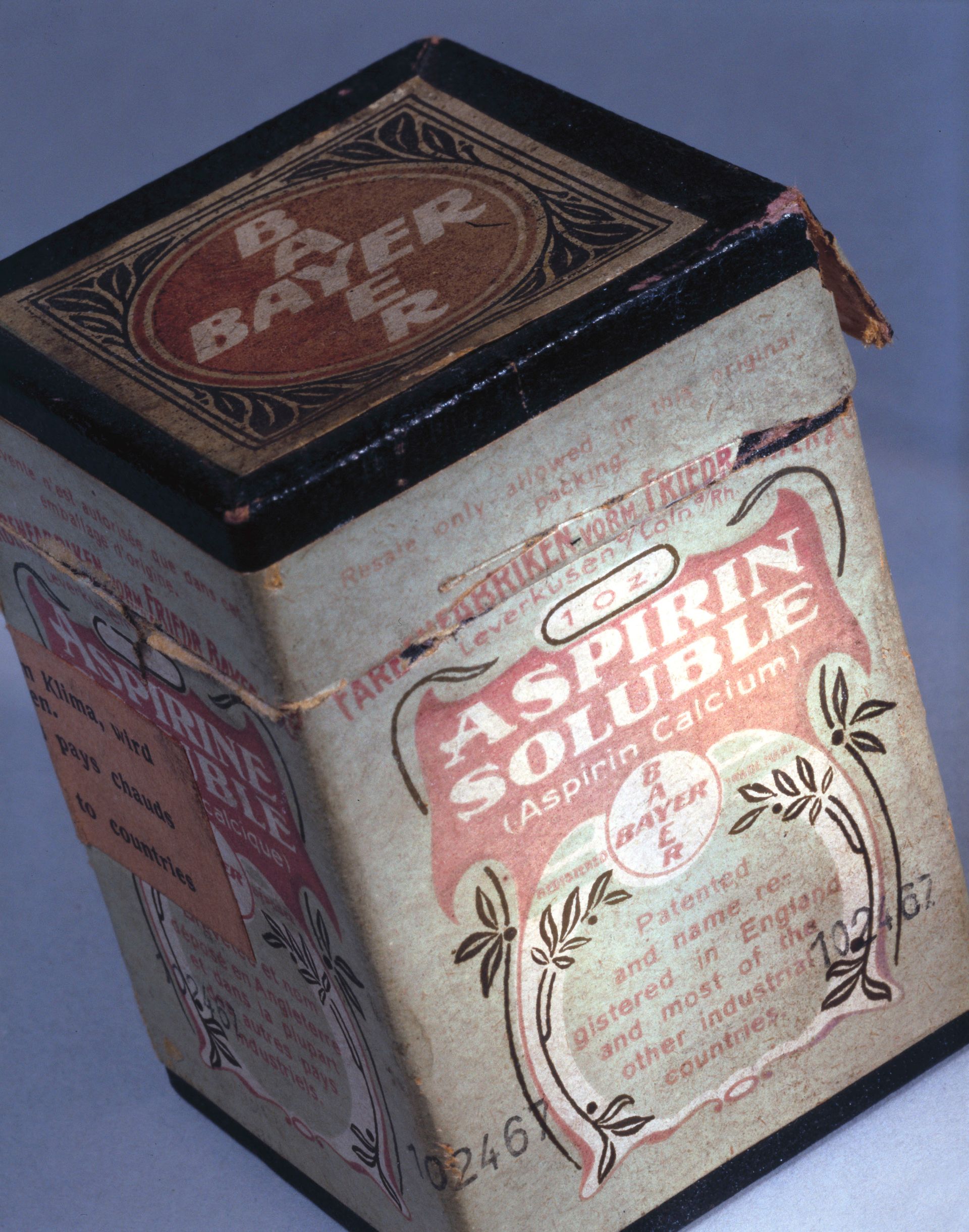
On August 10, 1897, Felix Hoffmann, a chemist at Bayer in Elberfeld, Germany, synthesized acetylsalicylic acid in a stable and pure form. Willow bark and related plants had been used for pain relief and fever reduction for centuries — salicylates occur naturally in willow bark — but the pure compound had previously been difficult to isolate without irritating side effects. Hoffmann's synthesis produced a form that was both effective and tolerable.
Bayer named the compound Aspirin, trademarked the name in 1899, and began marketing it as a pharmaceutical product. It was sold initially as a powder, and in tablet form from 1900. Aspirin became one of the most widely used drugs in human history. By the early 21st century, an estimated 100 billion aspirin tablets were being consumed globally each year.
The drug works as an analgesic, reducing the experience of pain. It is also antipyretic — it reduces fever. And it has anti-inflammatory properties. For most of the 20th century, it was the standard over-the-counter treatment for headaches, muscle pain, and fever. Its relative simplicity — cheap to produce, stable, and effective for a wide range of common complaints — made it accessible in essentially every country.
In the 1970s, pharmacologist John Vane discovered that aspirin worked by inhibiting the production of prostaglandins, compounds involved in pain, fever, and inflammation. That discovery, which won Vane a share of the 1982 Nobel Prize in Physiology or Medicine, also suggested a new application. By inhibiting prostaglandins, aspirin also reduces the aggregation of platelets — the blood cells involved in clotting. Low-dose aspirin therapy became a standard preventive treatment for heart attacks and strokes in patients at risk, adding a cardiovascular use to aspirin's established analgesic role.
Bayer lost the Aspirin trademark in several countries after World War I, when German patents were seized by Allied governments. In the U.S., Canada, and parts of Europe, "aspirin" became a generic term that any manufacturer could use. Bayer retained the trademark in other markets. The loss of trademark exclusivity meant that the drug became cheaper and more widely available — in some ways accelerating its global adoption even as it damaged Bayer's commercial position.
Kodak
Science & Society Picture Library / Getty Images
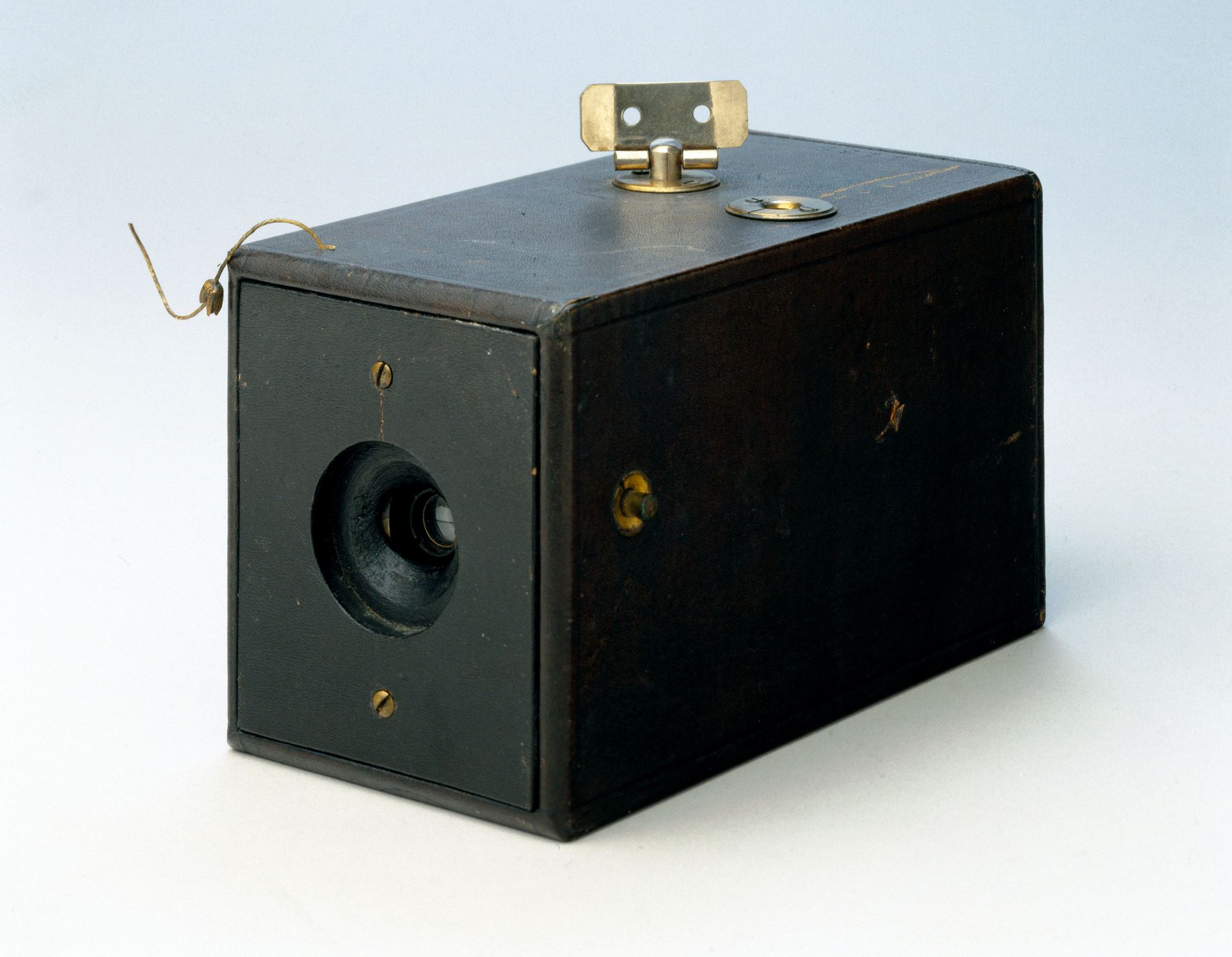
In 1888, a company in Rochester, New York began selling a camera with a slogan that was both a description and a promise: "You press the button, we do the rest." The Kodak camera, priced at $25, came loaded with a roll of film sufficient for 100 exposures. When the roll was finished, the customer sent the entire camera back to the company, which developed the photographs and returned the camera reloaded, ready for the next 100 shots.
George Eastman, who founded the company that would become Eastman Kodak, had spent years developing flexible roll film as an alternative to the heavy glass plates that photography had previously required. Flexible film made cameras lighter and simpler. The Kodak camera and the service model behind it made photography accessible to people with no technical knowledge of darkroom chemistry. Before Eastman's innovations, photography required trained practitioners using complex equipment. After them, it was something a child could do.
The social consequences of accessible photography were profound. People began documenting their own lives in ways that had previously been impossible. Weddings, children's birthdays, vacations, and family gatherings became photographically recorded events. The family photograph album became a standard domestic artifact. Visual memory — the ability to see what your parents looked like at your age, what your town looked like before the buildings changed — became a normal part of human life rather than a privilege of the wealthy.
Kodak dominated consumer photography for most of the 20th century. Kodachrome film, introduced in 1935, produced color images of such quality and durability that photographs shot on it decades ago remain vivid today. Kodak film and cameras were used in the Apollo missions. The company was consistently ranked among the world's most valuable brands through the 1970s and 1980s.
The digital camera, which recorded images electronically rather than on chemical film, made film obsolete. Kodak engineers had, with some irony, built an early digital camera prototype in 1975, but the company's financial dependence on film revenue made it reluctant to accelerate the transition. Kodak declared bankruptcy in 2012. But the visual culture it had spent a century building — the expectation that ordinary moments will be photographed and preserved — has, if anything, intensified in the age of the smartphone camera.
Levi Strauss & Co.
Credit: Levi's
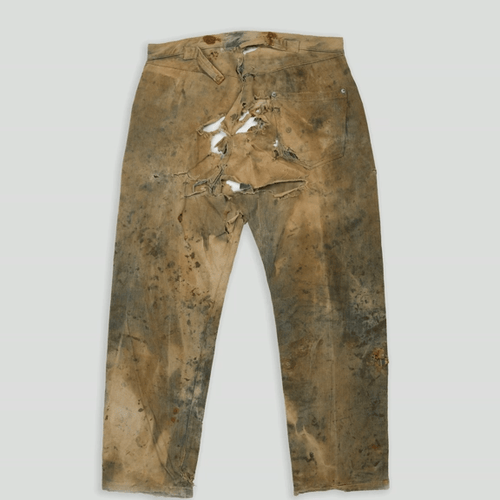
On May 20, 1873, Levi Strauss and Jacob Davis received U.S. Patent No. 139,121 for an improvement to work pants: copper rivets at the stress points. Davis, a tailor in Reno, Nevada, had been reinforcing the pockets and seams of denim pants for laborers who complained that ordinary stitching gave way under the physical demands of mining, farming, and heavy work. He asked Strauss, his fabric supplier, to co-file the patent. The product they created together became blue jeans.
The riveted denim work pant was designed entirely for utility. Denim, a sturdy twill fabric woven from cotton, had been used for workwear before the patent. The innovation was the metallic reinforcement that kept the pants from tearing at the points of greatest stress. Gold rush-era miners in California were the original customers. The pants were practical, cheap enough to be replaced when worn out, and durable enough to last through months of hard use.
For roughly the first 70 years of their existence, jeans were working clothes. They were worn by laborers, ranchers, and farmers. They were not considered appropriate for town, let alone for any occasion that required formality. The shift began in the 1950s, when the denim jeans worn by Marlon Brando in "The Wild One" and James Dean in "Rebel Without a Cause" made them a symbol of youth and nonconformity. Teenagers adopted them. Schools in the U.S. began banning them on the grounds that they were associated with delinquency. The ban was, of course, counterproductive.
By the 1960s and 1970s, jeans had crossed from youth counterculture into mainstream fashion. Designers began producing premium denim, and jeans became acceptable in contexts far removed from physical labor. Today, the blue jean is probably the most universally worn garment in the world. It is produced in every country with a textile industry. It is worn by people of every age, class, and culture. The riveted work pant that Levi Strauss and Jacob Davis patented for California miners has become the closest thing the global clothing industry has to a default garment.
Gillette
-300x300.webp)
Credit: The Razor Company
King Camp Gillette was a traveling salesman who spent years trying to invent a product that would be used once and thrown away, generating repeat purchases indefinitely. In 1895, according to his own account, he had the idea while shaving with a straight razor that had gone blunt. He envisioned a razor with a cheap, replaceable blade that the user would discard when it dulled rather than stopping to sharpen it.
It took Gillette several years and a partnership with MIT-trained engineer William Nickerson to actually produce a workable blade. The steel available at the time was difficult to harden and edge to the required thinness. By 1903, the problem was solved. Gillette Safety Razor Company sold 51 razors and 168 blades in its first year of business, 1903. In 1904, after obtaining a patent, it sold 90,000 razors and 12 million blades.
The safety razor — so named because the blade's exposure was limited by a guard that reduced the risk of deep cuts — replaced the straight razor that had dominated men's grooming for centuries. The straight razor required regular honing on a leather strop, periodic professional sharpening, and a practiced technique to use safely. The Gillette safety razor required none of these. Any man could shave himself every morning with minimal skill and at modest cost. The daily shave, previously an occasional or professional event for many men, became routine.
The business model Gillette pioneered — selling a durable handle cheaply and making profit on replaceable cartridges — became a template across dozens of industries. Printers sold at low margins with expensive ink cartridges. Gaming consoles sold at cost with high-margin software. Razors sold cheaply with recurring blade purchases. The model is sometimes called "the Gillette model" in business school curricula, reflecting how thoroughly his insight about repeat-purchase consumables shaped commercial thinking.
The company Gillette founded was acquired by Procter & Gamble $PG in 2005 for $57 billion, at the time one of the largest consumer products acquisitions in history. The brand and its blades remain among the world's top-selling personal care products, though the past decade has brought significant competition from subscription-based rivals like Dollar Shave Club and Harry's, which updated the replacement-blade model for the e-commerce era.
Nintendo
SOPA Images / Getty Images
The video game industry collapsed in 1983. The North American market, which had generated roughly $3 billion in revenue in 1982, fell to approximately $100 million by 1985 — a decline driven by a flood of low-quality game cartridges that eroded consumer confidence and a general sense that home gaming was a passing fad. Retailers pulled video game products from shelves. Major publishers exited the business.
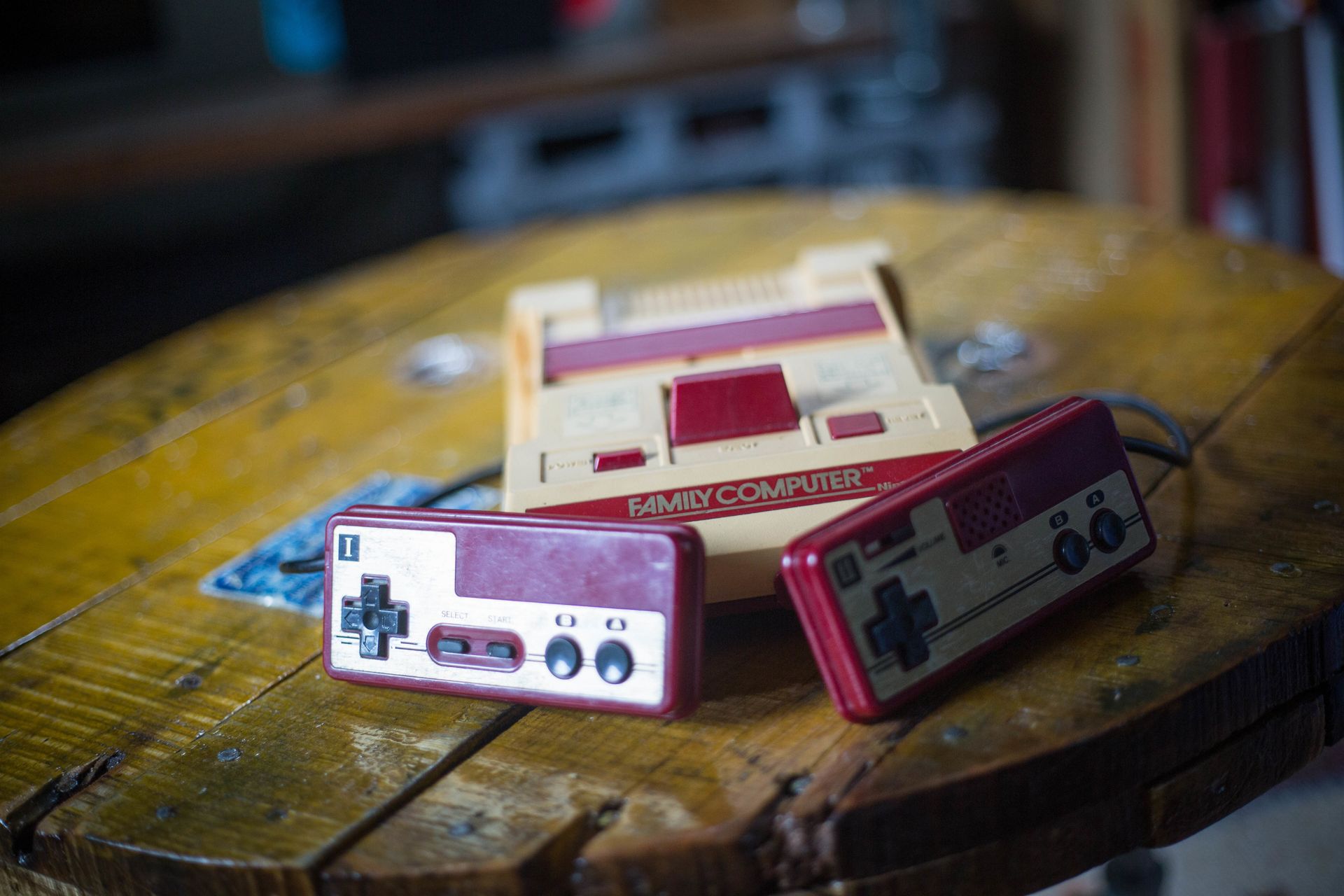
Nintendo, a Japanese company that had been making playing cards since 1889 and had more recently produced arcade games including Donkey Kong, decided to enter the U.S. home console market anyway. It had already launched the Famicom — Family Computer — in Japan in 1983, where it had sold extraordinarily well. American retailers were skeptical. Nintendo responded by redesigning the product for the U.S. market, renaming it the Nintendo Entertainment System (NES), and packaging it with a toy robot to position it as a toy rather than a game console. It launched in test markets in New York in October 1985 and went national in 1986.
The NES revived the North American video game industry. The key was Nintendo's approach to quality control. Third-party game developers who wanted to publish on the NES were required to pay Nintendo a licensing fee and submit their games for approval. Nintendo placed a physical chip in each licensed cartridge that the console's hardware could verify. Unlicensed cartridges wouldn't play. The lockout system was crude by later standards, but it forced a quality threshold that the market had previously lacked. Consumer confidence recovered.
Super Mario Bros., which shipped with the NES in the U.S., became the defining product that demonstrated what home video games could be — a sustained, designed experience with progression and reward, not simply a succession of increasingly fast obstacles. The game sold tens of millions of copies. Its characters became globally recognized.
Nintendo went on to introduce the Game Boy (1989), the Super Nintendo (1990), the Nintendo 64 (1996), and eventually the Wii (2006) and Switch (2017). Each generation expanded the audience for gaming. Today, video games are a global entertainment industry generating more annual revenue than film and music combined.
Procter & Gamble
Credit: firstversions.com
Victor Mills was a chemical engineer at Procter & Gamble $PG who spent his career improving consumer products — he had previously worked on improving Ivory soap, Duncan Hines cake mix, and Pringles potato chips. In the late 1950s, he was changing his newborn granddaughter's cloth diaper and found the process unpleasant enough to wonder whether it could be eliminated. He formed a research team at P&G to develop a disposable alternative.
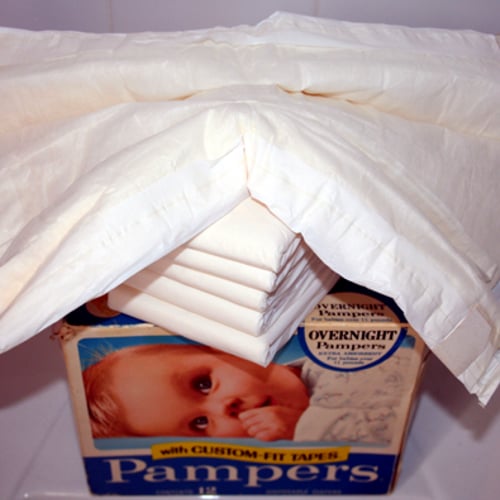
Mills and his team experimented with layered cellulose tissues to create a disposable diaper that could absorb moisture and keep a baby's skin dry. The product they developed, Pampers, launched in test markets in 1961 and went into national distribution in the U.S. in 1966. The initial price was competitive with cloth diaper service — meaning that the convenience was essentially free from a consumer cost perspective.
The disposable diaper changed infant care in ways that extended beyond convenience. It reduced the labor burden associated with washing, drying, and folding cloth diapers, which in the era before automatic washing machines had been a significant daily task. For families without reliable laundry facilities — whether due to poverty, travel, or circumstance — disposables offered a sanitary option that had simply not existed before.
Pediatricians noted that disposable diapers, by keeping moisture away from skin more effectively than cloth diapers in many circumstances, reduced the incidence of diaper rash. Later superabsorbent polymers, introduced in Pampers in the 1980s, improved performance further, absorbing many times their weight in liquid and keeping it locked away from the surface in contact with the baby's skin.
P&G's product also fundamentally changed the economics of childcare and the expectations around it. Disposable diapers became a global market worth tens of billions of dollars annually. In many developed countries, cloth diapers became a minority choice rather than the default. The product P&G developed out of a grandfather's irritation with a wet diaper became one of the standard tools of infant care worldwide, present in hospitals and homes across virtually every country with a modern consumer goods market.
Michelin
Universal History Archive / Getty Images
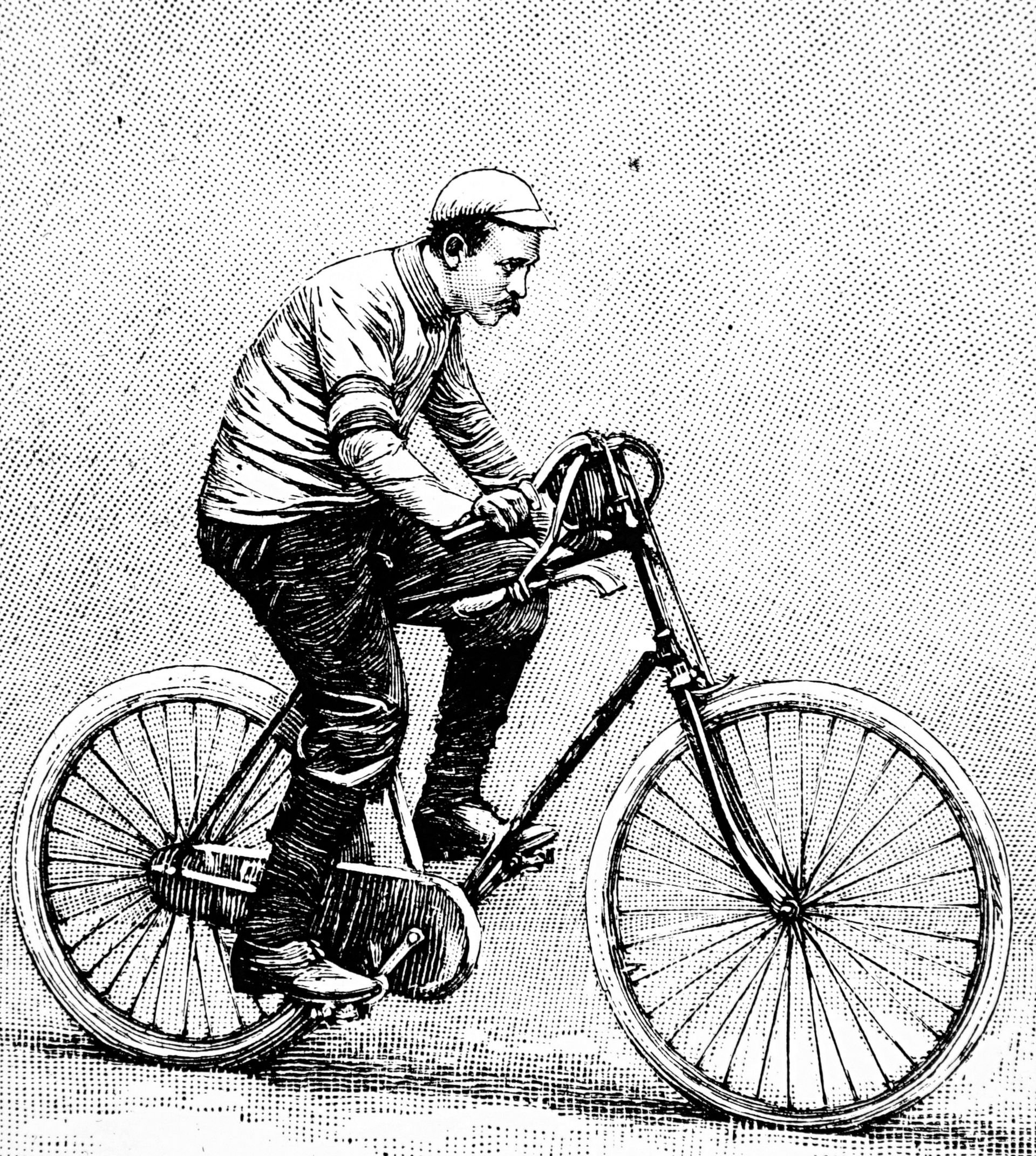
Édouard and André Michelin filed a patent for a detachable pneumatic tire for bicycles in 1891. The pneumatic tire — a rubber tube inflated with air — had been invented a few years earlier by John Boyd Dunlop, a Scottish veterinarian trying to improve the ride on his son's bicycle. But Dunlop's design was glued to the wheel and difficult to repair. The Michelin brothers' version could be removed and replaced by the rider, without professional assistance, in a matter of minutes. They demonstrated this publicly at a 535-kilometer cycling race from Paris to Brest and back in 1891.
The timing was consequential. The early automobile industry was developing in France and Germany in the 1890s, and the question of what should go between the vehicle and the road was unresolved. Early automobiles used solid rubber tires, which provided poor traction, a rough ride, and limited speed. Pneumatic tires, filled with air, absorbed road shock and allowed higher speeds. Michelin began producing pneumatic tires for automobiles in 1895, and within a decade, pneumatic tires had become standard.
Without a reliable, replaceable tire, the early automobile could not have become a practical means of transportation. A flat tire on a non-pneumatic solid rubber tire meant a trip to a specialist. A flat on a Michelin pneumatic could be repaired on the road with the equipment the driver carried. This practical repairability was essential for long-distance travel.
Michelin also invented a guide to roads and road-side services in 1900, initially to encourage more French motorists to drive — and therefore wear out their tires more quickly. The Michelin Guide evolved into a restaurant rating system whose star designations became the most prestigious culinary rankings in the world. A restaurant's gain or loss of Michelin stars remains significant news in the restaurant industry in Europe and Asia.
The company developed the radial tire in the 1940s, which replaced the earlier bias-ply construction and offered superior handling, durability, and fuel efficiency. Radial tires became the industry standard globally. The Michelin brothers, who started by building a better way to patch a bicycle tube, ended up setting the technical and commercial terms for an industry that touches every vehicle on the planet.
Tupperware
Hulton Archive / Getty Images
Earl Tupper was a chemist and self-taught inventor who had worked at DuPont in the late 1930s before starting his own plastics company. After World War II, he obtained access to polyethylene — a byproduct of oil refining that the war had made available in commercial quantities — and began experimenting with it as a material for food storage containers.
The challenge Tupper solved was the seal. Polyethylene could be molded into flexible, lightweight containers, but sealing them airtight required a new mechanism. Tupper developed what he called the "burping seal" — a lid that created an airtight closure by expelling air when pressed down and flexed, creating negative pressure inside. The seal was effective enough to keep food fresh significantly longer than existing alternatives: glass jars, wax paper, and metal canisters.
Tupper began selling the containers — which he marketed as Tupperware — in hardware and department stores in the mid-1940s. Sales were poor. Consumers couldn't figure out how the seal worked from looking at the product on a shelf. Without a demonstration, the product's key advantage was invisible.
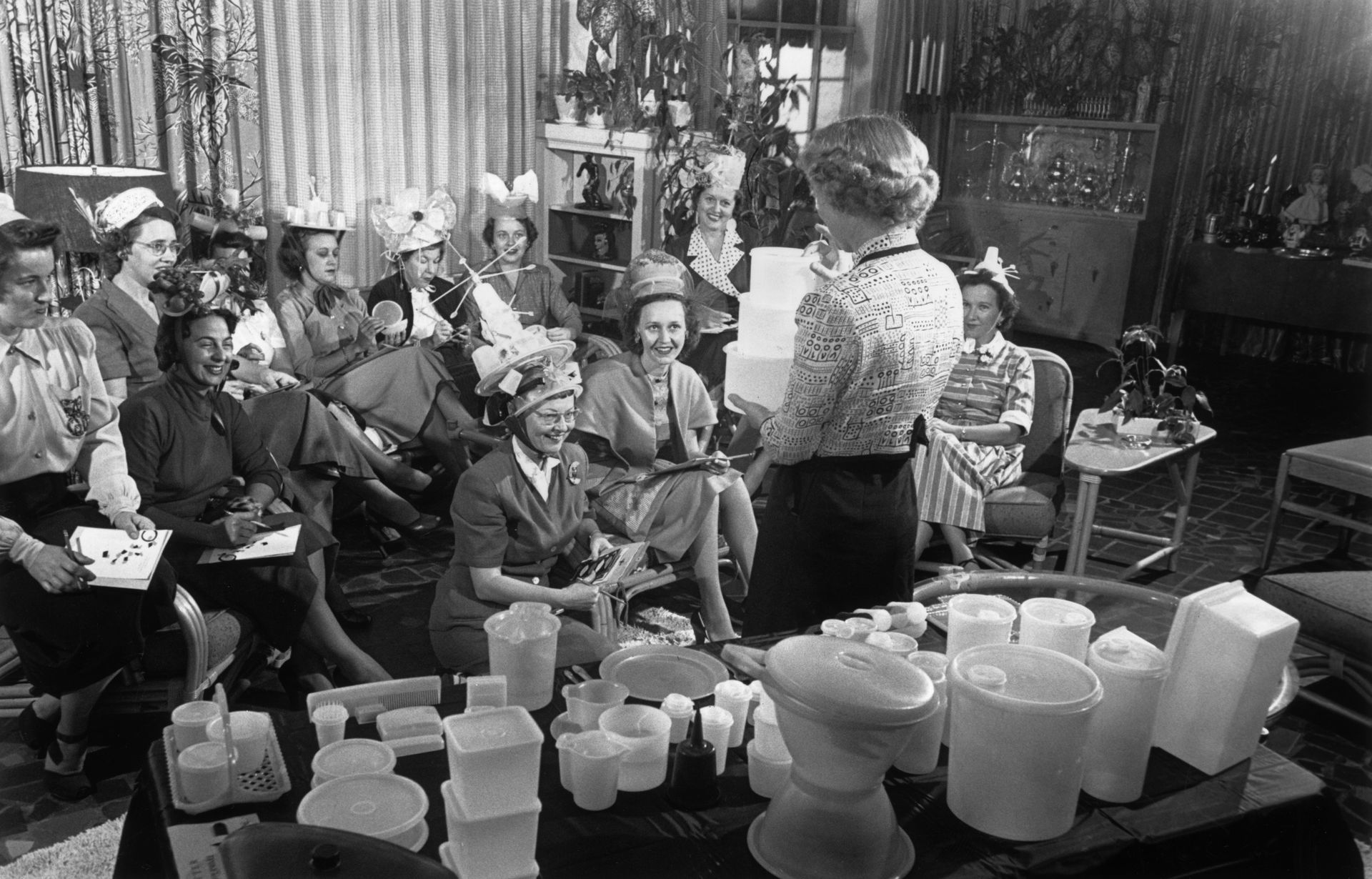
The solution came from Brownie Wise, a single mother in Florida who had discovered Tupperware and begun selling it through informal home demonstrations. She organized social gatherings — "Tupperware Parties" — where she would demonstrate the products to a room of potential buyers, all of whom could see the seal work in real time. Sales at these parties significantly outperformed retail. Tupper hired Wise in 1951 to lead a direct sales operation, pulled Tupperware out of retail stores entirely, and built a network of salespeople who sold exclusively through home demonstrations.
The Tupperware Party became a social institution as much as a sales model. For American women in the 1950s — many of whom were not in the paid workforce and had few mechanisms for independent income — it offered an opportunity to earn money through their existing social networks. Brownie Wise became the first woman to appear on the cover of Business Week magazine, in 1954. Tupper later fired her and took the company public without acknowledging her contribution.
The direct sales model Tupperware pioneered has been replicated by hundreds of companies since. The airtight container itself remains a standard kitchen item in homes globally.
Nestlé
Credit: nestle.com
In 1930, the Brazilian government approached Nestlé with a problem. The country had accumulated a large surplus of coffee beans and was looking for a way to create new demand. Nestlé agreed to develop a coffee product that could be stored, transported, and prepared quickly. The company tasked chemist Max Morgenthaler with leading the development project.
It took Morgenthaler and his team eight years to solve the technical problems involved. Previous attempts at instant coffee had been made in the 19th century, and various powdered coffee products had appeared during and after World War I. But none produced a result that tasted acceptable after dissolving in hot water. The challenge was to dehydrate brewed coffee in a way that preserved the volatile aromatic compounds responsible for coffee's flavor, and to do this at a commercial scale.
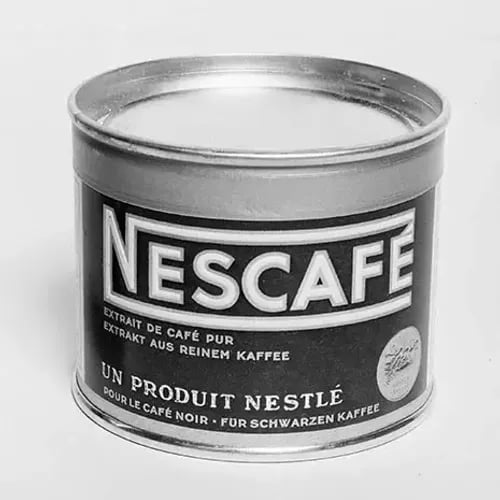
Nestlé's solution, launched under the name Nescafé on April 1, 1938, used a spray-drying process that blew liquid coffee through a hot chamber, converting it to powder while retaining more of the flavor compounds than earlier methods. The product dissolved completely in hot water in seconds, with no grounds, no brewing equipment, and no preparation beyond boiling water.
Nescafé went global quickly, in part because of World War II. The product was adopted by U.S. military supply operations, meaning that millions of American soldiers were introduced to instant coffee during the war and brought the habit home. In the U.K., instant coffee became embedded in domestic culture in ways it did not in countries with strong espresso or filter coffee traditions, but globally, Nescafé and its successors became the most consumed form of coffee in the world by volume.
The product also changed the economics and culture of coffee consumption in developing countries. Making a cup of coffee with a home espresso machine or a filter drip setup required equipment and precise technique. Nescafé required only a spoon and a kettle. This accessibility contributed to coffee's spread into new markets — particularly in Asia — where tea had historically dominated and where the infrastructure for traditional coffee preparation was limited. Today, Nestlé's instant coffee products are sold in more than 180 countries.
Velcro SA

SB PhotoStyle / 500px / Getty Images
In 1948, Swiss engineer Georges de Mestral returned from a hunting trip in the Alps and noticed that burdock burrs had attached themselves to his wool trousers and his dog's fur. Under a microscope, he examined a burr and saw that it was covered in small hooks that caught on the loops of fabric and fur. He spent the next several years trying to reproduce the mechanism in a manufactured material.
The project was technically demanding. De Mestral needed to create two matching surfaces: one covered in tiny hooks, one covered in tiny loops, that would grip firmly when pressed together and release cleanly when pulled apart. He worked with a weaver in Lyon, France to develop the materials. The early versions were made from cotton, which proved too soft and wore out quickly. Nylon, processed under infrared light to stiffen the hooks, eventually proved to be the right material.
De Mestral founded Velcro SA in Switzerland in 1952 and filed the patent in 1955. The patent was granted in 1958, and commercial production began. The name Velcro is a compression of the French words "velours" (velvet) and "crochet" (hook). The product found its first large-scale commercial customer in NASA, which used it on space suits and in the interiors of spacecraft because it worked without gravity, hands-free, and with gloves on.
The consumer breakthrough came largely through children's clothing. In the 1960s and 1970s, shoe manufacturers began incorporating Velcro into children's footwear as an alternative to laces that young children could not yet tie themselves. From children's shoes, it moved into athletic footwear, orthopedic products, medical equipment, luggage, and eventually into almost every product category where a quick, tool-free fastening was useful.
The original Velcro patent expired in 1978, after which dozens of competitors entered the market producing functionally identical hook-and-loop fasteners. The word "Velcro" became generic in everyday usage — most people use it to refer to any hook-and-loop fastener regardless of brand — though Velcro Companies, the brand holder, has aggressively sought to maintain the trademark distinction. A 2017 video produced by the company's lawyers asking people to stop using "Velcro" as a common noun became a minor internet phenomenon.
Black & Decker
Credit: Black and Decker, Wikipedia
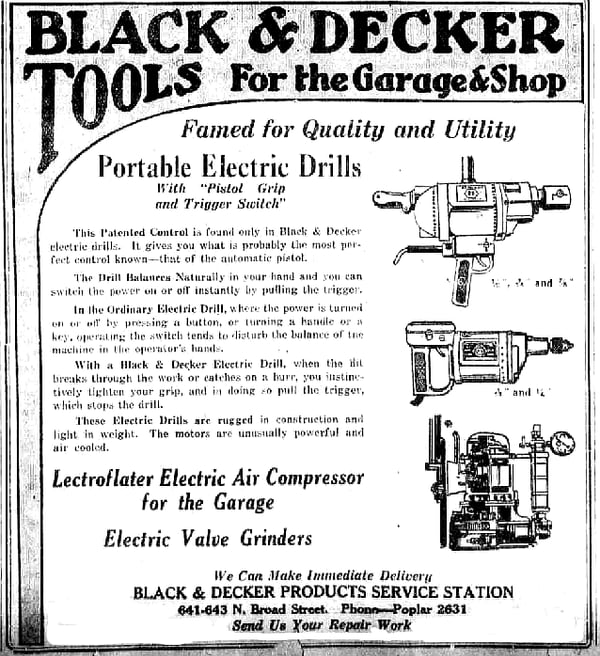
In 1910, Duncan Black and Alonzo Decker started a small machine shop in Baltimore, Maryland. Seven years later, in 1917, they patented something that would define consumer power tools for the rest of the century: a portable electric drill with a pistol grip and a trigger switch, modeled on the grip and firing mechanism of a Colt revolver.
Before the Black & Decker pistol-grip drill, electric drills existed but were designed for industrial use — heavy, two-handed machines that required a fixed workstation and were not intended for use by ordinary workers in ordinary settings. Black & Decker's design was light enough to operate with one hand, intuitive enough to use without training, and compact enough to bring to the work rather than bringing the work to the drill. The pistol grip allowed users to direct the drill precisely, and the trigger allowed variable speed without additional controls.
The U.S. military purchased Black & Decker drills during World War I. Industrial customers followed. But the company's most consequential market turned out to be the postwar American homeowner. The postwar suburban building boom created millions of households where people owned their homes and had the space to maintain and improve them, but lacked the budgets to hire tradespeople for every task. The power drill made it practical for non-professionals to install shelves, hang curtains, build furniture, and undertake basic construction work independently.
Black & Decker introduced the first cordless electric drill in 1961, using a self-contained rechargeable battery pack. NASA used an adapted version to collect core samples during the Apollo moon missions. Consumer versions of the cordless drill became standard household tools by the 1980s, freeing users from the constraint of working near an electrical outlet.
The company's product philosophy — making professional-grade capability available to a consumer market at accessible prices — defined an entire category of consumer goods. The home improvement industry, the do-it-yourself culture that produced stores like Home Depot $HD and Lowe's $LOW, and the expectation that homeowners can complete complex maintenance and renovation tasks independently all rest partly on the availability of tools like the ones Black & Decker built. The pistol-grip drill, patented more than a century ago, remains one of the most common tools in homes globally.