
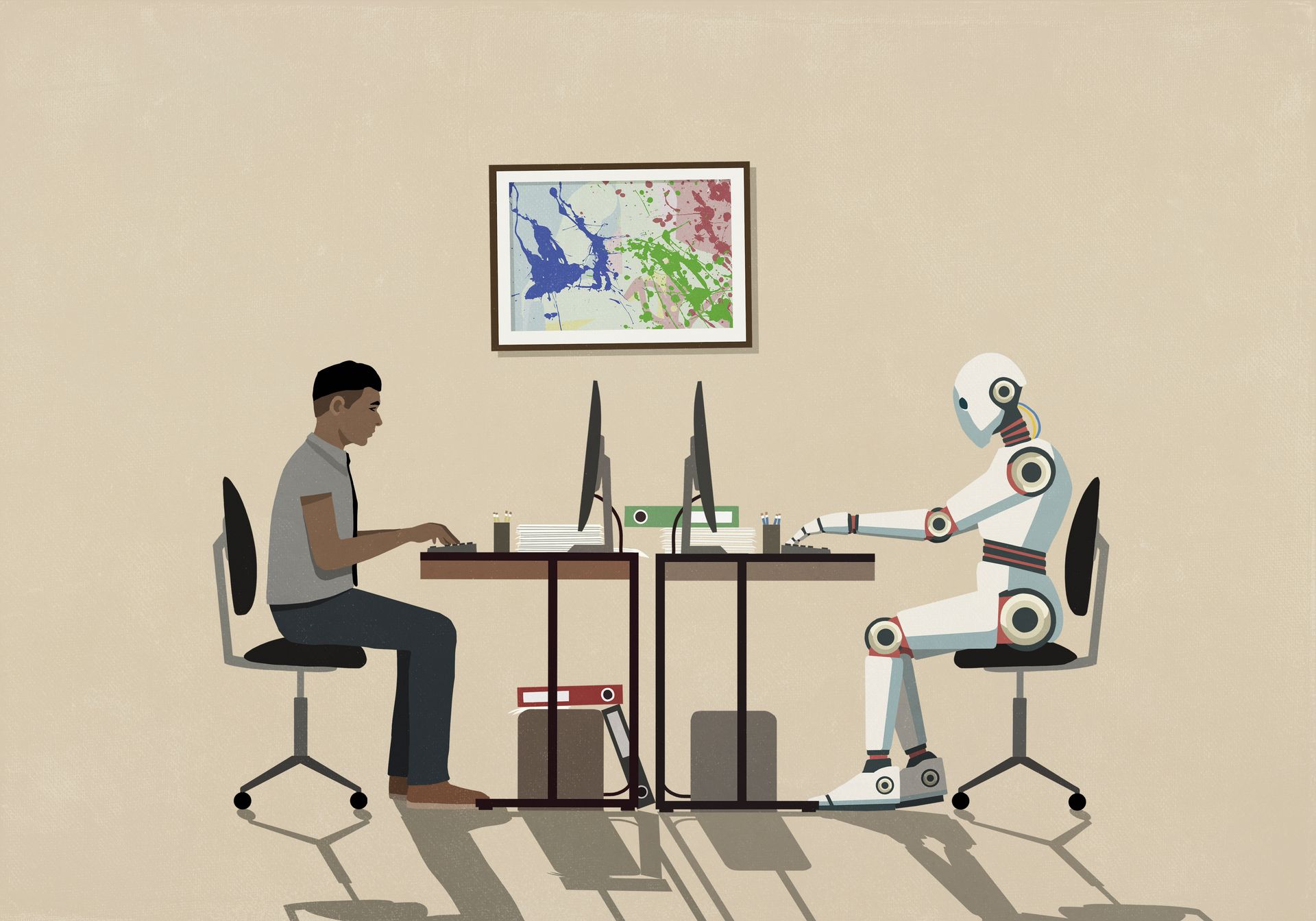
Ford $F, Commonwealth Bank of Australia, and IBM $IBM have each moved to bring back human workers after discovering that artificial intelligence systems could not fully replace the roles they had eliminated, according to CNBC.
Ford spent the past three years hiring 350 veteran engineers to address vehicle quality problems that automated systems had failed to catch. Charles Poon, Ford's vice president of vehicle hardware engineering, said the company had wrongly assumed that feeding AI its design requirements would produce a high-quality product without experienced human oversight. The returning engineers have overhauled the AI tools and now lead troubleshooting sessions, and CEO Jim Farley said the effort has generated hundreds of millions of dollars in savings from declining warranty and recall expenses.
After cutting more than 40 customer service positions last year and deploying an AI voice bot as a replacement, Commonwealth Bank of Australia found that the technology buckled under the workload, generating a surge in call volume rather than reducing it. CBA subsequently reversed the cuts. The bank acknowledged it "did not adequately consider all relevant business considerations" when announcing the redundancies.
At IBM, an AI system deployed to take over human resources work managed to address roughly 94% of incoming requests, but the roughly 6% it could not resolve — among them situations involving ethical judgment — exposed the limits of full automation. The company then announced plans to triple its U.S. entry-level hiring across all business units in 2026. "If we don't continue to invest in entry-level hires, what happens in three-five years? There's no pipeline; the well simply dries up," Nickle LaMoreaux, IBM's chief human resources officer, said at a Charter AI Summit in New York.
The pattern extends across industries. Data from staffing firm Robert Half showed that nearly one in three U.S. hiring managers had cut a position citing AI only to bring someone back for that role or one comparable to it.
The reversals arrive as AI-related job cuts have been climbing. Artificial intelligence was the top stated reason for layoffs across all U.S. industries for the third consecutive month in May, with AI-related cuts reaching 38,579 — about 40% of all announced job cuts that month, the highest monthly total since outplacement firm Challenger, Gray & Christmas began tracking the category in 2023. Companies have also drawn scrutiny for using AI as a public explanation for layoffs driven by other factors, a practice some management experts call "AI-washing."
An Orgvue report cited by CNBC painted a similarly cautionary picture: more than half of the business leaders — 55% — who had eliminated jobs as part of an AI rollout, a group representing 39% of those surveyed, later acknowledged the cuts had been a mistake.