Standard Oil, Ford, Goldman Sachs, Walmart, Google — they defined how markets work, how labor is organized, and what capitalism looks like today

Charles Parker / Pexels
Most companies succeed or fail within a market that was there before them and will be there after them. A small number of companies do something different: they change the market itself. They introduce a business model, a production method, a financial instrument, or an organizational structure that other companies then copy, governments then regulate, and economists then teach — until the original innovation becomes so thoroughly absorbed into the assumptions of capitalism that it no longer looks like an innovation at all. It looks like the way things are.
This list covers 25 companies whose influence on the structure of modern capitalism extended beyond their own success. Some created new industries. Some destroyed existing ones and rebuilt them in their image. Some introduced financial practices that restructured how capital is allocated across the entire economy. Some demonstrated what was possible at scale in ways that compressed decades of competitive evolution into a few years. Several did things that were subsequently judged illegal or harmful — the list does not require good behavior, only genuine structural influence.
The selection crosses industry, geography, and era. The oldest company here — the Dutch East India Company — was founded in 1602 and invented the joint-stock corporation in the process. The most recent — Uber $UBER — was founded in 2009. Between them are companies that invented mass production, mass retail, mass media, mass finance, mass communication, and mass computation. The word "mass" is the recurring theme: almost all of these companies did something that had been done before and did it at a scale that made the previous version unrecognizable.
The list is not comprehensive, and the companies excluded are as interesting as those included. General Electric $GE, McDonald's $MCD, Boeing $BA, Disney $DIS, and several others had legitimate claims to inclusion. The 25 here were chosen because they either originated a structural change in how capitalism works or most completely embodied a change that their era produced. In several cases — Standard Oil, General Motors $GM, Microsoft $MSFT — the company's influence is most clearly visible in the antitrust case brought against it, which is perhaps the most direct measure of structural power available.
Credit: Wikipedia
Standard Oil, founded by John D. Rockefeller in Cleveland in 1870, became the defining case study of monopoly capitalism and the organizational template for the modern vertically integrated corporation — and the legal response to its dominance, the Sherman Antitrust Act and its subsequent application in the 1911 Standard Oil breakup, became the template for antitrust regulation that continues to govern competition policy globally.
At its peak in the 1880s and 1890s, Standard Oil controlled approximately 90% of U.S. oil refining and distribution, having achieved that dominance through a combination of horizontal integration (acquiring competitors), vertical integration (controlling pipelines, railroads, and distribution), and the aggressive use of the trust structure — a legal mechanism that allowed nominally independent companies to coordinate pricing and strategy without formal merger — that gave its controlling structure its name.
Rockefeller's genius was operational as much as financial. Standard Oil's efficiency in refining, its mastery of logistics, and its willingness to use scale as a weapon — offering railroads volume guarantees in exchange for rebates unavailable to competitors — produced a competitive advantage that was both real and structural. The company was genuinely better at what it did than its rivals, and it used that superiority to eliminate rivals who might have caught up.
The 1911 Supreme Court decision that broke Standard Oil into 34 independent companies — which became Exxon, Mobil, Chevron $CVX, Amoco, and several others — is the foundational moment in American antitrust history. It established the principle that market dominance, even when achieved through superior efficiency, could be an unlawful restraint of trade — a principle whose ongoing application to technology platforms 110 years later reflects how durable Rockefeller's structural legacy has been.
Julissa Pires / Pexels
Henry Ford $F did not invent the automobile, the assembly line, or mass production. What he did was combine them at a scale and with a management philosophy — the integration of high wages, standardized products, and continuous process improvement — that transformed manufacturing capitalism and, in doing so, transformed the social and economic organization of the 20th century.
The Model T, introduced in 1908, was designed for manufacturability rather than performance — its parts were interchangeable, its assembly sequence was optimized for a largely unskilled workforce, and its price was intended to fall continuously as production volume increased. By 1914, when Ford introduced the moving assembly line at the Highland Park plant, the Model T took 93 minutes to assemble. By 1925, it took 24 seconds. The price fell from $850 at introduction to $260 by 1925.
The Five Dollar Day — Ford's 1914 decision to more than double the average factory wage from $2.34 to $5, at a time when competitors were paying $1.50 to $2.50 — is either the most enlightened or the most calculated act in labor history, depending on how one reads it. Ford's stated rationale was that workers should be able to afford the products they made. The economic effect was to stabilize a workforce with extraordinarily high turnover and to establish the principle that industrial wages should be sufficient to create the consumer demand that industrial production required — the demand-side logic that Keynesian economics would later formalize.
Ford's influence extends to organizational theory, supply chain management, the geography of American cities (suburban sprawl requires the automobile), and the labor movement (the 1941 union recognition at Ford, the last of the major automakers to unionize, was the culmination of a decade of organizing against one of the most anti-union managements in American industry).

Ruben Reijgwart / Pexels
The largest of the 34 companies created by the 1911 Standard Oil breakup, Standard Oil of New Jersey — which became Esso, then Exxon, and eventually ExxonMobil $XOM — became the defining model of the vertically integrated multinational corporation and the most powerful private oil company in history during the era when oil defined geopolitics. Its history, particularly in the mid-20th century, is the history of Western oil strategy in the Middle East.
The Seven Sisters — the group of Western oil companies that dominated global oil production from the 1940s through the 1970s, of which Standard Oil of New Jersey was the largest — operated as a cartel that controlled the pricing, production, and distribution of Middle Eastern oil, negotiated concessionary arrangements with host governments that reserved the most favorable terms for the companies, and managed the supply of oil to the West in ways that had direct geopolitical consequences for the countries whose resources they were exploiting.
The 1973 oil crisis — when OPEC members embargoed oil shipments to Western nations that had supported Israel in the Yom Kippur War — was the moment at which the Seven Sisters' control of global oil supply was definitively broken and sovereignty over oil resources was reasserted by producing nations. Exxon's adaptation to that new geopolitical reality — from concession holder to service provider and refiner — is a case study in how dominant companies adjust to fundamental shifts in the rules of their industry.
The merger of Exxon and Mobil in 1999, reuniting two of the largest Standard Oil successors, produced the largest oil company in the world and a corporate entity with revenues exceeding the GDP of most countries. The subsequent debate about whether the merger should have been allowed under antitrust law — whether the 1911 breakup was being reversed 88 years later — was never satisfactorily resolved by regulators.
Historic American Buildings Survey / Wikimedia Commons
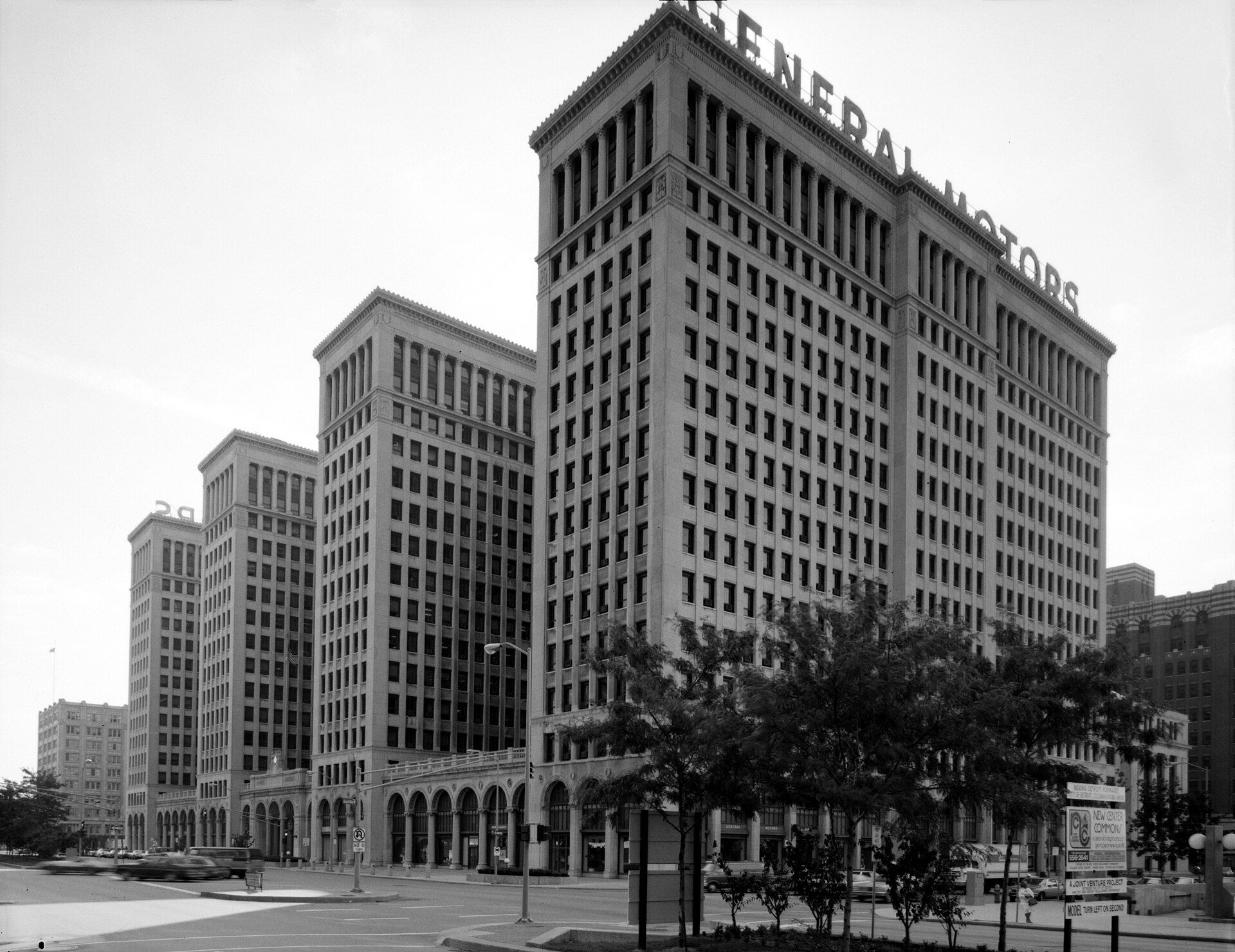
General Motors $GM was founded by William Durant in 1908 and became, under Alfred Sloan's management from 1923 to 1956, the organizational template for the modern multidivisional corporation — the M-form structure that replaced the functionally organized corporation of the early industrial era and that became the dominant organizational model for large corporations globally through the second half of the 20th century.
Sloan's insight was that a single large corporation could operate multiple product lines for multiple market segments — Chevrolet for the mass market, Pontiac for the aspiring working class, Oldsmobile for the middle class, Buick for the upper-middle class, Cadillac for the wealthy — with each division operating with significant autonomy under centralized financial control. The structure allowed GM to challenge Ford $F's single-product strategy by offering "a car for every purse and purpose" and to manage the complexity of a multi-product portfolio without the organizational paralysis that complexity produced in functionally organized companies.
The GM model — divisional autonomy within corporate financial control — was studied, formalized by management theorists including Peter Drucker (whose 1946 book "Concept of the Corporation" was based on a study of GM's organizational structure), and adopted by corporations across industries globally. It is the organizational form in which most large companies still operate, modified by subsequent decades of management fashion but retaining Sloan's basic logic.
GM's darker legacy includes its early role in dismantling urban public transit infrastructure — through its investment in National City Lines, which acquired and closed electric streetcar systems in dozens of American cities — and its decades-long resistance to safety improvements that Ralph Nader documented in "Unsafe at Any Speed" in 1965. The 2009 bankruptcy and government bailout, which required a $49.5 billion U.S. government investment, was the most dramatic corporate failure and government rescue in American history.

Credit: Goldman Sachs & Co. LLC
Goldman Sachs $GS, founded in New York in 1869 by Marcus Goldman, became the dominant institution of Wall Street investment banking in the 20th century and the organization most responsible for defining the practices, culture, and compensation structures of modern finance. Its influence on capitalism is not primarily through a single innovation but through its role as the institution that trained, deployed, and placed the people who made the key decisions in global finance, government, and corporate governance for most of the past century.
The Goldman Sachs partnership structure — maintained until the firm's IPO in 1999 — concentrated the ownership of the firm's capital in the hands of its partners, creating an alignment of incentives between the firm's principals and its long-term performance that the shift to public ownership modified significantly. The firm's culture of consuming work, extreme performance standards, and willingness to train and then lose talented people to competitors — which created a Goldman alumni network in finance and government unmatched by any other institution — was a product of that partnership structure.
Goldman's specific financial innovations — the use of commercial paper to provide short-term financing to corporations in the 1870s, the development of the investment trust in the 1920s, the pioneering of risk management systems in the 1980s, the securitization practices that contributed to the 2008 financial crisis — each represented moments at which the firm redefined what investment banking did and how financial markets worked.
The firm's role in the 2008 financial crisis — its creation and sale of mortgage-backed securities while simultaneously betting against them, documented in the Senate Permanent Subcommittee on Investigations' 2011 report — and the subsequent $550 million settlement with the SEC raised questions about the relationship between Goldman's interests and those of the broader financial system that the firm's regulatory relationships had not previously been subjected to.
Kevin Carter/Getty Images
Sam Walton opened the first Walmart $WMT in Rogers, Arkansas, in 1962, and built a retail empire that became, at its peak, the largest company in the world by revenue — a position it has held for most of the years since 2000. But Walmart's significance to capitalism is not primarily its size. It is the specific model of retail, supply chain management, and labor economics that its growth imposed on an entire industry and the communities in which it operated.
Walmart's model rested on three interlocking elements. The first was logistics — an investment in distribution infrastructure, information technology, and supplier relationships that gave Walmart visibility into its entire supply chain in real time and the ability to manage inventory with a precision that competitors could not match. The second was price — the relentless compression of prices through scale purchasing and supply chain efficiency that delivered genuine consumer value while eliminating the margin that competitors needed to survive. The third was labor — the suppression of wages and benefits, the prevention of unionization, and the structuring of employment to minimize the cost of labor as a proportion of revenue.
The combined effect of these three elements was to reshape the economics of retail comprehensively. Suppliers who wanted access to Walmart's distribution network accepted the price points and delivery requirements Walmart set. Local retailers who competed with Walmart on price lost; those who competed on service or specialization retreated to niches that Walmart did not serve. The communities in which Walmart opened stores experienced the job losses of the retailers it displaced alongside the employment it provided — employment that paid less and offered fewer benefits than the retail jobs it replaced.
The Walmart model's most consequential long-term legacy may be its role in driving manufacturing to China. The pressure to meet Walmart's price points at adequate margin drove suppliers globally to offshore production to lower-cost locations, with China — whose manufacturing infrastructure, labor costs, and government support made it the most competitive offshore destination — absorbing the largest share of that production shift.

Matthias Balk/picture alliance via Getty Images
Microsoft $MSFT, founded by Bill Gates and Paul Allen in Albuquerque in 1975, built the dominant personal computer software platform of the 20th century through a combination of technical competence, aggressive business strategy, and the specific decision — made in 1980 — to license MS-DOS to IBM $IBM for the IBM PC while retaining the right to license it to other manufacturers. That decision, which IBM's lawyers failed to anticipate would create a platform standard controlled by Microsoft rather than IBM, produced the most valuable single business decision in the history of the technology industry.
The IBM PC's open architecture and Microsoft's MS-DOS established a hardware-software standard that every other personal computer manufacturer adopted, creating the PC-compatible market and giving Microsoft a platform tax on the majority of the world's computing. The subsequent development of Windows, Office, and the server software products that ran the world's corporate networks produced a software monopoly more complete than Standard Oil's oil monopoly and governed the terms on which the entire PC industry operated.
The 1998 United States v. Microsoft antitrust case — which accused the company of illegally maintaining its operating system monopoly by bundling Internet Explorer with Windows to destroy Netscape Navigator — was the most significant antitrust case in the technology industry's history and the most direct challenge to the platform economics that Microsoft had pioneered. The eventual settlement fell short of the structural remedy that the district court initially ordered — breaking Microsoft into two companies — but the case established precedents about platform leverage and bundling that directly influenced subsequent antitrust analysis of Google $GOOGL, Apple $AAPL, and Amazon $AMZN.
Microsoft's second act under Satya Nadella — the pivot to cloud computing, the acquisition of LinkedIn and GitHub, and the investment in OpenAI — represents one of the most successful corporate reinventions in technology history, transforming a company that had appeared to be in structural decline by 2013 into a $3 trillion market capitalization by 2024.
Getty Images / Picture Alliance
Amazon $AMZN was founded by Jeff Bezos in Seattle in 1994 as an online bookstore and became, over the following three decades, simultaneously the world's largest retailer, the world's largest cloud computing provider, the world's largest fulfillment network, and one of the world's largest advertising platforms — a diversification of business models organized around a single strategic logic: the continuous reinvestment of revenue in infrastructure and customer experience, with profitability deferred indefinitely in pursuit of dominant market position.
The Amazon model demonstrated a specific and previously untested approach to public company management: the willingness of capital markets to fund continuous reinvestment without profit for long enough that the competitive advantages built by that reinvestment became effectively insurmountable. Bezos's first letter to shareholders in 1997 explicitly stated that Amazon would prioritize long-term market leadership over short-term profitability, and capital markets funded that preference for two decades before the company began generating substantial profits from Amazon Web Services.
AWS — launched in 2006 with a simple file storage service and a virtual computing service — became the infrastructure layer on which a significant proportion of the internet runs. The company's decision to rent its internal computing infrastructure to other businesses created a new industry category, restructured the economics of technology startups by converting capital expenditure to variable operating cost, and produced revenues that subsidized the retail and logistics operations that would not otherwise have been economically sustainable.
Amazon's labor practices — the working conditions in its fulfillment centers, the algorithmic management of warehouse and delivery workers, the wages and benefits relative to the productivity expected — have been the subject of sustained criticism and regulatory investigation, and the company's 2021 defeat of a unionization attempt in Bessemer, Alabama, followed by the historic recognition of a union at its Staten Island facility in 2022, marks the beginning of a labor relations evolution whose direction is not yet clear.
CFOTO/Future Publishing via Getty Images
Apple $AAPL was founded in 1976, was left for dead in the mid-1990s, and returned under Steve Jobs to produce, in less than a decade, the iMac, the iPod, the iTunes Store, the iPhone, the App Store, and the iPad — a sequence of product and platform innovations that defined the consumer technology industry's first two decades of the 21st century and produced the first $1 trillion, $2 trillion, and $3 trillion market capitalizations in history.
The iPhone, introduced in January 2007, is the product most directly responsible for Apple's dominance, but its influence on capitalism extends beyond the device itself to the App Store model — the two-sided platform that allowed third-party developers to distribute software to iPhone users while Apple extracted a 30% commission on every transaction, which became the most studied and most litigated platform economics model in technology history.
Apple's specific contribution to the structure of modern capitalism is the premium consumer electronics business model at scale: the demonstration that a hardware manufacturer could build and sustain a business in which premium pricing, high margins, and design excellence are self-reinforcing rather than in tension. The iPhone has consistently commanded 80% or more of smartphone industry profits while holding a minority of unit market share — a profit concentration in a competitive market that has no historical precedent in consumer hardware.
Apple's supply chain — the network of contract manufacturers, component suppliers, and logistics providers centered on Foxconn in China that produces hundreds of millions of iPhones annually — is the most extensively studied example of the globally distributed, vertically specialized manufacturing model that defines 21st-century industrial capitalism. The labor conditions at Foxconn's facilities, brought to global attention by a series of worker suicides in 2010, remain a persistent source of corporate governance concern for a company whose brand identity is built substantially on design values.
Matthias Balk/picture alliance via Getty Images
Google $GOOGL was founded by Larry Page and Sergey Brin at Stanford in 1998 and went public in 2004, and its specific contribution to capitalism is the development of the behavioral advertising model — the collection of user data at scale, the development of inferential models of user intent and behavior, and the sale of advertising targeted with a precision that traditional media advertising could not approach — that became the dominant economic model of the internet.
The PageRank algorithm that made Google's search superior to its competitors was the technical foundation of the company's early growth. The AdWords auction system — introduced in 2000, allowing advertisers to bid for placement in search results adjacent to specific queries — was the business model that converted that technical advantage into revenue. The combination of relevance-ranked search and relevance-targeted advertising produced an advertising product so superior to its alternatives that Google captured the majority of the growth in global digital advertising for most of the 2000s and 2010s.
The acquisition of YouTube in 2006 for $1.65 billion — a price that appeared extremely high at the time — extended the behavioral advertising model to video, creating the largest video platform in the world and a second advertising revenue stream that reinforced Google's dominance of digital advertising. The Android operating system, made available free to handset manufacturers, extended Google's data collection infrastructure to mobile devices, ensuring that the shift to mobile computing did not reduce Google's access to user behavioral data.
The antitrust cases brought against Google — by the U.S. Department of Justice in 2020 for monopolizing the search advertising market, and by a coalition of states for monopolizing the digital advertising market — are the most significant antitrust cases in the technology industry since United States v. Microsoft $MSFT, and their outcomes will substantially shape the regulatory framework for platform businesses globally.
INA FASSBENDER / Getty Images
Facebook $META was founded by Mark Zuckerberg at Harvard in 2004 and grew to 3 billion monthly active users by 2023, making it the largest social network in history and the dominant platform for social advertising globally. Its specific contribution to capitalism is the demonstration that social connection — the fundamental human desire to maintain relationships, share experiences, and communicate — could be monetized at scale through the same behavioral advertising model that Google $GOOGL had applied to search intent.
The Facebook model added two elements to Google's advertising approach. The first was social graph data — information about users' relationships, interests, and group affiliations that allowed targeting based on who users were as social beings rather than only what they were searching for at a given moment. The second was the feed — an algorithmically curated stream of content designed to maximize time-on-platform, which became both the mechanism for delivering advertising and the subject of the most significant criticism of the platform's social effects.
Facebook's acquisition strategy — Instagram for $1 billion in 2012 (when it had 13 employees and no revenue), WhatsApp for $19 billion in 2014 — was a specific form of competitive strategy: acquiring potential competitors before they could threaten the core business. The FTC's 2020 antitrust case against Meta, which sought to require the divestiture of Instagram and WhatsApp, argued that these acquisitions were illegal anti-competitive acts rather than legitimate strategic investments — a distinction that the courts are still working through.
Meta's pivot to the metaverse — the $10 billion-plus annual investment in VR and AR platforms announced in 2021 — is either the most ambitious long-term platform bet in technology history or the most expensive corporate distraction, depending on the assessment of whether immersive computing will become the next dominant computing platform.

JonClee86 / Wikipedia (CC BY-SA 3.0)
Berkshire Hathaway $BRK.B, the conglomerate built by Warren Buffett from a failing New England textile mill beginning in 1965, is the most studied and most discussed investment holding company in history, and its influence on capitalism is specifically in the domain of investment philosophy and capital allocation. Buffett's annual letters to shareholders, which have been published since 1965, constitute the most comprehensive public record of an investment philosophy in the history of finance and have directly influenced the practice of value investing across the industry.
The Berkshire model demonstrated that the principles of value investing — buying businesses whose intrinsic value exceeds their market price, holding them indefinitely, and compounding capital at high rates over long periods — could produce superior returns over any time horizon measured and could do so at a scale that most investment managers had dismissed as incompatible with the approach. Berkshire's book value per share compounded at approximately 19.8% annually from 1965 to 2023 — a 58-year record of performance that has no comparable parallel in the history of public markets.
The specific competitive advantages that Berkshire exploited — the float of its insurance subsidiaries (the premiums collected before claims are paid, which Berkshire invested rather than holding in low-return assets), the willingness to hold stocks indefinitely without the pressure of quarterly reporting cycles, and the acquisition of entire businesses at negotiated prices rather than market prices — were not available to most investors, but the underlying principles of patient, long-term, business-quality-focused investing influenced the investment philosophy of a generation of fund managers.
Buffett's partnership structure, his rejection of financial engineering, and his insistence on businesses he could understand produced a counterculture within finance that periodically appeared to be winning — particularly after the dot-com crash and the 2008 financial crisis — and periodically appeared to be losing — during the 1999 tech bubble, when Buffett's underperformance of the market was used as evidence that value investing was obsolete.
Josh Eleazar / Pexels
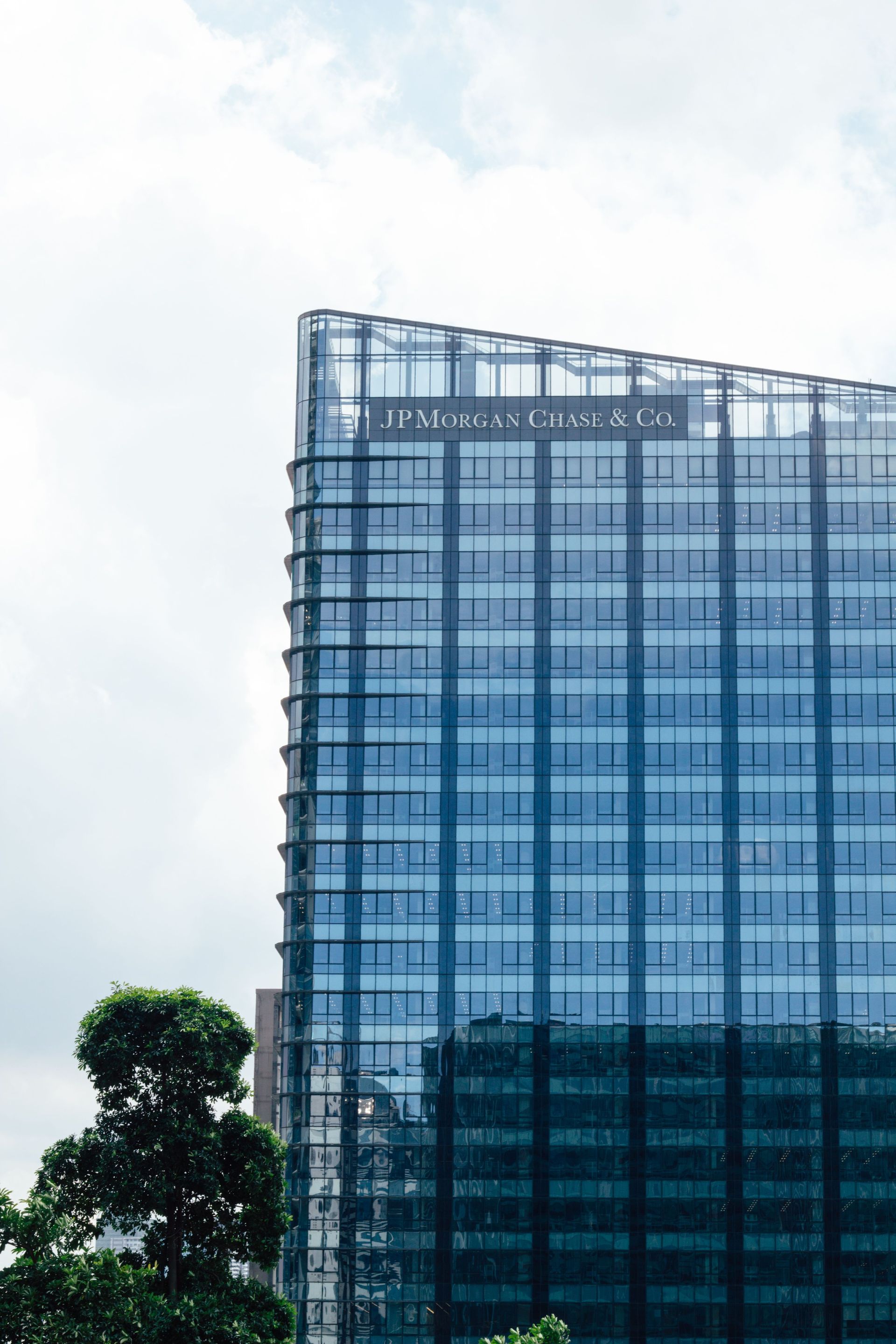
J.P. Morgan — both the man and the institution he built, which survives as JPMorgan $JPM Chase — is the figure and the organization most directly responsible for the consolidation of American industrial capitalism in the late 19th and early 20th centuries and for the development of the investment banking function that organized that consolidation. Morgan's specific influence was the application of financial power to impose organizational order on industries whose competitive chaos he found both irrational and inefficient.
The reorganization of the American railroad industry in the 1880s and 1890s — the process called "Morganization," in which Morgan and his firm took failing or competing railroads into a coordinated financial restructuring that eliminated competition while imposing professional management — was the template for the wave of corporate mergers that transformed American industry between 1895 and 1905. The U.S. Steel merger of 1901, in which Morgan organized the acquisition of Carnegie Steel and several competitors to create the first billion-dollar corporation in history, was the most dramatic single act of industrial consolidation in American history.
Morgan's role in the 1907 financial panic — when he personally organized and financed the rescue of the American banking system from a liquidity crisis that would otherwise have produced a systemic collapse, in the absence of any government institution capable of performing the central bank function — demonstrated both the fragility of the financial system and the specific dangers of its dependence on a single private actor. The panic directly motivated the creation of the Federal Reserve in 1913.
JPMorgan Chase, the institution produced by the merger of J.P. Morgan & Co., Chase Manhattan, and Bank One, is the largest bank in the United States and one of the most systemically important financial institutions in the world — a status whose implications for regulatory oversight and the too-big-to-fail problem remain central to financial policy debates.
CHARLY TRIBALLEAU / Getty Images
Toyota $TM — the Japanese automaker founded in 1937 that became the world's largest vehicle manufacturer in 2021 — contributed to capitalism a production system whose influence on manufacturing, logistics, service industries, healthcare, and organizational management extends far beyond the automotive industry. The Toyota Production System, developed by Taiichi Ohno and others in the decades following World War II, is the most influential manufacturing philosophy since Ford $F's assembly line.
The TPS — known in its generalized form as lean manufacturing or lean production — organized production around two principles: just-in-time delivery, in which parts arrive at the production line exactly when needed rather than being accumulated in inventory, and jidoka, or autonomation — the capability of machines and workers to stop the production process automatically when a defect is detected, rather than continuing to produce defective output that must be corrected downstream.
The system's elimination of waste — defined as any activity that consumes resources without adding value, including overproduction, waiting, transportation, excess inventory, unnecessary motion, defects, and underused human potential — produced quality levels and cost efficiency that Western manufacturers could not match during the 1970s and 1980s, when Japanese cars' superiority to American cars in reliability became undeniable and forced a comprehensive rethinking of Western manufacturing practice.
The impact of TPS on industries beyond automotive manufacturing is large and ongoing. Lean healthcare — the application of TPS principles to hospital operations, outpatient care, and pharmacy management — has reduced medication errors, waiting times, and costs in healthcare systems globally. Agile software development, which borrowed the just-in-time and continuous improvement principles of TPS for software production, is the dominant software development methodology globally.
Credit: BlackRock
BlackRock $BLK, founded in 1988 by Larry Fink and seven partners in a single room in New York, became the world's largest asset manager, with approximately $10 trillion in assets under management by 2024 — a scale of capital allocation that gives it a structural position in capitalism that has no historical precedent. BlackRock's specific contribution is not a financial product or a business model but a technology platform — the Aladdin risk management system, which processes data on assets worth approximately $21 trillion and runs portfolio risk analysis for a significant proportion of the institutional investment industry globally.
The scale of BlackRock's index fund holdings — the passive investment vehicles that track market indices rather than making active stock selection decisions — gives it significant ownership stakes in virtually every major public company in the world. BlackRock, Vanguard, and State Street $STT together hold approximately 20% of the shares of S&P 500 companies on average, producing what some economists have called the universal owner problem: asset managers whose diversified holdings mean that they benefit from the profitability of the market as a whole rather than from the success of any individual company relative to its competitors.
Fink's annual letters to CEOs — which from 2018 onward addressed sustainability, stakeholder capitalism, and the obligation of corporations to address climate risk — produced both a significant debate about the appropriate role of asset managers in corporate governance and a political backlash from Republican-governed U.S. states, which accused BlackRock of using its capital to advance an environmental and social agenda. The debate about whether the largest passive asset manager in the world is a neutral financial intermediary or an active corporate governance actor is one of the central unresolved questions in contemporary capitalism.

Eddie O. / Pexels
Royal Dutch Shell $SHEL — the Anglo-Dutch oil and gas company formed by the merger of the Royal Dutch Petroleum Company and the Shell Transport and Trading Company in 1907 — became one of the foundational institutions of the 20th-century carbon economy, the company whose exploration, production, refining, and distribution operations underpinned the petroleum-based energy system on which modern industrial civilization ran. Its influence on capitalism is inseparable from its influence on the geopolitics and environmental trajectory of the past century.
Shell's early history in the Dutch East Indies — now Indonesia — was the pattern for all subsequent Western oil company involvement in the developing world: the extraction of natural resources under concessionary arrangements that reserved the most favorable terms for the operating company and its home-country investors, produced revenue for the host government but not development of local industrial capacity, and left a legacy of resource dependence and governance problems that outlasted the specific concessions.
The company's operations in Nigeria — specifically in the Ogoni region of the Niger Delta, where decades of oil extraction produced environmental contamination without equivalent economic development and whose community protests were met with the Nigerian government's execution of activist Ken Saro-Wiwa in 1995 — became the defining case of corporate complicity in human rights abuses and the foundational case for the development of human rights due diligence standards in corporate governance.
Shell's 2023 legal case — in which a Dutch court ordered it to reduce emissions 45% by 2030 relative to 2019 levels, subsequently partially overturned on appeal — is the most significant climate litigation against a private company in history and reflects the emerging legal framework through which the carbon economy companies are being held accountable for the environmental consequences of their core business.

Anderson Wei / Pexels
Alibaba, founded by Jack Ma in Hangzhou in 1999, became the most significant commercial institution in Chinese capitalism and the company that most clearly demonstrated the specific form that platform capitalism takes in a large, state-guided economy with limited existing retail infrastructure. Its development produced both the world's largest e-commerce market and a model of digital commerce — integrating payments, logistics, cloud computing, and financial services into a single ecosystem — that Western technology companies have studied and selectively copied.
The Taobao platform — Alibaba's consumer-to-consumer marketplace launched in 2003, free to use for sellers and supported by advertising revenue — defeated eBay in China in 2006 by offering a product better adapted to the specific conditions of Chinese commerce: a payments system (Alipay) that provided escrow to reduce the transaction risk of buying from unknown sellers, a messaging system that allowed buyers and sellers to negotiate before purchase, and a review system that built reputational trust in markets without established legal enforcement.
Alipay — launched in 2004 as a payment processing service and expanded into the world's largest money market fund (Yu'e Bao, launched in 2013) and a consumer financial services platform — became the model for mobile payments adoption in China that made China the most advanced mobile payments market in the world by the mid-2010s, with cash essentially obsolete in most urban commercial transactions.
The Chinese government's 2020 suspension of Ant Group's IPO — which would have been the world's largest at a projected $37 billion — and the subsequent regulatory action against Alibaba's e-commerce business are the most significant acts of government assertion over a platform company in any economy and the clearest demonstration that the boundaries of private commercial power in Chinese capitalism are ultimately defined by the state.

SOPA Images / Getty Images
Visa $V — the payment network that grew from Bank of America $BAC's BankAmericard credit card program, launched in Fresno, California, in 1958, and converted to an independent membership association in 1976 — became the financial infrastructure on which a significant proportion of global commerce runs. Its network — connecting over 3.9 billion cardholders, 80 million merchant locations, and 14,000 financial institutions — processes approximately $14.8 trillion in transactions annually and earns a fee on each one.
The specific structural contribution of Visa to capitalism is the network effect moat — the competitive advantage that grows stronger as the network grows, because more merchants accepting Visa make it more valuable to cardholders, and more cardholders make acceptance more valuable to merchants, in a self-reinforcing cycle that makes displacement by an alternative network progressively more difficult. The economics of payment networks are such that the leading network captures a disproportionate share of value and the gap between the leader and the second player tends to widen rather than narrow.
Visa's business model — it does not issue cards, does not extend credit, and does not take credit risk, instead earning fees from the transactions processed over its network — produces profit margins and return on equity that most businesses cannot approach. The company's operating margin of approximately 65% reflects the economics of a business that owns critical infrastructure and charges for its use.
The debit network, the contactless payment standard, the tokenization of card numbers for online commerce, and the infrastructure for cross-border payments that Visa built and standardized over decades are now being challenged by a generation of fintech companies — PayPal $PYPL, Stripe, Block $SQ — that built their own networks on top of Visa's infrastructure while positioning themselves to eventually route around it.
Minnaert / Wikimedia Commons (CC BY-SA 3.0)
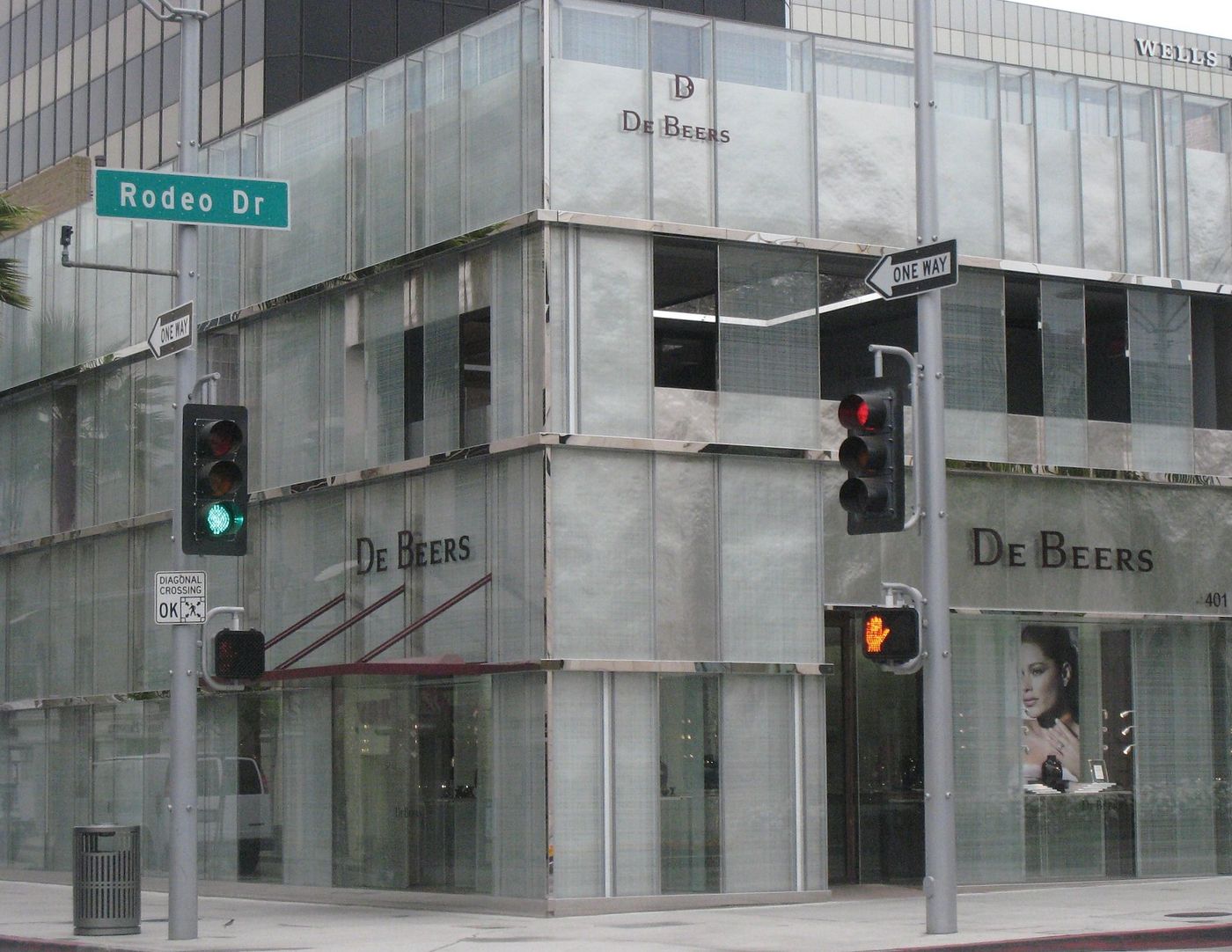
De Beers, founded by Cecil Rhodes in South Africa in 1888, created and maintained for most of the 20th century the most successful commodity market manipulation in history — a cartel that controlled the production, distribution, and pricing of rough diamonds at the global level, and sustained the price of a widely available geological material at multiples of its intrinsic value through the most successful advertising campaign in history.
The "A Diamond is Forever" slogan, created by N.W. Ayer copywriter Frances Gerety in 1947 and described by Advertising Age as the best advertising slogan of the 20th century, was the commercial expression of a De Beers strategy to create a social norm — the diamond engagement ring as the mandatory token of romantic commitment — that was largely absent from Western culture before the 1930s and essentially universal by the 1960s. The creation of a social obligation backed by a manufactured emotional meaning for a commodity that De Beers controlled the supply of is the most complete example of demand creation in the history of marketing.
De Beers controlled approximately 80 to 85% of global rough diamond supply at its peak and operated the Central Selling Organisation, which required all significant diamond producers to sell through it, as a legal monopoly in the South African legal context and as a global cartel in every other legal context. The U.S. Department of Justice opened antitrust investigations into De Beers in 1994, 1996, and 2004, none of which produced indictments, partly because De Beers executives declined to travel to the United States in order to avoid jurisdiction.
The company's dominance eroded from the 1990s onward as new producers — primarily in Canada and Russia — declined to sell through the Central Selling Organisation. The lab-grown diamond market, which produces chemically identical diamonds at approximately 10% of the cost of mined stones, is the most significant structural challenge to the De Beers business model and is proceeding faster than the company predicted.
Neruru / Wikimedia Commons
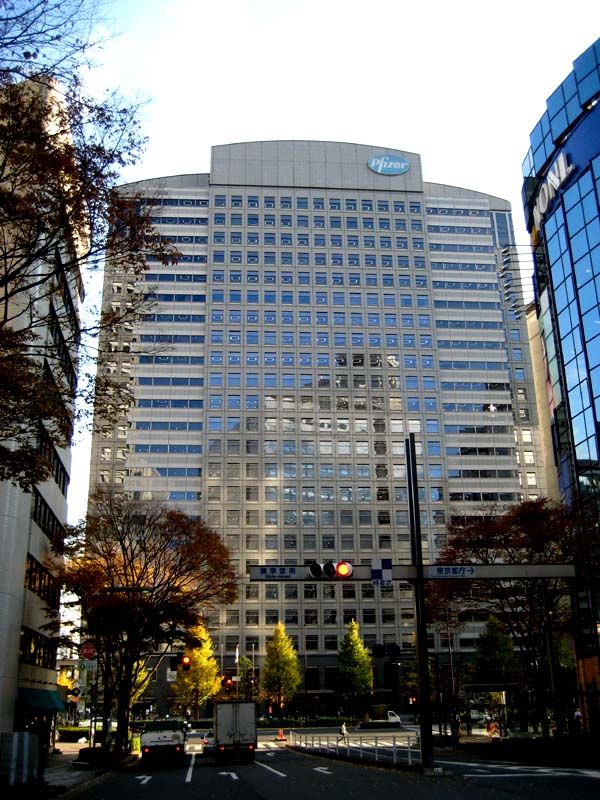
Pfizer $PFE, founded in Brooklyn in 1849 by cousins Charles Pfizer and Charles Erhart as a fine chemicals business, became one of the largest pharmaceutical companies in the world through a series of scientific breakthroughs, aggressive acquisitions, and the development of the blockbuster drug model — the commercial strategy of developing a small number of high-revenue drugs, protecting them with patents for the maximum period, and investing heavily in direct-to-consumer advertising to maximize prescription rates.
The commercial citric acid fermentation process that Pfizer developed in 1919 — which eliminated dependence on imported citric acid during the First World War — was the company's first transformative scientific contribution. The scale-up of penicillin production during World War II, which Pfizer accomplished through deep-tank fermentation at a scale no other company had achieved, was the contribution that established its place in pharmaceutical history.
The blockbuster drug model — exemplified by Pfizer's Lipitor, which became the best-selling drug in history with peak annual revenues of $13.7 billion — is both the commercial foundation of modern pharmaceutical capitalism and the primary target of its critics. Patent protection allows manufacturers to charge prices orders of magnitude above production cost for drugs whose research and development costs were recouped years earlier; the pricing logic produces revenues that fund the next generation of research while excluding from treatment patients who cannot afford the prices.
Pfizer's COVID-19 vaccine — developed in partnership with BioNTech using the mRNA platform and administered approximately 4.7 billion times globally — is the most widely distributed pharmaceutical product in history, produced in approximately nine months from viral sequence to regulatory authorization. The $36.7 billion in vaccine revenue that Pfizer earned in 2022 is the largest single-year revenue figure for any drug product in history.
Credit: Procter & Gamble
Procter & Gamble $PG, founded in Cincinnati in 1837 by William Procter and James Gamble as a soap and candle manufacturer, became the company that invented modern brand management and consumer marketing — the organizational and commercial framework through which fast-moving consumer goods companies manage their relationship with retail customers, mass media, and end consumers globally.
The brand management system — the organizational structure in which each brand is managed by a dedicated brand manager responsible for its marketing strategy, positioning, and profitability, in competition with other brands within the same company — was developed at P&G in the 1930s and became the standard organizational form for consumer goods companies globally. The system's logic is that treating brands as independent profit centers creates internal competition that improves each brand's performance, and that brand managers develop the cross-functional skills — marketing, sales, finance, supply chain — that general management requires.
P&G's investment in understanding the consumer — market research, panel data, focus groups, ethnographic observation — was the foundational investment of modern consumer marketing. The company spent decades and billions of dollars developing its understanding of how consumers make purchasing decisions, what brand communications produce purchasing behavior, and how product innovation can be translated into durable market share. The research capability it built, and the marketing talent it trained, seeded the consumer goods industry globally with P&G alumni who carried its practices into competitor companies, advertising agencies, and consulting firms.
The company's 2005 acquisition of Gillette — for $57 billion, the largest acquisition in P&G's history — produced a business spanning the majority of the consumer goods categories that appear in most households in the developed world. P&G's current portfolio includes Pampers, Tide, Gillette, Pantene, Oral-B, Bounty, Charmin, and more than 65 other brands across 10 categories — a concentration of consumer goods market power that reflects both the company's commercial success and the consolidation of the consumer goods industry over the past 50 years.
,_Hoorn-1920x1278.jpg)
Stephencdickson / Wikimedia Commons (CC BY-SA 4.0)
The Dutch East India Company — Vereenigde Oost-Indische Compagnie, or VOC — founded in Amsterdam in 1602 and dissolved in 1799, was the first company to issue stock to the public, the first to develop a secondary market for those shares, the first to raise capital from the public for a commercial enterprise rather than from the state or from wealthy private investors, and the first to develop the organizational and governance structures that modern corporations still use. It is, in the most literal sense, where modern capitalism began.
The VOC was created by an act of the Dutch States-General, which granted it a 21-year monopoly on trade between the Netherlands and Asia and the authority to negotiate treaties, maintain armed forces, establish colonies, and administer justice in the territories it controlled. The company that resulted — which operated for nearly 200 years and, at its peak, employed 70,000 people, maintained 150 merchant ships and 40 warships, and paid dividends averaging 18% annually — was simultaneously a trading company, a colonial government, and a military force, with a geographic reach that no previous commercial enterprise had approached.
The share issuance of 1602 — which raised 6.5 million guilders from approximately 1,800 investors in cities across the Dutch Republic — was the foundational act of capital market capitalism. The Amsterdam Stock Exchange, which developed to allow trading in VOC shares, was the first secondary securities market and established the infrastructure — clearing, settlement, price quotation, short selling, options — that modern financial markets still use.
The VOC's commercial practices — the extraction of tropical commodities from Asia through a combination of trade, coercion, and colonial administration that enriched its shareholders while impoverishing the populations it governed — established a template for European colonial commerce whose consequences in Indonesia and the broader Asian region outlasted the company itself by centuries.
NurPhoto / Getty Images
IBM $IBM — International Business Machines, founded in 1911 as the Computing-Tabulating-Recording Company and renamed in 1924 — is the company that established the modern technology industry's commercial and organizational foundations before the personal computer era, and whose strategic decisions in the early 1980s inadvertently created the conditions for its own marginalization while enabling the dominance of Microsoft $MSFT and Intel $INTC.
IBM's dominance of the mainframe computer market from the 1950s through the 1970s — the System/360 family, introduced in 1964, established a hardware and software compatibility standard that organized corporate computing for two decades — was achieved through the same bundling strategy that would later be scrutinized in antitrust cases against Microsoft. The 1969 antitrust case brought by the Department of Justice, which accused IBM of monopolizing the computer industry, lasted 13 years before being abandoned, and the terms IBM accepted in a 1956 consent decree — separating its hardware and software businesses and licensing its patents to competitors — inadvertently accelerated the growth of the independent software industry.
The IBM PC decision of 1981 — to build the personal computer on an open architecture using an Intel processor and a licensed operating system from Microsoft — was the decision that created the PC-compatible market and distributed the value of the personal computer industry to Intel and Microsoft rather than retaining it at IBM. The decision was rational given IBM's strategic priorities at the time and the speed at which the PC market needed to be entered, but its long-term consequence was to transform IBM from the dominant institution of computing to a component supplier in an industry it had effectively created.
IBM's subsequent reinvention as a services and consulting company — the sale of its PC division to Lenovo in 2005, the acquisition of PricewaterhouseCoopers Consulting in 2002, and the development of its Watson AI platform — is one of the more successful corporate adaptations in technology history, even if it produced a smaller and less culturally prominent company than the mainframe-era IBM.
Connor Scott McManus / Pexels
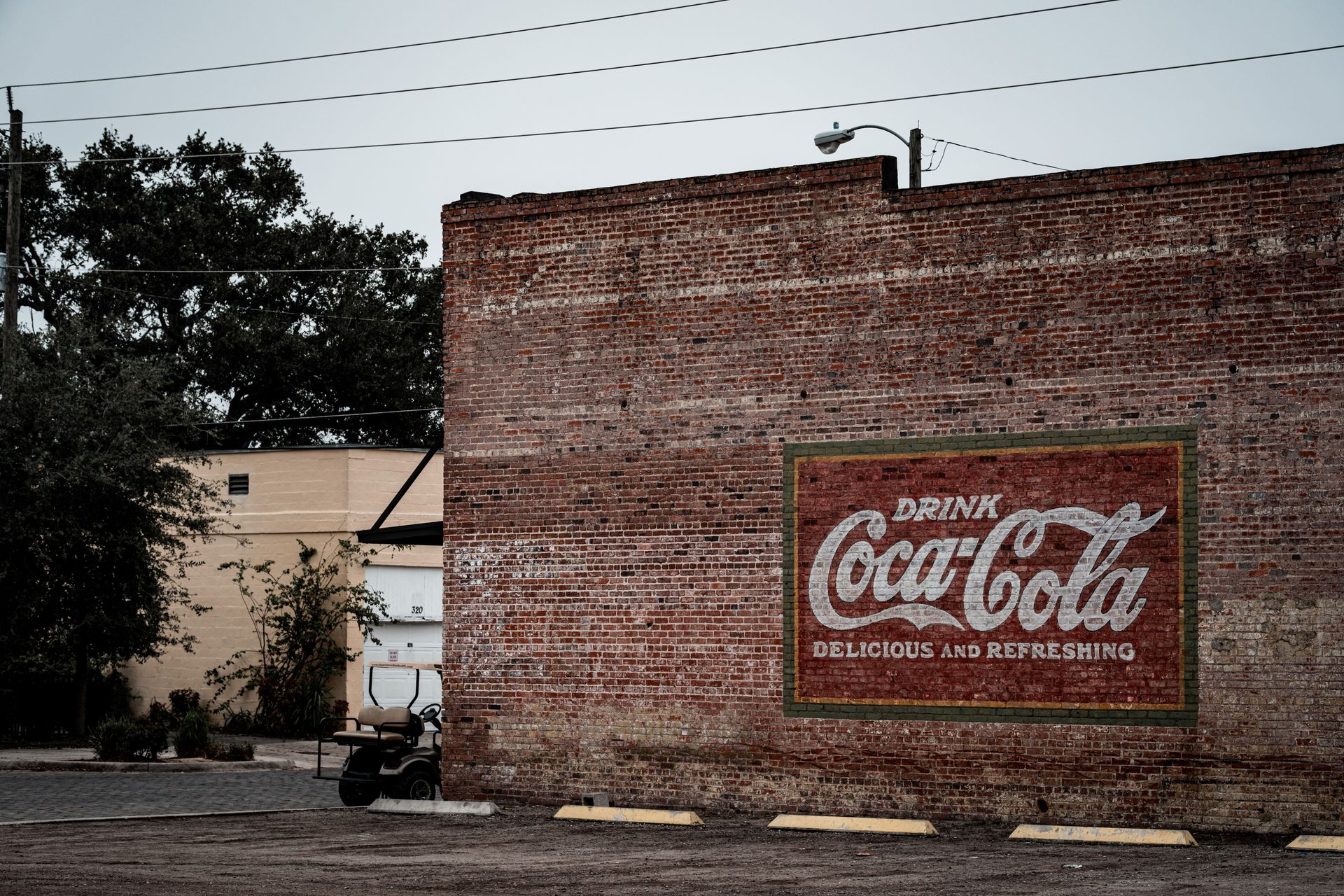
Coca-Cola $KO, invented by pharmacist John Pemberton in Atlanta in 1886 and commercialized by Asa Candler from 1888, became the most recognized brand in the world, the foundational case study in consumer brand building, and the company that demonstrated — at a scale and over a period that no other brand has matched — that a commodity product with minimal product differentiation from its competitors can command premium pricing and extraordinary customer loyalty through the sustained application of marketing, distribution, and cultural association.
The Coca-Cola brand — the script logo, the contour bottle, the distinctive red — is the result of consistent brand management across 135 years and across every medium in which commercial communication has occurred, from 19th-century soda fountain signage through radio and television advertising through digital and social media. The specific investment in brand consistency — the refusal to change the visual identity, the packaging, or the formula without extraordinary care — is the discipline that most distinguishes Coca-Cola's brand management from that of companies that have allowed brand assets to drift.
The franchise bottling system — in which Coca-Cola sells concentrate to independent bottlers who manufacture, package, and distribute the finished product under franchise arrangements — is the organizational model that allowed the company to achieve global distribution without the capital requirements of owning bottling and distribution infrastructure in every market. The system's logic — retaining control of the high-margin concentrate business while franchising the capital-intensive distribution function — is widely copied in franchise models across industries.
The 1985 New Coke reformulation — the decision to change the Coca-Cola formula to a sweeter version, which produced a consumer backlash so immediate and so fierce that the original formula was restored within 79 days — is the most studied marketing failure in consumer goods history and the clearest demonstration that consumer brand loyalty can attach to a product's specific formulation at a depth that market research consistently underestimates.

Aibek Skakov / Pexels
McKinsey & Company, founded in Chicago in 1926 by James O. McKinsey, became the most influential management consulting firm in the world and the organization most responsible for the diffusion of specific management practices — strategy consulting, cost reduction, organizational restructuring, performance management — across the global corporate economy. Its influence on capitalism is not primarily through its own financial performance but through the practices it installed in client organizations and the executives it trained and placed.
The McKinsey model — deploying small teams of highly educated generalists to solve specific business problems for senior corporate clients, charging fees that required the solutions to produce measurable value — established the template for the management consulting industry that BCG, Bain, and hundreds of smaller firms subsequently replicated. The firm's recruitment from elite universities and its up-or-out personnel system created an alumni network in corporate management and public service that amplified its influence beyond its direct client relationships.
McKinsey's specific intellectual contributions — the McKinsey Matrix, the 7-S Framework, the concept of the "war for talent" — are the organizational ideas most widely attributed to a single consulting firm and reflect the company's role as a generator of management concepts as well as a deliverer of advice. The firm's publication, McKinsey Quarterly, established the consulting firm as a legitimate source of management thought rather than a purely commercial service provider.
The firm's controversial engagements — its work for pharmaceutical companies including Purdue Pharma on opioid marketing, its work for authoritarian governments, its role in corporate restructurings that produced large-scale layoffs — raised questions about the responsibilities of management consultants that the profession has not fully resolved. The $573 million settlement reached by McKinsey in 2021 over its Purdue Pharma work was the largest by any consulting firm in history.
