
25 novels that were controversial when published and why
From banned books to court battles, these novels shook readers, governments, and publishers — and in many cases changed what literature was allowed to say
Credit: Vlad Patana / Unsplash
When a novel causes genuine alarm — gets seized by customs agents, prosecuted in court, burned in public squares, or banned by governments — something unusual has happened. A book has crossed a line that someone in authority believed needed defending. The history of literary controversy is, in many ways, a history of power: who gets to decide what stories are told, in what language, about whose body, whose politics, whose god.
The novels on this list were not controversial in the mild sense of being impolite or edgy. Each one triggered formal attempts at suppression, or provoked public outrage significant enough to reshape the conditions under which it was published, sold, or read. Some faced criminal prosecution. Others were banned outright by governments or religious authorities. A few were suppressed by their own publishers, who feared the consequences of releasing them.
What made each book dangerous varied by time and place. James Joyce's Ulysses was obscene to American postal authorities in 1920 because it described a man's sexual thoughts. Vladimir Nabokov's Lolita was obscene to French publishers for an entirely different reason — its narrator was a confessed predator, and the prose was too beautiful for comfort. D.H. Lawrence's Lady Chatterley's Lover was prosecuted in Britain in 1960 not just for its sex scenes but because a barrister asked the jury whether it was a book they would want their wives or servants to read. The class anxiety buried in that question tells you as much as the novel does.
Other books provoked controversy for their politics, their race, their religion, or their refusal to offer redemption. Richard Wright's Native Son made white liberal readers confront what racism actually produces. Salman Rushdie's The Satanic Verses prompted a fatwa that forced the author into hiding for nearly a decade. Harriet Beecher Stowe's Uncle Tom's Cabin was credited — and blamed — for helping start the U.S. Civil War.
The controversies did not end at borders. Books suppressed in the U.S. circulated in Paris. Books banned in the U.K. were smuggled in paperback. The Soviet Union suppressed Doctor Zhivago, so it was published in Italy. Censorship has a way of distributing the very texts it aims to contain.
Reading these novels now, after their controversies have settled into literary history, it is easy to assume the outrage was always absurd. In some cases, it was. But in others, the people who feared these books understood exactly what they were doing. These novels were trying to change something. That is why they had to be stopped — and why they weren't.
Ulysses by James Joyce (1922)
Credit: Geoffrey Barker / Wikimedia Commons (CC BY-SA 4.0)
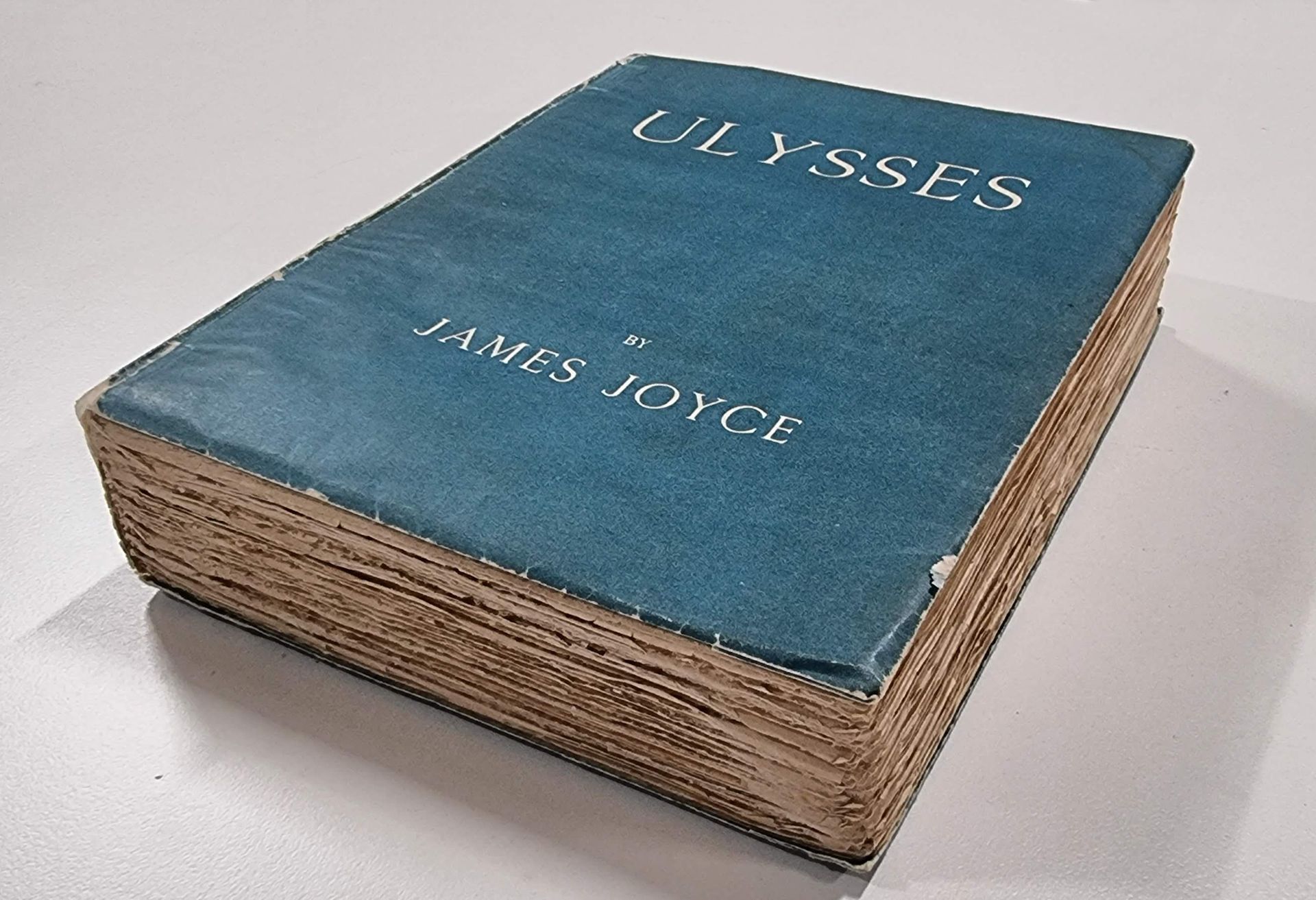
James Joyce's Ulysses arrived not as a bound volume but in fragments, serialized in a U.S. literary magazine called The Little Review between 1918 and 1920. It was during that serialization — specifically after the publication of the Nausicaa episode, in which Leopold Bloom masturbates while watching a young woman on a beach — that the trouble began. The editors of The Little Review, Margaret Anderson and Jane Heap, were prosecuted for obscenity under the Comstock Act. They were convicted in 1921 and fined. The magazine was ordered to stop printing the novel.
This left Joyce without an American publisher willing to touch the complete text. Sylvia Beach, the owner of the Shakespeare and Company bookshop in Paris, agreed to publish the full novel in 1922 — a courageous act at the time, because it meant producing a book that could not legally be imported into the U.S. or the U.K. Copies were smuggled across the Atlantic in passengers' luggage and through the mail under disguised covers.
The U.S. ban held for over a decade. In 1933, a federal judge named John Woolsey ruled that Ulysses was not obscene — that its frank treatment of bodily life and sexuality was literary in intent, not prurient. His ruling was not simply a legal verdict; it was a piece of literary criticism embedded in a court decision. He argued that Joyce was attempting to record the stream of human consciousness, including its least dignified moments, and that this was a legitimate artistic goal. The ruling set a legal precedent that would help defend other books for decades.
The novel remains one of the most formally ambitious works in English. It follows Leopold Bloom and Stephen Dedalus through a single day in Dublin — June 16, 1904 — while reworking the structure of Homer's Odyssey in compressed, modernist form. Its final chapter, a long unpunctuated monologue by Molly Bloom, was what many readers found most disturbing: an interior voice that was frank about desire, boredom, bodily function, and infidelity, and that refused to apologize for any of it.
What the novel's opponents feared, and what Woolsey's ruling implicitly acknowledged, was not that Ulysses was merely dirty. It was that it took the inner life of an ordinary person — not a hero, not a saint, not a figure of moral instruction — and treated it as worthy of a thousand pages of the highest literary art. That was the more lasting provocation.
Lady Chatterley's Lover by D.H. Lawrence (1928)
Credit: Department for Culture, Media and Sport / Flickr (PDM 1.0)
D.H. Lawrence wrote Lady Chatterley's Lover in 1928, near the end of his life, and he knew it could not be published in Britain or the U.S. in its complete form. He arranged a private printing in Florence, Italy, and the book circulated in expensive limited editions — a situation that, as Lawrence well understood, meant it was accessible mainly to the affluent. The version available to ordinary readers for decades was an expurgated one, stripped of its explicit sex scenes and much of its emotional weight.
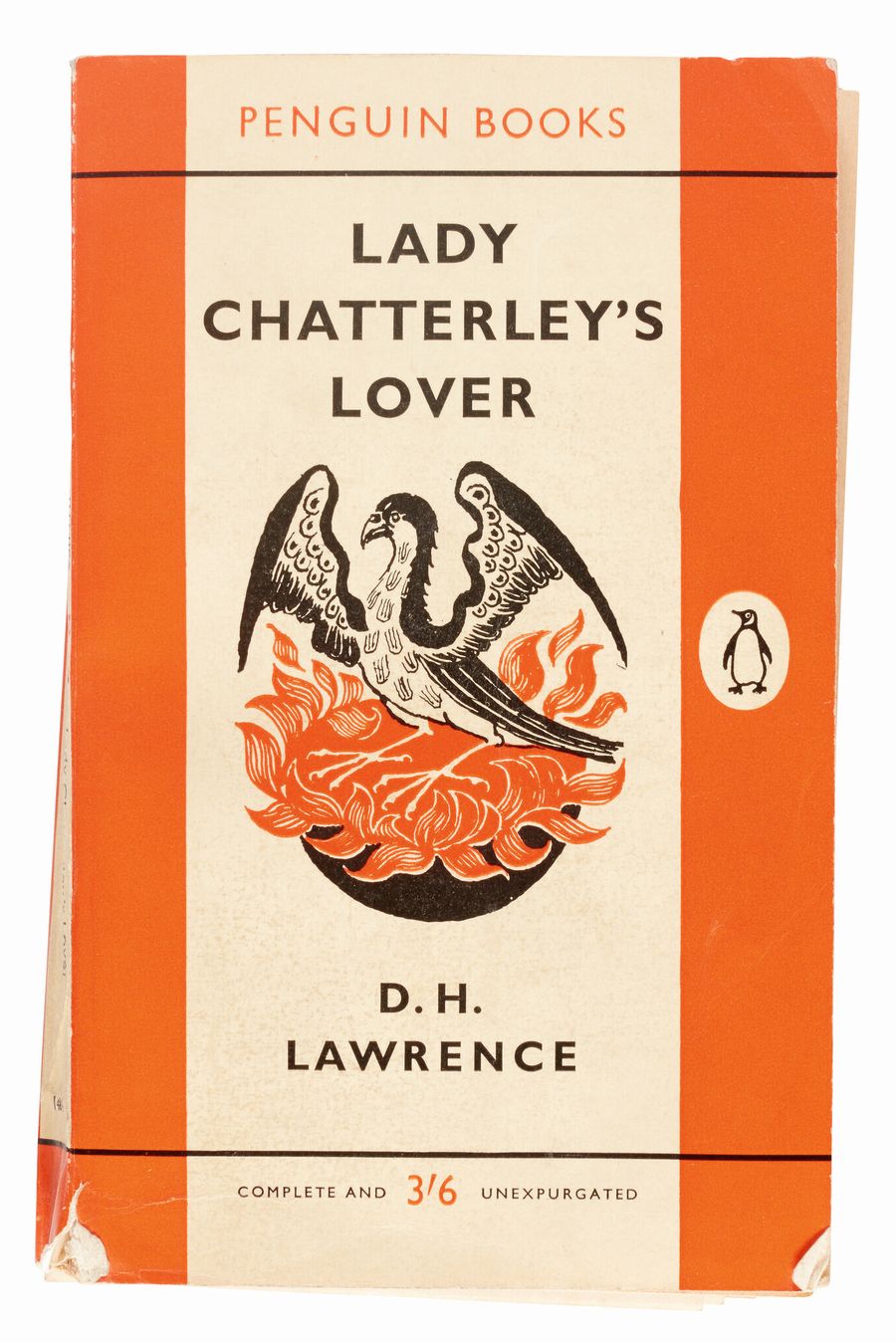
The full text was not published in the U.K. until 1960, when Penguin Books deliberately chose to test the newly enacted Obscene Publications Act by releasing an unexpurgated paperback. The resulting trial became one of the most famous literary court cases in British history. The prosecution asked the jury whether this was a book they would wish their wives or servants to read. The defense called a series of distinguished witnesses, including E.M. Forster and Rebecca West, who argued for the novel's literary merit. The jury acquitted Penguin after three hours.
The novel tells the story of Constance Chatterley, whose husband Sir Clifford was wounded in the First World War and is now paralyzed from the waist down. She begins an affair with Oliver Mellors, the gamekeeper on their estate. The sexual relationship between an aristocratic woman and a working-class man was itself provocative, but what most disturbed readers — and prosecutors — was Lawrence's insistence that the affair was not merely physical but spiritually restorative, that the body and its pleasures were not shameful but humanizing.
Lawrence was explicit about this intention. He believed that industrialism and class rigidity had cut people off from physical vitality, and that the novel's graphic scenes were an argument about civilization as much as about sex. Whether readers accepted this framing or not, the prose was undeniably serious. The 1960 trial sold the book. In the weeks after acquittal, Penguin sold more than two million copies.
Lolita by Vladimir Nabokov (1955)
Credit: SLPTWRK / Flickr (CC BY 2.0.)
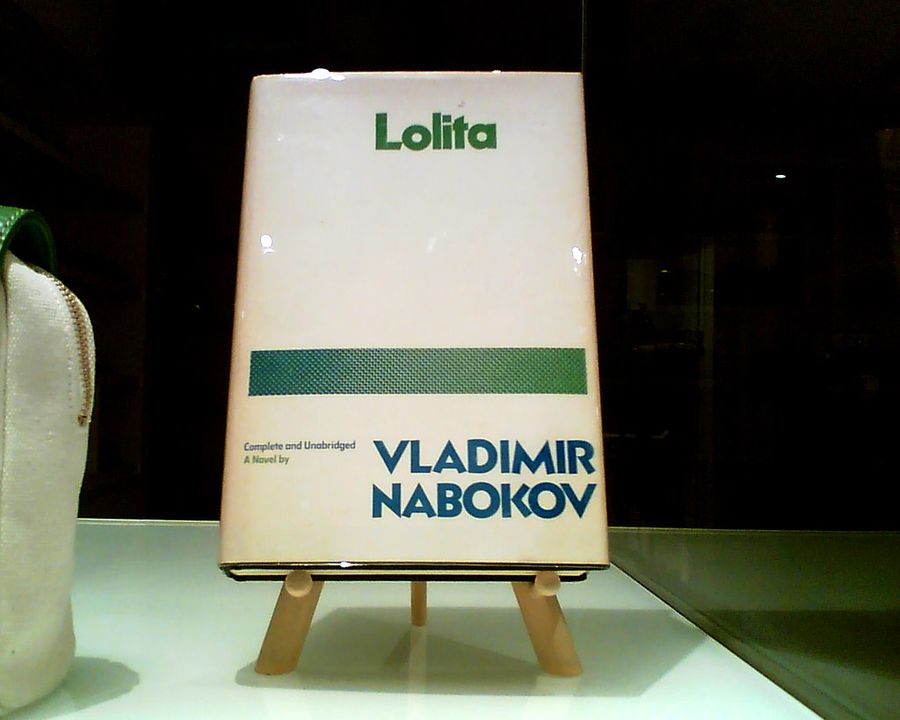
Vladimir Nabokov finished Lolita in 1953 and spent two years unable to find a publisher willing to print it. Four American publishers refused. He eventually sent the manuscript to Olympia Press in Paris, a house known for publishing erotic fiction alongside serious literary work — a pairing that would complicate Lolita's reputation for years. The novel appeared in 1955 in two modest olive-green paperback volumes. It was not reviewed. It was mostly ignored.
Then Graham Greene named it one of the three best books of 1955 in a British newspaper. Another British journalist attacked the choice, calling Lolita a dirty book. The resulting public argument made the novel famous before most readers had access to it. The U.K. banned it. The French government, under pressure, banned it. The Olympia Press edition was briefly seized.
An American edition did not appear until 1958, when Putnam published it to enormous commercial success. The novel spent weeks on the bestseller list. It was a situation Nabokov found somewhat absurd — the book had not changed; the context had.
What the controversy concealed, and what careful readers eventually articulated, was the formal complexity of what Nabokov had done. The narrator, Humbert Humbert, is an eloquent pedophile who has abducted a 12-year-old girl named Dolores Haze and subjected her to years of abuse. The prose is beautiful. Humbert is funny, self-aware, and literary. He is also a predator whose every sentence is a manipulation, including those addressed to the reader.
The novel's disturbing achievement is that it forces readers to notice when they have been seduced by the prose into sympathy with Humbert, and then to confront what they have just done. Dolores Haze appears at the edges of Humbert's narration as a real child — grieving, resilient, eventually worn down — but the reader must work to see her past Humbert's rhetoric. That is the novel's actual subject: the violence of aesthetic self-justification. Few first-time readers recognize this. That tension, between beauty and horror, is why the controversy never fully settled.
The Satanic Verses by Salman Rushdie (1988)
-1400x1889.jpg)
Credit: Ed Lederman / PEN American Center / Wikimedia Commons (CC BY 2.0)
Salman Rushdie's fourth novel was published in September 1988 by Viking Penguin in the U.K. Within months, it had been banned in India, Pakistan, Saudi Arabia, Egypt, and several other countries with large Muslim populations. By February 1989, Ayatollah Khomeini of Iran had issued a fatwa — a religious ruling — declaring Rushdie and the book's publishers to be sentenced to death for blasphemy. Rushdie went into hiding under British police protection. He would remain in hiding, moving between safe houses, for nearly a decade.
Two of the novel's translators and one of its publishers were attacked. The Japanese translator Hitoshi Igarashi was stabbed to death in 1991. The Italian translator Ettore Capriolo was seriously wounded in the same month. The novel's Norwegian publisher William Nygaard was shot three times and left for dead outside his Oslo home. He survived.
The controversy centered on a section of the novel in which two characters — a Bollywood actor and a failed prophet — dream sequences that were read as satirical depictions of the Prophet Muhammad, his wives, and the origins of Islam. Rushdie and his defenders argued that these were dream sequences within a novel about identity, postcolonial displacement, and the nature of revelation — not a straightforward attack on Islam. The novel's critics argued that the intent was irrelevant; the content was blasphemous.
The novel is in fact a complex, formally demanding piece of work, deeply engaged with questions of migration, cultural identity, good and evil, and the construction of sacred narratives. It is also long, difficult, and allusive. Most of the people who condemned it had not read it. Most of the people who defended it had.
Rushdie was eventually reconciled, to varying degrees, with several Muslim-majority governments. The Iranian government distanced itself from the fatwa in 1998, though it was never formally rescinded. In 2022, a man attacked Rushdie on stage at a literary event in New York state, stabbing him multiple times. Rushdie lost sight in one eye.
Native Son by Richard Wright (1940)
Credit: Wikimedia Commons / PICRYL
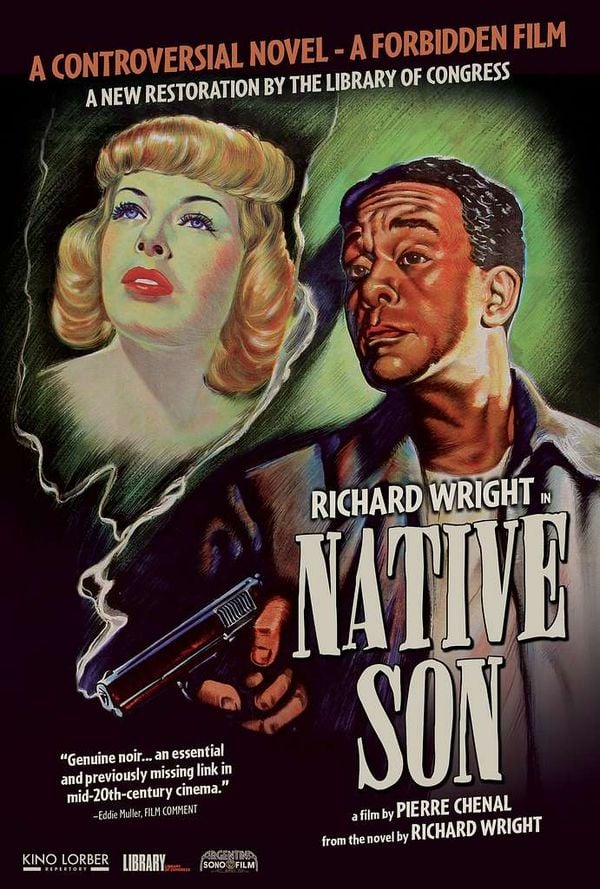
Richard Wright's Native Son was published in March 1940 by Harper & Brothers and became a Book-of-the-Month Club selection — an almost unheard-of commercial endorsement for a novel written by a Black author about the consequences of American racism. It sold 200,000 copies in its first month. It was the first book by a Black writer to achieve that kind of mainstream commercial success in the U.S.
The controversy was not about whether the novel was well-written. It was about what it said. Bigger Thomas, the 20-year-old protagonist, accidentally kills a young white woman and then deliberately murders his Black girlfriend to prevent her from testifying against him. Wright's argument — rendered through the legal defense offered by Bigger's attorney Boris Max — was that Bigger's violence was not a personal failing but a predictable product of the conditions white America had created for Black people. The terror, the self-hatred, the explosive rage: these were not aberrations but outcomes.
White liberal readers were disturbed. The novel did not offer them the comfort of a sympathetic Black protagonist — someone who proved, through suffering and dignity, that racism was wrong. Bigger Thomas was not dignified. He was frightened and dangerous. Wright was making a specific argument: that presenting Black suffering in palatable form was itself a form of dishonesty, and that a literature of true protest had to be willing to show what oppression actually produced in human beings.
The Book-of-the-Month Club required Wright to cut a masturbation scene before they would select it. The scene appeared in a later restored edition. The expurgation was a minor editorial concession, but it illustrated the broader dynamic: the novel could be accepted by mainstream white culture only when its roughest edges were smoothed.
The novel was adapted for the stage in 1941 and for film, twice. James Baldwin later criticized Wright's naturalism in a famous 1949 essay, arguing that Bigger Thomas reduced a human being to a protest symbol. Wright disagreed. The argument between them — about what Black literature owed its characters versus what it owed political truth — has never been fully resolved.
Uncle Tom's Cabin by Harriet Beecher Stowe (1852)
Credit: Boston Public Library / Flickr (CC BY 2.0)
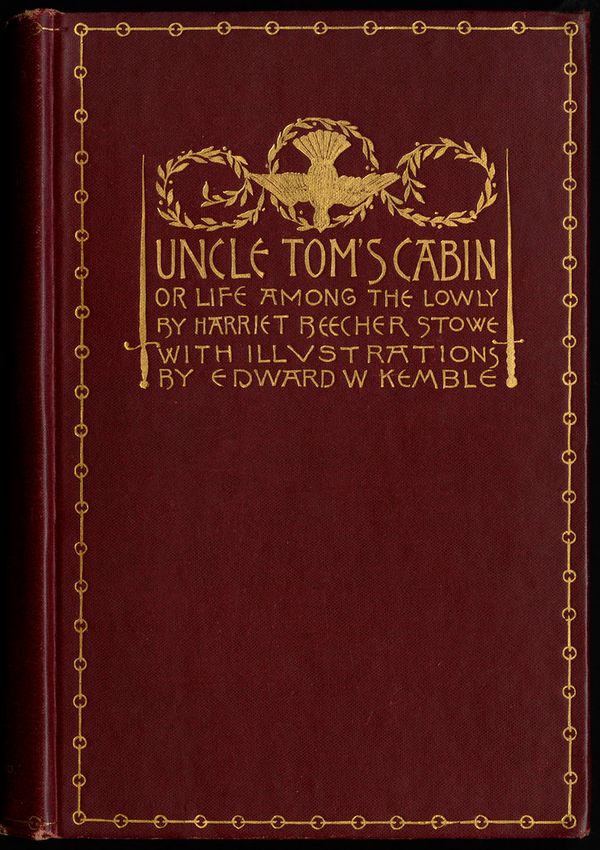
Harriet Beecher Stowe began publishing Uncle Tom's Cabin as a serial in an abolitionist newspaper, the National Era, in 1851. When it was released as a book in March 1852, it sold 300,000 copies in the U.S. in its first year. It was the best-selling novel of the 19th century in the U.S. and the second best-selling book after the Bible. It was translated into dozens of languages and read across Europe.
In the American South, it was controversial in the most direct possible sense: it was banned. Some Southern states made it illegal to possess the book. The novel depicted slavery not as a paternalistic institution that benefited enslaved people — the standard proslavery argument — but as a system of arbitrary cruelty that destroyed families and degraded human beings regardless of the individual slaveholder's character. The novel's most devastating argument was that even a kind master, like the novel's Augustine St. Clare, maintained a system that could deliver any enslaved person to a brutal one like Simon Legree without warning or recourse.
Abraham Lincoln reportedly met Stowe in 1862 and greeted her as the little woman who wrote the book that started this great war. Whether or not he said this, the story reflected how the novel was understood at the time — as a political act with real consequences.
The novel's reputation shifted significantly in the 20th century. Its protagonist, Tom, was criticized for his deference to white authority and his willingness to suffer rather than resist. The phrase "Uncle Tom" became a term of contempt for Black people perceived as submissive to white expectations. Scholars have debated how much of this criticism is fair to the novel as a whole, and how much reflects expectations that Stowe, writing in 1851, could not have held.
What is not in dispute is the book's initial political impact. It changed what many Northern white readers believed was possible to continue ignoring. That was the controversy: not that Stowe had written badly, but that she had written effectively.
Brave New World by Aldous Huxley (1932)
Credit: Wikimedia Commons / PICRYL
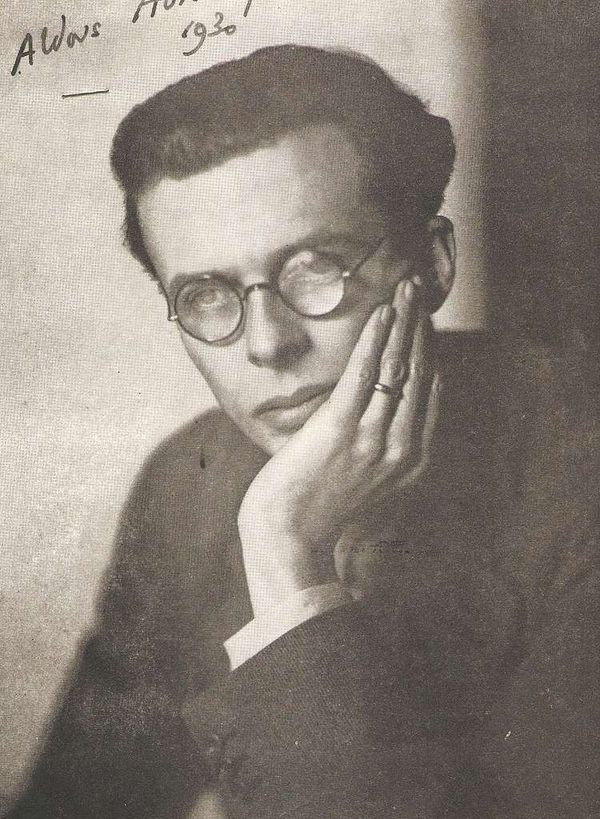
Aldous Huxley published Brave New World in 1932, at a moment when both Soviet communism and European fascism were providing real-world models for what authoritarian social engineering might look like. His novel imagined a different kind of totalitarianism — one that did not rely on terror and deprivation but on pleasure, pharmaceutical pacification, and the elimination of anything that might produce discomfort, including family, religion, art, and genuine human connection.
The book was controversial on several grounds simultaneously. Conservatives found its sexual frankness offensive — citizens of the World State engage in casual sex as a social norm, children are introduced to erotic play early, and monogamy is considered antisocial. Religious readers found its rejection of God and its portrayal of a society without transcendence alarming. Some on the political left found its satire of utopian social planning too convenient a weapon for reactionaries.
The novel was banned in Ireland in 1932, primarily on grounds of its sexual content and its perceived attack on Christian values. It appeared on banned lists in various American school districts throughout the 20th century, often alongside Orwell's 1984, for similar reasons.
What made Brave New World more unsettling than straightforwardly dystopian fiction was Huxley's suggestion that the citizens of his World State were not miserable. They were conditioned to be content. They did not miss the things that had been taken from them — grief, struggle, risk, love of the permanent kind — because they had been engineered from birth not to want them. The horror was not suffering but its absence: a world in which human beings had been successfully managed out of their full humanity.
Huxley himself returned to this argument in a 1958 nonfiction work, Brave New World Revisited, where he argued that the real world was moving toward his dystopia faster than he had anticipated, primarily through advertising, propaganda, and pharmacology. That observation has become more, not less, discussed since.
The Color Purple by Alice Walker (1982)
Credit: Folktroubadour / Wikimedia Commons (CC BY 4.0)
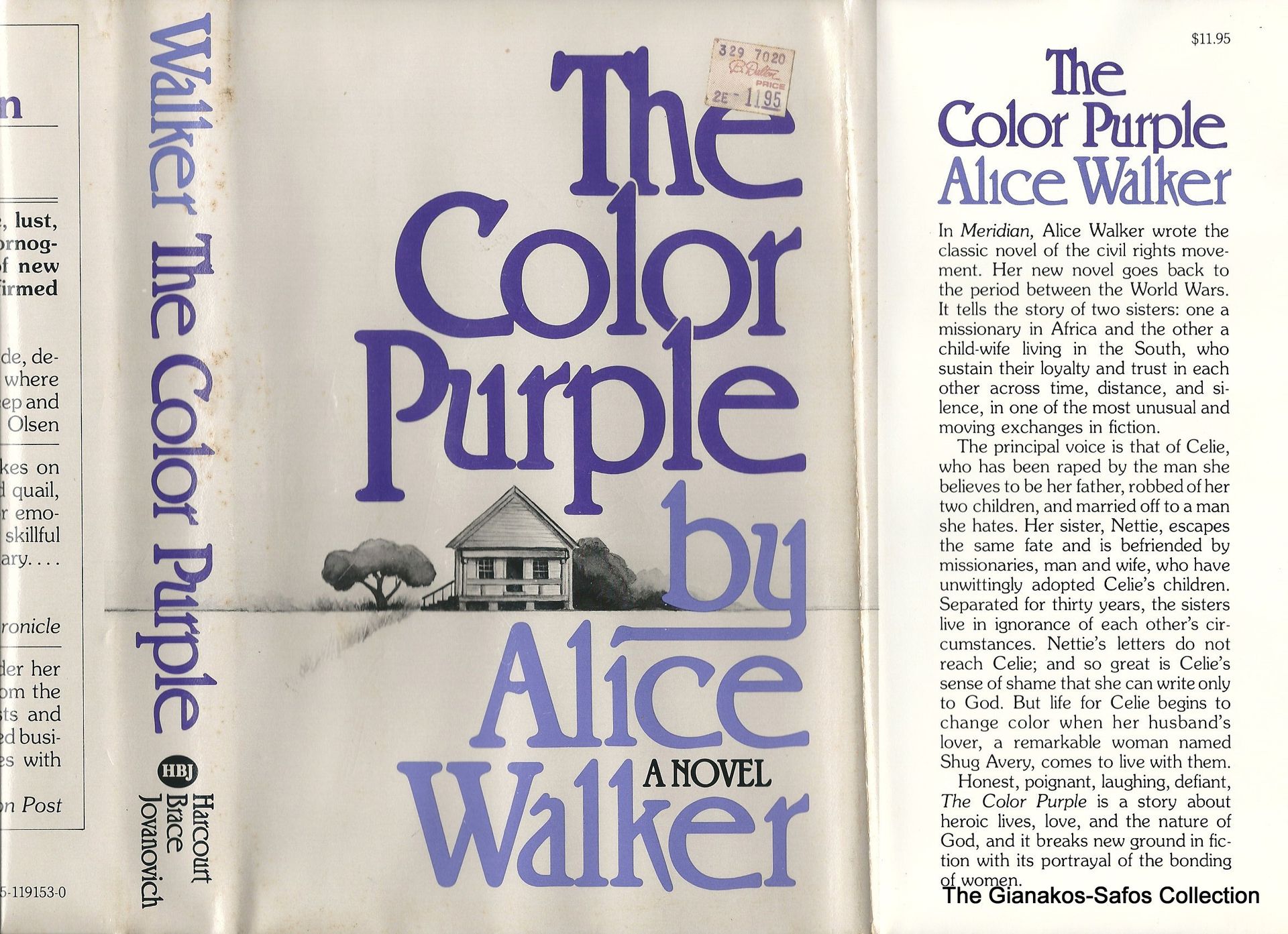
Alice Walker's The Color Purple won the Pulitzer Prize for Fiction and the National Book Award in 1983. It was also challenged and removed from school reading lists and library shelves more frequently than almost any other novel in the U.S. during the 1980s and 1990s. The contradictions of that situation — a prize-winning novel also being among the most actively suppressed — illustrated something specific about how literary merit and moral discomfort can operate in parallel.
The challenges came from multiple directions. Some objectors cited the novel's explicit depictions of sexual violence and abuse. Others objected to its portrayal of lesbian relationship between Celie and Shug Avery. Still others, including some Black community members, objected to the novel's portrayal of Black men — specifically its central story of a Black woman victimized by a Black man — arguing that it reinforced negative stereotypes rather than presenting a more complex picture.
The novel is set in rural Georgia in the early 20th century and told in letters — first written by Celie to God, then exchanged between Celie and her sister Nettie, who is in Africa. Celie has been raped by the man she believes to be her father, separated from her children, and forced to marry a man who beats her. The novel follows her slow emergence into selfhood, community, and erotic life.
Walker's formal choice — the epistolary structure, the vernacular voice, the grounding of spiritual experience in the physical — was deliberate. She was writing in a tradition of Black women's literature that located dignity and resistance not in abstract principle but in the body's survival and the voice's persistence.
The film adaptation by Steven Spielberg in 1985 renewed public debate about the novel. The conversations about its representation of Black men continued for years. Walker's position — that the novel was a true account of experiences many Black women had lived — never changed.
Tropic of Cancer by Henry Miller (1934)
Credit: Anonymous / Hufvudstadsbladet / Wikimedia Commons (CC BY 4.0)
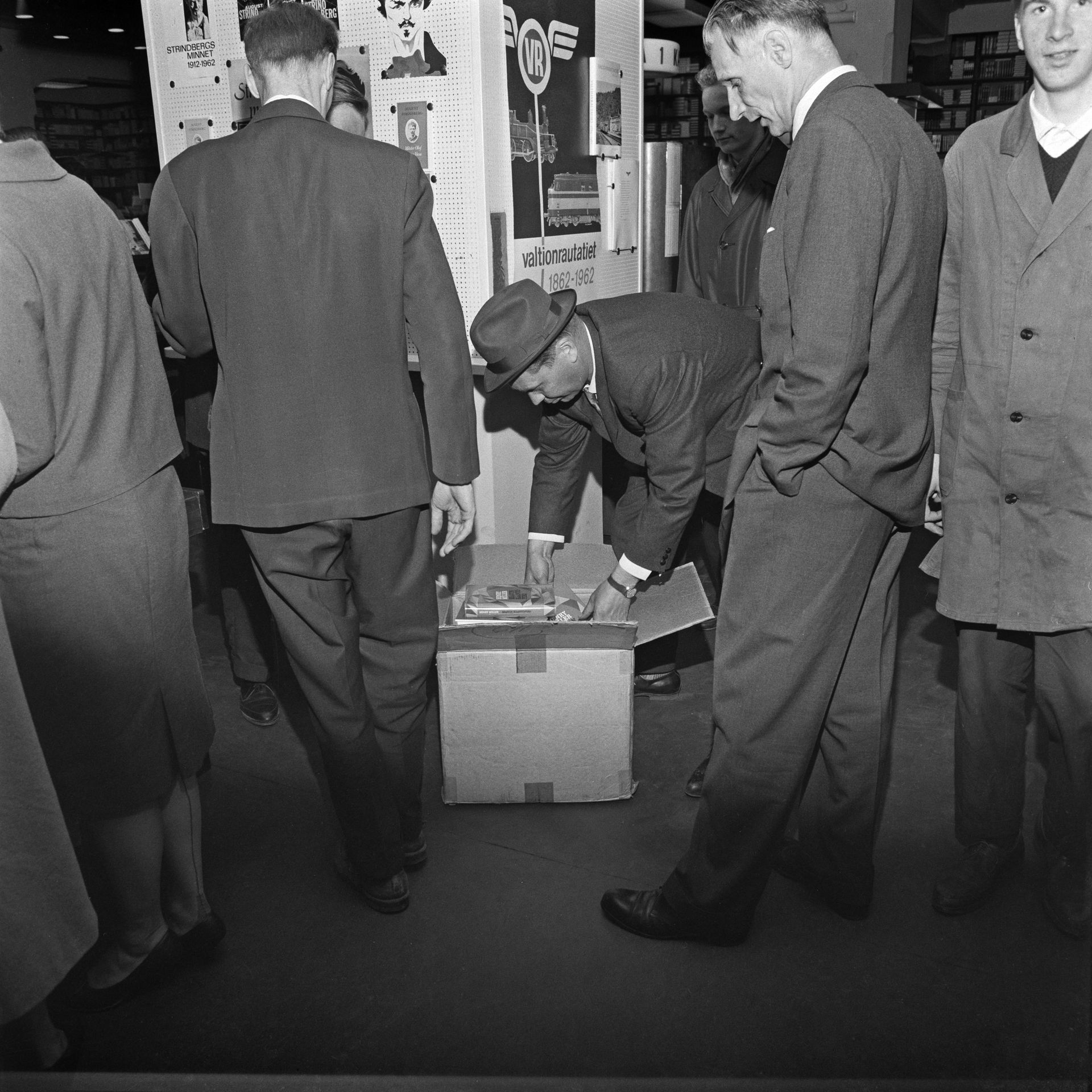
Henry Miller wrote Tropic of Cancer in Paris in the early 1930s, and the novel was published there by Obelisk Press in 1934. It could not be legally imported into the U.S. or the U.K. It existed, for almost three decades, as a book that Americans knew about but could not legally read at home. Copies circulated in the way contraband does — through returning travelers, through friends, through mail packages that sometimes made it through customs.
An American edition did not appear until 1961, when Grove Press published it. The resulting legal battle moved through several state courts. In 1964, the U.S. Supreme Court ruled in Grove Press v. Gerstein that the novel was constitutionally protected. The ruling effectively ended literary obscenity prosecutions in the U.S. for decades.
The novel is narrated by a semi-autobiographical character named Henry who is living in Paris, broke, often hungry, moving between apartments and the beds of women he describes with complete frankness and no apparent guilt. It is about poverty, expatriate bohemianism, male friendship, and the writer's relationship to language. It is also, by the standards of 1934, explicit in ways that had rarely appeared in published English prose.
The controversy was specifically about this explicitness, but beneath it was an argument about what literature was permitted to do. Miller's narrator was not confessing to shameful desires while seeking forgiveness. He was reporting them as facts of his existence, without apology or moral framing. The shock was not the content but the tone — the flat, cheerful, unembarrassed quality of the voice.
Feminist critics, most notably Kate Millett in her 1970 work Sexual Politics, later argued that Miller's work was not liberated but misogynistic — that the sexual frankness celebrated male freedom while treating women as objects. This argument did not lead to re-suppression of the novel, but it changed how it was taught and discussed.
1984 by George Orwell (1949)
Credit: Chris Protopapas / Flickr (PDM 1.0)
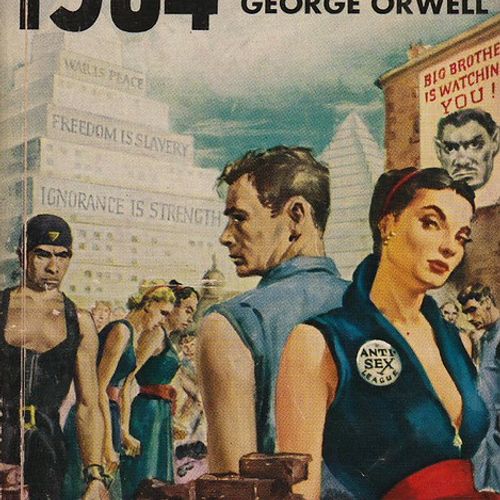
George Orwell finished Nineteen Eighty-Four in 1948 while seriously ill with tuberculosis, on the Scottish island of Jura. It was published by Secker & Warburg in June 1949, a few months before Orwell died. The novel was immediately read as a political intervention — a warning about totalitarianism directed at both the Soviet Union and the Western democracies that Orwell feared might drift toward similar methods.
The controversy took different forms in different places. In the Soviet bloc, the novel was suppressed because its portrait of an authoritarian state bore obvious resemblance to Soviet reality. It could not be published or sold; copies were samizdat — hand-copied and circulated secretly at considerable personal risk. In the U.S. during the Cold War, the novel was embraced as anti-communist propaganda, then challenged in some school districts for its sexual content and its bleak vision of human nature.
The book has been challenged repeatedly in American schools and libraries on grounds that it is pro-communist (because the protagonist's society resembles the U.S. in some readers' interpretations) or that it contains objectionable sexual content or explicit violence. These challenges have rarely succeeded, but they continued into the 21st century.
The novel depicts Winston Smith, a minor bureaucrat in a totalitarian state called Oceania, who rebels against the Party through a forbidden love affair and contact with what he believes to be a resistance movement. The Party's instruments of control — constant surveillance, the manipulation of language through Newspeak, the revision of historical records, and the torture of dissidents until they genuinely believe whatever the Party requires — were presented as logical extensions of trends Orwell had observed in both fascist and communist states.
The terms Orwell coined — Big Brother, doublethink, Newspeak, Room 101, the memory hole — passed into everyday language. The novel's influence on political vocabulary has been large enough that politicians across the ideological spectrum regularly invoke it to describe conditions they dislike, which Orwell would probably have found instructive.
The Adventures of Huckleberry Finn by Mark Twain (1884)
Credit: Boston Public Library / Flickr (CC BY 2.0)
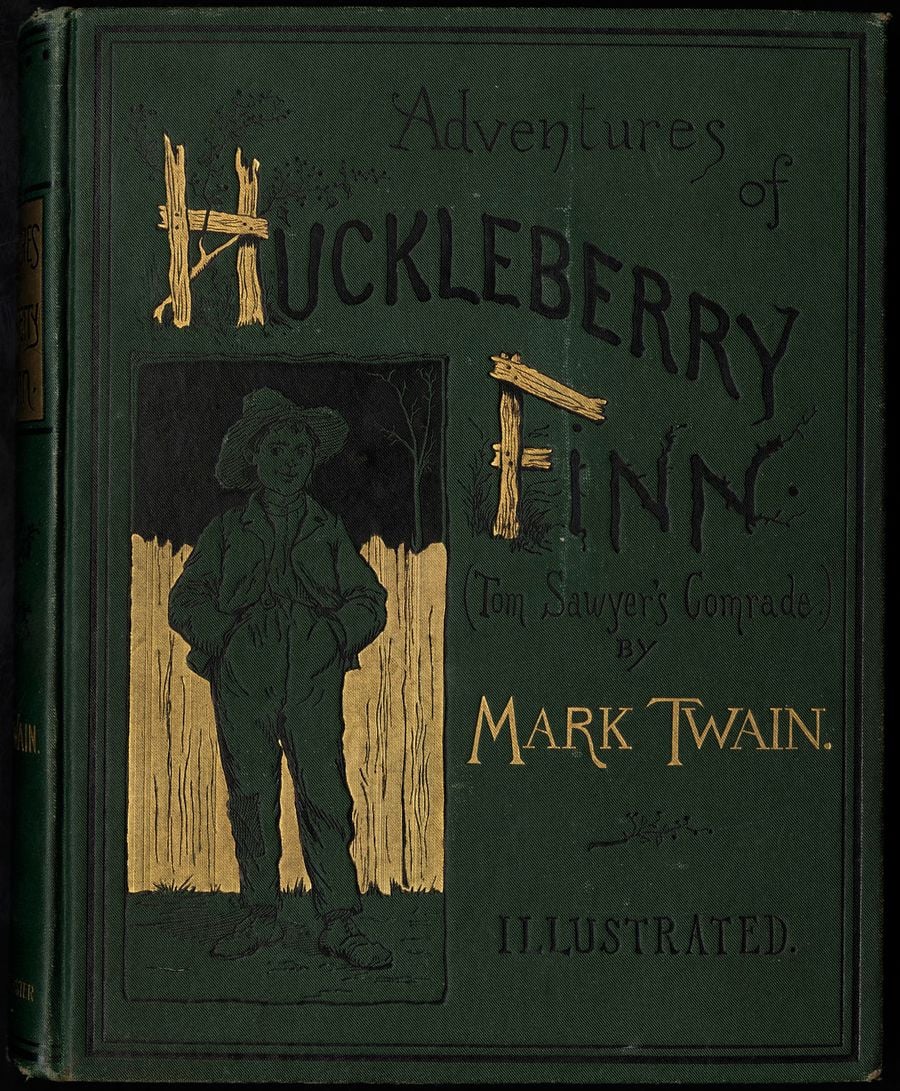
Mark Twain published Adventures of Huckleberry Finn in the U.K. in December 1884 and in the U.S. in February 1885. It was immediately controversial — though not for the reason it is primarily controversial now. The Concord, Massachusetts public library banned it in 1885, calling it rough, coarse, and inelegant. The complaint was essentially about manners: the novel's narrator was an uneducated child who used ungrammatical speech and described behavior the library commissioners considered beneath the attention of serious readers.
The racial controversy that has dominated discussions of the novel in recent decades is of a different and more serious character. The novel contains the word "nigger" more than 200 times. Jim, the enslaved man who travels with Huck, is subjected to mockery and deception by other characters, and Twain uses the racial attitudes of the period with realistic fidelity. Black readers and educators have argued for generations that the novel's classroom use causes harm — that asking Black students to read the word repeatedly in a classroom setting is a form of exposure that its literary value does not justify.
The opposing position holds that the novel is fundamentally anti-racist — that its power lies in Huck's gradual recognition of Jim's full humanity, and that softening or removing it would distort Twain's argument. Both positions have been held by serious readers and scholars, and neither has decisively prevailed.
The novel has been removed from required reading lists in numerous American school districts and has been modified in at least one editorial edition that substituted alternative words for the racial slur. Twain's estate objected to that edition. The debate about how to teach the novel — or whether to teach it — is ongoing.
What is not in dispute is the novel's literary standing. Ernest Hemingway famously wrote that all American literature comes from Huckleberry Finn. That claim has been exaggerated in the retelling, but the novel's formal influence on American narrative voice is difficult to overstate.
Doctor Zhivago by Boris Pasternak (1957)
Credit: Susanlenox / Flickr (PDM 1.0)
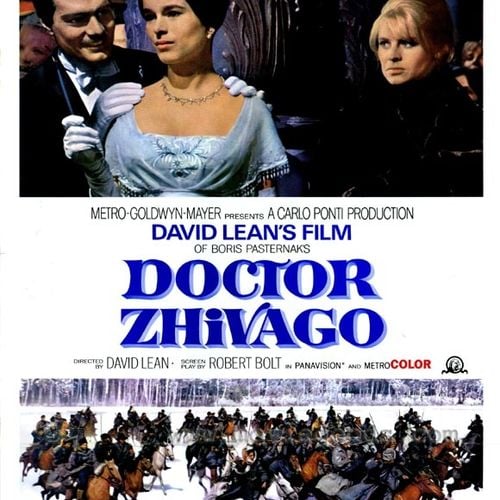
Boris Pasternak completed Doctor Zhivago in 1955 and submitted it to Soviet literary journals, who rejected it. The manuscript was smuggled to Italy and published there by the publisher Feltrinelli in 1957 in Italian translation. Russian-language editions followed abroad. The novel could not be published in the Soviet Union, where it remained banned until 1988.
The Soviet objection was not primarily to the novel's romantic plot or its portrayal of the Russian Revolution — it was to the novel's fundamental stance toward history. Pasternak was a poet of private experience; the novel argued that the inner life of individuals — their love, grief, religious feeling, and artistic perception — was more real and more valuable than the grand historical forces that Soviet ideology celebrated. The Revolution, in Doctor Zhivago, is not liberation but catastrophe, an event that destroys everything personal and beautiful in its path.
In 1958, Pasternak was awarded the Nobel Prize in Literature. The Soviet government was furious. Pasternak was expelled from the Soviet Writers' Union, subjected to a campaign of public denunciation, and pressured to decline the award. He wrote to the Nobel Committee saying he was declining due to the significance the award has taken on in the society in which I live. He died in 1960. His companion Olga Ivinskaya, who was the inspiration for the novel's heroine Lara, was arrested and sent to a labor camp.
It was later revealed that the CIA had been involved in arranging the publication of Russian-language editions of the novel to be distributed to Soviet visitors at the 1958 Brussels World's Fair — a Cold War operation that used the novel as propaganda, somewhat against the spirit of a book devoted to resisting instrumentalization.
Pasternak's son, Yevgeny, accepted the Nobel Prize on his father's behalf at a ceremony in Stockholm in 1989, 29 years after the original award.
Catch-22 by Joseph Heller (1961)
Credit: Royal collection of the United Kingdom / PICRYL
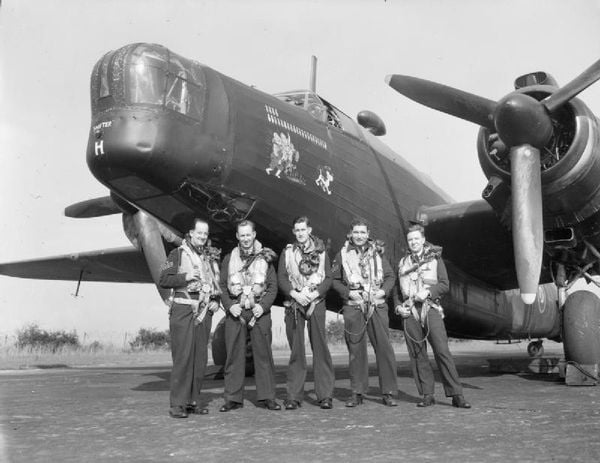
Joseph Heller's Catch-22 was published in October 1961 and sold modestly at first. Over the following years, as the Vietnam War escalated and popular culture's relationship to military authority shifted, the novel became one of the most widely read books in the U.S. By the late 1960s it had become a generational touchstone — a dark comedy about the insanity of military bureaucracy that felt, to many readers, like an accurate description of present reality.
The controversy around the novel was less juridical than cultural. It was not prosecuted or formally banned in the U.S. It was challenged in school districts for its language, its sexual content, and its perceived anti-American or anti-military stance. Several school boards removed it from reading lists in the 1970s and 1980s.
The more interesting controversy was about what the novel was doing to the war novel as a form. Heller was not writing about heroism, sacrifice, or the tragedy of young men killed in noble causes. He was writing about the systematic irrationality of military institutions — the way rules exist to enforce compliance rather than serve any coherent purpose, the way authority is maintained through absurdity rather than logic. The novel's central concept — Catch-22, the rule that says you can be grounded for being crazy, but asking to be grounded proves you're sane — was a joke about how bureaucratic systems trap the people inside them.
Veterans' organizations and some military commentators objected to the novel's portrayal of the military and its apparent refusal to take seriously the sacrifices of the Second World War. Heller had served in the war himself, flying 60 combat missions as a bombardier. His response to such criticism was generally that the novel was not about the Second World War; it was about something else that was happening at the time he wrote it. He did not name it explicitly.
A Clockwork Orange by Anthony Burgess (1962)
Credit: Open Media Ltd. / Wikimedia Commons (CC BY-SA 3.0)
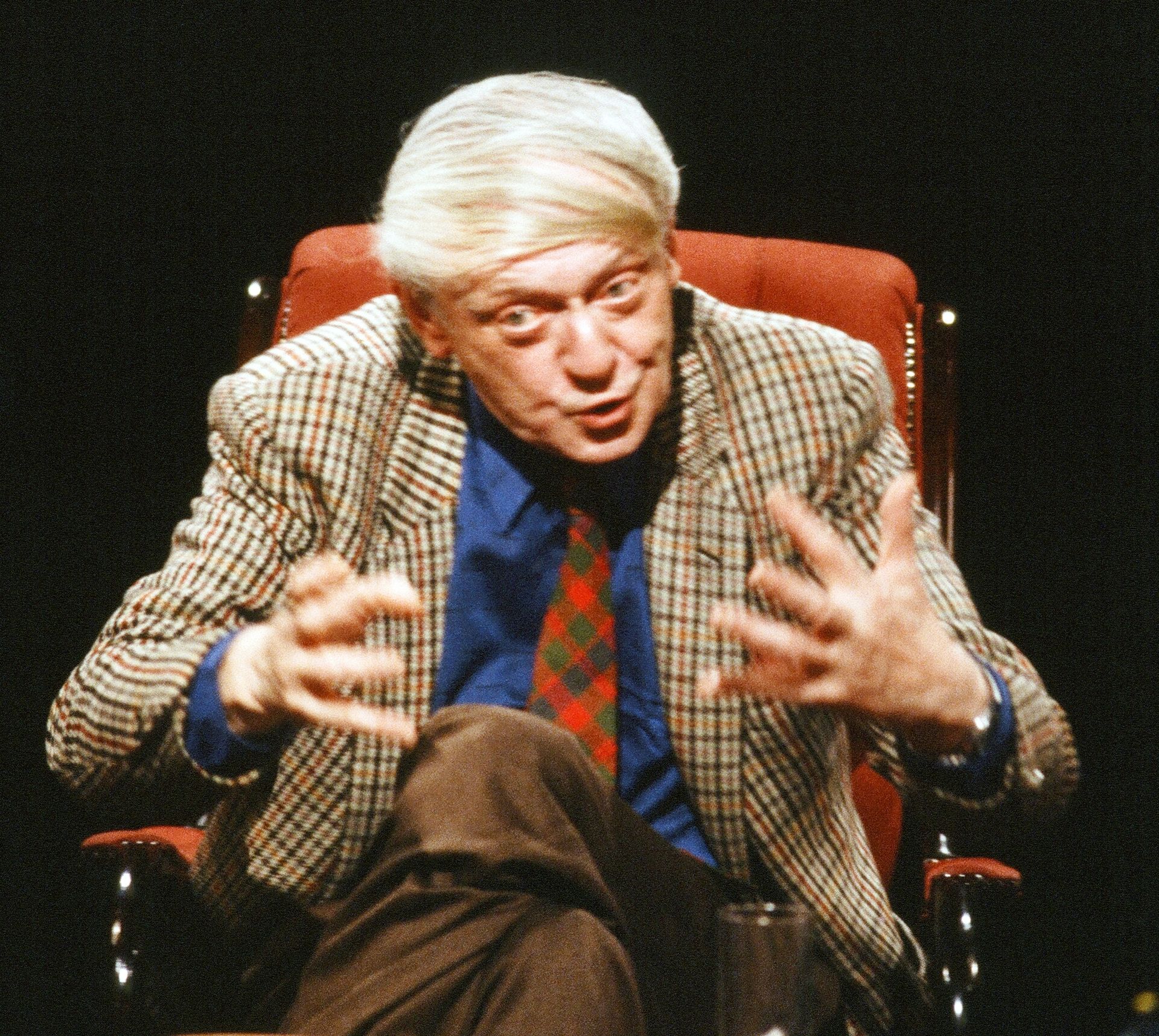
Anthony Burgess published A Clockwork Orange in 1962, a short novel written in a constructed slang — Nadsat — derived from Russian, Cockney, and rhyming patterns. Its narrator, Alex, is a teenager who leads a gang of violent criminals, is captured and subjected to aversion therapy that removes his capacity to choose violence, and then faces the question of whether a human being without the ability to choose evil can be said to be moral at all.
The novel was controversial on publication in Britain, primarily for its graphic descriptions of rape and ultraviolence, rendered in Nadsat prose that made the violence simultaneously immediate and estranged. The controversy intensified after Stanley Kubrick made his film adaptation in 1971. The film was so disturbing that Kubrick himself withdrew it from distribution in the U.K. in 1973 after it was linked, however tenuously, to real-world copycat crimes. The film was not shown in Britain again until after Kubrick's death in 1999.
Burgess spent the rest of his life ambivalent about his most famous work. He had written it quickly, he said, as a response to the mugging of his wife during the Blitz. He sometimes dismissed it as a minor work unworthy of the attention it received. He was particularly frustrated with the American edition, which published the novel without its final chapter — in which Alex, now older, finds himself genuinely tired of violence and imagines a different kind of life. The American editor had removed the chapter believing it was unconvincing. Burgess argued that without it, the novel had no redemptive arc at all, only a nihilistic loop.
The novel's philosophical argument — that the capacity for moral choice requires the freedom to choose evil, and that removing this freedom through behavioral conditioning is itself a form of totalitarianism — was what Burgess considered most important. Critics debated whether the argument was well served by the graphic content or overwhelmed by it.
Their Eyes Were Watching God by Zora Neale Hurston (1937)
Credit: Library of Congress / PICRYL
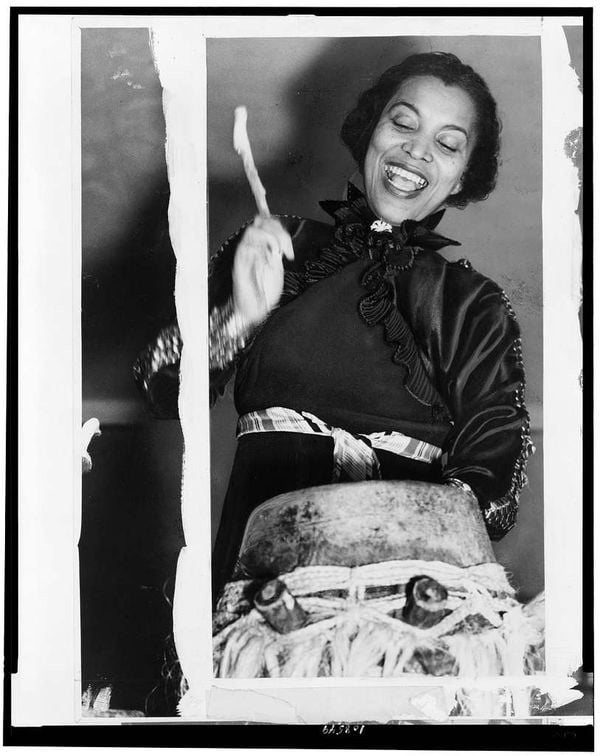
Zora Neale Hurston published Their Eyes Were Watching God in 1937, during the height of the Harlem Renaissance. Its reception was complicated from the start. Richard Wright, whose own Native Son would come three years later, reviewed the novel harshly, accusing Hurston of writing in a way that catered to white audiences' appetite for exotic Black life — that her use of African American vernacular speech and her focus on romantic love rather than racial protest amounted to a kind of minstrelsy.
The criticism was influential. Hurston's reputation declined significantly after the 1930s. She died in poverty in 1960, and was buried in an unmarked grave in Florida.
The novel's revival came through Alice Walker, who wrote a 1975 essay in Ms. magazine about finding Hurston's unmarked grave and called for a revaluation of her work. Walker's advocacy, and the emergence of a Black feminist literary criticism that valued Hurston's project on its own terms, transformed how the novel was understood. It is now widely regarded as one of the most important American novels of the 20th century.
The formal controversy was essentially about what Black literature was supposed to do. Wright and others argued that it had a political obligation — to document and protest the conditions of Black life in America. Hurston argued that reducing Black life to its conditions of oppression was its own form of distortion. Her protagonist, Janie Crawford, is not primarily defined by white racism; she is defined by her desire for love, selfhood, and a voice of her own.
The novel was challenged in some school districts in later decades for language and sexual content — particularly scenes depicting domestic violence and Janie's erotic life. These challenges were minor compared to the literary controversy of the 1930s and 1940s, which was about the politics of Black expression itself.
Beloved by Toni Morrison (1987)
Credit: Angela Radulescu / Wikimedia Commons (CC BY-SA 2.0)
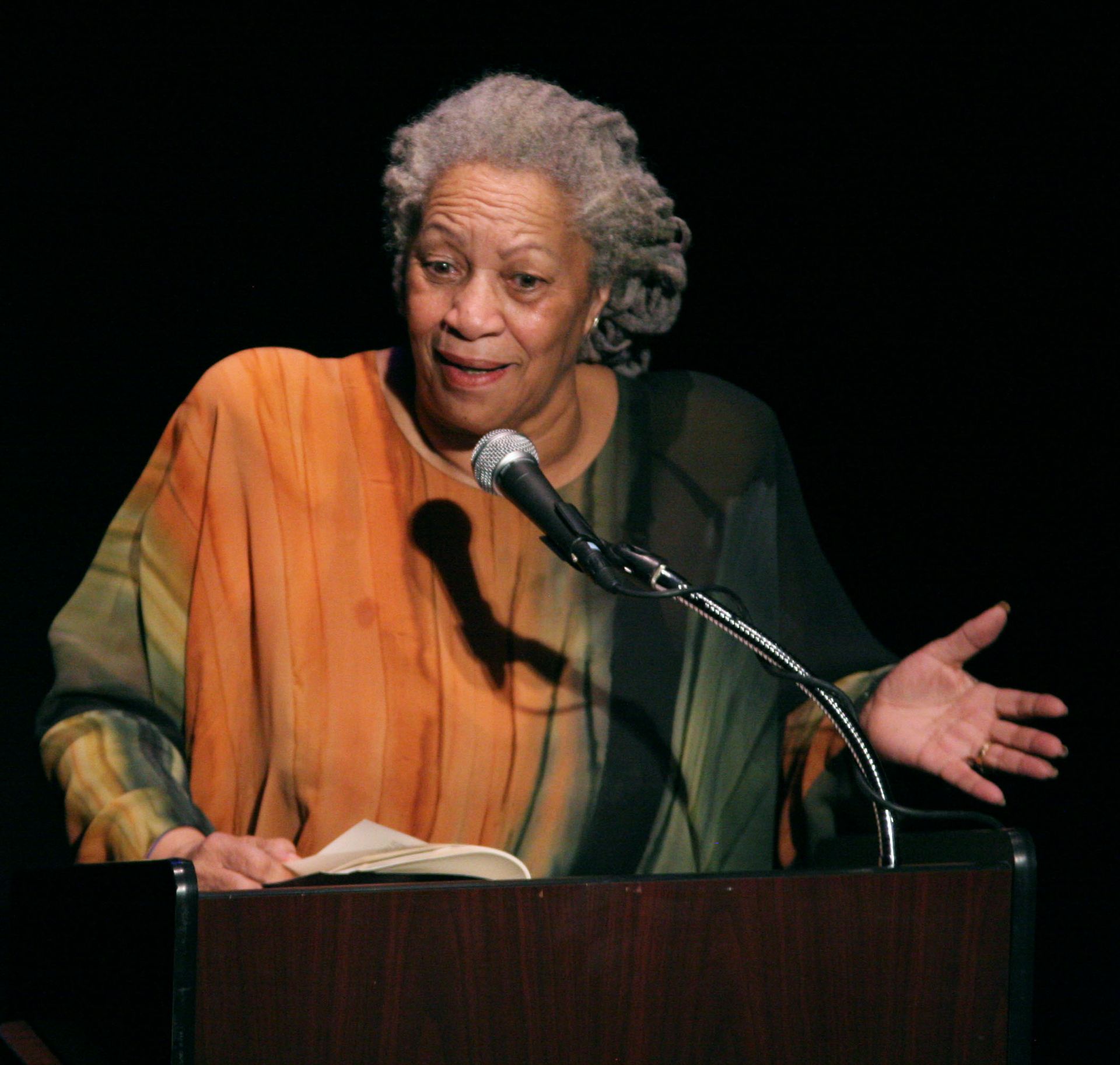
Toni Morrison published Beloved in 1987, and it won the Pulitzer Prize for Fiction in 1988. It was also one of the most challenged novels in American schools and public libraries in the late 20th and early 21st centuries, appearing repeatedly on the American Library Association's lists of most frequently challenged books.
The challenges came from multiple directions. The novel contains graphic depictions of sexual violence, including rape and the sexual abuse of enslaved people. It depicts infanticide — its central event is a mother who kills her infant daughter to prevent her from being recaptured into slavery. It contains scenes involving a ghost, a supernatural presence in a realistic setting, that some readers found disturbing in an undefined way. And it confronts the reader directly with the psychological and physical reality of American slavery in a way that many readers found not merely uncomfortable but unbearable.
The novel is based on the historical case of Margaret Garner, an enslaved woman who in 1856 killed her infant daughter when federal marshals came to return her family to slavery in Kentucky. Morrison encountered the case in research and spent years determining how to treat it.
What Morrison was attempting was a kind of literary reckoning with the interior experience of slavery — not its historical outlines but its psychological texture, the way it destroyed and warped relationships, the way it produced trauma that could not be processed in normal human ways. The ghost Beloved, who may be the spirit of the murdered child or may be a real woman, embodies the return of this unprocessed grief.
The novel was at the center of a political controversy in Virginia in 2021, when a state legislative candidate campaigned partly on the promise to ban it from schools. The resulting public debate in Virginia contributed to the election's outcome and to subsequent legislative efforts in several states targeting classroom use of the novel.
The Well of Loneliness by Radclyffe Hall (1928)
Credit: Permabooks, The Well of Loneliness, 1951 / GetArchive
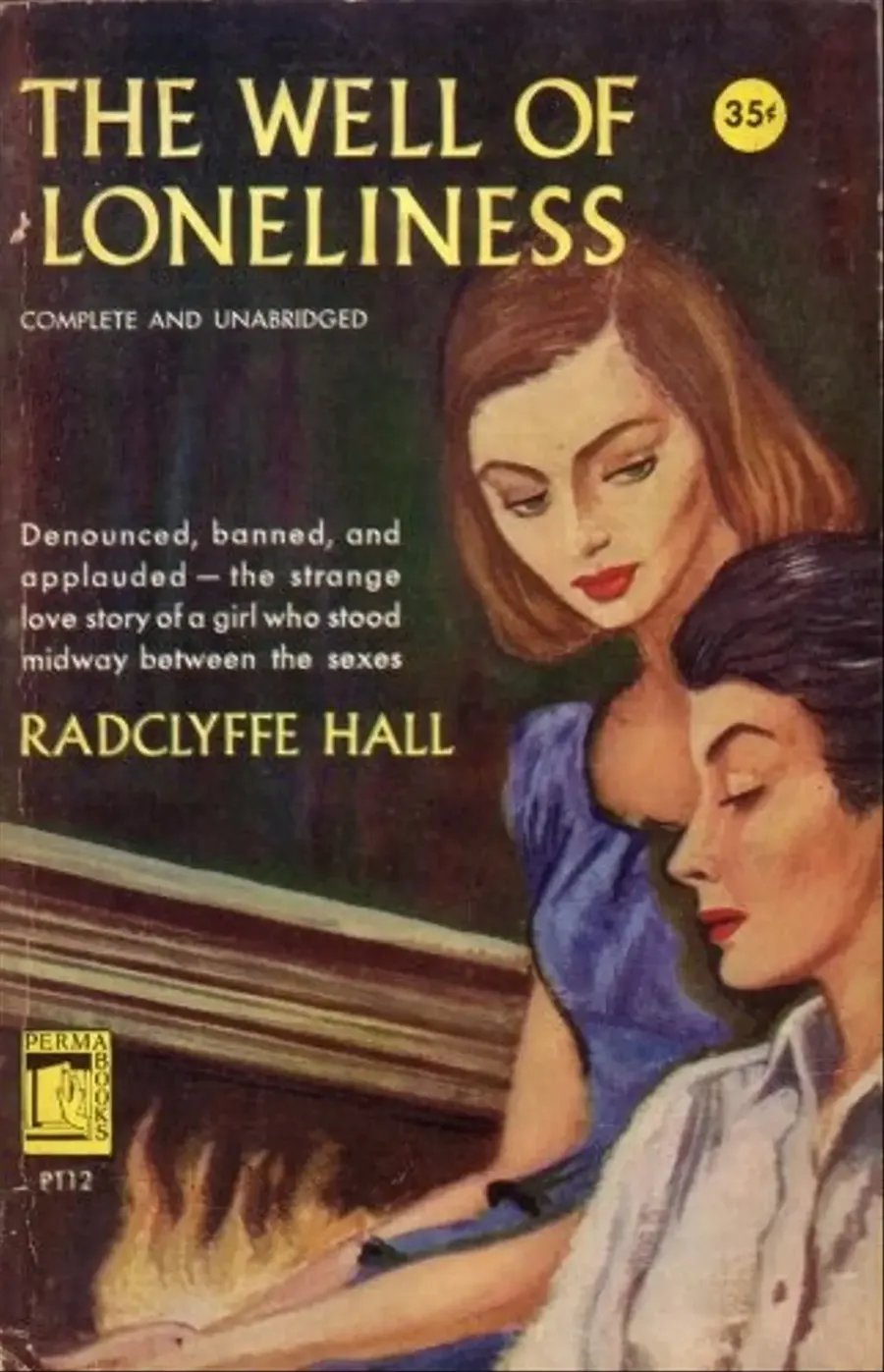
Radclyffe Hall published The Well of Loneliness in July 1928, and it was reviewed in the Sunday Express by the editor James Douglas, who wrote that he would rather give a child prussic acid than this book. He called for its suppression. The Home Secretary ordered the publisher, Jonathan Cape, to withdraw the novel. Cape complied. Copies were seized by police and destroyed.
The novel was prosecuted under the Obscene Publications Act. The magistrate ruled it obscene and ordered remaining copies destroyed. The appeal failed. The novel could not be published in the U.K. until 1949.
An American edition was published by Covici Friede in 1928 and prosecuted in New York. The New York case was eventually dismissed on appeal — a court ruled that the novel was not obscene — and the American edition was allowed to stand. The novel circulated widely in the U.S. despite the U.K. ban.
The subject of the novel — lesbian identity — was what made it legally and culturally dangerous. The protagonist, Stephen Gordon, is a woman who experiences herself as a "congenital invert," a person born with a male soul in a female body — the terminology was taken from contemporary sexology, particularly the work of Havelock Ellis. Hall was using the available scientific vocabulary to argue that her protagonist's identity was natural, not chosen, and therefore not morally blameworthy.
The novel is not sexually explicit. It contains no graphic depictions of sexual activity. The single line that was cited as most objectionable — the last line of a scene between Stephen and her lover — reads: "that night they were not divided." The level of outrage directed at this restraint illustrates how complete the cultural suppression of lesbian identity was at the time. The novel's crime was not what it depicted but what it acknowledged.
The Jungle by Upton Sinclair (1906)
Credit: Internet Archive / PICRYL
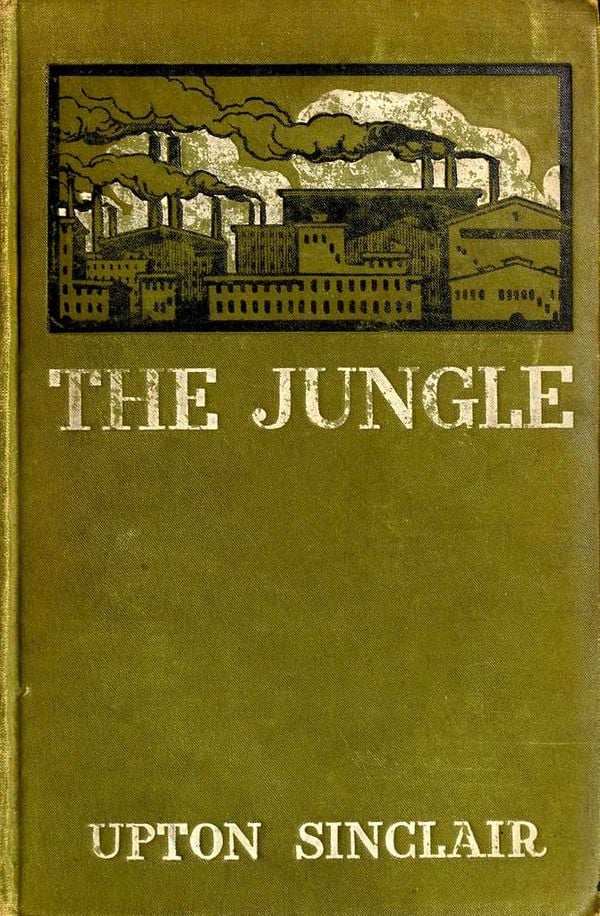
Upton Sinclair published The Jungle in 1906 after spending seven weeks working undercover in the meatpacking plants of Chicago. The novel follows Jurgis Rudkus, a Lithuanian immigrant, through the grinding conditions of industrial labor in the stockyards. Sinclair intended it as a socialist argument — he wanted readers to see the exploitation of immigrant workers and demand economic reform. What readers actually responded to was the description of meatpacking conditions: rat-infested rooms, workers who fell into rendering vats and were processed into lard, adulterated products sold to the public.
The public and political response focused almost entirely on the food safety material and almost not at all on Sinclair's socialist argument. He later described this outcome with a now-famous line: I aimed at the public's heart, and by accident hit it in the stomach.
The novel contributed directly to the passage of the Pure Food and Drug Act and the Federal Meat Inspection Act, both in 1906 — one of the clearest examples in American history of a novel producing immediate legislative change. President Theodore Roosevelt ordered an investigation of the Chicago meatpacking industry after reading the novel.
The controversy was primarily in the meatpacking industry and among its political allies, who objected to the novel's accuracy and attempted to discredit it. Some elements were disputed; others were subsequently confirmed by federal inspectors. The industry never recovered its public standing.
Sinclair's frustration — that the political message was ignored in favor of the consumer protection message — was genuine but also somewhat ironic. The novel's literary deficiencies as fiction, including flat characterization and didactic dialogue, were real. What gave it power was precisely the documentary specificity that the socialist framework could not contain.
American Psycho by Bret Easton Ellis (1991)

Credit: Camille Gévaudan / Wikimedia Commons (CC BY-SA 3.0)
Bret Easton Ellis completed American Psycho in 1990, and his publisher Simon & Schuster canceled the contract after employees objected to the manuscript's graphic content. The novel was acquired by Vintage Books and published in March 1991. It immediately generated one of the most heated public controversies in American literary publishing in decades.
The novel is narrated by Patrick Bateman, a wealthy investment banker in Manhattan in the late 1980s, who may or may not be a serial killer. The first-person narration alternates between detailed descriptions of designer clothing, expensive restaurants, and status anxiety, and extended scenes of sexual torture and murder that are among the most graphic in published literary fiction. Whether these murder scenes are real within the novel's world or are Bateman's violent fantasies is deliberately left ambiguous.
The National Organization for Women called for a boycott of the novel and of Vintage/Random House. Some feminist critics argued that the novel was misogynistic — that its extended torture sequences involving women reflected and potentially encouraged real-world attitudes. Others argued that the novel was a satire of exactly those attitudes, that Bateman's violence was a metaphor for the violence inherent in the consumer capitalist culture the novel anatomized.
The novel was classified as a restricted publication in Australia and could only be sold in sealed packaging with an adults-only sticker, a status it retained for years. It was not banned outright in most jurisdictions.
Ellis maintained that the controversy reflected a misreading. Bateman is an unreliable narrator; his victims are described in the same tone as his dinner reservations; the violence is not titillating but numbing. Whether the novel is successful on its own terms has been debated since 1991. It has been adapted as a film, a musical, and a stage play, and continues to generate critical disagreement.
Fahrenheit 451 by Ray Bradbury (1953)
Credit: Photo by Alan Light / Wikimedia Commons (CC BY 2.0)
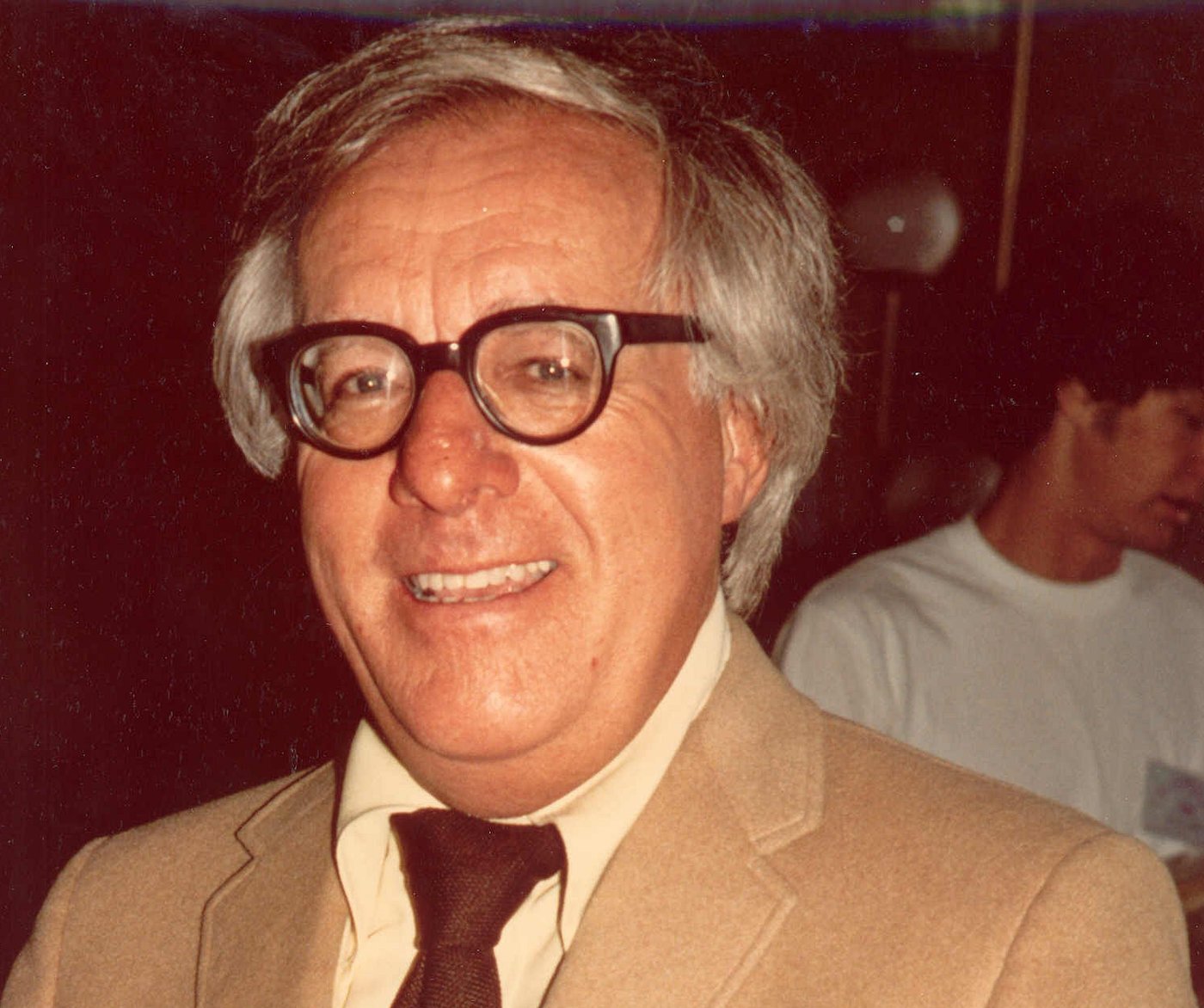
Ray Bradbury published Fahrenheit 451 in 1953, a novel about a society in which firemen burn books rather than extinguish fires. The irony that a novel about book-burning has itself been censored and challenged has been noted many times. Bradbury noted it himself, with evident frustration, more than once.
The challenges to the novel in American schools and libraries came from different directions at different times. Some school districts objected to its depictions of Bible-burning. Some objected to its language — a teacher in the 1980s reported that a school edition of the novel had replaced the word "hell" with "heck" and altered a passage involving a drunk character, changes that were made without Bradbury's knowledge or permission. Bradbury was furious when he discovered this and demanded that the unaltered text be restored.
The novel follows Guy Montag, a fireman who begins to doubt whether his society — built on pleasure, distraction, and the elimination of disturbing ideas — is actually happy. He starts stealing books. He eventually encounters a community of people who have memorized books to preserve them. The society Bradbury depicts is not governed by force but by the inhabitants' own desire not to be made uncomfortable by complex ideas.
Bradbury said explicitly that the novel was not primarily about government censorship. It was about what he saw as a more dangerous phenomenon: a culture's own tendency to flatten and simplify, to replace reading with television, to avoid difficulty. The firemen burn books not because a tyranny commands it but because the citizens prefer not to have them.
This made the novel's relationship to censorship uniquely self-aware. It has been challenged most often by the same impulse it describes: the desire to remove from children's education anything that might disturb.
Lady Oracle by Margaret Atwood — on Atwood's suppression through The Handmaid's Tale (1985)

Credit: Larry D. Moore / Wikimedia Commons (CC BY 4.0)
Margaret Atwood published The Handmaid's Tale in 1985, a novel set in a near-future theocratic state called Gilead $GILD, which has replaced the U.S. after a violent coup. In Gilead, women are categorized by reproductive function: wives, marthas (domestic servants), and handmaids — fertile women who are assigned to high-ranking men and ritually raped in a ceremony designed to produce children.
The novel was challenged repeatedly in American schools and public libraries from its publication through the 2020s. Objections included sexual content, offensive language, anti-Christian themes, and what some described as a promotion of feminist ideology. The novel appeared on banned-book lists in a range of school districts across the U.S.
The controversy intensified after the 2017 Hulu television adaptation, which coincided with a renewed political debate about reproductive rights in the U.S. Images from the series — women in red cloaks and white bonnets — were adopted as protest imagery at demonstrations across the country. This politicization of the novel's imagery brought renewed attention to efforts to remove it from schools, and reinforced the argument that the novel was directly relevant to contemporary political conditions.
Atwood drew on real historical practices in constructing Gilead — she has noted that nothing in the novel was invented; every element had a precedent in documented history from somewhere in the world. The book's power has always been the precision of its extrapolation from the real.
The Handmaid's Tale was banned in some countries where its political observations hit closer to home. It remains one of the most frequently challenged books in the U.S. public school system. Atwood published a sequel, The Testaments, in 2019, which won the Booker Prize.
Slaughterhouse-Five by Kurt Vonnegut (1969)
Credit: Wikimedia Commons / PICRYL
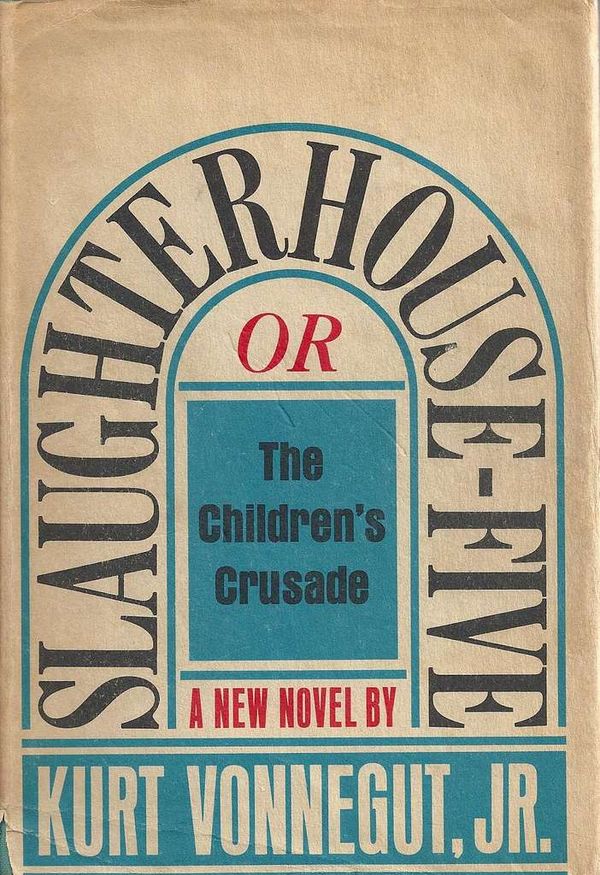
Kurt Vonnegut published Slaughterhouse-Five in 1969, drawing on his own experience as an American prisoner of war who survived the Allied firebombing of Dresden in February 1945 while sheltered in an underground slaughterhouse. The bombing killed tens of thousands of German civilians and destroyed much of the city. For years after the war, the event was barely acknowledged in American public discourse; it did not fit the narrative of a clean moral victory.
Vonnegut's novel does not fit that narrative either. Its protagonist, Billy Pilgrim, becomes "unstuck in time" — he experiences events from his life out of sequence, including the Dresden bombing, his mundane postwar life as an optometrist in upstate New York, and his abduction by aliens from the planet Tralfamadore. The time travel is not explained as a medical condition or a literary device; it is treated as simply how things are. The novel's recurring phrase — "So it goes" — is applied to every death, from a minor character's to 135,000 German civilians.
The novel was challenged and in some cases banned in American school districts beginning almost immediately after publication. In 1973, a school board in Drake, North Dakota ordered copies burned in the school's furnace. A parent had complained that the book contained obscene language. Vonnegut wrote the school board a letter that has become one of the more celebrated defenses of literary freedom in American history. He never received a reply.
The novel was also challenged for its anti-war stance, its suggestion that the Allied bombing of a civilian city was morally equivalent to other wartime atrocities, and its satirical framing — which some readers experienced as flippant about genuine suffering. Vonnegut's response was that the novel was not flippant but helpless: it ended with a bird's question, "Poo-tee-weet?" because there is nothing intelligent to say after a massacre.
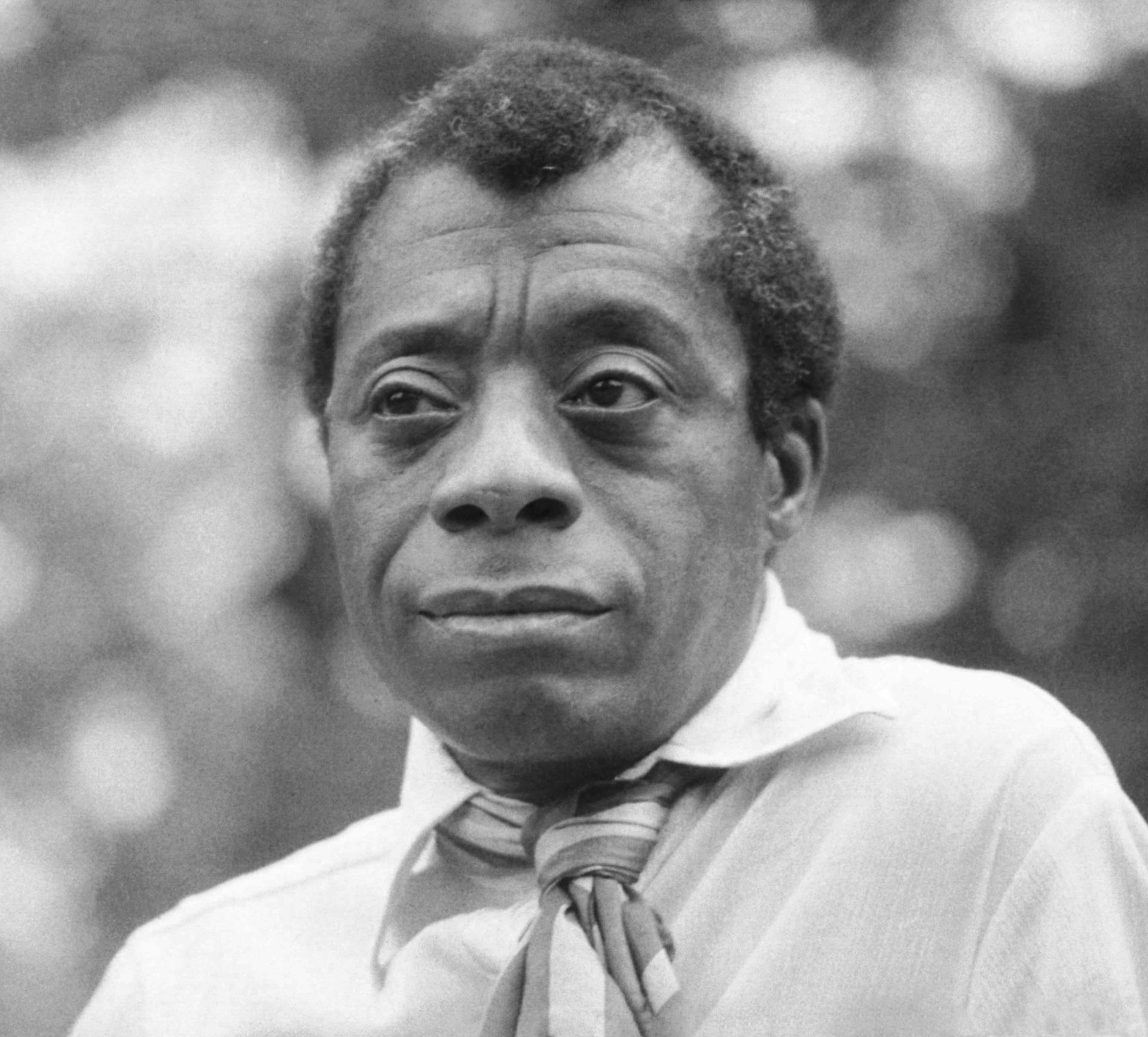
Giovanni's Room by James Baldwin (1956)
Credit: Allan warren / Wikimedia Commons (CC BY-SA 3.0)
James Baldwin's Giovanni's Room was published in 1956 by Dial Press in the U.S. Baldwin's previous novel, Go Tell It on the Mountain, had established him as a serious literary figure. Giovanni's Room was a departure in almost every sense: its protagonist was white, its setting was Paris, and it was explicitly about male homosexuality at a time when the subject was almost entirely absent from mainstream American fiction.
Baldwin's literary agent advised him not to publish it. His editor suggested he would damage his career. Colleagues in the Black literary and intellectual community were concerned that a novel about homosexuality would overshadow his work on race and undermine his standing as a voice on civil rights. Baldwin refused to suppress it. He later described Giovanni's Room as the most difficult book he ever wrote, precisely because he knew what publishing it would cost.
The novel follows David, an American expatriate in Paris who is engaged to a woman named Hella but falls into a consuming affair with Giovanni, an Italian bartender. When Hella returns from a trip and David feels compelled to return to her, he abandons Giovanni, whose life subsequently unravels. The novel ends with Giovanni's execution and David's confrontation with his own cowardice and self-deception.
The novel was not prosecuted. It was not officially banned in the U.S. Its suppression was social and professional rather than legal — the pressure applied to Baldwin was precisely the kind of self-censorship that legal mechanisms sometimes don't need to enforce directly. The novel is frank about homosexual desire without being explicit, and its emotional intelligence is such that even hostile readers could not easily dismiss it as pornographic.
Giovanni's Room is now considered one of the most important American novels of the 20th century. It changed what was permissible to write about in American fiction, not by winning a court case but by being published and read.
The God of Small Things by Arundhati Roy (1997)

Credit: Vikramjit Kakati / Wikimedia Commons (CC BY-SA 3.0)
Arundhati Roy published The God of Small Things in 1997, her first and, for many years, only novel. It won the Booker Prize that year and sold millions of copies worldwide. In the state of Kerala, India, where the novel is set, a court case was filed against Roy for obscenity.
The complaint was brought by a lawyer and political activist named Sabu Thomas, who objected to a sex scene between an upper-caste woman, Ammu, and an untouchable man, Velutha. The scene was tender rather than graphic, but what it depicted — consensual sex across caste lines — was what made it legally and socially explosive. In India, the caste hierarchy had real legal and social force. Sexual relations between an upper-caste woman and a Dalit man were not simply taboo; they had historically been treated as violations of social order serious enough to justify violence.
The case was filed in Kerala. Roy appeared before the court and later described the experience. The case was eventually dismissed, but it remained pending for years.
The novel's structure is not chronological; it begins at the end, with the knowledge of catastrophe, and moves backward and forward through time to reveal how the tragedy was assembled from small violations of the rules of what Roy called the Love Laws — the laws that dictate who can love whom, and how, and how much. The novel is as much about caste, colonialism, and political violence as it is about the personal story.
Roy did not publish another novel for 20 years. In 2017, she published The Ministry of Utmost Happiness. She was, in the intervening years, occupied with political activism and journalism, but the legal harassment following The God of Small Things was part of the context in which her silence as a novelist should be understood.
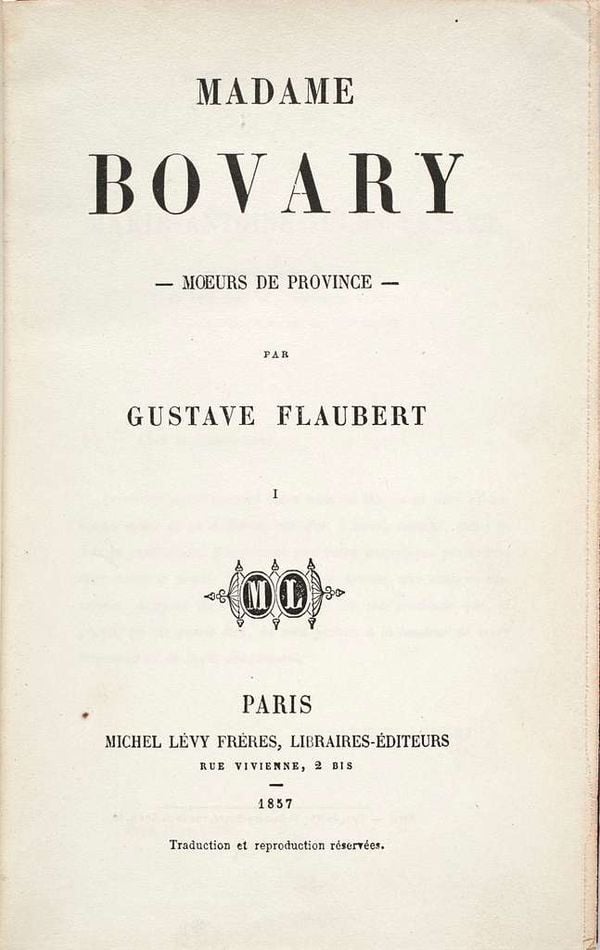
Lady Chatterley parallel — on Madame Bovary by Gustave Flaubert (1857)
Credit: Wikimedia Commons / PICRYL
Gustave Flaubert published Madame Bovary serially in the Revue de Paris in 1856 and as a book in 1857. The French government prosecuted him for obscenity and offenses against public morality. The trial took place in January 1857. Flaubert was acquitted.
The novel follows Emma Bovary, a doctor's wife in provincial France who is consumed by romantic fantasies cultivated by novels she has read. She enters into two adulterous affairs, runs up enormous debts, and eventually takes her own life. The prosecution argued that the novel glorified adultery and that Emma's affairs were depicted without sufficient moral condemnation.
Flaubert's defense — conducted primarily by his lawyer Maître Sénard — argued that the novel was in fact deeply moralistic, that Emma's fate demonstrated the dangers of romanticized fantasy and its incompatibility with real life. This argument was, at best, a partial reading of the novel; Flaubert's actual sympathies were considerably more complex. He had famously described Emma as the character he most identified with. His contempt in the novel was distributed fairly evenly between Emma's romantic delusions and the provincial bourgeois world that offered her no real alternative.
The trial made the novel famous. The book sold rapidly after the verdict. The controversy helped establish what would become a standard pattern in literary censorship: prosecution draws attention to the work, acquittal validates it, and commercial success follows.
Madame Bovary is now among the most taught novels in the world and is widely considered one of the founding works of the realist tradition. Its techniques — free indirect discourse, the accumulation of specific material detail, the refusal of moral resolution — influenced virtually every major European and American novelist who came after.