From a 2,000-year-old Roman theater in Amman hosting Jordan's World Cup debut to 10,000 fans on Copacabana beneath Christ the Redeemer
Alvaro Palacios / Unsplash
The 2026 FIFA World Cup has its official infrastructure: the 16 host stadiums across Mexico, Canada, and the United States, the FIFA Fan Zones spread across the three host countries, and the broadcast deal that puts the matches on screens in virtually every bar on earth. But the most interesting World Cup viewing is happening in the spaces between that official infrastructure, in places where local culture and geography give the shared experience of watching a match a character that no stadium or FIFA-branded fan zone can replicate. A 2,000-year-old Roman theater in Amman broadcasting matches at 3 a.m. because the time zones don’t accommodate local sporting hours is not a compromise but proof that this is genuinely a globe-unifying event, one that bends the ordinary logic of schedules and architecture to its own collective demand.
The variety of viewing venues on this list reflects a specific aspect of the 2026 World Cup’s global reach. Jordan is in its first World Cup, and its fans chose its most extraordinary architectural space to mark the occasion. Curaçao, the smallest nation ever to qualify for the tournament, is watching inside a 19th-century Dutch fortress that has been converted to a modern venue. New York City’s contribution is a retired WWII aircraft carrier docked on the Hudson, whose deck provides a line of sight to the New Jersey stadium where the final will be played. The settings are absurd and magnificent, which is exactly what the World Cup, at its best, tends to produce.
The five viewing locations below are featured in Lonely Planet, showcasing extraordinary World Cup watch party venues from Jordan to Brazil.
Giuseppe Da Parè / Unsplash
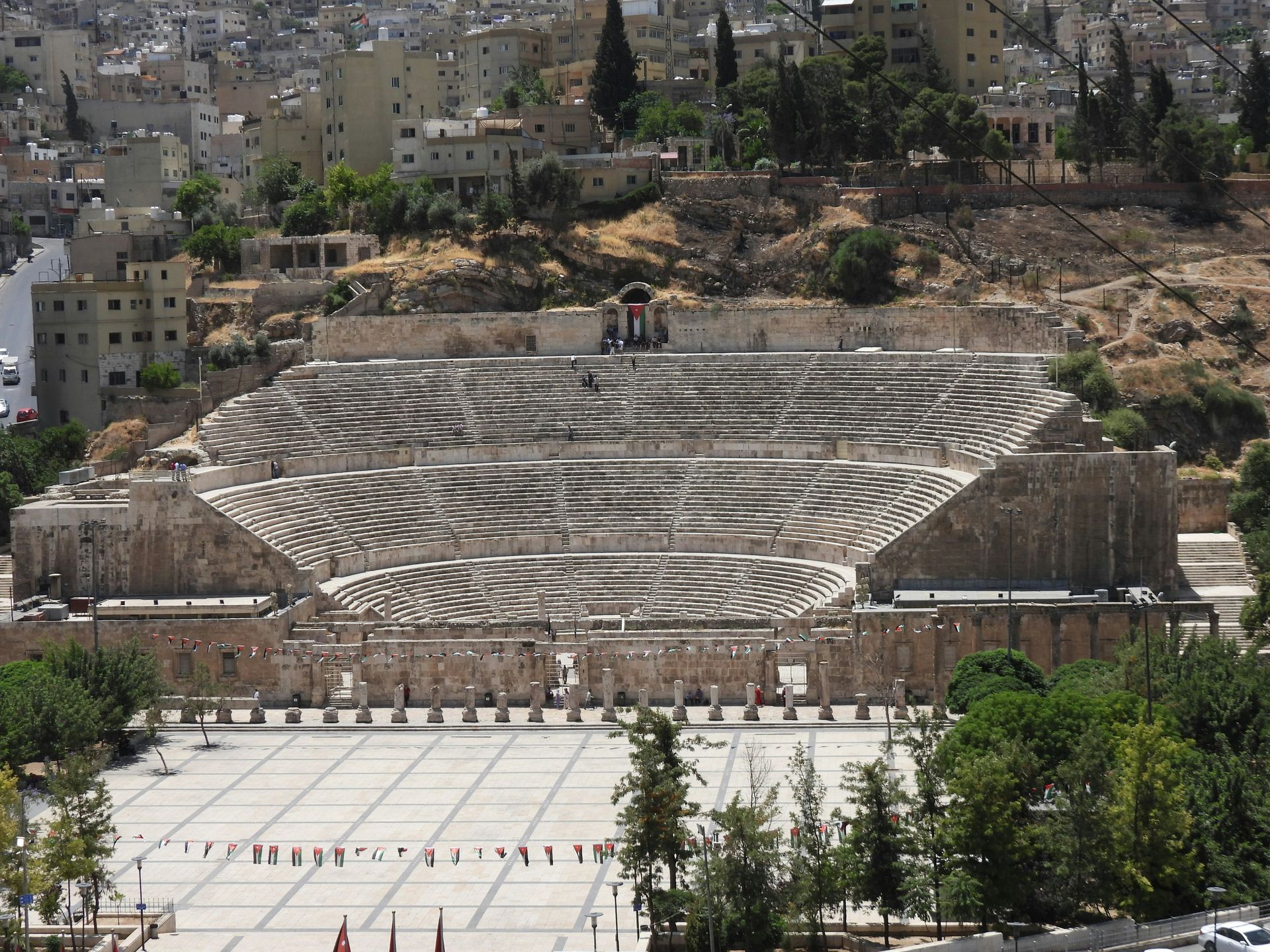
Jordan is appearing in its first FIFA World Cup in 2026, and the nation’s fans have chosen to mark the occasion in the most historically dramatic single venue available: the Roman Theatre of Amman, a 2nd-century AD amphitheater whose 6,000-person capacity gives the World Cup watch party its most ancient single setting anywhere in the world. The theater was built when the present-day capital of Jordan was known as Philadelphia in the ancient Roman world, a coincidence whose resonance is specific to the 2026 tournament: Philadelphia is also one of the American host cities, giving the Roman Philadelphia and the American Philadelphia a shared connection to a single World Cup. The theater’s limestone seats, cut into the hillside above the city center, give the viewing audience a classical architectural setting whose scale and specificity make the group stage match broadcast feel genuinely extraordinary.
The games are being aired live in the early morning hours to accommodate the time zone difference, meaning Jordan’s fans are arriving at an ancient Roman amphitheater before dawn to watch their national team compete in its first World Cup. The dedication required by the early morning gathering gives the viewing tradition a specific devotion that prime-time sports bar viewing cannot match, and the community of 6,000 people gathered before sunrise in a 2,000-year-old structure gives the collective experience its most specifically Jordanian expression of football passion.
The World Cup broadcasts are also being shown at Petra and other major tourist sites across Jordan, giving the national viewing program a geographic breadth that brings the tournament into the country’s most celebrated historical spaces. The Roman Theatre’s historical significance, architectural scale, and communal atmosphere together give it the most compelling single World Cup venue on this list. The Roman Theatre’s year-round public accessibility, located in the downtown Amman hillside near the city’s central market, gives the tourist who visits Jordan outside the World Cup window a genuinely extraordinary architectural experience whose Roman-era scale and preservation quality reflect the site’s status as one of the finest surviving ancient theaters in the Middle East.
Francis Nie / Unsplash
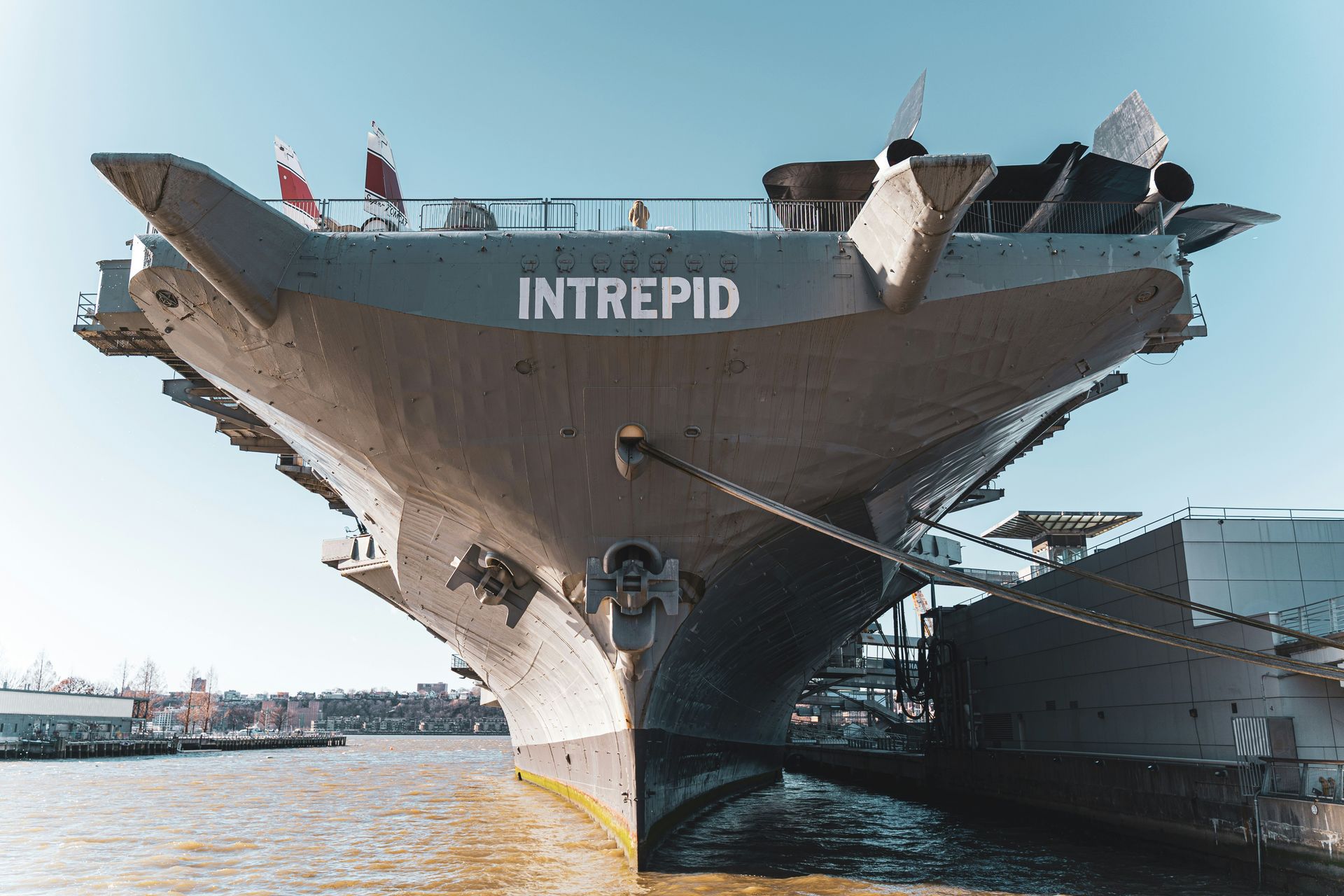
The Intrepid Sea, Air and Space Museum on Pier 86 in Manhattan is hosting free public viewing parties for 2026 World Cup matches, giving New York City football fans access to one of the most distinctively American viewing environments available for any sporting event in the world: the flight deck of a retired WWII aircraft carrier whose service history spans the Second World War, the Cold War, and the recovery of NASA space capsules from the Atlantic Ocean. The museum’s fleet of aircraft and the Intrepid’s own imposing steel structure give the viewing environment a military and technological history that the bar stool and the flat screen do not provide in the same atmospheric terms.
Multiple screens are airing select group-stage matches, some Round of 32 and Round of 16 games, and every match from the quarterfinals onward, giving the Intrepid viewing schedule a scope that covers the tournament’s most important stages in the most prominent possible venue on the Hudson. The Hudson River views toward New Jersey give the aircraft carrier deck a direct line of sight to the MetLife $MET Stadium in East Rutherford, where a significant portion of the tournament’s most important matches, including the final on July 19, are being played.
The museum remains open during the matches, giving visitors to the viewing party the option of combining the World Cup broadcast with the museum’s permanent collection of aircraft, spacecraft, and naval artifacts. The free entry for the viewing parties gives New York City’s football fan community access to an experience whose historical environment, waterfront setting, and communal match atmosphere give the aircraft carrier viewing a specific New York character: massive in scale, historically layered, and located at a pier whose Hudson River position gives the sporting event a maritime context unavailable in any landlocked viewing venue. The Intrepid’s open-air flight deck offers the match viewing a weather-dependent experience, with Hudson River breezes and summer evening air that give the outdoor broadcast a physical environment specific to New York City’s waterfront in July.
rheins / Wikimedia Commons (CC BY 3.0)
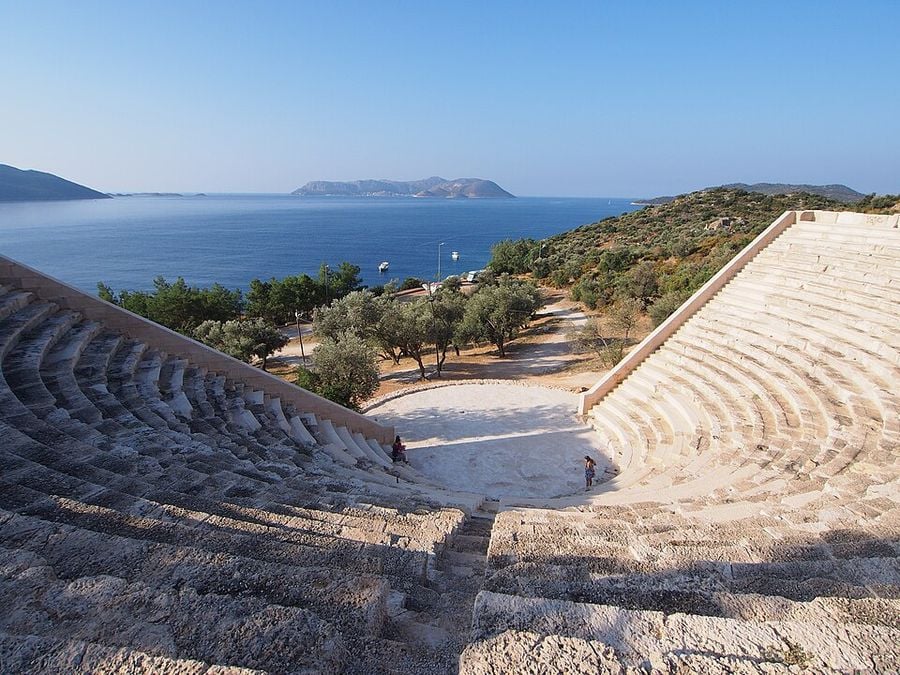
In the coastal town of Kaş in southern Türkiye, World Cup fans are gathering in the Antiphellos Theatre, a Hellenistic-period amphitheater built in the 1st century AD that overlooks the Mediterranean Sea. The theater, whose 5,000-seat capacity gives the watch party a scale appropriate to the town’s size and the local fan base, combines the architectural drama of an ancient venue with a coastal setting whose Mediterranean views make the outdoor viewing experience specific to this particular corner of the Turkish Riviera. The theater’s position, just half a kilometer from Kaş’s city center, gives the fans who gather there the accessibility of a central venue alongside the visual and historical specificity of an ancient structure.
Türkiye did not advance to the knockout rounds in 2026, which means the number of matches being broadcast at the theater is limited to the group stage games, but the venue’s free and year-round public accessibility gives it a lasting significance beyond the tournament: the Antiphellos Theatre is a genuinely extraordinary ancient space that the World Cup has temporarily transformed into a football viewing venue whose specific character will be remembered by the fans who gathered there regardless of the national team’s result.
The Mediterranean backdrop gives the Kaş viewing experience its most visually distinctive single attribute: watching a World Cup match while seated in a 2,000-year-old theater with the sea visible beyond the stage adds a sensory layering that no indoor venue, however large or well-equipped, can produce in the same terms. The evening light over the Mediterranean during the matches, whose broadcast times in Türkiye coincide with the afternoon and evening local hours, makes the Antiphellos Theatre the most photogenic single World Cup viewing setting on this list. The Kaş region’s broader summer tourism context, with its clear Aegean and Mediterranean waters and coastal hiking trails, gives the town a strong independent travel appeal, and the World Cup viewer who travels to Kaş specifically for the Antiphellos Theatre experience can find a complete destination itinerary whose natural and cultural qualities extend well beyond the football broadcast.
Pi3.124 / Wikimedia Commons (CC BY-SA 4.0)
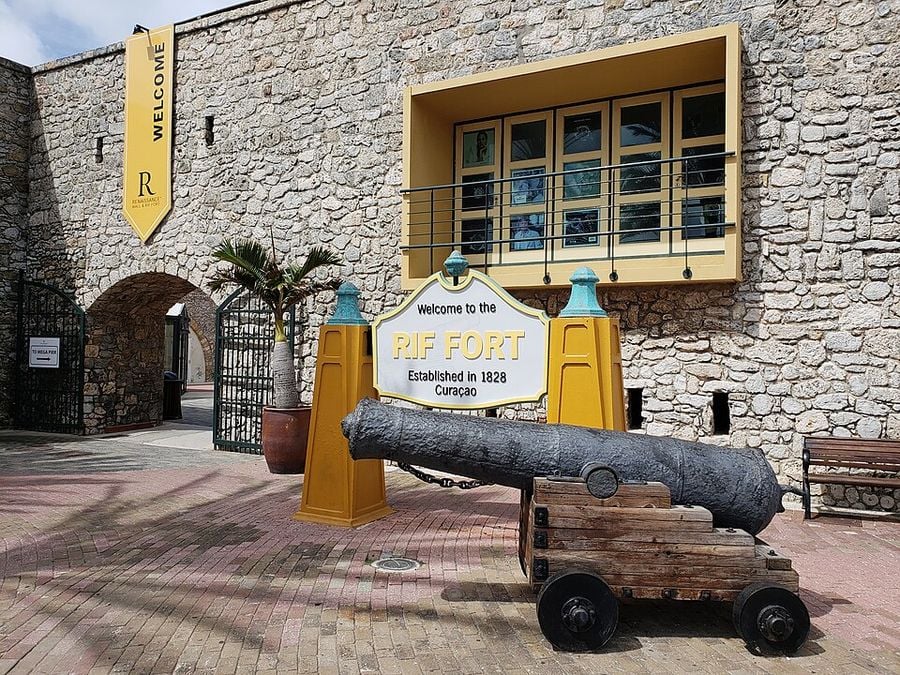
Curaçao, with a population of approximately 158,000, is the smallest nation ever to qualify for the FIFA World Cup, and the island’s tournament debut in 2026 has been accompanied by a national performance that has electrified the football world: the team drew against Ecuador and scored a goal against Germany, the 2014 World Cup champions, giving the smallest qualifying nation an opening stage performance whose results have exceeded every prediction. Fans are watching across the island, including at the Wind Creek Arena, located inside Rif Fort, a 19th-century Dutch colonial fortress in Willemstad that has been converted into a modern shopping and entertainment complex while preserving the coral stone ramparts and the Caribbean Sea views that give the fortress its distinctive character.
The Rif Fort’s history as a Dutch colonial fortification, built to protect the island’s harbor and its commercial significance during the colonial era, gives the viewing venue a historical context specific to the Caribbean’s colonial past, and the conversion of the fortress into a contemporary entertainment venue gives the space a specific Curaçao quality: the simultaneous preservation of the colonial architecture and the adaptation of the space to modern use. The coral stone construction, specific to the building materials available on Curaçao’s limestone terrain, gives the fortress walls a texture and color whose warm yellow tone adds visual warmth to the arena, a characteristic of the Caribbean island setting.
The national team’s results, which have made Curaçao’s World Cup debut one of the tournament’s most discussed stories in the group stage, give the local viewing parties a specific emotional intensity specific to a small island nation whose football history has culminated in a single World Cup appearance whose importance to the population cannot be overstated. The Rif Fort’s ramparts, which remain accessible to visitors who want to walk the original 19th-century fortification walls, offer an architectural exploration program adjacent to the Wind Creek Arena, whose coral stone texture and harbor views give the fortress its most distinctive Caribbean colonial character.
Eelco Böhtlingk / Unsplash
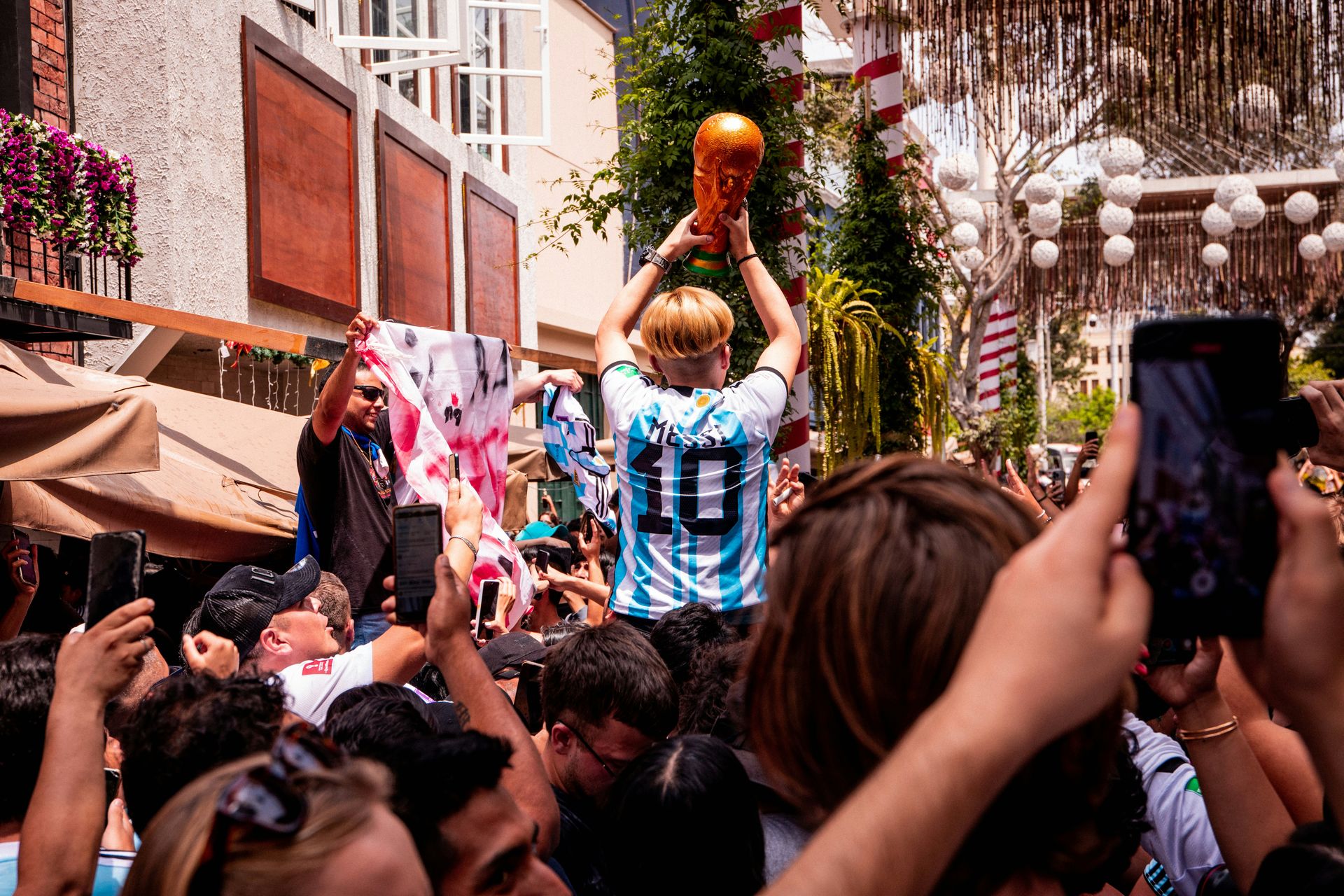
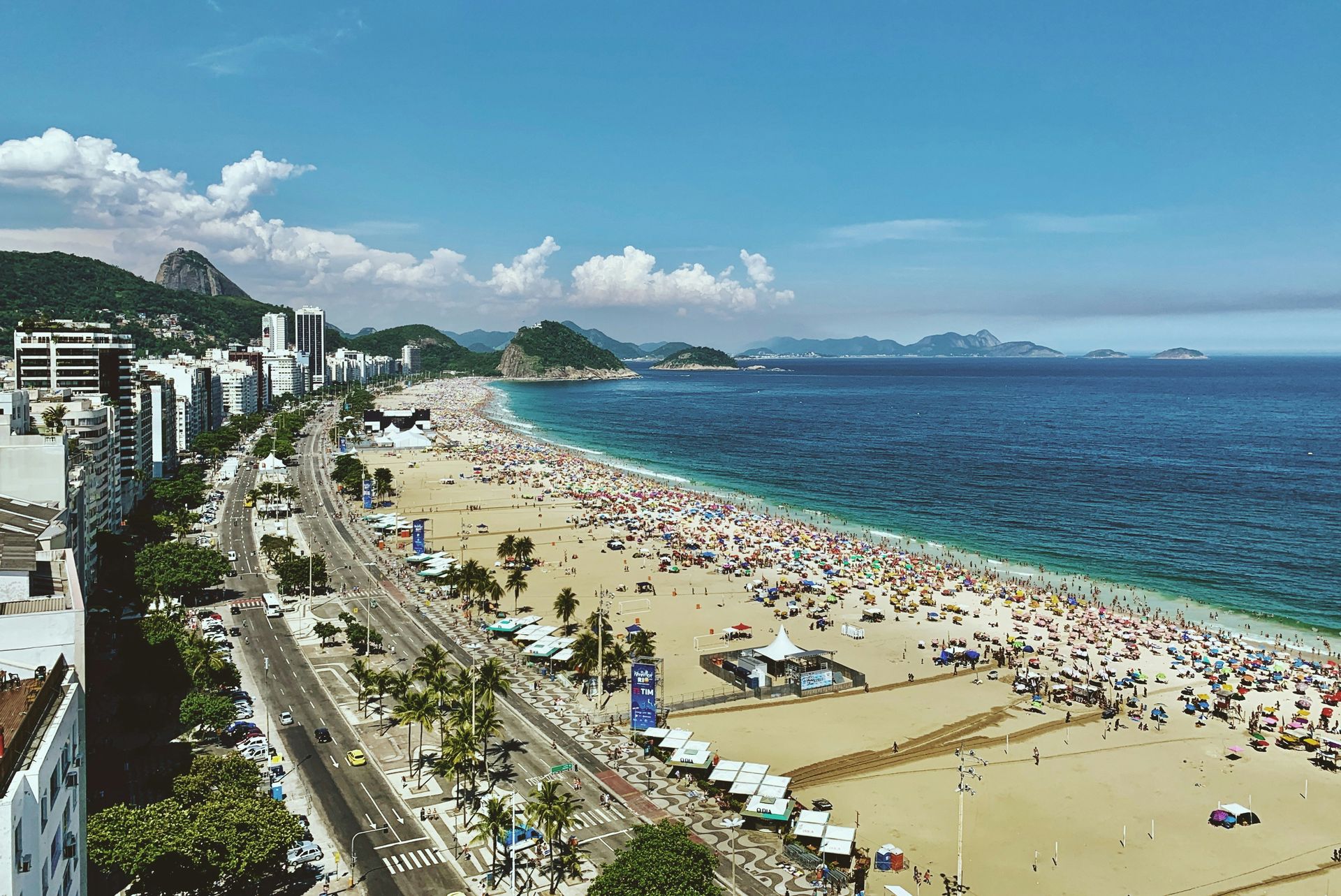
Copacabana Beach in Rio de Janeiro is hosting the FIFA Fan Fest for Brazil’s World Cup matches, drawing up to 10,000 fans per game to a viewing event on the Atlantic Ocean waterfront beneath the sightline of Rio’s Christ the Redeemer statue. The FIFA Fan Fest on Copacabana gives the World Cup’s most football-passionate single national fan base its most specifically Brazilian single viewing setting: the beach that is one of the most recognized urban coastal environments on earth, transformed by a major tournament into a communal sporting event whose scale and atmosphere reflect the specific intensity of Brazilian football culture at the World Cup.
Tickets for the FIFA Fan Fest are hard to obtain, reflecting the demand from a country whose relationship with the World Cup transcends sporting enthusiasm into something closer to national identity. The ticket scarcity gives the viewing event a desirability specific to a nation that has won the World Cup more times than any other and whose fans treat each tournament as both a celebration and an obligation. The broader Copacabana and Rio viewing context gives the ticketless fan a specific consolation specific to Brazil: virtually every television in the city will be showing the match, and the citywide fireworks that ignite the moment Brazil scores give every person within earshot of any television in any bar, apartment, or street corner the immediate knowledge of the result, regardless of whether they secured a Fan Fest entry.
The setting, the Atlantic waterfront, Christ the Redeemer visible on the Tijuca Forest hillside above, and 10,000 strangers watching together, gives the Copacabana World Cup viewing its most emotionally concentrated single site on this list, and the Brazilian football culture’s specific transformation of the sporting event into a communal celebration gives the beach watch party a character that the indoor venue, however grand, cannot replicate in the same sensory and social terms on the same Atlantic shoreline.
