
From a planner that sparked a KFC lawsuit to a clip-on bow tie on the world's most famous logo, ten items from the Colonel Sanders auction
Credit: The Menish Group
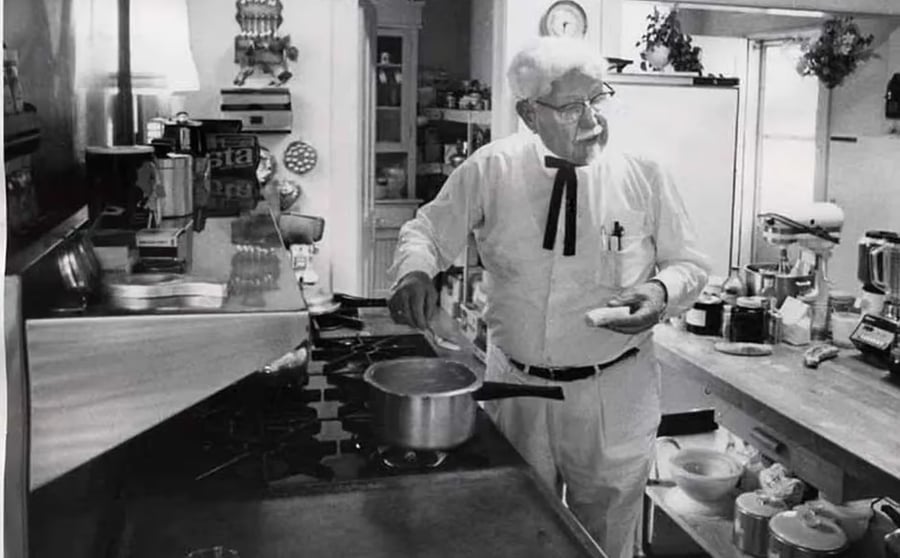
A Kentucky dinner house sat quietly for decades holding onto a dead man’s bow tie, his cash register and a notebook nobody outside one family had opened. On Tuesday night, the collection finally broke apart in public. Bidders from around the world logged on and packed a Shelbyville, Kentucky, showroom to compete for objects that once belonged to Harland Sanders, the man behind the white suit, the black glasses and the goatee that made Kentucky Fried Chicken a household name decades before anyone called it KFC.
Most estate sales scatter a public figure’s belongings among strangers within a year or two of death. Sanders died in 1980, and his personal effects stayed inside a single trusted circle for 46 years afterward. Tommy and Cherry Settle bought Sanders’ former home and restaurant directly from him and his wife, Claudia, in 1974, and the couple’s family kept his keepsakes intact instead of selling them off piecemeal. This unbroken chain of ownership gave Tuesday night’s sale a rare quality auction houses can’t manufacture: nothing here passed through a dealer, a collector, or an estate liquidator first. Every lot traces straight back to the man who slept in the house and worked the dinner house floor, and that direct lineage explains why bidders logged on from continents away to compete for objects most people would otherwise never see outside a museum case.
The Menish Group ran the sale, combining online bidding with a live event at the Claudia Sanders Dinner House in Shelbyville, drawing bidders from well beyond Kentucky. The Associated Press reported the results directly from the auction floor, where auctioneer Bill Menish and eXp Realty agent Jonathan Klunk handled the live sale. At the same time, sealed bids for the underlying real estate closed separately later the same week. The 10 lots below cover the personal items and documents that changed hands, along with the property that once anchored Sanders’ entire operation.
Credit: The Menish Group
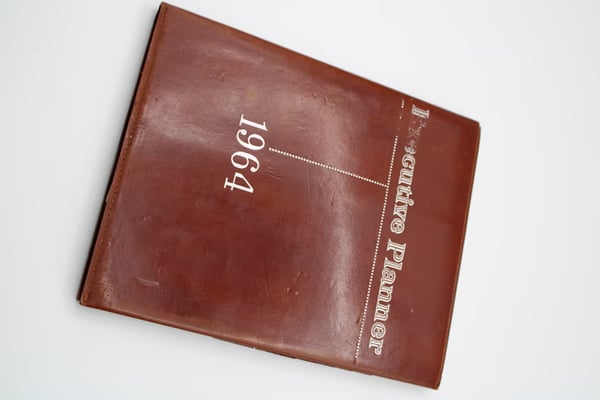
A pocket-sized executive planner from 1964 sold for $30,000, the top price of the entire memorabilia auction. Sanders used the notebook for ordinary business scheduling. Still, its final pages carry something else: a handwritten list of 11 herbs and spices, along with the quantities needed to combine them, written in his own hand, with no label explaining what the mixture was.
KFC Corp. took that ambiguity seriously enough to sue. In the early 2000s, company lawyers went to court to keep the planner’s contents sealed, worried the list might expose the fried chicken chain’s guarded 11-spice blend to public view. The case collapsed once KFC’s own team examined the notebook directly. The proportions didn’t align with the company’s proprietary recipe, and staff concluded that Sanders had jotted down instructions for a stuffing mix instead.
Menish called the planner “a keepsake” during the bidding and, at one point, grew animated enough to knock over a camera recording the event. The reaction fits the object. Sanders wrote the entry decades before anyone thought to protect it, in a private notebook meant only for himself, and the mystery survived a corporate lawsuit intact.
Whoever bought the planner now owns a genuine unsolved puzzle from American food history, a rare case where a lawsuit generated more questions than it answered and the answer still isn’t public. The Menish Group listed the planner alongside dozens of other personal effects. Still, bidders singled it out from the opening minutes of the sale, driving the price well above that of every other item on the floor. Its final sale figure alone signals how much weight collectors still place on Sanders’ most guarded professional secret, decades after his death and years after the lawsuit that tried to settle the question once and for all. Nothing in the surviving paperwork explains why Sanders chose that particular notebook for such a sensitive entry. That gap keeps the object interesting long after the lawsuit itself faded from headlines.
Credit: The Menish Group
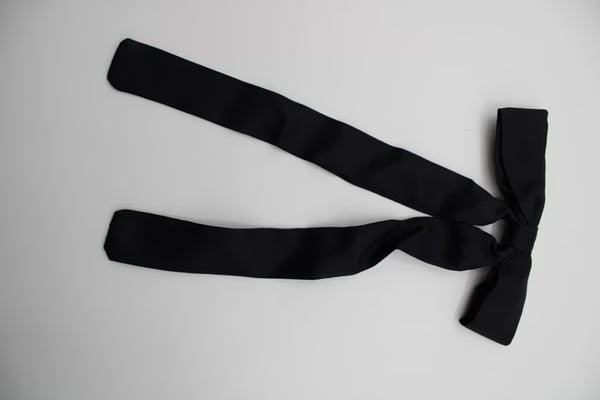
One of Sanders’ signature black bow ties sold early in the auction for $8,000. It’s the same style depicted on the KFC logo itself, the small black accent beneath his chin in a portrait recognized on nearly every continent. Bidders competing for it weren’t buying a costume piece. They were buying the literal object visible in a brand mark seen by billions of people.
Auctioneer Jonathan Klunk let slip a detail that surprised even longtime fans watching the sale: Sanders wore clip-ons. The tied version most people picture never touched his collar. A man whose entire persona ran on careful visual control chose the version that snapped into place in seconds instead of the one that required practiced fingers each morning.
This choice fits a bigger pattern Menish described during the sale. Sanders adopted his full look, the white suit, the goatee, the glasses and the tie, only after he began actively building Kentucky Fried Chicken into a national brand. None of it came from personal habit. He built the colonel the way a company builds a mascot, piece by piece, with intention behind every element.
The bow tie sold as a costume accessory once worn by a chicken salesman. It changed hands as a fragment of one of the most recognized commercial images in the country’s history. Auction organizers noted worldwide interest in the sale precisely because of items like this one, since a single accessory tied so closely to a globally recognized logo carries value far beyond its material cost. Bidders competing online from outside the United States pushed the price up throughout the evening, confirming that Sanders’ image still resonates internationally, not only among American diners who grew up eating at his restaurants. Klunk’s small revelation about the clip-on style added real texture to an otherwise straightforward sale, proving even the auction’s own experts kept learning new details about Sanders as bidding continued. Bidders watching from home saw the small correction land in real time, a rare moment where a decades-old habit finally became public knowledge.
Credit: The Menish Group
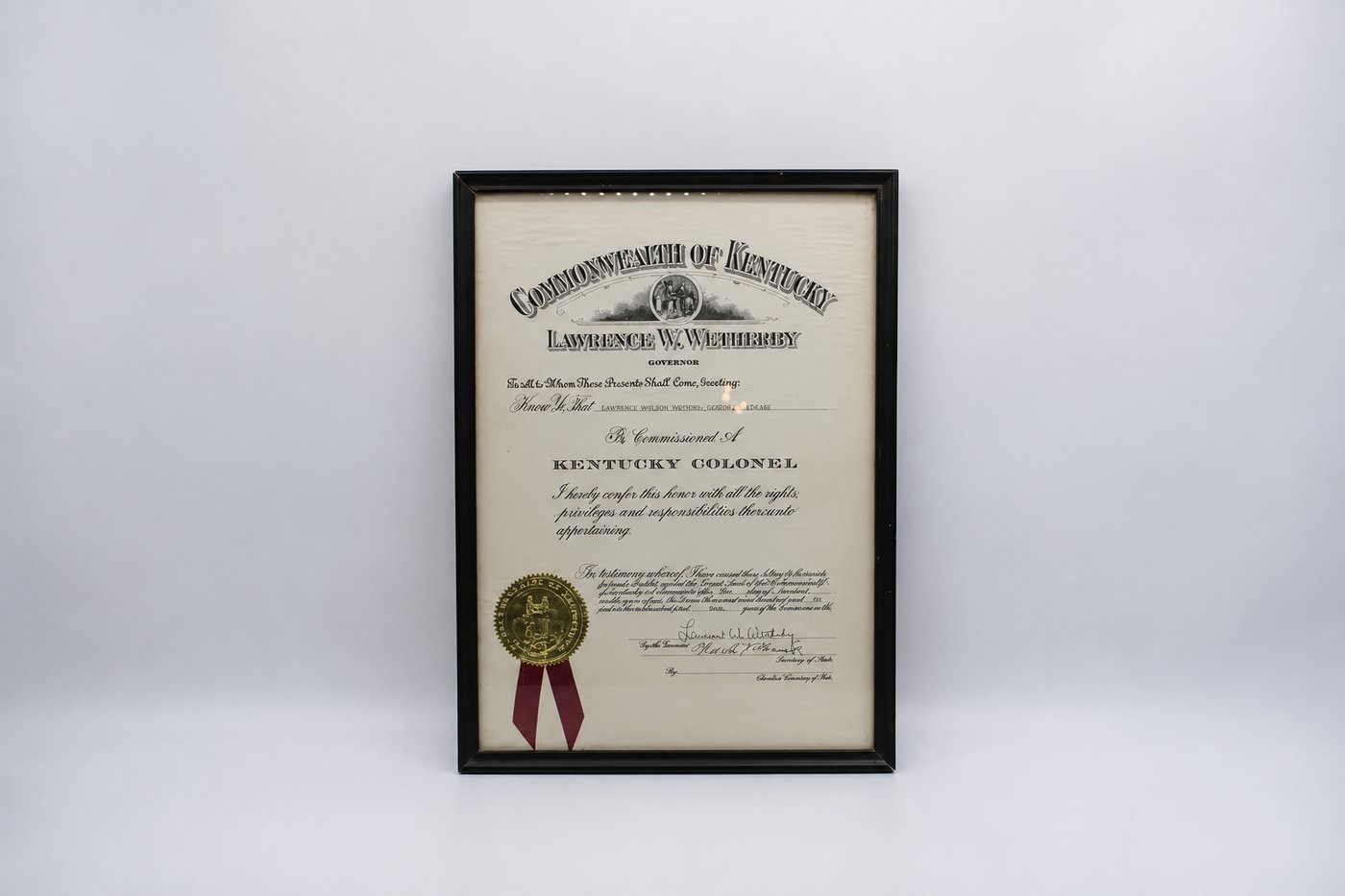
A 1955 certificate naming Sanders an honorary Kentucky Colonel sold for $23,000, making it one of the auction’s three highest prices alongside the planner and the bow tie. The title predates the fried chicken empire by years. Kentucky governors have granted the honorary colonelcy since the 1800s to residents who bring credit to the state, and Sanders received his years before Kentucky Fried Chicken existed as a company.
The title eventually fused with his identity so completely that most people now assume that “Colonel” refers to a military rank he earned through actual service. It didn’t. Sanders served briefly in the Army as a teenager decades earlier and left without an officer rank. The colonelcy that became his permanent public name came from the commonwealth of Kentucky honoring a private citizen, not from any battlefield.
Owning the certificate means owning the paperwork behind arguably the most famous honorary title in American business history, the single word that turned an aging restaurateur into a character recognizable worldwide. Few documents carry that much weight for so little physical presence.
The certificate’s $23,000 price tag reflects exactly that gap between size and significance. A single sheet of paper outbid nearly every physical object in the sale except the planner and the bow tie themselves. Kentucky’s honorary colonelcy has gone to thousands of recipients over the decades, from politicians to entertainers to ordinary citizens singled out for local service. Yet, almost none of those names carry the instant recognition Sanders’ does today. The certificate’s considerable final price reflects how thoroughly one recipient’s later fame transformed an otherwise routine ceremonial document into a true collector’s artifact. Buyers focused particularly on Kentucky history rather than on fast-food memorabilia broadly. They treated this particular lot as the evening’s most meaningful purchase, regardless of its price relative to flashier items. The document’s age alone sets it apart from most Sanders memorabilia, since it predates his entire fried chicken career by more than a decade.
Credit: The Menish Group
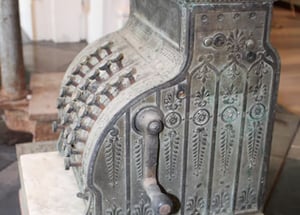
Sanders’ original cash register from the Shelbyville property sold Tuesday night as one of the sale’s tangible links to the daily mechanics of running his early restaurant business. Long before Kentucky Fried Chicken became a global franchise, the machine rang up ordinary transactions inside the building Sanders established as his company’s first headquarters in the late 1950s.
This headquarters status matters to the register’s value. Sanders ran the earliest version of his entire business empire out of this single Shelbyville property, and the register sat at the center of those daily operations before franchising multiplied the brand across the country. Everything that eventually became a worldwide chain started with cash moving through this exact machine.
The register also survived a specific kind of institutional memory loss most vintage retail equipment doesn’t. Tommy and Cherry Settle bought the property directly from Sanders in 1974 and kept the restaurant and its contents, which have been running continuously for more than five decades afterward. The machine never left the building it started in.
Few surviving artifacts connect this directly to the exact moment a global chain existed as a single local storefront, a detail that matters most to collectors focused on franchise history. Restaurant historians increasingly treat early point-of-sale equipment as legitimate artifacts in its own right, since machines like this one recorded the earliest financial pulse of businesses that later grew into household names. This particular register did that job for the property Sanders chose deliberately as his company’s original base of operations, before any franchise agreement, test kitchen, or corporate office existed anywhere else. Few restaurant chains of comparable global scale can point collectors toward a single surviving machine tied this directly to their absolute earliest days of operation. Its considerable age and continued survival inside a single property speak to how carefully the Settle family treated even the most utilitarian objects Sanders left behind. Buyers researching franchise history in particular will find few comparable objects anywhere on the current collector’s market.
Credit: The Menish Group
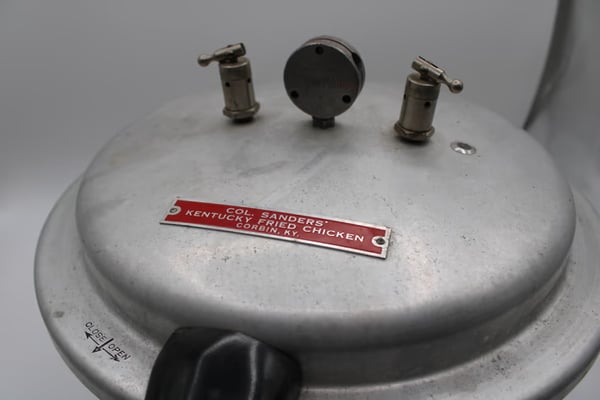
Sanders’ pressure cookers sold Tuesday as physical evidence of the cooking method that separated his fried chicken from every competitor’s version. He is widely credited with pioneering pressure frying in the restaurant industry. This technique cooks chicken under pressure while also frying it, dramatically reducing cooking time while keeping the meat juicy and the exterior crisp.
Standard deep frying alone couldn’t achieve the same result at restaurant speed. Sealing chicken inside a pressurized cooking environment lets heat penetrate faster and more evenly than open frying, solving a problem that had limited how quickly restaurants could serve fried chicken to hungry customers. Sanders built an entire business model around that speed advantage.
The technique became foundational enough to the brand that Sanders patented a version of it in 1966, formalizing years of kitchen experimentation into a legal document. The pressure cookers sold at auction represent the working tools behind that patent, the actual equipment used to develop and refine a method now standard across the fried chicken industry.
Few kitchen tools sold at any auction carry this direct line to an entire category of American fast food. These particular pots didn’t just cook dinner. They built an industry standard still followed decades later. Sanders reportedly experimented with cooking equipment extensively during the years he ran roadside restaurants in Kentucky, long before franchising turned his recipe into a national phenomenon. The pressure cookers sold at auction represent that experimentation made physical, the actual tools a determined restaurateur used to solve a cooking problem that had frustrated fried chicken vendors for years before he found his answer. Modern fried chicken restaurants still rely on descendants of this exact cooking approach, giving these particular pots a surprisingly direct line to menus served across the country today. Kitchen equipment this closely tied to a specific culinary breakthrough rarely survives outside a corporate archive, making these particular pots an unusual find for any private buyer in their own right.
Credit: The Menish Group
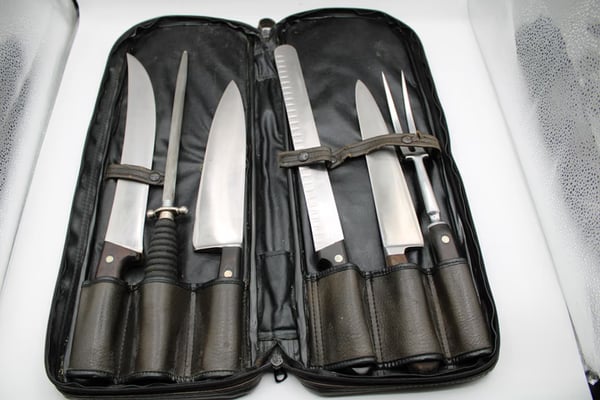
A cutlery set belonging to Sanders sold as part of the memorabilia lots, tying directly to the Claudia Sanders Dinner House that Sanders and his wife operated on the Shelbyville property starting in 1968. Named for Claudia herself, the restaurant offered a more formal, sit-down Southern dining experience distinct from the quick-service model that made Kentucky Fried Chicken famous nationwide.
The dinner house grew into a substantial operation. The building spans roughly 25,000 square feet and can seat close to 700 guests across multiple dining rooms, an upstairs bar and a porch, according to historical property records. A cutlery set from an operation that size represents genuine working restaurant equipment from an active kitchen, not simply a decorative keepsake.
Claudia Sanders played a considerably larger role in the couple’s later business success than most casual fans realize. She partnered directly with Harland in running the dinner house, and its continued operation under the Settle family since 1974 has kept her name attached to an active Kentucky restaurant for more than half a century after the couple first opened it.
Buyers interested in Claudia’s specific contribution to the Sanders legacy, distinct from the more famous fried chicken chain, found few better physical connections to her than the flatware that once set her own dining room tables. Menu items at the dinner house leaned toward Southern comfort cooking distinct from the fast-food model that built the broader Kentucky Fried Chicken brand, giving guests a considerably slower, more formal dining experience inside the same property where Sanders once ran his earliest restaurant business. The cutlery set sold at auction would have touched hands at nearly every one of those meals across decades of continuous operation. This continuous operation gives the set a working history few restaurant artifacts can match, since it served actual paying customers over five full decades rather than sitting in storage. This level of continuous, documented use gives the set a considerably stronger provenance than most vintage flatware collectors typically encounter at general estate sales.
Credit: The Menish Group
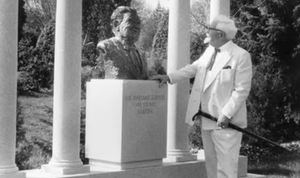
A bust of Sanders sculpted by his own daughter sold Tuesday, offering something none of the auction’s documents or restaurant equipment could match: a deliberately artistic, family-made portrait instead of a business artifact or personal accessory. Where the bow tie and the planner reveal Sanders through what he wore or wrote, the sculpture reveals how someone who loved him chose to render his face permanently.
Family-created artwork rarely survives long enough to reach public auction. Most personal art stays within a family across generations or disappears entirely once a household disperses its belongings. This particular piece stayed inside the tight circle around Blackwood Hall and the dinner house for decades, preserved by the Settle family alongside Sanders’ more conventional keepsakes.
The sculpture also carries a dimension the other lots in this sale entirely lack: someone who knew Sanders as a father first and a public figure second made it. Every other item in the sale reflects how the world saw the colonel. The bust reflects how his own child chose to shape him in three dimensions, a considerably more intimate lens than any bow tie or business document offers.
Collectors focused purely on KFC memorabilia may overlook the bust in favor of flashier lots. Those interested in Sanders the private individual likely won’t. Sculpture demands a kind of sustained attention few casual tributes require, since capturing a specific likeness in three dimensions takes considerably longer than snapping a photograph or writing a tribute. Whoever commissioned or created this particular piece within the family spent real time studying Sanders’ face directly, producing an object that reflects personal observation instead of a mass-produced likeness sold in gift shops nationwide. Its considerable emotional weight comes precisely from that family origin, a quality no commercially produced Sanders memorabilia, however detailed, could ever fully replicate. Museums specializing in American business history may eventually seek out pieces exactly like this one, precisely because family-made artifacts remain this scarce overall.
Credit: The Menish Group
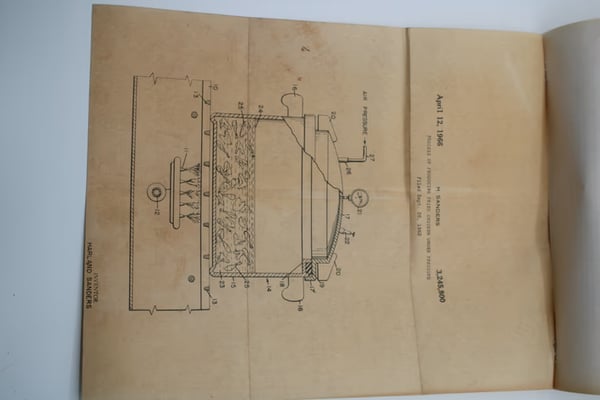
Sanders’ 1966 patent, titled “Process of Producing Fried Chicken Under Pressure,” sold as one of the auction’s most historically significant paper lots. The filing formally documented the cooking technique that distinguished Kentucky Fried Chicken from every other fried chicken competitor operating at the time, turning years of kitchen experimentation into a legally protected process.
Patents rarely surface at general auctions the way jewelry or furniture does, since most inventors’ families either retain them privately or route them through specialized intellectual property sales. This filing survived inside the same Shelbyville collection as Sanders’ pressure cookers and personal effects, giving buyers a truly rare chance to own the legal paperwork behind a specific, named cooking innovation still credited with reshaping an entire segment of the restaurant industry.
The patent’s title alone tells a concentrated version of Sanders’ business story. He didn’t simply discover a faster way to fry chicken. He formalized it, protected it, and built a franchise empire on the strength of that protection, a path considerably more deliberate than the folksy country-cook image most people associate with the colonel.
Owning the patent means owning the legal foundation of an entire fast-food category, filed under Sanders’ own name decades before pressure frying became a standard restaurant technique. United States patent filings from this era required inventors to describe their process in exacting technical language, meaning Sanders’ filing spells out cooking steps with a precision his own public folksy image rarely displayed. This contrast between the patent’s dry legal language and the colonel’s warm, grandfatherly public persona gives the document real value as a window into the calculated business mind operating behind the costume. Legal historians studying early fast-food patents now have a physically tangible artifact to pair with the written filing itself, connecting paperwork directly to the man who signed it. The filing’s considerable specificity also provides food scientists with a genuine primary source for studying how pressure frying first developed.
Credit: The Menish Group
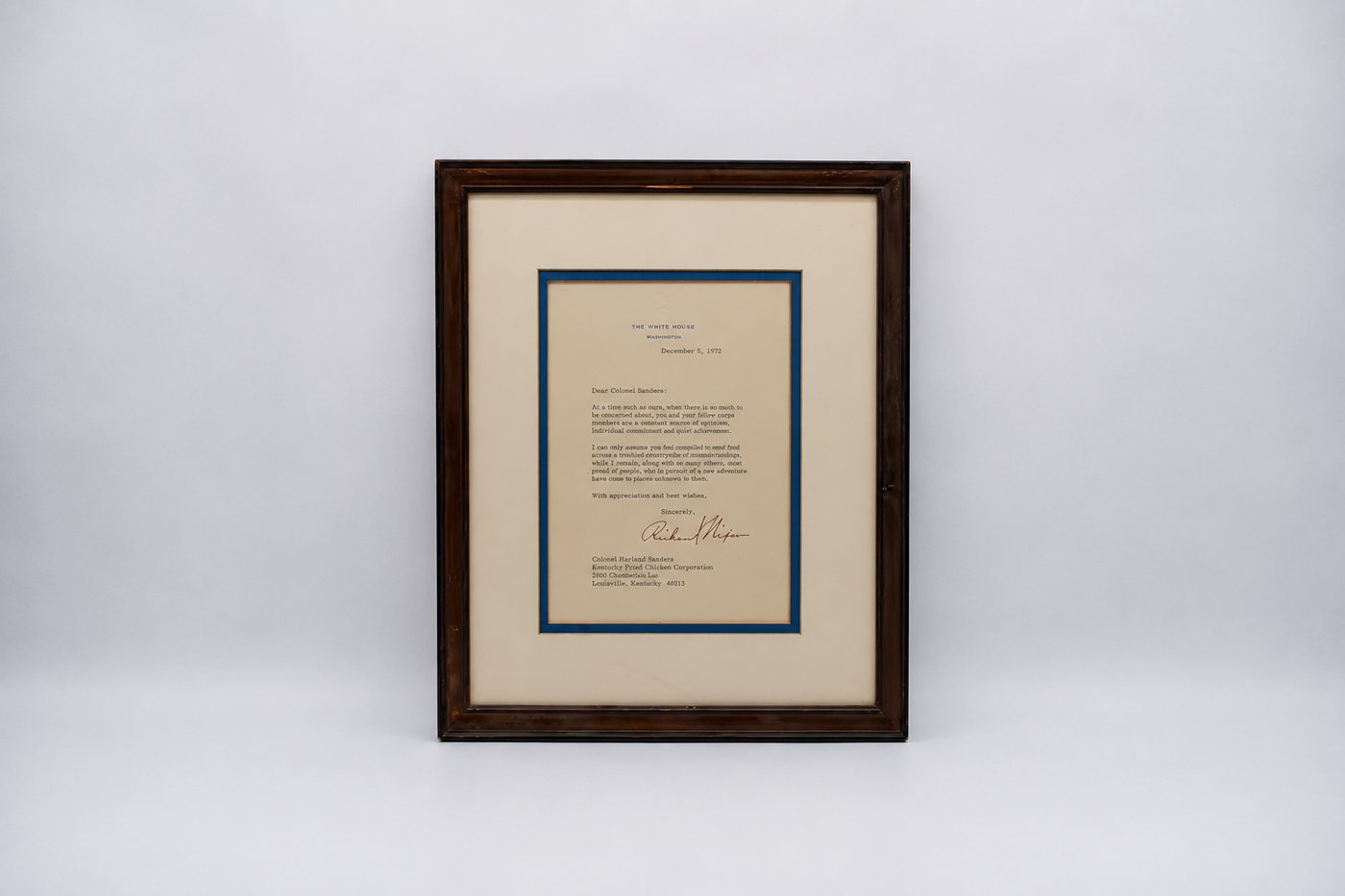
A 1972 letter of appreciation from President Richard Nixon sold among the auction’s historical documents, placing Sanders’ personal collection alongside correspondence from the country’s highest office. By 1972, Sanders had already sold Kentucky Fried Chicken to outside investors eight years earlier but remained the company’s public face and a nationally recognized businessman whose reach extended well beyond the restaurant industry itself.
Presidential correspondence to private citizens typically follows a specific occasion, whether a charitable contribution, a public service role, or a notable achievement worthy of formal acknowledgment from the White House. A letter reaching Sanders by 1972 reflects how thoroughly his public profile had grown beyond fried chicken alone, into the kind of national recognition that drew attention from the sitting president.
The letter also anchors Sanders within a specific moment in American political and cultural history, positioning him as more than a business figure detached from broader events. Nixon’s presidency and Sanders’ peak cultural visibility overlapped directly, and this document proves the two intersected on paper.
Few restaurant founders can claim direct written correspondence from a sitting president. This letter provides its buyer with physical proof that Sanders belonged to a considerably wider circle of national recognition than his chicken alone would suggest. Correspondence from a sitting president rarely survives intact in private hands for more than a few decades, since most recipients either donate such letters to archives or lose track of them entirely across generations of family transitions. This particular letter remained within the same protected Shelbyville collection as Sanders’ other personal items, giving today’s buyer a document that connects two distinct, well-documented chapters of twentieth-century American history in a single physical object. Historians researching either man individually now have a genuine reason to consult this particular auction record, since the letter ties two otherwise separate research threads together in one place. Its considerable rarity within this specific collection makes it one of the auction’s more understated highlights, easily overshadowed by flashier lots yet historically significant in its own right.
Credit: The Menish Group
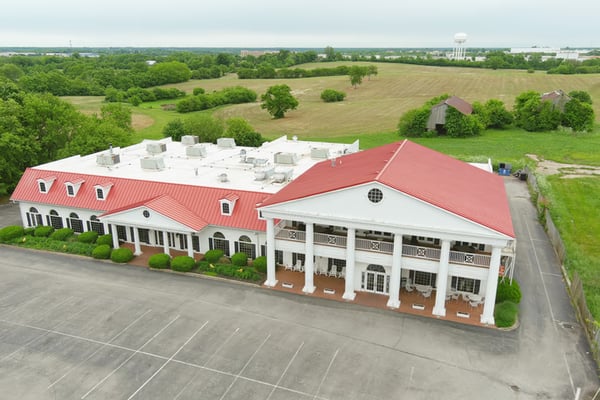
Sanders’ former home, which he named Blackwood Hall, went to sealed bid separately from the memorabilia auction, with offers accepted through the end of the week. The 5,000-square-foot residence dates back considerably further than most people assume. Property records trace the structure to 1866, nearly a century before Sanders and his wife moved in during 1959 and turned it into the operational headquarters of their growing restaurant business.
The home’s sale includes the adjoining Claudia Sanders Dinner House, together covering roughly 3 acres of commercial and residential property in Shelbyville. Tommy and Cherry Settle bought both structures directly from the Sanders family in 1974. They kept the restaurant running continuously for more than 50 years afterward, an unusually long single-family stewardship for a property so closely tied to a national brand.
Bidders on Blackwood Hall aren’t just buying square footage. They’re buying the specific address where Kentucky Fried Chicken’s franchising strategy first took operational shape, before the company’s headquarters moved anywhere near the scale it eventually reached. Few founders’ homes double this directly as the literal birthplace of a company’s corporate structure.
Sealed bids close without the theater of a live auction floor, but the stakes rival anything sold Tuesday night. Whoever wins Blackwood Hall inherits the one property every other lot in this sale ultimately traces back to. Real estate tied this closely to a founder’s earliest business decisions rarely reaches the open market intact, since most company origin sites either get demolished, are absorbed into later expansions, or are converted entirely away from their original purpose within a generation or two. Blackwood Hall avoided all three outcomes precisely because the Settle family valued its history enough to preserve the structure largely as Sanders himself left it in 1974. This preservation effort means today’s buyer inherits a structure considerably closer to its 1974 condition than almost any other founder’s residence tied to a major American brand. Few sealed-bid property sales carry this much documented history behind a single residential address, giving the eventual winner considerably more than square footage alone.