
From Viking's all-inclusive rotating tasting menus to Royal Caribbean's dozens of onboard eateries, the cruise lines that take dining seriously
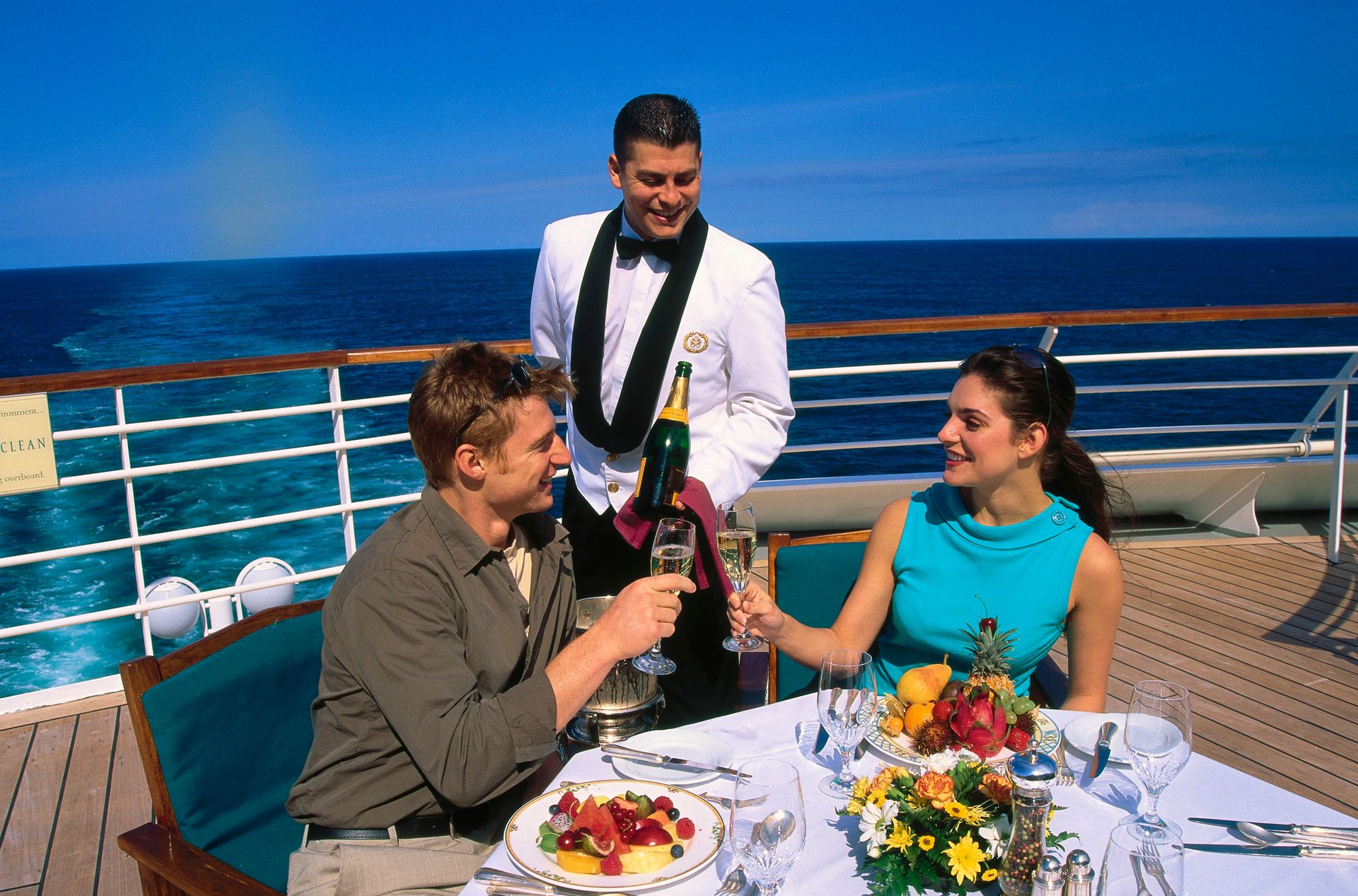
Barry Winiker / Getty Images
A cruise ship is, among other things, a floating restaurant. For many travelers, the quality of the food onboard matters as much as the itinerary, and some return to the same cruise line year after year specifically because of a restaurant they cannot replicate on land. The category has evolved significantly from its all-you-can-eat buffet origins: today’s leading cruise lines employ Michelin-starred chefs, curate multicourse tasting menus, build immersive culinary programming around the ports their ships visit, and operate specialty restaurants that compete credibly with the best land-based alternatives their destinations have to offer.
The decision between a cruise line’s dining programs has real implications for how a trip feels. A cruise that includes every meal in the fare operates differently from one where the best restaurants carry supplemental fees at every turn. A ship with 20 restaurant options offers a fundamentally different experience from one anchored around a single main dining room. The specific chefs, the cuisine types, the sourcing philosophy, and the degree to which the ship’s food culture connects to the destinations it visits all shape the overall dining experience in ways that the generic category of “cruise food” fails to capture.
The 10 cruise lines below come from U.S. News & World Report, which evaluated major cruise lines on their dining offerings using factors such as the number and variety of cuisines, industry accolades, and cruiser ratings of onboard food programs. The source divides its full list into luxury and mainstream tiers. The five luxury lines listed below cater to smaller passenger counts with higher per-cruise investments and more comprehensive dining inclusions. The five mainstream lines serve larger audiences with broader price ranges and dining programs that balance variety with value. The full list covers both tiers to show how top-quality cruise dining manifests across different market segments.
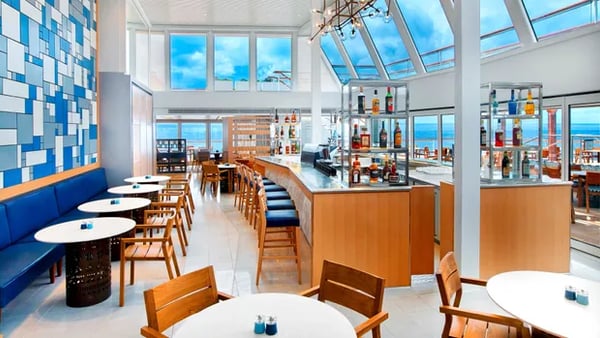
Credit: Viking Ocean Cruises
Viking Ocean Cruises operates adults-only oceangoing ships with passenger capacities between 930 and 998 guests and builds its dining philosophy around destination-focused cuisine that highlights regional ingredients and local specialties. The main dining room, called The Restaurant, serves classic dishes with occasional creative interpretations, giving guests a reliable anchor for daily meals. The cruise fare bundles all dining across every venue on the ship, including two specialty restaurants — Manfredi’s Italian Restaurant and The Chef’s Table — that other lines would typically charge separately to access.
The full lineup of included venues extends well beyond the specialty restaurants. World Café operates as an open kitchen with a large outdoor dining area, the Aquavit Terrace, serving international dishes in a relaxed setting. Mamsen’s provides a casual setting for Norwegian specialties that reflect Viking’s Scandinavian roots. The Pool Grill handles made-to-order burgers and lighter fare for daytime meals. Afternoon tea in The Wintergarden runs daily, offering passengers a structured mid-afternoon ritual that aligns with the line’s European sensibility.
The Chef’s Table represents the most distinctive element of Viking’s culinary program. The menu changes multiple times throughout each sailing, exposing guests to a rotating series of multicourse tasting menus built around Asian, Norwegian, French, and other international cuisines, with wine pairings selected by the ship’s master sommelier. The menu rotation across a single voyage means repeat guests and longer sailings can produce genuinely varied experiences. Manfredi’s Italian Restaurant offers a more straightforward yet high-quality alternative, with dishes such as fritto misto amalfitano, brodetto all’Anconetana, and bistecca alla fiorentina. An additional-fee cooking class at The Kitchen Table gives interested passengers a hands-on engagement with the line’s destination-focused culinary philosophy. The comprehensive inclusion of all dining in the base fare distinguishes Viking from most luxury competitors. The Kitchen Table cooking class, which operates for an additional fee, gives passengers who want deeper engagement with the destination-focused philosophy a hands-on option beyond what the standard venues provide.
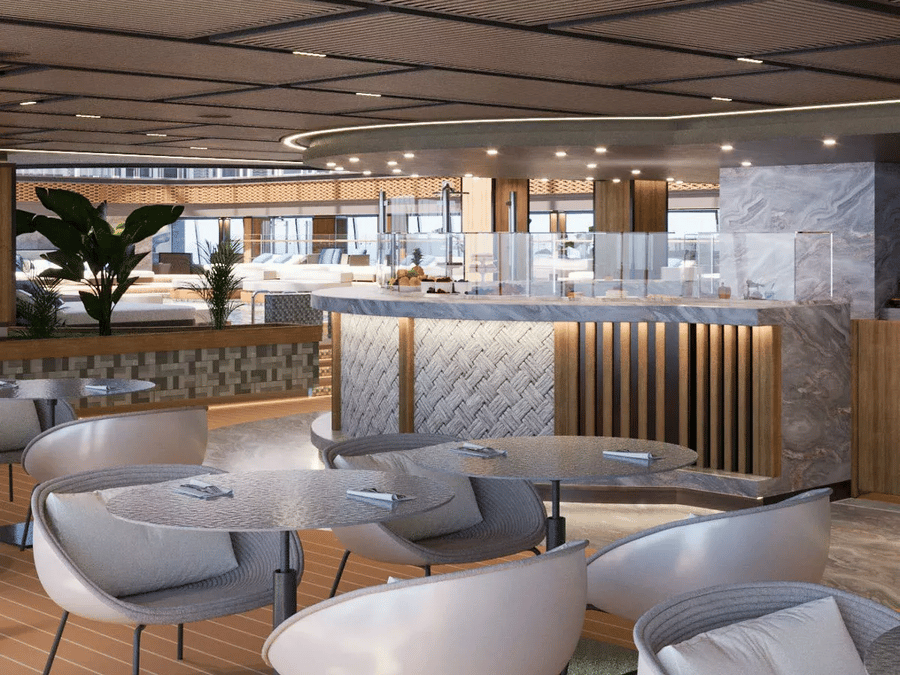
Credit: Explora Journeys
Explora Journeys, the luxury brand operated by MSC Group, positions its culinary program as one of the most resource-intensive in the cruise industry. Head of culinary, Franck Garanger, has held the title of French master chef since 2008 and previously led culinary programs at both Silversea Cruises and Oceania Cruises before joining Explora. His tenure at two other top-ranked cruise lines before joining Explora gives the brand culinary leadership with direct competitive context.
The source cites Garanger’s assertion that Explora Journeys maintains one of the highest chef-to-guest ratios and food costs of any cruise line. The claim is evident in the caliber of ingredients used at the all-day dining venue, Emporium Marketplace. Freshly shucked oysters on the half shell, ceviche, free-range and organic chicken, and made-to-order grilled fish are among the items available there, representing a level of sourcing that most all-day buffet-style venues do not approach. The line’s two 922-guest vessels, Explora I and Explora II, each offer guests nine distinct culinary experiences, including the French-inspired Fil Rouge, Marble & Co. Grill European steakhouse, and Med Yacht Club Mediterranean venue.
Two standout specialty restaurants illustrate the program’s range. Sakura is a Pan-Asian restaurant with an open kitchen and sushi bar, serving dishes such as wagyu beef tataki, soft-shell crab tempura, miso-blackened cod, and lobster pad thai. Anthology, the line’s signature fine dining venue, features an Italian-inspired grand tasting menu curated by Garanger himself, opening with Oscietra royal caviar and lobster and moving through pasta dishes with langoustines and scallops, risotto with radicchio, and mains of beef filet with Amarone sauce and Mediterranean sea bass. An additional fee applies for Anthology, with an optional wine pairing. Hands-on cooking classes at the Chef’s Kitchen oceanfront facility carry a separate fee and cap enrollment to keep sessions intimate. The oceanfront setting gives the class a physical backdrop that reinforces the connection between the culinary experience and the maritime travel context.
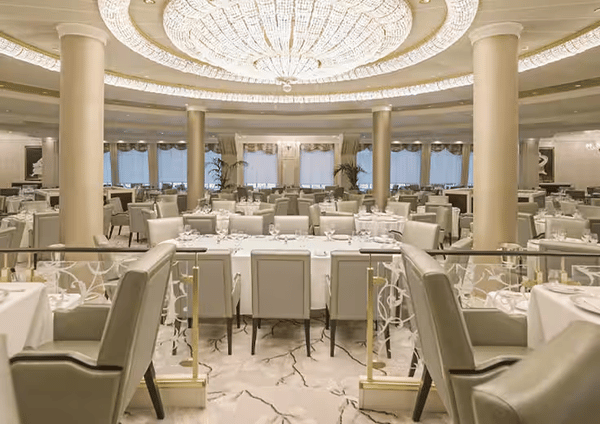
Credit: Oceania Cruises
Oceania Cruises has tied its culinary identity to Jacques Pépin, the renowned French master chef who has served as the founding executive culinary director since 2003. The relationship spans more than two decades and eight small luxury ships. His influence shapes the menus across the fleet, including Oceania Allura, the newest vessel, which debuted in July 2025. Pépin now sits on the line’s new Culinary Advisory Board alongside executive culinary directors and French master chefs Alexis Quaretti and Eric Barale, as well as chef and TV personality Giada De Laurentiis, who also serves as the line’s brand and culinary ambassador.
Oceania ships include most dining venues in the base fare, except Privée and La Reserve. The covered options span a substantial range: the Grand Dining Room for global fare, Polo Grill for classic steakhouse fare, Terrace Café for casual all-day dining, Jacques for French bistro fare, and Waves Grill for poolside casual meals, including burgers, salads, and sandwiches. Wine-tasting events through La Reserve by Wine Spectator and afternoon tea on select ships add supplemental programming for guests interested in specific food and beverage experiences.
Two specialty restaurants showcase the program’s depth. Red Ginger draws guests with feng shui-inspired red-and-gold interiors and keeps them coming back with bold Asian flavors spanning Vietnamese, Thai, and Japanese cuisines. Signature dishes include caramelized tiger prawns, crispy ginger calamari, and bulgogi rib-eye steak. Toscana serves Tuscan and northern Italian cuisine on custom Versace china designed specifically for the restaurant, an indicator of the level of investment Oceania makes in the physical details of the dining experience. Dishes include a tableside Caesar salad, osso buco alla Milanese, and lasagna al forno alla Bolognese. The breadth of the included dining program, the caliber of the specialty restaurants, and the Pépin-led advisory board give Oceania one of the most credentialed and consistently recognized culinary programs in the cruise industry.
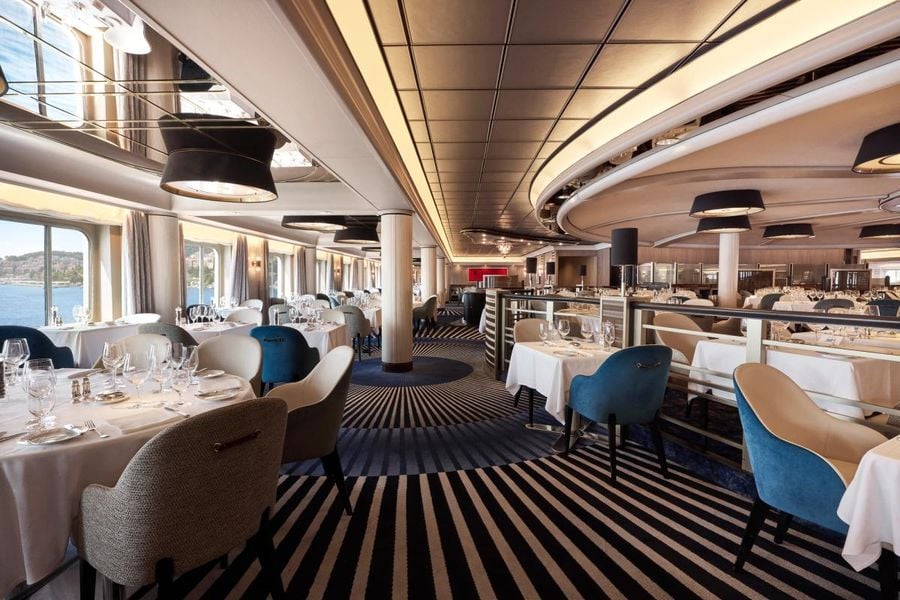
Credit: Crystal Cruises
Crystal operates two ships with nine onboard culinary options spanning a wide range of cuisine types, and the most distinctive element of its program is the presence of master chef Nobuyuki “Nobu” Matsuhisa’s cuisine at Umi Uma. Matsuhisa’s globally recognized Asian fusion style, which blends Japanese technique with Peruvian and other South American influences, is available to Crystal passengers as part of a ship-based dining portfolio that spans Italian to global fare. The reach from a formal Italian restaurant to a Nobu venue within a single ship gives Crystal an unusually broad culinary identity.
Osteria D’Ovidio serves the Italian end of the lineup, bringing traditional Italian specialties into a formal dining setting that complements Umi Uma’s contemporary Asian orientation. The source identifies gelato and casual burger options alongside the more formal specialty restaurants, signaling that Crystal accommodates the full range of dining moods across a single voyage. Guests who want a focused tasting experience on a given evening and a casual poolside meal the next afternoon find both within the same fare structure.
Room service at Crystal operates around the clock, extending the dining program beyond the physical restaurant spaces into passengers’ cabins at any hour. Nobu’s internationally celebrated cuisine, the Italian restaurant, the casual daytime options, and 24-hour cabin delivery together create a dining architecture that covers the full range of passenger needs throughout the day. Nine distinct culinary experiences on a two-ship fleet reflect a level of variety investment that many larger fleets do not match proportionally, and the presence of Matsuhisa’s brand gives the program a name-recognition anchor that few other cruise culinary programs can claim in the Asian fusion category. Crystal’s scope of nine culinary options across two ships also gives passengers enough menu variety that repeat sailings can expose them to genuinely different and varied dining experiences when they sail successive itineraries.
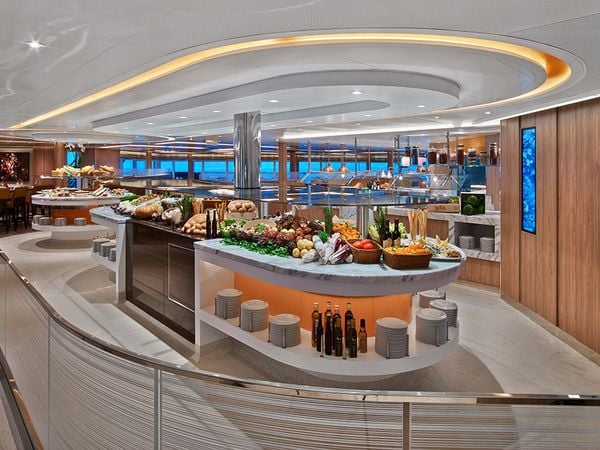
Credit: Seabourn
Seabourn operates six cruise ships and distinguishes itself from most lines — including several other luxury competitors — by including both all dining and all drinks, alcoholic and non-alcoholic, in the base cruise fare. Comprehensive inclusion means passengers do not face a parallel beverage track alongside meals, as on other lines, which can add meaningfully to the total trip cost. The dining program spans multiple venues across the fleet, anchored by Solis, a fine dining restaurant serving a Mediterranean menu that emphasizes local specialties and seasonal ingredients calibrated to the ship’s current itinerary and the time of year it visits each destination.
The menu diversity across Seabourn’s fleet extends well beyond Mediterranean fare. Japanese small plates and fresh sushi represent one end of the spectrum, while creative international cuisine, seafood, salads, pizza, and burgers provide more casual options across other venues. The ships also organize themed food events, including clambakes and barbecues, giving passengers structured culinary occasions that break the routine of restaurant-to-restaurant dining with a more social, event-style format.
The Solis restaurant’s commitment to local specialties and seasonal sourcing, as reflected in the itinerary, reflects a culinary philosophy that links the food program to the voyage's geographic context, serving menus that respond to the itinerary and season. A cruise through Mediterranean ports and a cruise through northern European waters would, in principle, produce different menus at Solis, giving the dining experience a dimension of discovery that connects to the overall travel experience. The full inclusion of dining and beverages in the base fare, combined with the itinerary-responsive sourcing philosophy, gives Seabourn a specific value argument for passengers who want to arrive at the end of a voyage without unexpected food and drink line items on the final bill. The themed foodie events, such as clambakes and barbecues, also add a communal dining dimension that formal restaurant settings cannot replicate.
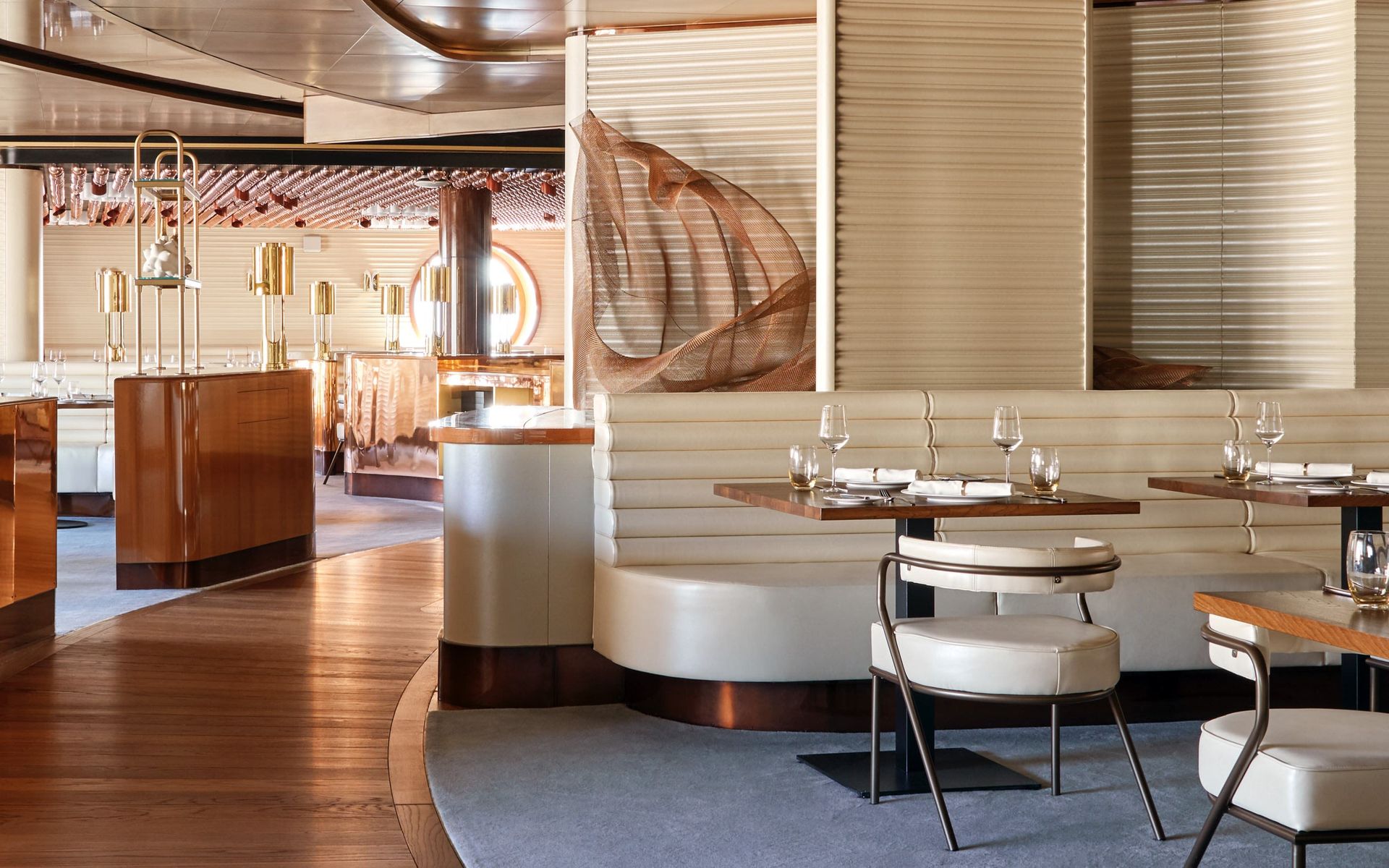
Credit: Virgin Voyages
Virgin Voyages operates four adults-only ships with a dining philosophy that inverts the conventional cruise format: there is no main dining room, no buffet, and no large dining halls. In their place, the ships offer more than 20 included dining venues with menus created by Michelin-starred chefs, served in smaller and more intimate spaces that the source contrasts with the industrial scale of traditional cruise dining. The absence of the buffet — a defining feature of most mainstream cruise lines — represents a structural decision about how the ships want passengers to experience food.
The included venue lineup spans a wide range of cuisines. The Galley operates as a food court-style space serving bento boxes, tacos, sushi, burgers, and noodle bowls. Razzle Dazzle focuses on vegetable-forward dishes. Extra Virgin serves trattoria-style Italian, including crispy artichokes, arancini, and seafood pasta. Gunbae handles Korean barbecue. The Wake, the ship's largest venue, offers a raw bar alongside steaks and seafood. A 24-hour diner, a pizza spot, and an ice cream shop extend the available options into the overnight hours.
Two standout restaurants define the top of the dining program. The Test Kitchen presents rotating five-course Michelin-inspired menus that vary across both the sailing and the fleet, with plant-based and non-plant-based tracks and optional drink pairings available at an added cost. Pink Agave, a stylish Mexican venue, draws inspiration from Mexico City’s street culture and carries what the line describes as the most extensive mezcal and tequila selection at sea. The menu includes esquites, aguachile made with raw tuna, achiote-marinated pork, and a vegetarian stuffed poblano pepper. The fare includes Pink Agave’s dinner, while the mezcal and tequila list offers an area where passengers can spend extra. The overall structure rewards passengers who engage with the venue lineup broadly. Virgin Voyages’ four-ship fleet also gives the dining program enough scale that The Test Kitchen’s rotating menus remain genuinely variable across different sailings.
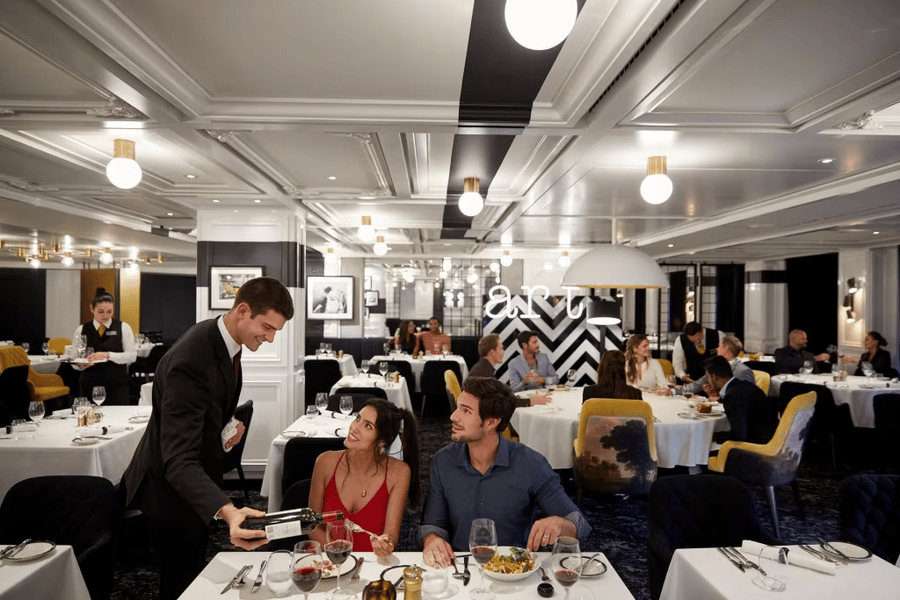
Credit: Celebrity Cruises
Celebrity Cruises builds its culinary reputation on the volume and quality of its restaurants, with up to 32 on its Edge-class ships: Celebrity Ascent, Beyond, Apex, Edge, and the new Xcel. The partnership with Michelin-starred French chef Daniel Boulud, who serves as global culinary brand ambassador, shapes special culinary cruises and onboard events that give the dining program a chef-driven identity beyond the standard restaurant menus. The fleet-wide dining program includes Oceanview Café for buffet-style meals, Mast Grill for poolside lunch, Cyprus for Mediterranean fare, Cosmopolitan for New American cuisine, The Main Restaurant for elevated classics, and Normandie for French food.
Le Voyage by Daniel Boulud, Boulud’s first signature restaurant at sea, represents the top of Celebrity’s specialty dining tier. The restaurant’s interior, conceived by Parisian architect-designer team Jouin Manku, delivers an intimate banquette-style setting that reflects the close attention to physical environment that distinguishes the best restaurant experiences from casual dining. Guests can choose from a regular dinner menu or a five-course tasting, in either a standard or plant-based format. Le Voyage is available on Celebrity Ascent and Celebrity Beyond for an additional fee.
Le Petit Chef represents the opposite end of Celebrity’s experiential range. It is an innovative 3D dining presentation in which a tiny animated chef “prepares” dishes on a table projection before waiters deliver the actual food. The roughly two-hour experience unfolds across multiple courses, with the animated character portrayed grilling steaks, harvesting vegetables, or fishing for lobster before each dish arrives. The novelty format makes it one of the most discussed onboard dining experiences on any mainstream cruise line. The breadth from a Boulud-signed fine dining venue to a 3D entertainment dining concept illustrates the range that Celebrity deploys across its fleet, and food-focused programs, including cooking classes, whiskey tastings, mixology sessions, and wine pairing workshops, extend the culinary engagement well beyond the dining room and into structured learning experiences.
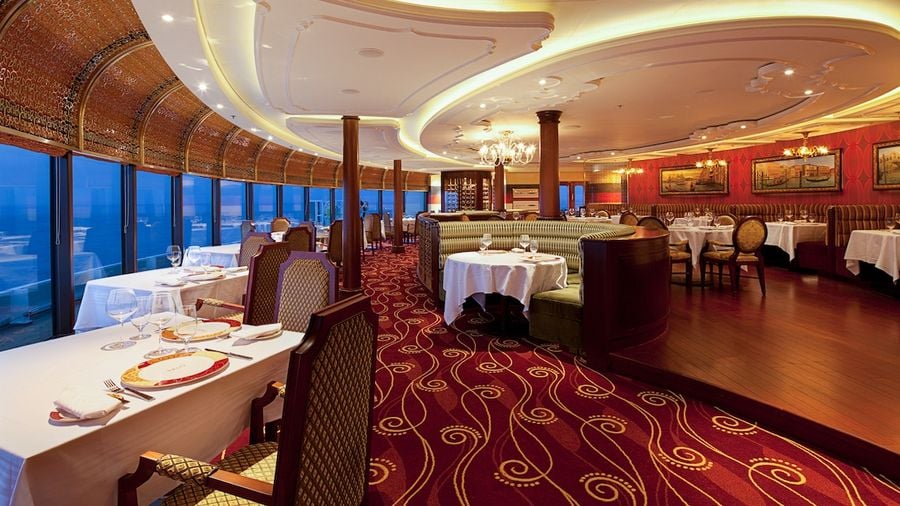
Credit: Disney Cruise Line
Disney $DIS Cruise Line’s signature dining structure is its rotational format: guests experience three different themed restaurants across their voyage, accompanied by the same dedicated server team night after night. The continuity of service personnel across rotating venues creates a level of personalized attention that both the source and the line identify as a differentiator from the fixed-assignment dining used by conventional cruise lines. The themed venues feature elaborate Disney-licensed settings with live character performances and show elements integrated into the meal, adding an entertainment dimension to the dining experience.
The specialty restaurant lineup extends the Disney culinary program to a higher level of sophistication for adult passengers. Palo, the adults-only Venetian-inspired restaurant, provides northern Italian fine dining in a setting with floor-to-ceiling windows and a brunch service on most sea days. Palo Steakhouse, available on Disney Wish and Disney Treasure, references the Beauty and the Beast character Cogsworth in its design and serves Australian wagyu, Japanese Kobe, and Miyazaki beef cuts alongside Italian cuisine. Both Palo venues carry additional fees.
Remy, the most formally elevated dining option on Disney Dream and Disney Fantasy, is a collaboration between French chef Arnaud Lallement from the three-Michelin-starred L’Assiette Champenoise in France and chef Scott Hunnel from Victoria & Albert’s at Walt Disney World Resort. The meal begins with a tableside Champagne cocktail and continues with a French tasting menu paired with wine selections from the voyage. At the family-friendly end of the spectrum, Mickey & Friends Festival of Foods operates as a quick-service food court serving pizza, chicken tenders, burgers, tacos, barbecue, and ice cream for meals when simplicity serves the family better than a formal sit-down. The rotational dining format, the character-performance venues, and the presence of a three-Michelin-star-pedigreed chef collaboration at Remy give Disney Cruise Line a culinary range matched by few competing lines in either the luxury or mainstream cruise tiers.
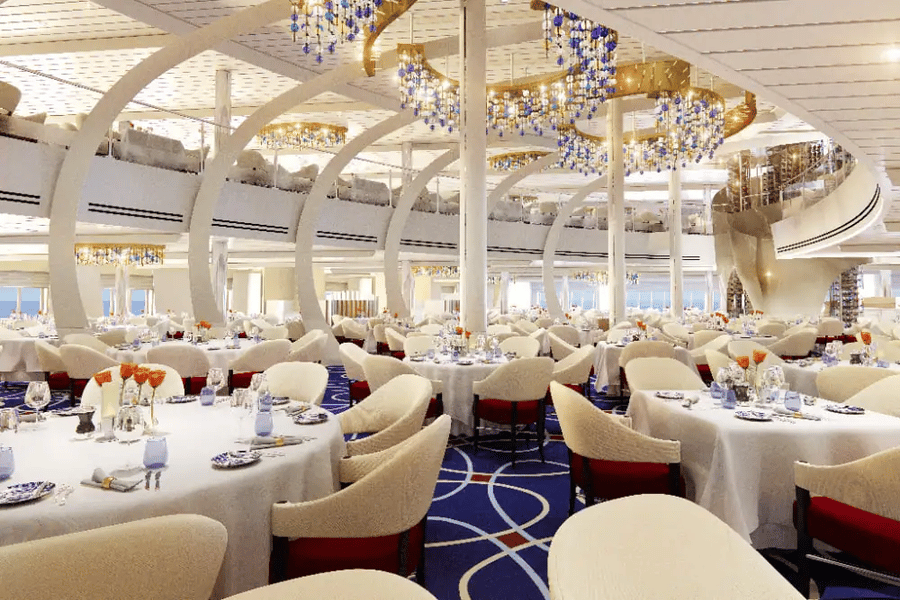
Credit: Holland America
Holland America Line bases its culinary reputation on freshness and local sourcing, setting it apart from competitors who anchor their programs around celebrity chef partnerships and elaborate tasting menus. The ship’s culinary teams bake fresh bread, pastries, and pasta daily, and they source local produce and fish directly from the ports the ships visit on each itinerary. The sourcing practice connects the food program to the specificities of each voyage in a way that static menu operations cannot, giving repeat cruisers who sail different itineraries genuinely different dining experiences driven by what the ports offer.
The main dining room serves global fare across all three meals, providing the broadest access point in the ship’s dining program. Casual options at the Lido Marketplace cover sandwiches, salads, ice cream, and lighter fare for passengers who want flexibility in pace and formality. Several specialty restaurants carry additional fees and represent distinct cuisine categories: Italian, French, Pan-Asian, Japanese, and a steakhouse-seafood hybrid each occupy their own venue, giving passengers a structured path through different food traditions across a multi-day voyage.
Holland America's sourcing philosophy for the main dining program is a distinguishing characteristic in the mainstream tier, where fresh, local sourcing is less common than in centralized menu operations. A passenger who sails a Holland America itinerary through Alaskan ports in one year and a Mediterranean itinerary the next year will encounter different produce and seafood in the main dining room because the ship’s culinary team adjusts what it buys to what is available locally. The daily fresh production of bread, pastries, and pasta is a baseline quality commitment that operates regardless of itinerary and gives the dining program a consistent foundation that the locally sourced proteins and produce then build upon. The sourcing practice also gives the culinary team direct engagement with the ports the ship visits, reinforcing Holland America’s overall positioning as a line that connects the shipboard experience to the destinations it serves.
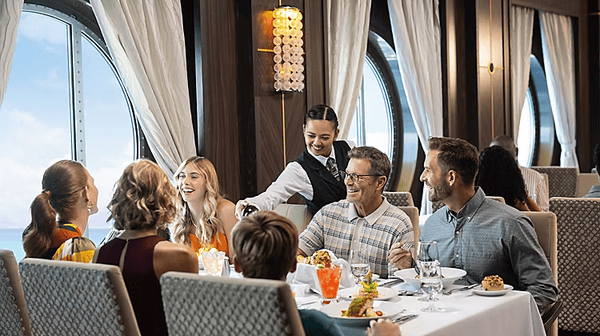
Credit: Royal Caribbean
Royal Caribbean $RCL’s dining philosophy matches the scale of its ships: large, bold, and abundant across a broad range of casual and specialty venues. The ships feature dozens of onboard restaurants, ranging from casual poolside options to upscale specialty venues to relaxed bars and lounges. The main dining room serves rotating international menus that change across the sailing to prevent repetition for passengers who use it as their primary restaurant throughout the voyage.
The specialty restaurant lineup at Royal Caribbean includes several distinct venues with named menus that give passengers specific culinary destinations to plan around. Izumi Hibachi offers Japanese teppanyaki-style tableside cooking. Chops Grille is the line’s dedicated steakhouse. Giovanni’s Italian Kitchen provides casual and upscale Italian fare. 150 Central Park operates on a market-driven menu concept. Each venue carries an additional fee and represents a different cuisine category, giving passengers who book specialty dining a clear set of choices across multiple food traditions.
The breadth of Royal Caribbean’s dining program reflects the scale of its passenger volumes — the line’s largest ships carry thousands of guests — and the practical need to serve diverse tastes simultaneously across a massive ship. The dozen-plus venues available at any one time give passengers sufficient variety that finding a satisfactory meal at any hour does not require advance planning or flexibility. For travelers who want to sample multiple cuisine types across a single sailing without spending every evening in the main dining room, Royal Caribbean’s specialty restaurant portfolio provides enough distinct destinations to fill a week-long itinerary of dinners with different food styles each night. The line’s casual options, including the buffet-style main dining room and poolside venues, offer daytime and informal dining without the premium-venue price. The main dining room’s rotating international menu also gives passengers who choose not to book specialty dining enough variety across a multi-day sailing that the base fare option remains genuinely usable throughout the voyage.