
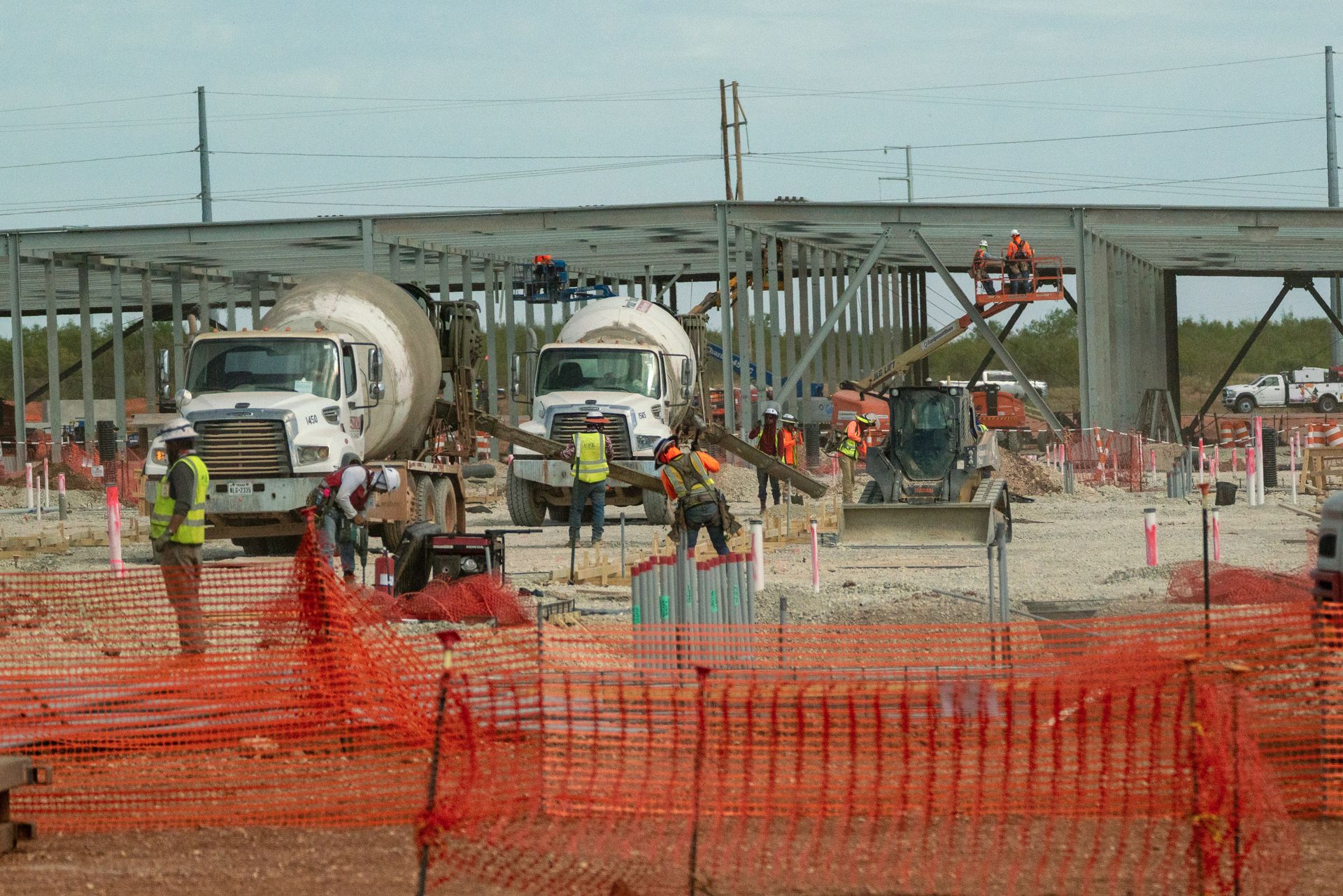
Every few months, an American city announces a data center project worth billions. Local officials talk about economic development and job growth. If AI needs computing power and computing power needs enormous buildings, buildings need workers.
Abilene, Texas, offers an example of what can go wrong. With a population of over 100,000 people, Abilene had to approve new RV parks just to house the construction workers who are building one of America's many data centers. But they won't stay long. The developer is contractually obligated to maintain a staff of just 57 people by the time the facility is up and running.
Abilene isn't unusual either. Thousands of workers flood a community for months or years of construction, then leave behind operations staff in the low hundreds. What a city gets out of the exchange depends entirely on what it negotiated before the first crew arrived.
The gap between construction crews and permanent staff
The 57-job figure in Abilene is a contractual floor. Under Texas's Chapter 313 framework, developers agree to create a minimum number of permanent full-time positions in exchange for limits on their taxable property value. Each qualifying job must require at least 1,600 hours of work per year, pay at least 110% of the county's average weekly manufacturing wage, and carry employer-covered health benefits. Lancium, the site's principal developer, agreed to 57.
The actual headcount will likely be higher. About 100 high-skilled positions could come from the first phase alone, according to the Development Corporation of Abilene, and Crusoe Energy Systems, one of the site's other developers, plans to hire over 100 full-time workers, such as data center technicians, turbine plant operators, and maintenance staff. But even the optimistic projections land in the low hundreds.
The same pattern holds nationally, with variations in scale. Meta $META expects to keep about 500 permanent workers from the roughly 5,000 who are building its data center in Louisiana. Microsoft $MSFT plans to employ up to 600 permanent workers at its $1 billion campus in La Porte, Ind., or about one for every three of the 2,000 construction workers building it. That's one of the best ratios in any of these projects. The worst, using Abilene's contractual floor of 57 against a peak construction crew of 4,000, is 70 to 1.
Permanent operations staff and a shallow hiring pool
The permanent staff who run data centers come from a different workforce than the ones building them. According to the Uptime Institute's staffing forecast, operations teams work around the clock and include critical facility engineers, HVAC technicians, mechanics, physical security staff, and controls and monitoring specialists. They monitor electrical, mechanical, and cooling systems, perform preventive maintenance on generators and backup power equipment, and respond when something fails. Computer network architects, one of the higher-paying operations-adjacent titles, earned a median annual wage of $130,390 as of May 2024, according to the Bureau of Labor Statistics.
Operators can't hire them fast enough. The Uptime Institute's 2024 survey found that 51% of data center operators reported difficulty finding qualified candidates. The deepest shortages were in junior and mid-level operations, where 39% of operators reported significant skills gaps, followed by electrical roles at 33% and mechanical roles at 30%.
The candidate pool is narrow in ways that compound the problem. Eighty percent of organizations in the Uptime survey employed 10% or fewer women in operations roles, and one in five employed none at all. An industry reporting persistent hiring shortages while drawing from a fraction of the available workforce faces a structural constraint that training programs alone won't solve.
The economics of hosting a data center boom
Data centers generate most of their economic activity during construction and leave little lasting tech employment behind, according to the Brookings Institution. Dollar for dollar, they may create fewer permanent jobs than factories or office parks. The construction phase is often the most a host community will ever get from a data center. Then it ends.
Abilene shows what the construction phase costs. According to TIME, average monthly rents rose $1,000 in a single year as thousands of out-of-state workers arrived. The city already faced a housing shortage of about 5,600 units before the data center broke ground. Landlords who once rented to low-income tenants at rates subsidized by the Abilene Housing Authority could charge construction workers more, and so they did. Before the data center, the Housing Authority placed 80% of its clients in housing within 90 days. After the construction crews arrived, only half found a unit that quickly.
The revenue picture is real but modest. Abilene's sales tax revenue jumped 40% in 2025 over the prior four-year average, Doug Peters, CEO of the city's Chamber of Commerce, told TIME. The property tax side is thinner. Under the tax abatement agreement, Abilene collects just 15% of the data center's property tax value for the project's first decade. City Manager Robert Hanna estimated total tax revenues of about $90 million over 20 years, or roughly $4.5 million per year. But for every dollar Abilene collects, it leaves about five on the table.
Boomtown turnover across 3,000 planned data centers
The sales tax boost depends on construction workers staying long enough to spend. Research on boomtown labor migration suggests many won't. Turnover among construction workers in western boomtowns has reached 100% to 200% per year, meaning the entire workforce replaces itself at least once and sometimes twice annually. Sixty percent of workers come from outside the local area, too, with no ties to keep them in town once conditions deteriorate or the project ends. The workers generating Abilene's 40% sales tax bump today won't be the same ones there six months from now.
Roughly 3,000 more data center projects are in various stages of development nationwide, according to Berkeley Research Group. The largest will need up to 4,000 construction workers at peak. Each will end with crews leaving and a few hundred permanent employees staying.
For the workers who move on, the work won't dry up. According to the Bureau of Labor Statistics, the economy will need about 81,000 new electricians per year through 2034. Most of that demand will come from installing EV chargers, heat pumps, grid upgrades, and solar panels.
The electricians will follow the work. The cities they leave behind can't.