Dog body language meanings often get misread, and this guide breaks down 20 common behaviors and what your dog is actually signaling
Credit: Finn Ruijter / Pexels
A dog cannot explain itself in words, so it explains itself in posture, pace, and timing. Owners tend to translate that language through a human filter, which is where dog body language meanings get lost. A yawn reads as sleepiness. A bared belly reads as an invitation. A dog that will not meet your eyes after a mess on the floor reads as guilt. None of those readings match what canine behaviorists have actually documented, and the gap between what a dog is doing and what an owner assumes it means is wider than most people realize.
This matters beyond curiosity. A dog that is showing early stress signals, such as lip licking or a stiff, low tail, is often left alone to escalate because the behavior gets mistaken for calm or even friendliness. A dog labeled "stubborn" for sniffing every blade of grass on a walk is actually gathering information through the strongest sense it has. A "guilty" dog getting scolded for an expression that has nothing to do with wrongdoing is being punished for a fear response, which can make the underlying behavior worse rather than better.
This list draws on established findings from veterinary behaviorists and canine researchers, not guesswork or folklore. It covers 20 of the most common behaviors dogs display in ordinary households, from tail position to hackle raising to the head tilt every dog owner has seen and few can accurately explain. Some of these signals are subtle enough that owners miss them entirely. Others are visible every day but get filed under the wrong meaning out of habit. Reading them correctly does not require special training, just a clearer picture of what the behavior is actually for.
Several of the entries below also draw on named, peer-reviewed research rather than general impressions of dog behavior, including studies on tail-wagging asymmetry, gaze-driven bonding, and the actual mechanics behind the so-called guilty look. Others rely on well-established concepts from professional dog training and veterinary behavior, such as calming signals and appeasement postures, that rarely make it into everyday conversation about pets. Put together, the list is less a collection of trivia and more a working reference for reading a dog's ordinary day-to-day behavior with more precision than most owners currently do.
Credit: Finn Ruijter / Pexels
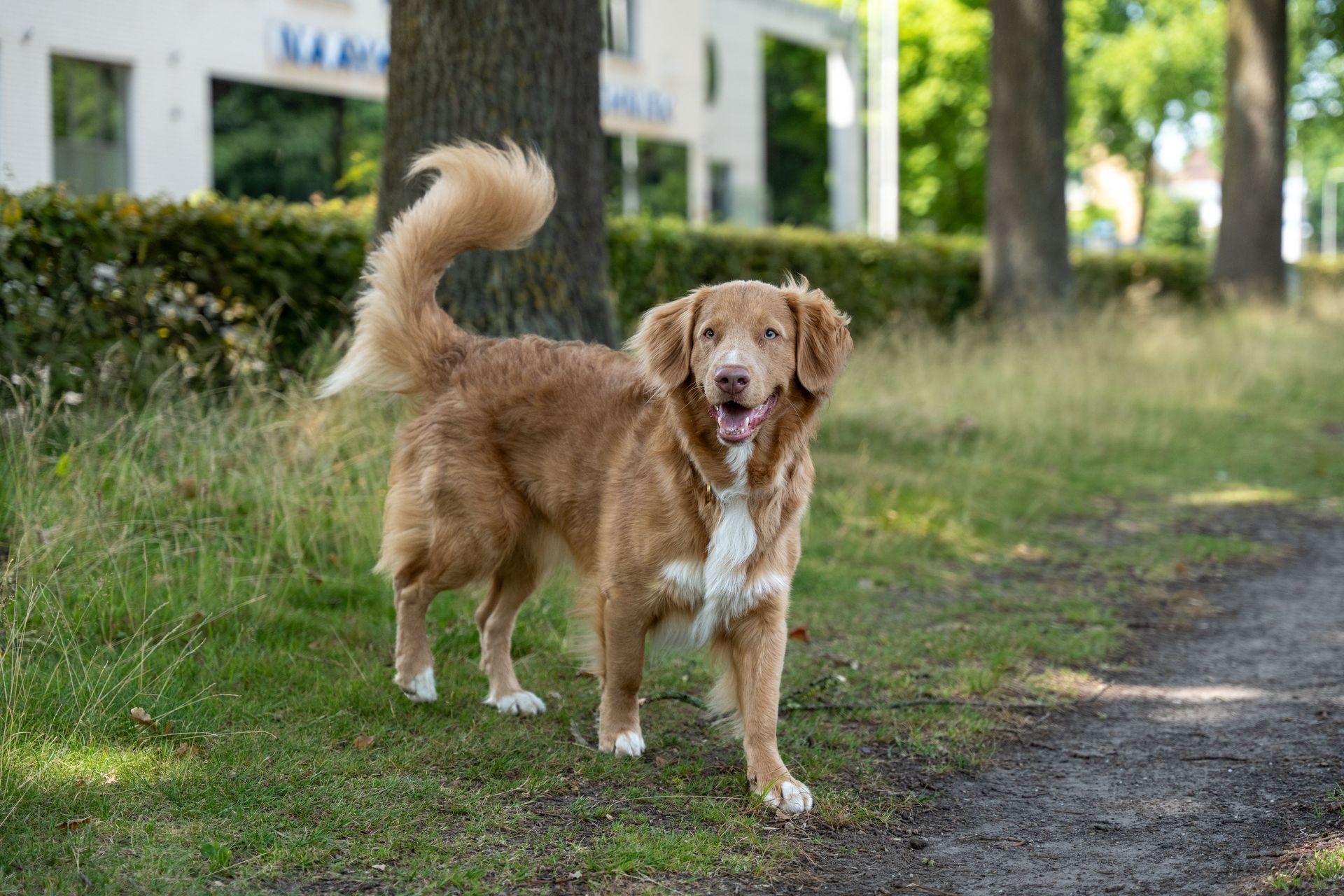
A wagging tail does not mean a happy dog. It means an aroused dog, and arousal can be positive or negative depending on the speed, height, and direction of the wag.
A loose, broad wag held at a relaxed mid-height, often paired with a wiggling rear end, is the closest thing to a genuine happiness signal. A tail held high and stiff, moving in short, fast strokes, usually signals alertness or tension rather than friendliness, and it often shows up right before a dog reacts defensively to another dog or a stranger. A tail tucked low with a slow, hesitant wag signals anxiety or appeasement, not contentment.
Direction matters too. A 2007 study from the University of Trieste, published in Current Biology, found that dogs wag with a slight bias to the right side of their body when reacting to something positive, such as their owner, and with a bias to the left side when reacting to something that provokes withdrawal, such as an unfamiliar aggressive dog. Researchers linked this to which brain hemisphere is processing the response, since the left hemisphere is associated with approach behavior and the right hemisphere with avoidance. Other dogs appear to notice this asymmetry too, reacting with more relaxed body language to a right-biased wag and more cautious behavior to a left-biased one.
The practical takeaway is to stop reading tail movement as a single signal and start reading it as a combination of speed, height, and looseness. A dog can be wagging its tail and still be too aroused, fearful, or overstimulated for a stranger, a child, or another dog to approach.
Position relative to the dog's natural resting height matters as much as motion. A tail held noticeably above the dog's usual resting line, even while wagging quickly, tends to signal confidence and arousal rather than warmth, and it is common right before a dog reacts to a perceived intruder in its yard. A tail held at or below the natural resting line while wagging slowly is closer to the appeasement end of the spectrum, often appearing alongside a lowered head and a body angled slightly away rather than facing forward.
Breed anatomy adds another layer of complexity. Dogs with naturally curled or docked tails, or breeds with very little tail to speak of, communicate less through tail position by necessity, which means owners of these breeds benefit even more from reading ears, mouth tension, and overall body weight distribution rather than relying on the tail as the primary signal.
Credit: Aleksandar Andreev / Pexels
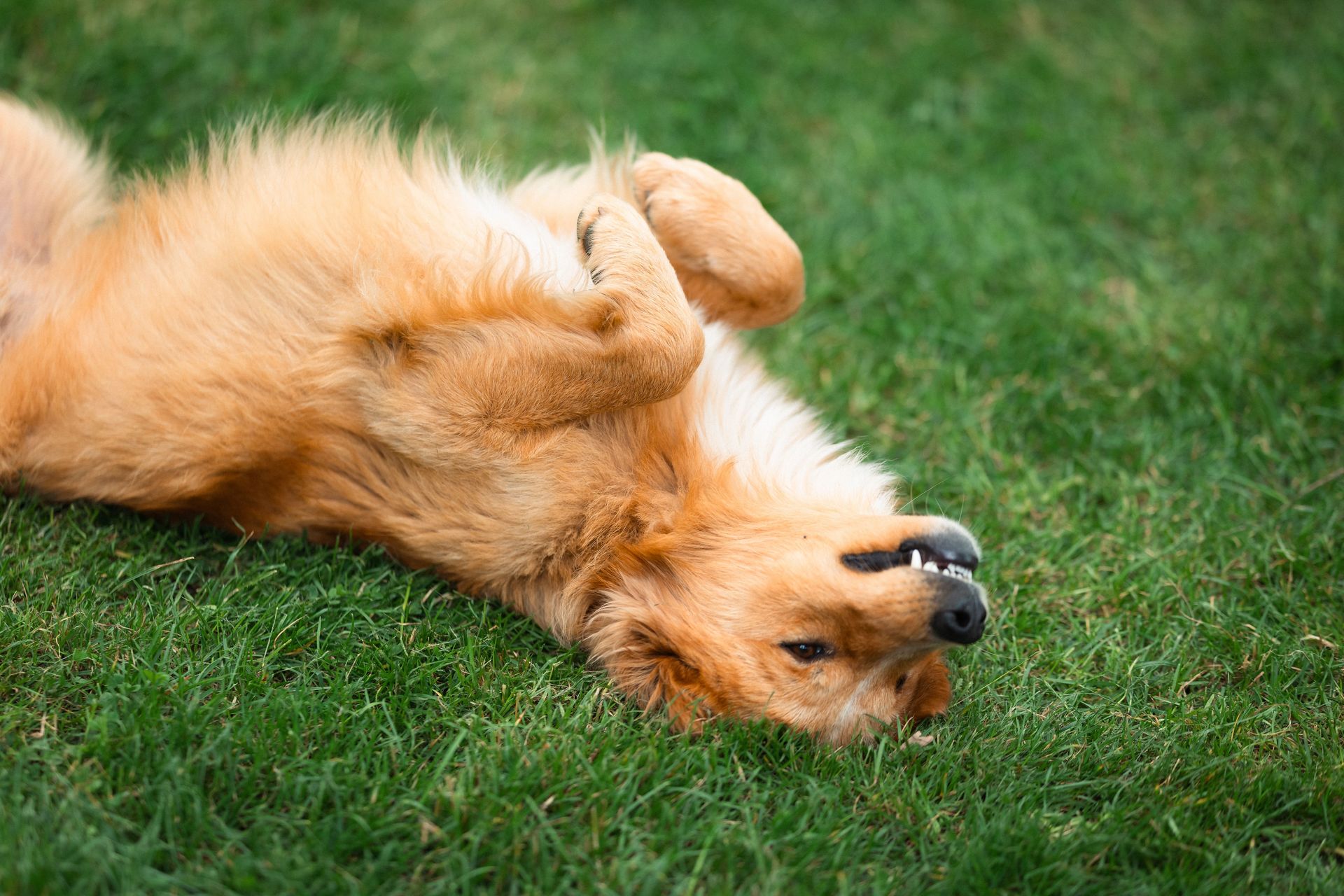
A dog rolling onto its back and exposing its belly is often an appeasement signal, not an invitation to be touched. It is a dog saying it means no harm, not a dog asking for contact.
This posture, sometimes called passive submission, is common when a dog greets an unfamiliar person, encounters a more confident dog, or feels mildly overwhelmed in a new situation. The body goes low, the tail may tuck, and the belly turns upward as a way of appearing smaller and non-threatening. Some dogs do follow this posture with genuine relaxation and welcome a rub once the initial tension passes, but plenty of dogs freeze, stiffen, or show whale eye, which is when the whites of the eyes become visible, the moment a hand reaches toward the exposed belly.
The confusion happens because a small number of dogs, usually ones with a long history of calm, trusting handling, do roll over purely for a belly rub, and that image becomes the assumed default for all dogs. Owners then approach a belly-up dog the same way regardless of context, without checking whether the rest of the body looks loose and relaxed or tight and still.
The distinction is worth learning because a misread belly exposure is one of the more common ways dogs end up biting familiar people, particularly children, who reach in fast and close. A relaxed belly-up dog usually has soft eyes, a loose jaw, and a body that stays still or wiggles gently. An appeasement-driven belly-up dog often has a stiff body, a tucked tail, ears pinned back, and a face that turns away rather than toward the hand.
Reading the rest of the body before reaching for the belly takes only a few seconds and prevents a large share of avoidable defensive reactions. If a dog rolls over during a tense greeting with a new person or another animal, the safer response is to give it space and let the interaction de-escalate on its own rather than reaching in immediately.
Credit: Samborskaya Anastasia / Pexels
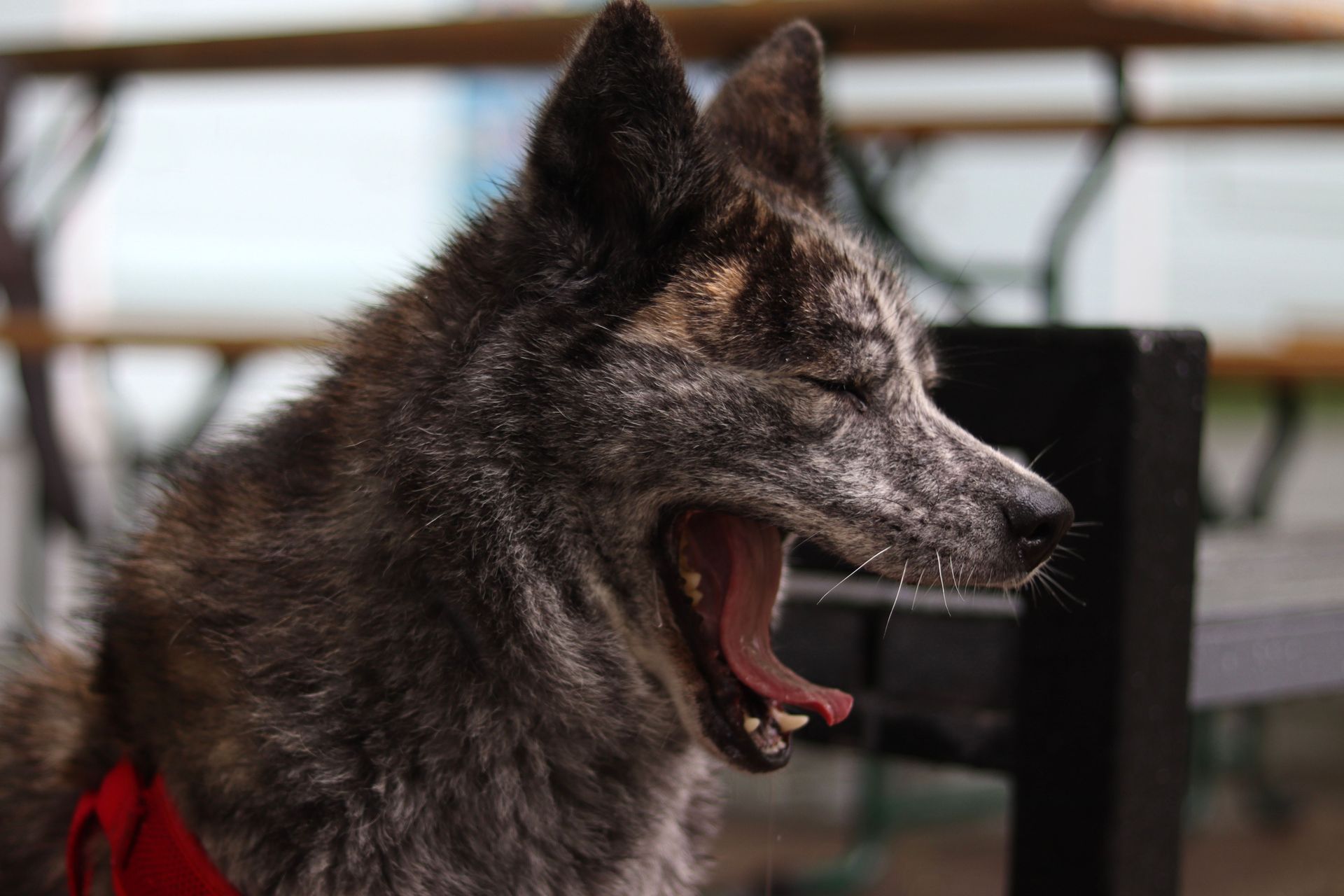
A dog yawning while wide awake is usually showing stress or discomfort, not sleepiness. Veterinary behaviorists classify this as a calming signal, a small behavior a dog uses to lower tension in itself or in a situation.
Dogs yawn during vet visits, nail trims, tense training sessions, or when a stranger leans in too close, none of which involve fatigue. The yawn appears to serve two overlapping purposes: it can calm the dog's own nervous system in the moment, and it can also signal to a person or another animal that the dog wants the interaction to slow down or ease off. This is separate from ordinary tiredness yawning, which still exists in dogs the same way it does in people, typically after waking up or before settling down for a nap.
Context is the easiest way to tell the two apart. A yawn that happens the moment a dog lies down for a rest, surrounded by other relaxed body language, is almost certainly a sleepiness yawn. A yawn that happens while a dog is being hugged, examined, photographed at close range, or held still for grooming is far more likely to be a stress signal, especially if it comes paired with lip licking, turning the head away, or a lowered body posture.
Contagious yawning complicates the picture further. Dogs yawn in response to human yawns at a noticeably higher rate when the yawn comes from someone familiar, which some researchers have connected to social bonding rather than stress. A dog yawning back at an owner who just yawned is a different event from a dog yawning while pinned in a stranger's lap for a photo.
Owners who learn to notice yawning as a possible discomfort signal, rather than dismissing it as boredom or tiredness, are better positioned to catch early stress before it builds into growling, snapping, or avoidance. A yawn during a vet exam or a child's overly enthusiastic hug is a request for space, not a random reflex, and responding to it by easing off tends to prevent the situation from escalating further.
Credit: Hannah Barata / Pexels
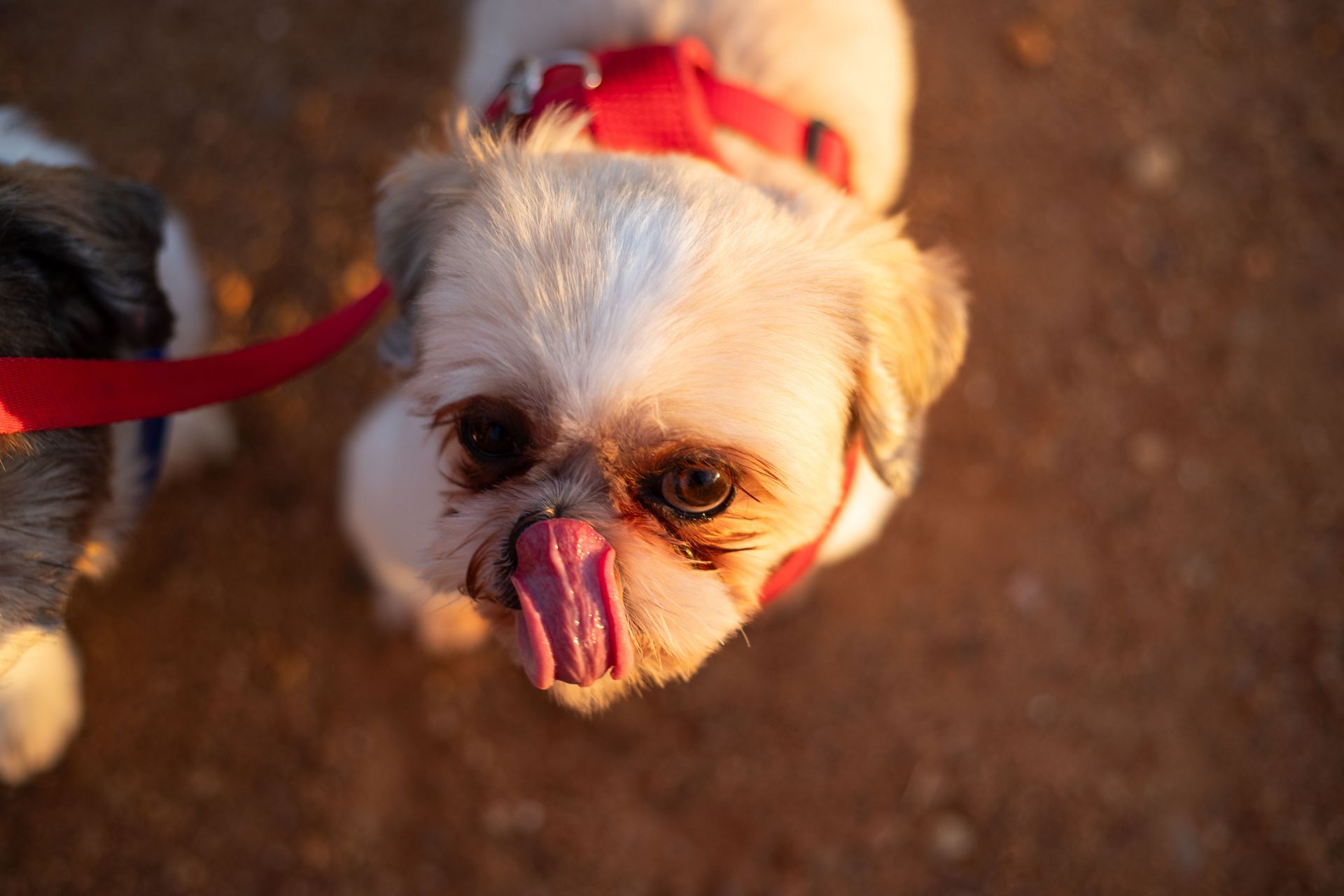
A dog licking its lips or nose when there is no food nearby is showing a stress or appeasement signal, part of the same family of calming behaviors as yawning. It is not a sign of hunger.
This quick tongue flick, sometimes just a small movement at the corner of the mouth, tends to show up in situations that carry mild social pressure: being stared at directly, being approached by an unfamiliar dog, being hugged, standing still for a photo, or facing a raised voice. Trainer Turid Rugaas cataloged this signal, along with yawning and head turning, as part of what she termed calming signals, a set of behaviors dogs use to defuse tension in themselves or in whoever they are interacting with.
The confusion with hunger comes from the obvious overlap in the physical motion. A dog anticipating a meal or a treat licks its lips too, but that version is almost always paired with other food-focused behavior, such as staring at a hand, following a person to the kitchen, or sitting expectantly near a food bowl. Stress-driven lip licking shows up in the absence of any food cues at all, often layered with a stiff body, a lowered head, or eyes that show more white than usual around the edges.
Photographers and dog trainers both watch for this signal closely because it is one of the earliest and most reliable indicators that a dog is uncomfortable, well before growling or moving away. A dog getting its photo taken at close range, held tightly by a well-meaning owner, will frequently lip lick throughout the shoot, and the resulting photo often gets shared as an image of a calm, happy pet.
Noticing lip licking in real time gives an owner a chance to intervene before discomfort turns into a bigger reaction. Backing off, lowering the intensity of an interaction, or giving the dog a way to move away are all reasonable responses once this signal shows up, particularly in situations involving unfamiliar people, tight physical contact, or prolonged direct eye contact.
Credit: Juan Poblete / Pexels
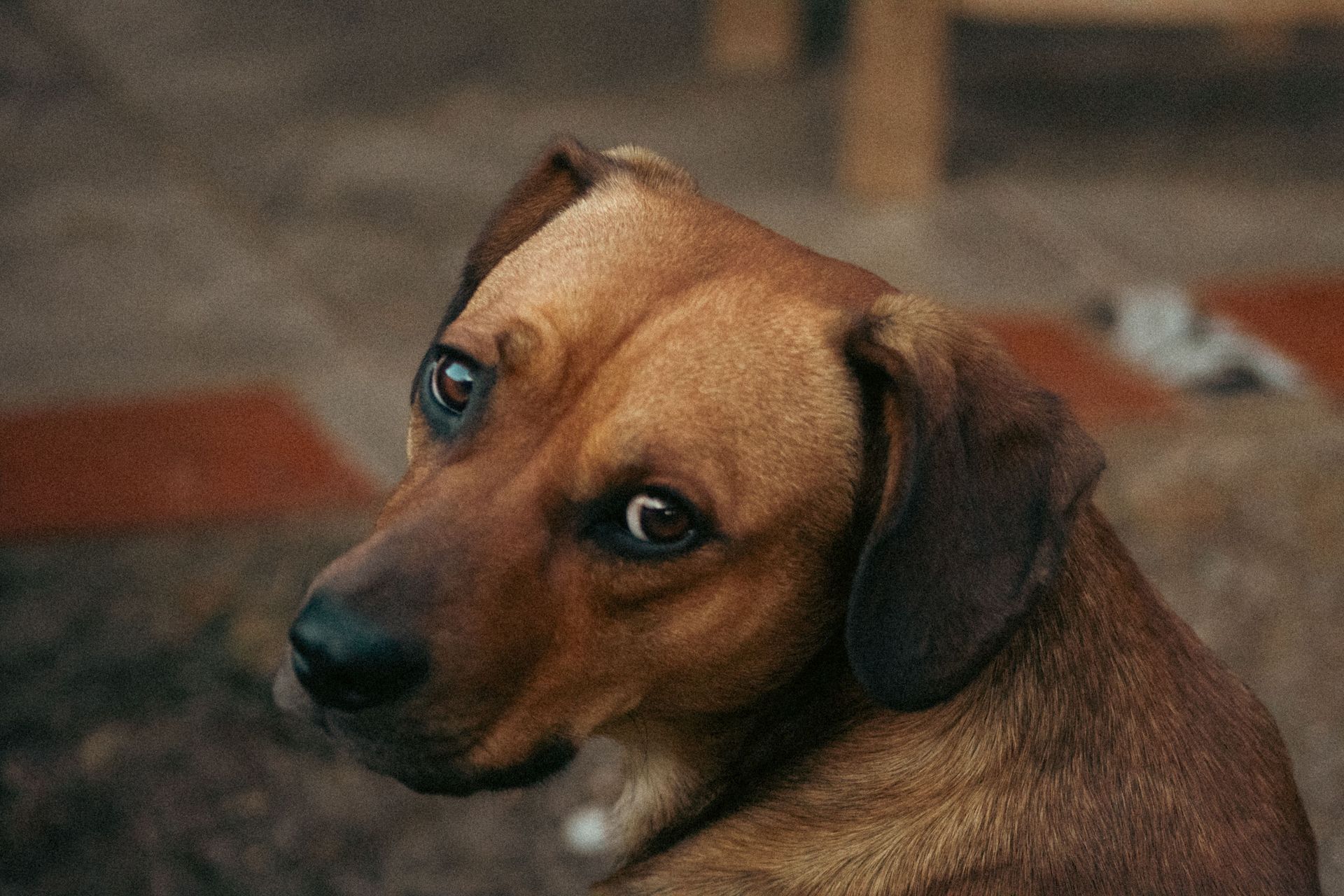
The classic guilty look, ears back, head lowered, eyes avoiding contact, is a response to a person's tone and body language, not evidence that a dog knows it did something wrong.
Psychologist Alexandra Horowitz tested this directly in a 2009 study published in Behavioural Processes. Dogs were observed in situations where an owner either scolded them or did not, regardless of whether the dog had actually broken a house rule, such as eating a forbidden treat while the owner was out of the room. The guilty look appeared based on whether the owner scolded the dog, not based on whether the dog had actually misbehaved. Dogs that had done nothing wrong showed the same submissive posture when their owner acted upset as dogs that had actually gotten into the treat.
What is happening instead is a learned association between a person's angry tone, tense posture, or raised voice and an unpleasant consequence. The dog is reading the owner's current state and reacting defensively to it, not reflecting on its own past actions. Dogs do not appear to connect a scolding delivered minutes after an incident, such as finding a chewed shoe after coming home, with the specific act of chewing the shoe, since the behavior and the correction are separated by too much time for the dog to link them.
This has a direct practical consequence: scolding a dog after the fact, once an owner discovers a mess, teaches the dog to fear the owner's reaction rather than to avoid the original behavior. The dog learns that a particular tone of voice predicts something bad, which produces the guilty posture on cue, but it does not learn not to get into the trash or chew the shoe next time.
Correcting a behavior effectively means catching it in the moment, or better, preventing the opportunity for it to happen at all through management, rather than reading a fear posture after the fact as proof the dog understood the rule it broke.
Credit: Pixabay / Pexels
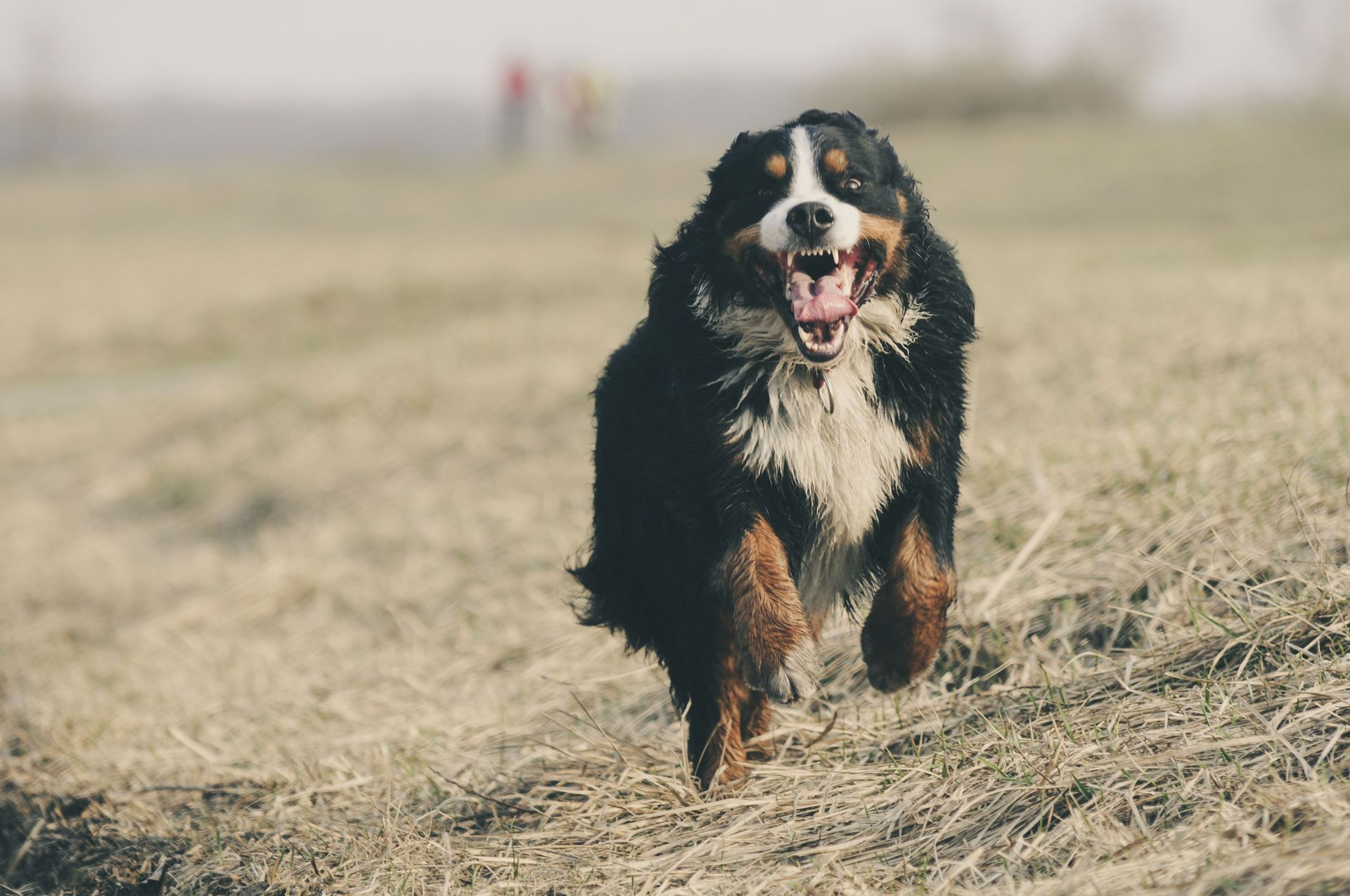
The sudden burst of running, spinning, and bouncing off furniture known as zoomies is a normal release of built-up energy, not a sign of distress or overstimulation gone wrong.
Veterinary behaviorists refer to this technically as a Frenetic Random Activity Period, or FRAP. It shows up most often in puppies and young dogs, though adult dogs have them too, and it tends to follow specific triggers: right after a bath, right after waking from a nap, right after a stressful confinement such as a car ride or a vet visit, or in the middle of an especially exciting play session. The behavior involves fast, often circular running, a lowered front end with a raised rear, and sometimes grabbing a toy or running in tight figure-eight patterns around a room or yard.
The energy behind a FRAP is not necessarily negative. A bath, for instance, is not distressing for every dog, but it does involve prolonged stillness and unfamiliar sensation, and the zoomies that follow appear to function as a way of discharging that pent-up energy once the dog is free to move again. The same pattern shows up after a long car ride or a stretch of crate time, situations where a dog has been physically restricted and suddenly gets space to move.
Owners sometimes read a FRAP as a sign something is wrong, particularly when a dog seems to be running in a slightly frantic or wild manner, and try to calm the dog down or physically restrain it. In most cases, letting the episode run its course in a safe, open space, away from stairs, glass doors, or other hazards, is a better response than intervening. The episode is typically brief, lasting well under a minute in most dogs, and ends with the dog settling on its own.
A FRAP that happens frequently outside of these predictable triggers, or one that seems to distress the dog rather than energize it, is worth mentioning to a veterinarian, since it can occasionally overlap with anxiety-driven behavior rather than the ordinary energy release most dogs display.
Credit: Jusper Mwangi / Pexels
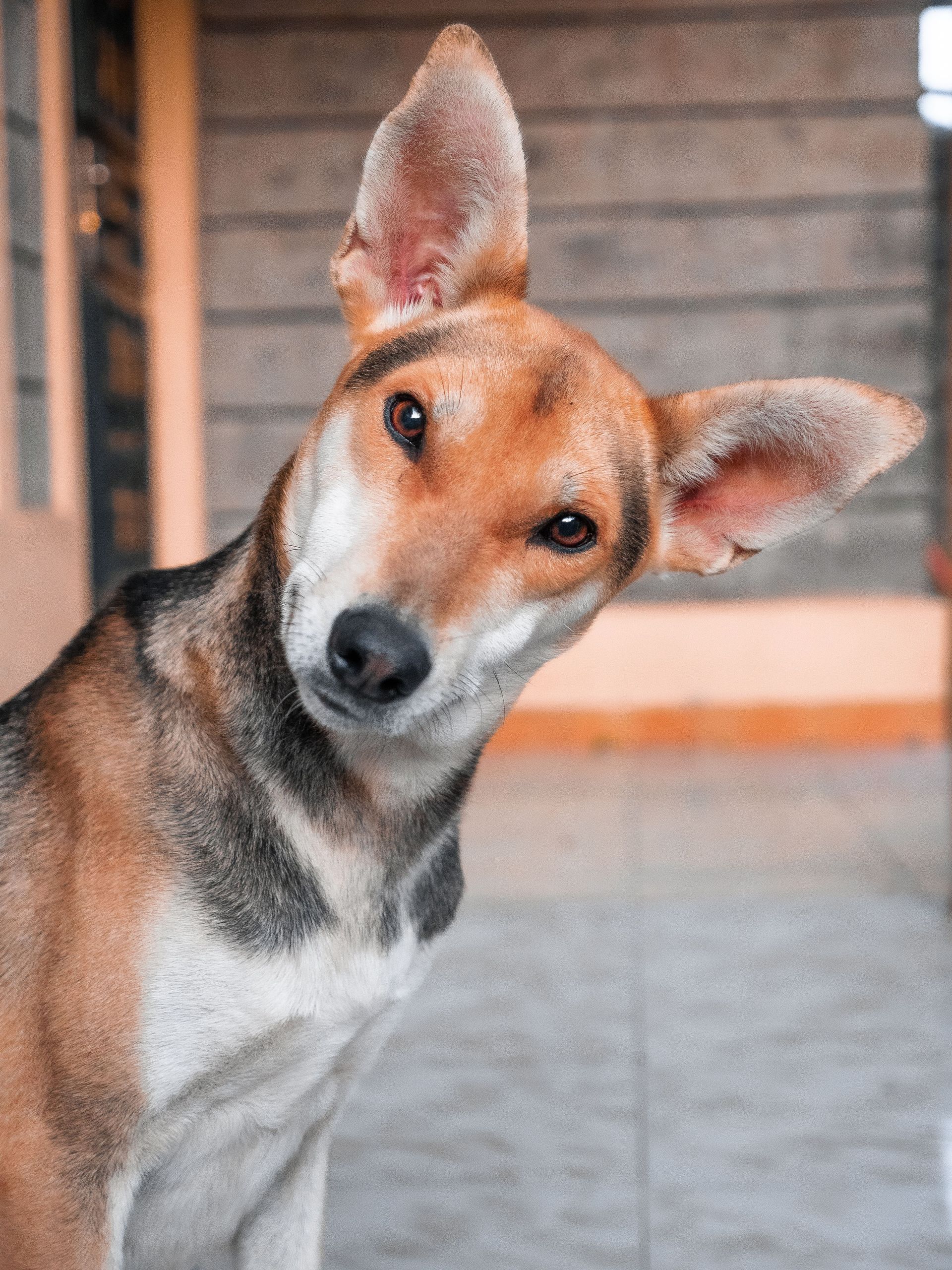
The head tilt dogs perform when spoken to is most likely an attempt to hear or see better, not a display of confusion or a reaction to a funny-sounding word.
One explanation involves the shape of a dog's muzzle, which can partially block its view of a speaker's mouth and face. Tilting the head to one side shifts the muzzle out of the way, giving the dog a clearer view of facial expression and mouth movement, both of which carry information a dog uses alongside tone of voice. Another explanation involves sound localization, since tilting the head changes the angle at which sound reaches each ear, which can help pinpoint where a sound, such as a specific word, is coming from.
A study from Eotvos Lorand University in Hungary, led by researcher Andrea Sommese and published in 2021 in Animal Cognition, found that dogs described by their owners as knowing the names of several toys tilted their heads significantly more often when hearing a familiar toy name compared with dogs that did not have that vocabulary. The researchers proposed that the head tilt may be connected to focused attention and processing of meaningful, familiar words, rather than a general reaction to any sound.
This does not mean every head tilt signals recognition of a specific word. Dogs also tilt their heads at unfamiliar sounds, high-pitched tones, or even a person's exaggerated tone of voice, since the behavior appears linked to focused listening in general rather than only to word recognition.
The popular idea that a head tilt means a dog is confused or amused by what it is hearing is not supported by the current research. A more accurate read is that the dog is working harder to process a sound or a face, which is closer to concentration than confusion, and it is a behavior worth encouraging rather than laughing off, since it often accompanies genuine attentiveness to what a person is saying.
Credit: Wolfgang Hasselmann / Unsplash
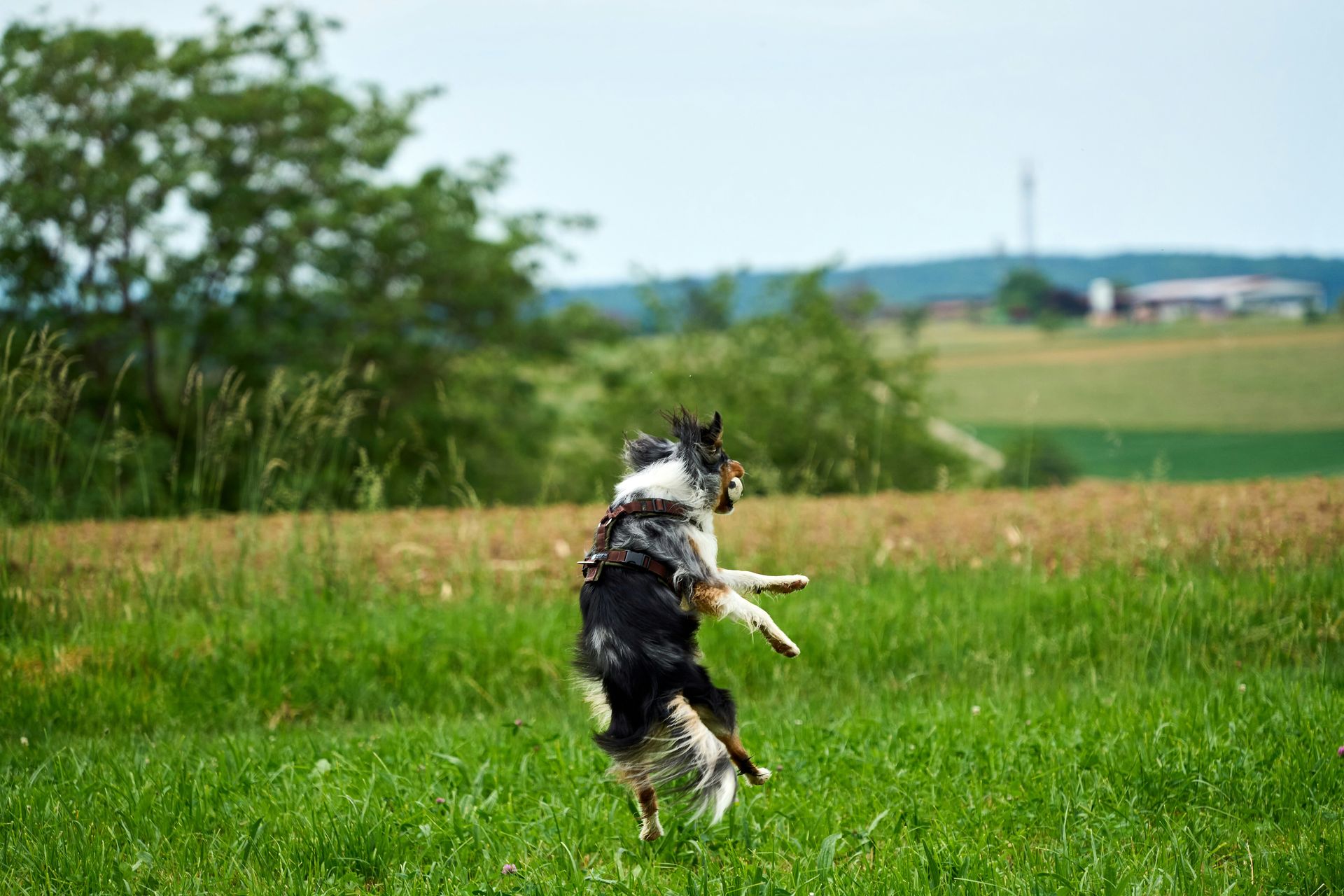
Mounting behavior in dogs, commonly called humping, shows up for several different reasons, and sexual behavior or social dominance are only two of them. Overexcitement, stress, and simple habit are just as common.
Neutered and spayed dogs mount other dogs, people, and objects regularly, which on its own rules out reproduction as the explanation in most household cases. Overarousal is one of the most frequent triggers: a dog that gets extremely excited during play, greetings, or a burst of visitors at the door will sometimes mount a person's leg or another dog as a way of discharging that excitement, similar in function to the way some dogs jump or nip when overstimulated. Stress and anxiety can produce the same behavior, particularly in dogs that are unsure how to handle a tense social situation, such as an unfamiliar dog at a park behaving in a pushy or uncertain manner.
The dominance explanation, once the default answer for almost any mounting behavior, has fallen out of favor among behaviorists, since the older model of dogs constantly competing for pack rank does not hold up well against how dogs actually behave in multi-dog households. Mounting between dogs that already have a stable, comfortable relationship is more often tied to play or excitement than to a struggle for status.
Some dogs also mount out of habit, particularly if the behavior was never interrupted early and became a default response to certain kinds of stimulation, whether that is excitement, boredom, or a specific texture such as a plush blanket or a stuffed toy.
Because the underlying cause varies so much, the right response depends on context. A dog mounting during rowdy play with another dog it knows well rarely needs intervention. A dog that mounts guests at the door, mounts during moments of visible stress, or mounts compulsively regardless of the situation benefits from redirection to a different behavior and, in persistent cases, guidance from a trainer or veterinary behaviorist.
Credit: Siarhei Valchok / Unsplash
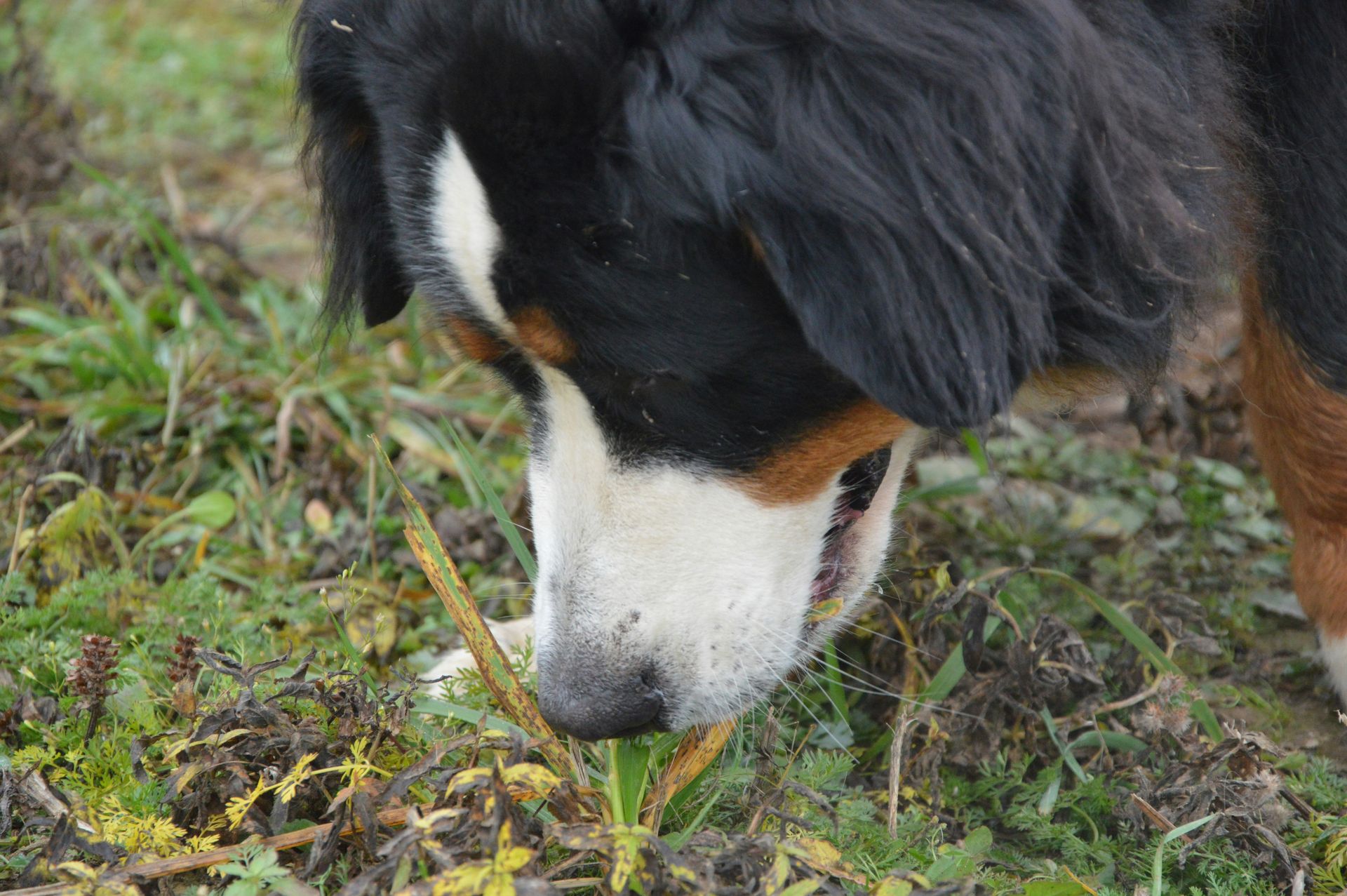
Grass eating is common in healthy dogs with no digestive problems at all, which makes it a poor stand-alone signal of an upset stomach.
Veterinary researchers who have studied this behavior, including a widely cited survey led by veterinarian Karen Sueda and colleagues at the University of California, Davis, found that vomiting occurred after only a small share of grass-eating episodes, and most dogs in the study did not show signs of illness before eating grass in the first place. That data cuts against the common assumption that dogs eat grass specifically to induce vomiting when they feel sick.
A more likely explanation, at least for a large share of cases, is that grass eating is simply a normal foraging behavior left over from a dog's wild ancestry, similar to sniffing out and chewing on other plant material. Some dogs appear to just enjoy the taste or texture, especially fresh, tender grass in spring. A smaller number of dogs may eat grass in response to mild nausea or an upset digestive system, and for those dogs, grass eating can precede vomiting, but this pattern is the exception within the broader behavior rather than the rule.
Diet has also been proposed as a factor, with some veterinarians suggesting that dogs on very low-fiber diets may eat grass as a way of adding roughage, though this connection is less firmly established than the general finding that most grass eating happens in dogs with no illness at all.
The practical guidance from veterinarians is not to panic over occasional grass eating in an otherwise healthy dog. What matters more is any accompanying pattern: grass eating followed repeatedly by vomiting, paired with lethargy, appetite loss, or diarrhea, is worth a veterinary visit, while a dog that grazes occasionally on a walk and shows no other symptoms is very likely doing nothing more than acting on a normal, low-stakes instinct.
Credit: seppe machielsen / Pexels
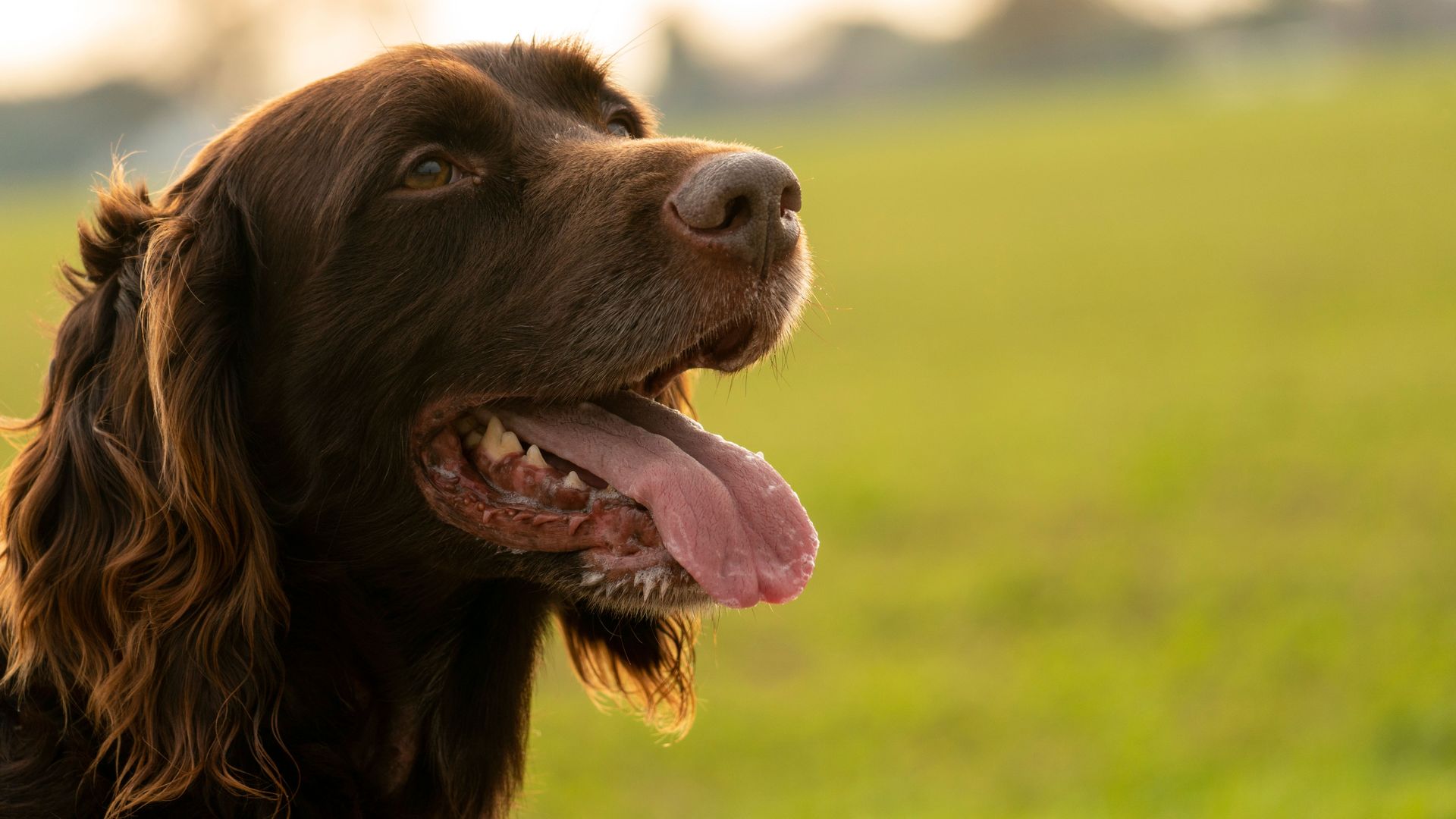
Panting is the main way dogs regulate their body temperature, but heavy or sudden panting in a dog that is not hot or freshly exercised is often a sign of stress, anxiety, or physical pain rather than ordinary cooling.
Dogs lack the dense network of sweat glands humans have across the skin, so panting does the bulk of the work of releasing heat, which is why panting after a walk, on a warm day, or after a play session is completely normal and requires no concern. The behavior becomes a more useful signal to watch when it shows up out of context: heavy panting at rest in a cool room, panting that starts during a thunderstorm or fireworks, or panting that appears alongside a vet visit, a car ride, or separation from an owner.
Pain is a less obvious trigger that owners frequently miss. Dogs experiencing discomfort from an injury, an illness, or even something as unglamorous as gastrointestinal upset will often pant persistently, sometimes paired with restlessness, pacing, or an inability to settle into a comfortable position. This kind of panting does not resolve the way heat-related panting does once the dog cools down or rests, since the underlying cause is not temperature.
Anxiety-driven panting has its own set of common companions, including trembling, pacing, excessive drooling, and attempts to hide or stay close to an owner. A dog panting heavily during a car ride, with no exertion or heat involved, is very likely reacting to motion sickness or travel anxiety rather than temperature regulation.
Because panting is such a normal, everyday behavior, the signal is in the mismatch between the panting and the surrounding context, not the panting itself. A dog panting hard after fetch on a warm afternoon needs water and shade. A dog panting hard at midnight in an air-conditioned house, with no exercise beforehand, is showing something else, and it is worth checking for pain, anxiety, or an underlying medical issue rather than assuming the dog is simply overheated.
Credit: Brixiv / Pexels
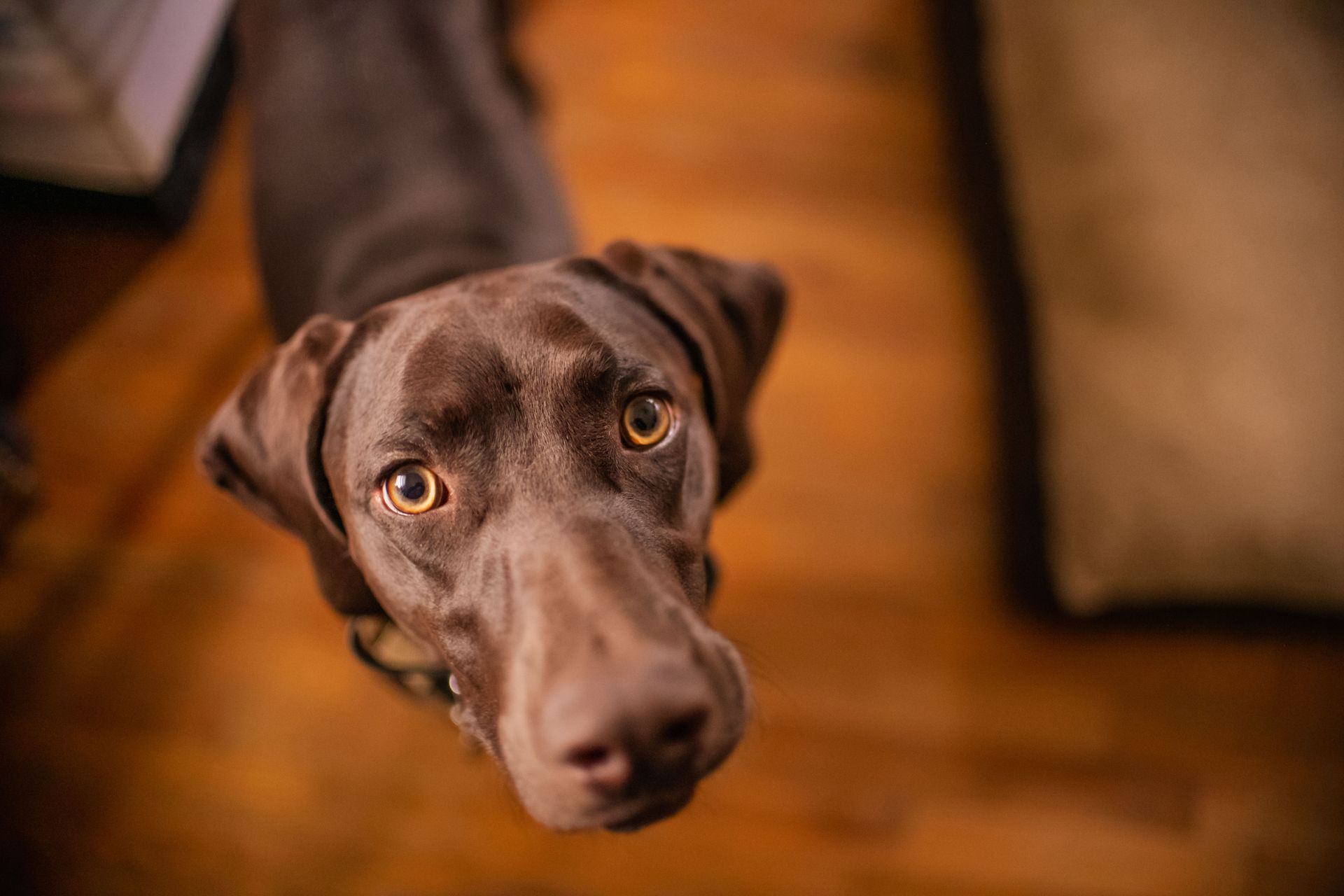
Sustained eye contact between a dog and a person can be a bonding signal or a warning sign, and the meaning depends heavily on the rest of the dog's body language rather than the eye contact alone.
A 2015 study published in Science, led by researcher Miho Nagasawa at Azabu University in Japan, found that mutual gazing between dogs and their owners raised oxytocin levels in both, a hormone closely tied to bonding and attachment in mammals. Owners whose dogs looked at them for longer stretches showed a larger oxytocin increase, and the effect was strong enough that researchers described it as similar to the gaze-based bonding seen between human parents and infants. This is one of the clearest pieces of evidence that eye contact between a familiar dog and its owner can be a genuine affection signal, not a coincidence of shared space.
The picture changes with unfamiliar dogs or unfamiliar people. A direct, hard stare from a dog that does not know the person or animal it is looking at, especially one paired with a stiff body, a closed mouth, and a still tail, tends to function as a warning rather than an invitation. Dog trainers and behaviorists commonly describe this as a "hard eye," distinct from the soft, relaxed eye contact seen in a comfortable bonding moment. Approaching a dog showing a hard eye, rather than giving it space, is a common way avoidable bites happen, particularly with dogs that do not know the person approaching.
The difference between the two comes down to the surrounding signals: a soft body, relaxed ears, and a loose posture alongside eye contact point toward the oxytocin-driven bonding version. A stiff body, forward-leaning weight, and a closed mouth point toward a warning. Reading the whole dog, rather than isolating the eye contact, is what actually tells the two apart, since the same behavior, sustained looking, sits at both ends of the emotional spectrum depending on context.
Credit: ROMAN ODINTSOV / Pexels
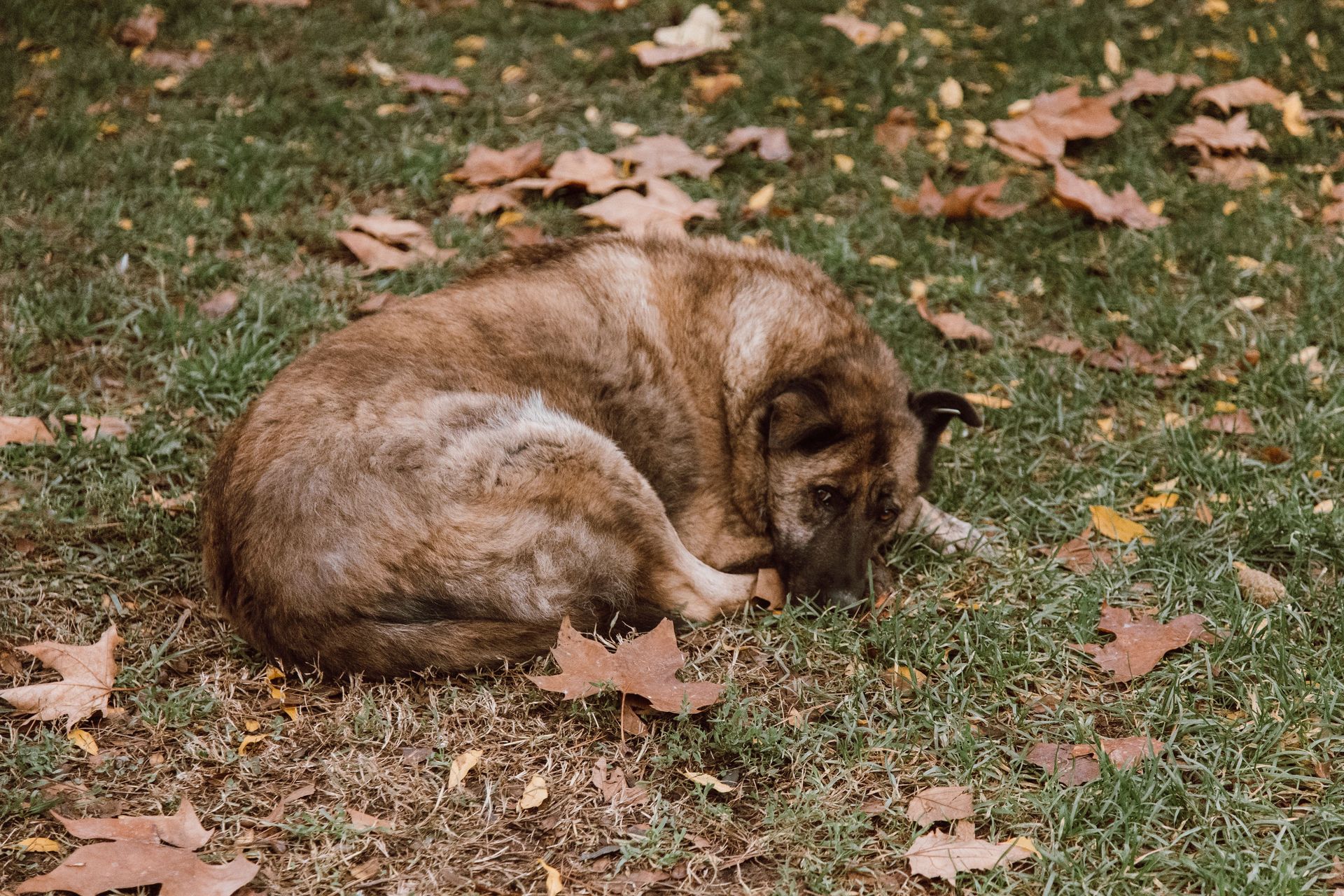
The circling motion a dog performs before settling down is an inherited instinct connected to nesting and safety, not a random quirk or a sign of restlessness.
Wild canines, including wolves, are believed to circle before lying down for a few practical reasons tied to survival. Circling flattens tall grass or uneven ground into a more comfortable, even surface. It also allows an animal to check its surroundings from multiple angles before settling into a vulnerable resting position, which matters more in the wild than it does on a living room floor. Some researchers have also connected the behavior to scent marking, since the motion can help a dog spread its own scent around the spot it is about to occupy, effectively claiming the space.
Domestic dogs retain this behavior even though a modern dog bed or a carpeted floor requires none of the practical benefits that made it useful to their wild ancestors. The instinct persists the same way dogs still dig at blankets before lying down, another leftover behavior connected to nest preparation, or the way they still bury bones despite never needing to protect food from scavengers in a house with a full bowl waiting in the kitchen.
The number of circles varies from dog to dog and even from moment to moment in the same dog, and it is not a reliable indicator of anything beyond the underlying instinct itself. A dog that circles once before flopping down is not more or less comfortable than a dog that circles five times, and there is no established link between circling frequency and anxiety in an otherwise healthy dog.
An increase in circling, particularly paired with obvious difficulty getting comfortable, whining while trying to settle, or repeated getting up and lying back down, can point toward joint pain or physical discomfort in older dogs, and is worth mentioning to a veterinarian rather than assuming it is simply an intensified version of the normal instinct.
Credit: JacLou- DL / Pexels
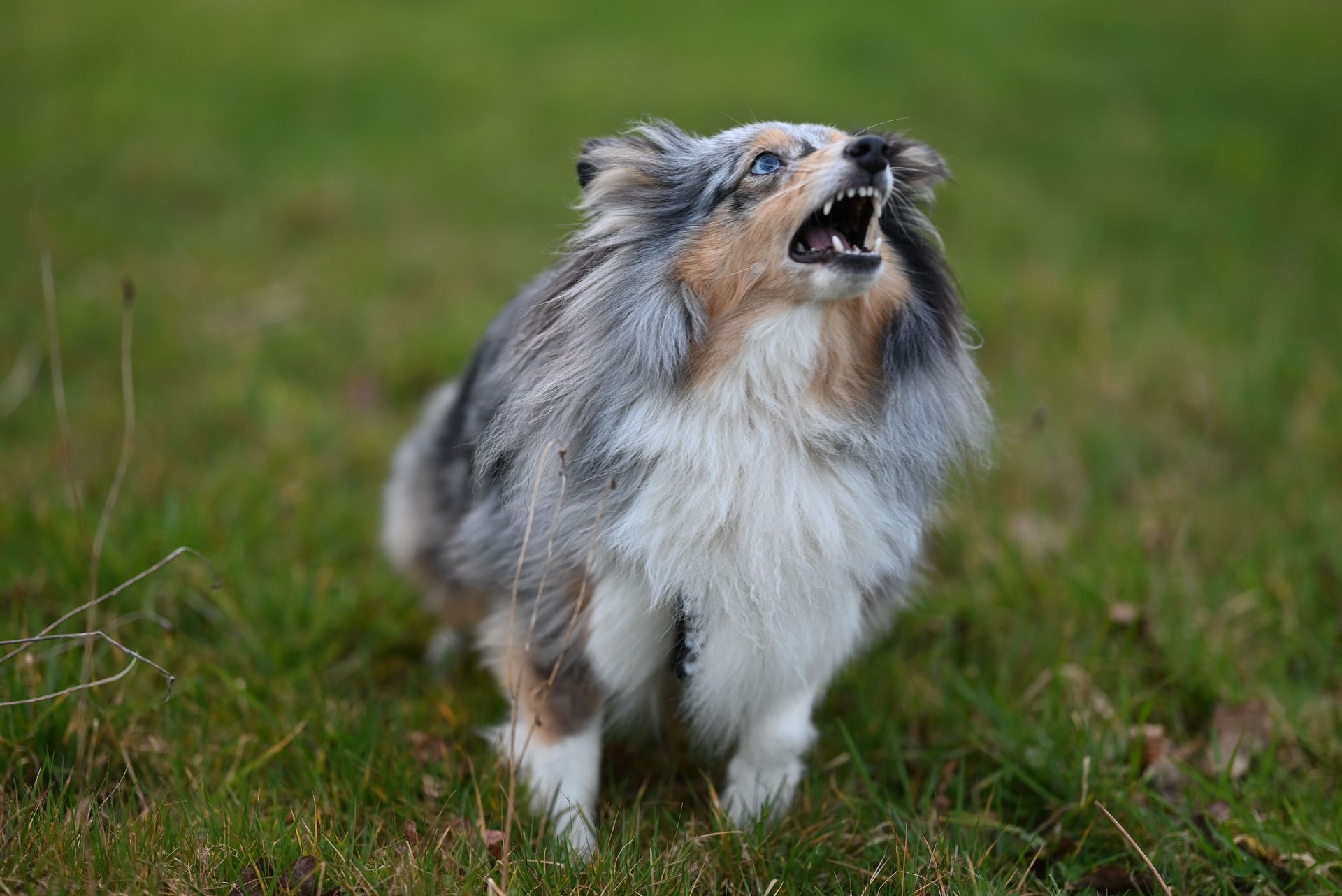
The pitch, speed, and rhythm of a bark carry distinct meanings, which is why treating every bark as the same generic demand for attention misses most of the information a dog is actually giving.
A low-pitched, slow, repeated bark, often heard when a stranger approaches a house or an unfamiliar dog gets too close, tends to function as an alert or a warning, telling other members of the household, human or canine, that something worth noticing is nearby. A higher-pitched, faster series of barks, especially one paired with a wagging tail and bouncing body, usually signals excitement, such as greeting a returning owner or anticipating a walk. A single sharp, high-pitched yelp is a pain response, distinct from either of the other two and typically tied to a specific, sudden trigger like a stepped-on paw.
Research into dog vocalizations by ethologist Peter Pongracz and colleagues at Eotvos Lorand University has documented that barks recorded in different contexts, such as a stranger approaching, being left alone, or playing, have measurably different acoustic patterns, and human listeners can often correctly guess the context from the recording alone. This supports what many dog owners already sense intuitively but rarely articulate: the bark aimed at a delivery person at the door does not sound like the bark aimed at a squirrel in the yard, even though both would be logged simply as "barking" in a casual description.
Frequency and repetition matter as much as pitch. A dog barking in short, spaced-out bursts while pacing near a door or window is often reacting to something specific outside, while a dog barking in a steady, monotonous pattern with no clear external trigger, especially when left alone, is more likely showing anxiety or a learned attention-seeking pattern rather than reacting to a real event.
Paying attention to these variations gives an owner a much clearer picture of what is actually happening than treating every bark as interchangeable noise, and it makes it easier to tell a dog that needs help, comfort, or space apart from a dog that is simply asking to go outside.
Credit: János Csatlós / Pexels
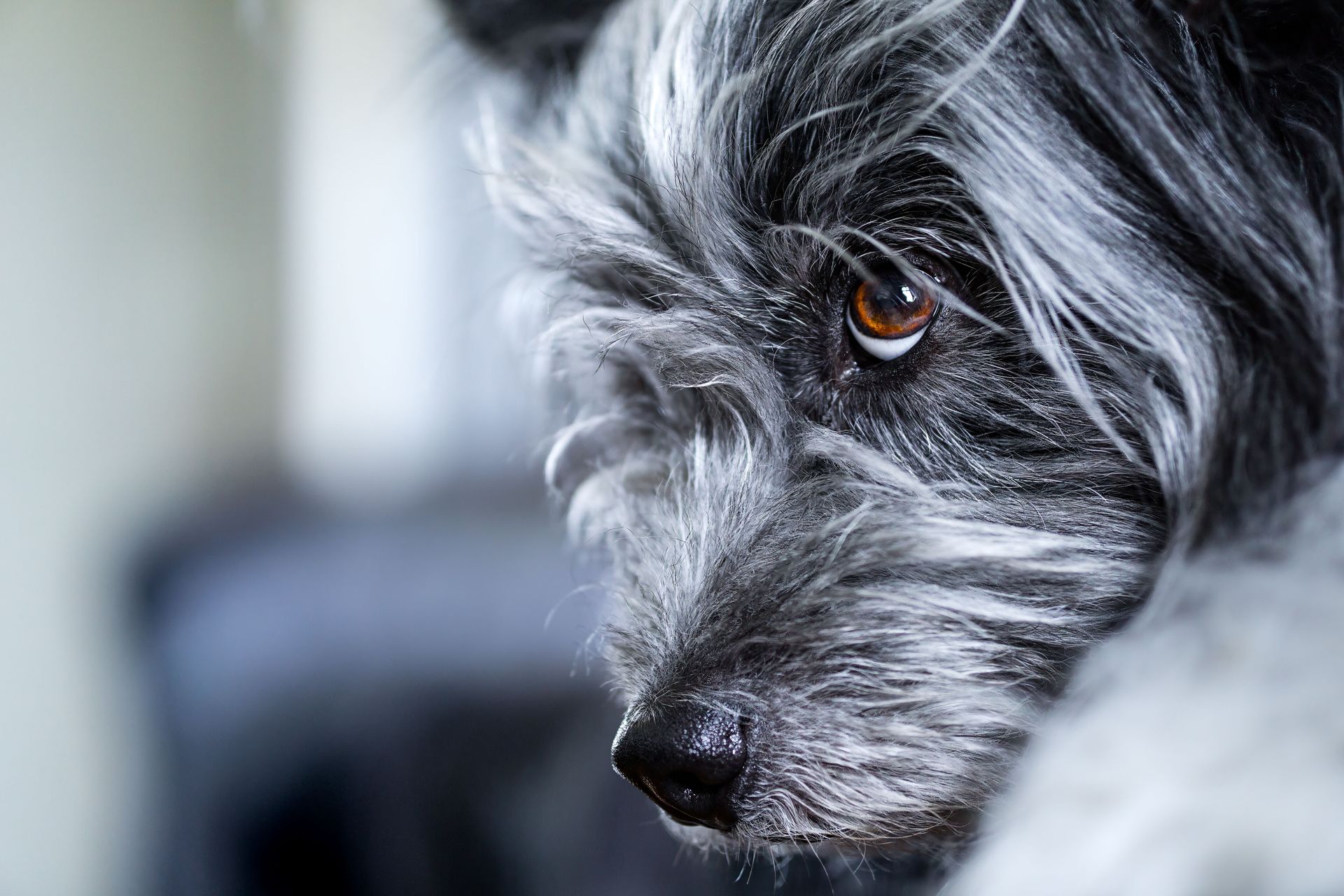
Whale eye, the moment a dog turns its head away while keeping its eyes fixed on a person or object so that the whites of the eyes become visible in a crescent shape, is a clear discomfort or stress signal, even though it often gets overlooked entirely.
The name comes from the resemblance to how a whale's eye looks when partially rolled, showing white around the edge. In dogs, it shows up when a dog wants to keep watching something it is wary of, such as a hand reaching toward its food bowl, a child leaning in for a hug, or another dog standing too close, while simultaneously turning its head away as a mild avoidance gesture. The combination of a turned head and a fixed, wide-eyed stare is what makes the behavior distinct from ordinary side-eye glances.
This signal ranks among the more reliable early warnings of discomfort in a dog's behavioral repertoire, since it tends to appear well before growling, snapping, or other more obvious defensive reactions. Veterinary behaviorists frequently point to whale eye as one of the signals owners are least likely to notice, largely because it is subtle and easy to mistake for a dog simply glancing in a particular direction.
Common triggers include resource guarding situations, such as a hand near a food bowl or a favorite chew toy, unwanted physical contact like a tight hug or an attempt to move a sleeping dog, and tense interactions with unfamiliar dogs at close range. Photographs of dogs being hugged tightly by children or posed for pictures frequently show whale eye, even in images shared as evidence of a happy, affectionate moment.
Because whale eye shows up early, it offers a useful window for intervention. A dog showing whale eye during a hug, a nail trim, or a close encounter with another dog is communicating discomfort clearly, and giving it space or stopping the interaction at that point is far more effective than waiting for a growl or a snap to signal the same underlying feeling.
Credit: Sam Lion / Pexels
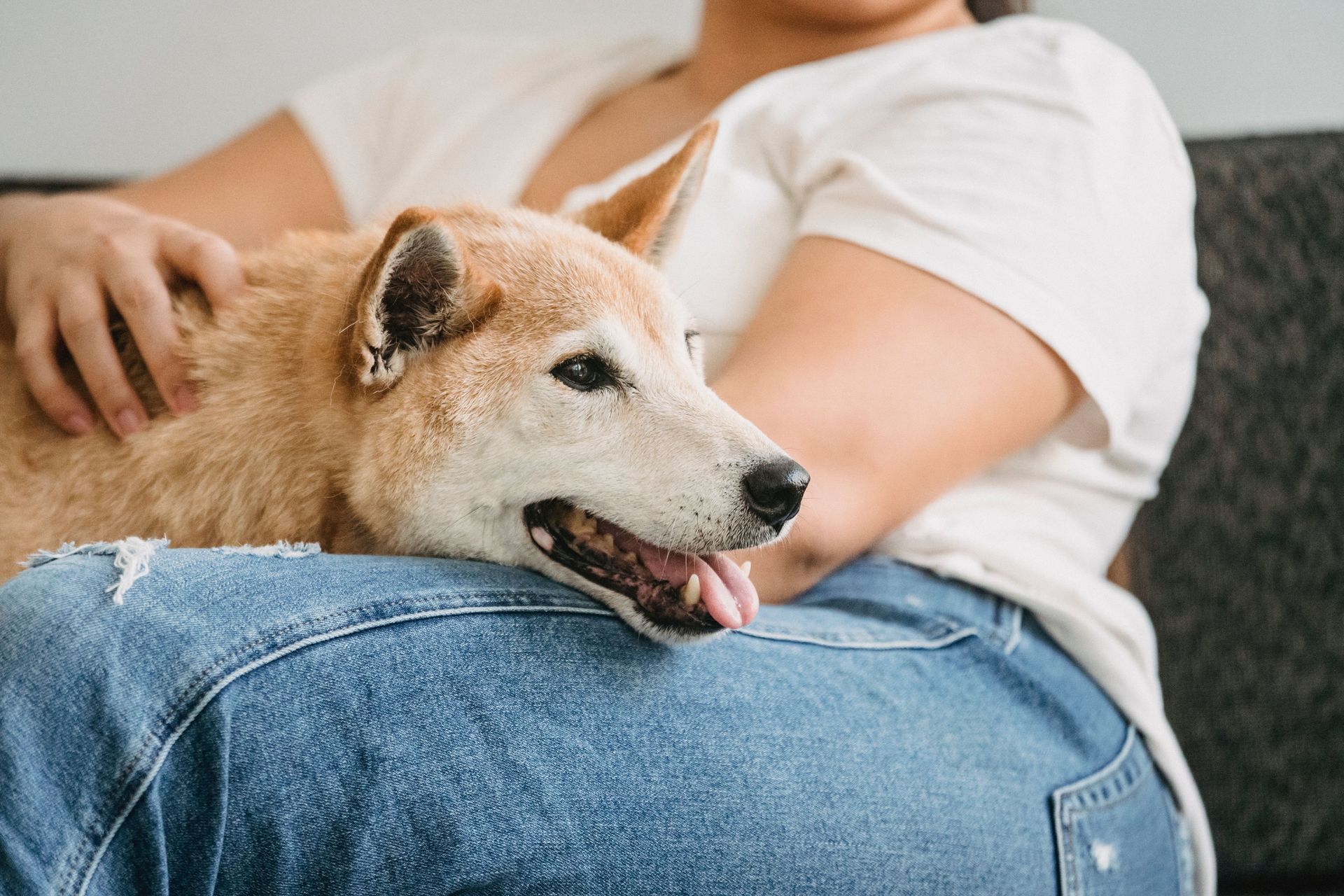
A dog that leans its body weight against a person's legs is showing a bonding and comfort-seeking behavior, distinct from the more anxious clinginess owners sometimes assume it signals.
This behavior differs from a dog pressing against a person out of fear, such as during a thunderstorm or a loud, unfamiliar noise, mainly through the rest of the body's posture. A dog leaning as a bonding gesture typically has a relaxed, loose body, soft eyes, and a calm or gently wagging tail, and the leaning tends to happen during ordinary, low-stress moments, such as sitting together on the couch or standing next to an owner in the kitchen. A dog leaning out of fear usually shows a stiffer, lower body, tucked tail, and other stress signals such as panting or trembling, and the leaning coincides with an identifiable stressful trigger.
Some breeds show this behavior more than others. Larger breeds developed for close guarding or companion roles, including several mastiff-type and livestock guardian breeds, are frequently described by owners as consistent leaners, though the behavior shows up across breeds and sizes rather than being limited to a specific type.
Leaning likely serves a similar social function to the physical closeness seen in other bonded social animals, reinforcing proximity and contact with a trusted individual. It costs the dog very little and requires no specific training, which is part of why it shows up so consistently across dogs with a secure, comfortable relationship with their owner.
The distinction matters most in a practical sense for owners trying to figure out whether their dog is anxious or simply affectionate at a given moment. A dog leaning while relaxed, in a familiar setting, with no obvious stressor nearby, is very likely just seeking contact. A dog leaning hard against a person's legs during a vet exam, a car ride, or a thunderstorm is showing something closer to a request for reassurance in the face of a specific stressor, and responding with calm physical contact in that moment is a reasonable way to help.
Credit: Gili Pup / Pexels
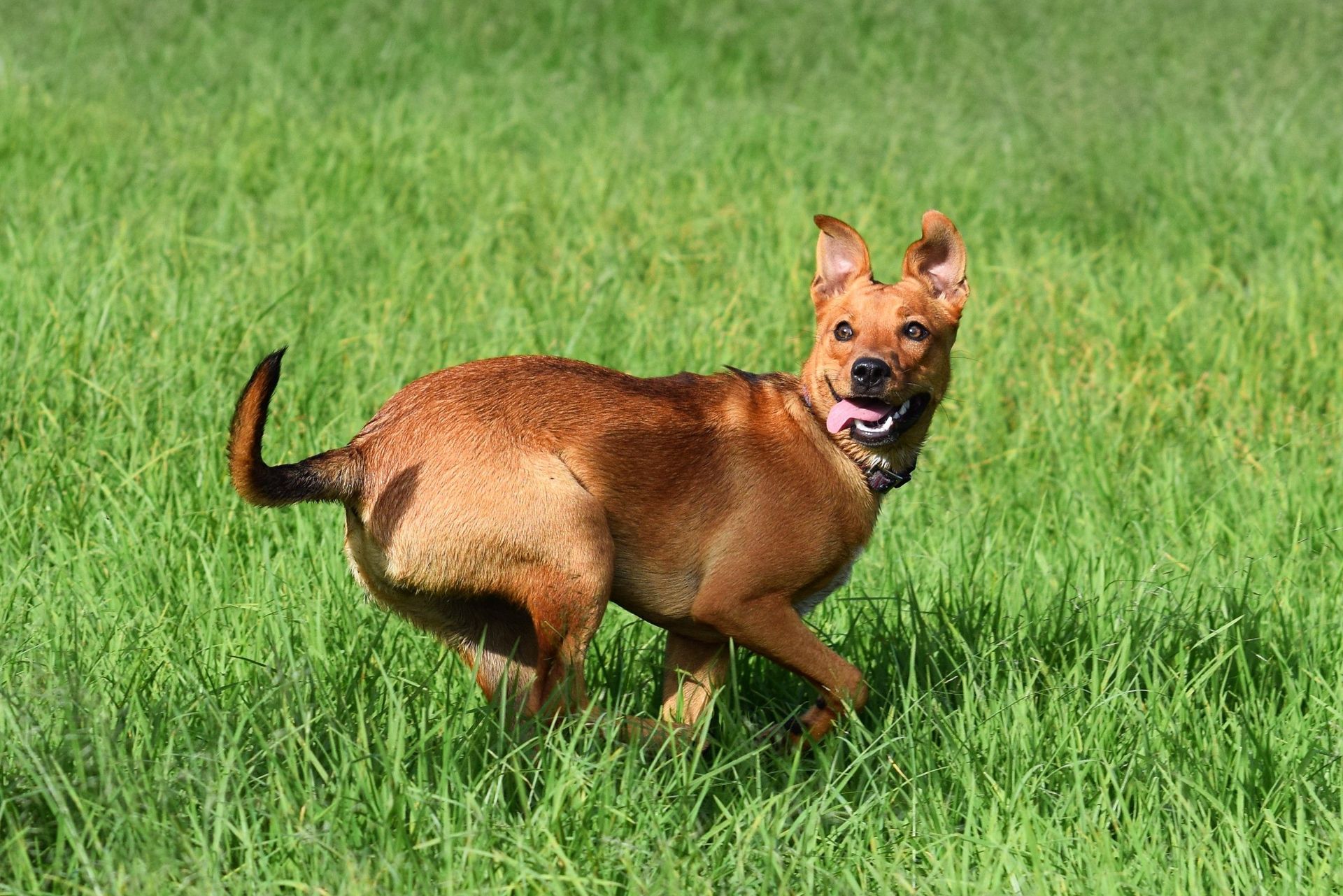
Tail chasing in dogs ranges from harmless play behavior in puppies to a sign of boredom, a medical irritation, or, in persistent cases, a compulsive disorder, and the correct response depends entirely on which of those is driving it.
In puppies, brief episodes of tail chasing are common and usually connected to the discovery of their own body, similar to the way puppies sometimes bite at their own feet or tail simply because it moves and catches their attention. This version tends to fade with age and does not typically continue as a frequent behavior into adulthood.
In adult dogs, occasional tail chasing during a burst of excitement or as an attention-seeking behavior toward a bored owner is generally not a concern on its own. A more physical explanation worth ruling out first is irritation at the base of the tail or around the rear end, which can come from full anal glands, fleas, allergies, or skin irritation, all of which can prompt a dog to spin and snap at the area causing discomfort. A veterinary check is a reasonable first step for a dog that suddenly starts tail chasing with no clear behavioral trigger, since a physical cause is often easier to treat than a behavioral one.
When tail chasing becomes frequent, intense, and difficult to interrupt, veterinary behaviorists sometimes classify it as a compulsive disorder, occasionally described using terms borrowed from human obsessive-compulsive disorder, though the comparison is used loosely rather than as a precise diagnostic equivalent. Certain breeds, including bull terriers, have been documented showing higher rates of compulsive spinning behavior, which has led some researchers to explore a genetic component alongside environmental factors such as under-stimulation or chronic stress.
Because the causes span such a wide range, from a bored puppy to a genuine medical or behavioral condition, the most useful first step for a dog with new or escalating tail chasing is a veterinary exam to rule out physical causes, followed by attention to the dog's overall activity level, mental stimulation, and stress if no medical cause turns up.
Credit: David Kanigan / Pexels
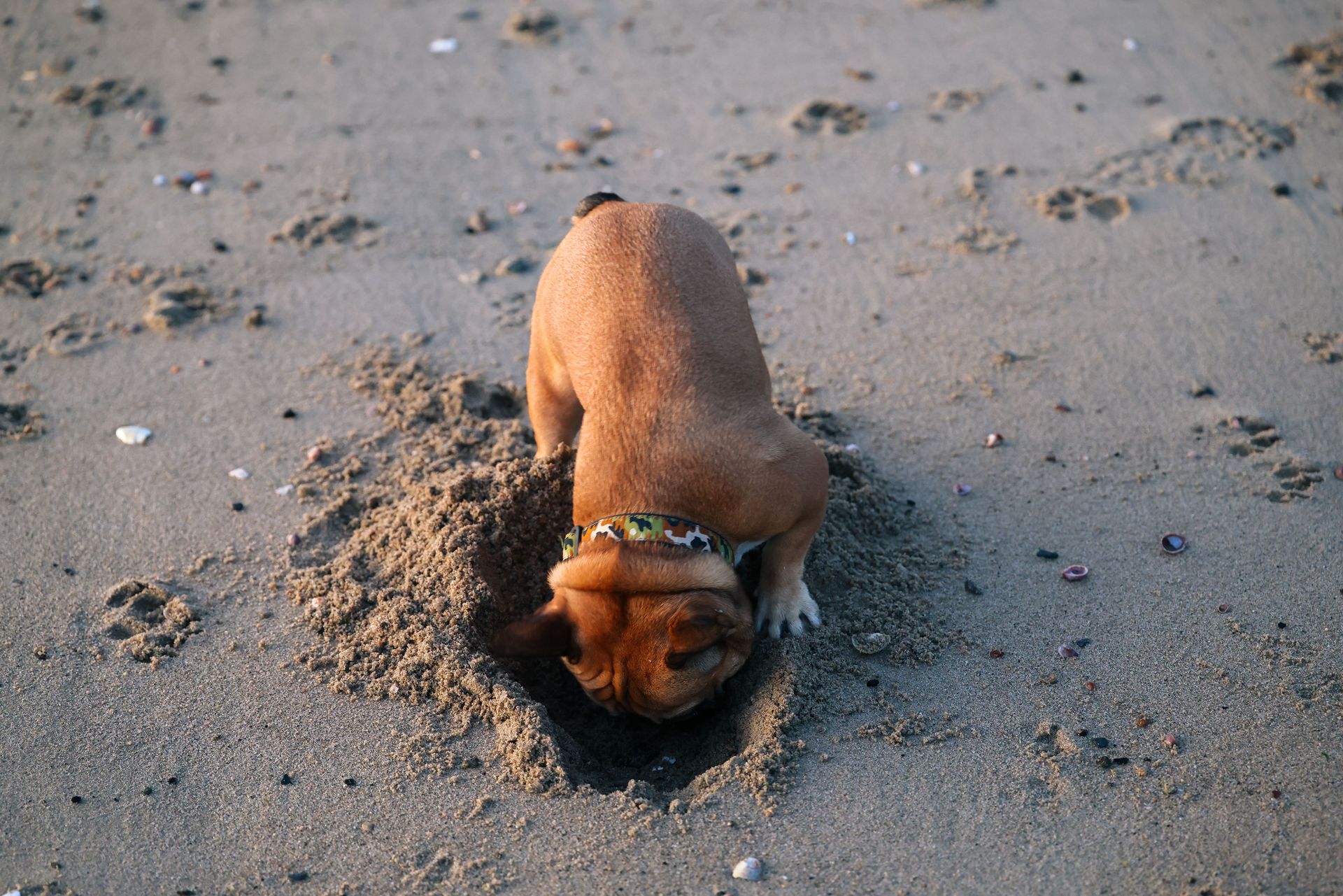
Digging is an instinctual behavior connected to den-building and temperature regulation in a dog's ancestry, not simply a bad habit or a symptom of an untrained dog.
Wild canines dig dens for shelter, warmth, and safety while raising young, and domestic dogs retain a version of that instinct even in households where no den has ever been necessary. This shows up most visibly as digging at blankets, dog beds, or couch cushions before lying down, a smaller-scale echo of the same nesting behavior that drives circling before settling. Outdoor digging in yards often has a more practical modern purpose: dogs dig into cool soil on hot days to reach a cooler layer of ground to lie on, which explains why digging frequently increases in warm weather and often happens in shaded spots rather than at random.
Breed background plays a substantial role in how much a given dog digs. Terriers were originally bred to dig into burrows after small prey, and many terrier breeds retain a strong, largely unteachable drive to dig regardless of how much exercise or mental stimulation they receive elsewhere. Other breeds dig far less as a rule, though individual dogs vary widely within any breed.
Digging driven by boredom or excess energy looks different from instinct-driven digging mainly in its intensity and timing. A dog that digs occasionally in one preferred, often shaded spot in the yard is likely regulating temperature or acting on a mild, breed-typical instinct. A dog that digs constantly, in multiple locations, especially when left alone for long stretches, is more likely digging as an outlet for boredom, excess energy, or mild anxiety.
Redirecting the instinct rather than trying to eliminate it entirely tends to work better for breeds with a strong digging drive. Giving a dog a designated digging spot, such as a sandbox or a soft patch of soil, channels the behavior somewhere acceptable instead of fighting an instinct that, in many dogs, is not going away regardless of training.
Credit: Mehmet Suat Gunerli / Pexels
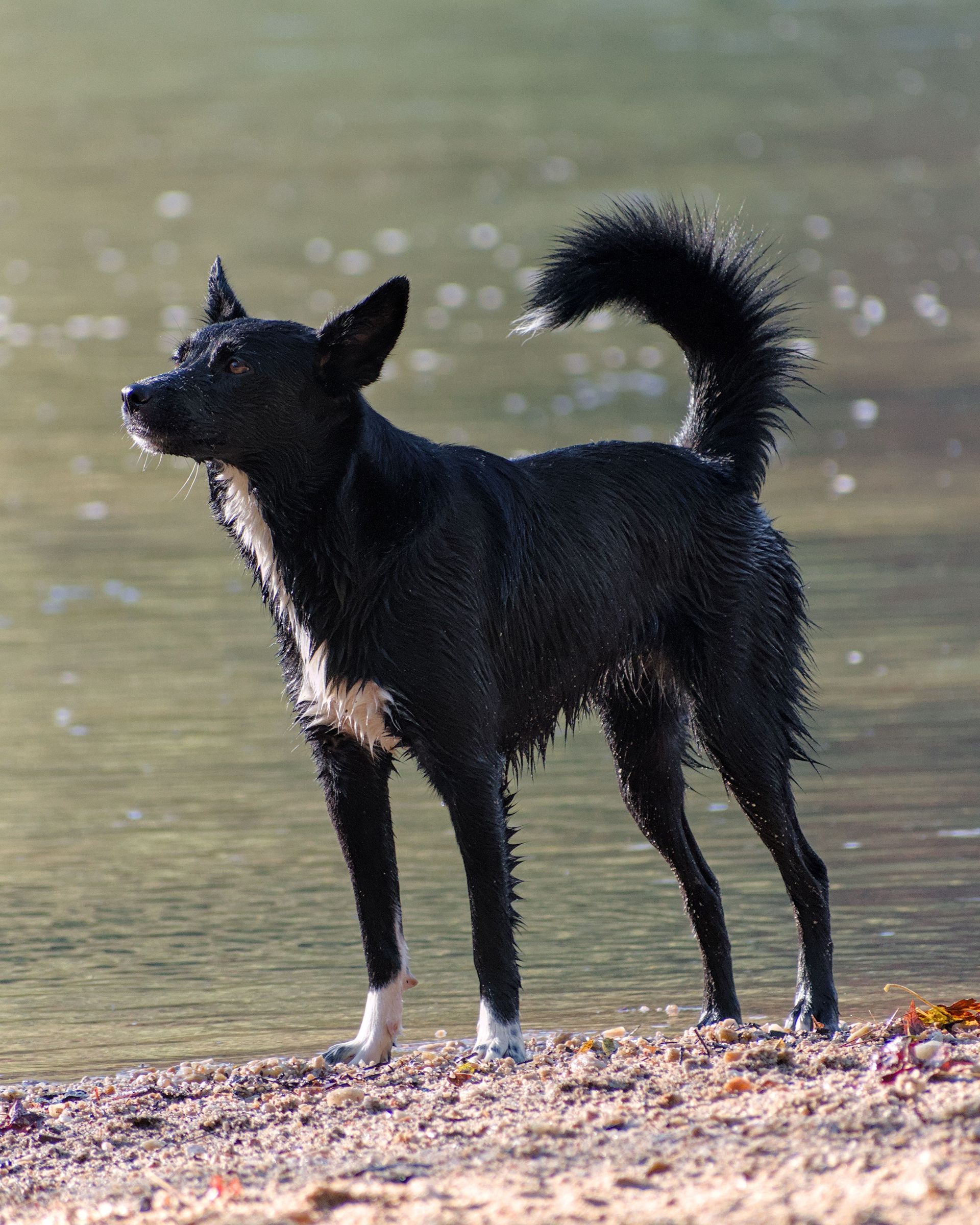
Raised hackles, the ridge of fur along a dog's back and neck that stands up on end, signal heightened arousal, not aggression specifically, and the behavior is involuntary rather than a conscious display.
The technical term for this is piloerection, the same reflex that causes goosebumps in humans, controlled by the autonomic nervous system rather than by deliberate muscular movement. A dog cannot choose to raise or lower its hackles the way it can choose to wag its tail or bark, which means the behavior reflects a physiological state of arousal rather than an intentional signal aimed at another animal or person.
That arousal can come from fear, excitement, curiosity, or aggression, which is why hackles alone say very little without the rest of the dog's body providing context. A dog encountering an unfamiliar smell for the first time, a dog watching an exciting, fast-moving squirrel, and a dog feeling genuinely threatened by another animal can all show raised hackles, despite being in three very different emotional states. The pattern of the raised fur also varies: hackles limited to the shoulders often suggest a milder level of arousal, while hackles running the full length of the spine, from neck to tail base, tend to appear during more intense reactions.
Reading a raised-hackle dog accurately means looking at posture, tail position, ear position, and facial expression together, rather than treating the hackles as a stand-alone warning of aggression. A dog with raised hackles, a loose wagging tail, and a bouncy, forward-leaning posture is likely just excited, possibly by another dog it wants to play with. A dog with raised hackles, a stiff body, a low tail, and a fixed stare is showing something closer to fear or defensive aggression.
Treating every instance of raised hackles as a warning sign leads owners to needlessly separate dogs that are simply excited to meet each other, while relying on hackles as the only signal can also mean missing genuine warning signs shown through the rest of a tense, still body.
Credit: Mithul Varshan / Pexels
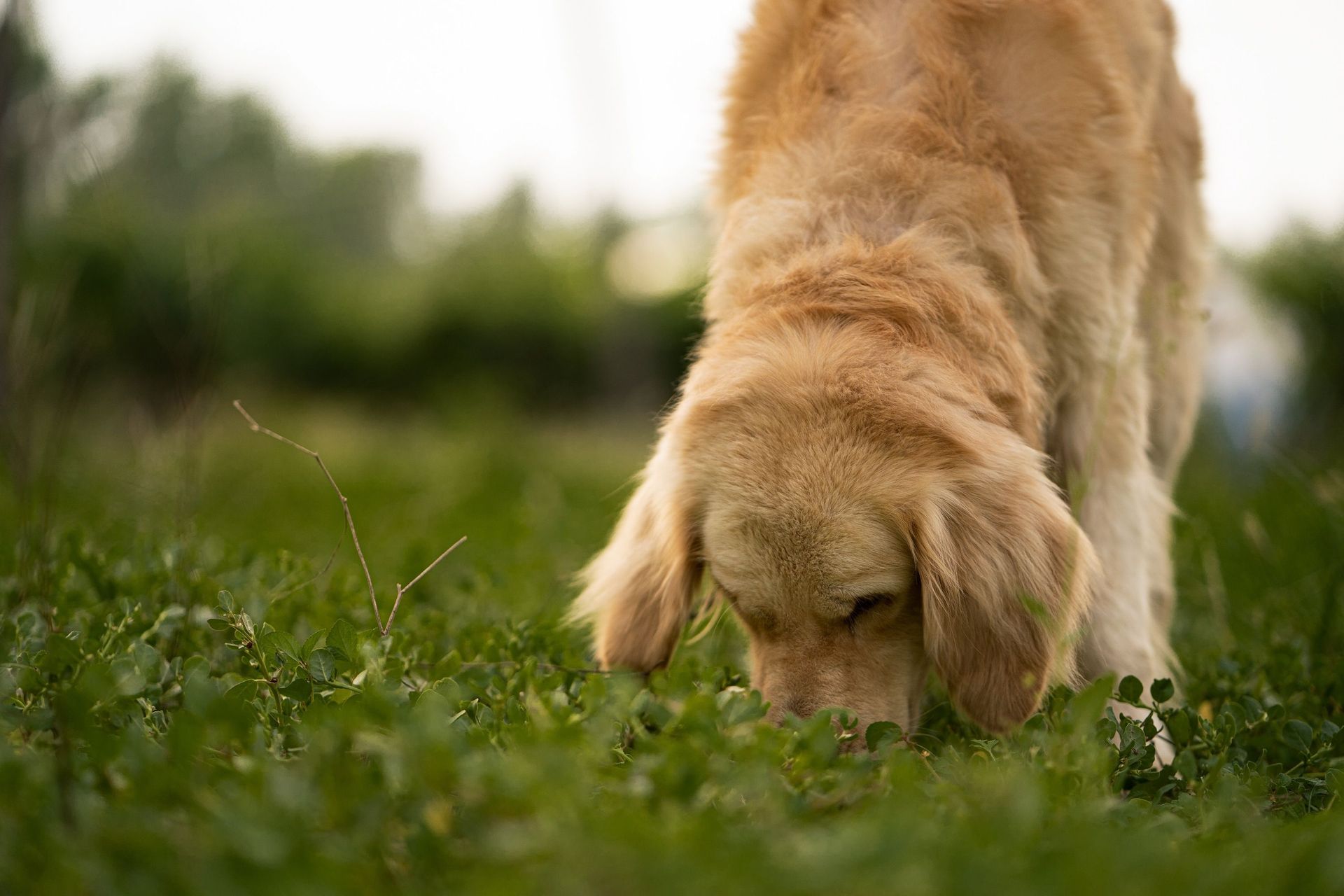
A dog that stops repeatedly to sniff every post, patch of grass, and lamppost on a walk is gathering detailed information through its strongest sense, not being stubborn or ignoring its owner.
Dogs have a sense of smell estimated by researchers to be tens of thousands of times more sensitive than a human's, with a nasal structure and a dedicated scent-processing region of the brain built to extract enormous detail from what, to a person, looks like an empty patch of sidewalk. A single sniffing stop can tell a dog which animals have passed through recently, their approximate sex and health status through hormonal traces, how long ago they passed by, and whether they are a familiar visitor or a stranger to the area. This is closer to reading a detailed local newspaper than to a passing curiosity.
Veterinary behaviorists increasingly recommend structured "sniff walks," where a dog is given extended time to investigate scents at its own pace rather than being pulled along at a brisk, uninterrupted walking speed, as a form of mental enrichment. The reasoning is that scent processing is mentally demanding work for a dog, and a walk that allows for this kind of investigation can tire out a dog mentally in a way that a fast-paced walk focused purely on physical exercise does not.
The instinct to read owners as stubborn for wanting to sniff everything usually comes from a walk built around a person's schedule or exercise goals rather than a dog's natural pace, since a dog moving briskly toward a destination has very little time to process the scent information available at each stop. This is not a failure of training so much as a mismatch between what the walk is meant to accomplish for the person and what it is meant to accomplish for the dog.
Building in dedicated sniffing time, even a portion of a walk set aside specifically for it, tends to produce a calmer, more satisfied dog than trying to eliminate the behavior through faster pacing or frequent leash corrections.
Credit: Richard Brutyo / Unsplash
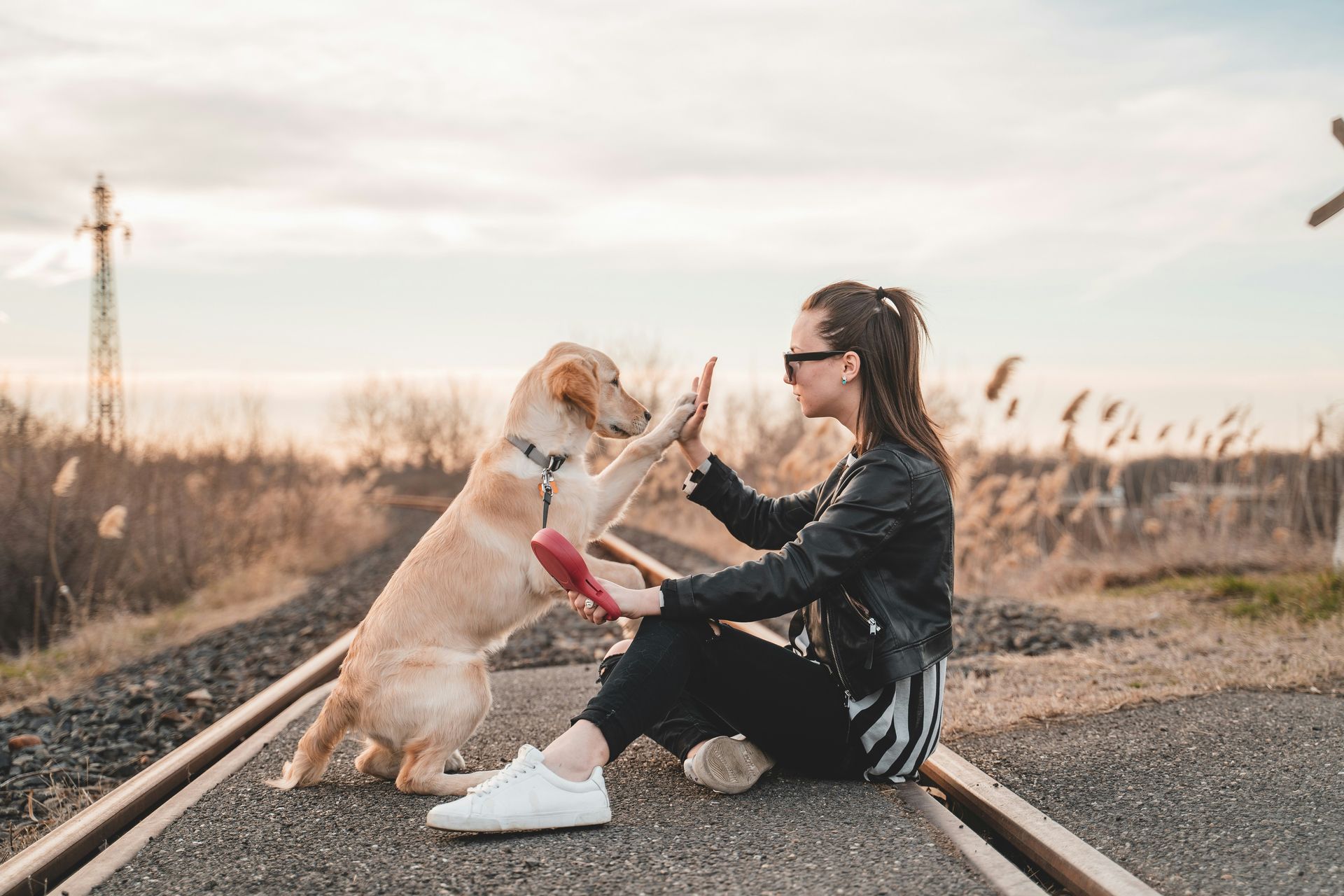
A dog pawing at a person's leg or arm is usually making a specific request, whether for attention, food, or access to something, rather than performing a pure affection gesture.
Pawing tends to be a learned behavior more than an instinctive one. Puppies paw at their mother's underside to stimulate milk flow, which gives the motion an early biological origin, but the pawing adult dogs direct at people is largely shaped by what has worked in the past. A dog that pawed at a person once and got attention, food, or a door opened as a result is likely to repeat the behavior deliberately the next time it wants the same outcome, which makes pawing one of the clearer examples of a dog using a physical gesture as an intentional communication tool rather than a reflexive display of emotion.
Context usually reveals the specific request. Pawing directed at a hand holding food is a request to share it. Pawing that happens when an owner stops petting mid-session is a request to continue. Pawing near a door or a leash is a request to go outside. Pawing during a moment when a dog has been getting less attention than usual, such as when an owner is focused on a phone or a laptop, is a request for engagement.
This does not mean pawing carries no emotional content at all, since the underlying motivation is often genuine interest in interacting with a person. What it does mean is that framing every instance of pawing simply as "my dog loves me" misses the more precise and more useful information: the dog is asking for something specific, and figuring out what tends to make the interaction go more smoothly for both sides.
Owners who want to reduce excessive pawing, particularly when it involves claws against skin or clothing, generally do better by consistently withholding the reward, such as attention or food, the behavior is aiming for, rather than allowing it to work only sometimes, since inconsistent reinforcement tends to make the behavior more persistent, not less.
