
20 things dogs do that most owners think are sweet — but are actually stress signals
Dog stress signals often look like love, from belly rubs to guilty looks, but they usually mean your dog needs space
Credit: Ivan Babydov / Pexels
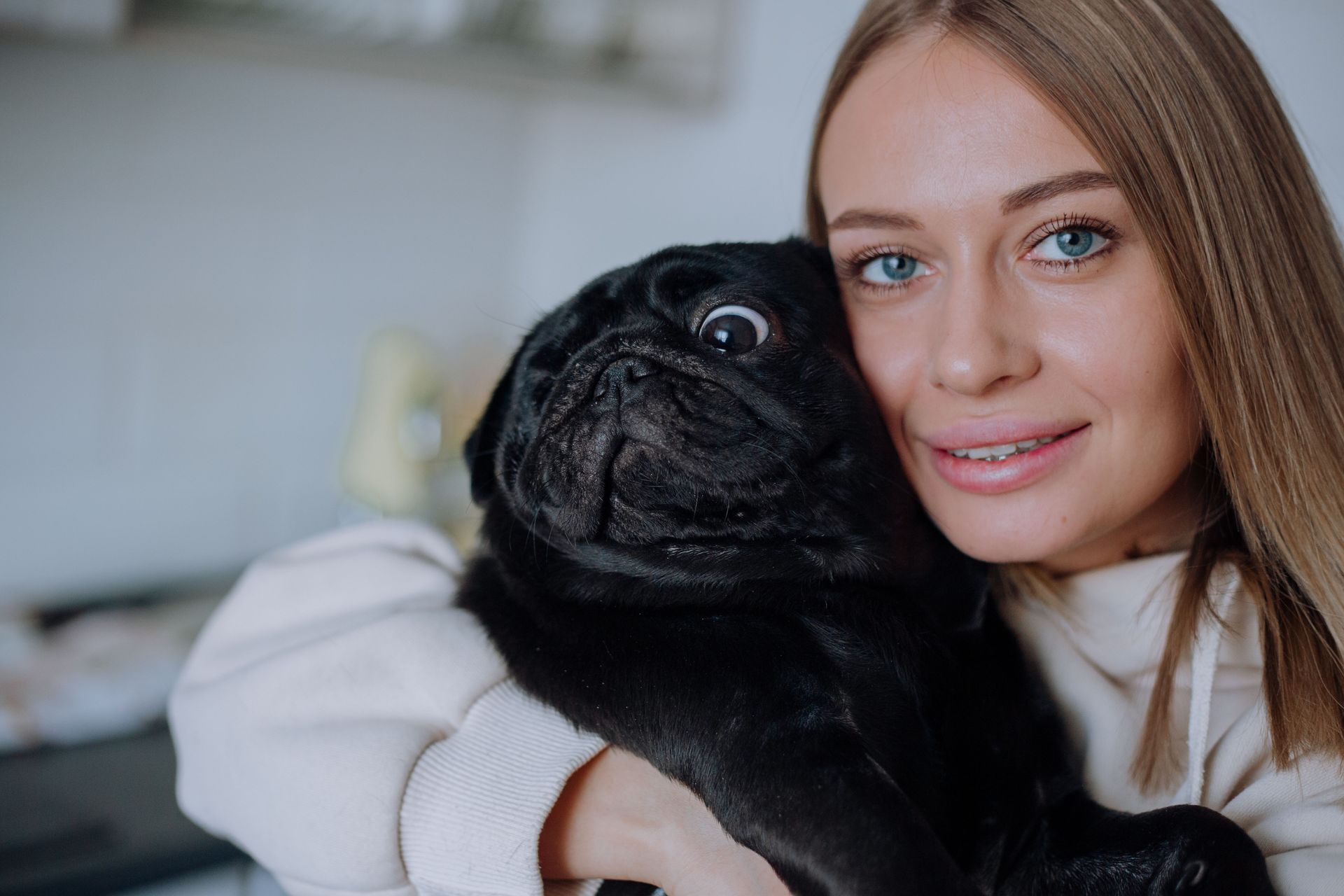
A dog rolling onto its back for a belly rub looks like total trust. A dog yawning on the couch looks relaxed. A dog licking a visitor's face looks affectionate. Much of what people read as devotion, good manners or contentment in a dog is coming from a very different place: unease.
Canine researchers have spent decades cataloguing what are often called calming signals, the behaviors dogs use to defuse tension, signal discomfort or ask for space long before a growl or a snap ever enters the picture. Norwegian trainer Turid Rugaas popularized much of this framework in the 1990s, and groups such as the American Veterinary Society of Animal Behavior have since folded the findings into standard guidance for veterinarians and trainers. The behaviors are subtle by design. A dog that has learned growling gets punished will often skip straight to quieter signals, which is exactly why they get missed, or worse, rewarded with more petting, more attention or more of whatever triggered them.
None of this means a dog showing one of these behaviors is in crisis. Context matters enormously: a single yawn during a quiet nap is just tiredness, and a wagging tail after a day apart is usually joy. The issue is a pattern. A dog that yawns, licks its lips, turns its head away and shows the whites of its eyes every time a toddler approaches is telling anyone paying attention that it wants the interaction to stop.
This list breaks down 20 dog stress signals that are commonly mistaken for affection or calm, from the well-known guilty look to the less obvious stiff, high tail wag. Each entry explains what the behavior actually communicates, how it differs from the version that really is relaxed or friendly, and what a dog is likely asking for when it appears. Reading them correctly doesn't take a degree in animal behavior, just a slower look at habits most owners have been taught to find endearing.
The guilty look before you even say anything
Credit: mister088 / Pexels
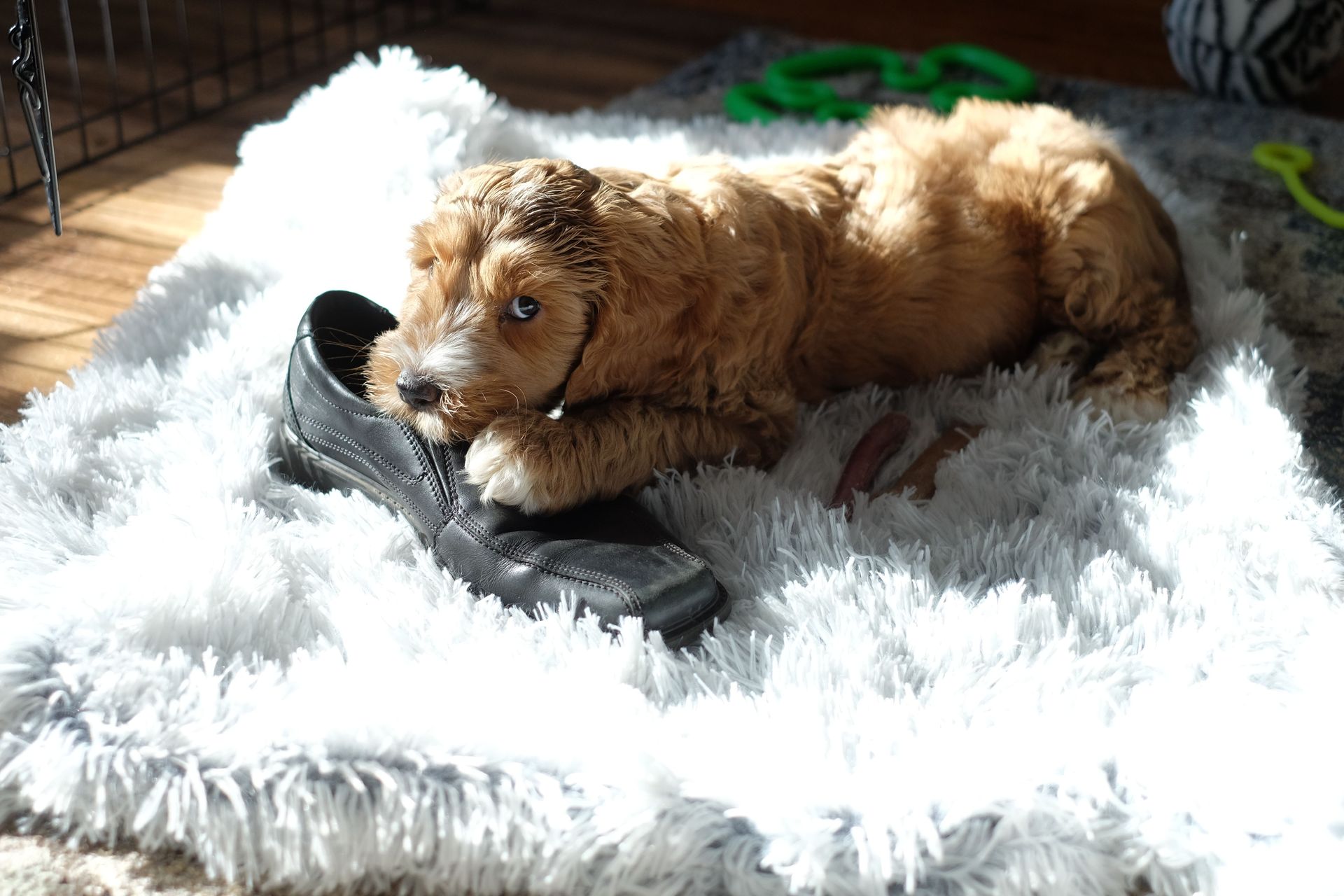
The guilty look does not mean a dog understands it broke a rule. In 2009, canine cognition researcher Alexandra Horowitz found dogs displayed the classic guilty posture whether or not they had actually gotten into forbidden food, and the look appeared more reliably when owners scolded them than when owners praised them, regardless of what the dog had actually done. Dogs were responding to the owner's behavior in the moment, not reflecting on a past action.
Dogs lack the cognitive framework for retrospective guilt tied to a specific rule. What looks like remorse is a fear or appeasement response to a stressed owner's posture, raised voice or stiff walk into the room. Dogs read human body language closely, and an owner already tense from finding a chewed-up shoe broadcasts that tension through faster steps, a clipped voice and squared shoulders before a word is spoken.
The dog reacts to those cues, not to memory of chewing the shoe an hour earlier. That is why the look shows up even when a dog has done nothing at all. Any tense entrance from an owner can trigger it. It functions as an attempt to calm the human, not as an admission.
Owners who scold a dog for looking guilty end up reinforcing the anxiety that produced the look in the first place. The dog learns that a tense entrance from its owner predicts punishment, so it performs appeasement behavior earlier and more often, whether or not anything happened. Over time this can make a dog generally warier of its owner's moods rather than better trained.
A more useful response skips the search for a confession entirely. If damage happened while no one was watching, there is no way to connect a consequence to the act afterward in a way the dog can process. Managing the environment instead, by closing doors, crating during unsupervised stretches or removing chewable items from reach, prevents both the mess and the anxious performance that follows it.
Rolling onto their back to show their belly
Credit: Valeria Boltneva / Pexels
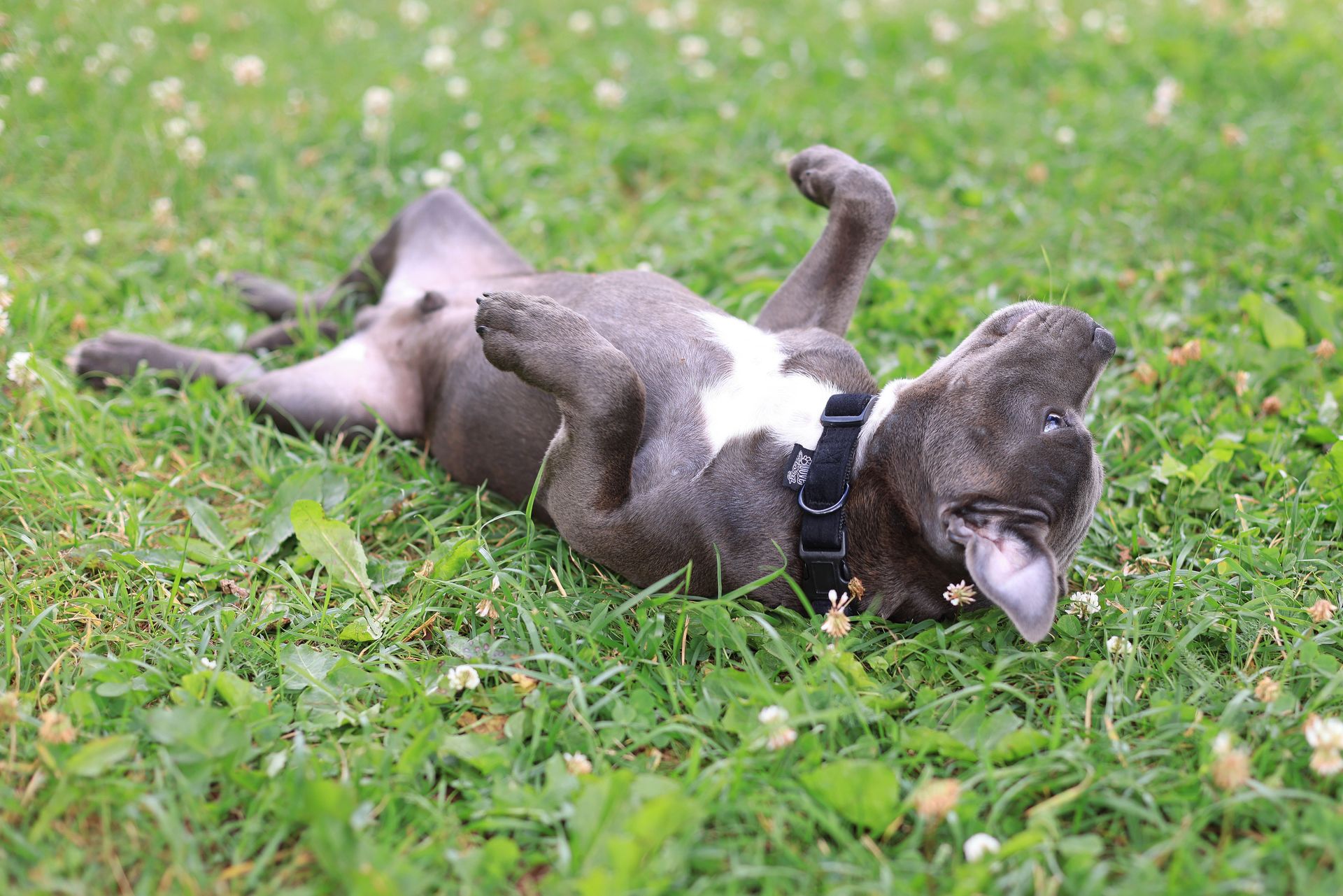
A belly-up dog is not automatically asking for a rub. Relaxed exposure comes with a loose, wiggly body, soft half-closed eyes and an easy roll into the position. The stress version looks different: a stiff body, tucked tail, tightly closed mouth and a tense, still posture held in place rather than offered loosely.
This second version is an appeasement display, a dog signaling that it poses no threat to something it finds intimidating, whether that is a larger dog, a raised hand or an unfamiliar person leaning over it. Exposing the belly and throat is a vulnerable position, and in a fearful context it functions as surrender rather than invitation.
Breed and individual history shape how often this shows up. Dogs with a history of harsh handling or dogs that were rehomed from shelters often default to this posture quickly with new people, well before any bond of trust has formed. That speed is itself a clue: a dog that flips over within seconds of meeting a stranger is usually managing perceived risk, not requesting affection.
Reaching straight for the belly when a dog shows this stress version tends to backfire. A hand descending toward an already anxious, exposed dog can escalate the fear rather than ease it, since the dog cannot easily protect itself or retreat from that position. Some dogs will tolerate it without incident. Others will stiffen further, lick their lips or try to roll away.
The safer approach is to look at the whole body before responding. A loose, relaxed belly-up dog with a soft face and a wagging tail is genuinely inviting contact. A stiff, still one with a tucked tail and wide eyes is asking to be left alone until it decides, on its own, to get up and re-engage on its own terms.
Yawning when they're not remotely tired
Credit: Ioan-Dan Plesa / Pexels
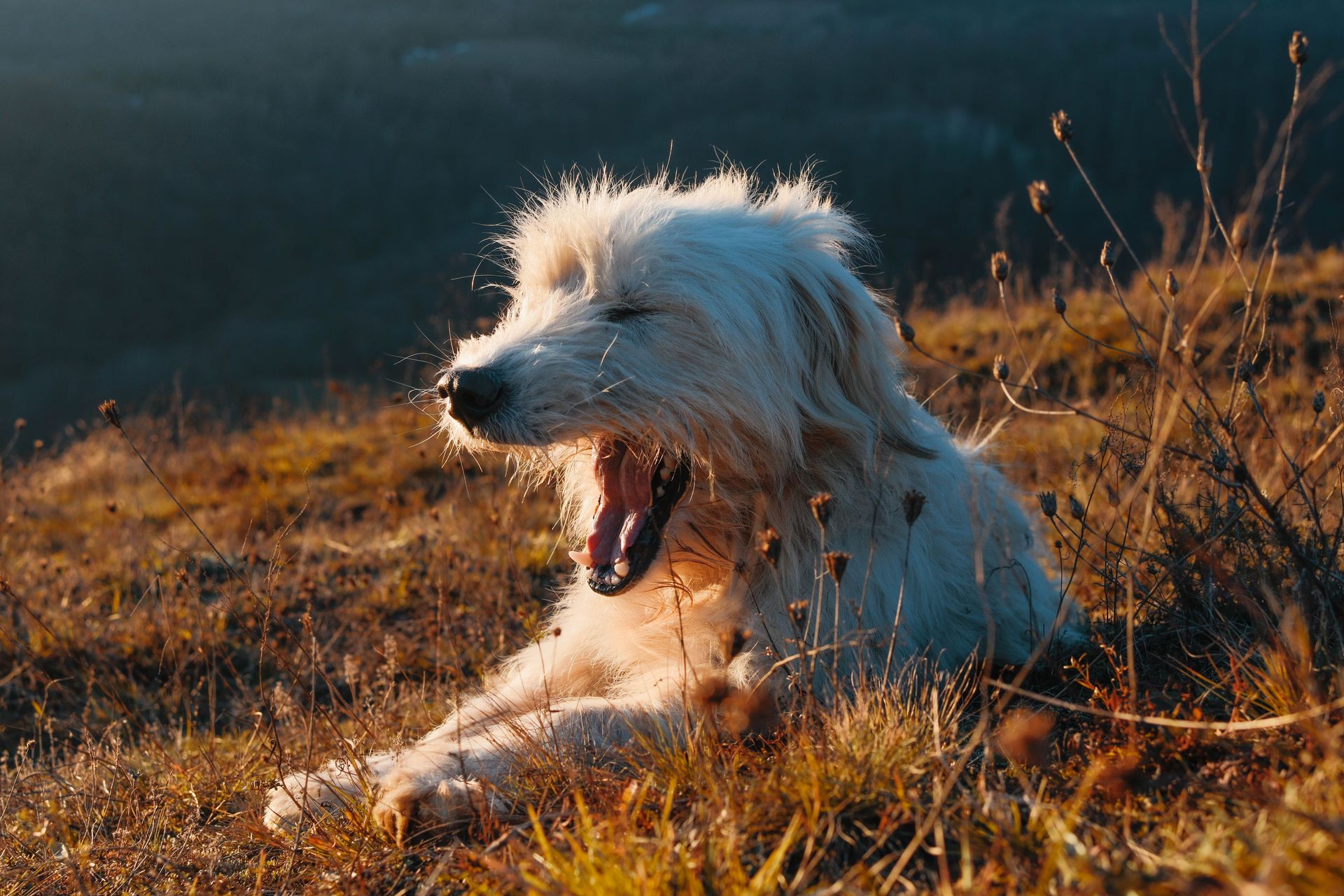
A dog yawning outside of nap time or bedtime is very often reducing its own tension rather than expressing fatigue. This is one of the calming signals Turid Rugaas documented most extensively, appearing in dogs during vet exams, tense introductions to new dogs, loud arguments nearby or unfamiliar handling.
The yawn works as a form of self-soothing. Studies on stress physiology in several mammal species, including dogs, link yawning to shifts in arousal and brain temperature regulation under tension, not just sleepiness. A dog that yawns repeatedly while sitting still and alert, ears up, eyes open, is not drowsy. It is managing discomfort in real time.
Context separates the two versions cleanly. A yawn that follows a stretch, happens right before settling down for a nap, or shows up after a long walk is ordinary tiredness. A yawn that appears during a nail trim, a hug from a stranger, a crowded elevator or a stern tone of voice is doing a different job entirely.
Dogs also yawn contagiously in response to human yawns, a phenomenon researchers have studied as a possible marker of empathy or social bonding between dogs and people. That version tends to happen in relaxed settings and doesn't carry the same tension-driven quality as a stress yawn produced during an uncomfortable encounter.
Noticing a stress yawn is useful information in the moment. If a dog yawns repeatedly while being examined by a veterinarian, hugged by a child or approached by an unfamiliar dog, that is a signal the situation feels like too much, and slowing down, adding distance or pausing the interaction usually helps more than continuing on the assumption that everything is fine.
Licking your face or hands repeatedly
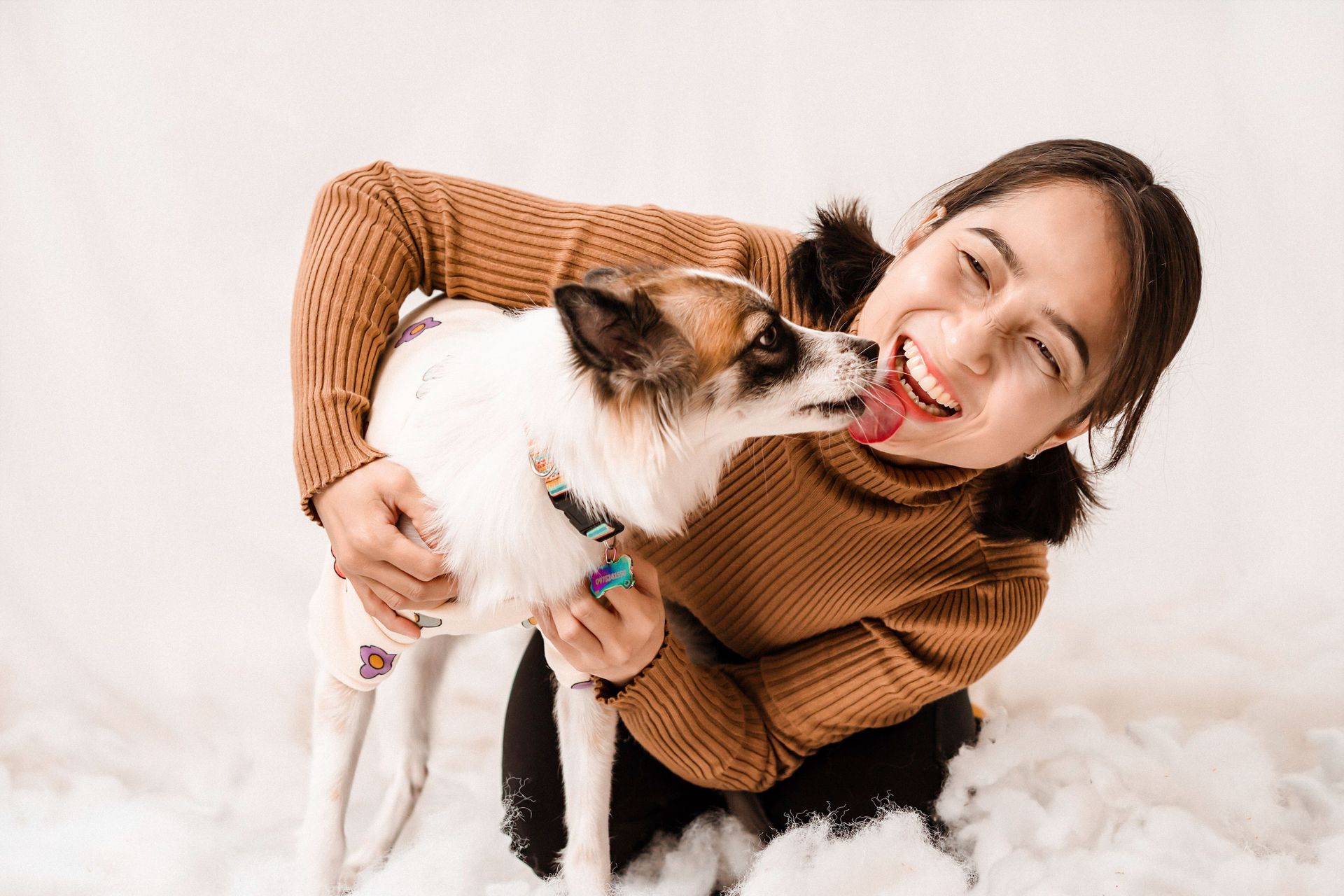
Credit: Pet foto / Pexels
Repeated licking traces back to a puppy behavior: licking an adult dog's mouth to solicit regurgitated food, a survival behavior wolves and dogs both retain in some form into adulthood. In adult dogs directed at people, it can carry over as a greeting or affection ritual, but it frequently escalates in tense moments as an appeasement or anxiety-driven behavior rather than a purely joyful one.
A dog that licks briefly during a calm greeting, then stops and moves on to normal exploring or settling, is behaving typically. A dog that licks persistently, especially paired with a tucked body, lowered head or refusal to stop when the person pulls away, is often working through discomfort rather than expressing simple affection.
This shows up commonly around unfamiliar visitors, loud households, children who hug too tightly or situations involving raised voices nearby. The licking increases as a way to de-escalate tension the dog is picking up on, whether the tension comes from a person's mood, an argument in the next room or an overwhelming crowd of new smells and sounds.
Some dogs also develop excessive licking as a learned attention-seeking behavior, since people often respond to it with laughter, petting or verbal engagement, all of which reinforce the habit regardless of its original cause. Once reinforced, the behavior can persist even in dogs that are not particularly anxious day to day.
Distinguishing the two matters for how an owner responds. A dog licking out of straightforward affection generally settles once acknowledged. A dog licking out of anxiety usually needs the underlying stressor addressed, whether that means removing it from a chaotic room, giving it space from an overly enthusiastic child or simply waiting out a stressful moment somewhere quieter before expecting the behavior to stop.
Following you everywhere around the house
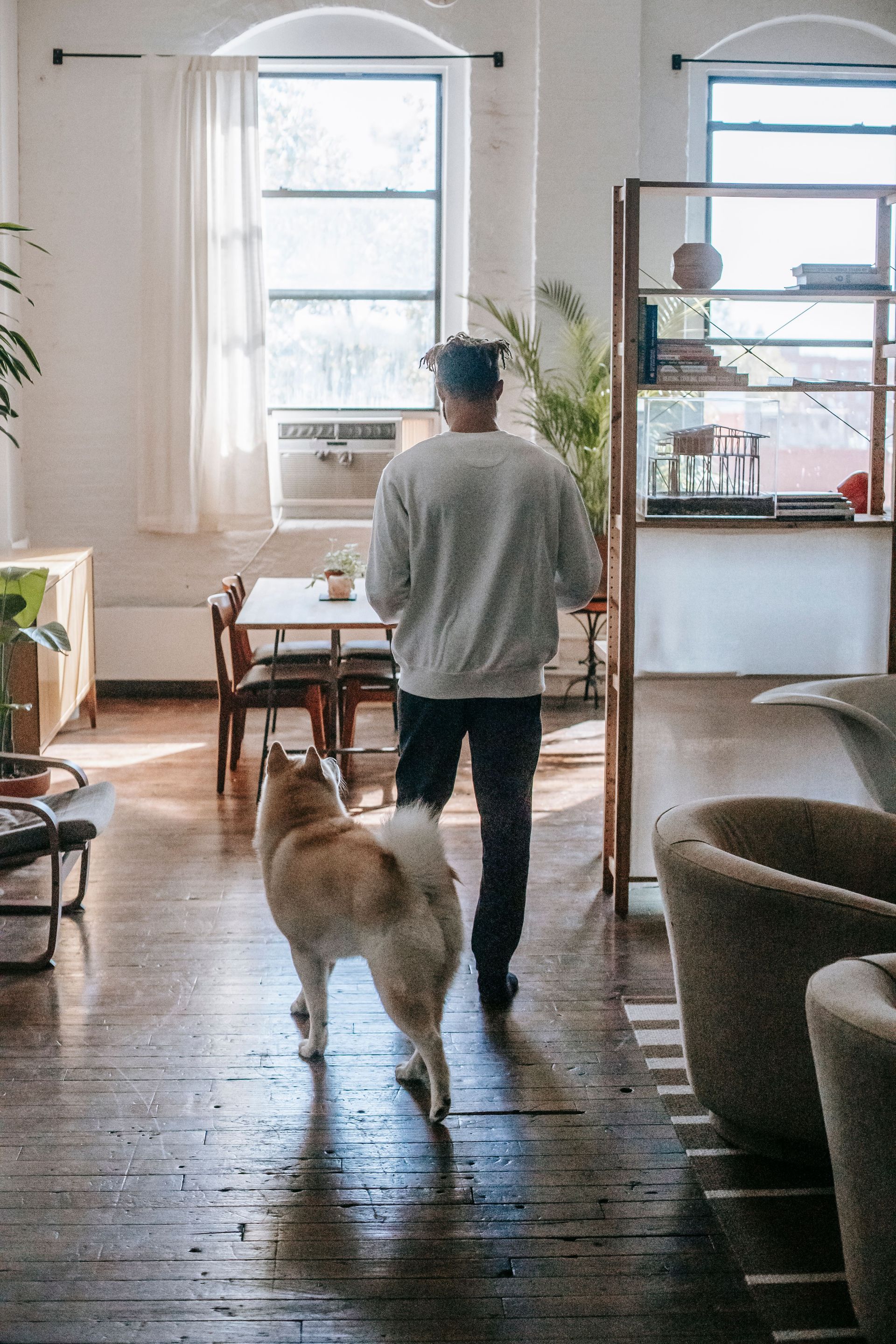
Credit: Zen Chung / Pexels
A dog that trails an owner from room to room, sometimes called a velcro dog, is not automatically demonstrating loyalty. In many cases it reflects insecure attachment, and in more pronounced cases it overlaps with separation anxiety, a diagnosable behavioral condition veterinary behaviorists treat with structured training and, in some cases, medication.
Dogs evolved as a highly social species, and normal attachment to an owner is expected and healthy. The distinction is in intensity and distress. A dog that likes being nearby but can relax in another room, settle on its own bed or tolerate a closed bathroom door without panic is showing ordinary companionship. A dog that becomes visibly anxious, paces, whines or scratches at a door the moment its person moves to another room is showing something closer to compulsive monitoring driven by anxiety.
This pattern often develops or worsens after a major change: a move, a new work schedule, the loss of another household pet, or a period of unusually constant togetherness followed by a sudden return to normal routines, a shift many households experienced coming out of pandemic-era remote work. Dogs that grew accustomed to constant company sometimes struggle when that company becomes intermittent again.
Veterinary behaviorists generally recommend building tolerance gradually rather than reinforcing the following behavior with constant attention. That can include short, low-stakes separations inside the home, rewarding calm independent behavior like resting on a dog bed in another room, and avoiding dramatic hellos and goodbyes that heighten the emotional charge around an owner's movements.
If the behavior is severe, involving destructive chewing, prolonged vocalizing or accidents that only happen when alone, it crosses from a habit into a condition worth discussing with a veterinarian, since separation anxiety is treatable but rarely resolves on its own without intervention.
Leaning their full weight against your legs
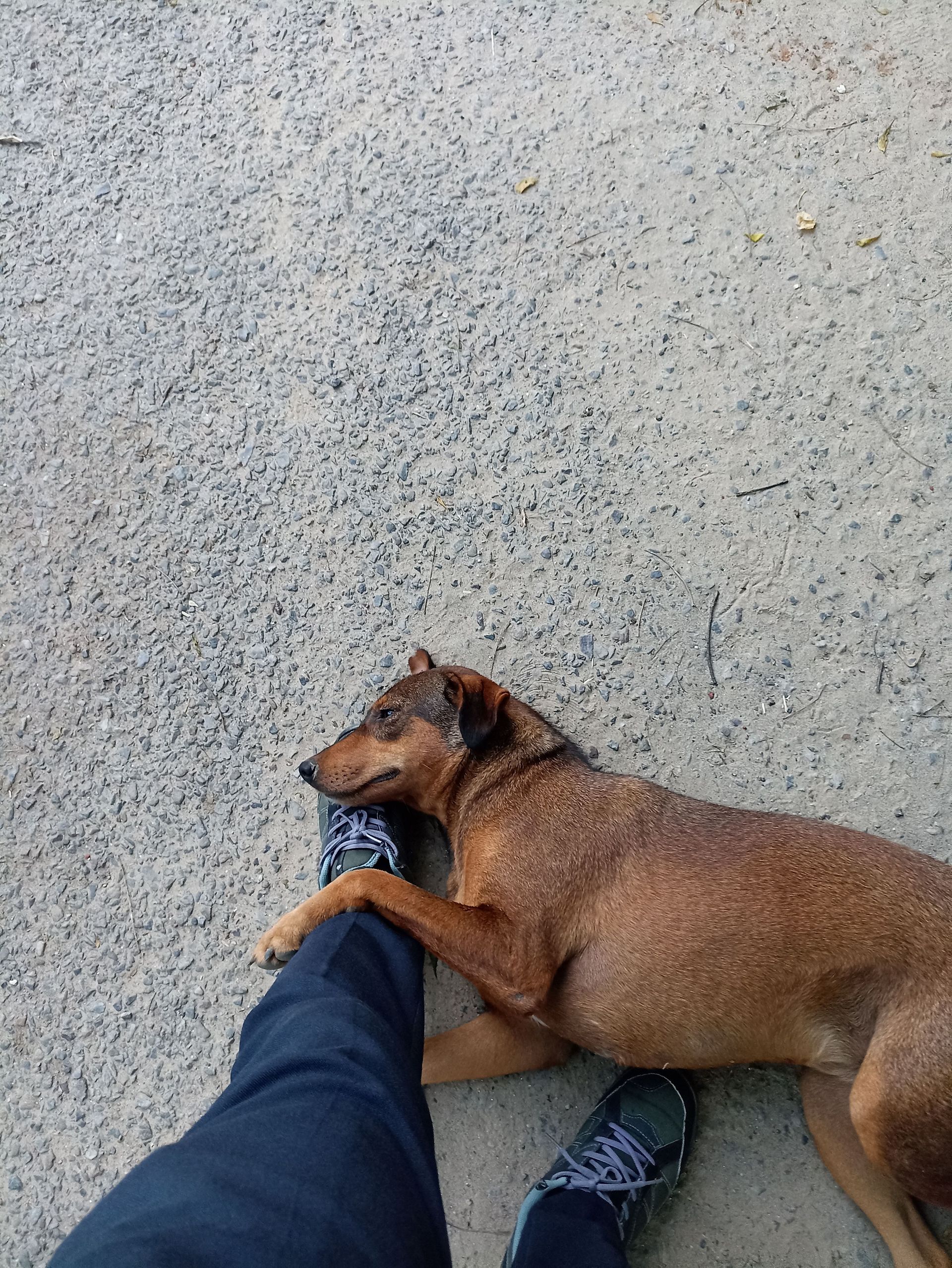
Credit: Shivam Prajapati / Pexels
A dog pressing its body weight into an owner's legs can be simple affection, but the same posture also shows up as an anxious contact-seeking behavior in dogs that are startled, overstimulated or afraid. The distinguishing factor is what triggers it and what the rest of the body is doing at the same time.
Affectionate leaning tends to happen during calm moments: while an owner is standing in the kitchen, watching television or chatting with a neighbor. The dog's body stays loose, its breathing stays even, and it can be nudged aside without resistance.
The anxious version shows up around thunderstorms, fireworks, vacuum cleaners, unfamiliar dogs or crowded, loud environments. In these situations, a dog pressing hard into an owner's legs is often using the person as a physical barrier between itself and whatever it finds threatening. The body tends to be stiffer, the tail lower, and the dog may pant, tremble or try to burrow closer rather than simply resting against the person.
Herding and guardian breeds, along with dogs with a documented history of noise sensitivity, show this pattern especially often during storms or fireworks displays, a category of stress significant enough that veterinary behaviorists have a specific term for it: noise aversion. Left unaddressed, noise aversion tends to worsen with age rather than improve.
Recognizing the anxious version matters because comforting a frightened dog with calm, steady contact is appropriate and does not reinforce fear, contrary to older training advice that discouraged consoling an anxious dog. Current guidance from veterinary behavior specialists supports providing calm physical reassurance during genuine fear, while also addressing the root trigger through desensitization work, a safe retreat space, or, for severe cases, medication prescribed by a veterinarian.
Panting hard indoors with no heat or exercise
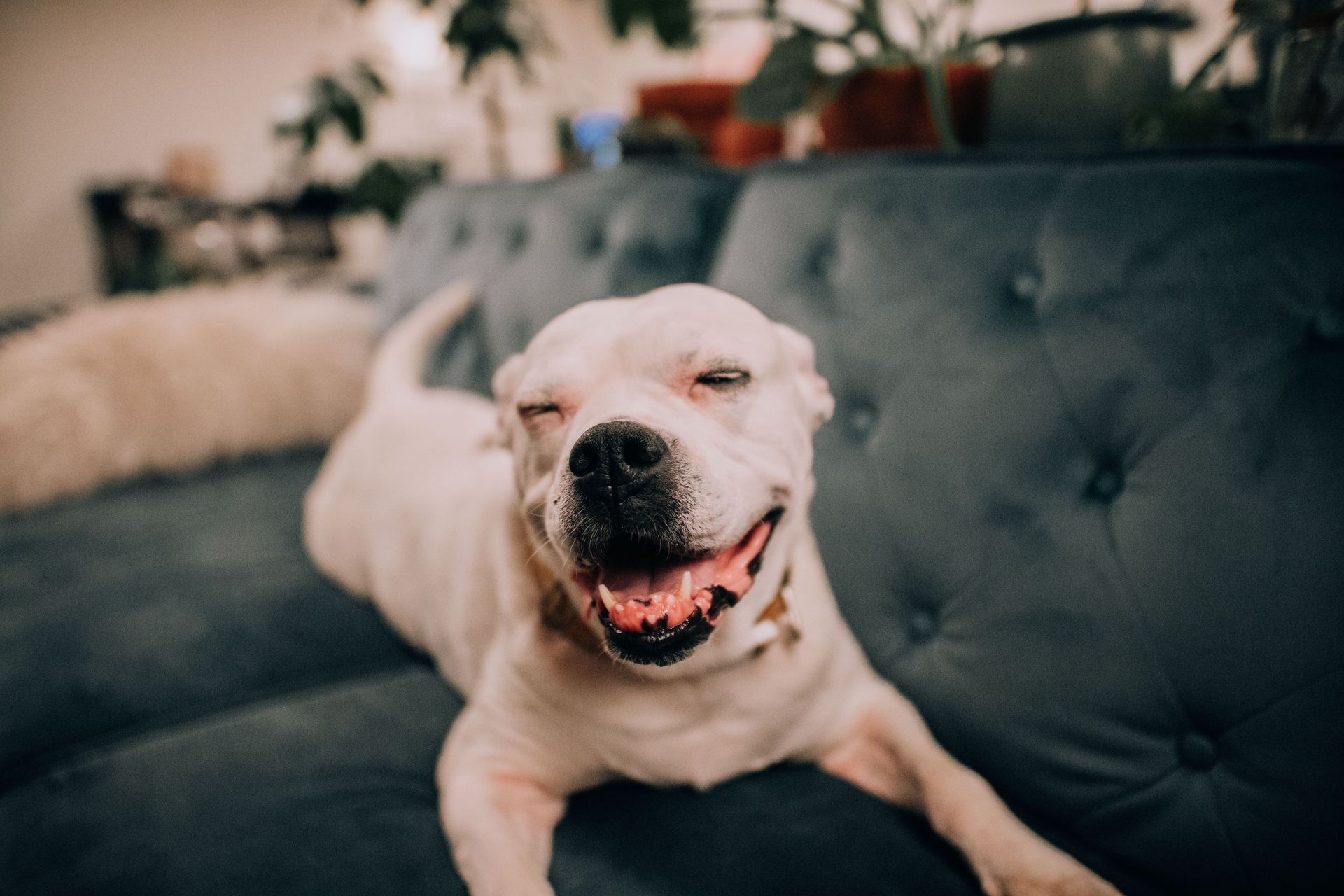
Credit: K / Pexels
Panting without a clear reason, in a cool room, after no exertion, is one of the more overlooked stress signals because panting has such an obvious innocent explanation most of the time. Dogs pant to cool down, and after a walk, play session or warm afternoon, panting is completely ordinary.
Stress panting looks and sounds different once an owner knows what to check. It tends to be shallower and quicker than exercise panting, arrives with no clear physical trigger, and often pairs with other signals: a tucked tail, wide eyes, lip licking or pacing. A dog panting hard on a cool evening while sitting perfectly still in the middle of a quiet living room is a different situation than a dog panting after fetch in July.
Common triggers include car rides for dogs that associate travel with the veterinarian, unfamiliar visitors, loud household appliances, thunderstorms and separation from an owner. Veterinary behaviorists also flag stress panting as one of the more common signs owners miss in dogs experiencing pain, since discomfort can produce the same physiological response as anxiety.
Because panting overlaps with so many benign explanations, ruling those out first is useful. A dog that has not exercised, is not in a warm room, has not just eaten a large meal and is not a brachycephalic breed prone to heavier baseline breathing, and is still panting hard, is worth a closer look at its surroundings and, if the panting persists without an identifiable trigger, worth mentioning to a veterinarian, since it can also signal underlying medical issues unrelated to stress.
Shaking off their whole body when completely dry
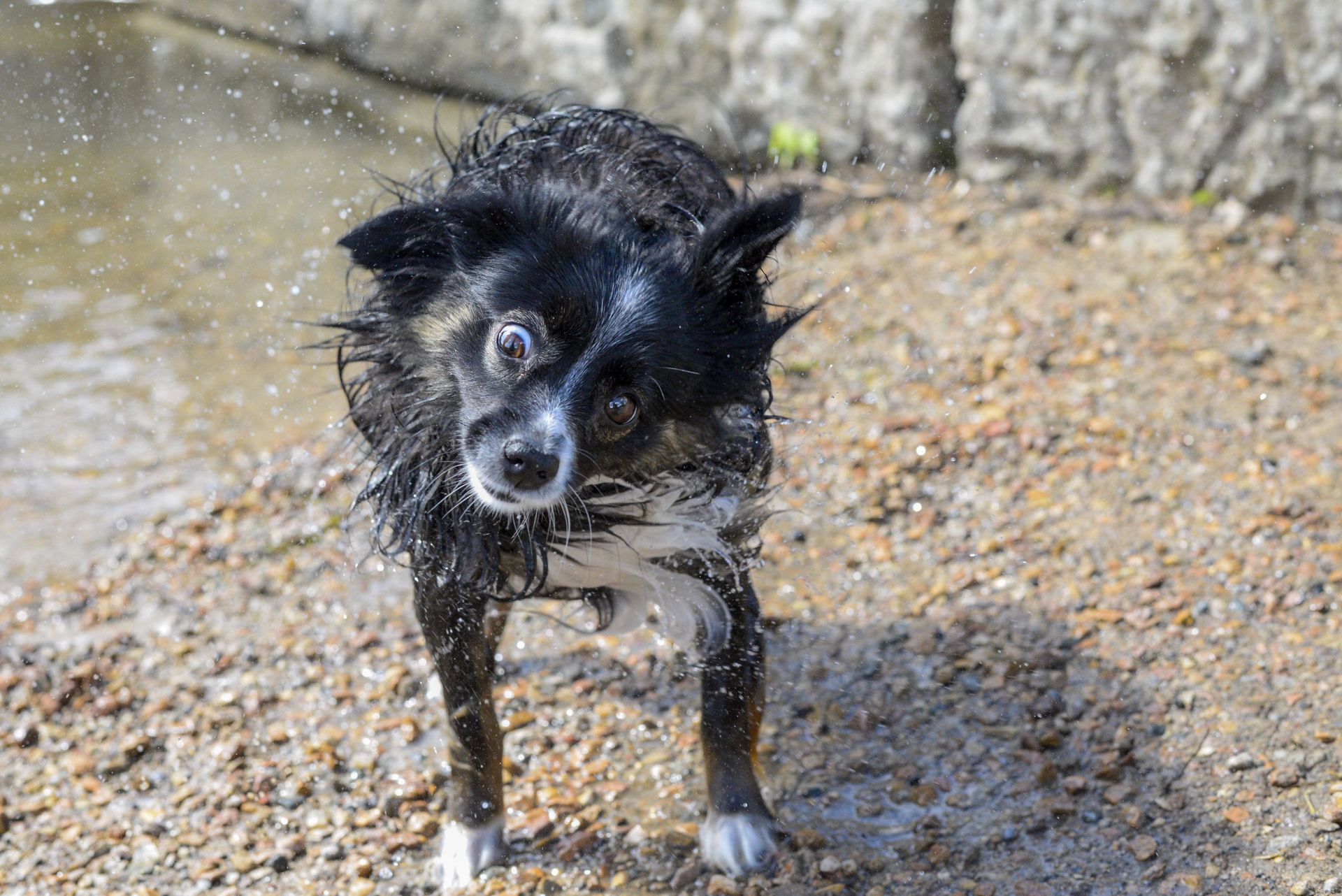
Credit: Andrew Patrick Photo / Pexels
The full-body shake dogs perform after a bath is instantly recognizable. The same shake performed on dry fur, with no water involved, serves a different purpose: it functions as a reset behavior dogs use to release tension after a stressful or overstimulating moment.
Veterinary behaviorists and trainers refer to this as a stress shake or shake-off, and it shows up reliably after specific triggers: right after a veterinary exam ends, immediately following a tense encounter with another dog, after being picked up or restrained, or right after a training correction. The shake seems to help the dog physically discharge built-up tension, similar to how a person might exhale or roll their shoulders after a stressful conversation.
This behavior is generally considered a healthy coping mechanism rather than a concerning one on its own. Trainers who work with reactive or fearful dogs often watch for it specifically as a sign that a dog is processing and moving past a stressful moment rather than carrying the tension forward, and its appearance is sometimes treated as a small positive marker at the end of a difficult training exercise.
The behavior becomes worth noting mainly in its frequency and context. A dog that shakes off once after an unusually chaotic dog park visit is behaving normally. A dog that shakes off repeatedly throughout an ordinary walk, or after minor, everyday interactions like a hand reaching toward its collar, may be experiencing a lower threshold for stress than is typical, which is worth mentioning to a trainer or veterinary behaviorist.
Either way, a dry shake is not a hygiene quirk or a random tic. It is functional behavior, and reading it as a signal of what just happened, rather than ignoring it, gives useful information about what a dog found difficult in the preceding moment.
Lifting one paw and holding it up
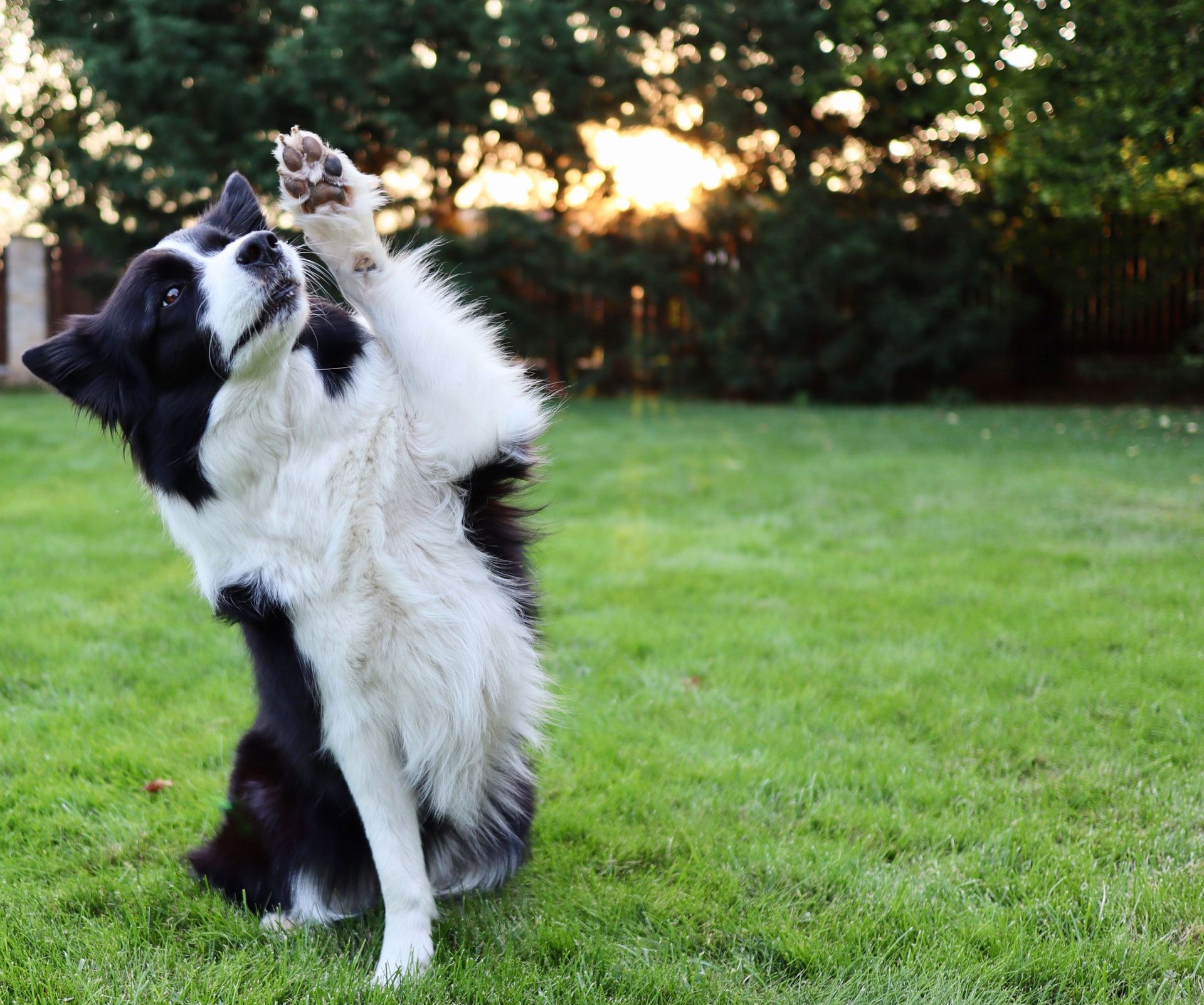
Credit: Nikola Čedíková / Pexels
A raised paw, held mid-air rather than used to bat at something, is a recognized calming and uncertainty signal in dogs, distinct from the trained trick of offering a paw on command. Turid Rugaas included it among the calming signals dogs display when unsure how to respond to a situation.
Pointer and retriever breeds show a version of this instinctively when they spot potential prey, but the stress-related paw lift looks different: it happens during social uncertainty rather than hunting focus, often alongside a lowered head, a stiff body or a hesitant approach toward a person or another dog. A dog meeting an unfamiliar dog for the first time, or approaching a stranger reaching down to pet it, will sometimes lift a paw partway as it works out whether to proceed.
The behavior functions similarly to a shrug: a small, low-commitment gesture that signals hesitation without fully retreating or fully engaging. It often appears right before a dog decides whether to approach further or back away, making it a useful moment for a person to pause rather than push forward with petting or a greeting.
This differs clearly from the trained sit-and-shake behavior, which happens on cue, involves a relaxed body and typically follows an owner's verbal or hand signal. The stress version happens unprompted, mid-interaction, and usually resolves within seconds as the dog either commits to approaching or turns away.
Noticing an unprompted paw lift during a greeting with an unfamiliar person or dog is a reasonable cue to slow down. Crouching lower, turning slightly to the side rather than facing the dog head-on, and letting the dog close the remaining distance on its own terms tends to resolve the hesitation faster than continuing to approach.
Giving you a sideways glance that shows the whites of their eyes
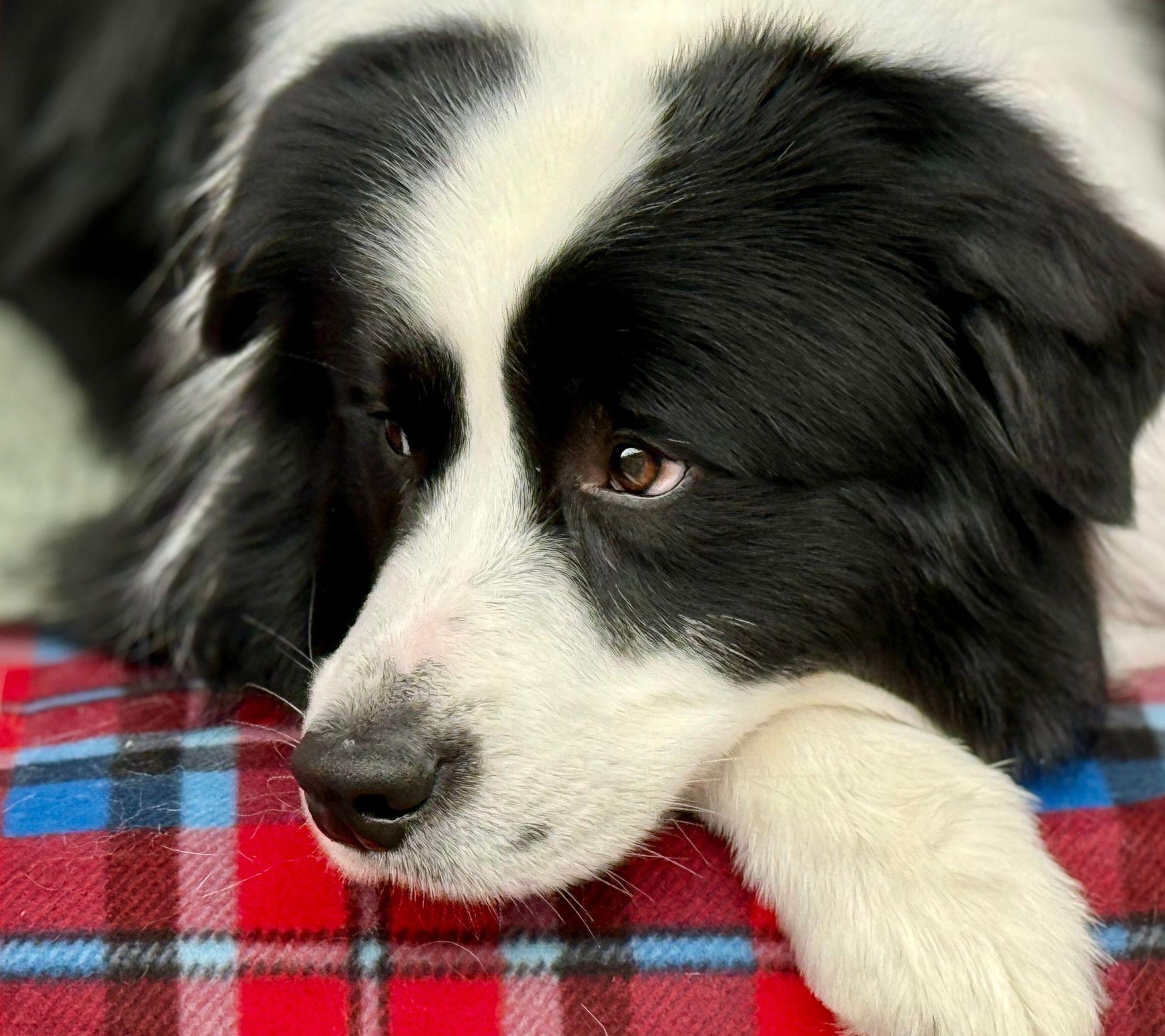
Credit: Joolsmagools ®️ / Pexels
Trainers call this whale eye, named for the crescent of white sclera that becomes visible when a dog turns its head slightly away from something while keeping its eyes fixed on it. It is one of the more reliable indicators of discomfort in canine body language, and it frequently shows up in photographs owners consider cute, such as a dog being hugged tightly or crowded by children.
The posture combines a tense body with a head turned partly away and eyes locked on the source of the tension without turning the whole head to look at it directly. This partial turn reflects genuine conflict: part of the dog wants to disengage, and part of it wants to keep watching a potential threat, so the head turns while the eyes stay locked in place.
Whale eye shows up especially often around resource guarding, such as a dog eating or chewing a toy while a hand or another animal approaches, and around physical restraint, including hugging, nail trims and being lifted by an unfamiliar person. Veterinary behaviorists flag it as one of the earlier, more subtle warning signs on the continuum toward a growl or snap, well before the dog reaches those more obvious signals.
Because it is subtle and often photographed as an adorable expression, particularly in images of children hugging family dogs, whale eye is one of the more consequential signals to miss. Multiple veterinary and humane organizations have specifically warned against interpreting these photos as evidence of a comfortable interaction, since the dog's expression in the moment says the opposite. Recognizing whale eye in real time and creating distance from whatever triggered it is a more useful response than continuing to praise or photograph the interaction.
Turning their head away when you lean in for a hug
Credit: Ivan Babydov / Pexels
A head turn away from an incoming hug is a straightforward avoidance signal, and it reflects a broader mismatch between how primates and canines express affection physically. Hugging is a bonding behavior in humans and other primates, but it restricts a dog's movement and pins its front legs, a position dogs generally do not process as comforting the way people do.
Veterinary behaviorist and applied animal behaviorist research on dog-human interaction, including widely cited work reviewing photographs of people hugging dogs, has found that a majority of dogs photographed mid-hug displayed at least one stress signal, commonly a head turn, flattened ears, whale eye or a closed, tense mouth, even in images intended to capture affectionate moments.
The head turn specifically functions as a polite request for distance without escalating to a growl or a snap. It is a dog's way of disengaging from an interaction it finds uncomfortable while avoiding direct confrontation, similar to a person turning away from an unwanted hug at a party rather than pushing the other person off.
Some dogs, particularly those with long histories of gentle handling from a specific person, tolerate or even enjoy hugs from that individual specifically, so the behavior is not universal. The key is watching the individual dog's body rather than assuming affection or discomfort based on the gesture alone.
A loose, relaxed dog that leans into a hug, keeps its mouth soft and does not turn its head away is likely comfortable with that specific form of contact. A dog that stiffens, turns its head, licks its lips or shows whale eye during the same gesture is communicating the opposite, and repeated hugging despite those signals risks teaching the dog that its communication gets ignored.
Freezing completely still mid-interaction
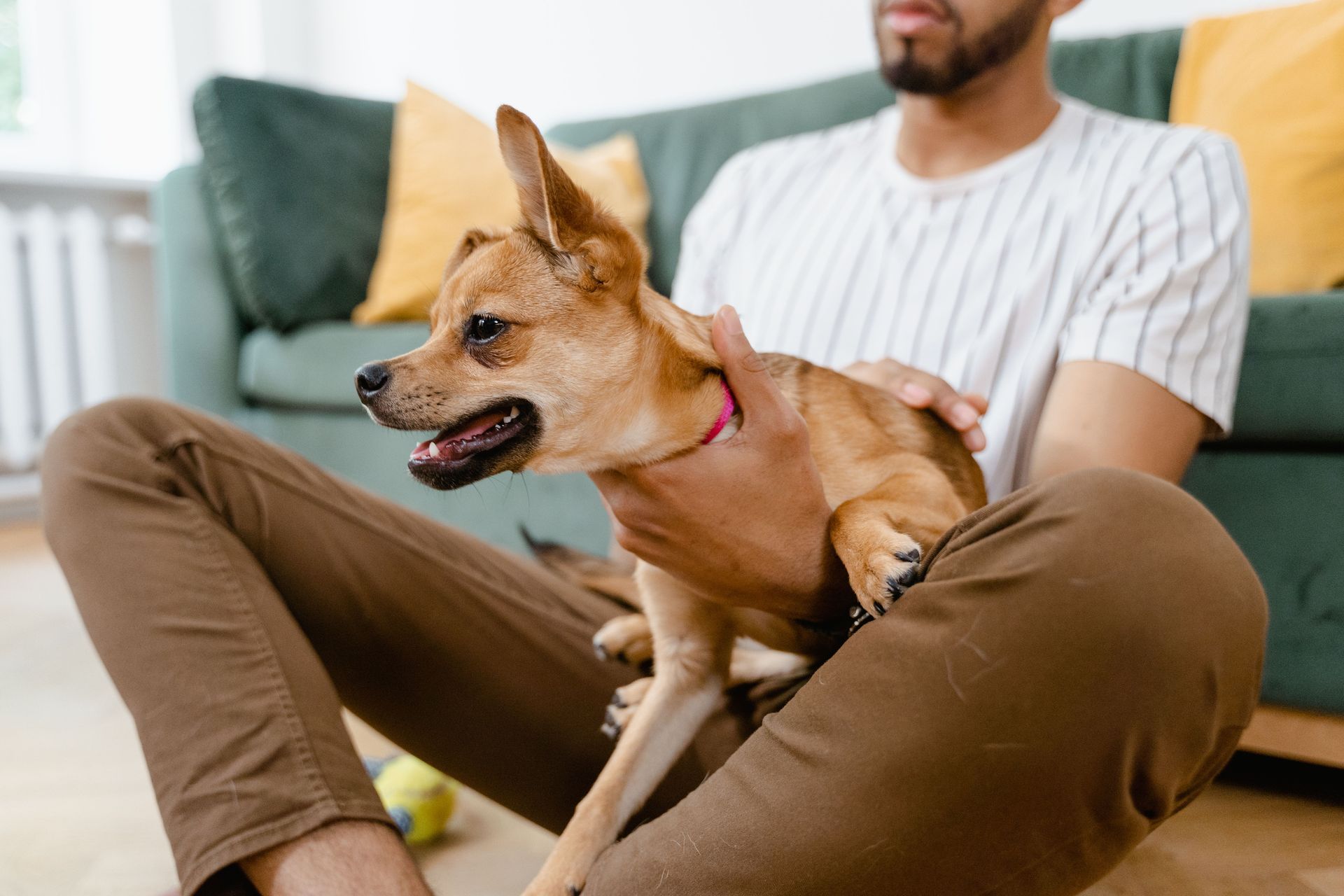
Credit:MART PRODUCTION / Pexels
A dog that goes completely still during an interaction, whether being petted, hugged, examined or approached by another animal, is showing one of the more serious signals on the spectrum of canine stress communication, even though stillness often reads to people as calm compliance.
Veterinarian and applied animal behaviorist Sophia Yin developed a widely referenced framework called the ladder of aggression, which maps how dogs escalate their communication when earlier, subtler signals go unheeded. Freezing sits notably close to the top of that ladder, just before a growl, snap or bite, precisely because it often means a dog has run out of the gentler signals, such as lip licking or head turning, and has nothing left to try except stillness or escalation.
This is why freezing gets misread so often. A dog that stops moving entirely, stares fixedly or holds an unnaturally rigid posture is not relaxed. It is holding itself in a state of high alert, often because a previous attempt at communicating discomfort, like moving away or turning its head, was ignored or physically prevented.
This pattern shows up frequently around young children, who are more likely to hug or hold a dog tightly without recognizing early warning signals, and around unfamiliar dogs or people who continue petting or restraining a dog that has stopped moving. Veterinary and humane organizations specifically train owners and parents to recognize freezing as a signal to stop immediately, not a sign that an interaction is going well.
Responding appropriately means backing off the moment a dog freezes rather than continuing whatever prompted it, whether that is petting, hugging or handling. Giving the dog space to relax, move away or reset on its own terms is the safest response, and it is far more reliable than waiting to see whether the freeze passes on its own.
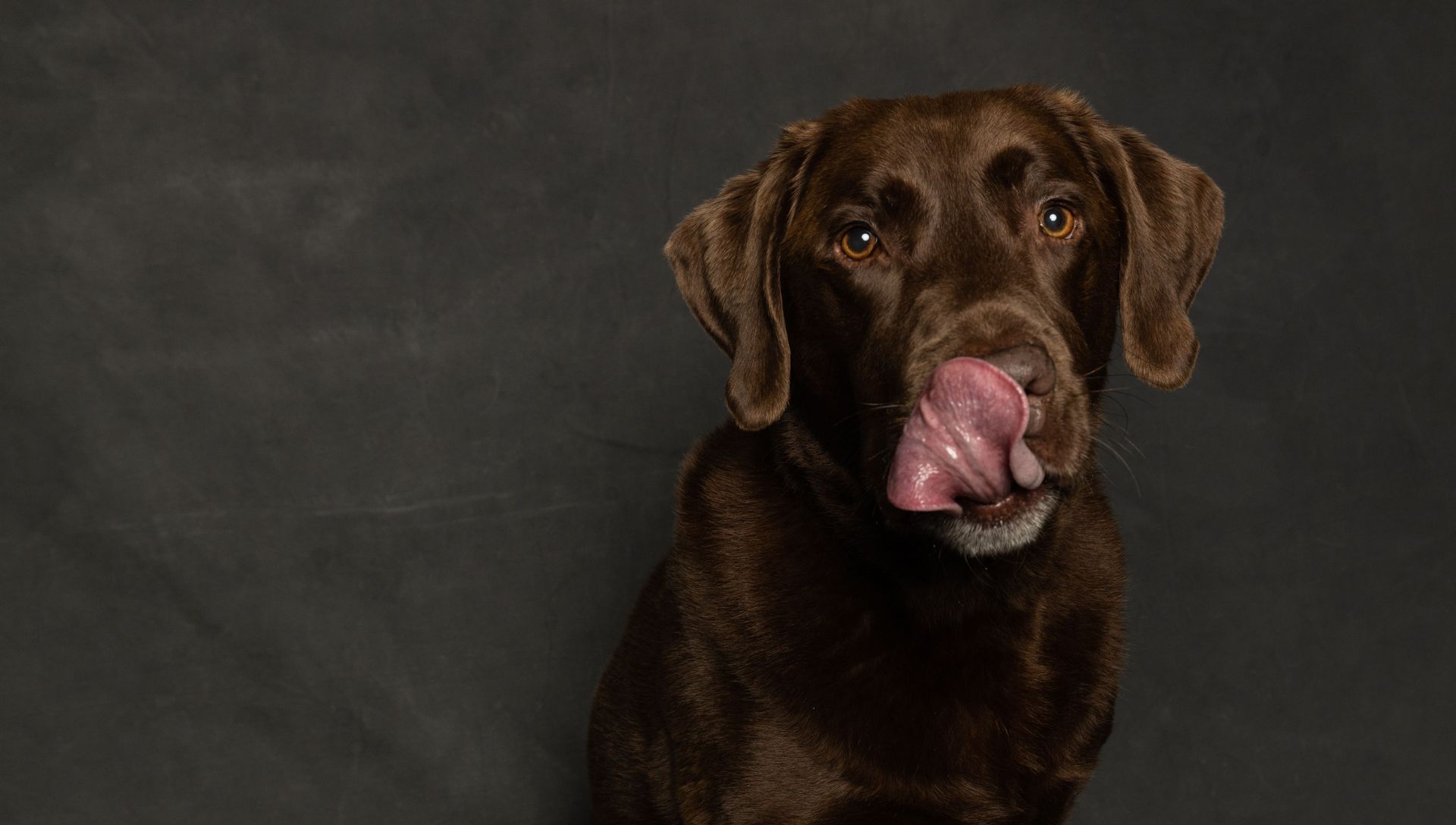
Licking their lips or flicking their tongue out
Credit: Sharon Snider / Pexels
A quick tongue flick or lip lick with no food nearby is one of the calming signals Turid Rugaas documented most frequently across dogs of different breeds and temperaments. It happens fast, often lasting under a second, and is easy to miss unless an observer is specifically watching for it.
This differs clearly from the lip licking dogs do while anticipating food, which tends to be slower, paired with visible interest in a treat, bowl or person's hands, and accompanied by a relaxed, forward-leaning posture. The stress version shows up with no food present at all, often during a tense greeting, an uncomfortable grooming session, direct eye contact from an unfamiliar person or dog, or a stern tone of voice.
Trainers working with reactive or fearful dogs treat lip licks as an early, low-intensity warning sign, useful precisely because they appear well before a dog reaches a growl or snap. A dog that lip licks repeatedly while being approached by an unfamiliar dog at a park, for example, is signaling discomfort with the approach long before it shows any more obvious sign of distress.
The tongue flick version, a quick out-and-back motion of the tip of the tongue rather than a full lip lick, shows up especially often in photographs and videos, including many that circulate online as evidence of a dog looking cute or curious. Applied animal behaviorists reviewing such images frequently point out the tongue flick as a missed stress cue rather than an expression of interest or friendliness.
Watching for repeated lip licking or tongue flicking during a specific interaction, whether it's a hug, a nail trim or an introduction to a new dog, gives a reasonably reliable early read on whether that particular dog is comfortable with what is happening, well before the situation has a chance to escalate further.
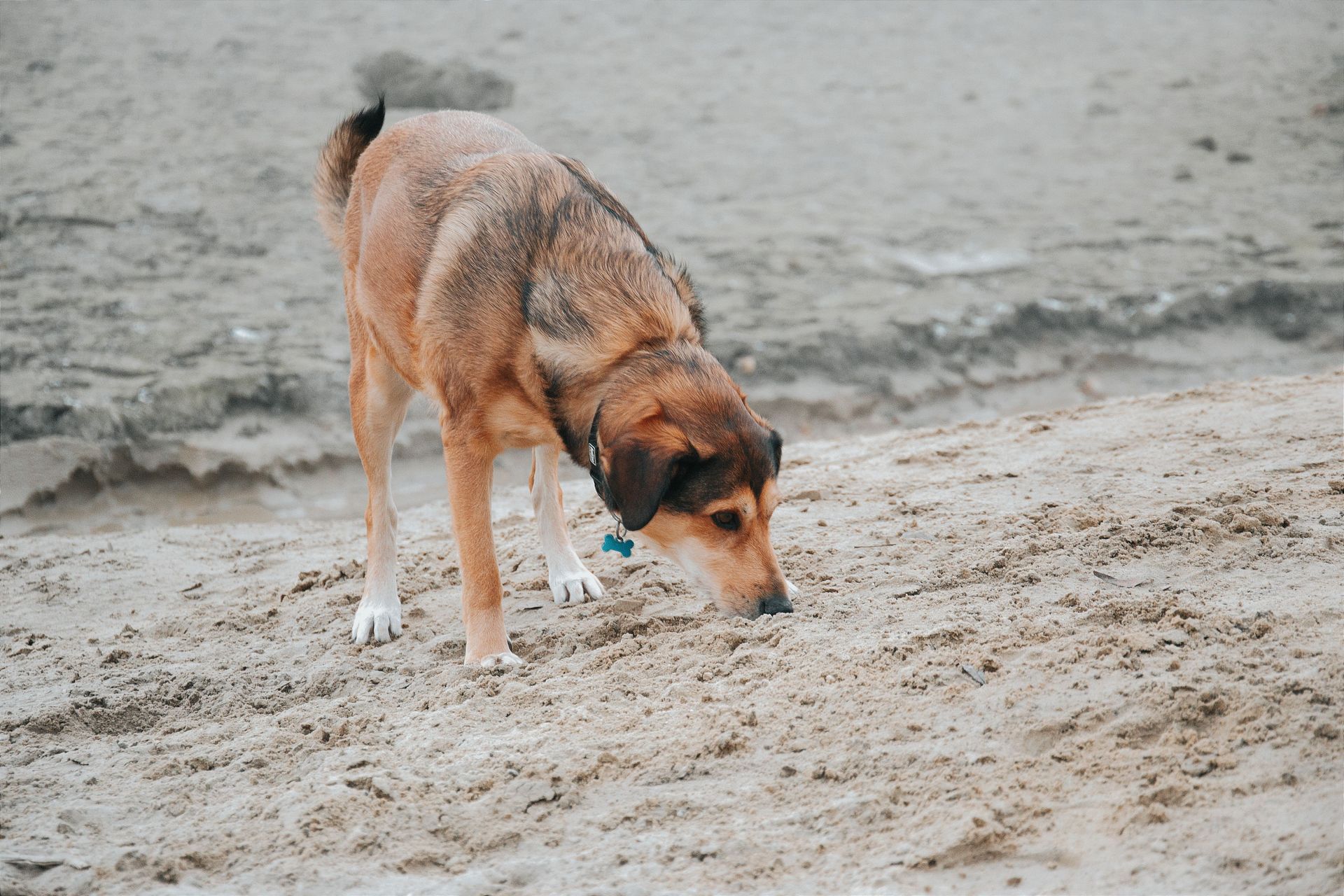
Suddenly sniffing the ground intently during play
Credit: Molnár Tamás Photography™ / Pexels
A dog that abruptly drops its nose to the ground and sniffs intensely in the middle of play or a greeting with another dog is very often performing what trainers call a displacement behavior, a normal action, in this case sniffing, redirected to manage social tension rather than to investigate a scent.
This shows up commonly at dog parks and during introductions between two dogs that don't know each other well. A dog that feels slightly overwhelmed by another dog's energy, size or approach speed will sometimes disengage abruptly and bury its nose in the grass, effectively taking a brief pause from the interaction without fully leaving or escalating into a confrontation.
The behavior also appears during training sessions, particularly when a dog is confused about what is being asked of it or is experiencing mild frustration. A dog working on a new command that suddenly loses focus and starts sniffing the floor is frequently using the sniffing as a reset rather than genuinely losing interest in a scent.
Distinguishing this from ordinary sniffing comes down to abruptness and context. Dogs sniff constantly during normal exploration, and that baseline sniffing is unremarkable. The displacement version stands out because it interrupts an ongoing interaction suddenly, often mid-stride or mid-play, rather than occurring as part of the dog's normal pace of investigating its surroundings.
Recognizing this pattern is particularly useful at dog parks, where owners often read a sudden sniffing break as their dog simply being distracted by a smell. In many cases the dog is instead taking a self-directed break from an interaction that has become slightly too intense, and respecting that break, rather than encouraging the dogs to keep playing, tends to prevent minor tension from building into an actual conflict.
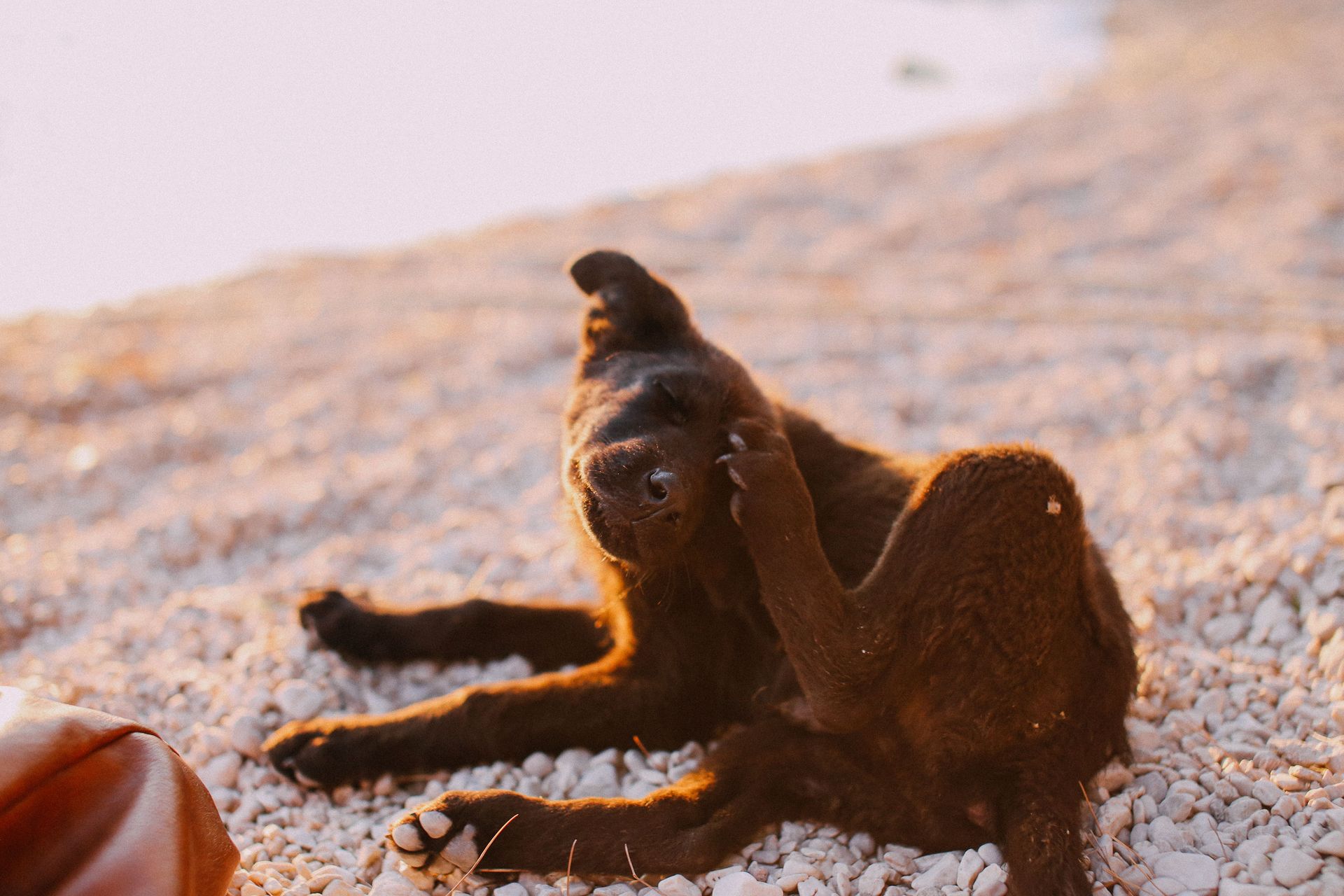
Scratching themselves out of nowhere
Credit: Rachel Claire / Pexels
A dog that scratches itself abruptly during a training session, a vet exam or a tense moment, with no evidence of an itch beforehand or afterward, is showing another form of displacement behavior, similar in function to sudden ground sniffing but expressed through self-grooming instead.
The scratching tends to be brief, targeted and disconnected from the dog's ongoing skin condition. A dog with fleas, allergies or dry skin scratches persistently and in the same spots throughout the day. A dog using scratching as a displacement behavior does it once, briefly, in the middle of an unrelated activity, then immediately returns to whatever it was doing beforehand.
This shows up frequently in training contexts, particularly when a dog is confused about a command, frustrated by a delay in reward, or mildly overwhelmed by a new or difficult exercise. Trainers who track this behavior closely sometimes use it as a cue to simplify a training step or take a short break, treating it as a small sign of the dog's frustration level rather than a random itch.
It also appears during veterinary exams, nail trims and grooming sessions, often at the exact moment a dog is asked to hold still for something uncomfortable. A dog might scratch once at its ear or side in the middle of a nail trim, unrelated to any actual irritation, as a way of releasing built-up tension from being restrained.
Telling this apart from a genuine itch mostly comes down to pattern and timing. Persistent scratching in the same area across multiple days points toward a medical or dermatological cause worth a veterinary visit. A single scratch that appears at a moment of clear behavioral tension, and does not recur once the tense moment passes, is more likely functioning as a stress release rather than signaling a skin problem.
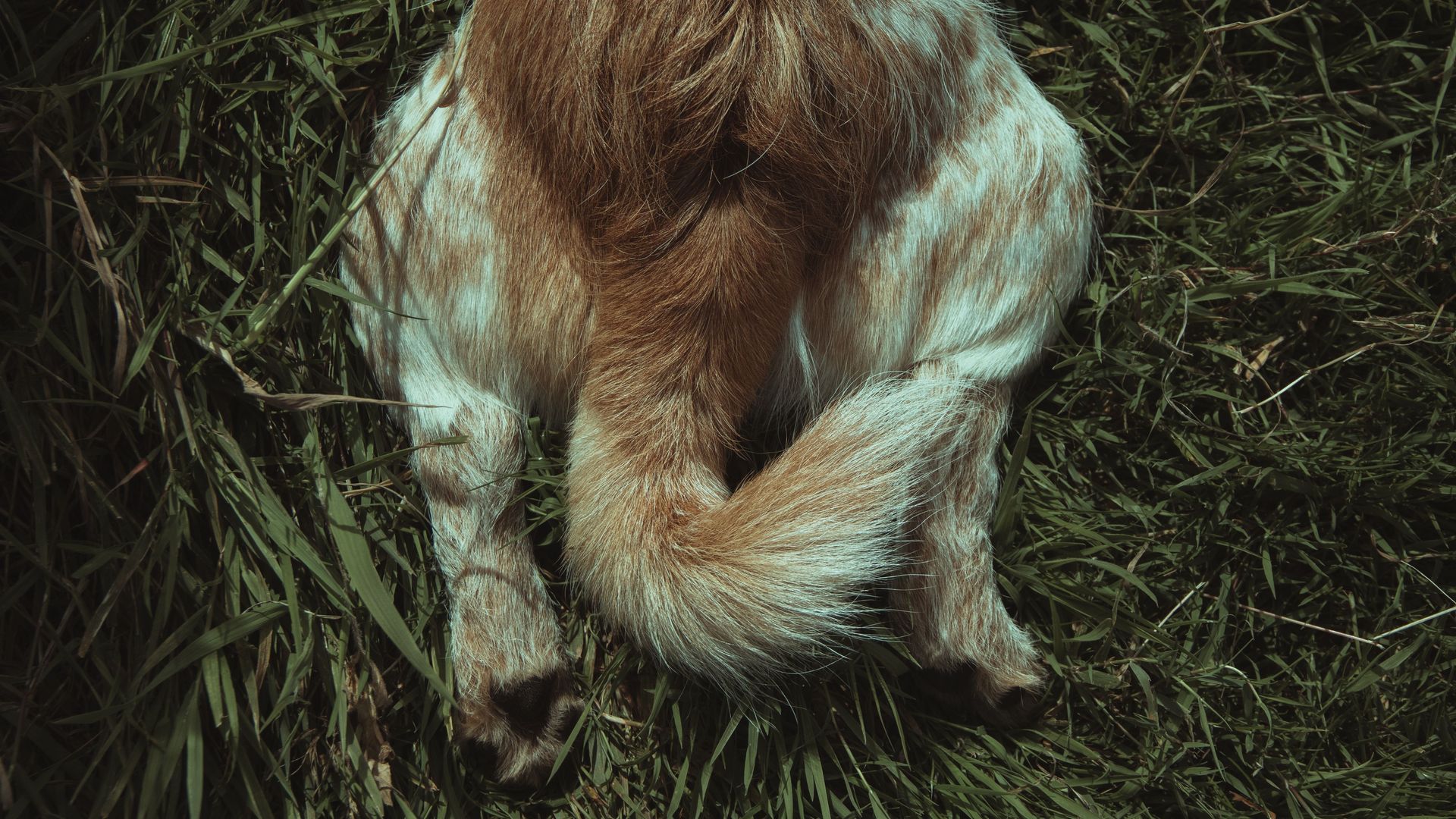
Tucking their tail tightly against their belly
Credit: Harry Nixon / Pexels
A tightly tucked tail, pulled forward and pressed against the belly rather than hanging loosely or wagging, is one of the clearer fear indicators in canine body language, though breed differences make it easy to misread in either direction.
Some breeds, including greyhounds, whippets and several sighthound relatives, naturally carry their tails lower and tucked more than other breeds even when perfectly relaxed, which means baseline tail position matters as much as the tuck itself. A greyhound's resting tail carriage looks different from a golden retriever's, and comparing a dog only to its own normal baseline gives a more accurate read than comparing it to a completely different breed.
What signals genuine fear is a clear change from that individual dog's normal carriage, tightening suddenly in response to a specific trigger such as a loud noise, an unfamiliar dog approaching, a raised hand or a scolding tone of voice. A dog whose tail typically hangs loose or wags freely, and then suddenly pulls tight against its body during a specific moment, is showing a real shift into a fearful state rather than a stable trait of its breed or build.
Tail tucking often appears alongside other fear signals covered elsewhere on this list: flattened ears, whale eye, a lowered body posture or trembling. When several of these show up together, the picture becomes much clearer than any single signal on its own.
Because the tuck can look almost identical to a naturally low tail carriage in certain breeds, paying attention to a specific dog's typical resting tail position over time, rather than relying on a single snapshot, gives a far more reliable read on whether a particular moment reflects genuine distress.
Flattening their ears back against their head
Credit: Juan Poblete / Pexels
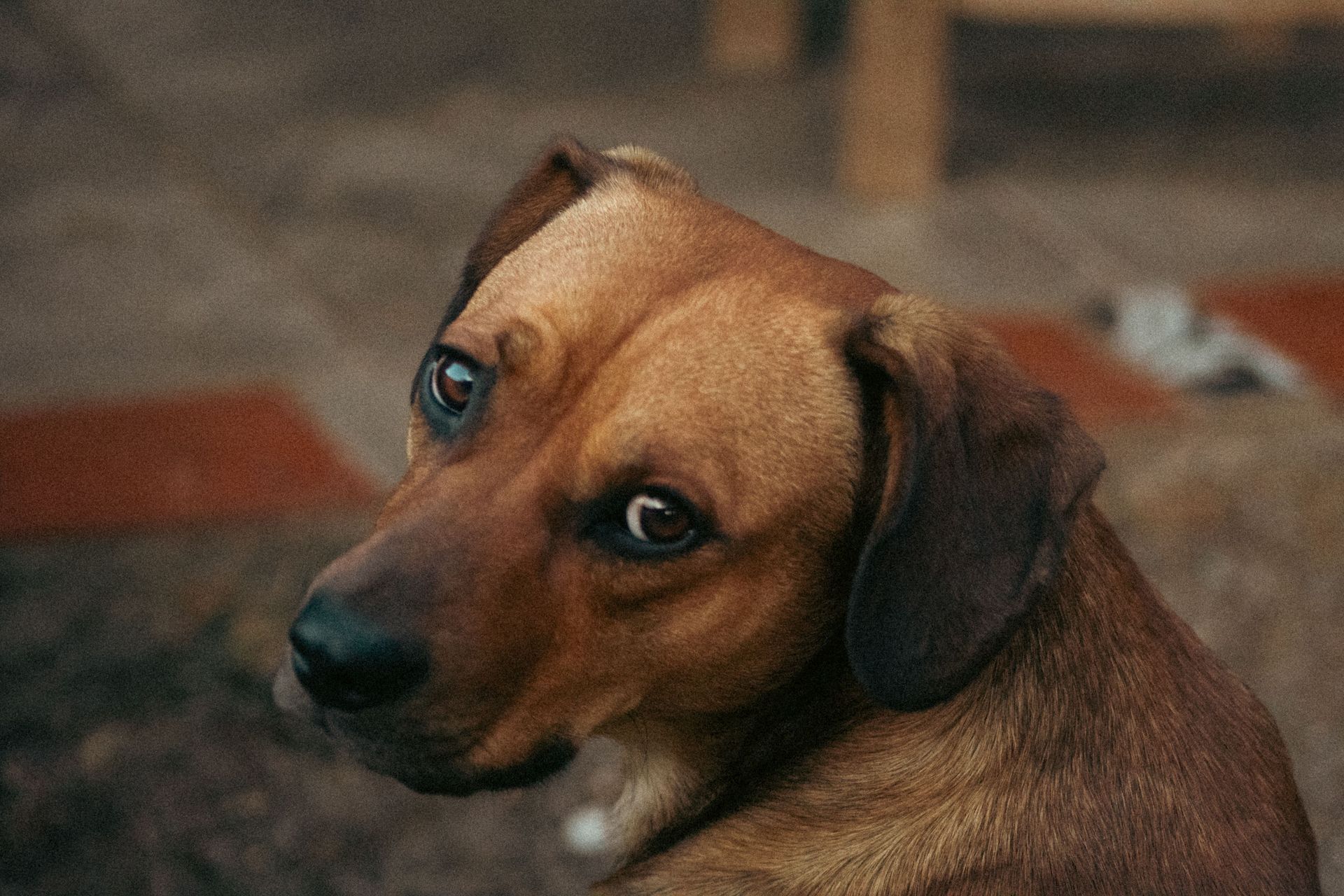
Ears pulled back against the skull can mean two very different things depending on how tightly they're held and what the rest of the dog's body is doing, which makes this one of the more commonly confused signals among casual observers.
A happy greeting often includes ears held loosely back, sometimes informally called airplane ears, paired with a relaxed, wiggling body, a soft mouth and a low, wide tail wag. This version is a normal part of an enthusiastic, friendly greeting and shows up often when a dog reunites with a favorite person.
The fearful version looks tighter and more rigid: ears pinned flat and hard against the skull rather than loosely folded back, combined with a stiff body, wide eyes, possibly showing whale eye, and a low or tucked tail rather than a loose wag. This combination shows up around loud noises, unfamiliar dogs, veterinary handling or any situation the dog finds threatening.
The tightness of the ear position is the clearest distinguishing detail. Loosely folded ears that move and shift as the dog's head moves are part of a relaxed, happy posture. Ears pinned so flat they barely move, held in place rigidly regardless of the dog's head movement, indicate the fear version instead.
Looking at the whole picture rather than the ears alone resolves most of the ambiguity. A dog with flattened ears, a loose wagging tail, a relaxed open mouth and a wiggly body is almost certainly happy. A dog with flattened ears, a stiff body, a closed mouth and a still or tucked tail is almost certainly afraid, and treating the two situations the same way, with continued petting or approach, risks worsening the second scenario considerably.
Whining or crying softly when you get ready to leave
Credit: David Brown / Pexels
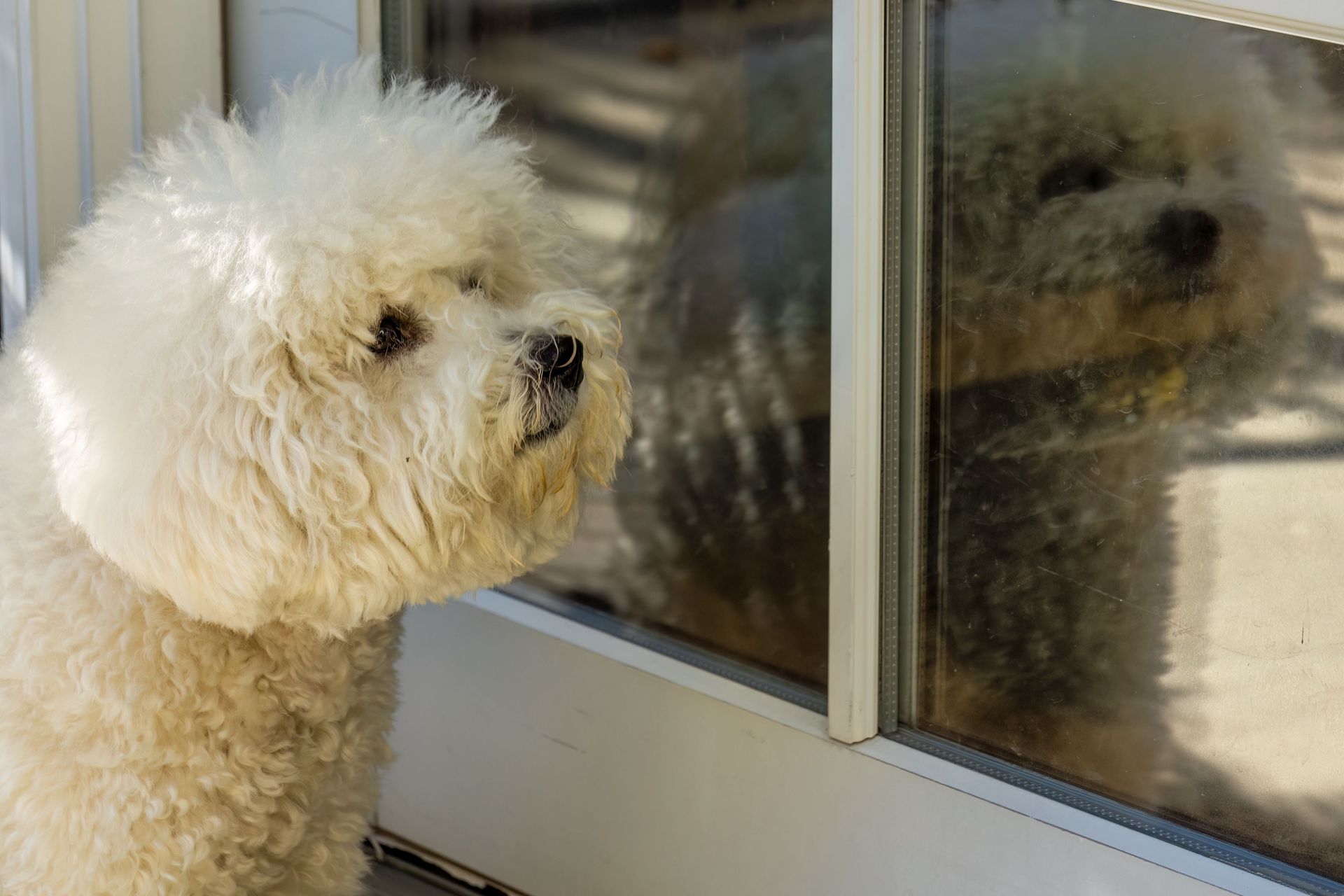
Soft whining that starts as an owner puts on shoes, grabs keys or heads toward a door is a common early sign of anticipatory anxiety, distinct from a dog simply preferring company. Veterinary behaviorists treat this specific pattern, tied to pre-departure cues rather than the departure itself, as one of the recognizable markers of separation-related distress.
Dogs are highly sensitive to routine and pattern recognition, and many learn to associate specific actions, like a particular jacket, the sound of keys or a certain time of day, with an owner's upcoming absence. The whining that starts during these cues, before the door has even opened, reflects genuine anticipatory stress rather than a simple preference to be near someone.
This differs from a dog that briefly whines at the door itself and then settles quickly once the person leaves, which is a milder and generally less concerning pattern. Veterinary behaviorists distinguish mild protest, which resolves on its own within minutes, from more significant separation anxiety, which can include prolonged vocalizing, pacing, destructive behavior or house-soiling that only happens while the dog is alone.
Some owners respond to pre-departure whining with an extended, emotional goodbye, which tends to heighten rather than ease the dog's anxiety by reinforcing the idea that the departure is a significant, dramatic event. Veterinary behavior guidance generally recommends the opposite: calm, low-key departures and arrivals, without prolonged attention immediately before leaving or immediately upon return.
For dogs whose pre-departure whining is part of a broader pattern of anxious behavior while alone, addressing the underlying separation anxiety, sometimes through gradual desensitization to departure cues, sometimes with the help of a veterinary behaviorist, tends to be far more effective than trying to manage the whining as an isolated habit at the door.
Wagging a stiff, high tail very fast
Credit: Finn Ruijter / Pexels
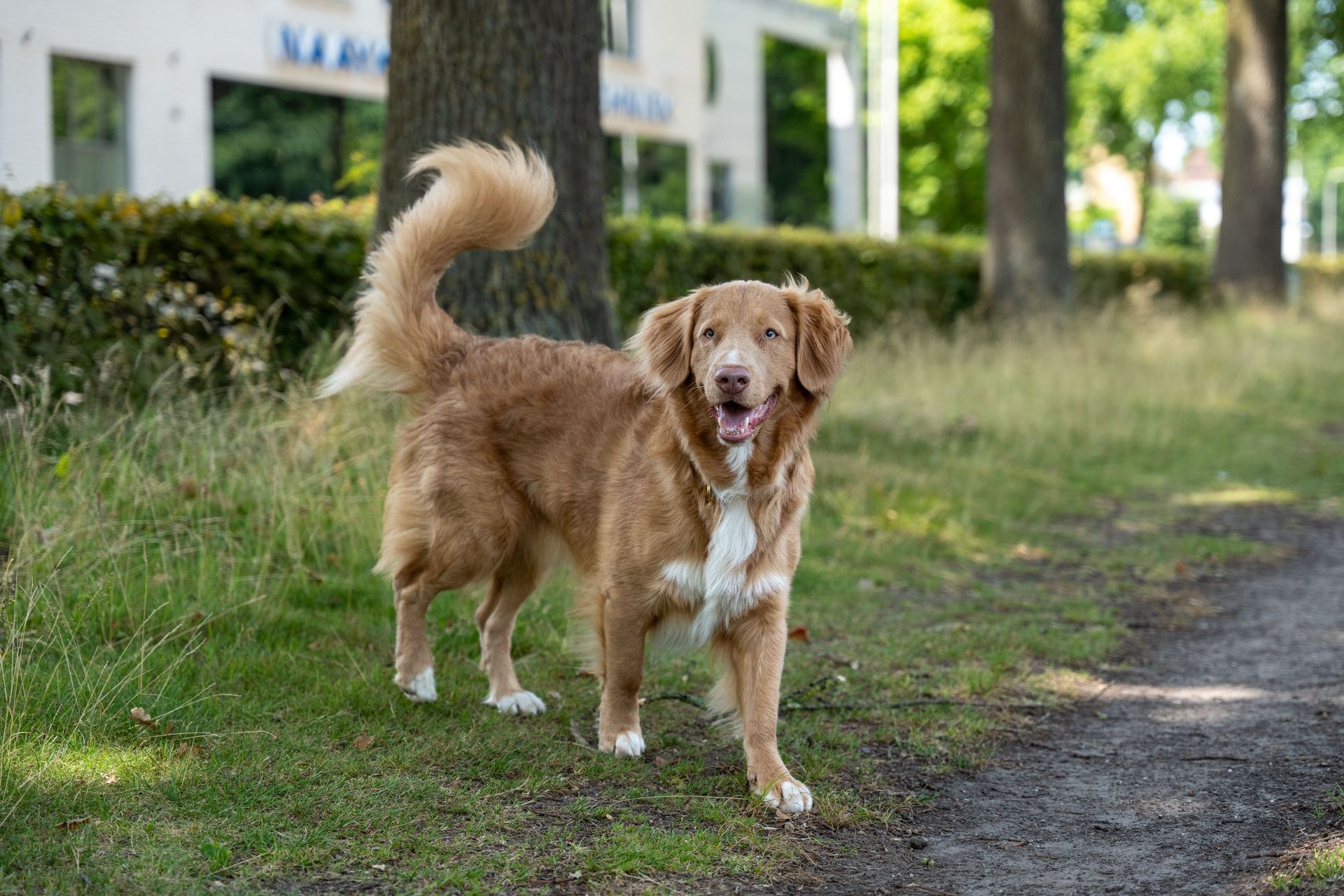
Not all tail wags mean the same thing, and a stiff, fast wag held high above the dog's back is one of the more frequently misread signals, since most people learn as children that any wagging tail means a happy dog. Tail wags actually vary along several dimensions: height, speed, stiffness and the width of the swing, and each combination communicates something different.
A loose, wide wag that moves the dog's entire rear end, held at a neutral or slightly lowered height, generally signals genuine relaxed friendliness. A stiff wag held high, moving in short, fast, tight motions rather than a broad sweep, signals a heightened state of arousal that can be positive excitement but can just as easily be tension, alertness or the early stage of a defensive or reactive response.
Research on tail-wagging asymmetry, including work published by Italian researchers studying the direction dogs' tails lean during wagging, has found dogs tend to wag more to the right when experiencing positive emotions and more to the left during negative or fearful ones, a subtle detail most owners never notice but one that reflects how much nuance exists within what looks like simple wagging.
The stiff, high, fast version shows up frequently in tense encounters between unfamiliar dogs, right before a confrontation, and trainers working with dog-reactive animals watch for it specifically as an early warning sign rather than a friendly greeting cue.
Reading the whole tail, not just whether it's moving, gives a far more accurate read of a dog's state. A loose, sweeping wag with a relaxed body is a reliable sign of comfort. A stiff, high, rapid wag, especially paired with a forward-leaning body or direct staring, deserves the same caution as any other early warning signal on this list.
Flashing a submissive grin that bares their front teeth
Credit: manolis savvakis / Unsplash
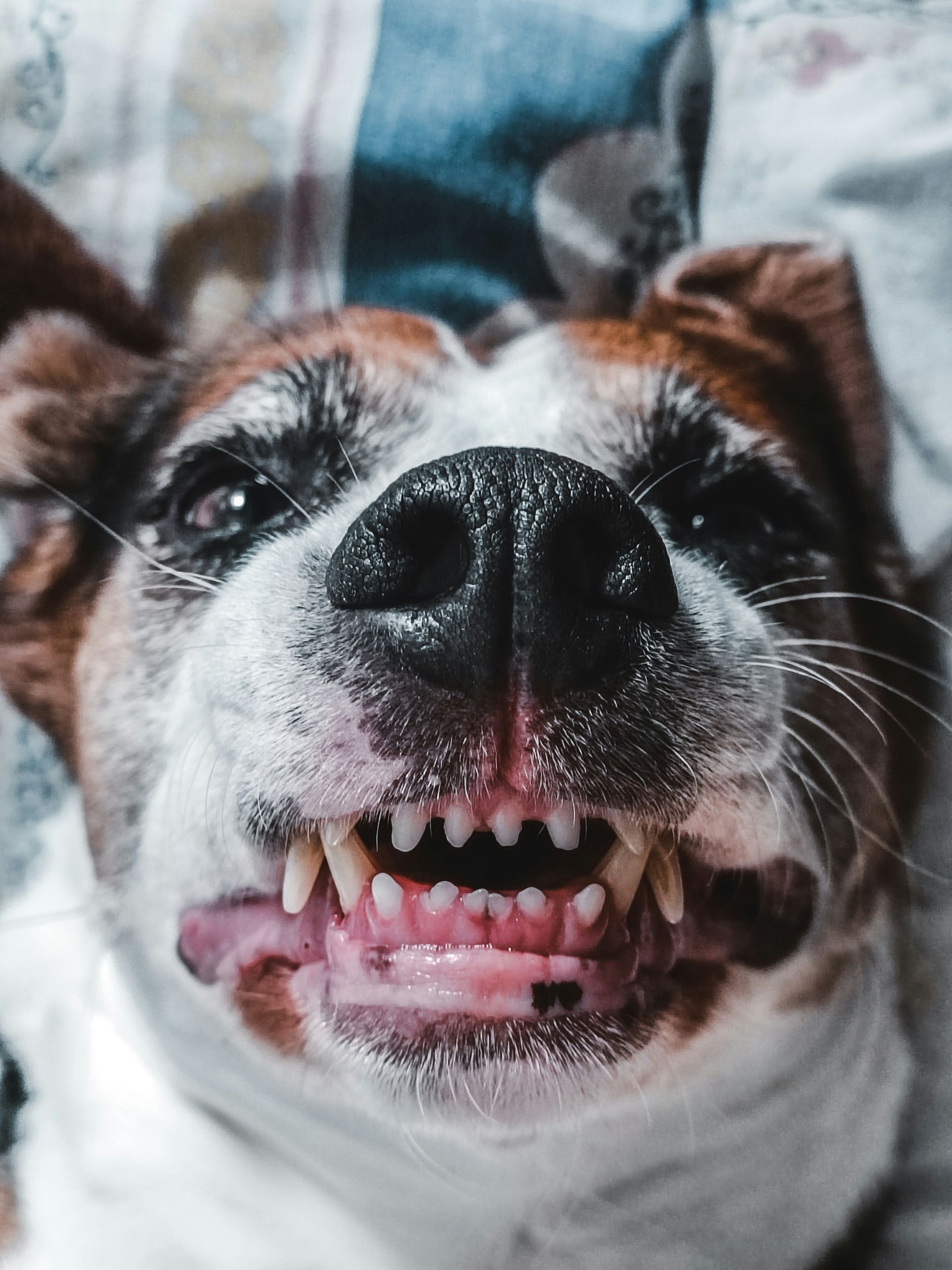
A dog that pulls back its lips to show its front teeth in a distinctive grin, often accompanied by squinted eyes, a lowered body and sometimes a wagging tail, is performing what trainers call a submissive grin, an appeasement display that looks alarmingly similar to an aggressive snarl to anyone unfamiliar with it.
Certain breeds, including some retrievers, collies and mixed breeds descended from them, show this behavior more often than others, and it typically appears during greetings with a returning owner or a familiar, trusted person rather than during a genuinely threatening encounter. The dog is signaling appeasement and lack of threat, using its teeth in a display of deference rather than aggression.
Distinguishing it from an aggressive snarl comes down to the rest of the body. An aggressive display pairs bared teeth with a stiff, forward-leaning body, direct hard eye contact, raised hackles and a low, threatening growl. The submissive grin instead pairs bared teeth with a low, wiggly body, squinted or soft eyes, a low or wagging tail and often a low whining or grumbling sound rather than a growl.
Because the two displays share the visual element of exposed teeth, submissive grins are sometimes met with alarm or correction from people unfamiliar with the specific dog, which can confuse a dog that is trying to communicate the opposite of aggression. This is a particular risk with unfamiliar visitors, who may not recognize the softer body language accompanying the grin.
Owners of dogs that display this grin regularly usually learn to recognize it quickly within their own household, but warning visitors ahead of time, or simply observing the dog's full body language rather than reacting to the teeth alone, prevents a well-intentioned dog from being scolded for a behavior that is, in its own communication system, a gesture of goodwill rather than a threat.