Getty/anilyanik
These days, it seems like every article about the economy mentions terms like "bull market" and "hawkish Fed." Sometimes, it's like trying to decipher a secret language. The good news is that the terms dove, hawk, bull, and bear have clear definitions when used in reference to financial news.
These terms are important because they simply communicate economic information, making it easier to understand investor behavior and economic conditions. We've done the work of defining each animal, explaining why it's relevant, and providing historical context as needed. All you have to do is review the following information and apply it to the news.
1 / 5

Hunters Race via Unsplash
In the economic world, a dove is a central banker or a policymaker who favors lower interest rates. Doves also want to stimulate the economy, or at least avoid tightening it whenever possible.
Here's why that matters:
Financial journalists have described policymakers and central bankers as doves since the 1980s. One of the best examples of a dove in action is when the chairman of the Federal Reserve wants to lower the federal funds rate to spur economic growth.
2 / 5
Hawks and doves have to work together, but they have opposing economic views. In the financial world, a hawk is someone who's laser-focused on stabilizing inflation. In many cases, a hawk achieves this goal by recommending a rate increase.
Hawks tend to dominate the discussion in these scenarios:
The term "hawk" has been in use since at least the 1960s, reflecting the ongoing tension between the desire to control inflation and the desire to maximize employment and growth levels. A central bank raising rates to combat inflation is acting as a hawk.
Doves and hawks have a big impact on consumer sentiment and market activity. Since doves want to maximize growth, they tend to favor lower interest rates, making it easier to borrow money, and consumers often see this as a positive trend. Hawks are willing to raise rates to slow down growth, so the markets tend to react negatively to hawkish announcements.
3 / 5
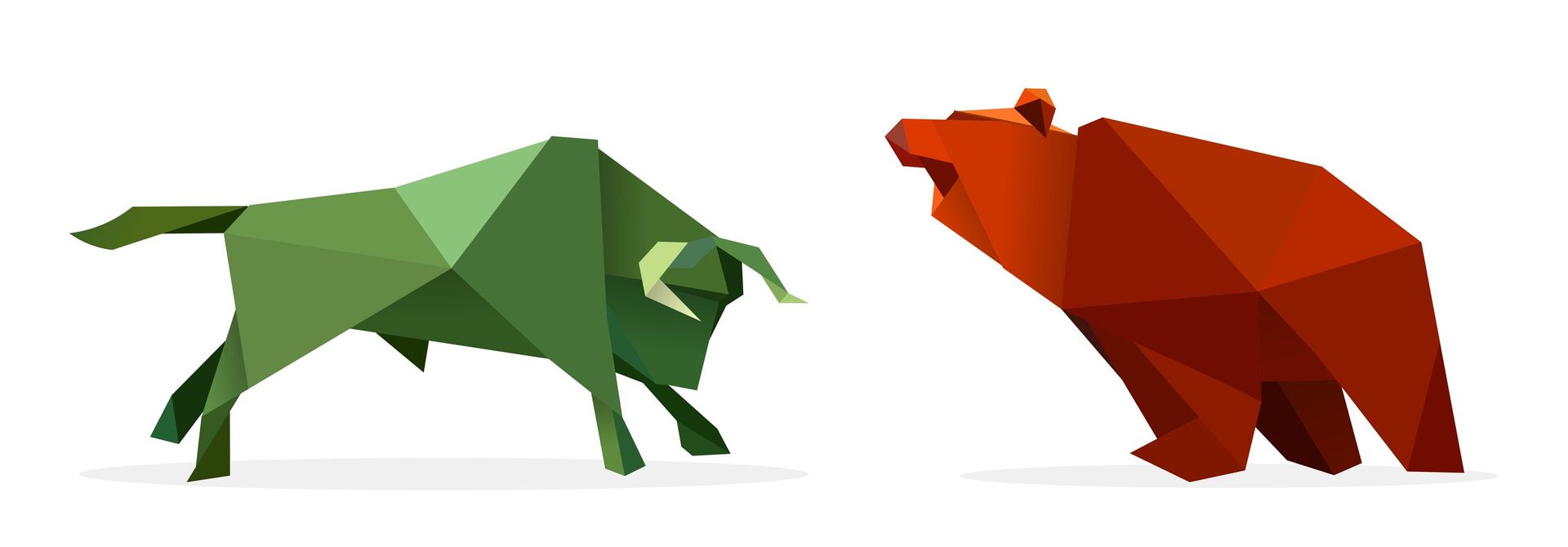
A bull is an investor who's optimistic about the economy and expects the markets to rise. It isn't clear where the term originated, but it may have something to do with the way a bull thrusts its horns upward when it attacks. This upward thrust is the perfect metaphor for a market experiencing rapid growth.
Here's why bulls matter:
Need an example of a bull? Think of an individual investor who's thrilled about current market trends. Thanks to their confidence and belief that stock prices will continue to rise, they invest additional funds.
4 / 5
Bears are pessimistic, so they believe the market is going to fall. The term may have originated from the downward swiping motion that bears make when they attack. There's also a theory that it comes from the saying, "Don't sell the skin till you have caught the bear."
Either way, pessimism has important implications for the economy:
For example, investors who sell stocks at the beginning of a downturn are displaying bearish behavior.
5 / 5
Each animal metaphor reflects specific sentiments about market activity and economic policy, and as a result, animal behavior can have a big impact on financial markets. For instance, a hawkish Fed might cause stock prices to drop by announcing a rate increase, as rate increases make it more expensive to borrow money.
Understanding these terms is the first step toward interpreting financial news and learning to anticipate market trends.
