
From the French drop to self-working card miracles, these 30 beginner-friendly tricks use coins, cards, rubber bands and household items you already own
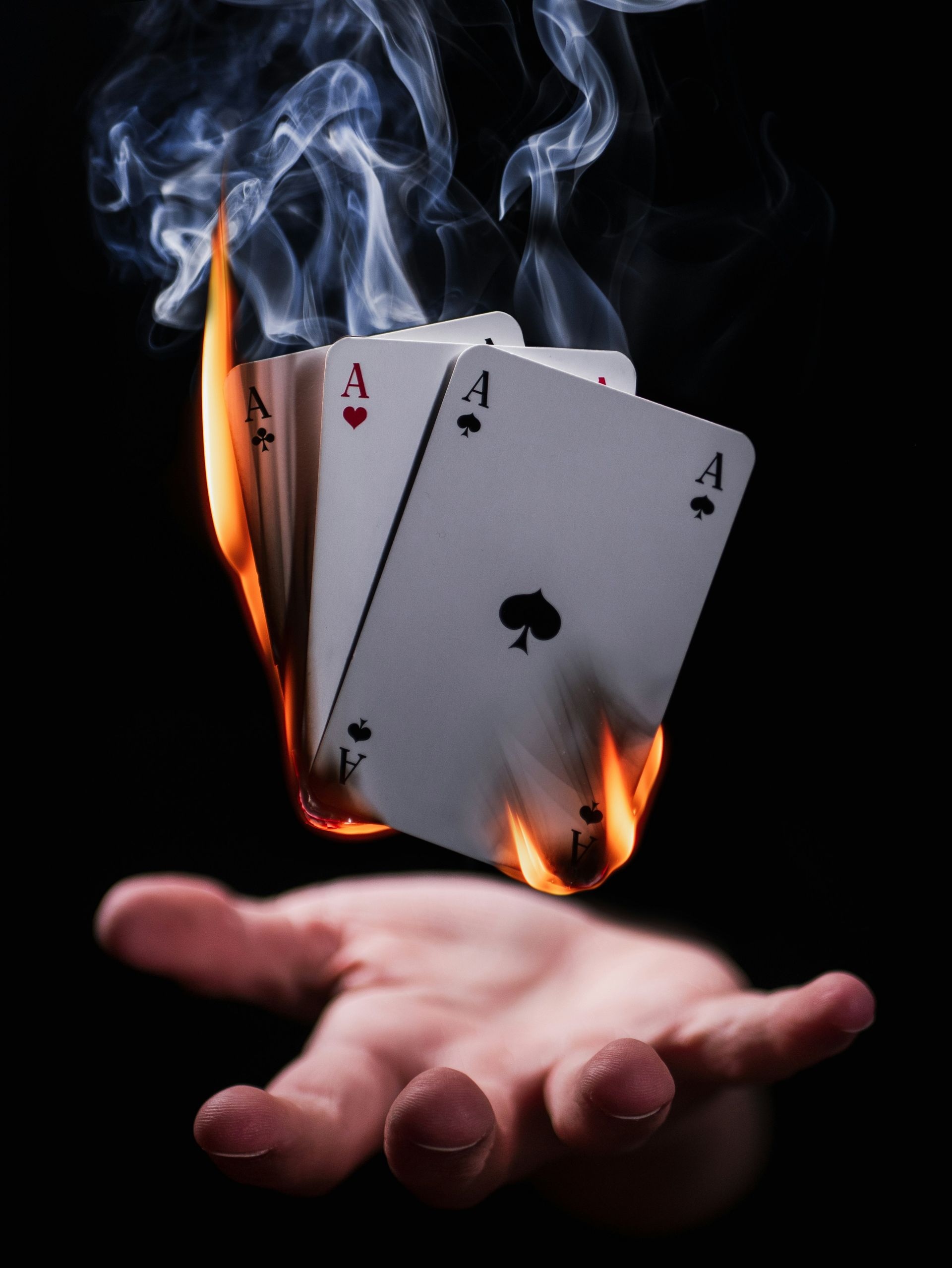
Credit: Julius Drost / Unsplash
Magic is one of the few performance skills that requires no equipment budget, no formal training and no natural gift. Nearly every trick that fooled audiences in vaudeville theaters a century ago relied on the same tools sitting in your kitchen drawer right now: coins, cards, string, rubber bands and paper. What separates a magician from everyone else is not secret knowledge so much as a willingness to practice a small deception until it looks effortless.
The tricks in this list fall into a few broad families. Sleight of hand tricks, like the French drop, depend on trained finger movements and misdirection. Self-working tricks, common in card magic, rely on mathematics and require no manual skill at all — the trick works even if you fumble. Optical illusions, like the rubber pencil, exploit quirks in human vision. Mentalism effects create the impression that you can read minds, usually through arithmetic or forced choices. This list includes all four types, so you can start with whatever suits your patience level.
A few principles apply to everything that follows. Practice in front of a mirror or a phone camera before performing for anyone. Never repeat a trick for the same audience in the same sitting, because a second viewing invites scrutiny. Never explain how a trick works after performing it — the moment of mystery is the entire product, and revealing the method erases it. Magicians call this the golden rule, and it holds whether you are performing for a theater or a seven-year-old at a birthday party.
Presentation matters more than method. A simple coin vanish performed with confidence and a story beats a technically difficult move performed nervously. Talk while you work. Give your audience somewhere to look other than your hands. Most of these tricks can be learned in an afternoon, and a handful can be performed within minutes of reading the instructions. Start with the self-working effects, build confidence, then graduate to sleight of hand. Here are 30 tricks to get you started.
Credit: Canva Images
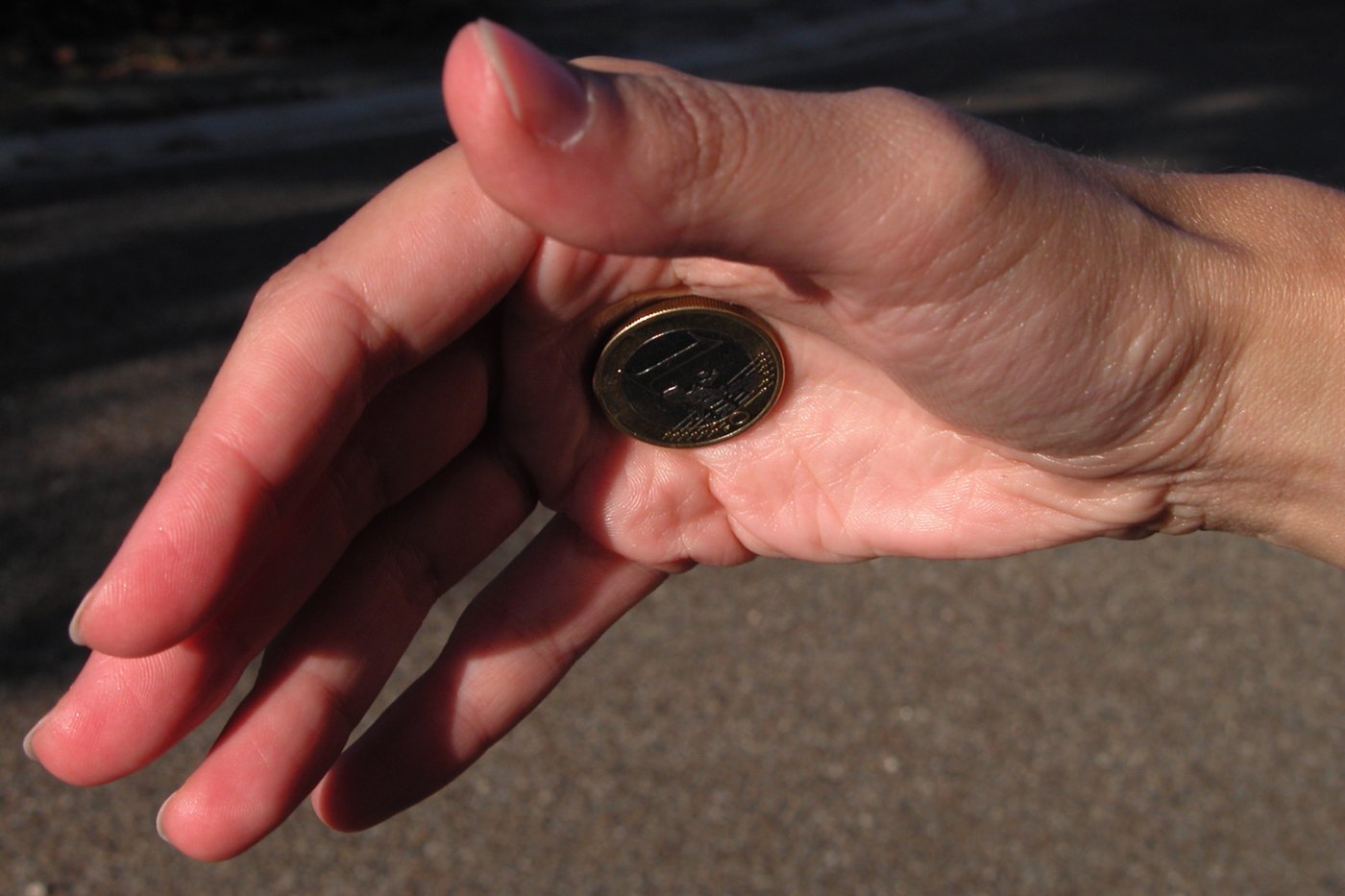
The French drop is the foundational coin vanish, and most professional magicians learned it before anything else. It creates the illusion that a coin passes from one hand to the other, when in fact it never leaves the first hand. Once mastered, it lets you make a coin disappear, reappear behind someone's ear or travel to your pocket.
Hold a coin at the fingertips of your left hand, gripped between the thumb and first two fingers, with your palm facing up. Bring your right hand over the coin as if to take it. Your right thumb slides under the coin while your fingers close over the top. At the exact moment your right fingers obscure the coin from view, relax your left thumb and let the coin drop secretly into your left palm, where your loosely curled fingers catch it.
Your right hand closes into a fist and moves away as if it now holds the coin. This is the critical moment. Your eyes must follow the right hand, because the audience looks where you look. Your left hand drops casually to your side or rests on the table, holding the coin in what magicians call finger palm — a relaxed, natural position.
Squeeze the right fist, open it slowly and show it empty. The coin has vanished. You can then produce it from your pocket, from behind a spectator's ear or from under a nearby object by secretly transferring it from the left hand.
The most common beginner mistake is moving too quickly. A real handoff of a coin is casual and unhurried, so the fake one must be too. Practice actually passing the coin between hands, then replicate that exact rhythm when performing the drop. Film yourself and compare the two versions. When you cannot tell them apart on camera, the trick is ready for an audience.
Credit: Canva Images
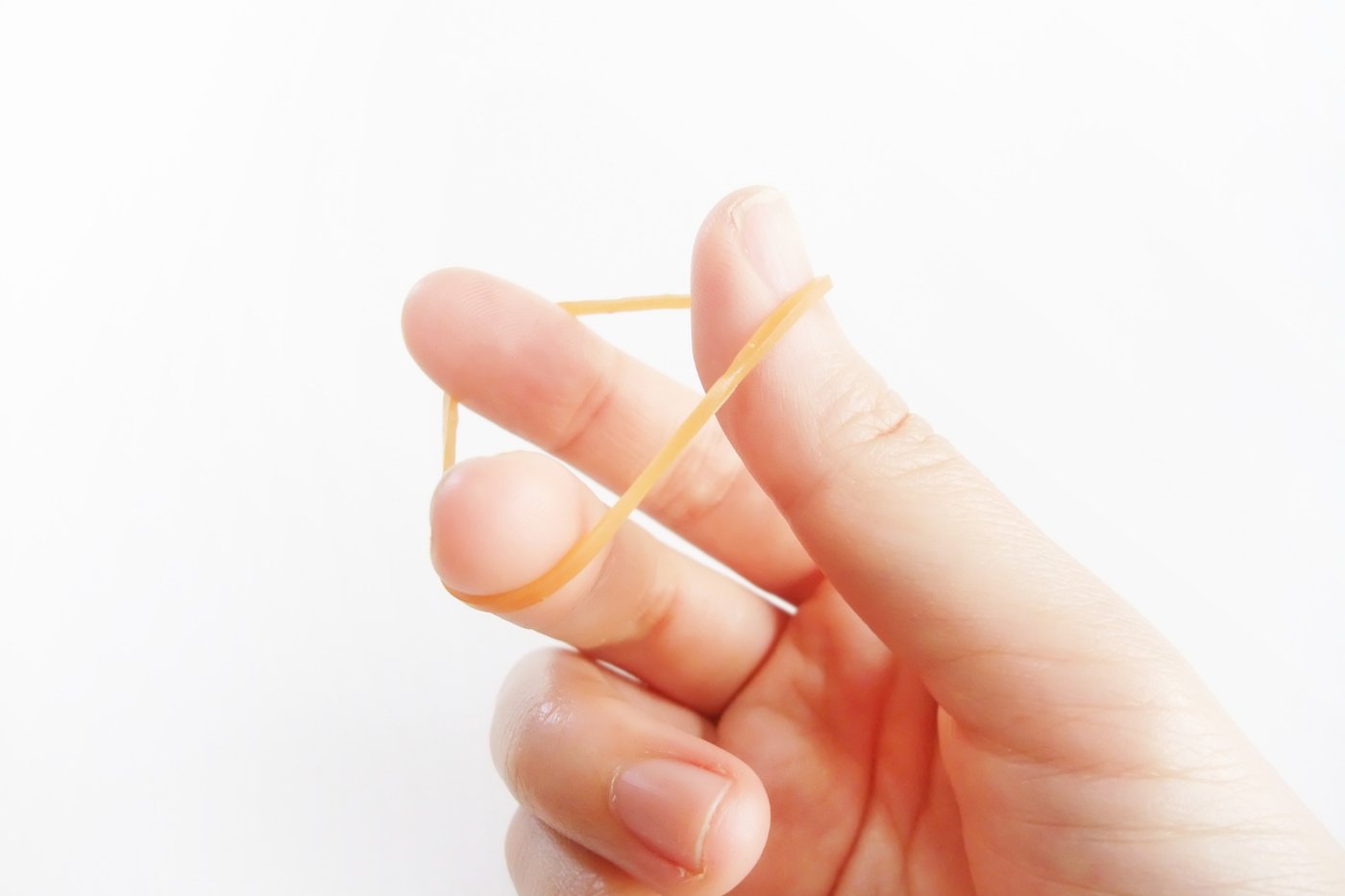
This trick makes a rubber band leap instantly from your first two fingers to your last two fingers, with no visible movement. It works at close range, survives repeat viewings better than most tricks and takes about 10 minutes to learn.
Place an ordinary rubber band around the base of your index and middle fingers, with the back of your hand facing the audience. Show it casually on both sides. Now close your hand into a loose fist. As you do, secretly stretch the band with your other hand — or with a curl of your fingers — so that the tips of all four fingers slip inside the loop as the fist closes. From the front, the band still appears to circle only the first two fingers.
Now open your hand quickly. Because all four fingertips were inside the stretched loop, the band snaps across and lands around the ring and pinky fingers. The jump happens faster than the eye can track. To the audience, the band teleported.
The reverse works the same way. Close your fist, tuck all four fingertips into the band and open your hand — the band jumps back to the first two fingers. Performed back and forth a few times with rhythm, it looks like the band is alive.
A strong follow-up doubles the impossibility. Twist a second rubber band around the tops of all four fingers, weaving it over and under so the first band appears trapped inside a cage. Perform the same move. The band jumps anyway, apparently passing through the barrier. The caged version uses the identical secret, so once you learn the basic jump, the advanced version comes free.
Keep the band loose enough to stretch comfortably but tight enough to snap crisply. Thin office bands work better than thick ones. Practice the fist-closing motion until the fingertip tuck is invisible from the front, which usually takes one session in front of a mirror.
The bending spoon is a staple of psychic performers, and the basic version requires nothing but an ordinary spoon and a table. The illusion shows the spoon's handle apparently melting and folding down toward the table, then instantly restoring to normal.
Hold the spoon vertically with the bowl pressed against the tabletop, as if you are about to push the handle down and bend it. Grip the handle with both fists stacked on top of each other. Here is the secret: the handle does not actually run through both fists. Only your bottom fist grips the handle. The tip of the handle stops there, and your top fist is empty, merely pretending to grip.
As you push down, let the spoon pivot backward inside your bottom fist, hidden by your stacked hands. The bowl stays on the table while the handle swings down flat, concealed behind your fingers. From the front, your fists appear to be bending the handle at a sharp angle. Sell it with effort — grimace slightly, push slowly and let the apparent bend deepen.
To restore the spoon, reverse the motion. Raise your fists as the spoon pivots back upright inside your grip, then toss the spoon on the table for inspection. It is completely unharmed, which makes the moment stronger: the audience saw it bend, yet the evidence shows nothing happened.
Angles matter. The trick works when performed directly facing your audience at a table. Anyone standing to your side can see the handle swing back, so save this one for dinner parties where you control where people sit.
A small detail improves the illusion considerably. Before the bend, tap the spoon on the table so everyone registers that it is solid metal. After the restoration, hand it to a spectator immediately. The contrast between what they saw and what they can now examine is what makes the trick memorable.

Credit: Aethelberht of Kent / Wikimedia Commons (CC BY-SA 4.0)
A borrowed finger ring threaded onto a rubber band climbs slowly uphill, apparently defying gravity. This is one of the strongest tricks you can do with borrowed objects, and the method takes under a minute to understand.
Break or cut a rubber band so it becomes a single elastic strand. Thread a ring onto it. Now the secret: hold one end of the band between your right thumb and forefinger, but grip it several inches from the actual end, keeping the extra length concealed and bunched in your fingers. Hold the other end in your left hand and stretch the band taut at an upward angle, with your right hand lower than your left.
The ring sits at the bottom of the slope, resting near your right hand. Slowly relax your right fingers' grip, letting the hidden slack feed out. As the stretched rubber contracts, it carries the ring along with it — and because the band is contracting toward your higher left hand, the ring appears to climb uphill on its own.
The audience sees a ring rolling up an inclined band with nothing touching it. In reality, the band itself is moving beneath the ring while your hands stay still. The illusion is powerful because the moving surface is invisible; a thin stretched band shows no texture that would reveal its motion.
Control the speed by controlling how fast you release slack. A slow, hesitant climb looks more supernatural than a smooth slide. You can even make the ring stop halfway, pause and resume, which convinces spectators the movement responds to your concentration.
Borrow the ring rather than using your own. Borrowed objects eliminate suspicion of gimmicks and make the effect personal to the spectator. Return the ring immediately after the climb, while the band — the actual gimmick, though it looks innocent — goes back in your pocket without comment.
This two-phase trick makes a pencil cling to your palm as if magnetized, then survive a debunking that turns out to be a second deception. The structure — an obvious explanation followed by its destruction — teaches the most valuable lesson in magic: letting an audience think they caught you makes the real secret stronger.
Phase one: grip a pencil in your left fist and turn the back of your hand toward the audience. Wrap your right hand around your left wrist, as if steadying it. Slowly open your left fingers. The pencil stays pressed against your open palm, apparently stuck by an invisible force.
The secret to phase one is simple. While gripping your wrist, your right index finger secretly extends and pins the pencil against your left palm. The audience cannot see it because the back of your left hand blocks the view.
Most spectators guess this method quickly, which is exactly what you want. Phase two: offer to repeat the trick, but this time make a show of gripping your wrist with your right hand held in clear view, all five fingers visibly wrapped around the wrist. Open your left hand. The pencil still clings.
The second method is different. Before the performance, tuck a second pencil, a butter knife or a similar rigid object under your wristwatch or watchband, lying along your inner forearm. When you grip your wrist in phase two, you secretly slide the pencil under this hidden bar, which pins it in place. No fingers are involved.
The one-two punch matters more than either phase alone. Spectators who confidently announce the finger method in phase one are silenced by phase two, and their surprise is larger than if you had fooled them once. If you do not wear a watch, a rubber band around the wrist under a sleeve works the same way.
A piece of string threaded through a drinking straw is cut cleanly in half — straw, string and all — yet the string is pulled out whole. This classic uses two pieces of trash and one secret preparation.
Take a plastic or paper drinking straw and, before the performance, use a blade to cut a slit about two inches long in the middle of the straw, running lengthwise along one side. This slit is nearly invisible, especially on a striped or colored straw.
To perform, thread a piece of string through the straw so it emerges from both ends, and let a spectator confirm it runs all the way through. Now bend the straw in half at its midpoint, with the secret slit positioned on the inside of the bend, facing down. Hold the bent straw in your fist.
Here is the move. Pull down gently on both ends of the string. The tension draws the center of the string out through the hidden slit, so the string now bypasses the straw's midpoint entirely, sitting concealed in your fingers below the bend. The straw's folded center is empty.
Take scissors and cut through the folded straw at the bend. The audience sees the blades pass completely through, and the straw is undeniably severed into two pieces. The string, hidden safely below the cut, is untouched.
Hold the two straw halves together for a moment, blow on them for theater, then slowly pull the string free. It is whole and unharmed. Toss the string out for examination and discard the cut straw pieces casually, keeping the slit side turned away.
Practice the string-pulling move until it is a single smooth motion disguised as adjusting your grip. The trick plays well in restaurants and cafes, where straws and curiosity are both plentiful. Cotton kitchen string works better than slippery nylon, which can snag in the slit.
Credit: Rich Smith / Unsplash
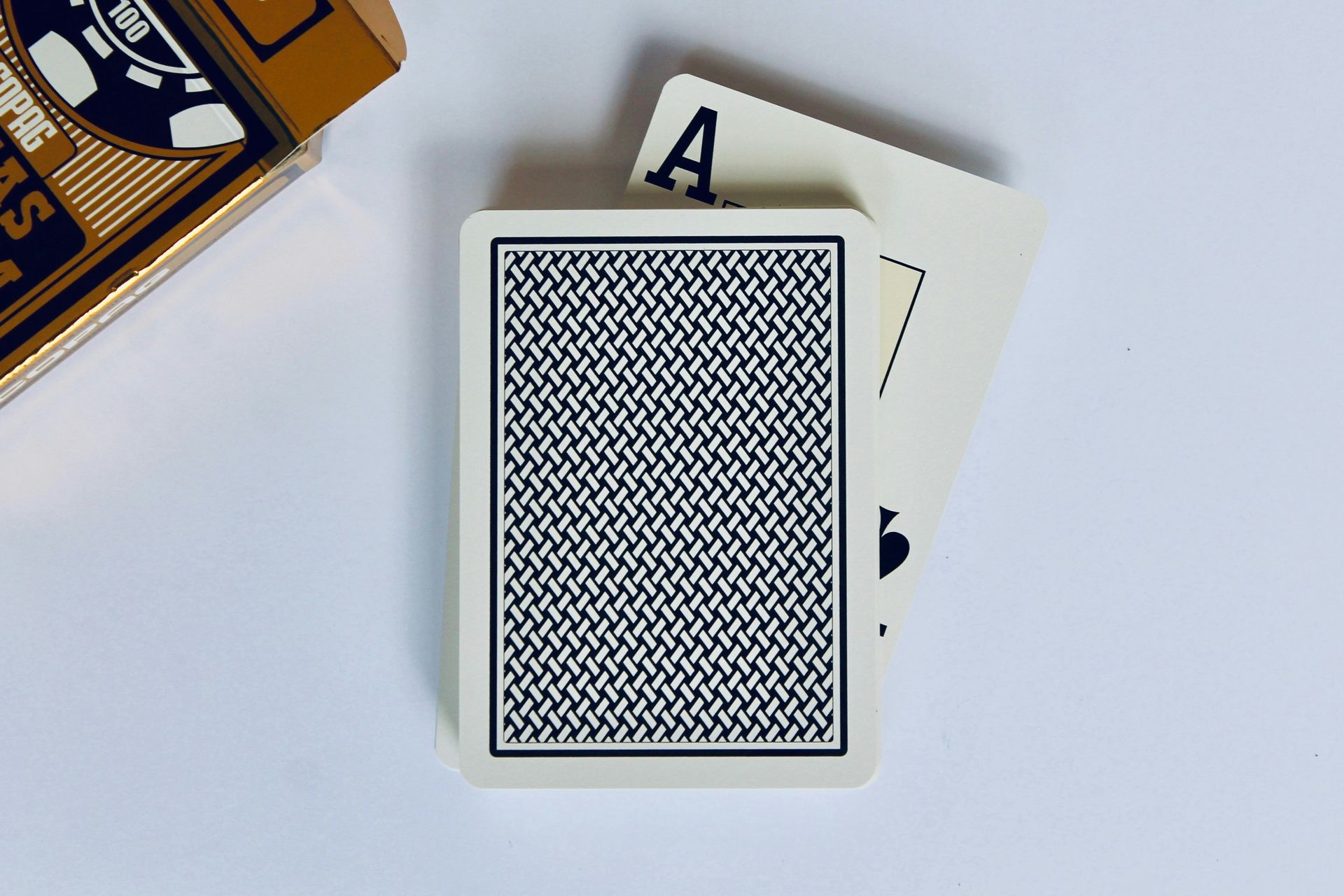
A force is how magicians make a spectator choose the exact card they want chosen, while the choice feels completely free. The cross-cut force is the easiest force in card magic, and it unlocks dozens of tricks — predictions, mind reading and more.
Before performing, secretly look at the top card of the deck and remember it. Suppose it is the seven of hearts. Write "You will choose the seven of hearts" on a piece of paper, fold it and set it in plain view. This prediction is your finale.
Place the deck on the table and ask a spectator to cut it anywhere they like and set the cut-off top portion beside the bottom portion. They have genuinely free choice of where to cut. Now the move: pick up the original bottom half and place it crosswise on top of the half they cut off, forming a plus sign. Say something like, "We'll mark exactly where you cut."
Then talk. Ask their name, or explain what is about to happen, or tell a brief story — anything to let 20 or 30 seconds pass. This delay is the entire secret. It blurs the audience's memory of which half was which.
Now lift the crosswise upper packet and say, "Take the card you cut to." Point to the top card of the lower packet. That card is the original top card of the deck — your seven of hearts — because the crosswise packet you just removed was the original bottom half. The spectator remembers cutting freely and takes the card believing chance selected it.
Have them show it around, then reveal your prediction. The time delay makes the geometry of the cut impossible to reconstruct. Performed briskly and without the pause, the trick falls apart; performed with patter in between, it fools nearly everyone, including people who know other card tricks.
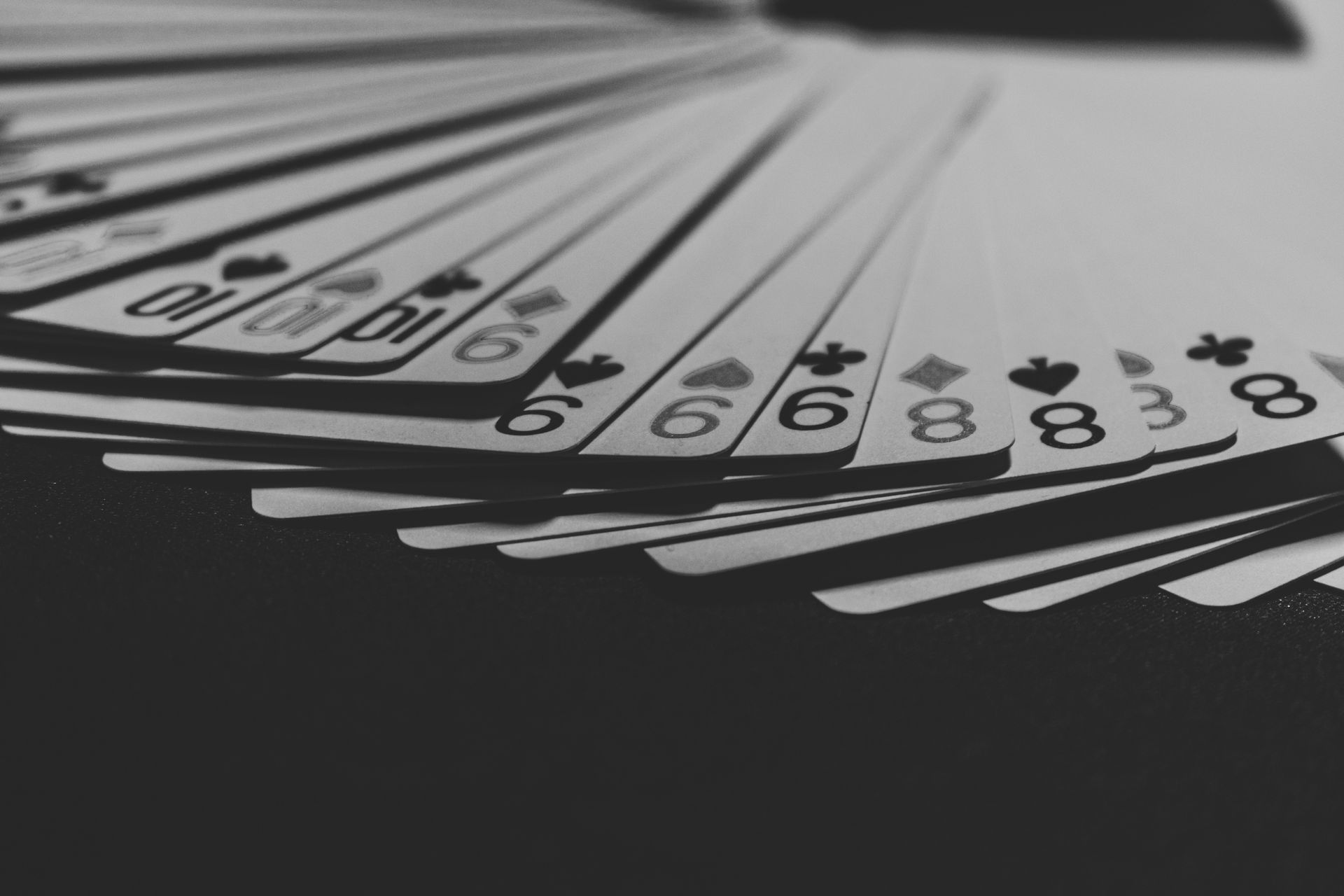
Credit: Jarosław Kwoczała / Unsplash
The key card principle lets you find a spectator's freely chosen card from a shuffled deck, with no sleight of hand and no setup. It is the workhorse of beginner card magic, and hundreds of published tricks are built on it.
Hand the deck to a spectator and let them shuffle. When they return it, secretly glimpse the bottom card of the deck. This is your key card. The easiest glimpse: as you take the deck back, tilt it slightly toward yourself for a fraction of a second, or catch sight of the bottom card as they hand it over. Suppose the bottom card is the king of clubs.
Spread the deck face down and ask the spectator to remove any card, look at it and remember it. While they show it to others, square up the deck and place it on the table. Ask them to put their card on top of the deck. Then ask them to cut the deck once and complete the cut.
That single cut is the whole method. Cutting the deck places the bottom portion — with your king of clubs on its face — directly on top of their chosen card. Their card now sits immediately beneath your key card, and no amount of additional single cuts will separate the pair.
Take the deck and spread through it face up, apparently reading the cards for psychic vibrations. Find the king of clubs. The card directly after it — to the right as you spread from the top — is their selection. Do not reveal it immediately. Pretend to struggle, pass their card once, come back to it and pull it out slowly.
Avoid letting the spectator shuffle after the cut, since riffle shuffling can separate the pair. If they insist, additional straight cuts are safe. The revelation options are endless: name the card aloud, spell to it or pull it from the deck behind your back.
The 21-card trick is fully self-working: deal correctly and the deck finds the spectator's card for you, no matter how clumsily you handle the cards. It has taught more people their first card trick than perhaps any other effect.
Remove 21 cards from a deck. Deal them face up into three columns of seven cards each, dealing left to right in rotation, one card at a time. Ask a spectator to think of any card they see and tell you only which column it is in.
Gather the three columns, keeping each column's cards together, and place the column containing their card between the other two columns. This placement is the entire secret. Now deal the 21 cards into three columns again, in the same left-to-right rotation, and again ask which column holds their card. Gather the columns again with their column in the middle.
Deal and ask one final, third time, and once more sandwich their column in the middle. After three rounds, their card is now the 11th card from the top of the packet — the exact center of 21. The math forces it there regardless of which card they chose.
For the reveal, avoid simply counting to the 11th card, which looks mechanical. Instead, deal the cards slowly face up into a pile, watching the spectator's face, and stop dramatically on the 11th card. Or spell a phrase like "this is your card" — dealing one card per letter can be tailored to land on position 11 if you choose your phrase in advance. Another option: deal cards face down and ask them to say stop whenever they like, using simple timing to hover near the middle.
The trick tolerates zero errors in gathering — the chosen column must go in the middle every time — but everything else is forgiving. It also scales: the same principle works with 27 cards dealt three times, where the card lands 14th.

Credit: Canva Images
Magician's choice, known in the trade as equivoque, is a forcing technique that lets you predict a "free" decision. It requires no props beyond whatever objects are handy, no sleight of hand and no preparation except a written prediction.
Place three objects on a table — say, a coin, a key and a pen. Beforehand, write "You will choose the key" on a slip of paper and set it aside face down. Now you will force the key through a series of choices that only appear fair.
Ask the spectator to point to two objects. Here is the principle: you interpret their action to suit your goal. If the two objects they point to include the key, say, "Fine, we'll keep those two," and remove the third. If their two objects do not include the key, say, "Fine, we'll eliminate those," and sweep them away, leaving the key. The instruction "point to two" never specified whether pointing meant keeping or discarding, and you decide only after seeing their choice.
If two objects remain, repeat the ambiguity: "Now point to one." If they point to the key, it is kept; if they point to the other object, it is eliminated. Either way, the key survives. Reveal your prediction.
The technique fails if you telegraph hesitation, so decide your interpretations instantly and state them with total confidence, as if the rules were fixed all along. Never perform equivoque twice for the same audience, because a repeat exposes the shifting rules immediately.
The applications go far beyond three objects on a table. Mentalists use equivoque to force destinations on maps, words in books and cards in decks. Start with three objects, then try five, eliminating in stages. The skill you are actually practicing is verbal confidence — the ability to make an improvised rule sound inevitable, which serves every other trick you will ever perform.
A coin placed on a table vanishes when a glass is set over it — a classic of parlor magic that uses a secretly prepared glass and basic optics rather than sleight of hand.
The preparation: take a clear drinking glass with a flat rim and trace its mouth onto a sheet of paper that matches your tablecloth or working surface. Cut out the circle and glue it neatly over the mouth of the glass. When the glass sits upside down on that same paper or cloth, the disc on its rim blends invisibly into the background. The glass looks empty and ordinary.
To perform, work on the matching surface. Place a coin on the table. Cover the upside-down glass with a handkerchief or a sheet of paper, explaining that the magic happens in darkness. Set the covered glass down over the coin. Say a magic word and lift the cover — the coin is gone. The paper disc on the glass rim now hides it, matching the tabletop perfectly.
To restore the coin, cover the glass again, lift glass and cover together, and the coin reappears. Never lift the uncovered glass off the surface, since the disc would be exposed against the light.
A bolder version escalates the effect. After vanishing the coin, announce you will make the glass itself vanish. Cover it, lift the covered shape — secretly letting the glass drop into your lap while the stiff paper holds its form — then slam your hand flat on the empty paper shell. The glass is gone, and the coin sits revealed on the table. This version, a relative of the classic salt shaker penetration, requires a seated performance and a soft lap catch.
Make the disc carefully. Ragged edges or mismatched paper destroy the illusion. Solid-colored surfaces work best; patterns must align, which is harder than it sounds.

Credit: RDNE Stock project / Pexels
A coin melts through a solid tabletop and drops into your waiting hand below. This is seated close-up magic at its purest, built entirely on one moment of misdirection.
Sit at a table with a coin. Explain that wood has invisible pores and you have found one. Take the coin in your right hand and slap it flat onto the tabletop under your palm, then lift your hand to show it still there. Do this twice, establishing a rhythm: slap, lift, show. Both times are completely honest.
On the third repetition, the coin never reaches the table. As your right hand sweeps toward the tabletop, let the coin drop silently into your lap — timed so the slap of your palm hitting the wood covers everything. Your right hand presses flat on the table as if trapping the coin. Meanwhile, your left hand casually drops below the table, retrieves the coin from your lap and holds it underneath the spot your right hand covers.
Rub the tabletop, press hard and slowly lift your right hand: empty. At the same moment, click the coin against the table's underside with your left hand, then bring it out and toss it on the table. The sound sells the penetration — spectators hear the coin arrive underneath.
The lap drop is the only technical requirement, and it is nearly foolproof because the table edge hides your lap completely from anyone seated across from you. The established rhythm does the psychological work: after two honest repetitions, no one questions the third.
Practice the timing so the coin's fall and the palm slap sound like one event. Do not look at your lap. Beware of neighbors seated beside you, whose sightlines may catch the drop; this trick is strongest performed head-on across a table, at dinner, when everyone assumes the show has not started yet.
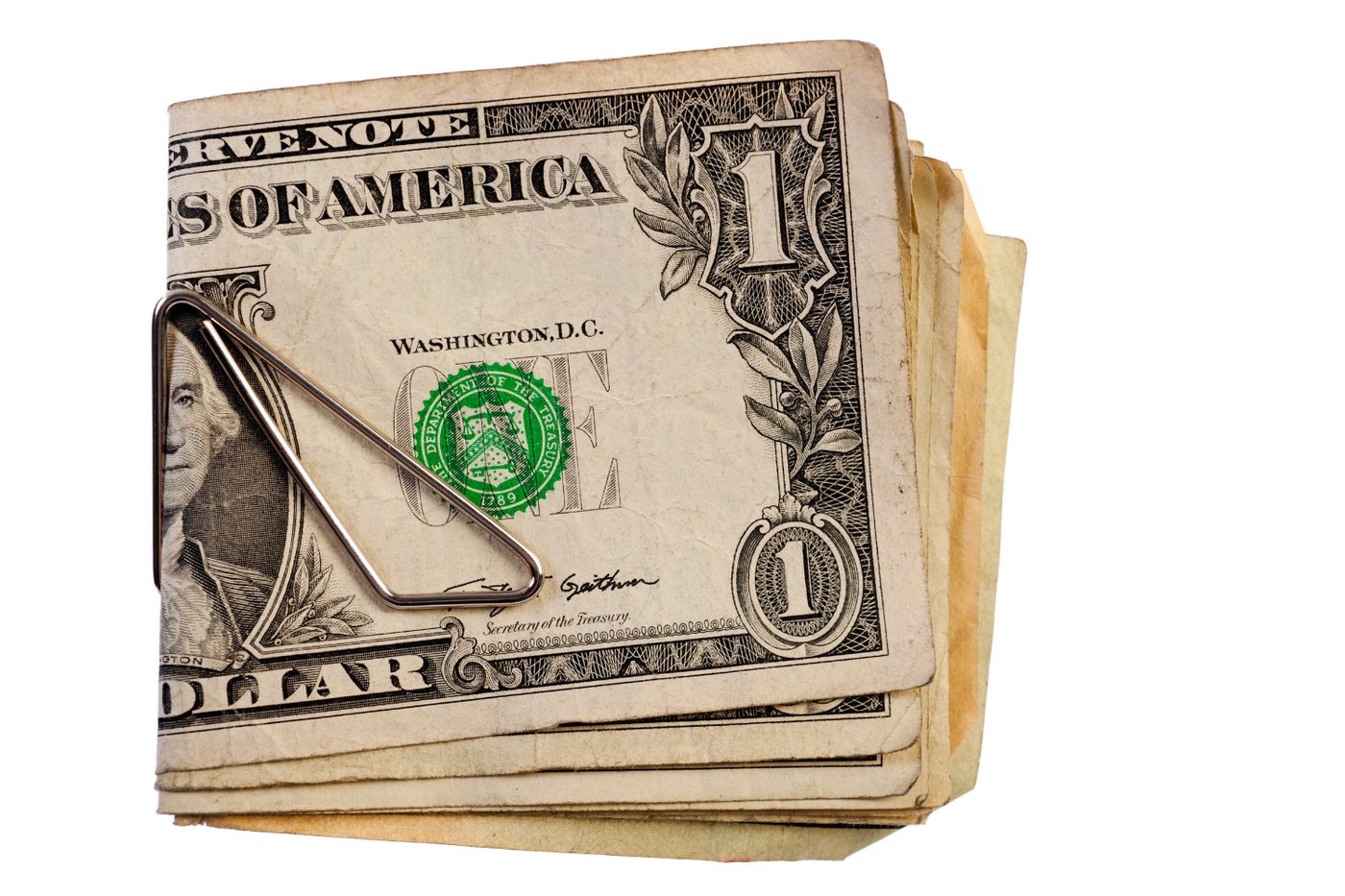
Credit: Canva Images
Two paper clips attached separately to a folded dollar bill leap off and link themselves together in midair. This trick is entirely self-working, uses pocket objects and can be performed 30 seconds after learning it.
Take a bill — any currency note works — and two paper clips. Fold the left third of the bill back behind itself, so the bill forms an S-curve when viewed from above. Clip the first paper clip over the top edge, joining the front layer to the middle layer, positioned near the fold.
Now fold the right third of the bill backward the opposite way, completing the S shape. Attach the second clip over the top edge, joining the back layer to the middle layer, again near its fold. From the front, you see a folded bill with two separate clips riding on top, clearly not touching each other.
Grip the two ends of the bill and pull them apart sharply. As the S-curve straightens, the geometry forces the two clips to slide along the bill's edge, collide and — because of how each grips overlapping layers — snap together and fly off the bill, linked as a chain. They usually launch a foot into the air, which adds a small moment of spectacle.
The physics does all the work; there is no move to practice beyond the folding. What is worth rehearsing is the presentation. Ask spectators whether the clips are touching. Have someone hold out a hand to catch the linked pair. Offer the clips for inspection afterward, since there is nothing to find.
A variation adds a rubber band. Loop a rubber band around the bill's middle section before the second fold, and after the pull, the linked clips dangle from the band, which hangs from the bill — a three-object chain from one snap. Restaurants, offices and classrooms supply the props on demand.
A paper napkin is torn into pieces, squeezed into a ball and unfolded completely whole. The method is bold — a duplicate napkin — and learning it teaches the fundamental art of hiding one object while showing another.
Preparation: take two identical paper napkins. Crumple the first into a tight ball and conceal it in your right hand, held at the base of your fingers where a relaxed hand naturally curls. This hidden ball is your restoration.
Show the second napkin freely with both hands, keeping the duplicate hidden behind your right fingers. Tear the visible napkin into strips, then tear the strips into pieces, letting the audience see every rip. Squeeze the torn pieces into a ball between both hands — and in that squeezing action, press the torn ball and the whole ball together, treating them as one.
Here is the switch. As you finish squeezing, position the intact ball at your fingertips and the torn ball back into the curl of your fingers, swapping their roles. To the audience, nothing happened; two hands squeezed a ball and now display a ball. Blow on it, unfold it slowly and show the napkin restored. Your other hand holds the torn evidence hidden, to be ditched in a pocket when you put the "wand" away or reach for another prop.
The psychology outweighs the mechanics. Spectators never suspect a duplicate because the idea of preparing beforehand does not occur to people watching an apparently casual trick. Keep your hands relaxed; a tense, claw-like hand advertises concealment, while a loosely curled one looks empty.
Rehearse the ditch as carefully as the switch. Reaching into a pocket for a pen, gesturing to someone or leaning back naturally all give cover. Paper napkins are ideal because they are opaque, silent and expected at any table.
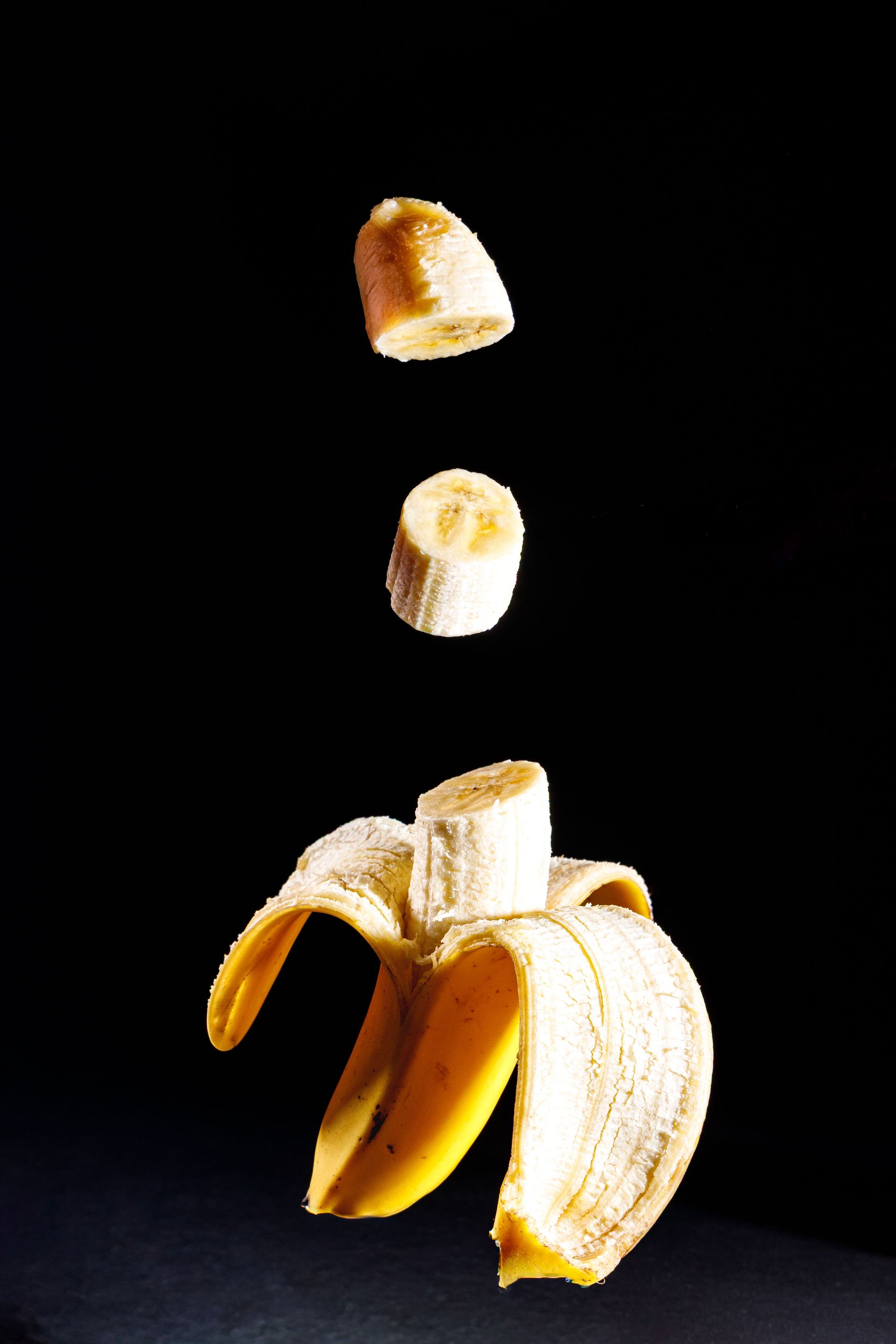
Credit: Paolo Sanchez / Pexels
You hand someone an ordinary unpeeled banana, they open it and the fruit inside falls into neat slices. This is a prepared trick with no performance skill required — the work happens in the kitchen beforehand — and it lands especially well with children.
Preparation: take a banana with no major blemishes. Push a clean sewing needle or pin through the skin at the point where you want the first slice. Once inside, sweep the needle side to side like a windshield wiper, slicing through the fruit internally without enlarging the entry hole. Withdraw the needle and repeat at intervals down the banana — every inch or so — inserting through the same dark ridge line each time so the tiny holes hide in the peel's natural seam.
The result is a banana that looks untouched but is fully sliced inside. The pinholes are effectively invisible, and any slight browning at the holes takes hours to develop, so prepare the banana within a few hours of performing.
The presentation makes the trick. Simply handing over a strange banana wastes it. Instead, build a moment: claim you can slice fruit with your mind, wave your hand over the banana while a spectator holds it, and mime a karate chop in the air above it. Count aloud the number of invisible cuts you are making — then have them peel it and count the slices, which match.
Another framing treats it as a prediction. Write "four pieces" on a slip of paper before anyone arrives, seal it, and reveal it after the banana falls apart in the spectator's hands.
The same needle method works on bananas only — the peel reseals around the hole in a way other fruit skins do not. Use the banana promptly and refrigeration is unnecessary. The trick's charm is that the spectator does the revealing themselves, holding the impossible object with no magician touching it.
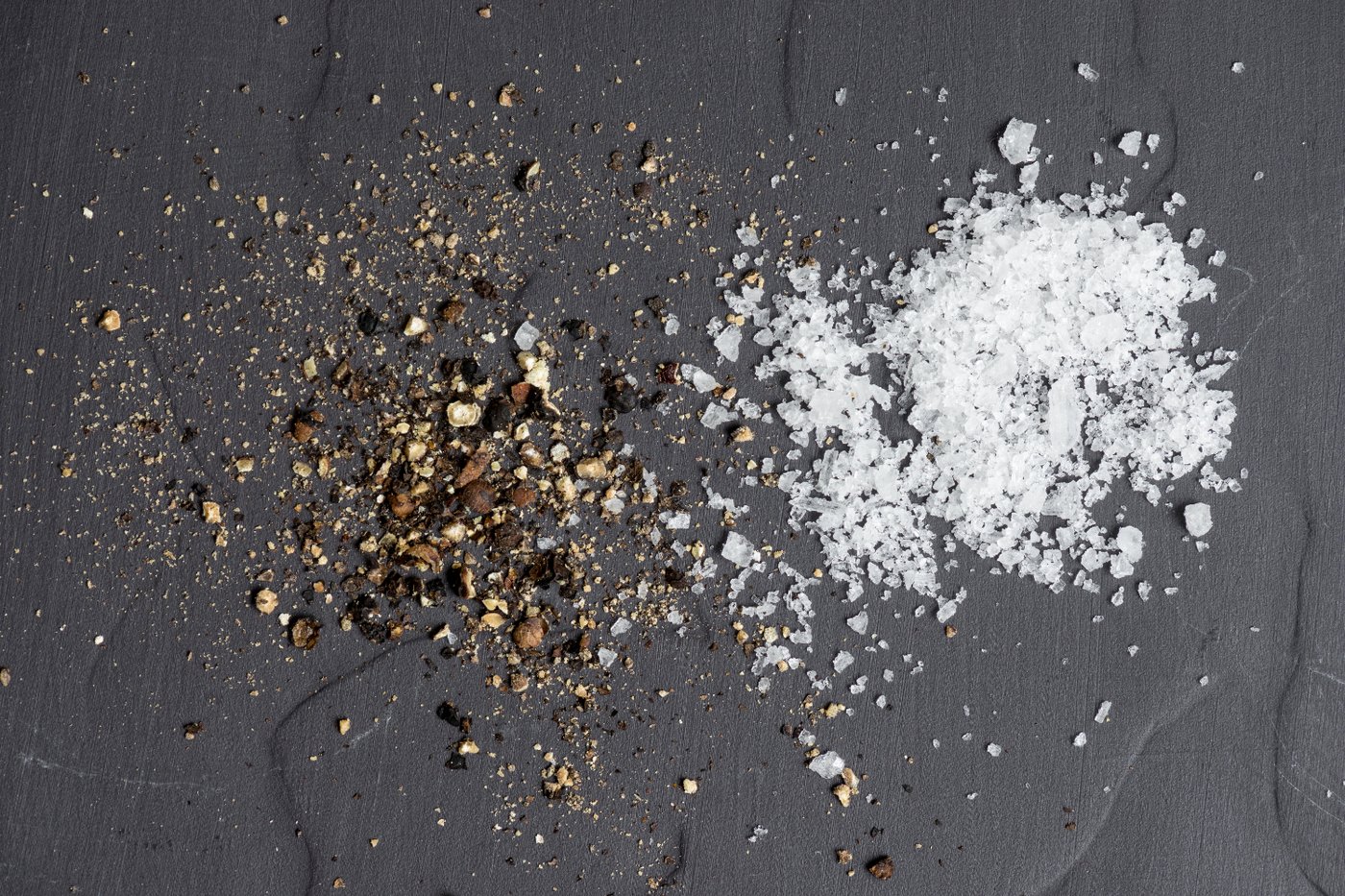
Credit: Canva Images
Mixed salt and pepper separate on command, with pepper leaping out of the pile toward your hand. This is science presented as sorcery, and it works because the physics involved — static electricity — is invisible to the audience.
Preparation is minimal and can be done at the table. Pour a small pile of salt onto a plate or dark surface, then grind or shake pepper over it and mix the two visibly with your finger. Announce that you can command the pepper to abandon the salt.
The secret: charge a plastic object with static electricity. A plastic spoon, comb or inflated balloon rubbed briskly against wool, hair or a napkin builds a static charge in seconds. Do the rubbing under cover of a natural action — running a comb through your hair reads as grooming, and stirring the air theatrically with a plastic spoon can include a hidden rub against your sleeve.
Hold the charged object an inch or so above the mixture. Pepper flakes, far lighter than salt grains, leap upward and cling to the plastic, while the salt stays put. To the audience, the pepper is obeying you. Move the object slowly across the pile and the pepper follows it, jumping in visible streaks.
The gap distance is the fine-tuning. Too close and salt jumps too; too far and nothing moves. An inch is the working range for most home experiments, though dry winter air strengthens the effect and humid weather weakens it noticeably. Test on the day you perform.
Presentation transforms a science demo into magic. Give the pepper a personality — call it stubborn, coax it, snap your fingers as it jumps. Never show the rubbing, and hold the charged object as casually as any spoon. Spectators who suspect static often cannot explain why only the pepper moves, which lets you keep a layer of mystery even from adults who remember school physics.
Credit: Canva Images
You hand someone a sealed prediction, they build a number through a series of apparently free choices and arithmetic, and their final answer matches your prediction exactly. The secret is that the math always produces 1089, no matter what number they start with.
Beforehand, write 1089 on a card, seal it in an envelope and place it in view. Ask a spectator to think of any three-digit number whose first and last digits differ by at least two — 725, for example, or 831. They keep it secret and can even use a calculator.
Instruct them: reverse your number, and subtract the smaller from the larger. With 725, reversing gives 527, and 725 minus 527 is 198. Then reverse that result and add the two together: 198 plus 891 equals 1089. The answer is 1089 for every valid starting number — the algebra of place value guarantees it.
One wrinkle needs handling. If the subtraction produces a two-digit result, such as 99, tell them in advance to treat any result as three digits, writing 99 as 099. Reversed, that is 990, and 099 plus 990 still gives 1089. Building this instruction into your patter — "always keep three digits, add a zero in front if you need one" — prevents the only way the trick can fail.
Reveal the envelope last, and slowly. Some performers dress the reveal further: 1089 written on the card upside down and backward, shown in a mirror, or hidden as a page and word position in a book — page 108, ninth word — which turns a number trick into a book test.
Never repeat the effect for the same group, since a second run with a different starting number arriving at the same total exposes the method instantly. Performed once, it feels like genuine prophecy, and the spectator's own calculator becomes your best witness.
-1920x1272.jpg)
Credit: Flickr / Pexels
This is a mind-reading routine performed entirely with words — no props, no cards, no preparation. You guide a spectator through quick mental math and a few free associations, then announce what they are imagining. It works on the principle that constrained choices feel free.
Ask the spectator to think of a number from one to 10. Then walk them through this sequence: multiply it by nine. If the result has two digits, add those digits together. Then subtract five.
The math is rigged. Every multiple of nine from nine through 90 has digits summing to nine, so after the subtraction, everyone in the room is silently holding the number four.
Now convert the number to a letter: one is A, two is B, three is C, four is D. Ask them to think of a country beginning with their letter. Nearly everyone thinks of Denmark, since D-countries are scarce — Djibouti and Dominica rarely come to mind first for most English speakers.
Next: take the second letter of their country and think of a large animal beginning with it. E overwhelmingly produces elephant. Finally, think of that animal's usual color.
Pause, study their face and say: "There are no grey elephants in Denmark." The reaction is reliably strong, because the spectator experienced three free choices and cannot see the funnel that guided them.
The trick occasionally misses — someone picks Djibouti, or an eagle — so treat a miss lightly and move on, or hedge by performing for a group, where the majority lands on script and the outliers assume they did the math wrong. Know your audience: the country association depends on geography familiarity, and performing outside English-speaking contexts may shift the common answers.
This routine teaches psychological forcing, the engine behind much professional mentalism. The math force is certain; the verbal forces are probabilities you learn to manage with confidence.

Credit: photoGraph / Pexels
A spectator draws a box around any nine dates on a calendar, and you announce the total of all nine numbers within seconds — apparently calculating faster than their phone. The secret is a property of calendar grids that reduces the whole sum to one multiplication.
Hand over any month from any wall calendar or phone calendar displayed as a grid. Ask the spectator to outline any three-by-three block of dates — three consecutive dates across, over three consecutive weeks. Turn your back while they choose, then ask them to name only the smallest number in their square, or alternatively just glance at the square for a moment.
The method: the sum of the nine numbers always equals nine times the center number. Because calendar columns step by seven and rows step by one, the numbers around the center pair off symmetrically — one less and one more, seven less and seven more — so all deviations cancel. If they tell you the smallest number, add eight to find the center, then multiply by nine. If they show you the square, simply multiply the middle date by nine.
Multiplying by nine in your head is easy with a shortcut: multiply by 10 and subtract the number. A center date of 17 gives 170 minus 17, or 153. Announce the total, then let them verify it slowly with a calculator while you sit back.
Presentation options vary. Play it as lightning calculation, as psychic energy reading from the page, or reverse it: write the total as a prediction after seeing the square, before they have started adding.
For a follow-up with a different method, ask for a two-by-two square instead; that total is always four times the smallest date plus 16. Alternating the two versions defeats spectators trying to reverse-engineer a single formula, and calendars hang in nearly every kitchen and office you will visit.
Hold a rigid pencil loosely and shake it at the right rhythm, and it appears to bend and wobble like soft rubber. This is a pure optical illusion — the audience's own visual system creates the effect — which means it works even when people know it is a trick.
Grip a pencil lightly between your thumb and index finger, about a third of the way from one end. The grip must be loose, almost precarious. Now bob your hand up and down through a small range, a couple of inches, at a relaxed tempo — roughly a few bounces per second. The pencil pivots slightly around your loose grip as it bounces, and its ends lag behind the middle.
The illusion arises because human vision blends the pencil's positions over time. The ends and center of the pencil move out of phase, and the visual system's motion processing smears them into a single curved shape. The pencil appears to flex, drooping and flopping as if made of soft rubber. Researchers in vision science have studied the effect as a genuine perceptual phenomenon, not merely a party trick.
Tuning matters. Too fast a shake produces a blur; too slow and the pencil just looks like a pencil bouncing. Loosen the grip and slow down until the bend appears — most people find it within a minute of experimenting in front of a mirror.
The performance framing does the magical work. Announce you will soften the wood by rubbing it, warm the pencil dramatically between your palms, then produce the wobble. Snap $SNAP it back to rigid by stopping abruptly and tapping it hard on the table. Handing the pencil out for inspection afterward completes the moment, since spectators half-expect a trick pencil.
Pens, chopsticks, rulers and wands all work. Longer, lighter objects bend more convincingly than short, heavy ones.
The oldest trick in the family repertoire: you appear to pull the top half of your thumb clean off, slide it along your finger and reattach it. Grandparents have performed it for generations because it needs no props, no setup and about two minutes of practice.
The illusion is built from both hands. Bend your left thumb at its knuckle, folding the tip down against your palm so only the lower half shows, pointing along your left index finger. Bend your right thumb the same way, and place its folded tip against the stump of your left thumb, so the two half-thumbs line up into what reads as one whole thumb.
The seam is the giveaway, so cover it: wrap your right index finger over the junction where the two thumb halves meet. From a viewer's angle, they see a complete left thumb with your right index finger casually resting across its middle.
Now slide your right hand along your left index finger. Your right thumb-tip — which the audience believes is the top of your left thumb — travels away from the stump. The top of your thumb has apparently detached and is gliding up your finger. Slide it back, press the halves together, remove your right hand with a flourish and wiggle your restored left thumb.
Angles are everything. The illusion works head-on and fails from the sides, so perform facing your audience squarely, hands at chest height. Keep the sliding motion short and smooth; overextending exposes the gap.
Presentation for children benefits from sound effects — a grunt of effort at the detachment, a pop at the reattachment. For adults, deadpan works better: perform it mid-conversation without comment and continue talking. The trick's simplicity is the point. It demonstrates that magic lives in the performance, since the method is transparent within seconds to anyone who tries it themselves.
The Balducci levitation lets you appear to float a few inches off the ground with no wires, no camera tricks and no preparation. Street magicians revived it in the 1990s, and it remains the most practical levitation available to an amateur.
The method is angle-based. Position your audience behind you and slightly to one side — roughly 45 degrees off your back shoulder, standing about eight to 10 feet away. Announce that levitation takes concentration, face away from them and let a hush build.
Your feet do the work. Rise slowly onto the toes of your far foot — the one further from the audience, mostly hidden behind your near leg. Simultaneously lift your near foot entirely off the ground, keeping both feet pressed together and both ankles moving as one unit. From the audience's angle, they see both heels and one whole foot rise off the pavement, with daylight visibly beneath. The supporting toes stay hidden behind your near foot.
Hold the float for one or two seconds only — brevity reads as reality — then drop down with a heavy landing, stumble slightly and breathe as if the effort drained you. The landing sells the trick as much as the rise.
Height claims should stay modest. Two to four inches is what the illusion supports. The audience's imagination inflates it afterward; witnesses routinely recall a higher float than they saw.
Restrict the audience to a tight cluster at the correct angle. One person standing wide of the group sees your toes and the trick dies, so choose your moment — hallways, sidewalks and doorways naturally funnel viewers into position. Perform it once, never on request and never twice. Of everything in this list, the Balducci depends most on theater: the buildup, the trembling effort and the exhausted landing are the trick.
Credit: Kevin Malik / Pexels
The cups and balls may be the oldest trick in recorded magic — versions appear in accounts stretching back to antiquity — and a simplified home version teaches the core skills of loading, misdirection and routine construction.
Gather three opaque cups — paper coffee cups work — and four small balls: crumpled foil, pom-poms or rolled napkin balls, all identical. The audience must believe there are only three balls. The fourth, secret ball starts hidden inside one cup, which sits mouth-down in the middle of your row. Paper balls are silent, which is why they beat marbles.
The basic move is the load. When you lift a cup and set it down mouth-down with a slight briskness, a ball resting inside stays trapped under it without falling out noticeably — momentum holds it against the cup's interior for the fraction of a second the move takes. Practice turning a cup mouth-down with a ball inside until nothing rattles or drops early.
A starter routine: place one visible ball on top of the middle cup, stack the other cups over it, tap the stack and lift to show the ball has apparently passed through onto the table — actually the hidden fourth ball, released from the middle cup. Repeat with a second and third ball, each time secretly reloading. Each penetration looks identical to the audience while the mechanics rotate.
The deep lesson of cups and balls is that spectators cannot track objects they cannot see, and they assume a cup shown empty stays empty. Every professional close-up magician has a version of this routine; the late Dai Vernon reportedly tested aspiring magicians with it.
Finish clean when learning: end with three balls and three cups on the table, everything examinable. Later, the classic finale loads larger objects — a lemon or a ball of paper towel — under the cups for a closing shock.

Credit: Diana Onfilm / Pexels
You tie a genuine knot in the center of a rope or scarf without ever letting go of either end — a small miracle of topology that most people believe is physically impossible, because normally it is.
Lay a rope, dressing-gown cord or long scarf on a table. Invite spectators to try tying a knot while holding one end in each hand throughout, never releasing their grip. Everyone fails; a hand must let go to complete an ordinary knot, a fact mathematicians would frame in terms of the rope and arms forming a closed loop.
The secret is to build the knot into your arms before you touch the rope. Cross your arms on your chest — right hand tucked under your left upper arm, left hand resting over your right forearm, a natural crossed-arms pose. Now, keeping your arms crossed, bend forward and grasp one end of the rope in each hand.
Without releasing either end, slowly uncross your arms. The crossing that existed in your arms transfers into the rope, and a knot forms in its center as your arms straighten. You held both ends the entire time; the knot came from your posture, not your fingers.
Presentation determines whether this plays as a puzzle or as magic. The puzzle version challenges spectators openly and reveals the answer, which entertains but demystifies. The magic version disguises the crossed arms: pick up the rope casually while your arms happen to be crossed mid-gesture, then produce the knot with a shake, as if you flicked it into existence. A quick snap of the rope at the finish blurs the mechanics.
The principle scales down to party-trick bets — "I bet I can tie a knot without letting go" — which win drinks and dinner-table arguments. It also introduces genuine mathematics: the trick works because your crossed arms pre-form the topology of a trefoil knot.

Credit: Thirdman / Pexels
A spectator generates a page number through arithmetic, opens a dictionary or any thick book to that page, and reads the first word — which matches a prediction you sealed before they arrived. This combines the 1089 principle with a book, upgrading a math trick into a full mentalism piece.
The engine is the 1089 force described earlier in this list, working from the other direction. Since any valid three-digit number run through the reverse-subtract-reverse-add procedure yields 1089, you can translate that number into a book location in advance. The standard reading: page 108, ninth word.
Preparation: take any book the spectator might plausibly own or that sits on your shelf — a dictionary, a novel, an atlas. Turn to page 108 and count to the ninth word. Suppose it is "harbor." Write "You will find yourself at the word HARBOR" on a card, seal it in an envelope and mail it to yourself for a postmark, or simply hand it to a spectator to guard before anything begins.
In performance, have someone choose any three-digit number with differing first and last digits, then guide them through the arithmetic on their own phone calculator: reverse it, subtract the smaller from the larger, reverse the result, add. They announce 1089 as if it were their personal random output. Direct them to use the first three digits as a page and the last as a word count — page 108, word nine. They open the book, count and read the word aloud. The envelope is opened last, by them.
The construction hides the force because attention lands on the book, not the math. Choose a book without illustrations near page 108, and check whether chapter breaks or headers complicate the count — agree beforehand whether headings count as words. Perform this once per audience; the arithmetic that seems incidental is the entire method, and repetition points straight at it.
Producing a coin from a child's ear is the most performed trick on Earth, and doing it well is a genuine skill: it combines a concealment, a moment of misdirection and a production, the three building blocks of all coin magic.
The concealment is finger palm. Rest a coin flat against the base of your middle and ring fingers and curl them slightly — a natural, relaxed half-curl that hands adopt on their own at rest. Held this way, the hand can gesture, point and hang at your side without exposing the coin. Practice carrying a coin in finger palm through daily tasks until you forget it is there.
The production: reach toward the ear with your coin hand, fingers slightly cupped and back of the hand toward the audience. As your fingertips brush the ear, push the coin from finger palm to your fingertips with your thumb, letting it emerge into view at the earlobe as if plucked from inside. Draw it away slowly and display it.
Misdirection makes the reach invisible as a suspicious act. Look at the child's ear a beat before reaching, frown as if noticing something, and ask, "What is that?" Attention follows your eyes and your question; nobody watches the hand that has been innocently at your side for the past minute.
Small refinements separate this from a fumbled uncle version. Show your hand casually and apparently empty before the reach — a finger-palmed coin survives a relaxed open gesture. Produce the coin at the ear rather than obviously carrying it there. Let the child keep the coin; the souvenir cements the memory.
The same production works from elbows, collars, hair and thin air. Once finger palm is comfortable, you own the fundamental tool of coin magic, and the French drop from earlier in this list feeds directly into it: vanish a coin from one hand, then produce it from someone's ear.

Credit: Tima Miroshnichenko / Pexels
The double lift is the most important sleight in card magic: you lift two cards from the top of the deck, perfectly squared, and display them as one. Master it and dozens of tricks become available, starting with the classic where a signed card returns to the top of the deck after being buried.
The mechanics: hold the deck in your left hand in dealing position. With your right thumb at the deck's near short edge, lift slightly and let cards escape off your thumb until exactly two remain lifted — a get-ready most magicians do under cover of squaring the deck. Then grip both cards together at the short ends between right thumb and middle finger, lift them as a single unit and turn them face up on top of the deck, keeping them squared.
The audience sees the face of the second card while believing they see the top card. Turn the double face down again, still squared, and deal the actual top card — which they never really saw — into the middle of the deck or onto the table.
The basic routine: double lift and show, say, the queen of spades. Turn the double down and place the top card — really an indifferent card — into the center of the deck. Snap $SNAP your fingers and turn over the true top card: the queen has returned. To spectators, a card they watched go into the middle jumped back to the top.
Squareness is everything. Two cards showing a stepped edge kill the illusion, so practice against a mirror until the double looks exactly like your handling of a genuine single card — same speed, same grip, same casualness. Uniformity is the real secret: if you handle singles briskly and doubles delicately, attentive spectators register the difference without knowing why.
New, non-sticky cards make learning easier. Expect a week of daily practice before it survives close observation.
A spectator's chosen name, number or symbol appears written on your empty palm in dark smudge — apparently rising from nowhere. This is a preparation trick where the work is done before anyone knows a performance is coming, and it demonstrates the principle magicians call being ahead of the audience.
Preparation: decide what will appear — keep it simple, a single digit, initial or star shape. Using lip balm, a wax candle stub or a thin film of soap, invisibly draw the shape on your open palm. The residue is transparent and survives ordinary hand movement for an hour or more. Avoid washing or wiping that hand.
The revelation mechanism: fine dark powder clings to the waxy lines and nowhere else. Ash from burned paper is traditional; pencil graphite shavings, cocoa powder or fireplace ash all work. Rub the powder gently across your palm with your other hand's fingers, blow the excess away, and the hidden shape stands out in dark strokes on clean skin.
The force supplies the miracle. Whatever you pre-drew must be what the spectator "freely" chooses, so pair this reveal with a force from earlier in this list: the cross-cut force for a playing card, magician's choice among objects, or the nine-force from the grey elephant routine for a number. If your palm secretly bears a four, guide them through multiply-by-nine arithmetic and their thought-of number blooms on your skin.
Performance sequence: force the selection, show both hands casually — a waxed palm looks empty — then burn a corner of paper in an ashtray or produce a pencil to shave, rub the residue on and reveal slowly, letting them read it first.
Safety and cleanup are part of the method: burn paper only over a plate or ashtray with water nearby, or skip flame entirely and use cocoa powder. The reveal reads as ancient and ritualistic, which suits a slower, quieter presentation than the rest of your repertoire.
The salt shaker through the table is a restaurant classic taught by generations of magicians: a shaker covered with a napkin slams through a solid table, when the audience believed the trick was about a coin. Its power comes from misdirecting an entire premise.
Seated at a table, place a coin in front of you and announce you will push it through the wood. Cover a salt shaker with a paper napkin, molding the paper tightly so it holds the shaker's shape. Place the covered shaker on top of the coin, explaining that the shaker will press the coin through.
Say a magic word, lift the covered shaker toward yourself to check the coin — still there. Express disappointment. As all eyes fall on the coin, the lifted shaker, held at the table's edge, drops silently out of the napkin into your lap. The molded napkin keeps its shape, and you place the empty shell back over the coin. This look-at-the-coin moment is the misdirection engine: the coin is bait, and every eye takes it.
Try the magic word again, check again, fail again if you like — the shell holds up to repetition. Then, abandoning the coin premise, announce that something is wrong, raise your hand and slam it flat on the napkin. The shell crushes flat against the table. The shaker is gone, apparently driven through the wood. Reach under the table with your other hand, retrieve the shaker from your lap and knock it against the underside first so it is heard arriving, then bring it into view.
Requirements: a seated performance, a lap the table conceals, a napkin stiff enough to hold form — paper beats cloth — and nerve. The drop must be silent, so cushion your lap with a spread napkin. Spectators beside you can see the lap, so perform head-on. Practice at home with a plastic shaker before risking glass in public.
Three spectators each write a secret number, the numbers are totaled and your prediction — sealed before anyone wrote anything — matches the total. This uses the one-ahead principle in its cleanest arithmetic form, plus one piece of quiet audacity: you contribute the final number yourself.
Preparation: write a prediction of a total you choose in advance — say, 1,776 — seal it and hand it to a spectator to hold from the start. The number should look arbitrary; avoid round figures like 1,000.
In performance, pass a notepad to three spectators in turn, each writing any three-digit number, folding the page over so the next person cannot see previous entries. Take the pad back to "hand it to someone for the addition" — and in that moment, glance at the three numbers, mentally subtract their sum from your predicted total and write the difference yourself as a fourth entry, in slightly varied handwriting, before passing the pad on. If the three spectators wrote numbers summing 1,293 and your prediction is 1,776, you add 483.
A fourth spectator adds the column, announces 1,776, and the sealed prediction confirms it. The number you inserted hides inside a list of anonymous entries; no one audits which hand wrote which line, especially when a calculator does the sum.
Managing the risky moment: the glance-and-write must be covered by natural handling — turning pages to a fresh sheet, stepping toward the adder, commenting on the next phase. Practice writing a subtraction result quickly and casually. Keep the group at four or more people so entries stay anonymous, and never let the writers compare notes afterward.
The one-ahead principle — using information gathered mid-trick while appearing already committed — underlies serious professional mentalism. This version teaches it with a notepad and nerve, and it closes an evening of tricks with the strongest claim of all: numbers thought of freely, predicted before they existed.