From sunk costs to surge pricing, these core ideas from economics explain why you spend, save, procrastinate and choose the way you do
Credit: Sam Lion / Pexels
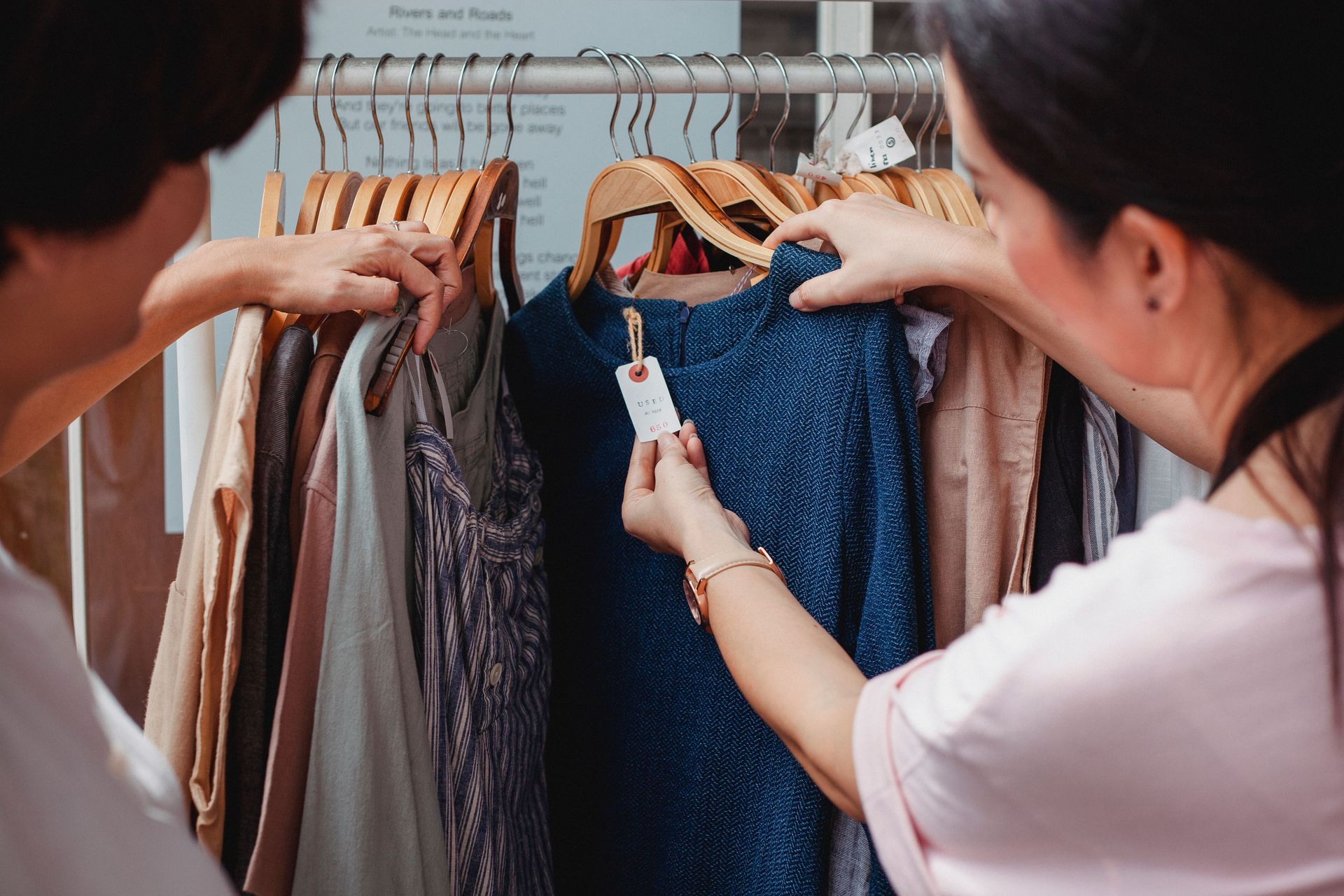
You made a dozen economic decisions before lunch today. Hitting snooze traded punctuality for sleep. Skipping the coffee-shop line for the office pot traded taste for time. Ordering the same lunch as always spared you the cost of deliberating. None of these felt like economics, but all of them were.
Economics has a reputation problem. Most people hear the word and picture stock tickers, interest rates and jargon-heavy arguments about GDP. The field's actual subject is broader and more personal: how people make choices when they cannot have everything they want. Money is one arena where those choices play out. Time, attention, effort and trust are others.
The principles in this list come from two overlapping traditions. Classical and neoclassical economics — the world of Adam Smith, David Ricardo and Alfred Marshall — explains how prices, trade and incentives coordinate billions of strangers who will never meet. Behavioral economics — built by Daniel Kahneman, Amos Tversky, Richard Thaler and others — documents the predictable ways real humans depart from the tidy rational actor of textbooks. Both traditions have produced Nobel Prizes, and both have produced ideas you can apply at the grocery store, in a salary negotiation or while deciding whether to finish a bad movie.
Learning these concepts will not turn anyone into a flawless decision-maker. It does something more modest and more durable: it gives names to patterns you already live inside. Once you can name the sunk cost fallacy, you notice yourself finishing meals you no longer want. Once you understand anchoring, the "original price" on a sale tag loses some of its grip. Once you see how defaults steer behavior, you start checking which boxes were pre-checked for you.
What follows are 25 principles, each explained in plain language and tied to decisions ordinary people face every week. Some describe how markets behave. Others describe how minds behave. Together they form a working toolkit for understanding why you — and everyone around you — spend, save, wait, splurge and settle the way you do.

Credit: Andrea Bova / Pexels
The true cost of anything is not its price tag. It is the value of the best alternative you gave up to get it. Economists call this opportunity cost, and it applies to every resource you have — money, time, attention and energy.
Spend Tuesday evening watching television and the cost is not zero just because the couch is free. The cost is the workout you skipped, the friend you didn't call or the side project that stayed untouched. Spend $1,200 on a new phone and the cost includes whatever else that money could have done, from a flight to a contribution to a retirement account.
College is the classic illustration. Tuition is only part of the bill. A full-time student also gives up four years of wages, which for many people exceeds the tuition itself. The degree may still be worth it, but the honest calculation includes both numbers.
Opportunity cost also explains why "free" things are rarely free. A free concert costs the hours spent attending it. A free trial costs the attention required to remember to cancel. Milton Friedman popularized the blunt version of this idea with the title of his 1975 book: there's no such thing as a free lunch. Someone, somewhere, gives something up.
The concept sharpens decisions because it reframes the question. Instead of asking whether an option is good, ask whether it is better than the best thing you could do instead. A decent job offer looks different when the alternative is a great one. A night of scrolling looks different when the alternative is sleep.
Doing nothing has an opportunity cost too. Cash parked in a checking account gives up the interest a savings account would pay. A skill left unpracticed gives up the compounding of small improvements. Every yes is a no to something else, and the discipline of naming that something is where clear thinking about trade-offs begins.
Credit: Declan Sun / Unsplash
Money, time and effort that you have already spent and cannot recover are sunk costs. Rational decision-making has a firm rule about them: ignore them. Only future costs and future benefits should shape what you do next. Humans break this rule constantly.
You sit through the second half of a bad movie because you paid for the ticket. The ticket money is gone whether you stay or leave. Staying only adds a second loss — 90 more minutes of your evening. The same logic drives people to overeat at buffets to "get their money's worth," to finish books they stopped enjoying 100 pages ago and to keep repairing a car that has become a money pit.
The stakes get higher as the sunk costs grow. People stay in careers because of the years already invested in a credential, remain in failing relationships because of the time already spent and pour more money into home renovations because walking away would make the earlier spending feel wasted. Governments do it too. Evolutionary biologists in the 1970s coined the term Concorde fallacy after the supersonic jet that Britain and France kept funding long after it became clear the project would never pay off.
The psychology behind the fallacy is understandable. Abandoning a course of action forces you to admit the earlier investment bought nothing, and that admission stings. Pressing on lets you postpone the reckoning. It also usually deepens the hole.
A useful test cuts through the fog: if you were starting from scratch today, with no history, would you choose this movie, this project, this job? If the answer is no, the history is not a reason to continue. It is just a story about money and time that are already gone.
Quitting, in this frame, is not weakness. It is the refusal to let a past mistake charge you twice.
Credit: PNW Production / Pexels
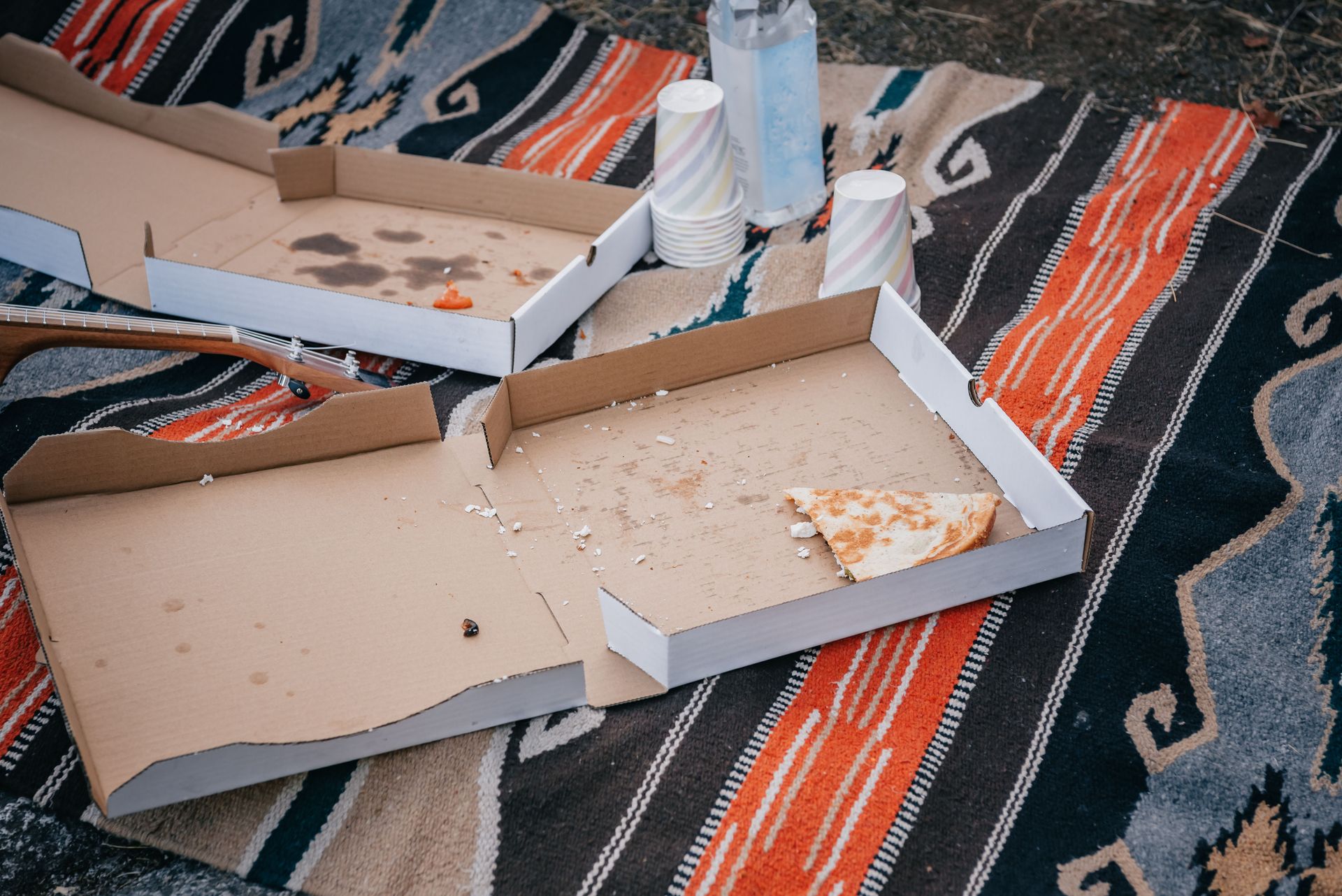
The first slice of pizza after a long day is a small miracle. The second is good. The third is fine. By the fifth, you are eating out of momentum. Economists call this diminishing marginal utility: each additional unit of a good delivers less satisfaction than the one before it.
The idea sounds obvious, but it took economists a long time to formalize, and it resolved a puzzle that bothered Adam Smith. Water is essential to life yet costs almost nothing, while diamonds are useless for survival yet cost a fortune. The answer, worked out in the 1870s by the economists of the marginal revolution, is that prices reflect the value of the next unit, not the total value of the category. Water is abundant, so the next gallon is worth little. Diamonds are scarce, so the next one is worth a lot.
The principle shapes everyday behavior in quiet ways. It explains why variety appeals to you — the tenth bite of a new dish beats the twentieth bite of the old one. It explains why all-you-can-eat restaurants stay in business: they know your appetite for marginal plates collapses quickly. It explains why the thrill of a raise fades within months, and why the jump from no car to one car changes your life while the jump from four cars to five barely registers.
It also underpins one of the oldest arguments in public policy. A dollar means less to someone with millions of them than to someone choosing between rent and groceries. That claim about marginal value is one rationale offered for progressive taxation, and it is why economists distinguish between income and the well-being income buys.
For personal decisions, the lesson is to spend at the steep part of the curve. The first good mattress, the first reliable pair of shoes and the first vacation in years deliver far more than the upgraded versions of things you already own.

Credit: Alexas Fotos / Pexels
Strip economics down to one sentence and you get this: people respond to incentives. Change the rewards and penalties attached to a behavior, and the behavior changes — often in ways the designer of the incentive never intended.
The everyday versions are familiar. Salespeople paid on commission push harder than salaried ones, and sometimes push products the customer does not need. A contractor paid by the hour has a different relationship with your deadline than one paid a flat fee. Children with allowances tied to chores discover a sudden enthusiasm for vacuuming. A modest fine for late daycare pickups can backfire by turning guilt into a price parents are willing to pay.
History supplies sharper examples. In colonial Hanoi in the early 1900s, French administrators tried to control a rat infestation by paying a bounty for each rat tail. Residents responded by clipping tails and releasing the rats to keep breeding, and some began raising rats outright. The bounty rewarded tails, not fewer rats, and it got exactly what it paid for. Economists now use the phrase perverse incentives for schemes like this, where the reward corrupts the goal.
The gap between what you want and what you measure is where incentive design usually fails. Pay programmers per line of code and you get bloated code. Grade teachers on test scores alone and you get teaching to the test. Reward hospitals for short stays and some patients leave too early.
None of this means people are purely mercenary. Social incentives — reputation, approval, guilt, pride — move behavior at least as much as money does, which is why public recognition and peer pressure are among the cheapest motivators ever devised.
The practical skill is learning to read incentives before trusting advice or predicting behavior. Ask what the other party is rewarded for, and much of what they do stops being mysterious. Ask what you have accidentally rewarded in your own household or team, and some persistent frustrations start to explain themselves.

Credit: Bayram Yalçın / Pexels
Prices are not arbitrary numbers. They are the point where two forces meet: how much of something sellers will offer, and how much buyers want it. Alfred Marshall, writing in 1890, compared supply and demand to the two blades of a pair of scissors — neither cuts alone.
When demand rises faster than supply, prices climb. That is the whole story behind concert tickets reselling for multiples of face value, rents rising in cities where construction lags population growth and egg prices spiking when avian flu thins flocks. When supply outruns demand, prices fall, which is why last season's fashion ends up on clearance racks.
Ride-hailing surge pricing is the principle operating in real time. On a rainy Friday night, riders multiply while drivers do not. A higher price does two jobs at once: it rations scarce cars toward the people who need them most urgently, and it pulls more drivers onto the road by making the hour worth their while. The surge feels like gouging to the person staring at the app, but the alternative — a fixed price — tends to mean no car at all.
The economist Friedrich Hayek made the deeper point in a 1945 essay. No central planner knows how much wheat, lumber or labor every corner of the world needs this week. Prices compress that scattered knowledge into a single signal. When lumber gets expensive, builders economize and mills expand, and nobody had to coordinate any of it.
The framework also predicts what happens when governments cap prices below the market level: shortages. If rent is held far under what an apartment would fetch, more people want units than exist, and the difference shows up as waiting lists, key money and deteriorating buildings.
Once you see prices as information rather than insults, everyday sticker shock becomes legible. A high price is a message about scarcity. The useful question is what the message says.

Credit: AR Abnoy / Pexels
David Ricardo published one of the least intuitive ideas in economics in 1817. Trade pays off even when one party is better at everything. What matters is not who is best at a task — absolute advantage — but who gives up the least to do it. That is comparative advantage.
Ricardo's example involved English cloth and Portuguese wine, but the logic lives in every household. Suppose a lawyer bills $300 an hour and also happens to be a faster typist than any assistant she could hire. She should still hire the assistant. Every hour she spends typing costs her $300 of legal work, while the assistant's typing hour costs far less. Both come out ahead when each does the work with the lowest opportunity cost.
The same math explains why you call a plumber you could theoretically out-YouTube. The repair might take the plumber one hour and take you six. Those six hours have other uses — paid work, family, rest — and once you price them honestly, the invoice often looks cheap. It explains why couples split chores unevenly without anyone being lazy, why restaurants buy bread instead of baking it and why a small firm outsources payroll.
Scaled up, comparative advantage is the case for international trade. Countries export what they can produce at the lowest relative cost and import the rest, which is why bananas come from the tropics and precision machine tools come from places with deep engineering bases. The gains are real, though the textbook version says little about how they are distributed — a gap that fuels much of the modern trade debate.
The personal takeaway is about focus. You do not need to be the best in the world at what you do. You need to steer your hours toward the work where your relative edge is largest, and buy, delegate or trade for the rest.
Credit: Nicola Barts / Pexels
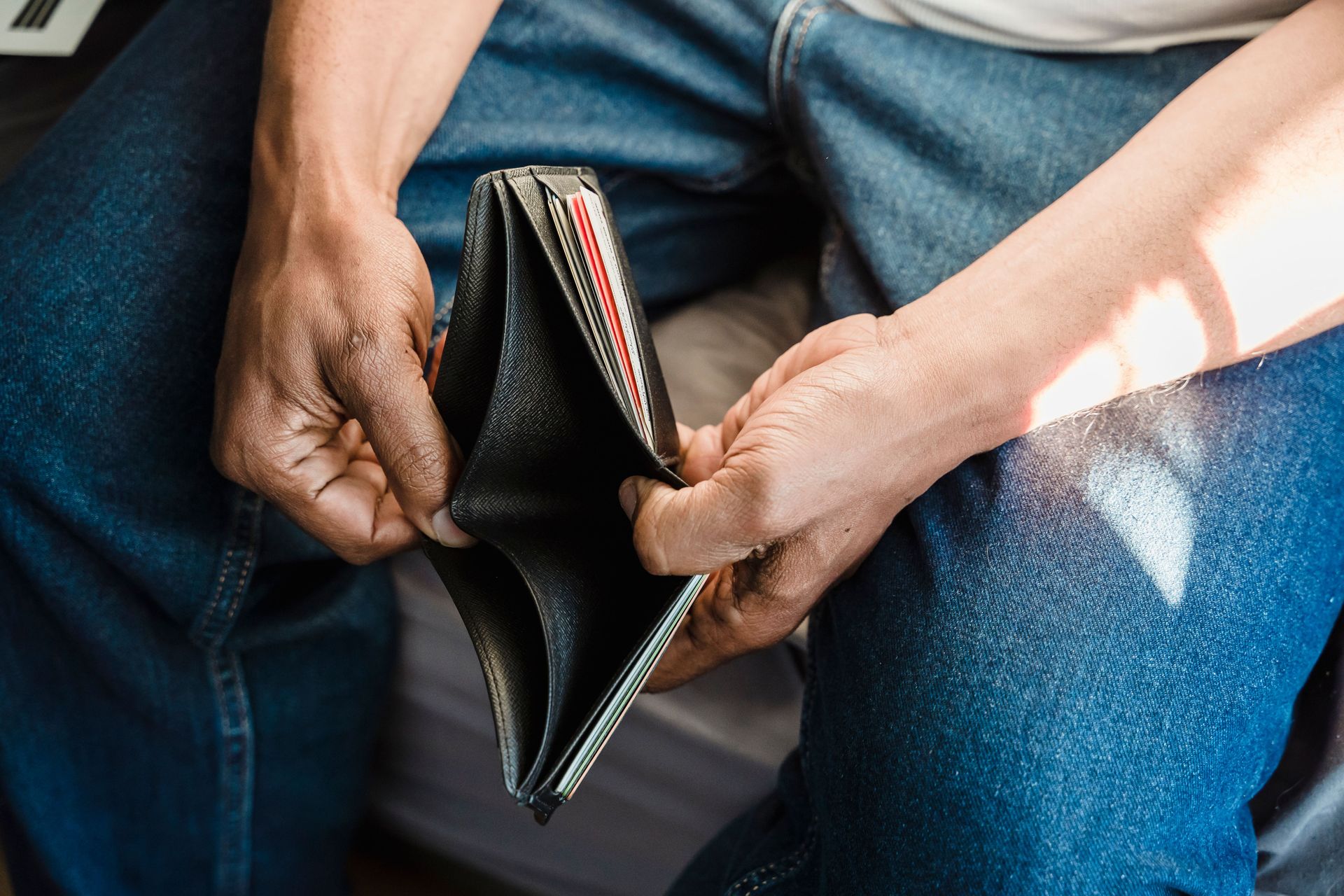
Offer someone a coin flip: heads they win $150, tails they lose $100. The expected value is positive, yet most people refuse. Daniel Kahneman and Amos Tversky built prospect theory around this pattern in 1979, and their central finding was blunt: losses loom larger than gains. In their experiments, a loss stung roughly twice as much as an equal gain pleased.
That asymmetry runs through daily financial life. Investors hold losing stocks for years, waiting to "get back to even," while selling winners quickly — a pattern researchers call the disposition effect. Selling the loser would convert a paper loss into a real one, and the mind resists making the loss official, even when the money would work harder elsewhere.
Loss aversion explains the appeal of extended warranties on cheap electronics, which convert a small chance of loss into a certain but tolerable fee. It explains why free trials work: after a month, canceling feels like losing something you own. It explains why negotiations stall, since each side weighs its concessions more heavily than the other side's, and why homeowners refuse to list below the price they paid, even in a falling market.
Marketers exploit the asymmetry through framing. Ground beef labeled 90% lean sells better than beef labeled 10% fat, though the packages are identical. A discount for paying cash feels different from a surcharge for using credit, even when the two prices match. Deadlines that threaten loss — offer expires tonight — move people faster than equivalent promises of gain.
You cannot switch the bias off, but you can audit it. When a decision feels impossible, check whether you are protecting a loss rather than pursuing a gain. Ask what you would do if you held cash instead of the losing position. The math of a choice does not change based on which direction the change is framed, but your feelings will insist otherwise.
Credit: Artem Beliaikin / Unsplash
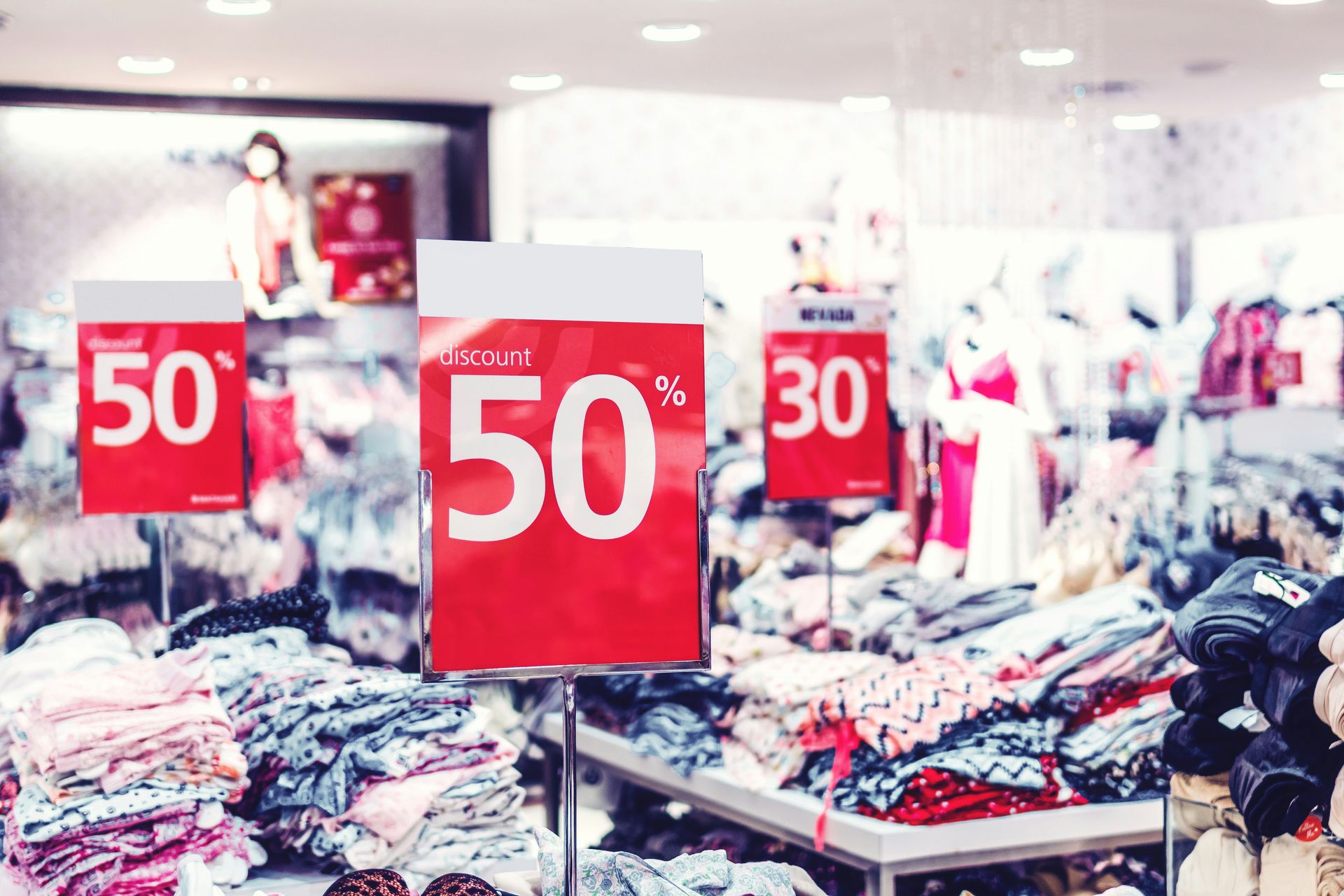
The first number you encounter in a decision pulls every later judgment toward it, even when the number is irrelevant. Psychologists Amos Tversky and Daniel Kahneman demonstrated this in a 1974 experiment by spinning a rigged wheel of fortune in front of participants, then asking them to estimate the percentage of African countries in the United Nations. People who watched the wheel land on a high number gave higher estimates. A random spin had colonized their reasoning.
Commerce is built on this quirk. The manufacturer's suggested retail price exists largely to be crossed out. A jacket marked down from $199 to $89 feels like a bargain in a way the same jacket priced flatly at $89 never would, because the first number set the frame. Wine lists open with an expensive bottle so that the mid-priced options read as restraint. Real estate listing prices anchor not only buyers but professional appraisers, who in controlled studies drift toward whatever asking price they are shown.
Negotiation research points the same direction. The first offer in a salary discussion establishes the range within which the haggling happens, which is why going first — with an aggressive but defensible number — tends to help, and why recruiters ask about your current pay before naming theirs.
Charities apply the trick with suggested donation tiers. A form listing $50, $150 and $500 produces larger gifts than one listing $10, $25 and $50, because each menu quietly teaches the donor what normal looks like.
Defenses exist, though they take effort. Research the base rate before you see anyone else's number: what the market actually pays for the role, what comparable homes actually sold for, what the product costs elsewhere. Set your own anchor first when you can. And treat any crossed-out price as decoration. The only question that matters is whether the item is worth the number you would actually pay, judged cold.

Credit: PNW Production / Pexels
Offered $100 today or $110 next week, many people grab the $100. Offered $100 in 52 weeks or $110 in 53 weeks, the same people happily wait the extra week. The trade is identical — $10 for seven days — but its position in time changes the answer. Economists call the pattern hyperbolic discounting, or present bias: rewards shrink drastically in value the moment they move out of right now.
The bias runs one of the oldest scams in daily life, in which your present self makes commitments your future self must honor. Present you signs up for the gym; future you was supposed to attend. Gyms understand this and sell far more memberships than their floor space could survive if everyone showed up. Present you buys the alarm clock's optimism at 11pm; future you negotiates with the snooze button. Credit cards weaponize the bias by separating the pleasure of buying from the pain of paying, which arrives weeks later as a statement your past self left behind.
The countermeasure is as old as literature. Odysseus, knowing the Sirens would overpower his future judgment, had himself tied to the mast in advance. Economists call such arrangements commitment devices: choices made now that remove options later. Automatic transfers move money to savings before you can spend it. In the early 1900s, U.S. banks ran Christmas club accounts that locked away small deposits all year precisely because customers wanted to be prevented from touching them. Modern versions include apps that block your phone during work hours and deadlines you announce publicly so that backing out costs reputation.
The design principle is consistent: do not rely on future willpower, because the person who will need it discounts your plans as steeply as you discount theirs. Arrange the world so the good choice happens by default and the bad one requires effort.
Credit: Towfiqu barbhuiya / Pexels
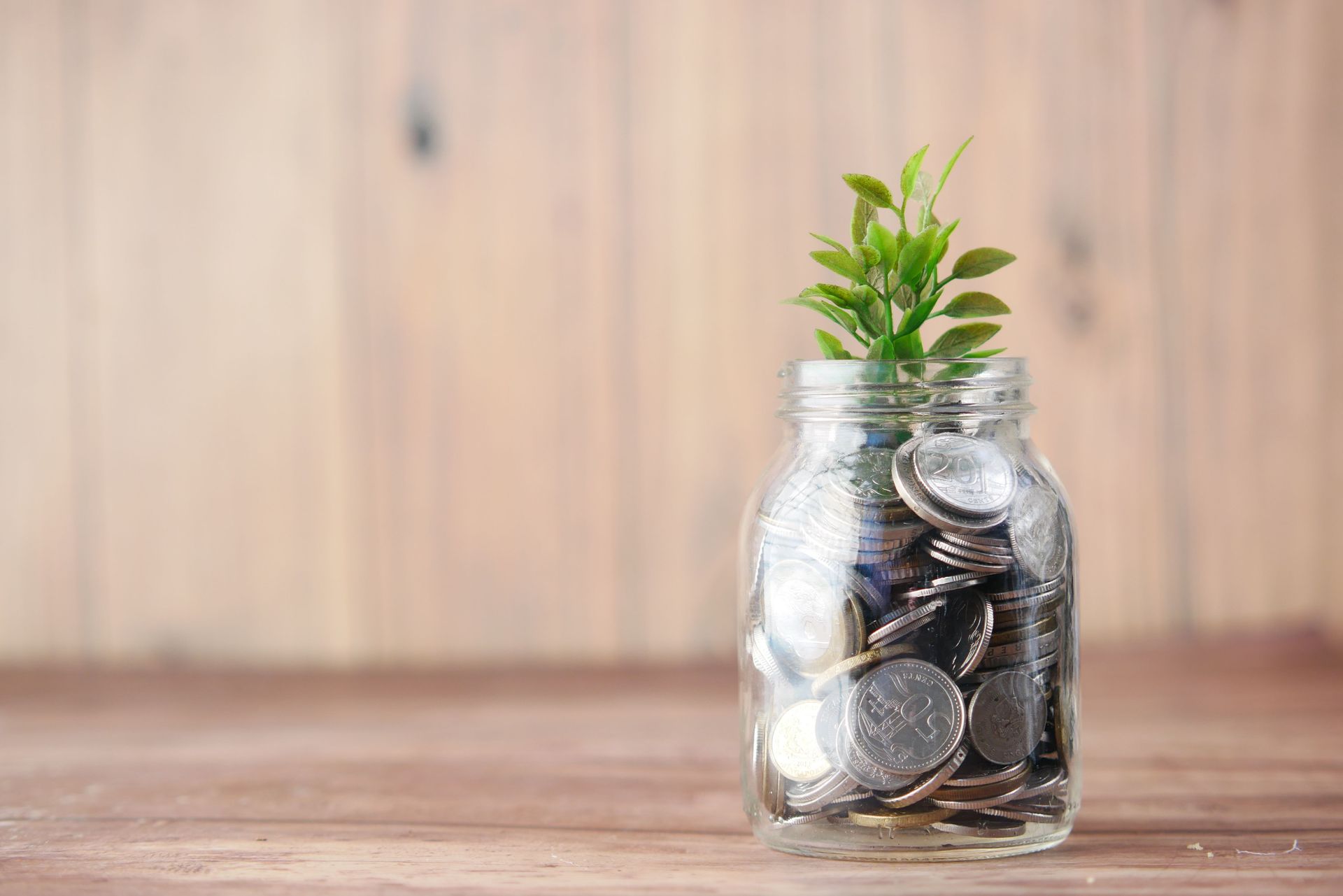
Compound interest is what happens when your returns start earning returns of their own. The money grows not in a straight line but in a curve that bends upward, slowly at first and then steeply, because each year's gains join the principal and enlarge the base for the next year's gains.
A quick tool called the Rule of 72 shows the speed. Divide 72 by an annual growth rate and you get the approximate number of years the sum takes to double. At 7% a year, money doubles roughly every decade. At 2%, doubling takes about 36 years. The gap between those two rates, compounded across a working life, is the difference between comfort and scraping by.
Time matters more than talent here. Invest $200 a month at a 7% annual return and after 30 years you hold about $244,000. Keep going for 40 years and the total reaches about $525,000. The extra decade required only $24,000 of additional contributions but produced roughly $281,000 of additional wealth, because the earliest dollars had the longest runway. Starting early beats starting big. The same arithmetic applies beyond brokerage accounts: skills, audiences and reputations compound too, as long as each year's gains are reinvested rather than skimmed.
The curve cuts both ways. Credit card balances in the U.S. often carry rates above 20%, and by the Rule of 72, a debt compounding at that pace doubles in under four years. The same mathematics that builds retirement accounts quietly digs debt holes, which is why paying down high-rate balances is one of the highest-return moves available to any household.
An often-repeated line calls compound interest the eighth wonder of the world and credits Albert Einstein. The attribution has never been verified, and the math needs no celebrity endorsement. What it needs is patience: the spectacular part of the curve only arrives for people who let the early, boring part run.
Credit: stevepb / Pixabay
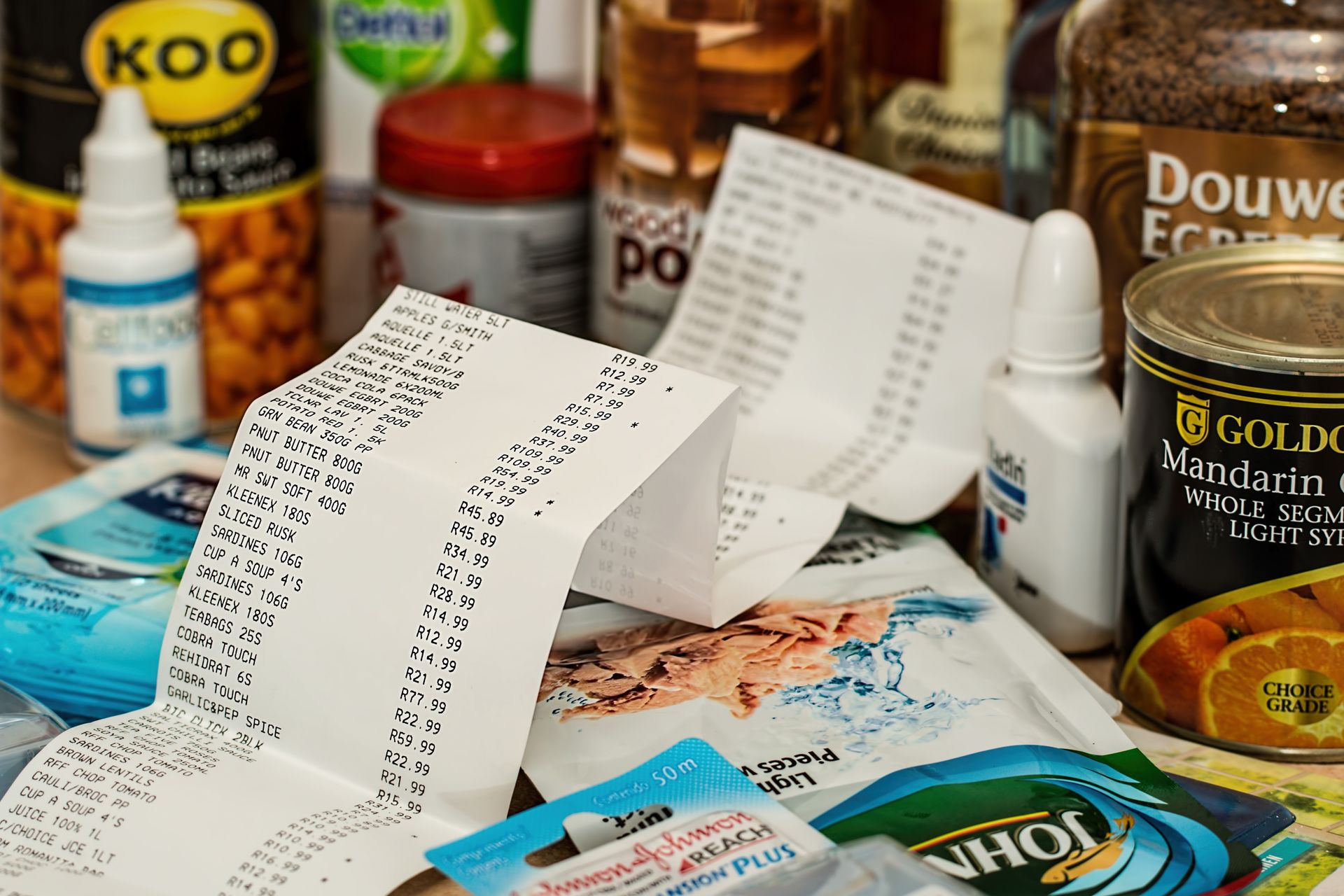
Inflation is a sustained rise in the general level of prices, which is another way of saying a sustained fall in what each unit of money buys. A dollar is not a fixed thing. It is a claim on goods and services, and the size of that claim shrinks a little most years.
Central banks do not aim for zero. The U.S. Federal Reserve and the European Central Bank both target inflation of about 2% a year, on the theory that mild, predictable inflation keeps economies flexible while avoiding the hazards of deflation, in which falling prices encourage everyone to delay spending. At 2%, prices double roughly every 36 years — slow enough to ignore day to day, fast enough to transform a lifetime.
The principle rewrites several everyday judgments. Cash under a mattress is not safe; it is guaranteed to lose purchasing power. A 3% raise during a year of 5% inflation is a pay cut wearing a costume, which is why unions and employees negotiate over real, inflation-adjusted wages, and why U.S. Social Security benefits carry automatic cost-of-living adjustments. Lenders bake expected inflation into interest rates, since they will be repaid in dollars worth less than the ones they handed over.
Sellers, meanwhile, have learned that shoppers watch prices more closely than quantities. Hence shrinkflation: the bag of chips that costs the same but weighs less, the candy bar that slimmed down, the paper towel roll with fewer sheets. The price per unit rose; the sticker never moved.
Inflation also explains why comparing prices across decades misleads without adjustment. Your grandparents' cheap movie ticket and tiny salary belong to a different currency in everything but name. The practical rules that follow are simple: hold long-term savings in assets that can outgrow inflation, judge raises against the year's price changes and read the unit price, not the package.
Credit: John Cameron / Unsplash
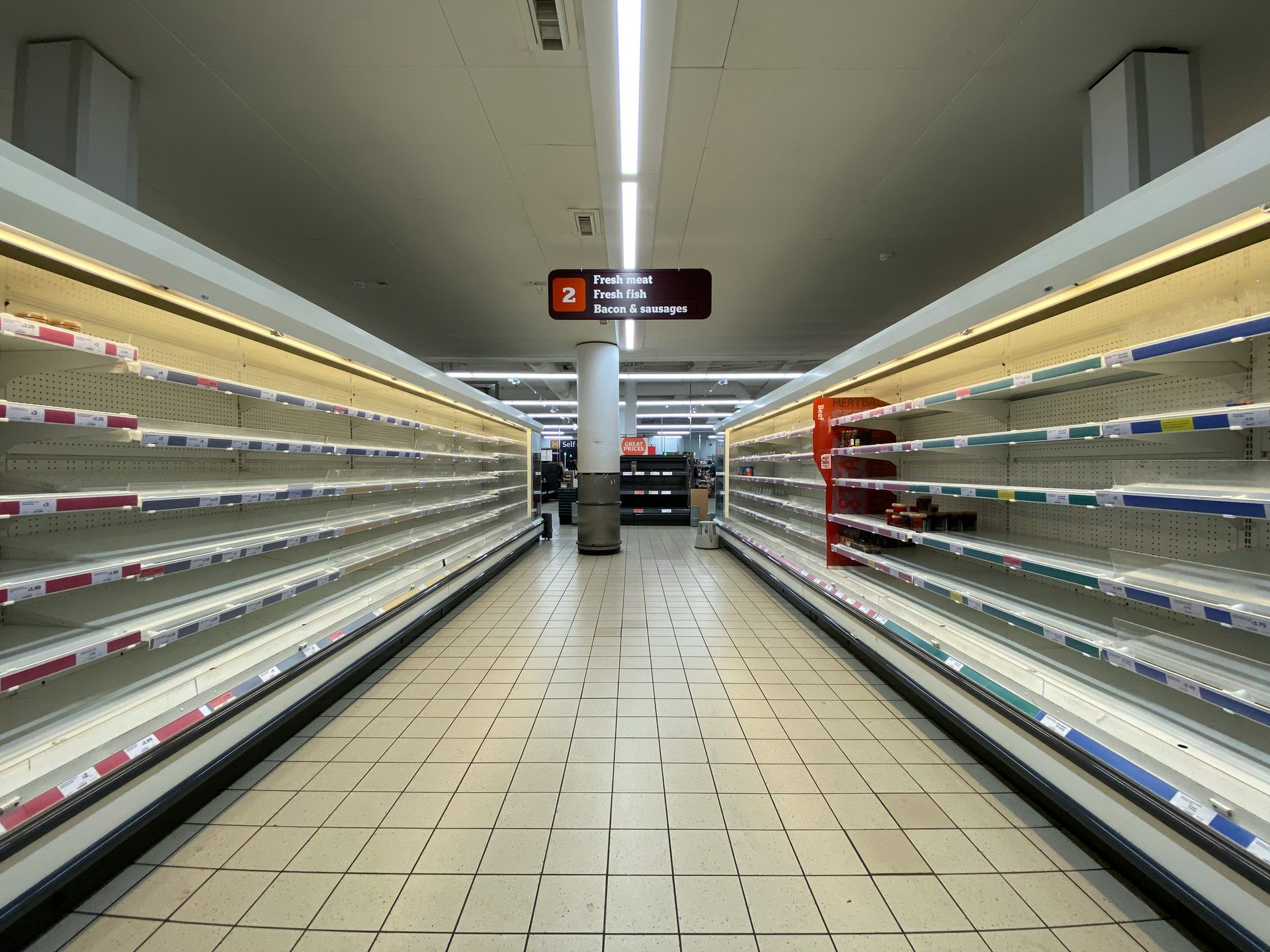
Economics exists because scarcity does. In a 1932 essay that shaped the field's self-definition, the economist Lionel Robbins described economics as the study of human behavior as a relationship between ends and scarce means with alternative uses. Wants are unlimited; the resources for satisfying them are not. Every principle on this list flows from that mismatch.
Scarcity is why anything has a price at all. Air is vital and free because nobody has to give anything up to breathe. Beachfront property is expensive because there is only so much beach. When a resource becomes scarcer — oil during a supply shock, housing in a booming city, tickets to a farewell tour — its price climbs to ration it among the people who want it most.
Sellers understand that perceived scarcity moves buyers, so they manufacture it. Limited-edition sneakers, numbered prints, one-day sales and booking sites announcing that only three rooms remain all press the same lever. For much of the 20th century, De Beers kept diamond prices high in part by controlling how many stones reached the market at all. The scarcity was managed, and the prices followed it anyway, because buyers respond to available supply, not to geology.
The deepest scarcity in modern life is not money. It is time and attention. There are 24 hours in everyone's day, and no income level buys more of them, which is why busy professionals pay to convert money back into time through delivery, cleaning services and direct flights. Attention is scarcer still, and an entire industry of apps competes to harvest it.
Treating your own hours and focus as scarce assets — budgeted, allocated, protected — is the personal version of what economics does at the scale of nations. The discipline begins with admitting you cannot have everything, and then choosing deliberately instead of by drift.

Credit: Janusz Walczak / Pexels
Some costs and benefits leak. When a transaction between two parties affects a third who never agreed to it, economists call the spillover an externality, and it is one of the main reasons markets left entirely alone produce outcomes almost nobody wants.
Negative externalities are the familiar kind. A factory's pollution lands in the lungs of people who bought nothing from it. Your neighbor's 2am party spends your sleep. Each additional car on a crowded highway slows every other driver, a cost the marginal driver never feels. Secondhand smoke, blasting phone speakers on trains and antibiotic overuse all fit the pattern: the decision-maker keeps the benefit and exports part of the cost.
Positive externalities run the other way. A vaccinated person protects unvaccinated neighbors. A restored historic facade raises the whole block's property values. A beekeeper's hives pollinate the orchards next door — an example economists have used for decades because the spillover is so literal. Education pays its holder a salary and pays society a more capable citizen.
The trouble is arithmetic. Activities with negative externalities are underpriced, so people do too much of them. Activities with positive externalities are underrewarded, so people do too little. The economist Arthur Pigou proposed the classic fix a century ago: tax the harmful spillovers and subsidize the helpful ones until private costs match social costs. His name survives in the term Pigouvian tax, the logic behind carbon taxes, tobacco taxes and the congestion charge London has levied on downtown driving since 2003. Subsidized vaccines and public schooling apply the same logic in reverse.
The concept also explains ordinary friction. Disputes over loud music, cigarette balconies, idling engines and unshoveled sidewalks are all negotiations over externalities, conducted without economists present. Noticing the structure will not end the arguments, but it clarifies what they are about: who pays for the part of a choice that lands on someone else.
Credit: Liliana Drew / Pexels
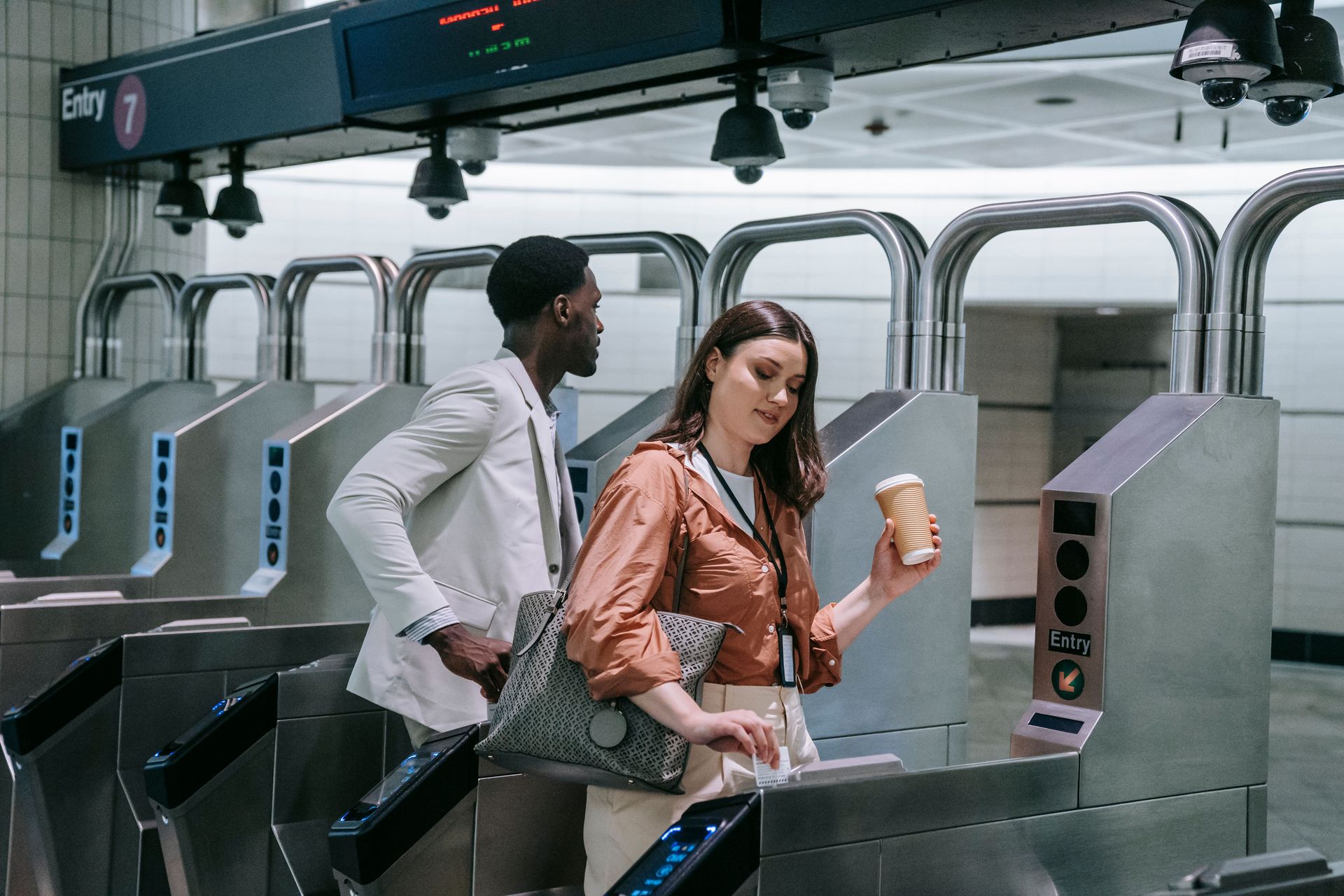
Some goods have two awkward properties. You cannot easily exclude people who refuse to pay for them, and one person's enjoyment does not reduce anyone else's. Economists call these public goods, and the classic examples are streetlights, national defense, lighthouses and clean air. Their awkwardness produces one of the most relatable failures in economics: the free rider problem.
If the streetlight shines whether or not you chipped in, the coldly rational move is to let others pay. The trouble is that everyone can run the same calculation. When enough people do, the light never gets built, even though every single resident would happily trade a few dollars for it. Individually sensible choices add up to a collectively foolish result.
You have lived this. The school group project where one member coasts on the grade the others earn is a free rider problem. So is the shared apartment where dishes pile up because cleaning benefits everyone while costing only the cleaner. So is the meeting where nobody prepares because someone else surely will. Public radio pledge drives exist because broadcasts reach donors and non-donors identically, and the guilt-laden appeals are an attempt to solve with conscience what the price system cannot solve with exclusion.
The standard large-scale solution is compulsion. Taxes are the mechanism by which societies force everyone to pay for defense, courts and roads, precisely because voluntary contributions would collapse under free riding. Homeowners associations, union dues and condo fees apply the same logic at smaller scales.
Smaller groups have gentler tools: visibility and social pressure. Contributions that can be seen — a sign-up sheet with names, a rotating chore chart, credited work — shrink free riding because reputation becomes part of the price. The general lesson holds anywhere effort is shared: when benefits are automatic and contributions are invisible, expect underinvestment, and design accordingly.

Credit: Ron Lach / Pexels
In 1968, the ecologist Garrett Hardin published an essay in the journal Science describing a shared pasture. Each herder gains the full benefit of adding one more animal while the cost — a slightly more depleted pasture — is split among everyone. So each herder adds animals, and the pasture dies. Hardin called it the tragedy of the commons: a shared resource that everyone can use and nobody owns tends toward ruin.
The office refrigerator is the miniature version. Everyone benefits from taking space and leaving cleanup to others, so it fills with abandoned leftovers until someone posts a passive-aggressive note. Shared kitchens in dorms, communal supply closets and the last of the coffee all obey the same dynamic.
The full-sized versions are graver. Ocean fisheries collapsed under exactly this logic: each boat's extra catch paid that boat while depleting a stock nobody owned. Canada's Atlantic cod fishery, once among the richest on earth, crashed so hard that the government imposed a moratorium in 1992, idling tens of thousands of workers. Aquifers drained by competing wells, gridlocked roads and the atmosphere's capacity to absorb carbon are commons problems at increasing scale.
The known remedies fall into three families. Assign ownership, so someone has a stake in the resource's future. Regulate from above with quotas and permits. Or govern from within — the path the political economist Elinor Ostrom documented across the world's fishing villages, irrigation systems and grazing lands. Communities, she showed, often craft their own monitoring rules, boundaries and sanctions that preserve commons for generations without either privatization or central control. The work earned her the 2009 Nobel in economics, the first awarded to a woman.
The household lesson survives translation: any shared resource with private benefits and socialized costs needs rules, visibility or ownership. Notes on the fridge are a start.
Credit: Ivan Kazlouskij / Unsplash
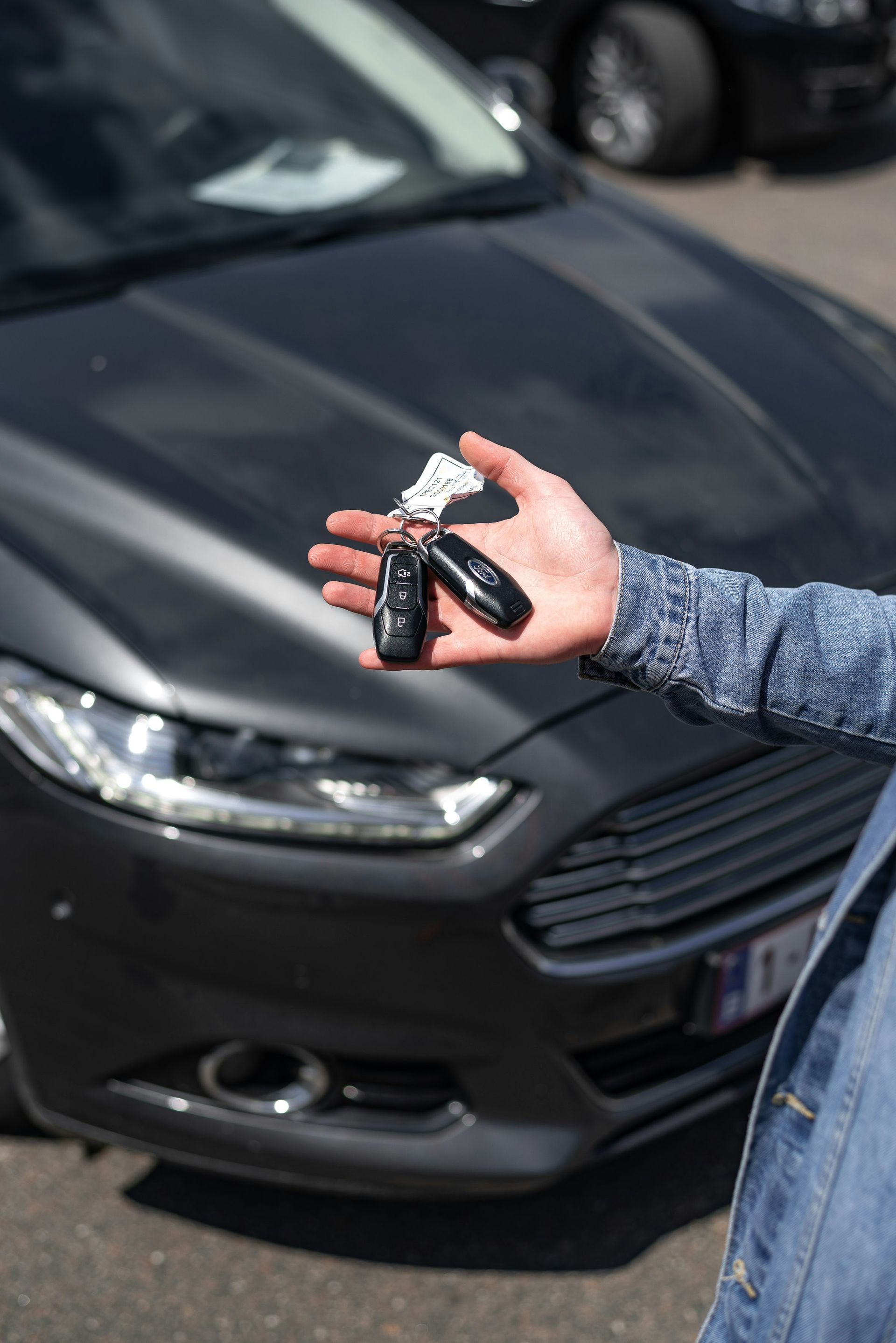
Insurance has an occupational secret, old enough that the industry coined a term for it in the 19th century: people who are protected from a risk behave differently than people who bear it. Economists adopted the phrase — moral hazard — for any situation where shielding someone from consequences changes their conduct, usually in the direction of more risk.
The everyday cases are easy to spot once named. Drivers treat rental cars with a nonchalance their own cars never see. A phone wrapped in an insurance plan gets carried a little more carelessly than one whose cracked screen would come out of pocket. Travelers $TRV with cancel-for-any-reason coverage book more speculatively. None of this requires bad character. It is the ordinary arithmetic of consequences that have been moved onto someone else's ledger.
Insurers fight back with design. Deductibles and copays exist to keep some of the loss attached to you, so that a fender bender or a doctor visit still costs something. Premiums that rise after claims serve the same purpose, as do requirements like smoke detectors and burglar alarms. The industry calls this keeping skin in the game.
The concept scales up uncomfortably. When large banks were rescued during the 2008 financial crisis, critics argued the bailouts taught a dangerous lesson: institutions considered too big to fail could keep the profits of risky bets while taxpayers absorbed catastrophic losses. The economist Sam Peltzman applied related logic to safety regulation in 1975, arguing that drivers respond to mandated safety features by driving less carefully — a claim researchers still argue about, though the underlying mechanism of offsetting behavior is well established.
Moral hazard does not mean safety nets are mistakes. Insurance, bailouts and guarantees prevent real catastrophes. It means every protection needs a design that leaves the protected party some stake in prudence — a deductible, a premium, a consequence that survives the rescue.

Credit: Sergey Meshkov / Pexels
In 1970, the economist George Akerlof published a short paper about used cars that three journals had rejected before the Quarterly Journal of Economics accepted it. The paper eventually helped win him a Nobel Prize, because it explained how entire markets can unravel when one side knows more than the other.
The logic runs like this. A seller knows whether a used car is sound or a lemon. A buyer cannot tell, so a buyer offers a price reflecting the average quality on the lot. That average price is an insult to owners of good cars, who withdraw them from sale, and a windfall to owners of lemons, who pile in. The average quality falls, buyers lower their offers further, more good cars exit and the spiral continues. Bad products drive out good ones — not through fraud, but through information.
Insurance markets face the mirror image. The customers most eager to buy generous health coverage are the ones who privately expect to need it. If insurers respond by raising premiums, the healthiest customers drop out, the remaining pool gets sicker and premiums climb again — the pattern actuaries call a death spiral. Enrollment mandates, employer group plans and limited sign-up windows all exist to hold healthy people in the pool.
Once you know the pattern, the modern marketplace looks like an arsenal of anti-lemon weapons. Warranties and certified pre-owned programs let sellers of good cars prove confidence lemon-owners cannot afford to fake. Vehicle history reports, home inspections, escrow services, return policies and review platforms all shrink the information gap between the party who knows and the party who guesses.
The personal corollary is a question worth asking before any deal that seems generous: why is this being offered to me? When the other side knows more, an eager counterparty is data.

Credit: George Pak / Pexels
Some purchases are not about the thing itself. They are messages. The economist Michael Spence formalized this in a 1973 paper on job markets that later contributed to his Nobel Prize. His unsettling insight: a college degree can raise your wages even if the classes taught you nothing useful, because completing one credibly signals traits employers cannot observe directly — persistence, intelligence, tolerance for structure.
The key word is credibly. Anyone can claim to be diligent in an interview, so claims are cheap and employers discount them. A signal works when it is costly, and costlier still for the people who lack the trait. Finishing four years of coursework is far harder for someone without discipline, which is what makes the diploma informative. Biologists reached a parallel conclusion about peacocks: a tail that extravagant is survivable only by a genuinely fit bird, which is precisely what makes it persuasive to peahens.
Once you have the lens, signals appear everywhere money changes hands. Designer logos broadcast disposable income. Elaborate weddings and engagement rings signal commitment partly because they are expensive to walk away from. A firm's marble lobby signals it expects to be around long enough to amortize the marble. A handwritten thank-you note signals care precisely because it takes time a form email does not. Dressing sharply for an interview says less about fashion than about willingness to make an effort.
There is a twist at the top of status hierarchies: counter-signaling. The billionaire in a plain t-shirt and the professor in a rumpled sweater are signaling too — that their position is secure enough to skip the display. Only those whose status is unambiguous can afford to forgo the badge.
The practical questions run in both directions. What are your purchases and credentials saying, and to whom? And when someone's presentation impresses you, ask what the display costs — and whether the underlying trait or just the budget produced it.

Credit: Athena Sandrini / Pexels
The student in seat 14B paid less than the consultant in 14C for an identical flight. Nothing went wrong. Charging different customers different prices for the same product is called price discrimination, and it is among the most widely practiced strategies in commerce.
The logic starts from a seller's dilemma. Every product faces some customers who would pay a lot and others who would pay only a little. One price forces a choice: set it high and lose the budget shoppers, or set it low and leave money uncollected from the flush ones. Different prices for different groups capture both.
The trick is sorting customers without interrogating them, and sellers have developed elegant filters. Student and senior discounts use identity as a proxy for thinner wallets. Coupons and promo codes sort by patience: people willing to clip, search and wait reveal their price sensitivity, while those who cannot be bothered pay full freight. Airlines historically charged more for itineraries that skipped a Saturday night — a fingerprint of the business traveler on an expense account. Matinee movie tickets, happy hours and off-peak train fares sort by schedule flexibility. Publishers run the sort through time itself, selling hardcovers to the impatient before the paperback arrives for everyone else. Software firms version the sort, offering basic, pro and enterprise tiers of the same underlying code.
The practice sounds sinister and sometimes is, but it can widen access. The student fare fills a seat that would otherwise fly empty, at a price the student could not otherwise afford, while the full-fare passengers cover the fixed costs. Museums with pay-what-you-wish evenings run on the same arithmetic.
For buyers, the lesson is that the posted price is often just the opening position for the least patient customer. Discounts are usually hiding behind a filter — a code, an off-peak hour, an ID card — placed there deliberately for people willing to look.
Newsday LLC / Getty Images
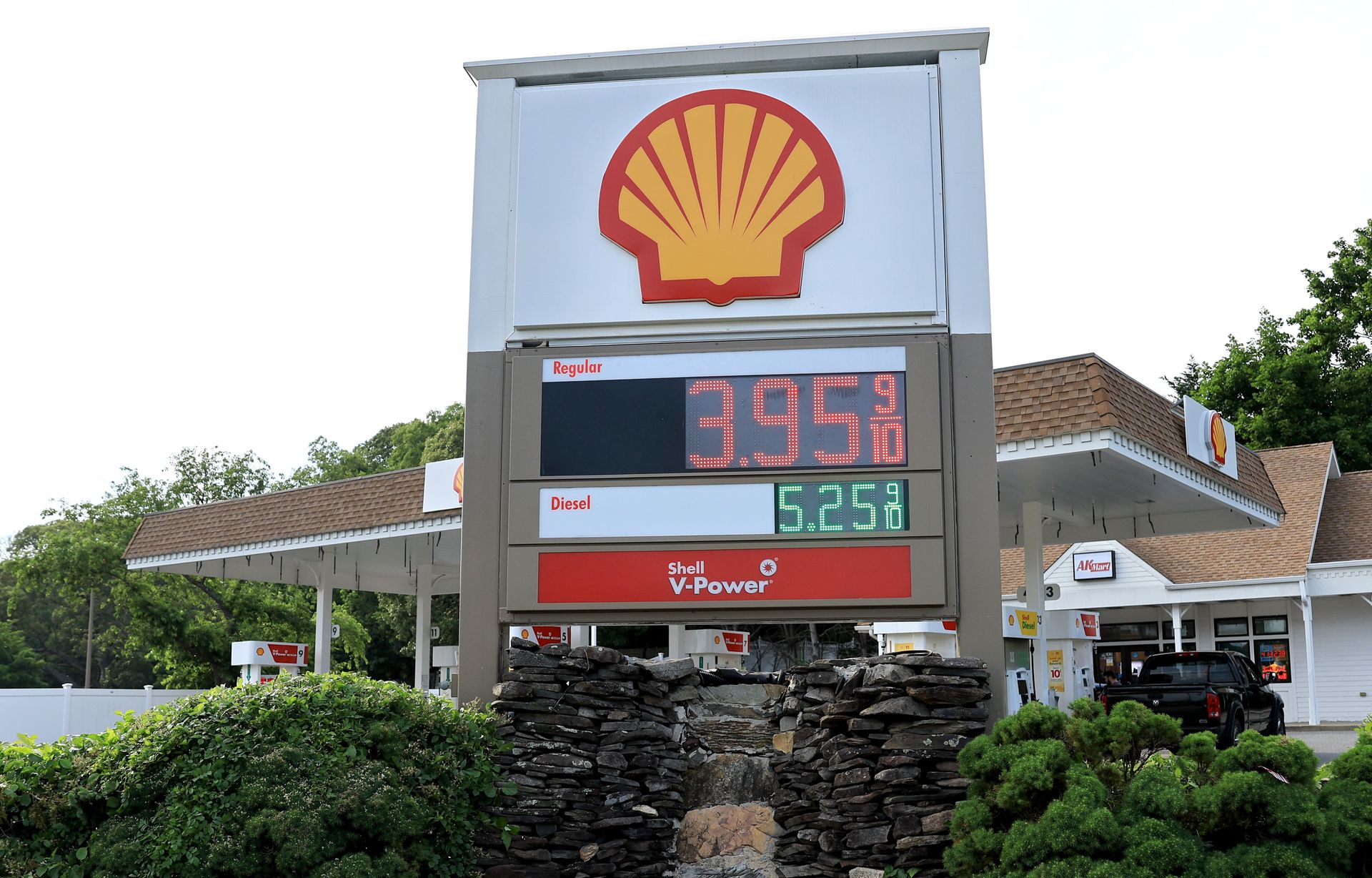
Raise the price of gasoline 20% and commuters grumble, then mostly keep driving. Raise restaurant prices 20% and dining rooms thin out fast. The difference is what economists call price elasticity of demand: how much the quantity people buy responds when the price moves.
Demand is inelastic when purchases barely budge. The classic cases are necessities without substitutes, bought on short timelines: insulin, gasoline for next week's commute, the plumber during a flood, a specific medication under patent. Demand is elastic when buyers can walk away or switch easily: a particular brand of cereal, a vacation, a fourth streaming subscription. Four factors do most of the work — whether substitutes exist, whether the good is a necessity or a luxury, how large a bite it takes from the budget and how much time buyers have to adjust.
Sellers price accordingly. Firms with captive customers — airport food vendors, stadium beer stands, makers of patented drugs — charge boldly because their buyers have nowhere to go. Firms in crowded categories discount constantly because a small price gap moves whole market shares. Governments lean on inelasticity too: tobacco, alcohol and fuel carry heavy taxes partly because consumption falls slowly, which makes the revenue reliable, and partly because even a small decline is the policy goal.
Time quietly converts inelastic demand into elastic demand. In the month after gas prices spike, drivers can do little. Over five years, they buy efficient cars, move closer to work or shift to transit, and consumption responds far more. Short-run captivity is not permanent captivity.
The concept doubles as a personal audit. The purchases where you are most inelastic — the specific brand, the convenient store, the default provider — are exactly where you pay the biggest premiums, because sellers can feel that you will not leave. Elasticity, cultivated deliberately, is a discount.
Credit: Wendy Wei / Pexels
Two suspects sit in separate interrogation rooms. Each can stay silent or betray the other. Betrayal always pays better for the individual, whatever the partner chooses — yet when both follow that logic, both land longer sentences than if both had stayed silent. Researchers at the RAND Corporation constructed this puzzle in 1950, and the mathematician Albert Tucker gave it the prison story and the name that stuck: the prisoner's dilemma.
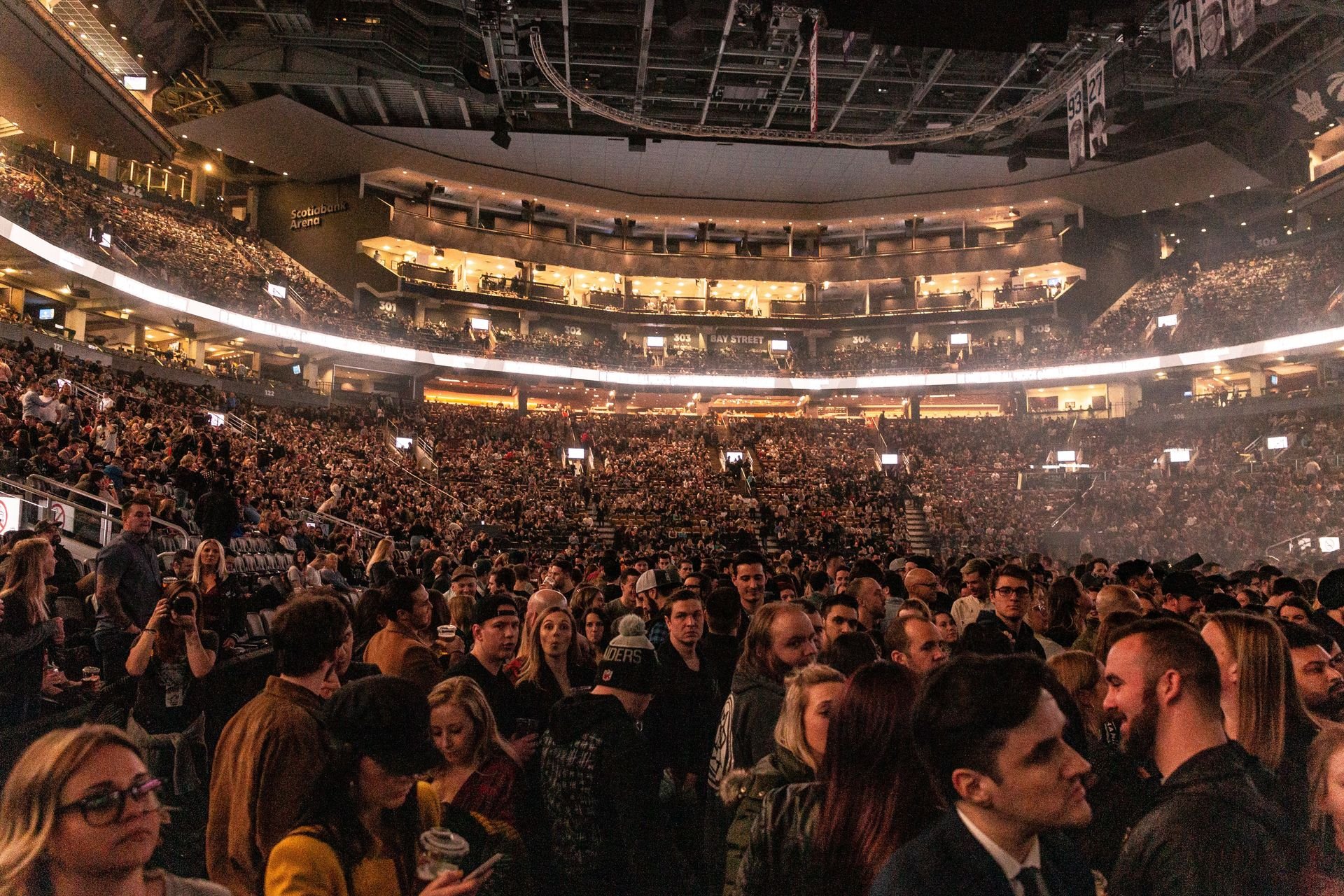
The dilemma matters because it is not about prisons. It describes any situation where individually rational choices sum to a collectively bad outcome. When one fan stands at a concert, she sees better; when every row follows, everyone stands, no one sees better and all are less comfortable. Athletes dope because rivals might, price wars erupt because neither store can afford to hold prices while the other cuts, and nations stockpile arms because disarming alone is dangerous. Each player is responding sensibly to the other's likely move, and the trap closes anyway.
Escape routes exist, and the most powerful is repetition. In tournaments run by the political scientist Robert Axelrod around 1980, computer strategies played the dilemma against each other hundreds of times. The winner, submitted by the mathematician Anatol Rapoport, was also the simplest: tit for tat. Cooperate first, then mirror whatever the other player did last. Repetition transforms the game, because today's betrayal invites tomorrow's retaliation, and cooperation becomes self-enforcing.
That is why the corner shop that will see you weekly treats you better than the tourist-trap stall that will never see you again, and why reputations, long-term contracts and small communities all breed honesty. The practical rule for your own dealings follows directly: turn one-shot games into repeated ones where you can, and be careful in any transaction where the other party has no tomorrow with you.
Credit: Tara Winstead / Pexels
One of the strongest forces in decision-making is the option that happens if you do nothing. Whoever sets the default — the pre-checked box, the automatic renewal, the standard plan — shapes outcomes at scale, because most people, most of the time, leave settings where they found them.
The evidence is stark. In a 2003 study in the journal Science titled "Do Defaults Save Lives?", the researchers Eric Johnson and Daniel Goldstein compared organ donor consent across European countries. In Germany, where citizens had to opt in to become donors, consent stood at 12%. In neighboring Austria, where citizens were donors unless they opted out, consent exceeded 99%. Two similar populations, one form design, a gulf in outcomes.
Retirement savings tell the same story. Research by the economists Brigitte Madrian and Dennis Shea on a large U.S. firm found that when the company switched its 401(k) plan from opt-in to automatic enrollment, participation among new hires jumped from under 40% to more than 85%. Nobody was forced to save. The paperwork simply changed sides.
Richard Thaler and Cass Sunstein built their 2008 book "Nudge" around this power, arguing that institutions cannot avoid setting defaults, so they should set them toward outcomes people themselves would endorse. Businesses grasped the principle long before governments did. Subscriptions renew automatically. Free trials convert unless canceled. Checkout pages arrive with insurance, tips or newsletters pre-selected. Inertia has a business model.
The force behind defaults is a cocktail: effort avoidance, procrastination, the assumption that the preset option is a recommendation and plain status quo bias — the human preference for whatever already is.
The defense is a periodic audit. List what you pay for and receive automatically: subscriptions, contribution rates, insurance tiers, notification settings. Each was chosen by someone, and not always with your interests in mind. Re-choose them deliberately, and set your own defaults — automatic savings, standing orders — to put inertia on your side.
Credit: Towfiqu barbhuiya / Pexels
Money is fungible. A dollar from a paycheck, a dollar from a tax refund and a dollar found in a coat pocket have identical purchasing power. Yet people treat them as different currencies — spending freely from some mental jars while guarding others — a pattern the economist Richard Thaler named mental accounting and documented across decades of work that earned him the 2017 Nobel in economics.
The tax refund is the canonical case. It is not a gift; it is your own salary, returned after an interest-free loan to the government. But because it arrives in a lump labeled "extra," it gets spent on splurges that the same money, drip-fed through paychecks, never would have funded. Bonuses, birthday cash and casino winnings live in the same loose account. Gamblers who are ahead take reckless bets with what they call house money, as if chips won an hour ago were less real than the chips they arrived with.
Gift cards reveal the same wiring. People buy frivolities with a $50 card that they would never buy with a $50 bill, because the card was pre-assigned to a "treat" account. The costliest version of the habit is structural: households hold savings earning 4% while carrying credit card debt costing 22%, because the savings account and the debt sit in separate mental ledgers that are never allowed to meet.
The bias is not purely a defect. Envelope budgeting, vacation funds and the practice of separating rent money from spending money all harness mental accounting deliberately, using artificial walls to enforce discipline that raw willpower could not.
The corrective habit is a single question at the moment of spending: would I buy this if the money had come from my regular paycheck? If the answer is no, the label on the money is doing the deciding — and labels are yours to rewrite.
Credit: cottonbro studio / Pexels
In experiments at Cornell University reported in 1990, the researchers Daniel Kahneman, Jack Knetsch and Richard Thaler handed coffee mugs to half a class and let the other half bid to buy them. The mugs were identical and minutes old in their owners' hands, yet sellers demanded roughly twice what buyers would pay. Ownership itself had inflated the price. The pattern is called the endowment effect: people value things more once the things are theirs.
The mechanism is loss aversion wearing a different coat. For the owner, parting with the mug registers as a loss; for the buyer, acquiring it registers as a gain — and losses weigh heavier, so the two sides genuinely disagree about the same object's worth.
Commerce has industrialized the effect. Free trials, 30-day money-back guarantees, test drives and generous return policies all exist to get the product into your possession, because once it sits on your counter, returning it feels like giving something up. Pet stores learned long ago that a puppy sent home "just for the weekend" rarely comes back.
The effect also gums up ordinary transactions. Home sellers routinely list above market because the house is theirs, and years of memories are bundled into the asking price no buyer can see. Garage sale hagglers discover that owners want real money for objects the owners themselves would not pay a dollar for at someone else's sale. Season ticket holders demand far more to sell a seat than they would ever pay to buy one. And closets stay full because discarding possessions feels like loss, even when the possessions went unworn for years.
The audit question flips the frame: if I did not own this, what would I pay for it today? Applied to the closet, the storage unit or the languishing investment, the honest answer is often far below the price your ownership has been quoting you.

Credit: Polina Tankilevitch / Pexels
Some products get more valuable as more people use them. A telephone connected to no one is a paperweight; connected to everyone, it is indispensable. Economists call this a network effect, and Robert Metcalfe, the engineer who co-invented Ethernet, offered a famous rule of thumb: a network's value grows roughly with the square of its users, because every new member creates potential connections to all the existing ones.
Network effects explain a puzzle of everyday technology: why entire countries settle on a single messaging app, and why the app differs by country. You are not on your chat platform because it is best. You are on it because your people are, and each new arrival tightens the lock for everyone else. Social networks, fax machines in their day and even languages spread by the same logic — each additional user raises the payoff for the next.
A second variety powers marketplaces. Ride-hailing platforms, auction sites and food delivery apps connect two sides, and each side's value depends on the other's size. More riders attract more drivers, which shortens waits, which attracts more riders. This is why platform startups burn investor money on coupons and driver bonuses: the early network is worthless, so growth must be bought until the flywheel turns on its own. Credit cards ran this playbook decades before smartphones, courting merchants and cardholders simultaneously.
The dynamic produces winner-take-most markets, high switching costs and the durable dominance of incumbents whose products may be mediocre. Leaving alone is pointless; the value was never in the software but in the crowd.
Networks can also curdle. Congestion is a negative network effect — each additional driver, or each additional voice in an overrun social feed, subtracts value. For users, the core insight is worth remembering at every sign-up: you are not just choosing a product. You are choosing a crowd.
