From a $30,000 Nissan Leaf to a 512-mile Lucid Air, the electric cars that go the farthest on a single charge
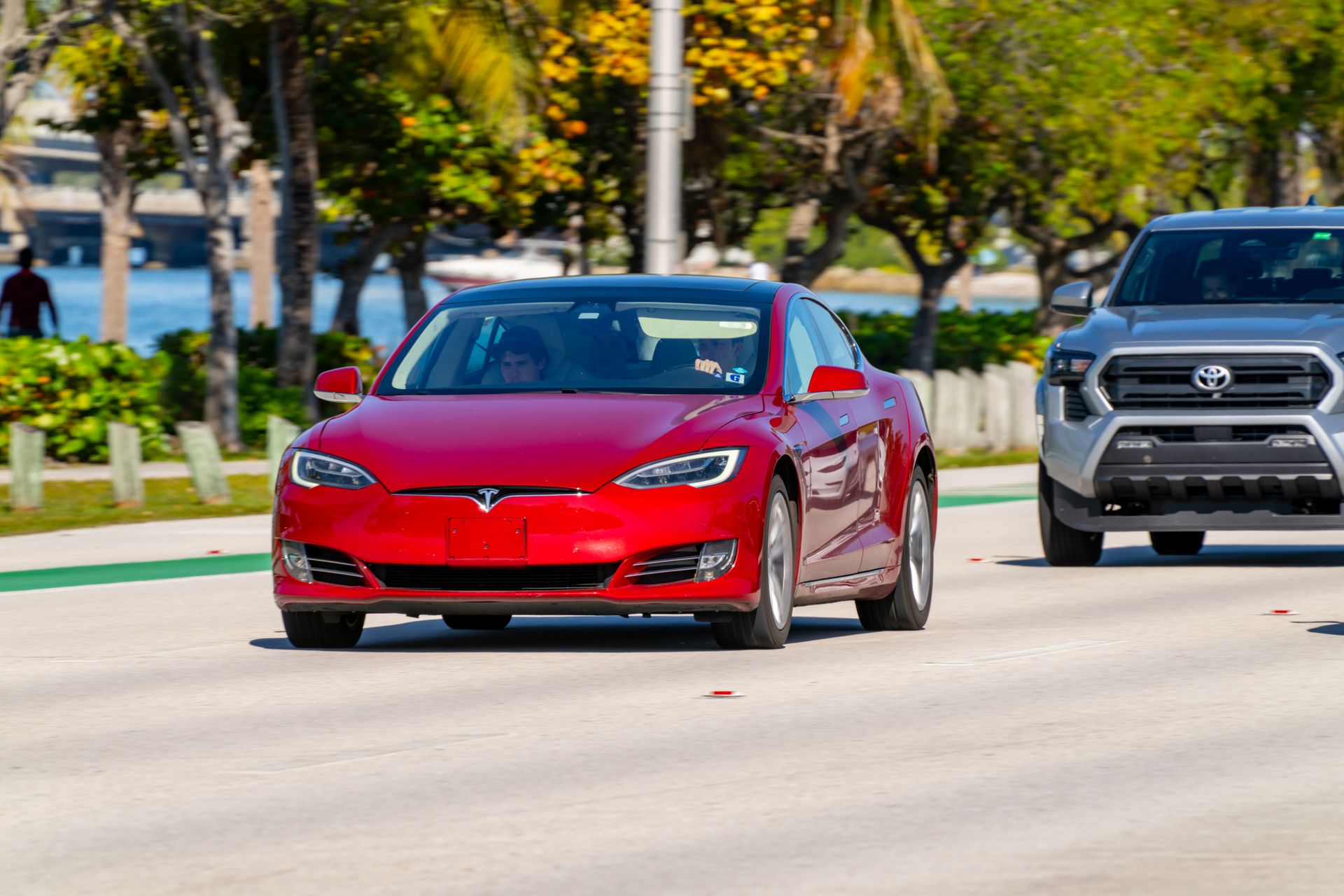
felixmizioznikov / Getty Images
Range anxiety has a shorter half-life than the EV industry once feared. A decade ago, the average battery-electric vehicle could cover somewhere around 100 miles before needing to stop, which made EVs practical only for drivers with short, predictable commutes and a dedicated charging setup at home. The technology has advanced so quickly that the question has inverted. Buyers no longer ask whether an EV can handle a given trip — they evaluate which EV handles the longest trips best. The benchmark for a respectable maximum range has settled around 300 miles, and there are now roughly 70 electric vehicle models on the U.S. market competing to exceed it. Vehicles that fall short of 350 miles no longer appear on lists like this one.
Within that field, a small group of vehicles has separated itself by reaching ranges that a gasoline car owner might consider routine. The gap between the longest-range EVs and the shortest-range EVs in the same class can exceed 150 miles, which translates directly to how often a driver needs to stop on a cross-country trip, how much margin exists for cold-weather range reduction, and whether a vehicle can serve as a household’s sole car without logistical compromise. The vehicles that solve the range problem most completely earn a specific kind of trust that the broader EV market is still working to build.
The 10 vehicles below come from U.S. News & World Report’s list of electric cars with the longest range, which identifies the battery-electric vehicles with the highest EPA-rated maximum driving ranges available to U.S. buyers. The list spans sedans, pickup trucks, and SUVs across multiple price points, from accessible long-range options to flagship luxury vehicles that push the boundaries of what battery technology currently delivers.
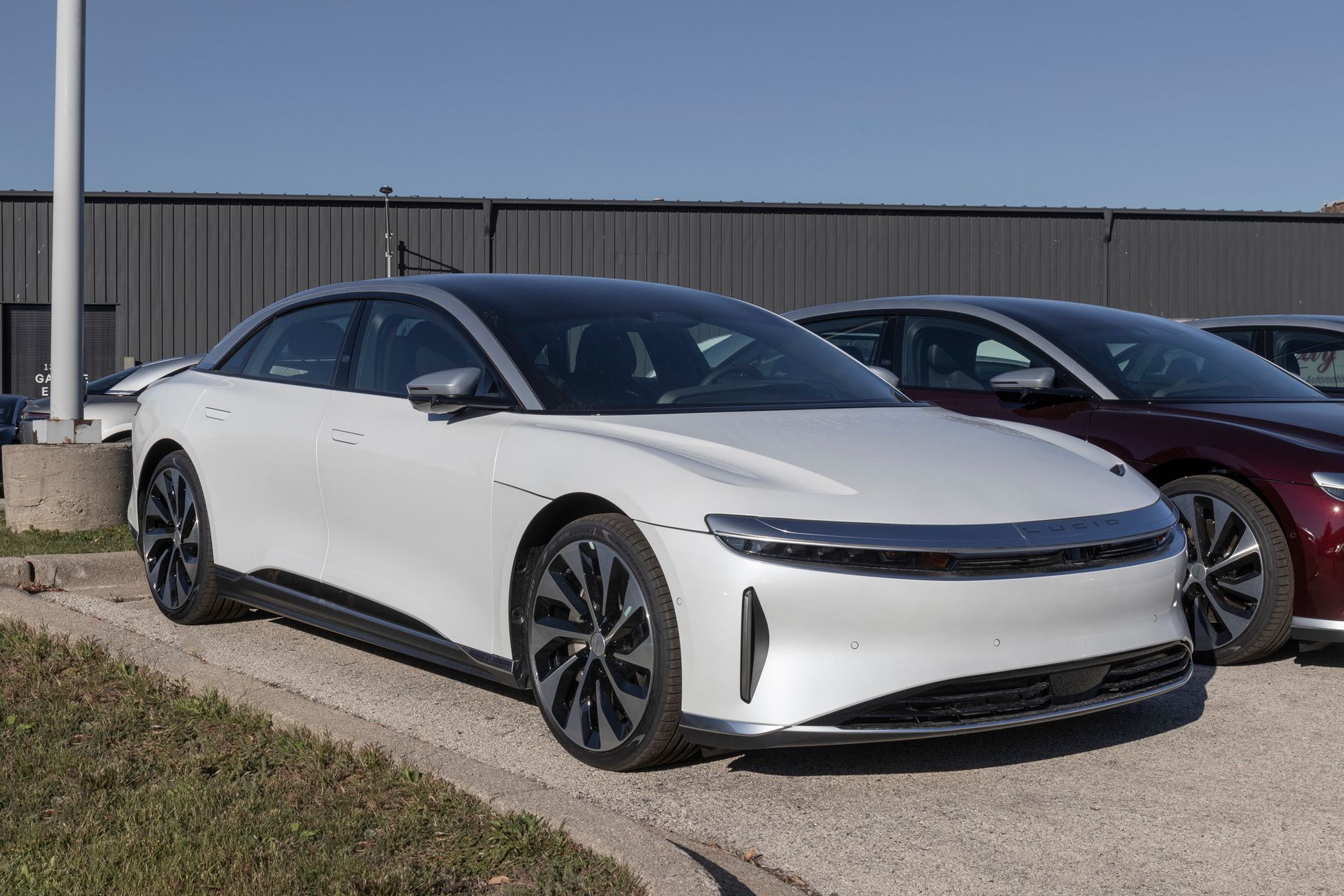
jetcityimage / Getty Images
The 2026 Lucid $LCID Air is the only production EV capable of exceeding 500 miles on a single charge, which places it in a category of one on this list and in the broader market. U.S. News Managing Editor Alex Kwanten puts the Air’s sustained dominance in plain terms: nearly half a decade after it arrived, the Lucid Air still sets benchmarks for other electric vehicles. The 512-mile figure applies to the Air in its tested configuration, and the Pure trim achieves a combined 146 MPGe. That makes the Air not only the longest-range EV on the market but one of the most efficient.
The cabin earns its own praise independently of the powertrain. The Air seats four tall adults comfortably in a genuinely airy interior, with materials and appointments that justify the premium pricing in a way that pure range figures cannot. The luxury benchmark the Air sets encompasses the whole vehicle, not just the battery.
The Air’s price is high, but U.S. News assesses it as delivering strong value at that price point. An EV that leads the range category by more than 20 miles over its nearest competitor while also standing as one of the finest luxury cars on sale — regardless of powertrain — has built a case that its asking price reflects genuine product leadership. The Air’s 9.6 U.S. News rating confirms that assessment extends across the full vehicle evaluation. Kwanten’s observation that the Air still sets benchmarks nearly half a decade into its production run is not flattery but an accurate description of a vehicle that has not been surpassed on its most important specification. The Air demonstrates that the maximum range problem in EVs has been solved at the luxury tier — and the 512-mile figure gives owners the kind of range buffer that makes charging stops optional on most U.S. road trips.
hapabapa / Getty Images
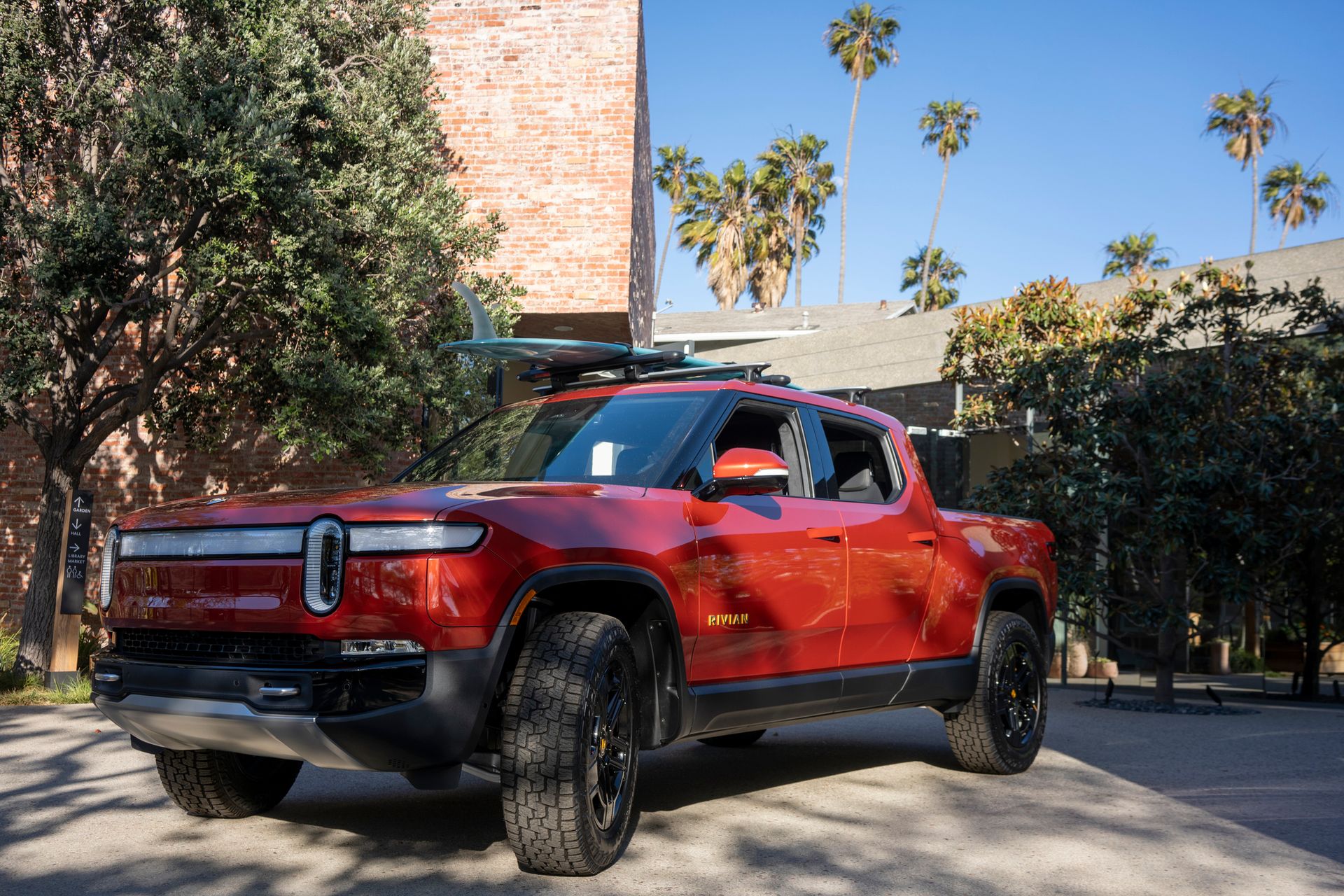
The 2026 Rivian $RIVN R1T achieves 420 miles of range with its available battery pack, a figure that would be exceptional in any vehicle class and is particularly striking in a full-size pickup truck, where mass, aerodynamic drag, and towing loads typically suppress range. The R1T is capable both on pavement and off it, and its interior is described as swanky and comfortable, a quality level that the pickup truck segment has not historically associated with electric powertrains. U.S. News rates the R1T at 9.2 out of 10.
The truck’s performance figures are aggressive. The top Ascend Quad Max trim reaches 60 mph from a standstill in 2.5 seconds, a number that would be fast in a sports car and is remarkable in a vehicle designed to haul and tow. The Dual Max configuration, which delivers 420 miles of range, is the version on this list and starts at $84,990.
The bed is relatively compact by pickup truck standards, which limits the R1T’s utility for buyers who regularly transport bulky loads. The editor’s choice designation reflects a judgment that the R1T is an underappreciated vehicle: well-seen on the road but not yet purchased at the rate its capabilities justify. Buyers who want a truck that can handle genuine off-road terrain, accelerate at sports-car speeds, travel more than 400 miles between charges, and arrive at the trailhead or job site without looking utilitarian are working with a very short list of options. The R1T’s underselling in the market relative to its capability is the editor’s point: it represents a stronger case for electric pickup ownership than its sales figures suggest, and buyers who take it seriously will likely find it the most capable long-range electric truck available at its price. The bed size limitation is the one concession that working truck buyers should evaluate against the R1T’s performance and range credentials before committing.
Artistic Operations / Getty Images
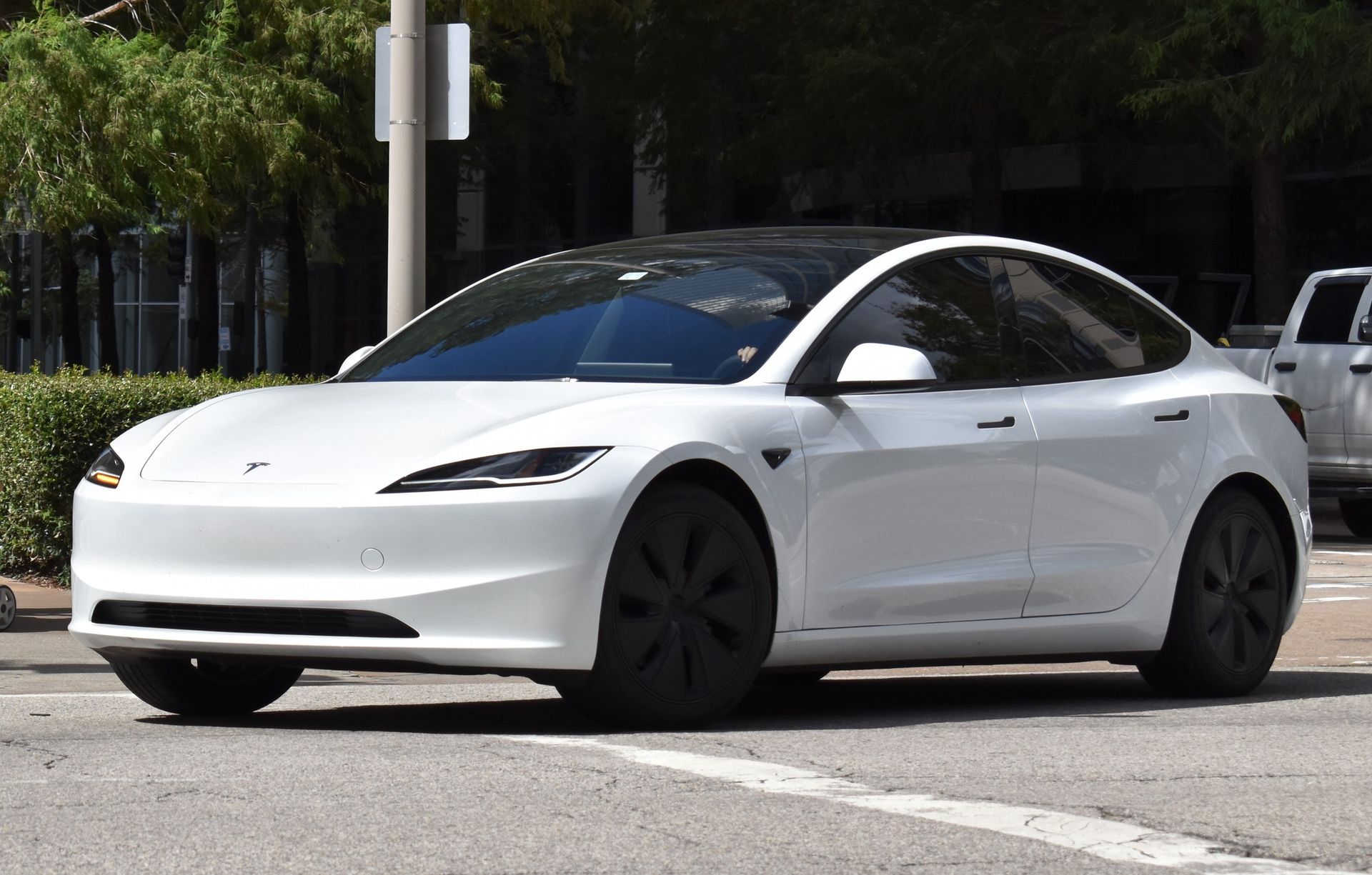
The 2026 Tesla $TSLA Model 3 returns 363 miles of range in its Long Range rear-wheel-drive configuration, which is its highest-range trim, and it does so at a price point significantly below most of the other vehicles on this list. Tesla Superchargers can add 142 miles of range in 15 minutes, making the Model 3 one of the fastest-charging vehicles in the segment and reducing the practical impact of any charging stop on a long-distance trip.
Vehicle Testing Editor Zach Doell calls the Model 3 comfortable and rewarding to drive, crediting its quick, silent acceleration and taut handling as the qualities that make it genuinely enjoyable rather than merely functional. Total cargo capacity reaches 24 cubic feet. The cabin is harshly minimalist by luxury car standards, with materials quality that trails competitors in the segment, and the Model 3 excludes Android Auto and Apple $AAPL CarPlay. Buyers accustomed to those systems will need to accept their absence.
For buyers whose priorities center on range and charging speed at the lowest available price, the Model 3 offers a pairing that no other vehicle on this list can match. The 9.1 U.S. News rating reflects a vehicle that scores well across the evaluation matrix despite interior material shortcomings, and the Supercharger network’s reliability and geographic density give the Model 3 a road-trip capability that complements its 363-mile range, unlike longer-range vehicles on slower charging networks. The 142-mile-in-15-minute charging figure is the most meaningful specification for any buyer planning regular long-distance driving. It means a 20-minute stop at a Supercharger can restore enough range for most drivers to reach their next planned stop, turning the Model 3 from a vehicle that requires charging discipline into one that handles long trips with the same casual flexibility as gasoline cars. No other vehicle on this list at this price point offers comparable charging speed alongside comparable range.
photosvit / Getty Images
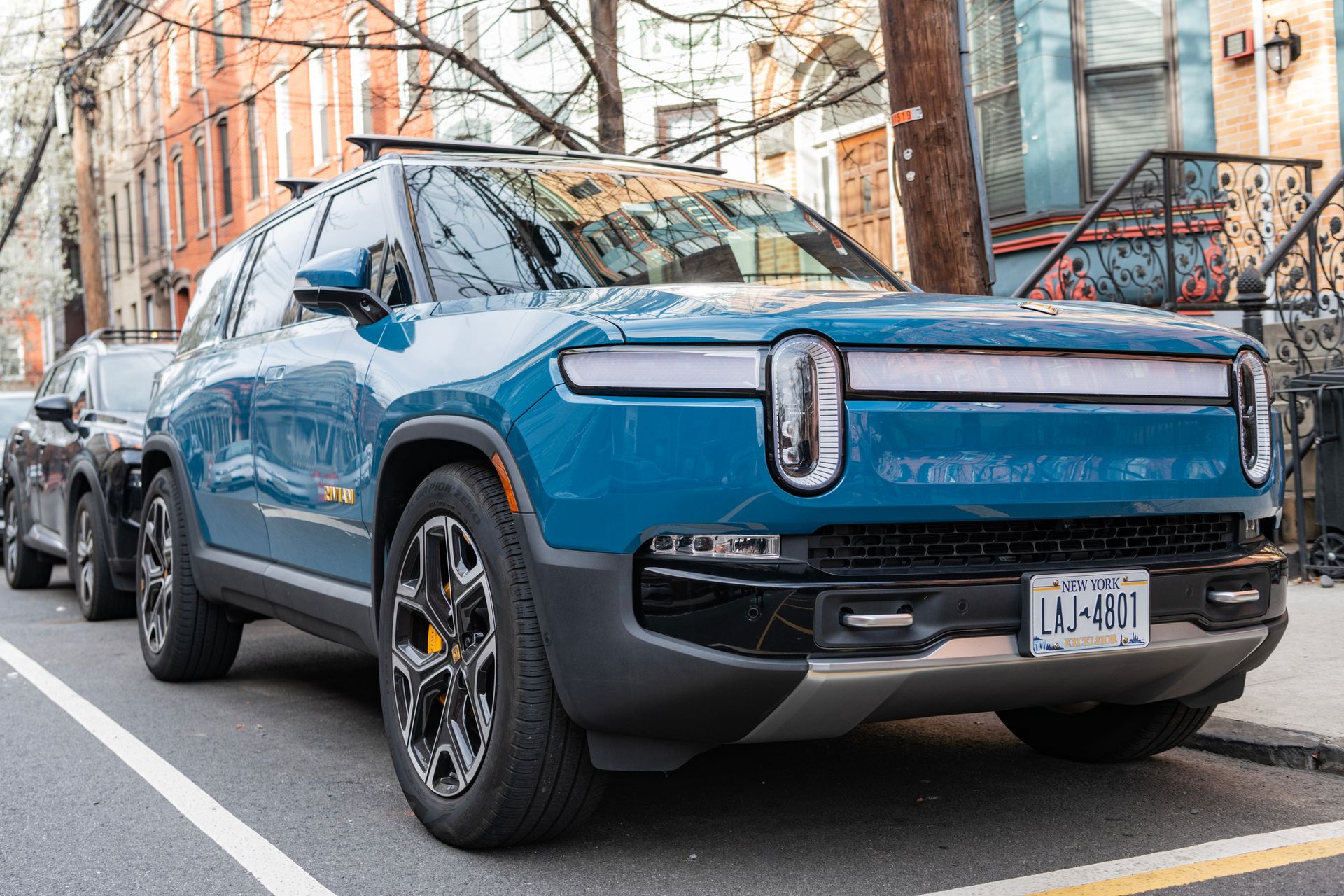
The 2026 Rivian $RIVN R1S delivers 410 miles of range from a three-row SUV that, according to editor Zach Doell, looks and feels luxury-grade, with roomy first- and second-row seats. U.S. News assesses it as one of the best three-row SUVs on the market in any powertrain category, not just among EVs. The R1S earned an 8.6 U.S. News rating and is available in a wide variety of configurations, allowing buyers to tailor the vehicle to specific use cases.
The off-road credentials are exceptional. U.S. News experts found the R1S to be virtually unparalleled in off-road driving without compromising the daily usability that family buyers require. The cabin strikes a functional balance between minimalism and practical design. Two limitations are worth noting: the R1S lacks both Apple $AAPL CarPlay and Android Auto, and its infotainment system demands a meaningful learning period before it becomes intuitive.
The price is substantial, as it is for most vehicles on this list. What the R1S offers in return is a genuinely rare package: 410 miles of range, three-row seating for families, class-leading off-road ability, and a luxury-grade interior, all in a single vehicle that does not ask buyers to choose among them. No other three-row electric SUV on the U.S. market currently combines that level of off-road performance with this range, making the R1S the defining vehicle in this specific intersection of requirements. The missing Apple CarPlay and Android Auto are real concessions for buyers who depend on those platforms, and the infotainment learning curve is genuine. Neither limitation changes the fundamental assessment: for families who need three rows, long-range EV capability, and the freedom to leave pavement without anxiety, the R1S is the only vehicle that answers all three needs at once. Its wide variety of configurations extends this appeal to buyers whose specific requirements — battery size, powertrain output, exterior finish — differ substantially.
Credit: Chevrolet
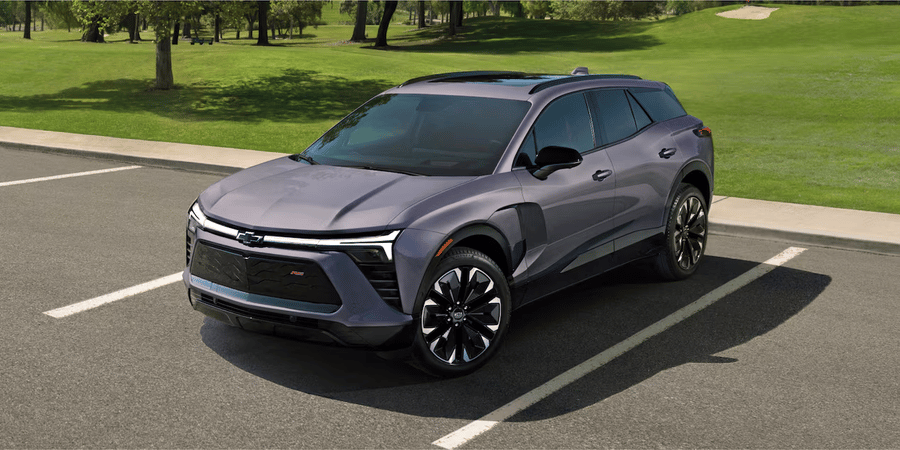
The 2025 Chevrolet Silverado EV achieves a maximum range of 492 miles in its top 3X trim when equipped with the optional 24-module battery pack, making it the second-longest-range vehicle on this list and the longest-range electric pickup truck available. The 24-module battery is a $9,995 option on the 3X trim, which itself starts at $104,650. Only the Lucid $LCID Air comes anywhere close to 500 miles among all EVs currently on the market.
The Silverado EV’s range, according to vehicle tester Emme Hall, is its strongest quality. Hall identifies the middling interior, poor ride quality, and high price as factors that push the Silverado EV toward the lower end of its competitive set, despite its impressive range. Higher trims also drop Apple $AAPL CarPlay and Android Auto, which limits connectivity options for buyers who rely on those platforms. On the functional side, a folding mid-gate substantially increases bed capacity, and the truck can power household appliances directly from its battery pack.
One significant caveat applies. The Silverado EV’s 9,000-pound curb weight yields poor EPA efficiency ratings: the truck consumes substantially more electricity per mile than lighter EVs on this list, translating into higher per-mile energy costs. Hall’s range figure represents a maximum under specific conditions, and towing or carrying heavy loads will suppress it considerably. The Silverado EV is the right choice for buyers who need maximum range in a full-size truck body and accept the efficiency penalty that the truck’s mass imposes. The mid-gate bed extension and bidirectional charging capability — the ability to power household appliances from the battery — add practical utility that the range figure alone does not capture. Buyers who care about per-mile electricity costs as much as total range will find the Rivian $RIVN R1T a more efficient and more affordable way to get within 70 miles of the Silverado EV’s maximum.
Credit: Lucid Motors
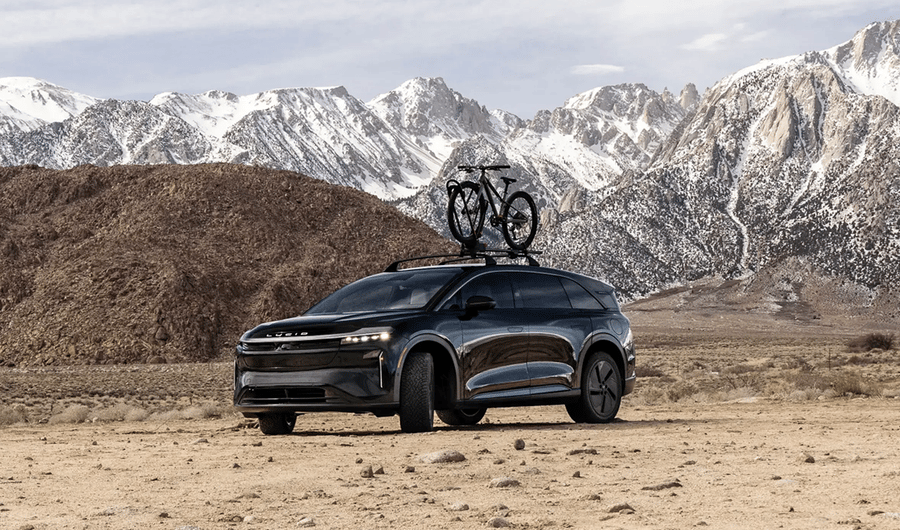
The 2026 Lucid $LCID Gravity is the highest-rated vehicle on the U.S. News site, earning a perfect 10 out of 10, and Senior Editor John Vincent describes it without hyperbole as raising the bar for luxury electric SUVs. No electric SUV on the market travels farther on a charge, and only two EVs in any class — including the Lucid Air — exceed the Gravity’s 450-mile range. The Gravity accelerates from 0 to 60 mph in as little as 3.4 seconds and handles with poise for a vehicle of its dimensions.
The interior justifies the perfect rating on its own terms. The cabin uses top-shelf materials throughout, all three rows provide genuine head- and legroom for adult passengers, and cargo capacity exceeds 110 cubic feet. The standard equipment list is extensive. One acknowledged weakness is the software: it takes time to learn, though U.S. News notes that tech-heavy EVs are the direction the industry is heading, which makes this a transitional inconvenience rather than a structural flaw.
The Gravity is expensive, as the Lucid brand’s positioning demands. U.S. News judges the price as likely worth it, given the perfect rating, the best-in-class SUV range, the three-row luxury interior, and the sports-car acceleration the Gravity delivers. A vehicle rated 10 out of 10 by an independent evaluator, in the highest-range electric SUV category, with more cargo space than most competitors and a 0-to-60 time of 3.4 seconds, has answered the performance and comfort questions comprehensively. The software learning curve is the remaining objection, and most buyers adapt to it within weeks of ownership. The Gravity’s 450-mile range means no other electric SUV requires fewer charging stops on a long road trip, which is the practical payoff of its range leadership. For buyers who want the best electric SUV available in 2026, the Gravity’s perfect rating and maximum range are the most direct answer the market currently offers.
Sue Thatcher / Getty Images
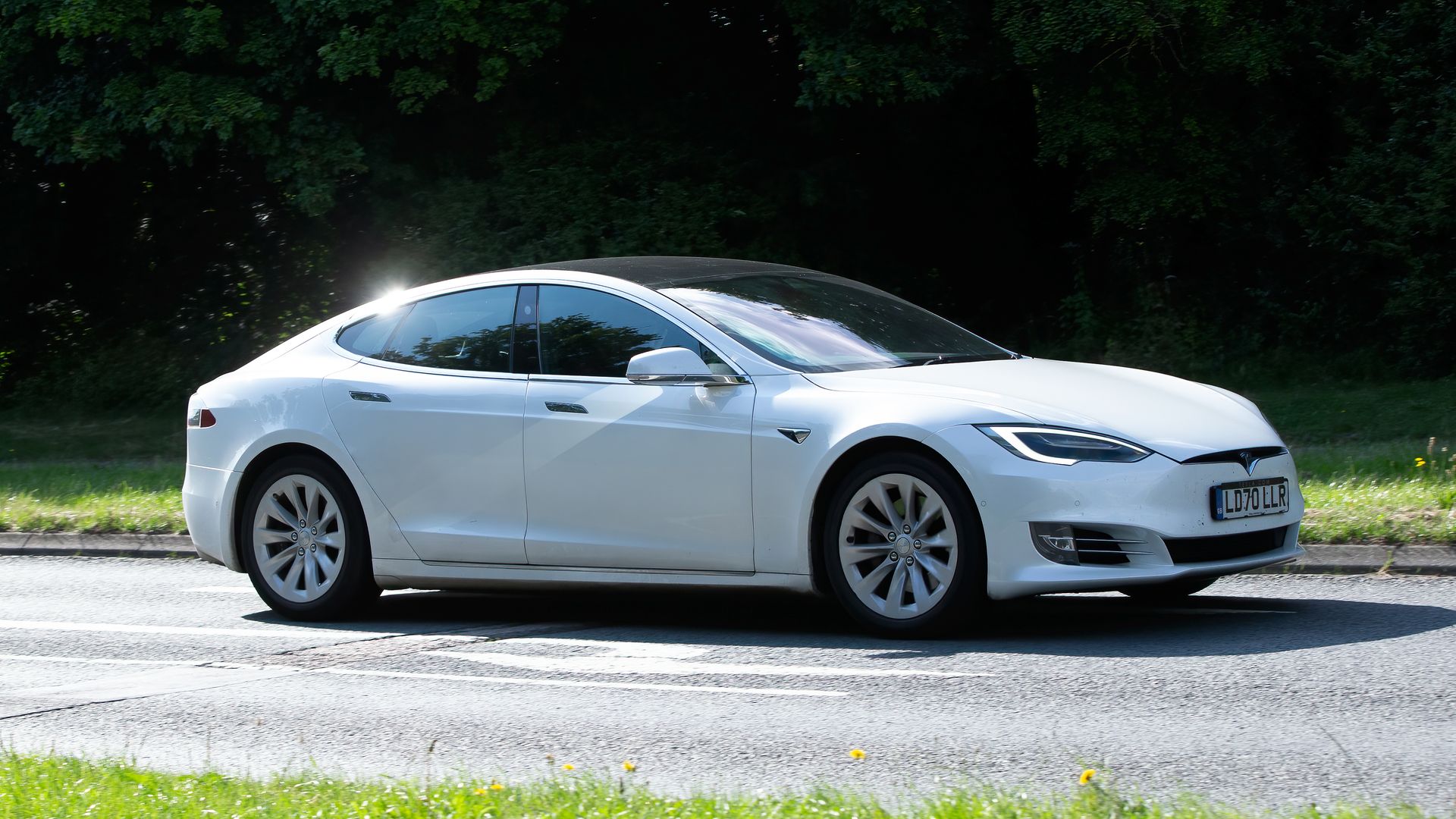
The 2026 Tesla $TSLA Model S, in what U.S. News identifies as its final model year, achieves 410 miles of range in base trim while adding suspension improvements, a quieter cabin, and extended range versus prior years. Expert reviewer Adrian Taylor acknowledges the Model S is no longer the luxury EV benchmark it once held but identifies its sustained strengths: top-notch efficiency, extraordinary acceleration, and great driving range. The handling is composed and sporty. U.S. News rates the Model S at 8.8 out of 10.
The Model S’s historical significance is real. It is arguably the vehicle most responsible for demonstrating that EVs could compete with conventional cars on performance and desirability — not just environmental credentials — and it established the range expectations that the rest of the EV industry has spent years working to match. The 2026 model year represents the conclusion of that lineage.
The Model S carries a luxury price tag that its interior materials quality does not always justify, a limitation Taylor flags directly. The features and performance justify the investment for buyers who want the specific character of the Model S, but buyers who are evaluating on materials and interior refinement will find the Lucid $LCID Air and the Mercedes-Benz EQS both outperform the Tesla in that dimension at comparable or higher price points. The Model S in its final year remains a genuinely capable and enjoyable vehicle, and 410 miles of range in a base luxury sedan places it solidly on this list, even if it no longer leads the segment. For buyers who want to own the vehicle that started the modern EV era, 2026 is the last opportunity to buy a new one. The Model S’s production history gives it a cultural significance no competitor can claim, and its 410-mile range places it well above the minimum threshold for a capable long-distance EV even in its swan song year.
Artistic Operations / Getty Images
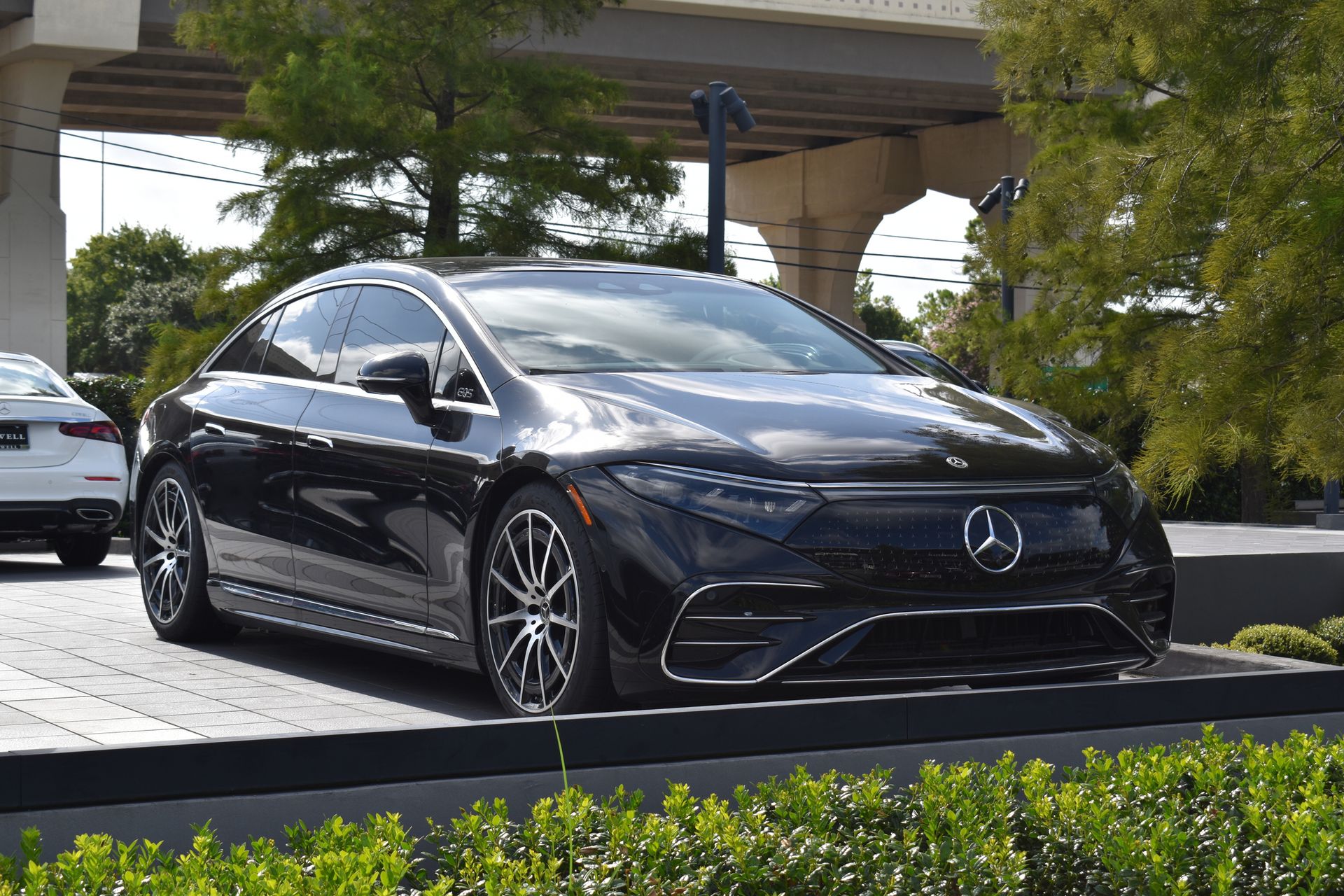
The 2025 Mercedes-Benz EQS Sedan achieves 390 miles of range in its EQS 450+ configuration, which is also the model’s entry-level variant, and it wraps that range in what reviewer Mike Hagerty describes as a plush, gorgeous interior with luxurious appointments and wonderful seats in big, airy cabins. The arching roofline that defines the EQS’s exterior contributes directly to the cabin’s spaciousness, and Hagerty notes that a light-colored interior makes the space feel sunny and happy.
The technology centerpiece is the standard 56-inch Hyperscreen, a dashboard-spanning display that combines the instrument cluster and infotainment system into a single seamless panel. The EQS offers extensive upholstery personalization with a wide range of color and material choices. The software integrates infotainment and driver information seamlessly across the full width of the screen.
The EQS starts well above $100,000, a price that positions it squarely in the flagship luxury sedan tier and ensures that only a narrow slice of buyers will realistically consider it. For that buyer, the EQS provides 390 miles of range in an interior that Hagerty’s assessment suggests is among the most inviting in the luxury sedan class. The EQS argues that long-range electric mobility and genuine luxury are no longer competing priorities. The Hyperscreen’s 56-inch span is a genuinely novel piece of automotive technology, and while the novelty has faded somewhat since the system’s launch, the integration of infotainment and driver information into a single seamless panel remains one of the most technically ambitious interiors in any production vehicle. The EQS’s 390-mile range also means it can complete most U.S. city-to-city drives without a charging stop, which preserves the uninterrupted luxury experience the vehicle is designed to provide. Buyers who want the most technologically distinctive luxury electric sedan currently available will find the EQS the clearest and most complete expression of that very specific priority, regardless of price.
Wirestock / Getty Images
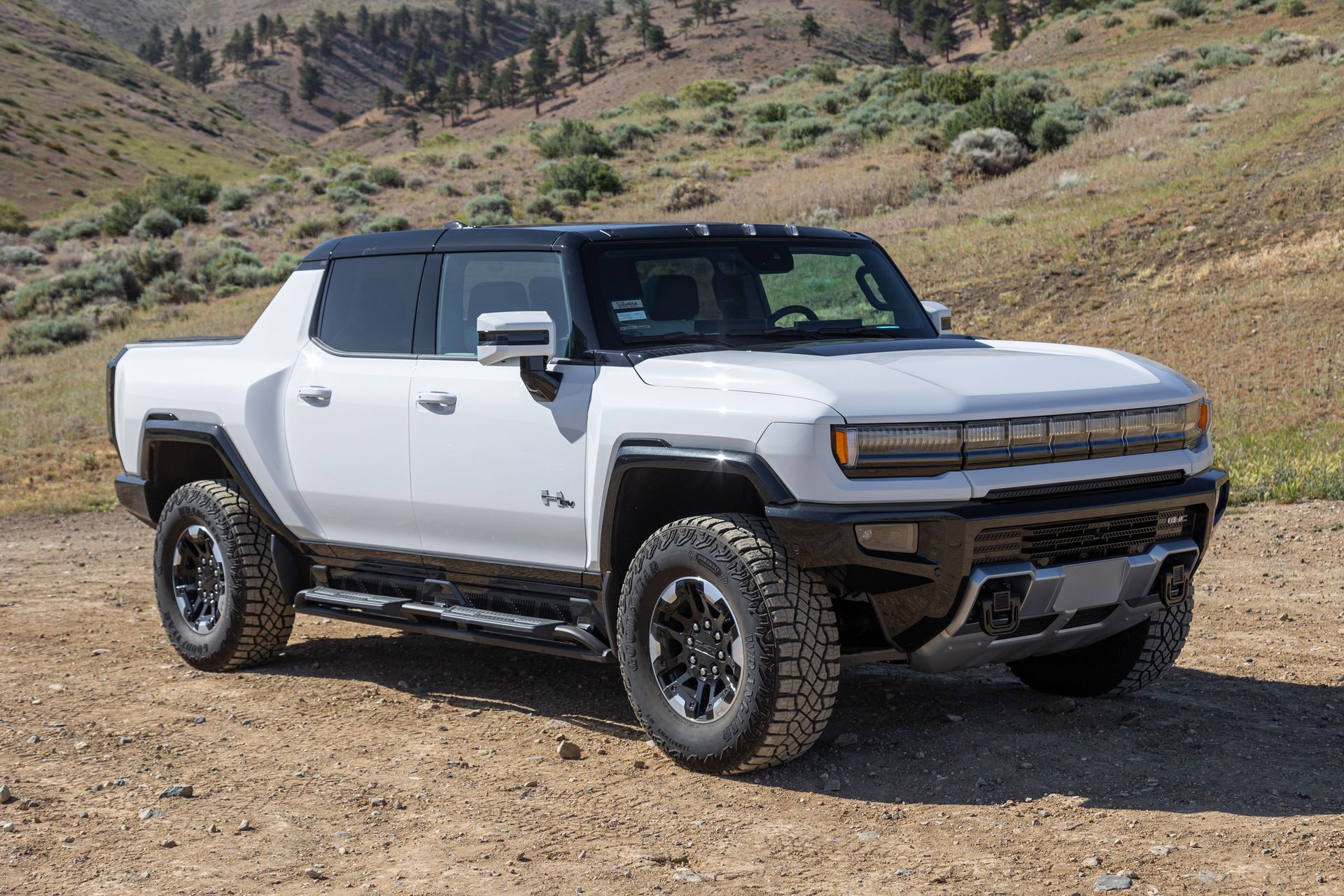
The 2025 GMC Hummer EV Pickup achieves 381 miles of range in its top 3X trim equipped with the optional 24-module battery pack, but that figure comes at a high cost beyond the hardware’s price. The truck reaches 53 combined MPGe, the worst efficiency rating of any EV currently on sale, a figure that reviewer Mike Hagerty frames in pointed terms: electricity is a resource, and at 59 MPGe city and 48 MPGe highway, the Hummer wastes it. The truck’s 9,000-pound curb weight is the underlying cause, and it contributes to both poor efficiency and intrusive road noise that reviewers flag as interior quality issues.
The performance figures are nevertheless striking. One thousand horsepower and a 3-second 0-to-60 time are extraordinary numbers in any vehicle, and they are particularly notable in something that weighs more than four and a half tons. The Hummer EV Pickup is capable and well-equipped in most respects, with the interior being the notable exception: cheap-looking plastics are visible throughout the cabin, which contrasts with the near-six-figure starting price.
The Hummer EV Pickup earns a U.S. News rating of 8.4. The range figure is the sole reason it appears on this list, and the efficiency penalty attached to that range means per-mile electricity costs will substantially exceed those of any other vehicle here. Buyers who need the Hummer’s specific capabilities — extreme off-road performance, extreme towing capacity, and maximum range in a full-size truck body — will find no alternative. Buyers whose primary interest is efficiency will find the Rivian $RIVN R1T delivers comparable range at far better efficiency and a higher U.S. News score. The Hummer EV Pickup’s 8.4 U.S. News rating reflects the tension between its impressive range and power figures and the interior quality and efficiency shortcomings that prevent it from earning a stronger overall assessment. It is the right vehicle for a specific buyer and a poor choice for everyone else.
Artistic Operations / Getty Images
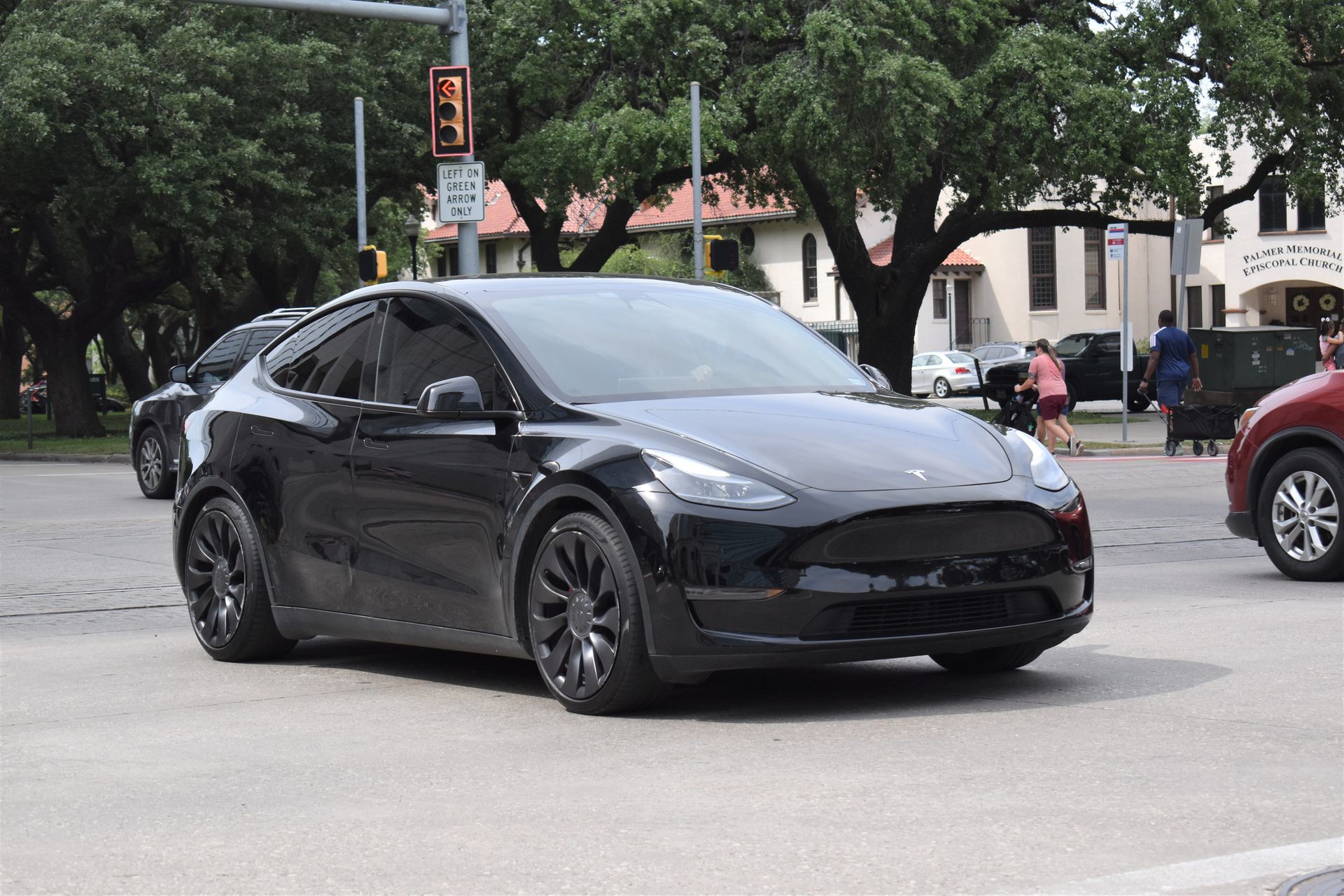
The 2026 Tesla $TSLA Model Y achieves 357 miles of range and adds up to 182 miles at the newest Supercharger stations in just 15 minutes, making it one of the fastest-charging vehicles in the luxury electric SUV class. U.S. News rates it at 8.5 out of 10. Vehicle Testing Editor Zach Doell notes that the Model Y’s updated interior feels nicer than before and is quite roomy for both passengers and cargo, while acknowledging that some cheap plastics remain as a reminder that the Model Y is a technological tour de force, not an outright luxury vehicle.
The ride quality is stiff, which is a consistent criticism across Tesla’s model range. The interior material limitations that Doell identifies are a real tradeoff for buyers paying luxury-segment prices. The Model Y’s competitive advantage lies in the balance of range, charging speed, and price: among luxury electric SUVs, it is near-impossible to match its affordability with its range and access to the Supercharger network.
The Model Y occupies a specific position in the luxury electric SUV market: a vehicle that regular buyers can afford without stretching their budgets, that delivers genuine long-range capability, and that charges more quickly at modern Supercharger stations than most competitors can manage at any charger. The 182-mile-in-15-minutes charging figure is the most practically significant specification on this list for buyers who plan to use their EV for road trips, since it reduces the time cost of a charging stop to something closer to a bathroom break than a meal break. At its price point and with its charging infrastructure, the Model Y remains the most practical long-range EV for first-time buyers. The stiff ride and cabin material limitations are real tradeoffs, but neither prevents the Model Y from delivering on the core promise of a long-range EV: the freedom to drive without planning every charging stop in advance.
