
Sen. Elizabeth Warren sent a letter to Securities and Exchange Commission Chair Paul Atkins on Tuesday calling for the agency to halt SpaceX's initial public offering, which is scheduled to begin trading on the Nasdaq $NDAQ on Friday.
The Massachusetts Democrat cited concerns about valuation, Elon Musk's near-total control, and index fund rule changes that could force passive investors into the offering
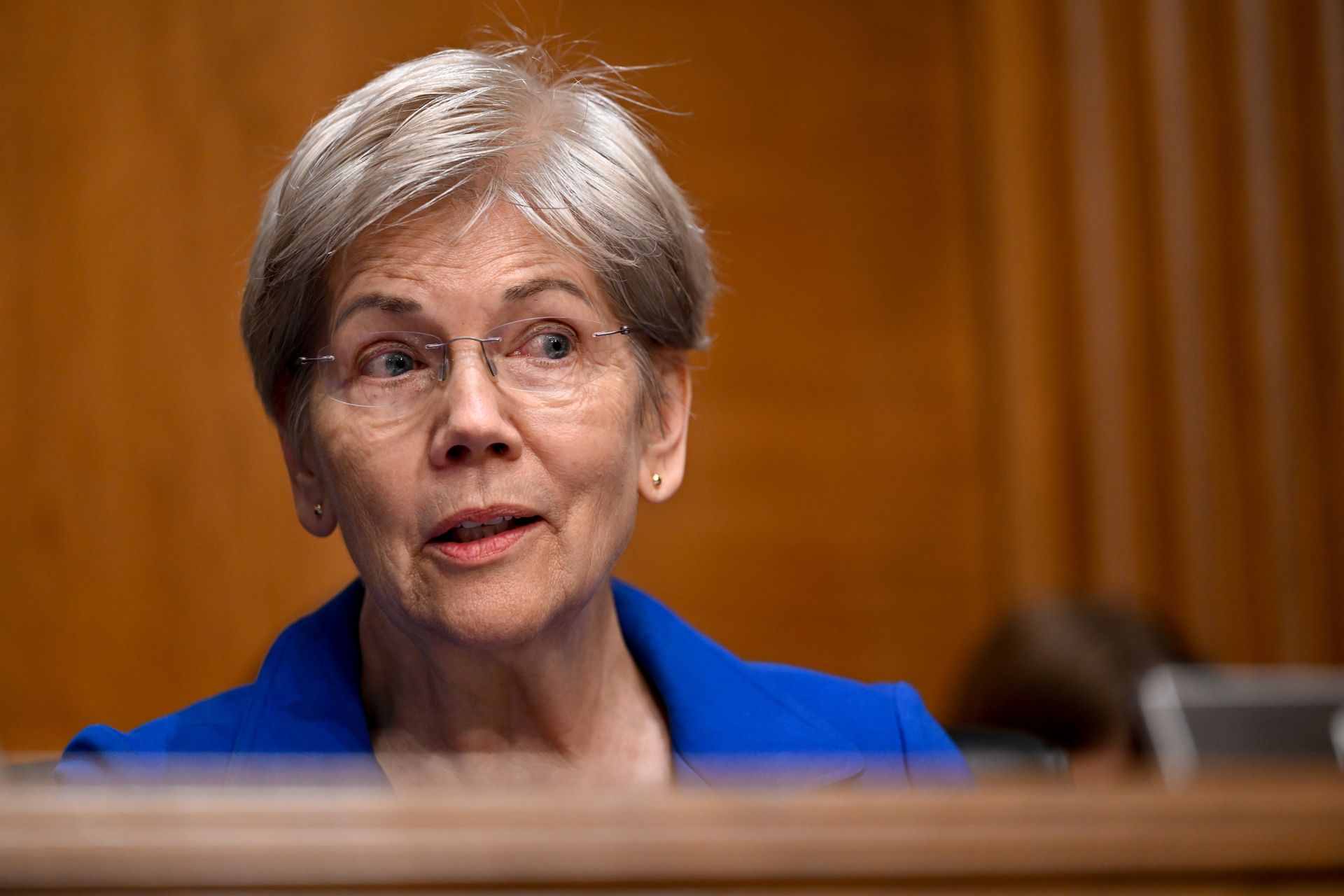
Getty Images / Bloomberg
Sen. Elizabeth Warren sent a letter to Securities and Exchange Commission Chair Paul Atkins on Tuesday calling for the agency to halt SpaceX's initial public offering, which is scheduled to begin trading on the Nasdaq $NDAQ on Friday.
"Given the unprecedented threats to investor protection and market integrity posed by the biggest IPO in history, you must delay any eventual acceleration of the registration statement's effectiveness accordingly," Warren wrote in the 12-page letter.
Warren, a Massachusetts Democrat and ranking member of the Senate Banking, Housing, and Urban Affairs Committee, raised three principal concerns: that SpaceX's target valuation is unsupported by its financials, that its corporate governance structure concentrates power in CEO Elon Musk with minimal shareholder recourse, and that major stock index providers have altered their rules in ways that would compel passive investors to buy SpaceX stock with no say in the matter.
On valuation, Warren quoted analysts who have described the company's math as "nonsensical," "smoke-and-mirrors accounting," and "truly out of this world." SpaceX is targeting a valuation of roughly $1.75 trillion while posting $18.67 billion in annual revenue — a price-to-revenue multiple of approximately 93.7 times — and reported a net loss of $4.94 billion in 2025.
On governance, Warren wrote that SpaceX combines supervoting shares, mandatory arbitration, stricter rules on shareholder proposals, and Texas corporate law to entrench Musk's control. Under the dual-class share structure, Musk controls approximately 82.4% of voting power after the offering, and can only be removed as chairman or CEO by a majority vote of Class B shareholders — a class he personally controls 93.6% of, according to the letter. Warren also flagged that shareholders seeking to bring derivative lawsuits would need to hold at least 3% of company stock, which at the target valuation would require a stake of at least $52.5 billion.
On index inclusion, Warren argued that Nasdaq, FTSE Russell, and other providers have rewritten rules to fast-track SpaceX into their indexes, which would force millions of retirement savers invested in passive index funds to absorb exposure to SpaceX's risks. Inclusion of SpaceX in major indexes on an accelerated timeline, Warren argued, would leave millions of passive investors holding exposure to the company's risks whether they wanted to or not — a situation she described as giving them "no choice in the matter." Analysts estimate forced buying of $15 billion to $30 billion across major index trackers in the months after inclusion, according to the letter.
Rather than publishing a price range that adjusts with investor demand — the standard practice for major public offerings — SpaceX set a single, fixed price of $135 per share, with plans to sell 555,555,555 Class A shares and raise roughly $75 billion in total proceeds. The company is also considering allocating as much as 30% of the offering to individual investors. Fidelity Investments cut its minimum investment requirement for the IPO from $500,000 to $2,000, according to the letter, widening access to retail investors.
The letter is not expected to meaningfully disrupt the timeline, according to Barron's, which reported that the bookbuilding process is on track to wrap up Wednesday, with a final price announced Thursday ahead of Friday's market debut.
Join 500,000+ readers who start their day with Quartz.
By subscribing, you agree to our Terms of Service and Privacy Policy.