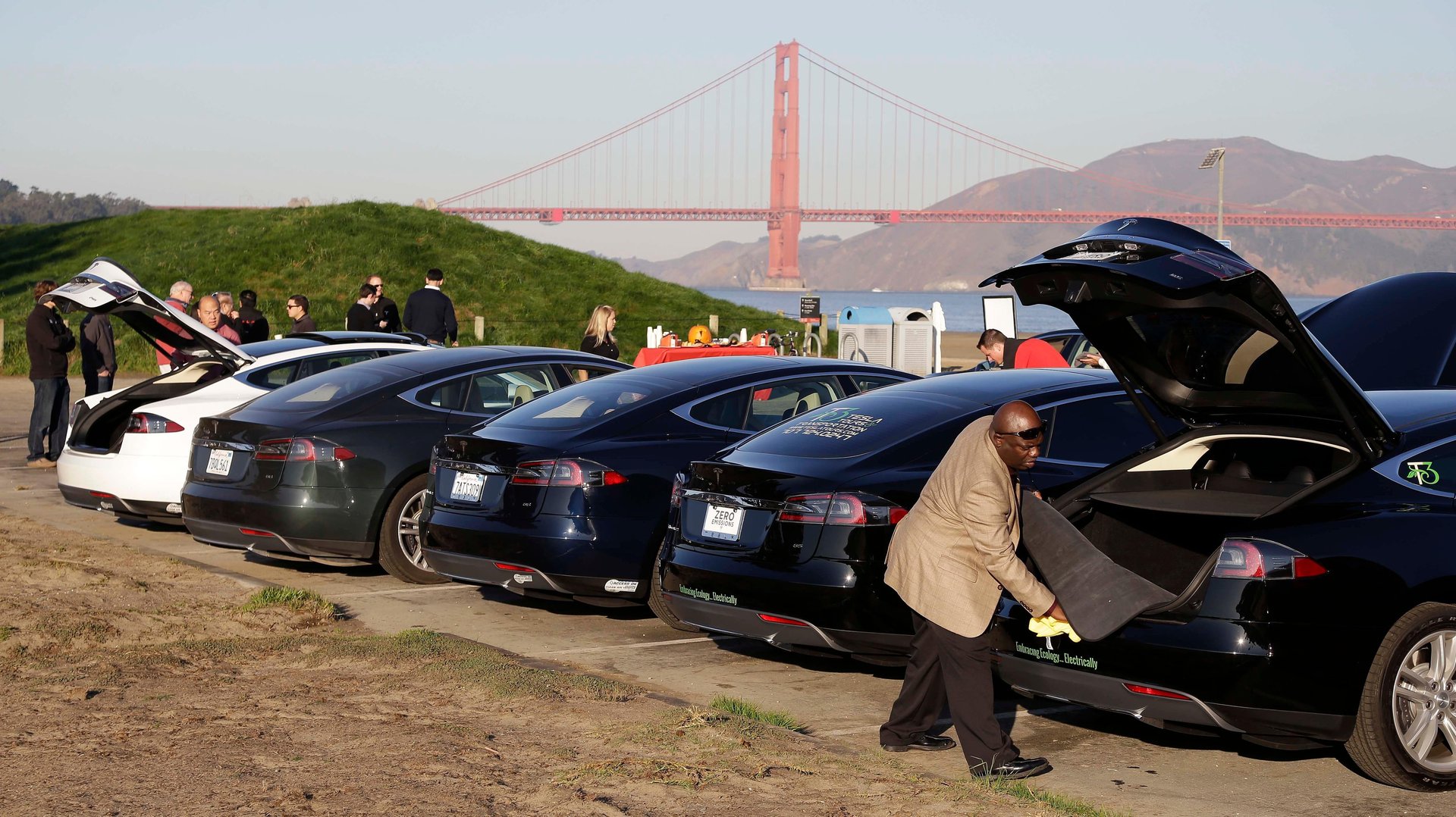
The Bay Area has the highest EV adoption rate in the country: last year, electric cars, pickup trucks, and SUVs made up nearly 40% of new auto registrations in San Jose and 34% in San Francisco.
That insight came via a network of sensors around the San Francisco Bay Area, which monitor both CO2 and air pollution—made up of particulate matter, nitrogen oxides, ozone, and carbon monoxide. Ronald Cohen, a chemistry professor at UC Berkeley, began setting up the sensors, which make up the Berkeley Environmental Air Quality & CO2 Network (BEACO2N), in 2012.
By looking at both air pollution and CO2, the sensors can help identify emission sources. “Different sources of combustion have different ratios of air pollutants to CO2,” he says. Heavy duty trucks, for example, emit lots of nitrogen oxides while cars emit almost none; conversely, cars emit lots of CO2, while heavy duty trucks don’t.
While the air might be better in the Bay area thanks to EVs, there are still concerns about how healthy electric vehicles really are for the planet. Heavier, quicker EVs grind down their petroleum-based tires much faster, resulting in an increase in micro plastics entering the environment (and our blood streams.) The environmental cost sourcing lithium for batteries is also high, especially in poorer nations with less regulations. Indonesia, for example, is decimating rainforests and destroying the homes of uncontacted tribes in the rush to get lithium to power-hungry car manufacturers.