
25 objects you use every day — and the surprising stories behind how they got here
The fork, the zipper, the pencil, the Post-it — the histories of everyday objects are full of wrong turns, stolen credit, and discoveries that happened while someone was looking for something else entirely
Ksenia Pixelesse / Unsplash
The objects that surround daily life are so familiar that they have become effectively invisible. A pencil is a pencil. A zipper is a zipper. A fork is a fork. The questions of where they came from, how long they took to develop, who made them, and why they look and work the way they do are questions that almost nobody asks, which is a shame, because the answers tend to be more interesting than the objects themselves.
Most everyday objects have histories that span centuries and involve more people, more accidents, and more contested credit than their finished simplicity suggests. The pencil, which looks like the simplest possible writing instrument, required the discovery of a specific mineral deposit in Cumbria, England, the development of a manufacturing process that took 300 years to optimize, and the work of a Bavarian pencil-maker named Lothar von Faber who essentially invented the modern pencil industry almost single-handedly in the 19th century. The fork, which is now considered the most basic of eating utensils, was condemned by the Catholic Church as an insult to God's natural gift of fingers and was still a novelty in much of Europe as recently as the 18th century. The zipper was invented in 1851, patented several times in different forms, commercially ignored for decades, and finally rescued by the U.S. military during World War I, without whom it might have remained a curiosity.
These are not exceptional cases. They are the rule. Behind almost every ordinary object is a story of accidental discovery, obsessive refinement, commercial failure, military necessity, stolen invention, or decades of patient iteration before something that now seems obvious became the thing it is. Understanding those stories changes the texture of the world slightly — the objects become thicker with meaning, less invisible, more interesting.
The 25 objects on this list were chosen for the quality of their histories rather than their importance or their fame. Some are ancient. Some are less than a century old. Some were invented by identifiable individuals whose names are now forgotten. Some were developed by committees, corporations, or governments with no single inventor to credit. All of them have stories that are worth knowing, and all of them are on or near most people's person or desk or kitchen right now.
The pencil

Yeşim Çolak / Pexels
The story of the pencil begins in 1565, when a violent storm uprooted trees in Borrowdale, Cumbria, in the north of England, exposing a deposit of pure graphite — a mineral then unknown in Europe and so unusual that the locals initially thought it was coal. It wrote black marks on surfaces without crumbling the way charcoal did, and shepherds began using it to mark their sheep. Within years, the Borrowdale deposit had become the most commercially significant mineral discovery in England, jealously guarded by the Crown and smuggled at considerable risk.
For the following two centuries, the pencil was essentially a stick of Borrowdale graphite wrapped in string or inserted into a wooden holder — effective but crude. The graphite was so valuable that the mine was only opened a few weeks per year to limit supply and maintain price. The crucial manufacturing advance came not from England but from France, where during the Napoleonic Wars — when the English graphite supply was cut off — chemist Nicolas-Jacques Conté discovered in 1795 that mixing powdered graphite with clay and baking it produced a writing core that could be made in different hardnesses depending on the clay ratio. Conté's discovery made the pencil manufacturable anywhere in the world with no dependence on the Borrowdale deposit, and the H-to-B hardness scale that all pencil manufacturers use today is a direct descendant of his clay-graphite ratio system.
The modern pencil industry was largely organized by Lothar von Faber, a Bavarian manufacturer who in the 1840s standardized pencil dimensions so that pencils from different manufacturers could share erasers, developed a quality grading system, and established the Faber-Castell brand that still exists. His grandson Count Alexander von Faber-Castell later added the hexagonal cross-section — specifically to prevent pencils from rolling off desks — which remains the standard for most pencils today. The pencil you pick up without thinking required a mineral accident, a wartime food shortage, a French chemist, and a German dynasty to become what it is.
The fork

Sami Aksu / Pexels
The fork is so fundamental to the Western table that its absence seems almost unimaginable — and yet its adoption in Europe was so slow, so contested, and so recent that the history reads less like the development of an eating tool and more like the history of a cultural argument about how human beings should relate to their food.
Forks existed in antiquity — ancient Greek, Roman, and Byzantine diners used them — but they were primarily serving implements rather than personal eating tools. The personal dining fork was reintroduced to Western Europe from Byzantium in the 11th century by the Byzantine princess Theodora Doukaina, who brought a small golden fork to Venice as part of her dowry when she married the Doge's son. The response from the Venetian clergy was not warm: St. Peter Damian, a cardinal, described her death from plague two years later as divine punishment for her use of the decadent instrument. The argument was theological: God had given human beings fingers for eating, and to use a fork was to express contempt for divine provision.
This reaction was not an anomaly. The fork spread through Italian courts through the 15th and 16th centuries but remained a luxury item associated with effeminacy and excess. When Catherine de' Medici brought forks to France in 1533 on her marriage to the future Henri II, they were a novelty at the French court. In England, the fork was still considered an affectation in the early 17th century — the writer Thomas Coryat, who had encountered forks in Italy and adopted them, was mocked in England for what was seen as his Italian airs.
Mass adoption of the fork in northern Europe and America did not occur until the 18th and 19th centuries respectively. The tool that now seems to embody civilized eating was considered uncivilized for most of European history.
The zipper
Pixabay / Pexels
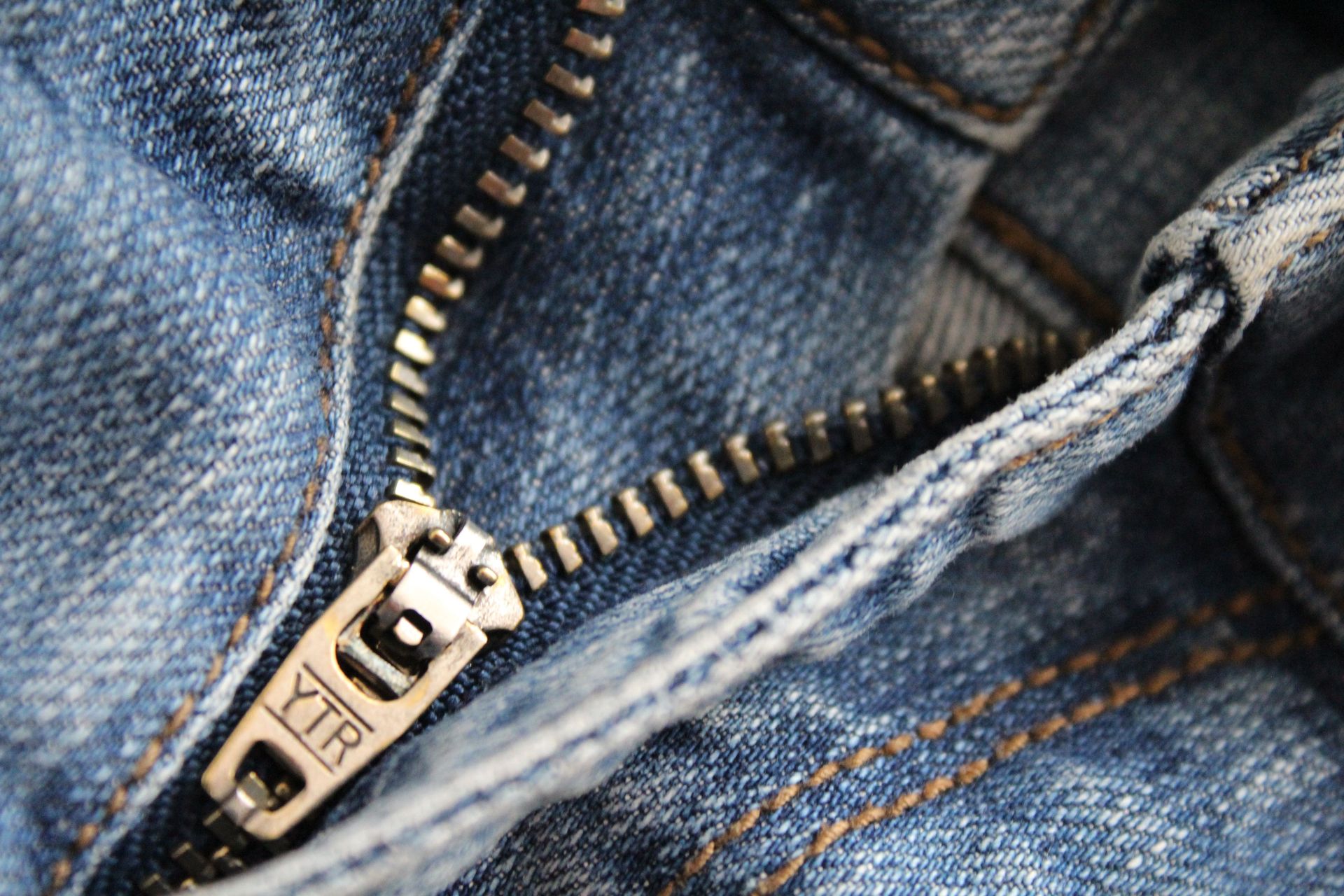
The zipper's history is a study in the gap between invention and adoption — a story in which the right idea appeared at the wrong moment, repeatedly, until external forces made it unavoidable. Elias Howe, who also invented the sewing machine, patented an early version of a fastening device in 1851, but did not pursue it commercially. Whitcomb Judson patented a "clasp locker" for boots in 1891, demonstrated it at the 1893 World's Columbian Exposition in Chicago, founded a company to manufacture it, and failed to interest buyers sufficiently to make the business viable. The device was unreliable and expensive, and buttons worked adequately enough.
The decisive improvement came from Gideon Sundback, a Swedish-American engineer working for Judson's successor company, who in 1913 designed the interlocking-teeth zipper that is essentially the modern design — a row of metal teeth on each side of a fabric tape, shaped so that a sliding piece of metal draws them together or separates them in a smooth, reliable motion. Sundback's design was reliable in a way that Judson's had not been, but commercial adoption remained slow.
The breakthrough came from the U.S. military in World War I, which adopted zippers for flying suits and money belts — applications where the speed advantage over buttons mattered and where reliability under difficult conditions was essential. The B.F. Goodrich Company adopted the design for rubber galoshes in 1923 and coined the word "zipper," after the sound it made. Children's clothing manufacturers adopted it in the 1930s. Fashion followed slowly — Coco Chanel and Elsa Schiaparelli incorporated zippers into high fashion, removing the stigma of association with workwear and military equipment. The zipper became universal only in the 1940s, nearly a century after Elias Howe first patented the concept.
The Post-it note

DS stories / Pexels
The Post-it note is one of the most celebrated accidental inventions in commercial history, and the story of its development — from failed experiment to billion-dollar product — has been told so many times that its outlines are familiar to most people who work in offices. The details, however, are more interesting than the standard version suggests.
Spencer Silver, a chemist at 3M $MMM, was attempting in 1968 to develop a strong adhesive for use in aerospace applications. What he produced instead was a weak, pressure-sensitive adhesive that would bond to surfaces but could be removed without leaving residue and could be reused. The adhesive had no obvious application — an adhesive that did not adhere strongly was, in conventional terms, a failed adhesive — and Silver spent several years presenting it at internal 3M seminars, looking for someone who could think of a use for it, without success.
The application came from Art Fry, another 3M scientist, who sang in a church choir and was frustrated that his bookmark kept falling out of his hymnal. In 1974 Fry attended one of Silver's seminars and immediately thought of the weak adhesive as a solution to his bookmark problem. He applied the adhesive to small pieces of paper and created a bookmark that would stick to the page without damaging it. 3M was not immediately enthusiastic — market research suggested that consumers would not pay for a product that duplicated the function of free scrap paper — and the Post-it note was initially test-marketed in limited cities in 1977 with disappointing results.
The product launched nationally in 1980 and became 3M's best-selling product within two years. The key insight that market research had missed was that seeing and using the product was the only way to understand what it was for — which is why the successful launch strategy involved distributing free samples. The Post-it note's history is partly the story of a failed adhesive, partly the story of a choir singer's bookmark, and partly the story of a product so novel that traditional marketing could not sell it.
The mirror

Elisa Photography / Unsplash
The mirror is among the most psychologically fundamental objects in human life — the tool through which most people form their visual self-image — and its history involves both profound technological challenge and a commercial monopoly so effective that it reshaped the geography of European trade.
Polished metal mirrors — bronze, copper, obsidian — were used in antiquity, but they produced dim, distorted reflections. The glass mirror, which reflects with clarity and precision, required solving two problems simultaneously: making glass flat enough to produce an undistorted reflection, and finding a metal backing that would adhere to the glass surface, produce a bright reflection, and not corrode. The solution — tin-mercury amalgam applied to the back of flat glass — was developed in Venice in the 16th century, and the Venetians treated the knowledge as a state secret of such importance that mirror-makers on the island of Murano were forbidden to leave the Republic on pain of death, and several who attempted to emigrate to France were reportedly assassinated.
The Venetian monopoly on fine mirrors lasted roughly 150 years and made Venice the center of the mirror trade for all of Europe, with mirrors priced so high that they were among the most expensive objects a wealthy household could own. Louis XIV's Hall of Mirrors at Versailles, completed in 1684, was a deliberate statement of French power precisely because mirrors were still extraordinarily expensive luxury objects — the 357 mirrors in the hall represented an enormous financial investment.
The monopoly ended when the French government successfully bribed several Murano glass-workers to bring their knowledge to France in the 1660s. By the 18th century, mirror production had spread across Europe and prices had fallen dramatically. The modern silver-backed mirror — replacing the toxic mercury amalgam — was developed by Justus von Liebig in 1835, and the process he developed is the basis of mirror manufacturing today.
The rubber band
Andres Siimon / Unsplash
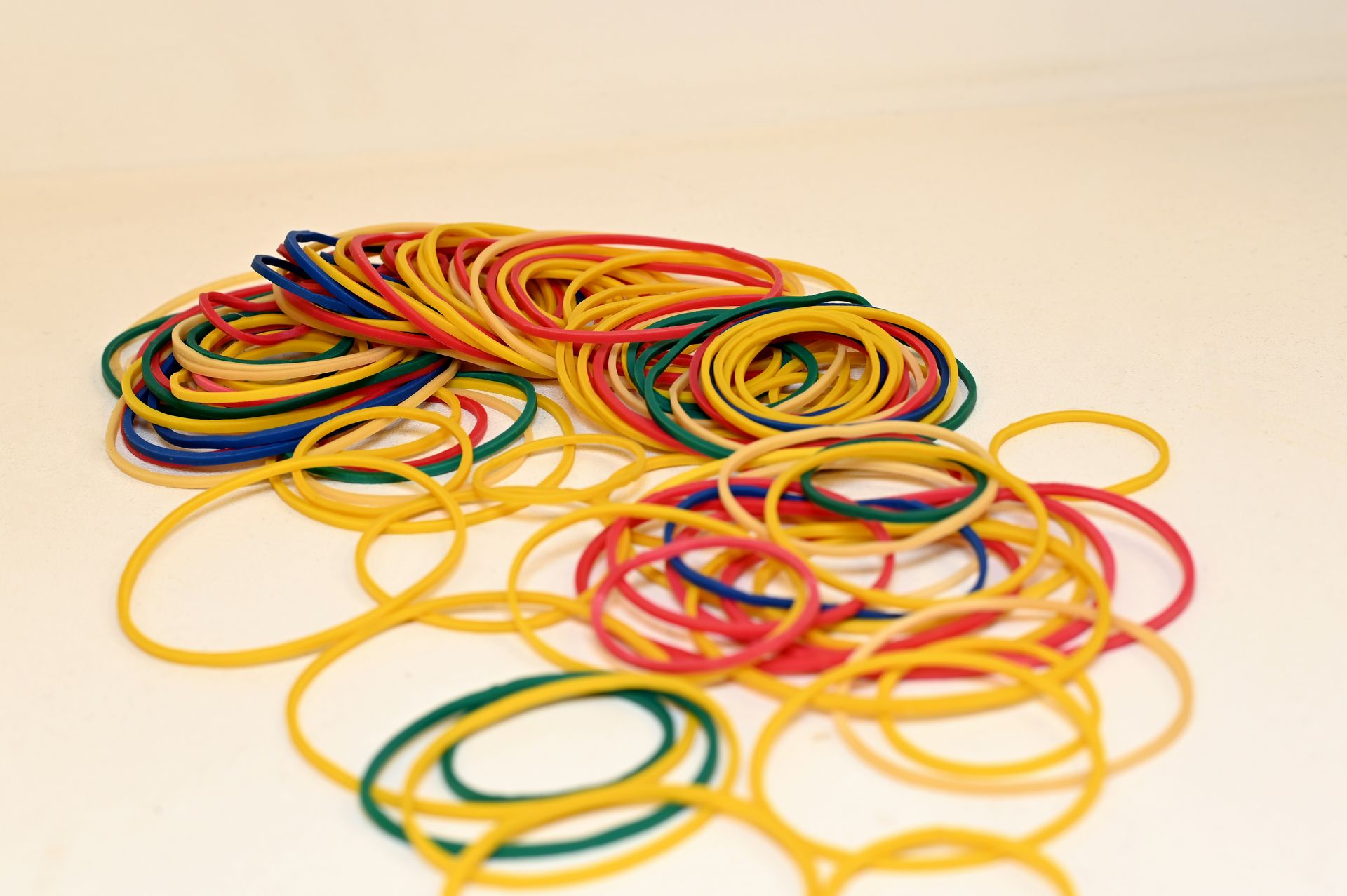
The rubber band is one of the simplest manufactured objects in daily life and one whose history connects a South American material, a 19th-century obsessive, and a Victorian office supply problem in a sequence that is more interesting than the object suggests.
Charles Goodyear — whose name survives in the tire company, though he died in debt and the company was founded after his death — spent most of his adult life attempting to make natural rubber useful. Natural rubber, derived from the latex of Hevea trees in South America, had been known in Europe since the 16th century and attracted enormous commercial interest, but it had a fatal flaw: it became brittle and cracked in cold weather and sticky and malodorous in heat. Goodyear became obsessed with solving this problem, spent years in poverty conducting experiments, and accidentally discovered in 1839 — the story goes that he dropped a mixture of rubber and sulfur on a hot stove — that heating rubber with sulfur transformed it into a stable material that maintained its elasticity across a wide temperature range. He called the process vulcanization, after Vulcan, the Roman god of fire.
Goodyear's vulcanized rubber made natural rubber commercially viable for the first time, and among the many products it eventually enabled was the rubber band. Stephen Perry of the London firm Messrs. Perry and Co. patented the rubber band in 1845, three years after Goodyear's vulcanization patent, specifically for use in holding papers and envelopes together — the Victorian office was generating paperwork at a rate that existing fastening methods could not manage. The rubber band has not changed meaningfully since Perry's patent.
The umbrella

Erik Witsoe / Unsplash
The umbrella's history is unusual among everyday objects because it spent most of its existence as a status symbol rather than a practical tool, and its adoption as ordinary protective gear against rain was resisted — particularly in Britain — as a sign of weakness.
Umbrella-like devices — parasols — were used in ancient Egypt, Assyria, China, and India as symbols of high status and divine authority. In ancient Egypt only the Pharaoh was permitted to use one. In medieval Europe, ceremonial umbrellas were carried over popes and monarchs in procession, a tradition that continues in the Catholic liturgy. The waterproof umbrella for rain protection — as opposed to the decorative parasol for sun — was developed in 17th-century France and adopted by French women as a fashion accessory.
In Britain, the umbrella's adoption faced specific cultural resistance. When Jonas Hanway, an English merchant and traveler, began carrying an umbrella in London in the 1750s, he was reportedly jeered by coachmen and sedan-chair carriers whose business depended on people needing transport in wet weather. The umbrella was also considered effeminate in British culture — associated with French fashion and therefore suspect. It took approximately 30 years of Hanway's persistent public umbrella use for the implement to become socially acceptable in Britain, at which point it became, with characteristic British thoroughness, an essential national accessory.
The modern collapsible umbrella — a folding mechanism that allows the umbrella to fit in a bag — was developed by Hans Haupt in Germany in 1928. Hanway's name survives in the word "hanway," an 18th-century English term for umbrella that did not persist, but whose brief existence records the debt English umbrella culture owed to one stubborn man's refusal to get wet.
The safety pin
Marija Zaric / Unsplash
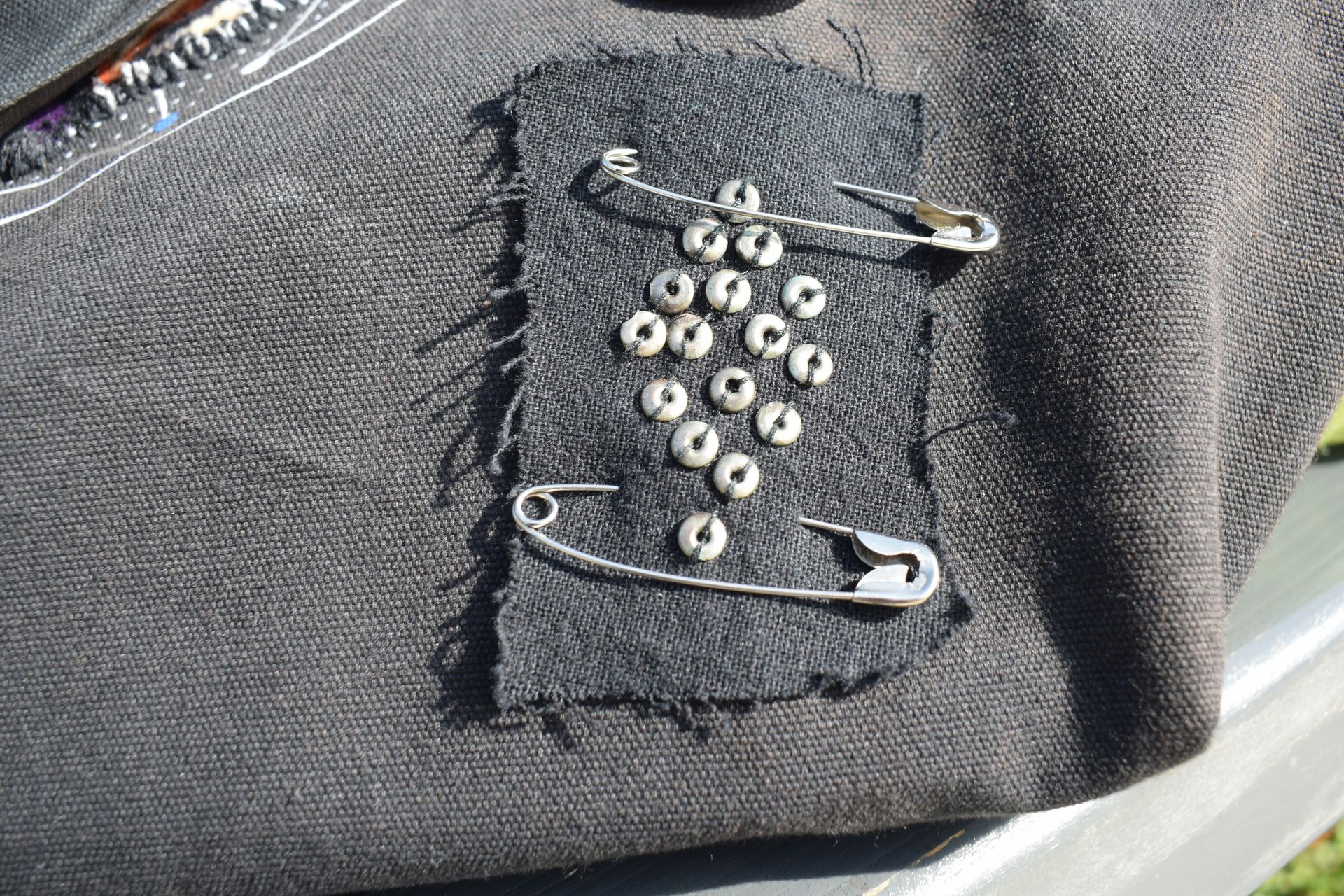
The safety pin is an object of such elegant simplicity that its invention seems less like an act of design than a natural inevitability — and yet it was invented at a specific moment in history by a specific person who was trying to solve a specific financial problem, in a way that reveals how contingent even the most obvious inventions are on the right person with the right need at the right time.
Walter Hunt, a New York mechanic of considerable inventive ability and consistent financial difficulty, invented the safety pin in 1849 while fidgeting with a piece of wire and thinking about how to repay a debt of fifteen dollars to a friend. He twisted the wire into the familiar coiled spring with a shielded clasp in roughly three hours, patented the design, and sold the patent — including all future rights — to W.R. Grace and Company for four hundred dollars, which he used to pay his debt and a small profit. The company went on to earn enormous sums from the patent. Hunt went on to invent the forerunner of the Winchester repeating rifle, a fountain pen, a reversible and double-pointed needle that made the lockstitch sewing machine possible, and several other devices, consistently selling his patents for small sums and dying in poverty.
The safety pin predates Hunt by millennia in its basic concept — ancient fibulae, used to fasten clothing in Greece and Rome, operated on the same principle. But Hunt's specific design — the wire coil that creates spring tension and holds the pin closed, the protective clasp that prevents the point from sticking the wearer — is the modern safety pin in all its essentials, and it was created in three hours as a solution to a fifteen-dollar debt.
The paperclip

Jorge Romero / Pexels
The paperclip's history is entangled with one of the most persistent myths in the history of invention: the claim that it was invented by Norwegian Johan Vaaler in 1899, which became embedded in Norwegian national identity during World War II — when Norwegians wore paperclips as a symbol of resistance to Nazi occupation — despite being largely incorrect.
Vaaler did patent a paperclip design in 1899, but his design — a straight pin that fastened papers by piercing them — bore little resemblance to the bent-wire loop design that is actually used worldwide. The Gem clip, which is the standard paperclip shape — a double-oval loop of bent wire that holds papers by tension rather than by piercing them — was produced by the Gem Manufacturing Company in Britain in the 1890s, with no clear individual inventor identified. The Gem design was registered in Britain before Vaaler's patent and was already in production by the time Vaaler applied for his.
The myth was established because Vaaler's paperclip patent was cited in several early 20th-century reference works as the invention of the paperclip, and the error compounded through repetition. The wartime paperclip resistance symbol — which was genuine, powerful, and meaningful — was adopted on the basis of a mistaken attribution and has been difficult to correct because the symbol's emotional resonance has made the correction seem pedantic.
The paperclip's actual invention is essentially uncredited — one of those objects that emerged from the practical requirements of the Victorian office without an individual to attach to it, which is perhaps more appropriate than most origin stories anyway.
The button
Pavel Danilyuk / Pexels
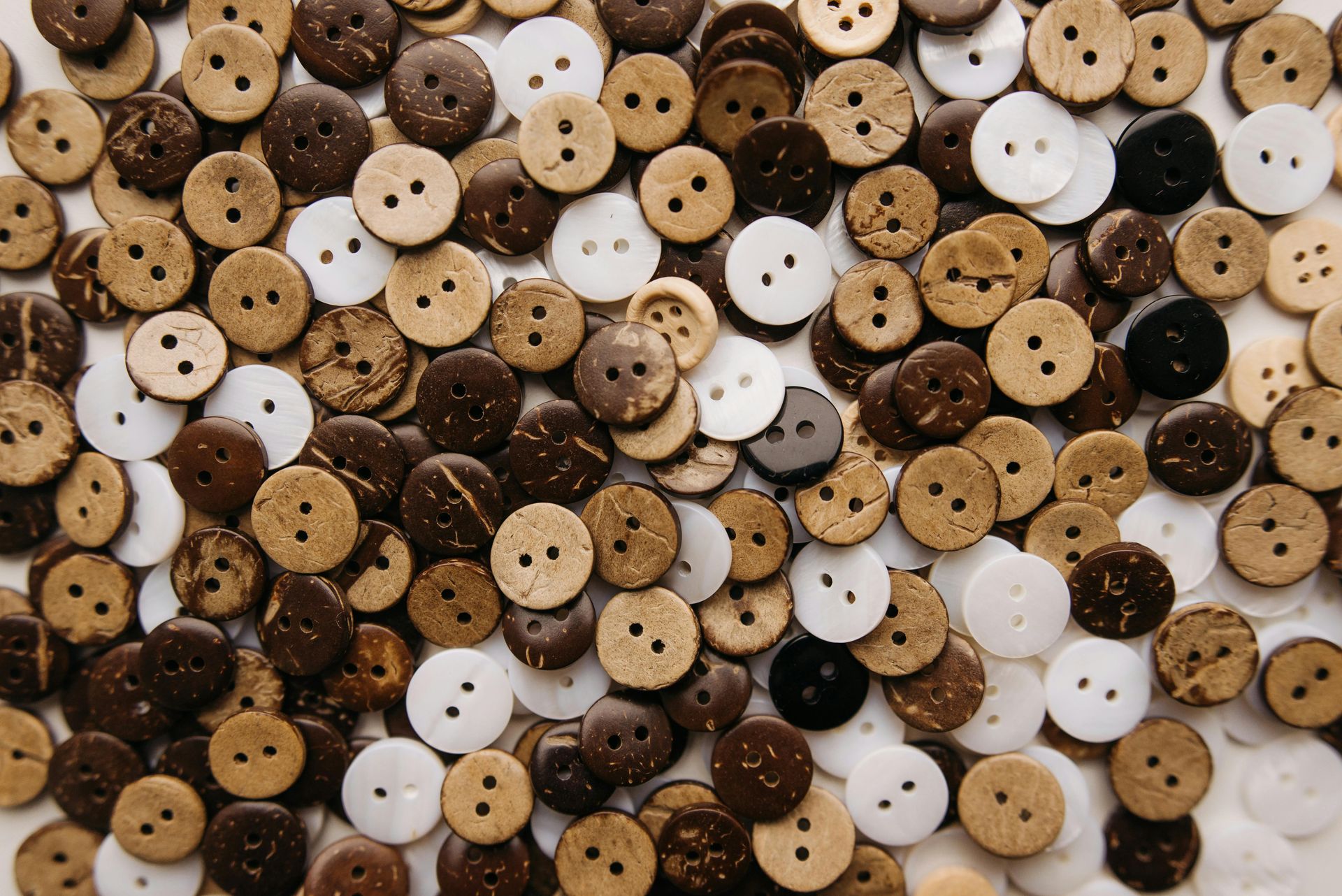
Buttons are among the oldest manufactured fasteners in the world, but they were not originally used for fastening. The earliest buttons — found in the Indus Valley civilization and dating to roughly 2000 BCE — were decorative objects, pierced at the back and sewn to garments for ornamental purposes. The functional button — one that passes through a buttonhole to fasten two pieces of fabric together — did not appear until 13th-century Europe, when it was developed simultaneously with the fitted garment: the tailored clothing that required closure mechanisms that decorative buttons had never needed to provide.
The buttonhole was the innovation that made the button functional rather than decorative, and it appeared in Europe around the 13th century in Germany and spread rapidly with the development of tighter-fitting clothing driven by changing fashion. By the 14th century, buttons and buttonholes were standard fastenings in European clothing and the button-making trade had become a significant industry in Paris, where guilds of button-makers competed fiercely with each other and with tailors over the right to make buttons of different materials.
The button's cultural significance expanded well beyond fastening. In 17th and 18th-century Europe, buttons on men's coats were a primary vehicle for conspicuous consumption — made of precious metals, set with gemstones, decorated with miniature paintings, and used in quantities that far exceeded any practical requirement. Louis XIV reportedly spent the equivalent of several million dollars on decorative coat buttons during his reign. The modest utilitarian object now sold by the gross in haberdashery shops was, for several centuries, a luxury item whose cost and quality communicated the wearer's social position more directly than almost any other item of dress.
The alarm clock

Negative Space / Pexels
The alarm clock, in its ancient form, was a philosophical instrument as much as a practical one — a device that asked what time was for and who had the right to control it. The earliest alarm clocks were not mechanical but hydraulic: ancient Greek water clocks fitted with a mechanism that would trigger an audible signal at a set water level. Plato reportedly used one to summon students to his lectures before dawn.
Mechanical alarm clocks were developed in medieval European monasteries, where the canonical hours — the fixed-time prayer obligations of the religious day — required reliable timekeeping in the absence of the sun. Levi Hutchins of New Hampshire invented the first American alarm clock in 1787, but his clock was fixed to ring at 4am and could not be set to any other time — he simply wanted to wake before dawn. Seth Thomas patented the first adjustable American alarm clock in 1876 and began mass production, and the alarm clock became a standard household object.
The history of the alarm clock is also the history of industrial labor discipline. Before factory work, most people woke with the light, worked at a pace determined by the task rather than the clock, and experienced time as cyclical and seasonal. The factory required workers to appear at a specific hour regardless of season, dawn, or personal preference — and the alarm clock, distributed to a workforce previously governed by church bells and seasonal light, was one of the instruments through which industrial time discipline was imposed on daily life. Edward Thompson's 1967 essay "Time, Work-Discipline, and Industrial Capitalism" argues that the spread of clocks and watches through the working population in the 18th and 19th centuries was inseparable from the transformation of labor into wage work. The humble alarm clock is, in this reading, a tool of economic transformation as much as a device for waking up.
The Band-Aid
Nop Viwat / Pexels
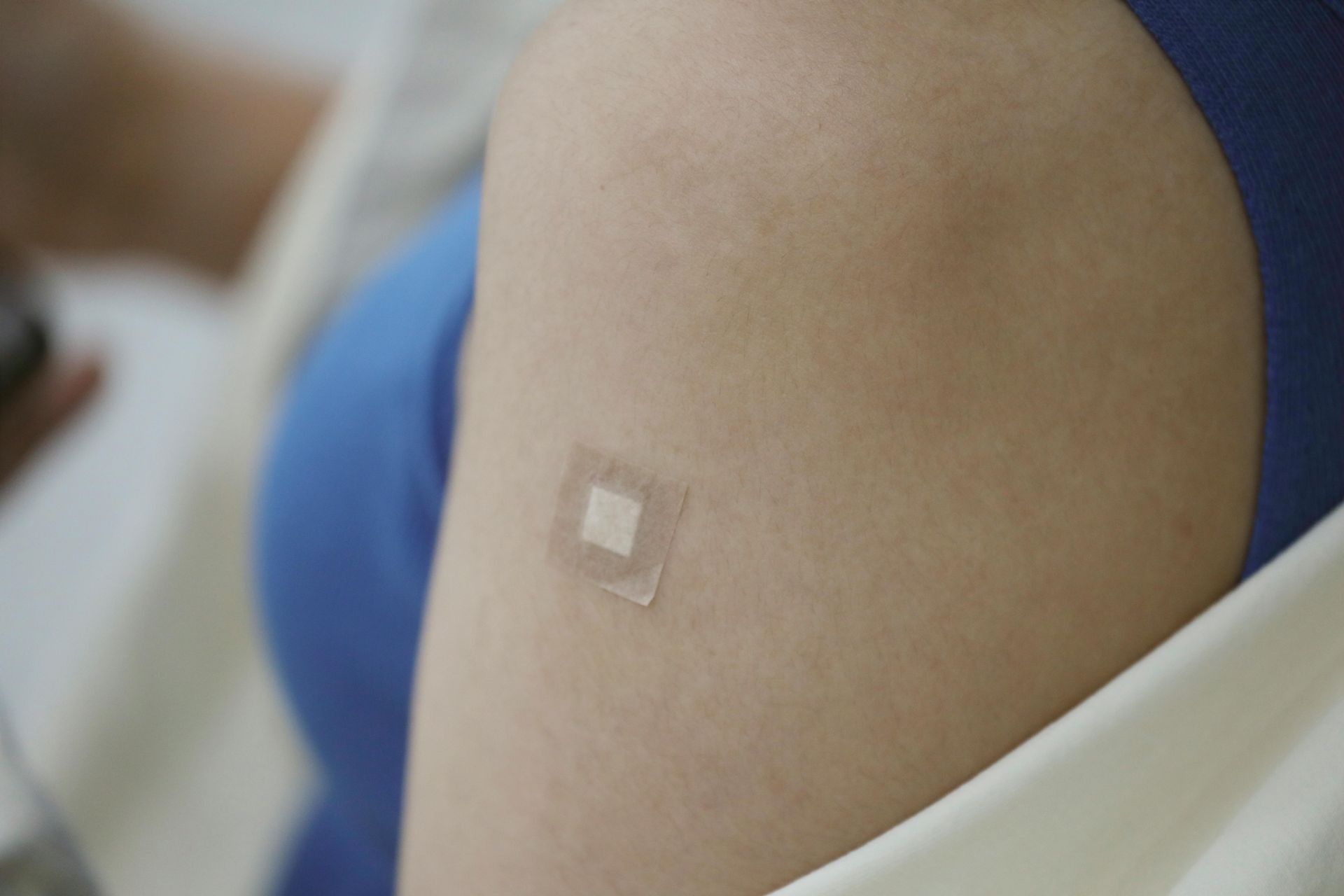
The Band-Aid was invented in 1920 by Earle Dickson, a cotton buyer at Johnson & Johnson $JNJ, for an entirely personal reason: his wife, Josephine, was accident-prone in the kitchen and frequently cut and burned herself while cooking. The standard treatment at the time required gauze and adhesive tape applied separately — a process that required two hands and was difficult for Josephine to manage alone. Dickson pre-assembled pieces of gauze in the center of adhesive tape, covered with crinoline to prevent sticking before use, so that Josephine could apply a dressing to herself with one hand.
When Dickson mentioned his invention to his supervisor at Johnson & Johnson, the company recognized its commercial potential and began manufacturing them. The early Band-Aids were large, hand-cut, and sold poorly. The company gave them away free to Boy Scout troops as a promotional strategy — a decision that turned out to be cannily effective, as a generation of scouts grew up knowing how to use Band-Aids and communicated that knowledge to their families.
The product became mass-market after World War II, when adhesive bandages had been widely used by military medics and veterans returned home familiar with them. Machine-cut Band-Aids in their modern form were introduced in 1924, and decorated Band-Aids — which increased their appeal to children and therefore drove sales to families — were introduced in the 1950s. The product that is now so universal that its brand name has become the generic term for adhesive bandages in American English was invented because a man was worried about his wife cutting herself while making dinner.
The spoon

engin akyurt / Unsplash
The spoon is the oldest eating implement used by humans — older than the fork, older than the knife as a table implement, and old enough that its origins predate recorded history. The first spoons were almost certainly shells, hollowed bones, and cupped hands, and the word "spoon" in Old English — spon — meant a chip or splinter of wood, suggesting that the earliest manufactured spoons were simply shaped pieces of wood.
Spoons appear in Egyptian tombs dating to before 1000 BCE, made from wood, flint, ivory, and slate. Greek and Roman spoons were made of bronze and silver, with designs that included a pointed end for extracting shellfish from shells — a design whose descendant is the oyster fork of contemporary formal table settings. Medieval European spoons were typically carved from wood or horn by the user rather than purchased, and the possession of a silver spoon was a marker of significant wealth — giving rise to the phrase "born with a silver spoon in one's mouth," referring to those born into families wealthy enough to own them.
The spoon's shape has remained remarkably consistent across cultures and millennia — the bowl for holding liquid, the handle for gripping — which suggests that the solution to the problem of conveying liquid to the mouth without spillage is strongly convergent. The design is so well-fitted to its function that improvements have been marginal: the long-handled iced tea spoon of the 20th century, the silicone spatula-spoon hybrid of the 21st. The fundamental object has not changed in any meaningful way in approximately 5,000 years of continuous use.
The tea bag
Lynda Sanchez / Unsplash
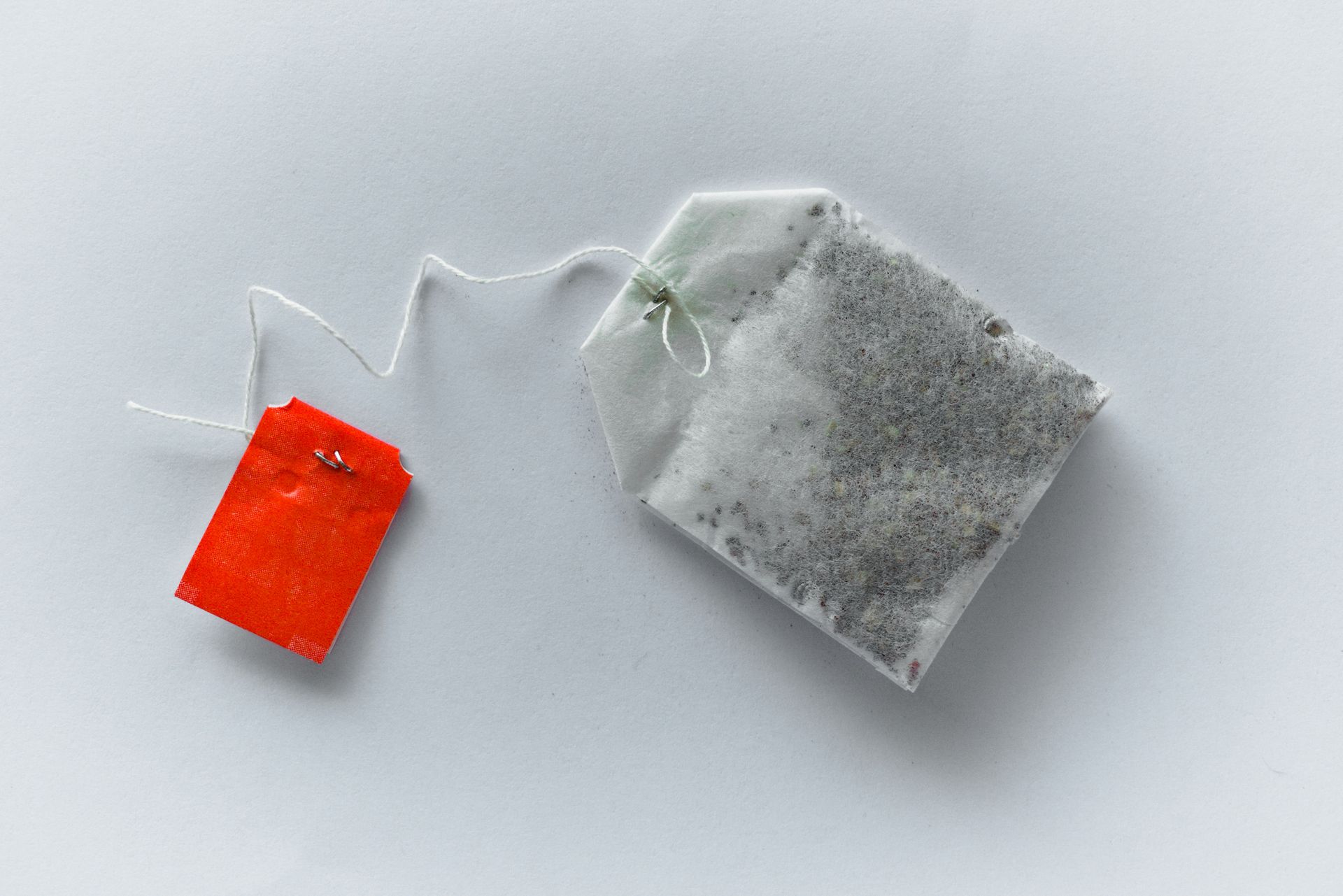
The tea bag was invented by accident, or at least by miscommunication. Thomas Sullivan, a New York tea merchant, began sending small samples of tea to customers in small silk pouches in 1908 — as a packaging convenience intended to reduce the cost of sending samples in tins. The customers, who apparently did not read the accompanying instructions, began brewing the tea directly in the pouches rather than removing the tea and adding it to a pot. They then complained when Sullivan's subsequent samples arrived in tin containers rather than the more convenient pouches.
Sullivan took the complaints as market research rather than confusion, recognized that customers preferred the pouched convenience, and began producing bags specifically designed for brewing. The original silk was replaced by gauze and eventually by the paper filter that is standard today. The square tea bag was produced initially; the round tea bag was introduced in the 1940s. Tetley introduced the perforated tea bag in the 1950s to improve water flow through the bag and accelerate brewing. The pyramid tea bag, introduced by Brooke Bond in 1996, was a genuine innovation: the three-dimensional shape allows more room for tea leaves to expand and release flavor than the flat bag permits, and produces a noticeably better cup.
The tea bag is now used for more than 95% of tea consumption in Britain and for the large majority of tea consumed globally, which means that the primary global experience of what tea is has been shaped by a customer's accidental misuse of a sample pouch in 1908. Tea purists — who argue that loose-leaf tea brewed in a pot produces a vastly superior drink — are entirely correct and have been entirely unable to dislodge the convenience that Sullivan's customers accidentally created.
Velcro
Andrea Piacquadio / Pexels
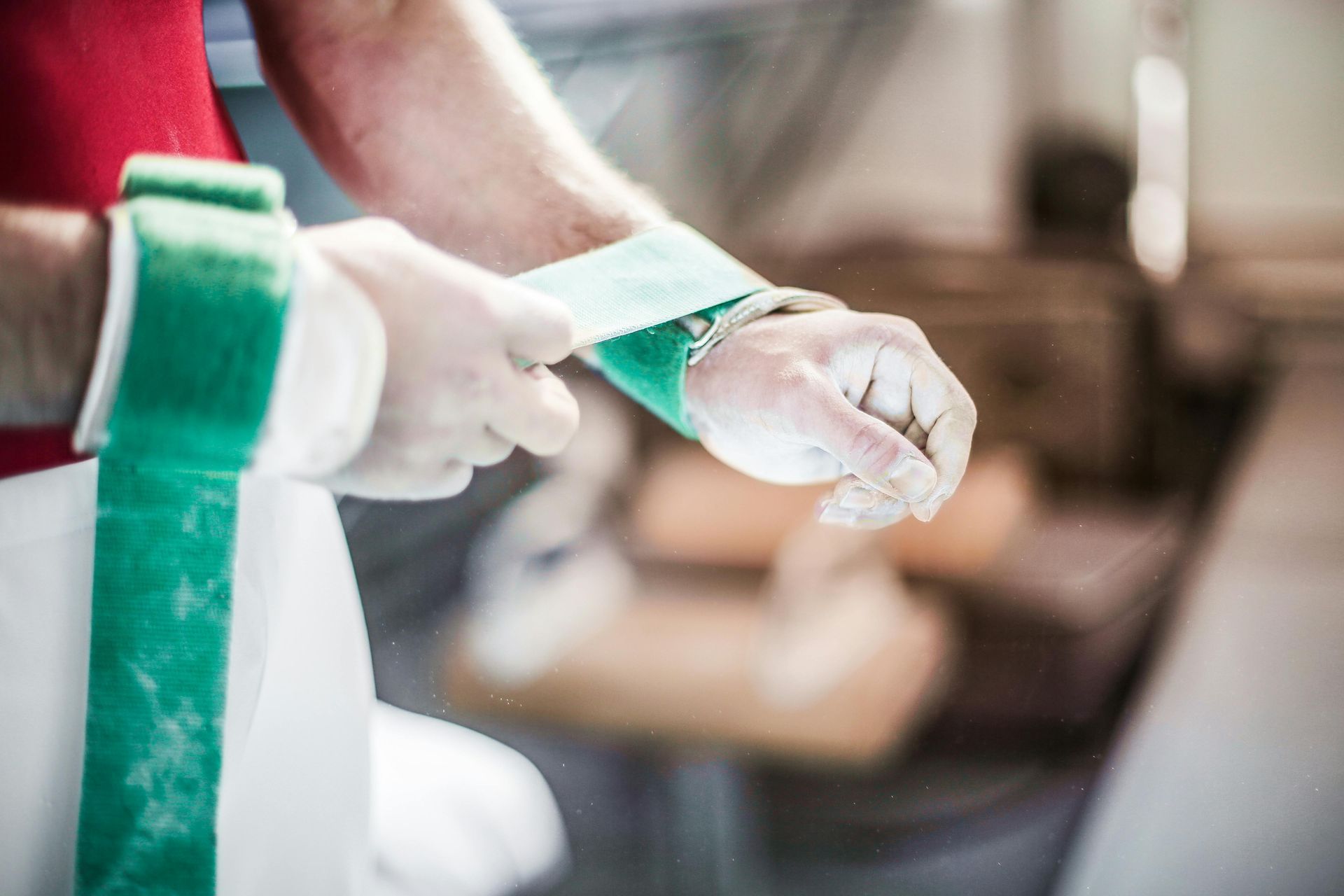
Velcro is one of the most famous accidental inventions in history, and the story behind it is both accurate and more specific than most popular accounts suggest. Swiss engineer George de Mestral went hunting in the Alps in 1941 and returned home to find his wool trousers and his dog's fur covered in burrs from the burdock plant. Rather than simply removing the burrs and moving on, de Mestral examined one under a microscope and observed that the burr's surface was covered in tiny hooks that caught on the loops in fabric and animal fur. He spent the next decade attempting to replicate this mechanism with manufactured materials, facing considerable technical difficulty and mockery from the textile industry.
The difficulty was producing both the hooks and the loops in a material durable enough for commercial use. De Mestral worked with a Lyon weaver to produce a cotton version, which wore out quickly, and eventually developed nylon hooks and loops created under infrared light, which produced the required durability. He filed his patent in 1951 and introduced the product commercially in 1955, naming it Velcro from the French words velours (velvet) and crochet (hook).
Commercial adoption was slow initially — the fashion industry dismissed it as insufficiently elegant for garments, an assessment that has proved partially correct — but NASA's adoption of Velcro for use in zero-gravity environments, where zippers and buttons posed operational difficulties, gave the material both practical validation and enormous publicity. The image of astronauts using Velcro to secure objects in spacecraft was a more effective advertisement than any marketing campaign, and consumer adoption followed. Velcro is now used in applications ranging from operating room drapes to children's shoes, all because a Swiss engineer was curious about why his trousers were covered in burrs.
The eraser
Sergey Meshkov / Pexels
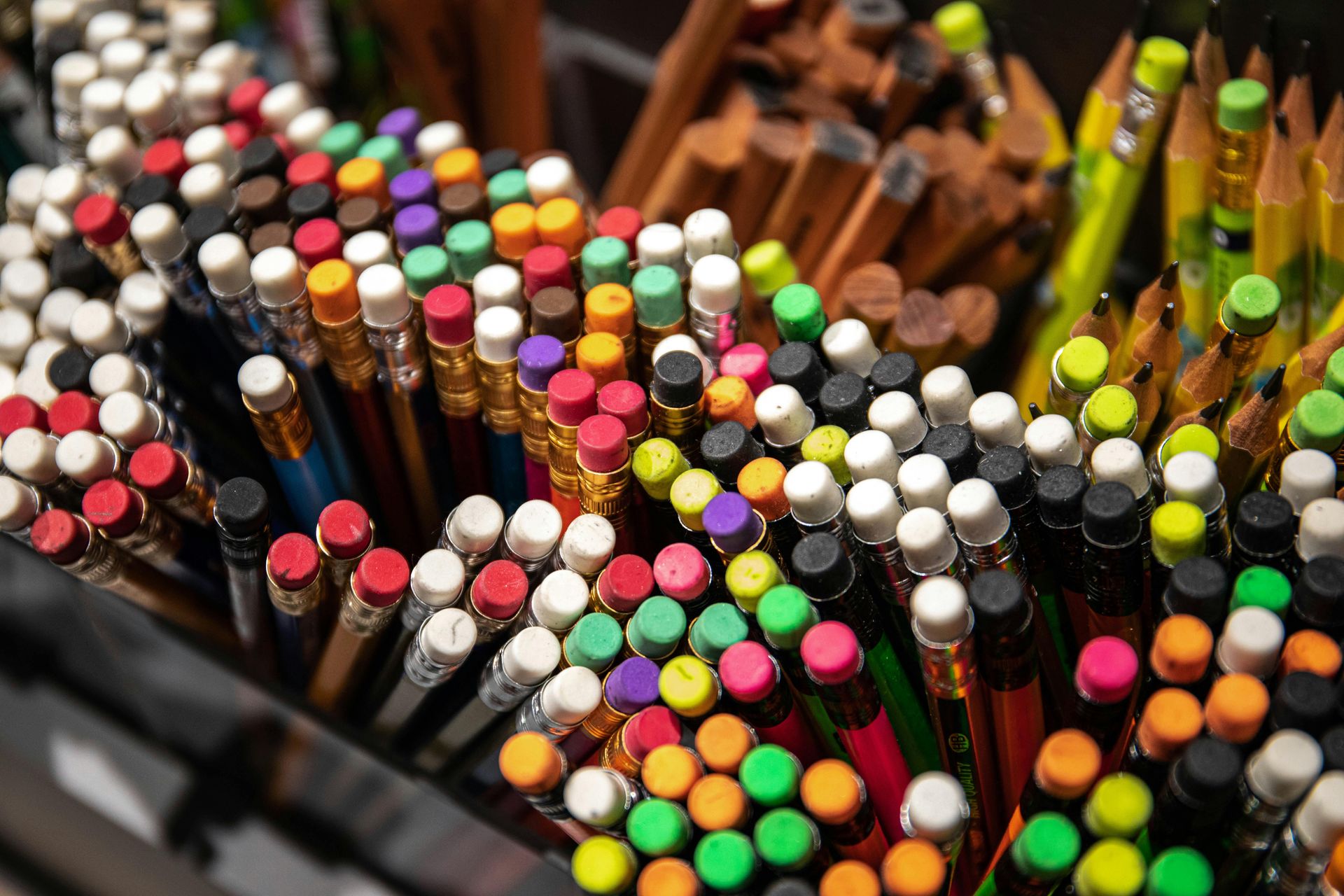
The eraser has a history that begins with a geographical accident: the existence of natural rubber in South America, which produced a material unlike anything previously available in Europe, whose specific property of removing graphite marks from paper was discovered within years of its introduction to the Old World and made the pencil a practical rather than a permanent writing instrument.
Natural rubber was introduced to Europe from South America in the 18th century, initially as a curiosity. In 1770, the English chemist Joseph Priestley — better known for discovering oxygen — noted in a publication that the material was "excellently adapted to the purpose of wiping from paper the marks of a black lead pencil" and that he had seen it sold for three shillings a cube in London. Priestley is often credited with naming the rubber eraser, though the name he gave it — "rubber" — simply described the action of rubbing marks away.
Early rubber erasers were expensive, unreliable, and deteriorated quickly in heat or cold before Goodyear's vulcanization made durable rubber available. The combination of the vulcanized eraser with the pencil — specifically the invention of the pencil with an attached eraser — was patented by Hyman Lipman of Philadelphia in 1858, who sold the patent five years later for $100,000 to Joseph Reckendorfer. Reckendorfer's subsequent attempt to sue Faber for patent infringement resulted in the U.S. Supreme Court ruling in 1875 that attaching two existing objects together does not constitute a patentable invention — a ruling that established an important principle of patent law and left the attached eraser as common property.
The clock face
C1 Superstar / Pexels
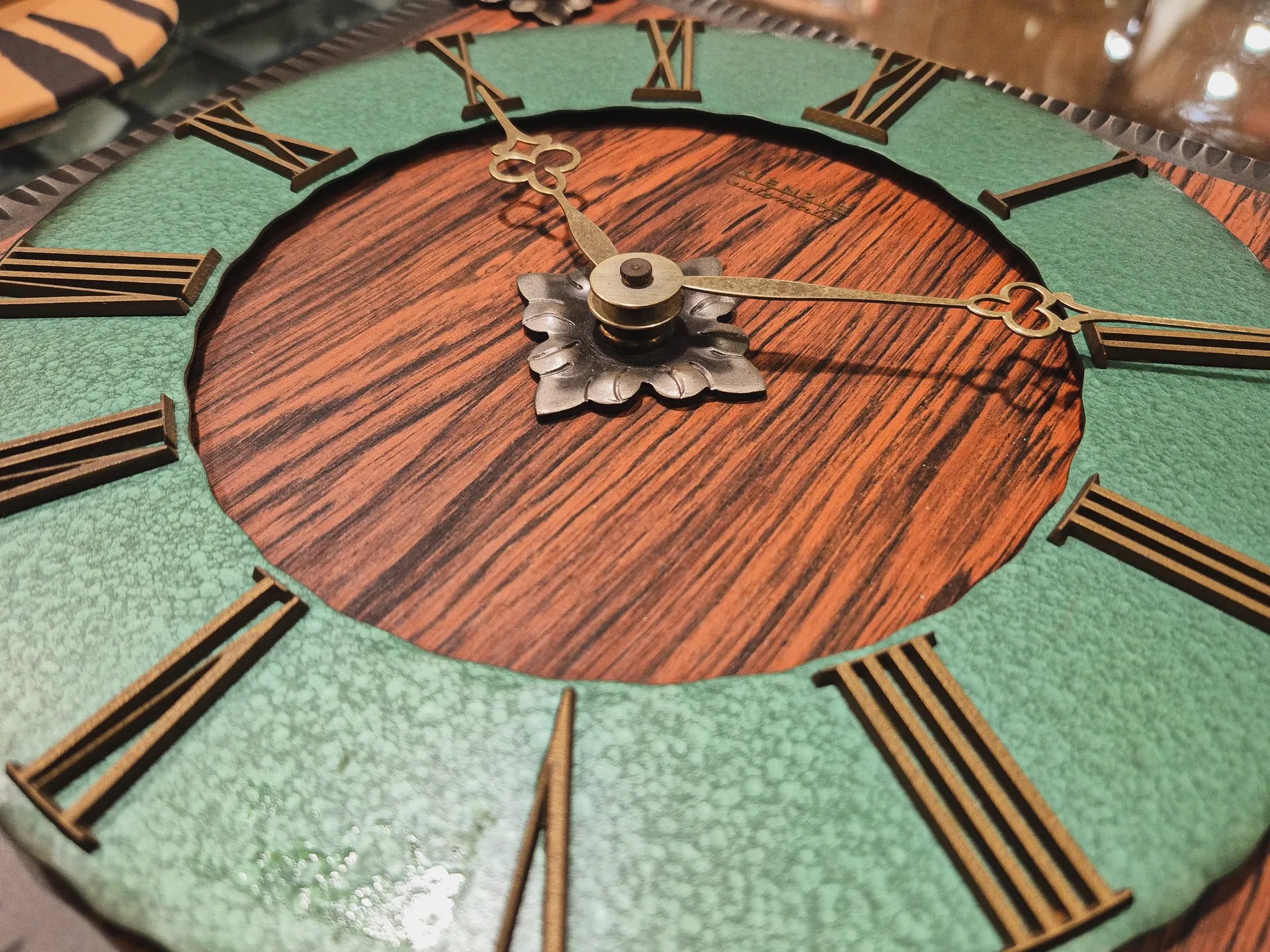
The clock face — the circular display with 12 numbers arranged around the periphery and hands indicating the hour and minute — is so embedded in how people visualize time that it is difficult to imagine time being represented differently. And yet it is a specific, culturally contingent design choice, not a natural consequence of how time works, and the decision to place 12 at the top and count clockwise is the product of particular historical circumstances.
Medieval European sundials, which were the reference instruments against which early mechanical clocks were calibrated, were designed for use in the Northern Hemisphere where the sun travels from east to west across the southern sky. A horizontal sundial gnomon casts a shadow that moves clockwise when viewed from above — east in the morning, south at noon, west in the afternoon. When mechanical clocks were developed to replicate the time kept by sundials, they were designed to move in the same direction as the shadow. Clockwise movement, in other words, was inherited directly from the directional behavior of sunlight in the Northern Hemisphere.
The 12-hour clock face with numbers arranged around a circle was established as the standard by the 14th century and has remained unchanged in its essential form since. The choice of 12 divisions rather than 10 (which would seem more natural in a decimal culture) reflects the Babylonian sexagesimal mathematical system — based on 60 rather than 10 — that was adopted by the Greeks and transmitted through medieval astronomy. 12 divides neatly by 2, 3, 4, and 6, making it a more practically useful number for timekeeping than 10, which only divides neatly by 2 and 5.
The question of why 12 is at the top rather than any other number is almost never asked, because the answer is simply that 12 is where the shadow is shortest — at noon on a sundial in the Northern Hemisphere — and the earliest clock faces reproduced that convention without any particular design intention.
The ballpoint pen

Romina BM / Pexels
The ballpoint pen solved a problem that its predecessor, the fountain pen, had never fully solved: it blotted, dried slowly, required frequent refilling, and could not write on rough surfaces. László Bíró, a Hungarian journalist who noticed that newspaper ink dried quickly and smudge-free — unlike fountain pen ink, which used water-based formulas — began experimenting in the 1930s with a pen that used a thicker, faster-drying ink delivered to the paper through a tiny rotating ball. He and his brother György, a chemist, patented the ballpoint pen in 1938 and fled Hungary for Argentina in 1943, escaping the advancing Nazi forces.
The British government, which had been watching the development of the ballpoint with interest, acquired a license from Bíró because the pen could write at altitude — fountain pens leaked in pressurized aircraft cabins — and supplied ballpoints to Royal Air Force aircrew during World War II. The American rights were purchased by Eversharp, but a Chicago businessman named Milton Reynolds attended the Buenos Aires pen fair in 1945 where Bíró's pen was on display, recognized its commercial potential, returned to the United States, designed a similar pen that he believed did not infringe the Bíró patent, and launched it in October 1945 at Gimbels department store in New York, selling 10,000 pens at $12.50 each on the first day.
The French company Bic — named after its founder Marcel Bich, who shortened his name for the brand — acquired the Bíró patent, improved the design, and in 1950 introduced the Bic Cristal at a price point that made it the first disposable pen accessible to ordinary consumers. The Bic Cristal remains the best-selling pen in the world, with an estimated 100 billion sold since its introduction. Bíró's name survives in the word "biro," used generically for ballpoint pens in British English — a linguistic tribute to the man who invented the object while the commercial rewards largely went to others.
The trash can

Jan van der Wolf / Pexels
The domestic trash can — and the organized municipal rubbish collection system it implies — is one of the most consequential public health innovations in urban history, and its development in the 19th century was driven less by environmental concern than by the practical necessity of managing waste in cities that were growing faster than any previous system for waste disposal could handle.
Before organized waste collection, most urban households disposed of waste by throwing it into the street, burying it in their yards, or feeding organic waste to animals. In dense cities, the accumulation of organic waste — food scraps, animal dung, human waste — in streets and yards was a primary driver of the epidemic disease that killed urban residents at dramatically higher rates than rural ones. The connection between filth and disease was understood at a practical level well before the germ theory of disease provided a scientific explanation.
Baron Eugène Poubelle, the Prefect of Paris, introduced the first organized rubbish collection system in France in 1883, requiring all Paris households to have a covered container for waste and mandating that it be placed outside for collection on designated days. The French word for rubbish bin — poubelle — is named directly after him, one of the few instances in which the inventor of a civic system is commemorated in the name of the object rather than in a monument or a street.
Poubelle's system was resisted initially by Parisian concierges and rag-pickers, whose livelihoods depended on the informal waste economy that organized collection would disrupt. The resistance was overcome by public health arguments that were increasingly difficult to dispute as the link between sanitation and disease mortality became better understood. The organized waste collection system Poubelle introduced became the model for municipal waste management across Europe and eventually globally.
The matchstick
Aalijah Durrani / Pexels
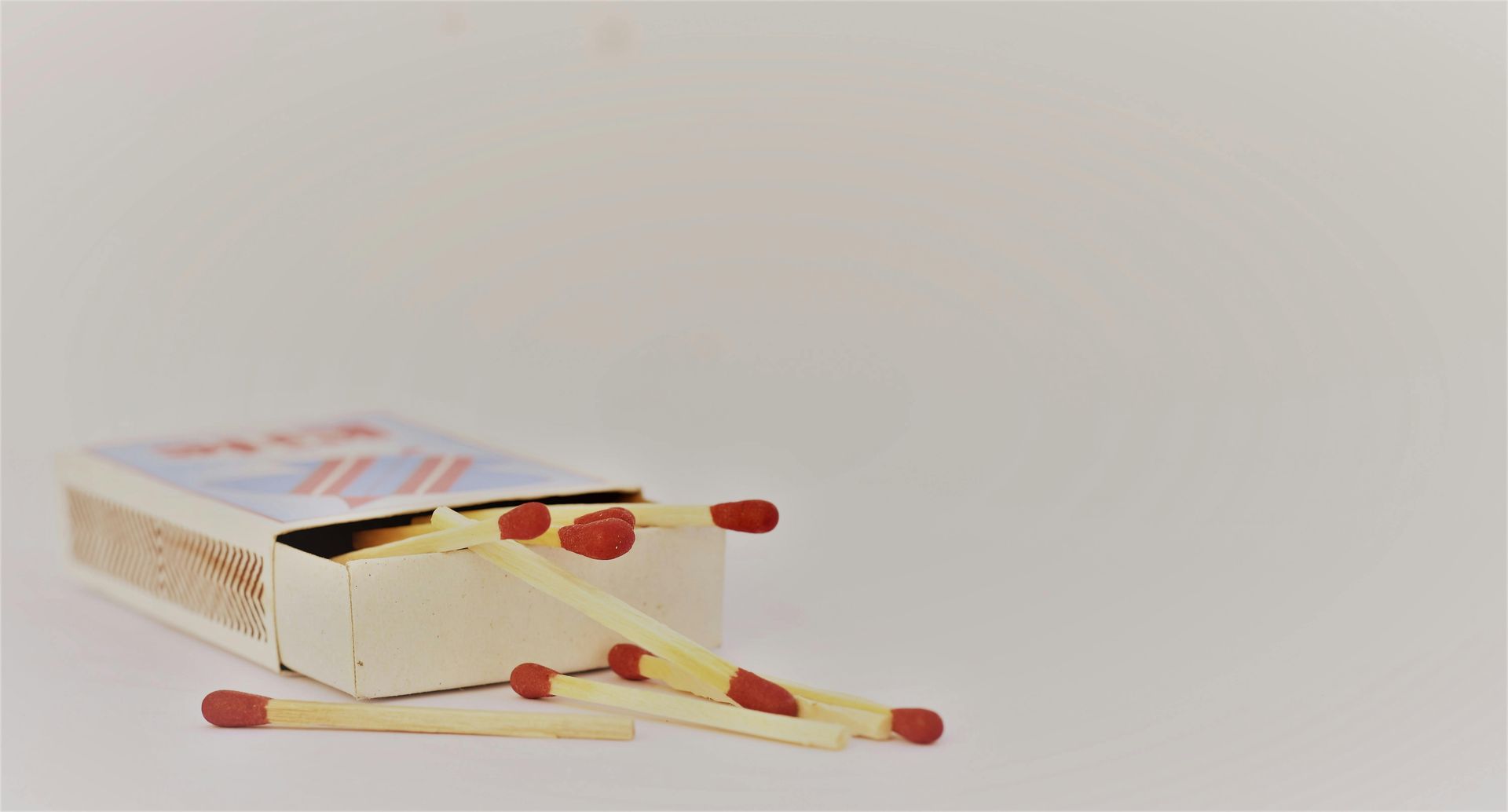
The friction match — a wooden stick tipped with a compound that ignites when struck against a rough surface — is a technology so simple and so useful that it is easy to forget that it was developed only in the 1820s and that the problem it solved — producing fire reliably on demand — had preoccupied human inventors since ancient times.
The phosphorus match was invented in 1827 by English chemist John Walker, who discovered that a mixture of antimony sulfide, potassium chlorate, and gum arabic, dried on the end of a splint of wood, would ignite when drawn across a rough surface. Walker was apparently uninterested in the commercial potential of his discovery and neither patented it nor produced it at scale. The discovery was quickly replicated and improved by others, most significantly by Samuel Jones, who began selling the matches commercially as "Lucifers" — a name reflecting their tendency to spit burning particles when ignited.
The white phosphorus match that dominated the 19th-century market was effective but produced serious health consequences for the factory workers who made them. White phosphorus fumes caused phosphorus necrosis of the jaw — "phossy jaw" — a disfiguring and fatal disease that became a major labor health issue and eventually drove international regulation. The International Match Conference of 1906 led to the banning of white phosphorus matches in most developed countries, replaced by the red phosphorus safety match — which ignites only when struck against the specific striking surface on the matchbox — patented by Swedish chemist Gustaf Erik Pasch in 1844 but not widely adopted until the health consequences of white phosphorus became politically impossible to ignore.
The envelope
Valeria Reverdo / Unsplash
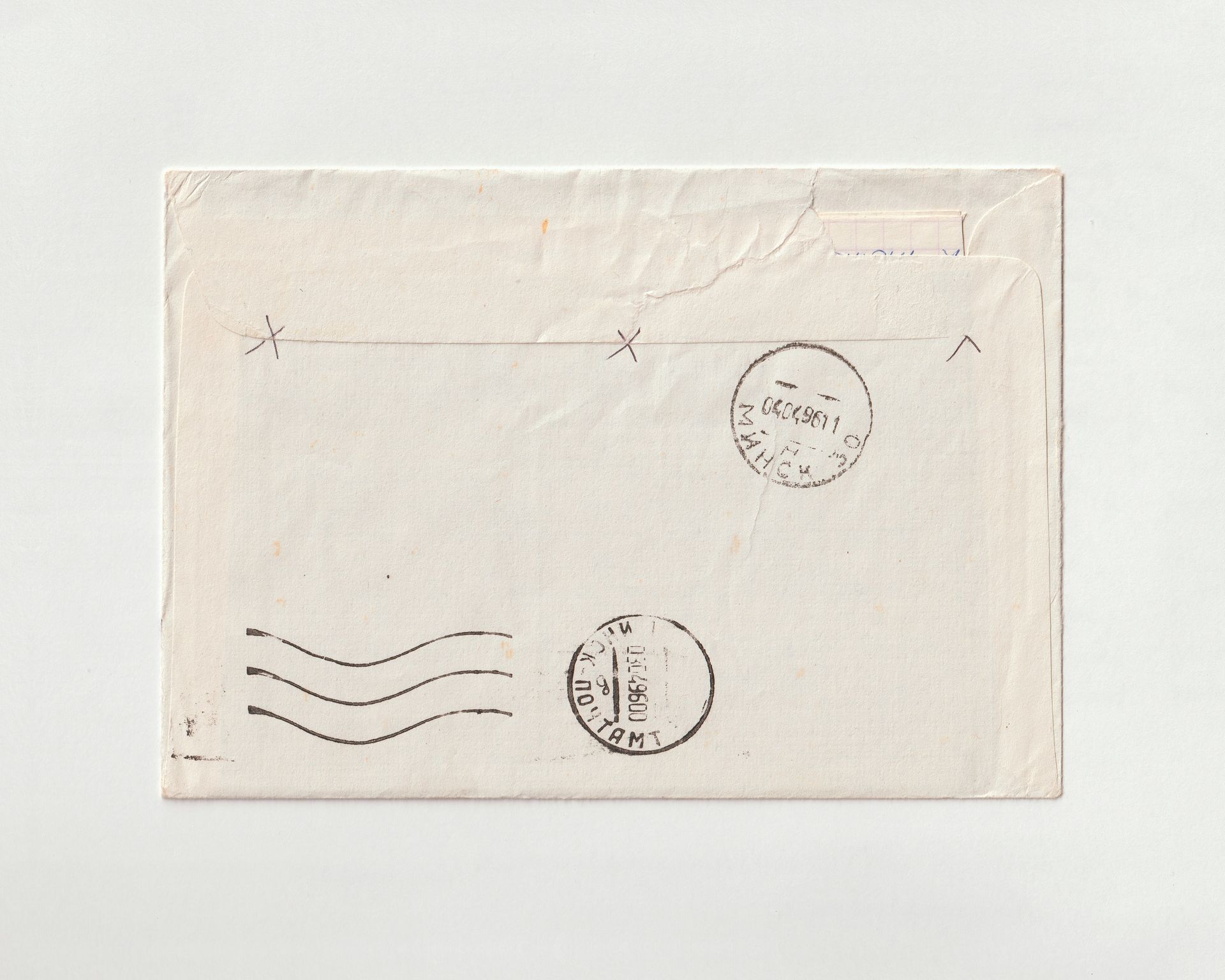
The envelope solved a problem that seems almost too simple to require solving: how to send a private written message through a system that would necessarily be handled by third parties. Before the envelope, letters were written on a single sheet of paper that was then folded, sealed with wax, and addressed on the back — a system that protected the content adequately in an era of personal letter carrying but was ill-suited to a mass postal system.
The modern envelope was invented by Brighton stationer and publisher Brighton Warren De La Rue and patented in England in 1840 — the same year that Rowland Hill introduced the Penny Post, Britain's first pre-paid, uniform-rate postal system. The timing was not coincidental: the Penny Post created a mass postal system that required mass-produced enclosures, and De La Rue's envelope factory was positioned to supply the demand.
The adhesive envelope — with a gummed flap that could be moistened and sealed — was introduced in 1844 by Edwin Hill and Warren De La Rue (the same De La Rue), replacing wax sealing as the standard closure. The diamond-shape envelope blank, which when folded produces an envelope with four flap sections overlapping to create a strong seam, was patented by Russell Hawes in 1856 and remains the standard envelope construction today.
The envelope's history is intertwined with the history of postal systems, privacy law, and commercial communication in ways that are easy to overlook when the object is a rectangle of paper. The expectation that a sealed letter is private — that opening it without authorization is a legal offense — is embedded in most legal systems and derives directly from the social norms that the physical seal and the envelope established.
Sticky tape
Marina Agrelo / Pexels
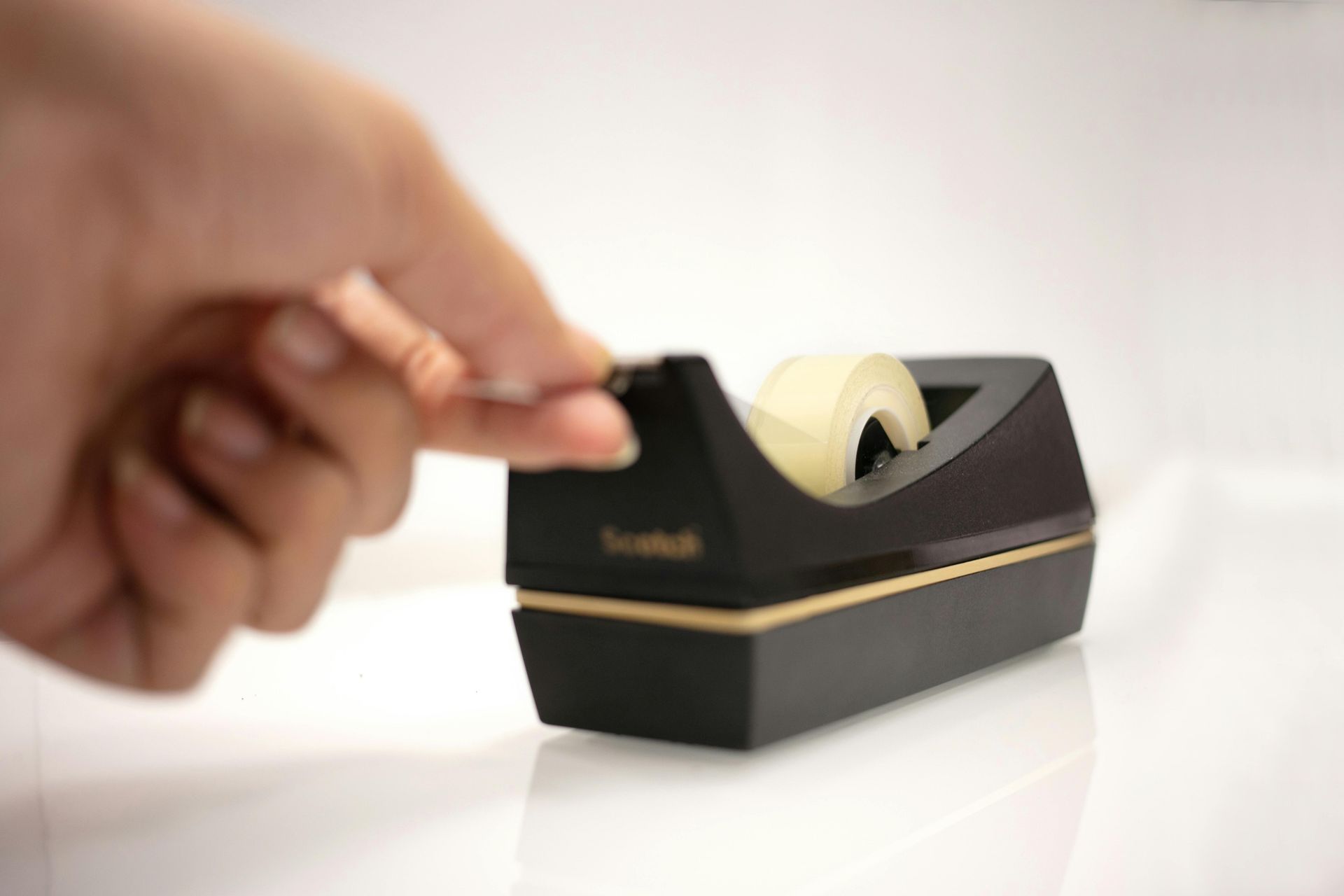
Transparent adhesive tape — Scotch tape in the United States, Sellotape in the United Kingdom — was invented in 1930 by Richard Drew, an engineer at 3M $MMM who had previously invented masking tape and who was working on a solution to the problem of sealing the cellophane packaging that was becoming standard in the food industry in the late 1920s.
Drew's invention combined cellophane — a transparent film derived from cellulose, invented in France in 1908 by Jacques Brandenberger — with a pressure-sensitive adhesive to create a transparent tape that could seal packages without obscuring the contents and could be applied and removed without damaging the packaging. The name "Scotch" was attached not because of any Scottish connection but because of a derogatory remark made by an early tester — who noted that the tape had adhesive only on the edges and not the full width (a cost-saving measure) and said that the product was "Scotch" meaning stingy. 3M then extended the adhesive to the full width of the tape and kept the name, which was already in use.
The tape dispenser with a serrated cutting edge — which seems inseparable from the tape itself — was invented not by 3M but by John Borden, a 3M sales manager, in 1932, two years after the tape itself. The two inventions are so functionally associated that it is difficult to think of them separately.
Transparent tape was immediately adopted by consumers during the Great Depression, partly because it enabled the repair of torn paper products — books, maps, paper bags — that households could not afford to replace, and partly because it was cheap. The Great Depression sales boom established the tape's market position so firmly that it remained 3M's best-selling consumer product for decades.
The photograph

Samer Daboul / Pexels
Photography was invented more or less simultaneously by at least three people in different countries working with different techniques, and the credit dispute between them shaped the early years of the technology in ways that affected which countries dominated the photographic industry for decades.
Joseph Nicéphore Niépce produced what is generally considered the oldest surviving photograph in 1826 or 1827 — an eight-hour exposure of the view from his upstairs window in Burgundy, preserved on a pewter plate coated with bitumen of Judea. Niépce entered into a partnership with Louis Daguerre, a French artist, in 1829. When Niépce died in 1833, Daguerre continued the work and in 1839 announced the daguerreotype — a process that produced sharp, detailed images on silver-coated copper plates with exposure times of minutes rather than hours. The French government purchased the daguerreotype process and declared it a gift to the world, making it freely available to anyone — a decision that accelerated global adoption of photography and established French dominance of the field.
In England, William Henry Fox Talbot had independently developed the calotype process, which used a paper negative that could produce multiple positive prints — the fundamental advantage over the daguerreotype, which produced a single unique image. The calotype was the ancestor of all subsequent film photography, but Talbot's aggressive patent enforcement in Britain slowed the development of photography in England relative to France and the United States, where the daguerreotype's openness encouraged more rapid innovation.
The photograph changed what documentary evidence meant, what memory meant, and what family history meant — making the visual record of daily life available to anyone rather than only to those wealthy enough to commission a portrait painter. The democratization of the image, which has continued through film, digital photography, and the smartphone camera, began with Niépce's eight-hour exposure of a Burgundy courtyard.
The credit card

Anna Tarazevich / Pexels
The credit card was invented — according to the most commonly told origin story — because Frank McNamara forgot his wallet. In 1949, McNamara, a New York businessman, took clients to dinner at Major's Cabin Grill in Manhattan and discovered at the end of the meal that he had left his wallet at home. The embarrassment of the situation — which required his wife to bring cash to the restaurant — prompted him to develop the idea of a card that could be used to charge meals at multiple restaurants, with a single monthly bill paid by the cardholder.
McNamara, with his partner Ralph Schneider and lawyer Alfred Bloomingdale, launched the Diners Club card in 1950, initially accepted at 27 restaurants in New York City. The model — a charge card, not a credit card, meaning the balance had to be paid in full each month — was adopted by 20,000 cardholders in the first year. American Express $AXP launched its charge card in 1958. Bank of America $BAC launched the BankAmericard in Fresno, California, in 1958 — the first revolving credit card, which allowed cardholders to carry a balance and pay interest — by the simple but ethically questionable method of mailing unsolicited cards to every Bank of America customer in Fresno. The BankAmericard became Visa $V in 1976.
The credit card transformed the relationship between consumers and debt, making borrowed money frictionless and immediate in a way that the previous requirement of a bank visit, a loan application, and an explicit agreement had not. The consequences — for consumer spending, for personal debt, for the economics of retail, and for the broader economy — have been studied extensively and are still being understood. All of it traces to a man who went to dinner without his wallet.
The lunchbox

Sandra Harris / Unsplash
The lunchbox has a history that moves through mining camps, factory floors, schoolyards, and the entire arc of American industrial and consumer culture, beginning as a practical necessity and ending as a cultural artifact. The earliest American lunchboxes were not designed as such: workers in the late 19th and early 20th centuries carried their midday meals in tobacco tins, pails, and whatever containers were available. The pail — specifically the metal dinner pail — became the symbol of the working man's lunch, which is why "a square deal for the man with the dinner pail" was a political slogan in the early 20th century.
The lithographed metal lunchbox designed specifically for schoolchildren appeared in the 1920s, featuring pastoral scenes and generic imagery. The character lunchbox — printed with licensed images of popular cultural figures — began with Hopalong Cassidy in 1950, when Aladdin Industries produced a tin lunchbox with Hopalong Cassidy's image following the cowboy character's popularity on the new medium of television. It sold 600,000 units in its first year. Roy Rogers, Davy Crockett, and dozens of other popular characters followed, and the licensed lunchbox became one of the most effective pieces of children's consumer merchandise of the 1950s and 1960s.
The vinyl lunchbox replaced the metal one in the mid-1970s, partly because of a Florida school board ruling that metal lunchboxes were weapons — children were reportedly hitting each other with them — and partly because vinyl allowed more vibrant and detailed graphics. The plastic lunchbox followed in the 1980s and remains the standard. The lunchbox's history mirrors American popular culture with unusual directness: whatever dominated children's entertainment in any given decade is visible in the lunchboxes of that decade.