
SpaceX's Starship rocket is grounded after the Federal Aviation Administration declared last week's test flight a mishap and ordered an investigation into why the vehicle's Super Heavy booster failed during its first flight.
The agency declared last week's test flight a mishap and will oversee a SpaceX-led investigation before allowing the rocket to fly again
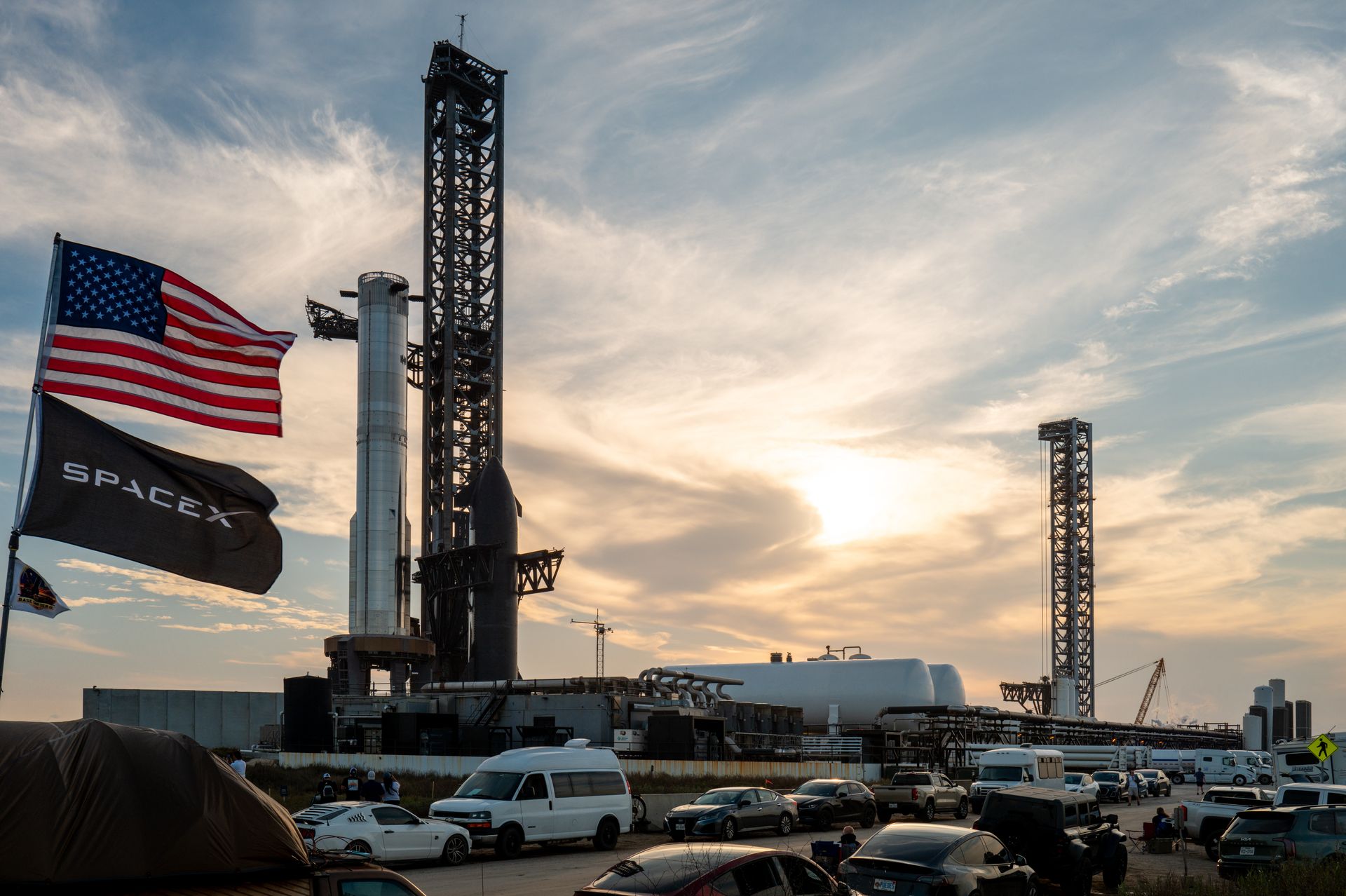
Brandon Bell / Getty Images
SpaceX's Starship rocket is grounded after the Federal Aviation Administration declared last week's test flight a mishap and ordered an investigation into why the vehicle's Super Heavy booster failed during its first flight.
The FAA announced Wednesday that the May 22 launch of Starship's newest version, known as V3, resulted in a mishap based on the booster's performance after stage separation. After separating from the upper stage on schedule, the booster could not complete the burns necessary to guide itself back toward the Gulf of Mexico, leaving it without the control needed for a safe water landing. The booster hit the water with force rather than touching down in a controlled manner, according to The Associated Press. There were no reports of injury or property damage.
"The FAA will oversee the SpaceX-led investigation, be involved in every step of the process, and approve SpaceX's final report, including any corrective actions," the agency said in a statement. Starship will be cleared to fly again only if the FAA determines that any system, process, or procedure linked to the mishap does not affect public safety.
The upper stage fared better. Twenty simulated Starlink satellites were released during the mission, and the spacecraft wrapped up its flight with a soft ocean landing near Western Australia, hitting its intended target. A separate problem — the early shutdown of one engine among Starship's six — drew no announced scrutiny from the FAA, according to Bloomberg.
The 408-foot V3 variant is the first Starship iteration capable of deep-space flight, according to SpaceX, and is central to CEO Elon Musk's ambitions for Mars settlement. NASA has also contracted Starship to land astronauts on the lunar surface on the Artemis 4 mission, targeted for late 2028.
The grounding adds uncertainty for SpaceX ahead of a planned initial public offering in mid-June, according to TechCrunch. According to its IPO filing, the company has framed Starlink — its sole profitable venture — as dependent on Starship eventually achieving the kind of reliable, reusable performance that would keep costs down and launch cadence high.
It is unclear how long the investigation will take. SpaceX has moved through FAA mishap reviews at varying speeds during Starship's development. Mishap reviews of this kind are not new to Starship's development history, and Blue Origin has faced the same regulatory requirement from the FAA as it works to mature its New Glenn vehicle.
Join 500,000+ readers who start their day with Quartz.
By subscribing, you agree to our Terms of Service and Privacy Policy.