
Quartz
Subscribe
Quartz
Subscribe
Edition
Business News
A.I.
Technology
Money & Markets
Leadership
Lifestyle
Latest

Get Quartz in your inbox

Free daily briefing on global business news.

Business News
AirlinesAutomobilesFoodPharmaceuticalsPolitics & GovernmentRetail & EcommerceSpace & AerospaceEarnings
Technology
A.I.ComputingConsumer TechSpace & AerospaceEarnings
Money & Markets
Economic IndicatorsMarketsPersonal FinanceEarnings
Lifestyle
Cars & BikesCollectingEntertainmentFood & Fine DiningHealth and FitnessReal EstateTravel
Quartz

Global business news for a smarter world

Topics

  • Business News
  • Money & Markets
  • Tech & Innovation
  • Generation A.I.
  • Lifestyle
  • Leadership

Products

  • Daily Brief
  • Weekly Digest
  • Member Benefits
  • Quartz Pro

Legal

  • Sitemap
  • About
  • Accessibility
  • Privacy
  • Terms of Service
  • Advertising

© 2026 Quartz Media, Inc. All rights reserved.

Economic Indicators

Falling earth digger sales in China are dashing hopes of a big economic rebound

In China, sales of excavators and diggers fell 41% in April on the year—a worrying proxy for the Chinese economy

By Mary Hui·2 min read·Updated August 22, 2023
Add QZ to Google

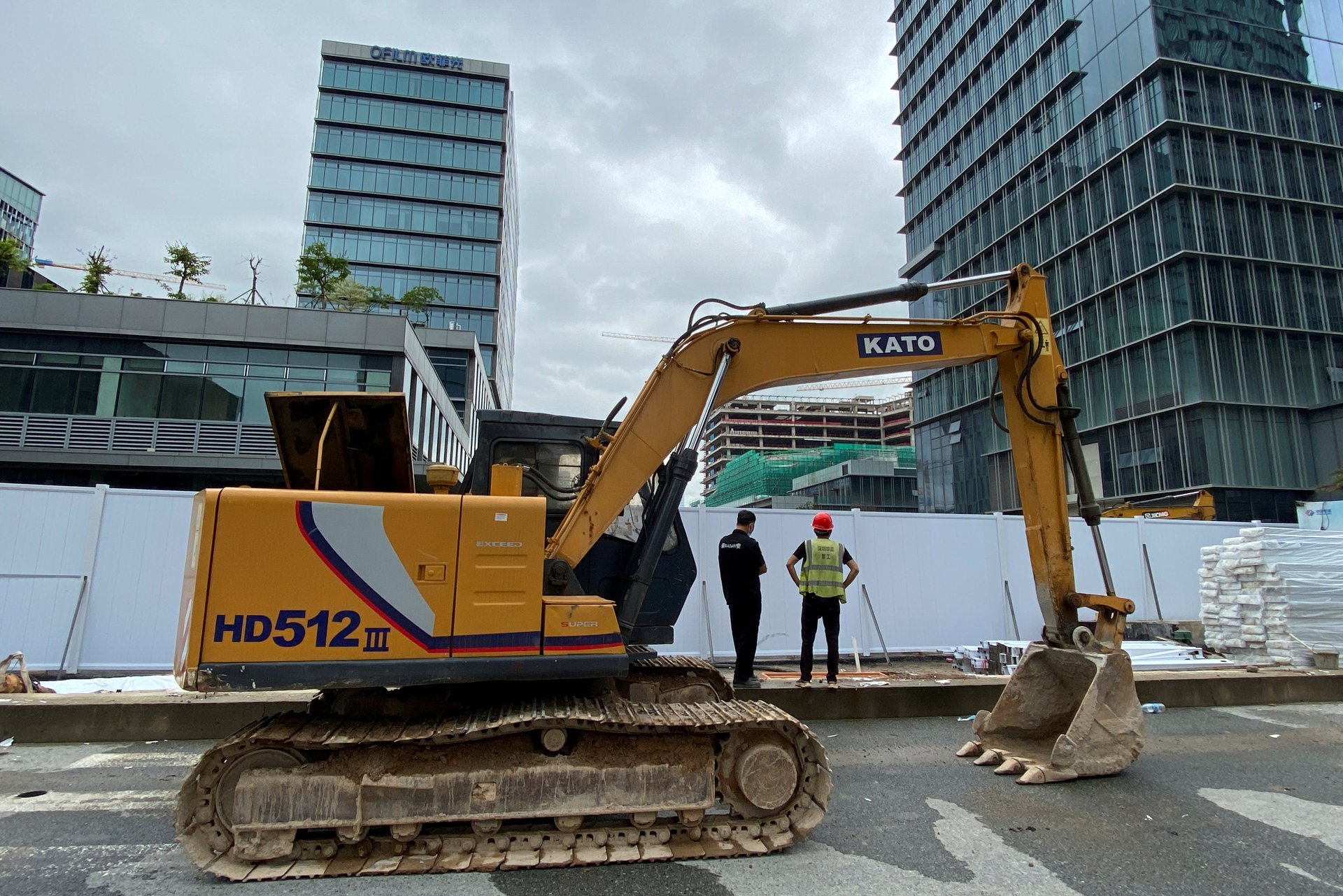
They are vivid, familiar sights in China: stationed in construction lots, clawing earth out of the ground so that office towers or apartment blocks can sprout on site. These diggers, or excavators, are often seen as a useful proxy for economic activity: more diggers sold means more construction projects and, by extension, more economic momentum.


Right now, though, that momentum is looking very sluggish. Sales of earth diggers in China are plunging. Data released (link in Chinese) by the China Construction Machinery Association shows that just over 9,500 diggers were sold in China last month, down from nearly 14,000 in March, and a 41% decrease from a year earlier.

Chinese exports of earth diggers are also slowing. In March, they’d jumped 34% from a year earlier, spurred by demand from infrastructure projects worldwide. But last month, digger exports slowed to just a 9% year-on-year increase, hinting perhaps that economic activity worldwide is slowing.


In another sign of China’s weakening domestic economic outlook, the Chinese construction machinery maker Sany Heavy Industry said it will target foreign markets for revenue growth as demand at home remains shaky. Last year, Sany’s overseas revenue overtook domestic earnings for the first time since the company’s founding in 1986.

China’s April imports shrank and exports slowed

The digger sales numbers come on the heels of disappointing trade data released by the Chinese customs administration yesterday (May 9).

China’s imports fell sharply in April, contracting by 7.9% on the year. Economists polled by Reuters had anticipated no growth in inbound shipments, so the surprise decline suggested weaker domestic demand than expected.


Meanwhile, exports grew 8.5% last month on the year. But as Bloomberg noted, the increase was “largely due to a skewed year-ago comparison,” because there were widespread pandemic lockdowns in April 2022. “Don’t be fooled by headline export figures,” David Qu, of Bloomberg Economics, wrote in a note.

Data for Chinese factory activity doesn’t offer cause for optimism either. The official manufacturing purchasing managers’ index (PMI) unexpectedly fell to 49.2 last month from 51.9 in March. The 50-point mark separates expansion in economic activity from contraction on a monthly basis.

Daily Brief

The essential business news, delivered fresh every morning.

Join 500,000+ readers who start their day with Quartz.

By subscribing, you agree to our Terms of Service and Privacy Policy.

Related

A.I.Alibaba claims its new AI model is second best in the world
FoodFDA admitted it was wrong about a positive cyclospora test on Taylor Farms lettuce
Economic IndicatorsOil is back above $90. The US has struck Iran nine days running. Stocks are trying to hold
Economic IndicatorsGas prices are back at $4 a gallon as U.S.-Iran attacks resume
AirlinesRyanair's profit plunged as Iran war drove up fuel costs and pushed fares down