Fashion doesn't happen in a vacuum — behind every major trend is a cultural shift, a political moment, or a generation working something out in public
Credit: Sky Rye Design
Clothes are never just clothes. They are the most visible thing about a person in any social interaction — the first signal sent before a word is spoken — and that visibility has always made them a medium for communication that goes far beyond warmth or modesty. What people wear, and when they start wearing it, and why they stop, tracks with the larger movements of culture, politics, economics, and identity in ways that fashion historians have spent decades documenting and that most people sense intuitively without quite being able to articulate.
The miniskirt did not arrive because hemlines naturally rise and fall on a schedule. It arrived in the early 1960s in the context of a specific generation's rejection of their parents' values, a newly accessible youth consumer market, and a sexual revolution that was still finding its physical vocabulary. The power suit did not emerge because women suddenly developed a preference for shoulder pads. It emerged in the late 1970s and 1980s as women entered professional spaces in large numbers for the first time and had to work out how to dress for environments that had not been designed for them. The hoodie did not become a cultural flashpoint because of its construction. It became one because of what it came to mean to wear it — and what it came to mean to be seen in one.
This is not a list about fashion as an industry — the designers, the houses, the runway shows, the economics of luxury. It is a list about fashion as a mirror. Each of the 15 trends here is a reflection of something happening outside the wardrobe: a war, a liberation movement, a technological shift, a generational rupture, a political argument that spilled into daily life and showed up in what people chose to put on their bodies.
The trends span roughly 100 years, from the 1920s to the 2010s. They include both the expected — the bikini, the miniskirt, punk — and the less obvious: the zoot suit, the track suit, the logomania of the 1990s. The less obvious entries are often the more revealing ones, because the stories behind them are less well-known and the distance between the trend and its context is harder to see without the full picture.
A note on geography: most of these trends originated in or were most fully expressed in the U.S., the U.K., or France — the three countries that dominated global fashion culture through most of the 20th century. That dominance is itself a cultural fact worth noting. The trends that emerged from other places — Japan's Harajuku subcultures, West African print traditions, the global spread of hip-hop aesthetics — deserve their own list.
McGill Library / Unsplash
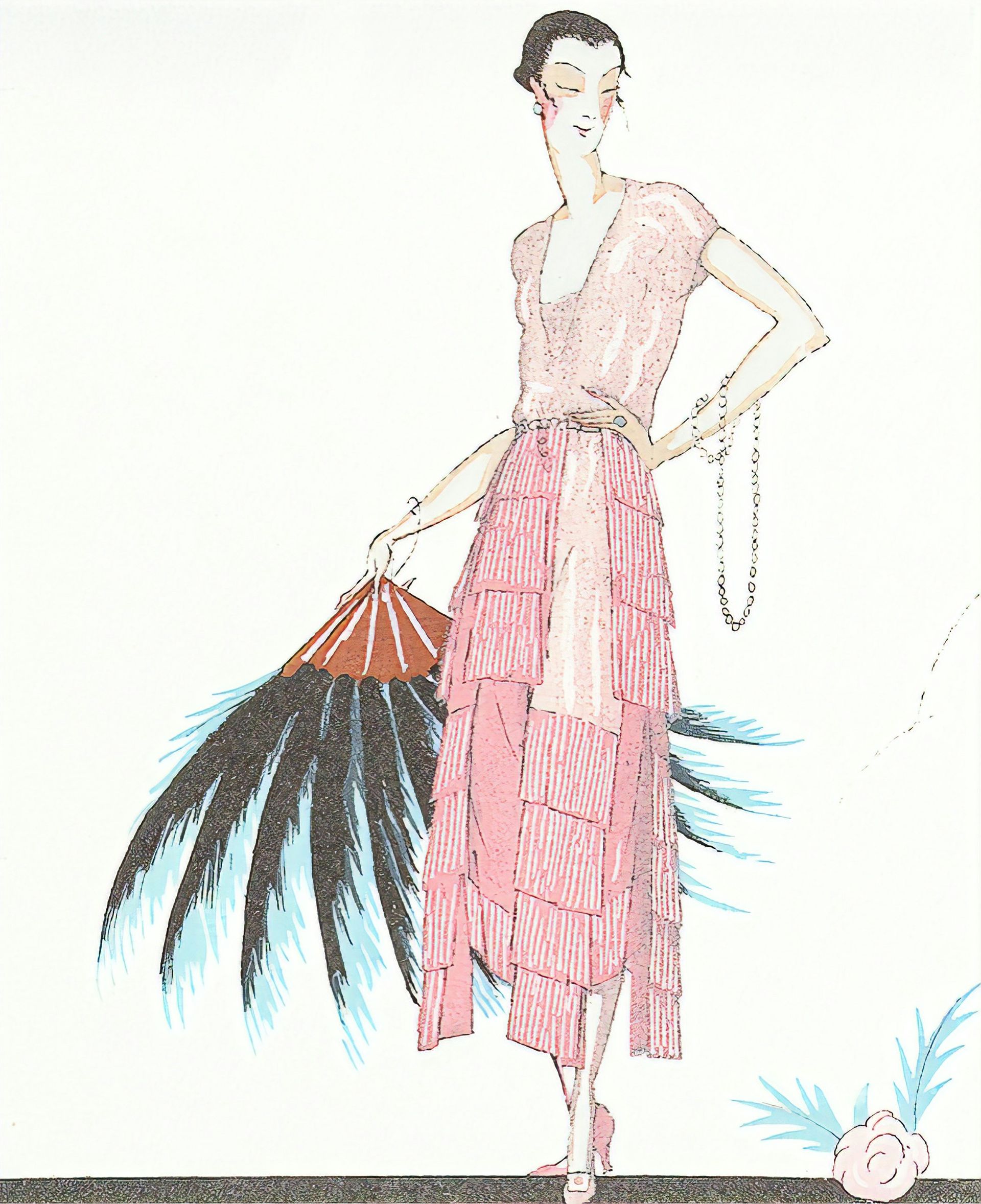
The flapper silhouette — dropped waist, short hemline, loose fit, minimal structure — was the most radical departure from prevailing women's fashion in a century, and it did not arrive as a design choice. It arrived as a consequence of World War I, the women's suffrage movement, and a generation of young women who had spent the war years doing work that their clothing had not been designed for and had no intention of returning to the constraints of the Edwardian corset.
Before the war, the ideal female silhouette required a corset that redistributed the body into an S-curve — a tight waist, an artificially projected bust and hips — that was painful to wear, restrictive of movement, and entirely dependent on the labor of a maid to fasten. It was, in the most literal sense, a silhouette that required assistance to put on and that signaled, by its very construction, that the woman wearing it was not expected to do anything that required free movement.
The war changed that. Women who had worked in factories, driven ambulances, and managed households alone while men were at the front had worn practical clothing for practical reasons, and many of them found it impossible to return to the corset afterward. The 1920s fashion that followed — shorter, looser, lighter — was not a designer's whim. It was the physical expression of a renegotiation of what women's bodies were for and what women's lives looked like.
The bobbed hair, the cigarette, the dancing until late, and the dress that allowed all three were a single coordinated statement. The generation that wore them had survived the deadliest war in human history, watched their older sisters fight for and win the right to vote, and had no patience for the aesthetic conventions of the world that had produced both.
The fashion industry, which had been based in Paris and organized around the corset, had to rebuild itself from scratch. Coco Chanel, whose jersey suits and little black dresses defined a new kind of elegance that required no corset and no maid, did not invent the flapper silhouette. She codified it, made it chic, and gave it the cultural authority it needed to outlast the decade.
The zoot suit — a men's suit characterized by high-waisted, wide-legged trousers tapering to narrow cuffs, a long jacket with wide lapels and padded shoulders, and typically worn with a long key chain, a wide-brimmed hat, and pointed shoes — was not primarily a fashion statement when it appeared in Black and Latino communities in the United States in the early 1940s. It was a political one. And the riots it triggered in Los Angeles in 1943 make it one of the few garments in history to have directly precipitated civil unrest.
The zoot suit emerged in Harlem and spread through Black, Mexican American, Filipino American, and other communities of color in U.S. cities in the late 1930s and early 1940s. Its exaggerated proportions — the volume of fabric required was enormous — made it a conspicuous act of consumption at a moment when the War Production Board had imposed fabric rationing as a wartime measure. Wearing a zoot suit was technically illegal under wartime regulations. It was also, in a community whose members were being drafted into a segregated military to fight for a country that denied them equal rights, a deliberate refusal to sacrifice.
The Zoot Suit Riots of June 1943 lasted five days in Los Angeles. White servicemen, with the tacit approval of local police, attacked Mexican American youths wearing zoot suits in the streets, stripping them of their clothes and beating them. The police arrested the victims rather than the attackers. The riots were covered in the press as a gang problem rather than a race riot. The Mexican government formally protested to Washington.
The zoot suit's cultural legacy outlasted the riots. It became a symbol of resistance and self-determination in communities of color, and its influence on subsequent subcultural style — the exaggerated proportions, the deliberate excess, the act of dressing as a political statement — runs through hip-hop aesthetics, punk, and every subsequent subculture that has used clothing to stake out territory against a mainstream that did not welcome them.
@historyphotographed / X
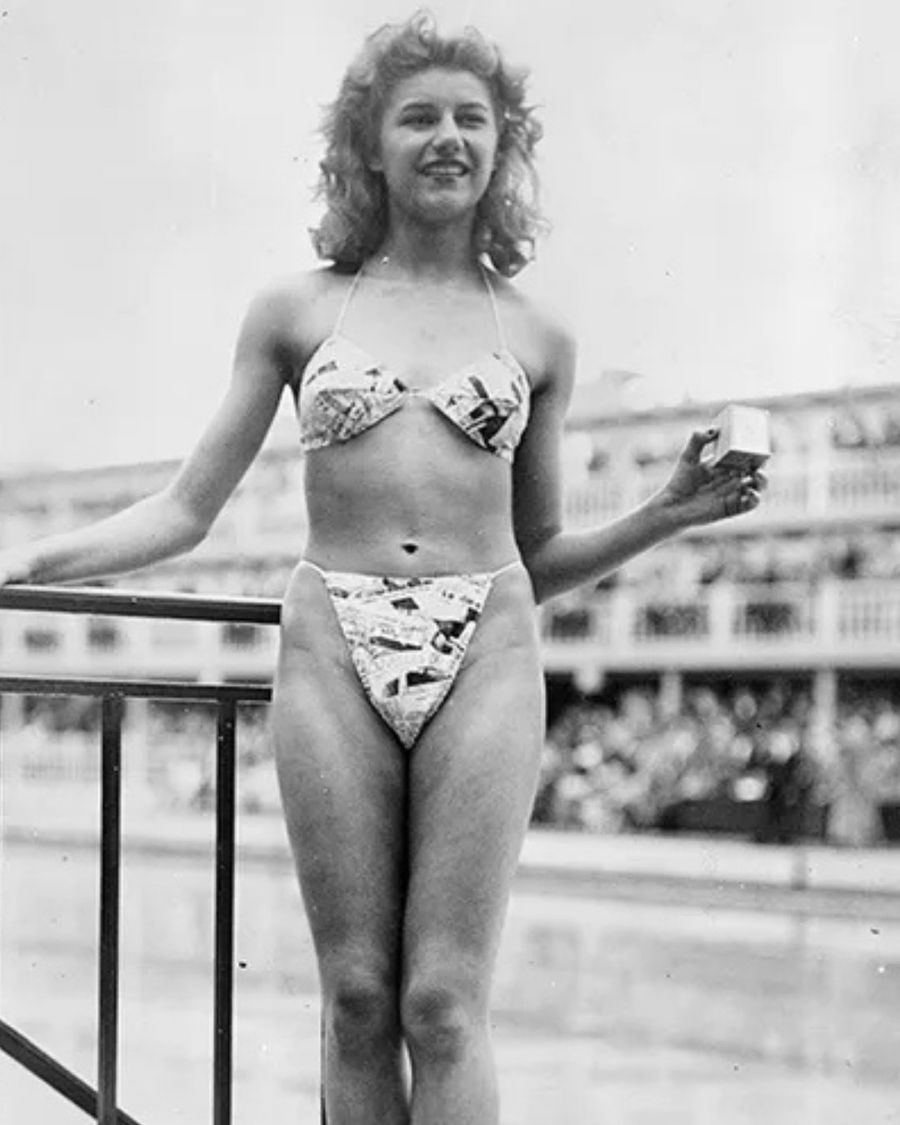
The bikini was named after Bikini Atoll, the Pacific island where the United States conducted nuclear weapons tests in the summer of 1946, and the naming was intentional. Its designer, French engineer Louis Réard, chose the name because he expected his invention to cause an explosion — and he was right, though the explosion was cultural rather than nuclear. He could not find a professional model willing to wear the garment at its debut and had to hire a nude dancer from the Casino de Paris.
The bikini was not the first two-piece swimsuit. A rival French designer, Jacques Heim, had introduced a similarly minimal swimsuit a few weeks earlier and named it the Atome, after the atom — the smallest thing in the universe, as he described it. Réard's version was smaller still. His definition of a bikini was any swimsuit that could be pulled through a wedding ring.
The garment was banned from beaches across Europe and in much of the United States for most of the late 1940s and 1950s. It was prohibited at the Miss World competition until 1951. Catholic countries condemned it. It was the subject of sermons. In Spain under Franco and in Italy, wearing one on a public beach was illegal and could result in a fine or arrest.
What changed was not attitudes to the human body but a specific cultural moment: the French New Wave, Bardot, and Saint-Tropez in the late 1950s. When Brigitte Bardot wore a bikini in Roger Vadim's 1956 film "And God Created Woman" and was photographed by the press on the beaches of Saint-Tropez, the garment was transformed from a transgression into an aspiration. The celebrity endorsement did what decades of designer promotion had not — it gave the bikini cultural permission.
By the mid-1960s it was mainstream. By the 1970s it was unremarkable. The bomb had gone off, quietly and slowly, and the beach had never looked the same since.
The miniskirt arrived in London in the early 1960s and its invention is contested, as most genuinely significant fashion inventions are. Mary Quant, who operated the boutique Bazaar on the King's Road in Chelsea, is most commonly credited with its development. André Courrèges in Paris was working on similar hemlines at the same time. Both have been named as the inventor, and both may have arrived there independently, which is less a dispute about priority than a demonstration that the moment was ready for the garment regardless of who made the first one.
What is not contested is why it arrived when it did. The early 1960s in Britain were the moment at which the postwar baby boom generation entered its teens and twenties, the moment at which cheap mass manufacturing made fashion accessible to young women who were not the daughters of the wealthy, and the moment at which the contraceptive pill — approved in the U.K. in 1961 — began to alter the practical relationship between women's bodies and reproduction. The miniskirt was a garment that made sense in a world where young women had disposable income, sexual freedom, and no interest in dressing like their mothers.
The political reaction was immediate and revealing. The miniskirt was condemned by religious authorities, by social conservatives, by the governments of several countries, and by men who felt that women displaying their legs in public was a form of provocation. In some countries it was banned. The intensity of the reaction — directed at a hemline — is comprehensible only when you understand that the miniskirt was not really about a hemline. It was about who controlled women's bodies and for what purpose. A generation of young women had decided, in the most visible way available to them, that the answer was themselves.
The miniskirt also changed the fashion industry's center of gravity. Before Quant and the King's Road boutiques, fashion was made in Paris by couturiers for wealthy women. The miniskirt was made in London for young women with limited incomes, and its success demonstrated that the future of fashion was in youth culture, in mass production, and in the streets rather than the salons.
Unseen Histories / Unsplash
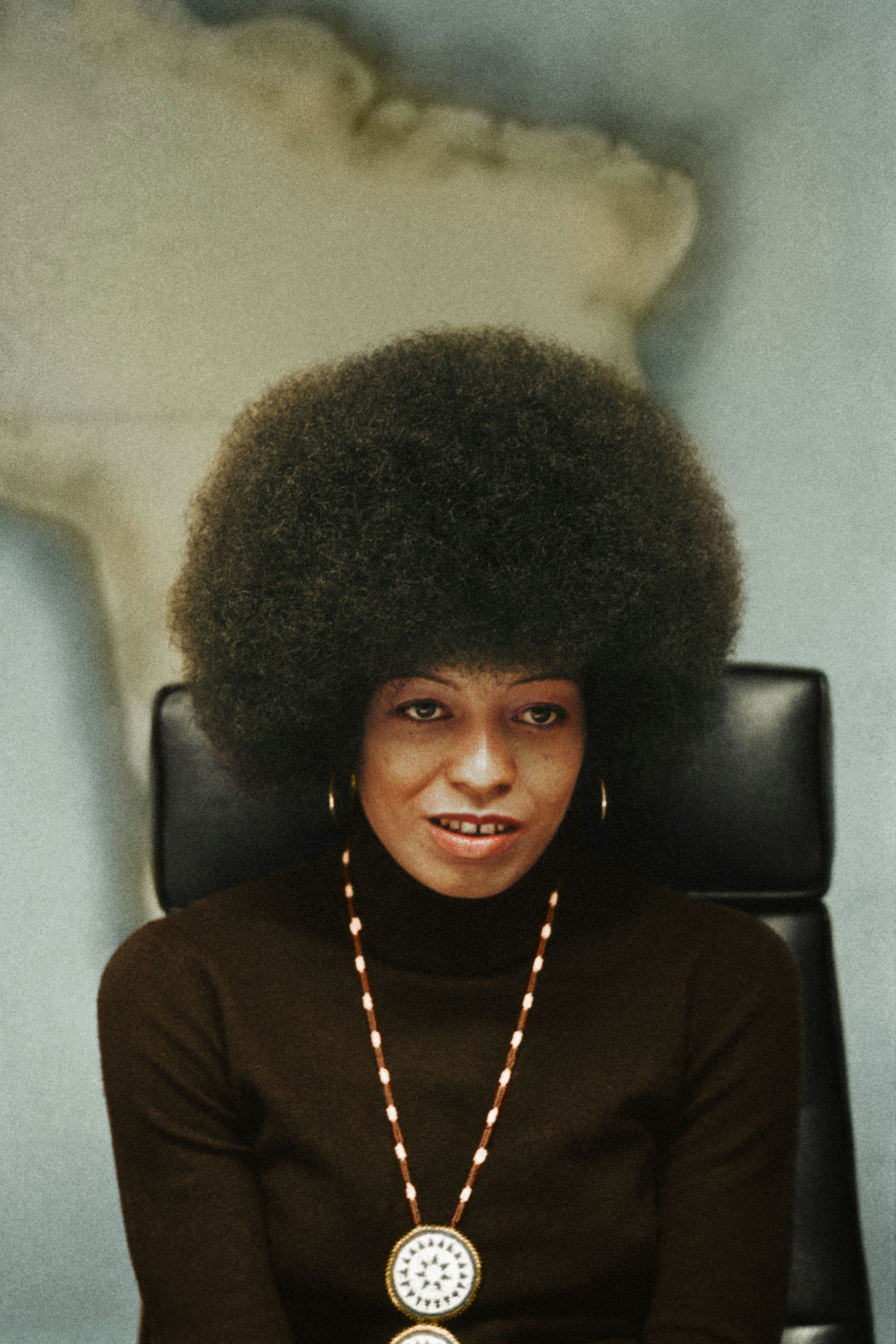
The Afro hairstyle — natural, unstraightened, grown out to its full volume — became one of the defining visual symbols of the Black Power movement in the United States in the late 1960s and 1970s, and its emergence as a political statement was inseparable from the longer history of what Black Americans had been expected to do with their hair.
For most of the 20th century, the dominant cultural expectation — enforced through hiring discrimination, social pressure, and the beauty industry — was that Black Americans, particularly women, would straighten their hair. The straightened or chemically processed hairstyle was the price of admission to professional and social spaces controlled by the white mainstream. It was an act of conformity that many Black Americans performed daily, and it was understood as such by everyone involved.
The natural hair movement that produced the Afro in the late 1960s was a direct rejection of that expectation. It drew on the broader Black Power politics of the period — the assertion that Black identity, Black culture, and Black aesthetics were not deficiencies to be corrected but sources of pride to be expressed publicly. Angela Davis, whose large Afro became one of the most reproduced images of the era, did not wear her hair that way as a fashion choice. She wore it as a political position.
The slogan "Black is Beautiful," popularized in the late 1960s, was as much about hair as about anything else — a direct repudiation of the beauty standards that had defined African American hair as something to be managed, tamed, or hidden. The Afro made that repudiation visible from across a room.
The hairstyle declined in mainstream visibility in the 1980s but never fully disappeared, and its politics never fully resolved. The ongoing debate about natural hair in professional environments — the discrimination that led to the CROWN Act, introduced in the U.S. Congress in 2019 to prohibit hair discrimination in workplaces and schools — is a direct continuation of the argument the Afro made public in the late 1960s.
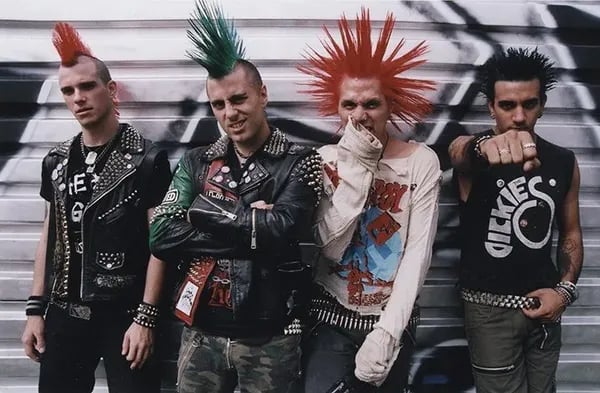
Credit: Punktuation Magazine
Punk fashion emerged from the same moment as punk music — London, 1976 and 1977, in the context of a Britain experiencing 20% inflation, mass unemployment, a collapsing welfare state, and a generation of young working-class people for whom the postwar promise of meritocracy and upward mobility had visibly failed. The fashion — torn clothing held together with safety pins, bin liners worn as skirts, mohawks, heavy boots, band T-shirts, bondage trousers — was not designed. It was assembled from the nearest available materials as an act of refusal.
Vivienne Westwood and Malcolm McLaren's shop on the King's Road — which went through several names including Let It Rock, Too Fast to Live Too Young to Die, and SEX — was the commercial center of early punk fashion in London and provided a vocabulary that the movement then dispersed and transformed. But the aesthetic logic of punk was anti-commercial: it valued the torn, the cheap, the found, and the self-made over anything produced for purchase, and its most potent images — the safety pin through the cheek, the swastika worn as pure shock rather than ideology, the bin liner belted over fishnet tights — were not available for sale anywhere.
The specific visual language of punk was drawn from several sources simultaneously: fetish wear, skinhead fashion, Teddy Boy style, and a general principle that anything the mainstream found offensive or disturbing was appropriate raw material. The goal was not to be ugly exactly but to be unignorable — to force a reaction from a society that punk felt had abandoned its young.
The fashion industry absorbed punk within a decade, transforming its specific gestures — the safety pin, the ripped fabric, the leather jacket with studs — into luxury products sold at prices that defeated the entire logic of the original. Versace showed safety-pinned dresses. Westwood moved from the King's Road to the international runway. The co-optation was total and, to many of the original participants, entirely predictable. A movement defined by its refusal to be sold was sold, and what remained was the aesthetic without the anger.

Credit: My Vintage
The power suit — a tailored women's jacket with dramatically padded shoulders, worn with a matching skirt or trousers, in bold colors or patterns — is the most visible artifact of the specific moment in the 1980s when women entered corporate and professional life in the United States and Europe in large enough numbers to constitute a market. Before that moment, women's professional dress had no coherent language of its own. The power suit invented one.
The problem it was solving was specific and practical: how to dress for an environment designed by men, for men, in which male authority was signaled by a particular kind of formal tailoring. Women entering law firms, banks, and executive suites in the late 1970s and early 1980s faced a choice between adopting the visual language of male authority as closely as possible — the tailored jacket, the dark colors, the serious silhouette — or finding something else. There was nothing else. The power suit was the attempt to find something.
The shoulder pad was the central gesture. By broadening the shoulder line, the silhouette approximated the inverted triangle of the male suit — the physical shape associated with authority in the professional context. That it also made the silhouette look stronger, more imposing, and less yielding was not an accident. Women wearing power suits in the early 1980s were in environments where being taken seriously was a daily negotiation, and the clothes were part of the argument.
The television series "Dynasty" and "Dallas," watched by vast audiences through the early 1980s, transmitted the power suit aesthetic globally through the characters of Alexis Colby and the other women who dressed as equals to the men around them. Joan Collins's wardrobe in "Dynasty" in particular became a reference point that crossed class and national boundaries, making the power suit not just a professional uniform but a broadly accessible statement about female ambition.
The shoulder pad declined sharply in the early 1990s as both fashion and corporate culture evolved, but the power suit's underlying logic — that women could claim professional authority through dress — did not disappear with the padding. It became the baseline assumption from which subsequent decades of women's workwear developed.
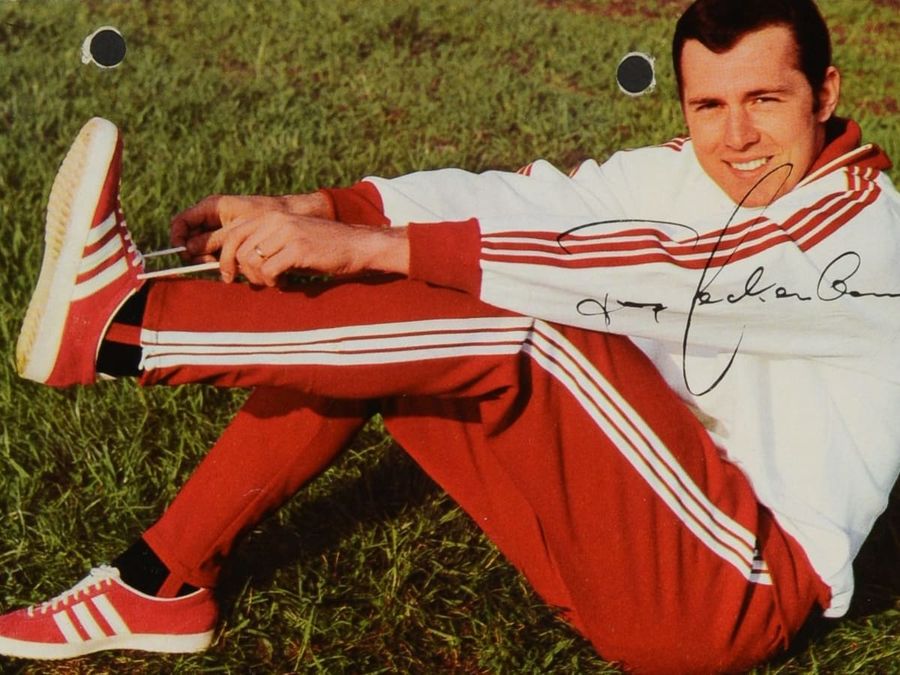
Credit: adidas Group
The tracksuit's journey from athletic gear to street uniform to high-fashion staple is one of the most thoroughly documented trajectories in fashion history, and it begins in the South Bronx in the late 1970s and early 1980s, at the same moment hip-hop was developing as a cultural form. The connection was not coincidental. The tracksuit — particularly the Adidas version — was the uniform of the early hip-hop scene, worn by Run-DMC, whose 1986 single "My Adidas" was a direct tribute to the shoe, and whose street style became the template for a global youth aesthetic.
What made the tracksuit significant as a cultural object was its origin: it was sportswear, designed for function, available at accessible prices, and associated with athletes rather than with the luxury or preppy aesthetics that had dominated American youth fashion in the preceding decade. Wearing a tracksuit was a statement about where you came from and what you valued — physicality, street credibility, authenticity over elegance.
Adidas's response to "My Adidas" — the company reportedly watched the crowd at a Run-DMC concert hold their Adidas shoes in the air and the next day offered the group a sponsorship deal worth $1 million, reportedly the first major sponsorship deal between a sportswear company and non-athletes — marked the moment at which the hip-hop market became legible to corporate fashion. The tracksuit was the vehicle through which the sportswear industry discovered that street culture was a marketing force, a realization that restructured the entire industry in the decades that followed.
In Britain, the tracksuit acquired a different set of associations — the Adidas and Kappa tracksuits worn by working-class youth in the 1990s became associated with a specific cultural type, alternatively called "chav" in England and "ned" in Scotland, in ways that were inflected with class prejudice. The same garment carried entirely different meanings depending on which side of the Atlantic and which side of the class divide you were on.
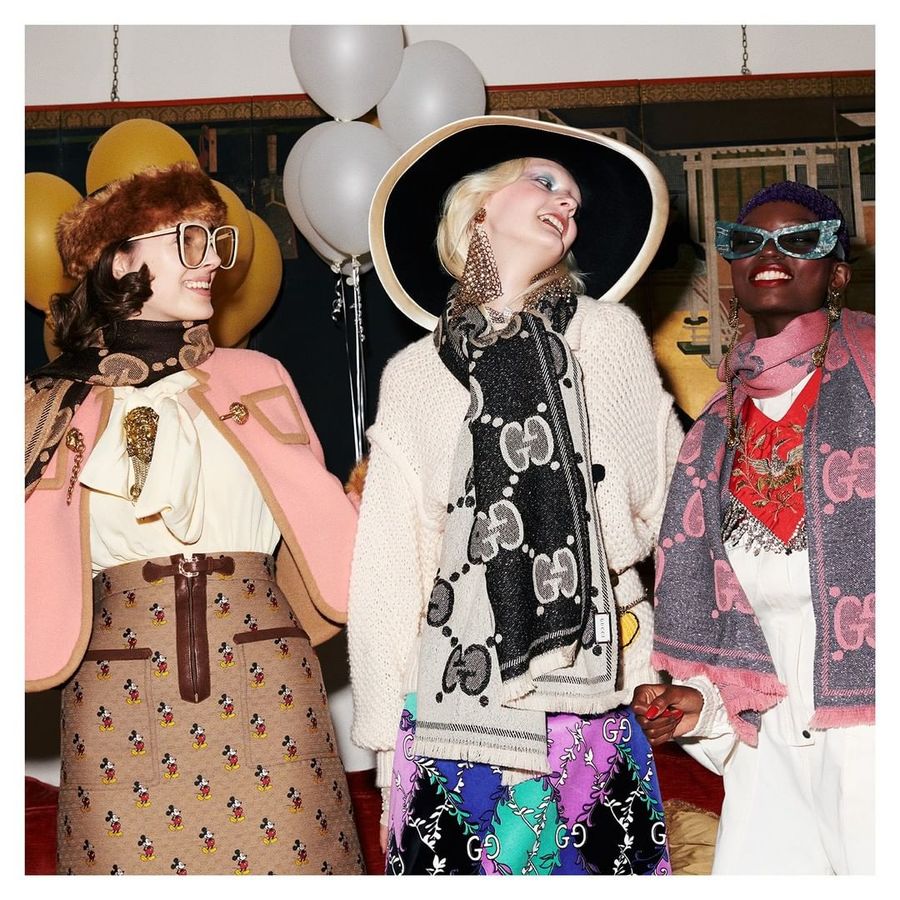
Credit: Mission Magazine
The 1990s logomania — the trend for clothing and accessories featuring oversized, unmissable brand logos from houses including Louis Vuitton, Gucci, Versace, Fendi, and Dior — was not primarily about fashion. It was about the decade's specific relationship with wealth, aspiration, and visibility. The 1990s economic boom, the explosion of celebrity culture, and the rise of hip-hop as a mainstream cultural force produced a moment in which displaying the logos of luxury brands was a legible statement of arrival — evidence, worn on the body, that you had made it.
The origins of logomania as a mass phenomenon lie partly in the hip-hop community's relationship with luxury brands. Artists including Jay-Z, Notorious B.I.G., and Lil' Kim wore Versace, Gucci, and Louis Vuitton not because those brands had marketed to them — most had not — but as an act of conspicuous success in a context where material success was understood as a meaningful achievement. The images were powerful and widely distributed, and they gave luxury logos a cultural currency that transcended their original market.
The luxury brands' response was mixed. Some embraced the attention; others were horrified by the association of their products with a demographic they had not sought. Gucci, under Tom Ford $F from 1994, leaned in — producing a maximalist aesthetic that was simultaneously high fashion and street-legible. Louis Vuitton under Marc Jacobs from 1997 went further, collaborating with artists and eventually with Supreme, a streetwear brand, in ways that would have been unimaginable a decade earlier.
Logomania collapsed in the early 2000s, replaced by the minimalism and logo-free luxury of brands like Prada and Céline, whose status signaling depended on knowing that the plain beige bag was expensive rather than being able to see that it was. The minimalist reaction was itself a status gesture — the logo was now for people who needed to prove it, while the truly wealthy could afford to be discreet. The logomania of the 1990s returned in the 2010s, rebooted by a new generation of artists and a new relationship between streetwear and luxury, but that is a different cultural moment with a different story.
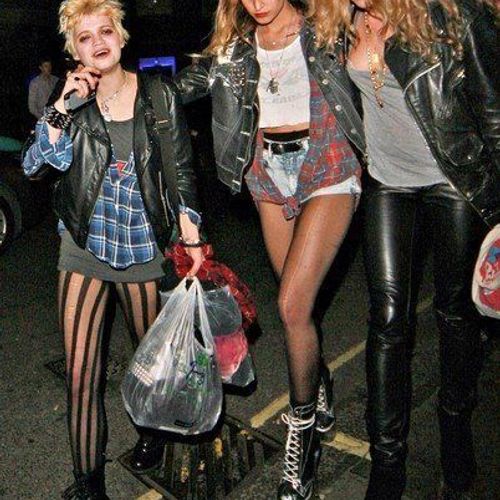
Credit: Sky Rye Design
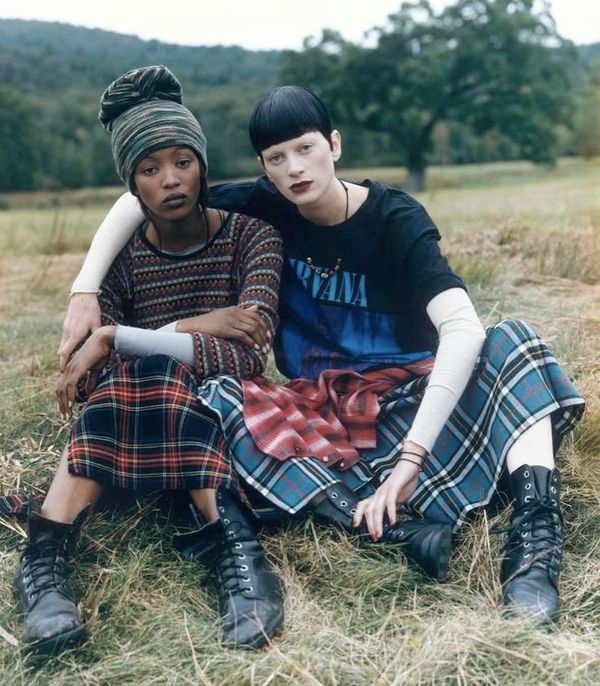
Grunge fashion — flannel shirts, ripped jeans, thermal undershirts, heavy boots, a general commitment to looking like you had not tried — emerged from the Seattle music scene in the late 1980s and early 1990s and became globally visible through the commercial breakthrough of Nirvana, Pearl Jam, and Soundgarden in 1991 and 1992. What the fashion media presented as a style was, from the inside, an anti-style: a deliberate rejection of the excess, the glamour, and the conspicuous consumption of the 1980s.
The specific items associated with grunge — the flannel shirt, the thermal layer, the worn-out boots — were not chosen for aesthetic reasons. They were cheap, practical, and available at thrift stores in the Pacific Northwest. The musicians who defined the look were not making fashion choices; they were wearing what they could afford and what was suitable for the cold and wet climate of Seattle. The authenticity of the look — its evident refusal to have been assembled with care — was the point.
The fashion industry's response to grunge was famously tone-deaf. Marc Jacobs's 1992 grunge collection for Perry Ellis — which translated the thrift-store aesthetic into luxury fabrics at luxury prices — was described by Women's Wear Daily as "possibly the worst collection Marc Jacobs has ever shown" and contributed to his being fired by the company. The irony of luxury fashion presenting a collection that embodied the rejection of luxury was lost on nobody, least of all Jacobs himself, who later described the collection as one of the most important of his career — a beginning rather than an ending.
Grunge's cultural moment was specific: the first generation to grow up entirely in the shadow of the 1980s boom, facing a recession and a job market that did not match the ambitions their education had implied, expressing in their clothing a disillusionment that their music expressed in lyrics. The flannel shirt was not a fashion choice. It was a report on conditions.
Murat IŞIK / Pexels
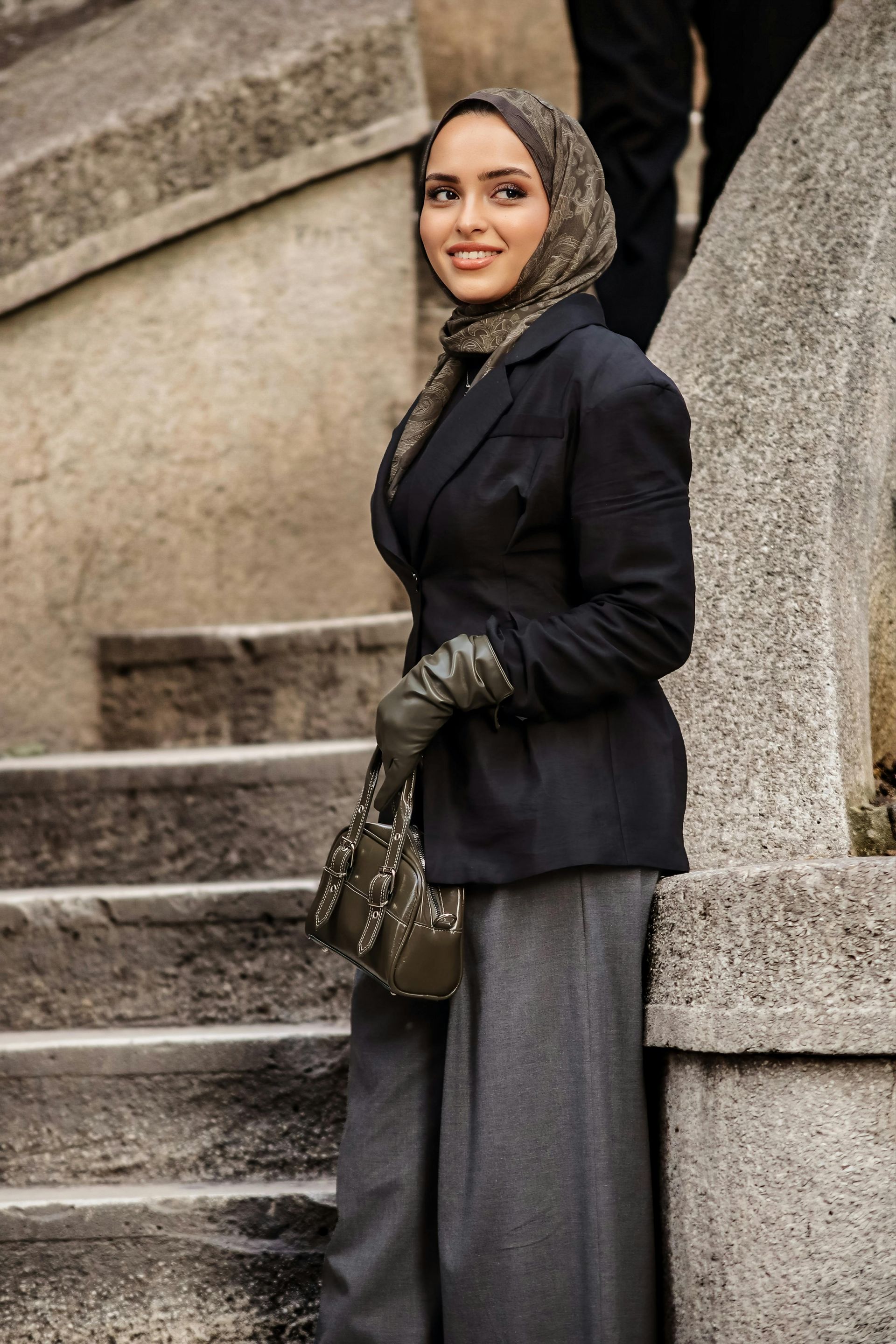
The hijab's emergence as a subject of fashion discourse — as a garment that could be styled, coordinated, and incorporated into a contemporary aesthetic rather than simply worn as a religious obligation — reflects a specific cultural moment in the 2000s and 2010s when Muslim women, particularly in Europe and North America, began asserting visibility on their own terms in contexts that had not designed space for them.
The modest fashion industry — encompassing clothing designed to meet Islamic modesty standards while remaining stylish and contemporary — grew rapidly through the 2010s as Muslim consumer spending power became legible to the fashion industry and as Muslim women used social media to build audiences for modest styling. Bloggers and influencers including Dina Tokio in the U.K. and Ascia AKF in Kuwait built substantial followings by demonstrating that modest dress and contemporary fashion were not in opposition, developing a visual vocabulary for hijab styling that had not previously existed in mainstream media.
The political context was unavoidable. The 2000s and 2010s were a period of intense political scrutiny of Muslim communities in Western countries following the September 11 attacks, and in several European countries the hijab became the subject of explicit legal and political debate — France banned the full-face veil in public spaces in 2011, and headscarf restrictions in schools and public sector employment were contested across the continent. In that context, the choice to wear the hijab stylishly and publicly was not separable from the political context in which it was made.
The fashion industry's incorporation of modest fashion — Dolce & Gabbana's 2016 hijab collection, Nike $NKE's Pro Hijab athletic headscarf launched in 2017, the appearance of hijab-wearing models on major runways and magazine covers — represented both commercial recognition and a form of normalization that many Muslim women welcomed and some criticized as co-optation. The debate about who benefits when a religious and political garment becomes a fashion category is ongoing and unresolved.

Alena Shekhovtcova / Pexels
Normcore — a term coined by the trend forecasting group K-Hole in a 2013 report and popularized in a 2014 New York magazine article — described a fashion sensibility organized around deliberate ordinariness: plain T-shirts, straight-leg jeans, white sneakers, fleece jackets, baseball caps. The aesthetic deliberately referenced the unremarkable center of the clothing distribution — the clothes worn by middle-aged men in suburban shopping malls — and wore them without irony, or with a level of irony so deep it was indistinguishable from sincerity.
The cultural context for normcore was the post-2008 recession aesthetic and a specific moment of exhaustion with the conspicuous self-expression that social media had encouraged. The early years of Instagram and personal branding had produced a visual culture saturated with curation, aspiration, and performed individuality. Normcore was a reaction — the refusal to perform, expressed through clothing that announced nothing, claimed nothing, and distinguished no one.
The original K-Hole concept was more nuanced than its popular interpretation. The report described "normcore" not as a fashion style but as a social strategy — the ability to find value in blending in rather than standing out, to be adaptable rather than distinctive. The fashion media translated this into a specific aesthetic, which somewhat missed the point but produced one of the more intellectually interesting fashion conversations of the decade.
Normcore also reflected a generational shift in the relationship between fashion and identity. The millennials who embraced it had grown up watching personal style become simultaneously more accessible and more exhausting — everyone could have a look, which meant that having a look was no longer meaningful in itself. The most radical statement available in that context was, apparently, to wear nothing remarkable at all.
Credit: Launchmetrics
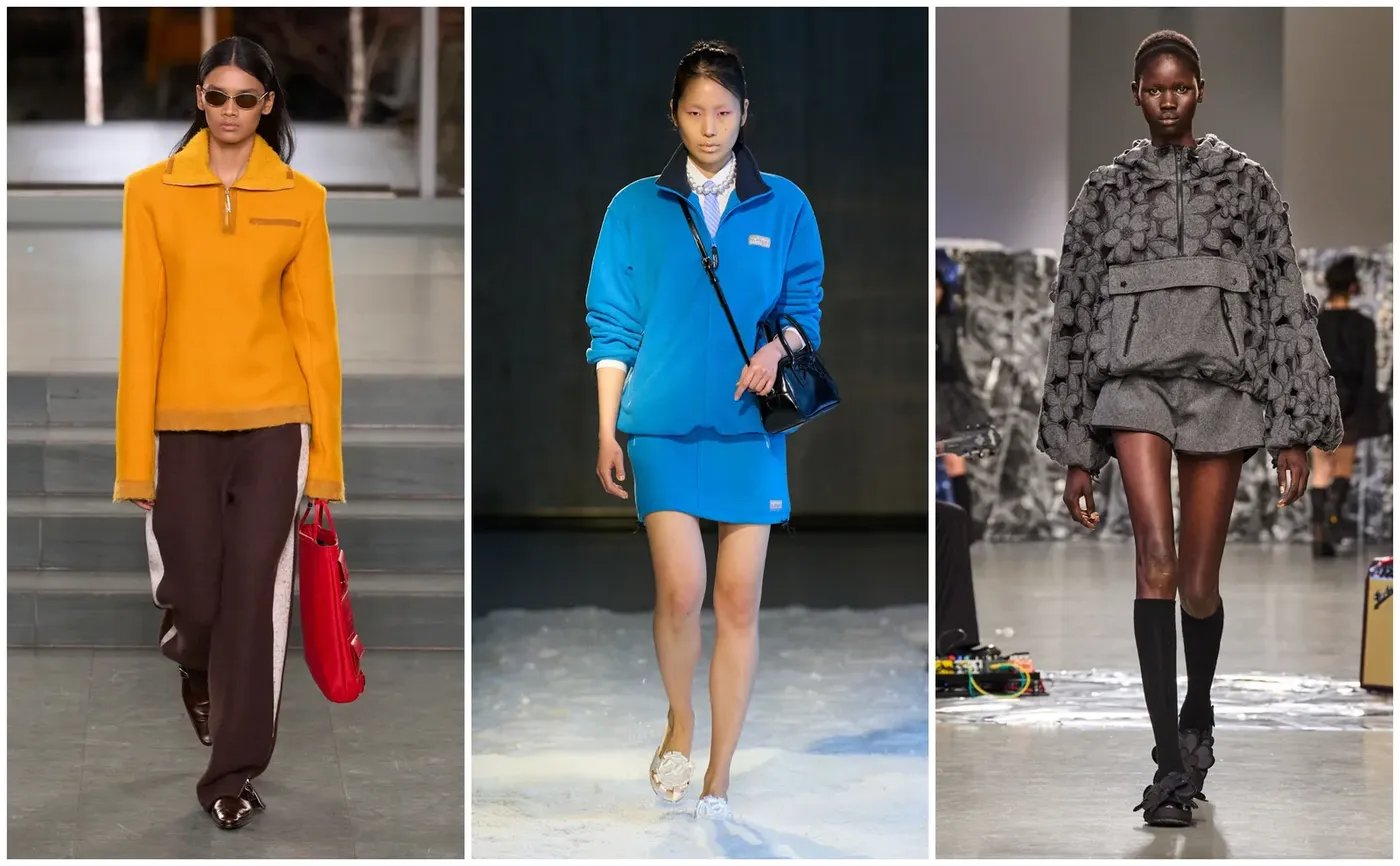
Athleisure — the wearing of athletic clothing in non-athletic contexts, as everyday dress rather than as workout gear — is the defining fashion trend of the 2010s and the one with the clearest relationship to a specific cultural and economic moment. It emerged from the intersection of several simultaneous developments: the rise of wellness culture, the casualization of professional dress codes, the dominance of technology companies whose office cultures had abandoned formal dress entirely, and the post-2008 recession recalibration of values away from conspicuous consumption and toward health and practicality.
The business case for athleisure was made most visibly by Lululemon $LULU, the Canadian activewear company whose yoga pants — priced at a significant premium over conventional sportswear — became a status symbol among the health-conscious, upper-middle-class demographic that the brand targeted. The yoga pant's success demonstrated that athletic clothing could carry the aspirational freight that luxury fashion traditionally claimed, provided it was associated with the right lifestyle values and priced accordingly.
The deeper cultural logic of athleisure was a renegotiation of what professional life looked like. The formal dress codes of the 20th-century office had been built on a specific social contract: you wore formal clothes to work because work was a formal social performance, and the clothes signaled your understanding of and compliance with that convention. The technology industry's rejection of that convention — the hoodie and the sneakers of Silicon Valley, which became the uniform of a generation of founders and employees whose companies were worth billions — signaled that the conventional markers of professional seriousness were no longer necessary for financial success.
Athleisure made that renegotiation visible and wearable. By 2019, activewear had become one of the fastest-growing segments of the global apparel market. The COVID-19 pandemic, which sent most office workers home in 2020 and made formal dress literally pointless for daily life, accelerated a trend that was already well underway.
Daniil Kondrashin / Pexels
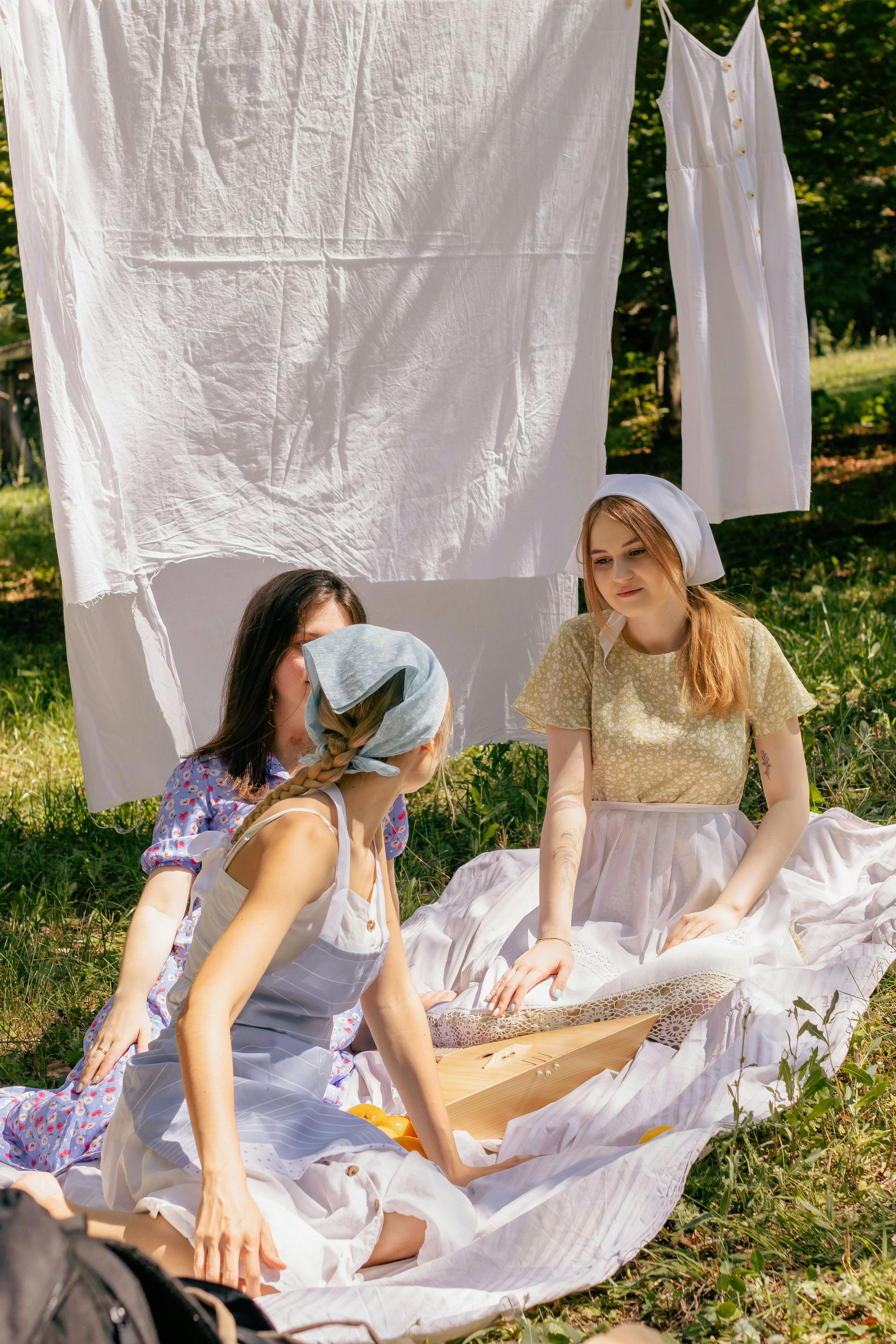
Cottagecore — an aesthetic organized around romanticized rural life, featuring floral dresses, linen fabrics, aprons, gardening imagery, mushrooms, bread-baking, and a general visual language of pre-industrial domesticity — emerged on social media platforms, particularly Tumblr and TikTok, in the late 2010s and became a significant cultural phenomenon during the COVID-19 pandemic of 2020 and 2021. Its timing was not coincidental.
The pandemic context gave cottagecore its specific emotional charge. Urban life — the density, the commuting, the social performance, the screens — had been suspended, and a large part of the population was confined at home with newly available time and a collective anxiety about the systems on which contemporary life depended. The cottagecore aesthetic offered an alternative imaginary: a life of self-sufficiency, natural materials, slow time, and physical connection to the land that urban modernity had traded away. That the imaginary was largely fictional — idealized, historically inaccurate, and accessible in reality only to those with significant resources — did not diminish its psychological function.
The aesthetic had a specific demographic in the young women and LGBTQ+ communities who were its primary adopters, and its politics were readable in both directions. Critics noted that the pastoral ideal it celebrated had historically been the domain of white femininity, and that the "simple life" it romanticized had been made simple by the labor of people who were not in the pictures. Defenders argued that cottagecore represented a genuine hunger for slower, more embodied life and that romanticizing simplicity was not the same as endorsing historical inequality.
Fashion's translation of cottagecore into commercial product was swift. Prairie dresses, milkmaid blouses, and puffed-sleeve garments proliferated on fast-fashion platforms. The aesthetic's gentle femininity and its association with wholesome activities — baking, foraging, embroidery — made it unusually accessible to mainstream retail. By 2022 it had moved from subculture to high street, which is fashion's standard mechanism for extracting the energy of a genuine cultural moment and distributing it until the energy is gone.
Quiet luxury — a fashion sensibility defined by expensive but unbranded clothing in neutral colors, fine materials, and minimal ornamentation — emerged as a dominant aesthetic conversation in the early 2020s in a context shaped by post-pandemic recalibration, the HBO series "Succession," and a generational reaction against the visible branding and maximalism of the previous decade. Where logomania announced wealth loudly, quiet luxury announced it in a whisper that required cultural literacy to hear.
The specific reference point for the trend's 2022 and 2023 prominence was Succession's costume design by Michelle Matland, whose wardrobe for the Roy family — cashmere sweaters, perfectly cut trousers, unbranded outerwear from Loro Piana and Brunello Cucinelli — became a reference point for discussions of old-money aesthetics and the visual language of a specific kind of wealth that did not need external validation. The Roys did not wear logos. They wore quality that was legible only to people who already knew.
The cultural logic of quiet luxury is the mirror image of logomania's. Where logos are democratic in their legibility — anyone can read a Gucci double-G, and that accessibility is part of the point — quiet luxury operates on a closed circuit. The knowledge required to identify a $2,000 cashmere sweater with no branding as expensive, rather than unremarkable, is itself a class marker. The aesthetic is, in this reading, not less about status than logomania but more rigidly so — a style that communicates wealth only to those already within the enclosure.
The trend's emergence in the early 2020s also reflected a specific anxiety about conspicuous wealth at a moment of significant economic inequality and social tension. Displaying luxury loudly had become, for some wealthy consumers, a social risk as well as a fashion choice. Quiet luxury offered a way to continue spending on extremely expensive clothing while minimizing the visual footprint of that spending — to have the quality without the target.
