These are the fastest sedans on the market right now
From a Lucid Air Sapphire that hits 60 mph in under two seconds to a Cadillac CT4-V Blackwing with a six-speed manual and 472 horsepower
Credit: Porsche
Buying a genuinely fast car no longer means settling for an impractical two-door coupe with a cramped back seat and almost no trunk space. Sport sedans have remained a genuinely hot corner of the market even as family sedans overall have fallen somewhat out of favor, since four doors and decent cargo room can combine with serious power to create something that still works reasonably well for daily driving between track days or weekend back-road runs through the mountains.
None of the sedans on this list function purely as straight-line sprinters, either, despite their genuinely eye-popping acceleration figures. Every model here also handles with genuine agility once a driver lifts off the throttle and starts working through a series of corners, and all 10 sedans can sprint from zero to 60 miles per hour in under four seconds, with several completing that same run in roughly half that time thanks to a mix of electric power, forced induction, and increasingly sophisticated all-wheel-drive systems. Comparing these 10 sedans side by side reveals just how many different engineering paths now lead to genuinely supercar-rivaling acceleration. None of them asks a buyer to sacrifice everyday comfort in the process.
The 10 quickest sedans below are ranked by U.S. News & World Report, from the quickest zero-to-60 time to the slowest among current sedan models. Each entry includes its official 0-60 time, along with broader context on handling, comfort,, and everyday livability. Some rely on massive electric motors, others on forced-induction gasoline engines, and a few blend both approaches into a single hybrid powertrain, yet every one of them proves that genuine speed no longer requires giving up rear-seat space, a usable trunk, or the kind of everyday comfort a family might reasonably expect from a daily driver.
1 / 10
1. Lucid Air rockets past nearly every rival
Credit: Lucid
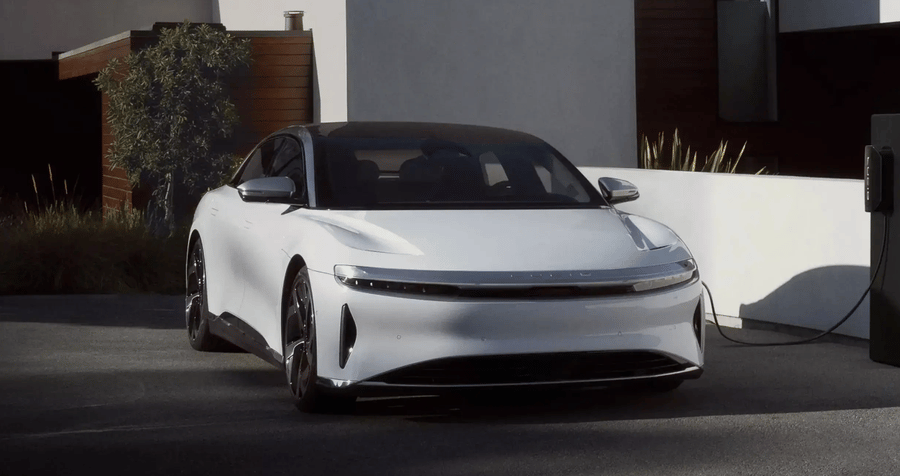
The Lucid $LCID Air Sapphire ranks among the quickest production cars ever built, regardless of body style or price point, and its three electric motors combine to produce 1,234 horsepower, enough to launch this four-door sedan to 60 miles per hour in under two seconds and through the quarter-mile in under nine seconds. Carbon-ceramic brakes and a track-tuned suspension back up that straight-line theater with genuine handling capability instead of simply raw, uncontrolled power.
Despite its extreme performance, the Sapphire doesn’t sacrifice the core identity that makes the standard Air appealing in the first place. The cabin remains spacious and genuinely tech-forward, ride quality stays supple even in this performance-focused trim, and estimated range comes in at more than 420 miles on a full charge, a genuinely impressive figure for a car capable of supercar-level acceleration.
Some lingering technology glitches continue to affect the Air lineup despite ongoing software updates, a real consideration for buyers who prioritize seamless daily usability alongside outright speed. Buyers specifically drawn to the Sapphire’s extreme performance should weigh these occasional quirks against the sheer capability on offer, since few other sedans anywhere near this price bracket match its pairing of acceleration and everyday livability.
Buyers who find the Sapphire’s flagship pricing out of reach still have solid options within the same Air lineup, since the more accessible Touring and Grand Touring trims complete the same zero-to-60 sprint in 3.4 and three seconds, respectively. Both trims retain much of the Sapphire’s core character while asking considerably less of a buyer’s budget. Few sedans at this price point deliver supercar-rivaling acceleration, this much everyday range, and interior comfort in the same package. Buyers cross-shopping this sedan against dedicated performance coupes should note just how much everyday practicality the Air retains despite its extreme capability. Charging speed and network access continue to improve as Lucid expands its infrastructure partnerships. Software updates continue to roll out over the air, gradually addressing some of the reported glitches.
2 / 10
2. Porsche Taycan channels raw electric power
Credit: Porsche
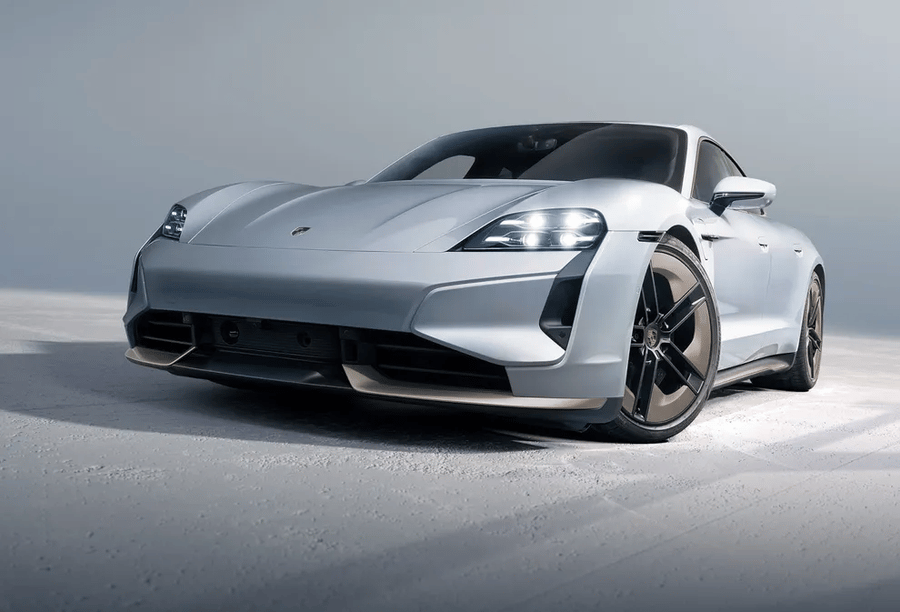
Porsche’s electric flagship, the Taycan, comes remarkably close to matching the Lucid $LCID Air Sapphire’s extreme pace, hitting 60 miles per hour in just 2.2 seconds in the range-topping Turbo GT trim thanks to more than 1,000 horsepower paired with a two-speed transmission. Carbon-ceramic brakes and adaptive air suspension come standard on the Turbo GT, and both ride quality and handling rank among the trim’s clearest strengths.
Despite its genuinely monstrous power output, the Taycan Turbo GT remains surprisingly approachable in terms of everyday ride comfort, a trait that sets it apart from some rivals that sacrifice comfort entirely in pursuit of maximum performance. This approachability comes at a genuinely steep price, however, positioning the Turbo GT firmly among the most expensive sedans currently on the market.
Inside, the Taycan offers a cabin that feels immediately familiar to anyone acquainted with Porsche’s broader lineup, though some of the screen-based controls prove distracting and occasionally difficult to use while driving. Materials and overall build quality are both genuinely high throughout the cabin, reflecting the brand’s traditional attention to detail.
Legroom throughout the Taycan stays adequate for most passengers, though the Lucid Air offers noticeably more interior space overall, particularly for rear-seat passengers who need genuine stretch-out room. Buyers weighing these two electric flagships should factor in this space difference alongside the roughly comparable acceleration figures from both cars. Few electric sedans currently on sale manage to pair this level of raw acceleration with such genuinely composed everyday ride comfort. Buyers specifically drawn to Porsche’s badge and racing heritage tend to find the Taycan’s driving character genuinely reassuring despite its fully electric powertrain. Resale values for the Turbo GT trim remain difficult to predict, given its recent launch. Warranty coverage remains competitive with other flagship electric sedans currently on the market. Buyers should also compare charging speeds across brands before settling on a final decision.
3 / 10
3. Porsche Panamera blends gas and electric muscle
Credit: Porsche
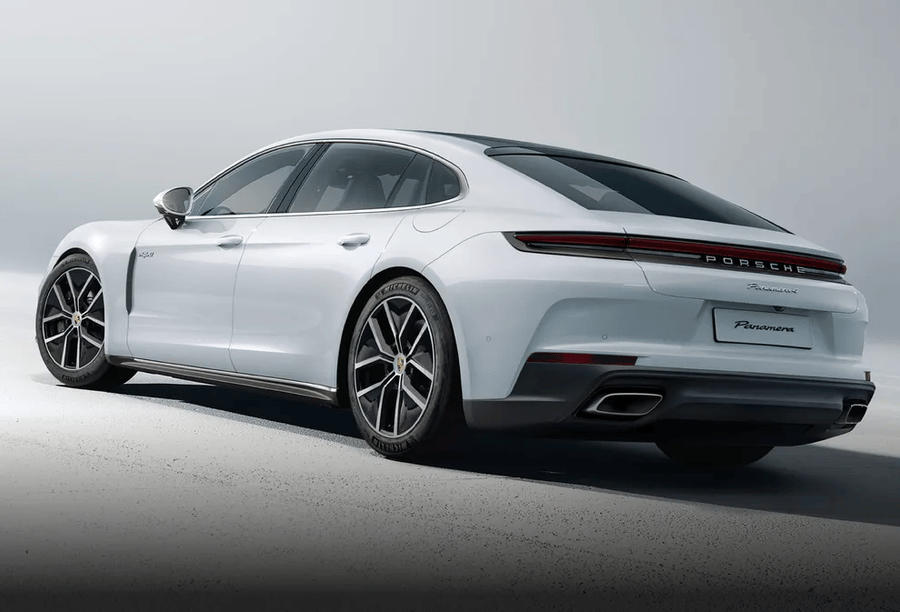
Buyers who want their fast sedan to run primarily on gasoline instead of pure electricity should look closely at the Porsche Panamera, particularly in its top Turbo S E-Hybrid configuration. This trim pairs a twin-turbo V8 with an electric motor for a combined 771 horsepower, delivering serious straight-line performance without abandoning the traditional combustion character that some buyers still prefer over a fully electric setup.
Beyond its performance credentials, the plug-in hybrid Panamera can travel up to 28 miles on electric-only power alone, giving commuters a genuinely useful all-electric range for shorter daily trips before the gasoline engine needs to contribute at all. This flexibility gives the Panamera a genuinely dual identity, functioning as an efficient commuter during the week and a serious performance machine on weekends.
Steering response stays sharp and responsive throughout the Panamera lineup, and braking power feels appropriately strong given the car’s performance ambitions. An adaptive air suspension strikes a genuinely nice balance between sporty handling and traditional luxury-car comfort, while an optional rear-wheel steering system further sharpens the car’s overall athleticism on winding roads.
The Panamera’s interior offers genuine customization options, including the choice between four or five total seats depending on a buyer’s specific needs. Buyers without a frequent need for a center rear seat should strongly consider the four-seat configuration, since the back seat in the five-seat layout tends to feel genuinely tight regardless of which configuration a buyer ultimately chooses. Few large luxury sedans manage to balance genuine performance credentials with this level of everyday electric-only usability for shorter commutes. Buyers who split their driving between long highway trips and weekend backroad runs tend to appreciate this particular balance more than most. Maintenance costs on the hybrid system also run higher than on the purely gasoline-powered Panamera variants. Buyers should factor these costs into their overall ownership budget before committing to the hybrid trim. Buyers should still test-drive both configurations before making a final decision.
4 / 10
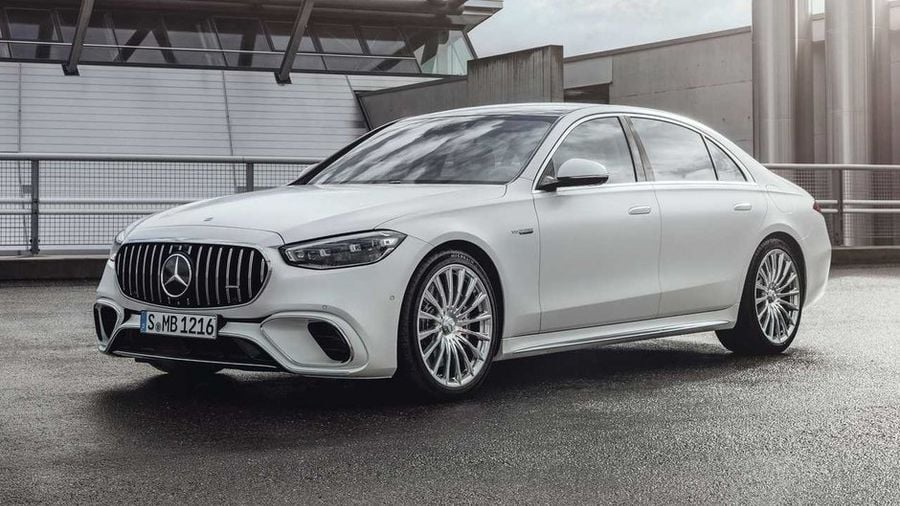
4. Mercedes-AMG S 63 hides supercar speed inside luxury
Credit: Mercedes-Benz
The Mercedes-AMG S 63 E Performance combines genuinely supercar-adjacent acceleration with the S-Class lineup’s core identity, built around comfort and prestige. No version of the S-Class qualifies as slow by any reasonable standard, but the AMG S 63 E Performance specifically pairs a twin-turbo V8 to a plug-in hybrid system for a combined 791 horsepower, giving this flagship sedan genuinely serious straight-line credentials.
Ride quality remains a standout strength throughout the S 63, thanks in large part to a standard air suspension system that smooths out road imperfections without sacrificing overall body control. Handling proves nimbler than most buyers would expect from a car this size and this heavy, even though more dedicated performance rivals still deliver sharper responses through tight corners.
As buyers would expect from any S-Class variant, the S 63’s interior comes across as genuinely opulent, quiet, and comfortable throughout both rows of seating. Materials throughout the cabin are high-quality, punctuated by multicolored ambient lighting and large digital screens that some buyers love, while others find somewhat overwhelming in everyday use.
Passenger space in both the front and rear seats is genuinely expansive, giving the S 63 a considerable practical advantage over some smaller, more compact performance sedans on this list. Buyers who need genuine rear-seat comfort alongside serious performance should weigh the S 63 heavily against other flagship options in this category. Few full-size luxury sedans manage to hide this much genuine performance capability beneath such a consistently smooth, comfortable ride. Buyers who prioritize chauffeur-style rear-seat comfort alongside genuine performance tend to gravitate toward this specific S-Class variant over smaller rivals. Fuel economy, even with hybrid assistance, still trails that of smaller, lighter performance sedans on this list. Buyers prioritizing efficiency above all else should look toward smaller, lighter sedans elsewhere on this list. Buyers should weigh this efficiency trade-off against the extent to which daily driving factors into their overall ownership plans.
5 / 10
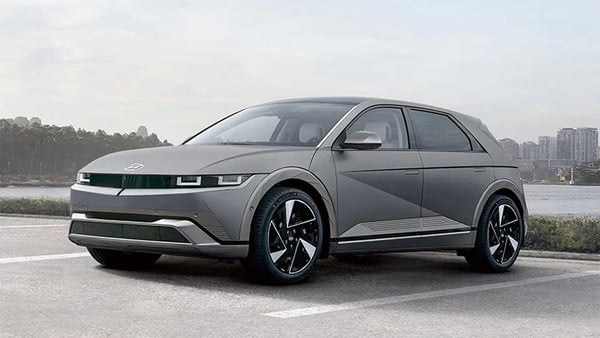
5. Hyundai Ioniq 5 N simulates gears for added drama
Credit: Hyundai
The Ioniq 5 N offers genuine proof that even an electric SUV-shaped vehicle can deliver legitimately fun, engaging performance behind the wheel. With 601 horsepower on tap from two electric motors, the Ioniq 5 N reaches 60 miles per hour in 3.2 seconds, a genuinely impressive figure for a vehicle wearing a badge more commonly associated with efficient family transportation than outright speed.
As with most fully electric vehicles, the Ioniq 5 N technically has no traditional mechanical transmission, though a special drive mode simulates eight distinct gears, selected via paddle shifters mounted behind the steering wheel. Testing this feature on winding back roads reveals a genuine sense of speed and engagement that would otherwise feel missing from a single-speed electric powertrain, and the accompanying simulated soundtrack proves helpful for judging exactly where to brake before an upcoming corner.
An adaptive suspension delivers a genuinely good ride across most surfaces, though the Ioniq 5 N’s long wheelbase can make tight parking-lot maneuvers noticeably trickier than in more compact performance sedans. Buyers who frequently navigate cramped urban parking structures should factor this practical consideration into their overall decision alongside the car’s considerable performance credentials.
Inside, the Ioniq 5 N shares the same genuinely massive interior dimensions as the standard Ioniq 5, offering ample head- and legroom across both rows of seating. The overall layout stays simple throughout the cabin, and Hyundai deserves real credit for retaining physical buttons and knobs for key controls rather than burying every function in a touchscreen menu. Few electric vehicles at any price point manage to simulate a traditional driving experience this convincingly while still delivering genuinely strong real-world performance. Buyers skeptical of electric performance cars in general often come away as genuine converts after spending real time behind the wheel. Charging times remain competitive within the segment, helped by the car’s relatively efficient high-voltage architecture. Buyers should test the simulated gear feature firsthand before deciding whether it suits their taste.
6 / 10
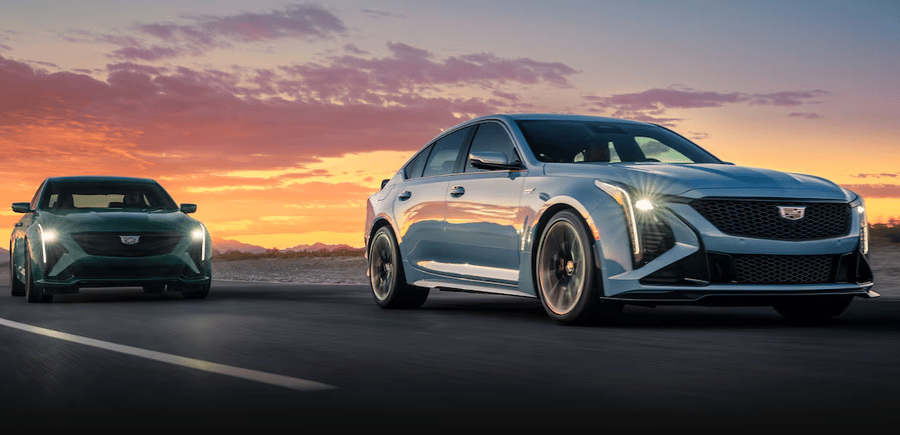
6. Cadillac CT5-V Blackwing roars with a supercharged V8
Credit: Cadillac
The Cadillac CT5-V Blackwing pairs a supercharged 6.2-liter V8 with a standard six-speed manual transmission, giving driving enthusiasts one of the last genuinely analog performance sedan experiences currently available on the new-car market. The engine’s 668 horsepower delivers a 3.4-second run to 60 miles per hour, though buyers specifically prioritizing outright straight-line speed should consider the optional 10-speed automatic transmission instead of the standard manual gearbox.
Cadillac’s Magnetic Ride Control suspension system delivers a genuinely great ride, whether driving on public streets or pushing the car harder on a dedicated racetrack. Performance Traction Management combines smart onboard software with a limited-slip differential to deliver genuinely sharp, predictable handling, regardless of the driving mode a driver selects for the conditions.
Some owners and reviewers have criticized the CT5-V Blackwing’s interior for feeling somewhat downmarket compared with rivals in the same price bracket, and the cabin design does read as fairly simple by modern luxury sedan standards. The seats remain genuinely comfortable throughout, though, and the driver-focused cockpit layout keeps essential controls easily within reach during spirited driving.
Cadillac has confirmed that the current model year will mark the final year of production for this sedan, making now a genuinely important moment for any enthusiast considering a CT5-V Blackwing purchase. Buyers specifically drawn to the pairing of a supercharged V8 and an available manual transmission should act relatively soon, since this specific pairing will likely become increasingly rare once production ends. Few remaining sedans anywhere on the market still offer this specific pairing of a large supercharged engine and a genuine manual gearbox. Buyers who value the tactile experience of a manual gearbox tend to rank this sedan among their favorite remaining options available anywhere. Fuel economy predictably suffers given the engine’s size and forced induction, a real consideration for daily commuters. Buyers should weigh this trade-off carefully against how often they plan to drive the car each day.
7 / 10
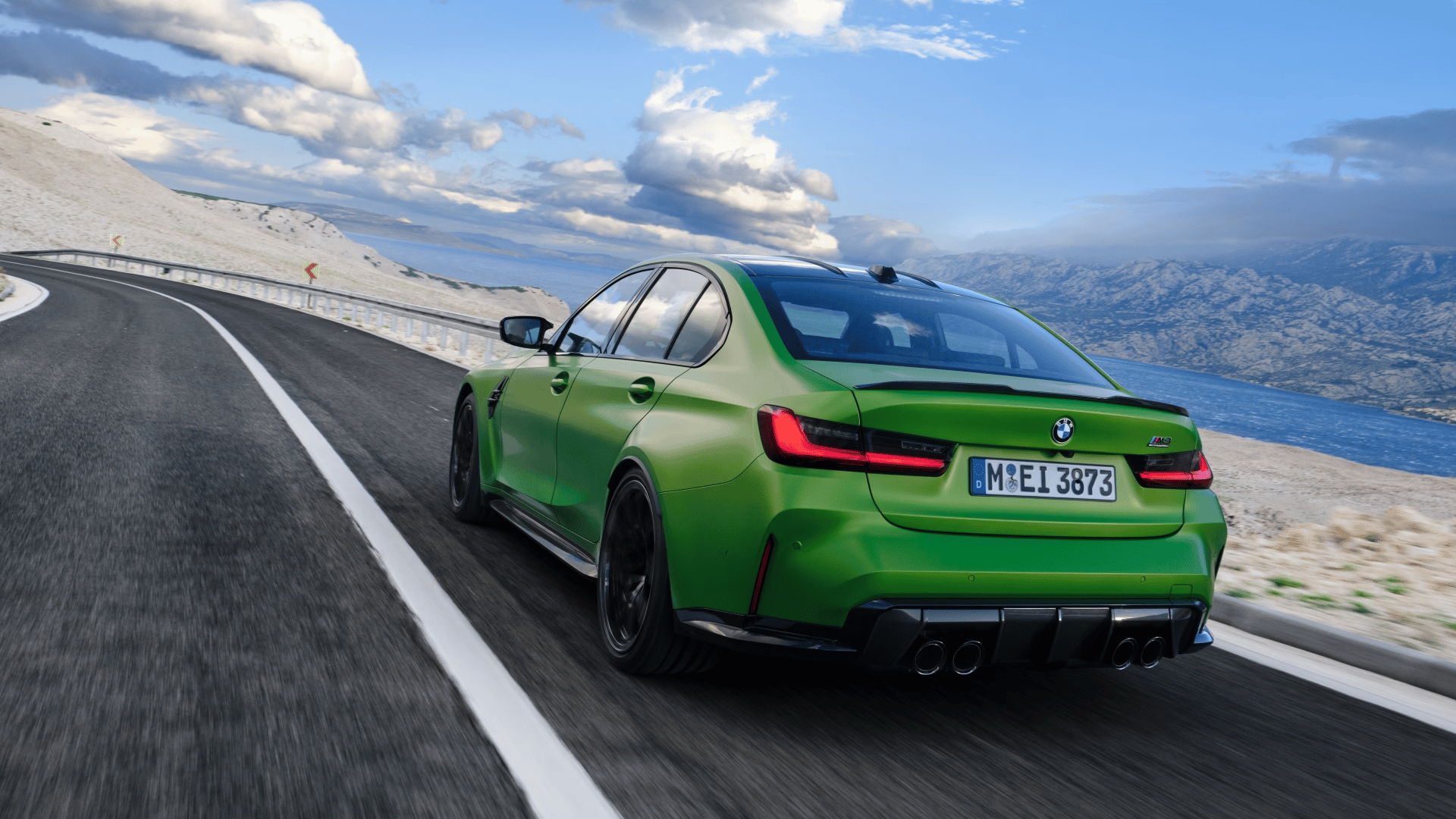
7. BMW M3 sharpens every corner it meets
Credit: BMW
The BMW M3 remains the sports sedan against which nearly every rival still gets measured, and the M3 Competition variant turns that reputation up even further. Competition models come exclusively with an automatic transmission, and adding the optional xDrive all-wheel-drive system unlocks 523 horsepower alongside a 3.4-second sprint to 60 miles per hour, giving buyers genuine flexibility in how they configure their specific M3.
Steering throughout the M3 lineup stays precise and communicative, and overall handling remains genuinely sharp, aided considerably by a rear limited-slip differential that helps the car rotate confidently through tight corners. Substantial 15-inch front brakes let the M3 Competition stop with real confidence, even after repeated hard braking during an extended track session.
Extensive street and track testing reveals a car that feels genuinely composed in both environments, and while some of the M3 Competition’s hardware feels like overkill for typical street use, that same hardware allows for extended lapping sessions without any meaningful drop-off in performance. Few rivals in this segment manage to feel equally at home commuting through city traffic and lapping a dedicated road course.
The M3’s standard front seats prove accommodating and comfortable for most drivers, though the optional M Carbon bucket seats add noticeably more support during aggressive cornering. This extra support comes at a real cost to daily-driver comfort, though, since these more aggressive buckets prove considerably less pleasant to live with during routine, low-speed driving. Few compact sports sedans manage to feel this composed on both a daily commute and a demanding track day without meaningful compromise. Buyers cross-shopping the M3 against smaller rivals from Audi and Mercedes should test-drive all three before settling on a final decision. Insurance costs also run higher than average, reflecting the car’s performance potential and repair complexity. Buyers should factor this into their overall budget when comparing the M3 against rival performance sedans. Buyers should test drive both seat options before committing to either configuration.
8 / 10
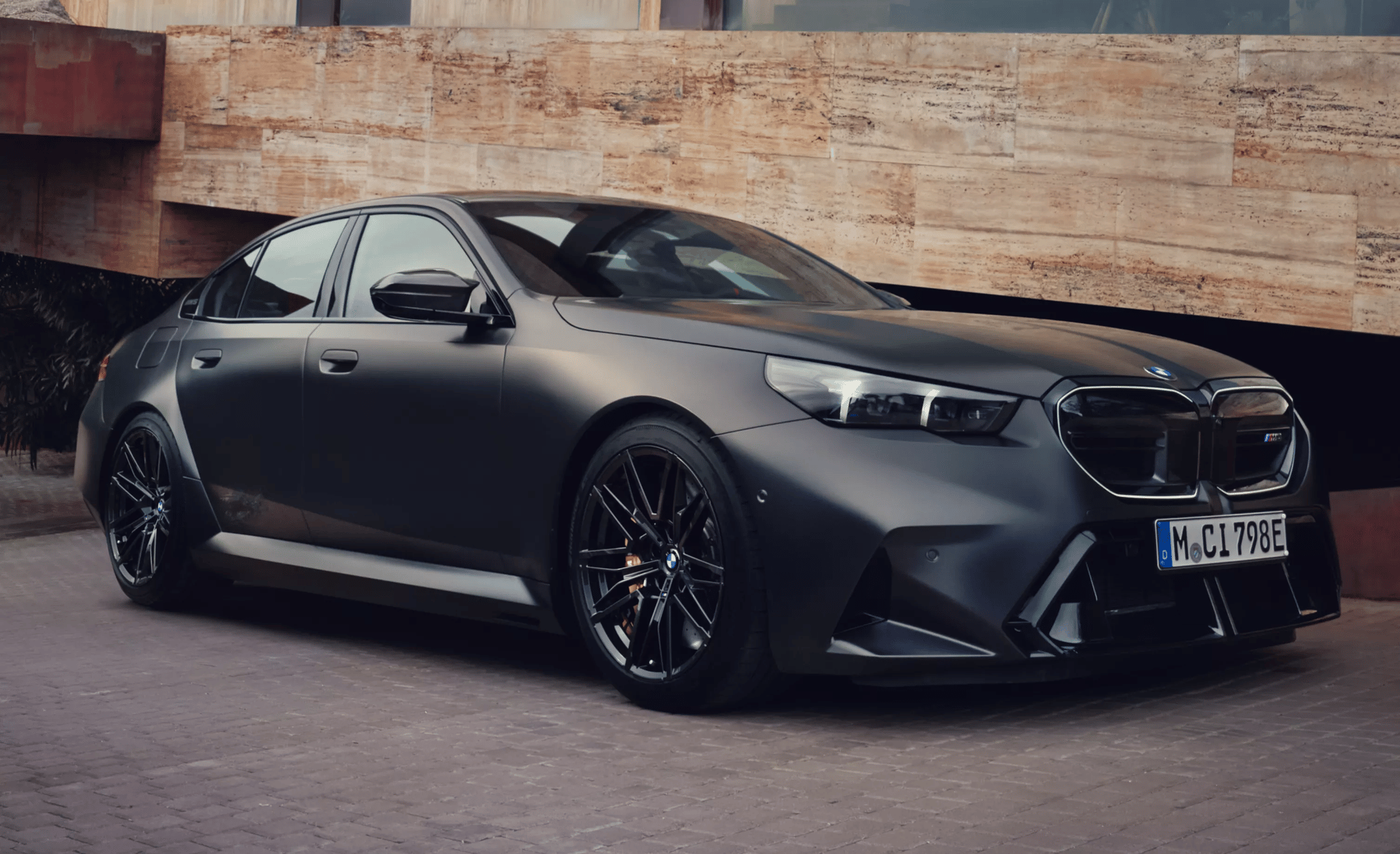
8. BMW M5 carries hybrid power at a cost
Credit: BMW
Available as both a traditional sedan and a wagon body style, BMW’s latest M5 adds a plug-in hybrid system to its existing twin-turbo V8 engine, boosting overall power output while simultaneously adding a considerable amount of weight to the platform. With 717 horsepower on tap, the M5 still manages to scoot to 60 miles per hour in 3.4 seconds despite a curb weight exceeding 5,000 pounds, a genuinely impressive feat of engineering given the sheer mass involved.
An adaptive suspension comes standard across the M5 lineup and helps compensate for the considerable added weight, though it does so somewhat more successfully in the lighter sedan body style than in the heavier wagon variant. Rear-wheel steering helps meaningfully with overall maneuverability, though the car’s steering feel comes across as somewhat vague compared with sharper rivals in the same segment.
Passenger space throughout the M5 remains genuinely generous for both front- and rear-seat occupants, and cargo capacity is impressive for a performance-focused sedan of this size and ambition. Buyers who need to regularly carry passengers or cargo alongside serious performance should weigh this practicality advantage heavily against some of the M5’s other, less flattering attributes.
BMW’s current infotainment system across the M5 lineup comes across as somewhat overly complex for routine daily use, and the overall quality of the interior materials feels genuinely disappointing given the car’s considerable sticker price. Buyers prioritizing interior polish alongside performance might want to cross-shop rivals before committing to the M5. Few performance sedans in this class manage to offer both a traditional sedan body and a wagon variant built around the same powertrain. Buyers who need genuine cargo flexibility should also seriously consider the wagon body style, which offers the exact same drivetrain and performance. Fuel economy improves somewhat thanks to the hybrid system, though it still trails smaller, lighter performance sedans. Buyers should still compare real-world figures with those of similarly sized rivals before making a final decision.
9 / 10
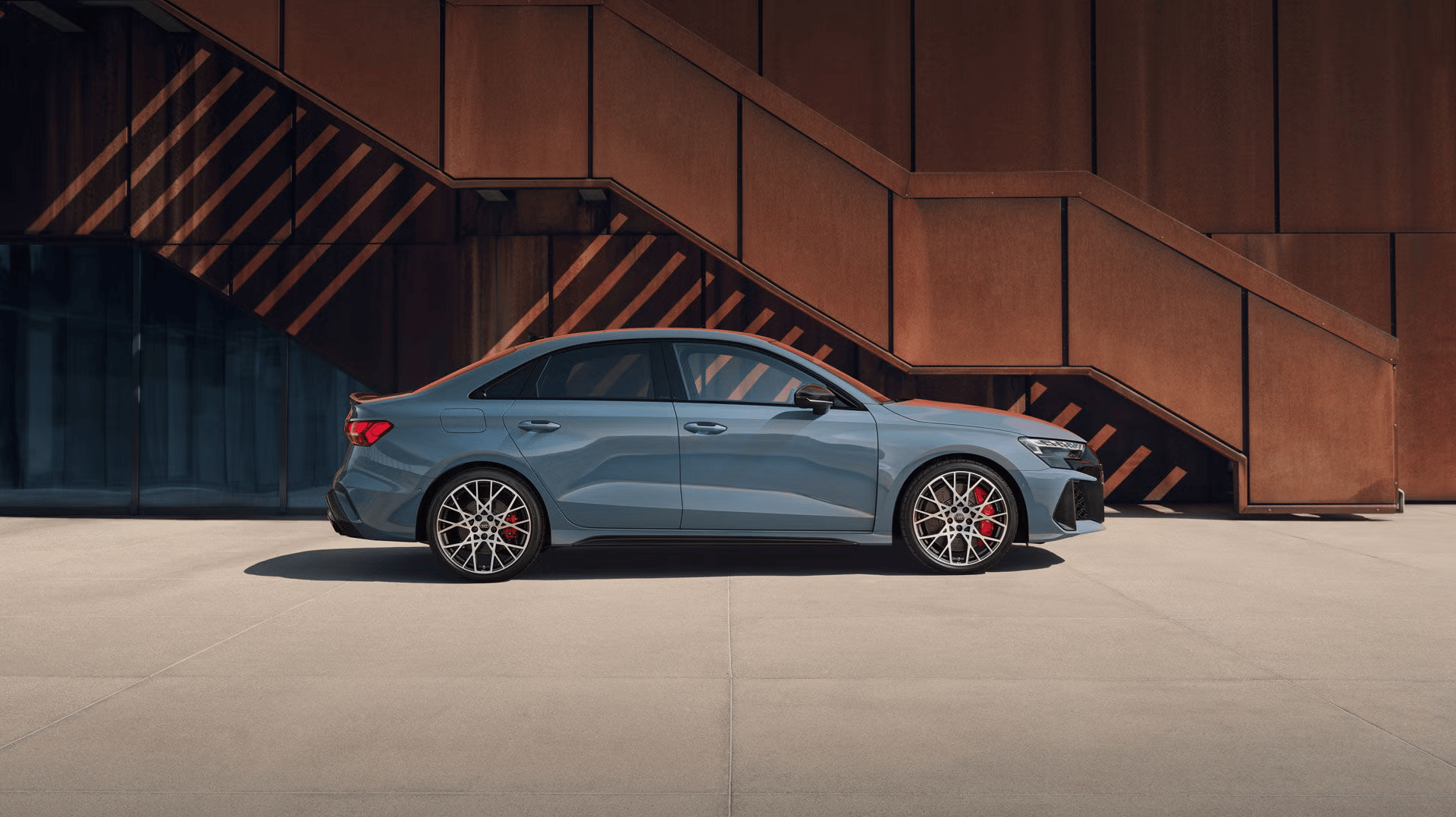
9. Audi RS 3 grips corners with quattro traction
Credit: Audi
Audi’s smallest sedan relies on a now-iconic turbocharged five-cylinder engine to reach 60 miles per hour in just 3.6 seconds, a genuinely impressive figure for the smallest and most compact car on this entire list. The engine’s 401 horsepower pairs with standard Quattro all-wheel drive and a torque-splitting rear differential to make the RS 3 feel genuinely playful and capable on a winding back road, with an impressively minimal amount of understeer even when pushed hard.
Ride quality throughout the RS 3 stays firm yet genuinely composed, striking a reasonable balance between everyday comfort and the sharp responses enthusiast buyers expect from a car wearing the RS badge. Steering feedback could stand to offer a bit more detail and communication, though, a minor shortcoming compared with some sharper-feeling rivals in the same compact performance segment.
The RS 3’s front seats prove comfortable and genuinely supportive during aggressive driving, though taller or larger drivers may find them somewhat snug compared with more accommodating seats elsewhere in this segment. The back seat should generally be reserved for shorter passengers, since rear-seat occupants face a genuine lack of both head- and legroom during longer trips.
Audi has kept the RS 3’s cabin design fairly simple overall, relying on several digital screens for key vehicle controls, though an unfortunate amount of piano-black plastic trim throughout the interior tends to show fingerprints and scratches considerably more readily than more traditional cabin materials used elsewhere in the lineup. Few compact performance sedans manage to feel this playful on a back road while still delivering genuinely strong all-weather traction. Buyers who frequently drive in rain or snow tend to particularly appreciate the confidence that standard all-wheel drive provides. Fuel economy stays reasonably competitive for the segment, helped by the five-cylinder engine’s relatively modest displacement. Buyers should still compare real-world figures against rivals before finalizing their decision. Buyers should also weigh cabin material choices carefully, given personal preferences around trim finish.
10 / 10
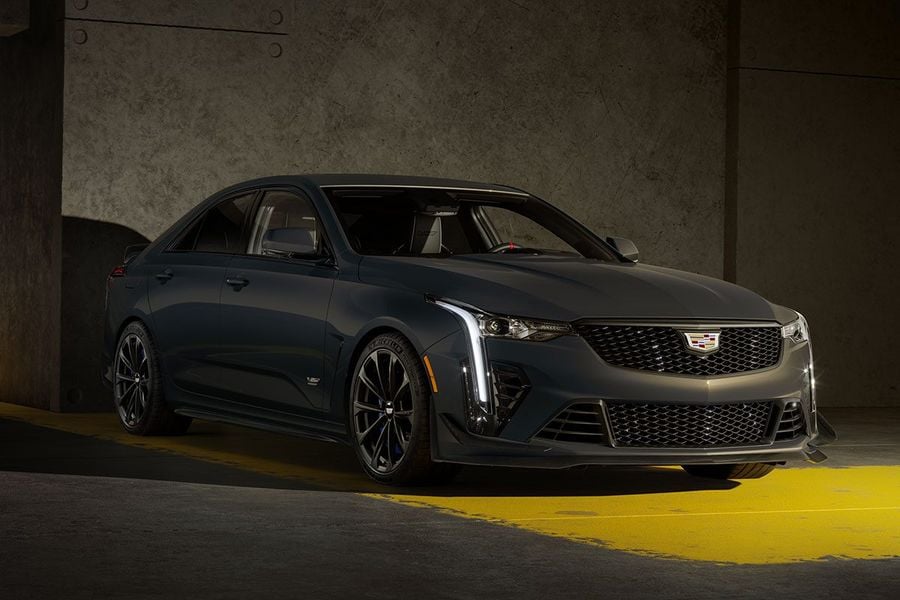
10. Cadillac CT4-V Blackwing sheds weight for speed
Credit: Cadillac
The Cadillac CT4-V Blackwing trades some outright power for a genuinely lighter, smaller overall package compared with its larger CT5-V Blackwing sibling elsewhere in the Cadillac lineup. A twin-turbo V6 producing 472 horsepower propels this compact sedan to 60 miles per hour in 3.9 seconds, and buyers can choose between a six-speed manual and a 10-speed automatic, depending on their driving preferences.
A Magnetic Ride Control suspension system, shared conceptually with its larger CT5-V sibling, keeps handling genuinely agile throughout the CT4-V Blackwing lineup, while Performance Traction Management further sharpens the car’s cornering responses across a range of driving conditions. Brembo front brakes provide genuinely confident, fade-resistant stopping power even after repeated hard braking during spirited driving sessions.
Interior materials throughout the CT4-V Blackwing come across as generally high-quality for the car’s price point, featuring a genuine mix of materials alongside carbon-fiber accents that reinforce the car’s overall performance-focused identity. This interior quality helps distinguish the CT4-V Blackwing from some rivals that sacrifice cabin polish specifically to achieve outright performance numbers.
Front seats throughout the CT4-V Blackwing prove genuinely supportive without feeling overly aggressive or uncomfortable during routine daily driving, striking a reasonable balance that some more track-focused rivals fail to match. Rear seat space, though, will likely feel genuinely cramped for taller passengers, making the CT4-V Blackwing a better fit for buyers who rarely need to carry adult passengers in the back seats. Few compact sport sedans pair this much genuine agility with such a wide range of transmission options. Buyers who prioritize a more compact overall footprint without sacrificing genuine performance credentials should weigh this sedan heavily against its larger sibling. Fuel economy improves modestly over its larger sibling, reflecting the car’s smaller engine and reduced overall weight. Buyers should still compare real-world figures with those of similarly sized rivals before finalizing a purchase. Buyers should also test drive the larger CT5-V before making a final decision.
