
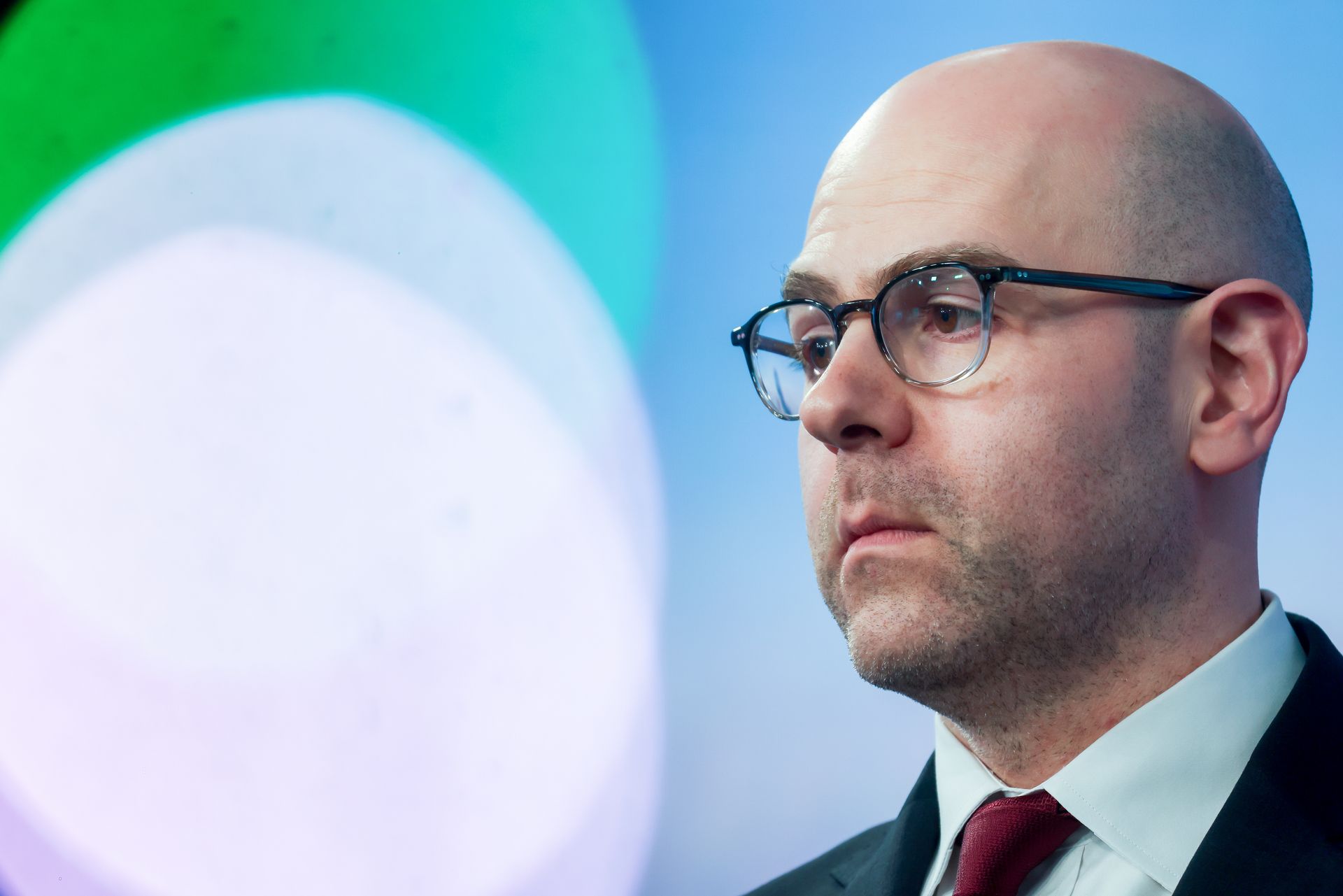
Federal Reserve Governor Stephen Miran submitted his resignation on Thursday, saying he will vacate his board seat when or shortly before incoming chair Kevin Warsh is sworn in.
With no vacancies elsewhere on the seven-member board, Warsh had nowhere to land without Miran stepping aside. Miran had stayed on past January, when his term technically lapsed, pending the appointment of a successor.
In a letter addressed to President Donald Trump, Miran described his brief tenure as "the highest honor of my life" and expressed enthusiasm for the changes Warsh plans to make. "Going forward, I am excited about changes Chairman-designate Kevin Warsh and the Federal Reserve may make in areas such as communications policy, balance sheet policy, and keeping the Federal Reserve to its narrow mandate and out of hot-button political and cultural issues," he wrote.
Miran joined the Fed in September 2025, stepping in after Adriana Kugler left the board. He served as a dissenting voice on the rate-setting Federal Open Market Committee throughout his time at the central bank, according to CNBC. Across his six policy meetings, every vote he cast was a dissent: in 2025 he pushed back against three quarter-point reductions the FOMC approved, then opened 2026 by opposing an equal number of hold decisions, each time calling for a quarter-point cut instead.
In his letter, Miran also criticized the Fed's approach to measuring inflation, warning that if the central bank "doesn't adjust for these errors, it will run unemployment higher than it has to, fighting fake rather than real inflation," according to Fortune. Beyond inflation measurement, Miran called on the Fed to look ahead rather than react, and to weigh factors outside its traditional toolkit — pointing specifically to demographic shifts from slower population growth and reduced immigration, as well as the downward pressure on prices that deregulation can produce.
Prior to joining the Fed, Miran served as chair of the Council of Economic Advisers under President Donald Trump. He also worked as a senior strategist at Hudson Bay Capital Management and a senior fellow at the Manhattan Institute for Policy Research.
The Senate confirmed Warsh as Fed chair on Wednesday by a 54-45 vote, with just one Democrat joining Republicans in support. Warsh's swearing-in has not yet been scheduled. Outgoing chair Jerome Powell's term as chair expires Friday, though he has indicated he intends to retain his governor's seat for the time being — a step that would make him the first departing Fed chair to do so in more than seven decades.
Warsh returns to the Fed after a previous stint on the Board of Governors from 2006 through 2011. He takes over a central bank facing elevated inflation driven by tariffs and the conflict in Iran, as well as a divided FOMC where multiple governors have entertained the possibility of rate increases rather than cuts.