From visa rules and local laws to scams and jet lag, here are 25 essential things every first-time visitor should know before landing in an unfamiliar country
-1920x1280.jpg)
JESHOOTS-com / Pixabay
The gap between a trip that goes smoothly and one that derails is rarely dramatic. It's usually a missed visa requirement, a misread cultural norm, or a phone that stops working the moment you land. First-time visits to any country carry a particular kind of vulnerability: you don't yet know what you don't know.
That's true whether you're crossing from the U.S. into Mexico for a long weekend or flying to Southeast Asia for a month. Every country has its own administrative requirements, unwritten social rules, logistical quirks, and legal boundaries — and most of them don't come with warning labels. A gesture that's harmless at home might cause offense abroad. A medicine that's legal in your country might be a controlled substance elsewhere. A credit card that works everywhere in Europe might be useless in parts of East Africa or Central Asia.
Experienced travelers build this knowledge over years of making mistakes and adjusting. First-timers don't have that buffer. What follows is designed to close that gap — not by overwhelming you with logistics, but by walking through the categories of information that actually matter before you arrive.
Some of this is administrative: visas, vaccinations, insurance. Some of it is practical: currency, connectivity, transportation. Some of it is cultural: etiquette, dress, religion, tipping. And some of it is the kind of knowledge that only comes from understanding how a country actually works — not how it looks in photographs or travel brochures.
There are also categories most people don't think about until they encounter them: what emergency number to call, how to handle a stolen passport, which scams are common in tourist areas, how much power outlets differ between continents, and whether the tap water will make you ill.
This list covers 25 things every first-time visitor should know before entering a country they've never been to. They're not ranked by importance — every item here has derailed someone's trip at some point. The goal is not to make travel seem daunting. Travel is one of the most clarifying experiences available to anyone. The goal is to make sure you arrive prepared, so you can actually be present for it.
cagkansayin / Getty Images
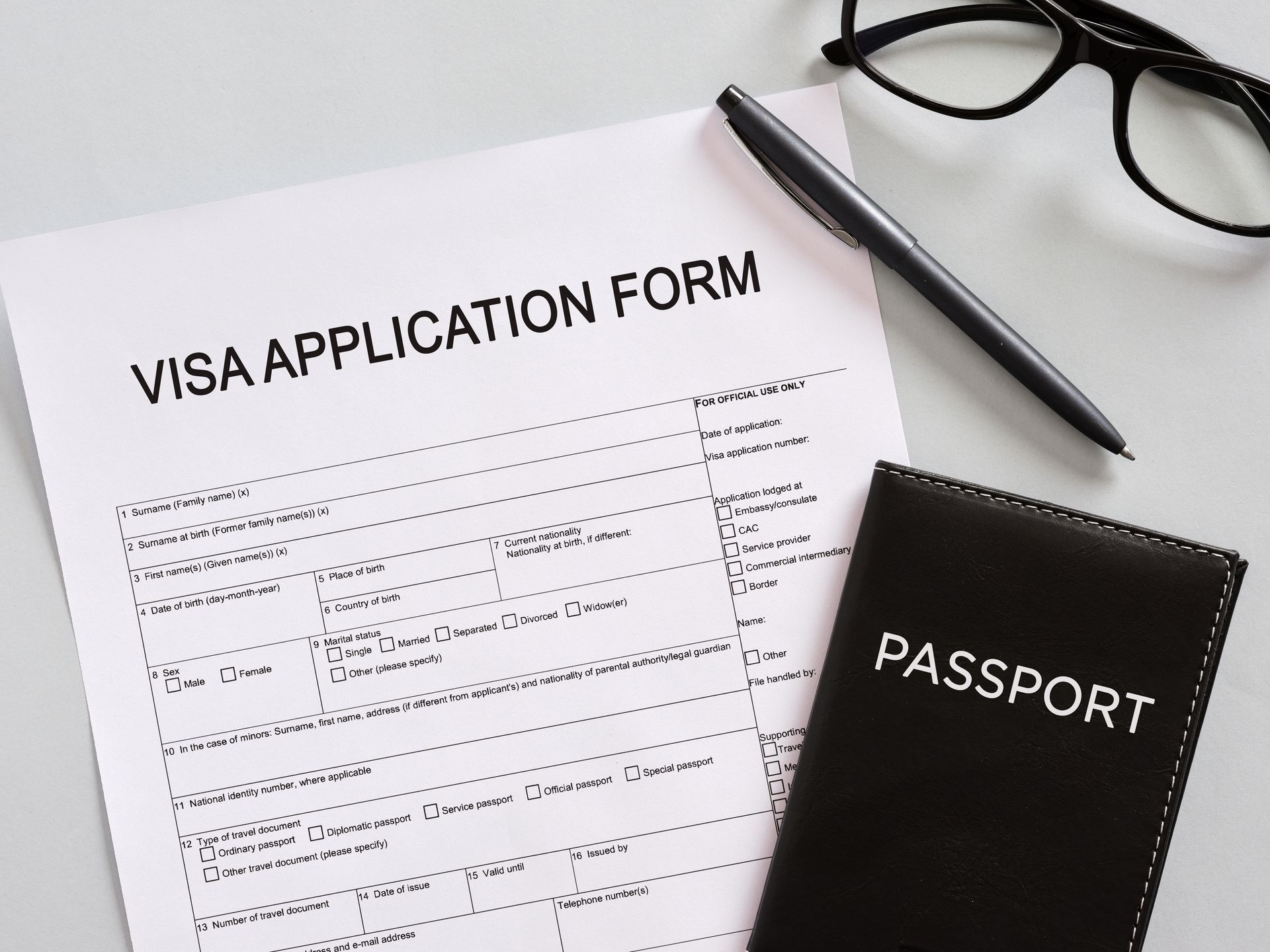
Your passport gets you to the border. Your visa — or lack of one — determines whether you get in.
Visa $V requirements vary enormously depending on your nationality, your destination, and the length and purpose of your stay. Citizens of some countries enjoy visa-free or visa-on-arrival access to dozens of nations. Citizens of others face mandatory advance applications, interviews, or significant fees. The same country might grant different access to different passport holders — a U.S. citizen entering a country without a visa might face requirements that a Canadian or Australian doesn't, or vice versa.
The first thing to check is whether you need a visa at all. Your government's foreign affairs or travel ministry website is the most reliable source — not travel forums, not outdated blog posts. Official databases like the IATA Travel Centre are also widely used by airlines to verify passenger documentation before boarding.
If a visa is required, check the processing time carefully. Some visas are issued online within hours. Others require in-person appointments at an embassy or consulate and may take weeks or months to process. Holiday periods, diplomatic slowdowns, or high application volumes can extend those timelines without warning. Starting the process early gives you options; starting it the week before departure may not give you any.
Pay close attention to the type of visa you need. A tourist visa and a business visa are different documents with different permissions, even if you're doing broadly similar things on both trips. Attending a conference, filming content for a paid platform, or receiving any form of payment — even remotely — can technically fall outside the scope of a tourist visa in many countries.
Check passport validity requirements. Many countries require that your passport be valid for at least six months beyond your intended departure date, regardless of how long you're actually staying. Arriving with a passport that expires in three months can result in being denied boarding — not just denied entry at the other end.
Some countries require proof of onward travel before issuing a visa or allowing entry. Others require proof of accommodation, a return flight ticket, or evidence of sufficient funds. Having these documents organized before you leave removes uncertainty at the border.
Visas can also be denied without explanation, and denial records can affect future applications to other countries. If you have a complicated travel history, prior visa refusals, or citizenship in a country with strained diplomatic relations with your destination, research what that means for your application before assuming approval is automatic.
NurPhoto / Getty Images
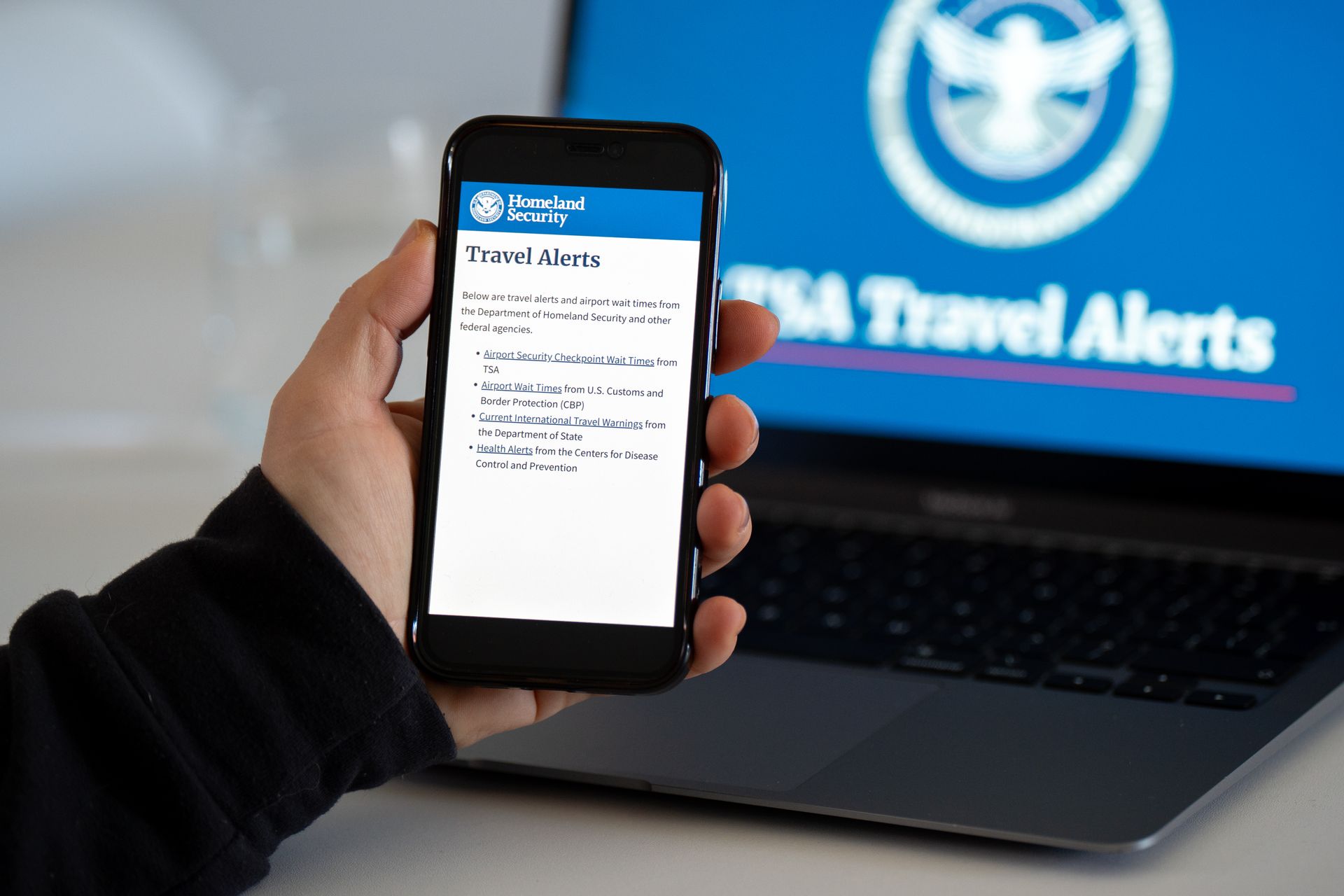
Every government publishes regularly updated travel advisories for countries around the world. These are not dramatic warnings reserved for active conflict zones. They cover a wide range of conditions: civil unrest, natural disaster risk, disease outbreaks, crime patterns, entry restrictions, and specific areas within a country that carry elevated risk.
Before visiting any country for the first time, check the advisory issued by your home government. The U.S. State Department publishes four-level advisories — from Level 1 (exercise normal precautions) to Level 4 (do not travel). The U.K.'s Foreign, Commonwealth and Development Office, Australia's Smartraveller, and Canada's Travel.gc.ca all publish similar assessments, each with their own regional detail and slightly different risk calibrations.
Reading more than one country's advisory is worth doing. The U.S. and U.K. assessments sometimes differ on the same destination, which gives you a more complete picture. What one government characterizes as manageable risk, another may flag more cautiously based on its own diplomatic intelligence.
Advisories are updated regularly — sometimes in response to an election, a natural disaster, or a sudden spike in crime targeting visitors. Check the advisory close to your departure date, not just when you first start planning. A lot can change in six months.
Don't dismiss a moderate advisory as irrelevant. These documents often contain specific, useful information: which cities or regions carry elevated risk, what time of year brings flooding or political disruption, which types of crime are most common, and who is typically targeted. That information shapes practical decisions — which neighborhoods to stay in, whether to arrive at night, whether to use ATMs on the street.
Travel advisories are not a reason to avoid travel. Many countries with elevated advisories receive millions of visitors annually without incident. The point is to travel with accurate information about the place you're going, not to avoid anything that feels unfamiliar.
If a country carries a Level 3 or higher advisory from the U.S. State Department, or an equivalent from another government, consider what that means specifically rather than reacting to the headline level. Some Level 3 advisories apply only to particular border regions or provinces, and the capital or established tourist areas may be considerably safer. Read the full document rather than just the summary rating.
NurPhoto / Getty Images
A visa is the most commonly discussed entry requirement, but it's rarely the only one. Countries impose a range of additional conditions for entry that catch travelers off guard — especially since these requirements change and aren't always clearly communicated ahead of travel.
Health documentation has become more widely required. Some countries require proof of vaccination against specific diseases — yellow fever is the most common example, and it's a mandatory entry requirement for parts of sub-Saharan Africa and South America. Others may require health declarations upon arrival or negative test results for certain conditions depending on current public health circumstances. Check what health documentation is required well in advance, because obtaining certain vaccines or official documentation takes time.
Customs declarations are legally required in most countries. Arriving with undeclared currency above a threshold, prohibited food items, certain medications, or restricted goods can result in fines, confiscation, or detention. Every country defines what's restricted differently. Fresh fruit and animal products that move freely within the European Union, for example, may be prohibited from crossing in from non-EU countries. The restrictions at your destination apply regardless of whether you knew about them.
Some countries require travelers to register with local authorities within a set number of days of arrival. This is distinct from hotel registration, which hotels typically handle automatically. It may require a separate trip to a government office or an online form submission. Countries in Central Asia have historically enforced this; failing to register can complicate your departure.
Biometric data — fingerprints, iris scans, photographs — is collected at entry by a growing number of countries, including the U.S., Japan, and several EU member states. The process is routine at most borders, but being prepared for it prevents a surprised reaction at passport control.
Border officers in many countries have broad discretion to deny entry even to travelers with valid visas. Carrying large amounts of cash, having a passport full of stamps from certain countries, or having a social media presence that conflicts with a country's laws or political sensitivities can all be grounds for more intensive questioning — or denial.
-1920x1336.jpg)
Nick Ansell / PA Images / Getty Images
Travel insurance is one of those things that feels unnecessary until the moment it isn't. Medical emergencies abroad — even minor ones — can generate bills that dwarf the cost of the trip itself. Evacuation flights, hospital stays, surgeries, and specialist consultations can run to tens of thousands of dollars in countries like the U.S., Japan, Switzerland, and Australia. Without insurance, that cost falls entirely on you.
A standard travel insurance policy typically covers trip cancellation, medical expenses, emergency evacuation, lost luggage, and travel delays. The coverage limits and exclusions vary significantly between policies, so reading the fine print matters. Some policies exclude pre-existing medical conditions unless you purchase a separate rider. Others exclude certain activities — skiing, scuba diving, motorcycle riding — unless you add an adventure sports provision to your plan.
Credit cards sometimes offer travel protections, including trip cancellation insurance and limited medical coverage. Check what your card actually provides before assuming it's sufficient. Most credit card travel coverage is secondary, meaning it covers what other insurance doesn't, and medical coverage through credit cards tends to be capped at amounts that fall well short of serious medical costs.
Some countries require proof of travel insurance as a condition of entry. Schengen Area countries in Europe require visitors to carry coverage that meets minimum requirements. Cuba, Russia, and parts of Central America have similar requirements. Showing up without adequate coverage can result in being forced to purchase a policy on the spot at the border — typically at a premium with less coverage than you'd have bought in advance.
The question of whether to buy travel insurance isn't whether something will go wrong. Most trips go fine. The question is whether you can absorb the worst-case financial outcome without coverage. A week's hospitalization in the U.S. for an uninsured traveler can cost more than $50,000. That's a financial exposure most people cannot absorb.
Purchase insurance before you leave, not after you've already departed. Most policies won't cover events that began before the policy was purchased, and some insurers won't sell you coverage once you're already traveling. The window to protect yourself is before boarding.
NurPhoto / Getty Images
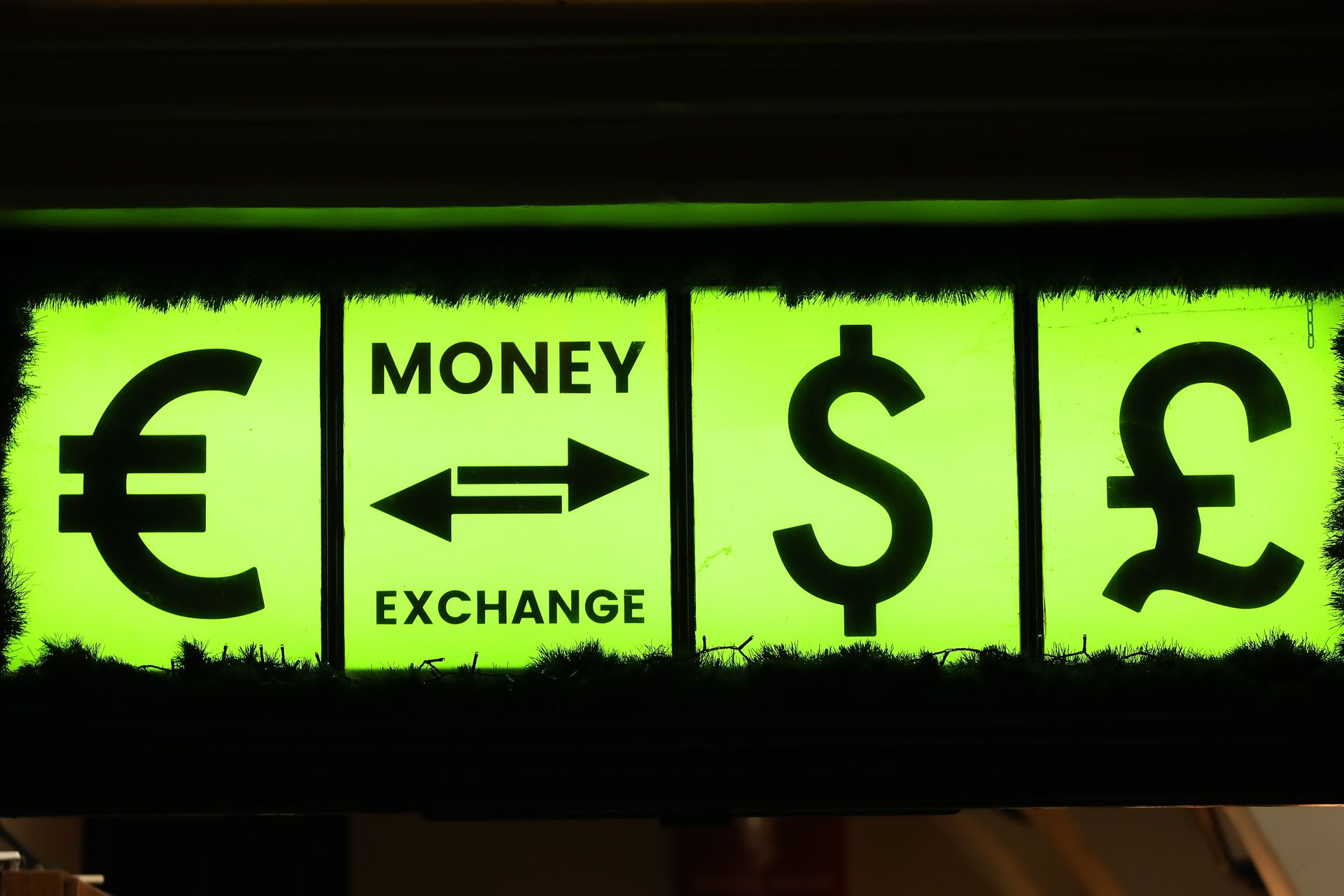
Currency and payment norms vary more than most travelers expect — and assumptions about how to access money can cause real problems on the ground.
The first thing to understand is what currency the country uses and whether it's freely exchangeable. Some currencies — the Japanese yen, the euro, the British pound — are widely traded and straightforward to convert. Others are more restricted. In some countries, you cannot legally convert the local currency outside the country at all, or the official exchange rate differs significantly from rates available through informal channels. Researching this before you leave helps you decide how much cash to bring and in what denomination.
ATMs are available in most countries, but their reliability, fees, and daily withdrawal limits vary. ATMs in airports and tourist areas typically charge higher fees than those inside local bank branches further into the city. Some international cards carry foreign transaction fees of two to three percent per transaction. Withdrawing larger amounts less frequently reduces the cumulative impact of flat fees.
Credit card acceptance is far from universal. In many parts of Southeast Asia, Africa, and Latin America, cash remains the dominant form of payment — even in restaurants and hotels that technically accept cards. Smaller establishments, markets, street food vendors, and rural areas almost always require cash. Assuming your card will work everywhere is a consistent source of frustration.
Some countries have their own digital payment ecosystems not connected to international card networks. China's Alipay and WeChat Pay dominate daily transactions there — many vendors don't accept cash or international credit cards at all. If you're traveling to a country with a closed payment ecosystem, researching how to access it before arrival is not optional.
Currency exchange at airports is almost always done at worse rates than you'll find at local banks or exchange offices in the city. If you need local cash immediately on arrival, limit how much you exchange at the airport and find a better rate once you're in town. Even a quick comparison between two exchange offices often reveals a meaningful difference.

Brett Jordan / Unsplash
You don't need fluency in a language to show that you've made an effort. That effort matters more than most travelers realize.
Learning a few phrases in the local language — hello, thank you, please, excuse me, I don't understand, do you speak English? — signals respect for the country you're visiting. It opens conversations that wouldn't otherwise happen. It shifts interactions from transactional to human. In countries where English is not widely spoken, it can also be practically useful when navigating situations where a smartphone isn't available or translation apps aren't cooperating.
Script matters as much as vocabulary in some destinations. In Japan, being able to recognize kanji and hiragana for common words — exit, entrance, station, toilet — reduces daily friction considerably. In Arabic-speaking countries, recognizing numerals and directional signs helps orient you on the street. Even a basic familiarity with the alphabet helps when reading street signs, menus, or ticket machines.
Download a translation app before you leave. Google $GOOGL Translate is the most widely used, and it supports a camera feature that translates text in real time through your phone's viewfinder — useful for menus, signs, and packaging. Download the relevant language pack for offline use before departure. Mobile connectivity outside urban areas is unreliable in many countries, and the camera translation feature works offline only if you've downloaded the pack.
Be aware that regional dialects can differ substantially from the standard language you studied. Spanish spoken in Buenos Aires sounds and works differently from Spanish in Madrid or Mexico City. Mandarin spoken in Beijing differs from Cantonese spoken in Hong Kong. If you've learned the textbook version of a language, locals will understand you — but you may struggle to understand the reply.
Don't rely on the assumption that English is spoken everywhere. English has become the default of international business and tourism, but proficiency drops sharply once you move away from urban centers and tourist hubs. This is particularly true in rural areas of East and Southeast Asia, Central and Eastern Europe, the Middle East, and sub-Saharan Africa. A few prepared phrases go a long way, and they demonstrate something no translation app can fully replicate.
Almira Manduriao / Unsplash
Every country has unwritten rules about behavior — in public spaces, in homes, in religious sites, at meals, and between strangers. Violating these rules isn't usually dangerous, but it can cause genuine offense, close doors, or mark you as someone who didn't bother to learn anything before arriving.
In Japan, eating or drinking while walking is considered poor form in many cities. In many Middle Eastern countries, public displays of affection between couples are inappropriate and, in some places, illegal. In India, the left hand carries a cultural association with impurity and should not be used to pass food or money. In Thailand, the head is considered sacred and the feet considered the lowest part of the body — touching someone's head or pointing your feet at a person is offensive regardless of intent.
Table manners differ widely. In China, leaving a little food on your plate signals that you were well-fed and satisfied — clearing your plate entirely can imply you weren't given enough. In some parts of the Middle East, food is expected to be declined the first time it's offered as a courtesy before accepting. In Georgia, toasts at dinner are a formal ritual with specific protocols and social expectations for guests.
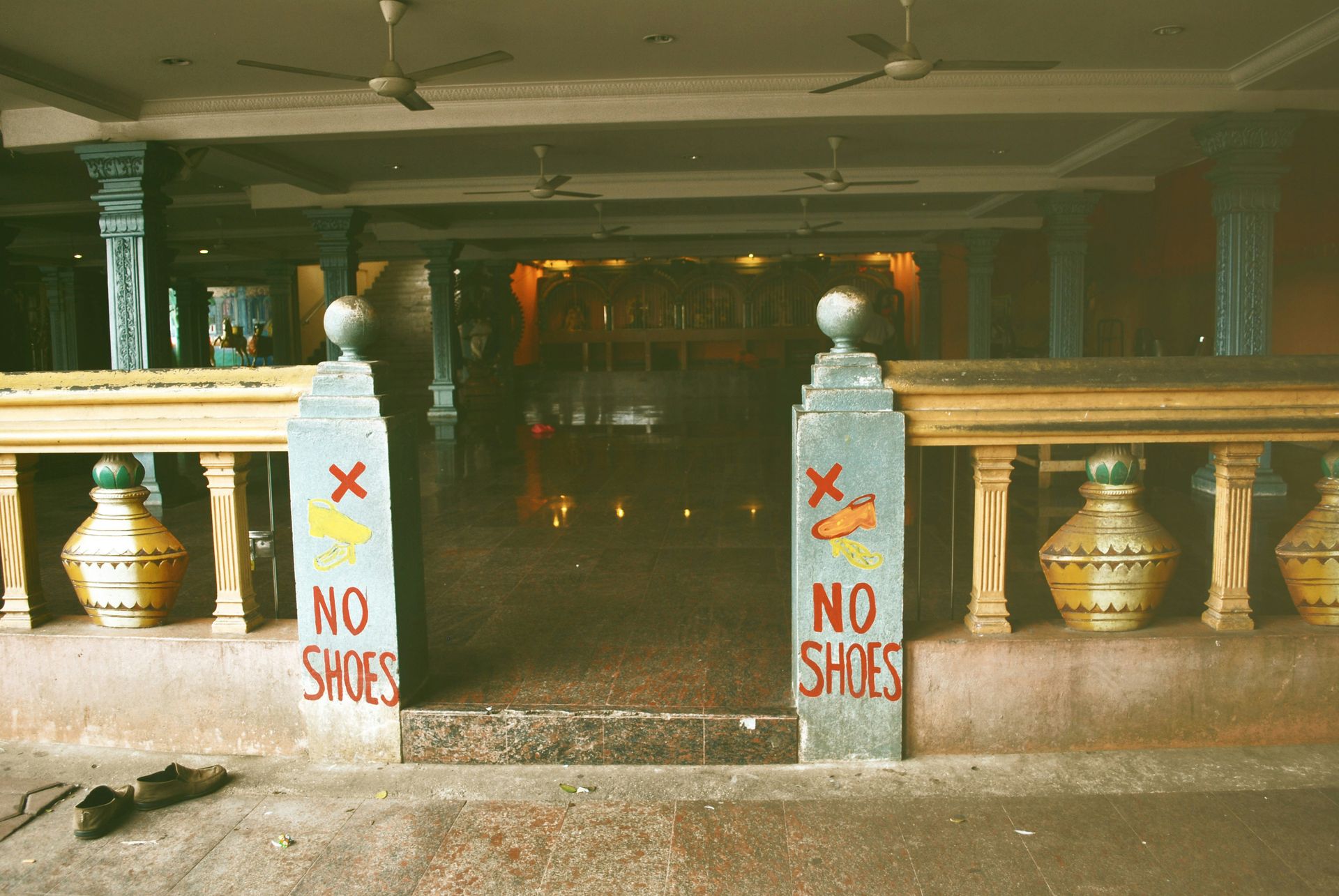
Dress codes are enforced in religious sites across most of the world. Covering your shoulders and knees is a minimum requirement in Catholic churches in southern Europe, mosques anywhere, temples across Southeast Asia, and synagogues. Some sites provide shawls or cover-ups at the entrance for visitors who aren't dressed appropriately; others simply deny entry. Checking in advance prevents the frustration of being turned away.
Public behavior in general tends to be more formally regulated in many countries than in the U.S. or Australia. Speaking loudly on public transit, taking up more than your share of space, or eating on the metro in a city where this is culturally frowned upon won't result in arrest — but it will earn looks, and it shapes how locals perceive visitors from your country long after you've left.
One straightforward approach: observe what people around you are doing, especially in unfamiliar social settings, and follow their lead before defaulting to the norms of your home country. This posture of observation prevents most inadvertent missteps.
NurPhoto / Getty Images
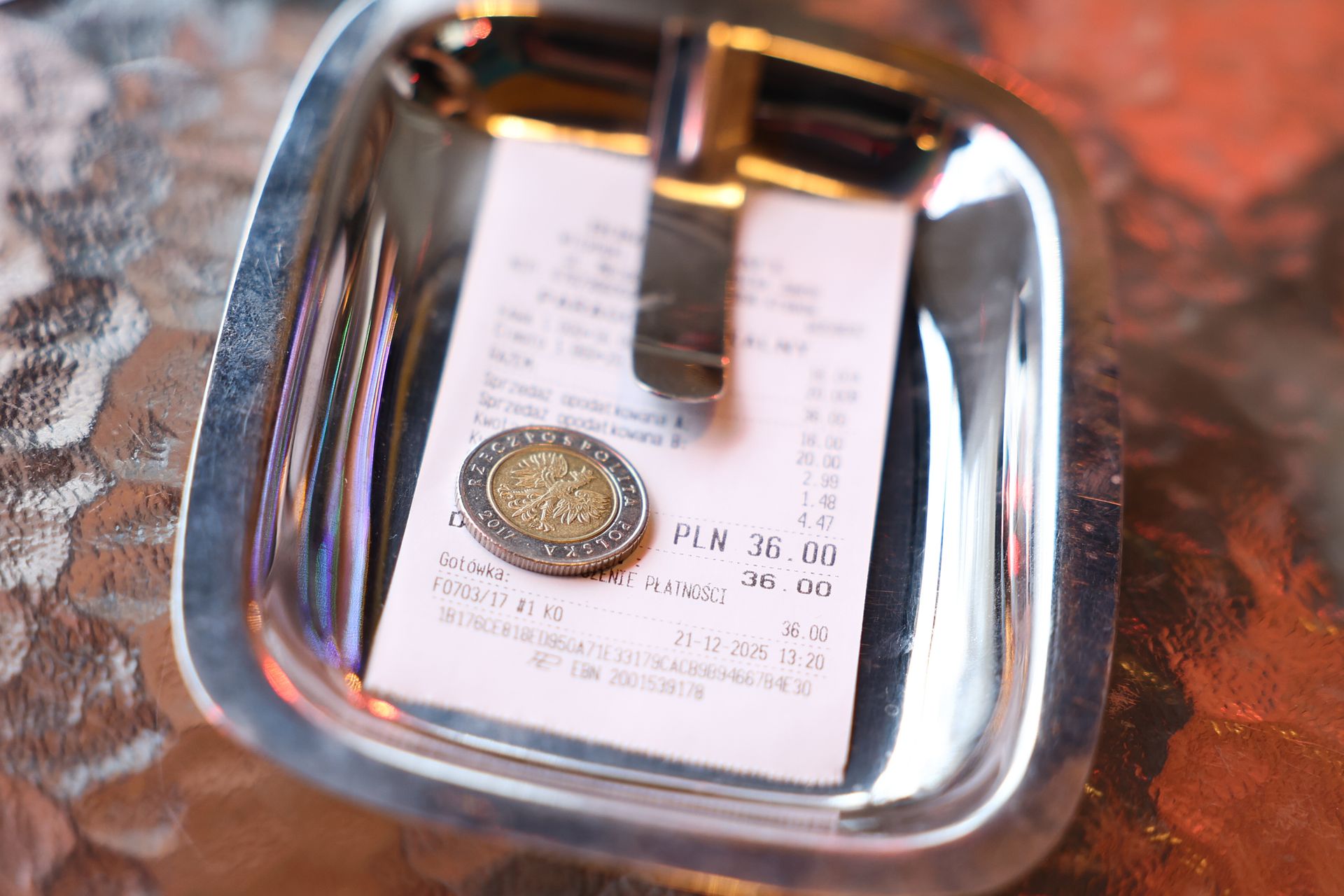
Tipping culture is deeply inconsistent across countries, and getting it wrong in either direction creates uncomfortable moments that are easily avoided with five minutes of research.
In the U.S. and Canada, tipping is embedded in the service economy. Servers, bartenders, drivers, and hotel staff receive a significant portion of their income through gratuities, and tipping between 18 and 22 percent at a restaurant is standard. Failing to tip in these contexts is read as a statement about the quality of service, or about the tipper.
Japan operates on almost the opposite principle. Tipping in restaurants, taxis, and hotels is not done — and in some cases, offering a tip can be perceived as condescending. Service workers in Japan are paid a full wage and take pride in delivering quality service without the expectation of a gratuity. Leaving cash on the table after a meal can result in a server running after you to return it.
In many European countries, a small gesture — rounding up the bill or leaving a few euros — is appreciated but not expected. Some countries include a service charge in the price; others don't. Looking for a "service charge" line on your bill before adding a tip on top is worth doing.
In parts of Southeast Asia, tipping is becoming more common as Western tourism increases, but it's still not universal. For private guides, drivers, and staff at upscale hotels or resorts, a tip is appreciated. At a street food stall or local noodle shop, it would simply be unusual.
Some countries have strong service industry wage floors that make tipping genuinely unnecessary. In Australia and New Zealand, hospitality workers are paid wages comparable to other industries, and tipping is optional rather than obligatory. The quality of service is not tied to gratuity in the way it is in North America.
The safest approach before visiting any country is to look up tipping norms specifically for that destination rather than applying the customs of your home country. A quick search before you travel takes a couple of minutes and removes a persistent layer of social uncertainty across every meal, taxi ride, and hotel stay.
JUAN MABROMATA / Getty Images
Some vaccinations are legally required for entry. Others are strongly recommended based on health risks at the destination. The distinction matters, but both categories deserve attention before you travel.
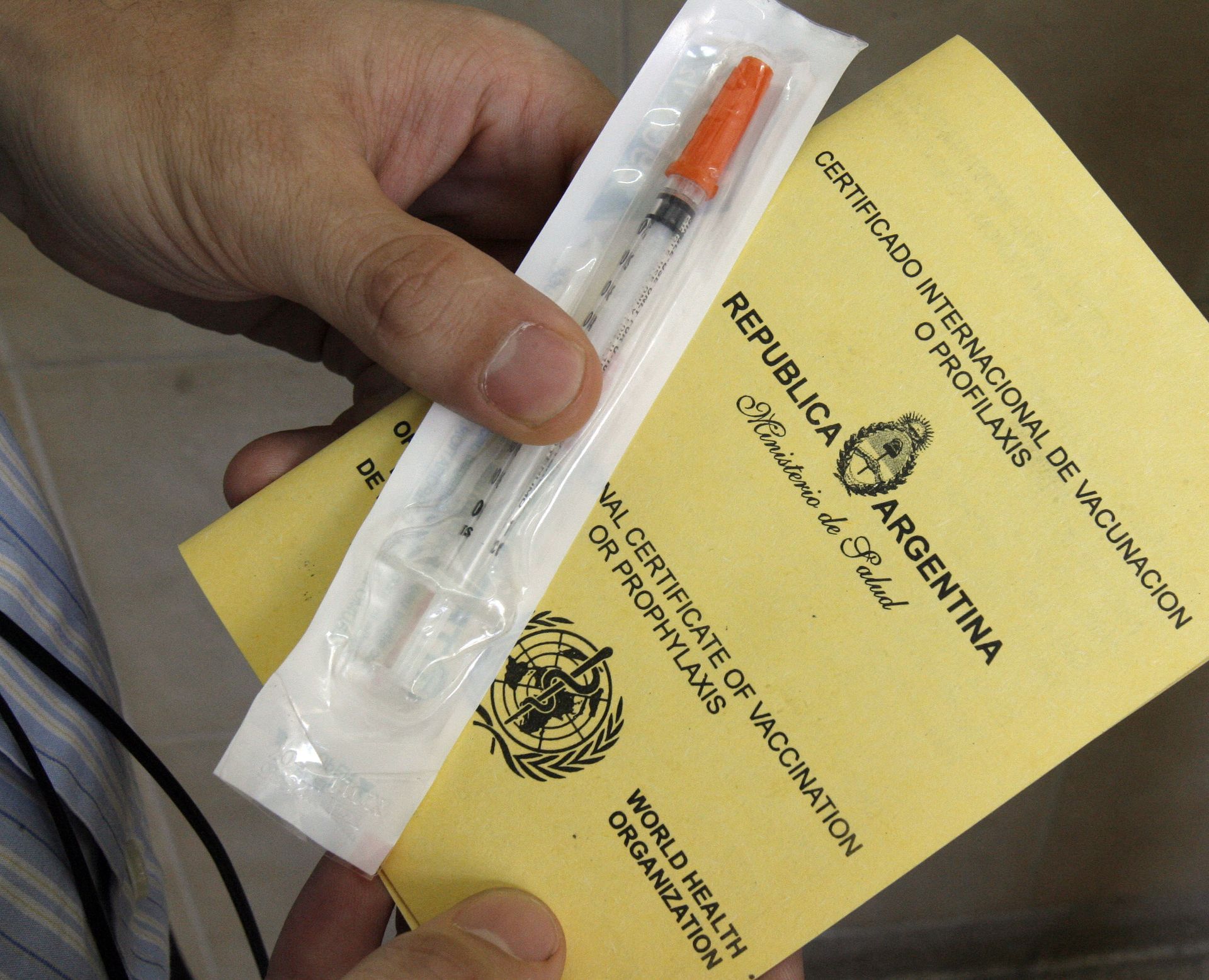
Yellow fever vaccination is required for entry into certain countries in sub-Saharan Africa and South America — not just recommended. If you arrive without an International Certificate of Vaccination or Prophylaxis, commonly called the yellow card, you may be denied entry, vaccinated on the spot under uncertain conditions, or quarantined. Some countries require the certificate only if you're arriving from a country where yellow fever is endemic, so the requirement depends on your recent travel history as well as your destination.
Other vaccines are not required for entry but are appropriate based on where you're going. Hepatitis A and typhoid vaccines are widely recommended for travelers to parts of Asia, Africa, and Latin America where food and water safety is inconsistent. Hepatitis B, rabies, Japanese encephalitis, and meningococcal vaccines may be appropriate depending on the region and the nature of your trip — rural travel, extended stays, or any work with animals or medical populations increases exposure risk.
Malaria prevention is not a vaccine but a prescription medication, and the appropriate drug varies by region due to drug-resistant strains. Some antimalarials require starting the course before departure. Your doctor or a travel health clinic can advise based on your specific itinerary and the resistance patterns at your destination.
Consult a travel health clinic or your doctor at least six to eight weeks before departure. Some vaccines require multiple doses spaced weeks apart to be fully effective. Leaving this until a few days before you travel may mean you depart without adequate protection.
The U.S. Centers for Disease Control and Prevention maintains destination-specific health advice online, as does the World Health Organization. These resources are updated regularly and are more current than general travel blogs. Your destination's entry requirements can change based on regional outbreaks, so checking close to departure matters as much as checking when you first start planning.
Jaymantri / Pexels
This is one area where ignorance genuinely is not a legal defense. Countries enforce their own laws regardless of whether you knew what they were — and regardless of what's legal where you come from.
Cannabis is legal in a growing number of U.S. states and in Canada, the Netherlands, and several other countries — but possession in many countries remains a criminal offense that carries serious penalties. Singapore, Malaysia, and several Gulf states have historically imposed severe consequences for drug offenses, including for small amounts. Transiting through an airport in one of these countries with something that's legal at home can be sufficient grounds for prosecution.
What you can bring into a country is governed by that country's customs and import laws, not yours. Prescription medications that are entirely legal at home may be controlled substances elsewhere. Many painkillers, anxiety medications, ADHD medications, and sleep aids fall into controlled substance categories in certain jurisdictions. Carrying more than a prescribed amount, or failing to carry a doctor's letter and original pharmacy packaging, can trigger confiscation or detention.
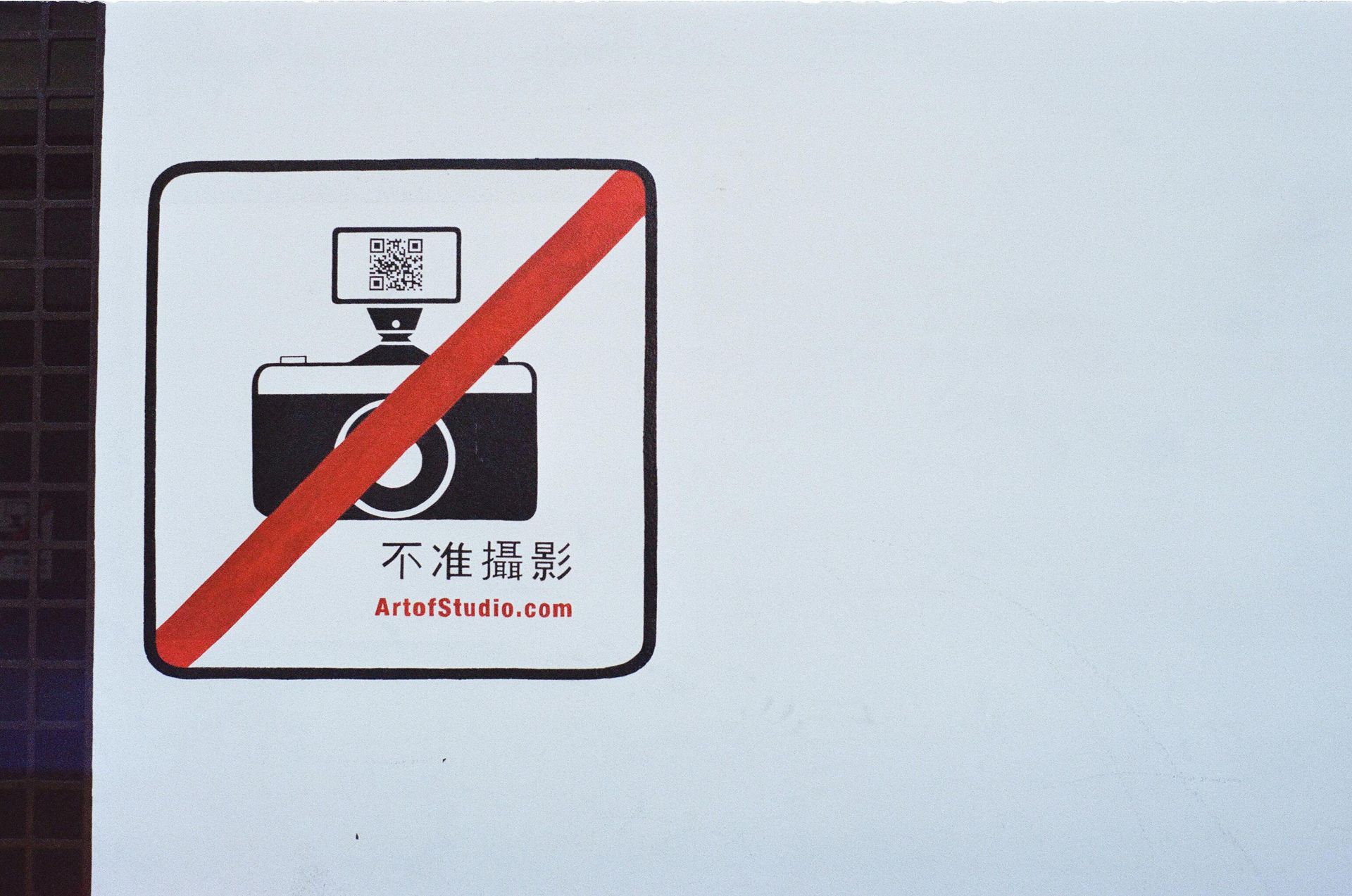
Photography is regulated in many countries. Taking photographs of military installations, government buildings, airports, border crossings, police officers, and sometimes religious sites is restricted or prohibited. In some countries, photographing infrastructure like bridges or power stations is illegal. These rules aren't always clearly posted, and enforcement is inconsistent — which makes researching specific restrictions for your destination worth doing before you point a camera.
LGBTQ+ relationships are criminalized in over 60 countries. In some, penalties are severe. Traveling as a same-sex couple in a country where that is illegal requires understanding what it means practically for public behavior, accommodation bookings, and what level of risk you're willing to accept.
Dress codes in public spaces are legal requirements in some countries, not just cultural preferences. Violations can result in fines or arrest. In some beach destinations, wearing swimwear away from designated beach areas carries a penalty. Knowing where the line falls between social expectation and legal requirement is essential before arrival.
Jacob / Pexels
Arriving in a country without working mobile service is a manageable problem — until it isn't. Navigation, translation, accommodation confirmation, emergency contact, and countless other tasks rely on mobile data. Getting this sorted before you land removes a category of friction that accumulates at the worst moments.
There are three main options: using your existing plan with international roaming enabled, purchasing a local SIM card upon arrival, or purchasing an eSIM before departure.
International roaming through your home carrier is convenient but tends to be expensive. Most major carriers offer international day passes or monthly add-ons, which are reasonable for short trips. The per-megabyte overage charges for travelers who don't activate a plan in advance can be significant. Enable international service before departure — don't wait until you land and need it.
Purchasing a local SIM card is usually the cheapest option for trips longer than a few days. SIM cards are available at airports, phone shops, and convenience stores in most countries. Some countries require passport registration when purchasing one. Verify that your phone is unlocked before departure — a carrier-locked phone won't accept a foreign SIM.
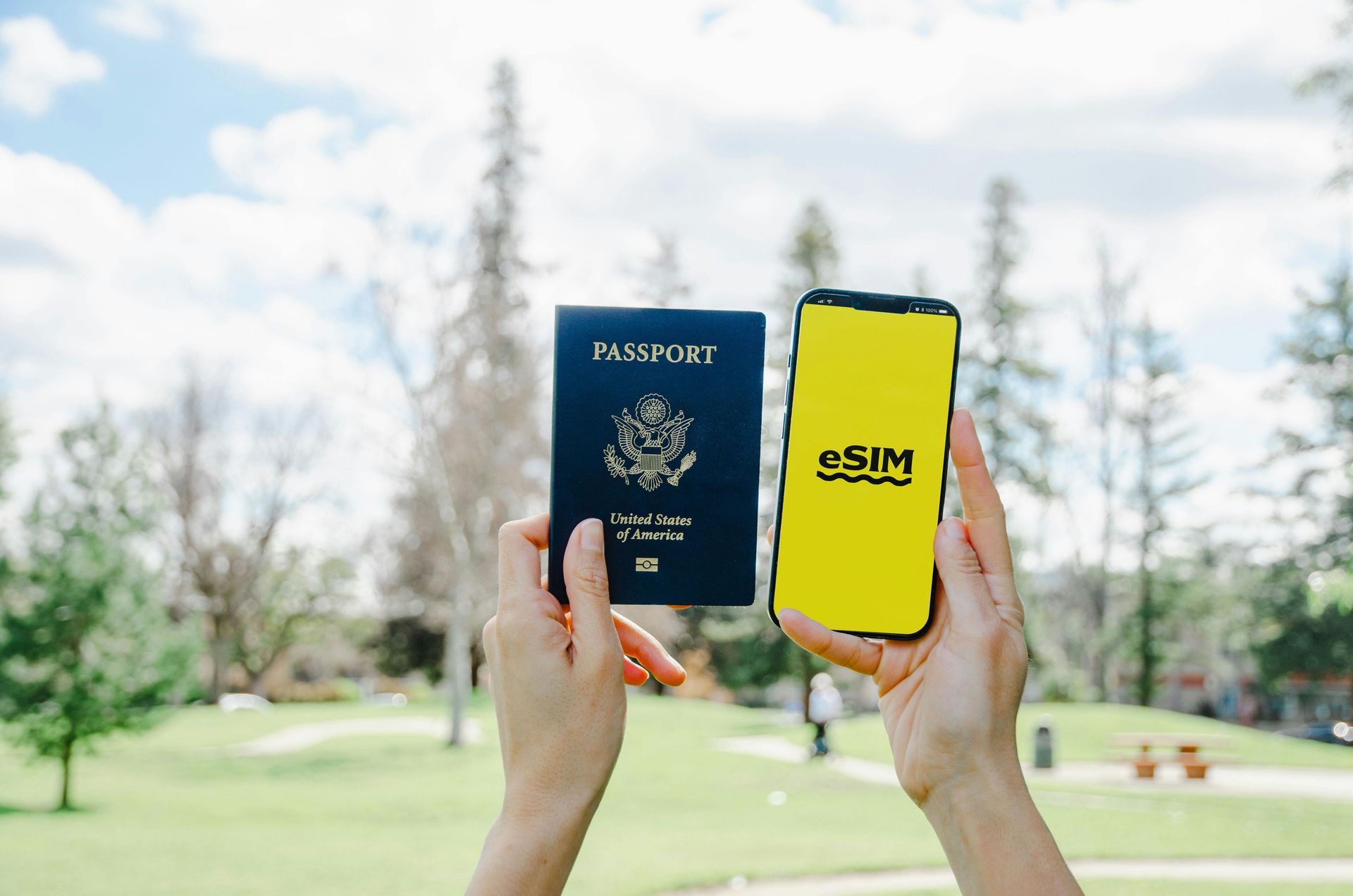
eSIMs have become the most convenient option for travelers with compatible devices. Several services offer eSIM plans for specific countries or regions that you purchase and activate before departure. You can keep your regular number active on your existing physical SIM while using the eSIM for local data, with no physical card swap required.
Regardless of which option you choose, download offline maps before you travel. Google $GOOGL Maps allows you to download entire city or regional maps for offline use. These function without any data connection and allow navigation even in areas with no signal.
In some countries — notably China — major Western platforms including Google, WhatsApp, Instagram, and Facebook $META are blocked. If you're traveling to a country with significant internet restrictions, research which services are unavailable and whether a VPN is worth setting up before departure. VPN use is itself restricted in some jurisdictions, which adds a layer of complexity worth understanding in advance.

alexeyzhilkin / Magnific
Drinking tap water in a new country without knowing whether it's safe is a straightforward way to disrupt your trip — and the answer varies significantly between destinations.
In many wealthy, heavily urbanized countries — Germany, the Netherlands, Japan, Australia, Canada, and most of Scandinavia — tap water is treated to high standards and is safe to drink directly from the faucet. In parts of southern and eastern Europe, tap water is technically safe by health standards but may have a mineral content or taste that differs noticeably from what you're used to, which is why bottled water is commonly used even where it isn't medically necessary.
In much of sub-Saharan Africa, South Asia, Southeast Asia, Central America, and parts of South America, tap water should not be consumed untreated. The contamination is usually bacterial or parasitic. Local populations often develop tolerance to organisms present in their local water supply, but travelers without that prior exposure can become ill from strains that cause no symptoms in the people who live there.
The solutions vary by situation. Bottled water is widely available and inexpensive in most countries, though environmental concerns about single-use plastic are legitimate for longer stays. Water filtration bottles — made by brands including LifeStraw and Grayl — filter tap water to drinking quality and are practical for extended trips. Water purification tablets are a lightweight backup option. Hot drinks made with boiled water — tea and coffee — are generally safe even in areas where tap water is unsafe.
Ice is a common vector for waterborne illness in countries with unsafe tap water. If tap water isn't drinkable, ice made from that water carries the same risk. Drinks at upscale hotels and established restaurants in these regions usually use purified water for ice. At street stalls or smaller local venues, this isn't guaranteed.
Food washed in tap water is another exposure point. Salads, fresh fruit, and raw vegetables in unsafe-water countries are common contributors to travelers' illness. This applies even if you've been careful about what you drink — the risk arrives on the plate.
Bruce Barrow / Unsplash
Getting around an unfamiliar country is more complex than just opening a ride-hailing app. Transportation infrastructure, reliability, pricing, and safety vary enormously — and knowing what to expect before you arrive makes the difference between smooth movement and costly confusion.
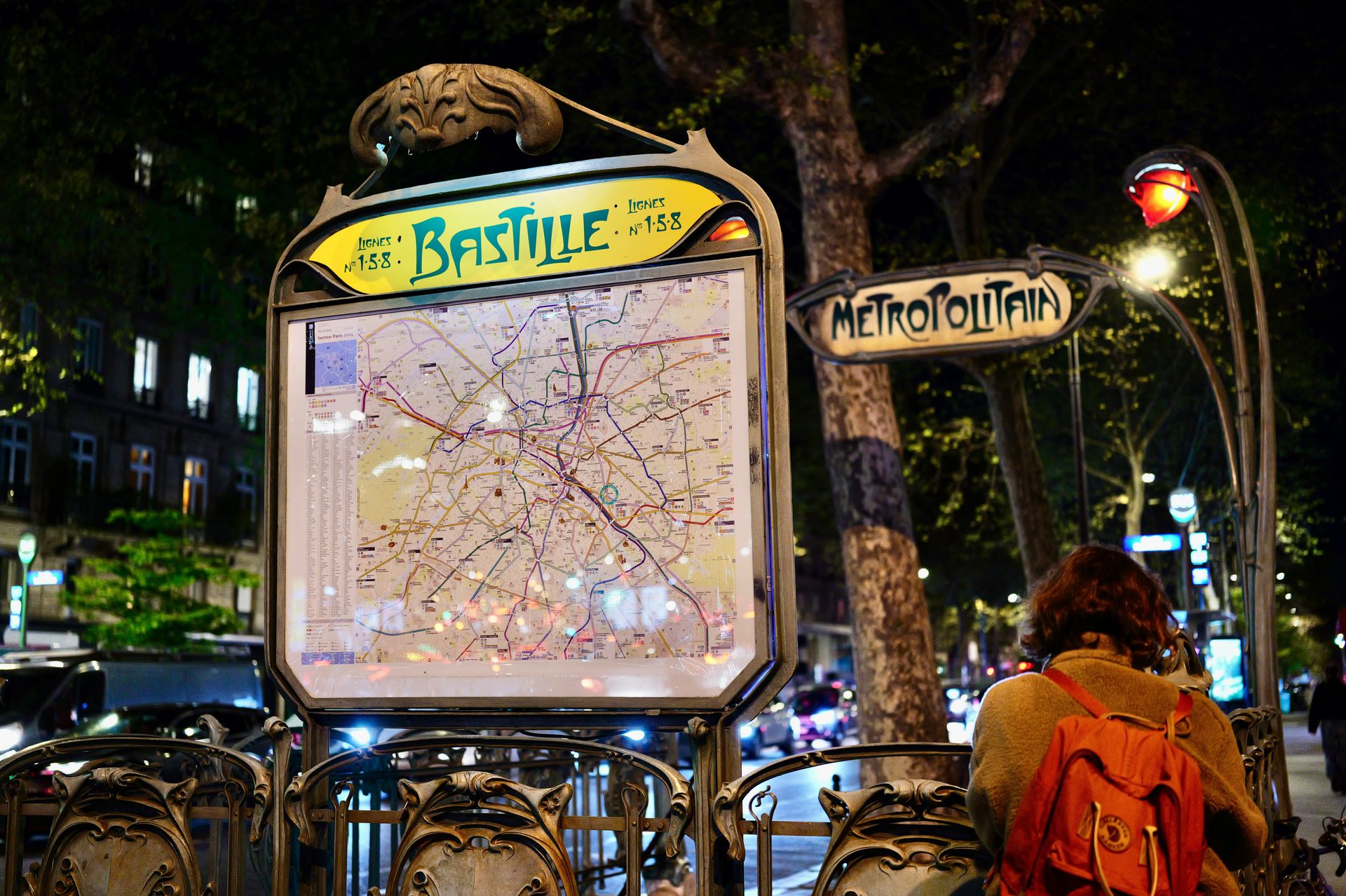
In major cities with well-developed metro or rail systems — Tokyo, Seoul, London, Paris, Singapore — public transit is fast, affordable, and often faster than taking a car during peak hours. Learning the transit card system in advance and loading it with funds before you need it reduces friction at busy stations. The Oyster card in London, the Suica card in Japan, and the T-money card in Korea are examples of prepaid cards that also work for small purchases at convenience stores and vending machines.
Taxis and ride-hailing apps present their own landscape. Uber $UBER operates in many countries but not all, and in several countries local alternatives have displaced it. Grab is the dominant app across Southeast Asia. Bolt is widely used in Africa and Eastern Europe. In countries where metered taxis are the norm, unlicensed drivers at airports and tourist attractions who negotiate a flat rate are almost always more expensive than metered alternatives — and occasionally unsafe.
Renting a car is the most flexible option for rural or regional travel, but it requires understanding local driving customs, road conditions, and legal requirements. International driver's permits are required in some countries for foreign license holders. Driving sides also differ: the U.K., Japan, Australia, India, and many former British colonies drive on the left.
Long-distance trains, buses, and ferries each have their own booking systems, and advance purchase is often required or significantly cheaper in countries with high demand. In Europe, booking regional trains two to three months ahead can reduce the cost of last-minute tickets by half or more.
Check whether your travel insurance covers transportation incidents — particularly when renting scooters or motorcycles, which is a common activity in Southeast Asia where road accident rates are high and medical costs from serious accidents can escalate quickly.
RDNE Stock project / Pexels
The emergency number you know from home — 911 in the U.S., 999 in the U.K., 000 in Australia — does not work in most countries.
Every country has its own emergency numbers for police, fire, and medical services, and they are not globally standardized. In Europe, 112 works across EU member states and connects to the appropriate service depending on the nature of the emergency. In Japan, 110 reaches police and 119 reaches fire and ambulance. In India, 112 is the consolidated emergency line. In Brazil, 190 is police and 192 is medical emergency. In China, 110 is police, 119 is fire, and 120 is medical.
Before traveling, look up the specific emergency numbers for your destination country. Include police, ambulance, fire, and your country's embassy or consulate contact number. Store these in your phone before departure and write them on a physical card as a backup. A dead phone or a stolen bag in a genuine emergency leaves you with whatever information you can recall from memory.
Understand what emergency services will and won't do where you're going. In some countries, ambulance response times in rural areas are measured in hours. In others, emergency medical services may require payment or proof of insurance before providing treatment. Knowing whether to call an ambulance or make your own way to a hospital can be the more practical decision depending on your location and circumstances.
Your country's embassy or consulate is not a solution to every problem, but it is the correct contact for specific situations: a lost or stolen passport, an arrest, hospitalization while abroad, or a sudden crisis in the country. Many governments offer a citizen registration service — sometimes called a travel registry or smart traveler enrollment — that allows the embassy to contact you in an emergency. Registering before departure costs nothing and takes a few minutes.
Hospital quality varies enormously within countries, not just between them. In developing economies, hospitals in major cities may be substantially better equipped than regional or rural facilities. Knowing the name and approximate location of the nearest well-equipped hospital to your destination is information worth having before you need it.
Timur Weber / Pexels
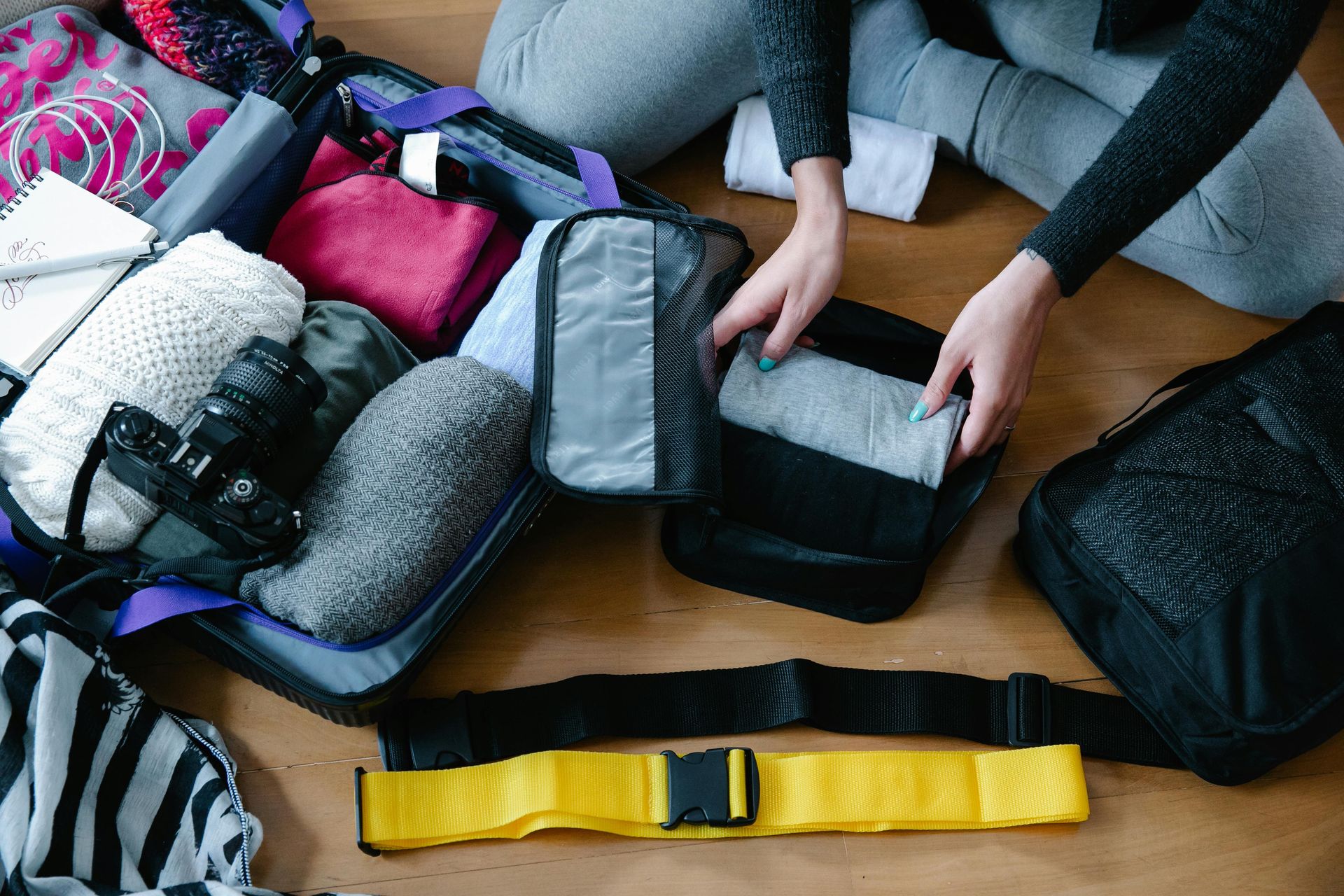
Packing sounds routine, but packing wrong — for the weather or for cultural expectations — is one of the most consistent sources of avoidable discomfort for first-time international travelers.
Climate research should be specific and current. General seasonal descriptions — "Thailand is hot in summer" — are too broad to be useful. What month are you traveling, and to which part of the country? Northern Thailand (Chiang Mai) and southern Thailand (Ko Samui) have different climate patterns, different rainy season windows, and different temperature ranges throughout the year. Coastal and inland climates often diverge significantly. Mountain and highland areas can be cold year-round in countries otherwise known for tropical heat.
Humidity is consistently underestimated by travelers from dry climates. The combination of heat and high humidity in countries like Singapore, Bangladesh, and coastal West Africa affects what you should pack — lightweight, breathable fabrics in natural materials like cotton and linen dry faster and feel considerably more comfortable than synthetics in humid conditions.
Religious and cultural dress requirements are not optional suggestions at religious sites. Covering your shoulders and knees is a minimum requirement for entry into Catholic churches in southern Europe, mosques anywhere in the world, Buddhist temples across Southeast Asia, and synagogues. Some sites provide shawls or cover-ups at the entrance; others simply deny entry. Carrying a lightweight scarf in your bag at all times in countries with active religious tourism ensures you're always prepared without having to think about it.
Beyond religious sites, some countries maintain dress standards in public spaces that differ significantly from Western norms. In some Gulf states, dressing modestly in shopping malls and public areas is expected of visitors as well as residents. Understanding these norms before you pack prevents the situation of arriving with nothing appropriate to wear for a significant portion of your activities.
Shoes deserve more thought than most travelers give them. Removing shoes before entering homes, temples, and certain businesses is standard practice in Japan, across Southeast Asia, in parts of the Middle East, and elsewhere. Shoes that slip on and off easily are practical. Wearing clean socks every day in these settings is a matter of basic courtesy toward people whose floors you're entering.
tragrpx / Pixabay
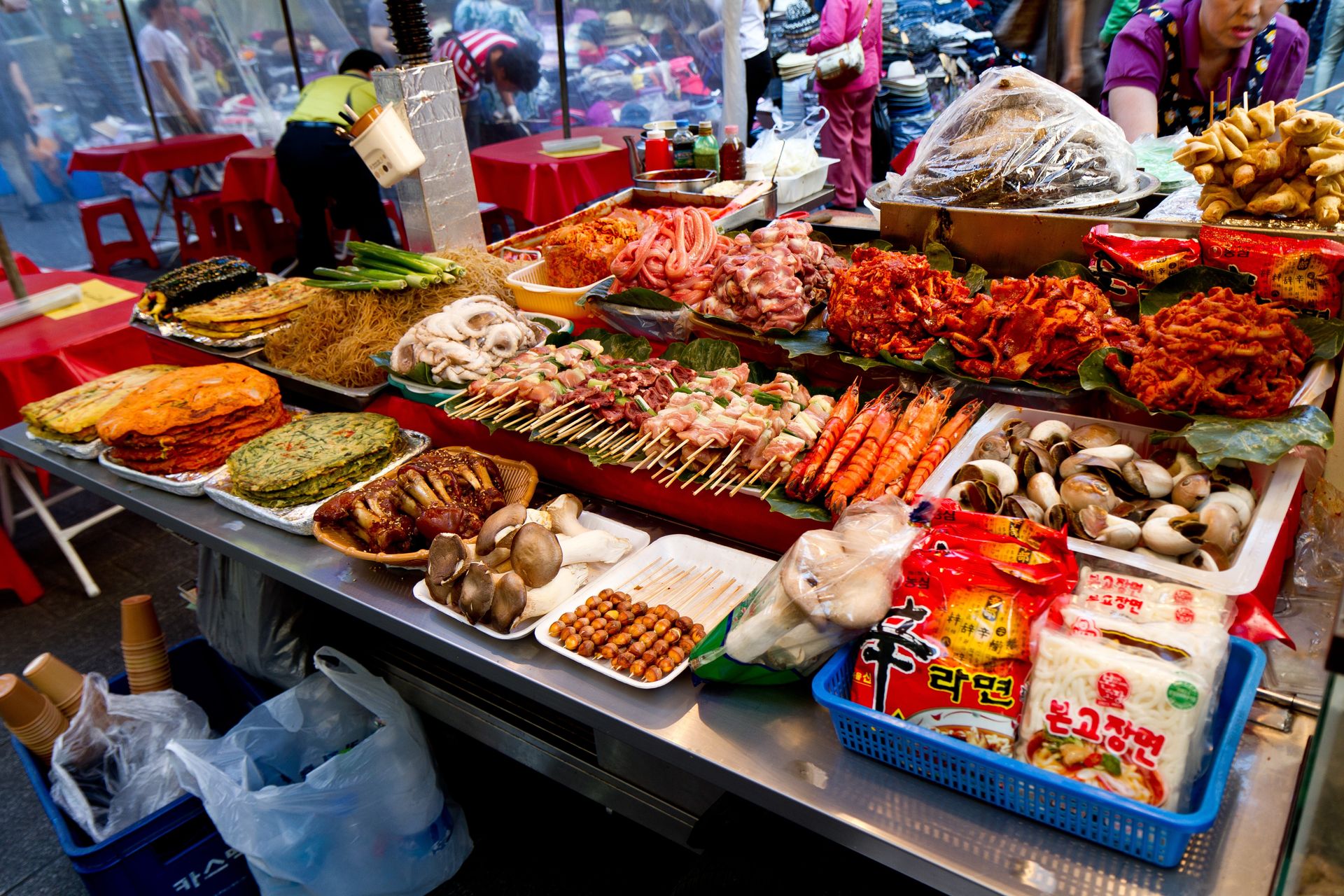
Food is one of the most direct points of contact with a new culture — and local dining culture carries expectations and norms that go well beyond what you eat.
Hours matter. In Spain, lunch is the main meal of the day and is typically served between two and four in the afternoon. Dinner doesn't begin until nine or 10 in the evening. Arriving at a restaurant at seven hoping for dinner service often results in finding it closed or largely unstaffed. In Scandinavia and the U.K., dinner service begins around six and kitchens often close by nine. Knowing when locals actually eat ensures you're arriving at full-service hours.
Dietary restrictions and allergies are handled very differently across cultures. In countries with strong vegetarian traditions — India being the clearest example — restaurants are explicitly categorized as vegetarian or non-vegetarian, and the range of meat-free options is extensive. In other countries — Argentina, South Korea, Japan — plant-based eating is less common, menus may have few vegetarian options, and the concept of a dish being genuinely free of animal products may not match your expectations. Fish stock in broth, animal fat in preparation, and similar invisible ingredients are common.
Communicating allergies requires particular care. Even in countries where you speak the language, the cultural and practical understanding of allergies and cross-contamination in commercial kitchens may differ from what you're accustomed to. In some settings, "without nuts" means visibly without nuts — not prepared in a nut-free environment. Travelers $TRV with severe allergies should research this specifically and may need to carry allergy cards in the local language.
Eating street food is one of the most rewarding aspects of international travel, and evaluating stall safety requires basic judgment. High turnover — meaning many customers — generally indicates fresher ingredients. Food cooked to order in front of you is preferable to food that's been sitting. Heat kills most bacteria; salads, raw vegetables, and unpeeled fruit carry more risk in countries where tap water is unsafe and food washing standards vary.
At sit-down restaurants, the bill is typically requested rather than brought automatically in many countries. In Japan, France, and many other places, lingering over a finished meal without being rushed out is the norm — but it also means the server won't bring a check until you ask for one.
Margo Evardson / Unsplash
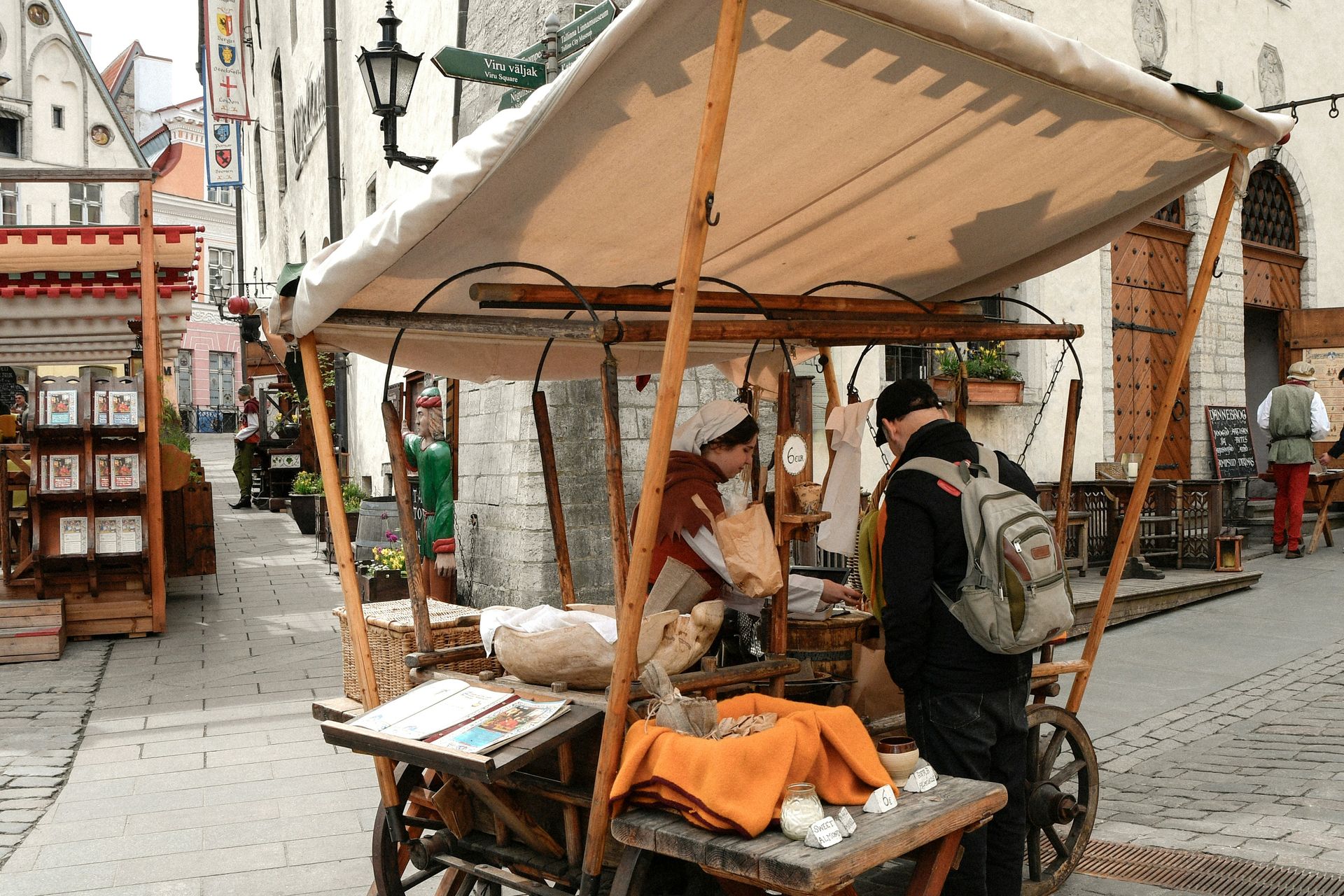
In some markets, the listed price is an opening bid. In others, attempting to negotiate it is considered rude. Knowing the difference before you start shopping saves you from overpaying in one context and causing embarrassment in another.
Bargaining is standard practice in many markets across Southeast Asia, South Asia, the Middle East, Africa, and Latin America. In these settings, prices at markets and informal stalls are set higher than the seller expects to receive, on the assumption that negotiation will follow. Not bargaining — paying the first price asked — isn't prohibited, but it marks you immediately as a visitor willing to pay well above market rate.
The norms around where bargaining is appropriate are fairly consistent: it works in markets, bazaars, souvenir stalls, and informal vendor settings. It is not appropriate in supermarkets, fixed-price retail stores, or restaurants. In taxis without meters, agreeing on a price before you get in is standard practice in many countries — an extension of the same negotiation logic applied to transportation.
Effective bargaining doesn't require aggressive or prolonged tactics. The standard approach is to show genuine interest in the item, ask the price, offer something below what you're ultimately willing to pay, and move toward a number in the middle. Walking away is the most effective negotiating tool available — and if the vendor doesn't call you back, you've learned something useful about the actual floor price.
In Japan, South Korea, and most of Western Europe, prices are fixed and bargaining is simply not done. Attempting to negotiate a discount at a shop in Tokyo or Berlin would create an uncomfortable interaction for the staff and accomplish nothing.
Luxury or high-value purchases — carpets, jewelry, original artwork — often involve negotiation even in countries that don't have a general bargaining culture. Research the specific category of purchase before assuming fixed or flexible pricing applies.
Currency exchange at informal exchange bureaus often involves some degree of negotiation, particularly in countries with active parallel currency markets. Comparing rates at multiple exchange points before committing is always worthwhile.
Christine Puspitasari / Pexels
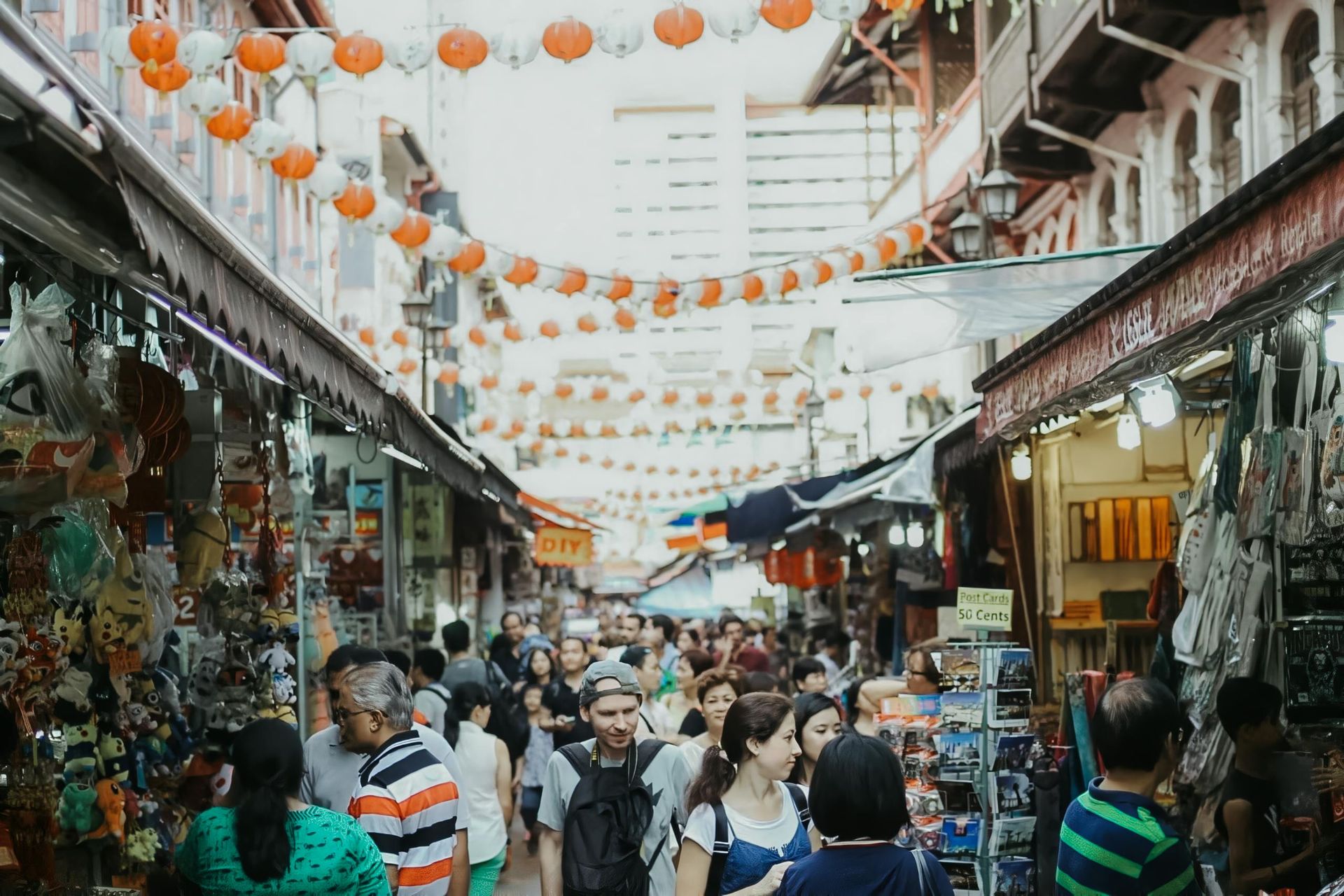
Every major tourist destination has a set of common scams, and they tend to follow recognizable patterns. Knowing them in advance means you can identify them in real time rather than recognizing what happened after the fact.
The taxi scam is the most universal. A driver doesn't activate the meter, quotes a flat rate that sounds plausible to someone who doesn't know local pricing, and delivers you to your destination having charged several times the market rate. Unofficial taxi drivers at international arrivals halls are particularly common in airports across South Asia, Southeast Asia, Africa, the Middle East, and Latin America — though they exist everywhere. The general rule: exit the arrivals hall to the official taxi stand or verified ride-hailing zone, and ignore anyone who approaches you inside the terminal.
The distraction scam takes many forms but follows a common structure: someone approaches you with a request for help, a friendly conversation, or a sudden incident — a spill, a minor commotion, someone pointing at your shoe — while an accomplice removes your wallet, phone, or bag. Crowded tourist sites, markets, and transit hubs are the most common locations. Being alert to unusual social approaches in high-traffic areas reduces your exposure significantly.
The gifting scam operates in markets and pedestrian areas. Someone presents you with a small unsolicited gift — a bracelet, a flower, a cup of tea — and when you accept, demands payment. Declining before the item is placed in your hands is the only reliable prevention.
The accommodation switch is common in some travel markets: the booking you confirmed online is suddenly "unavailable" upon arrival, and you're redirected to a different property at a higher cost or lower quality — often owned by the same person running both operations. Booking confirmations via email and screenshots from the original platform are your documentation.
Currency confusion is a problem wherever multiple denomination bills look similar to someone unfamiliar with them. Count your change in a visible, calm moment when possible, and spend a few minutes familiarizing yourself with local notes and coins before your first cash transaction.

Ketut Subiyanto / Pexels
Losing your passport abroad is not an insurmountable situation, but it requires specific steps — and the process goes considerably more smoothly if you prepared before it happened.
Before you leave, make multiple copies of your passport's photo and data page. Store one copy in a different bag from your actual passport. Share a scan with a trusted contact at home. Save a clear photograph of the passport in a cloud storage service you can access from any device. These copies don't serve as replacement documents for border purposes, but they substantially speed up the replacement process at an embassy.
If your passport is lost or stolen, the first step is filing a report with local police. This is not always effective in recovering the document, but a police report reference number is typically required when applying for an emergency replacement. File the report as soon as you discover the loss, not after you've looked around for a while.
The second step is contacting your country's embassy or consulate. Most embassies offer emergency passport services for citizens stranded abroad, though the process takes time and requires an in-person appointment. Processing times vary. In countries where your home country has minimal diplomatic presence, the nearest consulate may be in another city — and reaching it may require its own travel arrangements.
Emergency travel documents — sometimes issued as emergency passports or emergency travel certificates — can usually be produced more quickly than a full passport replacement, but they may not be accepted by all countries for entry or transit. If your journey home involves connecting through a third country, confirm that the emergency document is sufficient for transit before committing to that route.
Keep digital copies of all other travel documents in cloud storage: your visa, your travel insurance policy number and emergency contact, your airline booking references, and the addresses of your accommodations. If your bag is taken along with your phone, having this information accessible from any internet connection means you're not starting from nothing.
DiePhotoPotato / Getty Images
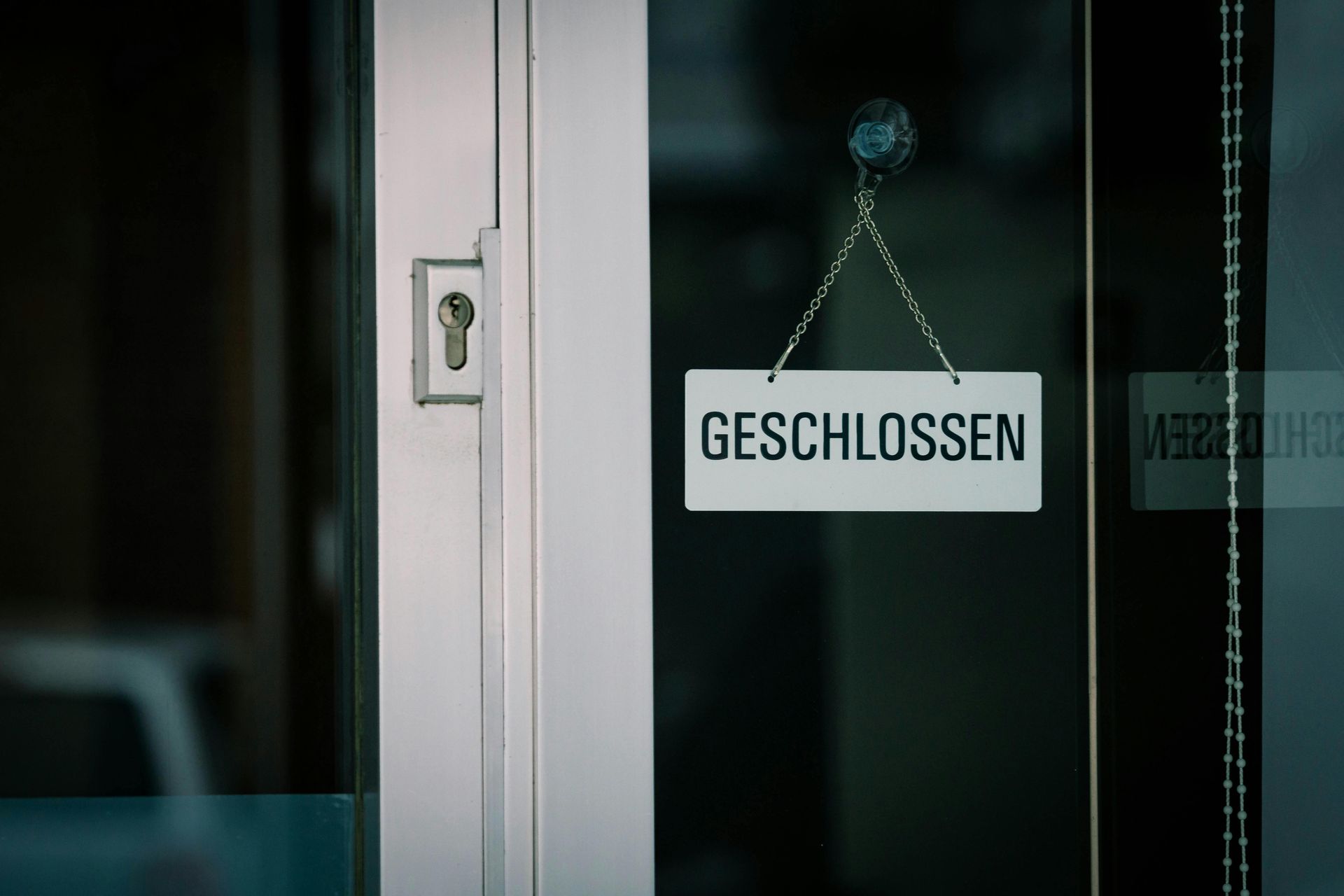
Arriving in a country without knowing its commercial rhythms can mean spending a day unable to access a bank, a pharmacy, or a grocery store — closed for reasons a visitor wouldn't anticipate from the outside.
Public holidays in most countries shut down banks, government offices, and a substantial portion of retail. Some public holidays are national; others are regional. A holiday observed in one province or city may not be observed in another. Many countries have clusters of public holidays that effectively shut down commerce for multiple consecutive days — which can affect everything from currency exchange to medical services.
The extended shutdown around the Lunar New Year in China, Vietnam, South Korea, and much of East Asia affects not just local commerce but manufacturing, logistics, and business meetings. Arriving in Beijing or Shanghai expecting to conduct business during Spring Festival is a significant misunderstanding of how comprehensively the country pauses for two weeks.
Religious observance affects business hours even outside official public holidays. In many Muslim-majority countries, business hours change substantially during Ramadan — offices open later, close earlier, many restaurants are closed during daylight hours, and the general pace of commercial activity slows. In Israel, businesses close early on Friday afternoon and remain closed until Saturday night in observance of Shabbat. Planning around these rhythms rather than against them makes a meaningful difference.
Sunday closures are more common in parts of Europe than many North American or East Asian visitors expect. In Germany, Switzerland, Austria, and parts of Scandinavia, most retail stores are closed on Sundays by law or long-standing tradition. A Sunday run to the supermarket is simply not an option in some of these places.
Check the specific public holiday calendar for your travel window using a current source. Some holidays shift based on the lunar calendar and fall on different dates each year. The dates for Eid, Diwali, Chinese New Year, and Easter change annually — none of these can be assumed to fall on the same date as last year.
YL Lew / Pexels
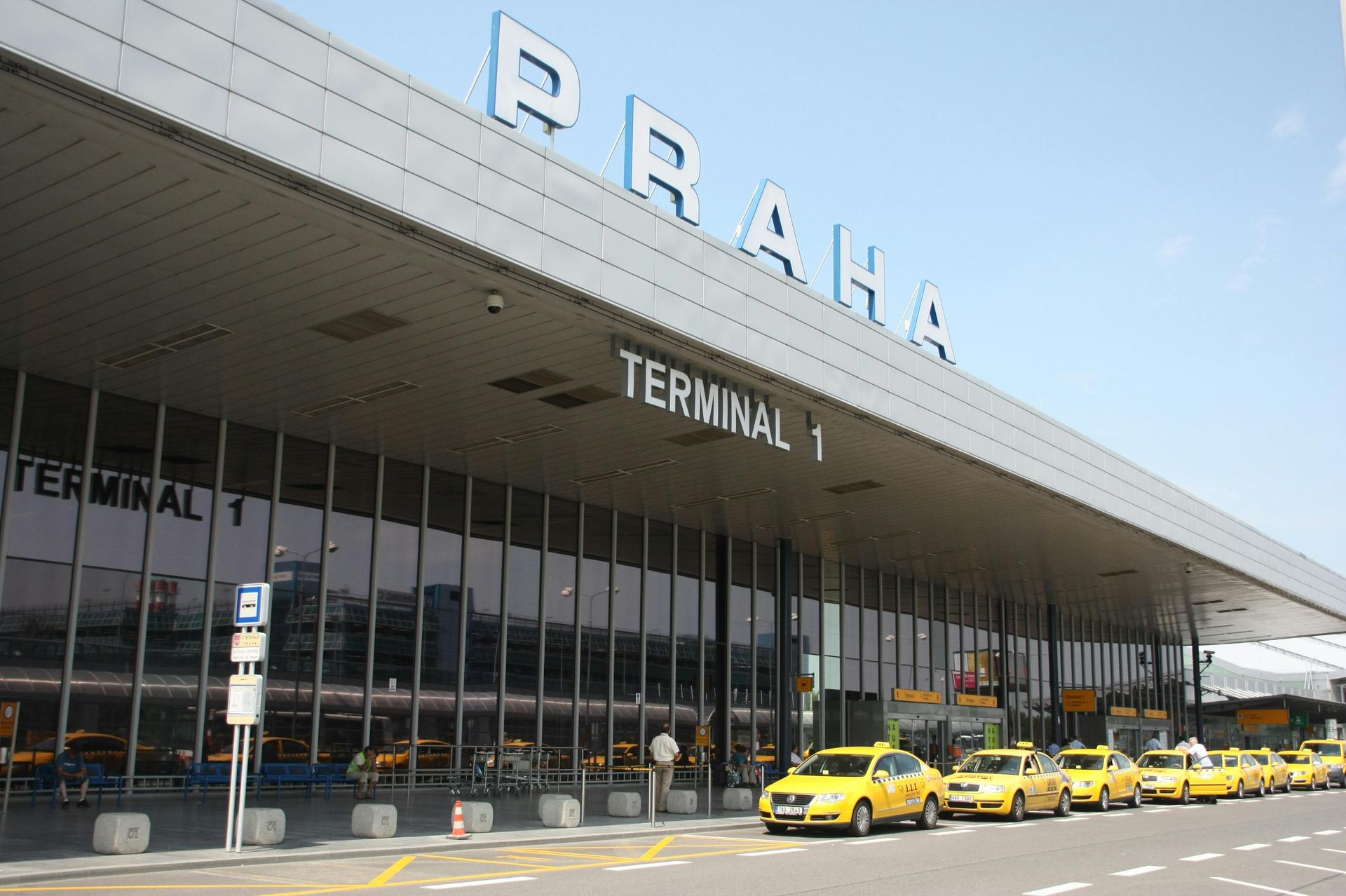
The final stretch of a long journey — from the airport to your accommodation — is often where first-time visitors overpay, get disoriented, or make tired decisions they'd reconsider with rest and information.
Every major airport has a standard range of transfer options: trains, metro lines, buses, shared shuttles, metered taxis, and private transfers. The fastest option is rarely the cheapest, and the cheapest option isn't always obvious to someone navigating that airport for the first time.
Research the specific options before you land. In some cities, a dedicated airport express train is the fastest and most reliable route into the center — the Narita Express and Limousine Bus from Tokyo's Narita Airport, the Heathrow Express in London, and the Airport Rail Link in Bangkok are examples. In others, a standard metro or local bus is significantly cheaper and only marginally slower. In cities without rail connections to the airport, the choice between a metered taxi, a verified ride-hailing app, and a pre-booked private transfer involves trade-offs in price, reliability, and convenience depending on the time of arrival.
Unofficial taxi drivers at international arrivals halls are one of the most predictable sources of tourist-targeted overcharging globally. They are particularly prevalent in airports across South Asia, Southeast Asia, Africa, the Middle East, and Latin America — though they exist in some form almost everywhere. The general rule is to exit the arrivals hall entirely to the official taxi rank or the designated ride-hailing pickup zone, and to decline all approaches inside the terminal.
Have your accommodation's address written in the local language before you arrive. Even if you have GPS navigation, a driver who speaks limited English benefits from being able to read the destination address directly. Hotels typically provide a printed address card in the local language for exactly this purpose; apartments and guesthouses may not.
If you're arriving at night, very late, or after a significantly disrupted journey, pre-booking your transfer from home removes one decision you'd otherwise have to make while exhausted. The modest additional cost of a pre-arranged service is frequently worth it on the first night in an unfamiliar city.
Castorly Stock / Pexels
This is one of the most mundane items on any travel checklist — and one of the most consistently overlooked by first-time international travelers, who often discover the problem at 11 p.m. with a dead phone.
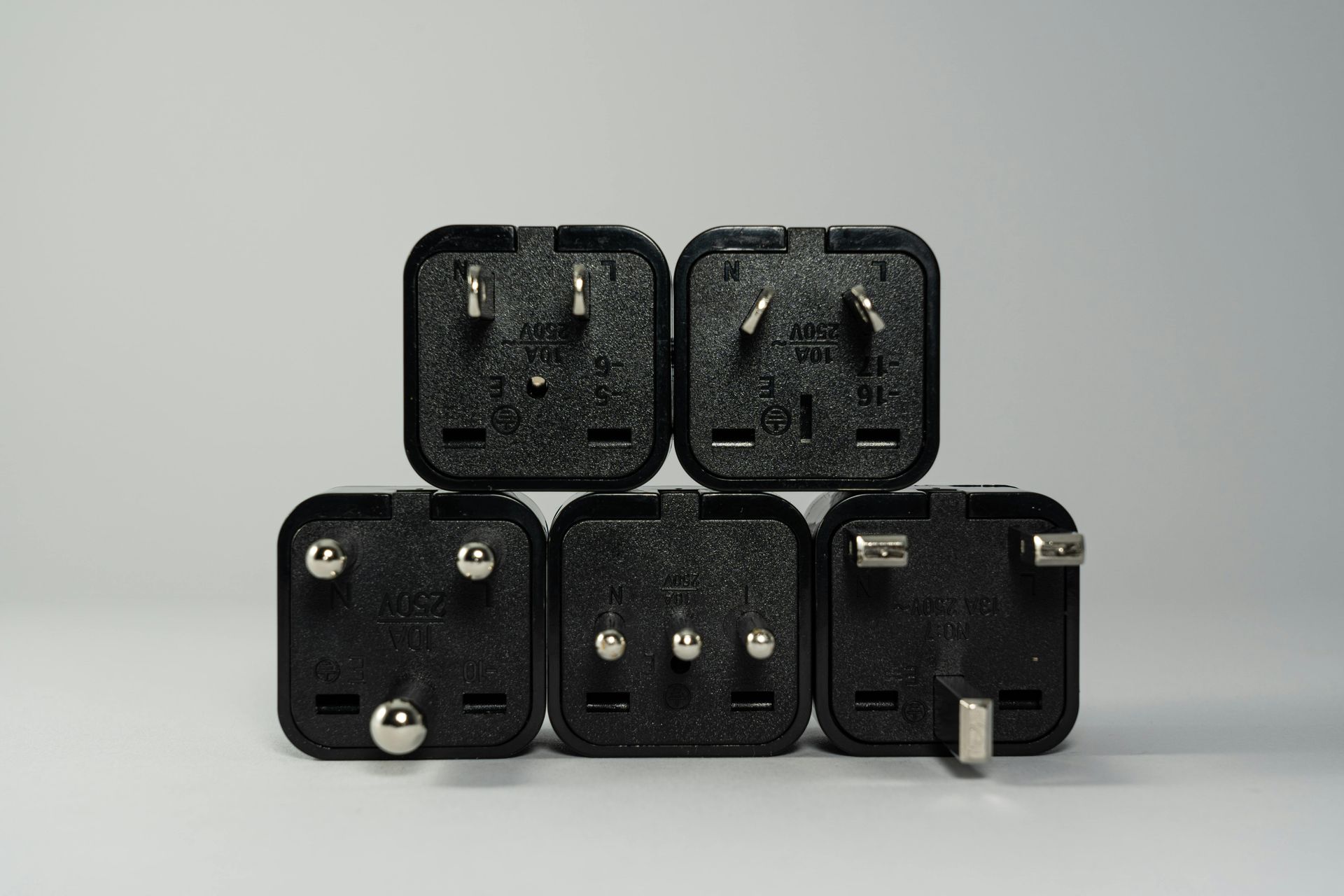
The world uses at least 15 different types of electrical outlet, and the voltage standard varies between 110–120 volts — used in North America, parts of Latin America, and Japan — and 220–240 volts, used in most of Europe, Asia, Africa, and Oceania. A device built for one standard won't necessarily survive being connected to the other.
Most modern consumer electronics — laptops, phone chargers, camera batteries, tablets — are dual-voltage. The power adapter typically has text printed on it indicating "Input: 100–240V, 50/60Hz," meaning it can handle both standards. If yours says this, you only need a plug adapter — a small, inexpensive piece of hardware that changes the physical shape of the plug without converting the voltage. If your device is single-voltage, you'll need both a voltage converter and a plug adapter.
Appliances with heating elements — hair dryers, flat irons, curling irons, and some electric shavers — are the most commonly damaged by voltage incompatibility. These devices frequently operate on a fixed voltage, and connecting a 110V appliance to a 240V outlet without a converter will burn it out, sometimes with a dramatic failure that trips the building's circuit breaker. Buying an inexpensive travel-rated hair dryer designed to work on both voltages is significantly cheaper and lighter than carrying a voltage converter.
The 15-plus outlet types break down into regional patterns that are broadly predictable. The U.K. and most former British colonies use a three-pronged rectangular Type G plug. Continental Europe uses Type C, E, or F in various combinations. The U.S. and Canada use Type A or B. Australia and New Zealand use Type I. Universal plug adapters covering multiple outlet types in a single compact unit are widely available and worth purchasing before departure.
Hotels at major international destinations often provide adapters at the front desk or have universal outlets built into the rooms. Relying on this without a backup means arriving with a dead phone and waiting until morning to find out whether the hotel can help.
Eric Prouzet / Unsplash
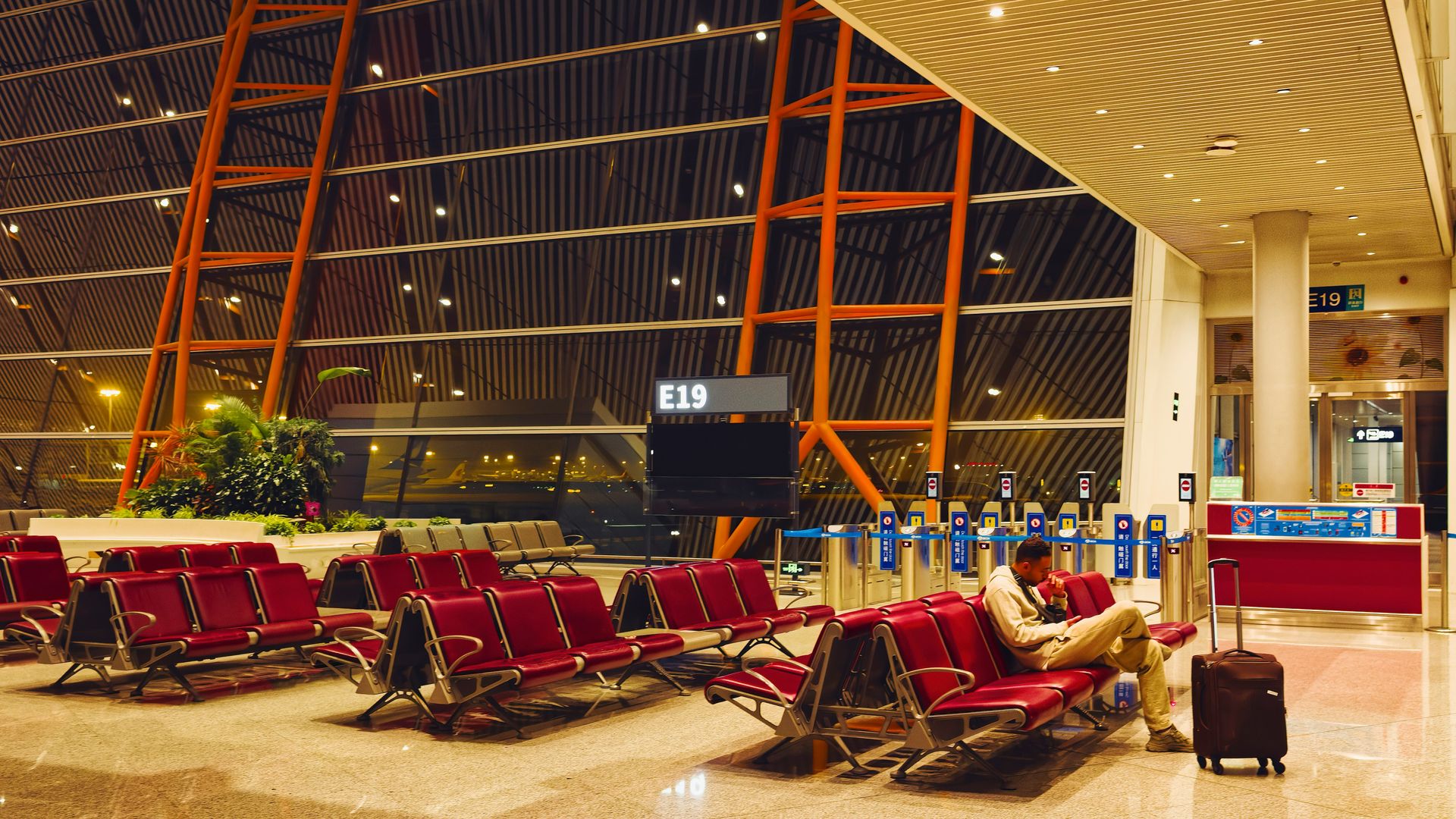
Jet lag is a physiological reality, not a minor inconvenience manageable through willpower. Long-haul travel across multiple time zones disrupts the body's circadian rhythm — the internal system that regulates sleep, digestion, alertness, and mood — in ways that affect performance and wellbeing for several days after arrival.
The general principle is that adjustment takes roughly one day per time zone crossed, though this varies considerably by individual, age, and travel direction. Traveling east — compressing your sleep window — tends to produce more difficult adjustment than traveling west, because advancing the sleep cycle is physiologically harder than extending it.
Adjusting your schedule before departure can shorten the disruption. If you're flying from the U.S. West Coast to Europe — a roughly nine-hour difference — shifting your bedtime two to three hours earlier for a few days before departure means your body has already begun adjusting. Setting your watch and phone to the destination time zone immediately upon boarding, and then eating, sleeping, and staying awake according to that time zone rather than your departure zone, accelerates the transition.
Light exposure is one of the most effective tools for resetting the circadian clock. Bright morning light accelerates adjustment when traveling east; avoiding bright light in the evening helps when traveling west. Spending time outdoors at appropriate local hours after arrival works with your body's light-based timing system rather than against it.
Managing sleep on the aircraft strategically matters. If you're arriving in the morning at your destination, sleeping as much as possible on the plane makes sense. If you're arriving in the evening, limiting in-flight sleep helps ensure you'll feel tired enough to sleep through the local night.
Alcohol and caffeine both interfere with sleep quality. Alcohol may help initiate sleep but disrupts sleep architecture in the second half of the night. Staying well-hydrated on long flights — aircraft cabin humidity is extremely low — affects both comfort in the air and how you feel the day after arrival.
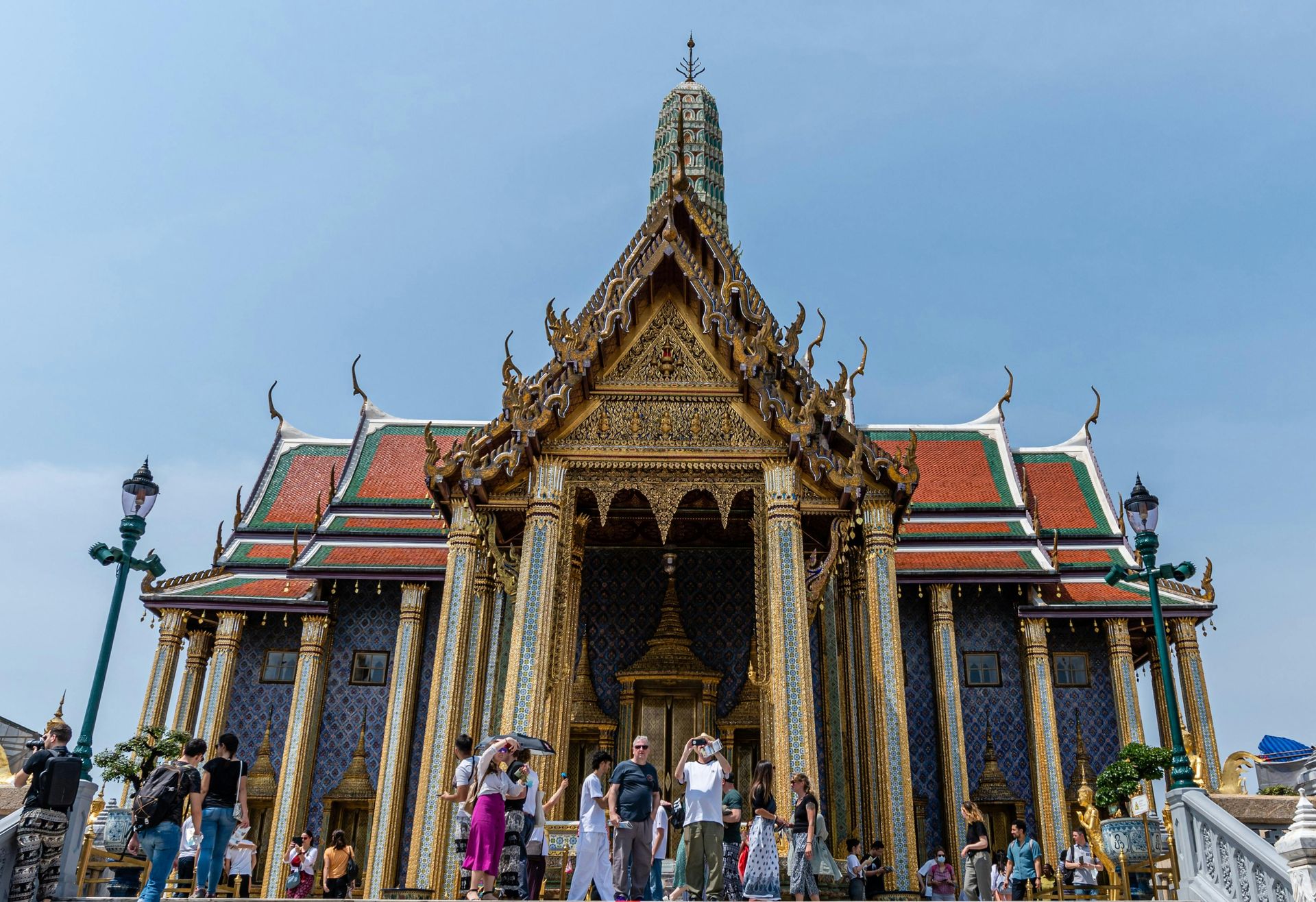
Kirandeep Singh Walia / Pexels
Two topics handled very differently by culture and law — religion and political speech — can create genuine problems for visitors who treat them the same way they would at home.
In many countries, criticism of the state religion, the ruling government, the monarchy, or national symbols is a criminal offense, not just a social taboo. Thailand's lèse-majesté laws make criticism of the royal family a prosecutable crime, and foreigners have faced charges under this statute. Saudi Arabia, Iran, and other theocratic states have their own legal restrictions on speech about religion and political leadership. Even in countries with less extreme legal frameworks, the social and professional repercussions of publicly expressing certain political or religious views can be severe.
This does not mean visitors need to be silent about their personal views throughout a trip. But expressing those views loudly, on social media, or in public settings while in a country where those views are criminalized is a risk that should be consciously evaluated. Some governments monitor social media accounts belonging to foreign visitors, particularly for accounts with significant followings. Something posted on a public profile that would be unremarkable at home could attract legal attention in certain jurisdictions.
Religious sites and practices deserve respect that goes beyond complying with dress codes. Entering a mosque, temple, or church means entering a place of active and ongoing faith for the people who use it. Speaking loudly, taking photographs without checking whether they're permitted, failing to observe customs around prayer times, or treating a site primarily as a photographic backdrop rather than a place of worship can be unwelcome in ways that aren't always expressed directly. When in doubt, observe what locals are doing and follow their lead.
Secular-religious dynamics vary enormously between countries. France maintains a strong tradition of public secularism — laïcité — that sometimes creates friction around visible religious expression in public spaces. The U.S. has deep legal protections for religious liberty. Saudi Arabia and Iran are governed in part by religious law. Understanding where your destination sits in this landscape helps calibrate what to expect from public life there.