Quartz
Subscribe
Quartz
Subscribe
Edition
Business News
A.I.
Technology
Money & Markets
Leadership
Lifestyle
Latest

Get Quartz in your inbox

Free daily briefing on global business news.

Business News
AirlinesAutomobilesFoodPharmaceuticalsPolitics & GovernmentRetail & EcommerceSpace & AerospaceEarnings
Technology
A.I.ComputingConsumer TechSpace & AerospaceEarnings
Money & Markets
Economic IndicatorsMarketsPersonal FinanceEarnings
Lifestyle
Cars & BikesCollectingEntertainmentFood & Fine DiningHealth and FitnessReal EstateTravel
Quartz

Global business news for a smarter world

Topics

  • Business News
  • Money & Markets
  • Tech & Innovation
  • Generation A.I.
  • Lifestyle
  • Leadership

Products

  • Daily Brief
  • Weekly Digest
  • Member Benefits
  • Quartz Pro

Legal

  • Sitemap
  • About
  • Accessibility
  • Privacy
  • Terms of Service
  • Advertising

© 2026 Quartz Media, Inc. All rights reserved.

Space

The first satellite made of wood — yes, wood — has made it to space

LignoSat's wooden satellite is offering a greener alternative for the industry

By Ben Kesslen·1 min read·Updated November 6, 2024
Add QZ to Google

Space has a major sustainability problem. When satellites made mostly of aluminum die fall back down to earth, they combust and create harmful chemicals called aluminum oxides, which can damage the ozone layer. And more and more satellites are being sent into orbit.

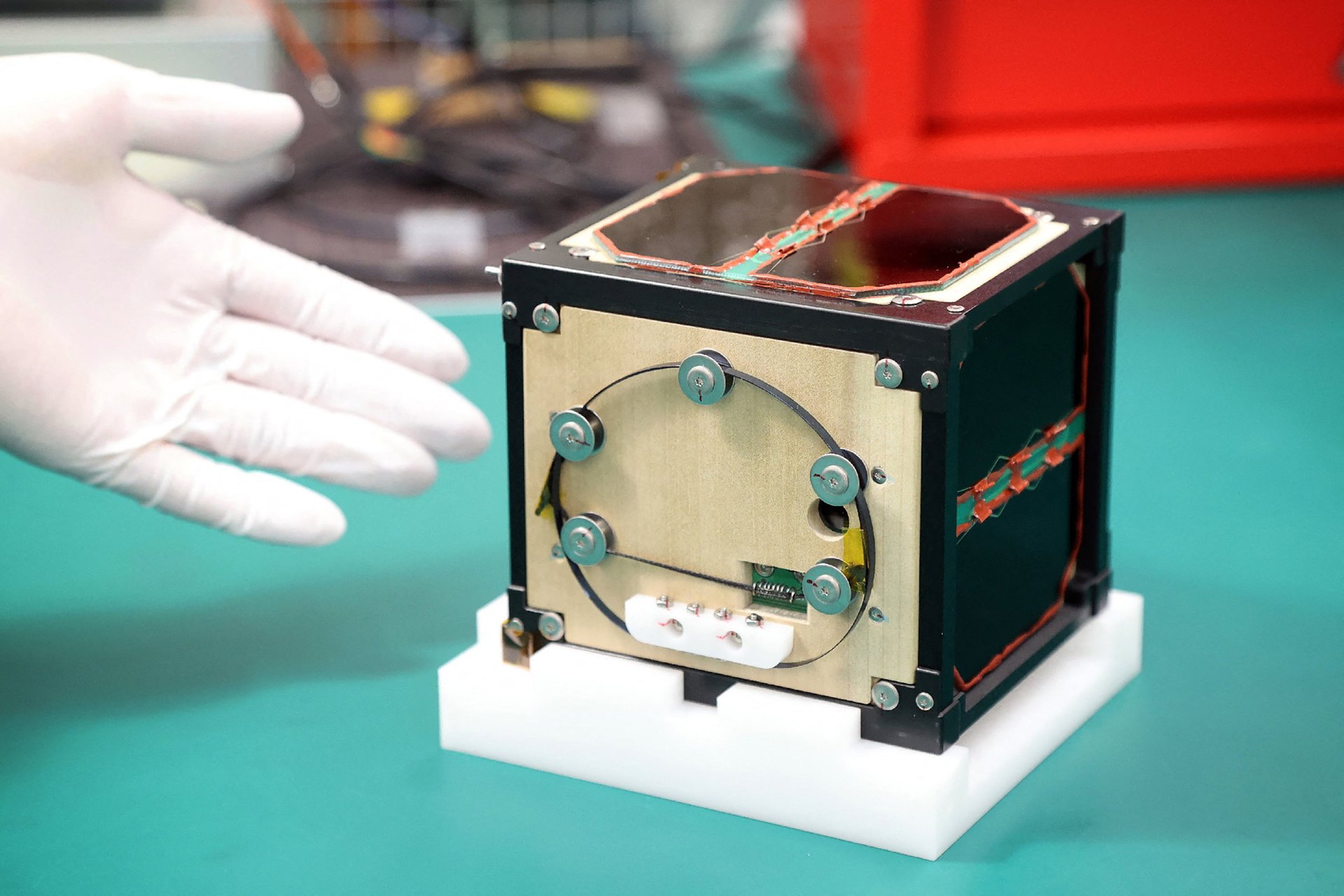
But is wood the solution? A diminutive Japanese satellite called LignoSat arrived at the International Space Station on Tuesday to test that very question. The satellite is a small box with four-inch sides, made of wood, according to Space.com, and will run tests on wood’s capabilities in space.

Meghan Everett, NASA’s deputy chief scientist for the International Space Station program, said, “While some of you might think that wood in space seems a little counterintuitive, researchers hope this investigation demonstrates that a wooden satellite can be more sustainable and less polluting for the environment than conventional satellites.”

LignoSat was created by researchers at Kyoto University along with a homebuilding company, according to Reuters.

“With timber, a material we can produce by ourselves, we will be able to build houses, live and work in space forever,” Takao Doi, an astronaut who now studies human space activities at Kyoto University, told Reuters.

Doi’s team has dreams of planting trees on Mars to use for homes. He thinks there could even be a future where metal satellites might even be banned.

Kyoto University forest science professor Koji Murata noted to Reuters that early planes in the 1900s were made of wood.

“A wooden satellite should be feasible, too,” Murata said, adding that wood would actually be more durable in space with the absence of oxygen and water.

LignoSat is set to orbit the Earth for six months, Reuters said.

Daily Brief

The essential business news, delivered fresh every morning.

Join 500,000+ readers who start their day with Quartz.

By subscribing, you agree to our Terms of Service and Privacy Policy.

Related

Cloud ComputingVerizon lands a $1 billion-plus dark fiber deal with Google for AI data centers
Politics & GovernmentTrump vows new tariffs on the E.U. after Brussels fines Google $1 billion
Politics & GovernmentTrump rolls out new forced-labor tariffs on 60 countries as trading partners push back
A.I.Samsung and SK Hynix are set to announce major memory chip deals with U.S. tech firms
A.I.Meta is upgrading its AI assistant to automate recurring tasks and daily briefings