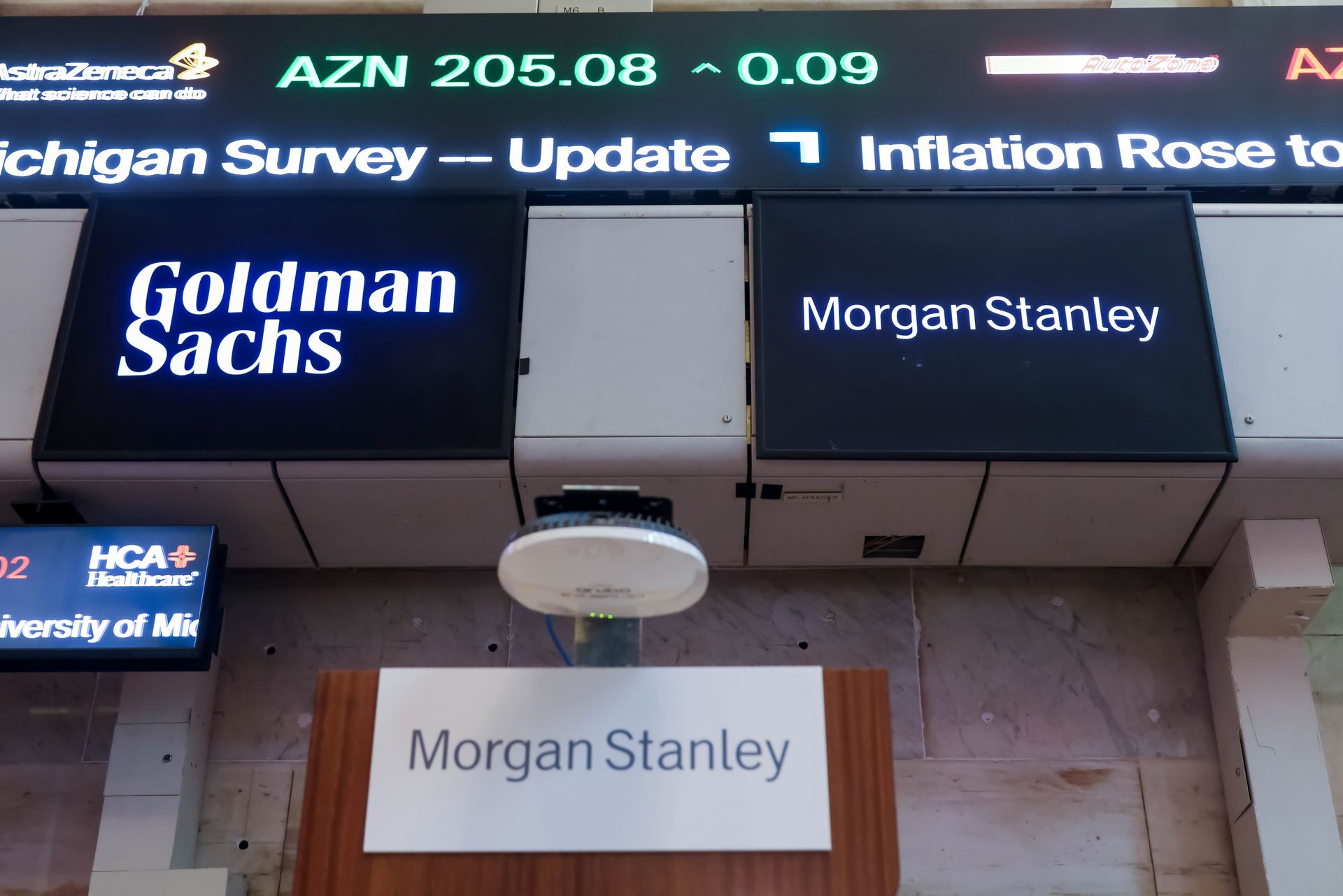
Goldman Sachs set a $205 price target on SpaceX stock while Morgan Stanley set a $300 target, a gap that implies a roughly $1 trillion difference in valuation
Bloomberg / Getty Images
A $205 price target came from Goldman Sachs, where a team led by Eric Sheridan handled coverage, while Adam Jonas led the Morgan Stanley team to a $300 figure, MarketWatch reported. Both firms initiated coverage with the equivalent of a buy rating. SpaceX stock closed Monday at $160.42.
The divergence between the two banks was not the only notable call to emerge Tuesday. Raymond James $RJF, another underwriter on the IPO, initiated coverage with an $800 price target and a strong buy rating, according to CNBC. In a note to clients, Gesuale wrote that Starship's ability to drive down the price of getting to orbit was central to the firm's thesis, calling SpaceX "one of the defining industrial infrastructure companies of the 21st Century." The $800 target represents a potential gain of roughly 399% from where shares finished Monday, and Raymond James contended that AI-driven products and services could represent an additional growth layer beyond the core launch business. A $225 price target and an outperform rating were issued by RBC Capital Markets when it opened coverage, Business Insider reported.
LSEG data cited by CNBC showed that buy and strong buy ratings accounted for roughly two-thirds of all analyst recommendations on SpaceX early Tuesday, with price targets clustered mostly in the $200-to-$250 range. Morgan Stanley's $300 target was an outlier on the high end among the IPO underwriters.
SpaceX joined the Nasdaq $NDAQ-100 Index before trading began Tuesday, becoming one of the first companies to benefit from the exchange's revised fast-track inclusion rules. The inclusion opened SpaceX stock to passive buying from funds and ETFs benchmarked to the index, which collectively commands more than $800 billion in assets globally.
SpaceX's June IPO priced shares at $135, raising $85.7 billion in proceeds — a record for the largest public offering ever. SpaceX reported a net loss of $4.94 billion in 2025 alongside revenue of $18.67 billion. The company also recorded a $4.28 billion loss in the first quarter of this year.
Join 500,000+ readers who start their day with Quartz.
By subscribing, you agree to our Terms of Service and Privacy Policy.
