Google $GOOGL released the hardware specifications and accessory design guidelines for the Fitbit Air tracker, making 2D CAD drawings available to anyone who wants to build their own compatible bands or other accessories.

The company published 2D CAD drawings with exact measurements and tolerances, inviting hobbyists and brands alike to build compatible accessories
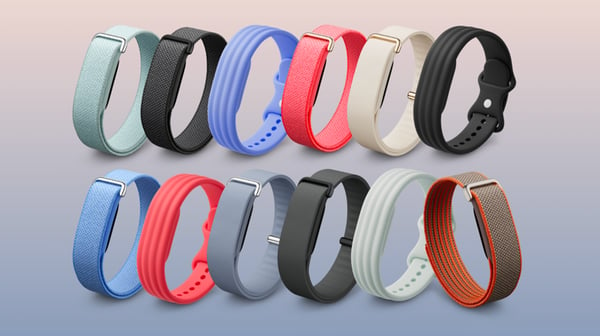
Credit: Stefanie Frederick / Google Health Community
Google $GOOGL released the hardware specifications and accessory design guidelines for the Fitbit Air tracker, making 2D CAD drawings available to anyone who wants to build their own compatible bands or other accessories.
Developers working from the released documents can find the precise dimensions needed to engage the tracker's snap-in retention mechanism, including the forces required to attach and remove it, along with the tolerances necessary for a secure fit. Google noted that its community had already begun designing accessories, including armband solutions, since the device launched last month.
"We know that your personal style is entirely unique — and in just a few short days, this community has already come up with innovative and creative new ideas to make the Fitbit Air your own," Google said in its announcement.
Given that the Fitbit Air's heart rate and SpO2 readings depend on optical sensors pressed against the skin, Google's guidelines address how band designs must account for that physical relationship. Any accessory design must leave the underside sensors fully exposed to the skin, with no material blocking or lifting them away from the wrist. To preserve measurement accuracy while the wearer is active, Google's specification calls for designs to sustain at least 35 mmHg (0.68 psi) of contact force in the area where the sensors sit.
On the topic of materials, Google's documentation calls out specific chemical limits that designers must observe — among them, prohibitions on lead content in copper and brass components and on allergenic proteins in natural latex products. Anything bonded or finished with adhesives or coatings must be allowed to cure completely before use, so that residual chemicals cannot irritate the skin.
Beyond individual hobbyists, Google is also courting commercial accessory makers. For companies seeking a closer relationship with Google, the Made for Google program offers a certification path that lets qualifying products display official compatibility marks, signaling to shoppers that the accessory meets the company's standards. Manufacturers that earn certification could additionally receive early visibility into upcoming hardware, giving them time to have compatible accessories ready at launch, Digital Trends reported. The rules prohibit third parties from folding Google's trademarks into their product names or producing items that could be mistaken for official Google merchandise, though straightforward compatibility language is permitted.
Priced at $100, the Fitbit Air is a display-free wearable that pipes health data and AI-driven workout guidance to users through the Google Health app and a Gemini-powered coaching tool, according to Engadget. Because the sensor lives in a discrete module that pops out from whatever band holds it, outside designers have a more natural entry point for creating accessories than they would with a conventional smartwatch, 9to5Google noted.
Join 500,000+ readers who start their day with Quartz.
By subscribing, you agree to our Terms of Service and Privacy Policy.