Google said its new chip Willow demonstrates that it's possible to build "a useful, large-scale quantum computer"
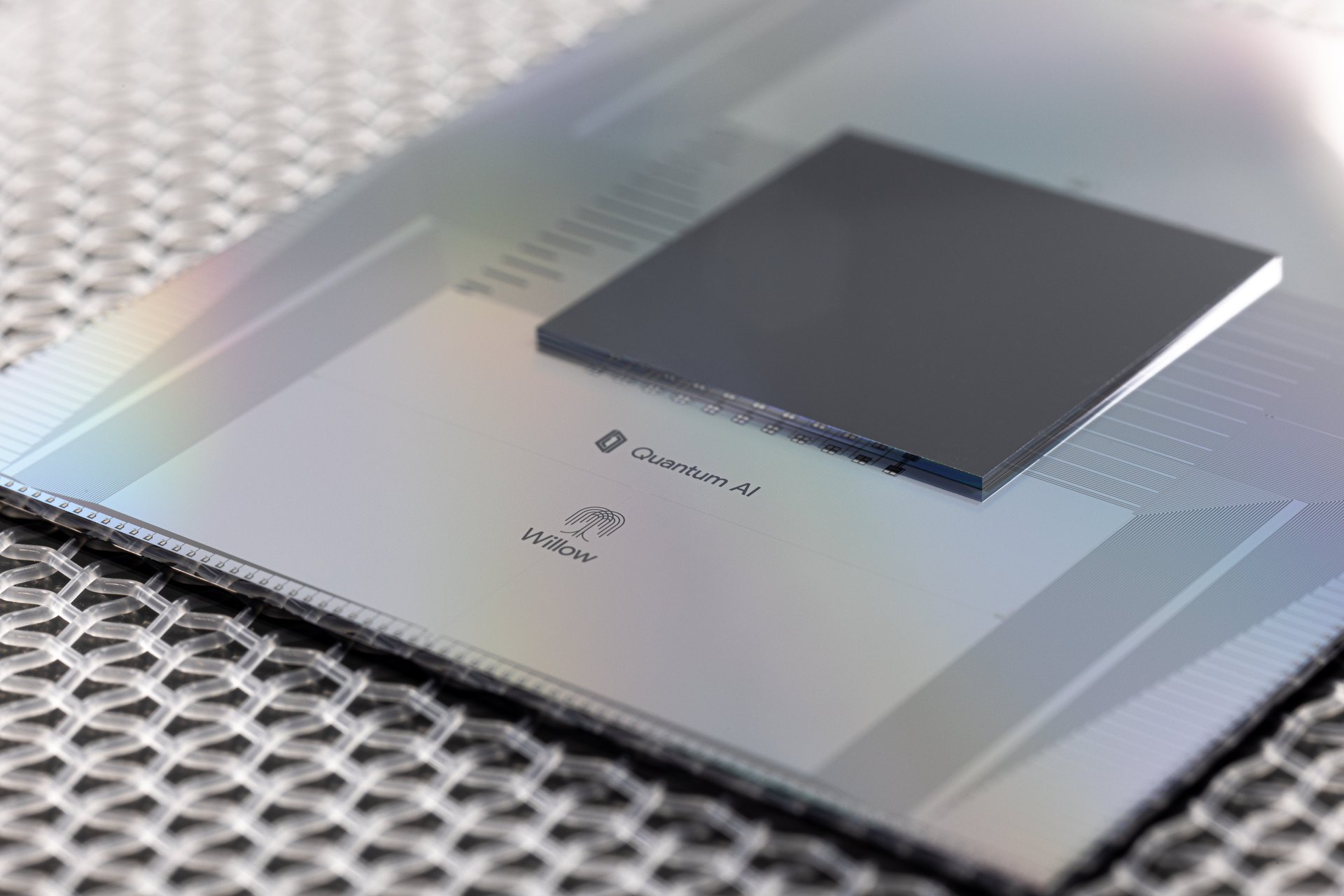
Google’s latest quantum chip, Willow, has demonstrated “two major achievements” in quantum computing, including “exponentially” reducing the rate of errors when adding more qubits — a challenge that has existed for almost 30 years, Hartmut Neven, founder and lead of Google Quantum AI, said in a statement.
Qubits are the units of computation in quantum computers, and are typically electrons, photons, or another subatomic particle. The more qubits that are used, the more errors typically occur, Neven said. That makes the system more classical than quantum.
Unlike classical computers, which use bits that represent 0s or 1s, qubits can exist in a state of superposition, or be 0 and 1 at the same time. This enables quantum computers to carry out research and experiments that classical computers cannot.
“Errors are one of the greatest challenges in quantum computing,” Neven said, because they “have a tendency to rapidly exchange information with their environment, making it difficult to protect the information needed to complete a computation.”
According to results published in Nature on Monday, Google Quantum AI found that the more qubits it used in Willow, the more it reduced errors. Google Quantum AI tested ever-larger grids of encoded qubits, and found that it was able to cut the error rate in half each time.
“This historic accomplishment is known in the field as ‘below threshold’ — being able to drive errors down while scaling up the number of qubits,” Neven said.
In addition to demonstrating “below threshold,” Willow was able to perform a computation in under five minutes that would take Frontier, currently considered the world’s fastest supercomputer, 10 septillion years to solve. The assessment of Willow’s performance compared to Frontier “was based on conservative assumptions,” Neven said.
The Google Quantum AI team used the industry standard random circuit sampling (RCS) benchmark it pioneered to measure the chip’s performance, and said it is “the classically hardest benchmark that can be done on a quantum computer today.”
Willow’s accomplishments demonstrate that it’s possible to build a “useful, large-scale quantum computer,” Neven said. Quantum computers are already being used for some novel drug development and designing efficient batteries for electric cars.
Join 500,000+ readers who start their day with Quartz.
By subscribing, you agree to our Terms of Service and Privacy Policy.
