Simple, practical money habits that actually stick, from paying yourself first to tracking spending and automating savings

Jakub Zerdzicki / Unsplash
Saving money tends to sound like a personality overhaul, but Reader’s Digest notes that it usually comes down to everyday habits repeated consistently, not dramatic financial reinventions. The people who build real savings tend to treat money less like something they “deal with later” and more like something they quietly manage in the background of normal life. That shift matters more than most people realize.
According to the guide, saving works best when it becomes automatic, visible and slightly boring in the best possible way. Whether it is tracking spending, separating needs from wants or simply moving money into savings before it has a chance to disappear, the habit itself does the heavy lifting.
What makes these habits especially powerful is how unglamorous they are. There is no secret hack or dramatic trick, just small behavioral choices that add up over time. People who save successfully are not necessarily earning more than everyone else; they are simply more intentional about what happens to the money once it arrives. And in a world where subscriptions multiply quietly and small purchases feel harmless in the moment, that intention is everything.
Here are five habits to make saving a little easier.
Goodnotes / Unsplash
One of the most consistent habits highlighted in the report is the idea of paying yourself first, which simply means moving money into savings before spending on anything else. It sounds obvious, but in practice it changes everything because it removes decision-making from the moment when money is most likely to be spent impulsively.
Instead of waiting to see what is left at the end of the month, successful savers treat savings like a non-negotiable bill. The money moves automatically into a savings account or retirement fund as soon as income arrives, which means everyday spending naturally adjusts to what remains. Over time, this creates a financial buffer without requiring constant willpower.
What makes this habit so effective is that it sidesteps emotional budgeting entirely. There is no monthly debate about whether to save “what’s left,” because nothing is left to debate.

Erik Mclean / Unsplash
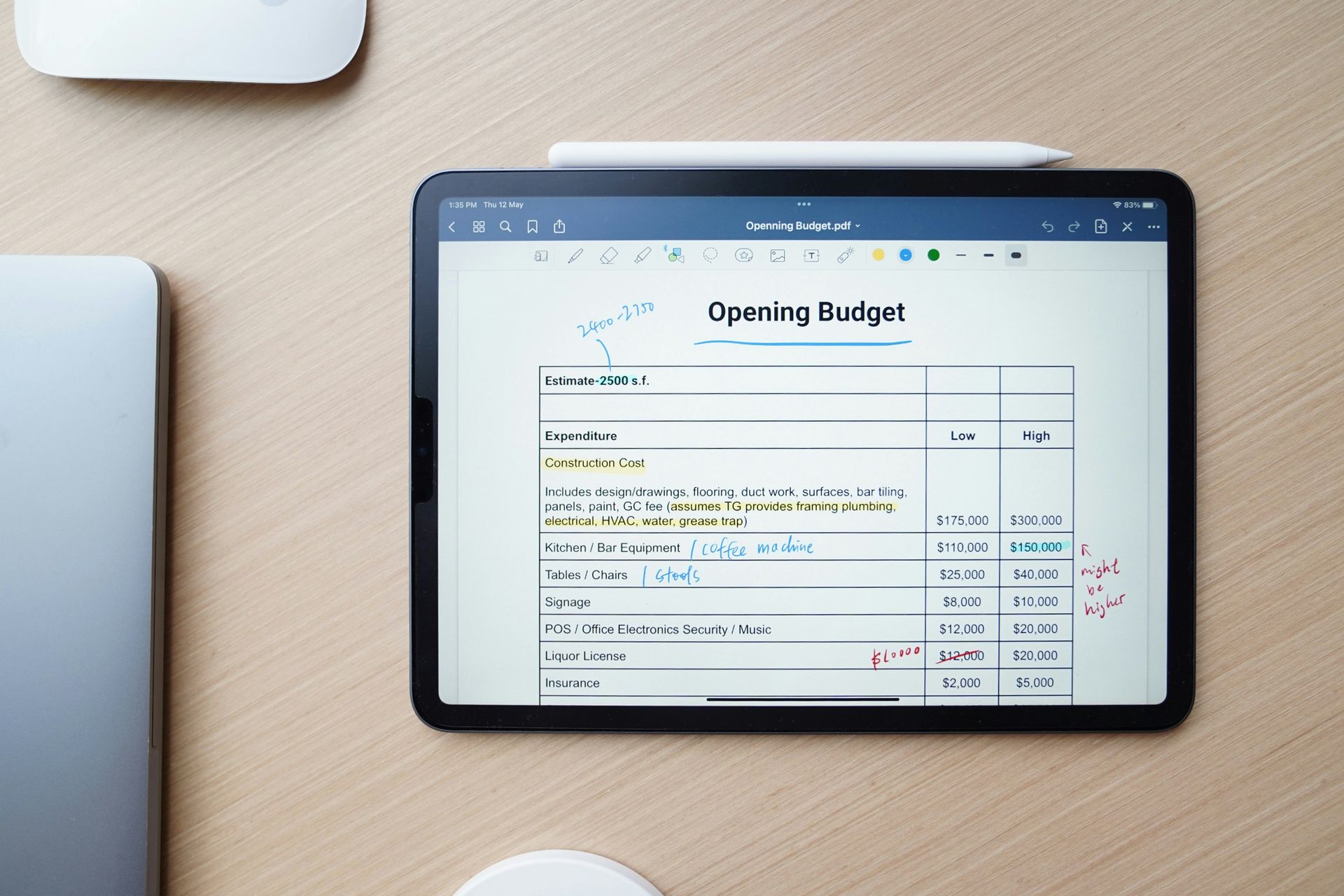
Another habit consistently emphasized in Reader’s Digest is tracking spending in a way that is honest, consistent and slightly unflattering at times. People who save well do not rely on memory or vague estimates of “about how much” they spent. They know, often down to the category, where their money is going each month.
When spending is visible, patterns become obvious. Small purchases that feel harmless in isolation start to reveal their true impact when viewed together. That daily coffee or quick online order stops being background noise and becomes part of a larger financial picture.
Reader’s Digest highlights that successful savers often review spending regularly rather than occasionally. This does not mean obsessing over every transaction, but it does mean checking in frequently enough to stay oriented. Without that habit, money tends to drift, and drifting is where savings quietly disappear.
The interesting part is that tracking alone often leads to better decisions naturally. Once people see their habits clearly, they tend to adjust without needing strict rules or external pressure.

Charles Deluvio / Unsplash
According to the report, the ability to distinguish between needs and wants without negotiating the definition in the moment is a power play. Essentials like housing, food and utilities sit in one category, while everything else, no matter how appealing, falls into another.
The challenge is that modern life is excellent at disguising wants as necessities. Convenience makes spending feel justified, and lifestyle upgrades quickly start to feel standard. Strong savers resist that drift by keeping a mental or written boundary between what is required and what is optional.
This habit does not eliminate discretionary spending, but it does help with intentionality. Instead of defaulting to purchases, people pause long enough to decide whether something truly aligns with their priorities. Over time, that pause becomes powerful because it interrupts impulse behavior before it becomes routine.
-1920x1280.jpg)
Andre Taissin / Unsplash
According to the report, automation can solve one of the biggest challenges in saving, which is consistency. When saving depends on motivation, it tends to fluctuate. When it is automated, it simply happens.
Successful savers often set up recurring transfers into savings or investment accounts so that money moves without daily input. This removes friction and reduces the temptation to delay or skip contributions. The process becomes mechanical, which is exactly why it works so well.
What makes this habit effective is that it reduces emotional decision-making. There is no need to “decide” to save each month, because the decision was made once and then repeated automatically. Over time, this builds stability without requiring constant attention.
-1920x1281.jpg)
Towfiqu Barbhuiya / Unsplash
One of the most realistic habits, according to Reader’s Digest, is starting small rather than waiting for the perfect financial moment. People who successfully build savings do not begin with large, dramatic contributions. They start with manageable amounts that fit comfortably into their current lifestyle.
This matters because large, aggressive goals often collapse under pressure, while small, steady habits tend to stick. Once saving becomes routine, it is easier to increase contributions gradually without feeling overwhelmed.
The report emphasizes that consistency matters more than scale at the beginning. A small amount saved regularly builds momentum, and momentum is what eventually turns into meaningful financial security. Over time, what started as a modest habit becomes a reliable system.
