
These heat waves that changed cities forced governments worldwide to rewrite building codes, add cooling centers and rethink how streets and homes handle extreme heat
Credit: Taylen Lundequam / Pexels
A heat wave passes in days, but the changes it forces on a city usually outlast it by decades. When temperatures spike hard enough to overwhelm hospitals, morgues, and power grids, governments rarely wait for the next spike before acting. They rewrite building codes, install cooling systems in public housing, paint roofs white, plant trees along blistering streets, and stand up entire early warning networks, sometimes within a year of the crisis that forced their hand. The heat waves that changed cities did not do so through slow, careful planning. They did it through emergency: a specific stretch of days when the old assumptions about how much heat a building or a population could absorb turned out to be dangerously wrong.
This pattern shows up across very different economies, climates, and political systems. In Chicago, a five-day stretch of extreme heat in 1995 exposed how isolation and heat combine to kill elderly, low-income residents, and pushed the city to build one of the most studied heat emergency response systems in the U.S. In Ahmedabad, India, a 2010 heat wave killed more than 1,300 people in a single month and led to South Asia's first heat action plan, complete with reflective cool roofs now copied across dozens of Indian cities. In France, the 2003 European heat wave killed nearly 15,000 people and forced a country with almost no residential air conditioning to build mandatory cool rooms into every retirement home.
What connects these eight events is not simply their temperature records, though several set marks that still stand today. It is that each one exposed a specific, fixable gap between how a city had been built and how hot it had actually become. Some gaps were architectural: homes with no cross-ventilation, roofs that absorbed heat instead of reflecting it, apartment blocks with no shared cool spaces. Others were institutional: no warning system, no registry of at-risk residents, no cooling centers, no plan at all. Each heat wave on this list forced a different, concrete fix, and together they trace four decades of cities learning, often at serious human cost, how to survive their own summers.
Credit: Nils Rotura / Pexels
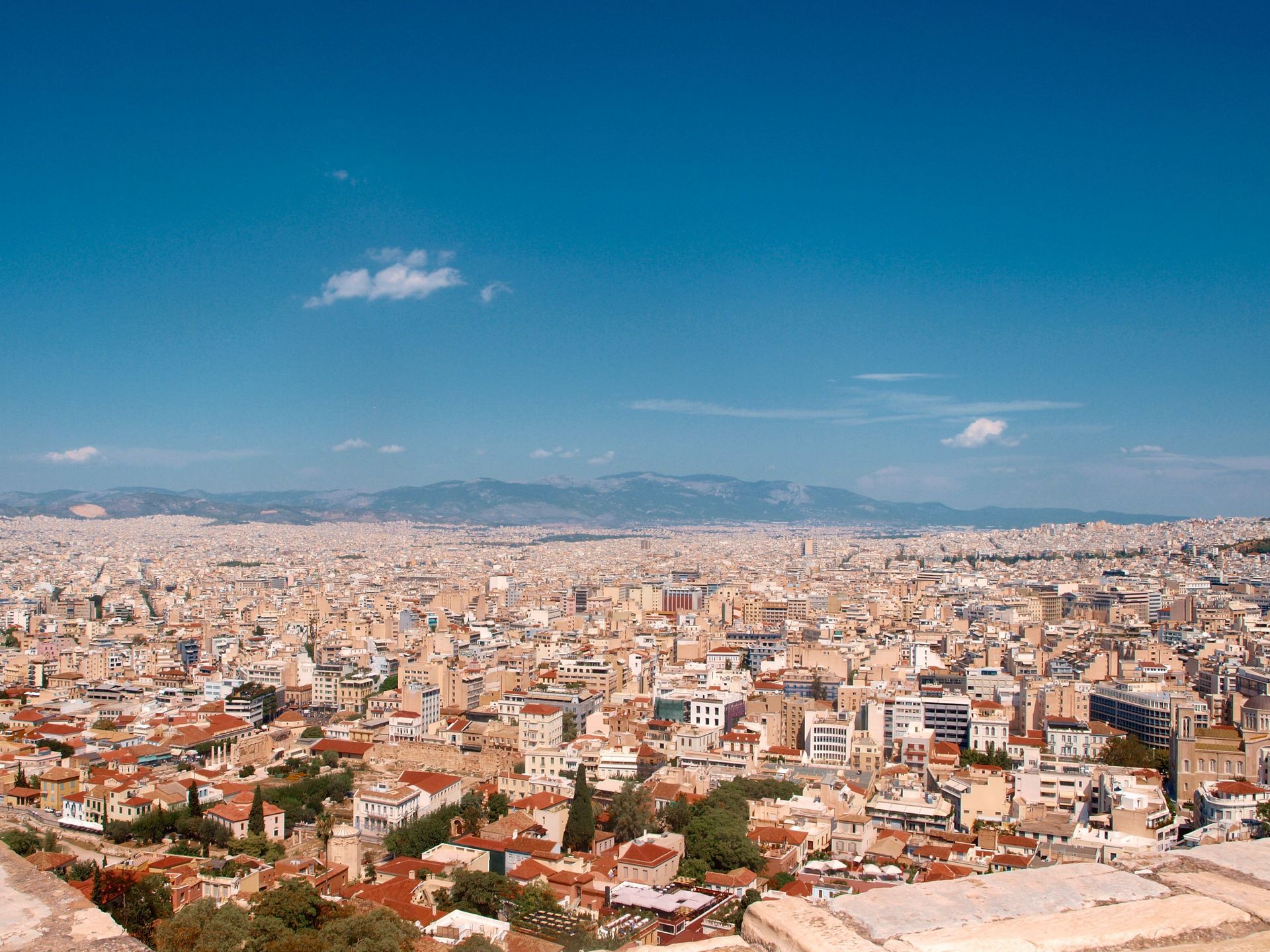
Athens recorded a peak temperature of 41.9 degrees Celsius, or 107.4 Fahrenheit, during a heat wave that ran from July 20 to July 31, 1987, and killed between 1,300 and 1,500 people across Greece. The Attica region around Athens absorbed the worst of it, with more than 1,100 deaths concentrated there alone. Hospitals ran out of beds within days, and authorities had to store bodies in military hospital morgues once civilian facilities reached capacity. The government declared a state of emergency as the death toll climbed.
The heat wave exposed how much Athens itself amplified the danger. The city sits in a basin ringed by mountains, a geography that traps hot air and pollution close to the ground on windless days. In 1987, that natural bowl combined with a jet stream pushing unusually hot air up from North Africa, while the concrete and asphalt covering most of central Athens held heat well into the night, denying residents any relief even after sunset. Very few homes or public buildings in Greece had air conditioning at the time, and the country had no coordinated system for warning residents about dangerous heat or checking on elderly people living alone.
Greek researchers and public health officials have since described 1987 as the event that turned summer into a public health season in Greece, rather than simply a tourist one. In the years that followed, air conditioning went from rare to standard in Greek offices, schools, and homes, a shift that traces directly back to that July. Athens also began treating its urban heat island more seriously in later development, with more attention paid to shading, ventilation, and green space in public projects than had been typical before.
Greece's Civil Protection agency later built a text message alert system that pushes heat warnings directly to residents' phones during dangerous weather, a direct response to how badly information failed to reach people in 1987. Climate researchers still use the 1987 heat wave as the historical baseline for measuring how much more frequent and severe Greek heat waves have become, and Greek media reliably invoke it whenever a new heat wave threatens to approach those numbers.
Chicago's heat index passed 120 degrees Fahrenheit in mid-July 1995, and by the time the five-day event ended, 739 people had died, mostly elderly residents living alone without air conditioning. The city's emergency systems collapsed under the strain. Calls to 911 overwhelmed dispatchers, ambulances could not keep pace, and the Cook County medical examiner brought in refrigerated trucks to handle a backlog of bodies that had filled the morgue past capacity. Sociologist Eric Klinenberg later documented the disaster in his book "Heat Wave," showing that victims were concentrated in specific poor, socially isolated neighborhoods on the South and West Sides.
City leaders were criticized for downplaying the crisis as it unfolded, and Chicago was slow to respond in its immediate aftermath. Over the following years, though, the city built what became a model heat emergency framework for other U.S. cities. Chicago created a formal Extreme Weather Operations Plan that activates cooling centers, extends library and senior center hours, and dispatches outreach workers to check on residents flagged as high risk during dangerous heat, rather than waiting for people to ask for help.
The 1995 disaster also fed directly into how Chicago thinks about its physical landscape. City Hall's green roof, planted in 2000 and 2001, was built partly as a response to research into the urban heat island effect that followed the heat wave, and it became a widely cited model for reducing rooftop temperatures in dense cities. Chicago has since expanded tree planting programs and reflective roofing incentives aimed at lowering surface temperatures in the neighborhoods that suffered the most heat deaths in 1995.
Klinenberg's research reframed heat waves as social disasters shaped by isolation and inequality, not just weather, a framing that has since guided heat policy well beyond Chicago. Cities from New York to Phoenix have adapted pieces of Chicago's outreach model, particularly its emphasis on locating isolated residents before a heat emergency begins rather than after one is already underway.
France recorded 14,802 heat-related deaths during the summer of 2003, according to the French National Institute of Health and Medical Research, with most of the excess deaths concentrated in a two-week stretch in August. Across Europe as a whole, the heat wave is estimated to have killed more than 70,000 people, making it one of the deadliest natural disasters in modern European history. Most French victims were elderly women over age 75, many of whom lived alone in apartment buildings with no air conditioning, since cooling had historically been considered unnecessary in a country with a temperate climate.
The disaster caught French institutions almost entirely unprepared. Government ministers, including some responsible for public health, were on summer holiday when the crisis peaked, and there was no formal system for tracking heat deaths or coordinating a response across hospitals, nursing homes, and local governments. Retirement homes in particular had no protocol for identifying residents in danger until many were already found dead.
In response, France created its national heat wave plan, known as the Plan Canicule, which now activates automatically each summer based on temperature forecasts and requires a coordinated response across health authorities, emergency services, and city governments. The plan mandated that nursing homes and retirement facilities maintain at least one air-conditioned common room, often called a salle rafraichie, where residents can retreat during dangerous heat. France also began tracking excess mortality in real time during heat events, comparing daily deaths against a three-year average to trigger escalating alert levels.
The Plan Canicule has been credited with sharply reducing heat deaths in subsequent French heat waves relative to what 2003 would predict, even as summers have grown hotter. It remains one of the most direct examples of a single catastrophic heat wave producing a permanent, legally binding public health infrastructure, and versions of its alert-level structure have since influenced heat plans adopted elsewhere in Europe.
Victoria recorded 374 excess deaths during a heat wave that struck southeastern Australia in late January 2009, with Melbourne enduring three consecutive days above 43 degrees Celsius and peaking at 45.1 degrees, its second-highest temperature on record. Ambulance callouts across the state rose sharply, and deaths recorded on arrival increased by roughly 70 percent compared to normal periods, according to Victoria's health department. The heat wave also caused widespread power outages that left up to 500,000 homes and businesses without electricity and buckled train tracks, cancelling more than 1,300 services in a state unprepared for such prolonged, extreme temperatures.
Days later, on February 7, the same drought and heat conditions helped fuel the Black Saturday bushfires, which killed 173 people separately from the heat wave's own toll and remain the deadliest bushfire disaster in Australian history. Together, the two disasters forced Australian authorities to treat extreme heat as a distinct, quantifiable hazard rather than simply a precursor to fire risk.
Australia's Bureau of Meteorology subsequently developed the Excess Heat Factor, a heatwave intensity and duration index used to issue graded public warnings well before a heat wave arrives, rather than relying on single-day temperature thresholds. Fire authorities also introduced a new "catastrophic" fire danger rating category, created directly in response to the extreme fire behavior seen in the days after the heat wave, to signal conditions severe enough that evacuation is recommended in advance.
Melbourne has since expanded its urban forest strategy, aiming to increase tree canopy cover specifically to lower street-level temperatures during future heat events, and the city now maintains a public list of designated cooling spaces such as libraries and community centers during heat emergencies. The 2009 heat wave is widely cited in Australian planning literature as the moment heat stopped being treated as a routine summer discomfort and became a formally modeled public safety risk.
Credit: VAIBHAV PIXELS / Pexels
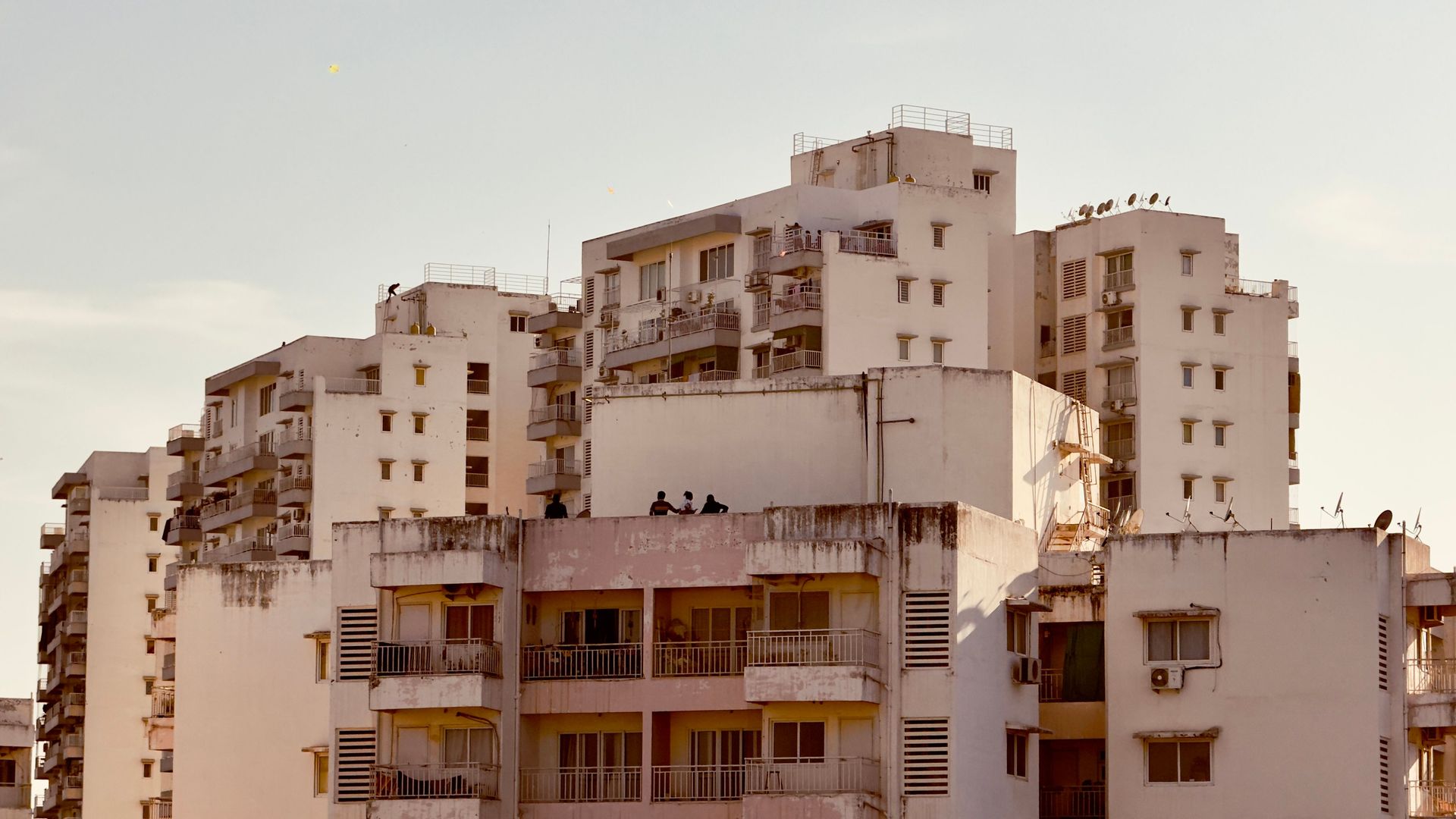
Temperatures in Ahmedabad, in the western Indian state of Gujarat, reached a record 46.8 degrees Celsius, or 116 Fahrenheit, in May 2010, contributing to an estimated 1,344 excess deaths in the city that month alone. Hospitals were overwhelmed, and reports from the period describe emergency wards handling heat cases they had never been equipped for, including a spike in newborn deaths linked to the extreme heat. At the time, Ahmedabad had no coordinated warning system, no protocol for identifying vulnerable residents, and little public understanding of how to recognize heat illness before it became fatal.
In response, the Ahmedabad Municipal Corporation partnered with the Natural Resources Defense Council, the Indian Institute of Public Health in Gandhinagar, and the India Meteorological Department to build what became the Ahmedabad Heat Action Plan, launched in 2013 as the first city-level heat health plan anywhere in South Asia. The plan introduced a seven-day probabilistic heat forecast that triggers public warnings in advance of dangerous temperatures, along with color-coded alert levels distributed through billboards, text messages, and community health workers trained to recognize heat stroke early.
A central piece of the plan is Ahmedabad's Cool Roofs Program, which supplies low-cost reflective paint and material to slum and low-income housing, where thin metal or concrete roofs can turn small rooms into ovens during peak heat. The reflective coating lowers indoor temperatures without requiring residents to own air conditioning, which remains unaffordable for much of the city's population. The plan also adjusted school and outdoor work schedules during extreme heat days and expanded access to drinking water at transit stops and public spaces.
Ahmedabad's plan has since been credited with helping prevent thousands of deaths in subsequent heat waves, and its model has been adopted, in adapted form, by more than a dozen other Indian cities and several state governments, making it one of the most widely copied municipal heat responses in the world.
Moscow endured a 44-day heat wave in the summer of 2010, with daytime temperatures reaching 38 degrees Celsius and combining with smoke from peat bog and forest fires to create hazardous air quality across the capital. Researchers later estimated close to 11,000 excess deaths in Moscow alone during the period, out of an initial estimate of roughly 55,000 excess deaths across the European part of Russia. At the peak of the crisis, the city's daily death rate roughly doubled, and morgues in Moscow held more than 1,300 bodies at once, near their full capacity.
The disaster stemmed from a combination most Russian cities had never had to plan around: extreme heat layered on top of hazardous smoke, in a country where residential air conditioning was, and largely remains, uncommon. Most Moscow apartments had no way to cool indoor air or filter smoke, leaving residents with a choice between opening windows to unbreathable air or sealing themselves into overheated rooms. Carbon monoxide levels in the city reportedly reached several times the safe threshold during the worst days.
In direct response, Moscow authorities opened more than 120 air-conditioned public rooms in government buildings and hospitals, giving residents without cooling at home somewhere to escape both heat and smoke, an early version of the cooling center model since adopted elsewhere. The disaster also triggered one of the largest peatland restoration efforts in the world: a project led by Wetlands International alongside Russian and German partners to rewet drained peat bogs around Moscow, since dried peat had fueled the fires that made the heat wave so much deadlier through smoke.
The 2010 heat wave pushed Russian authorities to begin taking urban heat and wildfire smoke more seriously as linked planning problems, prompting greater investment in fire monitoring around major cities and renewed attention to preserving wetlands as a buffer against future fire seasons, rather than treating them purely as land available for extraction or development.
A heat dome settled over the Pacific Northwest in late June 2021, sending temperatures to 116 degrees Fahrenheit in Portland, Oregon, and to a Canadian record of 49.6 degrees Celsius in the small town of Lytton, British Columbia, which burned down in a wildfire the following day. British Columbia's Coroners Service later confirmed 619 heat-related deaths in the province during the worst week of the event, calling it the deadliest weather disaster in Canadian history, while Washington state and Oregon recorded roughly 250 additional heat deaths combined. Investigators found that 98 percent of British Columbia's deaths occurred indoors, mostly among older residents living alone in homes without air conditioning.
The region's housing stock was part of the problem. Decades of mild summers meant that homes across Seattle, Portland, and much of British Columbia were built and insulated for heat retention rather than heat removal, and air conditioning penetration in the Pacific Northwest was among the lowest of any major urban region in North America. When the heat dome hit, many residents had no mechanical way to cool their homes at all.
Oregon lawmakers passed legislation the following year requiring landlords to allow tenants to install portable air conditioning units, overriding lease restrictions that had previously blocked them in many rental buildings. Oregon's residential energy code has since moved toward requiring new homes to include heat pump systems capable of both heating and cooling, phasing out cooling-incapable furnace setups that left many victims without options in 2021. British Columbia's coroners panel also called for upgrades to building cooling standards and expanded outreach to isolated seniors.
Local governments across the region have since expanded tree canopy requirements and cooling center networks, treating home cooling capacity as basic infrastructure in a way that would have seemed unnecessary in the Pacific Northwest before 2021. Seattle and Portland have both added neighborhood cooling centers and expanded transit access to them during heat alerts, reversing years of underinvestment in cooling infrastructure for a region that once rarely needed it. The 2021 heat dome remains the clearest example of a single extreme weather event forcing a fast-growing, historically temperate region to treat summer heat as a design requirement rather than an occasional inconvenience.
The U.K. recorded a temperature of 40.3 degrees Celsius at Coningsby, Lincolnshire, on July 19, 2022, the first time the country had ever exceeded 40 degrees, part of a heat wave that a nationwide survey later found caused overheating in 82 percent of British households. The timing was pointed: England's Building Regulations had gained a new section addressing overheating, known as Part O, just five weeks earlier, on June 15, 2022, after years of homes being designed almost entirely around retaining heat rather than shedding it.
Part O requires new residential buildings to limit unwanted solar gain and provide a way to remove excess indoor heat, prioritizing passive measures such as shading and window placement before allowing mechanical cooling. The record-breaking heat arriving so soon after the rule took effect gave regulators an immediate, real-world test of a policy that had, until then, existed only on paper. It also exposed how limited the new rule's reach actually was, since Part O applies only to new residential construction and leaves the vast majority of the U.K.'s older, poorly ventilated housing stock untouched.
A parliamentary Environmental Audit Committee later reviewed the policy and recommended expanding Part O to cover renovations and conversions of existing buildings, not just new builds, along with post-occupancy checks to confirm that cooling measures actually work once people are living in a building rather than only in design models. Critics also pointed out that Part O's rules focus on officially designated high-risk urban zones, overlooking overheating risk in areas outside those boundaries.
The 2022 heat wave reframed U.K. building policy discussions around a country that had spent decades designing homes to survive cold winters while giving comparatively little thought to hot summers, a gap that is now treated as an urgent regulatory priority rather than a hypothetical one.