From a playwright killed by a tortoise dropped by an eagle to a king who died laughing, history's most unexpected deaths are stranger than any fiction
.tif-1920x1264.jpg)
Karl Karlovitsh Bulla / Wikimedia Commons (CC BY 4.0)
Death, for most of history's significant figures, arrived in one of a small number of predictable forms: battle, assassination, plague, execution, or the ordinary biological failures of age and illness. The historical record is full of these deaths, and they require little explanation — a Roman emperor stabbed by the Praetorian Guard, a medieval king felled by dysentery, a revolutionary leader executed by the next revolutionary — because the mechanisms are familiar and the irony, if any, is political rather than cosmological.
Then there are the other deaths: the ones that read less like historical inevitability and more like a writer had become bored with conventional endings. The Greek playwright who died when an eagle dropped a tortoise on his bald head, apparently mistaking it for a stone. The king of Denmark who laughed himself to death at a joke about his own wife. The Roman emperor whose cause of death remains genuinely uncertain between theories involving his wife, his doctor, and his own dinner. These deaths are documented in historical sources, though several of those sources are themselves unreliable enough that the full truth — as with much ancient history — is not entirely recoverable.
This list covers 20 historical figures whose deaths were sufficiently strange, unexpected, or ironic to merit specific attention. The selection criteria are not merely unusualness — many people die in unusual ways, and unusualness alone is insufficient to earn a place on this list. The selection criteria are historical significance combined with the specific quality of the death: the irony, the incongruity, the specific mismatch between the scale of a life and the manner of its ending.
A note on sourcing: several of the deaths here are documented primarily in ancient or medieval sources whose reliability varies considerably. Where the historical account is disputed or uncertain, that uncertainty is acknowledged. The goal is not to present disputed accounts as established fact but to present them with appropriate epistemic humility — the specific combination of "this is what the sources say" and "this is how much trust those sources deserve" that honest historical writing requires.
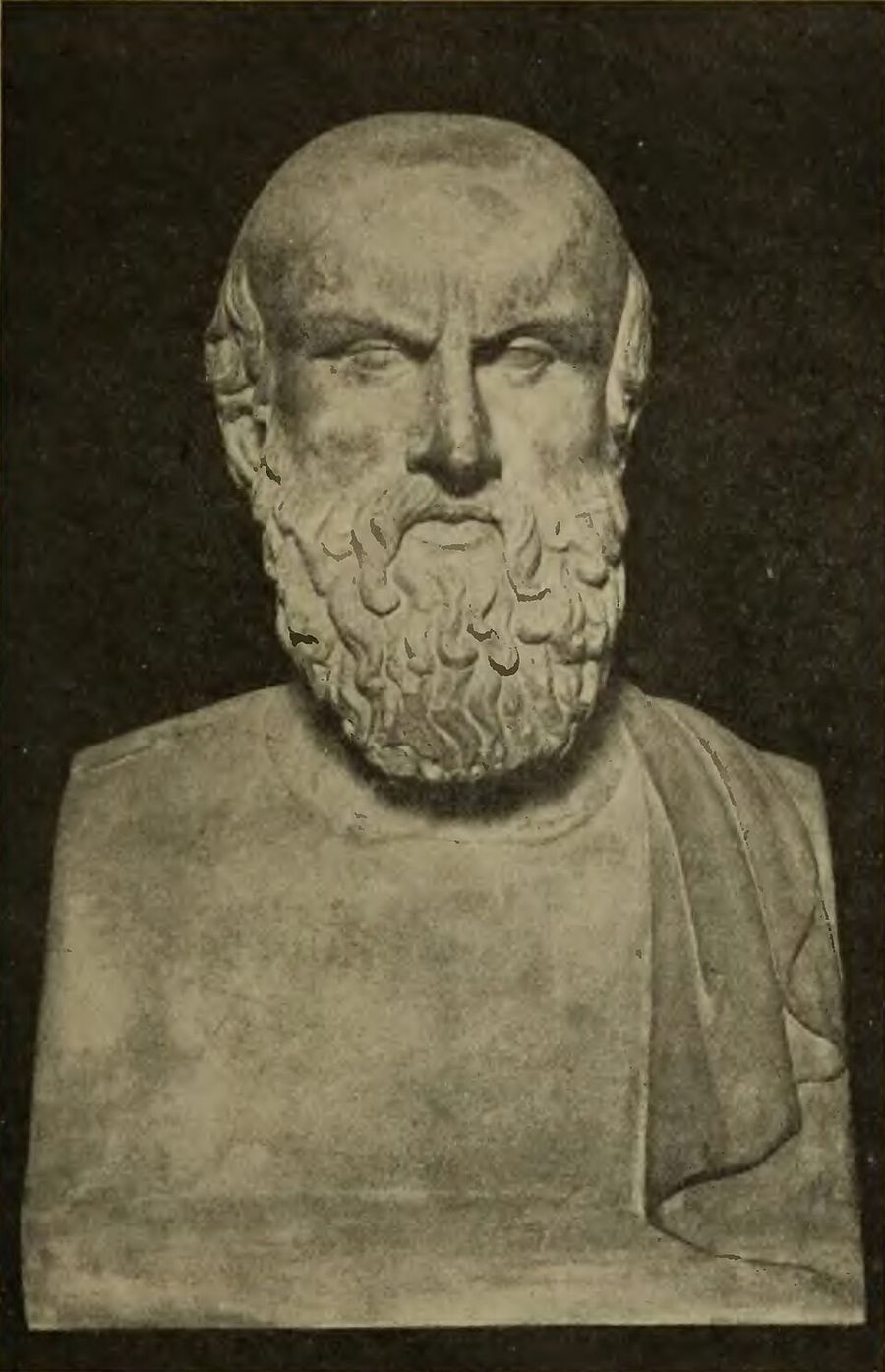
Aeschylus — the Greek tragedian whose surviving works include the Oresteia trilogy and whose influence on Western theater is foundational — died in 456 BCE in Gela, Sicily, under circumstances that ancient sources describe as one of the more cosmically ironic deaths in literary history. According to the Greek biographer Valerius Maximus and several other ancient sources, Aeschylus was killed when an eagle — or in some versions, a lammergeier, a large vulture — dropped a tortoise on his bald head, apparently having mistaken his skull for a stone suitable for breaking the tortoise's shell.
The story has been repeated since antiquity and appears in multiple independent ancient sources, which gives it more credibility than a single account would provide. The behavior of eagles and lammergeiers dropping shellfish, tortoises, and bones onto rocks to break them is a documented foraging technique — the lammergeier in particular is known to drop bones from heights to access the marrow — making the mechanism at least plausible rather than purely mythological.
Whether the account is entirely accurate or has been embellished in the centuries of retelling between Aeschylus's death and our earliest surviving sources for the story is genuinely uncertain. What is certain is that Aeschylus died in Sicily at approximately the right age, and that his death in a land far from his native Athens had a quality of displacement that may have invited the elaborated account. The irony — the greatest dramatist of death dying in a manner no dramatist would dare contrive — is too perfect to have been entirely invented, or perhaps too perfect not to have been.

Credit: Wikimedia Commons
Tycho Brahe — the Danish astronomer whose precise pre-telescopic observations of planetary positions provided the data from which Johannes Kepler derived the laws of planetary motion, making Brahe's work foundational to the Copernican revolution — died in Prague in 1601 in circumstances that have been debated ever since. The traditional account holds that he died of a bladder or kidney ailment contracted after attending a formal dinner at the court of the Holy Roman Emperor Rudolf II, where he felt it would be impolite to leave to urinate before the host had risen, held his urine for too long, and developed a fatal urinary tract complication.
The contemporary sources support a sudden illness following the dinner — Brahe became ill days later and died approximately eleven days after the feast. Whether the specific mechanism was a burst bladder, a prostate condition, a kidney ailment, or something else is not established, and the story of the dinner and the social constraint is itself possibly an embellished explanation rather than a documented account.
In 2010 and 2012, Brahe's exhumed remains were analyzed for evidence of mercury poisoning, following persistent speculation that Kepler — who had access to Brahe's data and a strong motive to obtain independent control of it — had poisoned him. The analyses found elevated mercury levels but below the threshold for acute poisoning, and the forensic consensus is that the mercury was most likely from medicinal use rather than deliberate poisoning. The bladder failure account, whatever its specific mechanism, remains the most plausible explanation for a death whose exact circumstances are unlikely to be definitively established.

Pedro Núñez y Enrique Fernández - Retablo de San Severo / Wikimedia Commons
Martin I of Aragon — King of Aragon and Sicily from 1395 until his death in 1410, and the last king of the House of Barcelona — died in circumstances that medieval chronicles describe as a combination of indigestion and uncontrollable laughter. He had spent the evening consuming an entire goose — sources vary on the preparation — and when his court jester Borra entered the room and was asked where he had been, the jester replied that he had been in the next vineyard, where he had seen a young deer hanging from a vine by its teeth after having been bitten by a mouse.
The king found this image so funny — a deer hanging from a vine having been overpowered by a mouse — that he fell into a fit of laughter that, combined with the digestive distress of the consumed goose, resulted in his death. The exact mechanism proposed varies between sources: some suggest he literally laughed to death, others suggest the exertion of laughing on top of severe indigestion caused a medical event, others suggest the combination of food and mirth simply overwhelmed a constitution that was already compromised.
The death occurred on May 31, 1410, and Martin died without a legitimate heir, producing the Compromise of Caspe in 1412 and the transfer of the Aragonese Crown to the Castilian House of Trastámara — a succession that had significant consequences for Iberian and European political history. The historical significance of the event is therefore large, and the manner of the death — the king's inability to survive his own amusement at a joke — has given it a place in histories of medieval Spain that its political consequences alone might not have secured.
Credit: Wikimedia Commons
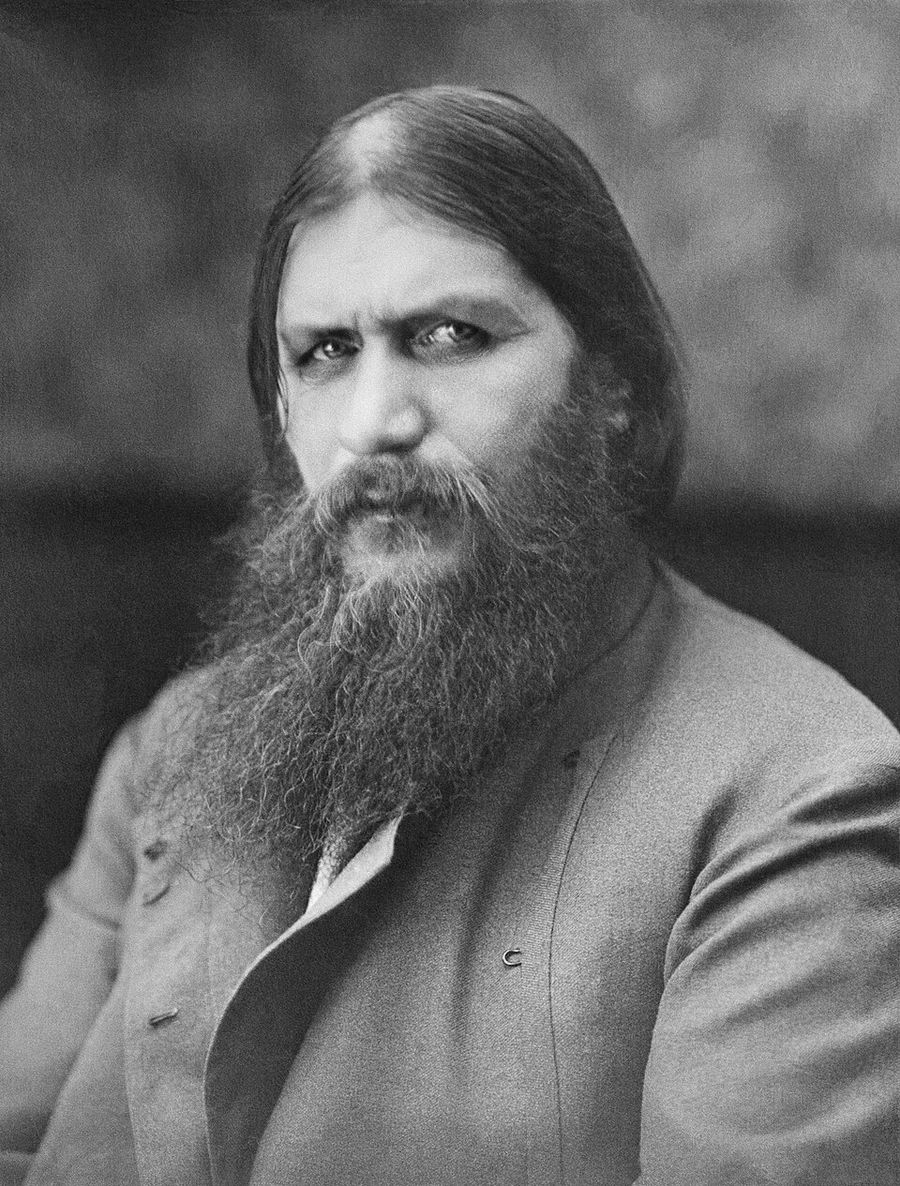
Rasputin's death in December 1916 is one of the most retold in modern history, partly because the accounts of the night are dramatic and partly because those accounts are substantially unreliable — the primary source being Felix Yusupov, Rasputin's chief assassin, whose self-serving memoir written years later describes a death so dramatic and so resistant to completion that historians have been skeptical of it since its publication.
According to Yusupov's account, Rasputin was fed poisoned cakes and wine at the Yusupov palace in Petrograd, failed to die despite a dose of cyanide that should have been fatal, was shot at close range and survived, was beaten, and finally drowned in the Moika River after a second shooting — emerging from each attempt at his life with extraordinary persistence. The image of Rasputin's resistance to assassination became the foundation of his mythological status as a man with supernatural powers.
The forensic reality, assessed by multiple historians and pathologists who have reviewed the available evidence, is considerably less dramatic. The cyanide account is implausible — cyanide in the quantities described would have killed a healthy adult rapidly. The autopsy report found that Rasputin died from drowning, with a gunshot wound to the head that may have been delivered after he entered the water. The specific sequence of events between his arrival at the palace and his death in the river is likely different from Yusupov's theatrical account, and the "impossible to kill" narrative is almost certainly an embellishment designed to amplify the drama of the killing and the mystique of the man.
_01-900x1202.jpg)
Threecharlie / Wikimedia Commons (CC BY-SA 4.0)
Attila the Hun — the ruler of the Hunnic Empire whose invasions of the Eastern and Western Roman Empires in the 440s and 450s produced some of the most dramatic military campaigns of late antiquity and whose reputation for destruction was significant enough to earn him the epithet "Scourge of God" — died in 453 CE on the night of his wedding to a woman named Ildico. The historical account, provided primarily by the Roman diplomat Priscus, holds that he died from a nosebleed that occurred while he was in a drunken stupor following the wedding feast.
The specific mechanism: Attila was prone to nosebleeds, consumed large quantities of alcohol at the feast, passed out in his tent, and suffered a severe nosebleed that, because he was unconscious and lying on his back, drained into his throat rather than outward and caused asphyxiation. When his attendants found him the following morning, they initially assumed that his new bride had killed him; Ildico was found weeping in the tent beside his body.
Modern medical assessment of this account finds it plausible — esophageal varices (enlarged veins in the esophagus, associated with heavy long-term alcohol use) can rupture and cause fatal hemorrhage in circumstances consistent with Priscus's account, though the nosebleed specifics are less medically convincing. The irony of the most feared conqueror of his age dying not in battle but of a nosebleed in a wedding tent was noted by contemporaries with the kind of satisfaction that attends the reduction of the terrible to the absurd.
W.S. Hartshorn / Wikimedia Commons
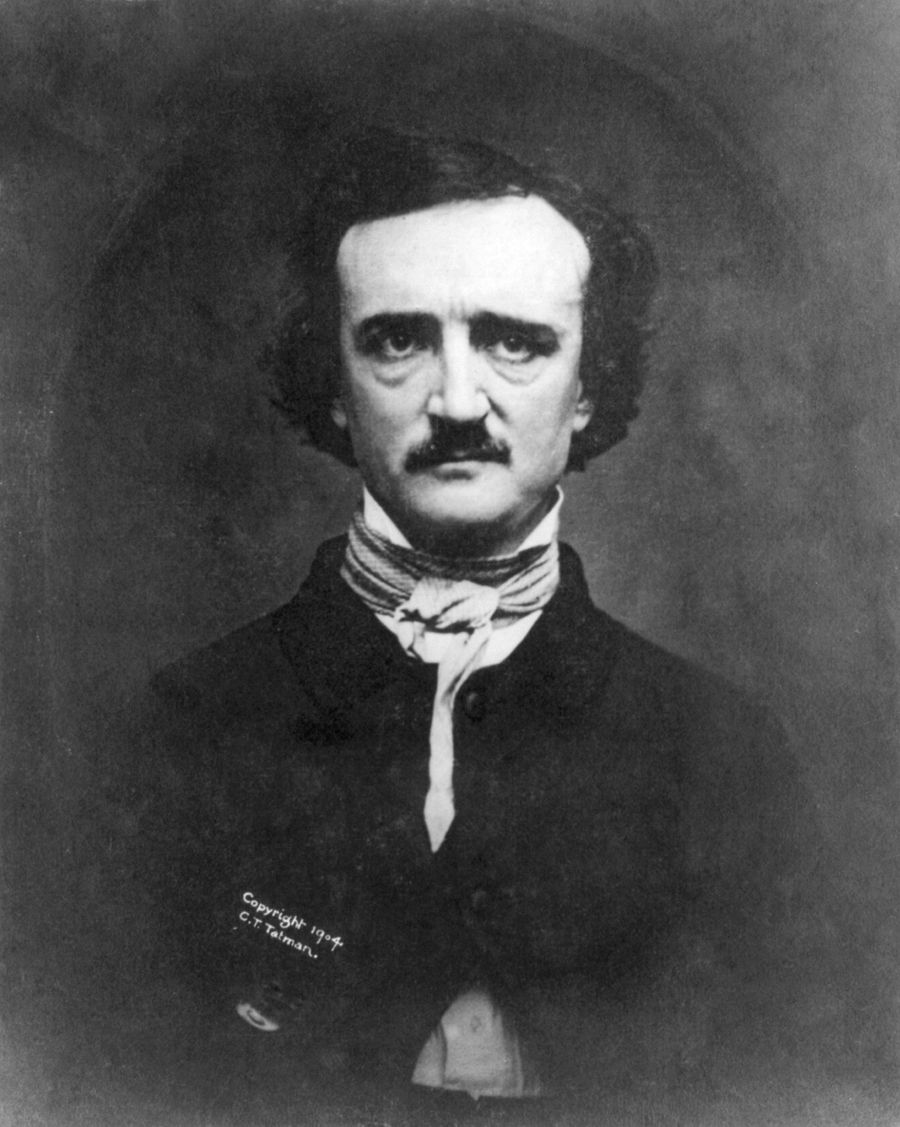
Edgar Allan Poe died in Baltimore on October 7, 1849, at the age of 40, and the circumstances of his death remain genuinely uncertain despite extensive investigation — making his death one of the more legitimately mysterious in American literary history. He was found delirious on the streets of Baltimore on October 3, wearing clothes that were not his own, unable to coherently explain what had happened to him, and was taken to Washington College Hospital where he died four days later without recovering sufficiently to give a clear account.
The death certificate listed "phrenitis" — inflammation of the brain — as the cause of death, which was a vague 19th-century diagnosis covering a range of conditions rather than a specific medical finding. The absence of a reliable account from Poe himself and the fragmentary nature of the contemporary documentation have allowed multiple theories to accumulate over the following 170 years: rabies (supported by some symptoms including hydrophobia), cooping (a form of electoral fraud in which victims were forced to vote multiple times, explaining the strange clothes and the period of disappearance), heavy alcohol consumption, carbon monoxide poisoning, a brain tumor, and several others.
The cooping theory — while it cannot be definitively established — is considered plausible by several scholars because the area where Poe was found was near a polling place on an election day, and the clothes he was wearing were consistent with having been changed to disguise him between forced voting appearances. The mystery of Poe's death has the specific quality of many of his own stories — enough information to be intriguing, insufficient information for resolution.
Sting / Wikimedia Commons (CC BY-SA 2.5)
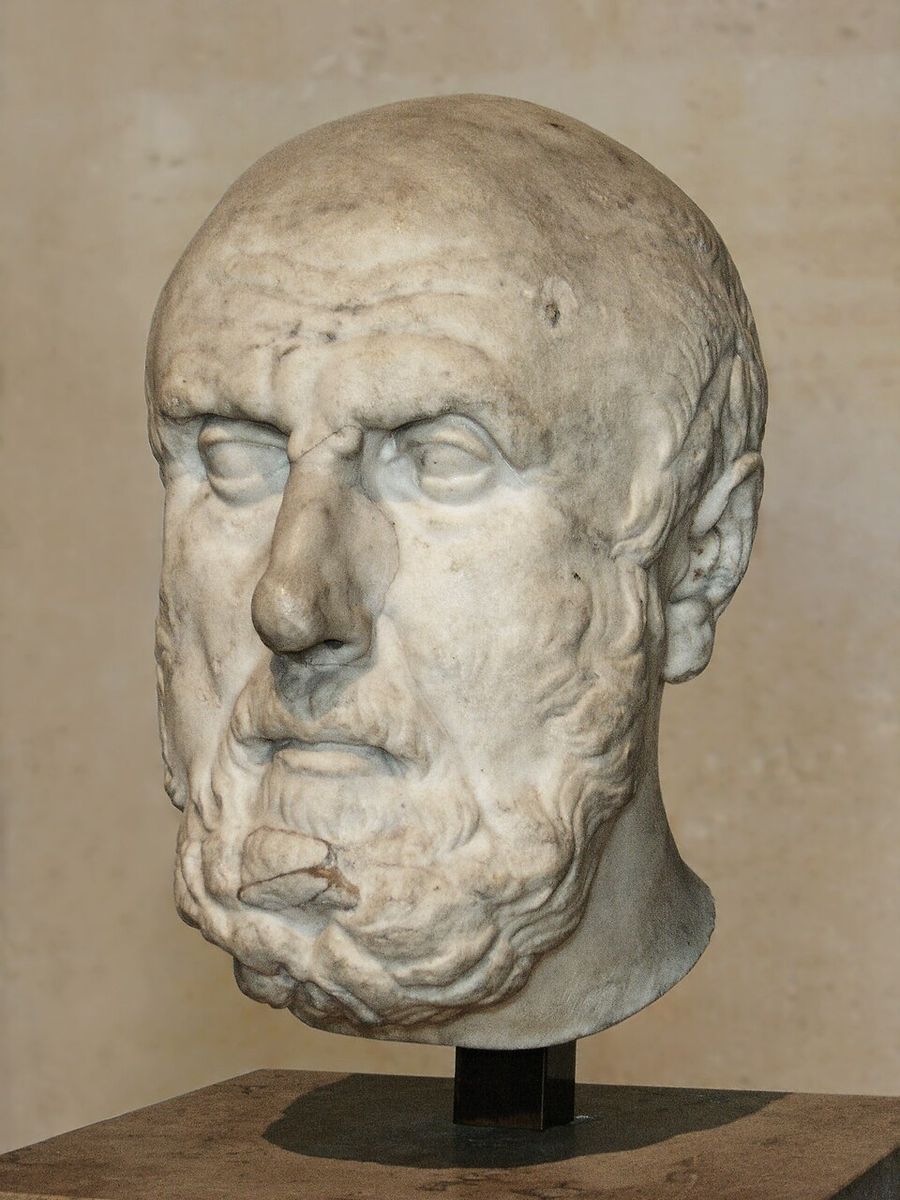
Chrysippus of Soli — the Greek Stoic philosopher who succeeded Cleanthes as head of the Stoic school in Athens in approximately 230 BCE and whose prodigious philosophical output (reportedly over 700 works, none of which survive in complete form) systematized Stoicism into the philosophical tradition that influenced Roman intellectual life for centuries — died in approximately 207 BCE in circumstances that ancient sources attribute to a combination of wine and laughter.
According to Diogenes Laërtius, writing in the 3rd century CE from sources now lost, Chrysippus saw a donkey eating figs and instructed an old woman to give the donkey unmixed wine to wash them down. He then laughed so hard at the sight of a drunken donkey that he died. The alternative account in the same source — that he died after drinking unmixed wine himself at a feast — is less colorful but perhaps more plausible.
The "death by laughter" or "death by wine" accounts of ancient philosophers appear with sufficient regularity in ancient sources (similar accounts exist for the painter Zeuxis, the politician Philemon, and others) that historians have debated whether they represent actual occurrences, a genre convention for describing deaths that were sudden and unexplained, or a specific form of philosophical biography in which the manner of death is made to comment on the life. A Stoic philosopher who preached equanimity dying from uncontrolled laughter is too neat an irony to escape the suspicion that later tradition shaped the account.

The Story of Philosophy by Will Durant / Wikimedia Commons
Francis Bacon — the English philosopher and statesman whose "Novum Organum" of 1620 outlined the inductive scientific method and who is often credited as a founding father of empiricism and the scientific revolution — died in April 1626 in circumstances that combine an interesting scientific experiment with its possibly lethal consequences. According to John Aubrey's "Brief Lives," written decades after the event from second-hand sources, Bacon was traveling by coach through snow near Highgate in London when he was struck by the idea of testing whether snow could be used to preserve meat.
He stopped the coach, purchased a hen from a nearby cottage, and stuffed it with snow to observe the preserving effect. While engaged in this experiment, Bacon became severely chilled, developed a sudden illness, and died within days. The specific cause of death is recorded in contemporary correspondence as "a sudden cold," and the pneumonia-like illness that followed exposure to cold was a genuine and frequent cause of death in 17th-century England.
The combination of the scientific curiosity — Bacon dying in pursuit of an empirical observation about refrigeration — and the specific irony that the father of the inductive scientific method died conducting an informal experiment makes this one of the more poetically appropriate deaths in intellectual history. Whether Aubrey's account, written 30 years after the fact from unreliable memory, captures the true sequence of events is uncertain; what is documented is that Bacon died in April 1626 of a sudden illness, in a location consistent with the account.
Charles Chusseau-Flaviens / Wikimedia Commons
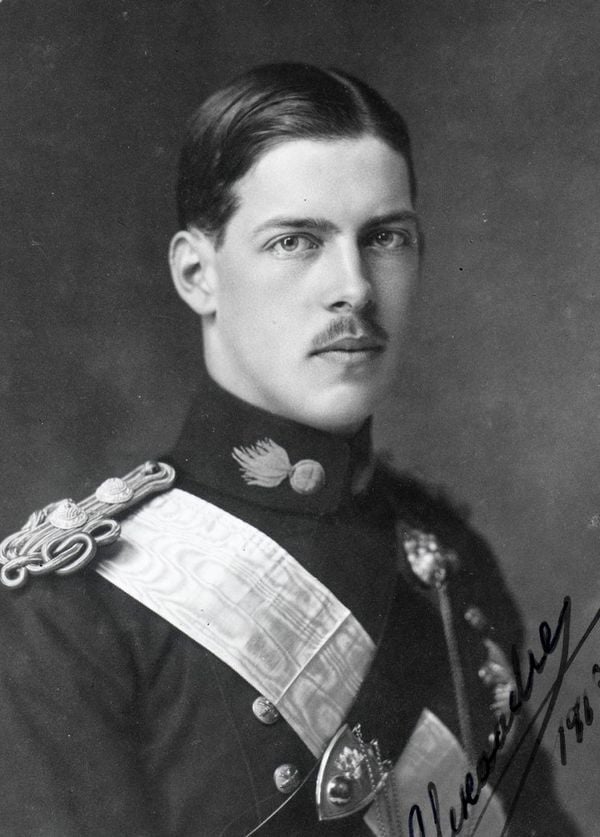
Alexander I of Greece — king from 1917 to 1920, who came to the throne when his father Constantine I was forced to abdicate under pressure from the Allied powers during the First World War — died in October 1920 from sepsis caused by a monkey bite, in what is one of the more consequential accidental deaths in modern political history.
On October 2, 1920, Alexander's pet German shepherd got into a fight with one of the monkeys kept on the palace grounds at Tatoi. When Alexander attempted to separate them, both he and his aide were bitten by the monkeys. The wounds became infected, and despite treatment including a reported amputation offer that Alexander declined, he died from sepsis on October 25, 1920.
The political consequences of his death — and of the succession that followed — were significant. The return of his father Constantine to the throne was opposed by the Allied powers and prompted the withdrawal of Allied military and financial support from Greece. This weakened the Greek military campaign in Anatolia, contributing to the eventual Greek defeat in the Greco-Turkish War of 1919-1922 and the population exchange that displaced approximately 1.5 million people. Winston Churchill, observing these consequences, remarked that "it is perhaps no exaggeration to say that a quarter of a million persons died of this monkey's bite."
-900x1400.jpg)
Arnold Genthe / Wikimedia Commons
Isadora Duncan — the American dancer whose radical rejection of formal ballet technique and whose development of a free, expressive movement style that drew on ancient Greek iconography and natural human motion made her one of the most influential figures in the history of modern dance — died in Nice, France, in September 1927, in circumstances that have become one of the most frequently cited warnings against wearing long scarves near open-wheeled vehicles.
Duncan was riding in an open Amilcar sports car when her large silk scarf, which trailed behind her, became entangled in the spokes of the rear wheel. The sudden tightening of the scarf around her neck broke her neck and pulled her from the car, killing her almost instantly. She was 50 years old.
Gertrude Stein's response to the news — "affectations can be dangerous" — captures the cultural reaction to a death that seemed to comment on Duncan's entire aesthetic. Her flamboyance in dress, her rejection of conventional constraint, her commitment to a personal style that extended to her clothing choices were all implicated in her death in a way that satisfied the ironic sensibility of her contemporaries, however unkindly.
Duncan had been a figure of considerable controversy throughout her life: her political associations, her romantic relationships, the deaths of her two children in a separate drowning accident in 1913, and her general rejection of social conventions had all made her both celebrated and scandalous. Her death had the quality of her life — dramatic, excessive, and impossible to interpret as anything other than a final statement.
Giuseppe Emanuele Ortolani / Wikimedia Commons
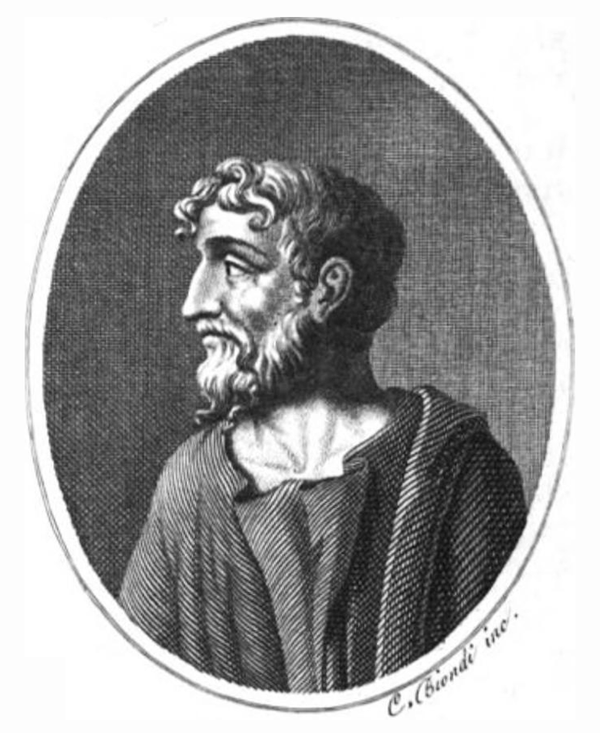
Empedocles — the pre-Socratic Greek philosopher of the 5th century BCE who proposed that all matter was composed of four fundamental elements (earth, water, fire, and air) and who is credited with various other scientific and philosophical contributions including an early understanding of evolutionary change and a theory of perception — died according to some ancient sources by throwing himself into the volcanic crater of Mount Etna in Sicily.
The account, reported by Diogenes Laërtius citing earlier sources, attributes the action to Empedocles's desire to confirm his status as a god by disappearing without leaving a trace — the volcano would destroy his body completely and the absence of remains would support the impression of divine translation rather than ordinary death. The story was supposedly given away when the volcano subsequently ejected one of his bronze sandals from its crater, revealing both his location and his very non-divine fate.
The sandal detail is the kind of flourish that marks an account as probably legendary rather than historical, and most historians treat the Etna story as either invented or heavily embellished. Empedocles did live in Sicily, and the volcanic landscape of Sicily was part of his intellectual environment — his interest in fire as a fundamental element and his descriptions of volcanic-like processes in his cosmology are consistent with direct observation of Etna. But the specific account of a philosophical suicide-as-divinity-claim, betrayed by a bronze sandal, is almost certainly a later elaboration on an uncertain death.
Matthew Paris / Wikimedia Commons
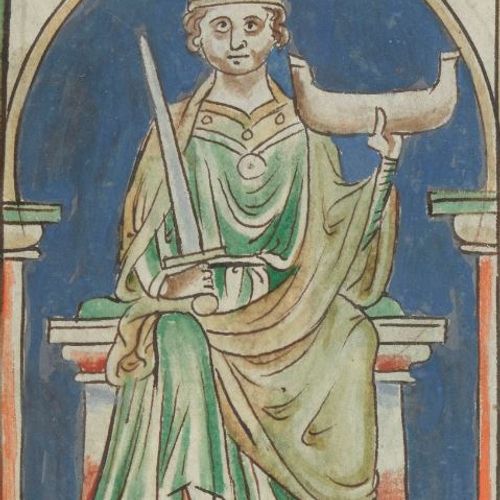
William the Conqueror — the Duke $DUK of Normandy who defeated Harold II at the Battle of Hastings in 1066 and became King of England, fundamentally transforming English culture, language, and governance — died in 1087 from injuries sustained during the Siege of Mantes, a French town that he was raiding in response to the French king Philip I's mockery of his girth. The specific mechanism of injury is described in contemporary sources as the result of his horse stumbling at the burning town, throwing William forward onto the pommel of his saddle with sufficient force to rupture internal organs.
William's obesity in his later years was significant enough to have attracted the mockery that supposedly motivated the raid. Philip I had reportedly made comments about the pregnant appearance of the Norman king, and William's response — burning Mantes in retribution — was the campaign that produced his fatal injury. The irony of a king dying on a raid motivated by a fat joke about himself is historical rather than cosmological, but it is specific enough to merit attention.
The aftermath of William's death was itself undignified in ways that medieval chroniclers recorded with uncomfortable specificity. When William's body was taken to the abbey church of Saint-Étienne in Caen for burial, the funeral was interrupted by a fire in the town, by a dispute over the land on which the church stood, and, most famously, by the swelling of William's body during the journey to Caen from the site of his death at the priory of Saint-Gervais near Rouen. When attendants attempted to force the decomposing and swollen corpse into a stone sarcophagus that was too small, the body burst, filling the church with a smell so overwhelming that most of the congregation fled and the ceremony was concluded hastily.
-600x800.jpg)
Max Karl Baldamus / Wikimedia Commons
Draco — the 7th-century BCE Athenian lawgiver whose legal code, written approximately 621 BCE, was the first written law code of Athens and introduced punishments so severe that the word "draconian" has been in use ever since as a descriptor for excessively harsh rules — died according to Suda (a 10th-century CE Byzantine encyclopedia) in a manner that is either a genuine account of an unusual death or a piece of cultural invention so appropriate to the man's reputation that it has endured regardless.
According to the account, Draco was attending a theatre performance at the Aeginetan Theatre in Athens or on the island of Aegina when the crowd, wishing to express their appreciation and admiration for him, showered him with hats, shirts, and cloaks — the customary expression of approval in ancient Greek culture. The shower of garments was so enthusiastic that Draco was buried in clothing and suffocated.
The source — the Suda — was compiled approximately 1,400 years after Draco's death from earlier sources of varying reliability, and the account has the quality of a later invention designed to comment on the nature of popularity and public approval: the man most associated with severe and oppressive law, killed by the overwhelming enthusiasm of his admirers. Whether it is true, embellished, or invented, it functions as a specific kind of historical anecdote — the death that perfectly encapsulates the life in miniature.

Paul Mignard / Wikimedia Commons
Jean-Baptiste Lully — the Italian-born French composer who became the dominant figure of 17th-century French court music, served as superintendent of music to Louis XIV, and effectively invented the French operatic tradition — died in March 1687 from a wound he inflicted on himself during a performance, in a manner so specific to his own conducting practice that it reads as a death scripted by the activity itself.
Lully conducted by beating time with a large pointed staff — a long, heavy baton that he pounded on the floor to keep the orchestra together, a common conducting method of the period before the hand-held baton became standard. On January 8, 1687, while conducting a Te Deum in celebration of Louis XIV's recovery from illness, Lully struck his own foot with the staff with sufficient force to cause a serious wound to his big toe. The wound became infected with gangrene.
His physician advised amputation of the toe, then of the foot, as the infection spread. Lully refused both amputations on the grounds that he could not dance with a missing foot or leg — dancing being a significant component of his professional identity and his presentation at court. The gangrene continued to spread through his leg and eventually to his body, and he died on March 22, 1687, approximately ten weeks after the injury.
The account of the refused amputation is well-documented in contemporary sources and adds a specific layer to the death's character: Lully died not simply from an accident but from a deliberate choice to prioritize the continuation of his performing life over the extension of his biological one. Whether this constitutes vanity, professional identity, or a specific calculation about quality of life is a question the sources do not resolve. What they do establish is that a conductor died of a wound inflicted by his own conducting implement — a death as precisely embedded in professional practice as any on this list.
Credit: Wikimedia Commons
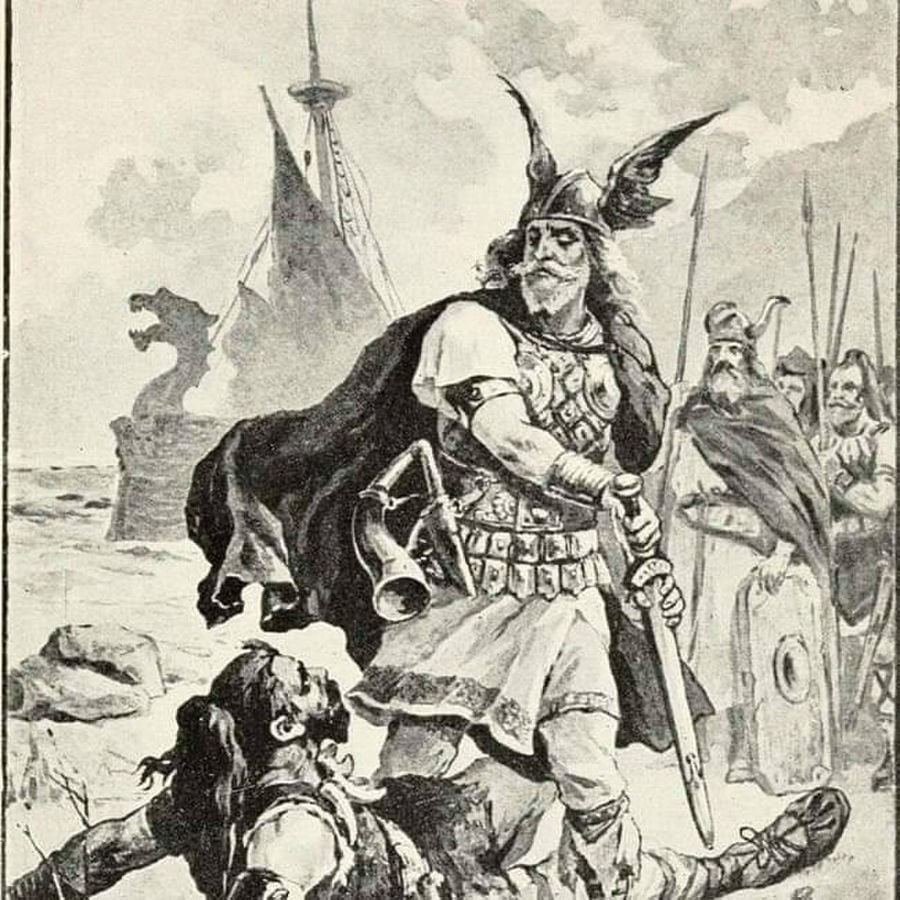
Sigurd the Mighty — Earl of Orkney in the late 9th century, one of the most powerful Norse chieftains of his era, and a figure whose military campaigns extended Norse influence across northern Scotland — died in approximately 892 CE from a wound inflicted by the severed head of an enemy he had already killed, in a sequence of events that reads as a compressed Norse saga of hubris and consequence.
Sigurd had challenged Máel Brigte, a Scottish Mormaer (nobleman) of Moray, to a battle on agreed terms — 40 men on each side. Sigurd brought 80, doubling the agreed number, and won the battle and killed Máel Brigte. Having decapitated the Scottish chieftain, Sigurd strapped the severed head to his saddle as a trophy and rode back toward Orkney. As he rode, the protruding tooth of the dead man's skull repeatedly scraped against his leg. The leg became infected, the infection became fatal, and Sigurd died of the wound inflicted by the man he had defeated.
The account appears in the Orkneyinga Saga, a 13th-century Norse chronicle of the Earls of Orkney, written approximately three centuries after the events it describes. The Orkneyinga Saga is considered a reasonably reliable source for the broad outlines of Orcadian history, though specific details of events from the 9th century are inevitably uncertain at this remove. The basic outline — a Norse earl dying from an infection caused by a decapitated enemy's tooth — is the kind of specific, embarrassing detail that is more likely to be preserved than invented.
The moral geometry of the death is specific: Sigurd cheated on the agreed terms of the battle, won by treachery, and died as a consequence of his trophy. The dead man's tooth, continuing to wound after death, functions in the saga tradition as a form of post-mortem revenge — the defeated chieftain's final act of resistance delivered from beyond the grave through the passive mechanism of his own skull.
Harry Burton / Wikimedia Commons
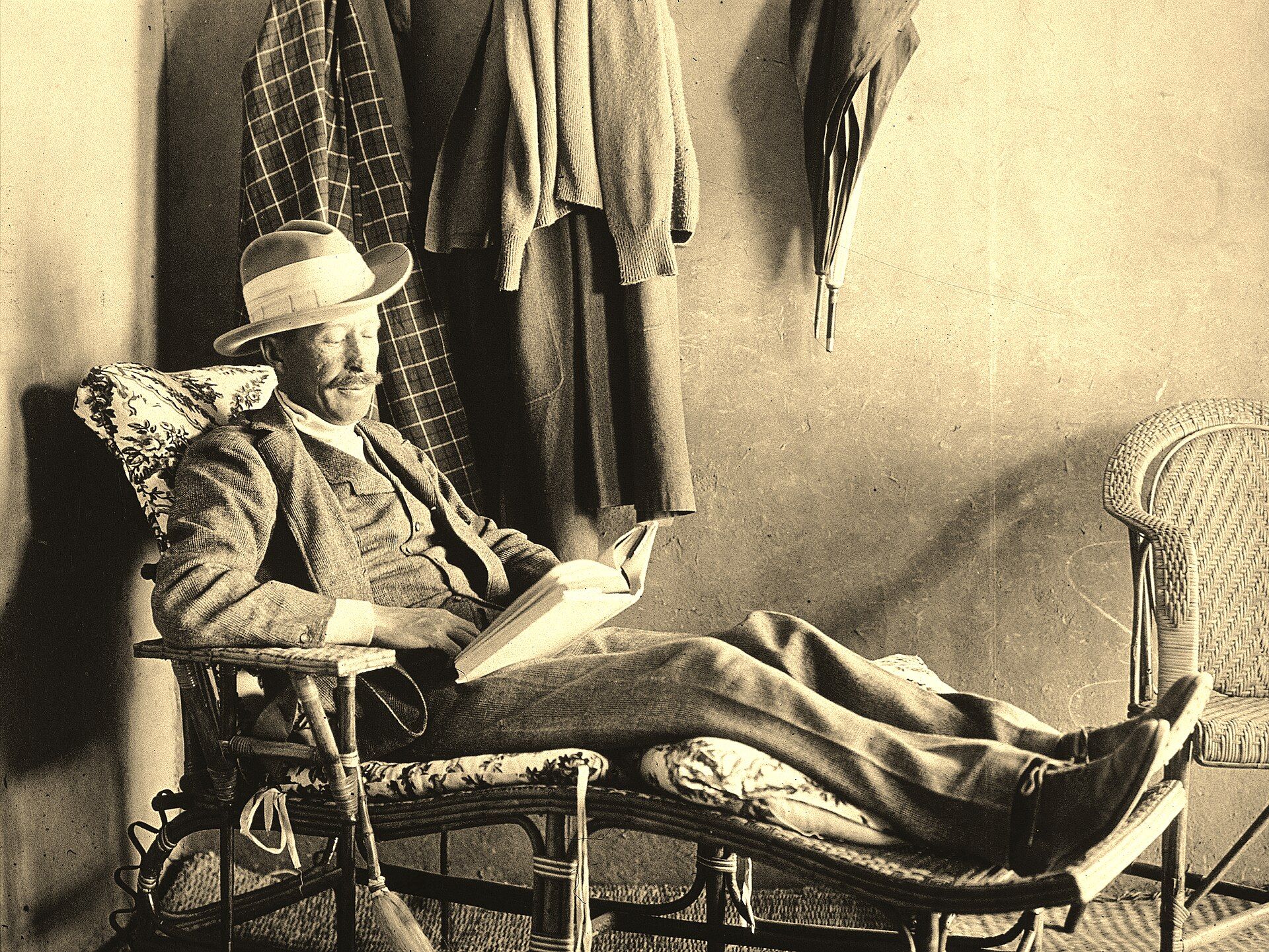
George Herbert, 5th Earl of Carnarvon — the British aristocrat and Egyptologist who financed Howard Carter's excavation of Tutankhamun's tomb and was present at its opening in November 1922 — died in Cairo on April 5, 1923, approximately five months after the opening of the tomb, from blood poisoning following a mosquito bite. The wound became infected, he contracted pneumonia, and he died at the age of 57.
The timing of his death — so close to the dramatic discovery — and the circulation of a phrase attributed to the hieroglyphic inscriptions in the tomb ("Death shall come on swift wings to him who disturbs the peace of the king") produced the "Curse of the Pharaohs" narrative that captured public imagination globally. The phrase itself has never been confirmed in the actual inscriptions of Tutankhamun's tomb, and the deaths of the significant members of the excavation team, when statistically analyzed, do not show a mortality rate higher than that of comparable populations of similar age and health.
Howard Carter, who actually opened the tomb, lived until 1939 — 17 years after the opening. Most of the other excavation team members lived normal lifespans. Lord Carnarvon's death was real, its proximity to the discovery was real, and the mosquito bite was real. The curse was a journalistic invention that proved more durable than the archaeological record, and Lord Carnarvon's death has been serving the narrative ever since.
Mathew Benjamin Brady / Wikimedia Commons
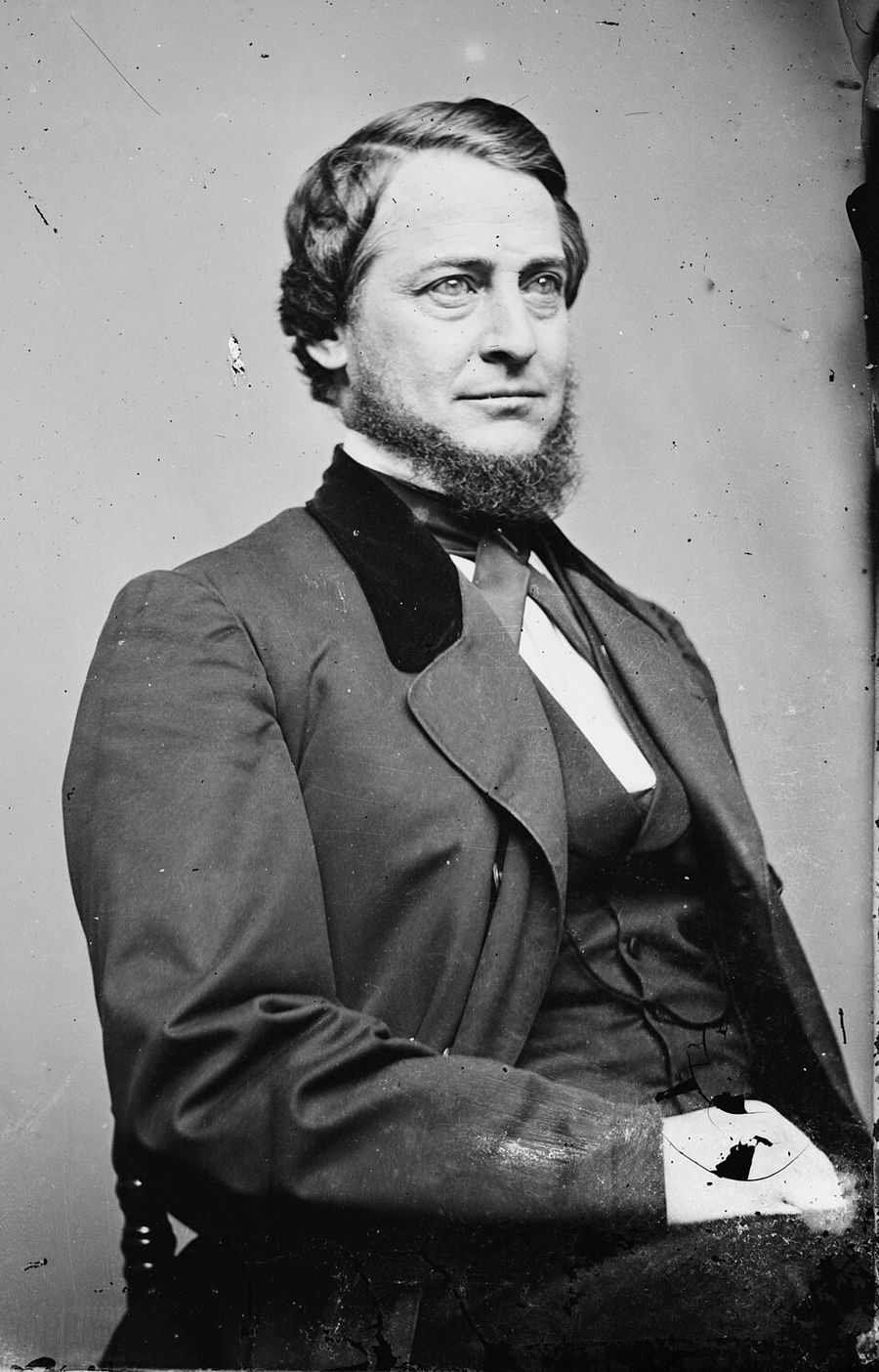
Clement Vallandigham — the Ohio politician who was the most prominent Peace Democrat in the United States during the Civil War, whose opposition to the conflict earned him a military tribunal conviction and exile to the Confederacy (from which he returned to Ohio via Canada), and who later ran unsuccessfully for governor of Ohio — died in 1871 in Lebanon, Ohio, in circumstances involving a courtroom, a demonstration, and a loaded pistol.
Vallandigham was serving as a defense attorney in a murder case involving a shooting in a bar fight, and his theory of the defense was that the victim had accidentally shot himself while drawing his pistol. To demonstrate the plausibility of this theory to the other defense attorneys, Vallandigham retrieved what he believed was an unloaded weapon and demonstrated the motion by which the victim might have drawn the pistol and accidentally fired it. The pistol was loaded. Vallandigham shot himself in the abdomen in the demonstration and died the following day.
The defense theory was apparently convincing — the defendant was acquitted — but Vallandigham did not live to learn the outcome. He was 51 years old. The specific irony — the defense attorney who demonstrated how the victim accidentally shot himself dying by accidentally shooting himself in the same demonstration — is so perfectly constructed that the account would be implausible in fiction. It is, however, well-documented in contemporary Ohio and national press coverage, and there is no credible reason to doubt the basic sequence of events.
Credit: Wikimedia Commons
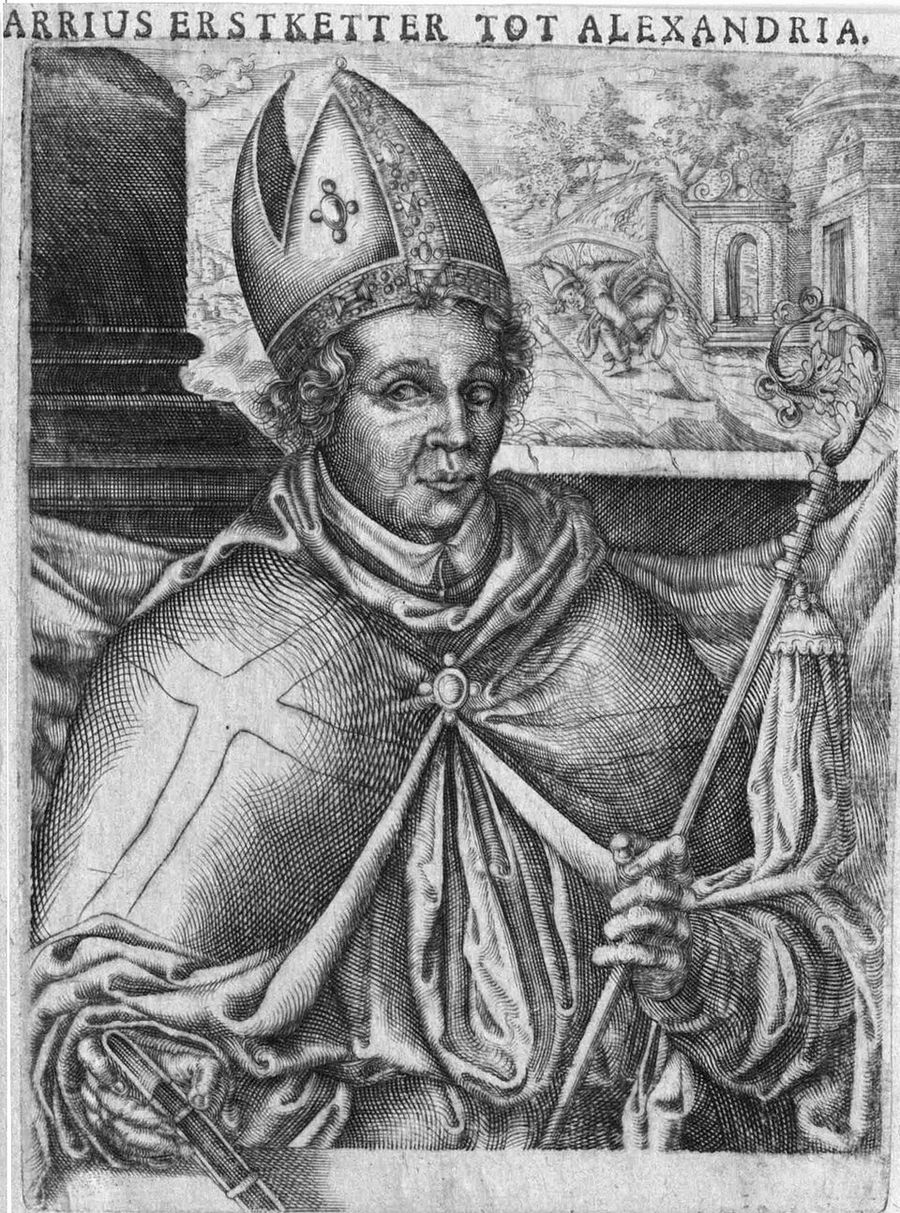
Arius — the Alexandrian theologian whose doctrine that the Son was created by and therefore subordinate to the Father (Arianism) became the central theological controversy of the 4th-century Christian Church, resulting in the Council of Nicaea in 325 CE and the formulation of the Nicene Creed — died in Constantinople in 336 CE in circumstances that his theological opponents described, with evident satisfaction, as divine judgment.
Arius had been reinstated by the Emperor Constantine after years of exile and was about to be formally readmitted to communion in Constantinople when he died suddenly in a public latrine. The accounts describe a sudden collapse of his bowels — variously described as prolapse or hemorrhage — in conditions of considerable physical indignity. His opponents, including Athanasius of Alexandria, interpreted the circumstances as God's verdict on the heretic: the man whose theology had divided the Church dying in precisely the manner that best expressed divine contempt.
The medical description in the sources — a sudden, severe, and fatal gastrointestinal event — is consistent with several conditions including a ruptured peptic ulcer, a severe gastrointestinal hemorrhage, or poisoning. Given that Arius had powerful theological enemies who would have had both motive and opportunity to poison him, and given that his death occurred at a politically significant moment on the eve of his formal reinstatement, the possibility of deliberate poisoning has been discussed by historians. The contemporary accounts, however, preferred the theological interpretation.
The British Library / Wikimedia Commons
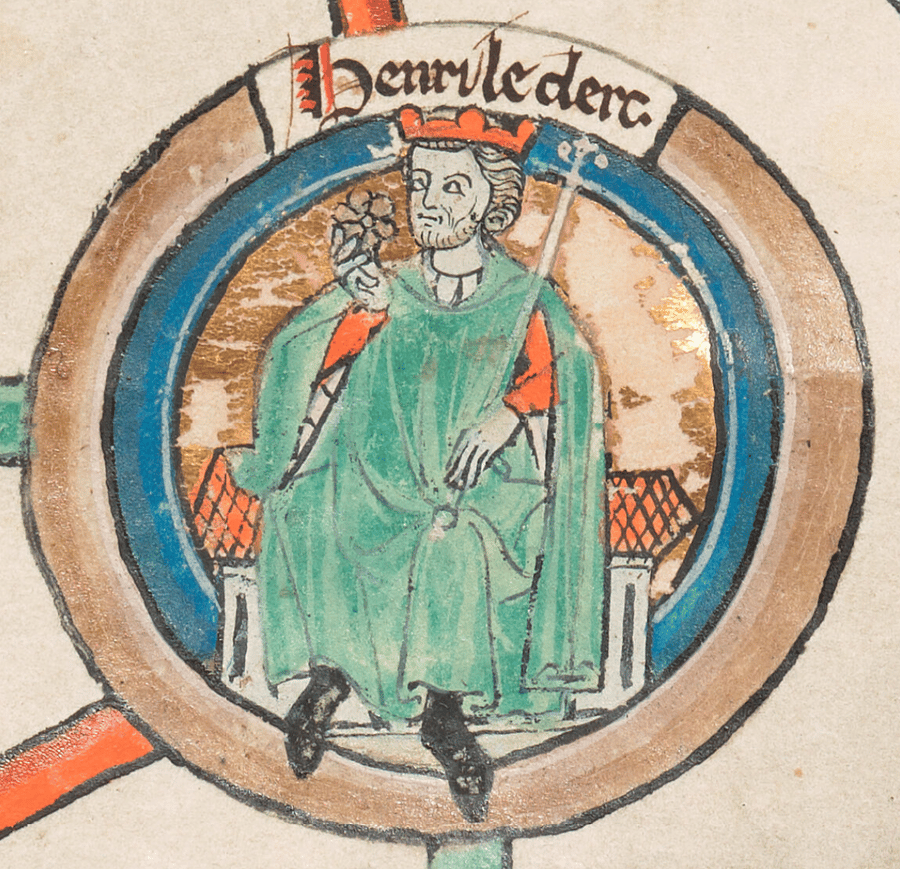
Henry I of England — the youngest son of William the Conqueror who ruled England from 1100 to 1135 and whose administrative reforms laid important foundations for English governance — died in December 1135 at his hunting lodge in Lyons-la-Forêt in Normandy, and the cause of his death was recorded by the chronicler Henry of Huntingdon as "a surfeit of lampreys."
Henry had been advised by his physician not to eat lampreys — an eel-like jawless fish that was considered a great delicacy in medieval Europe — because they did not agree with him. He ate them anyway, in quantity, and died several days later. The specific medical sequence is not recoverable from the historical record; what the chronicler describes is a man who ate something he was told not to eat and subsequently died, with the lampreys implicated as the cause.
Whether lampreys were directly responsible for his death — through food poisoning, through an allergic reaction, through some other mechanism — or whether they were incidental to a death from another cause that happened to follow their consumption is not determinable. What is documented is that Henry ate lampreys contrary to medical advice and died, and that "a surfeit of lampreys" has been the assigned cause of death in historical accounts for approximately 900 years, embedded in the historical record with the comfortable certainty of a known quantity.

Gerd Eichmann / Wikimedia Commons (CC BY-SA 4.0)
Hans Steininger — the 16th-century burghermaster of Braunau am Inn, Austria (the same town later famous as Adolf Hitler's birthplace) — is documented in historical records as having died in 1567 by tripping over his own beard during a fire. Steininger possessed what is described in contemporary accounts as the longest beard in the world — reportedly 4.5 feet in length — which he normally kept rolled up in a leather pouch. On the day of his death, a fire broke out in the town and in the confusion and urgency of evacuation, he had neglected to secure the beard in its pouch. He tripped on it while descending a staircase, broke his neck in the fall, and died.
The account survives because it was recorded by municipal chroniclers, and Steininger's beard itself — or the beard claimed to be his — was preserved and is still on display at the Braunau am Inn district museum, where it has served for approximately 450 years as a cautionary exhibit about the management of extreme facial hair in emergency situations.
The specific documentation of the beard's preservation makes this one of the more verifiable unusual death accounts on this list — a physical artifact exists that corroborates the general claim about the beard's existence, even if the specific circumstances of the death cannot be confirmed from the physical evidence alone. The beard was reportedly cut off and preserved following the death, which suggests that contemporaries found it significant enough to memorialize rather than simply discard.
Steininger's death belongs to the specific category of fatal accidents in which an individual characteristic — the beard — that is normally managed without incident becomes lethal in a specific and unexpected combination of circumstances.
