
20 myths about historical events that people still believe
From Napoleon's height to Einstein failing math, these widely repeated historical "facts" have been wrong all along — and the real stories are more interesting

Credit: Max Mishin / Pexels
History is full of stories that feel too good to check. A Roman emperor gives a thumbs-down and a gladiator dies. Columbus proves the Earth is round. Einstein flunked math. Marie Antoinette tells starving peasants to eat cake. These stories have traveled through centuries of retellings, textbooks, Hollywood films, and casual conversation until they feel like bedrock facts — the kind of thing everyone knows.
The problem is that many of them are wrong, or at best, wildly distorted versions of events that unfolded quite differently.
Historical myths persist for several reasons. Some were invented by later writers to make a point — to flatter a patron, to discredit an enemy, or to construct a usable moral lesson. Others began as jokes or satire and were mistaken for fact by readers a generation later. Some were genuine misunderstandings that calcified before anyone had the tools or inclination to correct them. And a few were deliberate propaganda that outlasted the regimes that created them.
The myths are not evenly distributed across history. They cluster around figures who became legends — Napoleon, Einstein, Washington, Columbus, Lincoln — because these are the people whose biographies attracted both devoted mythmakers and credulous audiences. A great man needs a great origin story, even if one has to be invented.
What makes the real history more valuable than the myth is not just accuracy for its own sake. The actual stories tend to be stranger, more nuanced, and more useful for understanding how the world actually works. Columbus did not prove anything about the Earth's shape — educated people already knew it was round — but what he actually believed about geography is a fascinating story of catastrophic miscalculation that succeeded by accident. The real Napoleon was not especially short by the standards of his time, but the myth of his height tells us something precise about British wartime propaganda and how it operates.
This list works through 20 of the most durable historical myths — not to shame anyone for believing them, since many appear in reputable books and classrooms — but to replace a false story with a true one that is worth knowing.
Napoleon was unusually short

Credit: Dguendel / Wikimedia Commons (CC BY 4.0)
Napoleon Bonaparte stood around five feet six or five feet seven inches tall — roughly average for a French man of his era, and taller than the average British soldier of the same period. The myth of his small stature is largely a product of British wartime caricature, particularly the work of political cartoonist James Gillray, whose satirical illustrations depicted Napoleon as a tiny, tantrum-throwing figure dwarfed by larger British opponents. These images circulated widely during the Napoleonic Wars and planted an image that proved more durable than the facts.
There is also a unit confusion that helped embed the myth. Napoleon's contemporaries recorded his height as five feet two inches in French units — but French inches of the 18th century were longer than English inches. When that figure was quoted in English without converting the units, it produced a misleadingly short figure that took on a life of its own.
Napoleon himself may have inadvertently contributed to the confusion. He was frequently surrounded by his Imperial Guard, whose minimum height requirement was five feet nine inches in French units. Paintings and eyewitness accounts that placed him alongside these tall soldiers may have made him appear shorter than he was.
The psychological theory that short men compensate with aggression — sometimes called the "Napoleon complex" — is built on a foundation of a myth. Napoleon's ambition and military aggression had many plausible causes, including the political circumstances of revolutionary France, his outsider status as a Corsican among French elites, and the dynamics of late 18th-century European power. His height was not among them.
What is telling about this myth is not simply that it is wrong but how it was created and why it stuck. British propaganda during a major war had every incentive to diminish its enemy, and the short-man caricature was an effective tool. That the image outlasted the war by more than two centuries says something about the staying power of a well-constructed insult.
Columbus proved the Earth was round
Credit: L. Prang & Co. / Picryl
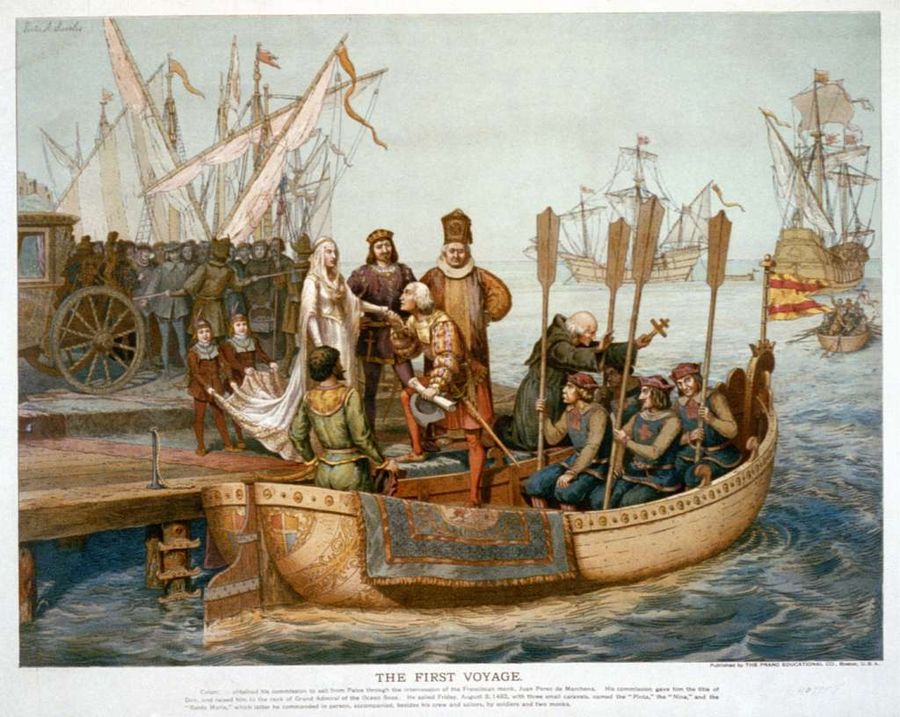
By the time Christopher Columbus sailed west in 1492, educated Europeans had known the Earth was spherical for nearly two thousand years. The ancient Greek mathematician Eratosthenes had not only argued for a spherical Earth but calculated its circumference with remarkable accuracy around 240 BCE, using the angles of shadows in two different Egyptian cities. Medieval scholars, the Catholic Church, and European universities all accepted a round Earth as established fact. Nobody on Columbus's crew feared sailing off an edge.
The real dispute between Columbus and the Spanish crown's advisors was not about the shape of the Earth but about its size. Columbus believed the Earth was significantly smaller than it actually is, and that Asia was therefore within sailing range to the west. The Spanish scholars who reviewed his proposal and initially rejected it were largely correct — they calculated that the westward route to Asia would be far longer than Columbus claimed, making it impractical given the provisions and technology of the time. Columbus was wrong about the distance. He only survived because an unknown continent happened to be in the way.
The myth that Columbus bravely defied flat-Earth believers appears to have been largely invented by the American writer Washington Irving, whose 1828 fictional biography of Columbus depicted a heroic navigator facing down ignorant clergy who believed the world was flat. This was historical invention, not research, but the story proved enormously appealing in an era that valued scientific progress over religious authority. It fit the narrative needs of the 19th century.
The actual Columbus story — a man who made a catastrophic geographical error, misjudged the distance to Asia by roughly 7,000 miles, and only succeeded because an entire continent intervened — is more instructive about how discovery actually works than the sanitized myth of the visionary proving everyone else wrong.
Marie Antoinette said "let them eat cake"

Credit: Wikimedia Commons / Picryl
Marie Antoinette almost certainly never said "let them eat cake." The phrase — in French, "Qu'ils mangent de la brioche" — appears in the Confessions of Jean-Jacques Rousseau, written around 1765, when Marie Antoinette was approximately nine years old and still living in Austria. Rousseau attributed the remark to "a great princess," but his text gives no name, and the phrase may have been invented entirely for rhetorical effect. By the time it was attached to Marie Antoinette, she had already been executed.
The association between the queen and the quote appears to have solidified during and after the French Revolution, when her enemies were actively constructing a narrative of royal indifference to popular suffering. Marie Antoinette was a useful symbol of aristocratic excess, and an invented quotation crystallized that symbolism into a single memorable line. The fact that it almost certainly originated with a different unnamed figure — or was fabricated entirely — did not impede its spread.
What the historical record actually shows about Marie Antoinette's character is more complicated than the legend. She did spend lavishly on clothing and gambling in her early years at Versailles, behaviors that made her deeply unpopular. But she also donated to charitable causes and, as the Revolution unfolded, showed more awareness of public opinion than the quote suggests. Whether that awareness was genuine concern or political calculation is a matter historians debate.
The persistence of the cake quote illustrates a broader pattern: a well-timed, character-defining remark attributed to a villain tends to displace whatever more complicated truth existed beneath it. Once a quote becomes the thing everyone knows about a historical figure, the actual historical record struggles to compete. Marie Antoinette's real story — complex, politically constrained, and ultimately tragic — is far more interesting than a phrase she probably never uttered.
Einstein failed math
Credit: Wikimedia Commons / Picryl
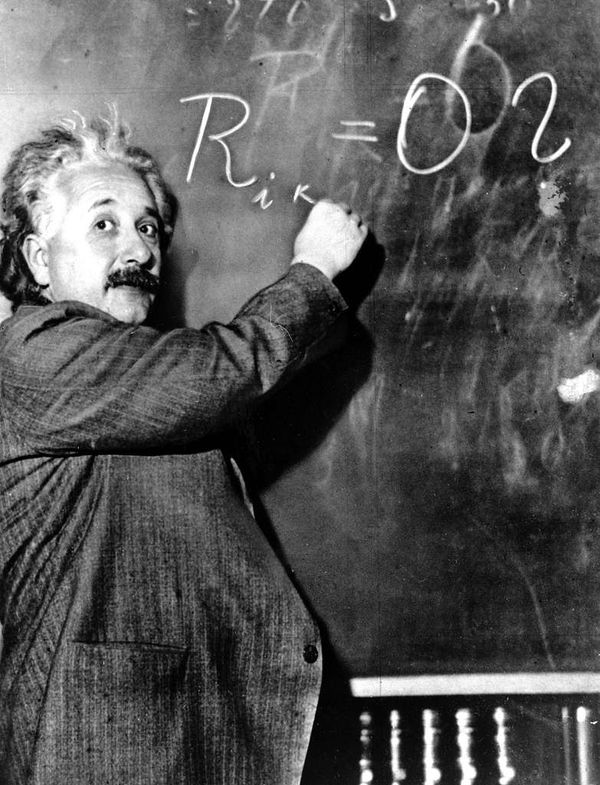
Albert Einstein did not fail math. This myth is so thoroughly disproven by the historical record that it is worth stating flatly before examining where it came from.
Einstein excelled at mathematics from an early age. By 12 he had taught himself algebra and Euclidean geometry over a single summer. By 15 he had mastered calculus. His school records show consistently strong performance in mathematics and physics throughout his education in Switzerland. His university entrance exam at the Zurich Polytechnic showed outstanding results in math and physics, though he scored lower in French and botany.
The myth appears to have multiple origins. One involves a grading scale change at Einstein's school in Switzerland. When he was young, the Swiss school system used a scale where 6 was the highest grade and 1 was the lowest — the opposite of the scale later adopted. A retrospective glance at his early grades, misread against the new scale, could make excellent marks look like failures. But there is no evidence this misreading actually occurred in a way that generated the myth.
More likely, the story spread because it served an inspiring purpose. The idea that the greatest physicist in history once failed at the subject he later mastered is a motivational narrative — it tells struggling students that early failure is not destiny. It is the kind of myth that feels useful and kind, which may explain why it has been so hard to dislodge despite being completely unsupported by evidence.
Einstein did fail his first entrance exam to the Zurich Polytechnic at age 15, but this was because he was two years younger than the typical applicant and had not yet completed his formal schooling. His mathematics scores on that exam were excellent. He retook the exam the following year after completing his schooling and was admitted. That is a more modest but entirely accurate story about persistence.
George Washington had wooden teeth
Credit: Smithsonian / Unsplash
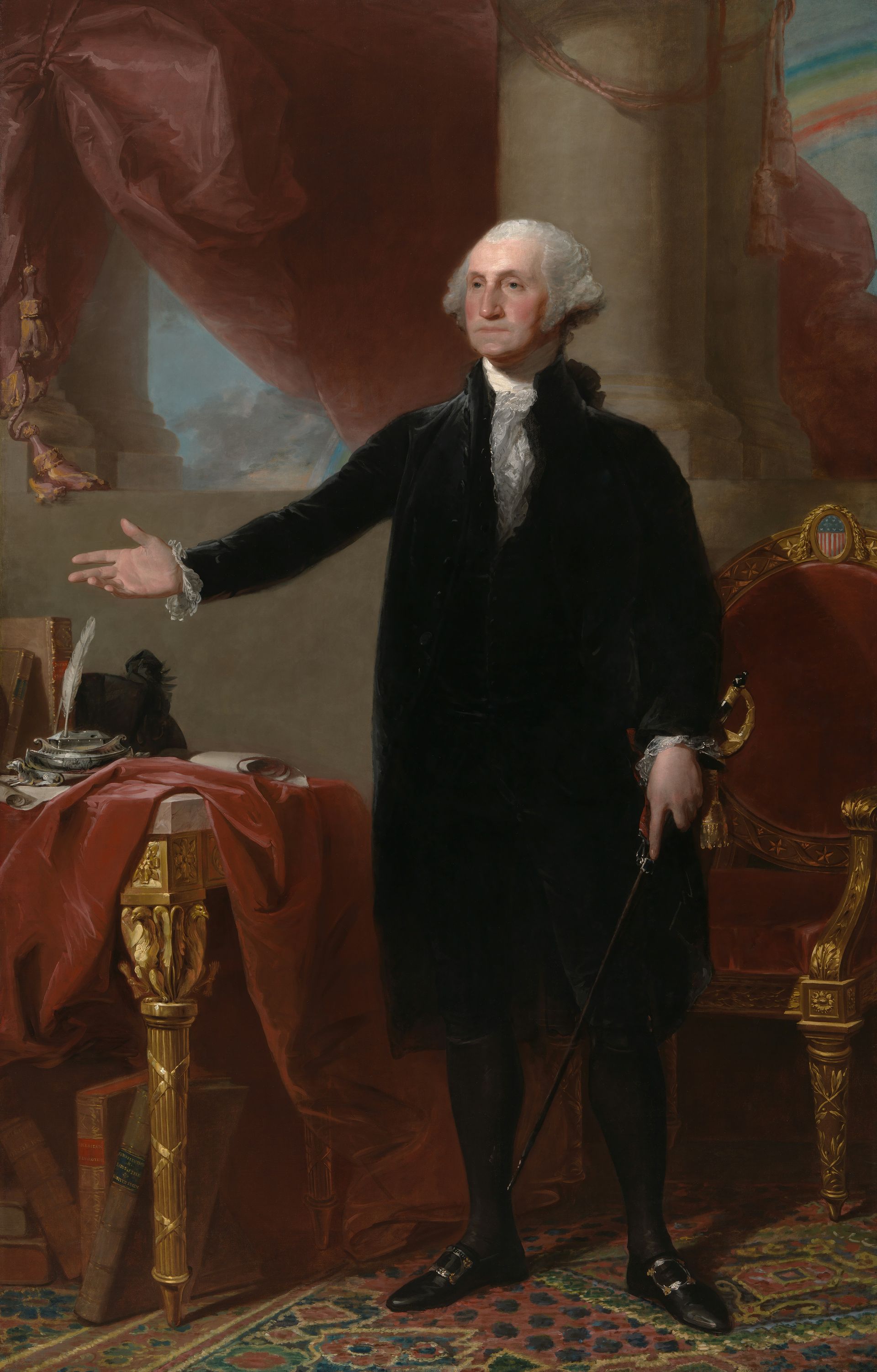
George Washington wore dentures for most of his adult life — his teeth began failing in his 20s, and by the time he took the presidential oath in 1789 he had only one natural tooth remaining. But the dentures were not made of wood, and no wooden dentures from any period of history have been found or documented.
Washington's dentures were made from a combination of materials: human teeth, animal teeth including those of hippopotamuses and cows, ivory from elephant and walrus tusks, and metal alloys including lead. The construction was uncomfortable and imperfect by modern standards. His dentures are described by contemporary accounts and dental historians as painful, ill-fitting, and distorting to his facial appearance — which is thought to explain the tight-lipped, slightly pained expression visible in some of his portraits.
The wooden-teeth myth may have originated from the visual appearance of the actual dentures, which included carved ivory components that could be mistaken for wood in poor lighting or faded illustrations. Ivory yellows and darkens with age in ways that can superficially resemble wood grain. Some dentures of the era also incorporated wooden pins or bases, which could have contributed to a game-of-telephone transformation from "dentures with wooden components" to "wooden dentures."
Washington's actual dental history is preserved in part because he kept meticulous records of payments to dentists and dental suppliers, and because some of his dentures survive in museum collections — most notably at Mount Vernon. The surviving examples make clear that the materials were exotic and expensive, not the simple wood of the popular myth. Human teeth used in dentures during this period were often purchased from poorer individuals, including, in Washington's case, likely from enslaved people at Mount Vernon — a detail the wooden-teeth myth effectively obscures.
The Great Wall of China is visible from space

Credit: Jens F / Pexels
The Great Wall of China is not visible from space with the naked eye, and the claim is not particularly close to being accurate. The wall ranges from roughly 15 to 30 feet wide — impressive on the ground but far too narrow to resolve from low Earth orbit without optical aids, let alone from the Moon.
Astronauts who have directly addressed the question have consistently said they could not see it. Chinese astronaut Yang Liwei, who became the first Chinese person in space in 2003, specifically reported being unable to locate the wall despite trying. NASA scientists and optical physicists have confirmed that the wall is simply too narrow relative to its length to be visible against the surrounding landscape, which in many places closely matches the wall's color.
The myth appears in print as early as 1932, when a Ripley's Believe It or Not column claimed the wall was "the mightiest work of man, the only one that would be visible to the human eye from the moon." This predated actual spaceflight by 25 years, so the claim was speculation rather than observation — but it was repeated widely enough that it became received wisdom.
There is an irony in the persistence of this myth: the Great Wall is genuinely extraordinary by any earthly measure — spanning thousands of miles, built over many centuries, and representing an enormous mobilization of labor and resources. It does not need a false superlative to be impressive. The mythology around its visibility seems to have been generated precisely because the wall is so significant that people wanted to extend its greatness into the cosmos, even without evidence.
From orbit, structures like major highways, airports, cities, and reservoirs are more easily visible than the wall. The narrowness-to-length ratio simply makes it the wrong shape for naked-eye detection from that altitude.
Vikings had horned helmets
Credit: Pixabay / Pexels
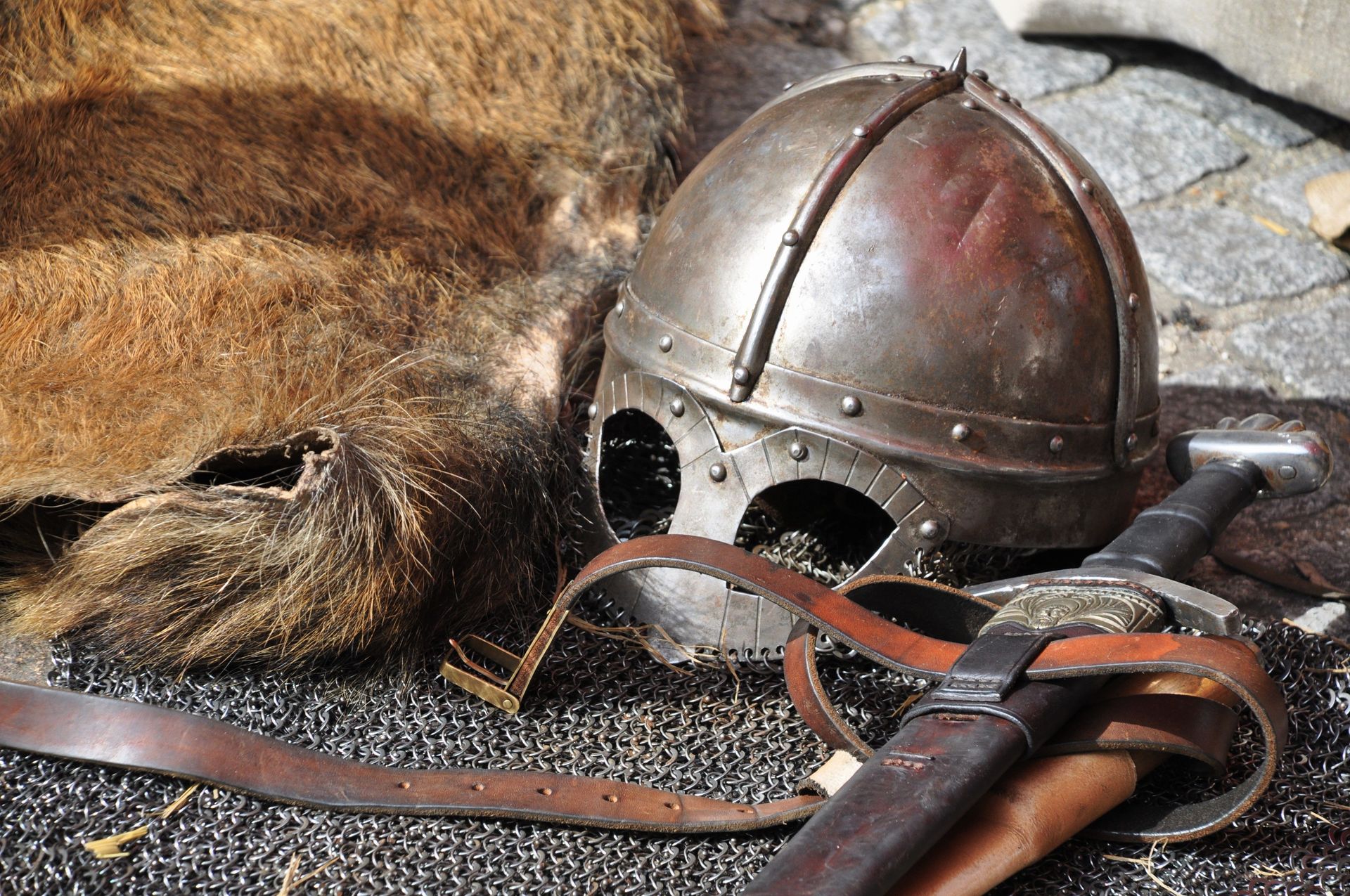
No archaeological evidence supports the idea that Viking warriors wore helmets with horns in battle. The single genuine Viking helmet discovered to date — the Gjermundbu helmet, found in Norway and dating to the 10th century — is a simple iron dome with a protective nosepiece, completely free of horns or any decorative protrusions.
The horned-helmet image was largely invented by 19th-century Romanticism. When Scandinavian national identity movements sought powerful visual symbols of their Norse heritage, artists, theatrical costume designers, and illustrators reached for dramatic imagery. The most famous early example is the Swedish artist Gustav Malmström, whose 1820 illustration for a Nordic epic depicted Vikings with winged helmets. Later depictions added horns. The costume designer Carl Emil Doepler created horned helmets for the original 1876 production of Wagner's Ring Cycle, which became enormously influential across European and American visual culture.
Horned helmets did exist in Scandinavia — but they predate the Viking Age by roughly a thousand years and appear to have had ceremonial or religious functions rather than military ones. The Veksø helmets, discovered in a Danish bog and dating to around 900 BCE, feature prominent horns. These are Bronze Age artifacts, not Viking Age ones, and they show no signs of having been worn in combat.
The Viking Age — roughly 793 to 1066 CE — involved genuine military innovation: the longship, flexible raiding tactics, and effective iron weaponry. Wearing horned helmets into battle would have been a practical disadvantage, since the horns would catch sword blows and destabilize the helmet. Warriors of any era tend not to add features to their armor that make them easier to kill.
Lincoln wrote the Gettysburg Address on the back of an envelope
-1920x2544.jpg)
Credit: Archives New Zealand / Wikimedia Commons (CC BY-SA 2.0)
The story that Abraham Lincoln dashed off the Gettysburg Address on an envelope during the train ride to Pennsylvania is a charming origin story that appears to be false in all its essential details.
Multiple drafts of the Gettysburg Address survive. The earliest known draft — called the Nicolay copy — is written in ink on two sheets of paper, one in a style consistent with White House stationery and one on a different paper stock. The ink and paper suggest the first page was written in Washington before Lincoln's departure. The existence of these drafts, combined with Lincoln's known working habits and his meticulous approach to major speeches, makes spontaneous envelope composition implausible.
Lincoln was a careful writer who revised important texts extensively. His other major speeches — the First Inaugural, the Second Inaugural — went through multiple drafts over extended periods. There is no reason to believe he would have treated a major commemorative address at the dedication of a military cemetery any differently.
The envelope story appears to have originated from later, unreliable reminiscences, likely told after Lincoln's assassination when his every act had acquired legendary significance. The desire for a story that captured the casual, self-made genius of Lincoln made the envelope narrative irresistible. By the time anyone thought to examine it critically, it had been repeated in enough books and speeches to seem authoritative.
What the historical record actually shows is a Lincoln who arrived in Gettysburg the night before the ceremony, attended a dinner, and continued working on the speech that evening — behavior consistent with careful preparation, not last-minute improvisation.
The Salem witch trials burned people at the stake
Credit: University of Toronto / Picryl
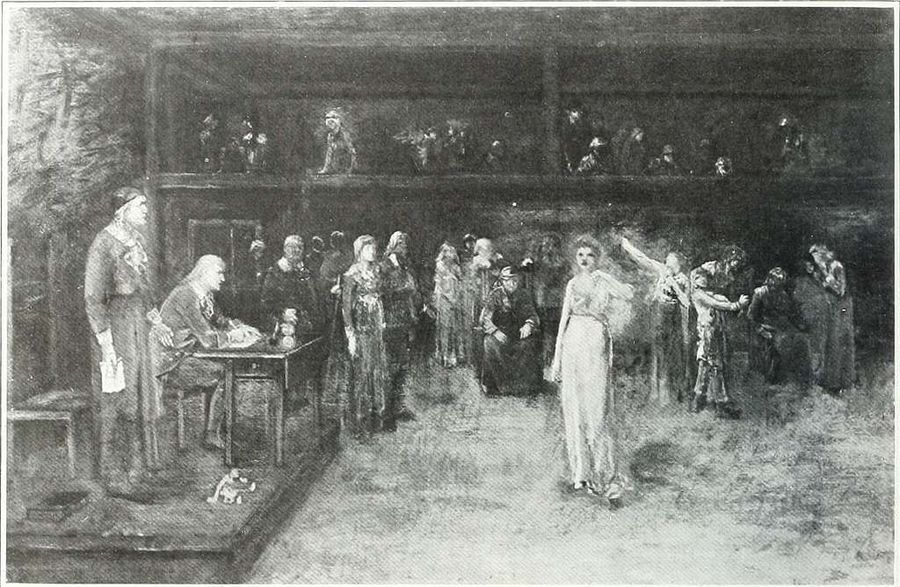
No one was burned at the stake during the Salem witch trials of 1692. This misconception conflates Salem with European witch-trial practices, where burning was used in some jurisdictions, particularly in parts of continental Europe and Scotland.
In Salem, 19 people were executed by hanging. One man, Giles Corey, was pressed to death with heavy stones — a legal procedure used to compel him to enter a plea, since refusing to plead meant his estate could not be seized. Several others died in prison awaiting trial. No one in the Salem proceedings was burned.
The association of witch trials with burning likely comes from the broader cultural memory of European witch persecution, particularly in Germany and France, where burning was more common. This history has blended with Salem in popular memory, producing a unified image of witch trials as burnings that does not accurately reflect the specific legal practices of colonial Massachusetts.
The Salem trials themselves were a product of specific local conditions: a smallpox epidemic, ongoing conflicts with neighboring Indigenous nations, political instability following the revocation of the Massachusetts Bay Colony charter, a land dispute that had divided the community of Salem Village for years, and the intense religious culture of Puritan New England. The accusations began among a small group of young women in the winter of 1691 to 1692 and spiraled into a broader panic that the colonial government eventually halted by questioning the admissibility of "spectral evidence" — testimony about what accusers claimed to have seen in dreams or visions.
Gladiators fought to the death regularly
Credit: Rafael Nicida / Pexels
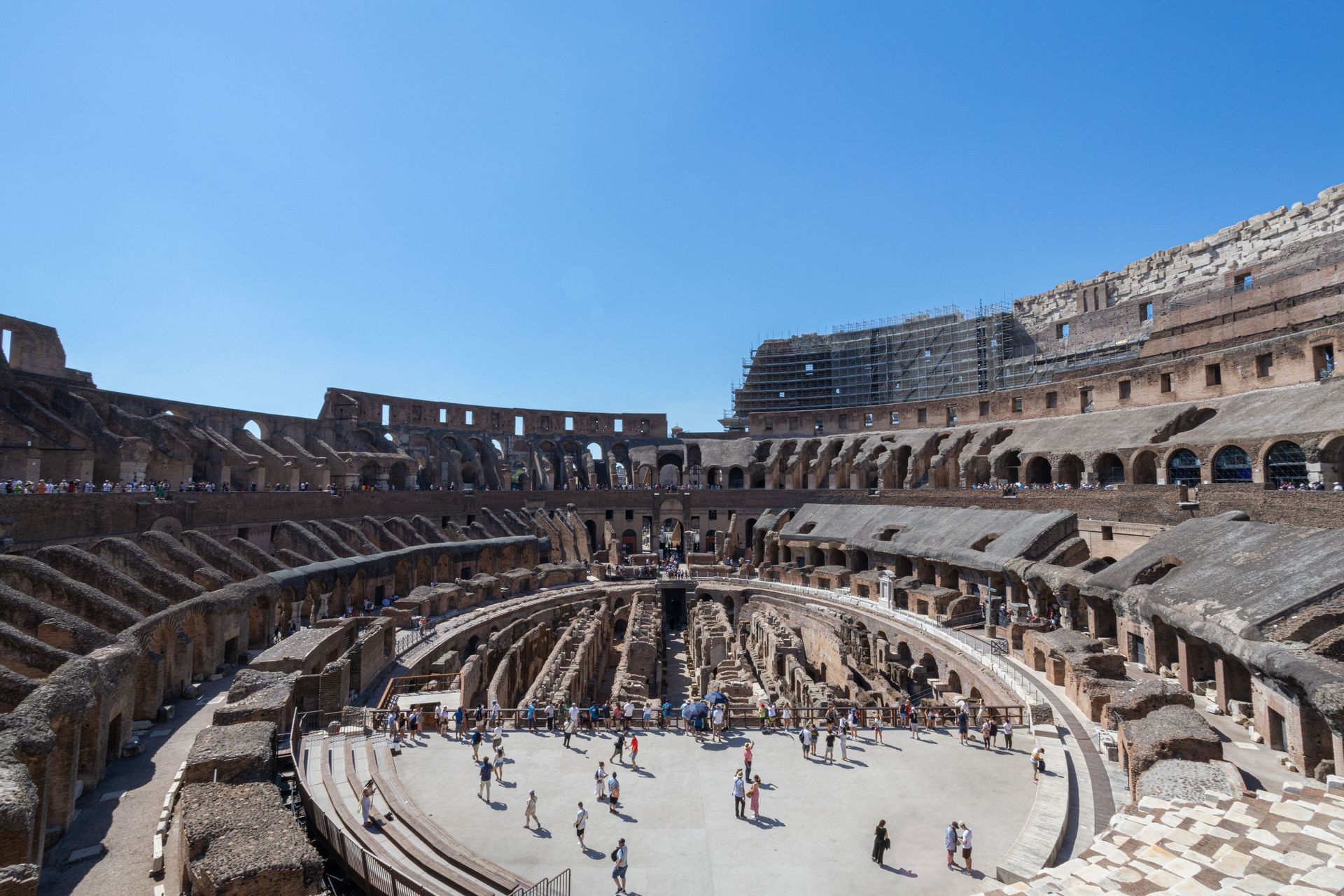
The popular image of gladiatorial combat as a routine bloodbath in which combatants regularly killed each other misrepresents the economics and logistics of the Roman arena. Gladiators were expensive. They required years of specialized training, ongoing food and medical care, and represented a significant investment by the lanistas — the trainers and owners who ran gladiatorial schools. Killing a trained gladiator in every match would have been financially ruinous.
The mortality rate in gladiatorial combat varied by period and type of fight, but most historical analyses of surviving inscriptions — epitaphs, records of fights, dedications — suggest that death in any given match was relatively uncommon. One analysis of gladiatorial inscriptions from the early imperial period suggests roughly one in five to one in six fights ended in death. Many matches ended when one combatant was wounded or exhausted and surrendered, at which point the crowd and the presiding official — typically the games' sponsor, not the emperor — determined whether to grant mercy.
The thumbs-up/thumbs-down gesture associated with the decision to spare or kill is itself poorly documented and contested by historians. The Latin phrase "pollice verso" — turned thumb — appears in Roman sources, but the direction of the turn and what it signified remain genuinely uncertain. The specific image of a downward thumb meaning death comes largely from a 19th-century painting by Jean-Léon Gérôme, which shaped subsequent artistic and cinematic depictions far more than ancient evidence did.
Gladiators who survived long careers could earn freedom and sometimes significant wealth. The profession carried social stigma but also the possibility of celebrity — some gladiators were famous throughout the Roman world.
The medieval period was intellectually dark and stagnant

Credit: Calvin Seng / Pexels
The label "Dark Ages" for the medieval period was a rhetorical invention of Renaissance humanists who wanted to distinguish their own era's classical revival from what they saw as centuries of cultural decline. As a historical description, it is misleading in almost every particular.
The medieval period — roughly 500 to 1500 CE — saw the founding and expansion of European universities, beginning with Bologna in 1088 and followed by Oxford, Paris, Cambridge, and dozens of others by the 13th century. It produced the systematic philosophical tradition of Scholasticism, the architectural achievement of Gothic cathedrals, the legal foundations of modern European states, the development of sophisticated agricultural techniques that transformed the continent's carrying capacity, and the preservation and transmission of classical Greek knowledge by Islamic scholars, particularly in mathematics, astronomy, and medicine.
Islamic civilization during this same period was producing major advances in algebra, optics, and astronomy. The term "Dark Ages" was never applied to the Islamic world, which helps reveal how Eurocentric the concept always was.
Medieval Europe was also far more cosmopolitan and intellectually mobile than the myth suggests. Scholars traveled across the continent, correspondence networks connected monasteries and universities, and translations of Arabic and Greek texts circulated in ways that actively shaped European intellectual development. The 12th-century Renaissance — a period of renewed contact with classical and Islamic learning — produced a surge in scientific and philosophical inquiry that directly preceded the more famous Italian Renaissance.
The "Dark Ages" framing persists in part because it serves a convenient narrative: the fall of Rome as civilizational collapse, followed by centuries of waiting until European civilization "reawakened." This story is too tidy to be accurate.
Machiavelli advocated for ruthless, amoral leadership

Credit: Maria Doina Mareggini / Pexels
Niccolò Machiavelli's reputation as a cynical advocate for pure political ruthlessness comes almost entirely from a selective reading of The Prince, a short advisory text he wrote in 1513. Reading The Prince alongside his other work, particularly the much longer Discourses on Livy, produces a substantially different picture.
The Discourses, which Machiavelli considered his more important work, is an extended defense of republican government and civic virtue. It argues that free republics are stronger and more stable than principalities, that a politically engaged citizenry is essential to lasting power, and that rulers who rely entirely on force and fraud ultimately undermine themselves. This is not the message of a man who simply believed that the ends justify the means.
The Prince was written in a specific political context: Machiavelli had recently lost his government position following the return of the Medici to Florence, and the text can be read as an attempt to demonstrate his usefulness to the new rulers by offering practical political advice. Whether it was sincere, ironic, or strategically calculated is a question scholars have debated for five centuries.
What "Machiavellian" came to mean — unprincipled manipulation for personal gain — captures some of The Prince's content while ignoring its context, irony, and the broader body of work. Machiavelli was a republican who spent years serving the Florentine Republic before the Medici expelled him. The man who wrote The Prince was also the man who wrote extensively about the value of citizen armies over mercenaries, the importance of popular support for stable rule, and the self-destructive nature of cruelty that serves no practical end.
The Boston Tea Party was about taxation without representation
Credit: Sotheby's / Picryl
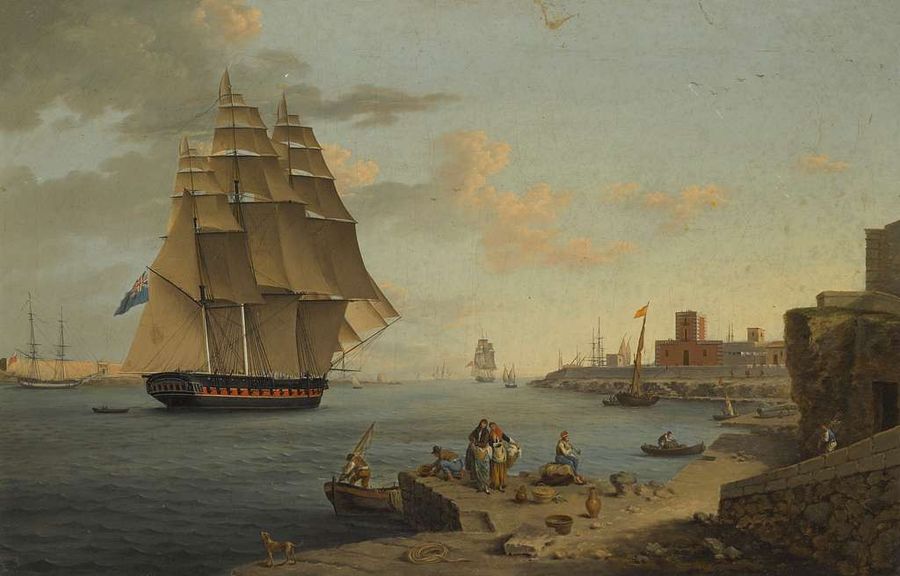
The familiar phrase "no taxation without representation" captures a genuine colonial grievance, but it does not accurately describe the immediate cause of the Boston Tea Party of December 1773.
The specific trigger was the Tea Act of 1773, which actually lowered the price of tea in the American colonies. The act gave the East India Company the right to sell tea directly to the colonies, bypassing colonial merchants and cutting out the middlemen who had previously imported tea — including tea smuggled from the Netherlands, which was how many colonists obtained their supply. The cheaper legal tea threatened to undercut the smuggling networks that enriched influential colonial merchants.
The colonial protesters were not simply poor people outraged at being taxed without consent. Many were merchants with direct financial interests in the existing tea trade. The broader constitutional argument about taxation without representation was real and important, but the Boston Tea Party itself was also, at least in part, a trade dispute dressed in constitutional language.
The tax on tea that remained after the Tea Act was a small one that had been in place since the Townshend Acts of 1767. Colonists had been boycotting this taxed tea for years, but many had quietly resumed purchasing it. The Tea Act's arrival of cheaper legal tea threatened to end the boycott and with it the constitutional resistance the merchants were helping to fund.
None of this makes the American Revolution a mere commercial dispute — the constitutional arguments were genuine and the stakes were real. But the Tea Party specifically illustrates how economic and ideological motivations intertwine in historical events in ways that simpler narratives tend to flatten.
Nero fiddled while Rome burned
Credit: Horia Horobeanu / Pexels
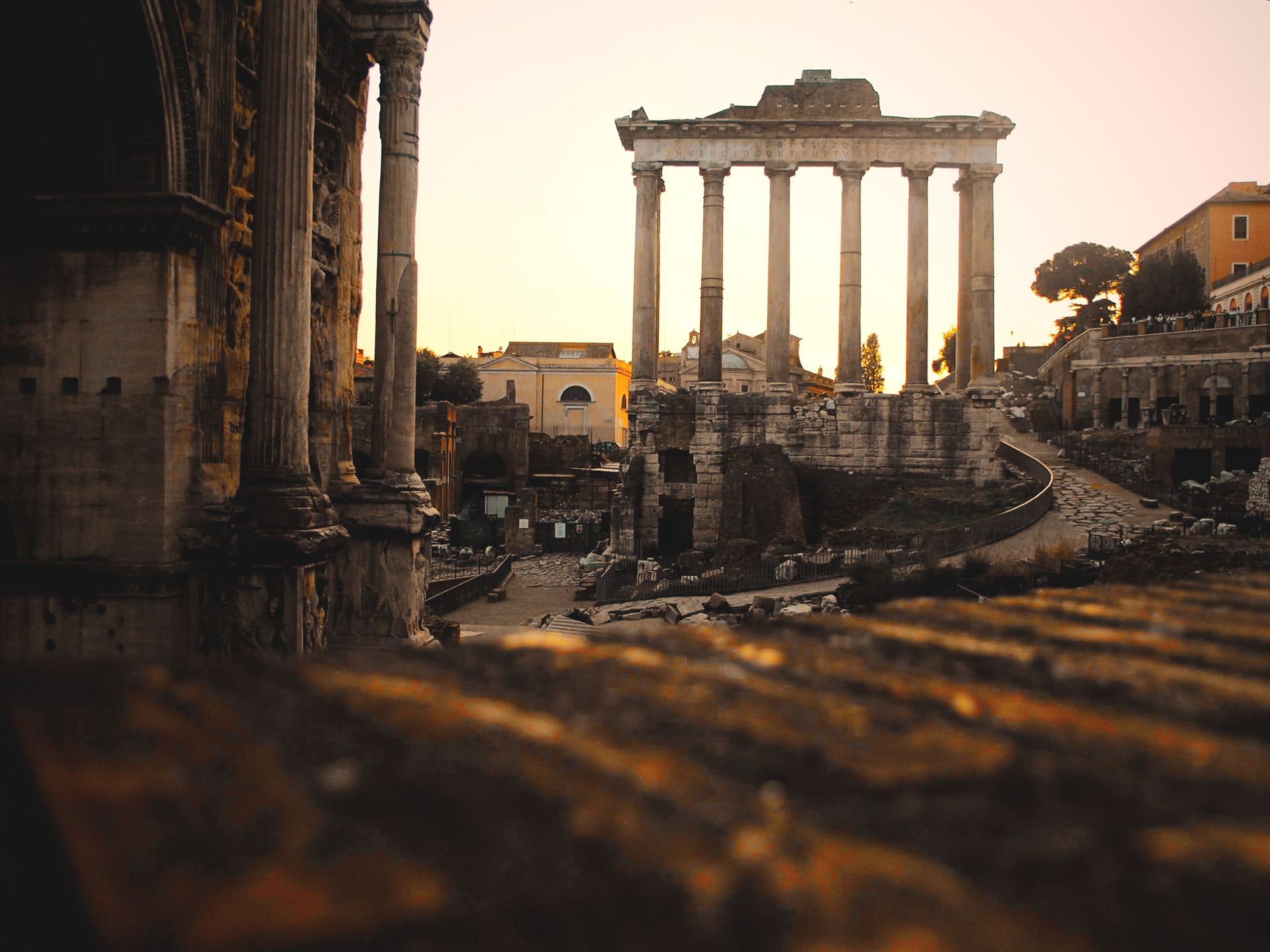
The Great Fire of Rome in 64 CE is one of the best-documented disasters of the ancient world, and the historical record does not support the image of Emperor Nero fiddling — or playing any instrument — while the city burned.
Tacitus, writing about 50 years after the event, recorded that Nero was at his villa in Antium (modern Anzio), roughly 35 miles from Rome, when the fire broke out, and that he returned to the city to oversee relief efforts. Tacitus acknowledged that some people blamed Nero for starting the fire, but he did not endorse this view and noted that others suspected it had started accidentally near the Circus Maximus.
Suetonius, writing later and less reliably, claimed Nero played the lyre and sang about the fall of Troy while watching the fire from a tower — a more dramatic account that emphasizes the emperor's callousness. But Suetonius was writing biography with a heavy emphasis on imperial vice, and his accounts of Nero are generally regarded as hostile and unreliable.
The violin, in any case, was not invented until the 16th century — roughly 1,500 years after Nero's death in 68 CE. If Nero played anything, it would have been the cithara, a type of lyre. The fiddle in the saying is an anachronism introduced by later translation and storytelling.
What the historical record suggests is that Nero did eventually arrive in Rome and organize relief, including opening public buildings as shelter for displaced residents and importing food from nearby regions. Whether these actions were genuine or calculated to deflect accusations of arson, the evidence does not support an emperor indifferently entertaining himself while Rome burned.
The pilgrims landed at Plymouth Rock

Credit: Pixabay / Pexels
The story that the Mayflower passengers stepped ashore at a specific rock when they arrived in the New World in 1620 is not supported by any contemporary account from the Pilgrims themselves.
The Mayflower passengers left detailed records of their arrival, including William Bradford's Of Plymouth Plantation, which remains the primary firsthand source. Bradford's account describes the landing process in detail — the exploring parties, the decision to settle at Plymouth, the interactions with the local Wampanoag people — but says nothing about a particular rock. No account written within a century of the landing mentions Plymouth Rock.
The rock's significance was first claimed in 1741, more than 120 years after the landing, when a 95-year-old Pilgrim descendant named Thomas Faunce identified a specific rock near the shore as the traditional landing spot. His claim was based on what he said his father had told him, making it third-hand testimony delivered more than a century after the event in question. This is not strong historical evidence.
Plymouth Rock has since been moved, broken, cracked, chiseled for souvenirs, reunited, and installed in its current location under a canopy. It is considerably smaller than the rock that existed in 1620, partly because so many visitors carried off fragments as keepsakes during the 18th and 19th centuries.
The Pilgrims did land in the Plymouth area, and they did establish a settlement that survived despite catastrophic mortality in its first winter. Their story is historically significant. But the specific stone has been elevated into a founding symbol on the basis of late, thin, and uncorroborated evidence.
Isaac Newton discovered gravity when an apple hit him on the head

Credit: Tom Swinnen / Pexels
Isaac Newton's own accounts of how he came to think about universal gravitation mention an apple — but not one striking him on the head. The story, as Newton told it in his later years to several acquaintances, including his friend William Stukeley, was that he was sitting in a garden and observed an apple falling, which prompted him to think about the nature of gravitational attraction. The fall of the apple was a prompt for thought, not a physical blow that produced an insight.
Even the more modest version of the story requires scrutiny. Newton's major work on gravity was not produced in a single moment of inspiration. The development of his theory of universal gravitation — the insight that the same force that governs falling objects on Earth also governs the motion of the Moon and planets — took years of mathematical work. The Principia Mathematica, in which he formally presented the theory, was published in 1687, roughly 20 years after the period when the apple story is supposed to have occurred.
The apple story appears to have been one of several origin narratives Newton told in his final years, when he was an elderly and celebrated figure reflecting on his career. The story has the quality of a polished anecdote — compact, memorable, and self-deprecating — which suggests it may have been shaped in the retelling. Newton also worked through the mathematics of planetary motion in the 1660s and then set it aside for years, suggesting his thought process was neither instantaneous nor linear.
The actual history of Newton's gravitational work involves correspondence with fellow scientists, disputes with Robert Hooke about credit for key ideas, and years of calculation. It is a more collaborative and contentious story than the apple implies.
Ancient Romans vomited between meals at the vomitorium
Credit: Nisa Yum / Unsplash
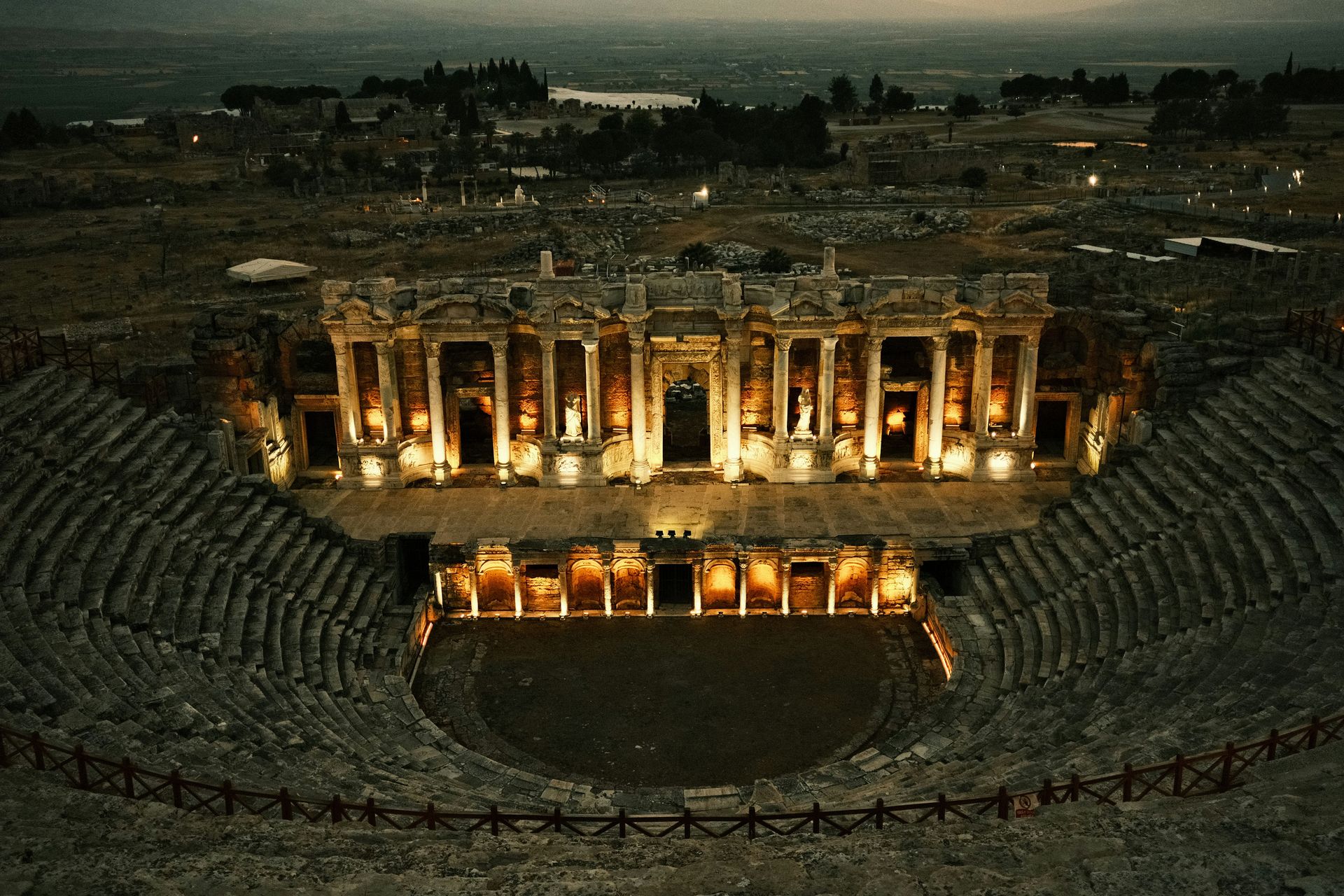
Vomitoria were real features of Roman architecture — but they had nothing to do with vomiting. A vomitorium was a passageway in an amphitheater or theater through which crowds could quickly exit. The term comes from the Latin "vomere," meaning to discharge or pour out, referring to the way crowds spilled rapidly through the passages. Every large Roman entertainment venue had vomitoria as basic architectural components.
The myth that wealthy Romans visited special rooms to vomit between courses, clearing their stomachs so they could continue feasting, is not supported by Roman sources or archaeological evidence. No such room has been identified at any Roman site. Roman texts do mention that some Romans were known to induce vomiting — the philosopher Seneca criticized the practice, and the physician Galen discussed it — but this was a criticized behavior associated with gluttony, not a normalized feature of Roman dining that had dedicated architectural space.
Roman feasts, particularly among the wealthy, were elaborate and could involve many courses over several hours. There is ample evidence that Romans ate lavishly at formal dinners, and there is some evidence of overindulgence. But the vomitorium as a designated purging room is a myth, likely produced by the word's unfortunate resemblance to its modern English cognate and then elaborated into an architectural fiction.
The confusion appears in some form in various texts from the early 20th century onward. Aldous Huxley used the term to mean a purging room in his 1923 novel Antic Hay, which may have contributed to wider circulation of the misconception. The actual architectural vomitoria are considerably less dramatic — they are simply the wide, sloping corridors that allowed Roman Colosseum crowds of 50,000 to enter and exit the building efficiently.
Early humans coexisted with dinosaurs

Credit: Narciso Arellano / Unsplash
Non-avian dinosaurs went extinct approximately 66 million years ago, at the end of the Cretaceous period, following a mass extinction event. The earliest members of the genus Homo appeared roughly 2.8 million years ago. The gap between these two events is approximately 63 million years — more than the entire span of the dinosaur era itself.
This myth circulates in a few different forms. Some of it is simple confusion between dinosaurs and the megafauna that humans actually did coexist with — woolly mammoths, giant ground sloths, saber-toothed cats, and other large Pleistocene animals that were genuinely contemporaneous with early and anatomically modern humans. These animals are impressive and well-documented, and human hunting has been proposed as a contributing factor in some of their extinctions.
Some versions of the myth are promoted by Young Earth creationist sources, which dispute the geological and biological timeline on religious grounds. These claims are not accepted by the scientific community and are contradicted by independent lines of evidence from geology, paleontology, radiometric dating, and genetics.
It is worth noting that birds are technically dinosaurs — they are the living descendants of theropod dinosaurs, specifically the maniraptoran lineage, and are classified within Dinosauria by modern taxonomy. In this sense, humans do coexist with dinosaurs: there are roughly 10,000 species of them. But this is not what people mean when they ask whether humans and dinosaurs coexisted, and acknowledging it does not help preserve the myth about Tyrannosaurus and Triceratops.
The 66-million-year gap means no human, no primate, and no animal close to the primate lineage witnessed non-avian dinosaurs. The common ancestor of humans and mice was alive when dinosaurs went extinct.
Cleopatra was Egyptian

Credit: Dmitrii Zhodzishskii / Unsplash
Cleopatra VII — the Cleopatra of popular imagination, last of the Ptolemaic rulers of Egypt — was almost certainly not ethnically Egyptian. She was a member of the Ptolemaic dynasty, which descended from Ptolemy I Soter, one of Alexander the Great's Macedonian Greek generals who established control over Egypt after Alexander's death in 323 BCE.
The Ptolemaic dynasty ruled Egypt for nearly three centuries but maintained a strongly Macedonian Greek cultural identity. Earlier Ptolemaic rulers did not bother to learn Egyptian. Cleopatra, by contrast, was notable for learning the Egyptian language — a distinction that suggests it was unusual, not standard practice for her dynasty. She was likely the first Ptolemaic ruler to speak to Egyptians in their own language.
The precise ethnic makeup of Cleopatra's family tree is genuinely uncertain in places — the identity of some of her maternal ancestors is not definitively established. But her patrilineal ancestry was unambiguously Macedonian Greek, and the cultural context in which she was raised was Hellenistic rather than Egyptian.
Cleopatra was a product of the Hellenistic world — the Greek-speaking, Greek-cultured civilization that had spread across the eastern Mediterranean and Near East following Alexander's conquests. She spoke multiple languages, including Greek, Egyptian, Hebrew, Aramaic, Ethiopian, Parthian, and Latin, according to ancient sources. This linguistic range reflects the cosmopolitan nature of Ptolemaic court culture rather than Egyptian identity.
None of this diminishes Cleopatra's historical significance. She was a skilled ruler who kept Egypt independent through skillful alliances with Julius Caesar and later Mark Antony during a period when Rome was systematically absorbing eastern Mediterranean kingdoms. Her ethnicity does not change the substance of her political achievement.
The phrase "rule of thumb" comes from a law allowing wife beating

Credit: Colin Fearing / Pexels
The claim that "rule of thumb" derives from an English or American law permitting husbands to beat their wives with a stick no thicker than their thumb is not supported by any identified legal text, court decision, or contemporaneous documentation.
Historians and legal scholars have searched extensively for this supposed law without finding it. The phrase "rule of thumb" appears in English texts from at least the 17th century as a general expression meaning a practical standard based on experience rather than precise measurement or theory. Early uses have nothing to do with domestic violence — they refer to measurements made with the thumb, approximations used by craftsmen and tradespeople.
The attribution to a wife-beating law was popularized in the 1970s by feminist scholars and activists who cited a supposed 18th-century legal principle. The claim was repeated widely because it illustrated a genuine point about the historical legal tolerance for domestic violence — husbands in many jurisdictions did have legal latitude to physically discipline wives and children for centuries, and this history is real and documented. But the specific "rule of thumb" etymology was not well-evidenced from the beginning.
A 1994 report by the U.S. Commission on Civil Rights cited the phrase's supposed origin in wife-beating law as fact, further embedding the false etymology in official discourse.
The actual origin of "rule of thumb" as a phrase is mundane: it refers to the use of the thumb as an approximate measuring tool, a common practice before standardized instruments were universal. Brewers reportedly used their thumbs to gauge the temperature of fermenting liquid. Carpenters used them to estimate small measurements. The phrase generalized from these practical uses to mean any rough-and-ready approximation.