
These home modifications for aging pets tackle the mobility, vision, and comfort changes that come with a pet's senior years without requiring any renovation
Credit: Simone Dalmeri / Unsplash
Arthritis in dogs and cats often sets in years before an owner notices a limp. A pet that hesitates before jumping onto the couch, sleeps later in the morning, or takes the stairs one at a time is usually adjusting to joint pain, not simply slowing down by choice. Home modifications for aging pets matter because most of the physical decline that comes with getting older, including stiff joints, thinning fur, fading eyesight, and weaker bladder control, plays out inside the house, on the same floors, stairs, and furniture a pet has used for years without trouble.
None of this requires a renovation. Small, targeted changes to flooring, bedding, feeding stations, and furniture access can remove the daily friction points that make a senior pet's world harder to move through, without altering the layout of a home or a pet's routine. Veterinarians who specialize in geriatric and palliative pet care consistently point to the same handful of interventions: better traction underfoot, easier access to beds and vehicles, supportive sleeping surfaces, and accommodations for the sensory losses that come with age.
Cats and small dogs are typically considered senior starting around seven to ten years old, while large and giant dog breeds can reach that stage as early as five to seven, since bigger dogs tend to age faster than smaller ones. That means the upgrades below are worth making earlier than most owners assume, well before a pet's mobility or comfort has visibly declined. Waiting until a pet is clearly struggling means introducing change during a period when change itself has become harder for an aging animal to adapt to.
The eight upgrades that follow focus on the parts of a home that matter most as a pet ages: footing, furniture and vehicle access, sleep surfaces, feeding setups, litter box design, nighttime lighting, stair safety, and temperature regulation. Each one addresses a specific, well-documented aspect of how pets age physically and cognitively, and each can be done at almost any budget, without professional installation or major disruption to the household.
Credit: kaboompics.com / Pexels
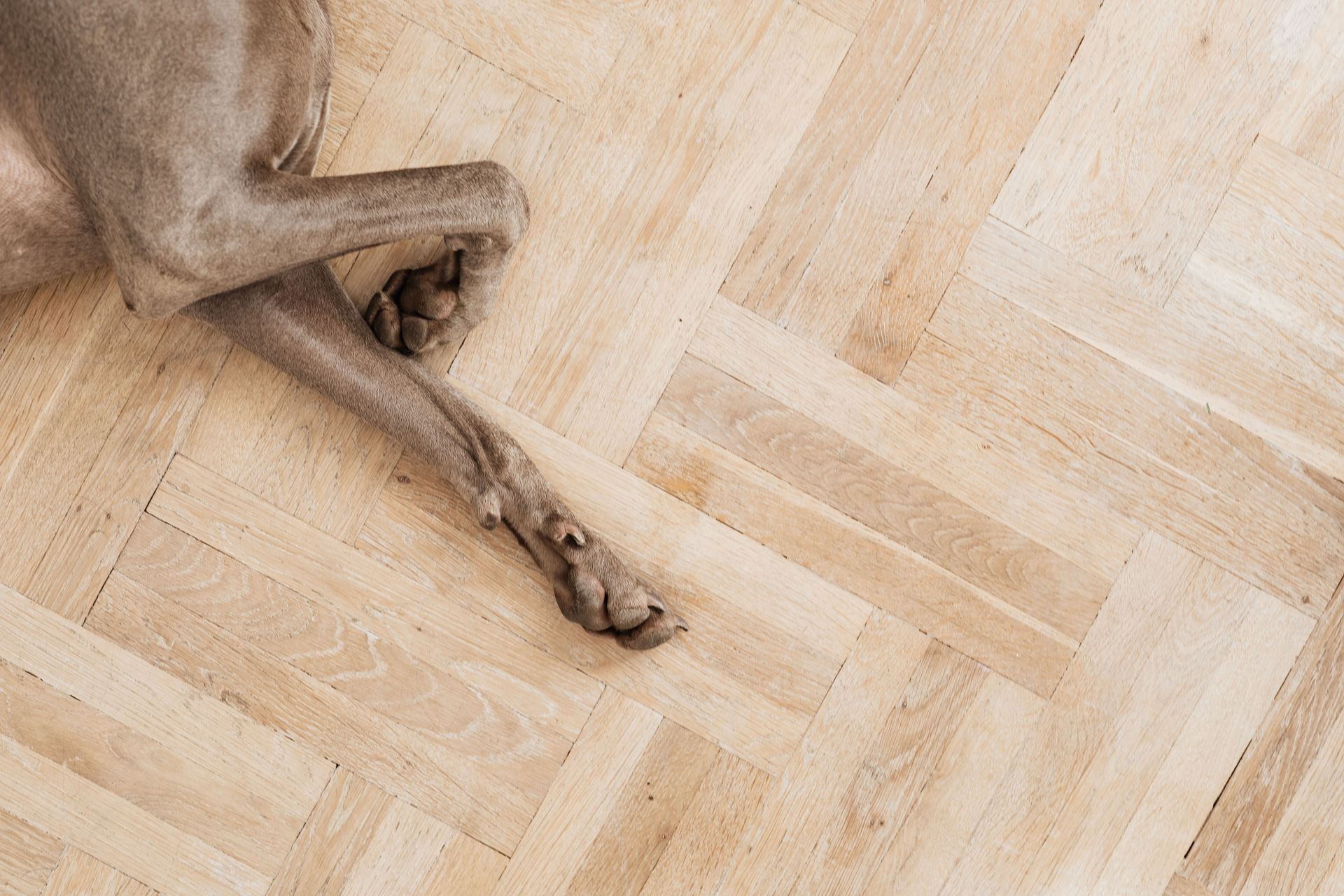
Non-slip flooring reduces the falls and slips that cause real injury in senior pets with weakening joints and muscle mass. Hardwood, tile, and laminate floors that a younger pet crossed without a second thought become genuinely difficult once arthritis, hip dysplasia, or general muscle loss sets in, because a pet's paws can no longer find reliable traction.
The simplest fix is also the cheapest: rugs, runners, and yoga mats with rubber, non-slip backing placed along the routes a pet walks most, from the food bowl to the door to the favorite sleeping spot. Full carpeting is not necessary. What matters is continuous coverage along a pet's usual path, since a single slick gap between rugs can still cause a fall.
Stairs deserve particular attention. A senior dog with weak hindquarters or a cat with reduced depth perception is far more likely to slip going down a staircase than going up, so adding a stair runner or non-slip treads to each step, not just a rug at the top and bottom, makes a meaningful difference. Some owners choose to block stairs entirely once a pet's mobility has declined enough, which is addressed separately later in this list.
For dogs specifically, toe grips, small rubber rings that slide over each nail, are a widely used option for pets that struggle on slick floors even with rugs in place. They work by giving nails something to grip on hardwood or tile, rather than sliding on a smooth nail surface. They need periodic replacement and are not a substitute for flooring changes in high-traffic areas, but they help in spots where rugs are not practical, such as narrow hallways.
Cats benefit from the same principle even though they climb rather than just walk. A cat with arthritis, common in cats past age 10 and frequently under-diagnosed because cats hide pain well, may stop using a cat tree or windowsill entirely if the surface underneath its favorite perch offers no traction for landing. Adding a rubber-backed mat beneath a cat tree or a favorite jumping spot addresses this directly.
None of these changes require replacing a floor. They require identifying the specific paths and surfaces a pet uses daily and making sure every part of that path offers secure footing, since aging pets are far more affected by a single slick patch than an otherwise well-covered room.
Credit: Amazon
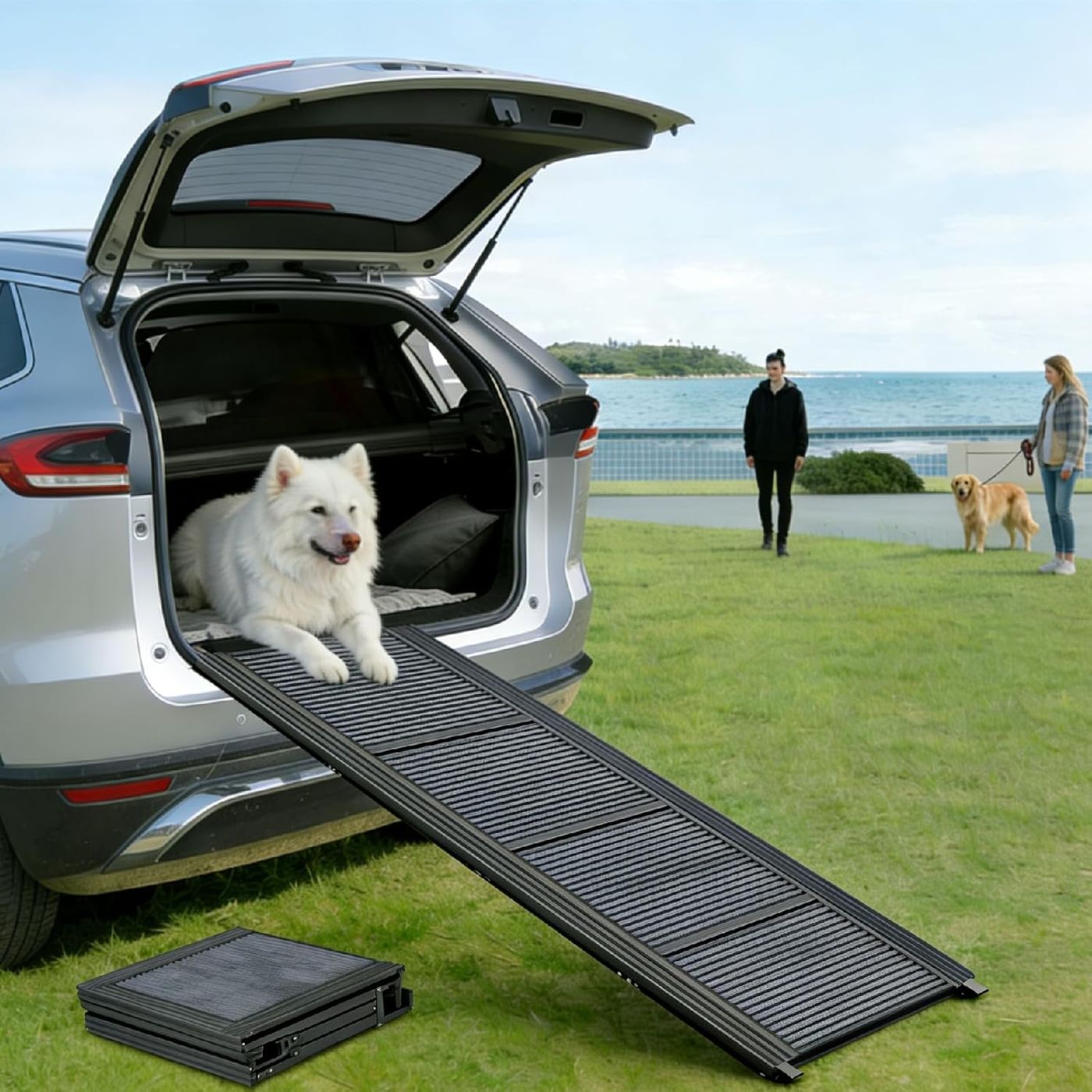
A pet ramp lets an aging dog or cat reach a bed, couch, or car seat without jumping, which matters because jumping puts sudden, concentrated stress on joints that a senior pet's cartilage and muscles can no longer absorb well. Repeated jumping is a common contributor to worsening arthritis pain over time, even in pets that show no obvious limp yet.
Two types cover most situations. A folding or telescoping ramp works well for cars, since it can be stored flat in a trunk and extended when needed, ideally with a non-slip surface and side rails to prevent a pet from stepping off the edge. A fixed or adjustable-height ramp works better indoors for a couch or bed a pet uses daily, since it stays in place and a pet can learn its exact angle and length.
Height and incline matter more than most owners expect. A ramp that is too steep defeats its own purpose, since a pet with joint pain may struggle on a steep incline as much as with a jump. As a general guide, a gentler, longer ramp is easier on aging joints than a short, steep one, even if it takes up more floor space.
Training a pet to use a ramp takes patience. Many senior pets, especially cats, ignore a ramp at first simply because jumping is still their default habit. Placing treats along the ramp's surface for the first days, and physically guiding a pet's front paws onto it a few times, usually builds the new habit within a week or two.
For dogs that travel by car regularly, a ramp or portable steps for the vehicle deserve equal priority to an indoor ramp. Lifting a dog with hip dysplasia or degenerative joint disease in and out of an SUV or truck bed is difficult for an owner and painful for the dog, and it is one of the most common reasons senior dogs stop going on car rides altogether.
Credit: Impact Dog Crates/ Pexels
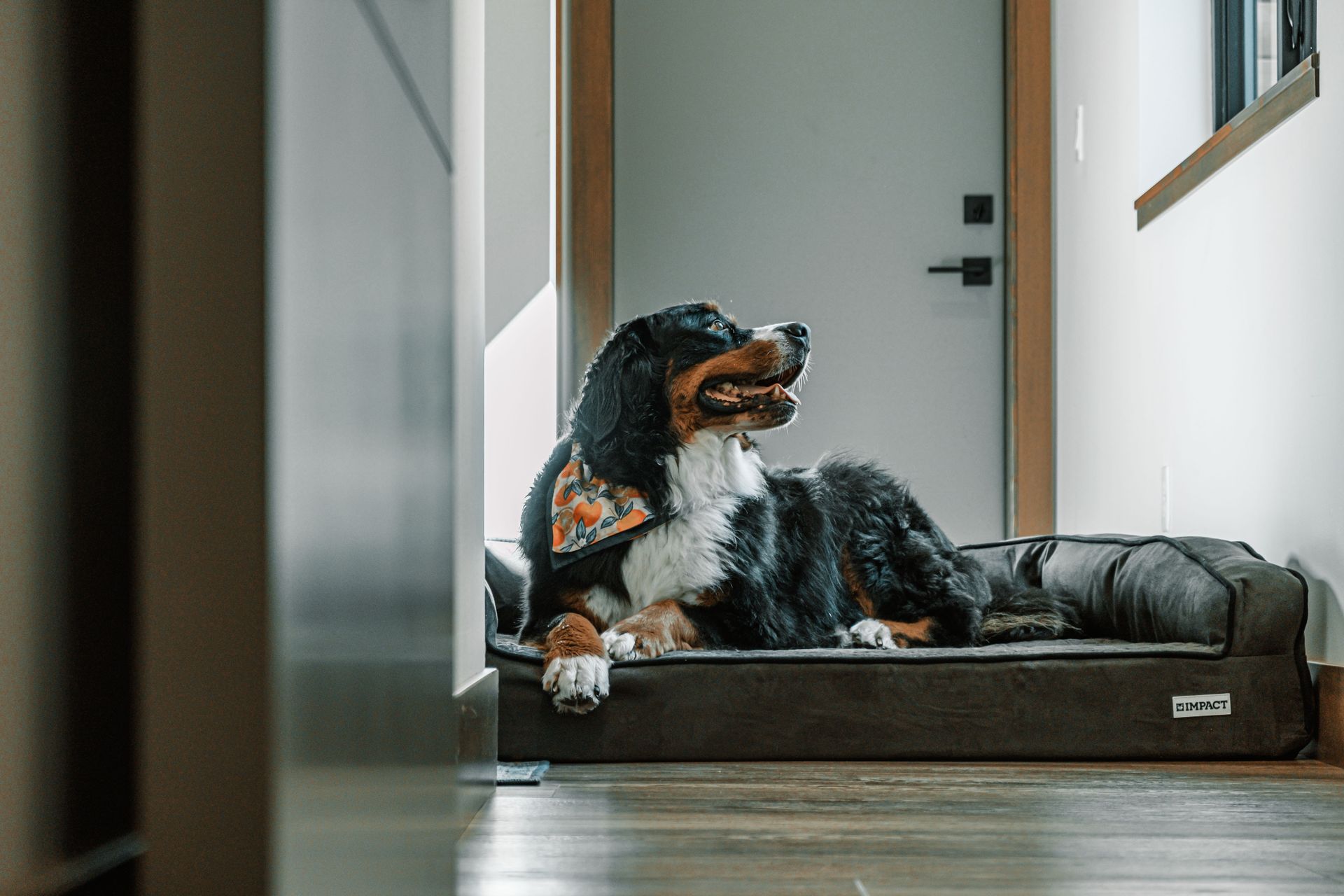
An orthopedic bed, built with memory foam or high-density support foam rather than standard fiberfill, cushions pressure points on hips, elbows, and shoulders that standard pet beds do not adequately support. For a dog or cat with arthritis, the difference shows up in how long it takes them to get comfortable and how often they shift position through the night.
Standard beds compress quickly and lose their shape within months, which means a pet's joints end up resting closer to the floor than the bed's original loft suggested. Memory foam and high-density foam resist that compression far longer, distributing weight more evenly across a pet's pressure points instead of concentrating it on hips and elbows.
Placement matters as much as the bed itself. An orthopedic bed works best somewhere free of drafts and away from direct heating vents, since senior pets regulate body temperature less efficiently than younger ones. A spot near, but not directly under, a heat source, combined with a low-profile bed a pet does not need to climb into, covers both temperature and access in one upgrade.
Bed height is a separate consideration from cushioning. A raised bed frame keeps a pet off a cold floor, which helps with joint stiffness, but any raised bed for a senior pet should sit low enough, or be paired with a small ramp, that getting in and out does not require a jump. A tall, elevated bed defeats the purpose if a stiff pet has to leap to reach it.
Washable covers are worth prioritizing over decorative fabric, since incontinence becomes more common in senior pets and a bed that cannot be laundered easily becomes unpleasant fast, which in turn discourages a pet from using it. A removable, machine-washable cover over a supportive foam core is the combination that holds up best over a pet's remaining years.
Credit: Amazon
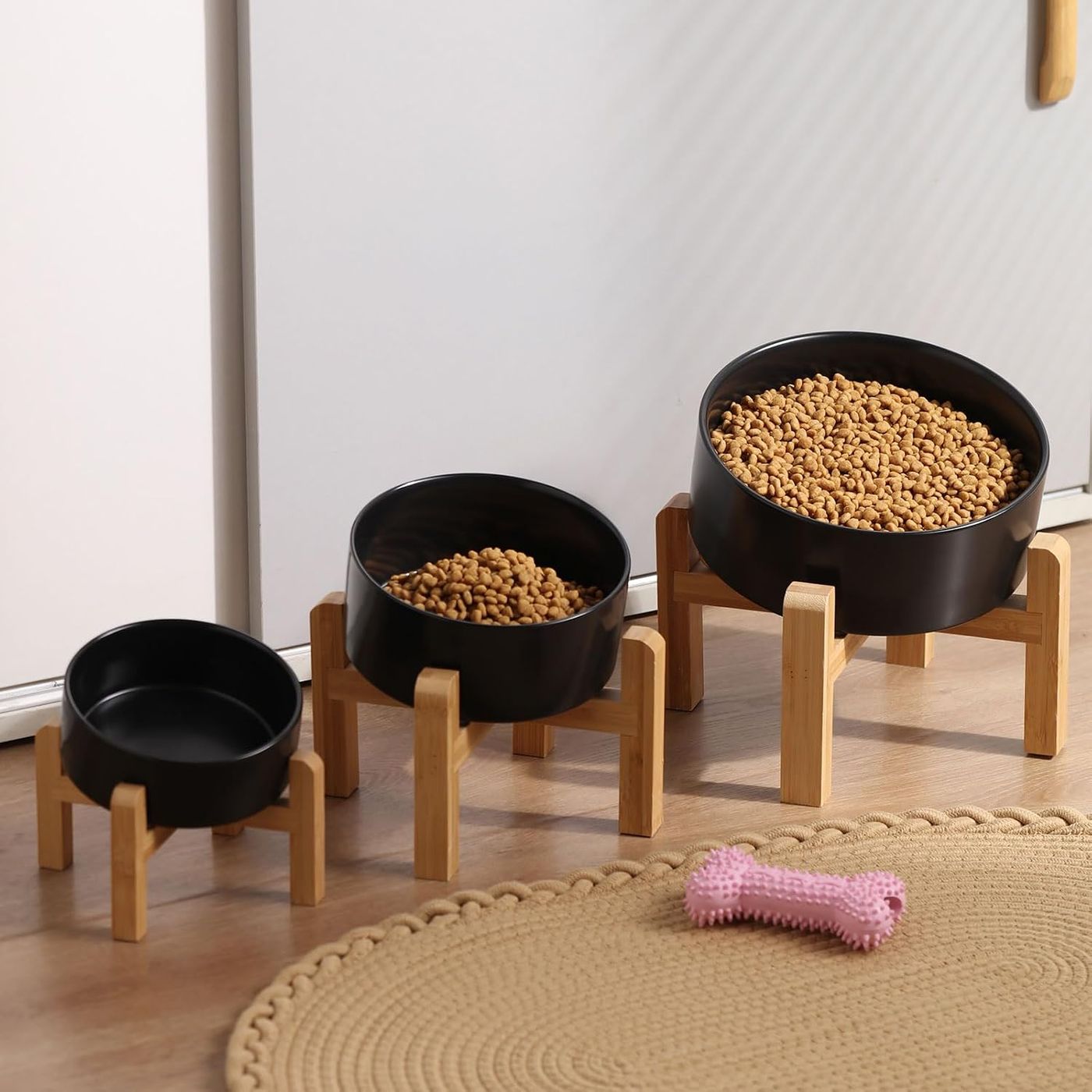
Elevating food and water bowls to chest height makes eating and drinking easier for a senior pet that has lost neck or spine flexibility, since it removes the need to lower the head all the way to the floor for every meal. This matters most for dogs with cervical spine issues or megaesophagus, and for cats with arthritis in the neck and shoulders.
The exception is large, deep-chested dog breeds, such as Great Danes, standard poodles, and German shepherds, where research published around 2000 in the Journal of the American Veterinary Medical Association linked raised bowls to a higher risk of gastric dilatation-volvulus, commonly called bloat, a life-threatening emergency. Owners of deep-chested breeds should check with a veterinarian before elevating bowls, since the standard advice for most pets does not automatically apply to this group.
For cats, positioning matters as much as height. Bowls placed away from cat flaps, floor-level windows, and litter boxes reduce the stress of eating in a vulnerable spot, and a cat should be able to approach its bowl from more than one direction rather than being cornered against a wall. Older cats, already more prone to stress-related appetite loss, benefit from feeling secure while eating.
Multiple water stations throughout the house address a separate age-related issue: reduced mobility means a senior pet is less likely to walk to a single water source across the house, which raises the risk of dehydration, particularly for cats with early kidney disease, a common condition in cats past age 10. Spreading two or three water bowls across different rooms, rather than relying on one central station, keeps water intake up without requiring a pet to travel far.
A pet fountain is worth considering for cats specifically, since many cats are instinctively drawn to moving water and drink more from a fountain than a still bowl, which supports kidney and urinary health as cats age.
Credit: Nadiye Odabaşı / Pexels
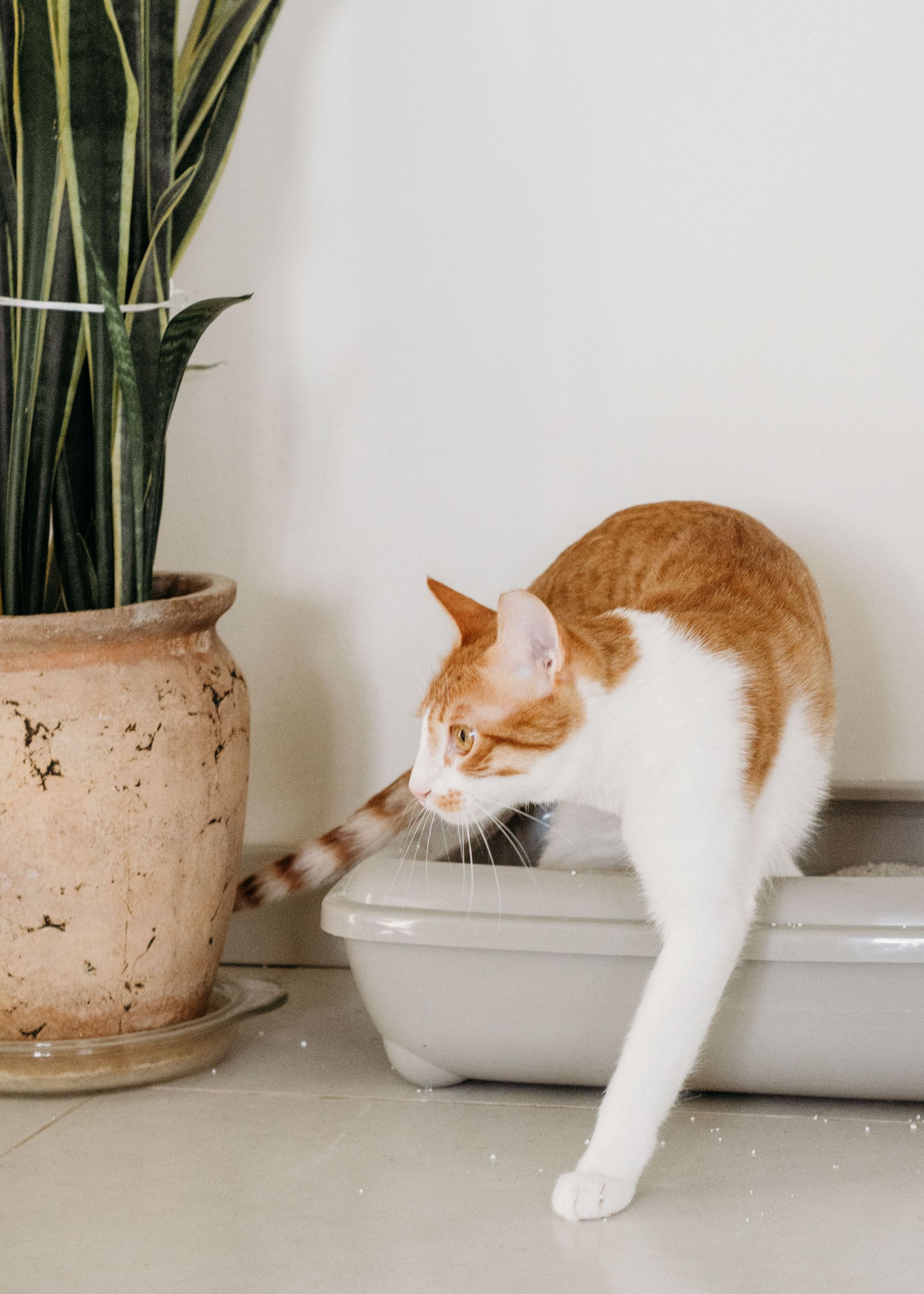
A senior cat needs a litter box with lower sides or a gentle entry ramp, since arthritis in the hips and spine makes climbing over a tall box wall painful enough that many older cats simply stop using the box and eliminate elsewhere instead. This single change resolves a large share of what owners assume is a behavioral problem in an aging cat but is actually a mobility one.
Box placement should shrink the distance a cat has to travel, not expand it. A cat with joint pain is less willing to climb a full flight of stairs to reach the only litter box in the house, so adding a second box on a different floor, and keeping at least one box within easy reach of a cat's favorite resting spots, prevents accidents that have nothing to do with training.
Box size deserves attention independent of wall height. A senior cat with reduced flexibility needs more room to turn around and position itself than it did as a younger, more limber cat, so sizing up the box itself, not just lowering the entry point, helps as well.
Litter texture can matter too, particularly for cats with arthritis in the paws. Coarse, heavy clumping litter that feels fine to a younger cat can be uncomfortable for paws with thinning pads and reduced cushioning, and switching to a softer, finer-grain litter is a low-cost change worth testing if a senior cat starts avoiding the box despite an easier entry point.
Cleaning frequency should increase as a cat ages, since senior cats are pickier about a soiled box at exactly the point when climbing to a backup box, if one is not close by, has become harder. Scooping twice a day, rather than once, keeps the box appealing at a time when a cat has less patience for compromise and fewer easy alternatives if it decides to avoid the box altogether.

Credit: Fatma Sümeyye / Pexels
Nightlights placed along a senior pet's regular nighttime paths help compensate for the gradual vision loss that affects many aging dogs and cats, including cataracts, nuclear sclerosis, and, in dogs, progressive retinal atrophy. A pet that has learned to navigate a dim house by memory can still struggle once furniture is moved or a light source it relied on is switched off.
Cataracts, a clouding of the eye's lens, are extremely common in senior dogs and appear in cats as well, though less frequently. Nuclear sclerosis, a milder, more universal haziness that develops in nearly all aging dogs and many cats, reduces low-light vision even when it does not cause the outright blindness cataracts can. Both conditions mean a pet relies more heavily on ambient light at night than it did a few years earlier.
Placing small, plug-in nightlights near a pet's water bowl, litter box, bed, and the path to a door used for nighttime bathroom breaks addresses the specific routes where a stumble is most likely and most consequential. A pet with failing eyesight that cannot find its water bowl in the dark may simply drink less, which compounds other age-related health risks like kidney strain.
Consistency in furniture placement becomes far more important once a pet's eyesight starts to fade, since a pet with vision loss increasingly navigates by spatial memory rather than sight. Rearranging a living room that a partially blind senior dog has memorized down to the inch can cause repeated collisions until the new layout is relearned, so it is worth minimizing furniture changes once vision loss is confirmed or suspected.
Motion-activated nightlights offer an advantage over always-on lights, since they provide brighter illumination exactly when a pet is moving through a space rather than a constant, lower-level glow all night, which some pets find easier to navigate by. A veterinary ophthalmologist can confirm the degree of vision loss and rule out treatable causes, which is worth pursuing before assuming any vision change is simply age.
Credit: MART PRODUCTION / Pexels
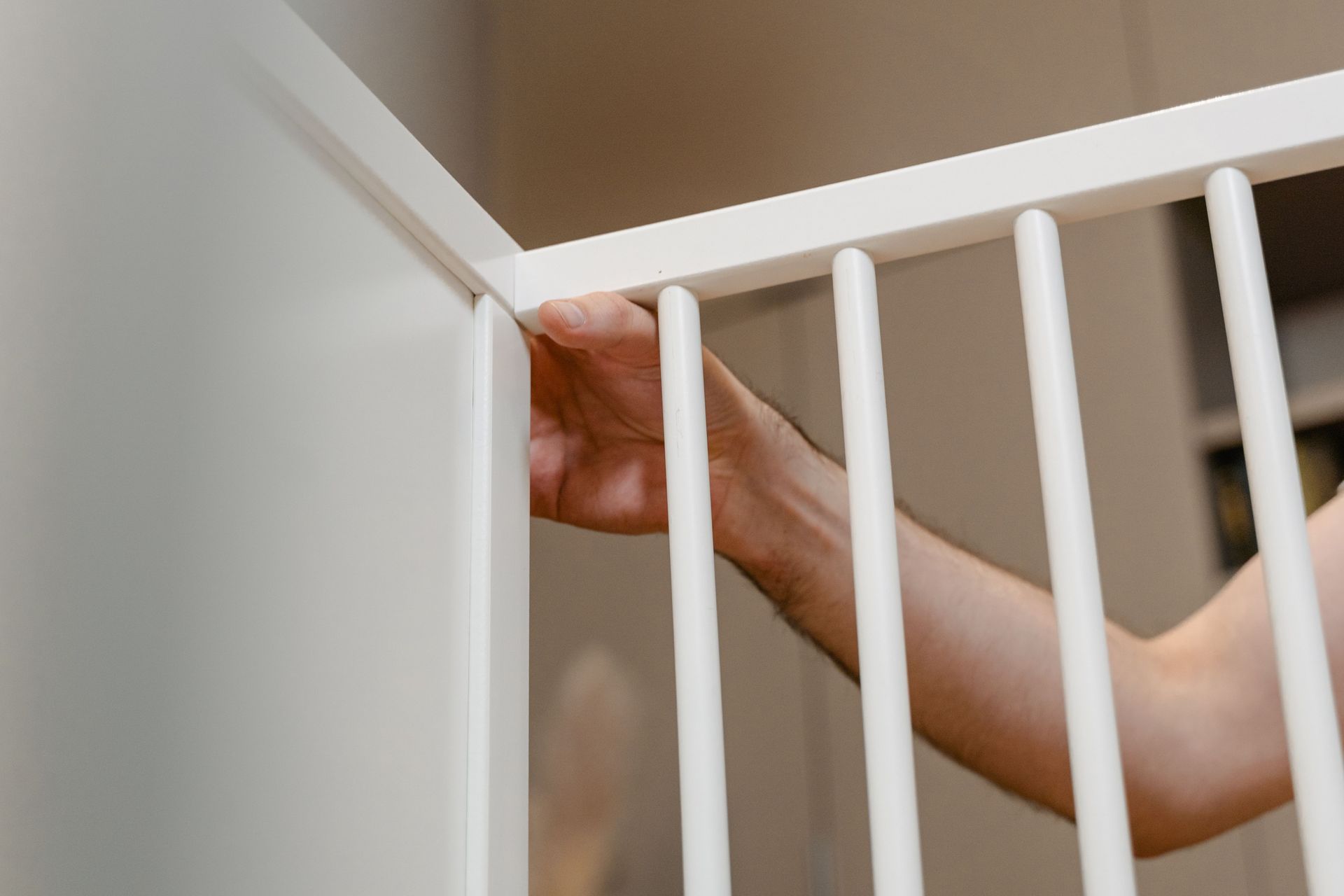
Standard baby gates placed at the top and bottom of a staircase prevent the falls that become far more dangerous once a pet's balance, strength, or cognitive function has declined with age. A gate that keeps toddlers safe works just as well for a senior dog or cat, and installation requires no special pet-specific hardware.
Vestibular disease, which affects balance and causes disorientation, head tilting, and loss of coordination, becomes more common in older dogs and can appear suddenly, sometimes resolving within days but leaving a dog temporarily unsafe on stairs it navigated easily the week before. A gate installed before an episode happens, rather than after, prevents the fall that often follows a dog's first attempt to use stairs while still disoriented.
Canine cognitive dysfunction, sometimes described as dog dementia, affects a meaningful share of dogs past age 11 and can cause a pet to forget the layout of a home it has lived in for years, including where stairs begin and end. A gate removes the risk entirely rather than relying on a confused pet to recognize a hazard it may no longer reliably perceive.
Gates are equally useful away from stairs. Blocking access to a pool, a raised deck without a solid railing, or a steep driveway keeps a pet with declining balance or vision away from the outdoor hazards that pose the same fall risk as an interior staircase, just with higher consequences given the terrain involved.
Pressure-mounted gates work for most interior doorways without drilling into walls, while hardware-mounted gates hold up better at the top of a staircase, where a fall on the other side carries more risk if a gate were to give way under a leaning pet. Matching the gate type to the location, rather than using one style everywhere, keeps the safety margin appropriate to what is actually on the other side.

Credit: K / Pexels
Senior pets lose muscle mass and body fat as they age, both of which previously helped insulate them, which means an older dog or cat gets cold faster and stays cold longer than the same pet did a few years earlier in an identical room. Heated bedding compensates for that lost natural insulation directly, rather than requiring the whole house to run warmer.
Cold intensifies joint pain in pets with arthritis in a way that mirrors the effect in people, so a heated bed does double duty: it keeps a senior pet at a comfortable temperature and it eases the stiffness that makes mornings and cold spells noticeably harder on an aging pet's joints. Owners often notice a senior dog moving more easily after time spent on a heated surface than after the same amount of time on an unheated bed in the same room.
Pet-specific heated beds and heating pads are built with low, sustained warmth and chew-resistant cords, which matters because standard human heating pads run hotter and are not designed to withstand a pet lying directly on the cord for hours. A pet product designed for this use also typically includes an auto shut-off feature, reducing burn risk for a pet that may nap in the same spot for most of a cold afternoon.
Placement should avoid direct contact with radiators, space heaters, or fireplaces, since a pet with reduced mobility may be slower to move away if a spot becomes too hot, unlike a younger, more agile pet that would simply relocate. A heated bed a few feet from, rather than directly beside, a room's main heat source gives a pet a safer way to self-regulate.
Layering works better than relying on a single heat source. A heated bed combined with a blanket a pet can burrow into on especially cold nights gives an aging pet more control over its own warmth than a single fixed heat level does, which matters since individual pets vary in how much extra warmth they actually need as they age.