
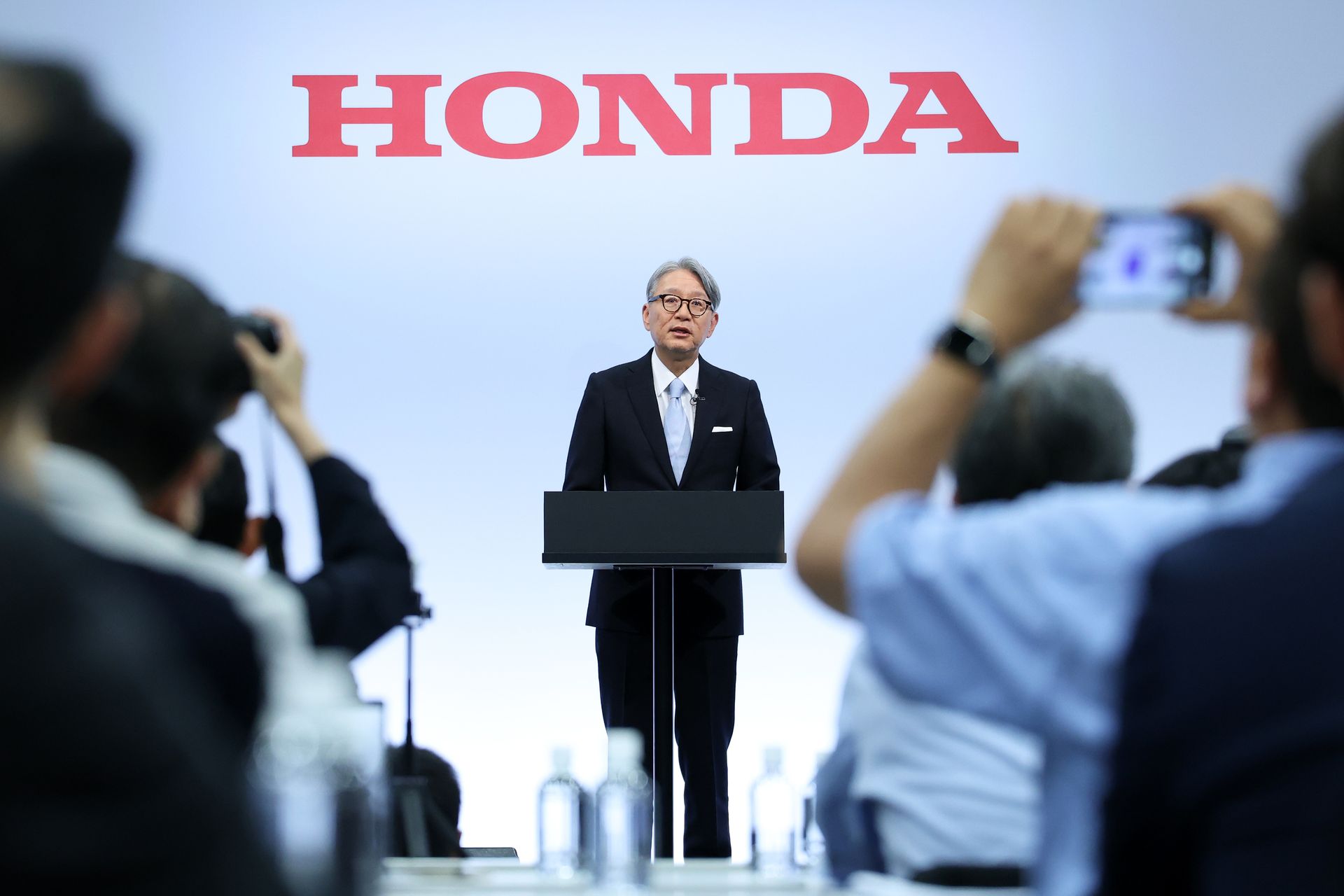
Honda $HMC posted an operating loss of ¥414.3 billion ($2.63 billion) for the fiscal year ended March 31, 2026 — its worst financial result since listing on the stock market in 1957 — as more than ¥1.45 trillion in charges tied to the restructuring of its electric vehicle business swamped its bottom line.
The net loss attributable to shareholders totaled ¥423.9 billion ($2.7 billion), compared with a profit of ¥178.93 per share in the prior fiscal year. Total sales revenue edged up 0.5% to ¥21.8 trillion, held aloft by record motorcycle sales even as automobile revenue declined and car sales fell to 3.4 million vehicles from 3.7 million the prior year.
The EV-related charges included ¥521.4 billion in impairment losses on property, plant, and equipment and intangible assets tied to electric models in North America and China, and ¥331.4 billion in losses from the cancellation of EV development programs in North America, the company said. Honda also booked ¥667.4 billion in additional provisions, including costs from contracts with third parties related to EV programs and a charge tied to an alliance agreement.
Two long-standing EV milestones were discarded by Mibe on Thursday: a 2030 target under which battery-electric models would represent one in five new vehicle sales, and a separate 2040 pledge to exit combustion-engine sales entirely in favor of EVs and fuel-cell vehicles, Reuters reported. Honda also said it is suspending its Canada EV project on an indefinite basis.
"EV demand has declined considerably, due to the rollback of environmental regulations in the U.S. and other factors," Honda said in a statement. Mibe added that the company would continue developing EV battery technology while also focusing on hybrids and gasoline-engine models.
Honda expects to book an additional ¥500 billion in EV-related costs in the current fiscal year, bringing total projected losses from its EV push to as much as ¥2.5 trillion through March 2027, the company said.
The automaker moved earlier this month to freeze construction of EV and battery plants in Canada on an open-ended basis. The Ontario facilities had been planned at a total cost of about C$15 billion — among the largest capital commitments Honda had ever announced — with a targeted production start of 2028 that was already delayed by two years. Three electric models were also dropped from Honda's development pipeline in March 2026, including the lead vehicle in its new Zero lineup.
Reuters reported that investors reacted well to Honda’s plans to return capital to shareholders, including at least ¥800 billion over the next three years. The annual dividend of ¥70 per share will stay the same for both the last fiscal year and the current one. Honda expects to return to profitability in the fiscal year ending March 2027, with a projected operating profit of ¥500 billion and net profit for shareholders of ¥260 billion, helped by cost cuts and strong motorcycle sales.
Honda's motorcycle business posted record sales of 22.1 million units and record operating profit in the fiscal year, driven by robust demand in India and Brazil, the company said. Robust demand in India and Brazil powered the motorcycle division to all-time highs in both unit sales and operating profit for the year through March, providing a measure of financial cushion as EV charges mounted and car volumes eroded across major markets such as China. That segment generated ¥731.9 billion in profit, partially offsetting a ¥1.41 trillion loss from the automobile division.