Here's where house flipping profits have fallen most in the U.S.
House flipping profits have hit their lowest point since 2008. ATTOM tracked gross returns on investor resales across hundreds of metro areas
Michael Warren / Getty Images
House flipping carries a straightforward financial premise: buy a property, improve it, and sell it for more than the total spent. That logic held for most of the decade following the 2008 crisis, when purchase prices were low and margins were wide. The math has shifted. Acquisition costs have climbed faster than resale prices in many markets, and investors who once captured reliable returns now face a narrower spread between what they pay and what buyers will offer. For those investors, the difference between a profitable deal and a break-even one has shrunk to a degree that demands close attention to local market dynamics before a single dollar changes hands.
The structural forces compressing those returns are not uniform. Some metro areas have seen demand from owner-occupant buyers keep resale prices elevated, while others have experienced a flood of investor activity that drove up acquisition costs without a matching rise in eventual sale values. Renovation costs, which the industry historically estimated at 20 to 33% of a property's after-repair value, add a layer that gross profit figures do not capture. A market that looks adequate on a gross return basis can turn negative once rehab expenses are factored in, and rising material and labor costs have made that gap harder to close in recent years.
ATTOM's 2025 U.S. home flipping report examined sales deed data covering 297,045 single-family homes and condos flipped across the country, the fewest recorded in a single year since 2020 and a 3.9% decline from 2024. The typical flipped home generated a 25.5% gross return on investment — the lowest rate since 2008 and down from 32.1% the prior year — as profit margins fell in 70% of the 215 metro areas with sufficient data to analyze. Certain metros absorbed far steeper losses than the national average, with margins that had been exceptional just a year earlier collapsing to a fraction of their former levels.
1 / 5
1. Ocala draws migration pressure that crushes its spread
Michael Warren / Getty Images
Ocala, Fla., recorded a gross return on investment of 124.1% in 2025, down from 492.5% the prior year for a decline of more than 368 percentage points. No other metro in the dataset came close to that magnitude of compression in a single year, making Ocala an outlier even within a nationwide environment where margins were falling broadly.
A gross return approaching 500% the prior year was itself an extraordinary figure. Returns of that scale in a mid-size Florida market typically signal a situation where a specific segment of deeply discounted homes — distressed sales, estates, or deferred-maintenance dwellings — commanded extraordinarily low acquisition prices relative to what post-renovation comparables could achieve. When those conditions shift, whether through a reduction in troubled inventory, a rise in investor competition for the same underpriced assets, or a softening of resale demand at the top end of the improved price range, the correction can be abrupt and severe.
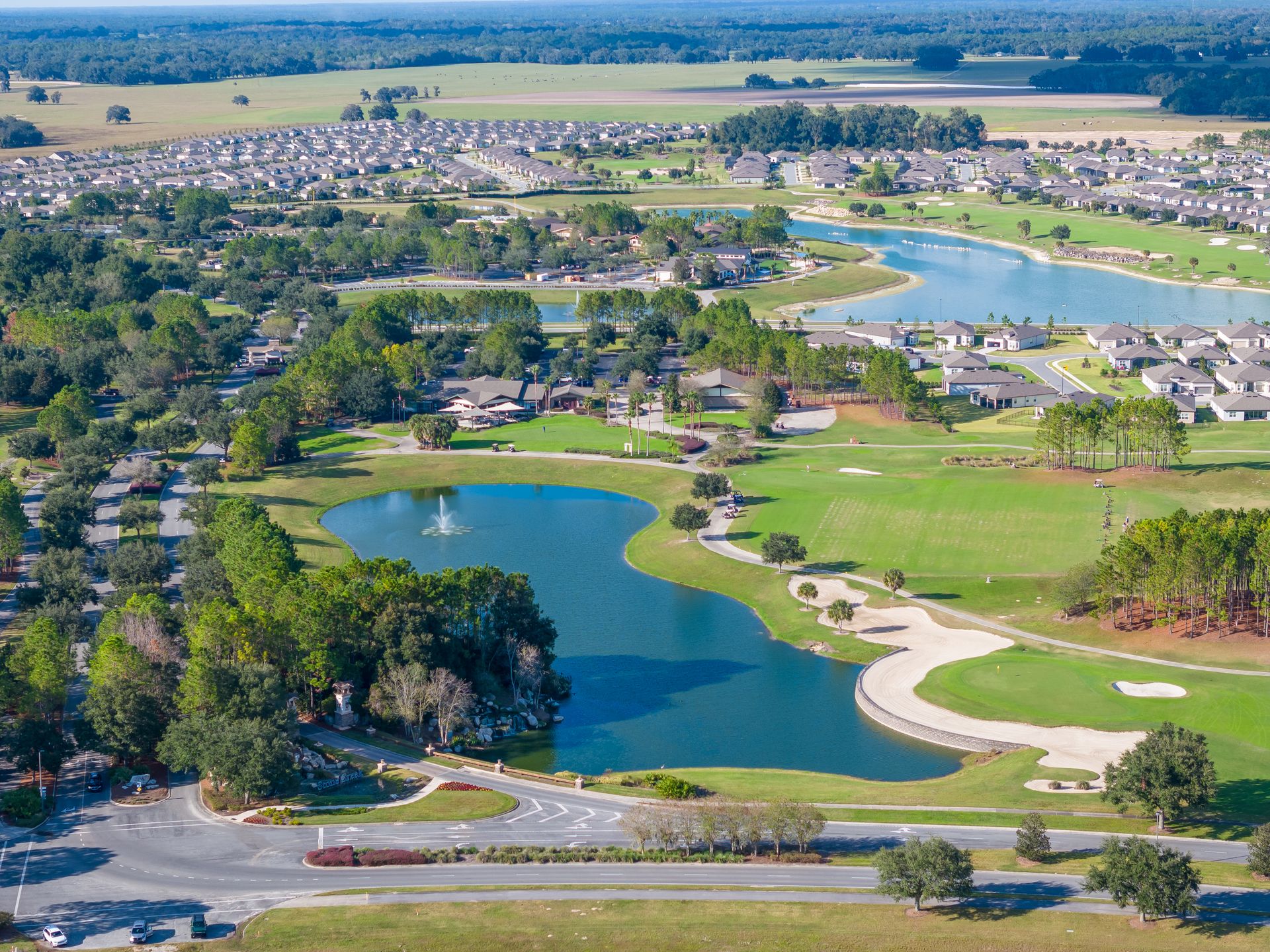
Ocala sits in Marion County in north-central Florida, an area that drew significant migration during the post-pandemic period as buyers priced out of coastal metros sought more affordable alternatives. That influx pushed resale prices upward, which benefited flippers on the exit side for a period. The compression visible in 2025 suggests acquisition prices caught up with or exceeded what the resale environment would support, collapsing the spread that had generated those headline returns. Marion County's relatively modest population size also means the pool of eligible renovated-home buyers is smaller than in larger areas, which limits how far exit prices can stretch when seller inventory rises.
The 124.1% gross ROI that remained in 2025 still ranked well above the national average of 25.5%, meaning Ocala retained meaningful profitability even after its historic correction. Investors who entered the market expecting prior-year conditions and paid acquisition prices calibrated to a 492.5% return environment faced a very different reality at the closing table.
2 / 5
2. Salisbury attracts capital that bids away its discount
DenisTangneyJr / Getty Images
Salisbury, Md., posted a gross profit margin of 38.2% in 2025, down from 107% the year prior — a loss of nearly 69 percentage points. That decline cut the metro's return to just over one third of what investors captured in 2024, landing the market barely above the national average of 25.5% and leaving little cushion once rehabilitation expenses are taken into account.
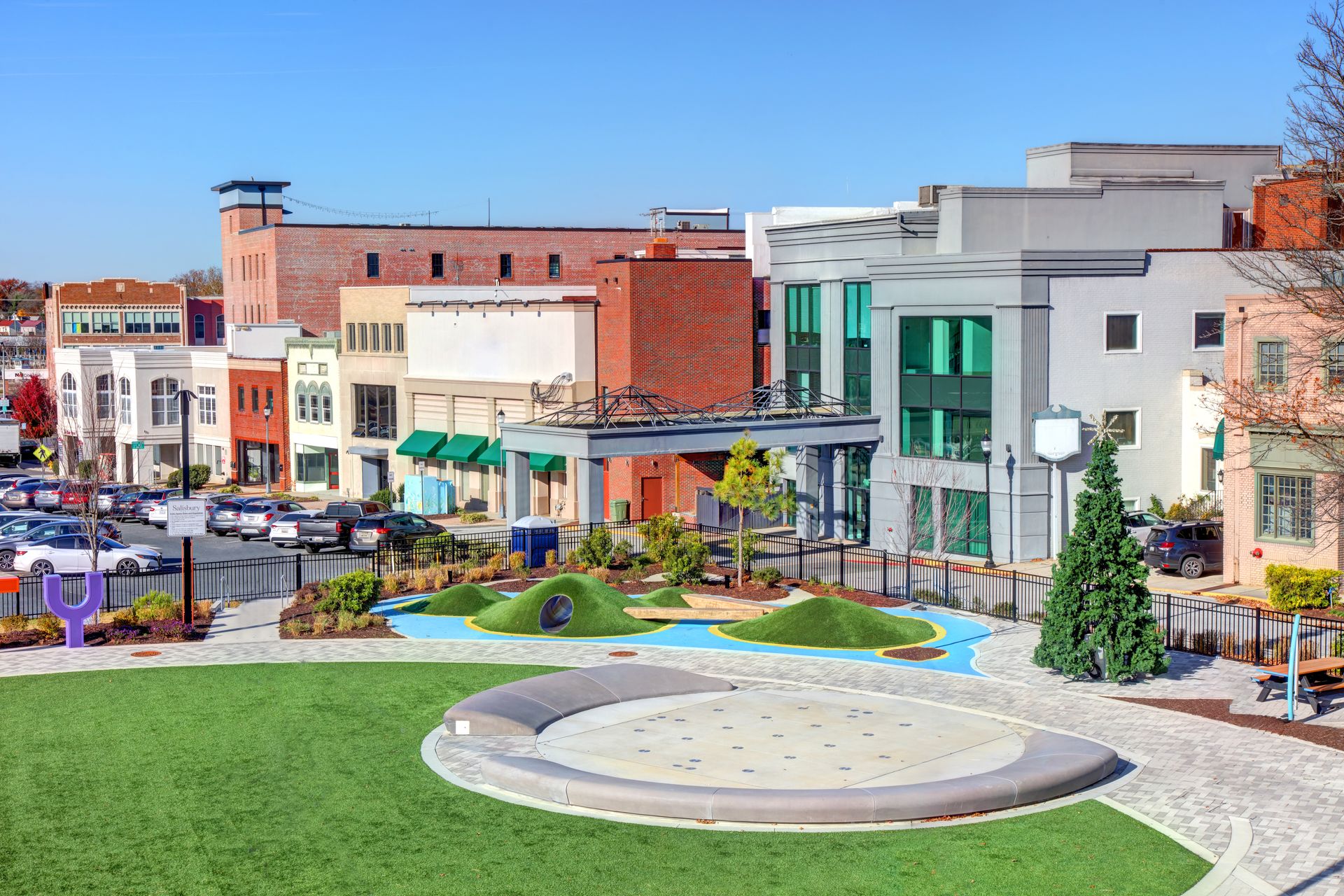
The Salisbury metro spans the Delmarva Peninsula across parts of Maryland and Delaware, anchored by a regional economy tied to agriculture, healthcare, and proximity to resort markets such as Ocean City. The area attracted investor interest in prior years partly because its entry-level housing stock carried purchase prices well below what similar properties commanded in the Washington, D.C. corridor or along the Delaware shore, while resale demand from a mix of year-round residents and second-home buyers provided a viable exit market.
A gross margin that cleared 100% in 2024 pointed to a situation where specific property types — likely older single-family homes in need of substantial work — could be acquired at steep discounts relative to post-renovation comparables. When acquisition competition intensifies, those price gaps narrow. That investor appetite that drove returns above 100% also signals the conditions that erode them: more buyers pursuing those properties bids up entry costs without a corresponding lift on the exit side.
At 38.2% gross ROI, Salisbury's 2025 returns remain positive but offer a thin buffer. Industry estimates place typical rehab costs at 20 to 33% of after-repair value. For a market operating at that gross margin level, a renovation budget that runs over projection or a resale price that falls below anticipated comparables can eliminate net profitability entirely. Investors accustomed to the 107% cushion of 2024 now operate in a materially different risk environment, one where disciplined cost control is the deciding factor between a profitable flip and a loss.
3 / 5
3. Spartanburg reprices under employer-driven demand

Wirestock / Getty Images
Spartanburg, S.C.'s gross return on investment fell from 94.1% in 2024 to 48.4% in 2025, a decline of 45.7 percentage points that reduced what had been a well-above-average market to one sitting only modestly ahead of national norms. The compression did not eliminate profitability, but it substantially changed the calculus for investors who underwrote deals based on the prior year's margin environment.
Spartanburg is part of the Upstate South Carolina corridor that also includes Greenville, a region that experienced significant population growth over the prior decade as manufacturing, logistics, and healthcare employers expanded. Job creation drove consistent housing demand across all tiers, creating conditions where investors could purchase, renovate, and resell properties with reasonable confidence in both the pace of sale and the achievable exit price. A gross ROI above 90% reflected a market where acquisition prices had not yet fully adjusted to the area's elevated activity profile.
The correction visible in 2025 aligns with a pattern common in fast-growing secondary markets: investor participation scales up in response to strong returns, entry prices rise as more capital chases the same inventory, and the spread between purchase and resale narrows even as the underlying environment remains fundamentally healthy. Spartanburg did not experience a demand collapse — it experienced a repricing of opportunity as the area absorbed increased investor involvement.
At 48.4% gross ROI, Spartanburg still outperformed the national figure of 25.5% by nearly double. Investors with disciplined acquisition strategies and controlled renovation budgets can generate net positive returns in that environment. The shift from 2024 to 2025, however, illustrates how quickly a market's return profile can change when entry prices catch up with what had been an underpriced opportunity relative to resale potential. Spartanburg's experience also underscores a wider truth about secondary-market flipping: strong returns attract capital faster than local supply of discountable properties can absorb it.
4 / 5
4. Erie loses its distressed inventory edge

Doug Lemke / Getty Images
Erie, Pa., recorded a gross return on investment of 56.5% in 2025, down from 99.9% the prior year — a decline of 43.4 percentage points that cut the market's returns nearly in half. That prior-year figure had placed Erie among the strongest-performing metros in the country on a gross margin basis, and the 2025 result represents a significant reset even as it holds above the national average.
The city sits along Lake Erie in northwestern Pennsylvania, a mid-size market with a legacy industrial economy that has navigated decades of restructuring. Its housing stock includes a large share of aged, lower-cost properties — the median flipped property nationally in 2025 was built in 1978, the oldest recorded since ATTOM began tracking — and the local inventory skews further back than that national figure. Weathered homes present both opportunity and risk for flippers: acquisition prices can be low relative to post-renovation value, but project scope and budget uncertainty tend to be higher.
A market where gross ROI approached 100% attracted increased investor attention, and that scrutiny carries predictable consequences for acquisition pricing. Properties that buyers competed to acquire in 2024 at prices calibrated to a 99.9% return environment became harder to source at those same figures in 2025. Sellers in an active market adjust their expectations upward, particularly when multiple parties pursue the same limited inventory of distressed or discounted properties.
The 56.5% gross margin Erie retained in 2025 provides meaningful room to absorb renovation costs and still generate a net return, assuming project execution stays on budget. Investors who relied on Erie's prior-year performance as a baseline for underwriting new acquisitions in 2025 encountered a market that demanded more precise cost control and stricter exit price assumptions. Meeting those standards required a fundamentally different approach to deal selection than the prior year's wide margins had allowed.
5 / 5
5. Little Rock absorbs capital from higher-cost metros
benedek / Getty Images
Little Rock, Ark's gross return on investment declined from 91.6% in 2024 to 50% in 2025, a drop of 41.6 percentage points that moved the market from one of the stronger performers in the national dataset to one sitting only modestly above the national average of 25.5%. The transition happened in a single year, reflecting rising acquisition costs against a resale environment that did not keep pace.
Little Rock anchors the central Arkansas economy as the state capital and its largest metro, with a housing market characterized by relatively affordable entry-level prices compared with national benchmarks. That affordability historically gave investors room to buy properties at prices that allowed for substantial renovation investment while still delivering a profitable exit. When the acquisition side of that equation tightens — whether through increased investor competition, a reduction in distressed inventory, or sellers adjusting to a more active buying environment — the gross margin contracts accordingly.
The drop from 91.6% to 50% tracks a dynamic visible across each of the other metros on this list: a prior-year return that attracted more capital, which in turn competed up the entry prices that had generated those returns. Little Rock's position as an affordable market relative to national norms makes it a destination for investors priced out of higher-cost areas, and that inbound pressure accelerates the repricing cycle.
At exactly 50% gross ROI, Little Rock retains enough cushion that disciplined operators can generate net returns after renovation costs. The national backdrop reinforces the challenge: with the median flipped home purchased for $259,019 and resold for $325,000 across the country, markets like Little Rock where prices sit lower face additional pressure on the absolute dollar value of gross profit even when percentage returns remain positive. Investors in 2025 confronted a market that required more careful deal selection than the prior year's wide margins had demanded.
