
The head of a key House investigation committee said Friday that he is looking into the prediction markets Kalshi and Polymarket as questions of insider trading on the platforms swirl.
A new congressional investigation is the latest chapter in a broader push to regulate prediction markets
Bloomberg / Getty Images
The head of a key House investigation committee said Friday that he is looking into the prediction markets Kalshi and Polymarket as questions of insider trading on the platforms swirl.
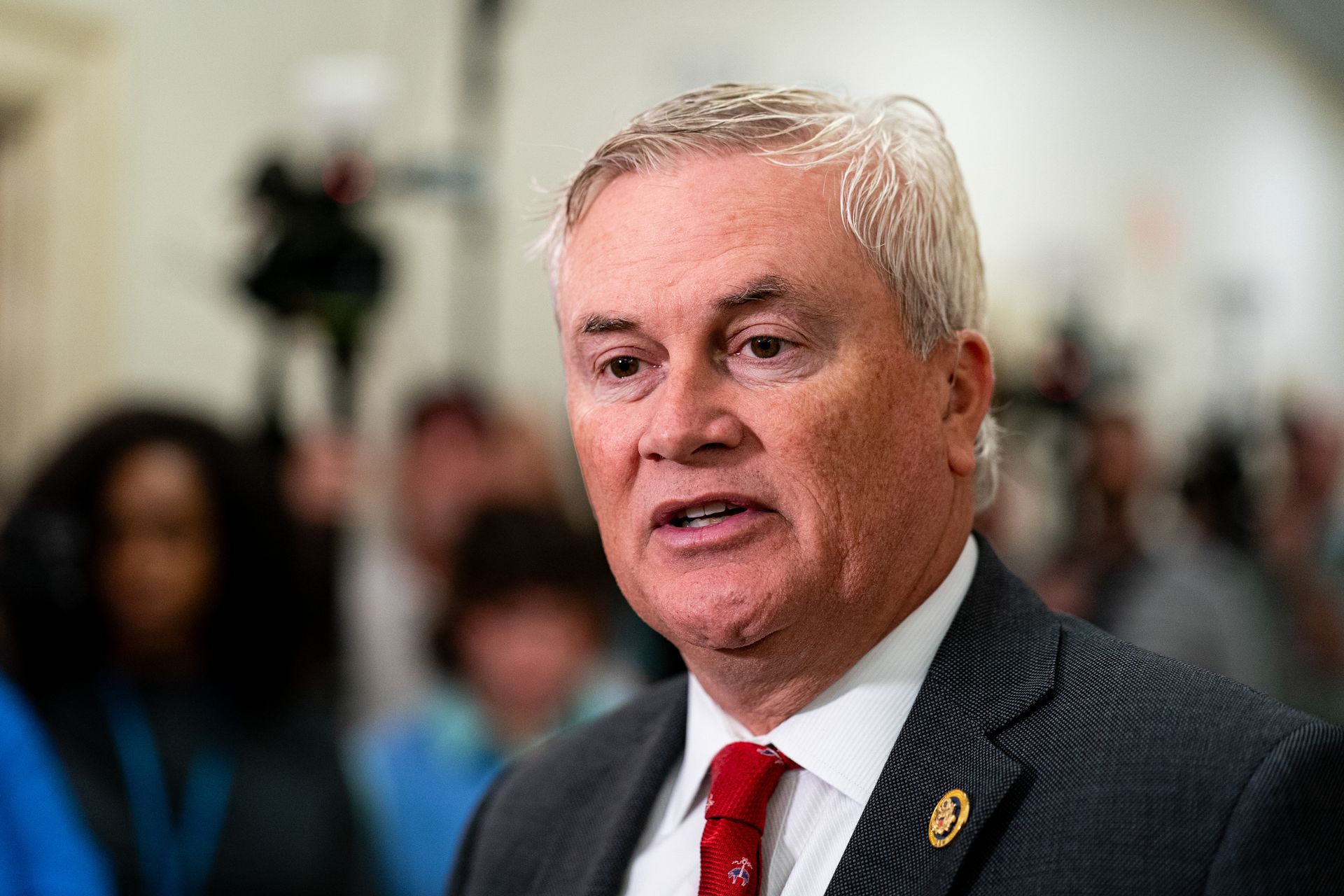
Rep. James Comer, a Kentucky Republican who chairs the House Committee on Oversight and Government Reform, announced the probe on CNBC's "Squawk Box". He said he is seeking information from the CEOs of both companies on what they are doing to prevent insider trading. In Friday letters addressed to Kalshi CEO Tarek Mansour and Polymarket CEO Shayne Coplan, Comer asked both executives to turn over records detailing their platforms' approaches to confirming who users are, blocking access from prohibited jurisdictions, and flagging suspicious betting activity, according to CNBC.
"There's a concern now that members of Congress, members of the president's administration, any type of government employee, can use basic insider knowledge and make huge profits on anything government-related," Comer said. "So we want to not only launch an investigation to see how widespread this has been thus far, but also to prove a case that we've got to pass some type of legislation."
Comer indicated subpoenas could follow if the companies do not cooperate. "We'll request information, and if we have trouble getting it, then a subpoena will follow," he said in another appearance on Fox Business Network's "Mornings with Maria."
The probe followed a letter from seven Democratic lawmakers led by Rep. Chris Pappas of New Hampshire, who wrote to Comer earlier this month calling for subpoenas and a formal investigation. Pappas' letter detailed a pattern of suspicious wagers tied to U.S. and Israeli military operations against Iran: A single trader made nearly $1 million with a 93% success rate on such bets, placing wagers hours before strikes in October 2024, June 2025, and February 2026. A separate group of 38 accounts netted more than $2 million on the Feb. 28 strikes alone, after their accounts were preloaded with funds the preceding week. At least 50 newly created accounts placed coordinated bets on a U.S.-Iran ceasefire on April 7, with some opened minutes before the announcement.
Comer's letter to Coplan flagged that some suspicious trades were placed on Polymarket Global, the platform's offshore site, which U.S. persons are barred from accessing under the terms of Polymarket's 2022 settlement with the Commodity Futures Trading Commission, according to CNBC. "The rapid growth and mainstreaming of this platform, the cryptocurrency infrastructure, and the anonymity it affords users may have created unintended structural conditions that bad actors — especially individuals with national security clearances — can exploit," Comer wrote.
Unlike some offshore competitors, Kalshi — a New York-based firm operating under CFTC oversight — requires all users to identify themselves before placing bets. The letter to Mansour pointed to Kalshi's footprint across more than 140 countries as a source of concern, and also flagged an episode last April in which the platform removed three congressional candidates who had placed wagers on their own electoral outcomes.
The investigation is the latest chapter in a broader congressional push to regulate prediction markets. The White House warned staff in March against using nonpublic government information to place bets on the platforms, and that a member of U.S. Army special forces faced charges alleging he exploited access to classified intelligence to pocket around $400,000 on Polymarket through wagers tied to the removal of Venezuelan leader Nicolás Maduro. More than 10 bills targeting prediction markets have been introduced in Congress this year.
Join 500,000+ readers who start their day with Quartz.
By subscribing, you agree to our Terms of Service and Privacy Policy.