
From immune function and blood pressure to brain scans and life expectancy, here is what researchers have found about the ways friendship shapes the body
Credit: Kampus Production / Pexels
The friends you call on a bad day may be doing more for your body than most of what sits in your medicine cabinet. Over the past few decades, researchers have moved friendship out of the realm of sentiment and into the realm of measurable health. Social connection now shows up in blood pressure readings, immune response, brain scans, and life expectancy tables. It behaves less like a pleasant extra and more like a core input to how long and how well people live.
The shift has been driven by large, careful studies. One meta-analysis pooled 148 separate studies to weigh social ties against survival. A Harvard project has followed the same group of people for more than 80 years. Neuroscientists have watched the brain respond to rejection and to a friend's touch. Epidemiologists have traced how happiness and health habits ripple across networks of thousands. Taken together, this work tells a consistent story: relationships are not separate from physical health. They are part of its foundation.
The findings are not only about having friends but about the shape of a social life. Variety of connection matters. Quality matters more than quantity. The feeling of being cut off can affect the body even when a person is surrounded by others. And the effects run deep, down to how genes in immune cells switch on and off.
None of this means friendship is a cure or that isolation is a sentence. Most of the evidence is correlational, and healthier people may find it easier to stay social in the first place. Cause and effect are hard to separate. But the patterns are strong, they repeat across cultures and decades, and they point in the same direction.
What follows is a tour of 15 findings from that research — what social connection does to the immune system, the aging brain, the stress response, and the odds of a long life. Some are well known. Others are quieter. Each one is grounded in a specific study, and together they make the case that tending to friendships is a form of looking after your health.
Credit: 🇻🇳🇻🇳Nguyễn Tiến Thịnh 🇻🇳🇻🇳 / Pexels
The strongest evidence that friendship affects the body comes from mortality data. In 2010, researchers led by Julianne Holt-Lunstad at Brigham Young University combined the results of 148 separate studies that tracked more than 300,000 people over an average of 7.5 years. Their analysis, published in PLoS Medicine, found that people with stronger social relationships had a 50% higher likelihood of surviving the follow-up period than those with weaker ones.
The size of that effect drew attention in the field. The authors concluded that the influence of social ties on mortality was comparable to well-established risks such as smoking, and greater than the risks tied to obesity and physical inactivity.
The study did not single out one kind of relationship. It counted marriages, family ties, friendships, and community membership together. The measures that captured how integrated a person was into a wider social network predicted survival more strongly than simple facts such as whether someone lived alone.
That distinction matters. Living with other people is not the same as being connected to them. The data suggested that the depth and range of a person's relationships carried more weight than living arrangements on their own.
Because the analysis pooled existing studies, it could show a strong association but not prove that friendship directly causes longer life. People who are already healthier may find it easier to maintain relationships. Still, the pattern held across age groups, both sexes, and different health conditions at the start of each study.
The finding reframed social connection as a health variable rather than a lifestyle preference. Doctors routinely ask about smoking and exercise. This body of work argued that relationships belong on the same list. A person with a rich social life and a person who is isolated are not facing the same odds, even if their cholesterol and blood pressure look identical on paper. Friendship, on this evidence, is not separate from health. It is part of it.
Credit: Junior REIS / Unsplash
The longest-running study of adult life points to the same conclusion from a different angle. The Harvard Study of Adult Development began in 1938 and has followed its participants for more than eight decades. It started with 268 Harvard sophomores and 456 boys from lower-income neighborhoods in Boston, then expanded to include their spouses and children.
Over the years, researchers collected medical records, brain scans, blood samples, and detailed interviews. Robert Waldinger, the study's current director, took over from George Vaillant, who ran it for decades before him.
One result stands out. When the team looked at everything they knew about participants at age 50, the factor that best predicted who would be healthy at 80 was not cholesterol. It was how satisfied people were with their relationships. Those who were most content in their close bonds at midlife tended to be the healthiest decades later.
The study also found that warm relationships appeared to buffer people against the physical strain of aging. Participants in high-conflict marriages with little affection fared worse than those who felt supported. The quality of connection, not merely its presence, tracked with better outcomes.
This is correlational work. It cannot prove that good relationships cause good health, and the original sample was narrow — all men, mostly white, from one country and era. The later inclusion of wives and descendants widened it, but the limits remain.
What gives the finding weight is its consistency over time. The same pattern surfaced across generations and across many measures of well-being. People who leaned into relationships with family, friends, and community reported more happiness and, on average, aged with fewer health problems.
The lesson the researchers draw is practical. Tending to friendships is a form of self-care that sits alongside diet and exercise, not beneath them. Over a long life, the people you stay close to shape how that life feels and, the data suggest, how healthy it stays.
Credit: Duy Pham / Unsplash
Friendship also appears to influence how the body fights off infection. In 1997, psychologist Sheldon Cohen and colleagues at Carnegie Mellon University ran an unusual experiment, published in the Journal of the American Medical Association. They recruited 276 healthy adults, measured how many types of social ties each person had, then exposed everyone to a common cold virus through nasal drops and placed them in quarantine.
The researchers tracked who actually got sick. People who reported a wider range of social relationships — spouse, family, friends, coworkers, community groups — were less likely to develop colds after exposure. They also produced less mucus and cleared the virus more efficiently.
The effect followed a dose-response pattern. The more types of social ties a person had, the lower their chance of falling ill. Someone with ties across six or more categories was more resistant than someone with only a few.
The team checked whether other habits explained the result. Smoking, poor sleep, low vitamin C intake, and being introverted were all linked to higher cold rates. None of these fully accounted for the connection between social variety and resistance to infection.
What mattered was the diversity of a person's social world, not simply the number of people in it. Having many ties of one kind counted for less than having ties of many different kinds. A varied social life seemed to strengthen the body's defenses in a measurable way.
Later work from Cohen's lab reinforced the pattern. A 2003 study found that more sociable people were less likely to develop colds after viral exposure, again after controlling for other factors.
The mechanism is not fully mapped. Social connection may lower stress hormones that suppress immune function, or it may encourage healthier behavior. What the quarantine studies showed is concrete: two people given the same dose of the same virus can face different odds of getting sick, and their social lives are part of the reason.

Credit: Beth Chobanova / Unsplash
The pain of losing a friend or being left out is not only a figure of speech. In 2003, neuroscientist Naomi Eisenberger and colleagues at the University of California, Los Angeles published a study in Science that examined what social rejection looks like inside the brain.
Participants lay in an fMRI scanner and played a computer game called Cyberball, tossing a virtual ball with two other players they believed were real people. Partway through, the other players stopped throwing the ball to the participant, leaving them excluded.
When people were shut out, a brain region called the dorsal anterior cingulate cortex became more active. The same region helps process the distressing, unpleasant quality of physical pain. The more excluded a person reported feeling, the stronger the activity in that area.
The anterior insula, another part of the brain tied to physical pain, also lit up during exclusion. The neural systems that register a stubbed toe or a burn overlapped with those that registered social rejection.
The finding suggested a reason our language links the two. Phrases like "hurt feelings" and "a broken heart" may reflect something real about how the brain is wired. For a species that depends on the group to survive, being cast out may have registered as a genuine threat, one worth feeling as pain.
The interpretation has been debated. Later researchers argued that these brain regions respond to any salient or distressing event, not to social pain specifically. The overlap is real, but what it means is still contested.
What the study established is that social experiences engage the body's core alarm and distress systems. Rejection is processed, in part, through the same hardware as bodily harm. That helps explain why the end of a friendship can feel physically wrenching, and why belonging is not a luxury the brain treats lightly. Connection registers deep in the nervous system.

Credit: Sasha Freemind / Unsplash
In 2023, the U.S. Surgeon General issued a formal advisory declaring loneliness and isolation a public health concern. The 81-page report, titled "Our Epidemic of Loneliness and Isolation," treated weak social connection as a medical risk on par with smoking and obesity.
The advisory's central comparison drew attention. It stated that the mortality impact of being socially disconnected is similar to smoking up to 15 cigarettes a day, and greater than the risk from obesity or physical inactivity. That figure drew on earlier meta-analysis work linking social ties to survival.
The report pulled together evidence on specific conditions. It noted that poor social relationships were associated with a 29% higher risk of heart disease and a 32% higher risk of stroke. Isolation was also linked to higher rates of depression and anxiety.
The scale of the problem was part of the alarm. The advisory reported that about half of U.S. adults had experienced measurable loneliness even before the COVID-19 pandemic. Young people aged 15 to 24 showed a sharp drop in time spent in person with friends over the previous two decades.
An advisory is a tool the Surgeon General reserves for issues judged to need urgent public attention. Past advisories have addressed tobacco and other major threats. Applying that mechanism to loneliness signaled that federal health officials no longer viewed it as a private matter.
The report did not claim that loneliness kills directly or offer a body count. It argued instead that chronic disconnection raises the risk of the illnesses that do. It also laid out a national strategy, calling for changes in how communities, workplaces, schools, and technology are designed to support connection.
The framing matters for how people think about friendship. The advisory positioned relationships as infrastructure for health, not decoration. On that view, a thin social life is a risk factor a doctor might reasonably ask about, much like blood pressure or diet.
Credit: RDNE Stock project / Pexels
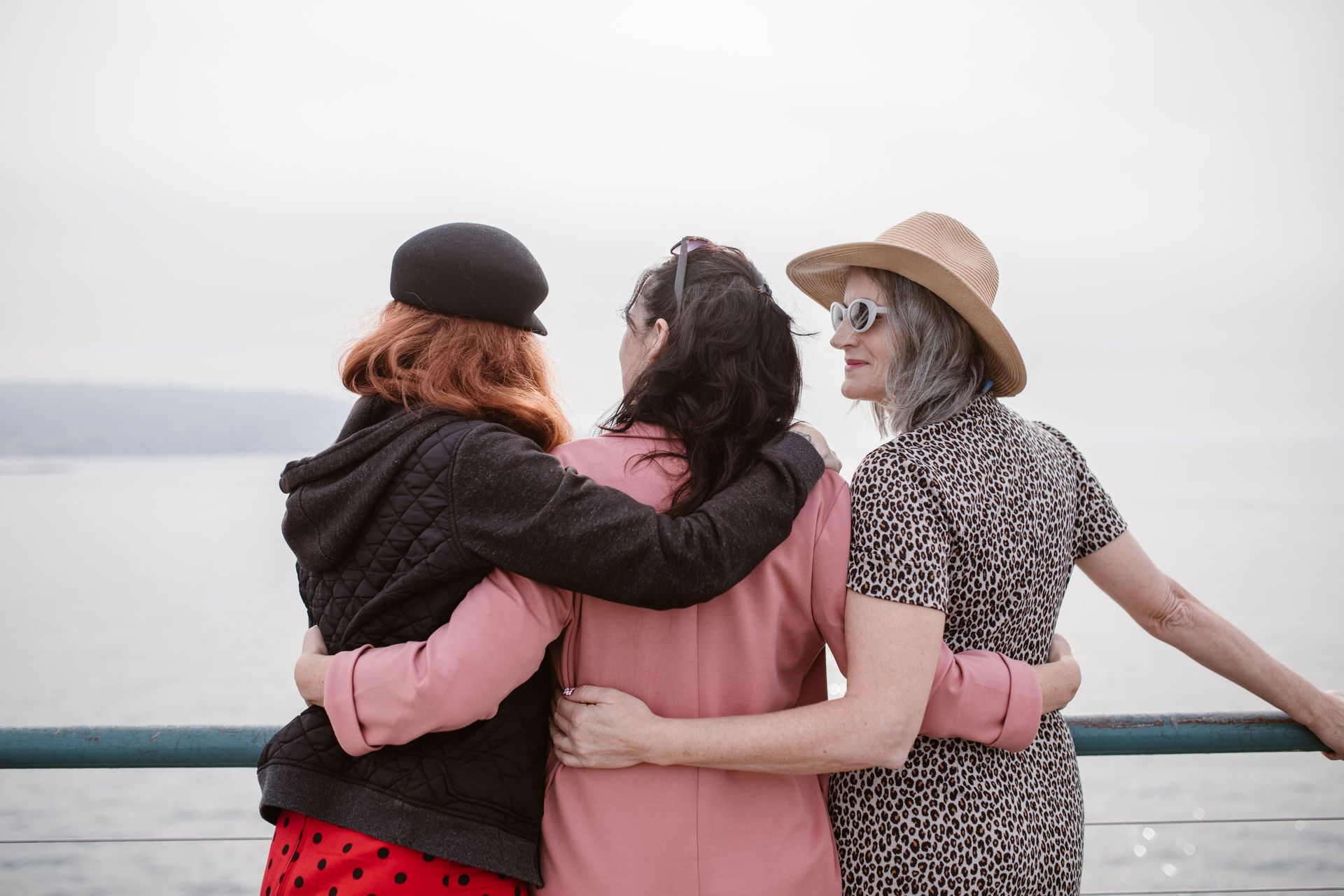
There may be a ceiling on how many friendships a person can truly maintain. In 1992, British anthropologist Robin Dunbar proposed that the number sits around 150. He arrived at it by studying primates, where the size of a species' social group tracks with the size of its neocortex, the brain's outer layer. Scaling that relationship up to the human brain produced a prediction of roughly 150 stable relationships.
A stable relationship, in this framework, means someone you know well enough to understand how they fit into your wider social world — not just a face you recognize. The figure became known as Dunbar's number.
The 150 is not a flat circle. Dunbar described friendship as a set of layers, each larger and less intimate than the one inside it. At the center sits a support group of about five people, the ones you turn to in a crisis. Around them is a sympathy group of roughly 15 close friends. Beyond that lies a wider band of about 50, and then the full active network of around 150.
Each layer costs something to maintain. The inner circles demand frequent contact and emotional investment. The outer ones need less, which is why they can be larger. Time is the constraint. There are only so many hours to spend, and intimacy requires spending them.
The numbers are averages, not fixed limits, and researchers still debate the exact figures. Individuals vary, and culture shapes how people build and keep networks.
The idea has a practical edge. Social media can inflate the outer layers, letting someone accumulate hundreds or thousands of loose contacts. It does little to expand the inner circles, which still depend on real time together. Someone can have a large following and a thin support group at the same time. The layers that carry the most weight for well-being are the small ones, and they take the most work to sustain.

Credit: Canva Images
Turning an acquaintance into a friend takes a measurable amount of time. Jeffrey Hall, a communication studies professor at the University of Kansas, tried to quantify it in research published in the Journal of Social and Personal Relationships in 2018.
Hall ran two studies. One surveyed adults who had recently moved somewhere new and asked about the time they were spending with people they had just met. The other followed 112 first-year students over their first nine weeks at college, tracking how new relationships developed.
The rough thresholds he found were consistent across both studies. It took around 50 hours together to move from acquaintance to casual friend. Reaching plain "friend" status took about 90 hours. Becoming a close friend required more than 200 hours of shared time.
The type of time mattered as much as the amount. Hours spent hanging out, joking, talking, and doing things for enjoyment moved relationships forward. Hours logged sitting next to someone at work counted for much less. Shared leisure, not mere proximity, built the bond.
People who never got past being acquaintances tended to have spent no more than about 30 hours together — enough to be familiar, not enough to be close.
The findings help explain why making friends gets harder in adulthood. A working adult with family and household responsibilities may spend only a few hours a week with any single new person. At that rate, clearing 200 hours can take the better part of a year. Students who become fast friends often do so because they spend a large share of their waking hours together.
The practical message is direct. Friendship is not built through good intentions or occasional catch-ups. It is built through repeated, unhurried time in each other's company. There is no shortcut around the hours, and the relationships that reach the inner circle are usually the ones people managed to clear that time with before life pulled them apart.
Credit: Tim Samuel / Pexels
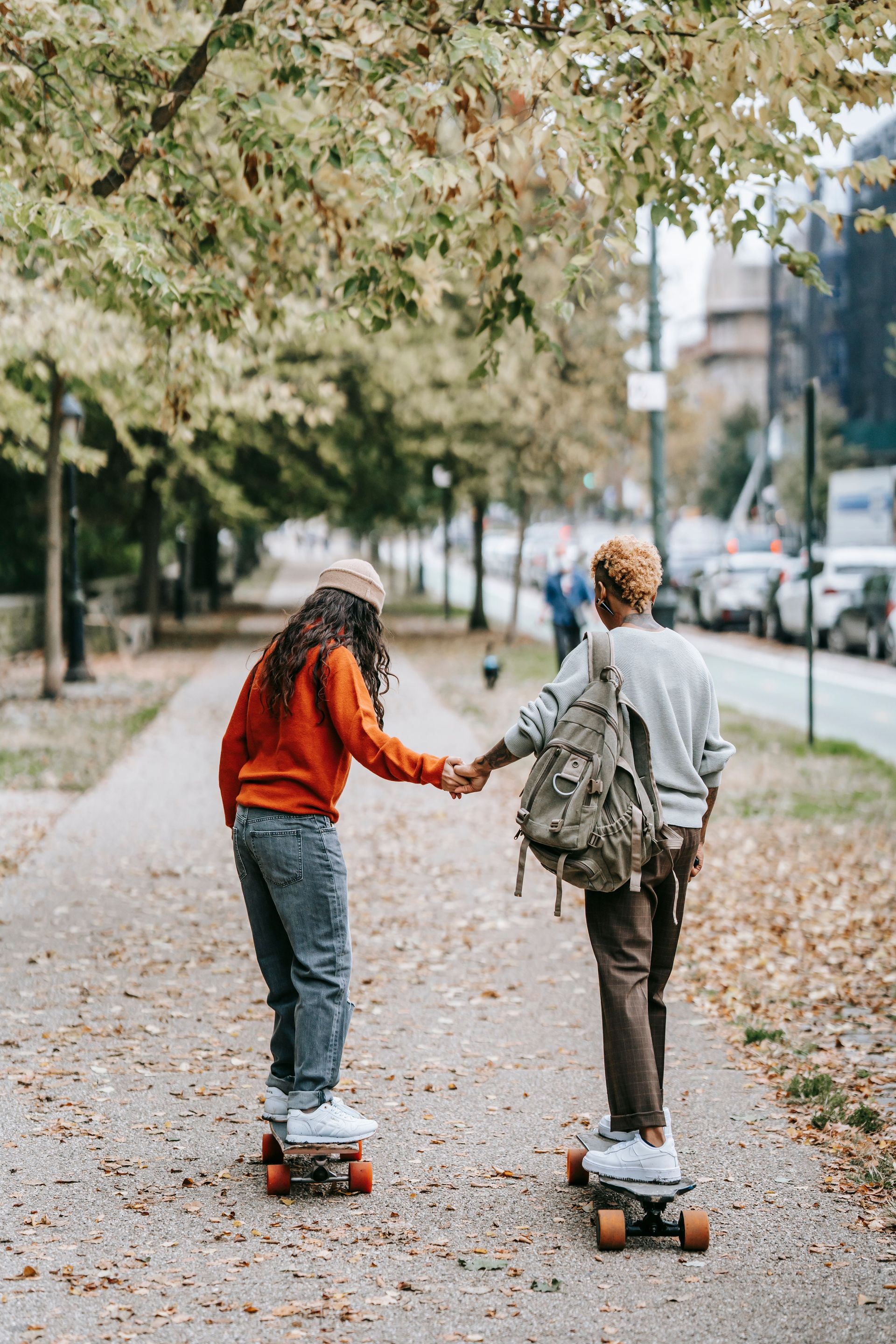
A supportive relationship can change how the brain responds to a threat, and the effect can be seen in real time. In 2006, neuroscientist James Coan and his colleagues published a study in Psychological Science that measured this directly.
The team recruited 16 married women and placed each in an fMRI scanner. The women were told they might receive a mild electric shock, a setup designed to trigger anticipatory stress. Their brains were scanned under three conditions: holding their husband's hand, holding a stranger's hand, and holding no hand at all.
When a woman held her husband's hand, activity in the brain's threat-related regions dropped sharply. The nervous system's alarm response quieted. Holding a stranger's hand produced a smaller version of the same calming effect. Facing the threat alone produced the strongest stress response.
The most telling detail involved marriage quality. The women in the happiest, highest-quality marriages showed the largest reduction in threat-related brain activity when holding their husband's hand. The closer and more trusting the bond, the more the touch soothed the brain.
The study offered physical evidence for something people sense intuitively. A trusted person's presence makes a frightening situation more bearable, and the effect is not only psychological. It shows up in the neural systems that manage fear and stress.
Coan, now a professor at the University of Virginia, has described this as the social regulation of emotion. Rather than facing threats with our own resources alone, we offload some of the burden onto trusted others. The brain appears to treat a close companion as part of its own coping system.
The research focused on spouses, but the underlying principle extends to close friendships. Any bond marked by trust and safety can help the nervous system settle. This may be one reason people instinctively reach for a friend in hard moments. Company does not just feel better. It changes the body's response to stress.

Credit: Moe Magners / Pexels
Happiness does not stay contained in one person. It spreads through social networks like something contagious. In 2008, researchers James Fowler and Nicholas Christakis published an analysis in the British Medical Journal that tracked this movement across a large web of relationships.
They drew on the Framingham Heart Study, a long-running project that had recorded detailed information about participants and their social ties. Fowler and Christakis followed 4,739 people from 1983 to 2003, mapping who was connected to whom and measuring happiness over time.
Clusters of happy and unhappy people were visible in the network. More telling, one person's happiness rippled outward to others. When someone became happier, their friends became more likely to be happy, and so did their friends' friends, and even their friends' friends' friends. The effect reached up to three degrees of separation.
Distance and time shaped how far it traveled. A happy next-door neighbor lifted a person's odds of happiness, while a friend who lived farther away had less influence. The effect also faded after about a year. Happiness spread, but it was constrained by geography and did not last indefinitely.
The researchers took care to separate spread from simple similarity. People do tend to befriend others like themselves, which could create clusters without any transmission. Their statistical models suggested that happiness genuinely moved between people rather than only reflecting who chose to associate with whom.
Position in the network mattered too. People near the center of their social web, surrounded by many connected others, were more likely to become happy over time.
The finding recasts mood as partly social. A person's emotional state is not sealed off inside them. It is shaped by the people around them and, in turn, shapes those people. Choosing who to spend time with is, in a small way, choosing an emotional climate. Friendship networks carry feeling, not just information.
Credit: Mikhail Villamor / Unsplash
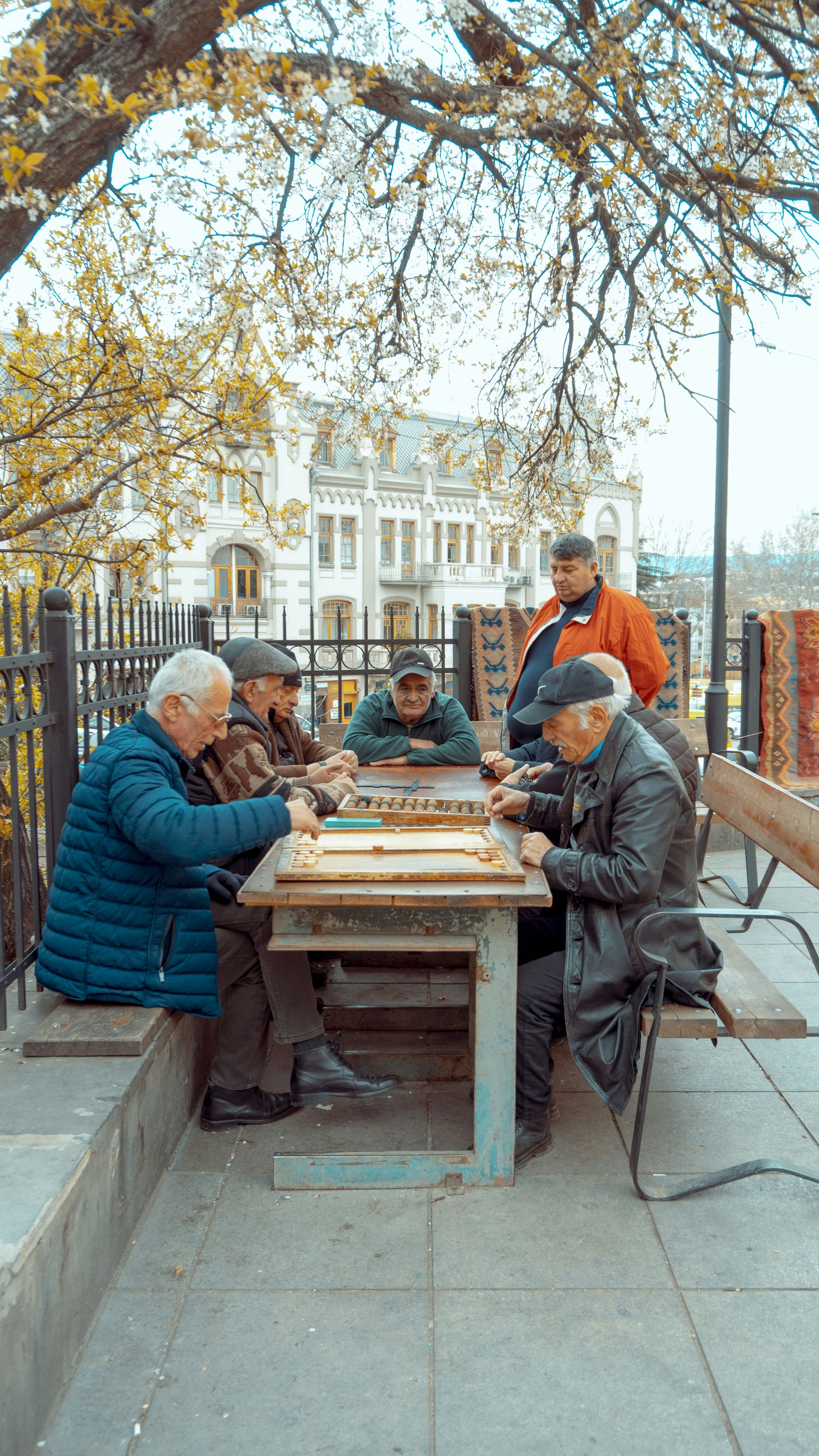
Staying socially engaged is linked to a slower decline in thinking and memory as people age. The 2023 Surgeon General's advisory reported that chronic loneliness and isolation were associated with roughly a 50% higher risk of developing dementia among older adults.
Research from Johns Hopkins University added detail. A 2022 study led by a team that included physician Thomas Cudjoe found that socially isolated older adults were more likely to develop dementia than their more connected peers, drawing on a nationally representative sample of older Americans followed over several years.
The relationship runs in more than one direction, which makes it hard to untangle. Early cognitive decline can cause people to withdraw socially, and withdrawal can then accelerate decline. Sorting cause from effect is a genuine challenge in this research.
Several mechanisms are plausible. Social interaction is cognitively demanding. Following a conversation, tracking other people's intentions, and responding in real time all exercise the brain. Regular engagement may help preserve the mental machinery that isolation lets go quiet.
Connection may also protect the brain indirectly, by reducing the chronic stress, poor sleep, and depression that are themselves linked to cognitive problems. A person with an active social life tends to move more, think more, and feel less overwhelmed, and each of those factors touches brain health.
The Harvard Study of Adult Development pointed the same way. Participants with wider, warmer social lives tended to keep sharper cognitive function and showed later, slower mental decline than more isolated peers.
None of this proves that friendship prevents dementia. The evidence is associational, and many factors shape how the brain ages. What the research consistently shows is that an engaged social life travels alongside better cognitive aging.
For older adults in particular, this reframes socializing as more than pleasant. Conversation, shared activities, and regular contact appear to be part of what keeps the aging mind working well. Isolation, on this evidence, is not neutral for the brain.

Credit: Kampus Production / Pexels
Friends influence not only how each other feel but how each other behave, including habits that shape physical health. Nicholas Christakis and James Fowler examined this using the same Framingham Heart Study network, and their findings on weight drew wide attention.
In a 2007 study in the New England Journal of Medicine, they tracked how obesity moved through social ties over 32 years. When a person became obese, the chance that a close friend would also become obese rose substantially. The link between friends was stronger than the link between neighbors, which suggested that social influence, not just shared environment, was at work.
The pattern was not limited to weight. The same research group documented how smoking spread and receded through networks. People tended to quit smoking in clusters, with whole groups of connected friends giving up the habit around the same time. Smokers also drifted toward the edges of social networks as smoking became less common.
The proposed explanation is that friends reshape what feels normal. Habits, body size, and behavior carry social signals. When people close to us change, our sense of what is ordinary shifts with them. That shift can nudge our own choices, often without conscious awareness.
This work has faced criticism. Separating genuine influence from the tendency of similar people to become friends is difficult, and some statisticians have questioned how cleanly the studies did it. The debate over method is real and unresolved.
Even with those caveats, the broader point holds across many studies. Health behaviors are social. People eat, drink, exercise, and smoke partly in step with those around them.
The implication cuts both ways. A social circle can pull a person toward habits that harm health or toward ones that support it. Friends are not just company. They are part of the environment that shapes daily behavior, and that environment leaves marks on the body over years.

Credit: Mohammad Marjani / Unsplash
Loneliness appears to leave a mark deep in the body, at the level of how genes behave. Research led by Steven Cole at the University of California, Los Angeles, together with the late John Cacioppo, identified a distinct pattern in the immune cells of people who feel isolated.
They called it the conserved transcriptional response to adversity, or CTRA. In lonely people, this pattern involves increased activity in genes that drive inflammation and decreased activity in genes that fight off viruses. The body shifts toward an inflamed, less antiviral state.
That combination is unhelpful over time. Chronic low-grade inflammation is tied to heart disease, diabetes, and other long-term illnesses. A weakened antiviral response can leave a person more vulnerable to infection. Loneliness, on this evidence, tilts the immune system in a direction that raises the risk of disease.
The researchers found the same pattern in rhesus monkeys that were socially isolated, which strengthened the case that the effect is biological rather than a quirk of how people report their feelings. The response appears to be conserved across social species.
What seems to matter is the subjective sense of isolation, not just the objective number of contacts. Someone can be surrounded by people and still register as lonely at the level of gene expression. The feeling of being cut off, more than the head count, drives the response.
The likely pathway runs through the body's stress systems. Feeling socially unsafe activates a fight-or-flight response, and sustained activation reshapes the activity of immune cells over time.
There is a hopeful side. Later work suggested that a sense of purpose and meaning in life was associated with the opposite gene-expression pattern, hinting that positive states may help counter the effect.
The research closes a loop. It offers a biological route from a social feeling to physical illness. Loneliness is not only unpleasant. It shows up in the machinery of the cell.

Credit: olia danilevich / Pexels
Friendships may become more important to health, not less, as people grow older. William Chopik, a psychologist at Michigan State University, examined this in research published in the journal Personal Relationships in 2017, drawing on surveys of nearly 280,000 people.
In the first study, covering more than 270,000 adults across roughly 100 countries, both family and friend relationships were linked to better health and happiness overall. At advanced ages, though, the link stayed strong mainly for people who reported good friendships. Among older adults, friendships predicted health and happiness more reliably than family ties did.
The second study followed about 7,500 older adults in the U.S. and looked at support and strain in their relationships. When friends were a source of strain, people reported more chronic illnesses. When friends were a source of support, people were happier. The quality of friendships, not just their existence, tracked with well-being.
Chopik has suggested a reason friendships may carry extra weight in later life. Friends are chosen. Over decades, people tend to keep the friends who make them feel good and let the others fade. Family relationships, by contrast, come with obligations and can persist through years of conflict. A friendship that survives that long is usually one worth having.
Friends can also fill gaps that family cannot. They offer support to people without spouses or nearby relatives, and they help older adults rebuild social lives after retirement or the loss of a partner.
The research is based on self-reports and cannot prove causation. Later work, including a 2025 longitudinal study from Chopik's group, found more evidence that health predicts friendship patterns than the reverse, a reminder that the arrow may point both ways.
What the body of work suggests is that investing in a few good friendships is not a young person's game. As other relationships shift with age, the friends people choose to keep may matter more than ever for how well they live.
Credit: Zhen Yao / Unsplash
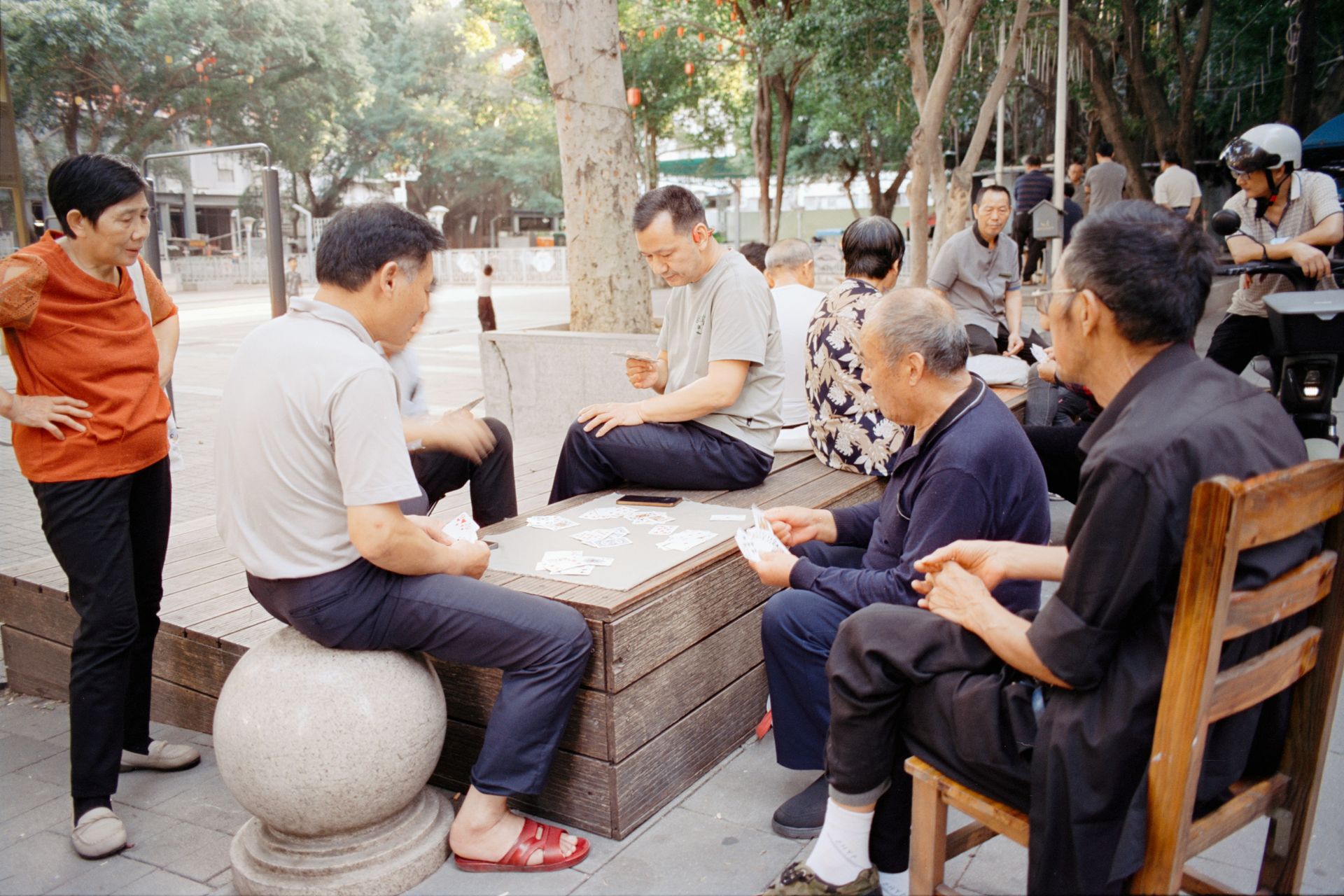
Some of the places where people live longest are also places built around tight, lasting friendships. The clearest example comes from Okinawa, Japan, one of the regions that researcher Dan Buettner and his collaborators labeled a Blue Zone — an area with unusually high numbers of people living past 100.
Okinawa has a tradition called moai. A moai is a small group of friends, often formed in childhood, who commit to supporting one another for life. Members meet regularly, share advice and company, and pool resources when someone hits hard times. Some of these groups have lasted more than 90 years.
The support is practical and emotional at once. A moai offers the security of knowing that someone will always be there, whatever happens. That steady backing appears to reduce stress and give members a durable sense of belonging well into old age.
Buettner's team, working with support from National Geographic and the National Institute on Aging, identified several such regions around the world, including Sardinia in Italy, the Nicoya Peninsula in Costa Rica, Ikaria in Greece, and Loma Linda in California. Strong social ties turned up as a shared feature across them, alongside diet, movement, and a sense of purpose.
The evidence here is observational. Blue Zone research identifies patterns in populations, not causes in individuals. Longevity in these places reflects a tangle of factors — food, genetics, climate, activity, and culture — that cannot be cleanly separated. Okinawa itself has been the subject of debate as Western habits erode its traditional way of life.
The social thread is hard to ignore, though. Across very different cultures, the longest-lived communities tend to be ones where people are embedded in close, reliable relationships and rarely left to face life alone.
That points to something the mortality and immune studies also suggest. Deep, lasting friendship is not incidental to a long life. In the places where people live longest, it is woven into daily existence.

Credit: Canva Images
Loneliness disrupts something the body depends on every night: restful sleep. Research by John Cacioppo, Louise Hawkley, and colleagues found that lonely people tend to sleep less soundly than others, even when they spend the same amount of time in bed.
The difference shows up in the structure of sleep rather than its length. Lonely individuals experience more fragmented sleep, with more brief awakenings through the night. Their sleep efficiency — the share of time in bed actually spent asleep — tends to be lower. Total sleep duration, though, is often unchanged.
The researchers offered an evolutionary explanation. For a social species, being part of a group meant safety. Being alone meant exposure. Sleep is the most vulnerable state a person can be in, since it is impossible to stay alert while asleep. A brain that feels socially unsafe may never fully stand down, staying subtly vigilant through the night and interrupting the deep rest that repair depends on.
This link held up when researchers accounted for other explanations. The poorer sleep of lonely people was not simply due to depression, body weight, or health habits. A later review of 27 studies confirmed a consistent association between loneliness and disturbed sleep, though not with sleep duration.
The direction of the relationship is not fully settled. Poor sleep could deepen loneliness by leaving people drained and withdrawn, and loneliness could worsen sleep. The two likely feed each other.
The consequences reach beyond feeling tired. Nonrestorative sleep affects mood, immune function, memory, and the body's ability to manage stress. If loneliness quietly erodes sleep quality, it may harm health through that channel on top of its other effects.
The finding adds a nightly dimension to the cost of isolation. Connection may signal to the brain that it is safe to rest. Without that signal, the body can spend its nights half on guard — and the effects of that vigilance carry into the day.