
IBM $IBM agreed to acquire HRL Laboratories, a quantum computing research lab jointly owned by Boeing $BA Co. and General Motors $GM, the company said on Thursday, adding a second type of quantum technology to its portfolio.
HRL, jointly owned by Boeing and GM, makes electron spin qubits — a different approach from the superconducting circuits IBM currently uses
Javier Mostacero Carrera / Getty Images
IBM $IBM agreed to acquire HRL Laboratories, a quantum computing research lab jointly owned by Boeing $BA Co. and General Motors $GM, the company said on Thursday, adding a second type of quantum technology to its portfolio.
IBM did not disclose a purchase price. Boeing and GM "will continue to partner with IBM" on quantum technologies after the deal closes, IBM said.
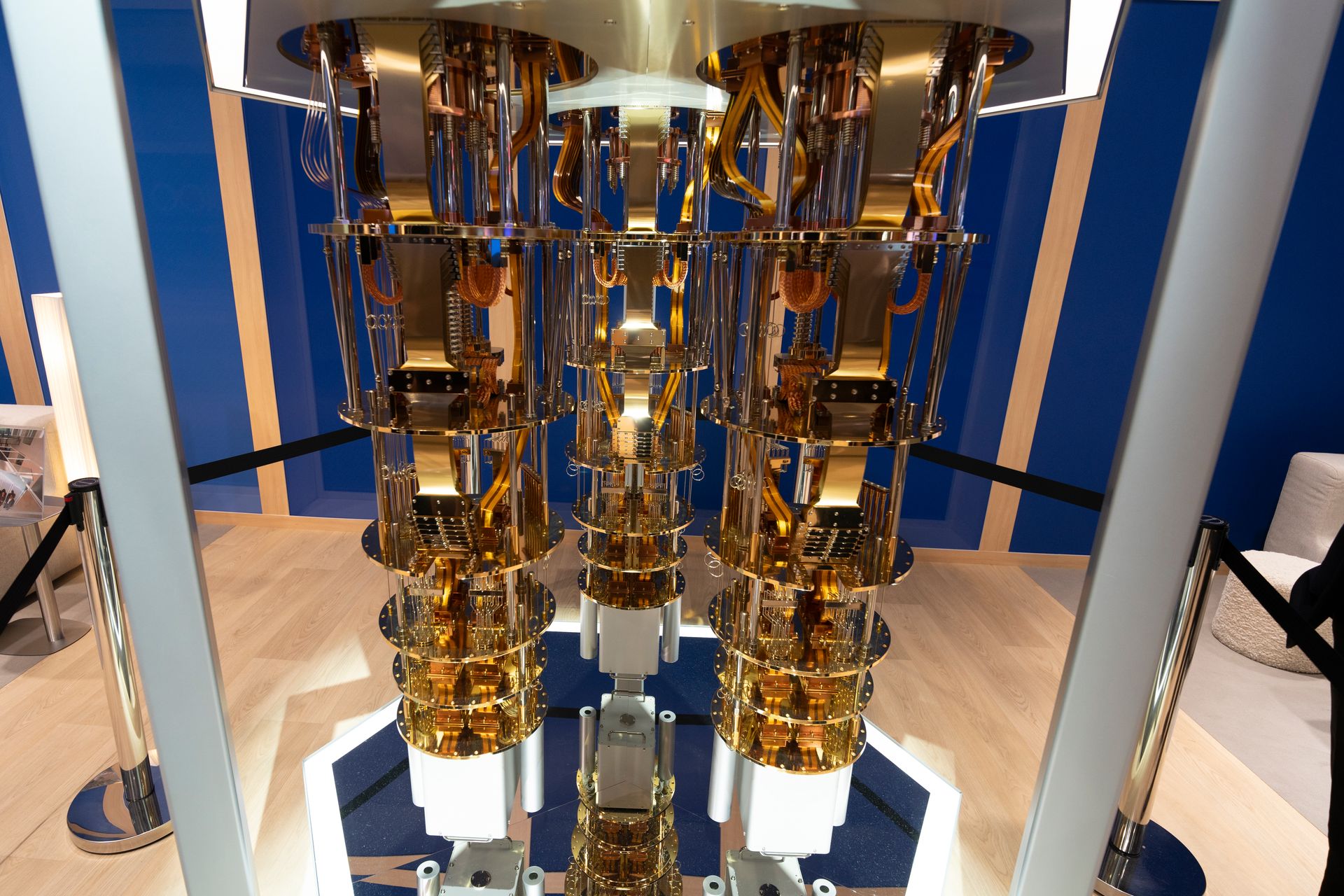
HRL, based near Malibu, California, makes electron spin quantum circuits, known as qubits. IBM has built its quantum computing program around superconducting circuits, the same approach used by Alphabet $GOOGL's Google. The two technologies share a manufacturing base with conventional chip fabrication, yet electron spin circuits achieve a considerably smaller footprint than their superconducting counterparts.
Jay Gambetta, director of IBM Research, said in a Wednesday interview that electron spin's size advantage will start to matter for IBM once its superconducting "Blue Jay" system arrives in 2033. "I and the team strongly believe that the future is going to be (electron) spins, or superconducting, or possibly a combination of them," Jay Gambetta told Reuters in an interview on Wednesday. "They have a very strong spin qubit team, the strongest in the world. ... I would not pursue a second path that was not built on a foundation that could be integrated together."
Jay Gambetta said HRL's team, which has been fabricating chips at its California site, will shift that production to IBM's New York facility in the near term. He also said IBM has "a parallel path" of spin-based quantum technology "that we'll make available very soon."
IBM's expansion into a second quantum approach mirrors a strategy Google pursued earlier this year, when it broadened its own portfolio to include neutral-atom technology, according to Reuters.
IBM has been investing more than $10 billion in quantum computing over five years, targeting a fault-tolerant system called Starling by 2029 and a larger Blue Jay system by 2033. The company and its rivals are competing to build machines capable of solving problems that would take conventional computers thousands of years to complete.
The acquisition also fits within IBM's broader manufacturing push. In May, the Trump administration said it would award $1 billion to IBM to establish Anderon, a quantum chip foundry in New Albany, New York, intended to serve outside customers as well as IBM itself. HRL's chips will be produced at IBM's New York facility going forward, the company said.
Join 500,000+ readers who start their day with Quartz.
By subscribing, you agree to our Terms of Service and Privacy Policy.