
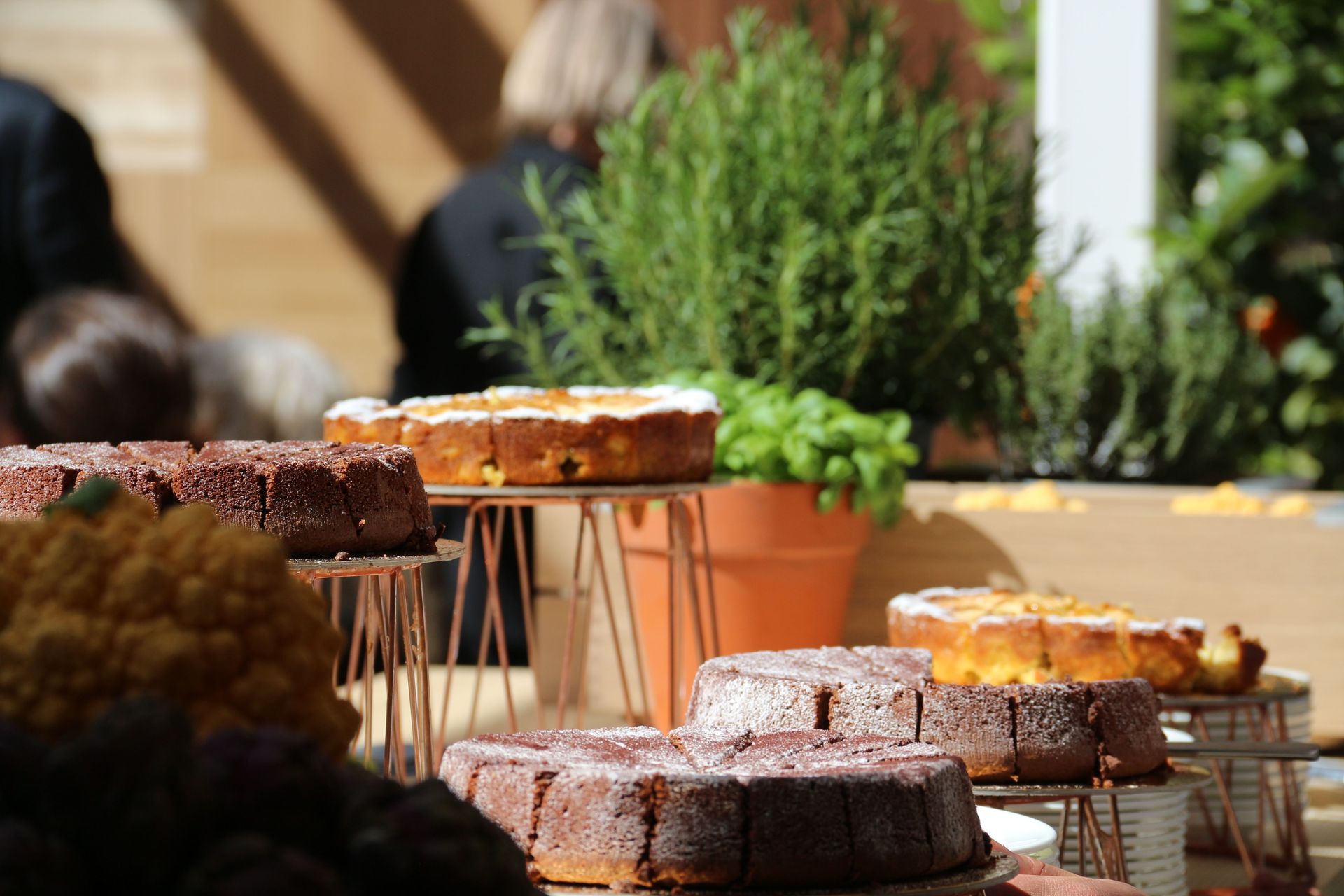
The gap between a dessert that looks extraordinary and one that is genuinely difficult to make is wider than most people realize. These 25 recipes live in that gap
Mehmet Akif Acar / Pexels
The intimidating dessert is a specific category. It is the thing that arrives at a dinner party and produces a slight silence — the kind that precedes either admiration or the host explaining, at some length, how long it took and how many times it nearly went wrong. It tends to involve layers, or shine, or something flambeéd, or a texture that is difficult to name precisely. The people who make these desserts regularly are assumed to have either professional training, extraordinary patience, or both.
The assumption is wrong for a specific reason. Most impressive-looking desserts are not technically difficult. They are visually complex in the sense that they require multiple components or precise presentation, but the components themselves are frequently simple, and the assembly is learnable in a single attempt. The panna cotta that wobbles magnificently on its plate is set cream — the technique is pouring and waiting. The tart with the perfectly glazed fruit is a blind-baked case filled with pastry cream and arranged fruit, each of which is a separately simple act. The chocolate fondant that produces its lava center at the table requires five ingredients and the specific knowledge that underbaking by a fixed amount produces exactly the effect desired.
This list covers 25 desserts that inhabit the gap between impressive appearance and moderate technique. The selection criteria are specific: the dessert must look significantly more difficult than it is; the active preparation time must be manageable in a single session without professional equipment; and the result must be genuinely excellent rather than merely acceptable. Several of these desserts are restaurant staples whose professional presentation obscures the simplicity of the technique. Several are crowd-pleasing classics whose reputation for difficulty has been slightly inflated by repetition. A few are genuinely unusual and will be encountered by most guests as new — the best possible position for a dessert to be in, because nobody can compare it to the one they had somewhere better.
All measurements are in metric. Most serve six to eight people unless noted. Equipment requirements are limited to what a well-equipped home kitchen should have: a stand or hand mixer, a food processor, tart tins, ramekins, and a thermometer for the few recipes that benefit from one.
Valeria Boltneva / Pexels
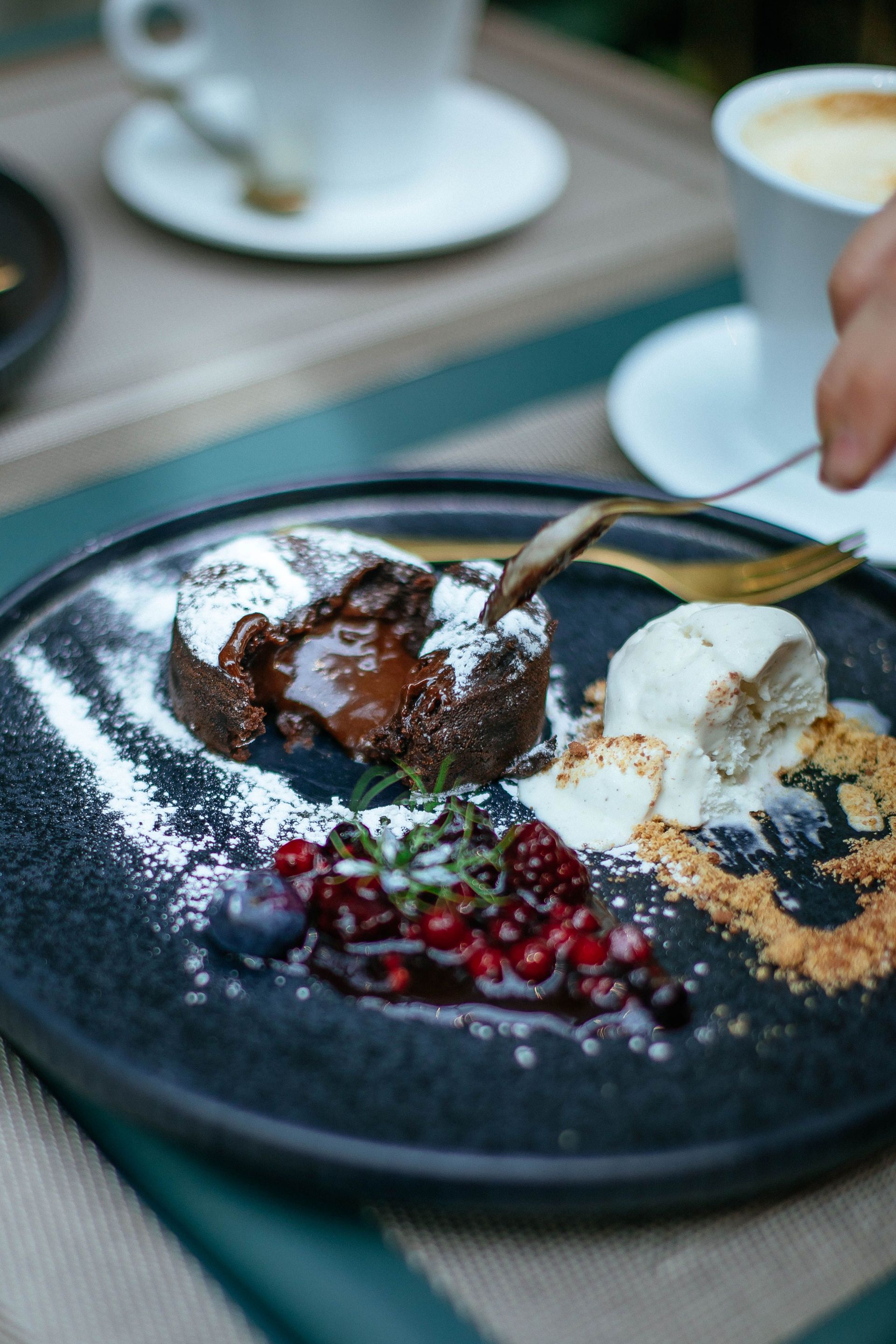
The chocolate fondant — the individual chocolate cake with a liquid center that flows when cut at the table — is the most impressive restaurant dessert and one of the easiest to make at home, because the entire effect depends on a single variable: the baking time. Get the baking time right and the center stays molten; add two minutes and it becomes a chocolate cake; subtract two minutes and the whole thing collapses when turned out. The baking time is specific to the oven and the ramekin, which means the first batch is a calibration run and every subsequent batch is confident repetition.
Melt 200g of dark chocolate (70% cocoa solids) with 200g of unsalted butter, stirring until smooth. Remove from heat. Whisk in 200g of caster sugar, then four whole eggs and four egg yolks, one at a time. Fold in 100g of plain flour and a pinch of salt. The batter at this point can be refrigerated for up to 48 hours, which is the practical magic of this dessert: it is a make-ahead recipe whose final step takes 12 minutes in a hot oven.
Butter and flour six to eight ramekins. Fill to approximately two-thirds. Bake at 200°C fan for exactly 12 minutes — the edges will be set and the centre will have a slight wobble. Run a knife around the edge, place a plate over the ramekin, and invert. Serve immediately with vanilla ice cream or cold crème fraîche.
Test one fondant before a dinner party to calibrate the timing for your specific oven. The two minutes of margin either side of the correct baking time is not much, but it is enough.
Serves 6 to 8.
Eduardo Krajan / Pexels
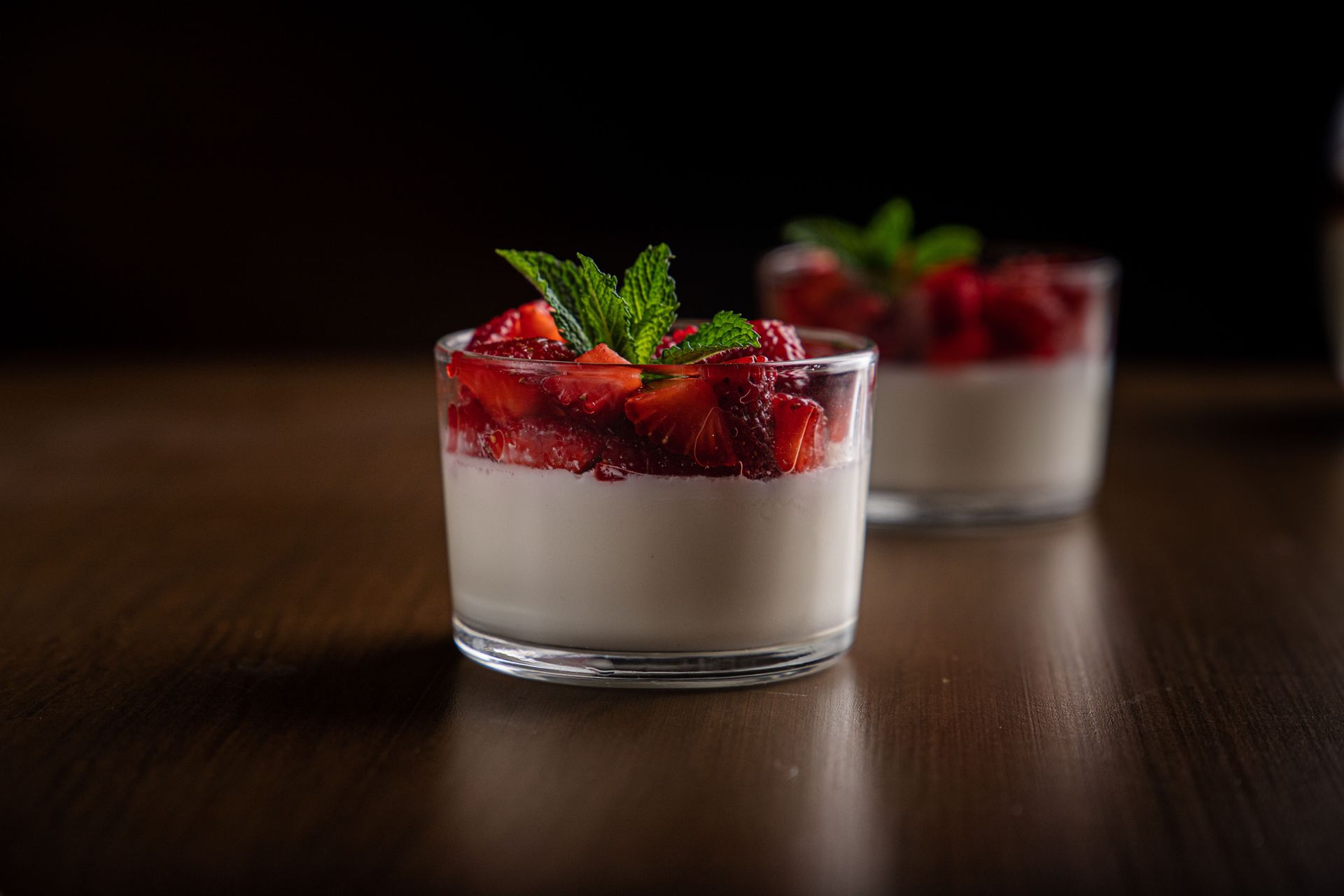
Panna cotta — set cream, literally — is the dessert that produces the most dramatic effect for the least technical effort, because the wobble of a perfectly set panna cotta on a plate, next to a deep red berry compote, looks like something that required significant skill and produces a texture — silky, barely set, cold and rich — that is immediately, obviously excellent.
Warm 600ml of double cream with 75g of caster sugar and one teaspoon of vanilla bean paste over low heat until the sugar dissolves and the cream steams — do not boil. Soak three sheets of gelatine in cold water for five minutes, squeeze out the excess water, and add to the warm cream, stirring until dissolved. Add 200ml of full-fat milk and stir to combine. Pour into six lightly oiled ramekins or glasses. Refrigerate for at least four hours or overnight.
For the compote: place 300g of mixed berries (frozen work well), three tablespoons of caster sugar, and one tablespoon of lemon juice in a small saucepan. Cook over medium heat for eight minutes until the berries have released their liquid and the sauce has thickened slightly.
To serve: run a knife around the edge of each ramekin and invert onto a plate. The panna cotta should release with a satisfying wobble. Spoon the compote around it. Finish with a few fresh berries and a sprig of mint.
The panna cotta can be made two days in advance. The compote keeps for five days in the refrigerator.
Serves 6.
Daniel & Hannah Snipes / Pexels
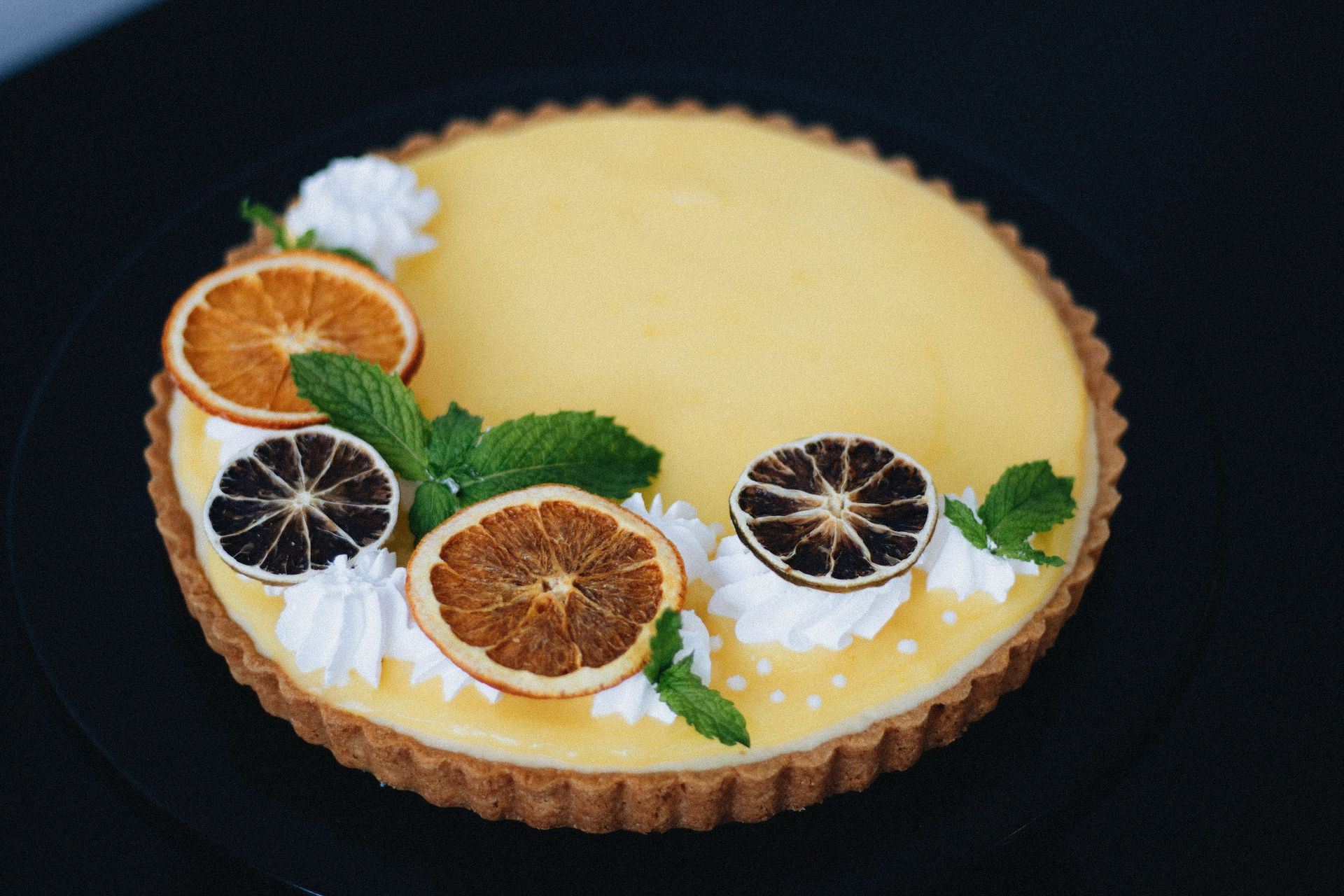
A properly made lemon tart — bright, silky, set just enough — is one of the most elegant desserts in the classical French repertoire and one of the most achievable at home, because the components (sweet pastry case, lemon curd filling) are each separately simple and the assembly is assembly rather than technique.
For the pastry: pulse 200g of plain flour, 100g of cold unsalted butter (cubed), 50g of icing sugar, and a pinch of salt in a food processor until it resembles breadcrumbs. Add one egg yolk and one to two tablespoons of cold water, pulsing until the dough just comes together. Press into a disc, wrap, and refrigerate for 30 minutes. Roll out on a floured surface and line a 23cm loose-bottomed tart tin. Refrigerate for 20 minutes. Blind bake at 180°C fan with baking beans for 15 minutes, then remove the beans and bake for a further five to eight minutes until golden and dry.
For the filling: whisk together four eggs, four egg yolks, 175g of caster sugar, the juice of four lemons (approximately 150ml), and the zest of two lemons. Pour into a saucepan and cook over low heat, stirring constantly, until the curd thickens enough to coat the back of a spoon. Remove from heat and stir in 100g of cold unsalted butter, piece by piece.
Pour the warm curd into the baked tart case and allow to set at room temperature for one hour, then refrigerate until fully set. Serve with a dusting of icing sugar and crème fraîche.
Serves 8.
Cats Coming / Pexels
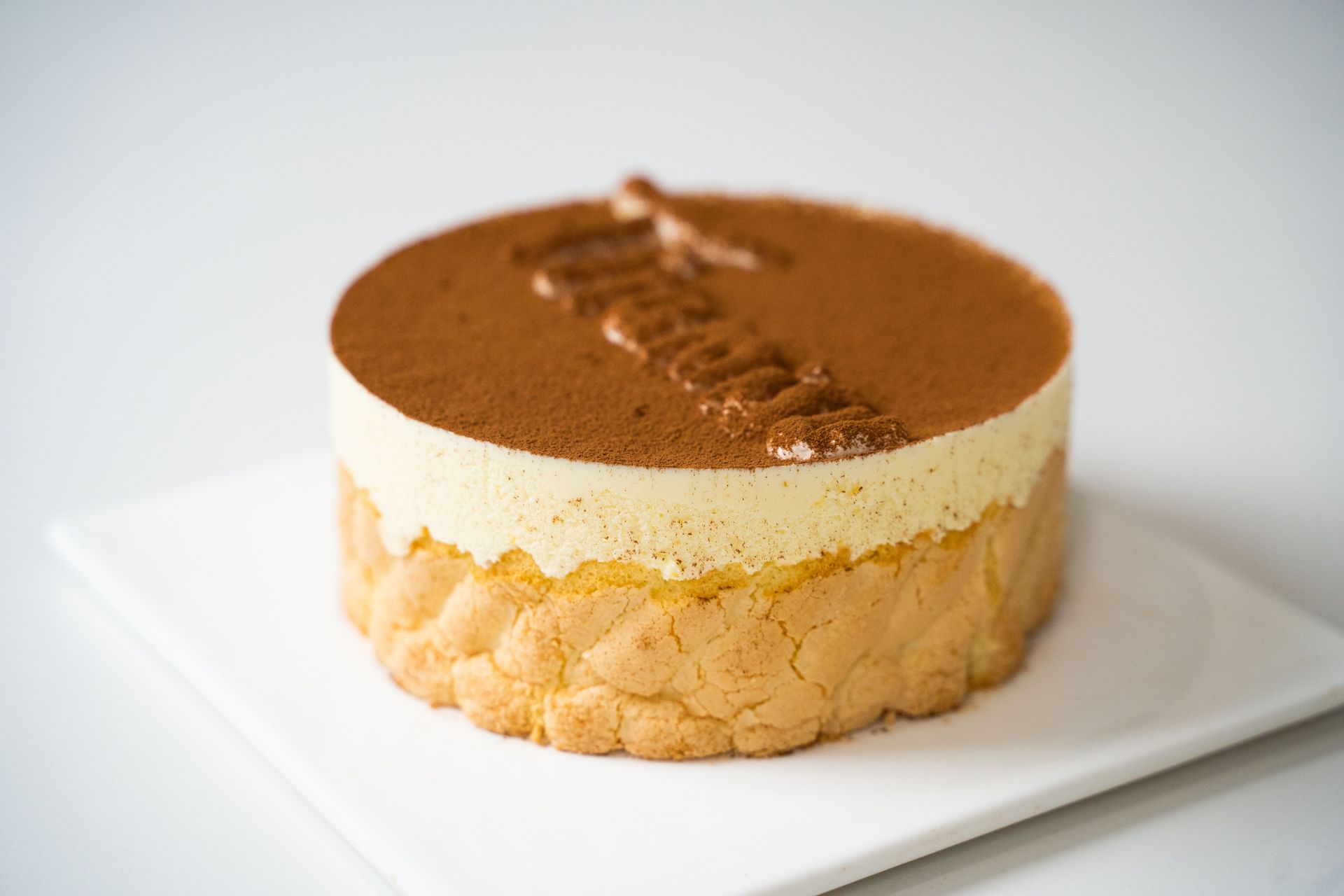
Tiramisu — the Italian dessert of coffee-soaked ladyfingers, mascarpone cream, and cocoa — is one of the great make-ahead dinner party desserts: it is better the day after it is made, serves a crowd without any last-minute work, and its appearance — the neat layers of cream and biscuit visible when cut, the dark surface of cocoa — suggests more effort than the 30 minutes of assembly it actually requires.
Make a strong espresso — approximately 300ml — and allow to cool. Add two tablespoons of Marsala wine or dark rum if desired.
Separate six eggs. Whisk the yolks with 100g of caster sugar until thick and pale — approximately five minutes with an electric whisk. Beat in 500g of mascarpone until smooth. Whisk the six egg whites with a pinch of salt to stiff peaks. Fold one-third of the whites into the mascarpone mixture to loosen it, then fold in the remainder carefully to preserve the volume.
Dip 24 to 30 savoiardi (ladyfinger biscuits) briefly in the cooled coffee — one to two seconds per side, enough to absorb coffee but not to become soggy — and arrange in a single layer in a deep dish. Spread half the mascarpone cream over the biscuits. Repeat the layer. Dust generously with good-quality cocoa powder through a fine sieve. Refrigerate for at least four hours, preferably overnight.
Raw egg in the mascarpone cream can be avoided by using pasteurised eggs, or by warming the yolk and sugar mixture over a bain-marie to 60°C before incorporating the mascarpone.
Serves 8 to 10.
Maryna Davydenko / Pexels
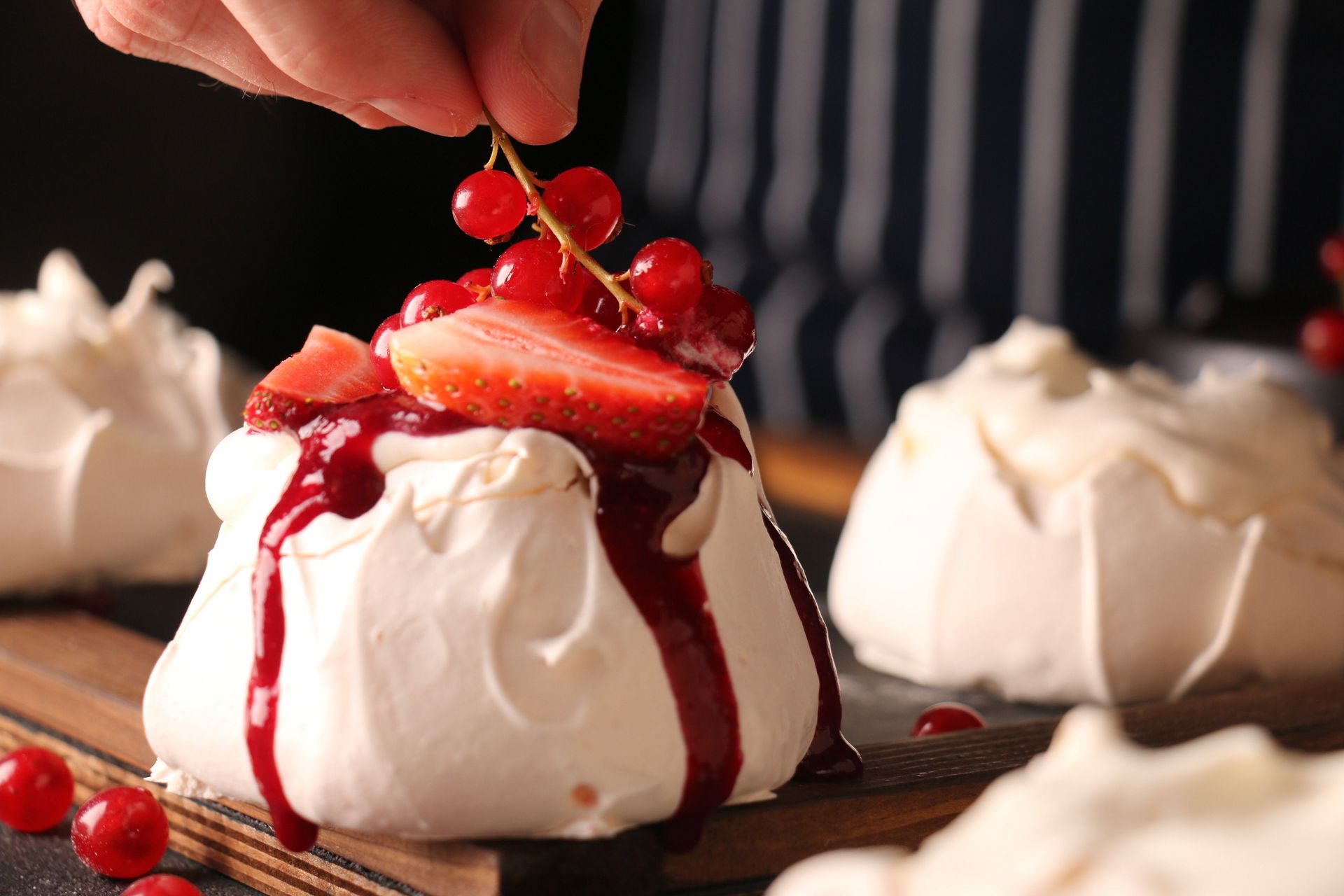
Pavlova — the meringue base with crisp exterior and marshmallow interior, topped with whipped cream and fresh fruit — produces the most dramatic visual result of any dessert on this list relative to the simplicity of the technique. A large Pavlova on a cake stand, piled with seasonal fruit, is a genuinely beautiful object that requires whipping egg whites, shaping a circle, and baking at a very low temperature for a very long time.
Whisk four egg whites with a pinch of salt and a small pinch of cream of tartar at medium speed until soft peaks form. Add 250g of caster sugar, one tablespoon at a time, whisking to stiff, glossy peaks throughout — this takes approximately 10 minutes. Fold in one teaspoon of white wine vinegar, one teaspoon of cornflour, and one teaspoon of vanilla extract.
Spread onto a baking parchment-lined tray in a circle approximately 22cm in diameter, building the edges slightly higher than the centre to create a bowl for the cream and fruit. Bake at 120°C fan for 90 minutes. Turn off the oven and leave the Pavlova inside to cool completely — at least two hours, or overnight.
Whip 400ml of double cream to soft peaks with one tablespoon of icing sugar and a teaspoon of vanilla. Pile onto the Pavlova immediately before serving. Arrange fresh fruit (passionfruit and mixed berries are classic; mango and raspberry work equally well) over the cream. Dust with icing sugar.
The Pavlova base can be made two days ahead and stored in an airtight container.
Serves 8.
Polina Tankilevitch / Pexels
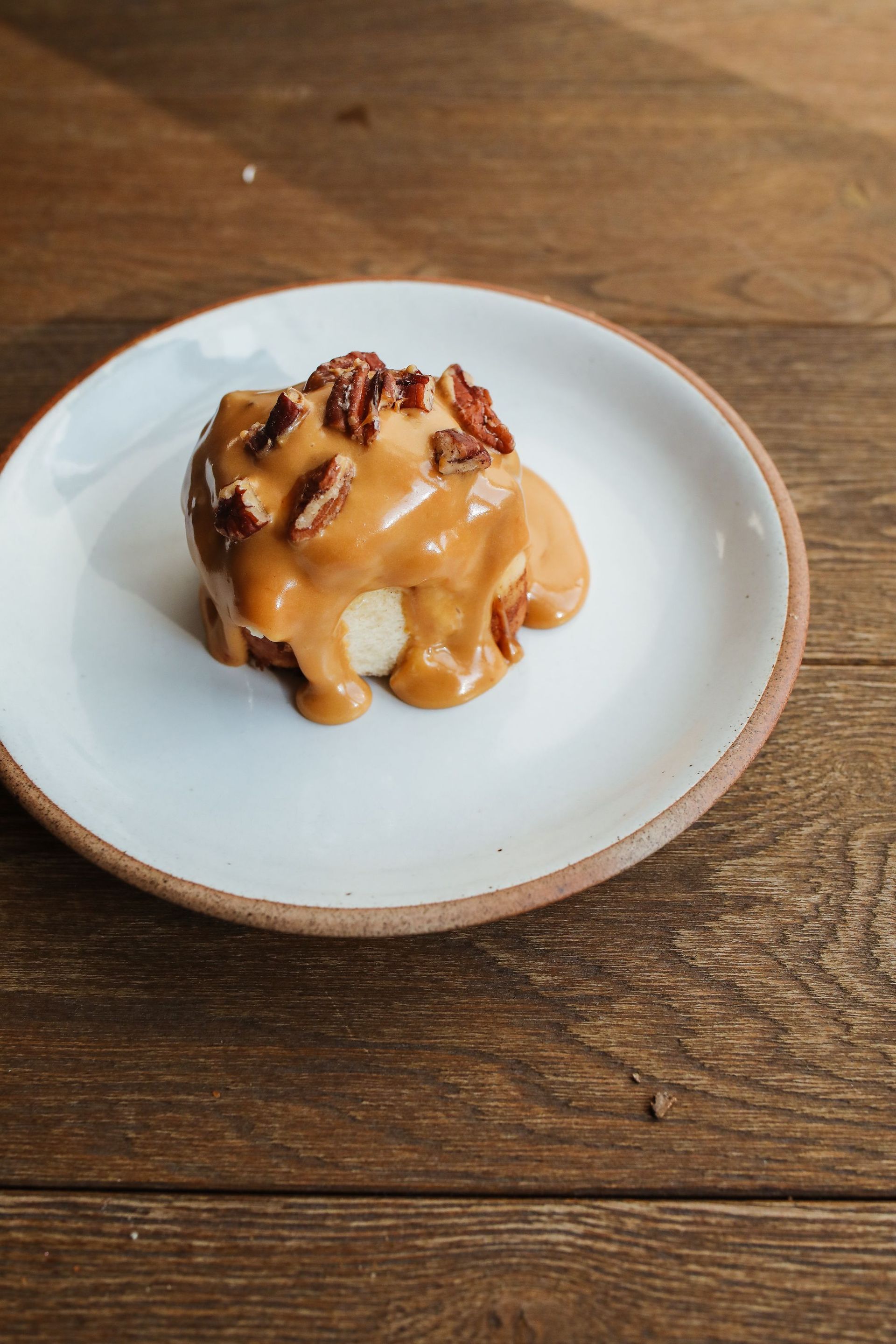
Sticky toffee pudding — the British steamed sponge cake drenched in toffee sauce — is the most universally loved dessert on this list and the one whose ratio of difficulty to satisfaction is most dramatically in the maker's favor. The sponge is a straightforward butter cake flavored with dates; the toffee sauce is cream, butter, and brown sugar boiled together for five minutes. The combination is reliably extraordinary.
For the pudding: pour 250ml of boiling water over 200g of pitted Medjool dates, chopped. Add one teaspoon of bicarbonate of soda and leave for 10 minutes. Blend until smooth.
Cream 75g of softened unsalted butter with 175g of soft brown sugar until fluffy. Beat in two large eggs. Fold in 175g of self-raising flour, one teaspoon of vanilla extract, and the date purée. Pour into a greased 20cm square tin or individual pudding basins. Bake at 180°C fan for 25 to 30 minutes until a skewer comes out clean.
For the toffee sauce: melt 100g of unsalted butter, 200g of soft brown sugar, and 200ml of double cream in a saucepan over medium heat, stirring until the sugar dissolves. Simmer for three to four minutes until the sauce thickens slightly. Add a generous pinch of flaky sea salt.
Pour a third of the toffee sauce over the warm pudding and leave for five minutes to absorb. Serve with the remaining sauce poured at the table and vanilla ice cream alongside.
The pudding and sauce reheat perfectly and can be made a day in advance.
Serves 8.
Mohamed Olwy / Pexels
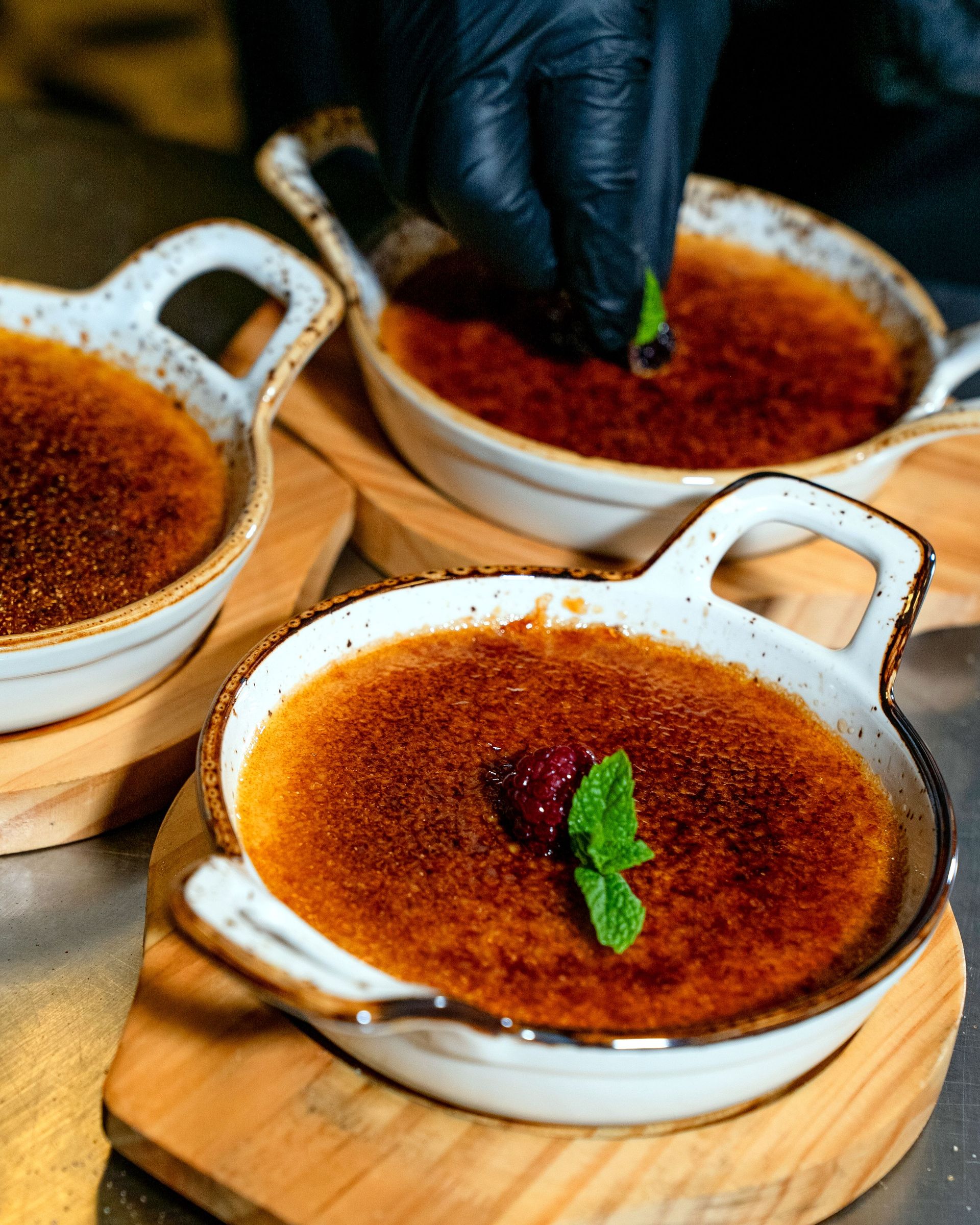
Crème brûlée — the custard with a caramelised sugar crust that cracks dramatically under a spoon — has a reputation for difficulty that is slightly exaggerated. The custard requires careful baking in a water bath (which prevents overheating), and the sugar crust requires a kitchen blowtorch (which is a £15 investment that pays off across many desserts). Neither of these things is difficult. The result is the most theatrically satisfying dessert there is.
Split one vanilla pod and scrape the seeds into a saucepan with 500ml of double cream. Bring to a gentle simmer, then remove from heat and leave to infuse for 20 minutes. In a bowl, whisk six egg yolks with 100g of caster sugar until pale. Pour the warm cream over the yolks in a thin stream, whisking constantly. Strain through a fine sieve.
Pour into six ramekins set in a deep roasting tin. Fill the tin with boiling water to reach halfway up the sides of the ramekins. Bake at 150°C (no fan) for 30 to 35 minutes until set with a slight wobble in the centre. Remove from the water bath and allow to cool, then refrigerate for at least four hours.
To serve: sprinkle one teaspoon of caster sugar evenly over each custard. Caramelise with a blowtorch, moving in small circular motions until the entire surface is a deep amber. Allow the caramel to set for one minute before serving.
The custards can be made two days in advance; the caramelisation must be done immediately before serving.
Serves 6.
Speak / Pexels
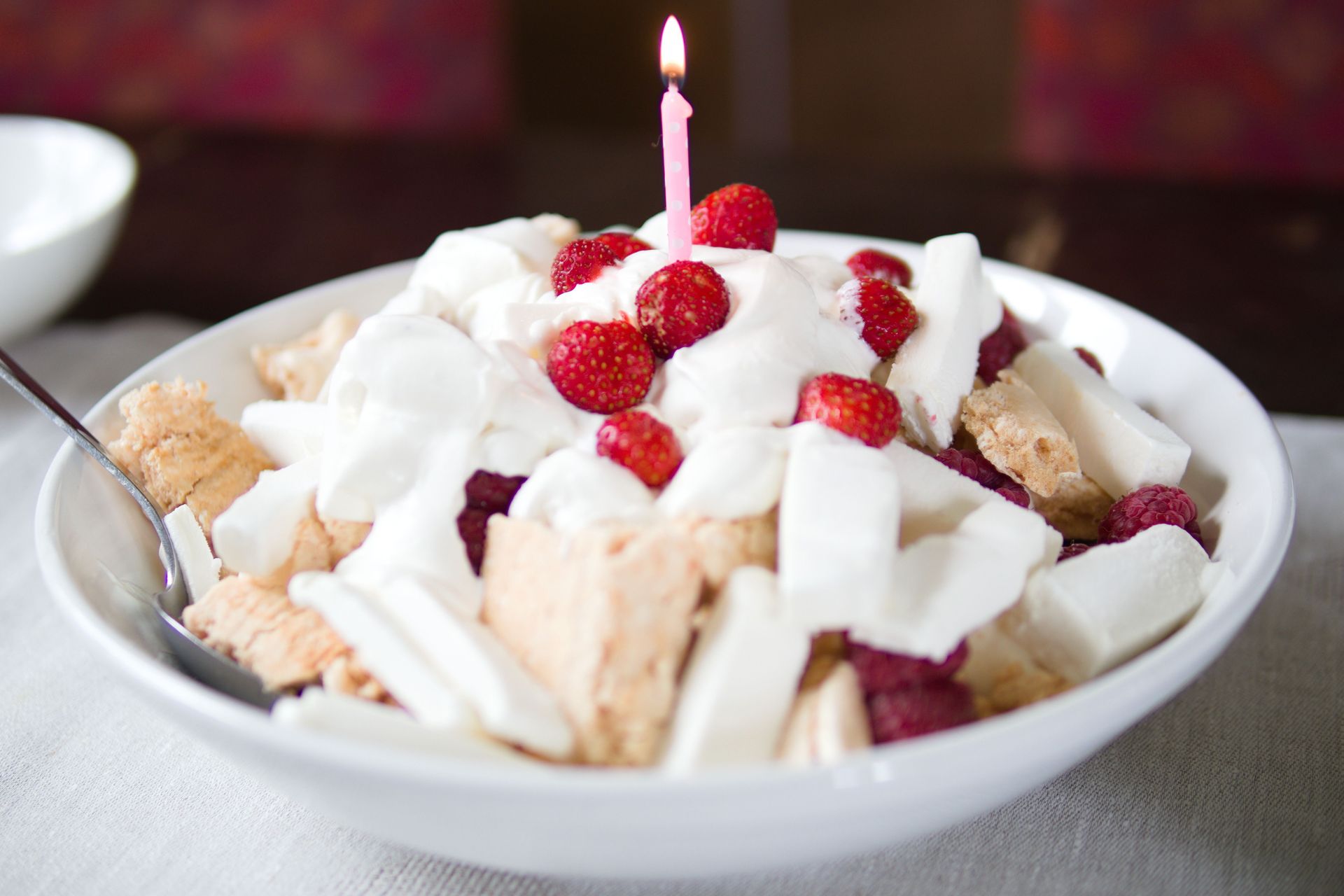
Eton mess — crushed meringue, whipped cream, and strawberries — is the most forgiving dessert on this list, because its defining characteristic is the deliberate demolition of the meringue, which means that broken, overcooked, or imperfect meringues are not failures but ingredients. It is assembled in five minutes from components that can all be made in advance and is genuinely delicious in a way that belies its simplicity.
Make the meringues: whisk four egg whites to stiff peaks, adding 225g of caster sugar one tablespoon at a time, until thick and glossy. Pipe or spoon onto a lined baking tray in irregular rounds approximately 6cm in diameter. Bake at 100°C for 90 minutes. Cool completely in the oven.
Hull and quarter 500g of strawberries. Toss half of them with one tablespoon of icing sugar and the juice of half a lemon and leave for 20 minutes — the sugar draws out the juice and creates a natural sauce. Lightly crush the remaining strawberries.
Whip 400ml of double cream to soft peaks with one tablespoon of icing sugar and half a teaspoon of vanilla extract.
To assemble: roughly crush the meringues into large pieces. Fold together the cream, crushed strawberries, macerated strawberries and their juice, and the broken meringue pieces. Pile into glasses or a large bowl. Serve immediately — the meringue begins to soften after 15 to 20 minutes, which produces a different but still excellent texture.
Serves 6.
Ella Olsson / Pexels
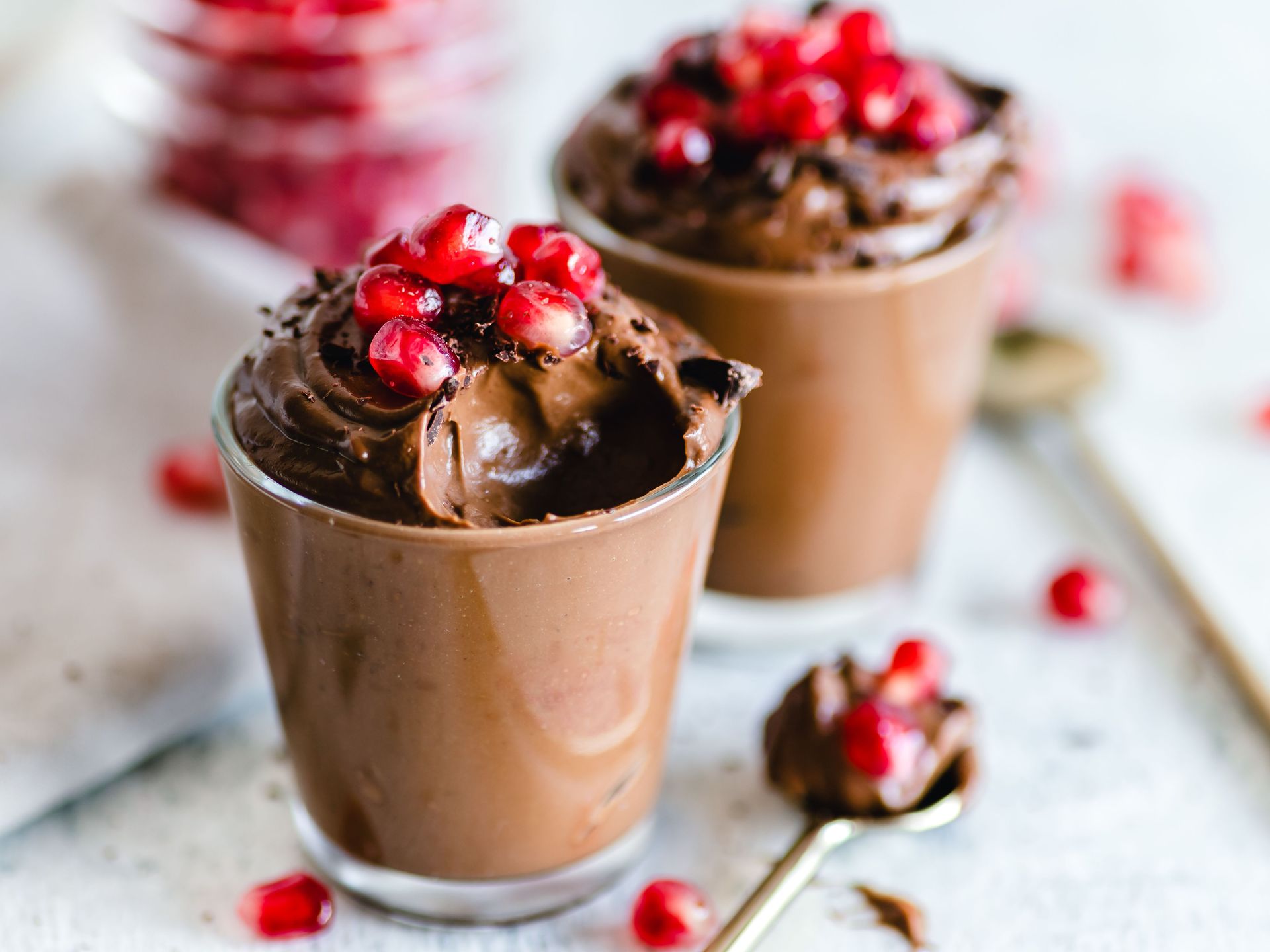
A proper chocolate mousse — dark, rich, barely set, served in small glasses — is one of the simplest desserts there is, requiring only chocolate, eggs, and cream, and producing a result whose depth of flavor and lightness of texture do not have an obvious precedent in the ingredient list. The technique is the folding: folding whipped cream and egg whites into melted chocolate without deflating either, which is a skill that requires attention and a light hand but not professional training.
Melt 200g of dark chocolate (70% cocoa solids) in a bowl over barely simmering water. Remove from heat and allow to cool slightly. Separate four eggs. Stir the yolks into the warm chocolate. Whip 200ml of double cream to soft peaks. Whisk the egg whites with a pinch of salt to stiff peaks.
Fold the whipped cream into the chocolate mixture. Then fold in the egg whites in two additions — the first to loosen, the second to incorporate — with a large metal spoon, cutting through the mixture rather than stirring, preserving as much volume as possible.
Divide between six small glasses or ramekins. Refrigerate for at least two hours. Serve with a small spoon of crème fraîche, a few flakes of sea salt, and optionally a small piece of dark chocolate on the side.
The mousse can be made a day in advance. It is better cold, straight from the refrigerator.
Serves 6.
Milan Trninic / Pexels
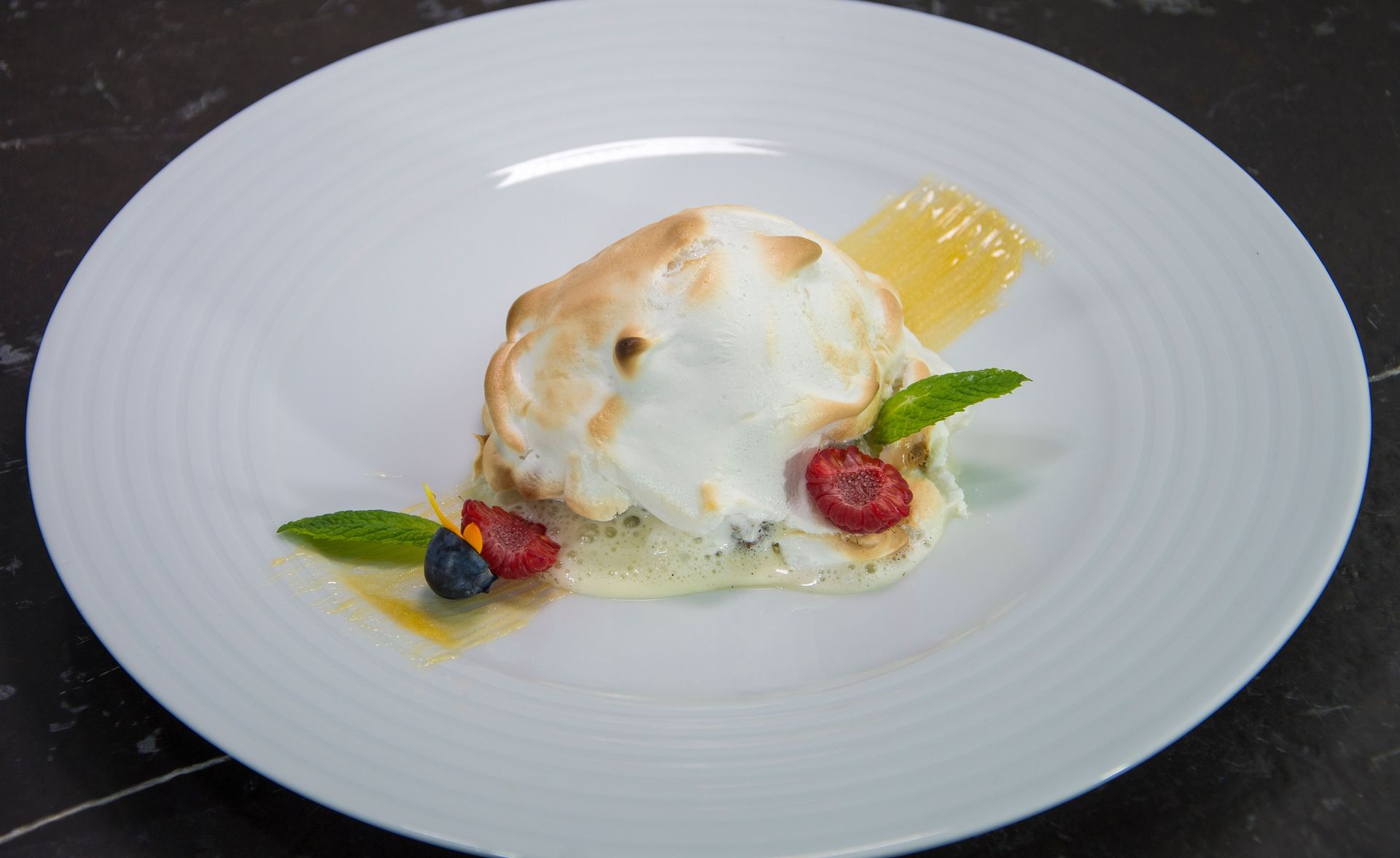
Baked Alaska — ice cream encased in meringue, briefly baked until the meringue is golden while the ice cream remains frozen — is the dessert with the highest drama-to-difficulty ratio on this list. It appears to be technically impossible (how is the ice cream not melting?) and is actually a straightforward assembly of components that can each be prepared well in advance, with the final torching or brief oven blast done at the table.
Bake a simple sponge base: whisk two eggs with 75g of caster sugar until thick and pale. Fold in 75g of self-raising flour. Bake in a 20cm cake tin at 180°C fan for 12 minutes. Cool completely.
Take one litre of good-quality ice cream from the freezer and allow to soften slightly. Press into a bowl lined with cling film to form a dome shape. Freeze for at least four hours until completely solid.
Unmould the ice cream dome onto the sponge base. Return to the freezer for one hour.
Make the meringue: whisk four egg whites with 225g of caster sugar over a bain-marie to 60°C, then off the heat until stiff and glossy. Coat the ice cream completely with meringue, creating peaks and swirls. Return to freezer for one hour.
To serve: either blowtorch the meringue to a deep golden colour at the table, or bake at 230°C for three to four minutes. Serve immediately.
Serves 8.
Roman Odintsov / Pexels
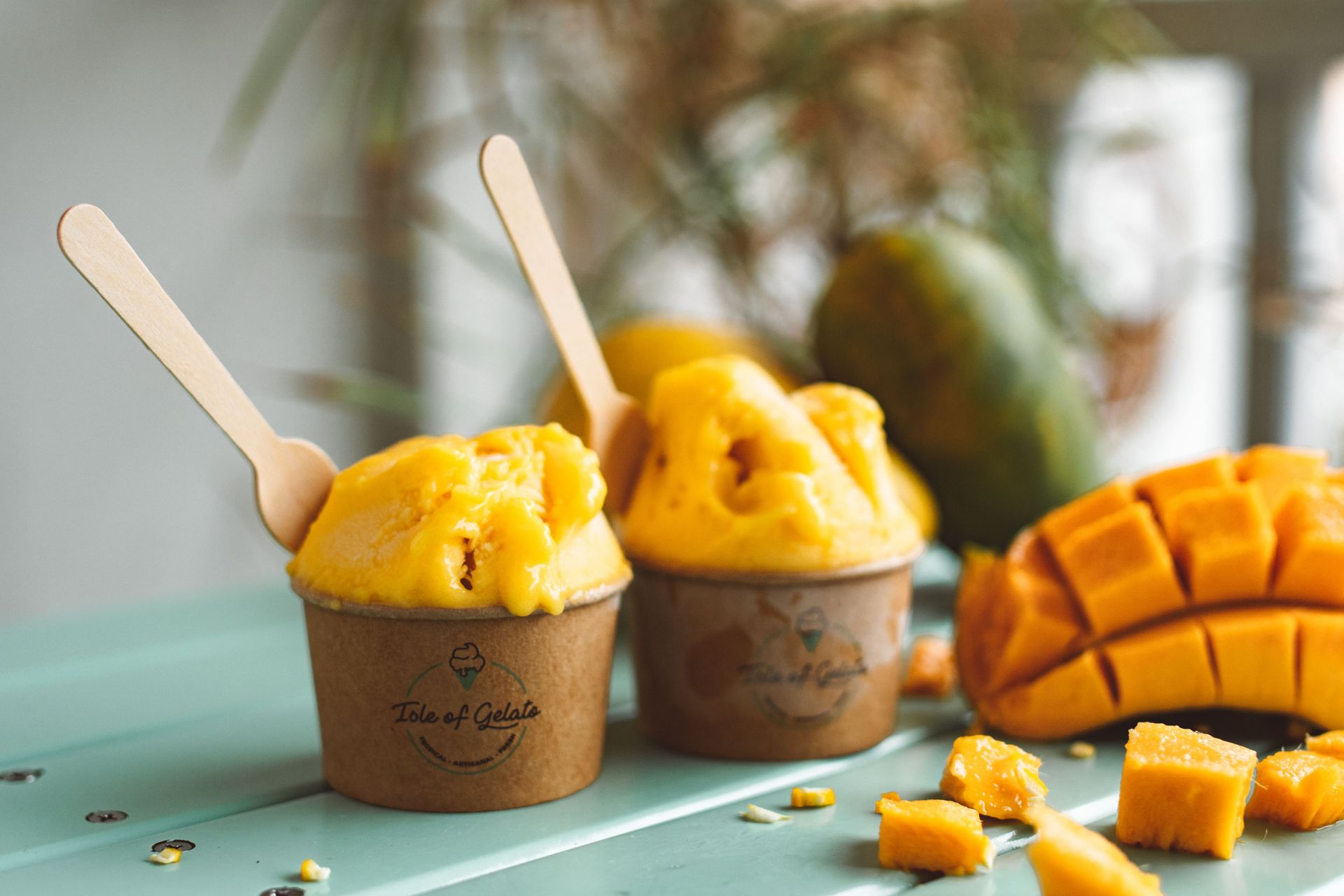
Mango sorbet — made from ripe mangoes, sugar syrup, and lime — is one of the most vivid and most refreshing desserts available, and it requires neither an ice cream machine nor any complex technique: the churning is replaced by a simple freeze-and-blend method that produces a texture equivalent to the machine version. The color alone — a deep tropical orange-yellow — commands attention.
Make a simple syrup: dissolve 100g of caster sugar in 100ml of water over low heat. Cool completely.
Peel and stone four ripe mangoes (approximately 800g of flesh). Blend with the cooled syrup, the juice of two limes, and a small pinch of salt until completely smooth. Taste: the mixture should be slightly sweeter and more intensely flavored than desired in the final sorbet, as freezing mutes flavor.
Pour into a shallow freezer-proof container and freeze for two hours until semi-frozen. Break into pieces and blend in a food processor until smooth. Return to the container and freeze for at least two hours until fully set.
Remove from the freezer 10 minutes before serving to soften slightly. Scoop into chilled glasses and serve with a wedge of fresh mango and a small sprig of mint.
The sorbet keeps for one month in the freezer. The technique works equally well with passionfruit (strain the seeds), raspberry (strain the seeds), and blood orange.
Serves 6.
Jonathan Borba / Pexels
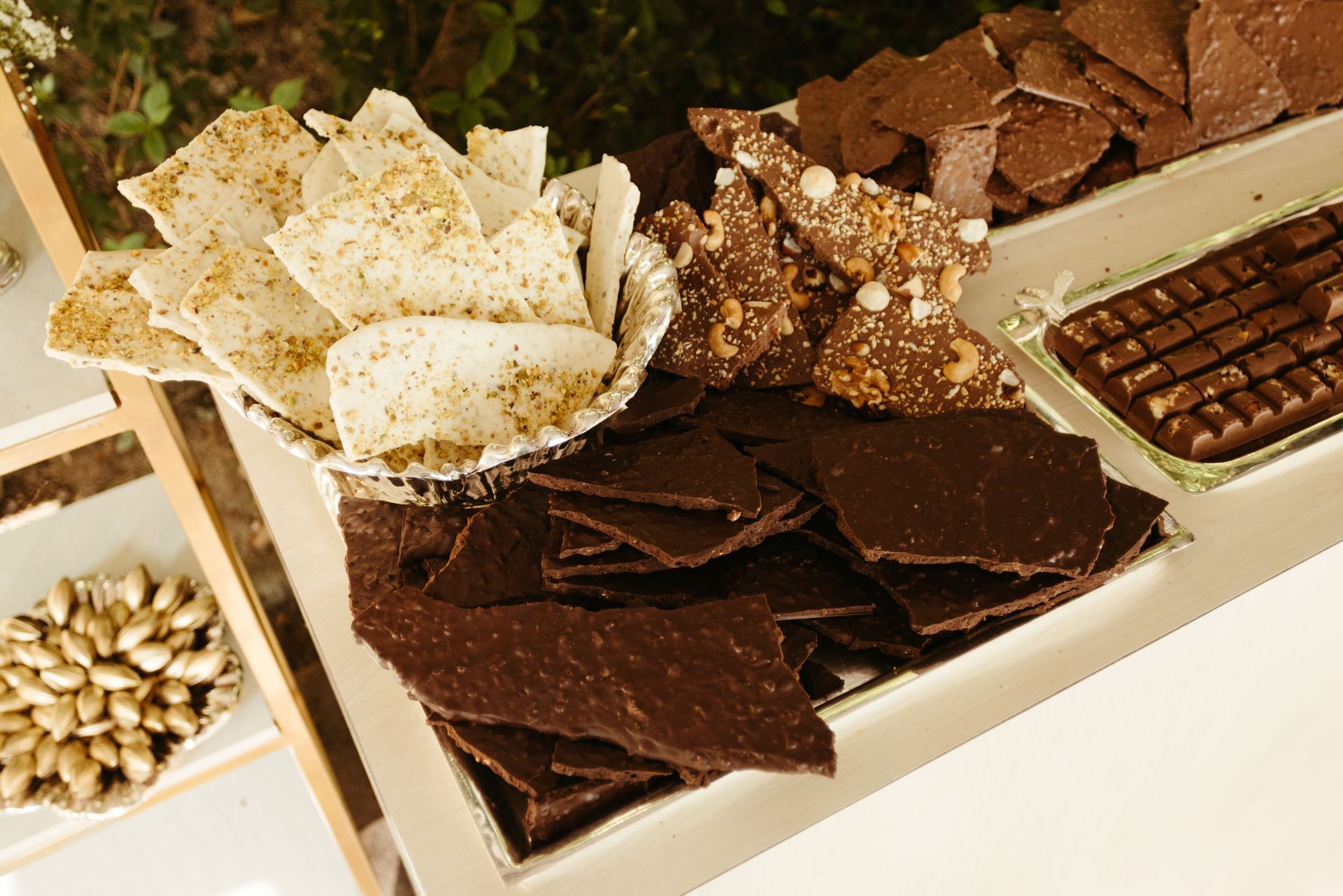
Chocolate bark — tempered chocolate spread thin and topped with nuts, dried fruit, and sea salt — is the dessert that looks like it came from an expensive chocolate shop and requires approximately 20 minutes of active work. The visual effect is of professional chocolate making; the technique is melting, spreading, topping, and cooling.
The critical step is tempering, which produces the glossy surface and satisfying snap of professional chocolate. The simplest tempering method for home use: chop 400g of good dark chocolate (70% cocoa) finely. Melt two-thirds in a bowl over barely simmering water, stirring until it reaches 50°C on a thermometer. Remove from heat and add the remaining third, stirring until fully melted and the temperature drops to 31 to 32°C.
Pour onto a sheet of baking parchment on a flat surface. Spread to a thickness of approximately 3mm using a palette knife or offset spatula. Working quickly before the chocolate sets, scatter generously with a combination of: toasted hazelnuts, dried cranberries, flaked almonds, pistachio halves, freeze-dried raspberries, flaky sea salt, and edible gold leaf if available. Press the toppings lightly into the chocolate.
Allow to set at room temperature — approximately one hour — or in the refrigerator for 20 minutes. Break into irregular shards.
Present piled in a bowl or in a gift box lined with tissue paper. The bark keeps for two weeks at room temperature in an airtight container.
Makes approximately 400g (serves 8 to 10 as a petit four).
Alp Yıldızlar / Pexels
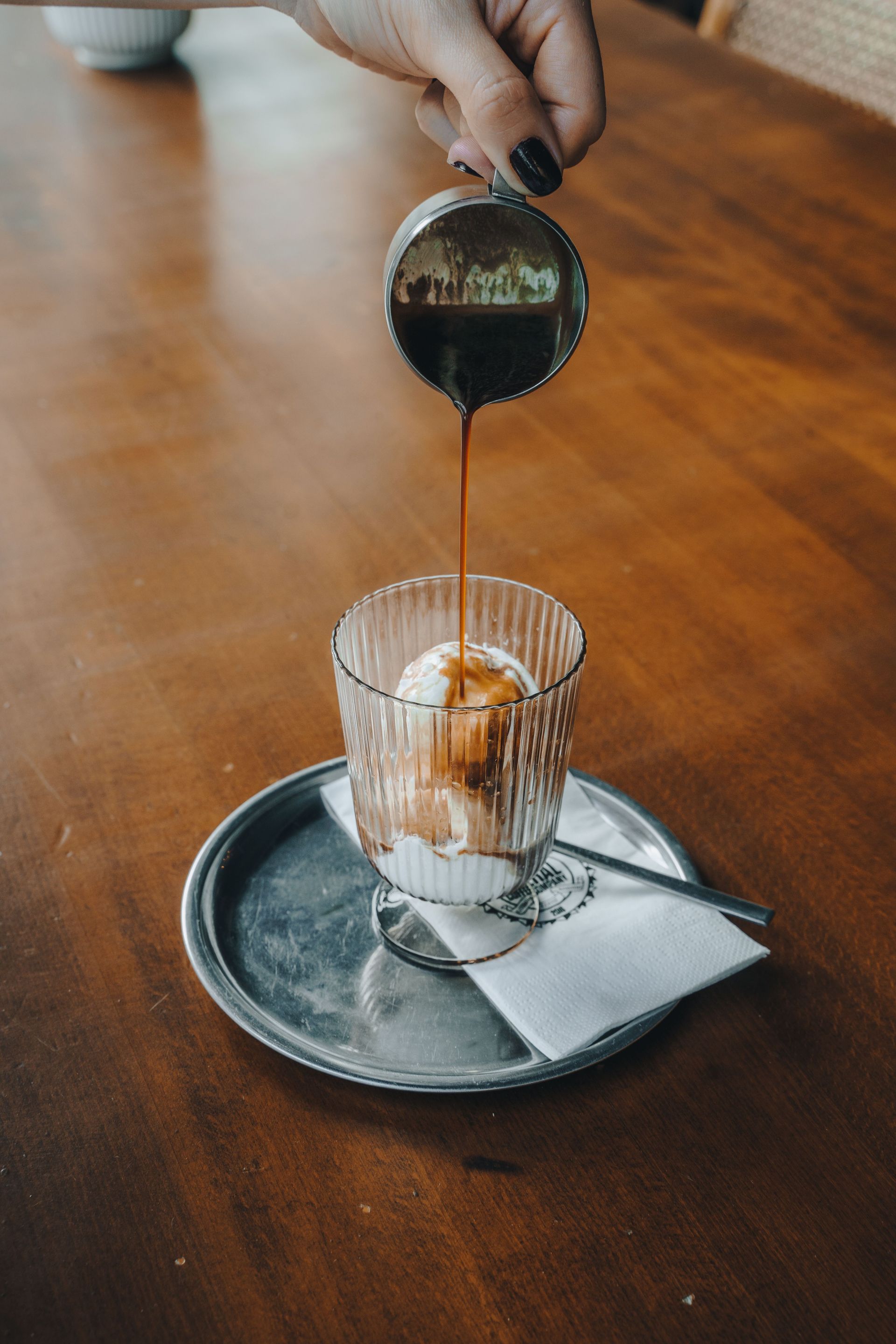
Affogato — a scoop of vanilla gelato with a shot of hot espresso poured over it at the table — is the most minimal dessert on this list and the one with the most disproportionate impact. The combination of hot and cold, bitter and sweet, the drama of the pour, and the specific excellence of coffee and vanilla together produce something that feels like a considered dessert rather than a two-ingredient assembly.
The quality of both components is paramount and there is nowhere to hide. Use the best vanilla gelato or ice cream available — artisan gelato with a clean vanilla flavor is significantly better than cheap ice cream for this purpose. Pull a ristretto or tight espresso shot — approximately 25ml of very concentrated coffee. Use freshly ground, freshly pulled espresso; instant coffee is not a substitute.
Place one generous scoop of gelato in a small glass or wide espresso cup. Pour the hot shot over the gelato at the table. The espresso melts the edges of the gelato immediately, creating a moat of warm coffee-cream that is drunk through a spoon or sipped from the glass.
Variations: a small pour of Amaretto alongside the espresso; a crumble of amaretti biscuit over the top; a dusting of cocoa. None are necessary. The original is the point.
The affogato serves one, which is part of its social function: it is made and poured individually, which creates a moment of attention at the table that shared desserts do not produce.
Serves 1 (scale as needed).
Elle Batool / Pexels
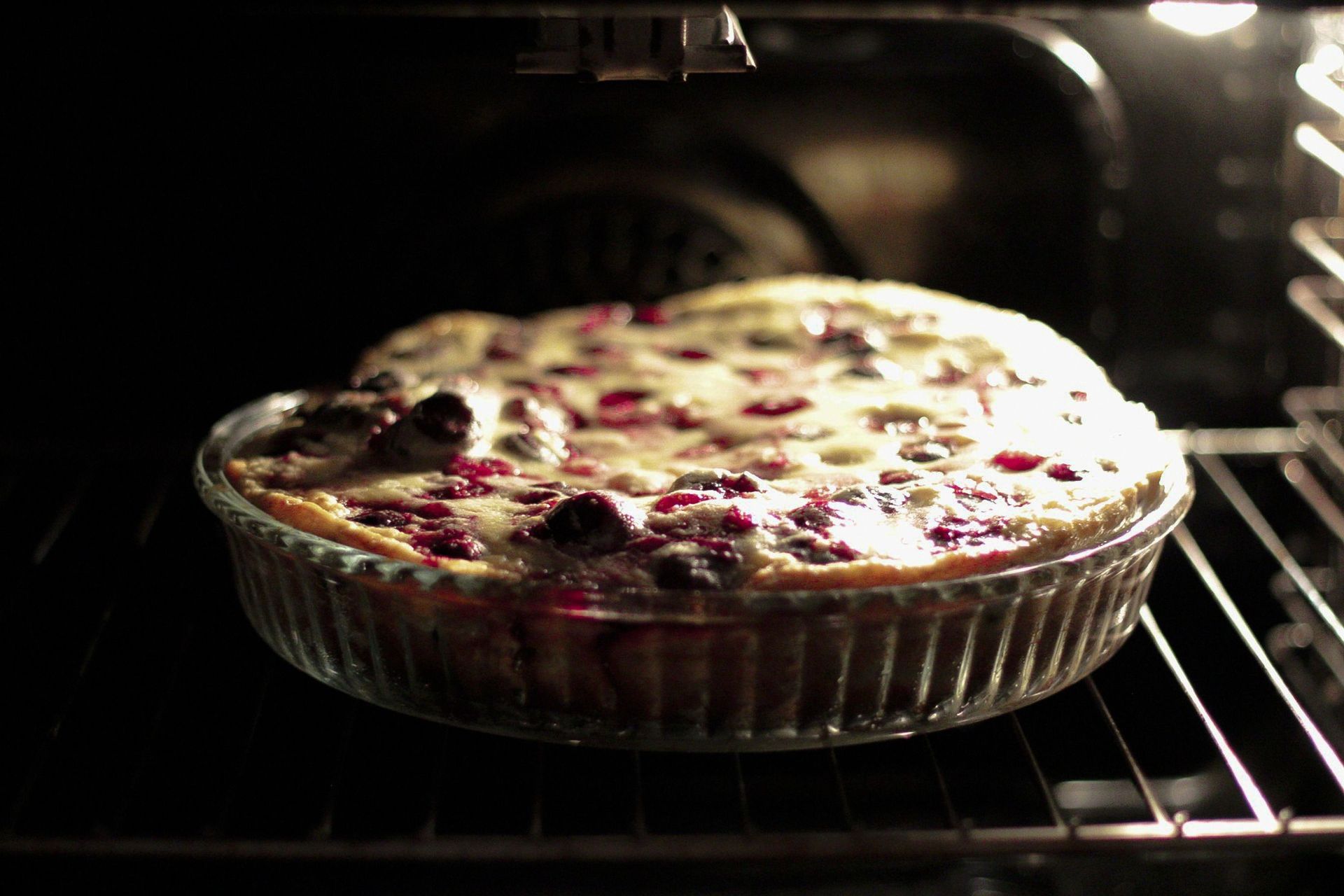
Clafoutis — the French baked custard dessert with cherries (or other fruit) suspended in a batter that sets between custard and pancake in texture — is a dessert that produces a significant impression in a single baking dish without any component being technically challenging. The batter is whisked in five minutes; the cherries (fresh or from a jar) go in whole, unpitted in the traditional version; the oven does the rest.
Butter a 30cm oval baking dish and dust with caster sugar. Arrange 500g of fresh or jarred cherries (drained if from a jar) in a single layer — traditionally left unpitted, which is authentic and slightly inconvenient, or pitted if guests are likely to be surprised. Whisk together three eggs, 100g of caster sugar, one teaspoon of vanilla extract, and a pinch of salt. Whisk in 60g of plain flour until smooth. Add 300ml of whole milk and 100ml of double cream, whisking until completely smooth and lump-free.
Pour the batter over the cherries. Bake at 180°C fan for 35 to 40 minutes until puffed, set, and golden at the edges, with a slight wobble in the centre. It will deflate slightly as it cools — this is expected.
Dust with icing sugar and serve warm from the dish with cold crème fraîche or vanilla ice cream. Clafoutis is a dessert that demands to be served immediately; it does not improve with waiting.
The batter can be made in advance and refrigerated; pour it over the fruit directly before baking.
Serves 6.
Çiğdem Bilgin / Pexels
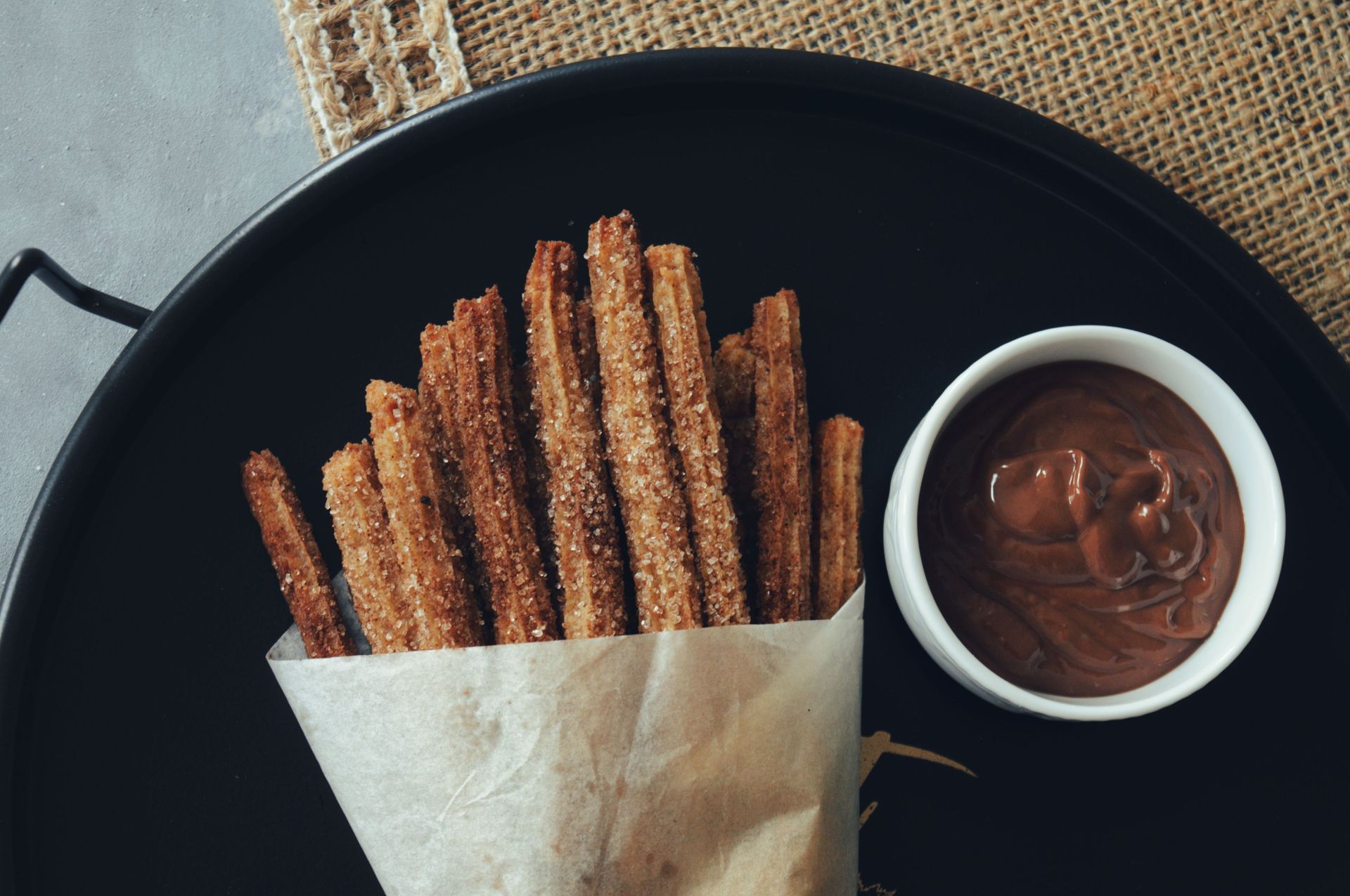
Churros — the fried Spanish pastry dough dusted in cinnamon sugar, served with thick hot chocolate for dipping — produce the festive, theatrical quality of a street food stall at a dinner party table, and the technique is choux pastry (pipe and fry) that is more accessible than its restaurant presentation implies.
For the churro dough: bring 250ml of water, 60g of unsalted butter, one tablespoon of caster sugar, and half a teaspoon of salt to the boil in a saucepan. Add 150g of plain flour all at once and beat vigorously over medium heat until the dough comes together and pulls away from the sides of the pan — approximately two minutes. Remove from heat and beat in two eggs, one at a time, until a smooth, pipeable dough forms.
Heat vegetable oil to 180°C in a deep saucepan. Pipe the dough through a star-nozzle piping bag directly into the oil in 12cm lengths, cutting with scissors. Fry in batches for three to four minutes, turning once, until deep golden. Drain on kitchen paper and immediately roll in a mixture of 100g of caster sugar and two teaspoons of ground cinnamon.
For the chocolate sauce: melt 200g of dark chocolate with 200ml of double cream and one tablespoon of golden syrup, stirring until glossy and smooth. Keep warm over a very low heat.
Serve the churros warm, piled high, with the chocolate sauce in a small bowl alongside.
Serves 6.
Kezia Lynn / Pexels
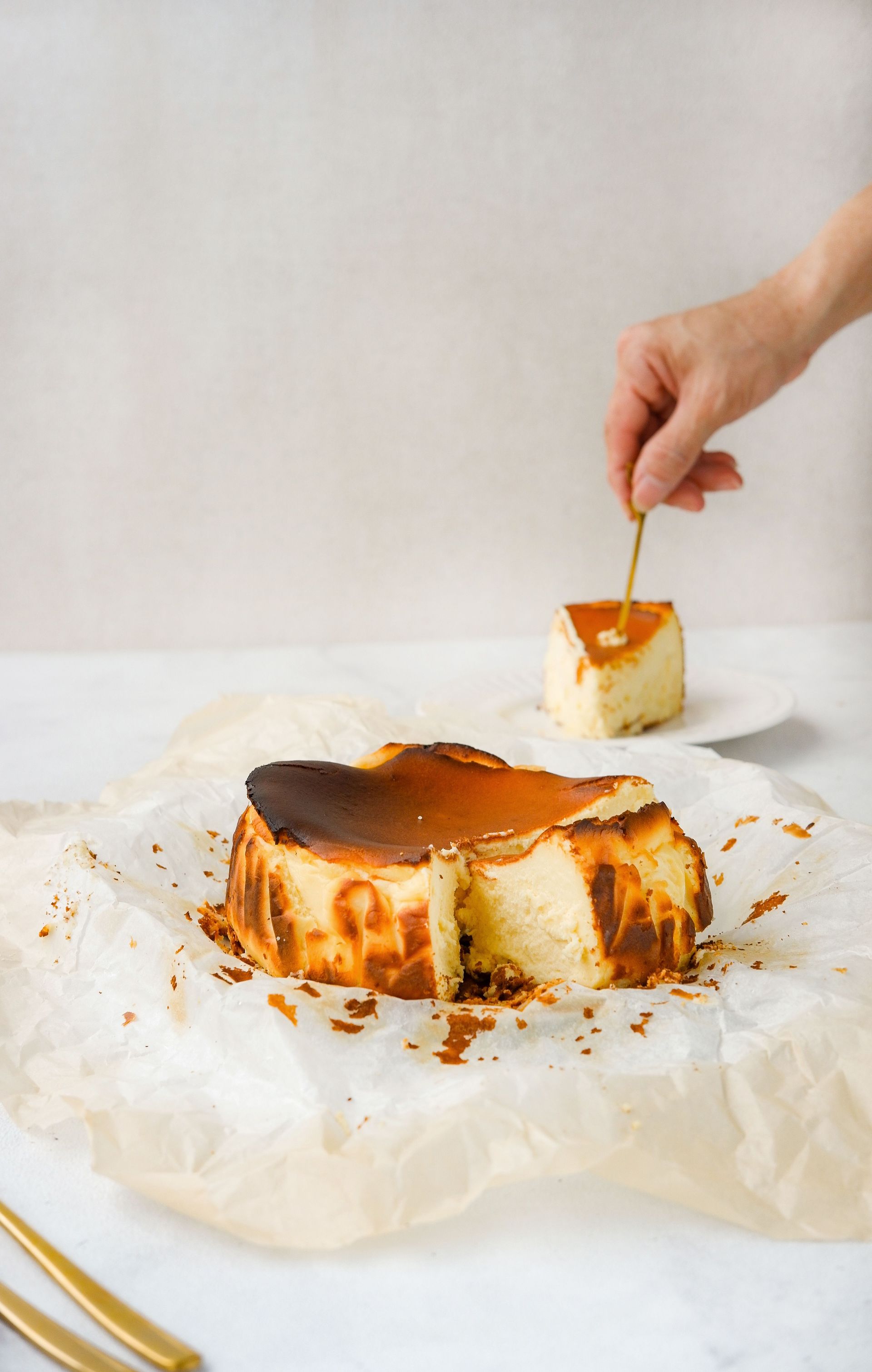
The Basque burnt cheesecake — the intentionally caramelised, slightly collapsed, deeply flavored cheesecake from San Sebastián that has become one of the most copied desserts of the past decade — is, technically, easier than a conventional cheesecake. There is no biscuit base, no water bath, and no anxiety about cracking: the deliberate burning is the point, and the rustic, dramatic appearance is the result of correct rather than failed execution.
Line a 20cm springform tin with two sheets of baking parchment, pressing into the sides and leaving plenty of overhang — the paper will crinkle and brown, which is part of the aesthetic.
Beat 700g of full-fat cream cheese with 200g of caster sugar until smooth. Beat in four eggs, one at a time. Add 300ml of double cream, two tablespoons of plain flour, and one teaspoon of vanilla extract, beating until just combined. Pour into the lined tin.
Bake at 220°C fan for 25 to 30 minutes until the top is a deep mahogany — almost burnt — and the centre still has a pronounced wobble. The internal temperature should be approximately 65 to 70°C. It will look wrong. It is correct.
Cool completely in the tin. Refrigerate for at least four hours. Remove from the tin, peel back the paper, and serve at room temperature. The contrast between the caramelised exterior and the creamy, almost liquid interior is the entire point of the dessert.
Serves 8.
Nadin Sh / Pexels
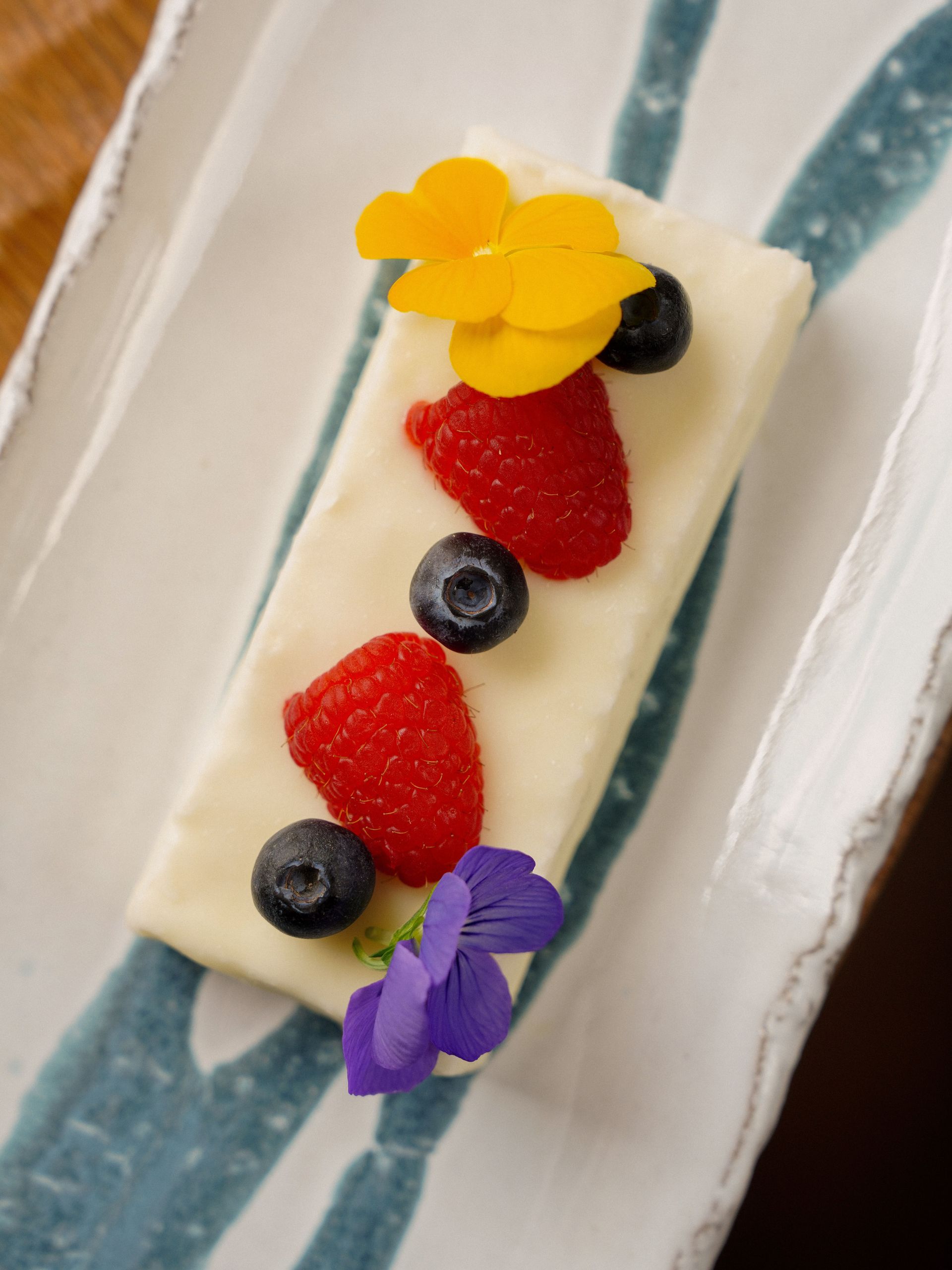
Semifreddo — Italian for "half cold" — is a frozen dessert with the texture of frozen mousse rather than ice cream, made without churning, and one of the most useful recipes in the frozen dessert repertoire because it can be made two days in advance, sliced dramatically at the table, and requires no equipment beyond a loaf tin and a mixer.
Line a 900g loaf tin with cling film, leaving overhang on all sides.
For the raspberry ripple: blend 200g of raspberries with two tablespoons of icing sugar. Pass through a sieve to remove the seeds. Set aside.
Whisk four egg yolks with 125g of caster sugar over a bain-marie until thick and pale — approximately five minutes. Remove from heat. Whip 400ml of double cream to soft peaks. Whisk four egg whites with a pinch of salt to stiff peaks.
Fold the cream into the egg yolk mixture. Fold in the egg whites in two additions. Pour half the semifreddo into the prepared tin. Drizzle half the raspberry purée over the surface and swirl briefly with a skewer to create a ripple. Add the remaining semifreddo and repeat with the remaining purée. Cover with the cling film overhang and freeze for at least six hours.
To serve: unwrap, invert onto a board, remove the cling film, and slice with a warm knife. Serve immediately with fresh raspberries and a dusting of icing sugar.
Serves 8.
Caio Niceas / Pexels
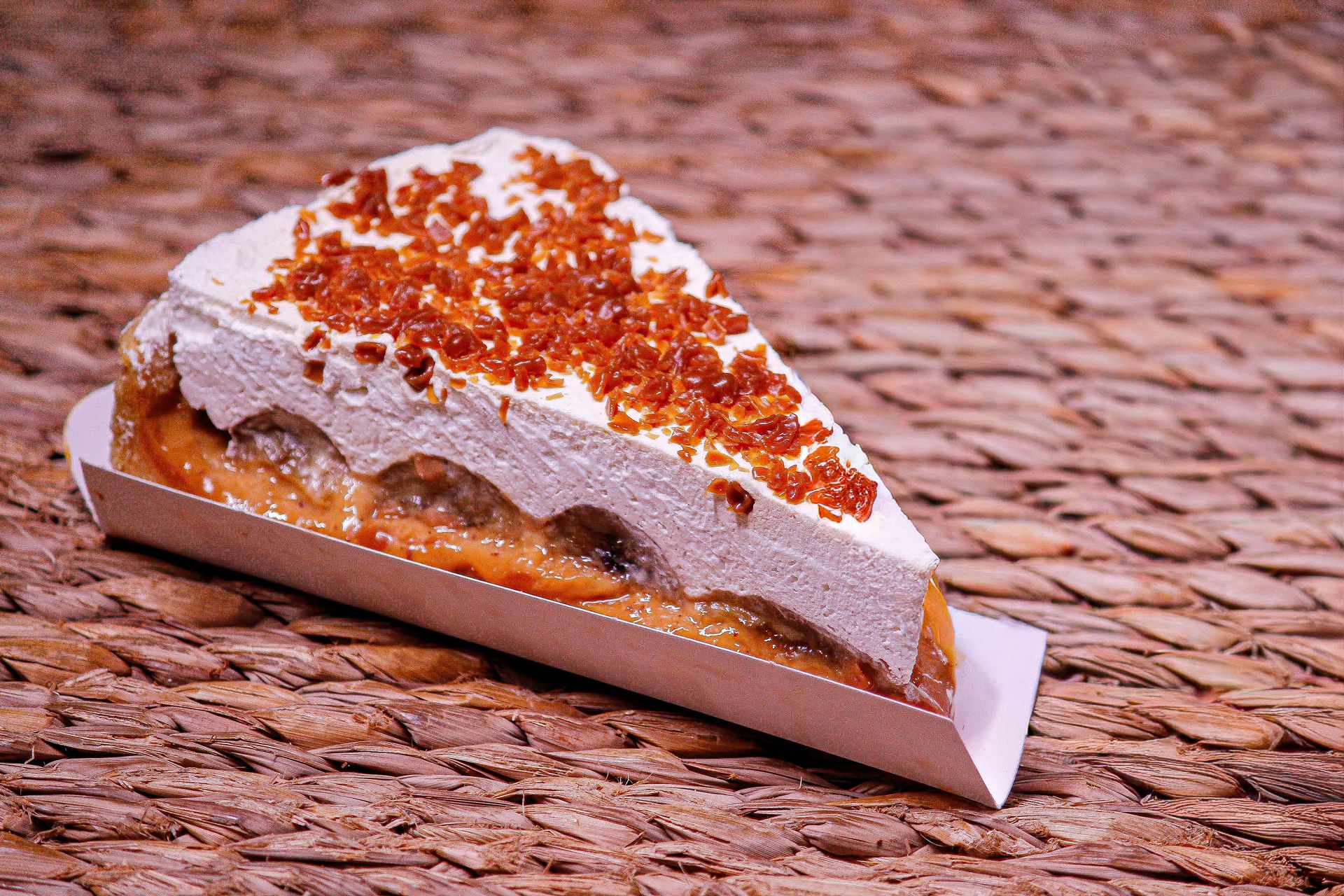
Banoffee pie — banana, caramel (toffee), and cream in a biscuit base — is a British dessert whose components are almost entirely no-cook and whose assembly requires no technique beyond crushing, pressing, slicing, and whipping. It is, in the most generous sense, a dessert that rewards the sourcing of good ingredients and punishes cutting corners on the caramel.
For the base: crush 250g of digestive biscuits to fine crumbs in a food processor or in a bag with a rolling pin. Melt 125g of unsalted butter and mix into the crumbs. Press firmly into the base and up the sides of a 23cm loose-bottomed tart tin. Refrigerate for 30 minutes.
For the caramel: use one 397g tin of shop-bought dulce de leche (the simplest method) or make your own by simmering an unopened tin of condensed milk in a pan of water for two to three hours, ensuring the tin remains submerged. Cool completely before opening.
Spread the caramel over the biscuit base. Slice three ripe bananas and arrange over the caramel in a single layer. Whip 400ml of double cream to soft peaks with one tablespoon of icing sugar and one teaspoon of vanilla extract. Pile over the bananas.
Dust with cocoa powder or grated dark chocolate. Refrigerate for one hour before serving. The pie does not keep well after assembly (the banana and the cream deteriorate), so assemble no more than four hours before serving.
Serves 8.
Farhad Ibrahimzade / Pexels
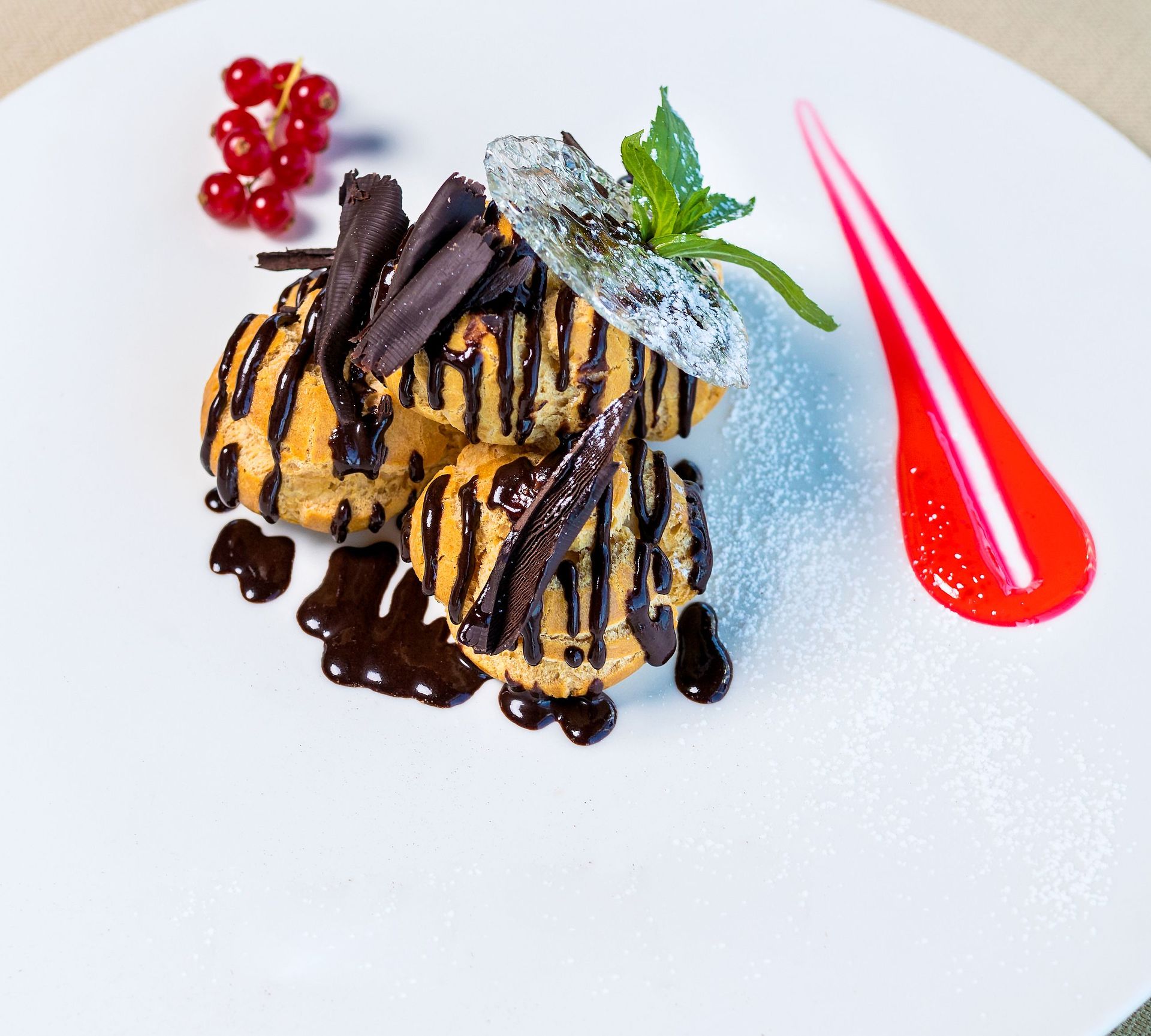
Profiteroles — choux pastry shells filled with cream and covered in warm chocolate sauce — are an intimidating name for a dessert whose component technique (choux pastry) is simpler than it appears, and whose assembled effect is one of the most reliably impressive in the pastry repertoire. The choux is the same base as for churros and éclairs: flour beaten into boiling water and butter, eggs incorporated until the dough is smooth and pipeable.
Bring 250ml of water and 100g of unsalted butter to the boil. Add 125g of plain flour all at once and beat vigorously until the dough pulls away from the pan sides. Remove from heat and cool for five minutes. Beat in three eggs, one at a time, until the dough is smooth and falls reluctantly from the spoon.
Pipe or spoon walnut-sized mounds onto lined baking sheets. Bake at 200°C fan for 20 to 25 minutes until golden and hollow-sounding when tapped. Pierce the base of each puff to release steam and return to the switched-off oven for five minutes to dry out. Cool completely.
Whip 400ml of double cream to soft peaks with one tablespoon of icing sugar and one teaspoon of vanilla. Using a piping bag with a small nozzle, fill each puff through the base hole.
For the sauce: melt 200g of dark chocolate with 200ml of double cream, stirring until glossy.
Pile the profiteroles into a pyramid on a serving plate. Pour the warm chocolate sauce over at the table.
Serves 8.
Geraud Pfeiffer / Pexels
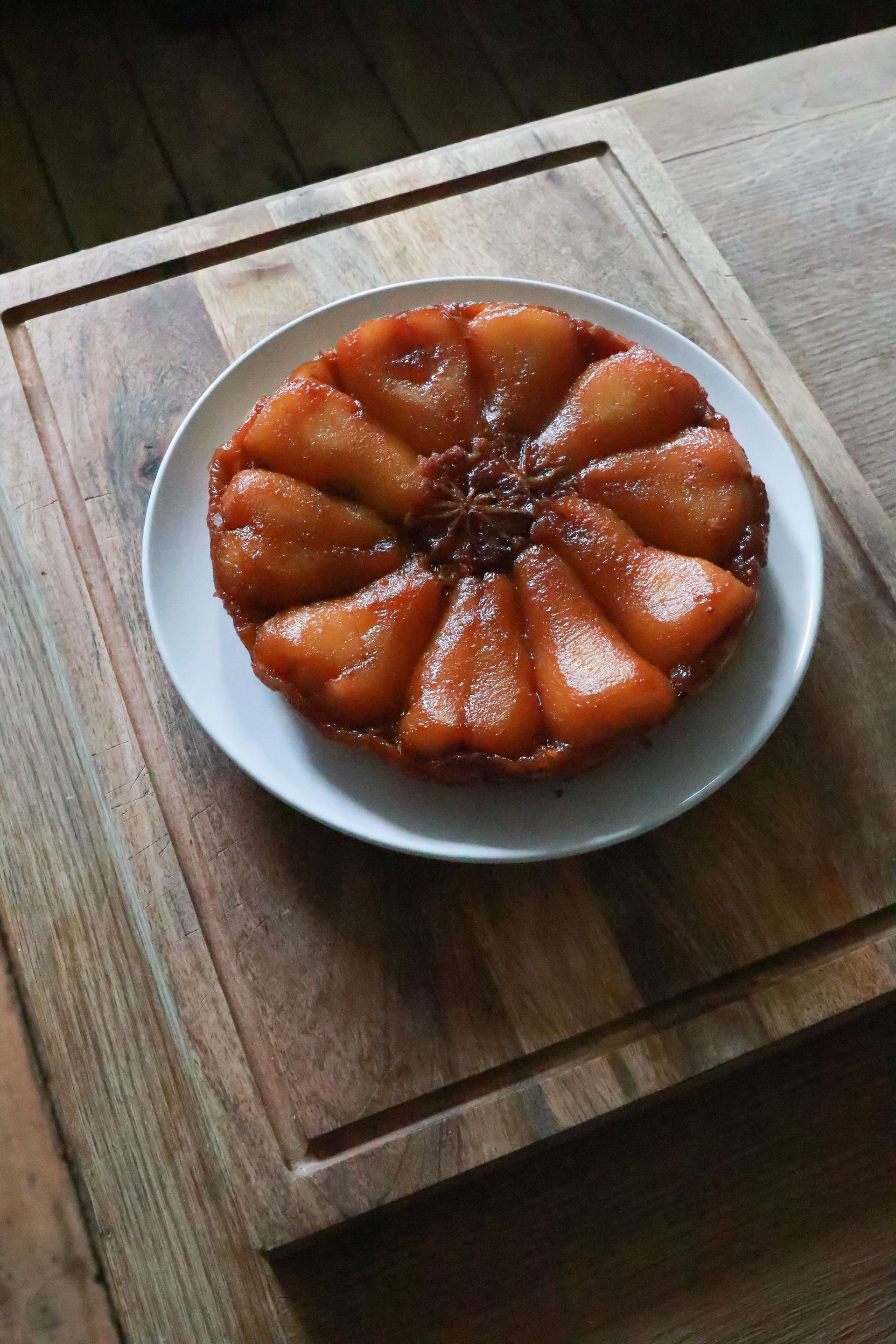
Tarte Tatin — the upside-down caramelised apple tart that is baked in the pan and inverted onto a plate — has a reputation for difficulty that is largely the result of the drama of the inversion, which is not difficult but looks like it might go catastrophically wrong and is therefore assumed to require more expertise than it does. The technique is caramel (sugar and butter in a pan), topped with apples, topped with pastry, baked, then flipped.
In a 26cm ovenproof frying pan, melt 75g of unsalted butter with 150g of caster sugar over medium heat, stirring occasionally, until the mixture turns a deep amber caramel — approximately eight minutes. Remove from heat.
Peel, core, and quarter six to eight Granny Smith or Cox apples. Arrange tightly in the caramel, cut side up, in concentric circles — they will shrink during cooking so pack them as tightly as possible. Cook over medium heat for five minutes.
Roll out 320g of ready-made all-butter puff pastry to a circle slightly larger than the pan. Lay over the apples, tucking the edges down inside the pan. Bake at 200°C fan for 25 to 30 minutes until the pastry is deep golden and the caramel is bubbling at the edges.
Remove from the oven and allow to cool for five minutes — not longer, as the caramel will set and the tart will stick. Place a serving plate (larger than the pan) over the pan and invert with confidence. The caramel and apples will be on top. Serve warm with cold crème fraîche or vanilla ice cream.
Serves 6 to 8.
Pegah Sharifi / Pexels
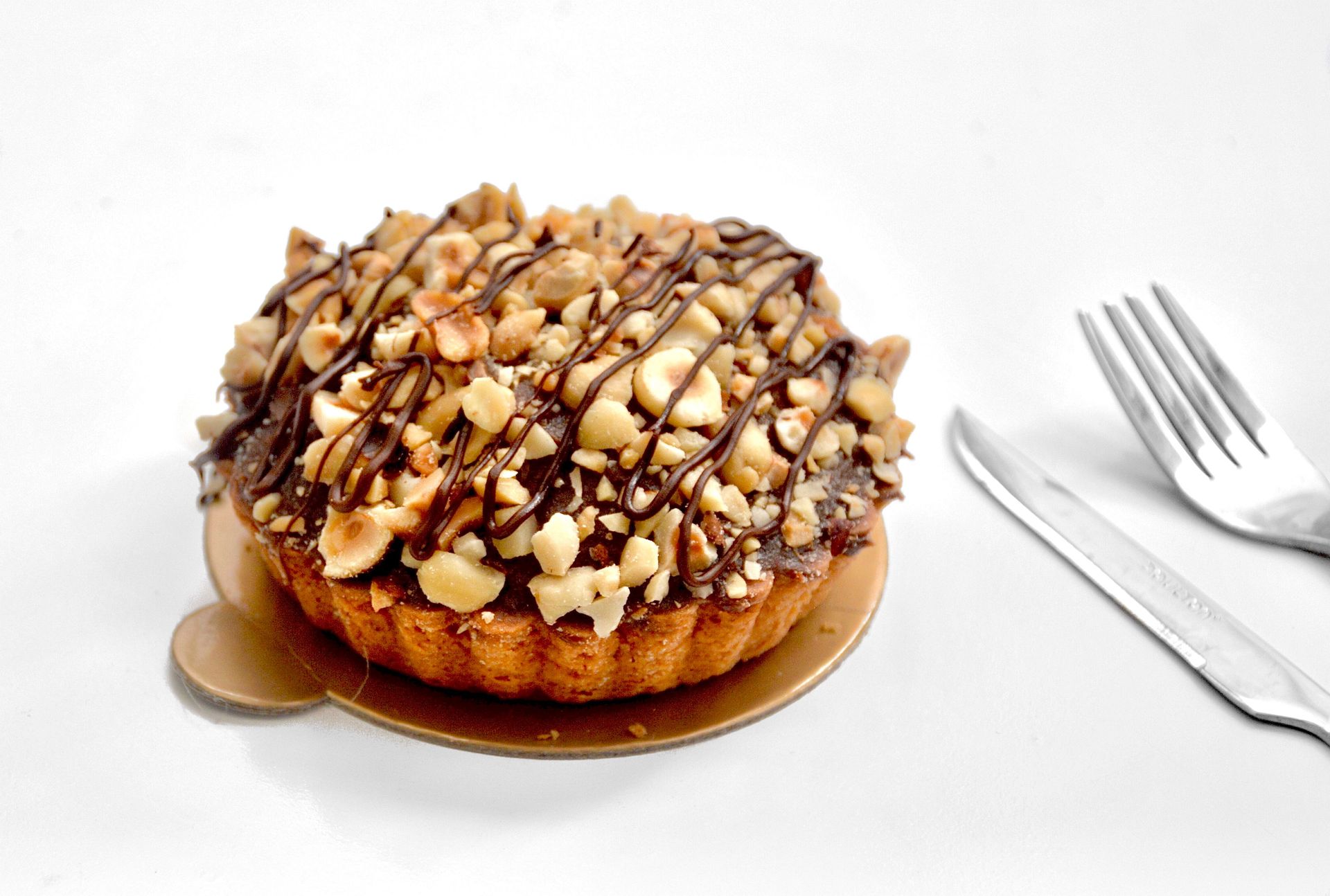
A chocolate and hazelnut tart — a crisp pastry shell filled with a ganache of dark chocolate and cream, topped with roasted hazelnuts and flaky salt — is one of the most elegant no-bake fillings available for a pre-baked tart case. The ganache sets to a smooth, glossy surface that looks like it was poured by a professional and requires nothing more than the correct ratio of chocolate to cream and the patience to wait for it to set.
For the pastry case: use the sweet pastry recipe from the lemon tart entry. Blind bake, cool, and set aside.
For the ganache: toast 100g of blanched hazelnuts in a dry frying pan until golden and fragrant. Set aside. Roughly chop 350g of dark chocolate (70% cocoa) and place in a heatproof bowl. Heat 300ml of double cream and two tablespoons of golden syrup in a saucepan until just simmering. Pour over the chocolate and leave for two minutes without stirring. Then stir from the centre outward in small circles until the ganache is smooth and glossy. Add 30g of unsalted butter and stir until incorporated.
Pour the ganache into the cooled tart case. Scatter the toasted hazelnuts over the surface in a single layer. Finish with a generous pinch of flaky sea salt. Leave at room temperature for two hours to set to a soft, sliceable consistency, or refrigerate for one hour for a firmer set.
Serve in thin slices — the ganache is very rich — with a small spoonful of crème fraîche. A few raspberries alongside cut the richness effectively.
The tart can be made a day in advance and stored at room temperature, covered loosely. Refrigeration firms the ganache to a point where it becomes difficult to slice cleanly; bring to room temperature for 30 minutes before serving if refrigerated.
Serves 10 to 12.
Vinícius Caricatte / Pexels
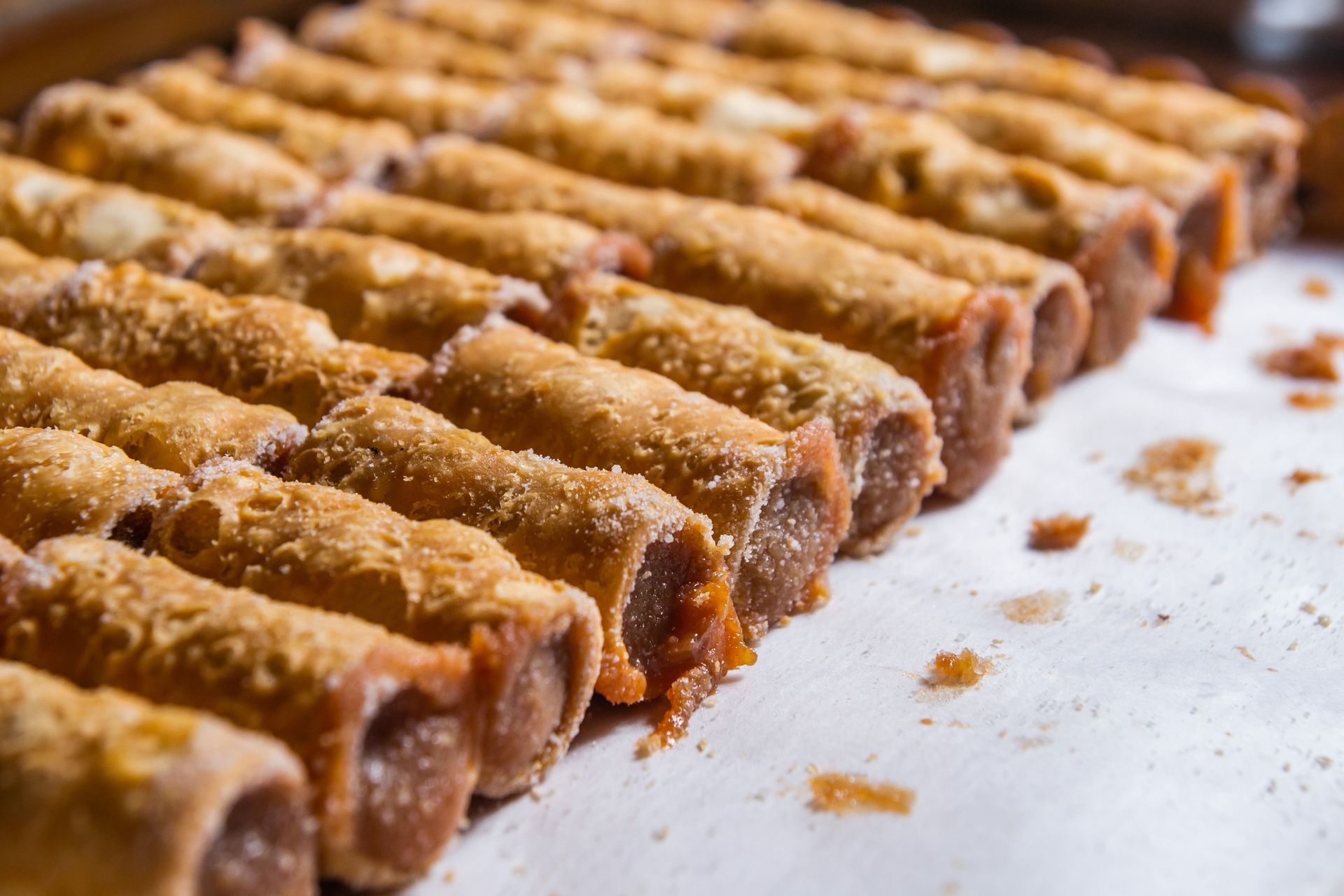
Italian cannoli — the deep-fried pastry shells filled with sweetened ricotta and chocolate chips — require a specific frying mold for authentic shells that most home kitchens do not have. Serving the same filling in chocolate cups (available ready-made from any well-stocked supermarket, or made by painting melted chocolate inside silicone molds) produces an essentially identical flavor experience with a dramatically simpler preparation.
For the filling: drain 500g of full-fat ricotta through a fine sieve or cheesecloth for two hours, pressing to remove excess liquid — this step is essential for a firm, pipeable texture rather than a loose, wet one. Beat the drained ricotta with 150g of icing sugar, the zest of one orange, one teaspoon of vanilla extract, and a pinch of cinnamon until smooth. Fold in 100g of small dark chocolate chips.
Refrigerate for at least one hour. Transfer to a piping bag fitted with a star nozzle.
Pipe into 24 small chocolate cups (available from the baking section of most large supermarkets). Top each with a small piece of glacé cherry, a chocolate chip, and a dusting of icing sugar.
The filling can be made a day in advance. Pipe into the cups no more than two hours before serving to prevent them from softening.
Serves 8 (3 cups per person).
Sylwester Ficek / Pexels
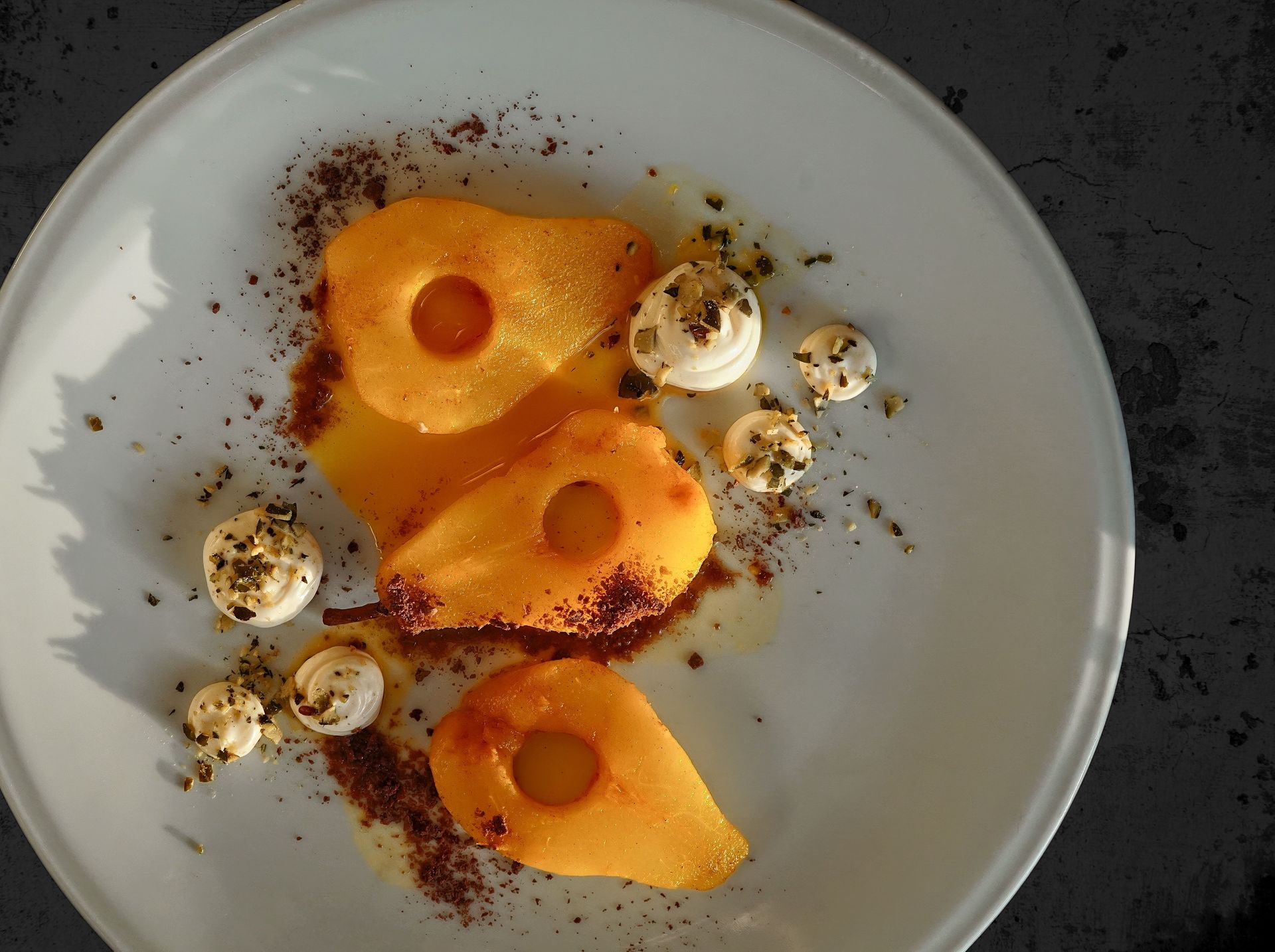
Poached pears — whole or halved pears simmered in a spiced red wine syrup until tender and deeply colored — are one of the most visually dramatic desserts available for the simplest technique: putting things in a liquid and applying heat. The deep crimson pear, standing upright on a plate, with a glossy syrup and a spoonful of mascarpone alongside, is a genuinely beautiful presentation.
Peel six firm, ripe pears (Conference or Williams), leaving the stalk intact. Cut a small slice from the base so they stand upright. In a saucepan large enough to hold the pears upright, combine one bottle of red wine (a robust, fruity one), 200g of caster sugar, two cinnamon sticks, four cloves, two star anise, the zest of one orange, and one split vanilla pod. Bring to the boil, stirring to dissolve the sugar.
Add the pears, standing upright. The wine should come approximately two-thirds up the pears. Reduce heat to a gentle simmer, cover, and cook for 25 to 35 minutes until the pears are tender when pierced with a skewer but still holding their shape.
Remove the pears and increase the heat under the wine. Boil rapidly for 15 to 20 minutes until the syrup is reduced by half and slightly thickened.
Serve the pears standing upright on individual plates with a pool of warm syrup and a spoonful of mascarpone or crème fraîche alongside.
The pears can be made three days in advance and refrigerated in their syrup, improving in color and flavor.
Serves 6.
Dilara / Pexels
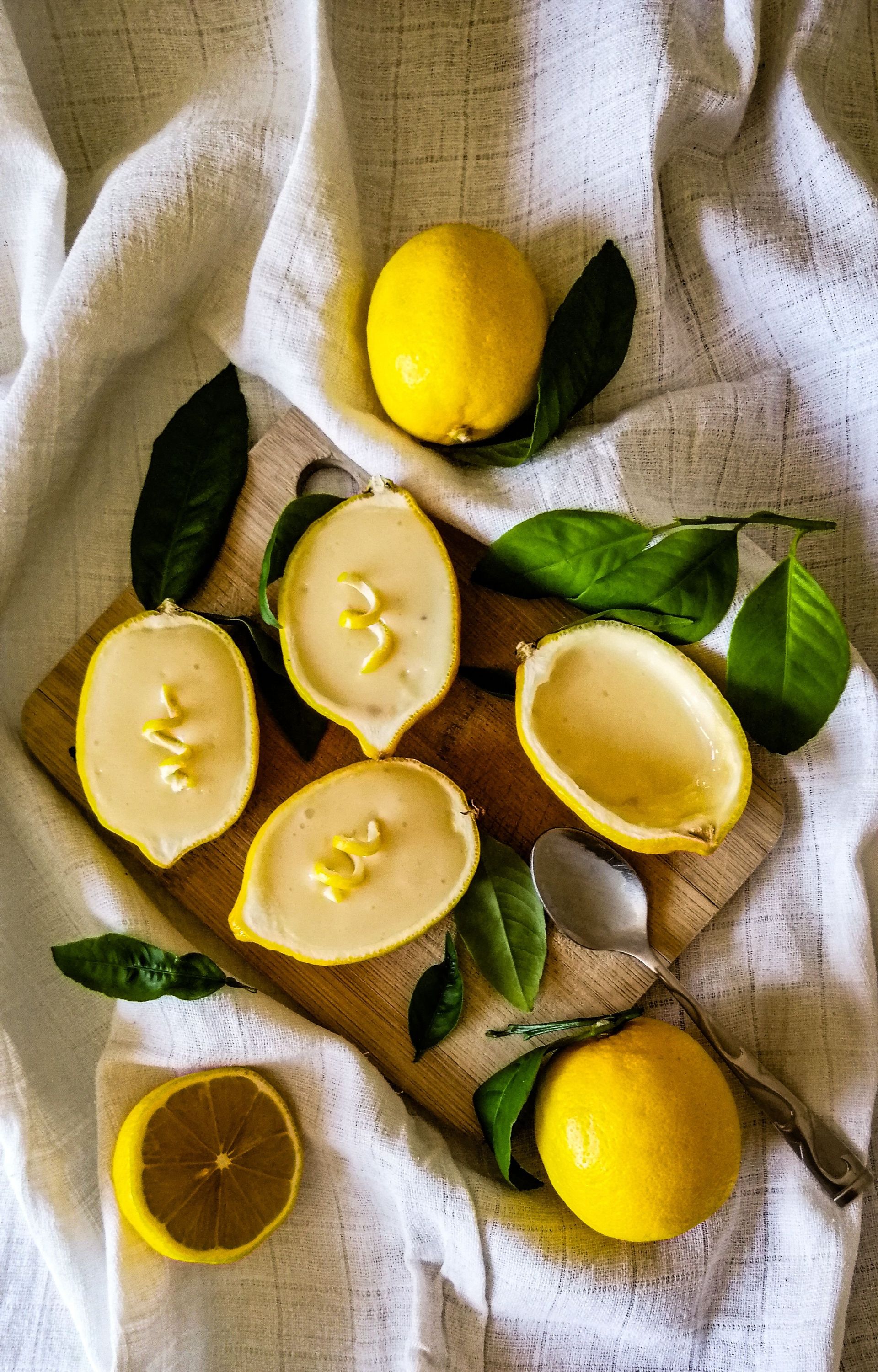
Lemon posset — a set cream dessert made from only double cream, sugar, and lemon juice — is the three-ingredient dessert that produces one of the most clean, bright, and elegant flavors in the dessert repertoire. The setting is achieved without any gelatine: the acid in the lemon juice causes the cream proteins to set when cooled, in a process that requires no skill beyond the application of heat and patience.
Combine 600ml of double cream and 150g of caster sugar in a saucepan. Bring to the boil, stirring to dissolve the sugar. Boil for exactly three minutes, watching carefully to prevent boiling over. Remove from heat.
Stir in the juice of three lemons (approximately 80ml) and the zest of two. Pour immediately through a fine sieve into a jug, then divide between six small glasses or ramekins.
Allow to cool to room temperature — approximately 30 minutes — then refrigerate for at least three hours until set. The posset should be barely set, with a creamy, smooth texture.
Serve with a small shortbread biscuit alongside, a few fresh raspberries on top, and a small curl of lemon zest. The entire preparation takes 15 minutes of active work.
The possets can be made two days in advance and covered with cling film in the refrigerator.
Serves 6.
Vladimír Sládek / Pexels
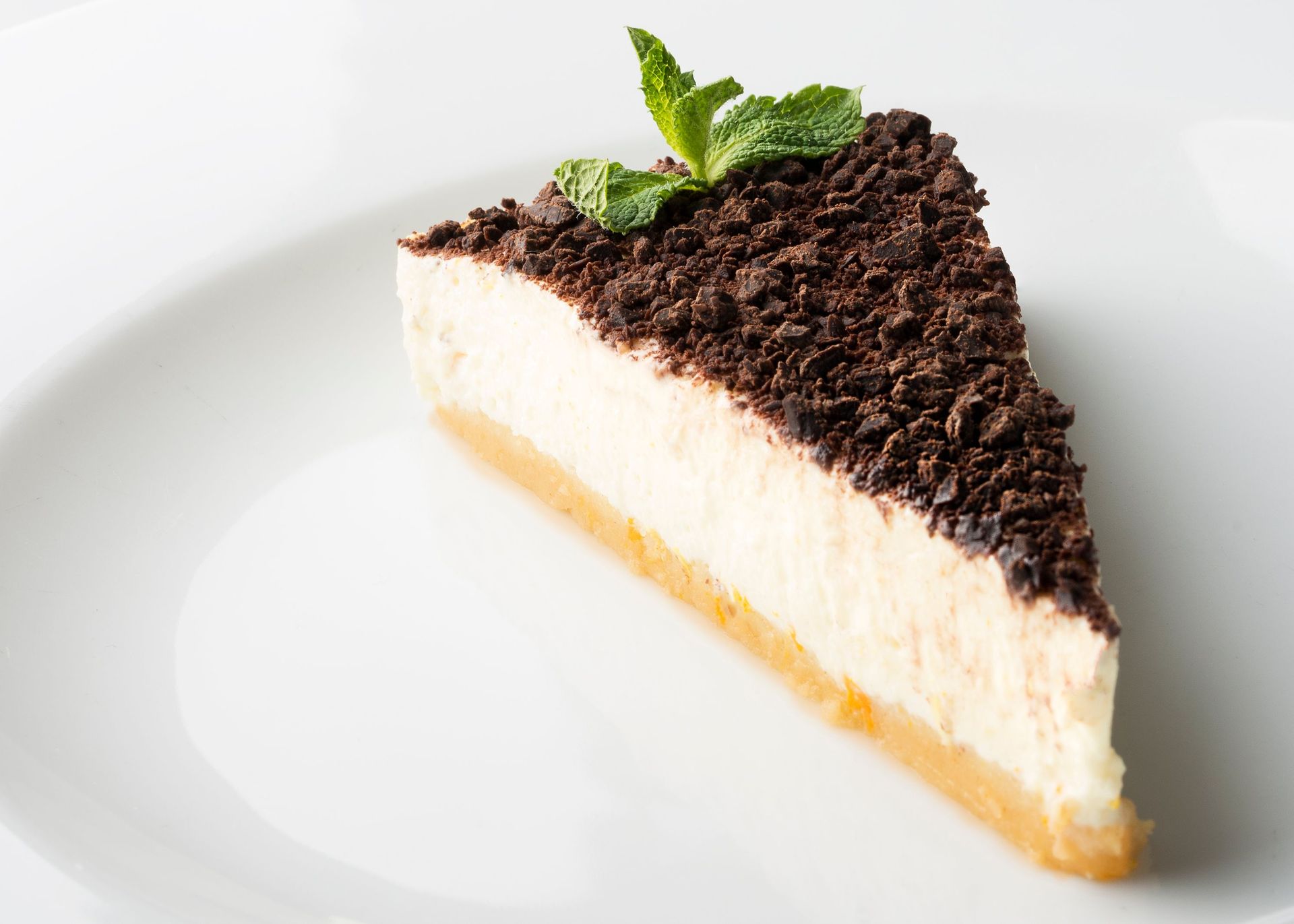
A no-bake cheesecake — cream cheese, cream, and sugar set in a biscuit case without the oven — is the most foolproof cheesecake available and one that, when well executed with good cream cheese and a properly buttery biscuit base, is excellent enough to stand alongside the baked version for most palates and occasions.
For the base: crush 250g of digestive biscuits to fine crumbs. Melt 125g of unsalted butter and combine with the crumbs. Press firmly into a 23cm loose-bottomed tin, building up the sides slightly. Refrigerate for 30 minutes.
Beat 600g of full-fat cream cheese with 100g of icing sugar and the zest of one lemon until smooth and no lumps remain — this is the step most prone to error; the cream cheese must be at room temperature and beaten until perfectly smooth before the cream is added. Whip 300ml of double cream to soft peaks in a separate bowl. Fold the cream into the cream cheese mixture until just combined.
Pour over the biscuit base and smooth the surface. Refrigerate for at least six hours, preferably overnight.
To serve: run a warm knife around the edge and release from the tin. Top with a layer of macerated strawberries (sliced, tossed with one tablespoon of caster sugar, one tablespoon of lemon juice, and left for 20 minutes), or with a blueberry compote, or with a simple drizzle of passion fruit.
The cheesecake keeps for three days in the refrigerator.
Serves 8 to 10.