Online food delivery in India is pretty much a duopoly. Zomato and Swiggy together fulfil over three-quarters of all orders.
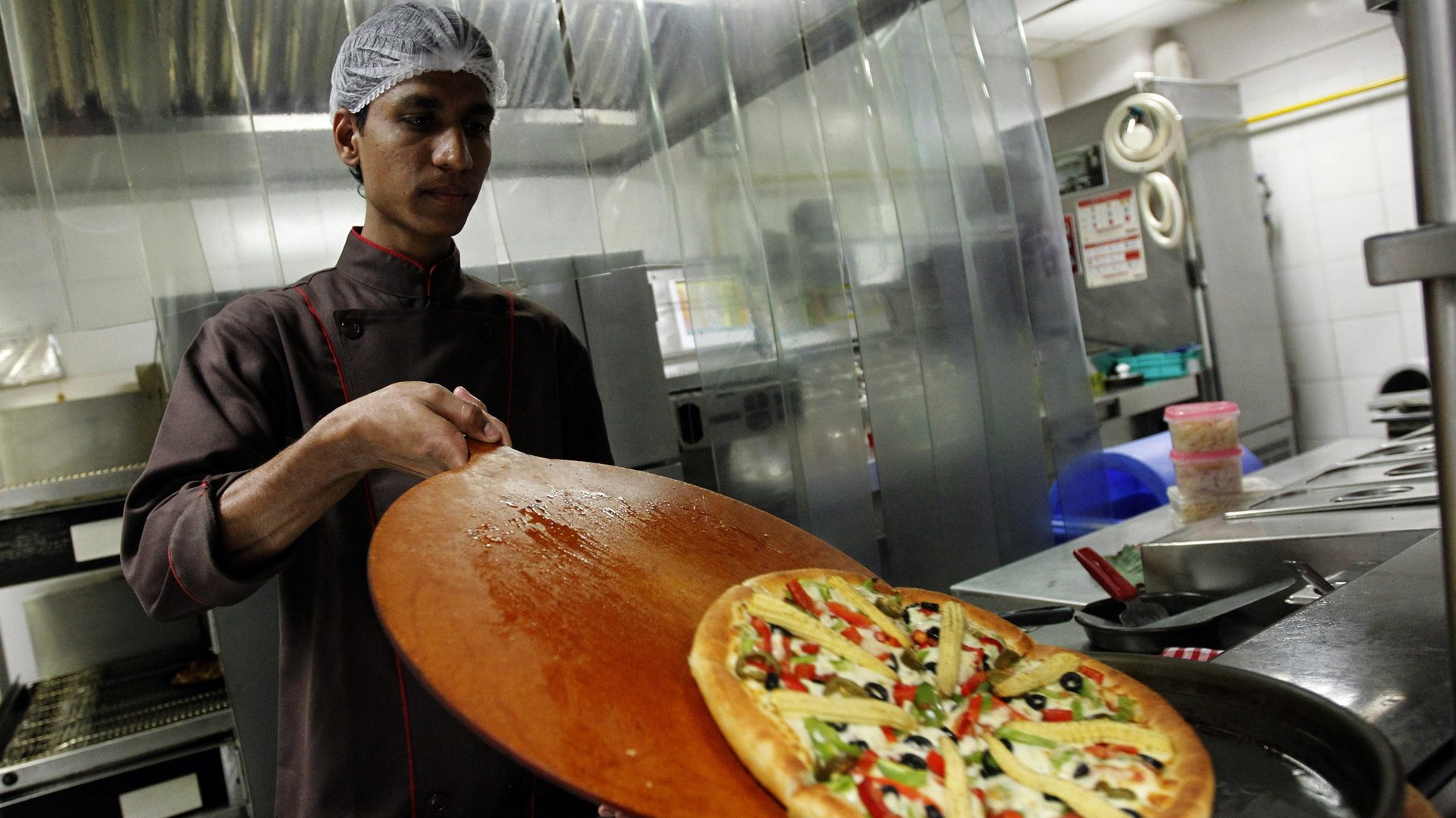
Online food delivery in India is pretty much a duopoly. Zomato and Swiggy together fulfil over three-quarters of all orders.
Between the two, Zomato has a slight edge. Its app is installed on 12% of all Indian smartphones, compared with Swiggy’s 10%, according to data shared with Quartz by the market research firm Unomer. The instal base of rival apps, meanwhile, is in low single-digits.
Join 500,000+ readers who start their day with Quartz.
By subscribing, you agree to our Terms of Service and Privacy Policy.
The penetration of these apps is also higher in tier-2 cities than in metros, Unomer’s data, collected from six million smartphone users in the country in May 2019, show.
“The Zomato Gold programme has worked really well. It’s a push that has seen attraction and repeat purchase. It has increased loyalty among consumers who keep on buying and transacting with the Zomato app,” Richa Sood, director at Unomer, said.
Zomato Gold is a paid subscription programme giving customers unlimited, exclusive deals on food and drinks in over 1,200 partner restaurants, bars, and pubs for Rs1,000 ($14) annually. In September last year, Zomato restricted the redeeming of Gold memberships depending on the number of diners on the table. While this upset some customers, the policy change has clearly not been much of a dampener.
“Giving a lot of good discounts, like for the Cricket World Cup and the Indian Premiere League in recent months, have boosted Swiggy and Zomato,” Sood said.
Over the last year, the food-delivery sector has witnessed a substantial 7% growth in smartphone instal base.
However, as a category, the sector’s reach is not too high. It has penetrated just 17% of the market versus, say, video-on demand, which has 79% penetration. “A lot goes into setting up infrastructure in terms of delivery executives and tie-ups with restaurants before each food delivery app becomes ready to be pushed in a particular city,” Sood explained.
In absolute numbers, metros like Mumbai, Delhi and Bengaluru have the most people with food-delivery apps installed. However, expressed as a share of smartphone users in the city, penetration is higher in tier-2 cities like Hyderabad and Jaipur.
“It’s still a big task to push app instals and usage in Delhi and Mumbai,” Sood said.
The popularity of the apps varies from city to city. Zomato has an edge in Delhi, Kolkata, and Chandigarh while Swiggy leads in Chennai, Guwahati and Kochi. Elsewhere, the two behemoths are neck and neck.
